
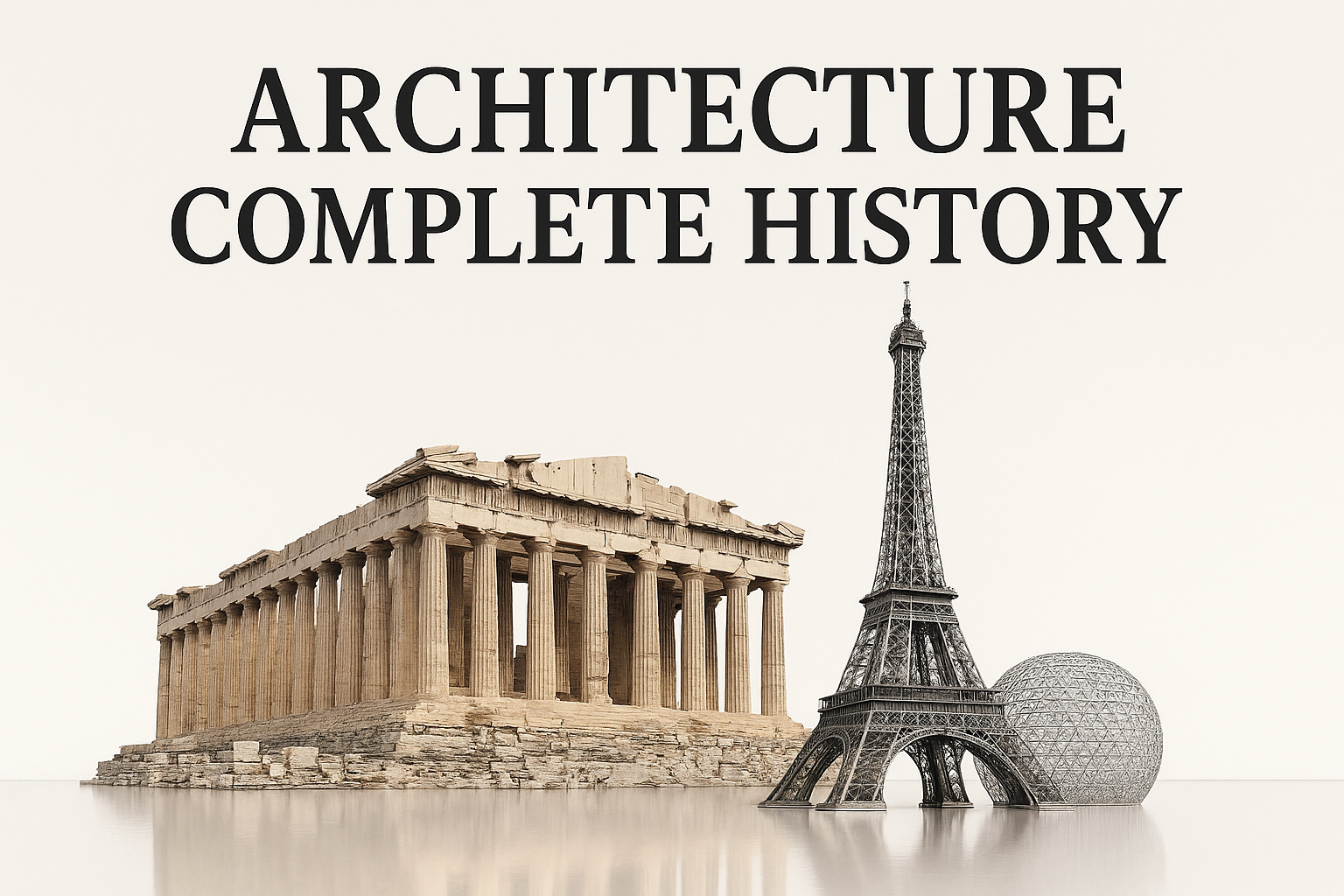
Comprehensive Free Course: Full History of Architecture
(Global + Thematic + Timeline Based)
Why Study Architectural History?
Understanding architectural history helps you see how people lived, thought, and solved problems over time. It shows how design responded to climate, religion, politics, and new technology.
Studying it also helps you build better today — with smarter choices, deeper meaning, and stronger foundations.
What you get from it:
-
Better design judgment
-
Stronger creative ideas
-
Real-world context behind styles
-
Inspiration from past solutions
📘 MUST READ:
The Story of Architecture by Jonathan Glancey
This one gives a full visual sweep of global architecture—from ancient cities to high-tech towers—without the fluff.
What Is the Point of Studying Architecture History Today?

How Architecture Evolved: From Mud Walls to Megastructures
Learn why architecture history matters — from ancient temples to smart cities. This guide shows what to study, why it’s useful, and how to use it in real design work.
How to Study Architectural History
Keep it simple: start with the big eras and notice what changed. Focus on the why, not just the look — what problems buildings solved, what materials were used, and what beliefs shaped them.
Don’t try to memorize everything — just understand the patterns and purpose.
Quick tips:
-
Learn by timelines (ancient to modern)
-
Study buildings in context — who built them and why
-
Use short notes, not long facts
-
Sketch, compare, and explain it in your own words
Related: Architectural Terms Explained Simply: From Arch to Zoning (Including Images)
Architecture History: Why It Still Matters and What You Should Learn
Architecture history gives context, strategy, and inspiration. Learn how styles evolved, who shaped them, and what modern designers can learn from it all.
Related: Introduction to History of Architecture: Where Every Architect Should Start!
Full Historical Timeline of Architecture
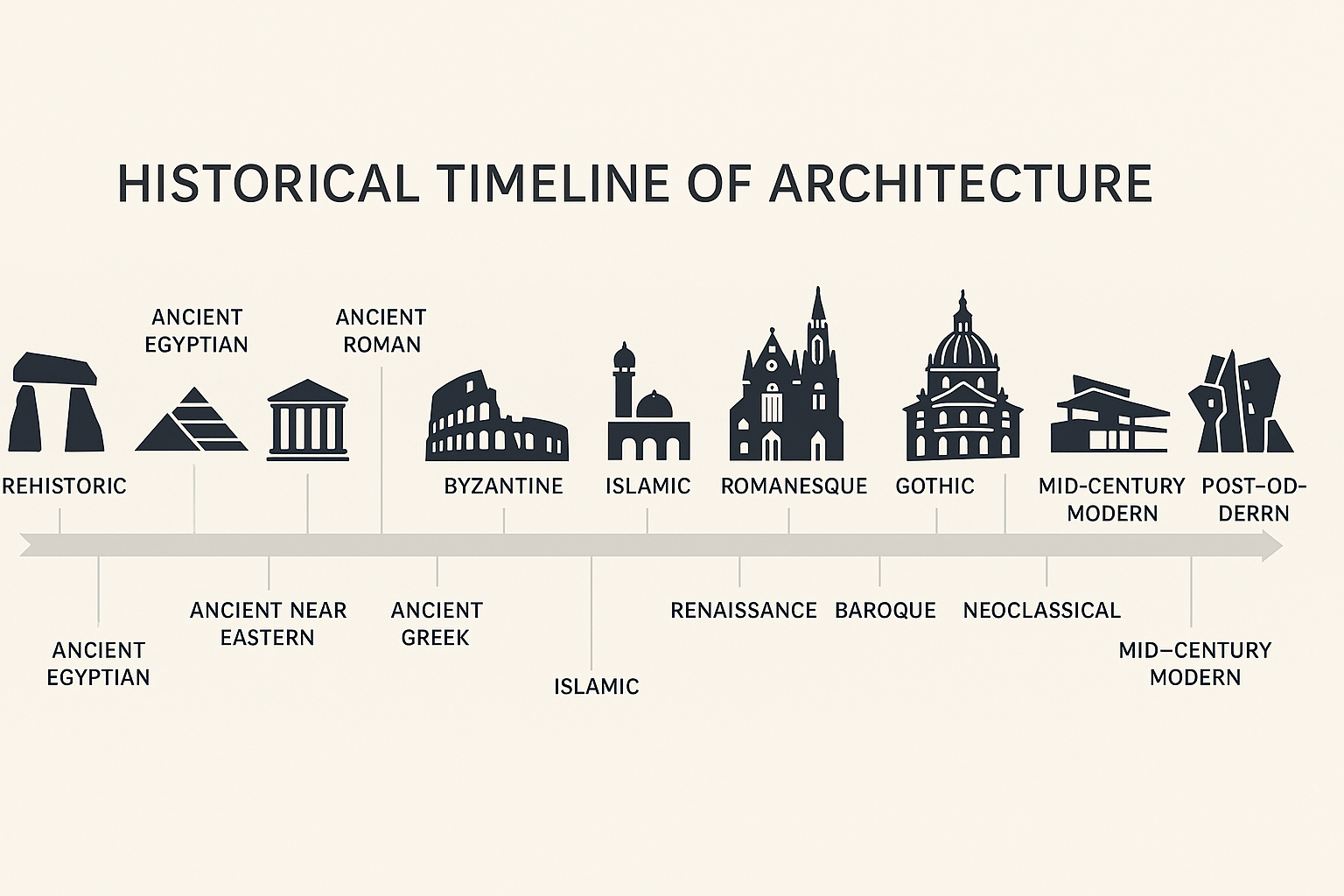
Image: Comprehensive timeline illustrating the evolution of architectural history, featuring major periods and styles from ancient civilizations to modern movements.
This guide gives you a clear path through every major period in architecture — from the first man-made structures to the most advanced buildings of today.
Each section shows what defined that era, what was invented, who were the major architects, and what buildings changed the world. It's simple— just what you need to know.
Architecture History Explained Simply: Key Eras and What They Taught Us
Why Every Architect Needs to Understand the Past
I. Foundations: The Origin and Early Development of Architecture
- Prehistoric dwellings and cave shelters – The earliest forms of human shelter, shaped by survival needs and natural environments.
- Primitive building materials and techniques – Use of stone, mud, wood, and basic construction methods that laid the groundwork for future design.
- Ancient civilizations and early structures (Mesopotamia, Indus Valley, Nile) – Organized architecture begins to emerge with urban planning, temples, and monumental forms.
- Architecture as ritual and function – Early structures reflect both practical use and deep cultural or religious significance.
Prehistoric & Ancient Civilizations
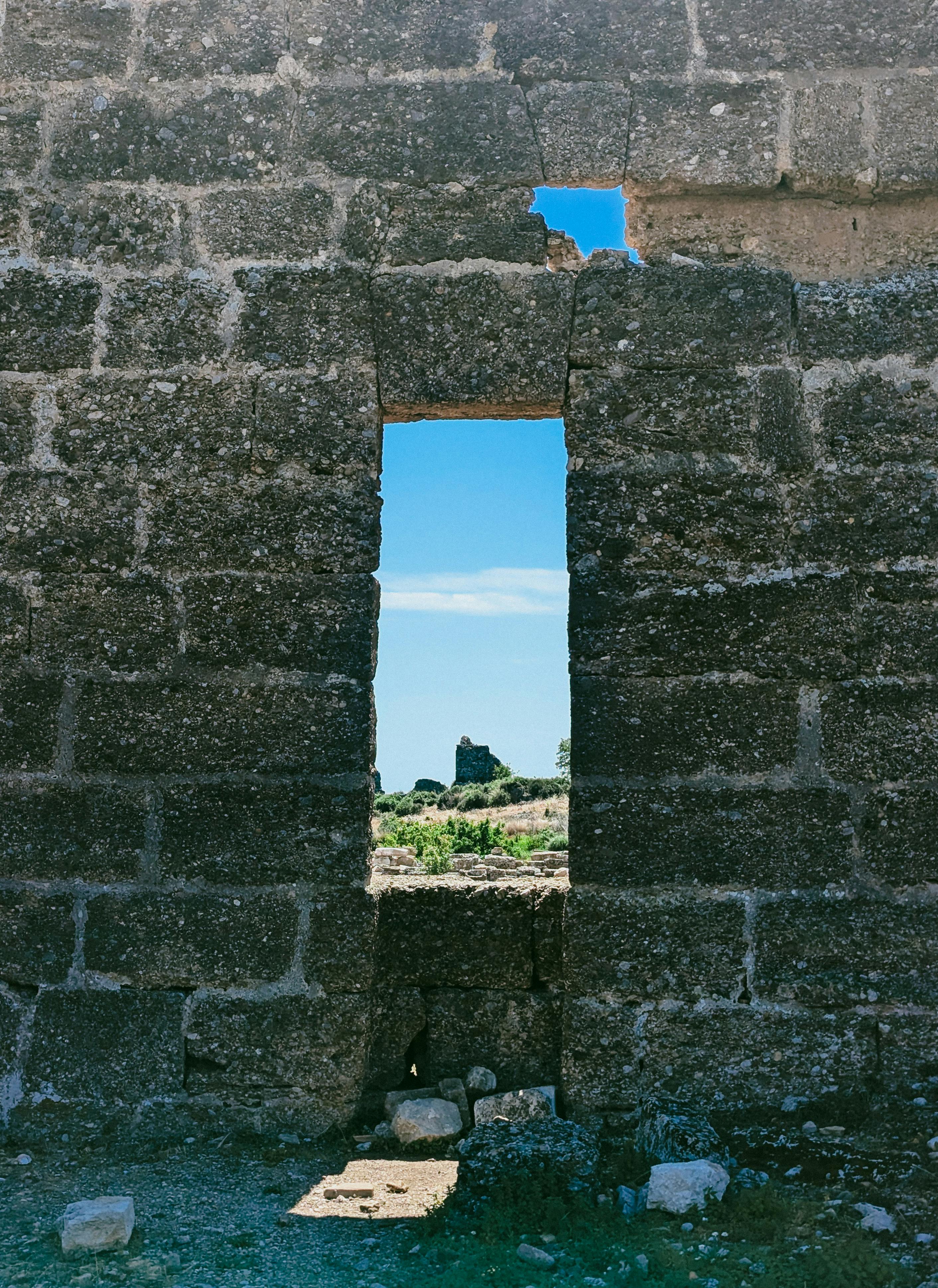
Image: Weathered stone window opening set into a historic wall, framing a scenic view of ruins and symbolizing a passage through architectural history
Architecture began long before concrete and steel. These early styles gave us the foundation of building systems we still use. Learn about religious temples, urban planning, and how ancient materials shaped entire cities.
- Understanding Ancient Architecture: Features, Styles, and Cultural Significance — What made ancient buildings more than just shelter.
- Design of Ancient Architecture — How the ancients approached layout and structure.
- Timeline of Building Materials: From Ancient Times to Today — A quick breakdown of what people built with, from mud to metal.
- Coming Soon: Prehistoric Megalithic Structures (Stonehenge, Göbekli Tepe) — The oldest known man-made monuments and what they mean.
- The Ziggurat at Ur: Ancient Mesopotamian Architecture — Tower-like temples with stepped platforms, used for worship.
- Coming Soon: Ancient Egyptian Architecture and the Role of the Pyramid Complex — How the Egyptians used stone to build some of the most durable structures in history.
- Coming Soon: Architecture of the Indus Valley Civilization — Grid planning and smart drainage systems way ahead of their time.
- Ancient Indian Engineering — From temples to water systems, this covers how India built in early history.
- Ancient Chinese Architecture — Wooden structures, curved roofs, and courtyard houses.
- Ancient Greek Architecture: Foundations, Features, and Influence — Columns, balance, proportion. Still copied today.
- Ancient Roman Architecture: Techniques, Structures, and Impact — From arches to domes, Rome was all about scale and engineering.
- Urban Planning in Ancient Rome: Roads, Forums, and Aqueducts — How Rome’s infrastructure shaped the modern city.
Also:
- Rammed Earth: An Ancient Technique for Modern Sustainable Construction — Mud walls that last centuries.
Architecture History: A Timeline of Innovation, Power, and Purpose
Want to Be a Better Designer? Start with the First Brick
II. Ancient World Architecture
- Egyptian Architecture (pyramids, symbolism) – Monumental stone structures tied to religion, royalty, and the afterlife.
- Mesopotamian & Persian Architecture (ziggurats, palaces, gardens) – Early urban planning and grand ceremonial spaces reflecting power and cosmology.
- Ancient Indian Architecture (stupas, rock-cut structures)
- Ancient Chinese Architecture (timber frame, palatial forms) – Emphasized balance, harmony, and imperial power, using advanced wooden construction.
- Ancient Greek Architecture (columns, civic space) – Defined by order, proportion, and public life, especially through iconic column styles.
- Ancient Roman Architecture (arches, aqueducts, engineering feats) – Known for technical innovation, massive infrastructure, and urban sophistication.
- Ancient American Civilizations (Maya, Aztec, Inca architecture) – Built complex cities, pyramids, and sacred sites with advanced knowledge of astronomy and stonework.
- Ancient African Architecture (Nubian pyramids, Great Zimbabwe) – Rich in regional diversity, with monumental stonework and unique cultural expressions.
Greek & Roman Styles
Greek and Roman architecture shaped everything from courthouses to stadiums. The Greeks focused on order, harmony, and proportion.
The Romans added engineering — domes, concrete, and massive urban planning. This section breaks down the key styles, inventions, and legacies of both civilizations.
- Greek Architecture History
- Greek Architecture Style Essentials: History, Design, and Modern Appeal — Explains what makes Greek buildings so balanced and timeless.
- Greek Revival Architecture Style | Insights, Tips, and Modern Applications — Shows how modern architects reused Greek elements like columns and pediments.
- Ancient Greek Columns: Types, History, and Design Tips — Covers Doric, Ionic, and Corinthian columns, and where to spot them today.
- Roman Architecture Style — Describes how the Romans used arches, concrete, and space to build bigger and longer-lasting structures.
- Roman Building Style — Looks at Roman walls, vaults, temples, and how they changed the way cities were built.
- Romanesque Architecture Style — A medieval blend of Roman structure and Christian design — thick walls, small windows, and semi-circular arches.
- Romanesque Architecture Style Interior Design — What it feels like inside: heavy, dramatic, and made to last.
- Groin Vaults: History, Construction, and Design — Explains this key Roman innovation for roofing large indoor spaces.
- Coming Soon: Etruscan Architecture and Its Influence on Roman Design — Before Rome, the Etruscans shaped how cities and temples were built.
- Coming Soon: Byzantine Architecture as a Bridge Between Rome and Islam — Shows how domes, mosaics, and basilicas shaped future Islamic and Orthodox styles.
III. Classical to Medieval Periods

Image: Classical Greek ruins of the Parthenon in Athens, featuring iconic Doric columns and monumental architecture from the height of the Classical period.
- Islamic Golden Age Architecture (Alhambra, mosques of Cairo) – Stunning geometric designs, intricate tile work, and monumental structures reflecting Islamic culture.
- Byzantine Architecture (mosaics, Hagia Sophia) – Iconic domes, mosaics, and intricate interior spaces with Roman influences.
- Romanesque Architecture (rounded arches, thick walls) – Characterized by solid, heavy structures with rounded arches and large, stable walls.
- Gothic Architecture (flying buttresses, stained glass) – Known for soaring spires, pointed arches, and expansive stained glass windows, bringing light and height to cathedrals.
- East Asian Developments (China, Japan, Korea) – Unique architectural forms focused on wood construction, intricate roofs, and harmonious integration with nature.
Classical Architecture History
Classical architecture originated in ancient Greece and Rome, emphasizing symmetry, proportion, and clean geometry. It influenced everything from monuments to government buildings. This section explores what defined the style and how it continues to shape public spaces today.
-
Classical Architecture: History, Key Features, Famous Buildings, and Influence
Explains how the Greeks and Romans built — with columns, domes, and mathematical order. -
Classical Architecture History: Key Eras & Global Influence
Covers how classical design spread worldwide and became a global language of authority.
Islamic Architecture

Image: Iconic facade of the Taj Mahal in Agra, India, representing Mughal architecture from the 17th century, blending Islamic, Persian, and Indian design elements.
Islamic architecture developed across the Middle East, North Africa, Spain, and parts of Asia. It's known for its domes, arches, calligraphy, geometric patterns, and smart use of light and water.
This section covers the origins, evolution, and key contributions — from mosques to schools to entire cities. You’ll learn what makes it unique, how it changed architecture forever, and who the key builders were.
- Islamic Architecture: Connecting History, Styles, and Global Impact — How Islamic architecture spread across continents and blended local styles into one of the most influential traditions.
- Islamic Architecture History: Origins, Evolution, and Impact — From early mosques to vast empires, this looks at how Islamic building styles changed over time.
- Characteristics of Islamic Architecture — Lists the key features: calligraphy, domes, symmetry, arches, and decorative detail.
- Arches in Islamic Architecture: History, Design, and Global Influence — Traces how Islamic arches evolved and how they influenced Gothic and other styles later on.
- Mashrabiya Designs: History, Beauty, and Functionality — Explains this wooden lattice window system used for shade, airflow, and privacy.
- How Form, Function, and Meaning Shape Islamic Architecture — Shows how every element — arches, domes, courtyards — was designed with purpose and symbolism.
- Technological Advancement and Innovation in Islamic Architecture: From Ancient to Modern — Covers early cooling systems, structural techniques, and how innovation spread through architecture.
- Courtyards “Sahn” in Islamic Architecture — Looks at how interior courtyards shaped the daily experience in homes, schools, and mosques.
- Islamic Geometric Patterns: The Endless Wonder of Islamic Geometric Designs — Explains the math and meaning behind the repeating patterns used in decoration.
- Geometric Patterns in Islamic and Arabic Art — Focuses on how art and architecture were closely linked through geometry.
- Islamic Buildings — A general look at how mosques, madrasas, hammams, and homes were designed.
- Islamic Architecture FAQs — Quick answers to common questions: why domes, what’s a minaret, what makes it “Islamic.”
- Islamic Architecture in Egypt — Covers Mamluk, Fatimid, and Ottoman styles seen throughout Egypt’s historic cities.
- Islamic Cairo: Architecture, Culture, and Heritage — Explores Cairo’s layered Islamic buildings — from mosques to markets — and their long-lasting design.
- The Ahmad Ibn Tulun Mosque: An Architect’s Insight Into History, Faith, and Design — Details the layout and influence of one of Cairo’s oldest mosques.
- Museum of Islamic Art, Cairo — Describes this museum's architecture and the Islamic design pieces it holds.
- Islamic Moorish Architecture in Spain — Details the style found in Andalusia — including the Alhambra — and how it’s still copied today.
- Islamic Architecture in Turkey
- History of the Blue Mosque: From Its Creation to Modern Times — Explains how this Istanbul landmark combined beauty and structure in Ottoman architecture.
- The Blue Mosque: History and Architecture of Sultan Ahmed Mosque — Goes deeper into its layout, minarets, dome engineering, and design features.
- Gothic Architecture Architects and the Hidden Influence of Islamic Architecture — Shows how Crusaders and traders brought Islamic ideas into early Gothic design in Europe.
- Muslim Architects: Masters of Historical and Modern Design — Highlights key names from ancient to modern times who shaped the built environment.
Gothic & Medieval Europe
This period was all about tall cathedrals, strong castles, and symbolic architecture tied to religion and power. The Middle Ages introduced pointed arches, ribbed vaults, and stained glass.
You’ll learn how architecture served both spiritual and military needs, and how these buildings influenced later styles.
-
Medieval Architecture: Exploring the History, Styles, and Innovations
An overview of how Europe built after Rome, blending function and faith.-
Medieval Architecture History: Styles, Materials, and Innovations
Looks at stonework, wood framing, and how buildings changed from Romanesque to Gothic. -
Medieval Houses: Exploring History, Structure, and Modern Design Inspiration
How everyday homes were built and lived in, from peasants to nobles. -
Medieval Castle Interior Decor: How to Incorporate Medieval Castle Décor in Modern Homes
Covers layout, furniture, and textures inside medieval castles — and how to echo that today. -
Medieval Interior Design: Bringing Historical Charm to Modern Spaces
How to bring warm, durable materials and historic textures into current interiors.
-
-
Gothic Architecture Style: Features, History, and Iconic Structures
Tall spires, pointed arches, and flying buttresses defined this dramatic style.-
Introduction to Gothic Architecture: Origins, Features, and Modern Impact
Why Gothic spread fast, and how its emotional design still inspires modern work. -
Gothic Revival Architecture: History, Characteristics & Key Examples
How Gothic came back in the 1800s with churches, libraries, and even universities. -
Early English Gothic Period: History, Global Influences, and Key Design Elements
What made English Gothic different — focus on vertical lines, large windows, and tracery. -
Pointed Arch: Engineering, Design, Types, and Modern Applications
This single shape changed architecture forever — here’s how it works and where it shows up. -
Gothic Structures: Key Innovations and Modern Influence
How Gothic architects pushed buildings higher and made interiors feel like light-filled sculptures. -
Gothic-Inspired Projects: Integrating Classic Design with Contemporary Techniques
Ways to bring Gothic elements into today’s buildings — arches, textures, and proportions. -
Coming Soon: Carolingian and Ottonian Architecture in Early Medieval Europe
Covers the pre-Gothic period with early churches, chapels, and royal buildings.
-
Japanese & Asian Architecture
This section looks at the traditional building styles from Japan, China, Korea, and Southeast Asia. These cultures shaped architecture around nature, balance, and craftsmanship. Expect wooden frameworks, open layouts, temple structures, and clever passive climate design.
You’ll also see how beliefs like Shinto, Buddhism, and ancestor worship shaped form and function.
Japanese Architecture

Image: Outer stone walls of Nijō Castle in Kyoto, Japan, showcasing Edo-period Japanese architecture used for non-religious, political, and defensive purposes.
-
Japanese Architecture: The Style Everyone Can Learn From
How Japanese homes use light, open space, and natural materials to feel calm and practical. -
History of Traditional Japanese Architecture: Key Eras, Influences, and Innovations
Covers the evolution of Japanese design from early shrines to castles, showing the cultural roots behind it all. -
Japanese Style House Exterior: Materials, Rooflines, and Details
A breakdown of typical roof curves, wood structures, and how nature plays a role in Japanese exteriors.
Chinese Architecture
-
Exploring Chinese Architecture: Ancient to Modern
From courtyard homes to large government buildings, this covers how Chinese architecture adapted across dynasties. -
Chinese Architecture History, Beijing
Explores the layout and logic behind Beijing’s historic temples, gates, and imperial buildings. -
Coming Soon: Architecture of Korean Dynasties and Hanok Housing
Focuses on traditional Korean houses with heated floors, wooden frames, and inward-facing courtyards.
Architecture History Isn’t Boring — It’s Your Design Shortcut
IV. Renaissance to Enlightenment
- Renaissance Architecture (humanism, symmetry, Vitruvian ideals) – Focused on proportion, symmetry, and the revival of classical Roman and Greek principles.
- Baroque and Rococo (grandeur, motion, elaborate detailing) – Characterized by dramatic forms, intricate detailing, and a sense of movement, often with emotional or theatrical appeal.
- Neoclassical Architecture (columns revival, rational order) – A return to classical ideals, emphasizing simplicity, order, and the revival of ancient Greek and Roman elements.
- Colonial Architecture (Spanish, British, French colonial styles) – Reflects the adaptation of European architectural styles in the Americas, with regional variations influenced by climate and culture.
- Georgian and Federalist Styles in Europe and North America – Neoclassical in nature, these styles focused on symmetry, simple shapes, and formal elegance, prevalent in both Europe and the U.S.
Renaissance, Baroque & Rococo
This was the era of dramatic change. The Renaissance revived classical symmetry and proportion. Baroque pushed things further with movement, decoration, and power.
Rococo came last with elegance, curves, and luxury. These styles influenced everything from palaces to churches to city plans. You'll learn how ideas from ancient Rome came back and evolved — and who led the charge.
-
Renaissance Architecture: History, Styles, Innovations, and Influence
Focused on balance, columns, domes, and human-centered design based on ancient Roman ideas. -
Understanding Baroque and Rococo Architecture: History and Design
Shows how the two styles differ — Baroque is bold and serious, Rococo is delicate and decorative.-
Baroque Architecture Explained: History, Features, and Famous Works
Heavy decoration, bold curves, and light-play — built to impress and guide emotions. -
Baroque Style Houses
How Baroque features like grand staircases and large windows made their way into homes.
-
-
Coming Soon: Mannerism in Architecture: A Transitional Phase
Between the Renaissance and Baroque, architects broke classical rules on purpose — here’s why it mattered.
Neoclassical Architecture History
Neoclassical architecture emerged in the 1700s and 1800s, reviving classical Greek and Roman styles with modern materials and grander scale.
-
Neoclassical Architecture: Characteristics, History, and Modern Influence
Breaks down the return of classical elements in newer materials and larger scale.-
Neoclassical Design Elements: Lesson for Modern Architecture
How symmetry, clean lines, and timeless shapes are used in today’s buildings.
-
-
Stone Inlay in Architecture: From Cultural Heritage to Modern Design
Details how decorative stonework added texture and meaning to both classical and neoclassical styles. -
Building Forms in Architecture: From Traditional to Modern Design
Explains how ancient shapes — like rectangles, circles, and triangles — still shape modern buildings.
Colonial, Georgian, Tudor & Historic European Styles
These styles shaped homes, cities, and entire regions in Europe and North America. Each one reflected a mix of local materials, cultural identity, and practical needs. This section walks you through the most recognizable traditional styles — from English Tudor homes to French and Dutch townhouses — and explains how they influenced early American design too.
-
Georgian Colonial Style: A Classic American Architecture
Brick houses with symmetry, simple lines, and decorative entryways — inspired by British design.-
General Characteristics of Colonial Architecture: What Defines This Classic Style
Outlines the key features found in homes built by European settlers — gable roofs, shutters, and central chimneys.
-
-
Tudor Architecture Style: Key Elements and Modern Twists
Half-timbered walls, steep roofs, and how this medieval English style still inspires modern homes. -
A Look at Dutch Architecture: From Classic to Contemporary
How Dutch styles evolved — from brick canal houses to clean modernist buildings. -
French Architecture: Classic Designs and Contemporary Innovations
Covers romantic details, stone walls, iron balconies, and how French design stays relevant. -
Russian Architectural Styles: From Classic to Contemporary
Covers onion domes, bright colors, and how Russian architecture evolved across tsars, Soviets, and beyond.-
History of Russian Architecture: From Timber to Modernism
Explains the shift from wood and churches to large-scale civic buildings across Russian history.
-
-
Coming Soon: Moorish and Andalusian Influences on European Buildings
Shows how Islamic features like arches and tiles blended into Spain and southern Europe. -
Coming Soon: Scandinavian Vernacular Architecture Through the Ages
Covers simple wooden houses, sod roofs, and clean design traditions that shaped Nordic countries.
V. 19th Century Industrialization and Architecture
- Federal & Early American– Late 18th to early 19th century (c. 1780s–1830s)
- Cast iron, steel, and glass revolution– Begins mid-19th century, especially with the Crystal Palace (1851)
- Victorian architecture (Gothic Revival, Queen Anne, Arts & Crafts)– Mid to late 19th century (c. 1840s–1900s)
- Architecture and the rise of nationalism– Mid to late 19th century (often overlaps with historicism and revival styles)
- Global diffusion of Western styles– Late 19th century, especially through colonialism and global trade
- Urbanism and the early skyscraper– Late 19th century (e.g., Chicago School, 1880s–1890s)
Federal & Early American
– Late 18th to early 19th century (c. 1780s–1830s)
This section covers the styles used in early American homes and public buildings after independence. Inspired by classical ideas but made with local materials, these styles were symmetrical, clean, and practical.
You’ll learn how these buildings helped shape the visual identity of the U.S. and why they’re still restored and copied today.
-
Federal Style Architecture: What It Is and How to Spot It
Simple windows, brick walls, and centered doors with decorative moldings — all easy to recognize.-
The History Behind Federal Style Architecture: Where It All Began
Covers how early U.S. architecture used classical ideas to show order, balance, and strength. -
Federal Style Interior Design: How to Get It Right Without Overdoing It
Explains how to bring Federal-era interiors into a home without making it look like a museum.
-
-
Coming Soon: Shaker Architecture: Simplicity and Function in Early America
Details how this group built clean, no-nonsense structures that focused on purpose over style.
Victorian & 1800s
This period saw major changes in how homes and cities were built. The Industrial Revolution introduced new materials and made fancy details more affordable.
You’ll see a mix of styles — some inspired by the past, others completely new. This section looks at what defined 1800s houses, who built them, and how they’re still used or updated today.
-
Victorian Period Architecture: History, Key Styles, and Features
Covers the main features of Victorian buildings — towers, trim, steep roofs, and mixed materials. -
Queen Anne Architecture Style: Design, Details, and Inspiration
One of the most decorative Victorian styles — known for turrets, wraparound porches, and colorful exteriors.
House Styles: Five Centuries of Architecture
Part of the in-depth coverage of human architectural styles and history, this piece spans five centuries of design that defined how people live. It’s crafted for both professionals and students by experts in the field.
-
1800s House Styles (19th Century): Design, History, and Inspiration
Breaks down the full range of 19th-century home types and how they changed by decade. -
1860s House Styles: Design, Materials, and Modern Relevance
Looks at Civil War-era homes and how they balanced strength with style. -
1870s House Styles: The Turrets, Porches, and Patterns That Defined an Era
This decade brought bold decoration and more room for families — inside and out. -
1880s House Styles: Key Features, Interiors, and Exteriors Explained
Details the popular design choices from this era, including floor plans and trim work.
Also:
-
Designing a Home in 1800s Style: A Step-by-Step Guide
How to recreate or update a home with real 1800s features — or blend them with modern design.
VI. 20th Century Modern Architecture: Roots to Radicalism
- Art Nouveau and Jugendstil – Late 19th to early 20th century (c. 1890s–1910s)
- Bauhaus and the International Style – 1919–1930s (Bauhaus founded in 1919; International Style formalized in the 1920s–30s)
- Modernist masters: Le Corbusier, Mies, Wright – Active from early to mid-20th century (1920s–1960s), foundational figures in shaping modernism
- Post-War reconstruction and Soviet Modernism – Late 1940s to 1960s, driven by rebuilding efforts and ideological design in the USSR
- Mid-century modernism (USA, Scandinavia, Japan) – 1945–1965, blending modernist ideals with local influences and lifestyle design
- Brutalism, High Tech, and Structural Expressionism – 1950s to 1980s, known for bold materials and exposed structural systems
20th Century Styles (1900–1990s)
The 1900s brought rapid change. Homes and buildings shifted from tradition to modern living — with new materials, new layouts, and faster ways to build. This section shows how styles evolved each decade, what influenced them, and how they shaped everyday life.
House Styles: Five Centuries of Architecture
Part of the House Styles: Five Centuries of Architecture report, this list explores the evolution of residential design over 500 years. It traces how architectural styles have shaped the way people live.
1910s–1940s
-
1910s House Style: A Room-by-Room Design Guide
Focused on practicality with modest ornamentation — simple layouts, functional kitchens, and solid woodwork. -
1920s Interior Design Style: History, Characteristics, Examples, and Tips
A mix of elegance and bold geometry, this decade brought luxury into everyday homes. -
1920s House Styles: Key Features, Interiors, and Restoration Tips
Brick exteriors, clean lines, and the first open-concept floorplans. -
1920s Decor Style: History, Characteristics, Examples, and Tips
Details how lighting, color, and art came together in stylish living rooms and dining spaces. -
1930s House Style: From Art Moderne to Cottage Revival
Streamlined shapes and curved corners defined the modern side, while others preferred cozy revivals. -
1930s Kitchens: Everything You Need to Know About Classic Styles
Compact, built-in, and clean — early examples of efficient kitchen design. -
1940s House Styles: Simple Layouts That Still Make Sense Today
Built fast during and after the war — small, solid, and easy to expand.
1950s–1990s
-
1950s House Styles: Building and Decorating Tips from an Architect
Open plans, big windows, and suburban growth — the rise of the “dream home.” -
1960s House Style: Iconic Trends and Timeless Designs
Sunken living rooms, funky colors, and playful layouts became popular. -
1960s Decorating Style: Colors, Furniture, and Materials
Bright shades, modern furniture, and a shift toward personal expression. -
The 1970s House Style Guide: Architecture, Interiors, and Updates
From shag carpet to cedar siding — what lasted and what didn’t. -
1980s House Styles: Key Trends and Design Ideas for Today’s Homes
Two-story foyers, skylights, and a new love for open staircases. -
1990s House Design & Style: What Defined the Decade?
Big garages, beige exteriors, and the early signs of modern minimalism.
Related: Early Modern Architecture History | Timeline, Key Figures & Global Impact
VII. Postmodernism and Contemporary Reactions (1960s–2000s)
- Postmodern critique of modernism – Emerged in the 1960s–70s as a reaction to the rigid principles of modernism.
- New Urbanism and revivalist movements – 1980s–1990s movement promoting walkable neighborhoods and traditional town planning.
- Deconstructivism and formal experimentation – Gained prominence in the 1980s–90s, characterized by fragmented, non-linear forms.
- Green architecture and biophilic design – Gained traction in the 1990s–2000s, focusing on sustainability and human-nature connection.
- Parametricism and blobitecture – Late 1990s into the 2000s, driven by digital design tools and fluid, organic forms.
Parametric, Metabolism & Technological Styles
This section covers architecture that pushed the limits — not just in looks, but in how buildings were planned, shaped, and built.
Parametric design uses computers to generate complex forms. Metabolism was Japan’s vision of flexible, living cities. And modern tech has allowed all of it to happen faster, lighter, and smarter.
Here’s how architecture became more experimental and data-driven.
-
Introduction to Parametric Design: Revolutionizing Modern Architecture
Breaks down how architects use algorithms to test hundreds of shapes before choosing one.-
Parametric Architecture: From Facades to Furniture in Modern Design
Designs created through computer scripts — curved walls, twisted towers, and responsive structures. -
Parametric Design in Furniture: Innovative Forms for Modern Living
How the same logic used in buildings is being used to design chairs, tables, and lighting.
-
-
Japanese Metabolism Architecture: How It Redefined Modern Design
A post-war movement that treated buildings like living organisms — modular, replaceable, and futuristic.
What Can Old Buildings Teach Us About Modern Design?
VIII. Modern Architecture in Global Context (1900–Now)
- 1920s–1970s Modernism by Decade – An exploration of how modernist principles evolved over the decades, from early 20th-century experimentation to mid-century international styles.
- Modern Architecture Inspired by Antiquity – The resurgence of classical elements in modern designs, blending ancient influences with modern materials and techniques.
- Contemporary Architecture in Context – Examining how today’s architecture responds to social, cultural, and environmental factors, shaping urban and rural landscapes.
- Future-Forward Design: AI, Climate, Smart Cities – The role of advanced technology, sustainable solutions, and urban innovation in shaping the future of architecture.
-
Formgiving and Speculative Architectural Futures – Exploration of imaginative and theoretical architectural ideas, pushing the boundaries of design and construction.
Modern & Contemporary Architecture
Modern architecture focused on function, clean lines, and rejecting extra decoration. It started in the early 1900s with concrete, steel, and open plans. Contemporary architecture picks up where modern left off — but it’s more flexible, eco-friendly, and experimental. This section breaks down the differences, the key thinkers, and how today’s buildings keep evolving.
-
Modern Architecture: What It Is and Why It Still Matters
Focuses on simplicity, honest materials, and open floor plans — still used in homes and offices today.-
Modern vs. Contemporary Architecture: What’s the Real Difference?
Explains how modern is a historical style, while contemporary means what’s happening right now.
-
-
Contemporary Architecture: What It Really Means Today
Covers sustainability, bold shapes, mixed materials, and smart-home integration.-
Expansive Windows in Contemporary Architecture
Why floor-to-ceiling glass is used to connect inside and outside, and how it affects light and layout. -
Contemporary & Modern Stone Homes: Merging Tradition with Innovation in Architecture
Blending natural stone with modern shapes — a popular way to create long-lasting, low-maintenance homes. -
Contemporary Stone Homes: Expert Guide to Facades, Fireplaces, and More
How stone is used for modern exteriors and sleek interior focal points.
-
-
World’s Tallest Buildings: Ranking the Giants of Modern Architecture
Explores the tallest skyscrapers today, their design challenges, and how they stand up against wind and weight. -
Most Famous Modern Architects: Redefining Architectural Standards
Highlights the people behind the buildings — their ideas, styles, and global influence. -
Continuing Education and Skill Development for Architects
Shows how architects today keep learning through certifications, digital tools, and real-world projects. -
The Future of Online Architecture Education: Beyond COVID-19
Looks at how remote learning changed design education — and what works best for today’s students.
IX. Global Contexts and Marginalized Voices
-
Non-Western Modernisms (India, Africa, Latin America) – Exploration of modernist movements and architectural innovations outside the Western tradition, shaped by regional histories and cultures.
-
Women and Underrepresented Architects – Highlighting the contributions of women and other marginalized groups in shaping architectural history and practice.
-
Indigenous and Native Architecture Practices – Examining the architectural traditions of indigenous peoples, focusing on sustainable, culturally rich designs and environmental adaptation.
-
African-American and Asian-American Contributions – Recognizing the significant yet often overlooked contributions of African-American and Asian-American architects to the evolution of architectural design.
Architecture Through the Ages: What Changed and Why It Matters Now
X. Architecture in Historical Theory and Writing
-
Architectural Historiography and Theory (Kostof, Frampton, Fletcher)
– A study of key architectural historians and theorists, focusing on their contributions to the understanding of architecture’s history and evolution. -
Comparative Methods in Architectural History
– Analyzing various approaches in comparing different architectural traditions and practices across cultures and time periods. -
The Role of Photography and Archives (Ezra Stoller, others)
– Examining the impact of photographic documentation and archival materials on preserving and interpreting architectural history. -
Writing and Revising Architectural History
– Understanding the evolution of architectural writing and its critical role in shaping our perception of built environments.
XI. Specialized Sub-Histories and Disciplines
-
Landscape Architecture History
– Exploring the history of landscape design and its role in shaping public spaces, gardens, and the relationship between nature and architecture. -
Naval and Industrial Architecture
– Investigating the evolution of architecture specific to maritime and industrial applications, from shipbuilding to factories. -
Interior Design and Domestic Architecture Evolution
– Tracing the history of interior spaces, from functional to aesthetic, and how domestic architecture has adapted over time. -
Civil Engineering Overlap with Architectural Progress
– The interrelation between civil engineering and architecture, especially in the context of large-scale infrastructure projects. -
Timeline of Furniture and Object Design
– Examining the design evolution of furniture and objects and their integration into architectural spaces throughout history.
XII. Architectural Education and Career Timeline
-
Architectural Schooling and Curriculum Over Time
– A look at how architectural education has evolved, highlighting significant changes in curriculum and pedagogy. -
Key Figures in Shaping Modern Education (Leach, Forty)
– Exploring the contributions of influential educators and theorists in shaping modern architectural education. -
Notable Institutions and Architectural Movements
– Examining key institutions and architectural movements that have shaped the training of architects and their impact on design. -
Career Timeline of Famous Architects (Wright, Zaha Hadid, Gehry, Gaudí)
– Highlighting the careers of major architects and their contributions to shaping architectural history.
XIII. Technology, Materials & Architecture’s Evolution
-
Development of Domes, Arches, and Structural Systems
– Tracing the evolution of architectural structures, from ancient domes and arches to modern engineering feats. -
Concrete, Steel, and Glass Innovations
– Investigating how new materials like concrete, steel, and glass revolutionized architectural design and construction methods. -
Obsolescence and Architectural Lifespan
– Understanding how buildings and materials age, and the challenges associated with the obsolescence of architectural forms. -
Photographic Documentation and Digital Modeling
– The role of photography and digital technologies in documenting, preserving, and designing architecture in the modern age.
XIV. Architecture Timelines and Period Summaries
-
Prehistoric to Modern: Full Timeline
– A comprehensive timeline of architectural history from prehistoric dwellings to modern designs. -
Architecture Movements Timeline
– A chronological overview of major architectural movements, from classical to contemporary. -
Country-Specific Architectural Timelines (British, Indian, etc.)
– Detailed timelines of architectural history within specific countries, highlighting their unique contributions and styles. -
House Types and Domestic Style History
– The evolution of residential architecture, from basic shelters to sophisticated modern homes. -
Major Milestones: Ancient to Future
– A look at key moments in architectural history that have shaped the built environment from ancient times to the future.
XV. Case Studies and Landmark Buildings
-
Global Historical Buildings (Louvre, Qutub Minar, Notre Dame)
– Case studies of iconic buildings from around the world, analyzing their design, significance, and cultural impact. -
Timeline of Key Structures
– A chronological list of significant architectural structures throughout history, focusing on landmark buildings. -
Comparative Design Studies (East vs West)
– A comparative study of architectural styles and design philosophies from Eastern and Western cultures. -
Adaptive Reuse and Conservation
– Exploring the practice of repurposing and conserving historical buildings for modern use while maintaining cultural and architectural integrity.
XVI. Architecture & Society: Cultural, Political, and Ethical Roles
-
Architecture and Power/State (Fascism, Communism, Democracy)
– Examining how architecture has been used by various political regimes to convey power, control, and ideology. -
Race, Identity, and the Built Environment
– Exploring the intersection of race, cultural identity, and architecture in shaping public spaces and urban environments. -
Architecture in Public Memory and Protest
– The role of architecture in representing public memory, historical events, and protest movements. -
Ethics, Sustainability, and Climate Response
– Investigating the ethical responsibilities of architects in creating sustainable and climate-responsive designs.
XVIII. FAQs
Basics: Why Architecture History Matters
1. Why study architectural history?
It helps you understand how people lived, what they valued, and how they solved problems through design.
2. What can architecture tell us about a society?
It reveals cultural values, technology, religion, and social structures of the time.
3. How does architectural history influence modern design?
Modern architects draw inspiration from past styles, adapting them to contemporary needs and technologies.
4. What are the main periods in architectural history?
Key periods include Ancient (e.g., Egyptian, Greek), Medieval (e.g., Romanesque, Gothic), Renaissance, Baroque, Neoclassical, Modern, and Postmodern.
5. How do architectural styles evolve over time?
Styles change due to shifts in technology, materials, cultural values, and societal needs.
Ancient & Classical Architecture
6. What are the characteristics of Greek architecture?
Use of columns (Doric, Ionic, Corinthian), symmetry, and proportion.
7. How did Roman architecture differ from Greek?
Romans used arches, vaults, and concrete to build larger, more durable structures.
8. What is the significance of the Parthenon?
It's a symbol of ancient Greek architecture, showcasing Doric design and cultural values.
9. How did ancient Egyptian architecture reflect their beliefs?
Monumental structures like pyramids and temples were built to honor gods and the afterlife.
10. What innovations did ancient architects introduce?
They developed structural systems like post-and-lintel, arches, and early forms of concrete.
Medieval & Renaissance Architecture
11. What defines Gothic architecture?
Pointed arches, ribbed vaults, flying buttresses, and large stained-glass windows.
12. How did Romanesque architecture differ from Gothic?
Romanesque featured rounded arches, thick walls, and small windows.
13. What are key features of Renaissance architecture?
Symmetry, proportion, and the use of classical elements like columns and domes.
14. Who were prominent Renaissance architects?
Filippo Brunelleschi, Leon Battista Alberti, and Andrea Palladio.
15. How did architecture reflect the Renaissance humanist ideals?
Buildings emphasized harmony, balance, and the importance of human scale.
Baroque to 19th Century Architecture
16. What characterizes Baroque architecture?
Dramatic use of light, bold forms, and elaborate ornamentation.
17. How does Rococo differ from Baroque?
Rococo is lighter, more decorative, and focuses on interior spaces.
18. What is Neoclassical architecture?
A revival of classical Greek and Roman styles, emphasizing simplicity and symmetry.
19. What influenced 19th-century architecture?
Industrialization introduced new materials like iron and glass, leading to styles like Gothic Revival and Beaux-Arts.
20. How did the Industrial Revolution impact architecture?
It enabled mass production of materials and the construction of larger, more complex structures.
Modern & Contemporary Architecture
21. What defines Modern architecture?
Emphasis on function, simplicity, and the use of new materials like steel and glass.
22. Who are key figures in Modern architecture?
Le Corbusier, Ludwig Mies van der Rohe, and Frank Lloyd Wright.
23. What is Postmodern architecture?
A reaction against Modernism, reintroducing ornamentation and historical references.
24. How does sustainable architecture relate to historical practices?
It often draws from traditional designs that were naturally energy-efficient.
25. What is the role of technology in contemporary architecture?
Advanced software and materials allow for innovative designs and sustainable solutions.
Studying Architectural History
26. What are the best resources for learning architectural history?
Books like "A History of Architecture" by Spiro Kostof, online courses, and architectural databases.
27. How can I effectively study architectural history?
Focus on understanding the context, key features, and significance of different styles and periods.
28. Why is it important to study architectural history in design education?
It provides a foundation for understanding design principles and cultural influences.
29. How do cultural contexts influence architectural styles?
Local traditions, climate, and available materials shape architectural forms and functions.
30. What skills can be developed by studying architectural history?
Critical thinking, visual analysis, and an appreciation for cultural heritage.
Resources, Readings, and Further Study
If you want to understand architecture beyond just images and styles, these tools will actually help. This is where to go for deeper reading, trusted references, and practical learning — from classic textbooks to new voices and useful online tools.
Essential Textbooks
These are the go-to references that almost every architecture student or professional has cracked open at some point:
-
Banister Fletcher’s A History of Architecture
A global overview — dense, detailed, and still one of the most respected references. -
Spiro Kostof – A History of Architecture: Settings and Rituals
Clearer and more human than Fletcher, with a focus on how buildings shaped daily life. -
Kenneth Frampton – Modern Architecture: A Critical History
Focuses on modernism and its roots, including critical theory and global context.
New History Books and Global Voices
More recent books focus on broader stories — not just Europe or famous architects, but full cultural context.
-
Vernacular Architecture in the 21st Century – Paul Oliver
Looks at local and traditional building styles around the world. -
Architecture: From Prehistory to Climate Emergency – Barnabas Calder
Links architecture history to energy use, climate, and practical needs across time. -
African Modernism – Edited by Manuel Herz
A detailed look at overlooked architecture across Ghana, Kenya, and beyond during independence movements. -
Breaking Ground: Architecture by Women – Jane Hall
Fills the gap in stories usually left out of mainstream architecture history books.
Online Courses and Timelines
If you want structure without enrolling in full school programs:
-
MIT OpenCourseWare – History of Architecture
Free full lecture series with reading lists and assignments from real MIT courses. -
Harvard’s “The Architectural Imagination” (edX)
An excellent free or paid course that teaches both history and core design theory. -
“Roman Architecture” by Yale University
Great breakdown of ancient Roman buildings, cities, and engineering — taught in a clear, visual way.
Architecture History Databases and Visualization Tools
For self-study, visuals, or cross-referencing timelines:
-
ArchNet – A rich database focused on Islamic architecture and global building traditions. Good for plans, photos, and scholarly essays.
-
SAH Archipedia – Built by the Society of Architectural Historians. Includes peer-reviewed descriptions of U.S. buildings by state.
-
Architectural Guide Map by Blue Crow Media – Print and app-based maps showing buildings worth visiting in cities around the world.
-
TimeMaps (Architecture Sections) – Interactive history timelines that show how styles evolved alongside major global events.