
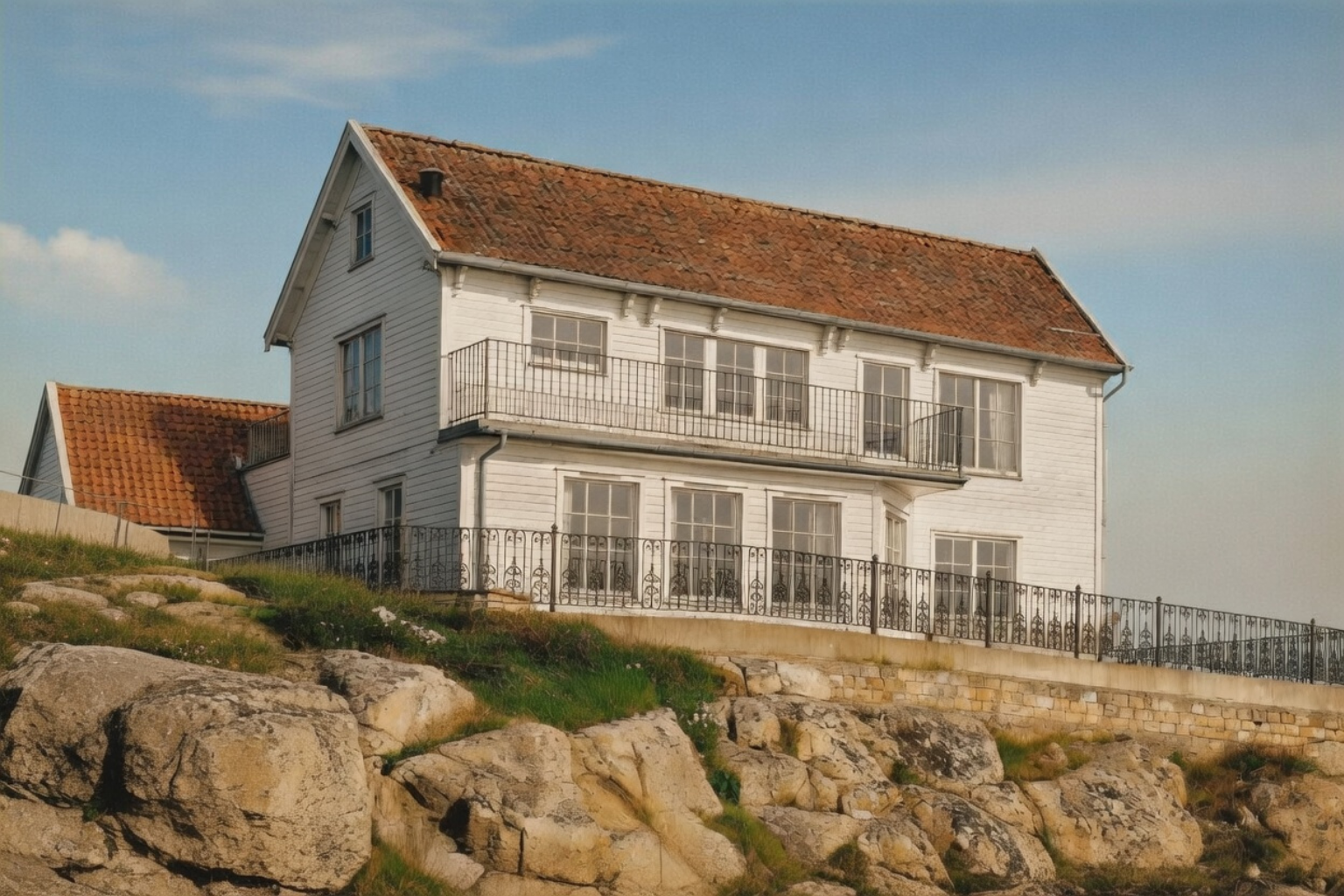
The problem with 1910s houses is that they often work perfectly. Someone spent a lot of money making them comfortable, doing things with real weight, the kind of thing that is hard to get done now. That chugs along for a generation or two.
Then you step in and think you are inheriting a problem-free house, when what you are really inheriting is an old roof.
The shift makes more sense when you look at the houses just before it, especially 1890s house styles and 1900 house styles. The 1910s did not wipe those ideas out. It kept the parts that worked, cut back the fuss, and made the house simpler to live with.
MUST READ:
Bungalow Details by Jane Powell
A useful reference for woodwork, porches, trim, floor plans, and finishes that fit early-twentieth-century houses.
Why 1910s Houses Feel Different
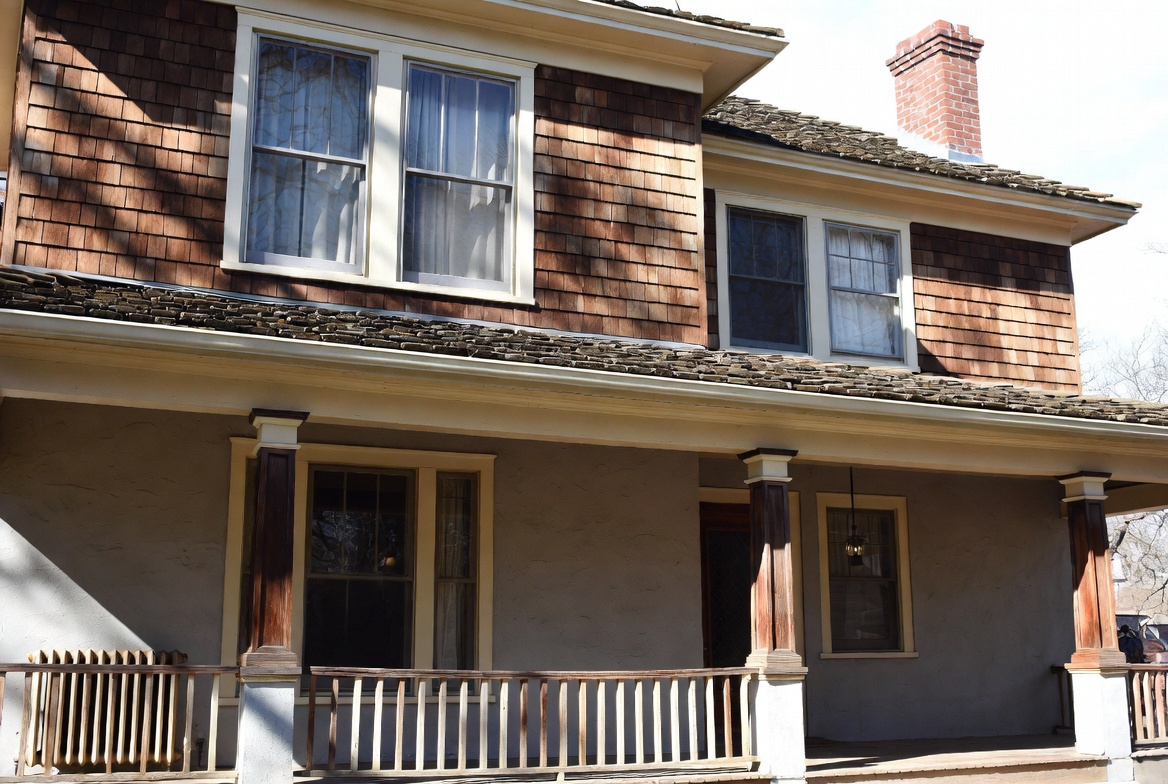
The shift was not about making houses plain. It was about pulling them into better order. Victorian houses often leaned on display. A 1910s house still had detail, but the detail usually served the structure, the porch, the entry, the fireplace, or the built-ins.
This is also where the Arts and Crafts movement matters. Natural materials, visible workmanship, and useful built-in elements shaped the decade. You can see that influence in bungalows, Prairie houses, Foursquares, and even simpler Colonial Revival houses from the same period.
That is the real difference. A 1910s house usually feels less fussy than what came before it and less stripped down than what came after it.
The Main 1910s House Types
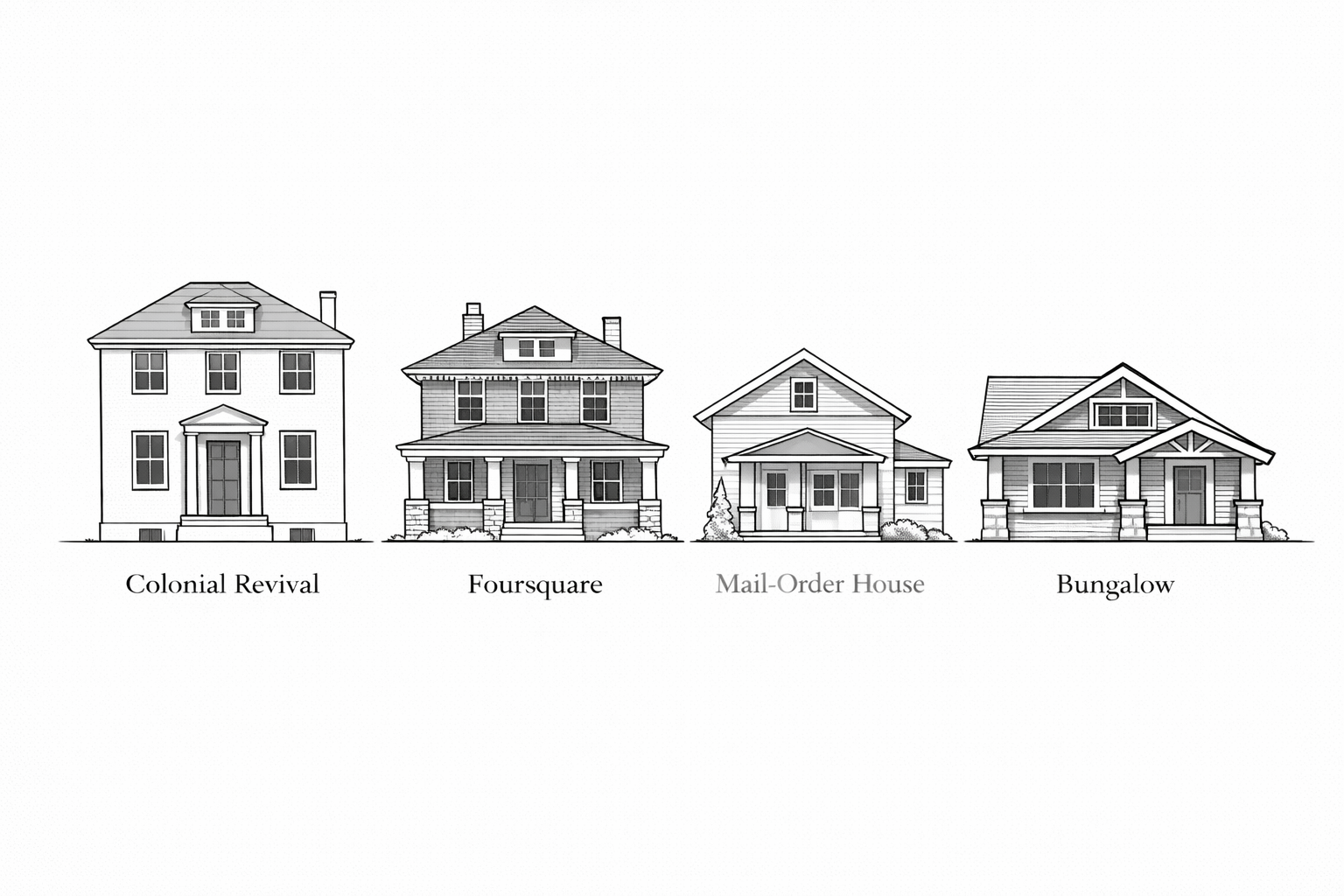
| House type | What to look for | Why it still matters |
|---|---|---|
| Craftsman bungalow | Low roof, deep porch, tapered columns, exposed rafters, built-ins | One of the clearest and most livable house types from the decade |
| American Foursquare | Boxy massing, two full stories, central dormer, wide porch | Efficient plan, strong street presence, easy to adapt carefully |
| Prairie | Horizontal lines, broad eaves, grouped windows, low emphasis | Still feels modern because proportion leads the design |
| Colonial Revival | Symmetry, centered entry, simpler classical trim, balanced facade | Good fit for buyers who want order without Victorian excess |
The house type most people picture first is the bungalow. If you want the strongest version of that lane, go deeper into the American bungalow and the Craftsman bungalow.
The other major lane is the Prairie house. That style is less common in everyday neighborhoods, but it had a huge influence on the period. You can see that clearly in Prairie School architecture, where the house starts to sit lower, stretch wider, and feel more tied to the site.
Colonial Revival also stayed strong through the decade, especially in places where people wanted order, symmetry, and a cleaner version of traditional American domestic architecture. For that side of the period, Colonial architecture characteristics help explain the recurring facade logic.
What Gets Changed First
A lot of 1910s houses get dated wrong because later updates blur the original read. The shell may still be right, but the clues get covered.
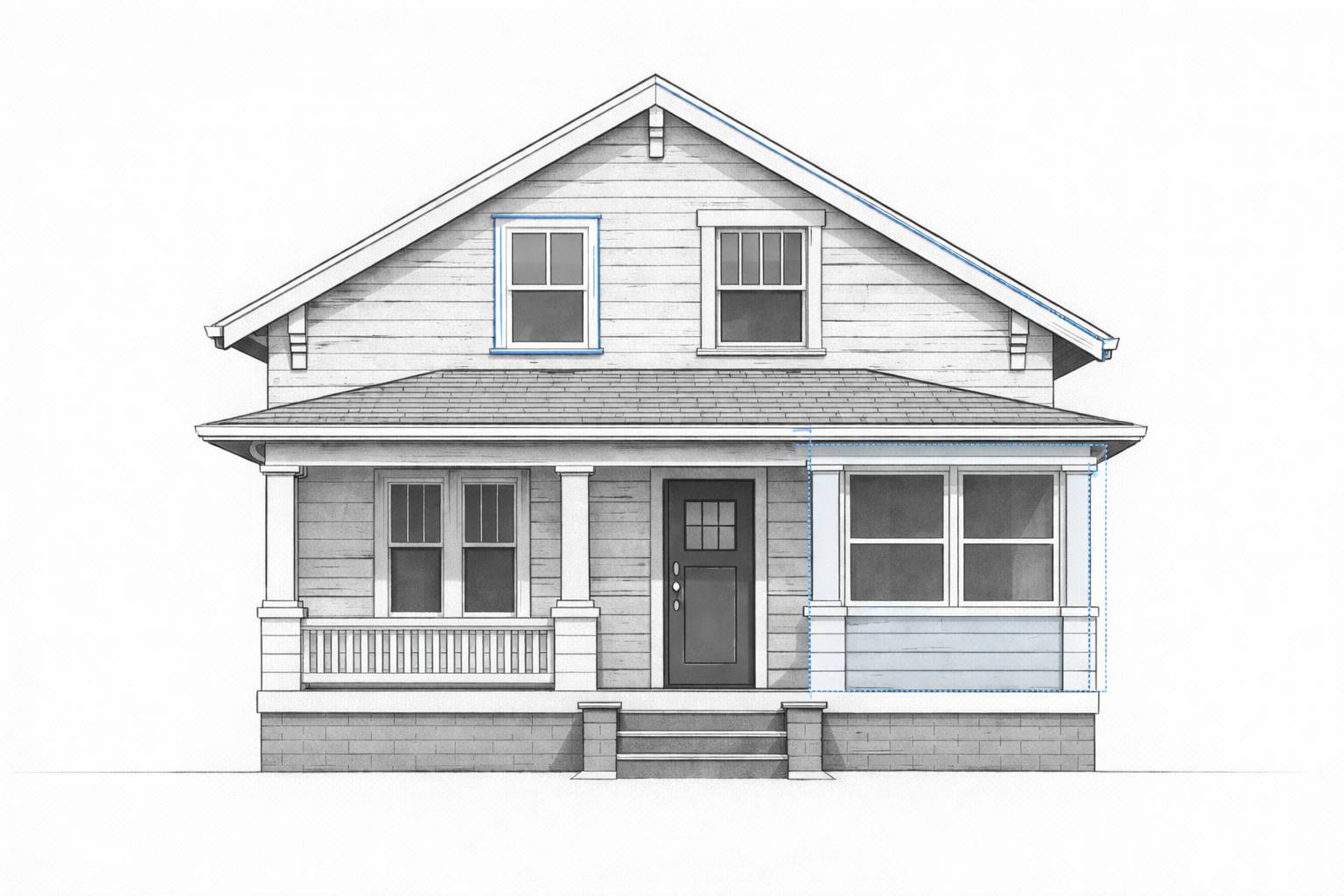
- Porches get enclosed and the facade loses its main social and visual anchor.
- Original windows get swapped for stock replacements with the wrong muntin pattern, frame thickness, or proportions.
- Siding gets covered with vinyl or aluminum, which flattens the depth and kills the old shadow lines.
- Brick gets painted or patched badly, which makes the house look newer and weaker at the same time.
- Kitchens and baths get redone in the style of the year, so people start reading the remodel instead of the house.
This is why people walk into a real 1910s house and say it feels off without knowing why. Often the bones are still good. It is the later layers that are fighting the house.
How to Spot a Real 1910s House From the Street
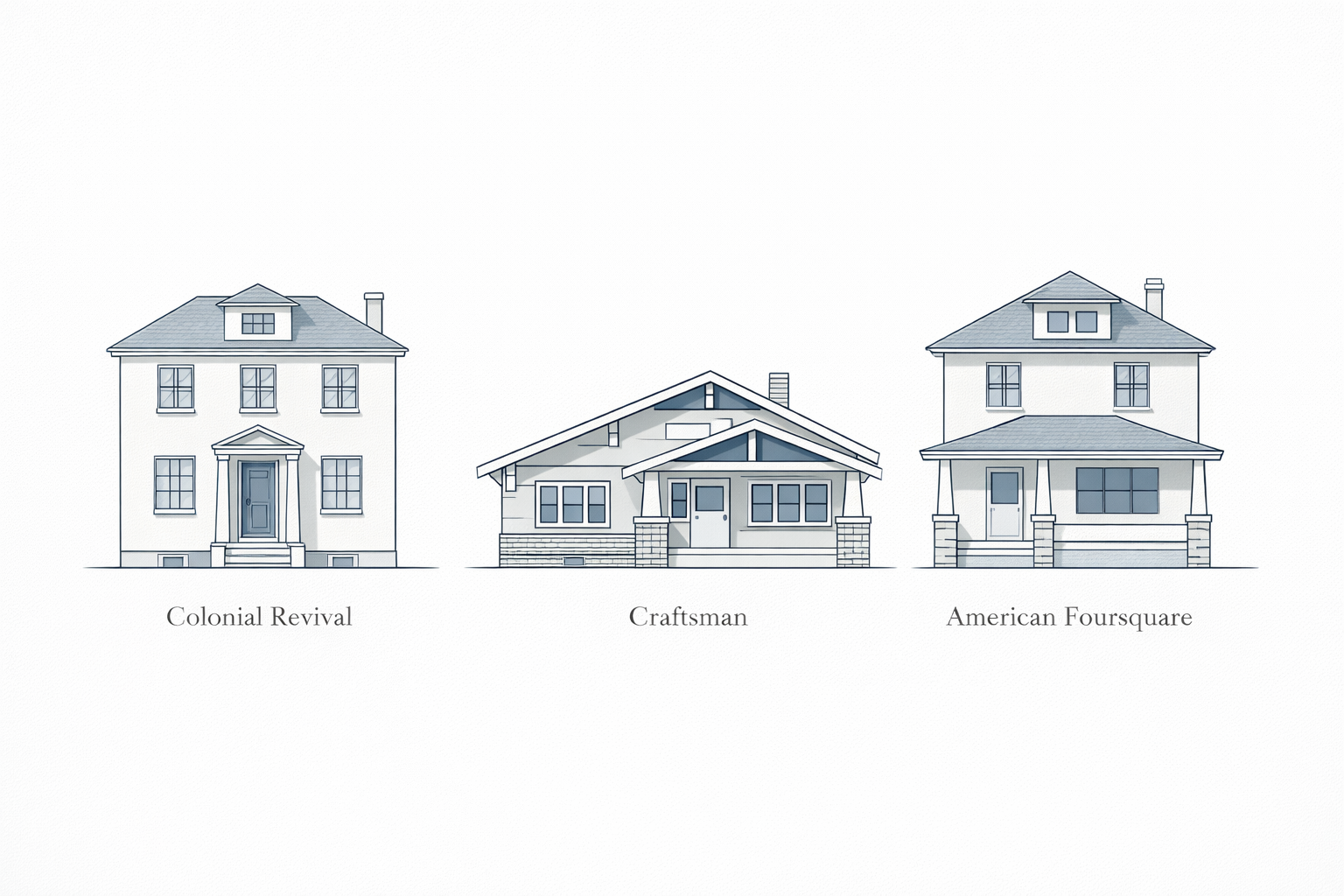
A real 1910s house usually tells you what it is before you ever step inside.
The porch usually tells you first
The porch is rarely an afterthought. On a bungalow it helps define the whole front elevation. On a Foursquare it anchors the boxy mass. If a supposed 1910s-inspired new build has no porch, or a token one that feels glued on, the house usually falls flat.
The roof does real work
You will often see low gables, broad eaves, hipped roofs, front dormers, and visible rafter tails. The roof is doing real design work, but it is not begging for attention.
Material changes can wreck the read
Brick, wood siding, shingles, stone bases, and painted trim all show up often. These houses usually look best when the materials read clearly and are not buried under synthetic replacement products.
Window swaps date the house fast
Grouped windows, upper sash patterning, and balanced placement are common. Even on simpler houses, the windows usually feel intentional. Random modern replacements can ruin that fast.
Front doors have weight
A 1910s front door usually has weight. It may have divided glass, a transom, side lights, or simple but well-proportioned trim. Cheap replacement doors tend to look wrong because the original entry was one of the house’s strongest signals.
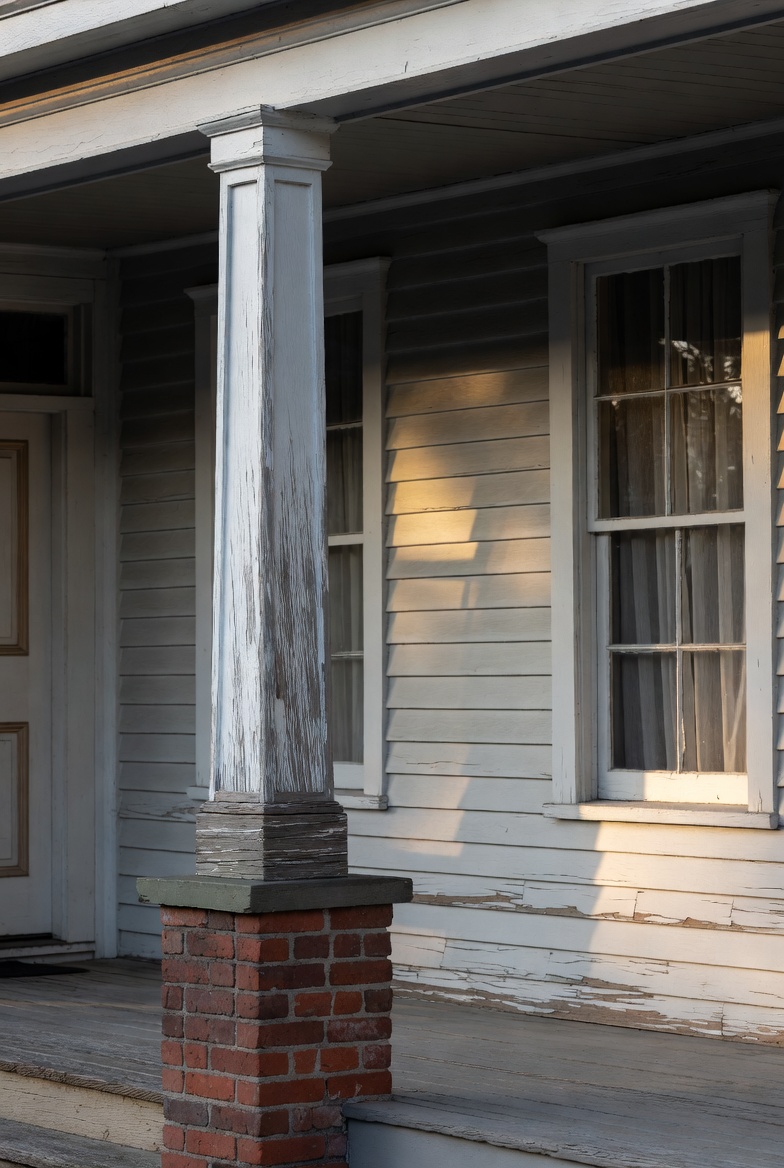
One more thing: old porch wear tells you more than people think. Peeling paint, soft trim, movement at the post base, and failed repairs are often the first clue that the repair list is bigger than the listing photos suggest.
What 1910s Interiors Still Do Better
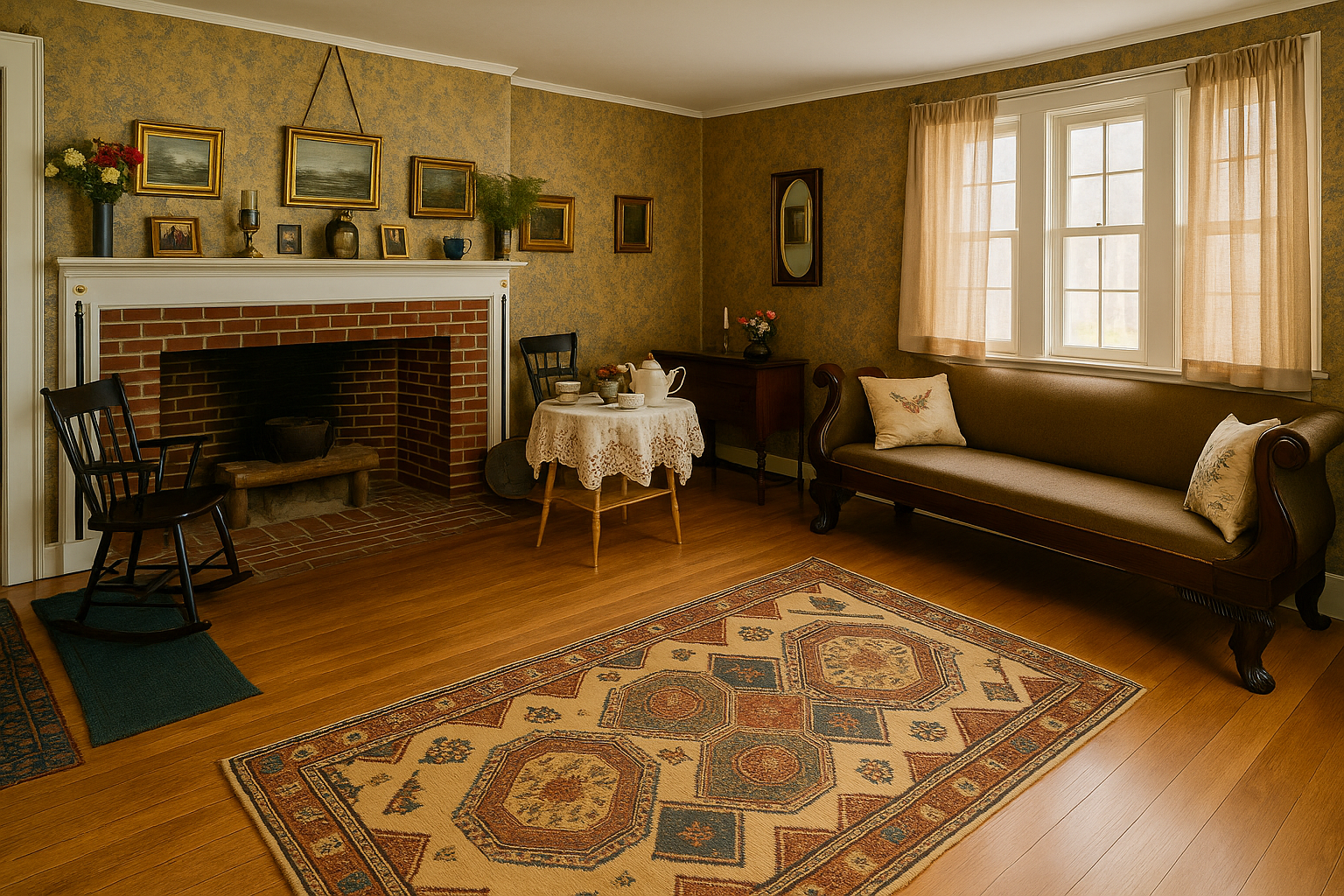
The best 1910s interiors still work because they were built around use first. That is a big part of why they age well.
Living rooms usually have a center
The fireplace, built-ins, or a clear seating wall gives the room gravity. That is one reason these houses often feel calmer than later open-plan spaces that try to make every direction the main direction.
Dining rooms still hold their ground
Built-in buffets, wood trim, plate rails, and stronger light fixtures give the dining room a clear role. Even when you modernize the house, that room usually works better when you let it stay defined.
Kitchens were built as work rooms
That creates problems now, but it also means they often had logical circulation and strong wall-based storage. When people modernize them badly, the mistake is usually trying to turn them into glossy showroom kitchens that fight the rest of the house.
Bedrooms punish oversized furniture
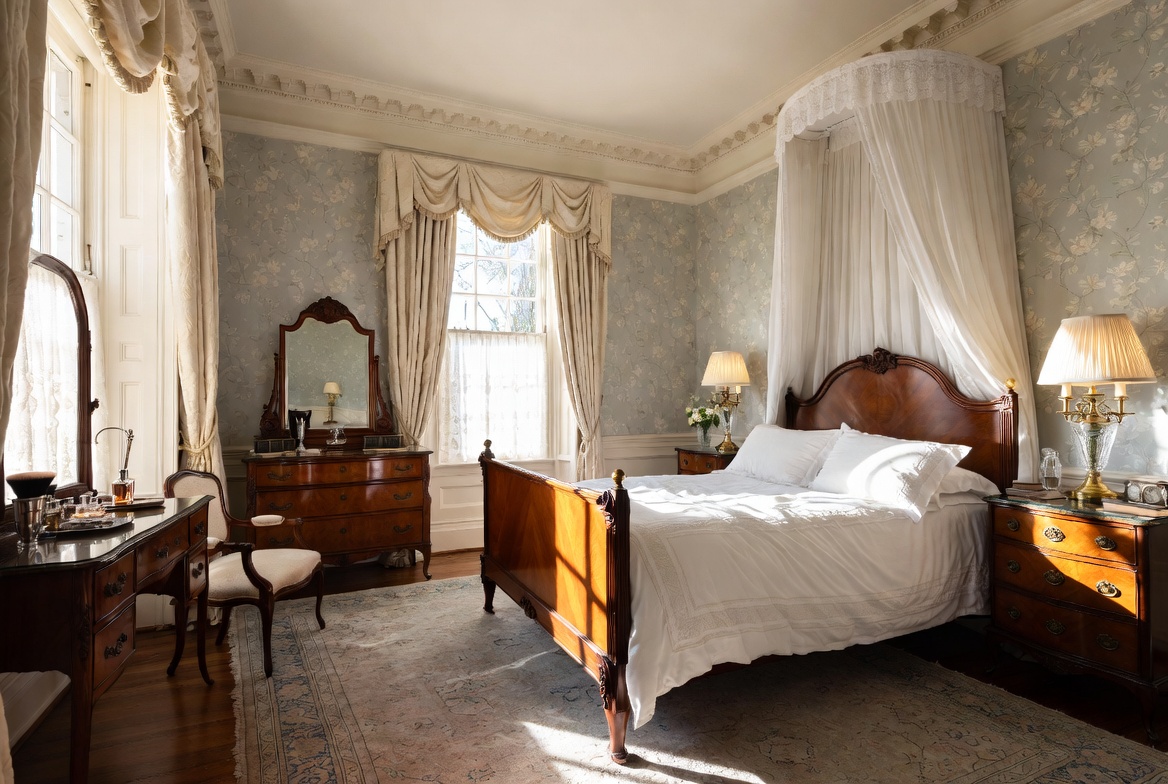
Image by ArchitectureCourses.org. A formal bedroom with period furniture, floral wallpaper, and decorative drapery typical of upper-end early-20th-century interiors.
These rooms usually depend on proportion, windows, trim, and light more than decorative extras. Oversized furniture is one of the fastest ways to make them feel wrong.
Bathrooms work best with restraint
Small-format tile, pedestal sinks, clawfoot tubs, and quiet finishes all sit naturally in these houses. The room usually works better when updates stay restrained.
Storage was never generous
That is one of the most common lived realities in a real 1910s house. Closets are often shallow, hallways narrow, and bedroom furniture has to be chosen more carefully than people expect.
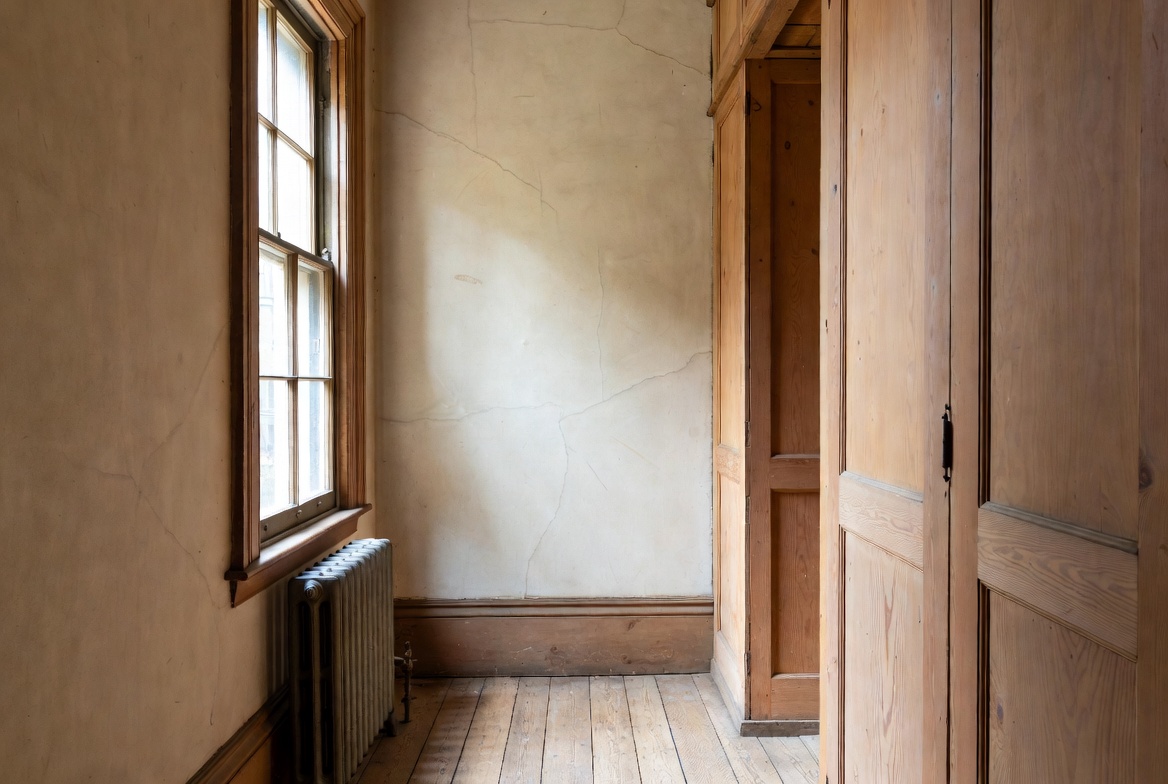
The main rule inside these houses is simple: keep the house readable. Preserve the elements that give it weight. Do not flatten everything into generic renovation language.
Where 1910s Houses Usually Go Wrong
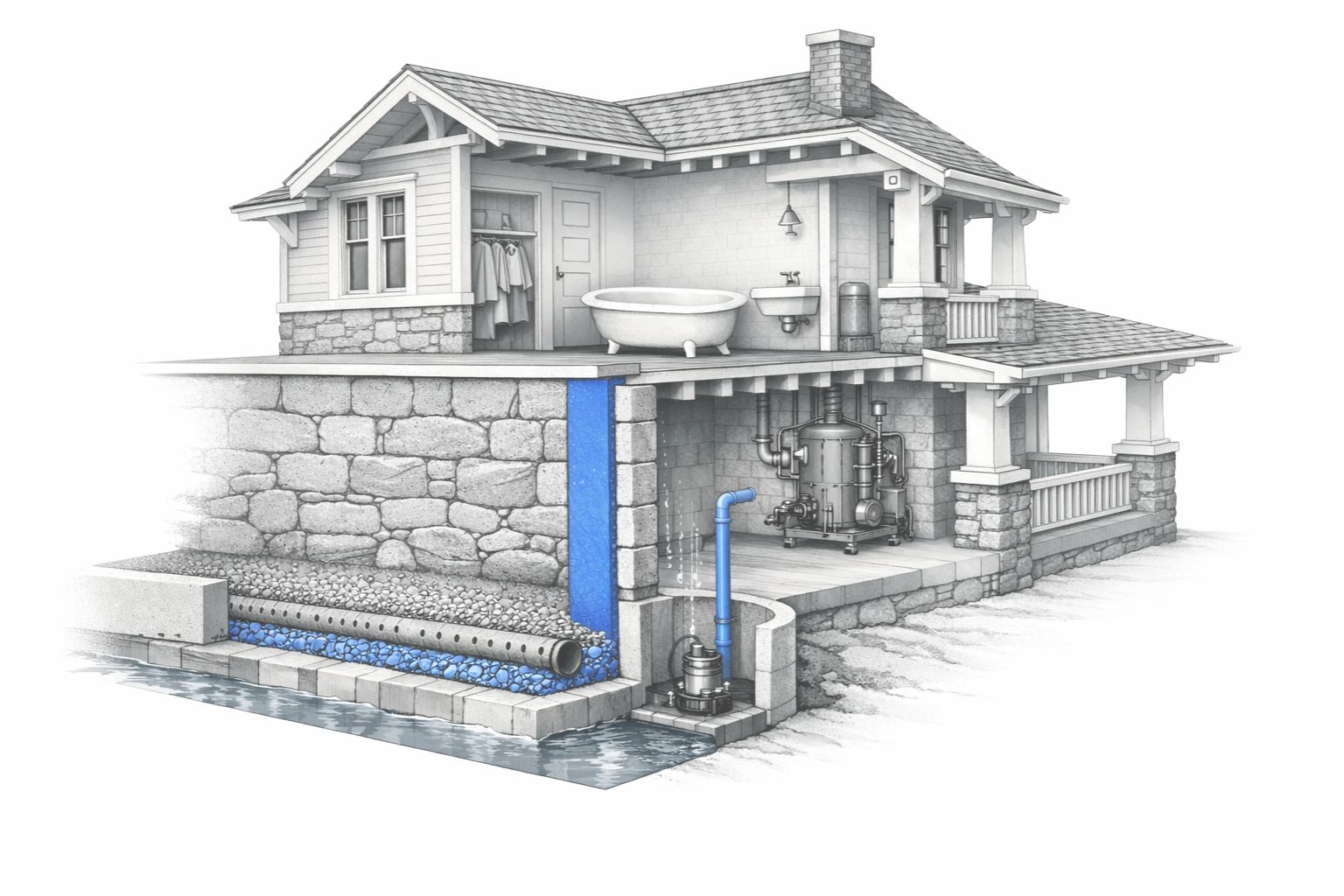
Charm is not the hard part. The hard part is what is hidden behind the trim, under the floors, in the attic, and around the foundation.
Old wiring
Knob-and-tube or partial rewiring is common in houses of this age. Safety comes first. Do not spend money on finishes before you know what the electrical system is doing.
Weak insulation and air leaks
Most 1910s houses were built before anyone cared about modern thermal performance. Drafts, cold floors, and overheated upper rooms are common. That does not mean you should gut everything. It means you should seal and insulate in a way that does not trap moisture or wreck original fabric.
Window problems
Original wood windows can often be repaired, weatherstripped, and paired with storms. Full replacement is not always the smartest first move.
Plumbing decay
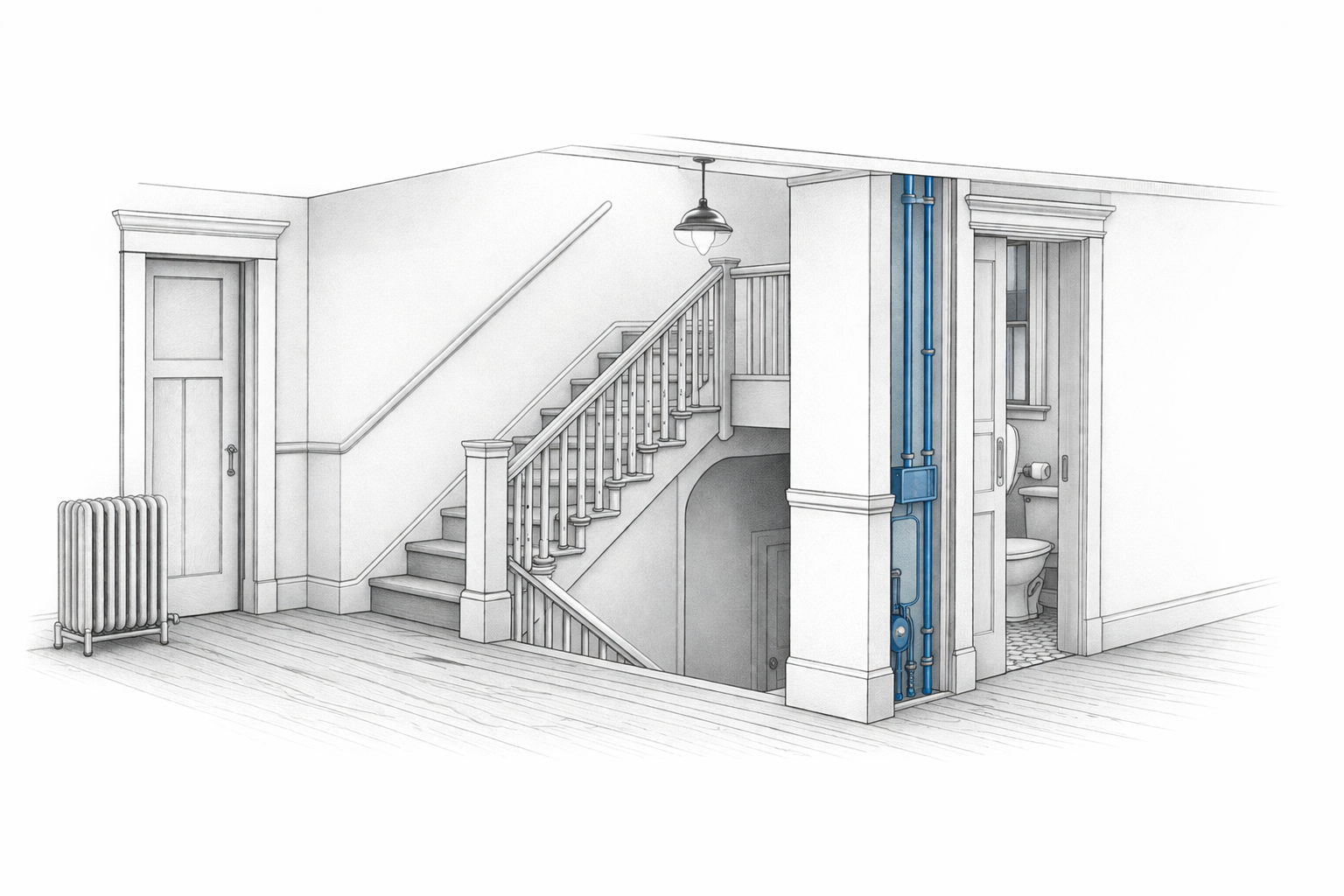
Galvanized lines, old drains, weak pressure, and patchwork bathroom additions show up often. Kitchens and bathrooms usually tell you first.
Foundation and floor movement
Sloping floors, cracked plaster, sticky doors, and uneven trim lines are common in century-old houses. Some movement is old and stable. Some is active and expensive. Learn the difference before you cosmetically patch everything.
Framing surprises
Some 1910s houses still carry older wall and floor logic that matters when you renovate. That is one reason it helps to understand balloon framing vs platform framing. You do not need to become a structural historian, but you do need to know what kind of house you are opening up before you start moving walls.
Lead, asbestos, and layered repairs
A house this old often contains more than one generation of fixes. Test before demolition. Assume nothing.
How to Update a 1910s House Without Stripping It Out
You do not need to freeze a 1910s house in time. You do need to stop removing the things that make it worth having.
Keep the parts that carry character
That usually means trim, doors, built-ins, stair parts, porch details, original flooring where salvageable, and fireplace surrounds. These are harder to replace well than most owners realize.
Upgrade systems before chasing finishes
Electrical, plumbing, drainage, insulation, and roof issues are not glamorous, but they decide whether the house stays healthy.
Do not over-open the plan
Some openings can improve flow. Too many and the house loses its rhythm. A 1910s house often depends on room-to-room sequence, framed views, and solid walls to feel right.
Use materials that belong
Wood windows, real trim, period-friendly tile, painted cabinetry with simple fronts, and durable natural finishes nearly always age better here than trend-driven replacements.
Be careful with paint and brick
Old brick, old trim, and old plaster all deserve a slower decision. Once you paint or strip the wrong thing, it is hard to go back.
Budget for hidden work
That is not optional advice. Old-house budgets blow up when owners price the visible work and ignore the invisible work.
Do not let one remodel overwrite the whole house
This is the mistake that makes a good old house feel hollow. A single kitchen, bathroom, or open-plan move can be fine. The problem is when every room starts answering to the remodel instead of the house itself.
Building New Without Faking the 1910s
Yes, you can build new with 1910s character. Most people just start in the wrong place.
A convincing 1910s-inspired house does not start with decorative brackets and random paneling. It starts with massing, porch depth, window proportion, roof shape, and material honesty. If those are wrong, the rest is costume.
What usually works:
- a porch that feels structural, not applied
- real depth at windows and doors
- simple siding, brick, stone, or shingle combinations that read clearly
- rooms with centers, not endless open space
- built-ins used where they make sense
- trim that has enough thickness to feel real
What usually fails:
- oversized open-plan interiors with fake period trim
- vinyl-heavy exteriors trying to imitate wood craft
- token porches
- window layouts that ignore symmetry, grouping, or facade balance
- too many historical references jammed into one house
The smartest new houses in this lane borrow restraint, proportion, and material logic from the 1910s. They do not try to cosplay the decade.
Why These Houses Still Work
1910s houses hold up because they sit in a useful middle ground. They still have warmth, detail, and hand-built character, but they are already moving toward simpler modern living.
That is why people still want them. They feel historic without feeling theatrical. They feel finished without feeling overworked.
They also help explain what came next. If you want the next step in the timeline, move from this page into 1930s house style and you can see how the house keeps simplifying, standardizing, and adapting to new habits.
Common Questions
What is the most common 1910s house style?
The bungalow is probably the clearest and most recognizable 1910s house type, especially in North America. Foursquares and Colonial Revival houses were also common.
Are 1910s houses expensive to maintain?
They can be. The cost depends less on the style and more on the condition of the roof, wiring, plumbing, windows, and foundation.
Should you replace original windows in a 1910s house?
Not automatically. Many original wood windows can be repaired and upgraded with weatherstripping or storm windows. Full replacement should come after a real condition check.
What is the biggest renovation mistake in a 1910s house?
Over-modernizing the interior and stripping out the elements that give the house its weight. Once the built-ins, trim, porch character, and room sequence are gone, the house becomes much harder to read.