

Illustration by ArchitectureCourses.org. King and jack stud framing with header support and load path.
A lot of framing trouble starts at the opening.
Not in the middle of the wall. At the door. At the window. At the header support that looked close enough until the jamb moved, the trim opened up, or the load stopped landing where it should.
King and jack studs are a small part of the wall, but they do a lot of the work at an opening. They support the header, define the opening, and carry load back into the frame. Get them wrong and the wall shows it later.
Start there: what king and jack studs do, how they differ from cripple studs, what changes in wood and metal framing, how door and window openings get framed properly, and where crews usually get into trouble.
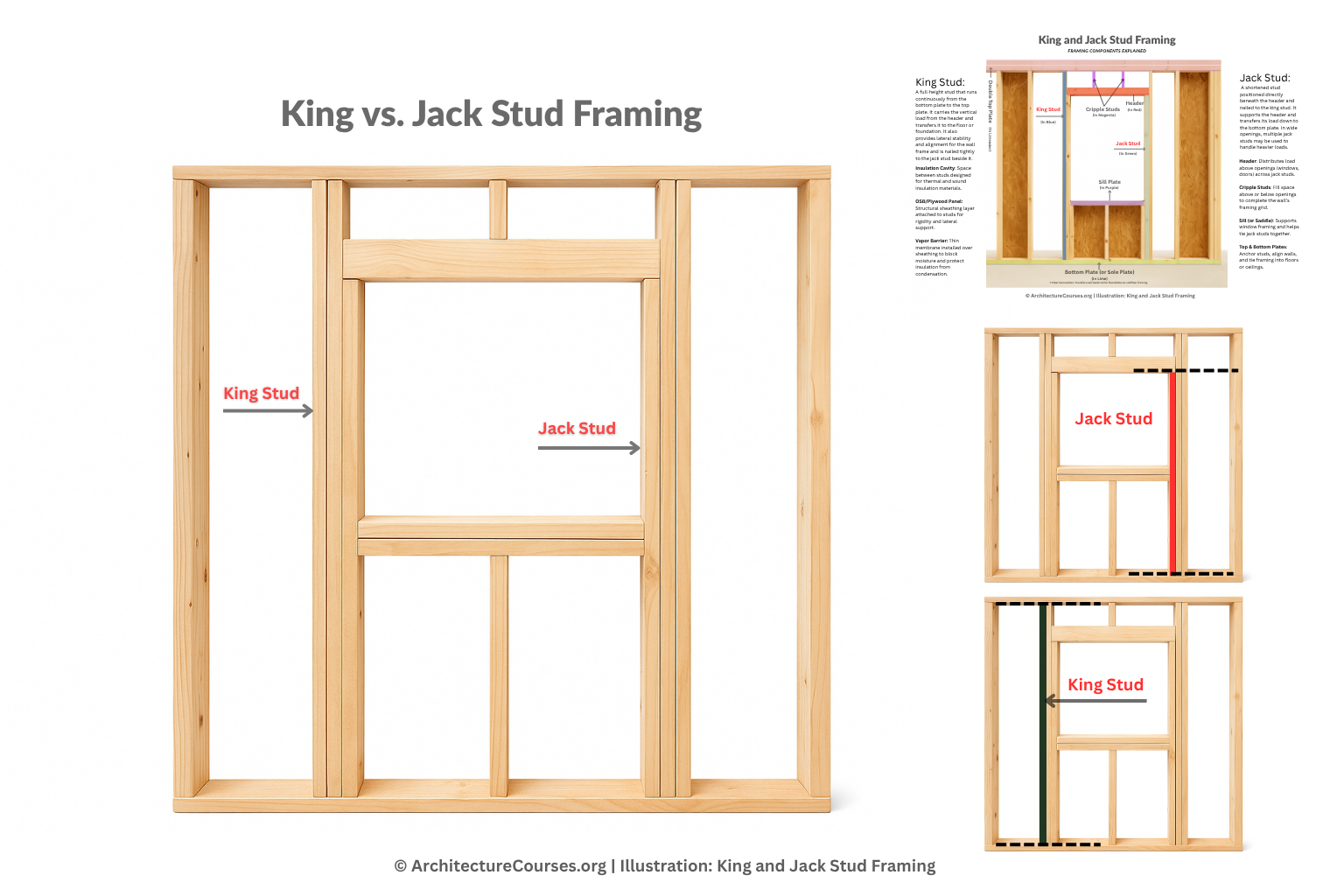
Illustration by ArchitectureCourses.org. King stud and jack stud diagram around a framed opening.
What Are King and Jack Studs?
In wall framing, an opening needs support on both sides. That support is usually handled by a king stud and a jack stud working together.
| Member | What It Does | Where It Runs | Common Mix-Up |
|---|---|---|---|
| King stud | Keeps the wall frame continuous and helps carry load past the opening | Full height, from bottom plate to top plate | Treated like optional side framing |
| Jack stud | Supports the header and transfers that load down | From bottom plate to the underside of the header | Confused with a cripple stud |
| Header | Spans the opening and carries the load above | Across the top of the opening | Treated like it can carry load without proper bearing |
Short version: the jack stud holds the header up. The king stud keeps the wall organized and gives that short support stud something solid to work beside. On many plans, the jack stud is also called a trimmer stud.
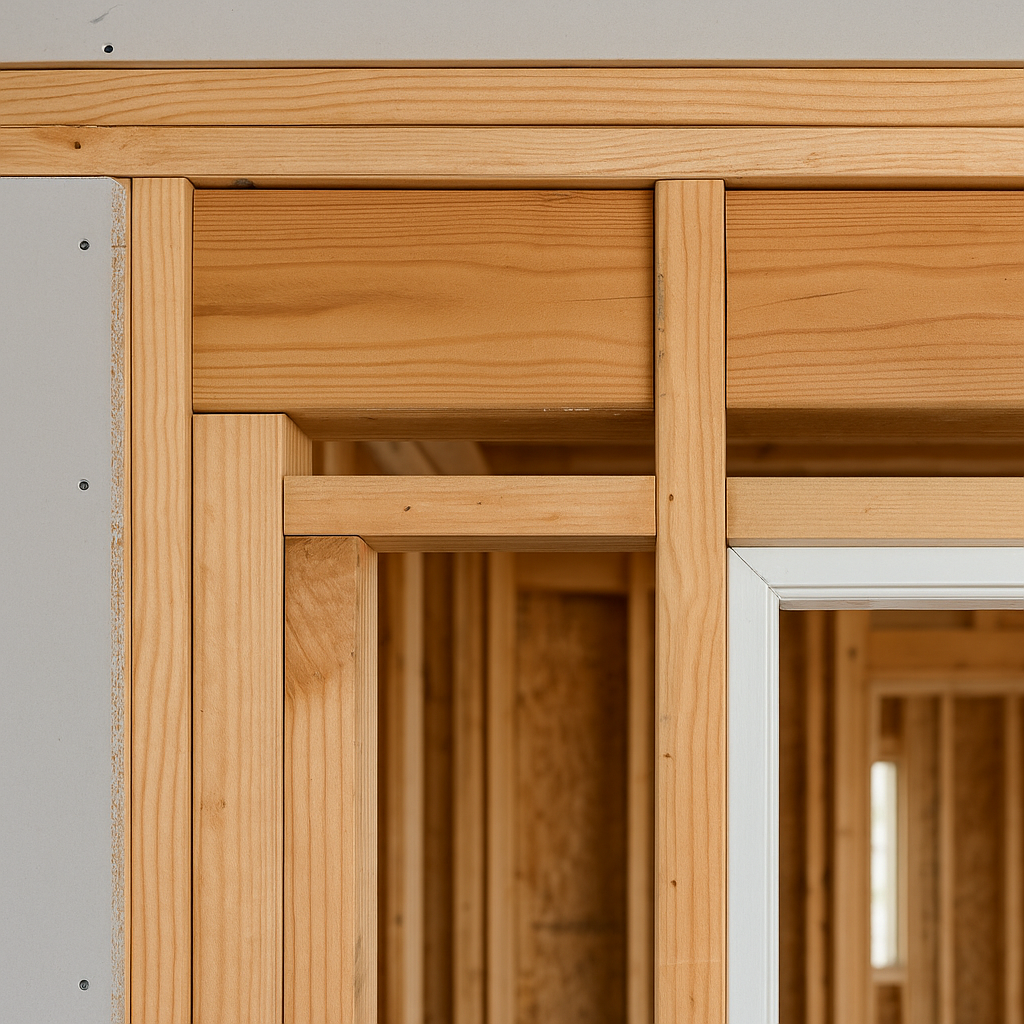
Illustration by ArchitectureCourses.org. Door and window opening framing with king studs, jack studs, and header support.
Why Door and Window Openings Need Both
Headers do not just float over a door or window opening. They need bearing at each end, and that bearing has to land on framing that can carry the load down.
That is the whole reason the king-and-jack setup exists. The header spans the opening. The jack studs support the ends of that header. The king studs keep the opening tied into the rest of the wall so the load path stays organized instead of turning into a weak patch in the frame.
Skip the jack stud and the header loses proper support. Skip the king stud and the opening loses stiffness and alignment. In a simple partition you may not notice the problem right away. In a loaded wall, you usually will.
That shows up later as a sticking door, a cracked corner, trim that opens up, drywall stress, or sag that starts small and stays.
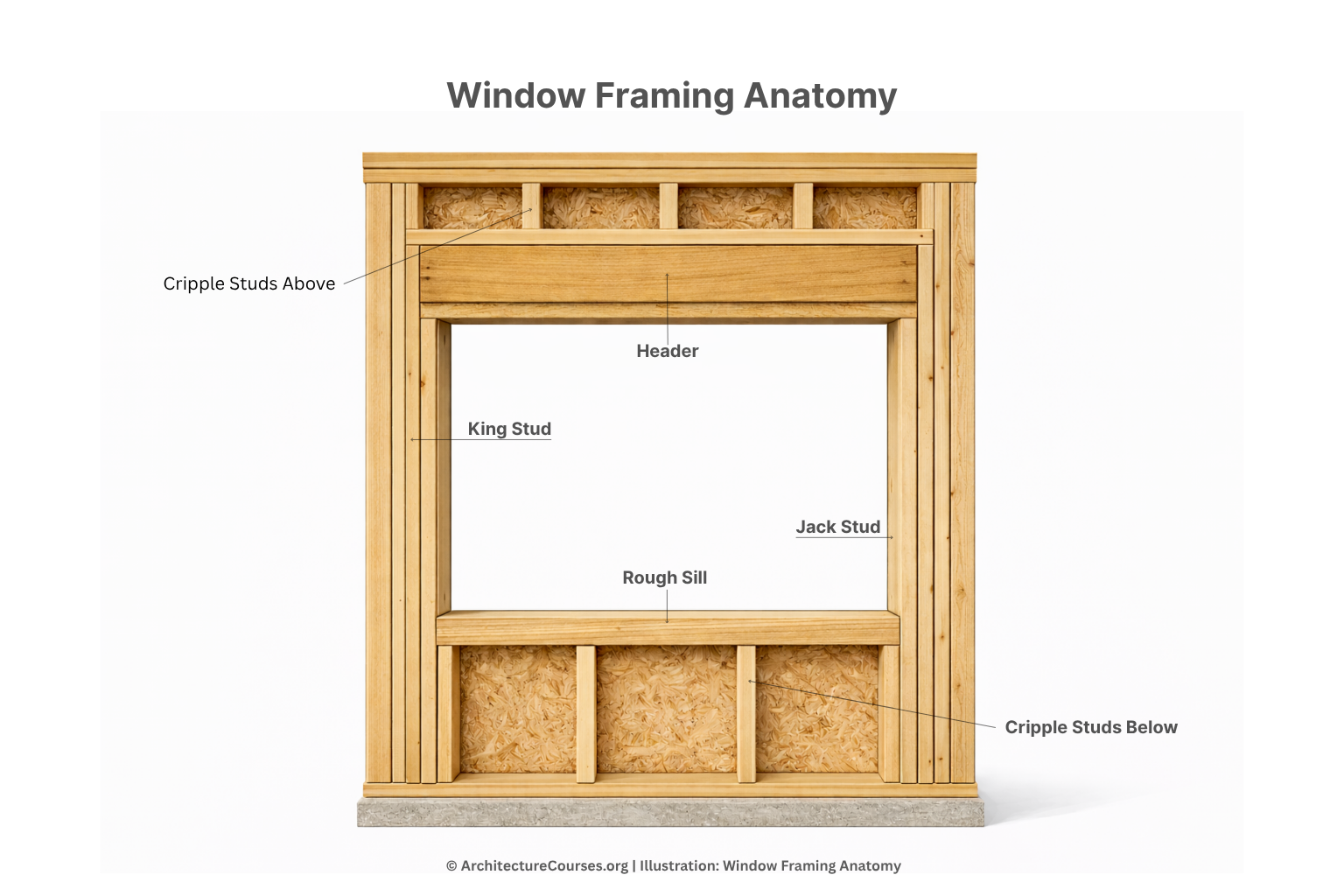
Illustration by ArchitectureCourses.org. Window framing anatomy diagram showing the main parts of a framed window opening.
Where the Load Goes Around the Opening
The opening interrupts the wall, so the wall has to reroute the load.
Above the opening, the header picks up that load. At each end, the header bears on jack studs. Beside that, the king studs keep the opening tied into the rest of the wall framing. Below a window opening, the sill and cripple studs fill back in where the full-height stud line was broken.
That is why this detail matters more than it looks. Once you cut a hole in the wall, the framing has to get the load around that hole without twisting, crushing, or drifting out of line.
Also useful. If you want to read these parts as a system instead of as isolated labels, House Framing Diagrams: How to Read the Skeleton of a House is the next useful step.
Where You Need King and Jack Studs
Any framed door or window opening needs support at the sides. The exact amount of support changes with span, load, wall type, header size, and local code.
Standard Wood Framing
For many smaller residential openings, one jack stud per side is common. Once the opening gets wider, the load gets heavier, the wall is bearing, or the header changes, the support often changes too. That may mean double jacks, a larger header, engineered lumber, or a different detail than the one used on a light interior opening.
This is where crews get sloppy. They remember what worked on the last job and repeat it on the next one without checking the span tables or the actual wall condition.
Metal Stud Framing for Windows and Doors
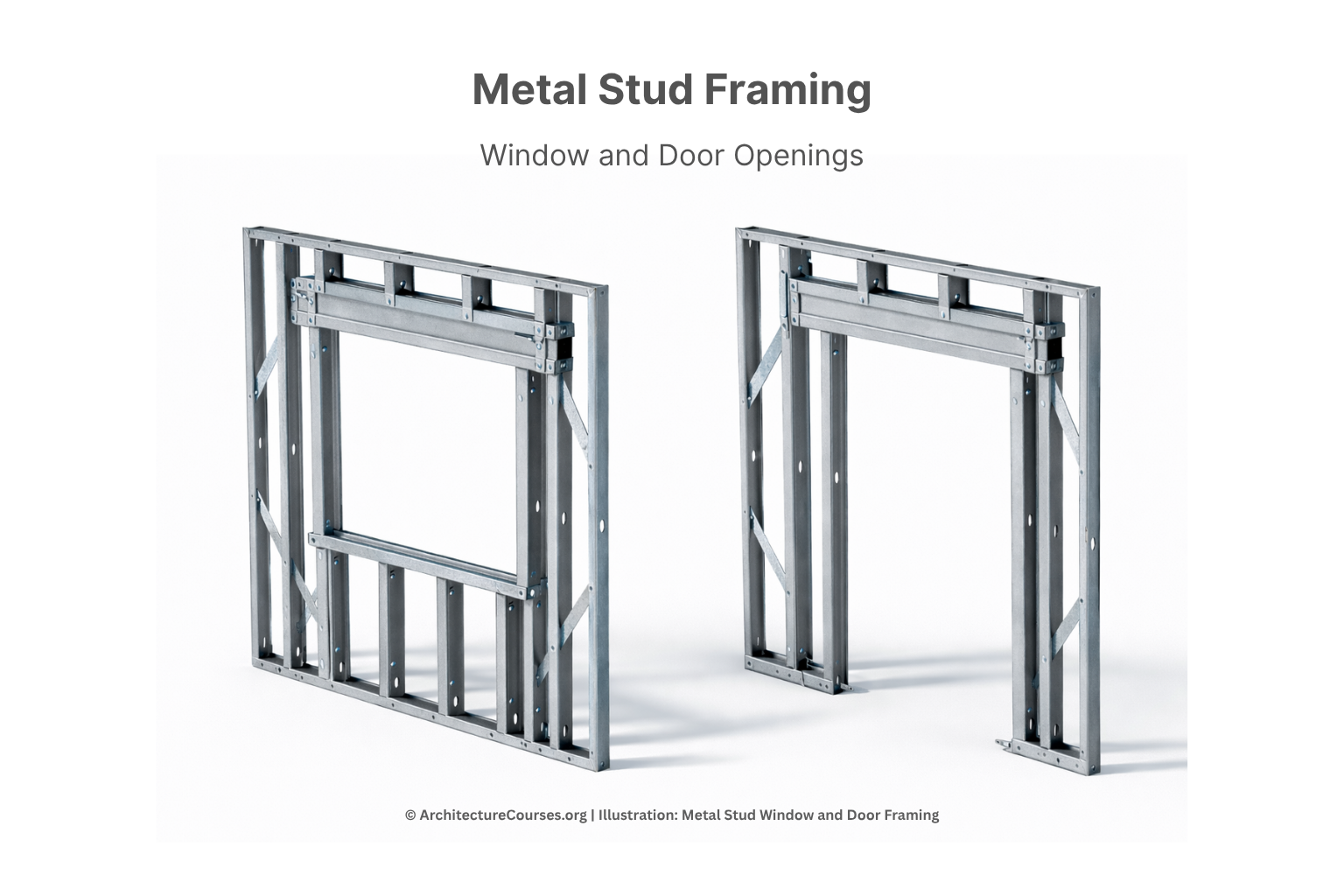
Illustration by ArchitectureCourses.org. Metal stud window and door framing showing typical window and door openings, header framing, and side support.
The logic stays the same in light-gauge steel framing. The opening still needs full-height side support, header support, and a clean load path. What changes is the connection method, the stud section, the gauge, and the manufacturer or engineer requirements.
In metal king stud framing for windows and doors, bad assumptions show up fast. Wrong gauge. Wrong clip. Wrong screw. A setup that looks square can still be weak if the connection is not built the way the system expects.
What Changes the Detail
- opening width
- whether the wall is load-bearing
- roof, floor, or point load above
- wood framing vs metal framing
- engineered header vs site-built header
- wind, seismic, or other local code conditions
The broad rule is simple: every opening needs side support. The exact detail is not universal.
What’s the Difference Between a Jack Stud and a Cripple Stud?
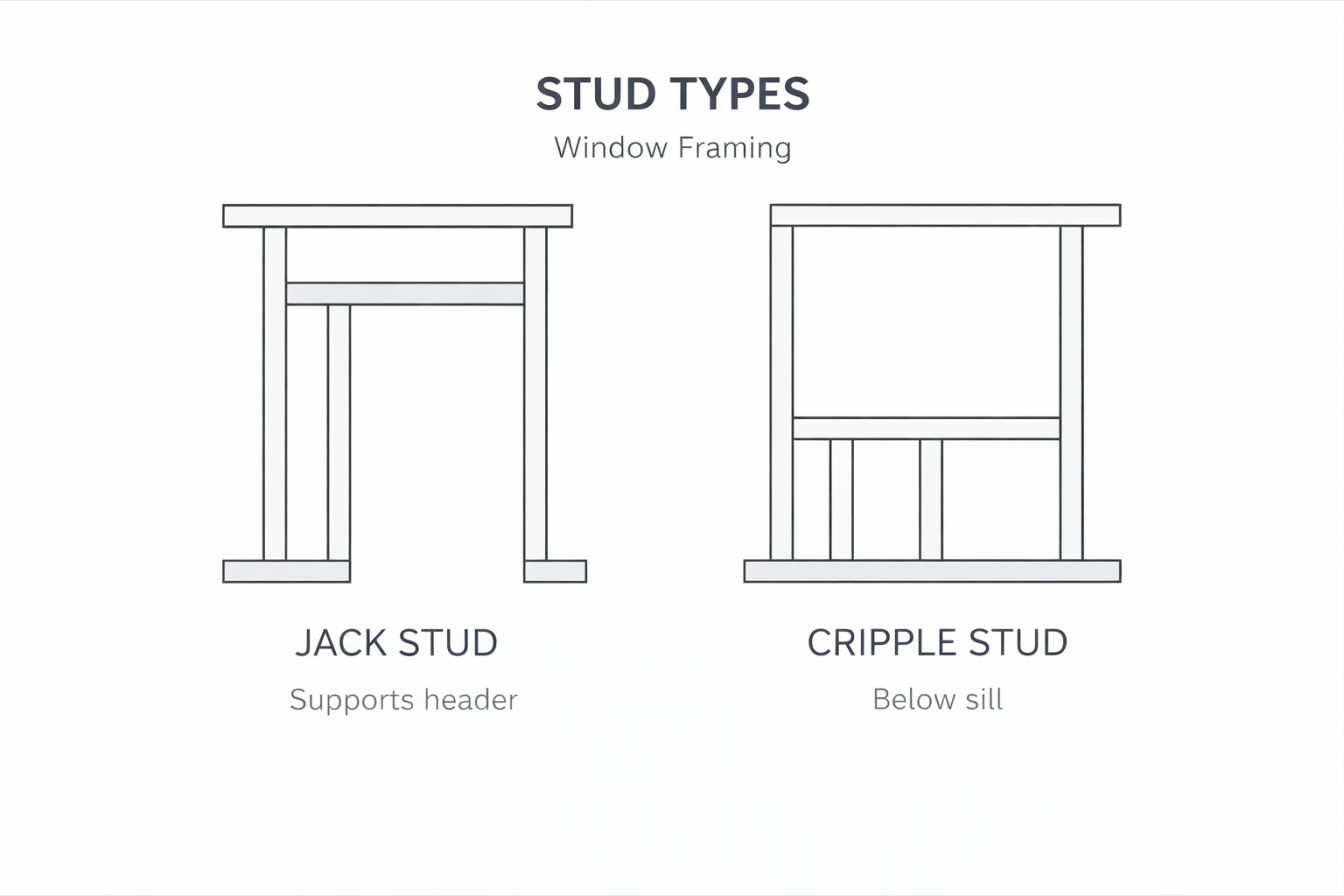
Illustration by ArchitectureCourses.org. Jack stud and cripple stud comparison in a framed wall opening.
A jack stud and a cripple stud are not doing the same job.
| Member | Main Job | Typical Location | Carries Header Load? |
|---|---|---|---|
| Jack stud | Supports the header | Directly under each end of the header | Yes |
| Cripple stud | Fills in short wall segments | Above a header or below a window sill | No, not in the same way |
That difference matters. A cripple stud helps complete the wall framing. A jack stud is part of the support system for the opening.
Sizing King and Jack Studs
This is where the broad page needs to stay honest. There is no single size rule that covers every opening. The wall type, header design, span, load above, species, grade, and code cycle all matter.
Wood Framing
- King studs usually match the wall studs in depth and run full height.
- Jack studs are cut to fit from the bottom plate to the underside of the header.
- The number of jack studs can change with header span and load.
- Heavier openings may need engineered headers, more bearing, or more than one jack per side.
Metal Framing
- Gauge, flange width, and connection method matter as much as the stud location.
- Non-load-bearing partitions and load-bearing steel walls are not the same detail.
- Manufacturer tables and the project documents control the final call.
A safe field check is this: do not size the opening support from memory alone. Size it from the header, the wall condition, and the actual load above.
This part matters. If the main question is support count, not the whole opening, read How Many Jack Studs for a Header?.
How to Frame a Door or Window Opening
The sequence is not complicated. It just needs to stay clean.
- Lay out the rough opening first. Mark both plates clearly so the opening stays true when the wall comes together.
- Set the king studs. These establish the full-height sides of the opening and keep the wall line consistent.
- Cut and fit the jack studs. They need to land tight under the header with no sloppy gaps.
- Set the header with proper bearing. The header should sit where the design expects it, not where the crew can make it fit.
- Check plumb, level, and alignment before locking it in. A small miss here turns into finish problems later.
If you searched how to frame a door using king and jack studs, that is the core sequence. The same basic sequence applies to many window openings too. On a simple opening, the work goes fast. On a heavy opening, in a bearing wall, or in a metal system, the steps still apply. The tolerances just matter more.
Before you move on. For the broader wall layout that happens before the opening gets built, see Wall Framing Basics: The Simplest Guide to Studs, Plates, and Blocking.
Where Openings Go Wrong
| Common Mistake | What It Causes | Better Move |
|---|---|---|
| Header not bearing cleanly on the jack studs | Sag, stress cracks, uneven load transfer | Dry-fit the opening and make sure the bearing is tight and direct |
| Jack stud cut short | Loose support under the header | Measure from the actual bottom of the header, not from a guess |
| King and jack studs out of plumb | Twisted opening, sticking doors, bad trim lines | Check both faces before sheathing closes the problem in |
| Wrong support detail for the header span | Underbuilt opening | Match the studs to the actual header design and span tables |
| Wrong fasteners in metal framing | Weak connection even when the layout looks right | Follow the manufacturer or engineer detail, not drywall-screw logic |
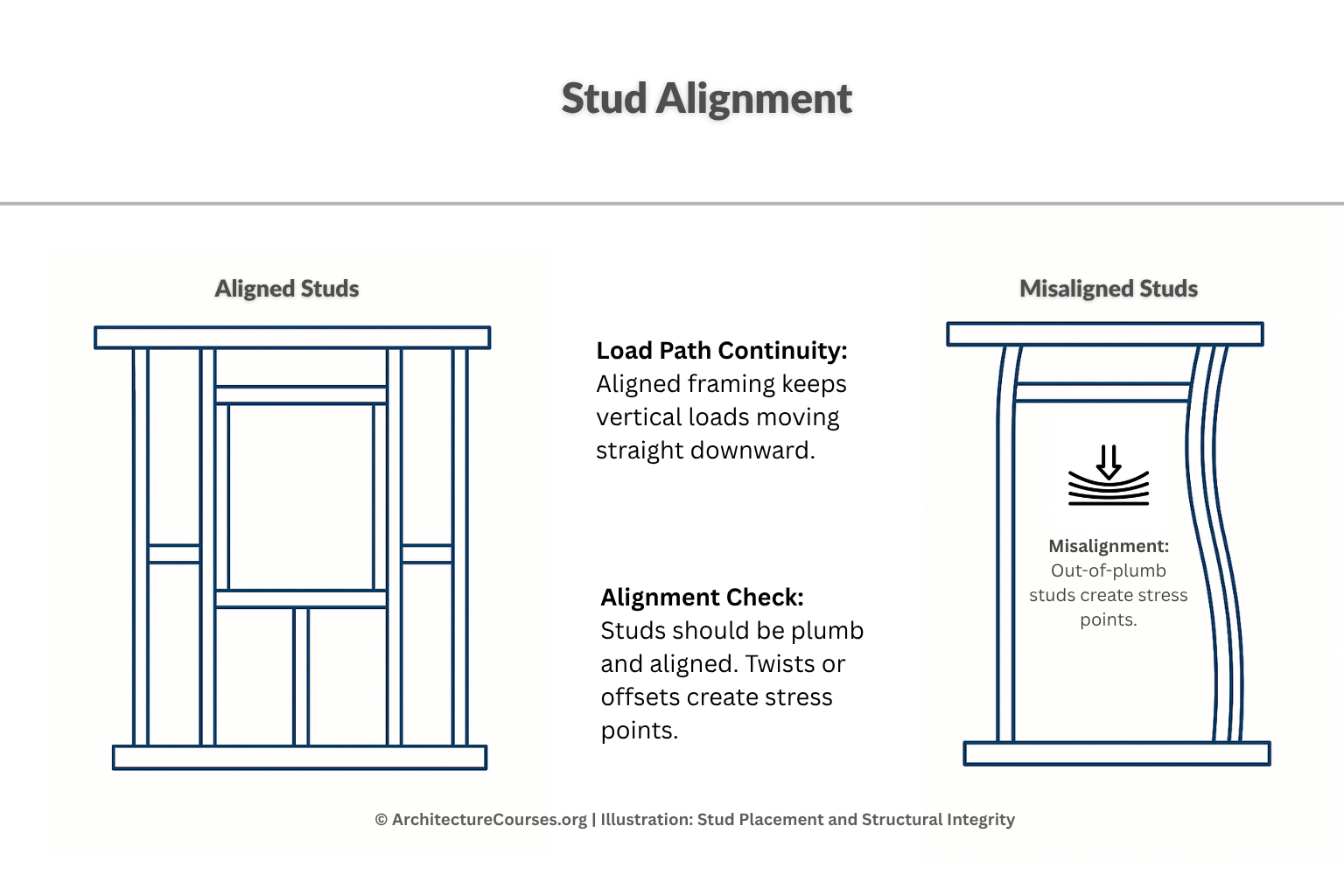
Illustration by ArchitectureCourses.org. Stud alignment diagram comparing properly aligned studs with misaligned studs and their effect on load transfer.
Keep the Load Path Straight at the Opening
This is the part people talk about less and regret later.
The opening can be framed with all the right parts and still perform badly if the load path gets crooked. That happens when the jack studs are kicked out, the king stud is twisted, the header is shimmed badly, or the support below is not landing where the load was meant to go.
In practice, that means:
- keep the king and jack studs plumb
- keep the header bearing direct
- keep the opening square before sheathing
- do not assume finish work will hide structural slop
It will not. It usually exposes it.
Wood vs. Metal King Stud Framing
| Comparison | Wood Framing | Metal Framing |
|---|---|---|
| Typical use | Standard residential framing | Light-gauge partitions and some commercial or mixed systems |
| Main connection logic | Nails, screws, bearing, and fit | Screws, clips, track, and gauge coordination |
| What goes wrong most often | Bad cuts, poor bearing, out-of-plumb layout | Wrong gauge, wrong fastener, weak clip detail |
| Best use case | Typical house walls and many remodels | Projects already built around a steel stud system |
Metal king stud framing for windows and doors is not a different idea. It is the same structural problem with a different kit of parts.
What Changes the Opening Detail
This page is US-first, but the same caution applies everywhere: the opening detail changes when the job changes.
Wider openings, bearing walls, snow load, wind exposure, multiple stories, engineered headers, and manufacturer-specific steel systems can all change the number of support studs, the header design, the fastening, or the bearing requirement.
That is why broad rules help, but final sizing comes from the actual conditions. On some jobs, one jack per side is fine. On others, it is not enough. The opening has to match the load, not the habit.
One small terminology note: in some regions and on some plans, a jack stud is also called a trimmer stud. Same basic role. Same need for clean support under the header.
Field Guides Worth Keeping Nearby
- FIELD PICK: The Very Efficient Carpenter: Basic Framing for Residential Construction for straightforward residential framing logic.
- REFERENCE: Graphic Guide to Frame Construction: Fourth Edition, Revised and Updated for clear framing diagrams and wall-opening details.
- MUST READ: Modern Carpentry: Building Construction Details in Easy-to-Understand Form for a broader construction reference.
- JOBSITE GUIDE: Complete Book of Framing: An Illustrated Guide for Residential Construction for layout and residential framing workflow.
- CODE CHECK: Code Check: A Field Guide to Building a Safe House for quick field-reference code checks.
- OFFICIAL SOURCE: APA Engineered Wood Construction Guide.
FAQ
Can I use only jack studs without king studs?
Not on a typical framed opening detail. The jack stud supports the header, but the opening still needs the full-height side framing that keeps the wall continuous and stable.
How many jack studs do I need per opening?
At least one per side is common on many smaller openings, but that is not a universal rule. Width, load, wall type, and header design can all push the detail heavier.
Are king studs load-bearing?
They are part of the load path and part of the wall structure around the opening. They are not just filler beside the jack stud.
Do windows use king and jack studs too?
Yes. Window framing uses the same basic opening logic: king studs at the full-height sides, jack studs supporting the header, then sill and cripple studs completing the frame below and above where needed.
Do metal studs need a different header detail?
Usually yes. The structural idea stays the same, but the section, gauge, clips, screws, and manufacturer requirements can change the build.
Can I cut a jack stud a little short and shim it?
That is a bad habit. Clean bearing matters. The header wants direct support, not a sloppy patch.
Is a trimmer stud the same as a jack stud?
In many plans and regions, yes. The term changes more than the job does.