
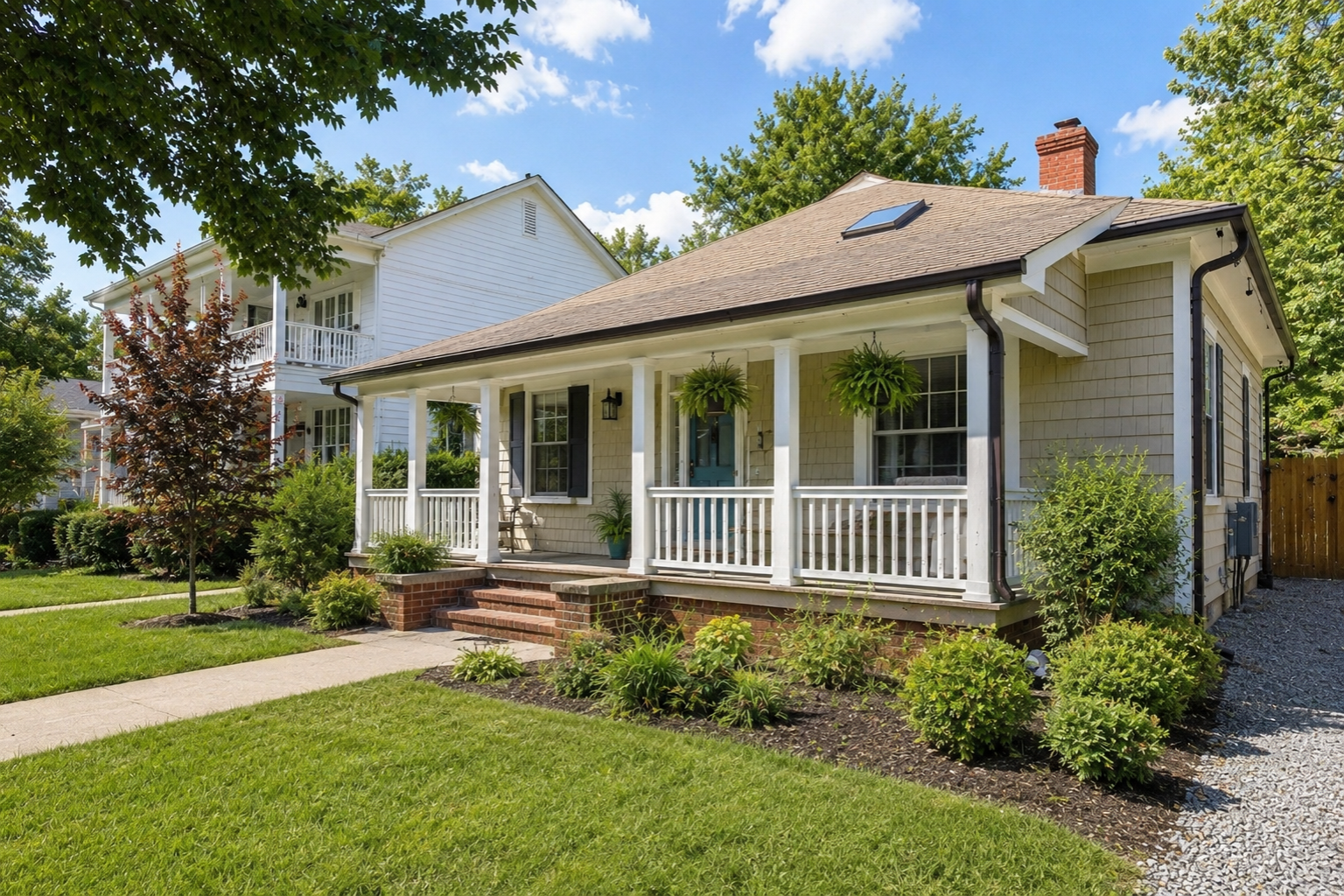
American bungalows work when the roof, porch, windows, rooms, and built-ins stay in balance.
The roof keeps the house low. The porch gives it shade and street life. The rooms stay compact. The built-ins make small spaces useful. Nothing has to be oversized to feel good.
Most bad bungalow remodels fail by changing the scale. Thin porch posts, flat siding, random windows, wide-open rooms, and bulky additions can erase the house even when the materials are new.
This article shows what to keep, what to change carefully, and what to avoid before a bungalow loses the details that made it work.
What Is an American Bungalow?
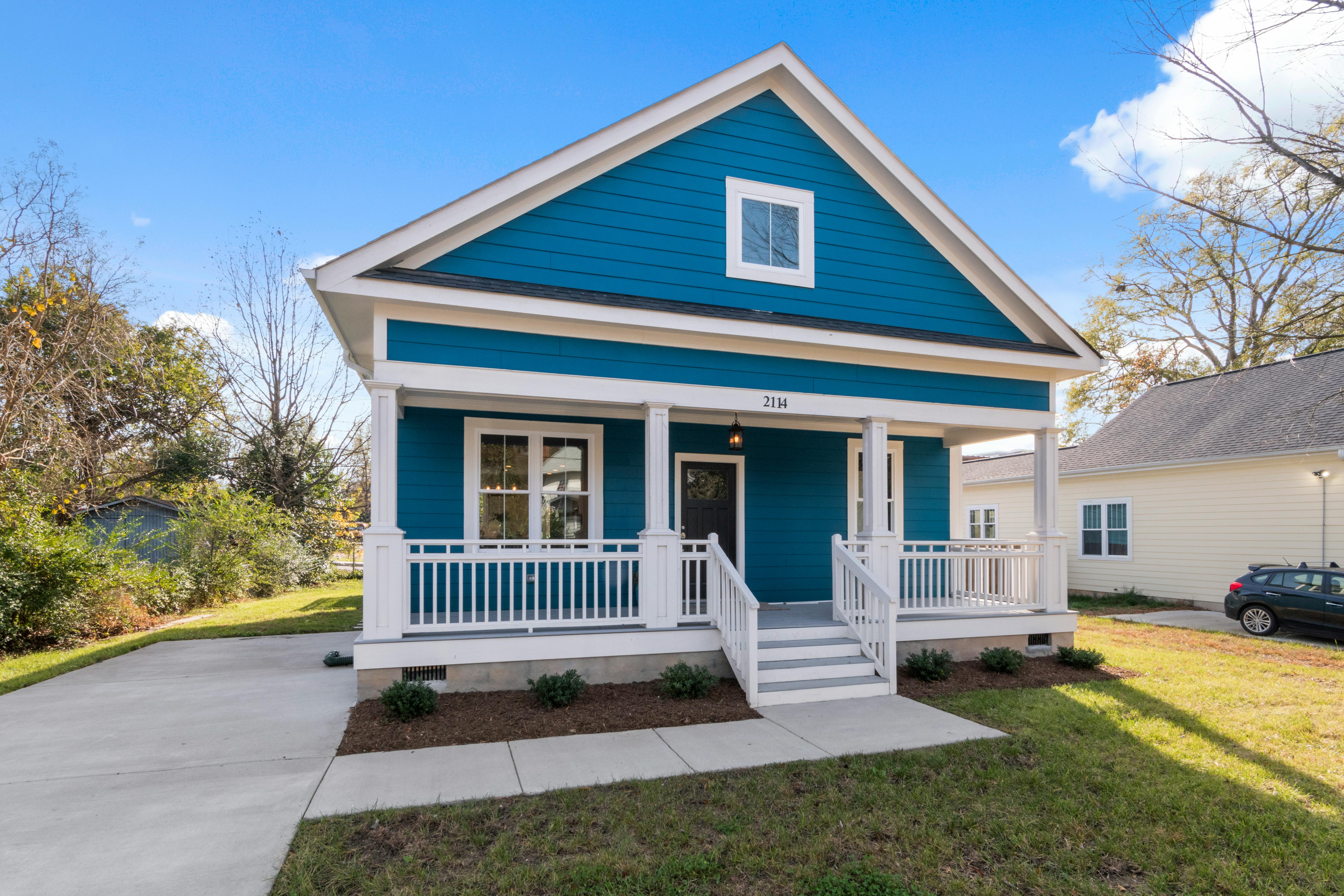
An American bungalow is a small to medium-sized house, usually one story or one-and-a-half stories, with a low roof, deep eaves, a front porch, and a compact floor plan.
Many use wood, brick, stone, stucco, shingles, or a mix of those materials. The style became common across the United States in the early 1900s because it fit ordinary households. It was smaller than many Victorian houses, easier to heat, less formal, and better suited to growing streetcar suburbs and early car neighborhoods.
A bungalow does not need to be fancy. In fact, the plain ones often work best. The character comes from proportion, shade, texture, porch depth, window rhythm, and built-in storage more than decoration.
Quick Bungalow Test
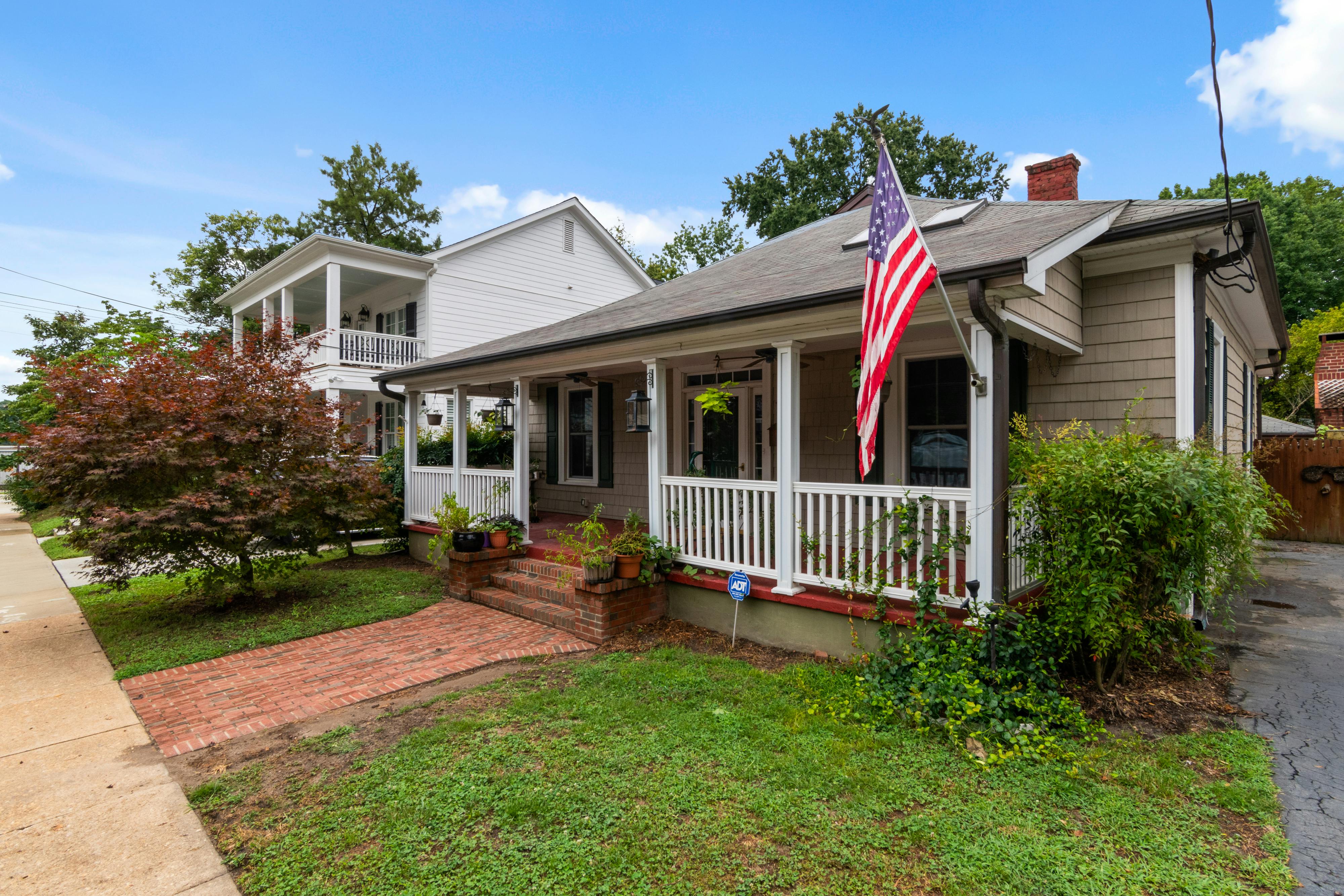
A house is likely an American bungalow if most of these are true:
- One story or one-and-a-half stories
- Low-pitched roof, often gabled or hipped
- Wide front porch or covered entry
- Deep eaves, sometimes with exposed rafter tails
- Compact living and dining rooms near the front
- Kitchen toward the rear or side
- Two or three bedrooms on the main floor
- Built-ins, fireplace, or original wood trim
- Simple materials used with real depth, not pasted-on decoration
The easiest mistake is calling any small one-story house a bungalow. A ranch, cottage, Cape Cod, and bungalow can all be small. What makes the bungalow different is the way the roof, porch, rooms, and trim work together.
Key Features of American Bungalow Houses
Low Roof and Deep Eaves
The roof is one of the strongest bungalow clues. A low roof makes the house feel settled into the lot. Deep eaves shade the walls and windows, protect exterior materials, and give the house its wide, grounded look.
On Craftsman bungalows, the eaves may show rafter tails or brackets. On Prairie-influenced bungalows, the roof often stretches wider and flatter. On Chicago bungalows, the roof is often hipped and compact, with brick walls below.
A Front Porch That Works Like a Room
The porch is not just decoration. A good bungalow porch is deep enough to sit on, shaded enough to use, and strong enough to anchor the whole front of the house.
Many bungalow porches use tapered columns on brick, stone, or concrete bases. That heavy base matters. Thin replacement posts can make the house look weak, even if the work is new.
Built-Ins Instead of Extra Rooms
Bungalows were designed before modern storage expectations. Instead of big walk-in closets and oversized pantries, they often used built-in bookcases, benches, hutches, linen cabinets, window seats, and dining room storage.
These built-ins are not just charming old details. They are part of the plan. Removing them can make a small house feel less useful, even when the room looks more open in a photo.
Living and Dining Spaces Near the Front
Many bungalow plans put the living room behind the porch, with the dining room beside or behind it. The rooms may be separated by a wide opening, low bookcases, columns, or a ceiling beam.
This gives the house a semi-open plan without turning the whole main floor into one big room. That partial separation is one reason old bungalows can feel cozy without feeling chopped up.
Grouped Windows and Natural Light
Bungalows often use grouped windows instead of one large picture window. You may see three windows in a row, paired double-hung windows, small high windows, or windows placed to catch side light.
When replacing windows, the rhythm matters. One big flat window can change the face of the house more than people expect.
The Part Most Articles Miss: Bungalows Are Sensitive to Scale
A bungalow can handle repair, modern comfort, and even an addition. What it cannot handle well is careless scale.
Because the house is low and compact, small changes show. A porch post that is too thin, a dormer that is too tall, siding that is too flat, a front door that is too modern, or an addition that sits too high can make the whole house feel off.
The rule is simple:
On a bungalow, the best renovation often improves comfort without making the house look taller, flatter, wider, or more generic.
This does not mean every bungalow has to become a museum. It means the new work should respect the order of the house: roof first, porch second, windows third, materials fourth, trim last.
If those big parts are wrong, expensive details will not save the house.
The Bungalow Test Before You Renovate
Before changing a bungalow, stand across the street and check three lines.
- The roof line: Does the house still look low and settled?
- The porch line: Does the porch look deep, useful, and strong?
- The window line: Do the windows still feel grouped, balanced, and original to the front?
If a renovation damages one of those three lines, the house may look worse even after you spend real money. This is why some bungalow remodels look cheap even when the materials are not cheap.
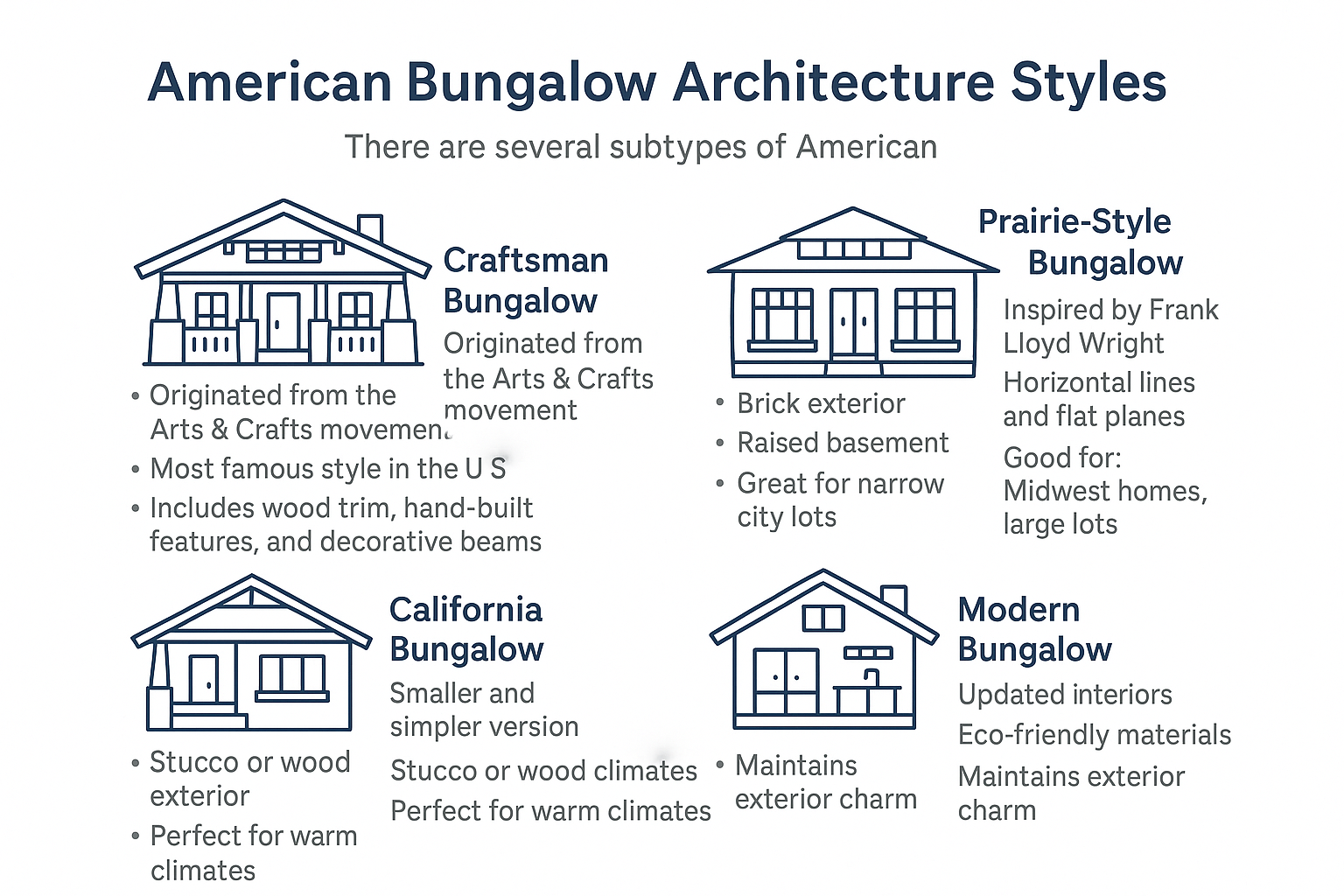
American Bungalow Styles
There is no single bungalow look. The style spread across the country and changed with local materials, climate, lot sizes, and builders.
Craftsman Bungalow
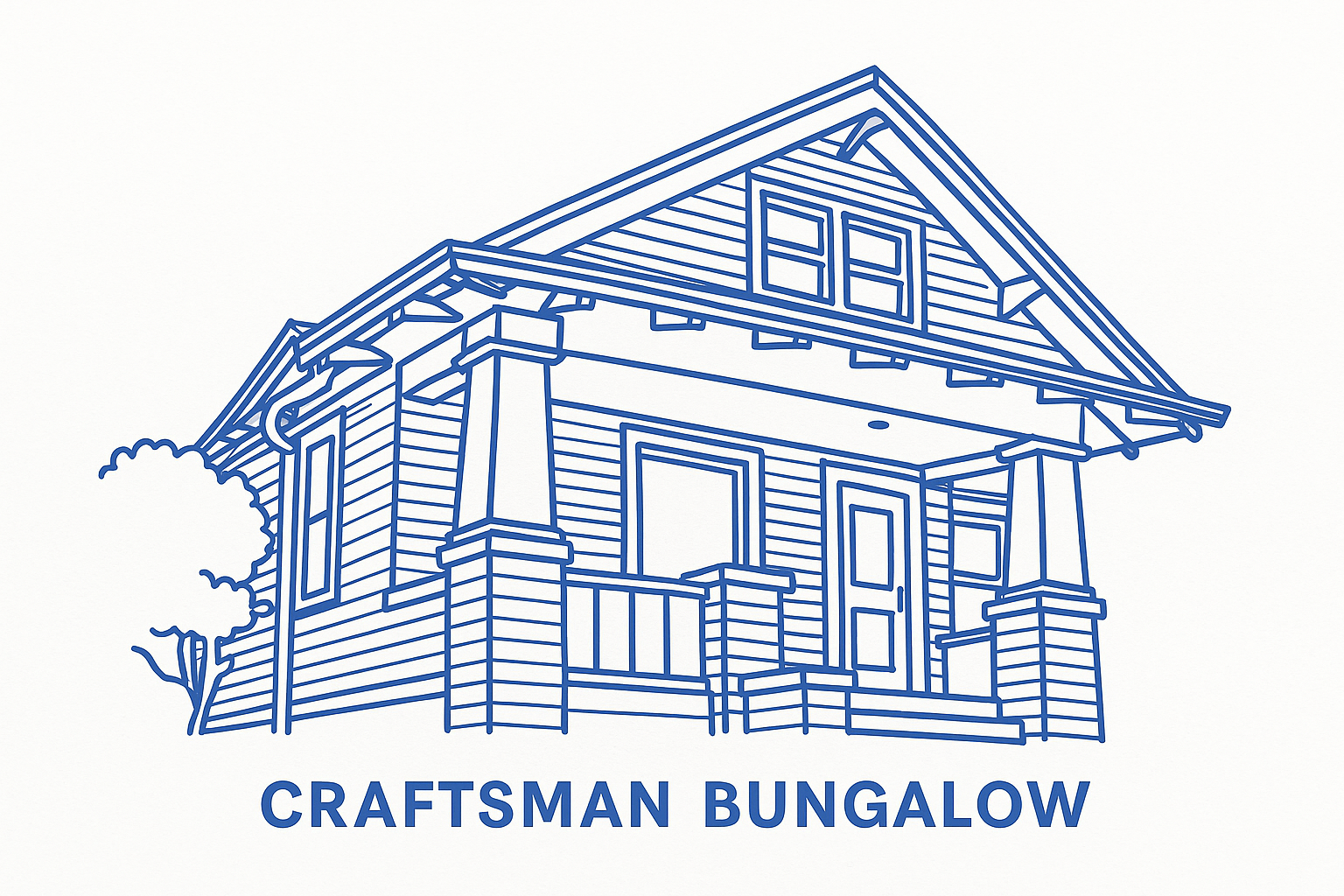
The Craftsman bungalow is the version many people picture first. It grew from the Arts and Crafts movement and favored visible craft over Victorian ornament.
Look for: low gable roof, exposed rafters, brackets, tapered porch columns, wood trim, built-in bookcases, fireplace, and natural materials.
Best preservation move: keep the porch, trim, original window rhythm, and interior woodwork. These details carry much of the value.
Common mistake: painting every surface bright white, replacing heavy porch columns with thin posts, or installing flat vinyl siding that erases shadow lines.
California Bungalow
California bungalows tend to be relaxed, low, and porch-focused. Many are modest in size, with wood siding, stucco, shingles, or a mix of materials.
Look for: wide porch, low gable, simple rooms, outdoor connection, grouped windows, and materials that suit warmer weather.
Best renovation move: protect shade, airflow, and porch use. Do not seal the house so tightly that moisture and ventilation problems get ignored.
Chicago Bungalow
Chicago bungalows are often brick, narrow-lot houses with raised basements and strong masonry fronts. They were built for dense neighborhoods, cold winters, and long city blocks.
Look for: brick walls, limestone trim, hipped roof, front steps, raised basement, compact rectangular plan, and a front room facing the street.
Best renovation move: treat the masonry, basement moisture, insulation, and mechanical systems as part of the design problem. These houses often need careful upgrades behind the walls, not just new finishes.
Prairie-Influenced Bungalow
Prairie bungalows borrow from the wider Prairie movement but in a smaller, more affordable form.
Look for: horizontal lines, low hipped roof, grouped windows, broad eaves, earthy colors, and a strong side-to-side shape.
Best renovation move: avoid tall-looking additions, fake shutters, and vertical entry features. Keep the house low and horizontal.
Modern Bungalow-Inspired Homes
Many new houses borrow the bungalow idea without being historic bungalows. That can work if the design keeps the scale modest and the porch useful.
Look for: one-level living, simple roof, covered entry, compact plan, energy-efficient envelope, and restrained materials.
Common mistake: calling a large modern one-story house a bungalow. A true bungalow-inspired design still needs modest scale, a grounded roofline, and a usable connection to the outside.
Bungalow vs Ranch vs Cottage
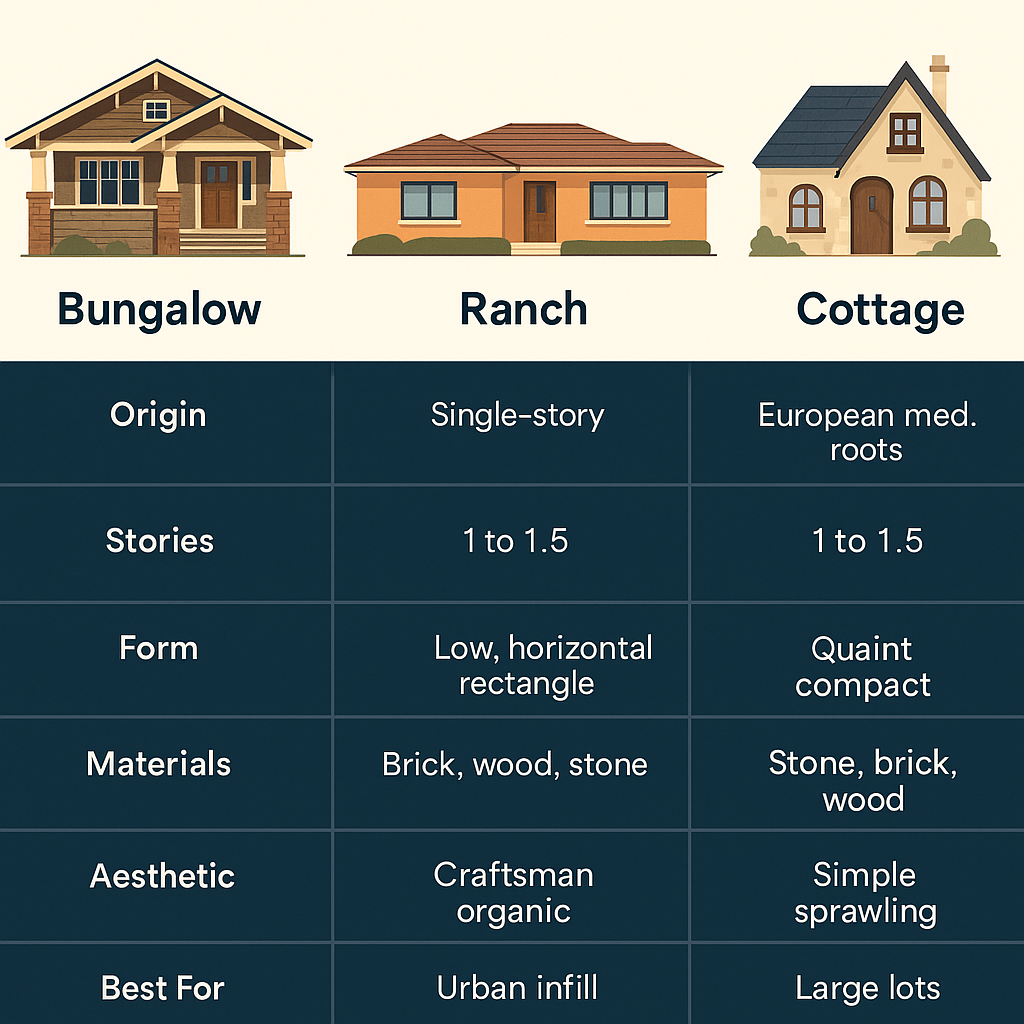
| House Type | Main Clue | Typical Feel | Renovation Risk |
|---|---|---|---|
| Bungalow | Porch, low roof, built-ins, compact front rooms | Crafted, shaded, street-connected | Losing proportion and original trim |
| Ranch | Long one-story shape, attached garage, picture windows | Horizontal, open, car-oriented | Making the front flat or garage-dominated |
| Cottage | Small scale, informal details, varied rooflines | Cozy, irregular, rural, or storybook | Over-decorating or adding fake charm |
American Bungalow Floor Plans
Most bungalow floor plans are simple because they had to be. The strength is not size. The strength is efficiency.
Common Layout Pattern
- Front porch
- Living room at the front
- Dining room beside or behind the living room
- Kitchen toward the rear
- Two bedrooms on one side or toward the back
- One main bathroom
- Small hallway, or no long hallway at all
- Attic, dormer, basement, or rear porch depending on region
The plan works because the public rooms get the best link to the porch and street. Bedrooms stay quieter. The kitchen sits closer to the back door, yard, service area, or basement stairs.
Small Bungalow: 800 to 1,100 Square Feet
A small bungalow often has two bedrooms, one bathroom, a living room, dining room, and rear kitchen. Storage is tight, but the plan can work well for one person, a couple, a small family, or a downsizer.
Best improvement: restore built-ins, improve lighting, add attic or basement storage, and keep the living/dining connection clear.
Worst improvement: removing too many walls without solving storage, sound, and furniture placement.
Medium Bungalow: 1,200 to 1,500 Square Feet
This is the most flexible size. It may have two or three bedrooms, a larger dining room, a sunroom, a breakfast nook, or a partly finished attic.
Best improvement: update the kitchen and bath while keeping the main room sequence intact.
Worst improvement: turning the main floor into one open box where the front door, sofa, dining table, and kitchen all compete.
Large Bungalow: 1,600 Square Feet and Up
Larger bungalows may have a finished attic, rear addition, wider lot, basement, or enclosed porch. They can feel generous without becoming oversized.
Best improvement: use the attic, basement, or rear of the house for extra space instead of overwhelming the original front elevation.
Worst improvement: adding a full second story that makes the house look like a different type of building.
What to Keep, What to Change, and What to Avoid
This is where bungalow renovation gets expensive or successful. A project can cost the same amount and still feel completely different depending on what gets protected.
| Keep If You Can | Change Carefully | Avoid |
|---|---|---|
| Original porch shape | Porch flooring, rails, damaged steps | Thin posts replacing heavy columns |
| Window rhythm | Glass, weatherstripping, storm windows | Random picture windows on the front |
| Built-ins and trim | Damaged pieces, missing hardware | Removing storage to make rooms look empty |
| Fireplace and mantel | Firebox, liner, safety repairs | Covering the fireplace with flat drywall |
| Low roofline | Roofing, gutters, insulation, ventilation | Oversized dormers or tall front additions |
| Wood, brick, stone, stucco texture | Rot repair, repainting, repointing | Flat siding that erases depth and shadow |
The Hidden Work Behind a Bungalow Renovation
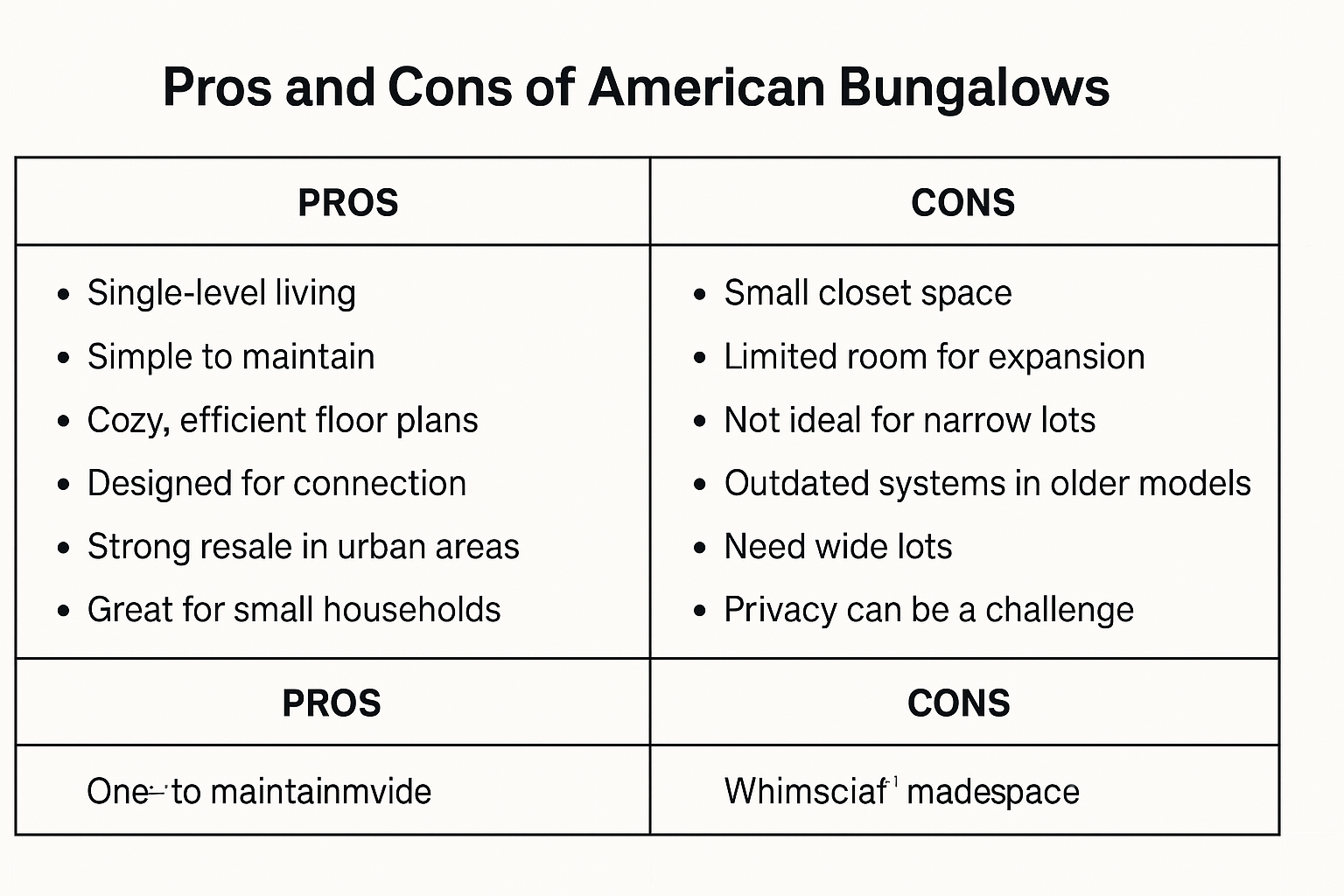
Many bungalow articles talk about charm. Fewer talk about what happens after demolition starts.
Older bungalows can hide several project-expanding issues:
- Old wiring that limits kitchen and bathroom updates
- Undersized electrical panels
- Old plumbing lines inside tight walls
- Poor attic ventilation under a low roof
- Moisture around porch footings or masonry steps
- Basement dampness in raised or brick bungalows
- Rot at rafter tails, fascia, porch floors, and window sills
- Lead paint, asbestos-containing materials, or old flooring layers
- Past renovations that cut structure or covered damage
That is why a bungalow remodel should not start with cabinet style or paint colors. Start with roof, water, structure, wiring, plumbing, heating, cooling, and ventilation. The pretty work lasts longer when the hidden work is handled first.
Renovation Moves That Work Well
Open the Kitchen, But Do Not Erase the House
A modest kitchen opening can help a bungalow live better. A full open-plan gut can make it louder, less private, and harder to furnish.
A better approach is often a controlled opening between kitchen and dining room, with a beam, cased opening, half wall, built-in storage, or peninsula. That keeps light moving without making the house feel like a new-build interior dropped into an old shell.
Use the Attic Only After a Structure Check
Many one-and-a-half-story bungalows tempt homeowners with attic space. The problem is that not every attic was framed as living space.
Before planning bedrooms upstairs, check head height, stair access, floor structure, insulation, fire safety, egress windows, roof ventilation, and heating/cooling. A charming attic bedroom can become a hot, cramped, code-problem space if planned too casually.
Fix the Porch Like It Matters
The porch is often the most important exterior feature. If it sags, leaks, or looks wrong, the whole house suffers.
Good porch work includes proper footings, drainage, flashing, rot-resistant materials, correct column proportions, safe rails, and a floor that sheds water. A porch can be rebuilt and still look right, but the proportions need care.
Upgrade Energy Performance Without Trapping Moisture
Bungalows benefit from air sealing, attic insulation, basement or crawl space improvements, and better windows or storms. But older houses need a balanced approach.
Do not just stuff insulation everywhere and ignore ventilation, roof moisture, old wiring concerns, or damp basements. Comfort upgrades should match the house, the climate, and the existing structure.
The Same-Money Mistake
Two bungalow remodels can cost about the same and end up very different.
One keeps the porch strong, protects the roofline, repairs the windows, saves built-ins, and updates the kitchen without erasing the room sequence. It feels old in the right way and modern where it needs to be.
The other gets new siding, flat windows, thin porch posts, a wide-open interior, and a trendy kitchen that could be in any house. It may be clean and new, but the bungalow is gone.
The money is not the only issue. The order of decisions matters. On a bungalow, spend first on the parts that give the house its shape and daily use: roof, porch, windows, water control, systems, storage, and light.
When an American Bungalow Is a Good Choice
An American bungalow can be a good fit if you want:
- One-level or mostly one-level living
- A smaller house with architectural character
- A front porch that adds usable outdoor space
- Older neighborhoods with walkable streets
- Original woodwork, built-ins, or masonry
- A house that can improve without becoming huge
- A layout that works for singles, couples, small families, or downsizers
It may not be the right fit if you need large bedrooms, major privacy separation, huge closets, a three-car garage, or a very open modern plan.
Cost to Build or Renovate a Bungalow
Bungalow costs vary by location, labor market, condition, materials, and how much hidden work is uncovered. Treat the ranges below as planning ranges, not quotes.
| Project Type | Planning Range | What Changes the Price |
|---|---|---|
| Light cosmetic refresh | $20 to $60 per sq ft | Paint, floors, lighting, minor trim repair |
| Kitchen or bath remodel | $80 to $200+ per sq ft | Plumbing, electrical, tile, cabinets, layout changes |
| Full interior remodel | $100 to $250+ per sq ft | Systems, finishes, wall changes, permits, old-house surprises |
| Historic-style restoration | $150 to $350+ per sq ft | Woodwork, windows, masonry, custom details, skilled labor |
| Attic conversion | $50,000 to $150,000+ | Structure, stairs, dormers, insulation, egress, HVAC |
| New bungalow-style build | $180 to $400+ per sq ft | Region, custom detailing, porch, roof complexity, site work |
The number that surprises homeowners is not always the finish cost. It is the cost of fixing old systems before the finish work can happen.
Buying Checklist for an Older Bungalow
Before buying or renovating, look beyond the charm. A bungalow with original details can be a great house, but the inspection should focus on the parts that carry cost.
- Porch: Are the columns, floor, steps, and roof structure solid?
- Roof: Are the eaves, rafter tails, gutters, and attic ventilation in good condition?
- Windows: Are original units repairable, or have replacements damaged the look?
- Electrical: Is the panel modern enough for kitchen, HVAC, and bath upgrades?
- Plumbing: Are supply and drain lines old, patched, or hard to access?
- Basement or crawl space: Is there dampness, settlement, pests, or poor drainage?
- Attic: Is it storage only, or can it safely become living space?
- Trim and built-ins: Are they intact, painted over, missing, or damaged?
- Past renovations: Did someone remove walls, cut joists, cover damage, or flatten the exterior?
Common Bungalow Mistakes
1. Making the Front Too Flat
Flat siding, thin trim, missing brackets, and blank replacement windows can make a bungalow lose depth. The fix is not more decoration. The fix is restoring shadow, proportion, and material texture.
2. Replacing the Porch With a Small Landing
A porch is part of the bungalow’s identity. Removing it to simplify maintenance can damage both curb appeal and daily use.
3. Opening Every Wall
Bungalows need some separation. A cased opening or partial wall can improve flow without destroying the room sequence.
4. Adding a Dormer That Looks Too Heavy
Dormers can help an attic conversion, but they should not overpower the roof. Keep them lower and quieter than the main roofline.
5. Treating Built-Ins as Clutter
Built-ins solve storage in a small house. Removing them may make listing photos look cleaner, but it can make the house less livable.
6. Updating Systems Too Late
Do the hidden work before the finish work. It is painful to tear into new tile, cabinets, or plaster because old wiring, insulation, or plumbing was ignored.
FAQ
What makes a house an American bungalow?
An American bungalow is typically a one-story or one-and-a-half-story house with a low roof, deep eaves, front porch, compact layout, and natural materials. Many also have built-ins, a fireplace, grouped windows, and simple handcrafted details.
Is a Craftsman bungalow the same as an American bungalow?
A Craftsman bungalow is one major type of American bungalow. It is known for Arts and Crafts details such as exposed rafters, tapered porch columns, built-in woodwork, and natural materials. Not every bungalow is Craftsman, but many famous American bungalows are.
Are bungalows good for aging in place?
They can be. The one-level layout is a major advantage. The main issues are narrow old doorways, small bathrooms, steps at the porch, and tight circulation. These can often be improved with careful remodeling.
Can you add a second floor to a bungalow?
Sometimes, but it is a major structural and design decision. Many bungalows were not built to carry a full second story. A rear addition, dormer, or careful attic conversion may fit the house better than a full vertical addition.
Are bungalows expensive to renovate?
They can be affordable to update cosmetically, but full renovation can become expensive when electrical, plumbing, roof, porch, insulation, masonry, or foundation issues are discovered. The house may be small, but skilled old-house work is not always cheap.
What should you not remove from a bungalow?
Avoid removing the porch, original window rhythm, built-ins, fireplace, major trim, and room-defining openings without a clear reason. These features carry much of the house’s character and resale appeal.
What is the biggest downside of a bungalow?
The main trade-offs are limited storage, smaller bedrooms, less privacy separation, and fewer easy expansion options. Bungalows are efficient, but they are not ideal for every household.
Is a bungalow better than a ranch house?
Neither is automatically better. A bungalow often has more porch character, older details, and compact room sequence. A ranch often offers wider rooms, easier additions, and a stronger connection to the backyard. The better choice depends on lot, condition, layout, and lifestyle.
Read This Next
- How U.S. Homes Changed Over 300 Years
- What Is a Bungalow? Key Characteristics, Floor Plans, and Design Tips
- What Is an American Bungalow? Architecture, Plans, and Real Examples
- What Is a Craftsman Bungalow? Real Features You Should Know
- House Styles: Five Centuries of Architecture
- 1900 House Styles: A Complete Visual Guide
- 1920s House Styles: Key Features, Interiors, and Restoration Tips
Sources used for this article
- Library of Congress: Historic American Buildings Survey / Historic American Engineering Record / Historic American Landscapes Survey
- National Park Service: Historic Residential Suburbs bulletin
- U.S. Department of Energy: Air Sealing Your Home
- Energy Star: Why Seal and Insulate?
- Bungalow Heaven Historic District