
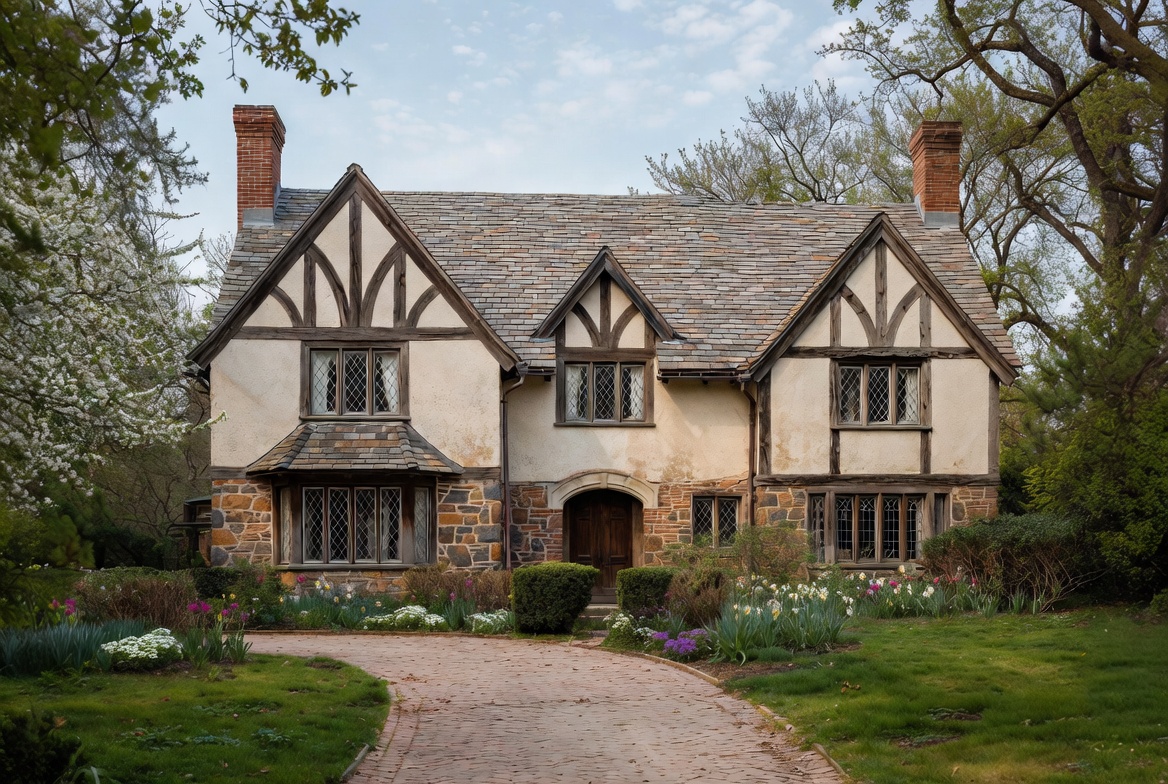
A good 1920s house usually makes sense before it tries to impress. The roof belongs to the walls. The windows fit the rooms. The entry feels intentional. Even smaller houses from the decade often feel more settled than bigger newer ones.
That does not mean they should be frozen in place. Some need serious work. Wiring, kitchens, water damage, awkward additions, all of it. The mistake is either chasing surface “character” and missing what is carrying the house architecturally, or modernizing so hard the house stops reading like a 1920s house at all.
The better way to look at one is simpler: figure out what type of house it is, identify the parts doing the real architectural work, and update it without stripping out the logic that made it good in the first place.
Worth Knowing: if you want the broader style map around this period, see House Styles: Five Centuries of Architecture and Types of Houses and Home Styles.
How to Identify a 1920s House Fast
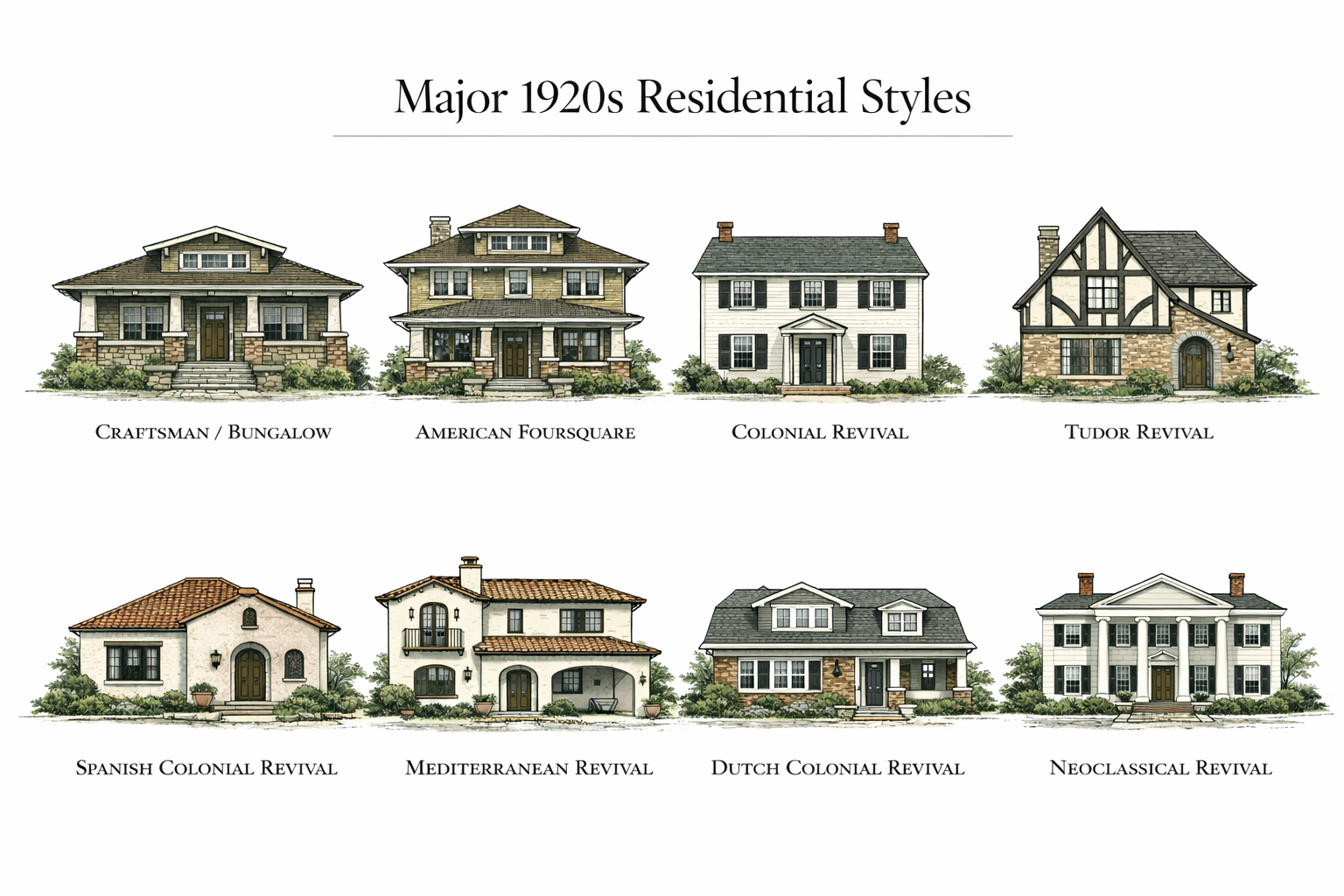
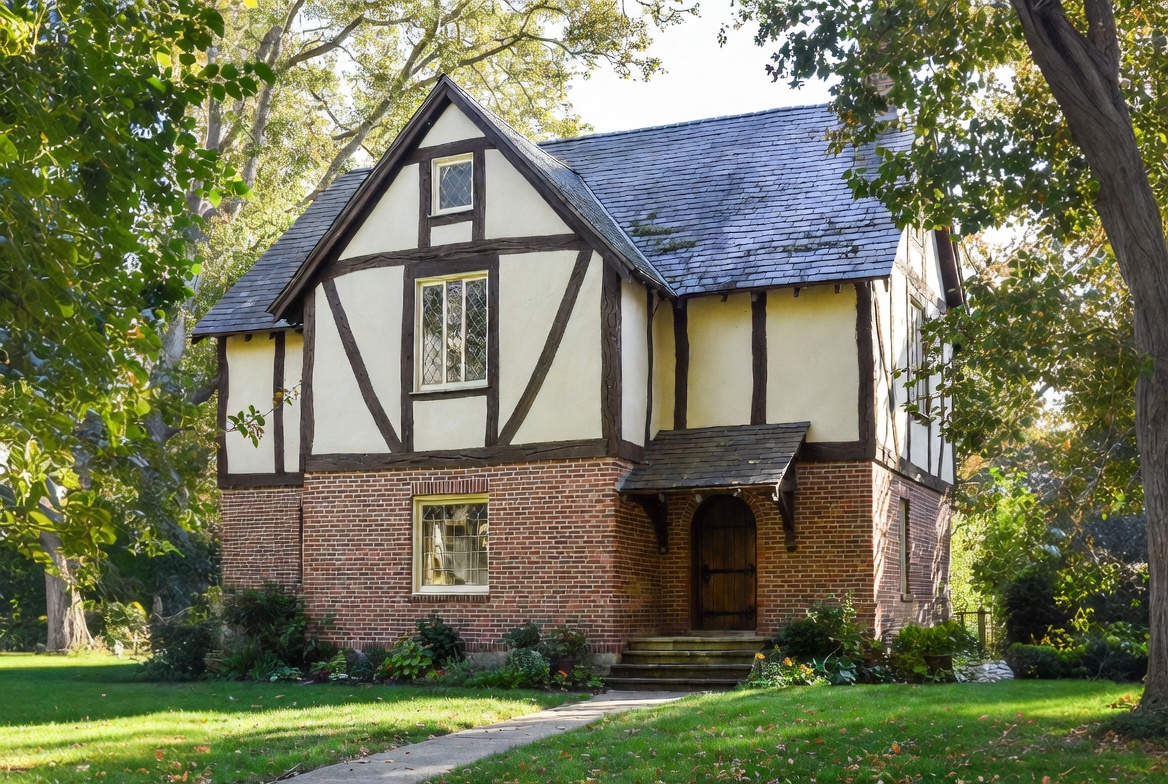
Illustration by ArchitectureCourses.org. Tudor Revival houses gave many 1920s neighborhoods a heavier, more textured look through masonry, steep roofs, and deeply shadowed entries.
The decade matters, but the style matters more. A 1920s bungalow, a 1920s Tudor, and a 1920s Spanish Revival house should not be renovated the same way just because they share a birth decade.
Common 1920s House Types and What Carries the Style
Craftsman Bungalow
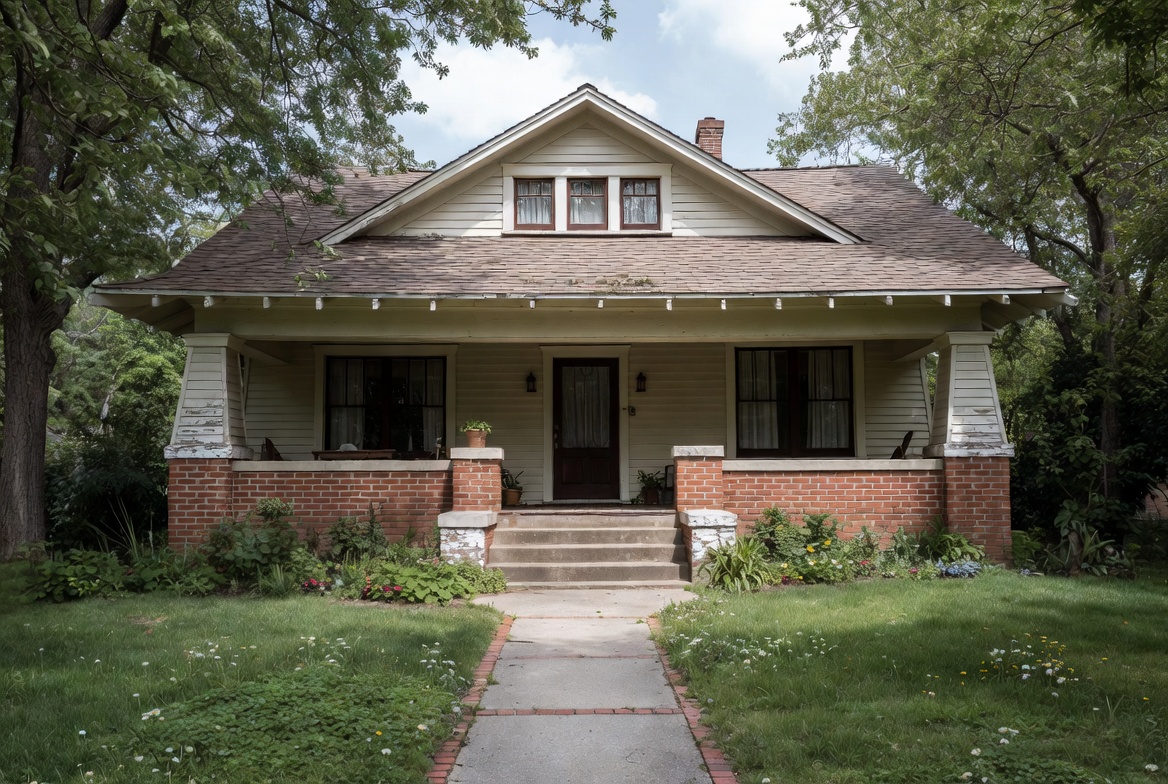
Image by ArchitectureCourses.org. Many 1920s bungalows got the porch, roofline, and front-room presence right in a way newer houses often do not.
What it usually looks like: Low roof, wide eaves, porch, exposed structure, built-ins.
What carries the style: Porch proportions, eaves, windows, fireplace, millwork.
Tudor Revival
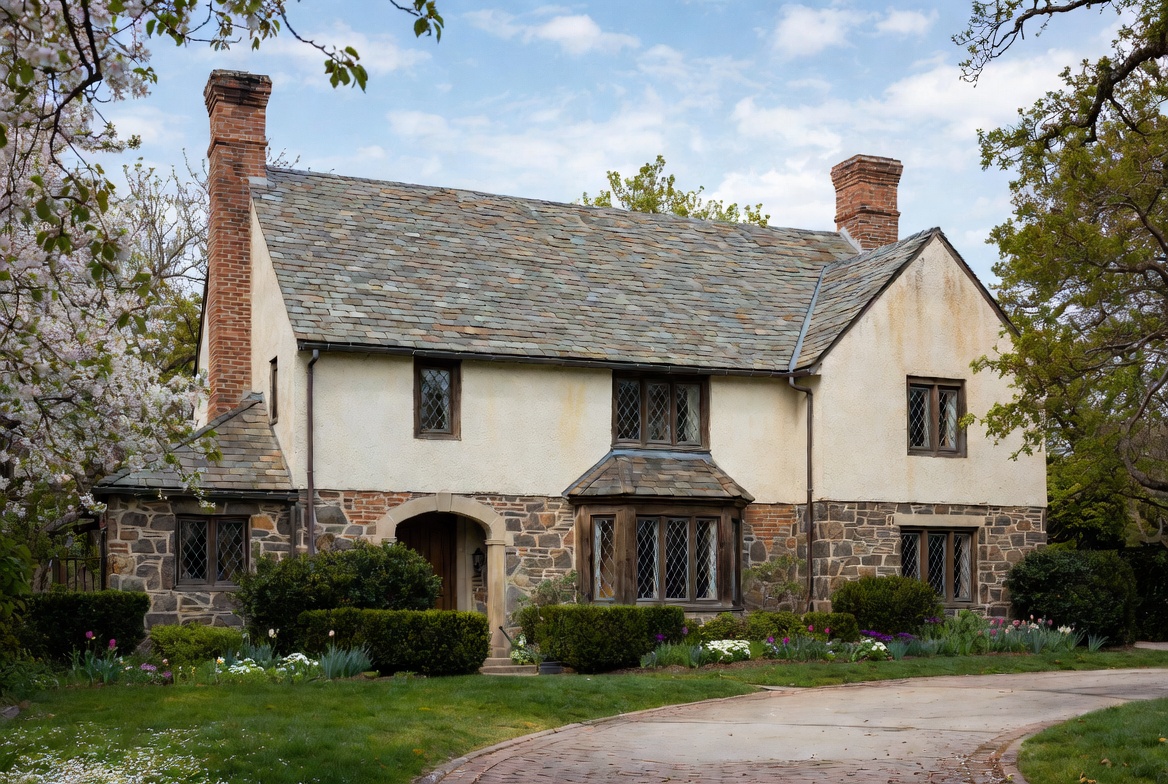
Image by ArchitectureCourses.org. Tudor Revival houses gave many 1920s neighborhoods a heavier, more textured look through masonry, steep roofs, and deeply shadowed entries.
What it usually looks like: Steep gables, brick or stucco, chimneys, grouped or leaded windows.
What carries the style: Roof pitch, masonry texture, entry, window pattern.
Colonial Revival
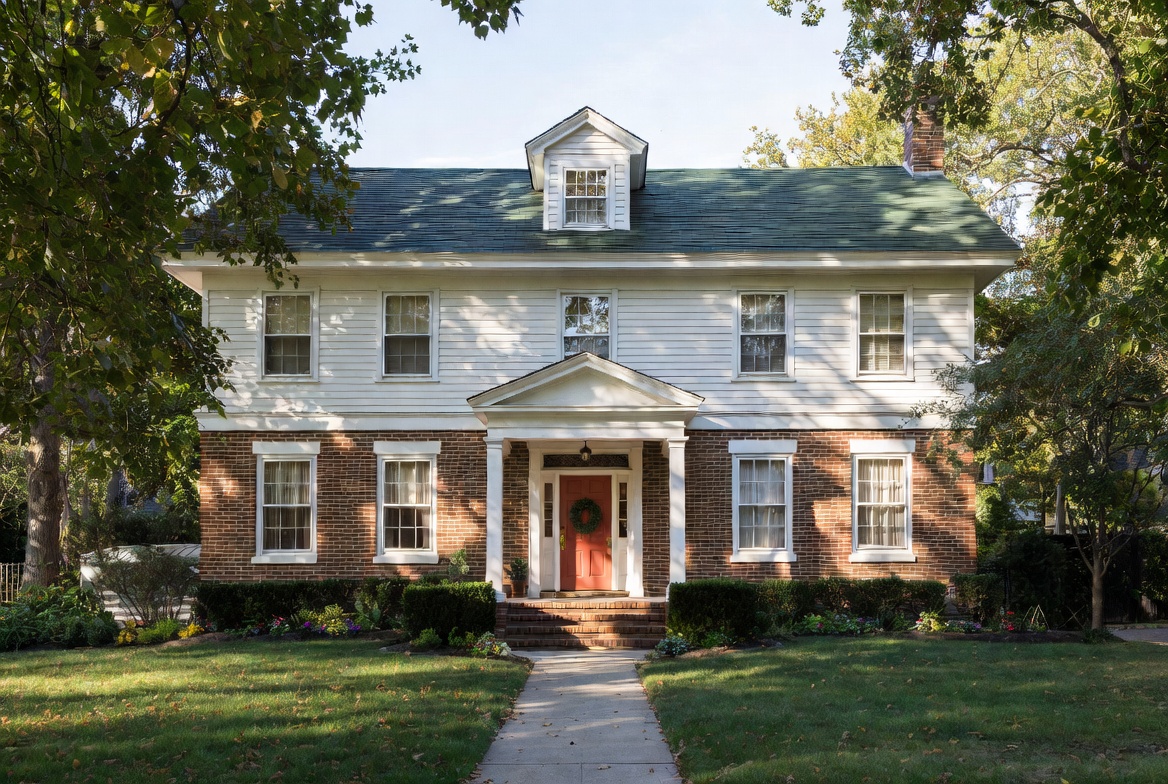
Image by ArchitectureCourses.org. Colonial Revival house with a symmetrical facade, formal entry, and strong Georgian Revival character.
What it usually looks like: Symmetry, centered front door, shutters, more formal elevation.
What carries the style: Front composition, trim restraint, window rhythm.
Spanish or Mediterranean Revival
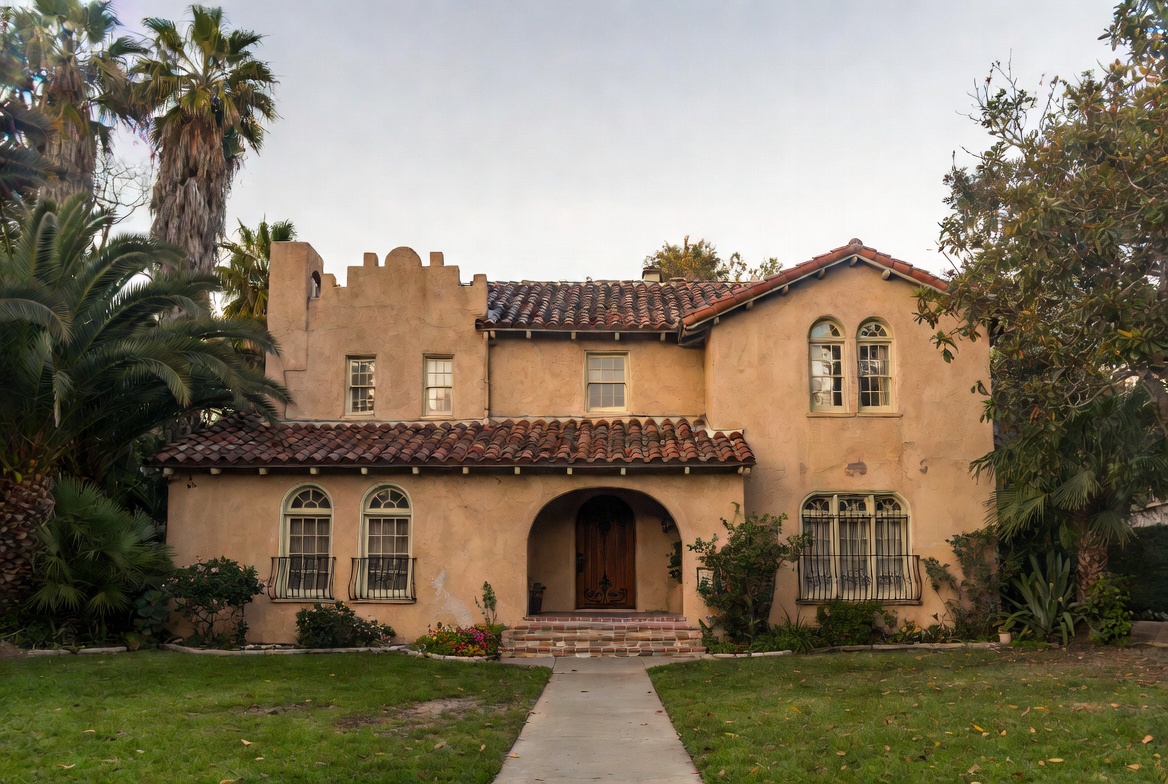
Image by ArchitectureCourses.org.. Spanish Colonial Revival house with stucco walls, a clay tile roof, an arched entry, and wrought-iron window grilles.
What it usually looks like: Stucco walls, tile roof, arches, ironwork, courtyard logic.
What carries the style: Roofline, stucco finish, doors, arches, outdoor rooms.
Art Deco Outlier
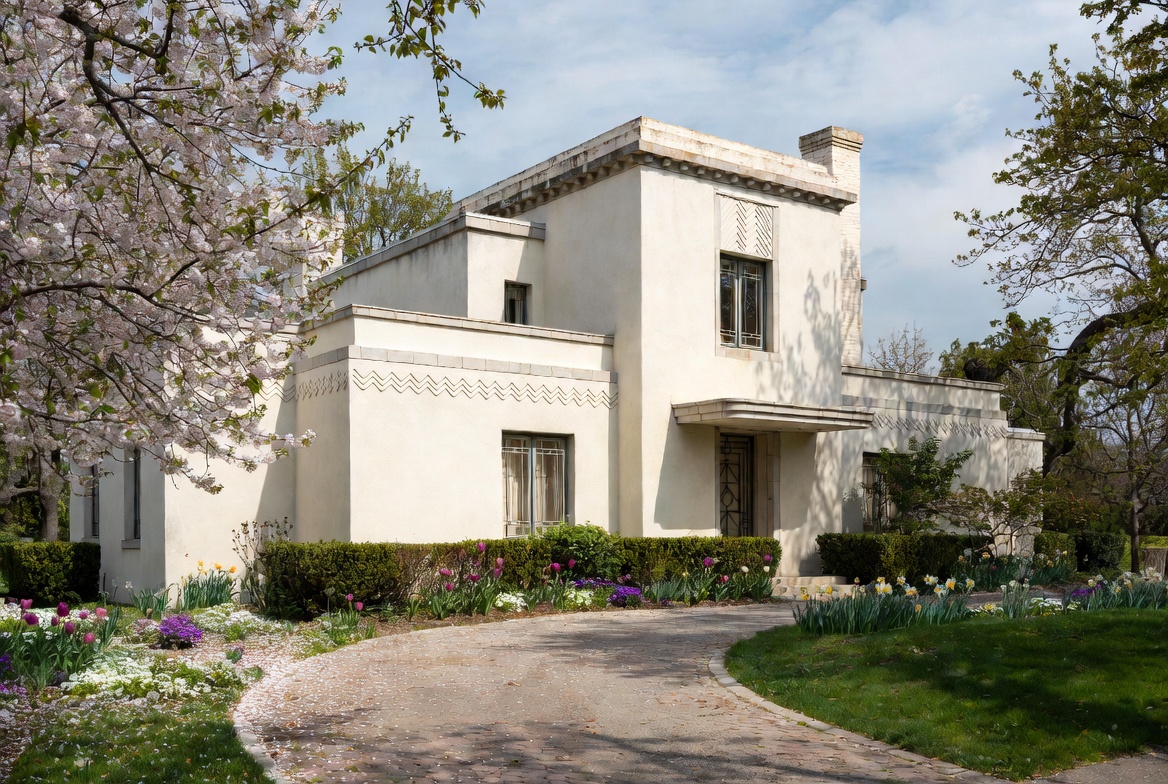
Image by ArchitectureCourses.org. Art Deco house with smooth stucco walls, stepped massing, geometric ornament, and a strong symmetrical facade.
What it usually looks like: Smoother surfaces, geometry, stronger graphic detail.
What carries the style: Entry treatment, metalwork, lighting, tile, clean massing.
This is the first thing people miss: 1920s is a time period, not a single house style. The renovation rules change with the style.
What 1920s Houses Usually Got Right
They got the massing right. The good ones feel calm because the big geometry came first. Roof, chimney, porch, walls, windows, entry. The main parts are cooperating.
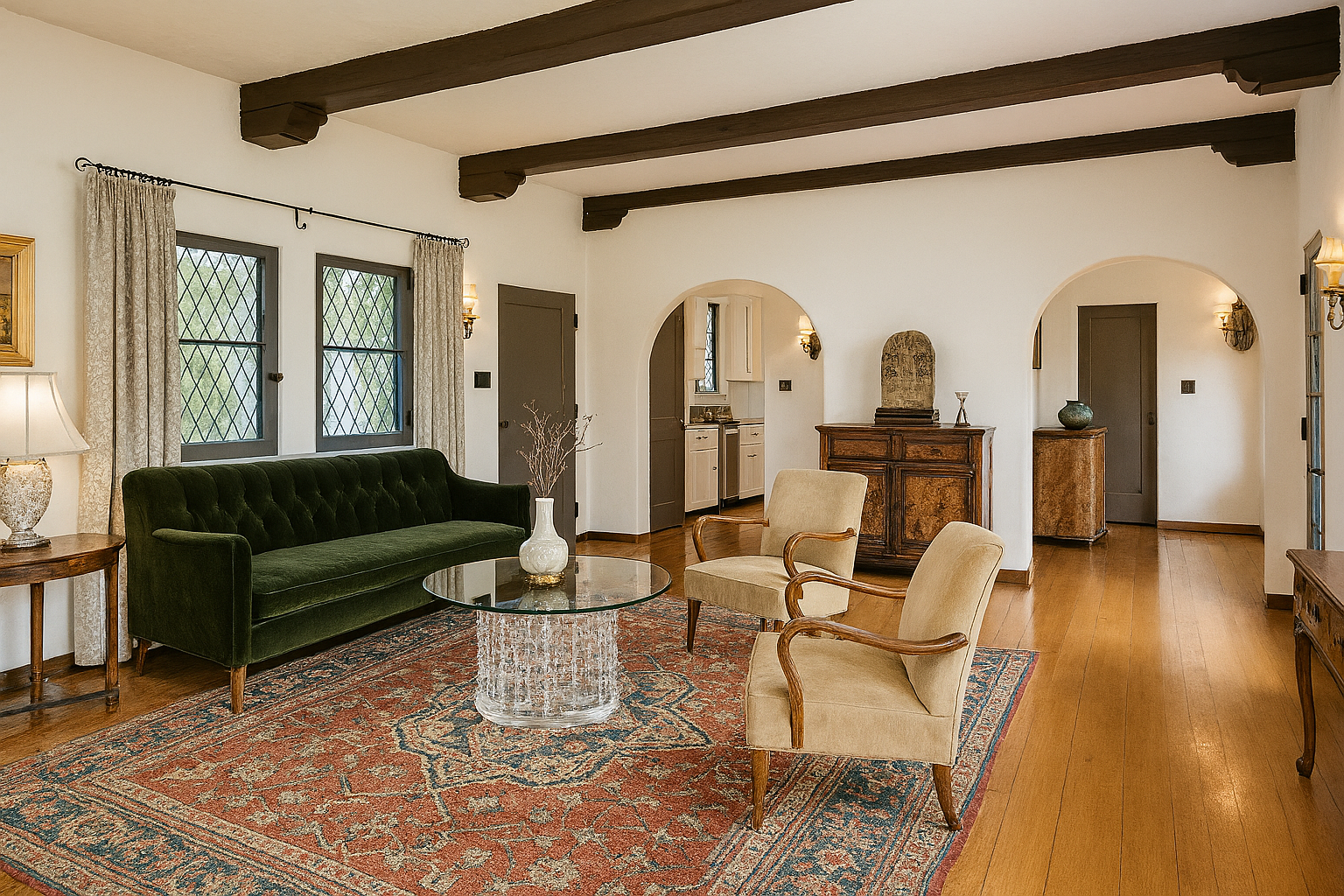
They gave rooms a job. The dining room usually feels like a dining room. The entry feels like an arrival. The living room has a center. Even modest plans often have better room hierarchy than newer open-concept houses.
They used materials with weight. Real plaster. Old-growth trim. hardwood floors. brick. thicker casings. solid doors. You notice the difference even before you start naming materials.
They used details to organize the house. Built-ins, benches, arches, fireplace surrounds, tile, ironwork, and millwork were not random decoration. They helped hold the rooms together.
That is why the good ones still feel convincing. They do not feel themed. They feel composed.
Where Bad Renovations Start Going Wrong
Most bad 1920s renovations are not bad because they are modern. They are bad because they ignore the house’s logic.
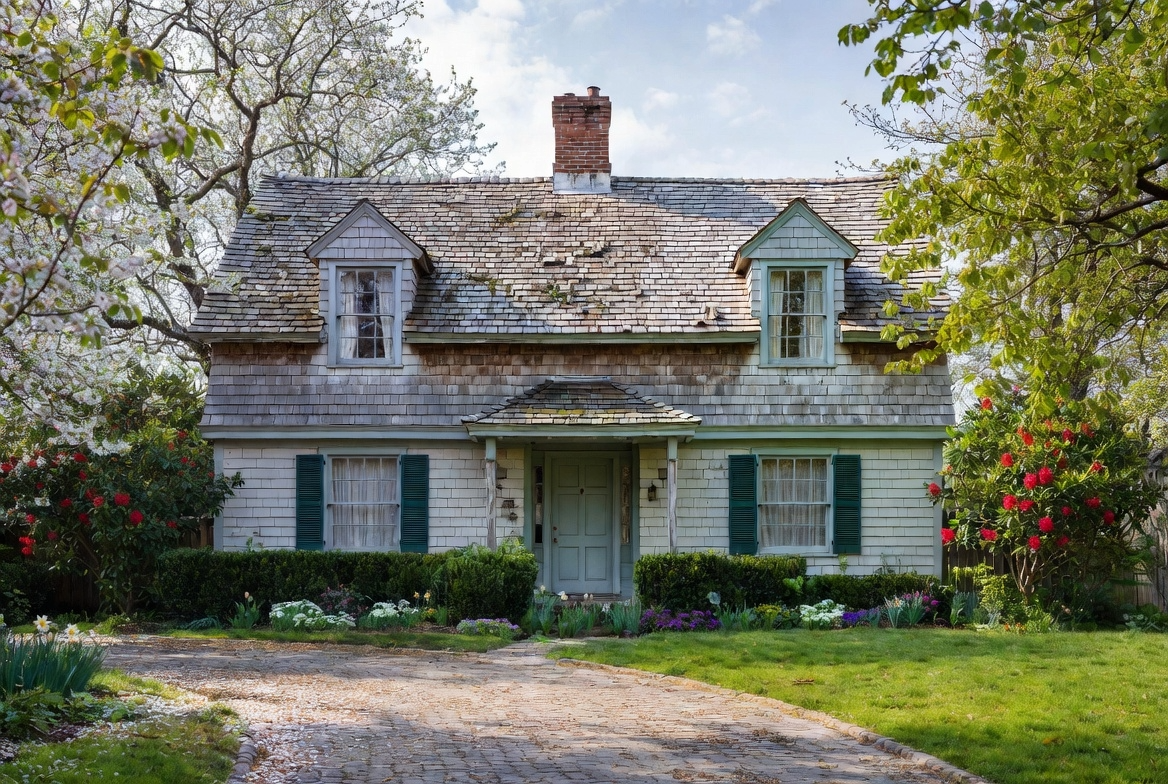
Image by ArchitectureCourses.org. Cape Cod Revival cottage with shingle siding, dormers, shutters, and a restrained traditional facade.
- Too much demolition: removing every wall, threshold, and room edge usually kills the rhythm that made the house work.
- Wrong windows: bad proportions, fake muntin patterns, or over-large replacements can flatten the whole exterior.
- Thin trim and generic finishes: this is where a solid old house starts looking like a flip.
- Style mixing with no discipline: Tudor fireplace, Deco light, farmhouse kitchen, condo bath. That pileup happens fast.
- Cosmetic work before systems: new finishes do not solve drainage, plumbing, electrical, or structural problems.
| Do This | Instead of This | Why It Works Better |
|---|---|---|
| Repair and reuse original trim where possible | Replace it all with thin stock molding | The old scale and shadow lines carry more character than people expect |
| Open the plan selectively | Turn the whole floor into one blank room | Older houses usually need better flow, not total erasure of room definition |
| Match new windows to original size and rhythm | Use whatever replacement unit is cheapest | Window proportion affects both exterior character and interior feel |
| Fix water and structure first | Spend early on finishes and décor | Pretty work gets torn apart later if the house is still failing underneath |
| Stay close to one architectural language | Mix every vintage look you like | Coherence is what makes older houses feel believable |
The Exterior Parts That Carry the House
If you can only protect a few things, protect the parts that make the house read correctly from the street.
- Roof shape: once that goes wrong, the whole house usually goes with it.
- Entry sequence: doors, arches, porch scale, steps, landing depth, and trim do a lot of quiet work.
- Window pattern: not just the windows themselves, but the grouping, spacing, and head height.
- Surface texture: brick, stucco, shingles, clapboard, timbering, and stone need to look like part of the house, not decoration stuck on later.
- Chimneys and fireplaces: these are often more important to the identity of the house than people realize.
That is why fake shutters and trendy light fixtures do not rescue a weak renovation. They are working at the wrong scale.
Where the Interior Still Beats a Lot of New Houses
Most people like 1920s interiors for a reason. The spaces usually feel layered without feeling messy.
Living rooms often have a clear center. Usually a fireplace, grouped windows, built-ins, or all three. Furniture has somewhere to belong.
Dining rooms still feel useful. Not oversized. Not theatrical. Just distinct enough to make daily life feel less blurry.
Entries, halls, and stair landings were not treated like leftover square footage. Even modest houses often have an arch, a niche, a built-in bench, or just a more deliberate transition than what you get now.
Kitchens and baths are usually where the age shows first. Storage is tighter. Circulation can be clumsy. Service zones may have been altered badly over time. That is often where the smartest modernization happens.
Also Useful: if you want the interior side broken out in more detail, see 1920s Interior Design Style and 1920s Decor Style Ideas.
Not Every 1920s House Is Art Deco
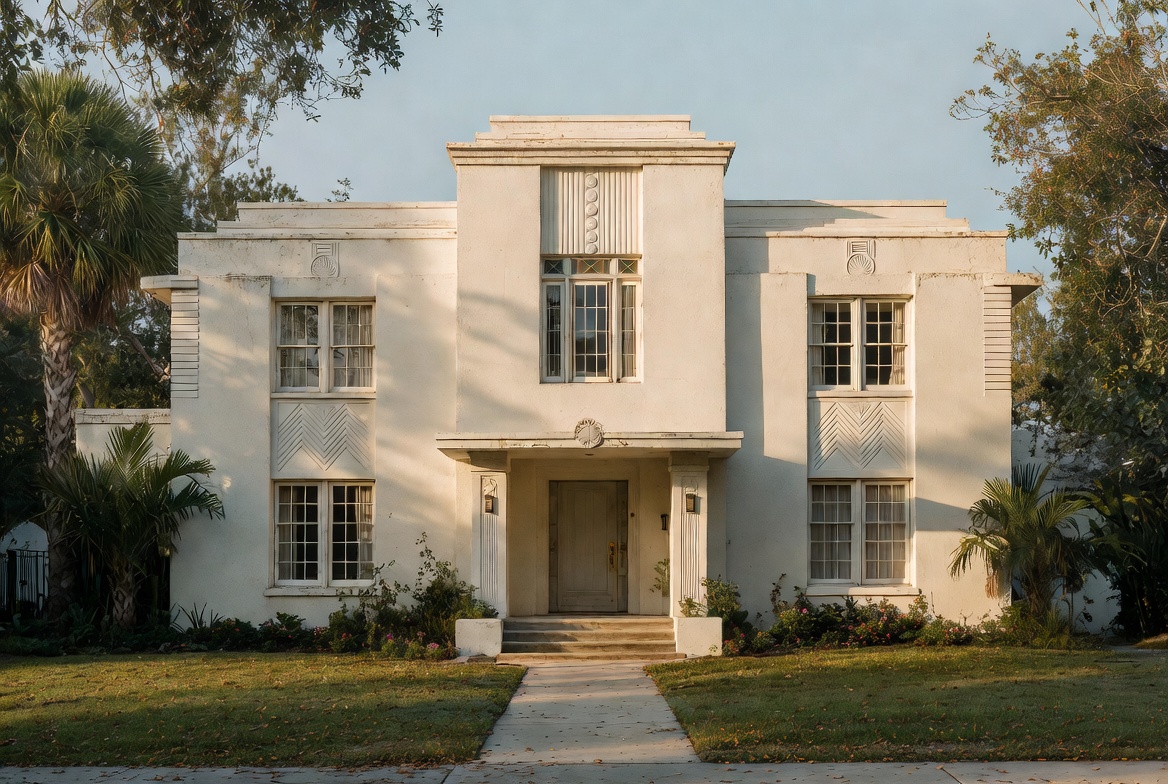
Image by ArchitectureCourses.org. Art Deco / Moderne house with smooth stucco walls, cubic massing, geometric trim, and a restrained flat-canopy entry.
This one keeps confusing people. Art Deco belongs to the decade, but it does not define the whole decade.
Most 1920s houses were not full-on Deco houses. In a lot of neighborhoods, the decade is carried more by bungalows, Tudors, Colonial Revivals, and Spanish or Mediterranean Revival houses. Deco usually shows up more selectively: entry details, tile, lighting, rails, bath fixtures, apartment lobbies, and the occasional more stylized house.
So if you own a 1920s house, do not force Deco into it just because the calendar fits. Use it where the house already leans that way. Geometry. metalwork. tile. lighting. graphic detail. Not everywhere at once.
Related Reading: 1920s Art Deco Style and Mastering Art Deco Interior Design: Secrets from the Experts.
What To Inspect Before You Get Romantic
Old houses get romanticized too early. Before you fall in love with the archway, check the parts that can blow up the budget.
- Foundation and floor movement: cracks, sloping, patchwork repairs, soft spots, chronic moisture.
- Roof and drainage: a beautiful roofline means nothing if water has been getting in for years.
- Electrical: old wiring is not charming. It is a project.
- Plumbing: failing supply or drain lines can turn a cosmetic remodel into a full tear-back.
- Windows and stucco or masonry condition: expensive to get wrong, especially when people replace too fast instead of assessing what can be repaired.
The blunt version: preserve the soul, but inspect the bones first.
How To Modernize a 1920s House Without Flattening It
The right update is usually not “make it old again” or “make it completely current.” It is more surgical than that.
- Keep the front calmer than the back. You can usually modernize rear-facing spaces more freely than the public face of the house.
- Use better modern systems quietly. Insulation, air sealing, HVAC, and improved windows matter. They just should not turn the house into a showroom for visible tech.
- Match the scale of original elements. Baseboards, casings, doors, tile edges, fireplace details, and built-ins need the right visual weight.
- Do not theme the house. A few correct materials and proportions work better than an entire room of fake vintage gestures.
- Do not chase purity where function matters more. Kitchens, baths, and utility zones can change. They just need to change with some discipline.
If the update still feels like the same house, just running better, you are usually on the right track.
The Detail People Usually Miss
People talk a lot about tile, hardware, sconces, and period paint colors. Those things matter, but they are not first.
The harder part is proportion. The thickness of trim. The shape of an arch. The size of a window in relation to the wall. The depth of a porch. The weight of a chimney. The reason some renovations feel right and others feel fake is often buried in those bigger relationships, not in the decorative layer.
That is why a house can survive missing original light fixtures and still feel convincing. It usually cannot survive bad massing, bad windows, and bad scale.
What To Read Next
If you are building out this era as a cluster, these are the most natural next reads:
- 1920s Interior Design Style if the exterior is clear and the real decisions are happening inside.
- 1920s Decor Style Ideas if you need furniture, finishes, and styling without turning the house into a stage set.
- What 1930s Houses Really Looked Like if you are trying to see what changed in the next decade and where the overlap starts.
FAQ
What style of house was most common in the 1920s?
There was no single dominant look everywhere, but Craftsman bungalows, Tudor Revival, Colonial Revival, and Spanish or Mediterranean Revival houses were all common in the decade, depending on region and market.
Are 1920s houses usually built better than new houses?
Some parts often are. Original lumber, plaster, doors, trim, and masonry can be excellent. But that does not mean the whole house is trouble-free. Systems, insulation, drainage, and hidden repairs still matter.
Should you open up the floor plan in a 1920s house?
Sometimes, but selectively. These houses usually benefit from better flow, not total erasure of room definition. The best updates remove the right wall, not every wall.
Is Art Deco the same thing as 1920s house style?
No. Art Deco is one important 1920s design language, but many 1920s houses are not Deco at all. The decade includes several different residential styles.
What should you save first in a 1920s renovation?
Original windows when feasible, trim, doors, fireplaces, built-ins, porch details, and the overall roof and façade composition are usually higher-value than decorative extras.
What usually fails first in a 1920s house?
Kitchens, baths, wiring, plumbing, roof maintenance, drainage, and badly altered additions are common problem areas. The visible charm often survives longer than the hidden systems.
What To Read Next
A lot of the trouble with 1920s houses starts when people stop being specific. They say they want to “keep the character,” but what they really need to decide is whether they are dealing with a bungalow, a Tudor Revival house, a Colonial Revival house, or a Spanish Revival house—and whether the next decision is about the exterior, the interior, or a renovation that already went off track.
That is where these next pages help:
- 1920s Interior Design Style for the inside of the house: room feel, materials, built-ins, lighting, and what still belongs.
- 1920s Decor Style Ideas for the layer people usually get wrong last: finishes, furniture, and period cues without fake nostalgia.
- What 1930s Houses Really Looked Like if your house may not be as 1920s as you think.