
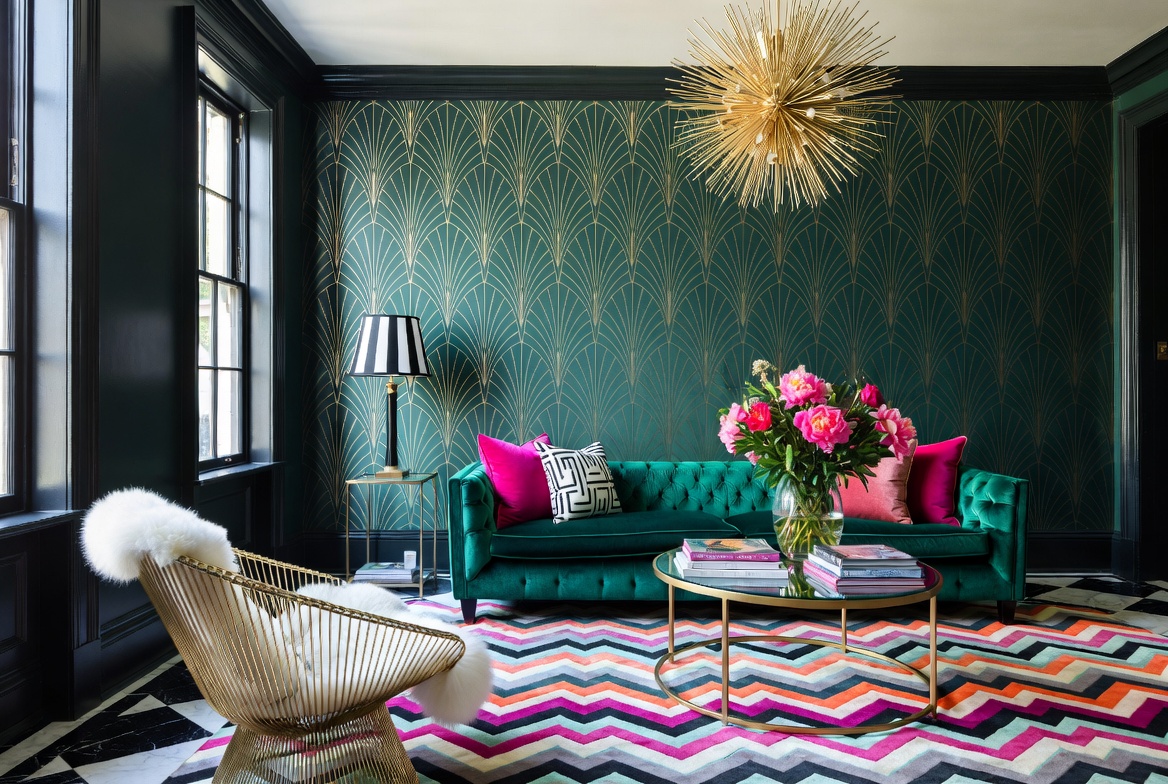
Art Deco looks wrong the minute it starts trying too hard.
Too much black. Too much gold. Too many zigzags. Too many little “Deco” pieces added one by one until the room stops feeling designed and starts feeling staged.
The good version is tighter. Strong shape. Better light. Better materials. One or two moves that do the work, then restraint.
That is what makes Art Deco usable at home. Not a hotel-lobby copy. Not a theme room. Just the parts that still hold up, used well in a normal house or apartment.
Worth Knowing: if you need the bigger picture first, read 1920s house styles. If you want the full-house version of the style, keep Art Deco house style open too. For the wider interior mood of the decade, 1920s interior design style helps.
Start With the Room, Not the Accessories

The room has to do some work before the style can land.
Deco likes order. A room with a clear center helps. A sofa that faces something. Lamps that can work in pairs. A dining table that sits where it should instead of floating in the middle of nowhere. A mirror or cabinet that has enough wall to breathe.
This is where a lot of people go off track. They buy a fan-shaped mirror, a brass tray, a black lamp, a velvet pillow, and think the room will sort itself out. It does not. The plan still matters. The room still needs balance.
If the layout is messy, Deco will only make the mess shinier.
What Makes a Room Read Art Deco Fast

You do not need much. But the few things you use need to be right.
- Strong geometry: curves, steps, fans, sunbursts, chevrons, ribbing.
- Symmetry: not in every room, but often enough to make the space feel settled.
- Polished surfaces: glass, lacquer, marble, mirror, metal, glossy paint, darker wood.
- Clear contrast: light and dark, soft and hard, matte and shine.
- Good lighting: glow matters more than color palette.
- Restraint: the room should feel edited, not decorated to death.
That last one is the part people skip. Deco is decorative, yes. But the good rooms are still controlled. They are not loud in every direction.
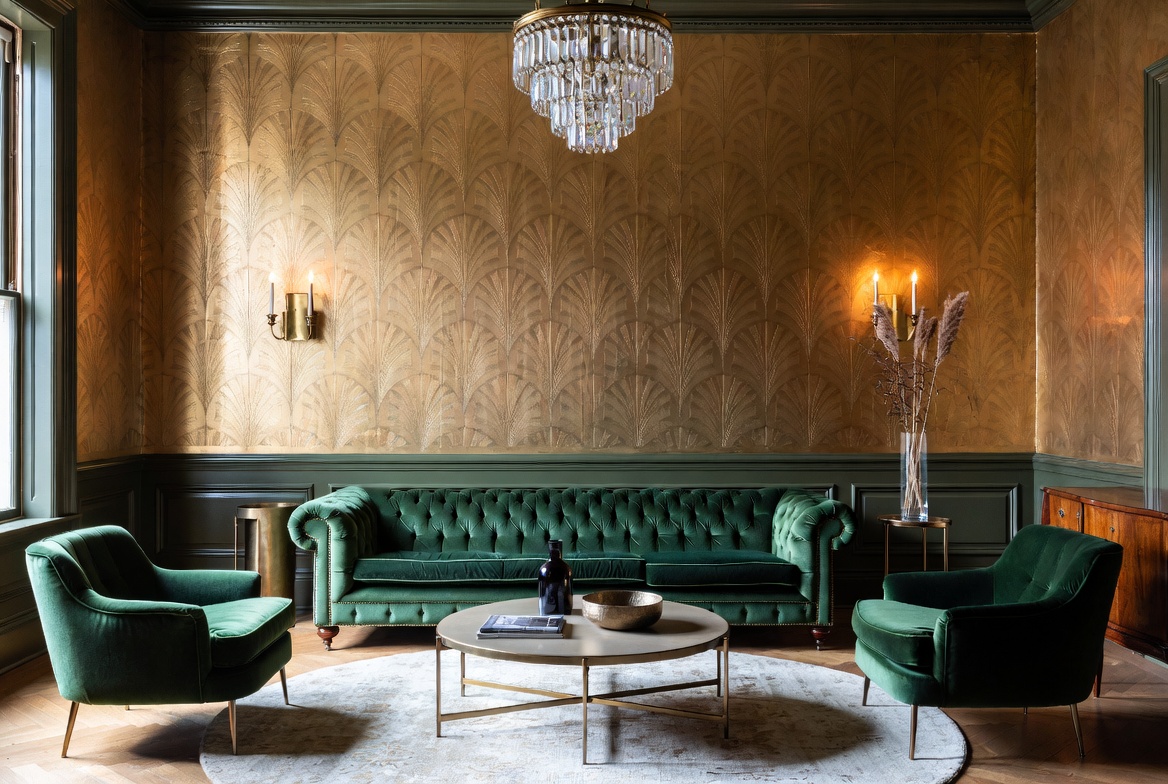
Image by ArchitectureCourses.org. A Deco-inspired living room with velvet seating, geometric wall pattern, and glam lighting.
| Use This | Instead of This | Why It Works Better |
|---|---|---|
| One clear motif | Sunbursts, chevrons, fans, and arches all in one room | The room feels sharper and more expensive |
| One lead metal | Brass, chrome, black metal, and gold all competing | The finish palette stays calm |
| One bold hero piece | Many small “Deco” objects | The room reads faster and looks less staged |
| Layered light | One bright ceiling fixture only | Deco needs glow, not flat light |
| Glass mixed with wood or fabric | Only shiny surfaces | The room stays rich instead of cold |
The Colors That Usually Work
People think Deco means black and gold. It can. But that is not the whole thing, and it is not always the best starting point.
The easier way in is to pick one dark anchor, one lighter base, and one metal. That is enough for most rooms.
Good combinations:
- black, ivory, and brass
- deep green, cream, and warm metal
- soft pink, walnut, and chrome
- navy, off-white, and nickel
- charcoal, marble white, and antique brass
Pastels can work. Dark rooms can work too. The real problem is when the room starts trying to do all of them at once.
One more thing: Deco does not need bright accent colors thrown around to feel alive. It usually gets its energy from shape, reflection, and contrast.
Materials Matter More Than Most People Think
If you want the room to feel expensive, the surfaces have to help. This is one of the reasons Deco rooms still look good in photos. The good ones know where the light is bouncing.
Materials that usually help:
- dark-stained wood
- brass or chrome
- marble or marble-look stone used with restraint
- mirror
- ribbed or fluted glass
- velvet
- lacquered finishes
Materials that often weaken the look:
- fake mirror surfaces that look cloudy or bluish
- yellow “gold” finishes that look sprayed on
- thin black metal used everywhere
- cheap shiny velvet
- too much glossy tile in one room
Deco is one of those styles where bad material choices show right away. A plain room with two good finishes usually beats a busy room full of fake luxury.
Also Useful: if you want the broader design language around the decade, read the 1920s design language.
Do This First in a Modern Room
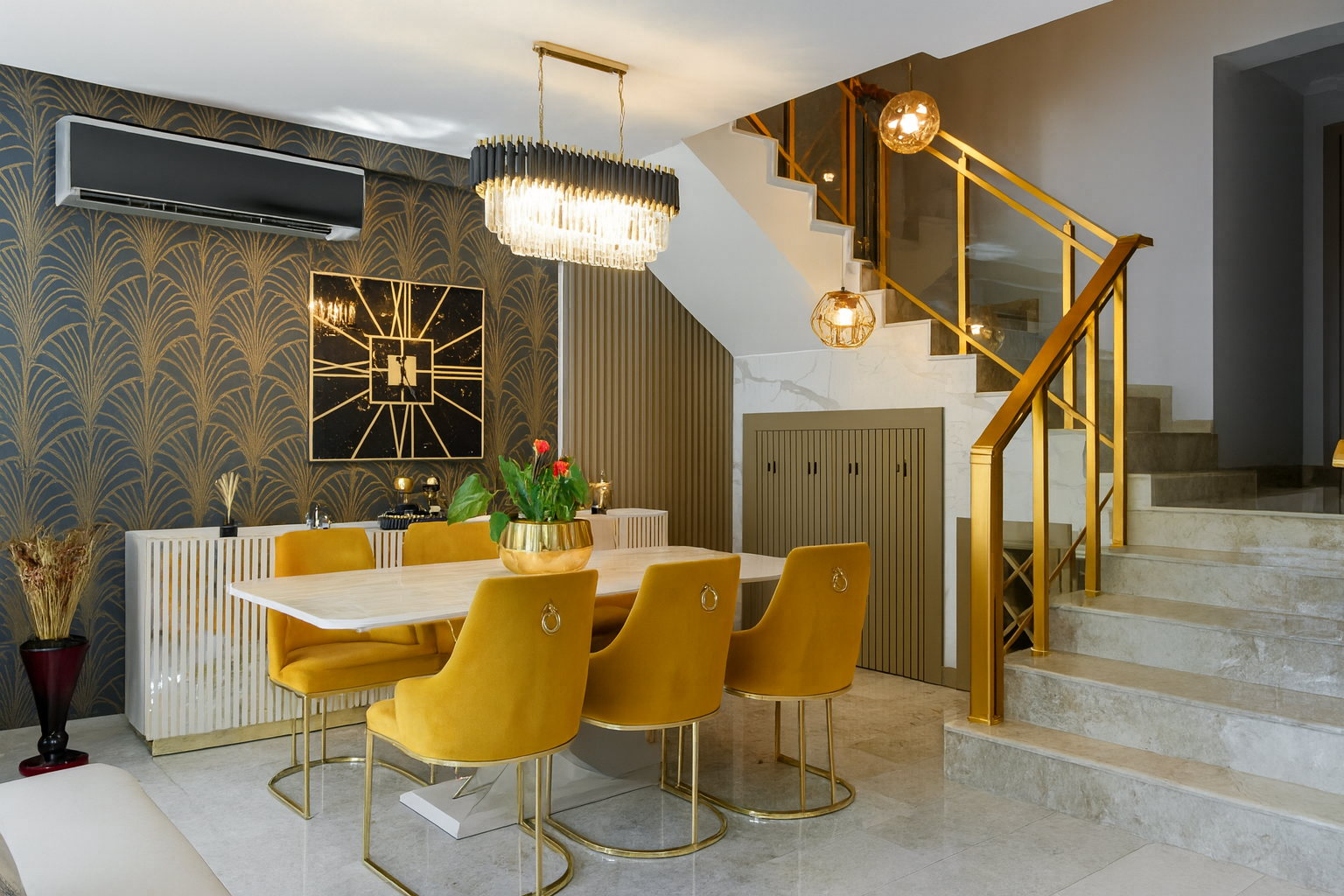
Start with one big move.
Not five little ones. One.
A chandelier. A rug. A curved cabinet. A mirror over the console. A sofa with the right shape. A good sideboard with fluted doors. Something with enough weight to steer the room.
That big move gives the room a direction. Then you build around it. This is cheaper too. People waste money when they buy lots of small “style pieces” before they know what the room is really doing.
Good first moves by room:
- Living room: rug or main light
- Dining area: chandelier or sideboard
- Bedroom: headboard or pair of lamps
- Entry: mirror or console
- Bathroom: mirror and sconces
Once that first piece is right, the rest usually gets easier. The room starts telling you what belongs.
FIELD PICK: Art Deco House Style
Short and visual. Good when you need to check if your choices are still in the same family.
How Much Pattern Is Too Much
Less than people think.
One patterned rug can carry the room. One wallpapered wall can work too. One fan shape in the mirror and one ribbed lamp base might be enough. After that, things start piling up fast.
This is the rule I would use:
- one strong pattern
- one supporting shape
- then quiet surfaces around them
If the rug is loud, calm the walls down. If the wallpaper is doing the work, keep the upholstery simpler. If the mirror is the star, do not hang two more fancy things right beside it.
Most Deco rooms fail because nothing gets room to lead.
Furniture That Helps the Room
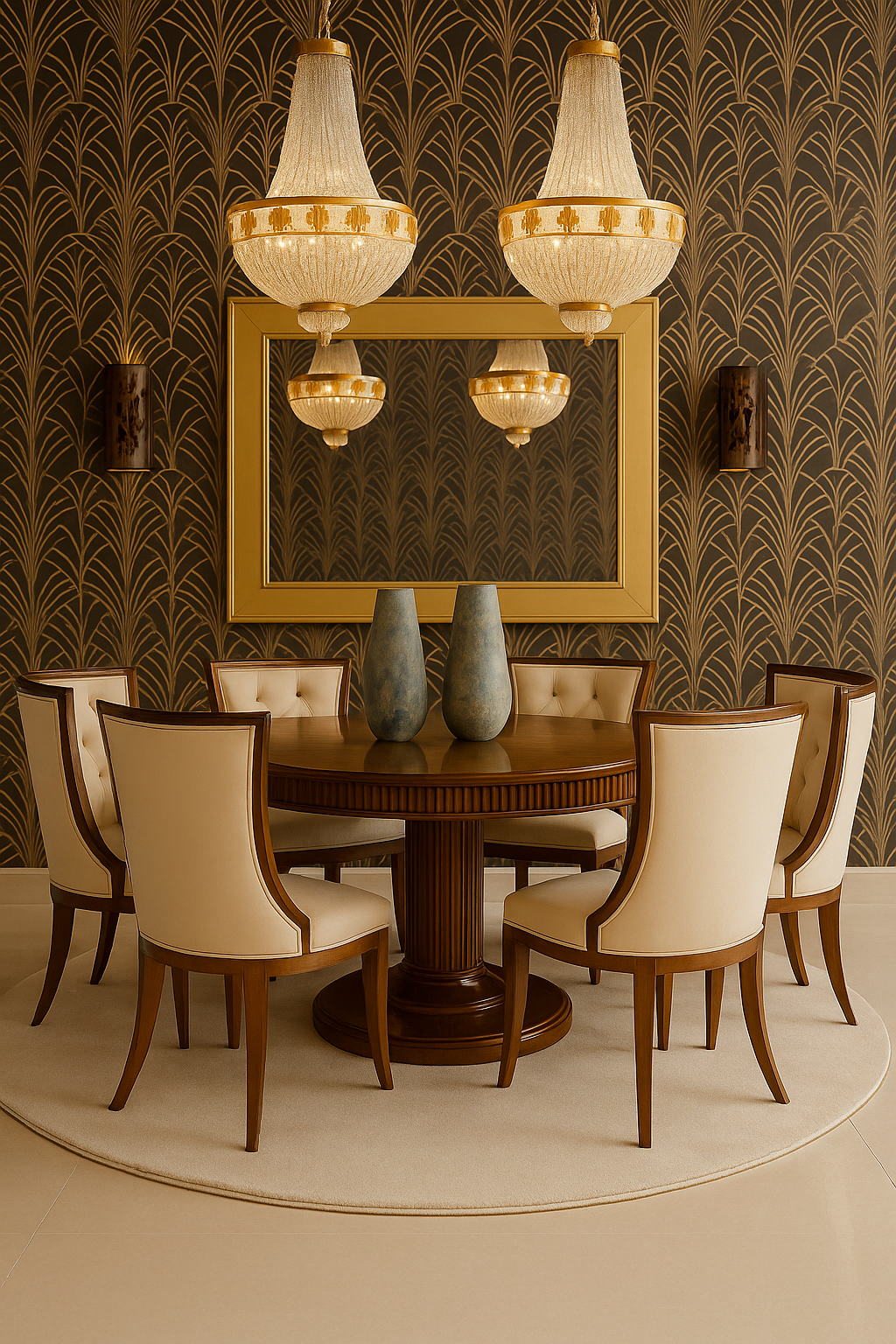
Furniture does not have to be vintage. That part matters less than people think.
The shape matters more. The scale matters more. The finish matters more.
Pieces that usually work:
- sofas with low arms and a clean line
- chairs with curved backs or tight barrel shapes
- glass or stone side tables
- walnut or lacquer consoles
- dressers with waterfall edges or fluted fronts
- beds with a simple but bold headboard
What hurts the look:
- overstuffed sectionals
- farmhouse furniture with Deco accessories thrown on top
- ornate fake-vintage reproductions
- too many little tables with too many little objects
Deco likes furniture that looks considered. Not fussy. Not rustic. Not soft in every direction.
Velvet helps. Leather can help. Bouclé can work in small amounts. But the line of the piece still matters more than the fabric.
MUST READ: Living with Art Deco
Good room photos. Good scale. Not too academic.
Lighting Is Usually the Thing That Saves the Room
If the lighting is bad, the style will not land. Simple as that.
Art Deco likes glow. It likes reflection. It likes some shadow too. Flat bright light from one ceiling fixture makes the whole room feel dead.
A better setup:
- one main ceiling light
- two table lamps or sconces
- one extra floor lamp if the room needs reach
Good shapes:
- ribbed glass
- opal globes
- stepped shades
- simple brass arms
- chrome and milk-glass combinations
Put them on dimmers. That is one of the cheapest ways to make the room feel better fast.
And do not undersize the lights. Deco can handle a fixture with presence. Tiny lights are where the room starts looking apologetic.
Small Fixes That Make a Big Difference

You do not always need a full redo. Some rooms only need a few smart changes.
Entry: mirror, console, two lamps, done.
Living room: centered rug, cleaner coffee table, two matching side lights.
Bathroom: better mirror, globe sconces, darker pulls, warmer faucet finish.
Bedroom: headboard with shape, matching lamps, one deeper wall color or richer fabric.
Dining area: one better light fixture and a table with less visual clutter under it.
These are not flashy changes. That is the point. Deco usually gets better when the room is edited, not loaded up.
RECOMMENDED TOOL: Bosch GLM 20 Laser Measure
Good for checking chandelier drop, mirror size, table spacing, and whether the piece you want is too big for the wall.
What People Get Wrong
They buy accessories before fixing the room.
The room still has bad layout, bad light, and no center. Now it just has more stuff in it.
They overuse black and gold.
That shortcut gets old fast. It can work, but not as the whole plan.
They use too many motifs.
One sunburst is enough. One chevron can be enough too. You do not need both, plus fluting, plus fan shapes, plus mirrored trim all in one room.
They ignore warmth.
All glass and metal feels cold. The room needs wood, fabric, or plaster somewhere.
They make everything match too much.
Deco likes order, but a room still needs some tension. That is different from making everything a set.
| What Actually Works | What Commonly Goes Wrong | What Happens |
|---|---|---|
| One bold move | Many small style buys | The room feels cluttered |
| Layered lighting | One hard overhead light | The room feels flat |
| Mixed warm and reflective materials | Only shiny finishes | The room feels cold and fake |
| Strong furniture shapes | Random décor trying to carry the look | The room feels weak |
| Motif restraint | Pattern everywhere | The room feels busy and cheap |
Room by Room

Living Room
Start with the rug and lighting. Then add one cabinet, one mirror, or one table with a clear shape. Keep the sofa simpler than the old Hollywood version people picture. The room usually looks better that way.
Dining Room
Round table if space is tight. Pedestal base helps. One light overhead. One sideboard if you need storage. One print or mirror. Keep the top of the table cleaner than you want to. Deco likes breathing room.
Bedroom
Use a softer hand. Upholstered headboard. Two lamps. One tray. Good curtains. Richer bedding. Less contrast than the living room.
Bathroom
This is where the style can look best for the least money. Mirror first. Then sconces. Then hardware. Then paint or tile if needed. Most bathrooms do not need more than that.
FIELD PICK: The New Design Rules
Not Deco-only, but good for spacing, hanging heights, and scale.
Simple Checklist
- Pick one hero piece.
- Use one main metal.
- Repeat one motif a few times only.
- Mix shine with warmth.
- Layer the lighting.
- Keep some symmetry.
- Stop before the room starts trying too hard.
FAQ
- What makes a room feel Deco fast? Good geometry, some symmetry, polished materials, and better lighting.
- Can I mix modern pieces in? Yes. That usually works better than trying to make the whole room period-correct.
- Do I need vintage furniture? No. Good shape beats old age.
- Best starter colors? Black and ivory, deep green and cream, or soft pink with chrome are all safe starts.
- How do I do this in a small room? Use fewer things. One mirror, one rug or light, better symmetry, less clutter.
What To Read Next
If this got you close, the next move is to look at the decade around it, not just the style by itself.
- 1920s interior design style for the wider room mood.
- 1920s decor style for more room-by-room cues.
- 1920s design style for the broader visual language behind the era.
- Art Deco house style to see how the look works at full-house scale.
MUST READ: Architectural Digest at 100
Good for studying room balance, not just Deco details.