

Art Deco in Homes: Bold, Flashy, Still Copied
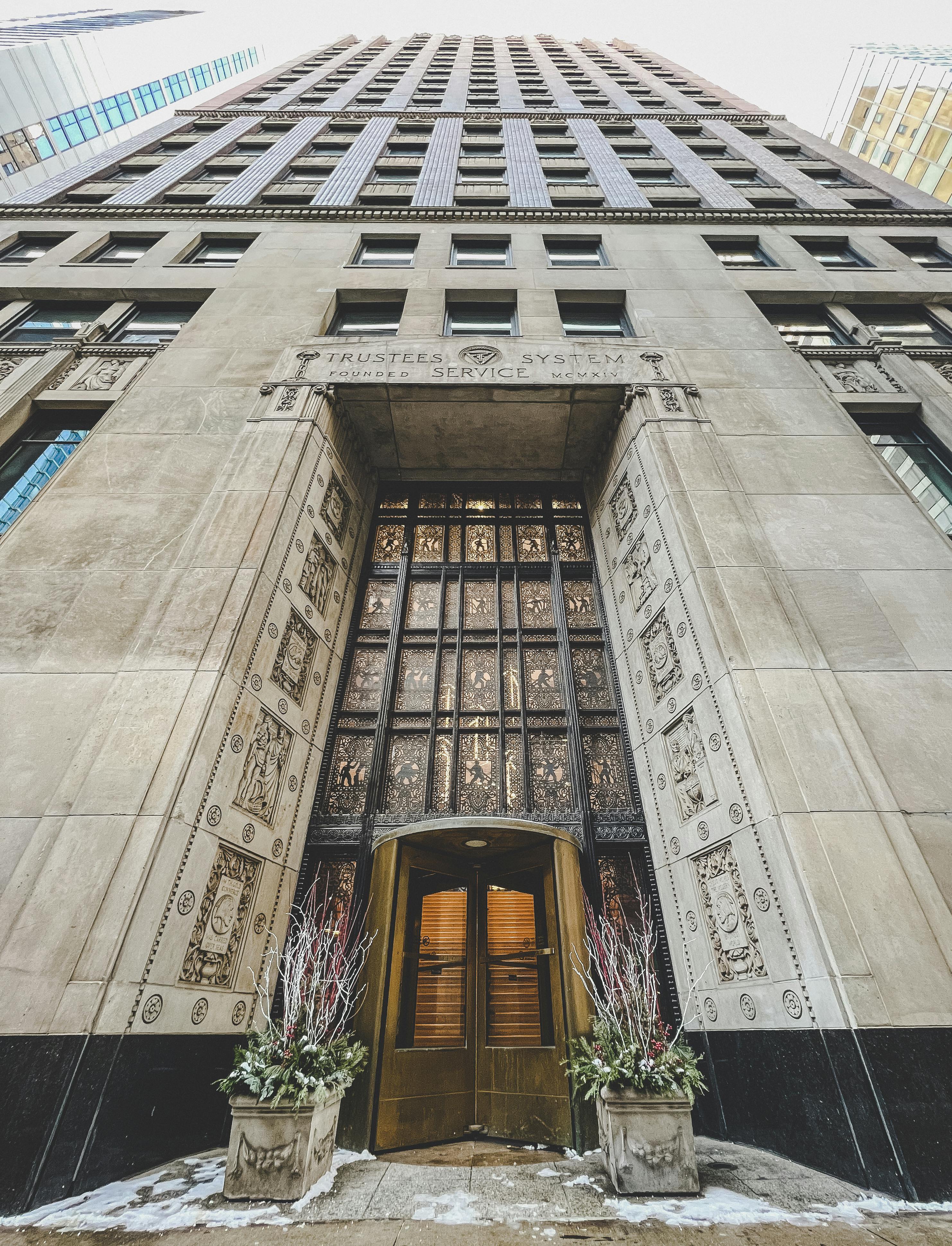
Art Deco hit in the 1920s and 30s like a punch of glass, chrome, and geometry. Architects stacked zigzags, chevrons, and sunbursts onto buildings until streets looked like movie sets.
It was never subtle. Black marble with brass trim. Curved corners with sharp vertical lines. The whole style shouted modern in an age still half stuck in horse-drawn streets.
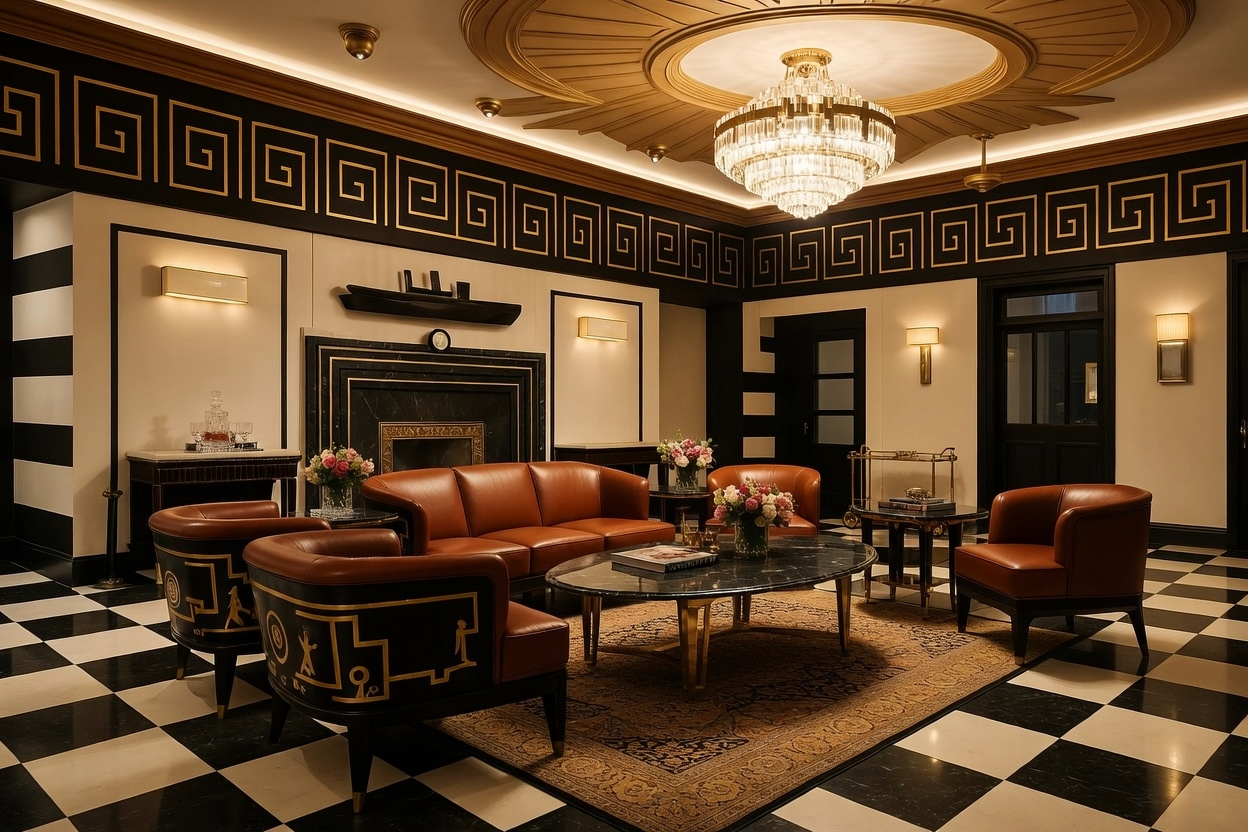
Walk into a Deco house and you’ll feel the rules. Symmetry everywhere. Shiny finishes. Heavy doors. Patterns that repeat until your eyes give up. It looks rich and sometimes feels heavy.
Skyscraper Showoff: The Chrysler Building
Look up in New York. The Chrysler Building is peak Deco. That crown was not decoration for its own sake. It came straight from the car industry. The metal arches mimic a radiator cap. A skyscraper dressed up like a machine part.
That was the Art Deco trick. It turned new technology into ornament. Elevators, airplanes, automobiles. All feeding into the shapes carved into buildings and interiors.
You might like: 1920s Art Deco Style Without the Gimmicks
Where Art Deco Started
Paris, 1925. The Exposition Internationale des Arts Décoratifs. That’s the fair that gave the style its name. Robert Mallet-Stevens was one of the French architects pushing the look. He designed villas with sharp corners, flat roofs, and geometric windows that screamed modern luxury.
Deco Lands in America
By the late 1920s the style jumped the Atlantic. New York became the showcase. William Van Alen’s Chrysler Building went up in 1930, steel crown shining like a machine part. A few blocks away, the Empire State Building by Shreve, Lamb and Harmon stripped Deco down into a more streamlined form. Two towers racing each other for height—one flashy, one efficient.
In Miami, Henry Hohauser and Lawrence Murray Dixon brought Deco to the streets. They covered South Beach in pastel hotels, curved corners, and porthole windows. That’s why the Miami Beach Historic District still feels like a giant open-air Deco museum.
The Shifts
Early 1920s houses had heavy ornament. Stained glass, carved stone, and zigzag iron railings. By the 1930s, the Streamline Moderne phase thinned it down. Curved walls, long horizontal windows, chrome trim. Less jewel box, more machine-age.
The Revival
By the 1970s, Deco almost vanished under concrete brutalism. Then a wave of preservationists in Miami and New York started fighting to save it. Barbara Capitman, co-founder of the Miami Design Preservation League, led campaigns and protests that stopped bulldozers from wiping out South Beach. That battle turned into one of the most successful historic preservation movements in the US.
What to Watch For
Study Mallet-Stevens in Paris. Van Alen’s Chrysler crown. Hohauser’s hotels in Miami. Capitman’s preservation fights. Those names anchor the timeline. They show how Deco moved from Paris luxury to American skyscrapers, then down to pastel beach hotels, and finally into a late-century comeback.
You might like: The Fascinating History of Art Deco: From Its Origins to Today
KEY CHARACTERISTICS
What Makes an Art Deco House
Deco houses don’t hide. They use symmetry, shine, and geometry to announce themselves. Step into one and you know right away it belongs to the 1920s and 30s.
Geometry That Hits Hard
Zigzags in brickwork. Sunbursts carved into gates. Stair rails shaped like arrows. Robert Mallet-Stevens used bold geometry in his Paris villas. The Villa Cavrois is a good example—lines so sharp they look like a machine blueprint.
A homeowner once told me his Deco gate cost more to repair than his kitchen counters. That’s how geometry plays out in the real world.
Tip: If you want to copy it, go small. A chevron tile floor in a bathroom. A single patterned screen. Enough to feel Deco without killing the budget.
Symmetry You Can’t Miss
Doors dead center, windows lined up like a metronome. The Normandie Apartments in Los Angeles by Gilbert Stanley Underwood show how far symmetry can go. Even with heavy ornament, the building reads calm because everything is mirrored.
Tip: In a house, symmetry can be faked. Two lamps by the sofa. Identical sconces on either side of a fireplace. Small gestures carry the same logic.
Materials That Announce Wealth
Marble, chrome, polished wood, lacquer. Deco loved surfaces that caught light. William Van Alen filled the Chrysler Building lobby with stone and steel that gleamed like jewelry.
In houses it translated into high gloss floors and stone mantels. Elegant, but unforgiving. One scratch and you live with it forever.
Tip: A brass lamp or mirrored table does the trick today. Too much and it starts looking like a casino floor.
Ornament with No Shame
Stylized flowers, stepped moldings, carved metalwork. Deco architects treated ornament as structure. Look at Leland Bryant’s Sunset Tower in Hollywood. The facade is layered with friezes and motifs that turn the building into a decorative object.
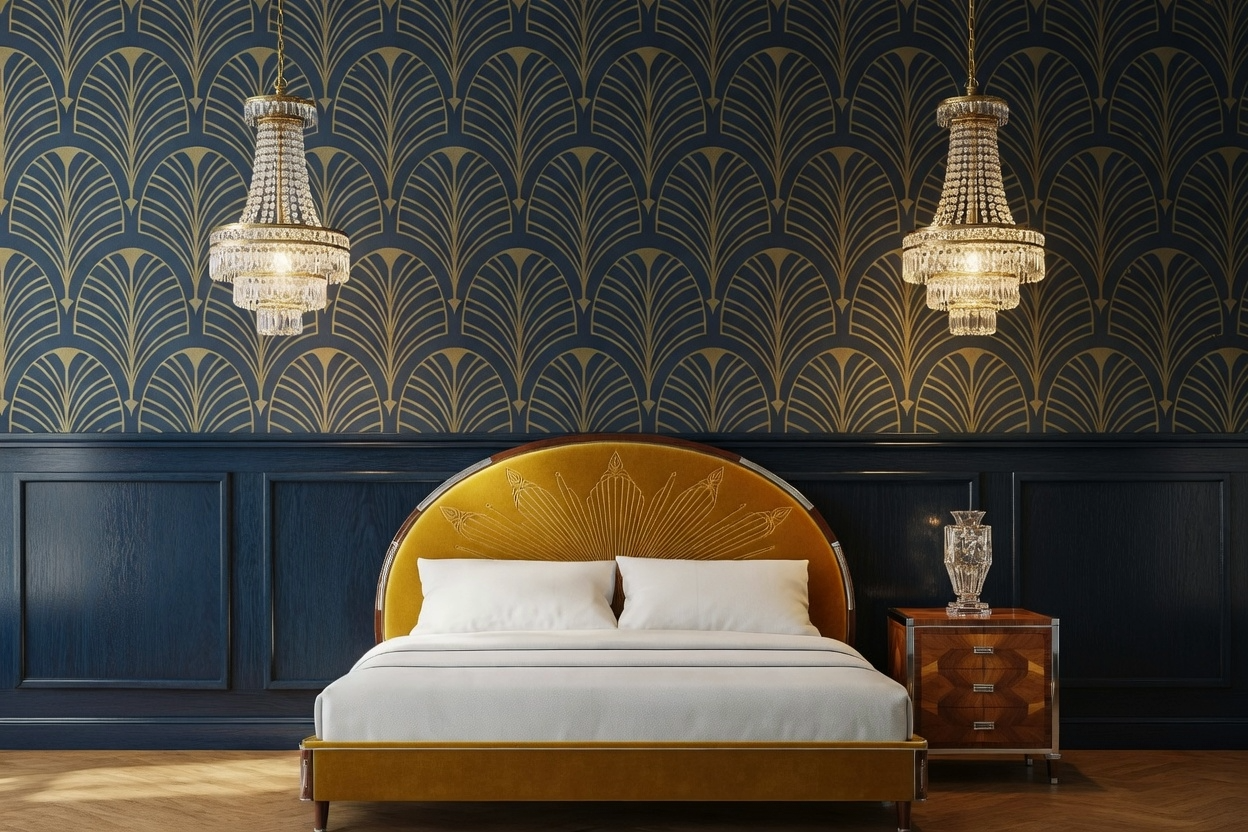
Tip: Use one statement piece. A sunburst mirror or patterned wallpaper panel is enough. Whole rooms of motifs get overwhelming fast.
Color That Fills the Room

Black and gold for drama. Navy and emerald for depth. Cream walls to soften the hit. At Eltham Palace in London, Seely & Paget used black lacquer and gold trim alongside pale green walls. The effect is bold but balanced.
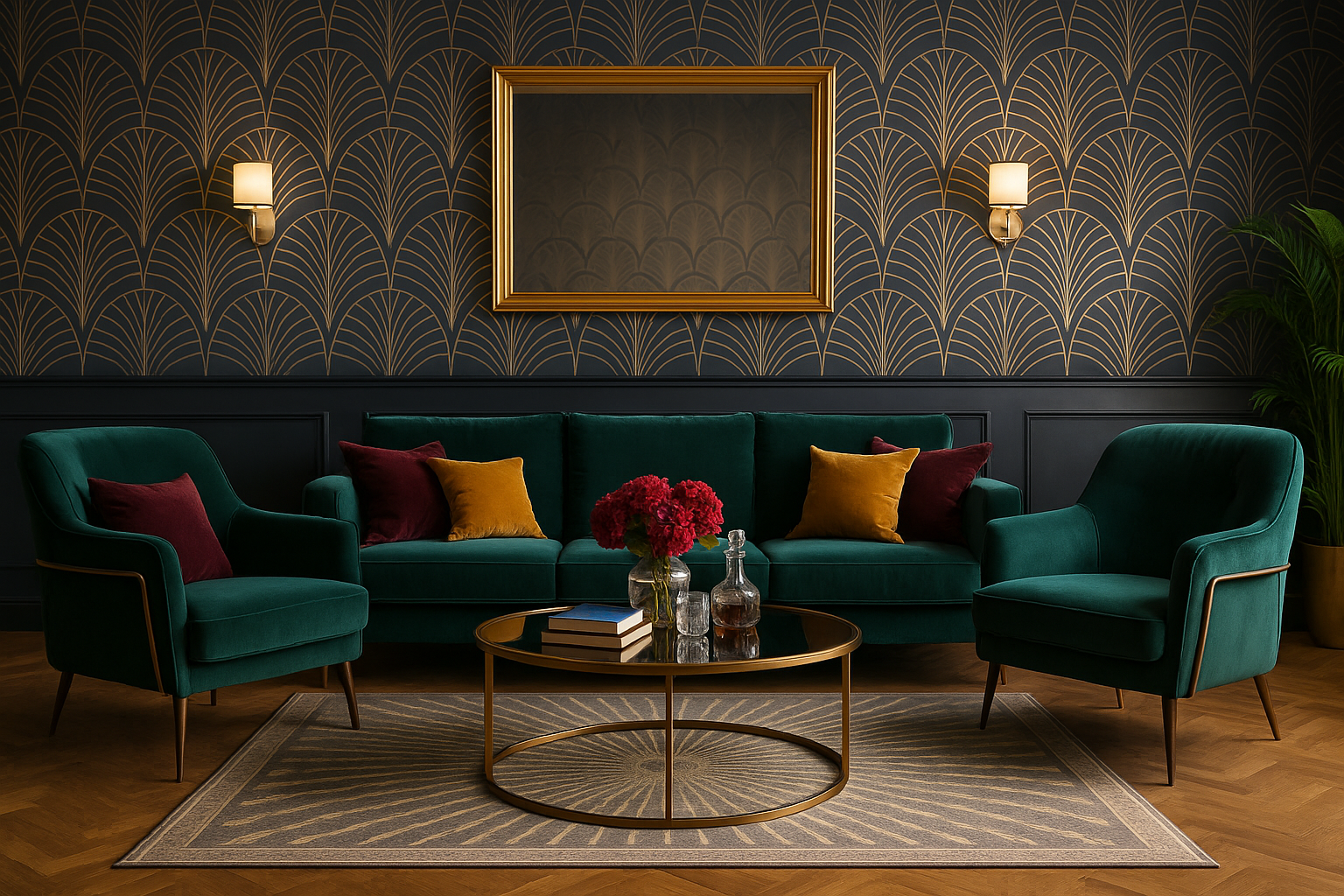
Tip: Anchor a room with one deep color. An emerald sofa with brass legs or a navy wall with a single gold light fitting. Keep it tight.
Related: 1920s Interior Design Style: History, Characteristics, Examples, and Tips
Using Deco Without Drowning In It
Modern Deco works in fragments. A chevron rug. A chrome chandelier. Velvet chairs with sharp lines. Architects in the 70s revival learned this the hard way. Go too literal and the space feels like theater. Use slices and the glamour still comes through.
See also: Mastering Art Deco Interior Design: Secrets from the Experts
How to Work With Art Deco in Real Houses
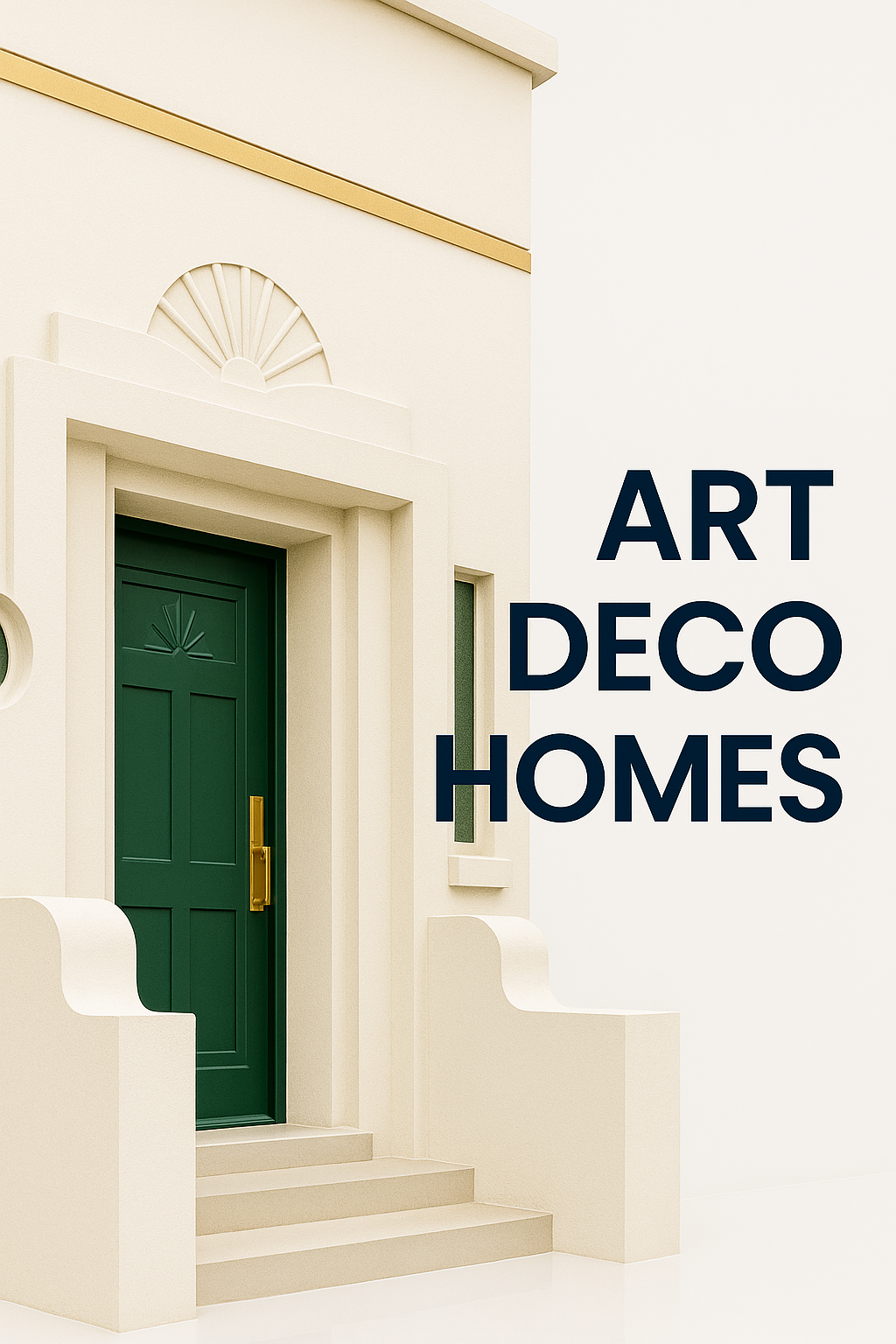
Deco was built to impress. Facades that tower, interiors that stage social life, lighting that acts like jewelry. Restoring or reusing it today takes patience and money. Here’s what actually matters.
Facades That Demand Attention
Deco facades use height as theater. Stepped walls, vertical lines, stone that glows in sunlight. Even small buildings played this game. Gilbert Stanley Underwood’s Normandie Apartments in Los Angeles are the classic case—modest in size but commanding because of window repetition and massing.
I once saw a small Deco house in Toronto smoothed over with stucco. The owner thought it modernized the look. It killed it. Deco loses its identity the second you flatten the geometry.
Interiors Meant to Impress Guests
Inside, Deco houses were built for show. Big halls, long sightlines, strict symmetry. Eltham Palace in London is the textbook example—banquet hall proportions, furniture in pairs, every corner balanced. It was never casual. It was staged living.
Students often get this wrong in studio. They’ll scatter furniture and call it Deco. Doesn’t work. Symmetry is the non-negotiable rule.
Lighting That Defines the Space
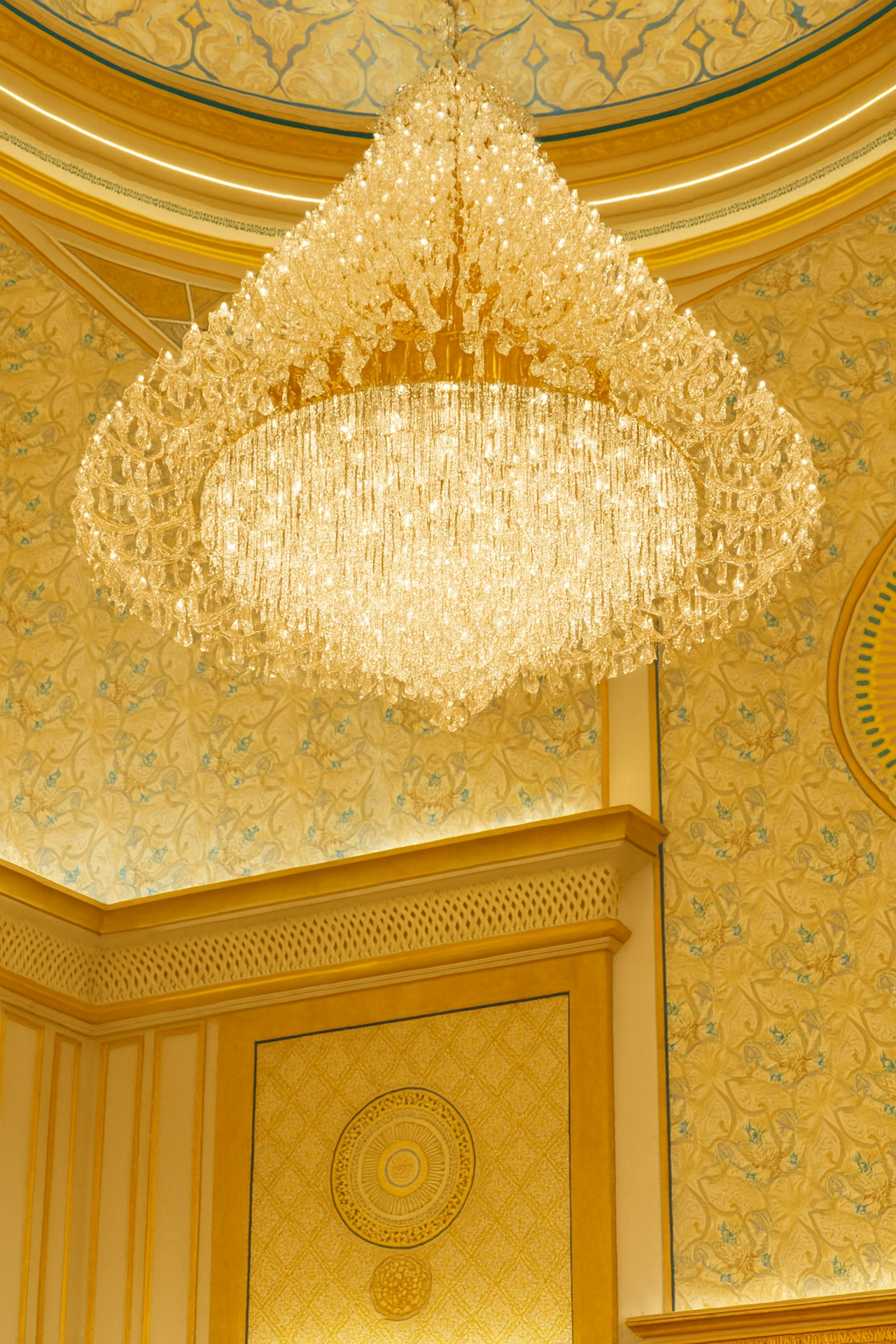
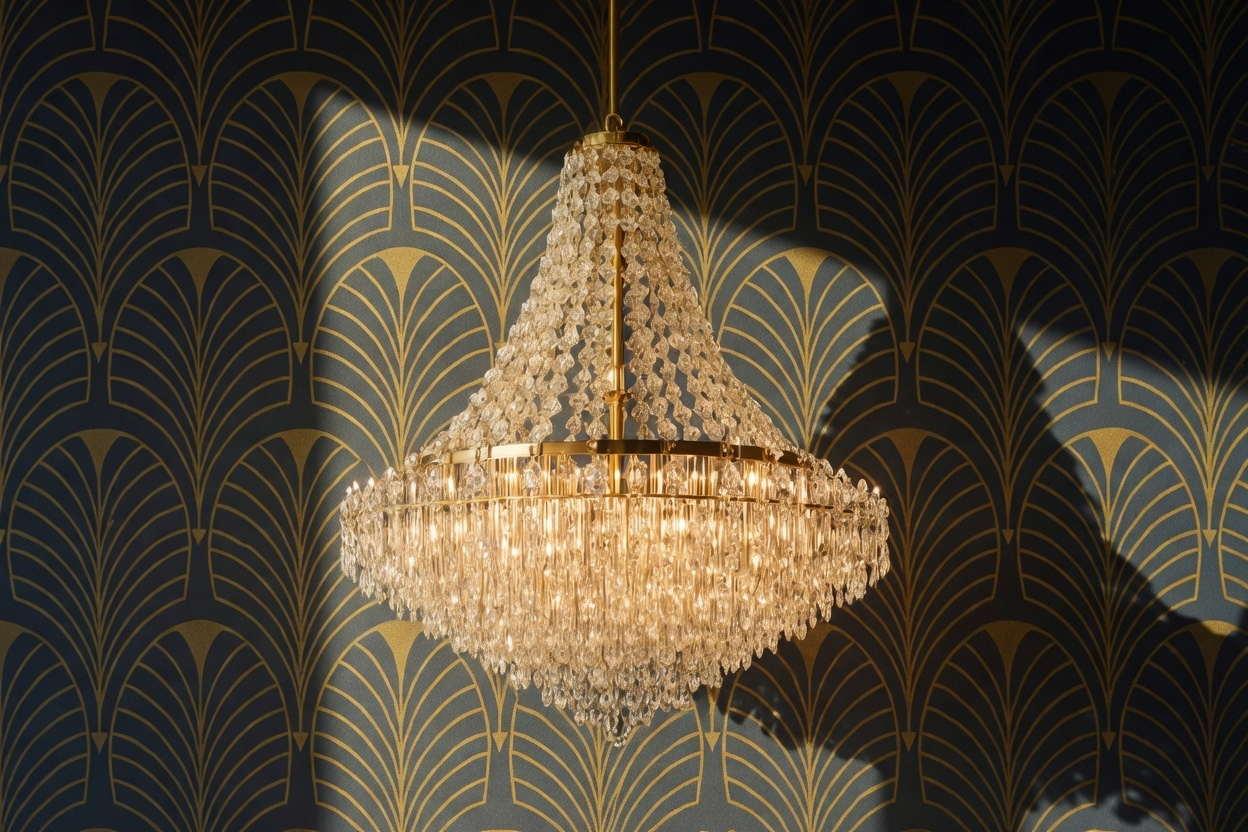
Lighting carried the glamour. Chrome chandeliers, etched glass pendants, sconces that look like frozen rays. At the Sunset Tower in Hollywood, fixtures are as iconic as the facade.
I’ve seen million-dollar restorations ruined by ceiling fans. Deco without its lighting reads cheap, no matter how much marble you bring back.
Furniture That Feels Engineered
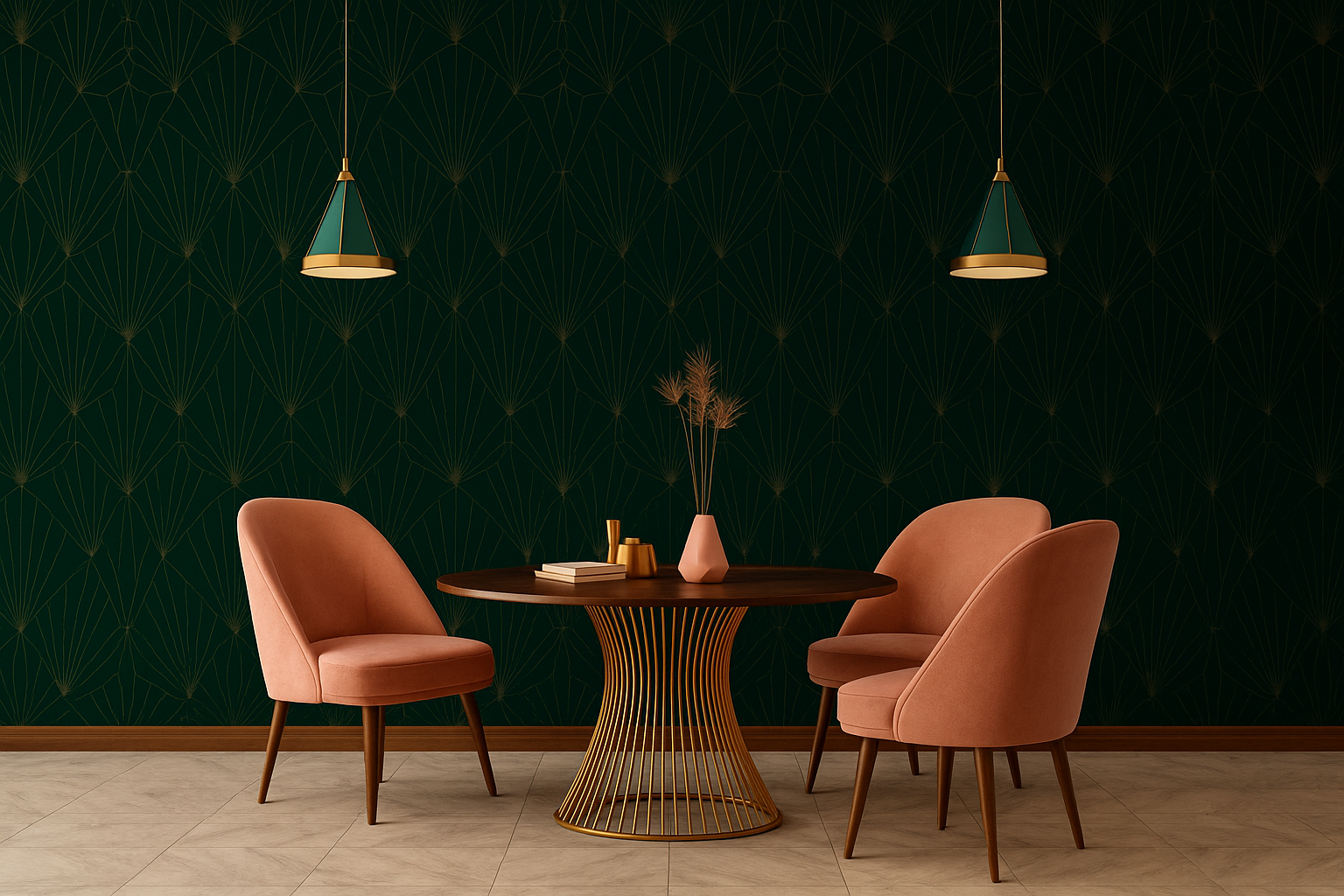
Jacques-Émile Ruhlmann’s furniture set the tone. Exotic veneers, ivory inlays, polished surfaces built like machines. The craftsmanship was insane and expensive to replicate.
One family I worked with restored Deco dining chairs. The lacquer had cracked. Each chair cost over a thousand dollars to repair. That’s the reality of 1930s materials in 2020s humidity.
Modern shortcut: anchor a room with one strong piece. Velvet sofa with chrome trim. Lacquered coffee table. Enough to suggest Deco without drowning in upkeep.
Color That Fills the Room
Deco palettes pushed contrast. Black with gold. Navy or emerald with cream. Eltham Palace shows the balance—black lacquer and gold softened by pale greens. Done wrong, it looks like a nightclub.
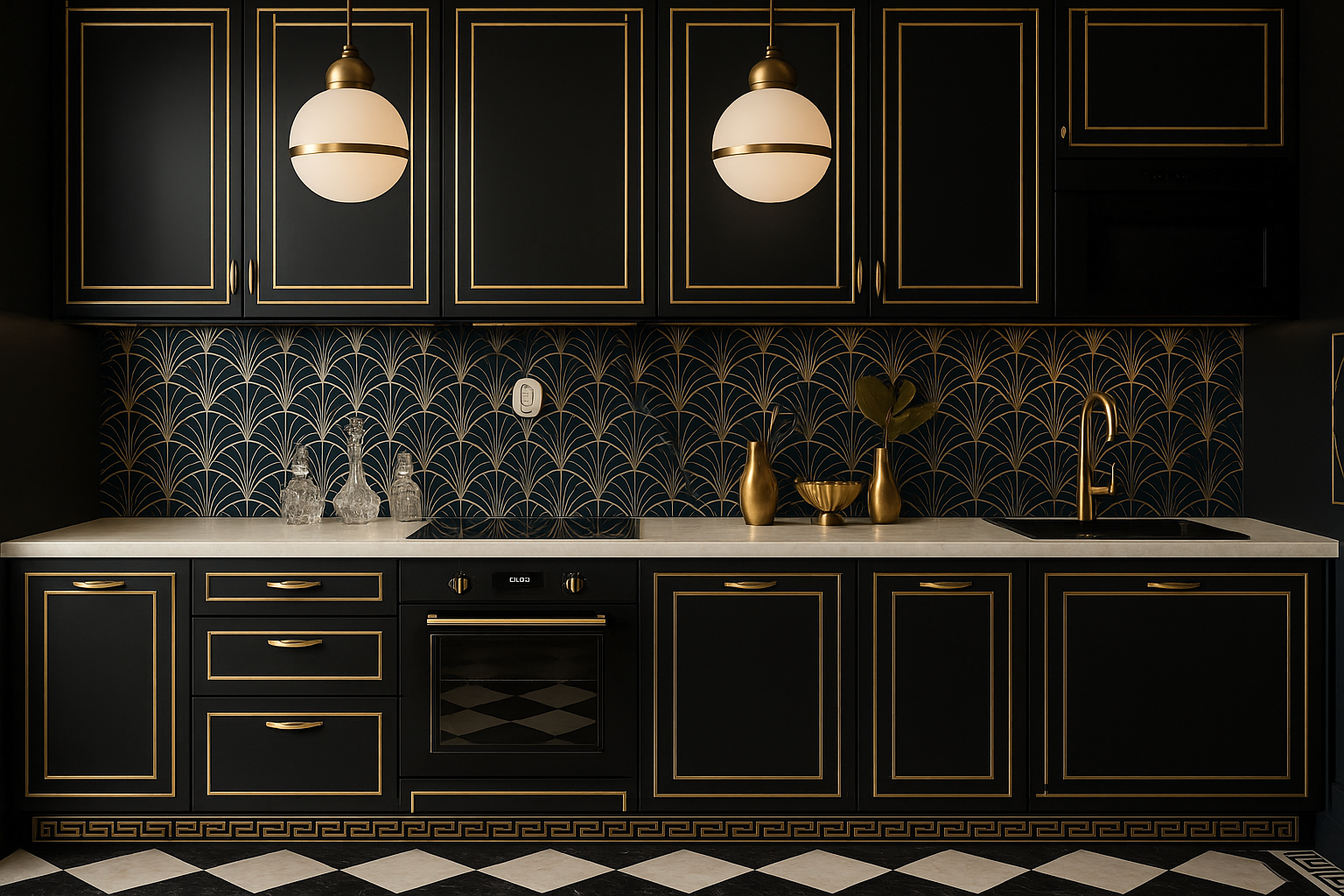
I walked through a “Deco-inspired” kitchen painted all black with gold handles. The owner thought it glamorous. It felt like a themed bar. Balance is what keeps Deco from sliding into parody.
The Fight to Keep Deco Alive
By the 1970s, Deco was on the chopping block. Developers wanted Miami Beach cleared. Barbara Capitman and the Miami Design Preservation League fought back, chaining themselves to buildings until the wrecking crews left. That fight created the world’s largest preserved Deco district.
The lesson: Deco is expensive, which makes it fragile. Owners will always be tempted to strip detail. Once it’s gone, it doesn’t come back.
How Modern Architects Borrow from Deco
Contemporary architects use fragments. A geometric facade panel on a townhouse. Brass trim in minimalist kitchens. Velvet chairs in otherwise pared-down apartments.
I reviewed a Los Angeles home where Deco wallpaper framed a hidden surround system. It looked glamorous but lived like a modern house. That’s the right balance—style as skin, not as a full rebuild.
The Real Takeaway
Deco looks solid in stone and metal, but it’s fragile in practice. It eats budget, time, and maintenance. If you want it to work today, pick your battles. Keep the facade geometry. Invest in one bold light fixture. Anchor a room with a single rich color. Small deliberate moves do more than chasing replicas you can’t sustain.
Related: 1920s Decor Style: History, Characteristics, Examples, and Tips
The Real Price of Owning Art Deco
Maintenance That Never Ends
Deco looks solid but it isn’t. Lacquer cracks with dry air. Chrome pits if you barely miss a cleaning cycle. Marble chips if you drop a fork. I’ve seen owners spend more patching than renovating. One client in New York budgeted fifty grand for a Deco kitchen, then burned through another twenty just keeping the finishes alive over five years.
Finding Materials Is a Battle
Original veneers and exotic woods are banned or prohibitively expensive. Even simple geometric tiles often need custom orders. That means long waits and inflated budgets. It’s not just a supply issue, it’s a craftsmanship issue. Few trades know how to do it right anymore.
Symmetry That Traps You
Deco lives and dies by balance. Shift one window or widen one stair and the whole facade looks broken. I had a client who wanted a staircase more comfortable to climb. Logical, but it wrecked the symmetry. We had to redesign the entire entry to hide the mistake. That’s the trap. You don’t get freedom to tweak.
Comfort Versus Design
Big Deco rooms look great on paper, but they bleed energy. High ceilings, heavy stone, thin insulation. Retrofitting modern HVAC is a nightmare. Hide ducts and you lose airflow. Show ducts and you break the geometry. Even with radiant floors, you are fighting the bones of the style.
Why People Still Chase It
Because presence matters. Deco houses stop you in the street. The geometry, the ornament, the polish—they announce themselves in a way clean-lined modern boxes never can. Architects and owners still pay the price because when Deco works, it refuses to be ignored.
FAQ
1. What years define Art Deco architecture?
Mainly the 1920s and 1930s, with revivals in the 1970s and fragments in contemporary design.
2. Where did Art Deco start?
Paris, 1925 World’s Fair.
3. Who were the big Art Deco architects?
Robert Mallet-Stevens in France, William Van Alen (Chrysler Building) in New York, Leland Bryant (Sunset Tower) in Los Angeles, Henry Hohauser in Miami.
4. Why did Art Deco spread so fast?
It symbolized optimism and modern tech after World War I. People wanted glamour and machines in design.
5. What makes a house “Art Deco”?
Geometry, symmetry, shiny materials, and ornament that doubles as structure.
6. What materials define Art Deco houses?
Marble, chrome, lacquered wood, glass, brass, exotic veneers.
7. What are common Art Deco motifs?
Sunbursts, chevrons, zigzags, stepped forms, stylized flowers.
8. How do you spot Deco from the street?
Stepped facades, vertical lines that make small buildings look tall, geometric ornament.
9. Why does symmetry matter in Deco?
It creates order in the middle of heavy ornament. Without symmetry, Deco collapses into chaos.
10. What colors did Art Deco interiors use?
Black, gold, emerald, navy, creams, and pastels like mint or blush.
11. Why is lighting so critical in Deco houses?
Fixtures were designed as showpieces. Lose them and the whole atmosphere disappears.
12. What’s the hardest part of restoring a Deco house?
Finding or replicating original finishes like veneers, lacquer, or custom tiles.
13. Are Deco houses energy efficient?
No. Large spaces, heavy stone, poor insulation. Retrofits are tough without hurting the look.
14. How expensive is maintenance?
Very. Lacquer cracks, chrome pits, marble stains. Expect ongoing repair costs.
15. Can you build a new house in Deco style today?
Yes, but materials and skilled craftsmen are expensive. Few contractors know the details.
16. What modern tricks mimic Deco affordably?
Geometric tiles, velvet furniture, one bold light fixture, brass or chrome accents.
17. Why did Deco die out?
The Great Depression killed luxury spending, then modernism took over with cheaper, simpler forms.
18. Why did Deco revive in the 1970s?
Preservation battles in Miami and nostalgia for pre-war glamour.
19. Who saved Miami’s Deco district?
Barbara Capitman and the Miami Design Preservation League.
20. What’s the difference between Art Deco and Streamline Moderne?
Deco is ornamented and vertical. Streamline is curved, horizontal, and stripped down.
21. What’s the difference between Art Deco and Bauhaus?
Deco celebrates ornament and glamour. Bauhaus rejects both for pure function.
22. What’s the most famous Art Deco house?
Eltham Palace in London, a blend of medieval shell and 1930s Deco interior.
23. Do Art Deco houses exist outside Europe and America?
Yes. Cairo, Mumbai, Shanghai, and Havana have rich Deco districts.
24. Are Deco houses protected by heritage laws?
Some are, like Miami’s South Beach district, but many private houses aren’t.
25. What’s the resale value of a Deco house?
High if restored properly, but many buyers are scared of maintenance costs.
26. Can Deco work in small apartments?
Yes. A chandelier, a geometric rug, or one bold mirror can carry the theme.
27. What’s the easiest way to ruin Deco style?
Covering ornament with stucco, or replacing original lighting with generic fixtures.
28. How do architects approach Deco restoration today?
Keep geometry and ornament intact, upgrade systems quietly in the background.
29. Can Deco be sustainable?
Yes, if reinterpreted. Use recycled metals, engineered stone, and efficient lighting.
30. What furniture brands echo Deco today?
High-end brands like Jonathan Adler, Restoration Hardware, and vintage dealers.
31. What’s the student takeaway from Deco?
Understand how ornament, geometry, and modern tech worked together.
32. Why do architects still study Deco?
It shows how design can project power, glamour, and modernity in one package.
33. Is Deco practical for family living?
Not really. Large rooms, high upkeep, fragile finishes. It’s about statement, not comfort.
34. Why do Deco interiors feel theatrical?
They were meant to stage social life. Every element is composed like a set.
35. Can you mix Deco with modern minimalism?
Yes. One Deco element in a clean space often looks stronger than a full Deco interior.
36. What’s the biggest misconception about Deco?
That it’s only about ornament. In reality, it was tied to new tech—cars, planes, machines.
37. What lesson does Deco give modern design?
Presence matters. Buildings that command attention last longer in memory than ones that blend in.
Keep Learning
To further explore the world of Art Deco architecture and design, consider these recommended books and online courses. These resources offer in-depth knowledge and practical insights, perfect for anyone looking to deepen their understanding or apply Art Deco principles in their projects.
Recommended Readings
- Art Deco House Style: An Architectural and Interior Design Source Book by Ingrid Cranfield
- What's in it?: This comprehensive guide explores the architectural and interior design elements of Art Deco homes, providing detailed descriptions and beautiful illustrations.
- Why you should buy: Ideal for homeowners and designers looking to recreate or be inspired by Art Deco aesthetics in their projects.
- Art Deco: 1910-1939 by Charlotte Benton
- What's in it?: An in-depth exploration of the Art Deco movement, covering its origins, influences, and impact on architecture and design worldwide.
- Why you should buy: A must-read for anyone interested in the historical and cultural context of Art Deco, featuring extensive research and stunning visuals.
- Living with Art Deco by Adrian Tinniswood
- What's in it?: Showcases stunning examples of Art Deco interiors and offers practical advice on recreating the style in modern homes.
- Why you should buy: Perfect for those looking to integrate Art Deco elements into their living spaces with practical tips and inspiration.