
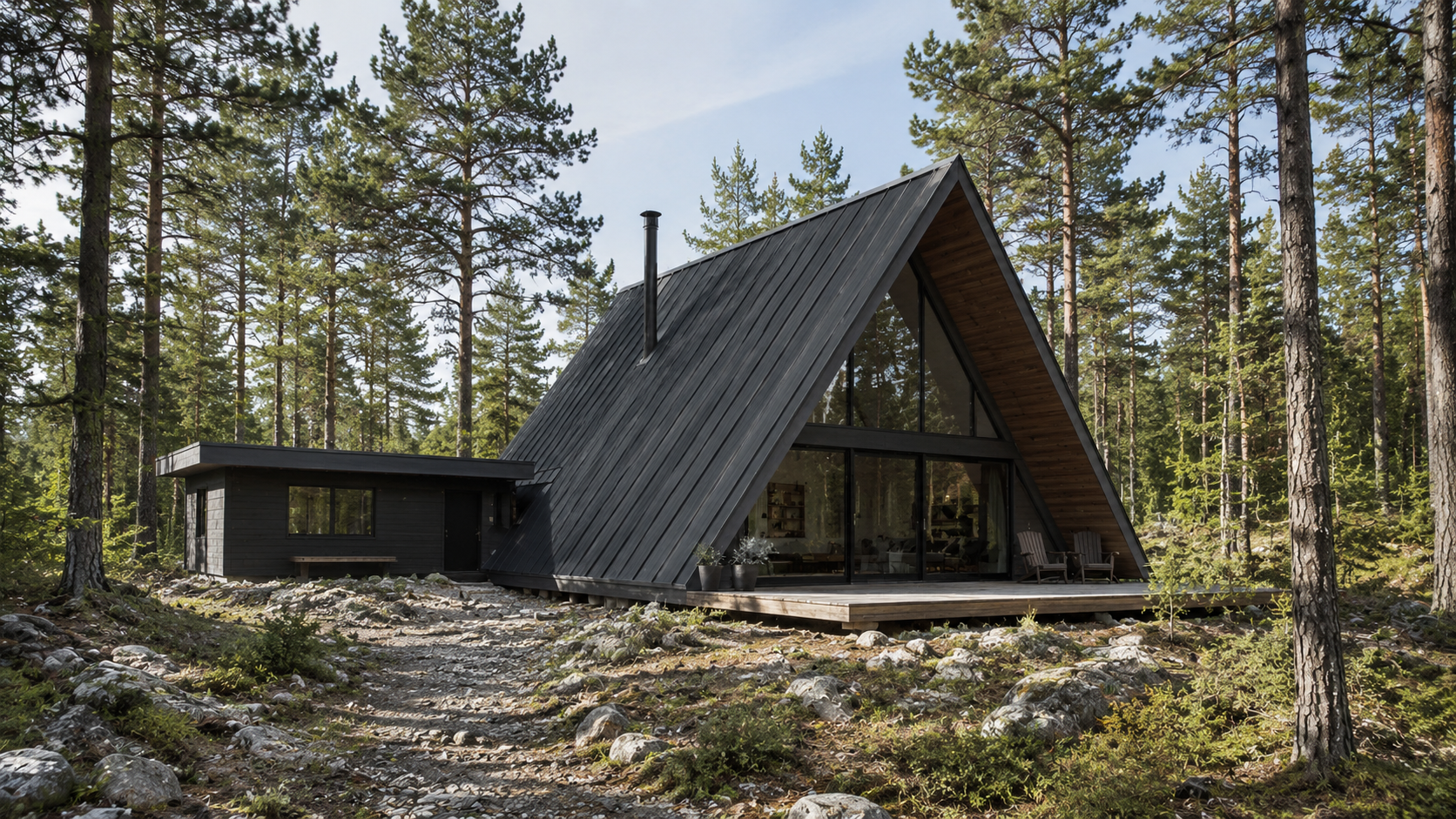
Image by ArchitectureCourses.org. A dark A-frame cabin in a pine clearing, with the main roof form doing the work and the side wing kept low so it does not fight the triangle.
An A-frame tiny house looks simple because the roof does most of the work.
That is also the catch. The same steep triangle that sheds rain and snow steals wall space, squeezes the loft, complicates insulation, and makes every window opening more expensive than it looks on a clean drawing.
A good A-frame is one decision doing several jobs at once: roof, wall, structure, drainage, room shape, storage problem, and cost driver. Get the angle wrong and the whole house pays for it. The sofa ends up in a crouch zone. The loft overheats. The kitchen loses usable wall. The front glass leaks heat. Money goes into fixing problems the shape created.
If you are still sorting out tiny-house basics, start with What Is a Tiny House?. For the broader tiny-house category, read Tiny Houses: Big Ideas for Small Living Spaces.
The Triangle Is the Design
An A-frame tiny house is built around two steep roof planes meeting at a ridge and running down toward the floor or short side walls. That makes the house easy to recognize. It can also make the structure simpler than a tiny house with a complicated roof.
But the triangle is not decoration. It controls headroom, storage, drainage, wall thickness, openings, and where a person can stand without ducking.
| A-frame choice | What looks good | What can go wrong | Check first |
|---|---|---|---|
| Steep roof pitch | Strong cabin shape and better snow shedding | Less usable floor area near the edges | Standing height, stair location, furniture zones |
| Large glass front | Better view and more daylight | Heat loss, overheating, privacy problems, higher cost | Orientation, shading, window performance |
| Loft under the ridge | More sleeping area without a bigger footprint | Heat buildup, low headroom, poor night access | Stairs, ventilation, mattress clearance |
| Roof-as-wall construction | Fewer separate wall surfaces | Harder insulation and moisture detailing | Air sealing, venting, roof assembly, flashing |
Where A-Frames Work Best
A-frames make the most sense when the shape helps the site.
They work well as small cabins, weekend houses, guest units, studios, and compact retreat buildings. A steep roof can handle rain and snow cleanly when the roof assembly is detailed properly. The high centerline can make a small plan feel taller than it is. The front wall can bring in light without turning every side of the house into glass.
They work less well when someone expects normal-house storage, full-height walls everywhere, easy furniture placement, and a large private bedroom on the main floor. The low edges are not free space. They are awkward space, and awkward space still costs money to build.
An A-frame tiny house can work full time, but it has to be honest about headroom, storage, loft access, and mechanical space. As a compact cabin, the shape can be brilliant. As a full-time house, it gets less forgiving.
Size Changes the Problem
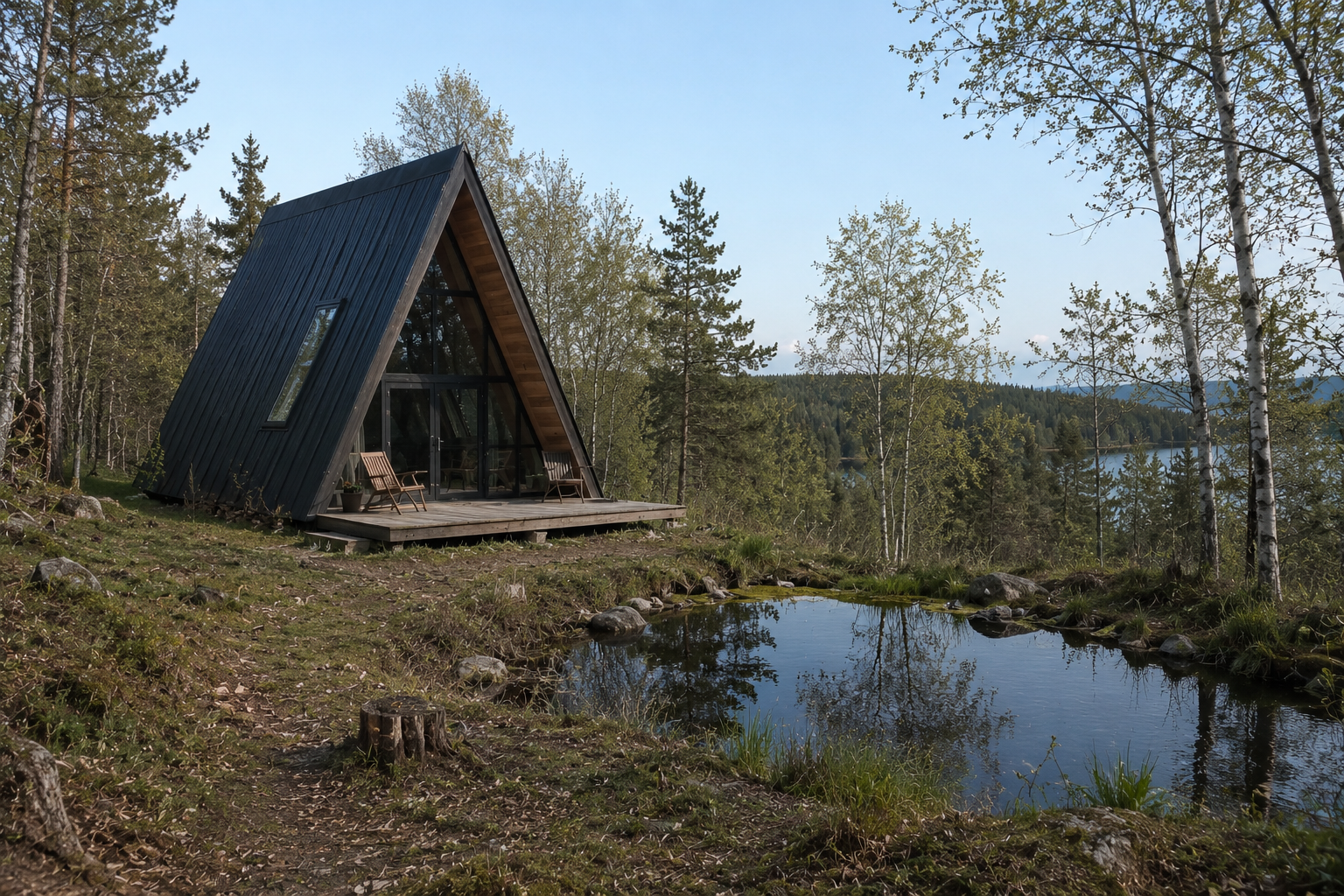
Image by ArchitectureCourses.org. The pond works better when it feels like part of the site: rough edges, weeds, rocks, and water close enough to shape how the A-frame sits on the land.
The smaller the A-frame, the more the triangle controls daily life.
A 100-square-foot A-frame can work as a sleeping cabin. It is not a full tiny home unless the expectations are very limited. A 200- to 400-square-foot A-frame gives more room for a kitchenette, bath, sitting area, and loft. Once the plan pushes toward 500 or 600 square feet, it may live more like a small cabin than a tiny house.
| Size range | Best use | Main weakness |
|---|---|---|
| 100–200 sq ft | Sleeping cabin, studio, simple retreat | Limited plumbing, storage, and daily-use comfort |
| 200–400 sq ft | Couple’s cabin, guest house, compact weekend place | Loft access, small bath, tight kitchen storage |
| 400–600 sq ft | More complete small cabin or part-time dwelling | Higher cost, more glazing pressure, more site work |
If the plan needs to work every day, do not judge it by floor area alone. Judge the standing-height area. That is the room you actually live in.
The Standing-Height Test
Floor area lies in an A-frame.
A 300-square-foot plan can look generous until the roof slope cuts into the usable room. The outside footprint tells you what gets built. The standing-height zone tells you what can be lived in.
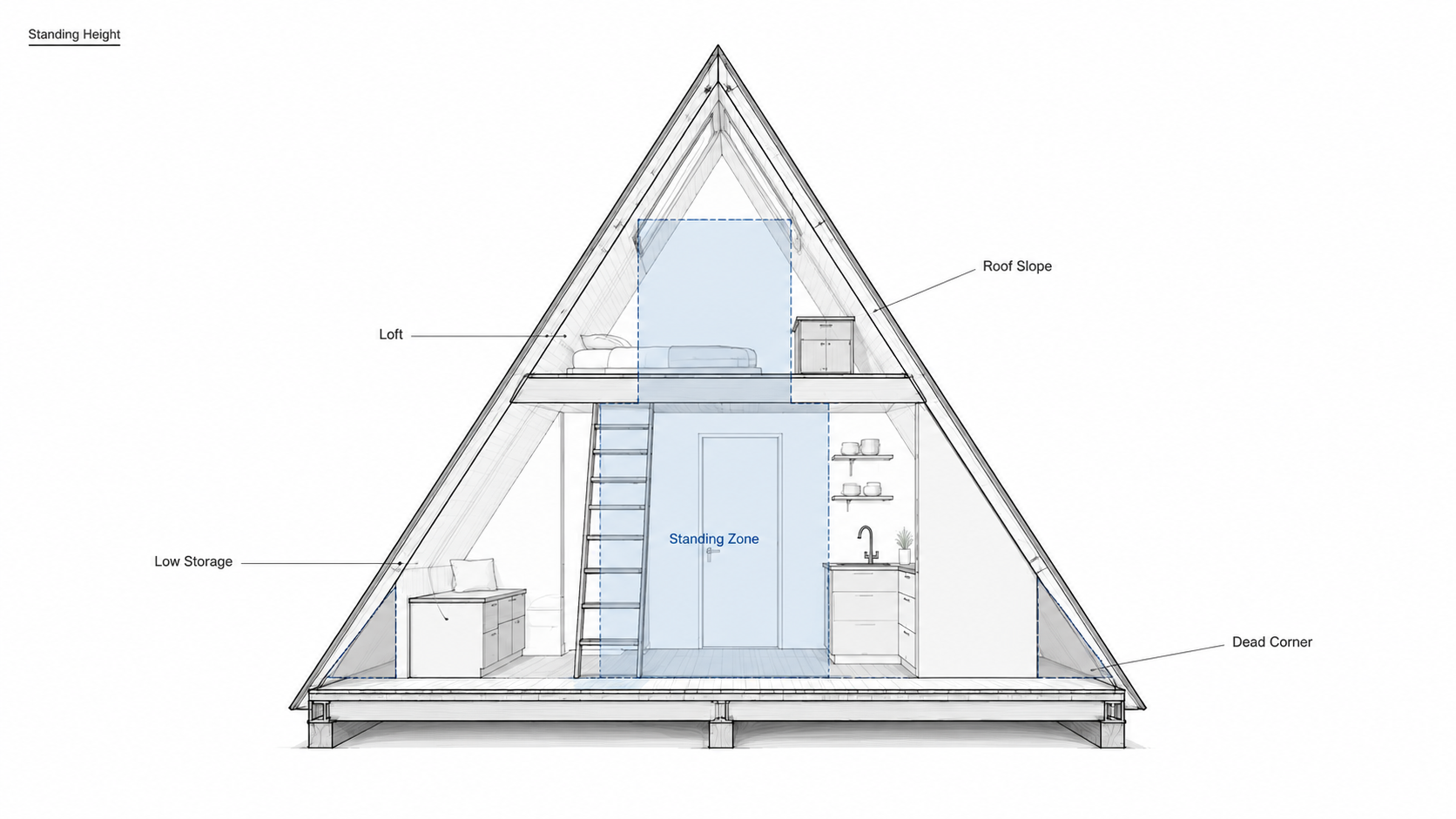
Illustration by ArchitectureCourses.org. The full footprint of an A-frame tiny house can look generous on paper, but the useful room is the standing-height zone left after the roof slopes take back the edges.
Before trusting any A-frame plan, draw three zones on the section:
- Full-height zone: the area where daily movement, cooking, stairs, dressing, and carrying things should happen.
- Low-use edge: the sloped area that can take benches, drawers, low beds, firewood, or deep storage.
- Dead triangle: the leftover corner that looks useful in a drawing but does almost nothing in daily life.
This is where many A-frame plans become honest. If the kitchen, bathroom, stair, or main walkway depends on the low-use edge, the house will feel smaller than the square footage suggests.
The best A-frame tiny houses put movement in the middle, storage at the edges, and custom work only where the triangle earns it.
The Roof Angle Decides the Interior
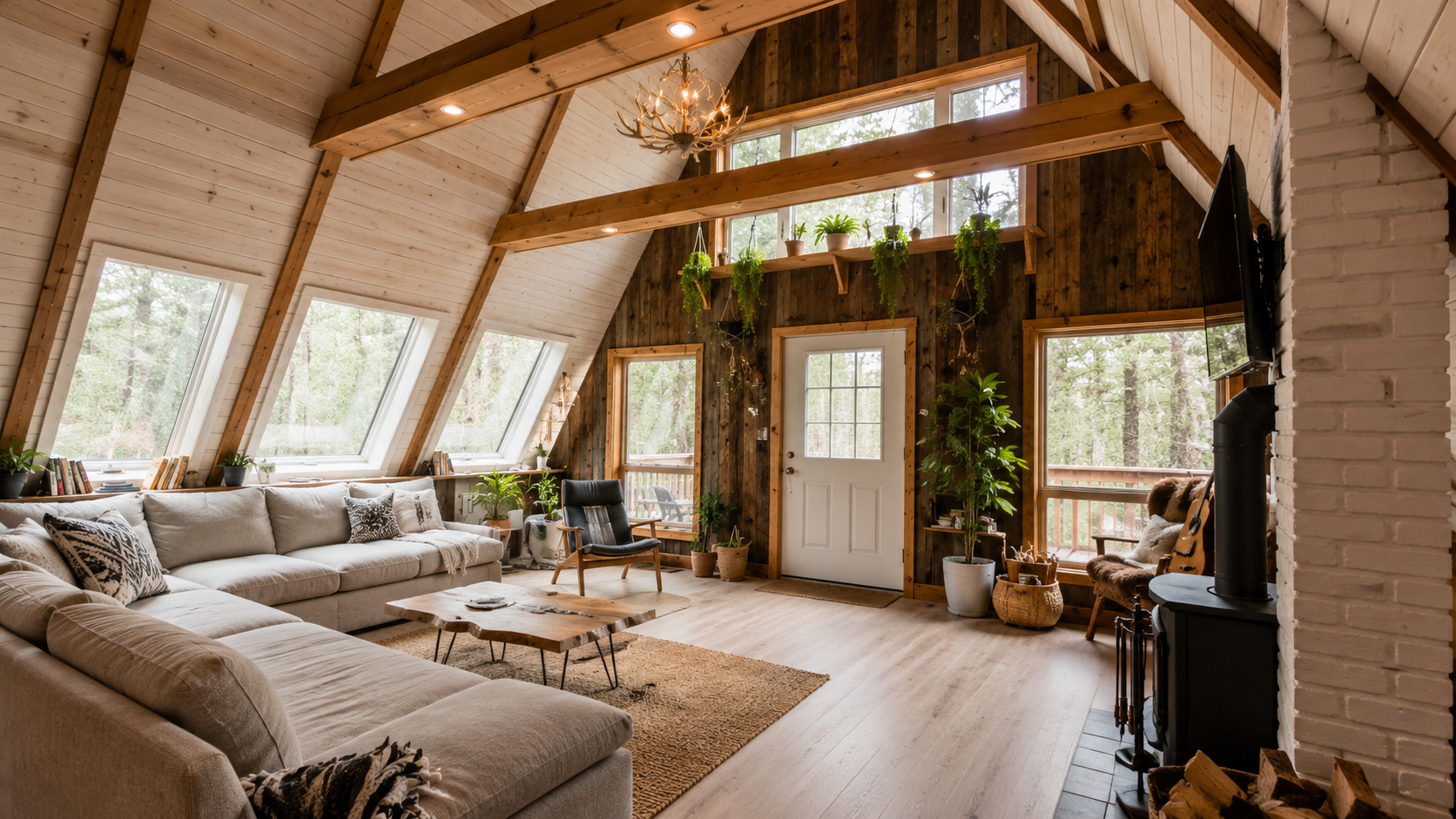
Image by ArchitectureCourses.org. This A-frame interior works because the tall center stays open while the sofa, stove, plants, and low furniture sit where the roof begins to press down.
A-frame drawings can be misleading because the plan looks larger than the room feels.
The main floor may show a sofa, table, kitchen, and storage wall. Then the roof slope arrives and half of those zones become crouching space. Tall cabinets do not fit where the walls lean. A normal bed may fit on paper but feel boxed in at the edges. A bathroom can become awkward if the shower or vanity is pushed into the low side of the triangle.
The practical test is simple: mark the standing-height line before you fall in love with the plan. That line tells you where people can move, cook, dress, and use the room without ducking.
Lofts Need More Than a Ladder
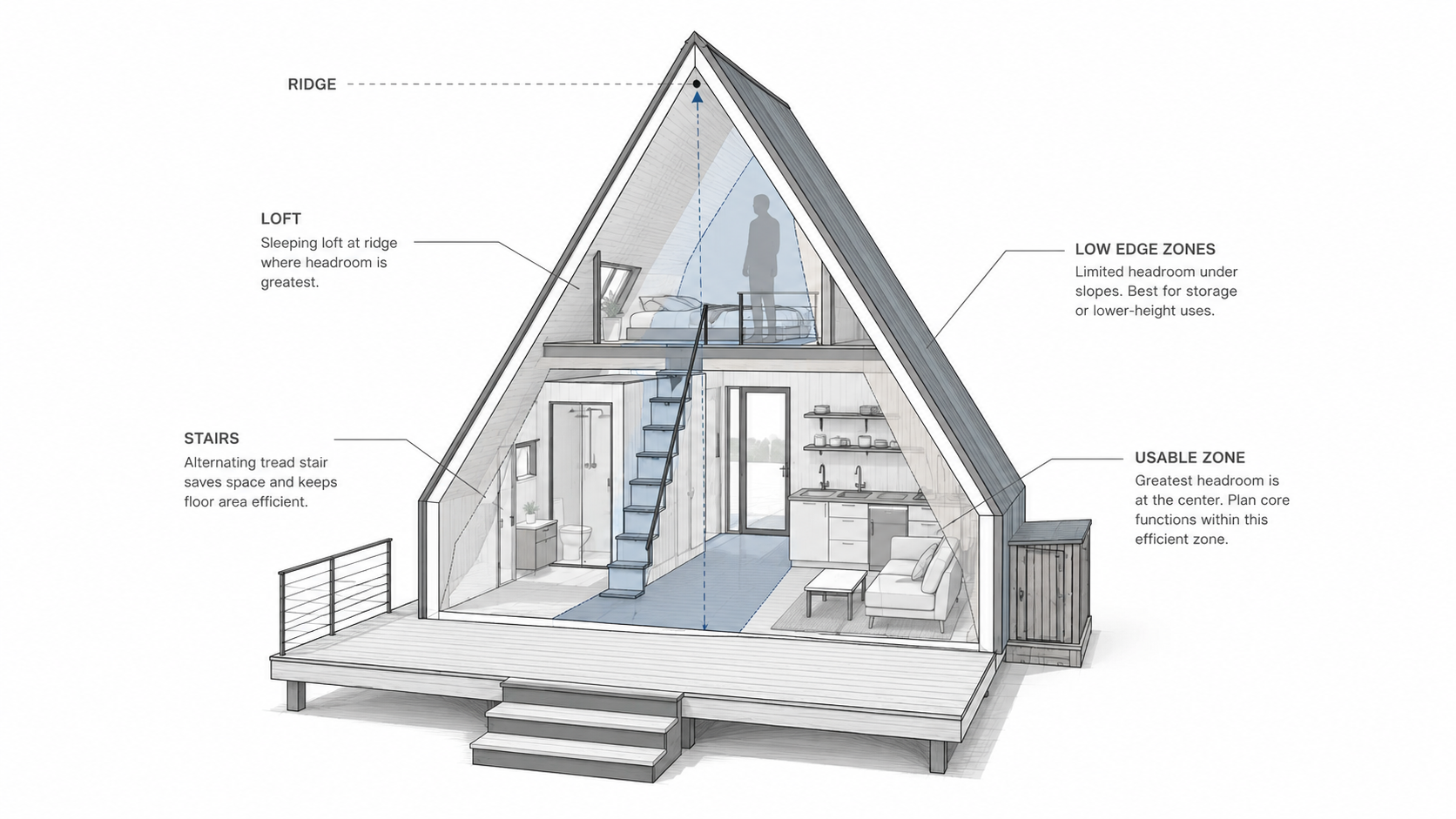
Illustration by ArchitectureCourses.org. In a tiny A-frame, the center bay is the room. The loft, stair, bath, and storage only work if they respect the ridge height and the dead zones under the sloped roof.
The loft is usually the selling point. It is also where many A-frame tiny houses become annoying.
Heat rises into the peak. Low roof edges pinch the mattress. A ladder saves space but gets old at night. A steep stair works better, but it needs floor area and a safe landing. If the loft is used only for occasional sleeping, the compromise may be fine. If it is the main bed, the details matter.
A better loft has three things: a safe route up, enough air movement, and enough headroom where the body actually sits up. Without those, the loft is just a sleeping shelf.
For deeper tiny-house planning, use Design Your Own Tiny House and Tiny House Design That Actually Works.
Windows Can Make or Break the Cabin
A big glass front is the classic A-frame move. It gives the building its postcard face.
It can also wreck the budget and comfort. Large glazing costs more, loses more heat in cold climates, gains more heat in hot climates, and needs careful flashing because the front wall often carries the whole visual identity of the cabin. A cheap window package in a tiny A-frame is not a small mistake. It can mean condensation, drafts, glare, and higher heating or cooling load.
One strong view window usually works better than glass everywhere. Put the big opening where the view and orientation deserve it. Use smaller operable windows where air movement matters.
Simple Frame, Hard Details
The frame itself can be straightforward: floor platform, paired rafters or A-frame members, ridge connection, sheathing, roof skin, and end walls. The hard part is keeping the triangle straight, dry, insulated, and usable.
A small error at the base can show up at the ridge. A bad flashing decision can become rot because the roof is also the wall. Poor air sealing can turn the sloped assembly into a condensation problem. From far away, the structure looks forgiving. Once weather gets into the layers, it is not forgiving at all.
What I would check before pricing finishes
- Base line: floor frame, foundation, or trailer must be square and stable before the A-frame members go up.
- Roof assembly: insulation, ventilation, vapor control, and sheathing need to work as one system.
- Openings: windows and doors must be flashed like weak points, not decorative cuts in the triangle.
- Service access: wiring, plumbing, shutoffs, and panels need places you can reach after the interior is finished.
A-Frame on Wheels Is the Harder Version
An A-frame tiny house on wheels can be done. It is not the easiest mobile shape.
The steep roof raises height quickly. The triangle can push weight high. The roof planes add wind exposure on the road. A fixed A-frame can sit calmly on a foundation; a towable one has to respect width, height, gross weight, axle rating, brakes, tires, lighting, and legal use after it arrives.
Do not assume the cabin shape becomes a good trailer shape because it is small. For mobile projects, read Everything About Tiny Houses on Wheels and Regulations for Tiny Houses on Wheels before buying plans.
The Cheap Shape Still Needs Good Details
A-frames can be cost-efficient because the form is simple. That does not make every A-frame cheap.
Costs rise with the same things that punish other tiny houses: site work, foundation, road access, glazing, insulation, roofing, utilities, bathroom quality, heating and cooling, and interior storage. The A-frame adds its own pressure because so much of the enclosure is roof. Roofing, insulation, air sealing, and flashing are not places to fake savings.
| Budget choice | Saves money | Can cost more later if |
|---|---|---|
| Simple rectangular footprint | Less framing complexity | The plan still wastes the low edges |
| Metal roof | Durable and good for shedding snow/rain | Condensation and underlayment are ignored |
| Basic window package | Lower upfront cost | Large glass areas cause heat loss, overheating, or leaks |
| DIY interior finish | Can reduce labor cost | Built-ins block ventilation, wiring, or service access |
For broader budget planning, read Tiny Home Cost Breakdown and How Much Does a 400 Sq Ft Tiny House Cost?.
Interior Space Has to Obey the Slope
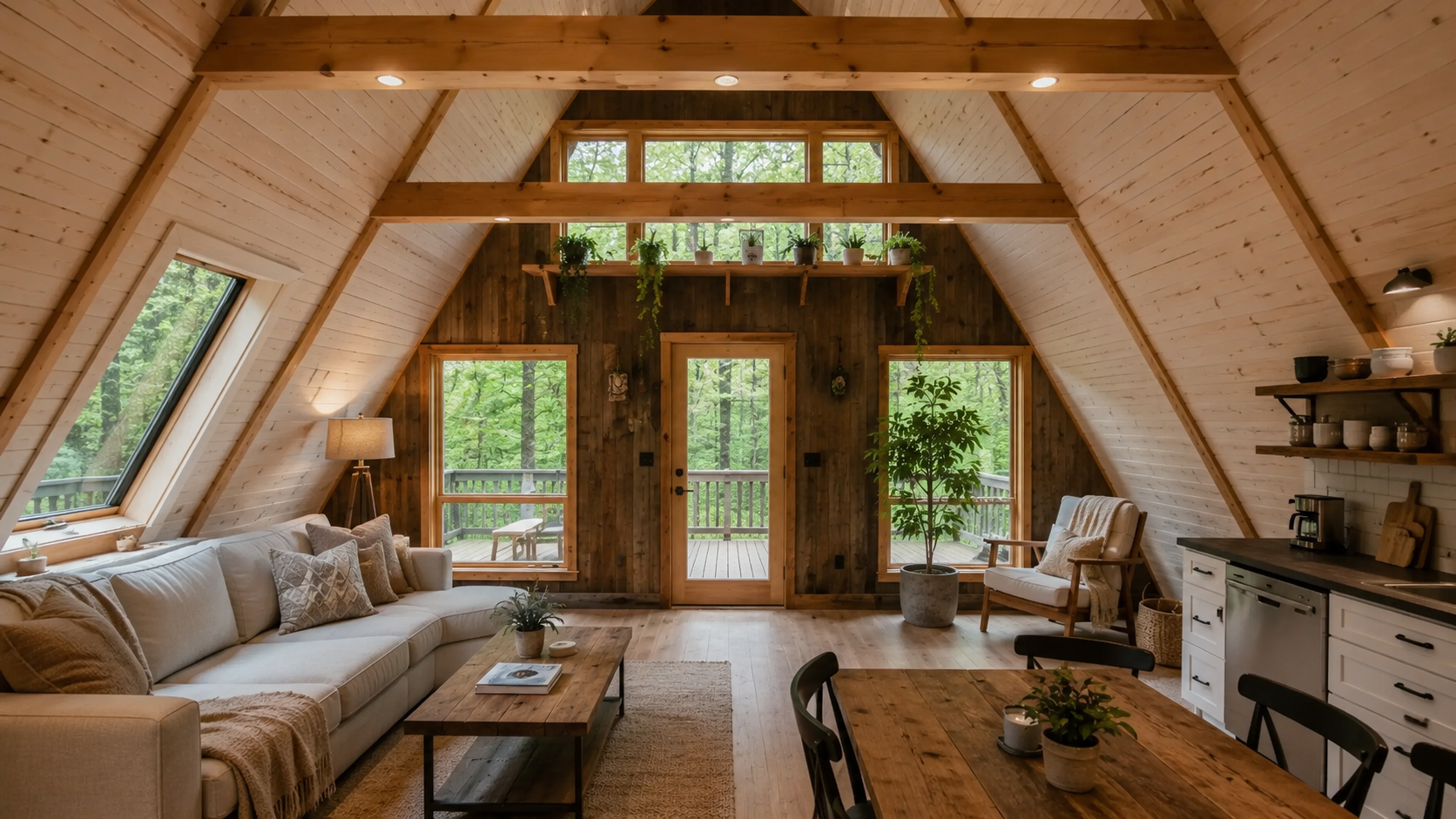
Image by ArchitectureCourses.org. The wide interior view shows why A-frame rooms work best when the center stays open and the low roof edges take the sofa, storage, and built-ins.
Compact A-frame interior with loft, seating, kitchen, and sloped roof edges that shape how the room can be used.
Furniture does not behave normally in an A-frame. Tall pieces move toward the middle. Low storage belongs near the edges. Built-ins often work better than freestanding furniture because they can follow the roofline and use the awkward zones.
The kitchen should avoid the lowest sidewall area unless the plan is carefully drawn. A small bath needs enough standing height at the toilet, sink, and shower. A sofa can sit near a sloped wall, but the walkway cannot.
The best interiors do not fill every triangle. They leave enough open floor so the small cabin can breathe.
Off-Grid A-Frames Need Moisture Discipline
A steep roof is useful for rainwater collection and solar exposure, but off-grid systems do not fix a weak building envelope.
Cooking, showers, wet clothes, and sleeping lofts add moisture. In an A-frame, warm damp air rises toward the peak, where poor ventilation can turn into condensation and mold. That matters even more in cold climates where the roof assembly is doing wall duty too.
Solar, rainwater, composting toilets, and small heat pumps can all make sense. They still need a dry shell, planned air movement, safe wiring, service access, and enough backup for bad weather.
If the goal is a greener small house, look at Smart Upgrades for Small Spaces and Prefab Tiny Homes for related compact options.
Buying, Renting, or Building
Renting an A-frame for a weekend is useful, but do not judge only the mood. Pay attention to the annoying parts: where shoes go, how the loft feels at night, whether the bathroom feels cramped, how the cabin ventilates, and whether the edges of the room are usable or just photogenic.
Buying used can work if the shell is dry and the roof assembly is sound. Check the roof edges, window flashing, floor softness, musty smells, and any signs of trapped water. A cheap A-frame with a leak is not a deal. It is a roof repair attached to a cabin.
Prefab A-frame kits can reduce design guesswork, but they do not remove site work, permits, foundation, utilities, delivery, or code checks. The kit is not the whole project.
Where A-Frames Waste Money
- Oversized glass: the view improves, but heat loss, glare, privacy, and cost all rise.
- Bad loft access: a ladder saves floor area but can make daily use worse.
- Ignored roof detailing: leaks and condensation matter more when the roof is also the wall.
- Too many add-ons: bump-outs, decks, dormers, and extensions can fight the simple form that made the A-frame worth choosing.
The cleanest A-frame tiny houses stay calm. Strong triangle. Good roof. Honest loft. Simple end walls. Enough storage. No fake complexity.
FAQ
How Much Does a Small A-Frame Tiny House Cost?
A very basic DIY cabin can be much cheaper than a finished tiny home, but most usable small A-frames cost more once foundation, roofing, insulation, windows, utilities, and interior work are included. Treat low advertised kit prices as only one part of the budget.
Are A-Frame Tiny Houses Good for Snow?
They can be. A steep roof helps shed snow, but pitch alone is not enough. The roof structure, roofing material, insulation, ventilation, and site exposure all matter.
Can an A-Frame Tiny House Be Built on Wheels?
Yes, but it is harder than a simple box-shaped THOW. Height, wind exposure, weight, axle rating, and road legality need careful checking.
What Is the Biggest Problem With A-Frame Interiors?
Usable wall space. The floor area may look fine, but the sloped sides reduce where people can stand, store things, cook, and place furniture.
Is a Prefab A-Frame Kit Easier Than Building From Scratch?
Usually, yes. It can reduce framing guesswork and waste. It still needs a real site plan, foundation, weatherproofing, utilities, and local approval.
Can You Live Full-Time in an A-Frame Tiny House?
Yes, if the plan is honest about storage, heat, ventilation, loft access, and daily routines. It works badly when the cabin is designed as a weekend photo, then expected to behave like a normal house.
Read This Next
Start Here: What Is a Tiny House?
Design Help: Tiny House Design That Actually Works
Build Planning: Design Your Own Tiny House
Mobile Version: Everything About Tiny Houses on Wheels
Rules First: Tiny Homes Regulations and Building Codes
Cost Check: Tiny Home Cost Breakdown