
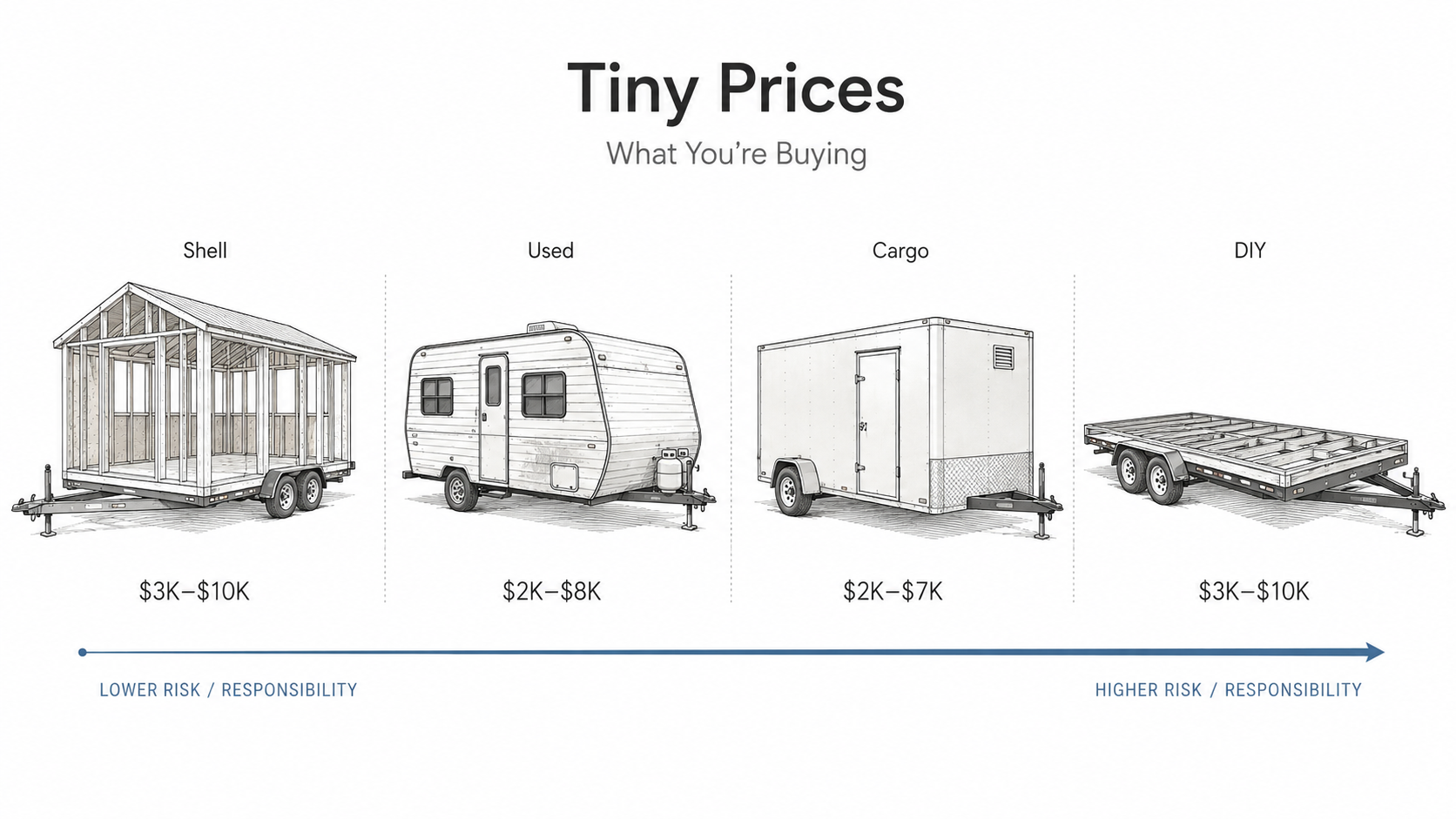
A tiny home can look cheap until the site gets priced.
The unit may be $50,000. The finished project may not be. Land, permits, foundation, utility runs, septic, delivery, skirting, trailer upgrades, winter protection, and inspections can change the number before anyone picks flooring.
That is why tiny-home cost pages get people into trouble. They price the house like a product. A tiny home is a small construction project with a legal category, a base, systems, and a site.
In the U.S., a simple owner-finished shell may stay near the lower end of the market. A finished tiny house on wheels usually costs more. A foundation-based tiny house or ADU can start acting like a small custom home once land and utilities enter the job.
If you are new to the category, start with What Is a Tiny House?. If the legal side is still unclear, read Tiny Homes Regulations and Building Codes before you trust any cost estimate.
Start With Four Numbers
Do not ask for one tiny-home price. Ask for four prices.
The first price is the unit. The second is the base. The third is the site. The fourth is the systems package. If those are blended together, the quote may look cleaner than the real project.
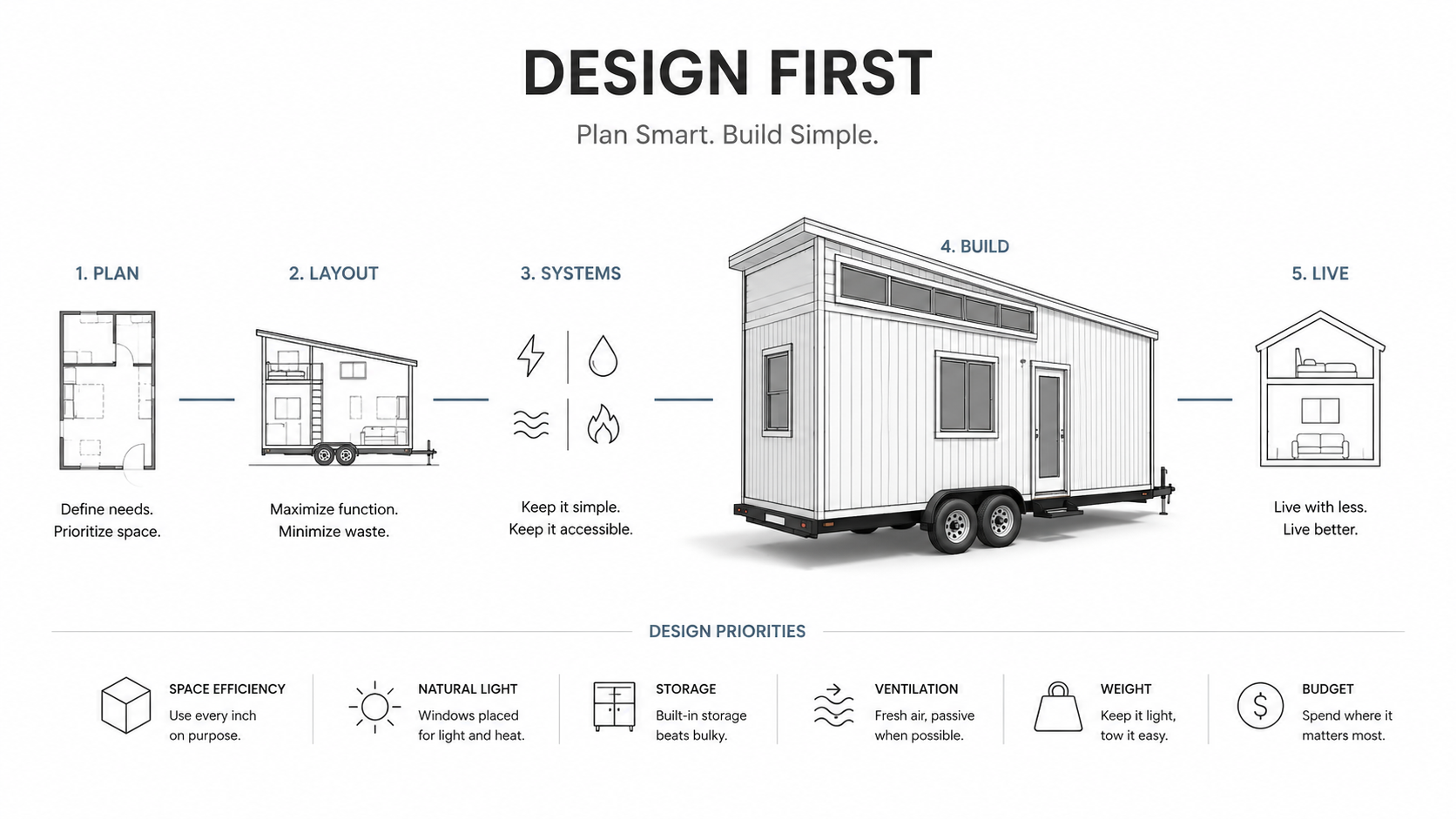
| Cost bucket | What it includes | Common mistake |
|---|---|---|
| Unit | Shell, framing, roof, windows, kitchen, bath, finishes, basic mechanical systems | Assuming the advertised unit price is the full project price |
| Base | Trailer, piers, slab, crawl space, frost protection, anchors, skirting | Treating the trailer or foundation like a minor line item |
| Site | Access, grading, drainage, permits, delivery, trenching, utility distance | Buying the home before checking whether the site can take it |
| Systems | Power, water, sewer, septic, heating, cooling, ventilation, tanks, batteries | Adding systems after the layout is already locked |
The unit is the part people like pricing. The site and systems are where the budget usually gets embarrassed.
U.S. Planning Ranges for 2026
Use these as 2026 U.S. planning bands, not quotes. Local labor, code path, delivery distance, finish level, financing, utility distance, and site work can move the final number hard.
| Build path | Typical 2026 U.S. planning range | What the number usually means | What may be missing |
|---|---|---|---|
| Owner-finished shell | $40,000–$80,000 | Basic structure, roof, windows, trailer or simple base, unfinished interior | Plumbing, wiring, insulation upgrades, kitchen, bath, heating, inspections |
| Finished tiny house on wheels | $80,000–$140,000 | More complete THOW with trailer, kitchen, bath, insulation, finishes, basic systems | Delivery, parking, utility hookup, skirting, winter package, legal placement |
| Prefab or modular tiny home | $90,000–$170,000 | Factory-built or panelized unit with more controlled shell quality | Foundation, crane, delivery, permits, utility connections, site prep |
| Foundation-based tiny house or ADU | $130,000–$250,000+ | More house-like build with code path, foundation, utility approval, inspections | Land, trenching, sewer, septic, frost depth, local labor, design fees |
| High-spec custom or off-grid build | $160,000–$300,000+ | Better envelope, custom storage, solar, batteries, cold-climate details, upgraded systems | The systems package can start costing like a normal house |
The cheap number is not always fake. It is usually incomplete. It may describe a shell, a used unit, a heavy-DIY project, or a home that still needs the expensive parts.
What $50K, $100K, and $180K Usually Buy
A $50,000 tiny home budget can work when the buyer understands what is missing. It may buy a shell, used THOW, simple DIY build, or basic owner-finished unit. It usually does not buy a clean legal site, finished utilities, good insulation, full winter protection, and low repair risk at the same time.
A $100,000 budget is more realistic for many finished THOWs or modest prefab units before major site costs. That number can still be too low if delivery, utility hookups, skirting, permitting, insurance, winter detailing, or legal placement are not included.
A $180,000 budget can buy a better unit, a foundation-based ADU path, a cold-climate package, or a more custom build. It can still be squeezed by land, sewer, septic, trenching, access, crane work, and local labor.
The cleaner question is not “Can I build tiny for less?” It is “Which costs have already been included, and which ones are waiting outside the quote?”
The Fixed-Cost Trap
Tiny homes often look expensive per square foot because the expensive parts do not shrink much.
A kitchen still needs cabinets, counters, electrical circuits, ventilation, sink, plumbing, and appliances. A bathroom still needs waterproofing, drain lines, exhaust, hot water, heat, and access for repairs. The roof still has to keep water out. The electrical panel still needs a safe place to live.
This is where bad savings hurt. Cheap wet-area detailing can turn into rot. Thin insulation and weak windows can make the house uncomfortable. Buried shutoffs and panels can make simple repairs expensive. A small house has less room to hide bad decisions.
Money saved on paint can stay saved. Money saved on flashing usually comes back as rot. Money saved on ventilation comes back as condensation and mold.
Site and Hookups Are the Invisible Half
The ground decides the budget faster than the floor plan does.
A short utility run on a serviced lot may be manageable. A rural site with poor soil, long power distance, no sewer, no well, and a steep driveway can turn a small home into a serious construction job.
| Site item | Why it changes cost | What to price early |
|---|---|---|
| Wastewater | Septic depends on soil, slope, setbacks, groundwater, and local health approval | Soil test, septic design, permit path, graywater rules |
| Water | City taps are fee-driven; wells are geology-driven | Tap fee, well depth, pump, treatment, freezing risk |
| Power | Distance adds trenching, conduit, wire, meter, restoration, and sometimes utility coordination | Run length, panel size, trench route, backup power |
| Access | Delivery trucks, trailers, cranes, and emergency access need room to move | Driveway, turning radius, grade, trees, culverts, crane reach |
| Base | Trailer, piers, slab, frost protection, anchors, and drainage solve different problems | Soil, frost depth, wind exposure, drainage, inspection path |
Before you order a trailer or sign a build contract, map the utility plan on paper and price it with local contractors. The prettiest tiny home still needs a place to sit, drain, connect, and be inspected.
Wheels or Foundation Changes the Budget
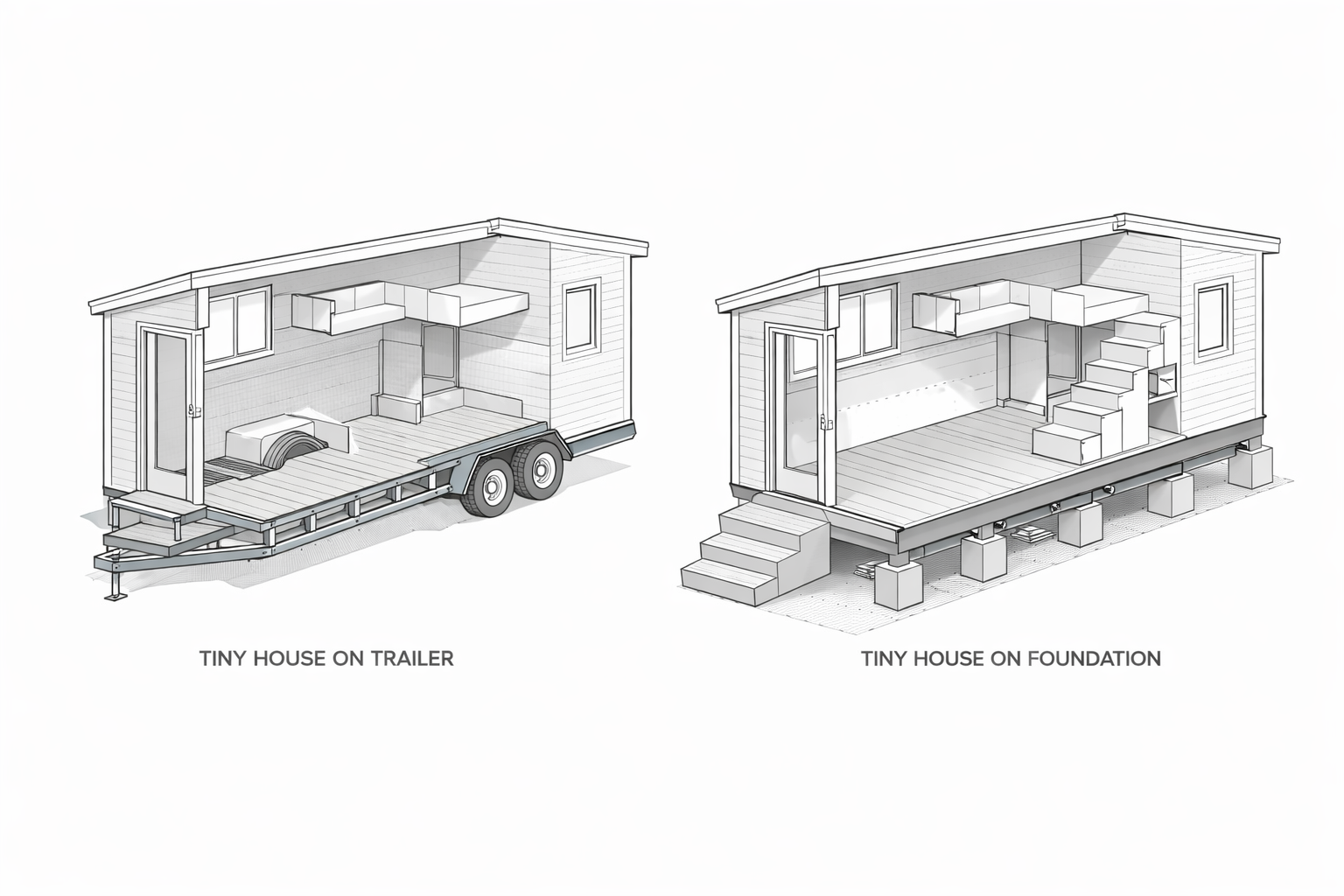
A tiny house on wheels and a tiny house on a foundation are not the same cost problem.
Wheels can reduce foundation work, but they add trailer cost, road limits, weight control, registration, insurance complications, skirting, anchoring, and legal placement risk. A foundation costs more up front, but it can give the home a clearer dwelling path, stronger utility connection, better insulation, and more conventional long-term use.
Prefab and modular units sit somewhere else again. The factory price may look controlled, but delivery, crane work, foundation, utility connection, permits, and site prep still belong in the project budget.
If the home will be towable, read Regulations for Tiny Houses on Wheels. Road legality, parking, utilities, and full-time occupancy are separate approvals.
Classification Changes the Price
A tiny home’s legal category changes the budget before materials do.
An RV-style unit may be easier to move but harder to use as permanent housing. A backyard ADU may need a full permit path, inspections, utility connections, and local zoning approval. A HUD manufactured home is a different federal category from a small shop-built THOW. A cabin or cottage exemption in one county may not exist in the next county.
Do not price finishes before you know the category. Classification affects permits, inspections, financing, insurance, resale, utility connection, and whether full-time living is allowed.
For the broader approval path, use Tiny Homes Regulations and Building Codes.
Layout Can Save Money or Burn It
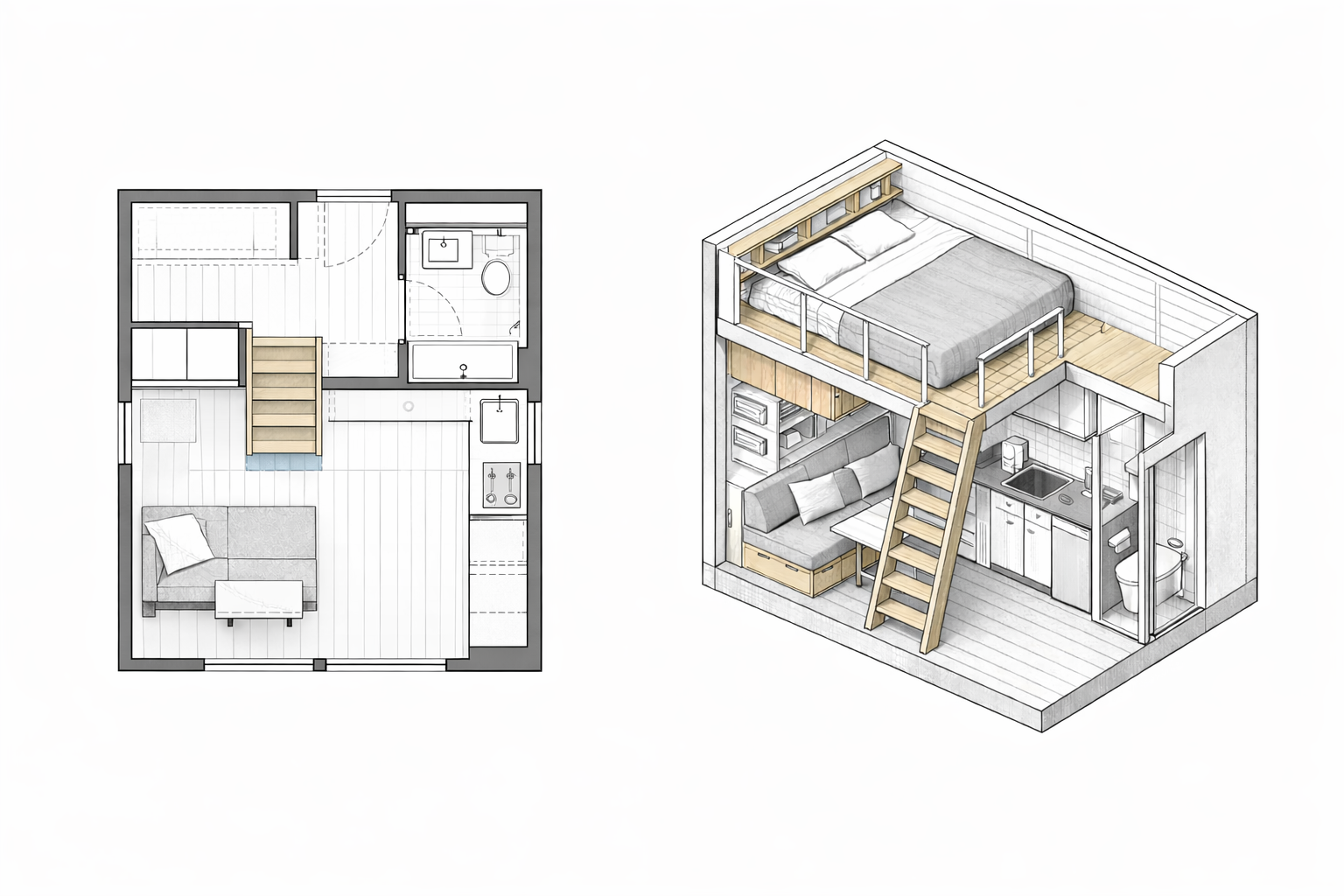
A tiny layout is cheap only when it keeps systems close and movement clear.
The expensive plans usually spread plumbing across the footprint, add too much glass, bury service access behind built-ins, or use custom furniture to hide a bad plan. A smart plan keeps the wet wall compact, uses standard windows, puts mechanical parts where they can be reached, and leaves one honest storage zone for ugly real-life stuff.
If the plan is still loose, use Design Your Own Tiny House and Tiny House Design That Actually Works before you talk to a builder.
Where Tiny-Home Budgets Leak
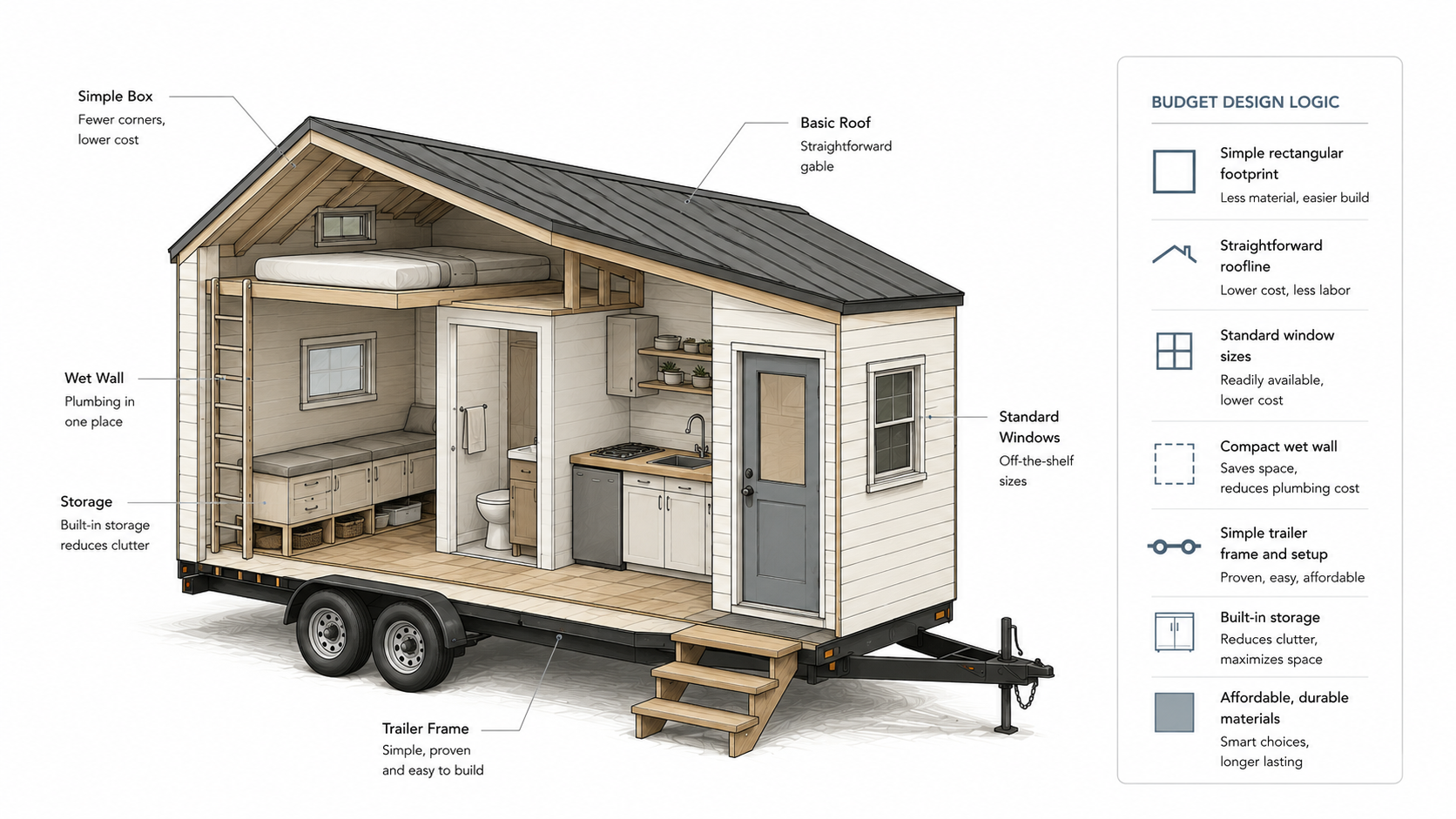
Most overruns are not mysterious. They come from decisions that looked small when the plan was still on paper.
- Too many corners: every bump-out adds framing, flashing, trim, air-sealing work, and leak risk.
- Too much glass: one good view window can earn its cost; glass on every side raises heat loss, heat gain, privacy problems, and price.
- Custom cabinets too early: storage matters, but custom millwork before systems are fixed is how money disappears.
- Bad wet-wall planning: long plumbing runs add labor, penetrations, freeze risk, and service problems.
- Hidden access: panels, pumps, shutoffs, drains, and heaters must be reachable after the interior is finished.
The boring version often wins: simple shape, simple roof, one wet wall, standard windows, accessible systems, and fewer custom structural moves.
Two Budgets That Add Up Differently
A lean owner-led build can stay controlled when the site is simple and the owner brings real time, skill, and patience. That usually means a shell or used unit, owner labor, basic finishes, a modest base, and a utility setup that does not fight the land. It fails when the owner has to hire out the hard parts after assuming they were DIY work.
A turn-key unit on a serviced lot looks cleaner because the schedule is easier to understand. The risk is that buyers price the finished unit and forget delivery, short utility hookups, piers or slab work, permits, skirting, and basic site prep. If the local approval path gets harder, the “turn-key” number moves.
The Five-Year Cost Matters More Than the Sticker Price
The first bill is not the only bill.
A tiny home with weak insulation, poor ventilation, awkward storage, cheap roofing, or unclear legal status can cost more over five years than a better unit that looked expensive at purchase. Repairs, relocation, storage sheds, moisture fixes, insurance gaps, park fees, lot rent, utility upgrades, and resale trouble all belong in the budget.
This is the delayed cost most listings hide. The buyer saves money on the unit, then pays later because the home cannot stay where planned, cannot connect legally, cannot stay dry, or cannot be insured the way it is used.
| Five-year cost | Why it matters | How to reduce it |
|---|---|---|
| Moisture repairs | Small homes load air with moisture quickly, especially with lofts and wet baths | Plan ventilation, air sealing, flashing, and service access early |
| Relocation or lot rent | Parking rules, community fees, or zoning problems may force a move | Confirm the legal site before buying the unit |
| Insurance gaps | RV coverage, builder coverage, and dwelling coverage do not work the same way | Quote insurance based on the actual use before purchase |
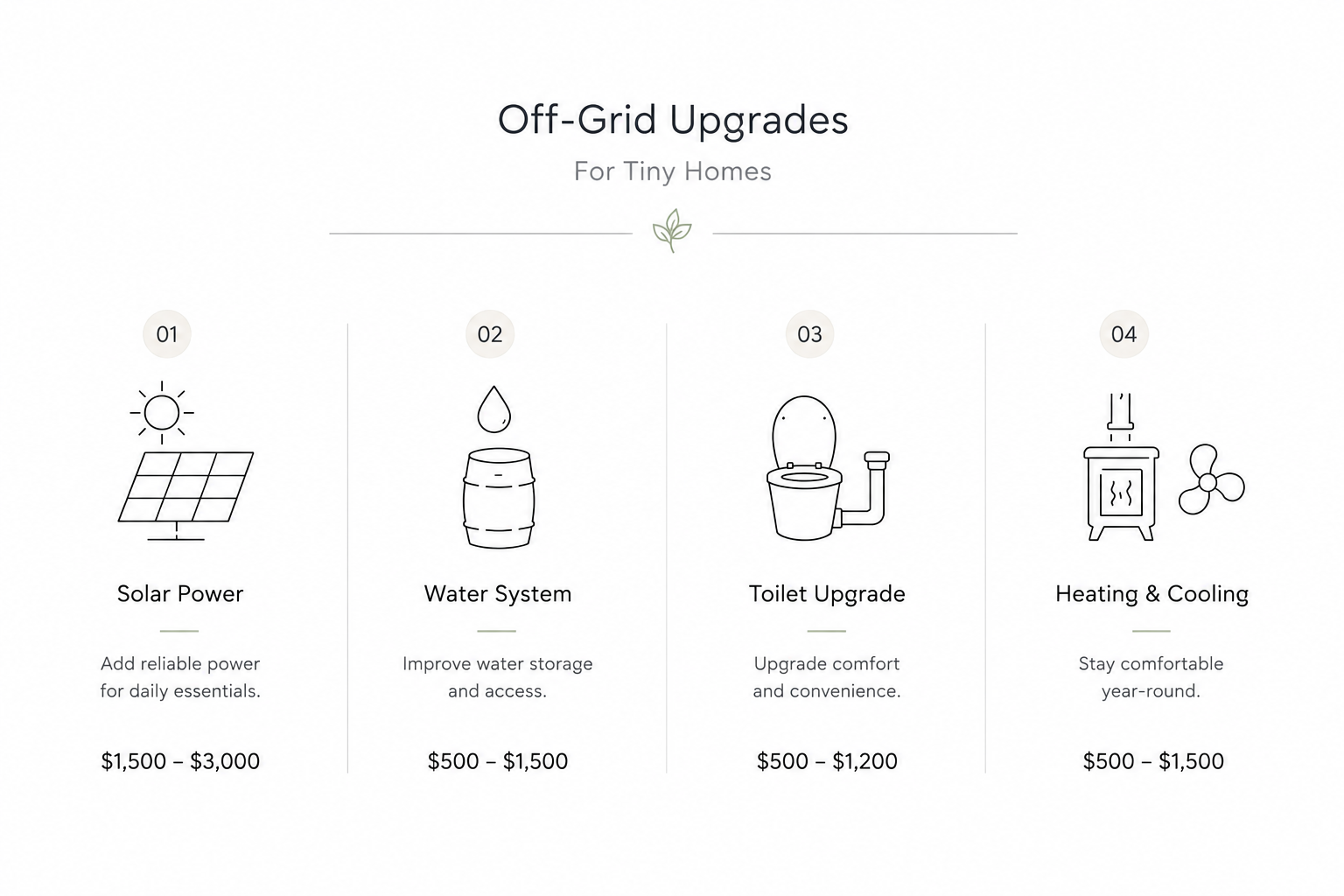
| Utility upgrades | Undersized solar, weak batteries, temporary water, or bad waste handling becomes expensive later | Design systems for winter, peak load, and maintenance access |
| Storage creep | A tiny house without real storage often needs sheds, rented storage, or constant replacement spending | Build one honest storage zone into the plan |
A cheaper tiny home is only cheaper if it stays legal, dry, comfortable, insurable, and usable.
What to Save On and What Not to Touch
There are safe savings and dumb savings.
| Save here | Do not cheap out here |
|---|---|
| Paint, trim, loose furniture, simple shelves | Roofing, flashing, weather barrier, air sealing |
| Stock cabinets, standard appliance sizes, simple counters | Electrical panel, circuits, bathroom exhaust, heating and cooling |
| Simple rectangular form, fewer bump-outs, fewer finish changes | Trailer rating, foundation, anchoring, drainage, frost protection |
| Owner-installed hardware, curtains, non-built-in storage | Windows, doors, wet-area waterproofing, service access |
The best savings come from restraint, not weak construction. Make the home simpler. Do not make the water, structure, wiring, or ventilation worse.
U.S. Cost Factors That Move the Number
Location changes the whole job.
West Coast and mountain-town builds can run higher because labor, delivery distance, energy requirements, snow loads, wildfire detailing, and site constraints stack up. Parts of Texas, the Southeast, and the Midwest may price lower on labor, but humidity, storms, termites, zoning, utility distance, and transport can erase part of the savings.
The same unit can behave like a simple backyard project on one site and a complicated small build on another.
Outside the U.S., do not convert the numbers and assume the project matches. Canada, the U.K., Australia, and New Zealand each have different approval paths, climate demands, road rules, and utility assumptions. Use U.S. ranges as the main structure only if you are working in the U.S.
Price These Before Signing
Price the ugly pieces first.
- Weather shell: roof, siding, windows, underlayment, air sealing, insulation, flashing.
- Wet zones: bathroom waterproofing, kitchen plumbing, water heater, drains, exhaust, shutoffs.
- Base: trailer, slab, piers, skirting, anchors, frost protection, drainage.
- Site: permits, delivery, driveway, grading, utility runs, septic or sewer, water, power.
- Legal path: zoning, ADU status, THOW rules, trailer registration, certificate of occupancy, insurance.
If the quote is vague on those five, the number is not ready.
FAQ
How much does a tiny home cost in the U.S.?
Many finished tiny homes land somewhere around $80,000–$160,000 before major land costs, but simple shells and owner-finished projects can come in lower. Foundation-based, custom, off-grid, and cold-climate builds can go much higher.
Can you build a tiny home for $50,000?
Sometimes, but usually as a shell, used unit, heavy-DIY project, or very basic build with limited site work. A finished full-time home with kitchen, bath, utilities, legal placement, and good envelope details usually needs more budget.
Why do tiny homes cost so much per square foot?
The expensive parts do not shrink much. Kitchen, bath, roof, windows, electrical, plumbing, heating, ventilation, and site work still exist.
Is a tiny house on wheels cheaper than a foundation build?
Not always. Wheels can reduce some foundation work, but they add trailer cost, towing limits, weight control, insurance issues, parking rules, and full-time occupancy problems.
What is the biggest hidden cost?
Usually site work. Utility distance, septic, sewer, grading, foundation, delivery access, permits, and code requirements can change the whole budget faster than finish upgrades.
Is prefab cheaper than custom?
Often, but not always. Prefab may control the unit price better, but delivery, foundation, crane work, utility connections, permits, and site work can still make the final project expensive.
References and Resources
- Angi tiny home cost data for current per-square-foot and project-range context.
- HomeGuide tiny house cost data for current average build ranges and per-square-foot estimates.
- ICC Appendix Q Tiny Houses for model-code tiny-house provisions many jurisdictions reference.
- HUD manufactured housing resources if a seller claims the unit is a manufactured home.
- U.S. Department of Energy whole-house ventilation for why tight small dwellings still need planned ventilation.
- EPA septic and decentralized wastewater resources for onsite wastewater and septic background.