
Tiny House: The Definition Is the Easy Part
A tiny house is small. That part is simple.
The hard part is what kind of tiny house it is. A foundation house, backyard ADU, prefab unit, movable tiny home, trailer-based THOW, park model, and small cabin can all look similar in photos. They do not work the same way once zoning, utilities, insurance, financing, and full-time living rules show up.
A tiny house is usually a compact dwelling around 400 square feet or less. But the size does not answer the real questions: where it can sit, how it connects, whether you can live there legally, and what it will actually cost to use.
What a Tiny House Usually Means
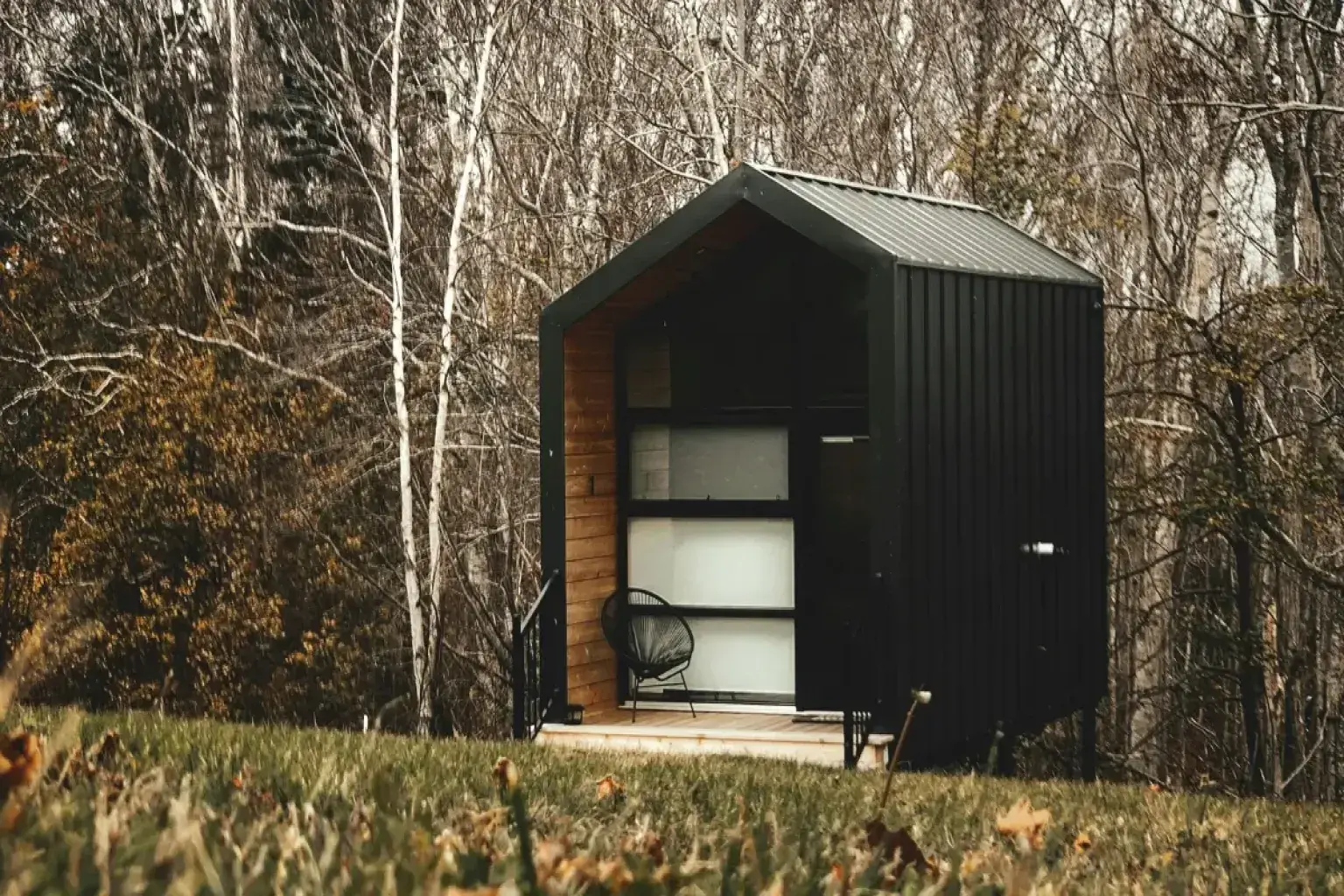
In common use, “tiny house” usually means a small dwelling that includes the basics: a sleeping area, kitchen or kitchenette, bathroom, living space, storage, utilities, and some form of structure or base.
In code discussions, the number most people recognize is 400 square feet or less, excluding lofts, because that is how the tiny-house provisions in IRC Appendix Q are framed. That does not mean every local jurisdiction uses that appendix, and it does not mean every tiny house automatically qualifies as a legal dwelling.
| Common meaning | What it tells you | What it does not tell you |
|---|---|---|
| Under about 400 square feet | The home is small enough to fit the tiny-house category in many discussions | Whether it is legal as housing on your site |
| Has kitchen, bath, sleeping, and living space | It is meant to function as a dwelling rather than a shed or playhouse | Whether the systems meet local code or inspection rules |
| May be on wheels or a foundation | The base changes how the home is moved or supported | Whether full-time occupancy is allowed |
| May be prefab, DIY, custom, or used | The build path changes cost and quality control | Whether the finished project is complete, dry, safe, and insurable |
The short answer is useful. The category is where the real work starts.
Size Is Only the Starting Point
A tiny house can be 160 square feet, 240 square feet, 400 square feet, or slightly larger depending on who is using the term. That number matters less than people think.
A 400-square-foot tiny house with a good layout, simple wet wall, real storage, and legal utility connections may live better than a smaller unit with a trapped loft, weak ventilation, and no place for shoes, tools, trash, towels, or mechanical access.
Square footage also hides cost. Bathrooms, kitchens, electrical panels, water heaters, windows, roof details, foundations, trailers, septic, sewer, and power connections do not shrink in the same proportion as the floor area.
That is why a tiny house can look cheap per project and expensive per square foot at the same time.
Tiny House, Small House, ADU, RV, or Manufactured Home?
These words get mixed together online. They should not be.
A tiny house can overlap with several categories, but the legal and construction consequences are different. A backyard ADU, a towable THOW, a manufactured home, a park model, and a small site-built house may all be compact. They are not reviewed the same way.
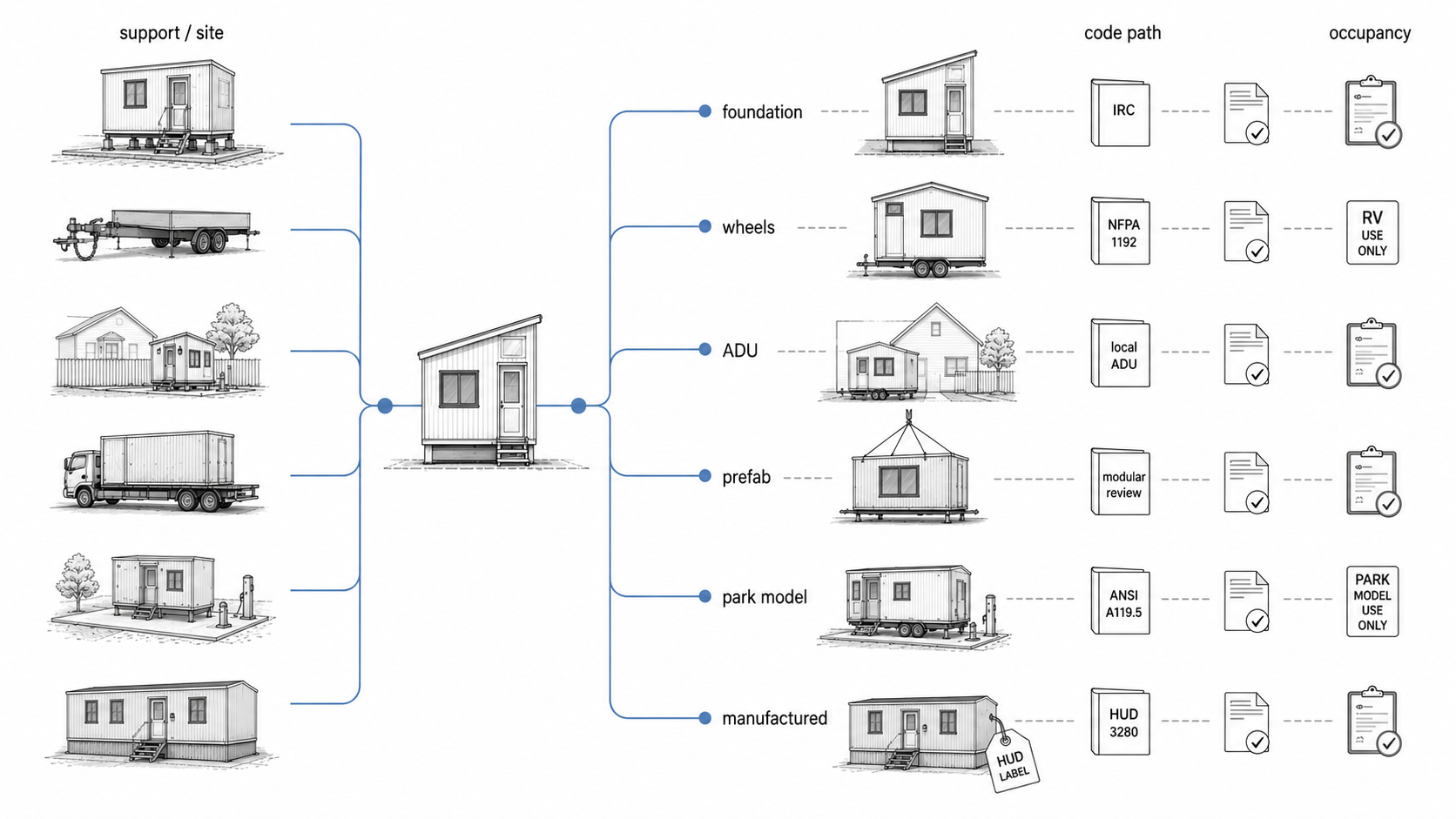
| Category | What it usually means | Main question |
|---|---|---|
| Tiny house on foundation | Small dwelling built or placed on permanent support | Does the local code and zoning path allow it? |
| Tiny house on wheels | Small dwelling-like unit built on a trailer | Is it legal to tow, park, connect, and live in full time? |
| ADU | Accessory dwelling unit on a property with a main home | Does the parcel meet local ADU rules? |
| RV or park model | Recreational or seasonal vehicle-style housing path | Is permanent occupancy allowed, or only temporary use? |
| Manufactured home | HUD-regulated housing built to the federal manufactured-home standard | Does it have the required HUD label and approval path? |
| Small house | A compact conventional house, often larger than tiny-house limits | Would a slightly larger home solve the problems better? |
The name in the listing is not enough. The approval path decides what the home really is.
What Is Inside a Tiny House?
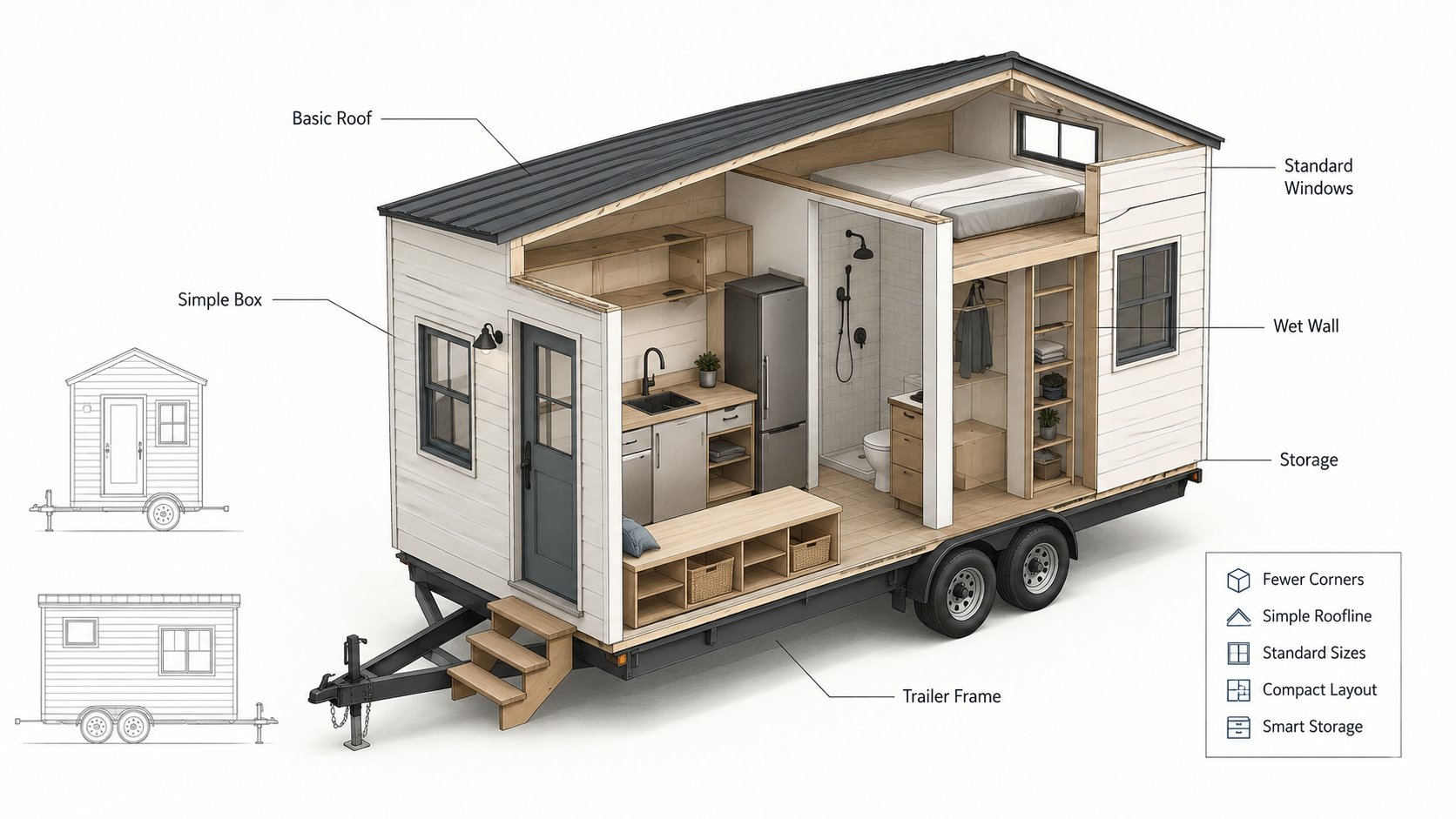
Most tiny houses include the same basic zones as a larger house, but with less room for mistakes.
The living area may also be the dining space, work zone, guest zone, and circulation path. The kitchen may be a short galley rather than a full room. The bathroom may be compact, wet, or tightly packed around plumbing. The sleeping area may be a main-floor bed, loft, fold-down bed, or built-in platform.
Storage is the part that gets underdesigned most often. Tiny houses need room for the ugly objects: shoes, coats, cleaning supplies, tools, food, laundry, bedding, towels, trash, seasonal gear, shutoffs, filters, and access panels.
A tiny house with no real storage does not stay minimalist. It becomes cluttered.
Wheels, Foundation, Prefab, or Movable
The base changes the whole project.
A trailer can make a home movable, but it adds road limits, weight limits, tire and brake maintenance, floor-depth constraints, insurance questions, and legal-placement problems. A foundation may cost more up front, but it can create a clearer path for utility connection, long-term use, insulation, anchoring, and resale.
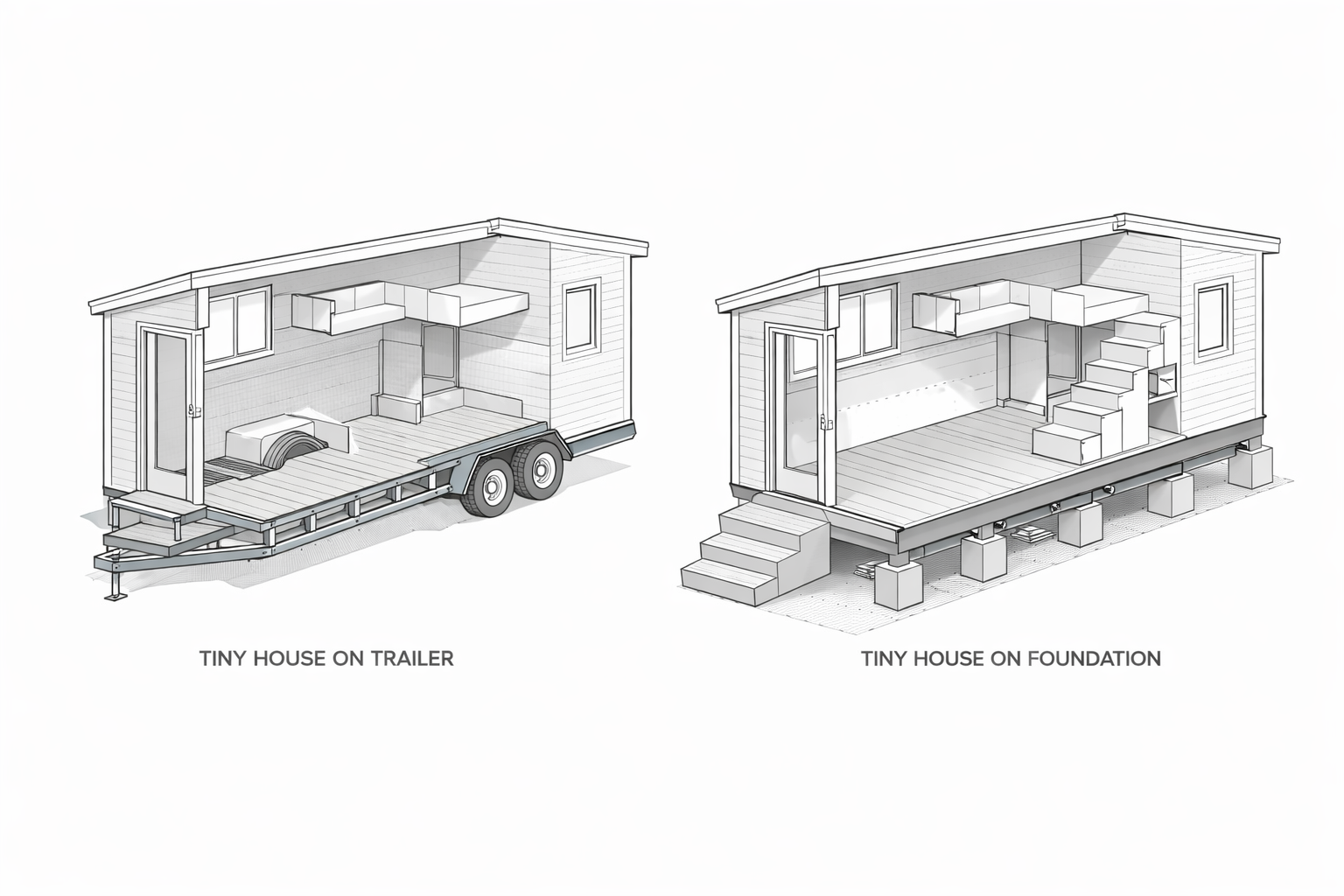
Prefab changes the construction process, not the site problem. A factory-built unit still needs delivery, foundation or base, utility hookups, permits, inspection, stairs, decks, drainage, and legal occupancy.
Movable tiny homes sit between these categories. Some are truly moved. Many are delivered once and rarely move again. If mobility is only a backup plan, the owner should know exactly what that backup plan costs.
The Part People Discover After Choosing Tiny
A tiny house reduces space and removes slack.
In a larger house, a bad decision has somewhere to hide. In a tiny house, it shows up every day. A weak bath fan fogs the whole unit. A bad door swing blocks the kitchen. A loft ladder blocks the walking path. A window steals the only storage wall. A buried water heater turns a repair into demolition.
| Hidden issue | Why it matters more in a tiny house | Better decision |
|---|---|---|
| Ventilation | Cooking, showering, and sleeping add moisture to a very small air volume | Plan bath exhaust, kitchen exhaust, and fresh air early |
| Storage | Clutter takes over quickly when real items have no assigned place | Design storage for shoes, coats, food, tools, laundry, and cleaning supplies |
| Wet wall | Scattered plumbing adds cost, leaks, freeze risk, and harder repairs | Keep kitchen, bath, water heater, and shutoffs close enough to service |
| Service access | Small built-ins often hide panels, valves, pumps, and heaters | Leave reachable access before finishes are installed |
| Legal category | The home can look finished and still fail zoning, utility, or occupancy rules | Confirm the category before buying or building |
The best tiny houses are not clever because everything folds. They are clever because the boring parts have a place.
What Tiny Living Feels Like Day to Day
Tiny living can work well for one person, a couple, a guest unit, seasonal housing, a backyard ADU, or a compact second home. It gets harder when the home has to carry several people, pets, hobbies, tools, work-from-home equipment, laundry, winter gear, or full-time family life.
That does not mean tiny houses are bad. It means the design has to be honest about use.
A weekend tiny cabin can tolerate a tight bathroom, ladder loft, and limited storage. A full-time home usually cannot. A towable unit may work for someone with a clear parking plan. It may be a poor fit for someone who needs a stable address, easy financing, and long-term utility connections.
What Tiny Houses Cost
There is no honest single price.
The cost depends on the unit, base, site, systems, finish level, legal path, delivery, utility distance, foundation or trailer, and how much work the owner does. The cheapest number usually describes a shell, used unit, unfinished project, or starting point. A full project includes much more.
For the full cost breakdown, use Tiny Home Cost Breakdown. If you are comparing a specific size, How Much Does a 400 Sq Ft Tiny House Cost? is a better next step.
Who a Tiny House Works For
A tiny house can work when the owner wants a smaller footprint and understands the trade-offs.
| Good fit | Why it can work |
|---|---|
| One person or couple with modest storage needs | Daily routines are easier to control in a compact space |
| Backyard guest unit or ADU | The home has a clear site and often shares property infrastructure |
| Seasonal cabin or retreat | The tiny house does not have to carry every full-time need |
| Skilled DIY owner | Labor savings may be real if the owner understands sequence and code limits |
| Buyer with a confirmed legal site | The biggest placement risk is already reduced |
A tiny house is a poor fit when the buyer needs easy conventional financing, lots of storage, low-maintenance systems, privacy for several people, simple resale, or a guaranteed place to live before checking local rules.
Which Tiny-House Page Should You Read Next?
Use the page that matches the problem you are trying to solve.
| If your question is... | Read this next |
|---|---|
| How much will this really cost? | Tiny Home Cost Breakdown |
| Can I legally live in one? | Tiny Homes Regulations and Building Codes |
| What if it is on wheels? | Regulations for Tiny Houses on Wheels |
| Should I buy prefab? | Prefab Tiny Homes |
| How do I design one from scratch? | Design Your Own Tiny House |
| What makes a layout livable? | Tiny House Design That Actually Works |
| Is mobility worth paying for? | Movable Tiny Homes |
| Would a slightly larger home be better? | Small Houses That Don’t Feel Small |
FAQ
What is a tiny house?
A tiny house is a compact dwelling, often around 400 square feet or less, designed to fit sleeping, cooking, bathing, living, storage, and utilities into a small footprint. The exact legal meaning depends on the local code and approval path.
Is every tiny house under 400 square feet?
No. The 400-square-foot number is common because of tiny-house code language, but people use the term more loosely online. Some “tiny” homes are smaller, and some small homes are larger than that.
Can a tiny house be lived in full time?
Sometimes. Full-time use depends on zoning, building code, utility approval, occupancy rules, and the home’s category. A tiny house can look complete and still be rejected for full-time occupancy on a specific site.
Is a tiny house the same as an RV?
Not always. Some tiny houses on wheels are treated like RVs or park models, but a foundation-based tiny house, ADU, manufactured home, and RV-style unit follow different rules.
Are tiny houses cheaper than normal houses?
They can be cheaper in total project cost, but the savings are not automatic. Site work, utilities, permits, trailer or foundation, delivery, and systems can change the final number.
What is the biggest tiny-house mistake?
Buying or designing the unit before confirming the legal site, utility path, storage needs, ventilation, and service access.
References and Resources
- ICC Appendix Q Tiny Houses for model-code tiny-house provisions used where adopted.
- HUD manufactured housing resources for understanding manufactured homes as a separate federal housing category.
- HUD manufactured housing labels for how HUD certification labels identify manufactured homes.
- U.S. Department of Energy whole-house ventilation for why tight small dwellings still need planned ventilation.