
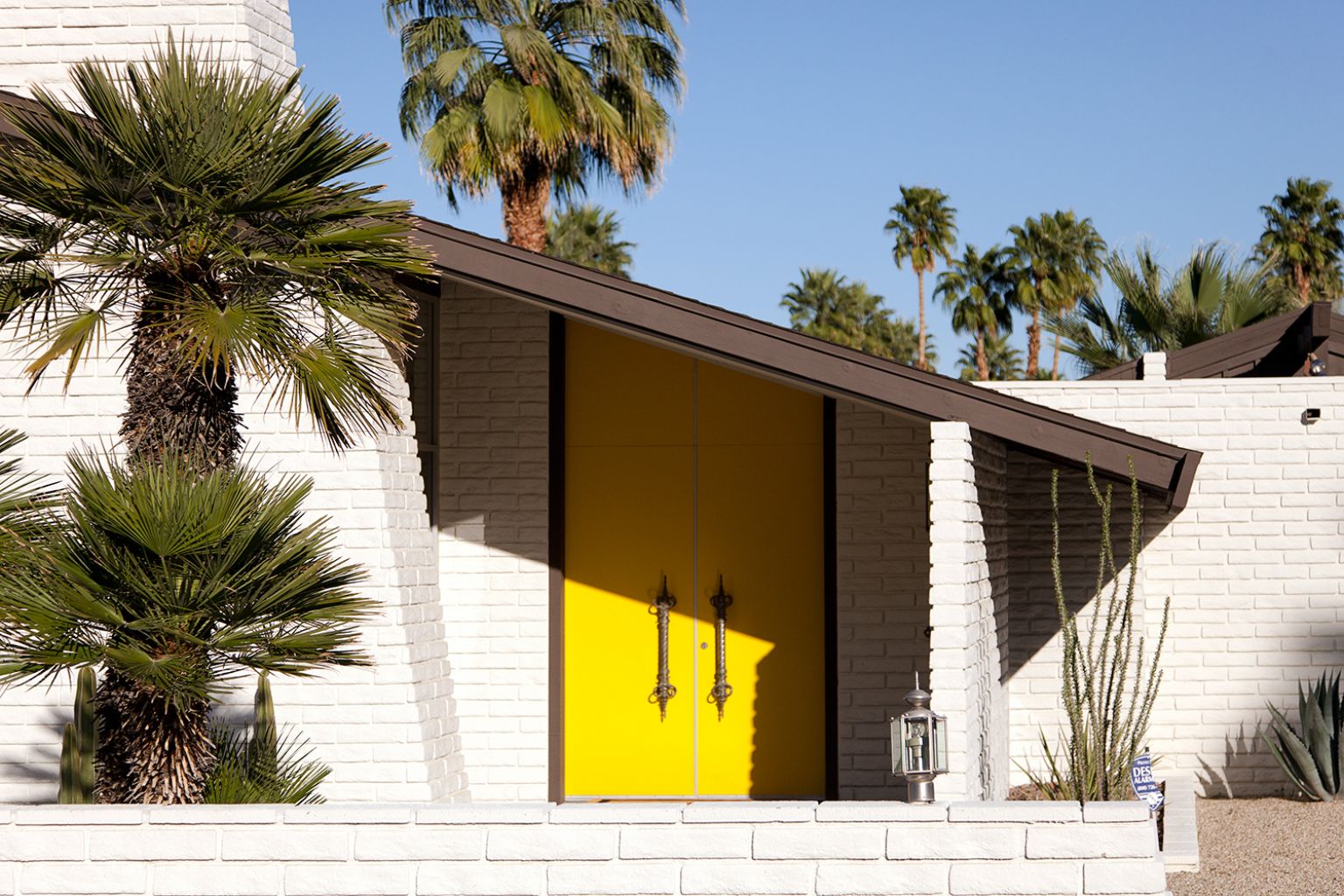
1950s houses can still work very well. The trick is knowing what is helping the house and what is dragging it down.
Many of these homes were built around simpler plans, easier daily living, and less formal room use. Some have strong layouts, good glass, practical storage, and details worth keeping. Others have low ceilings, weak insulation, small kitchens, tired bathrooms, and finishes that make the whole house feel stuck.
The job is not to strip everything out or freeze the house in time. Keep the parts that still work, fix the parts that do not, and make the house better without flattening its character.
Good Read
Atomic Ranch: Midcentury Interiors by Michelle Gringeri-Brown
A useful room-by-room reference for mid-century interiors, materials, color, and layout ideas. Check Price on Amazon
What 1950s Houses Were Built to Do
The 1950s changed the way ordinary families lived at home.
Postwar demand, suburban growth, car ownership, and new financing patterns pushed builders toward houses that were simpler, wider, and easier to repeat. The formal front room started to lose power. The backyard became part of daily life. The kitchen, dining space, and living room began moving closer together.
That does not mean every 1950s house was good. Many were built fast. Some were under-insulated. Kitchens and bathrooms were often too small for modern use. But the better houses from this period still have something useful: practical plans, strong street presence, and a clear connection between daily life and layout.
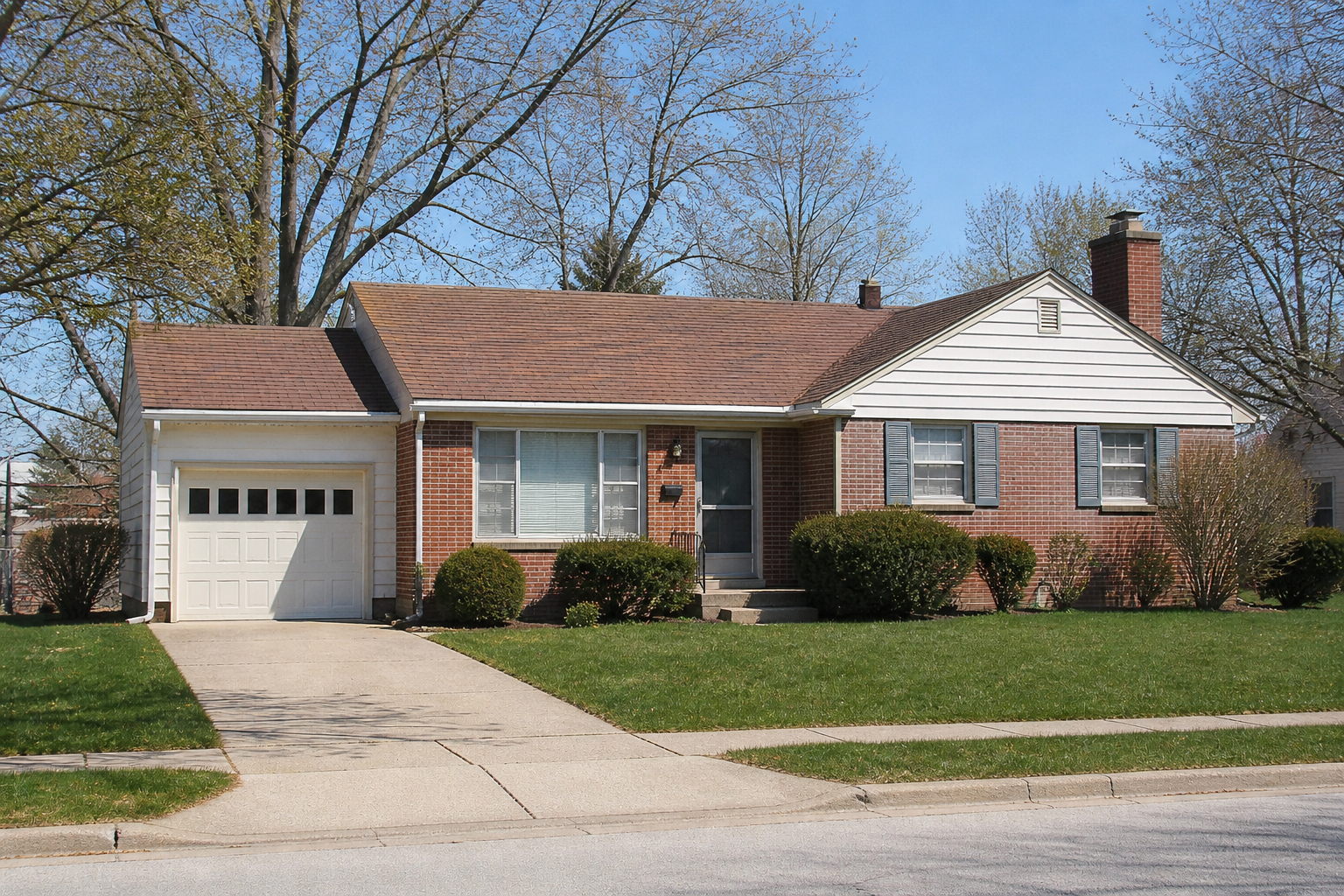
Image by ArchitectureCourses.org. A restored 1950s suburban house with brick, light siding, a front chimney, and a simple postwar layout.
What Changed in the 1950s
- Suburban housing expanded fast. Builders needed houses that could be repeated, financed, and sold to growing families.
- Ranch houses became dominant. The single-story plan worked well for car-oriented suburbs and backyard living.
- Split-levels solved space on smaller lots. They separated living, sleeping, and family areas without making the house feel huge.
- Indoor-outdoor living became more common. Patios, sliding doors, picture windows, and backyard views became part of the plan.
- The garage moved into daily life. Car culture changed the front elevation, driveway, storage, and entry sequence.
The useful lesson is not nostalgia. It is restraint. Many 1950s houses were modest, but they understood daily use better than some larger houses built later.
What 1950s Home Ads Show
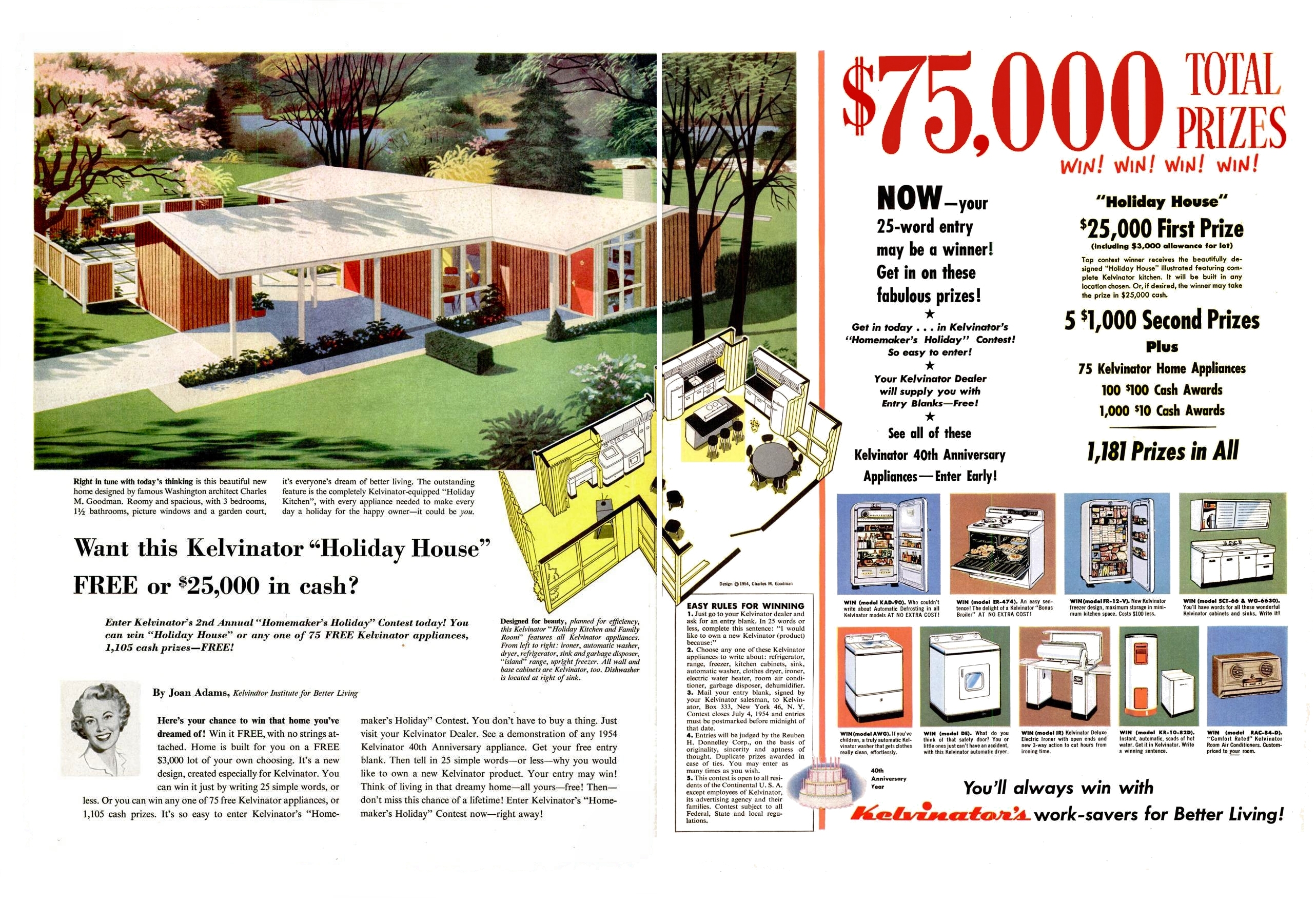
Image: A 1954 National Homes advertisement showing a modern house design with a floor plan, exterior sketch, and lifestyle-focused sales pitch.
Vintage 1950s home ads are not just cute graphics. They show what builders thought families wanted: a clean plan, a modern kitchen, a practical roofline, a garage or carport, and enough backyard space to make suburban life feel worth the move.
The ads also show how quickly housing became a product. Floor plans were simplified. Furniture layouts were drawn in. Kitchens were marketed as efficient. Exterior sketches made modest houses feel aspirational.
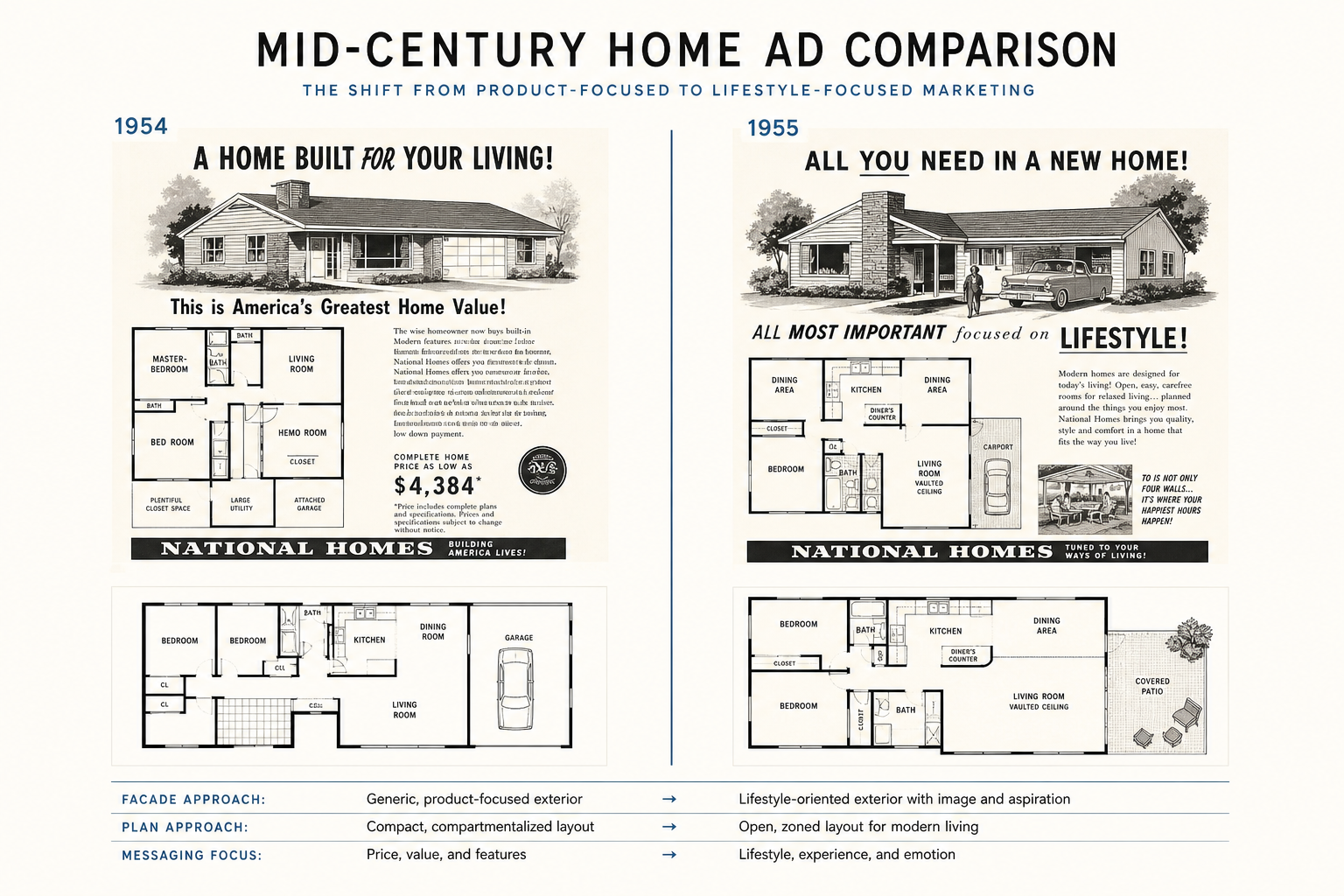
Illustration by ArchitectureCourses.org. Mid-century home ads shifted from selling only price and shelter toward lifestyle, comfort, efficiency, and aspiration.
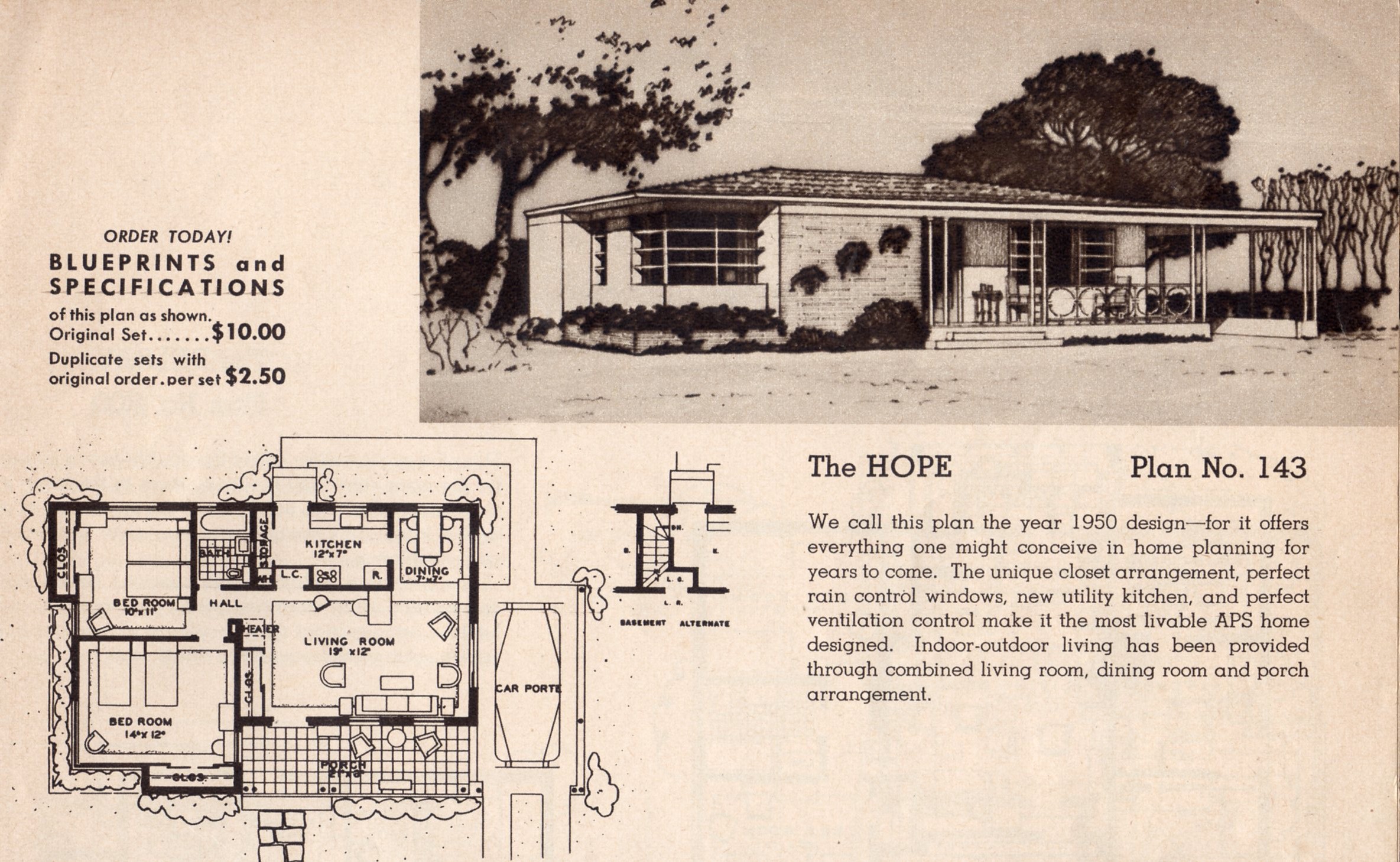
Image: A 1949 promotional poster for a Florida Sun Swept Home, showing a house design, blueprint, and mid-century promotional layout. Image by Ethan, used under CC BY 2.0. Changes were made for size and presentation.
These ads are useful because they show the gap between promise and reality. The promise was comfort, sunlight, efficiency, and modern family life. The reality often included small rooms, thin insulation, single-pane glass, and mechanical systems that now need careful updating.
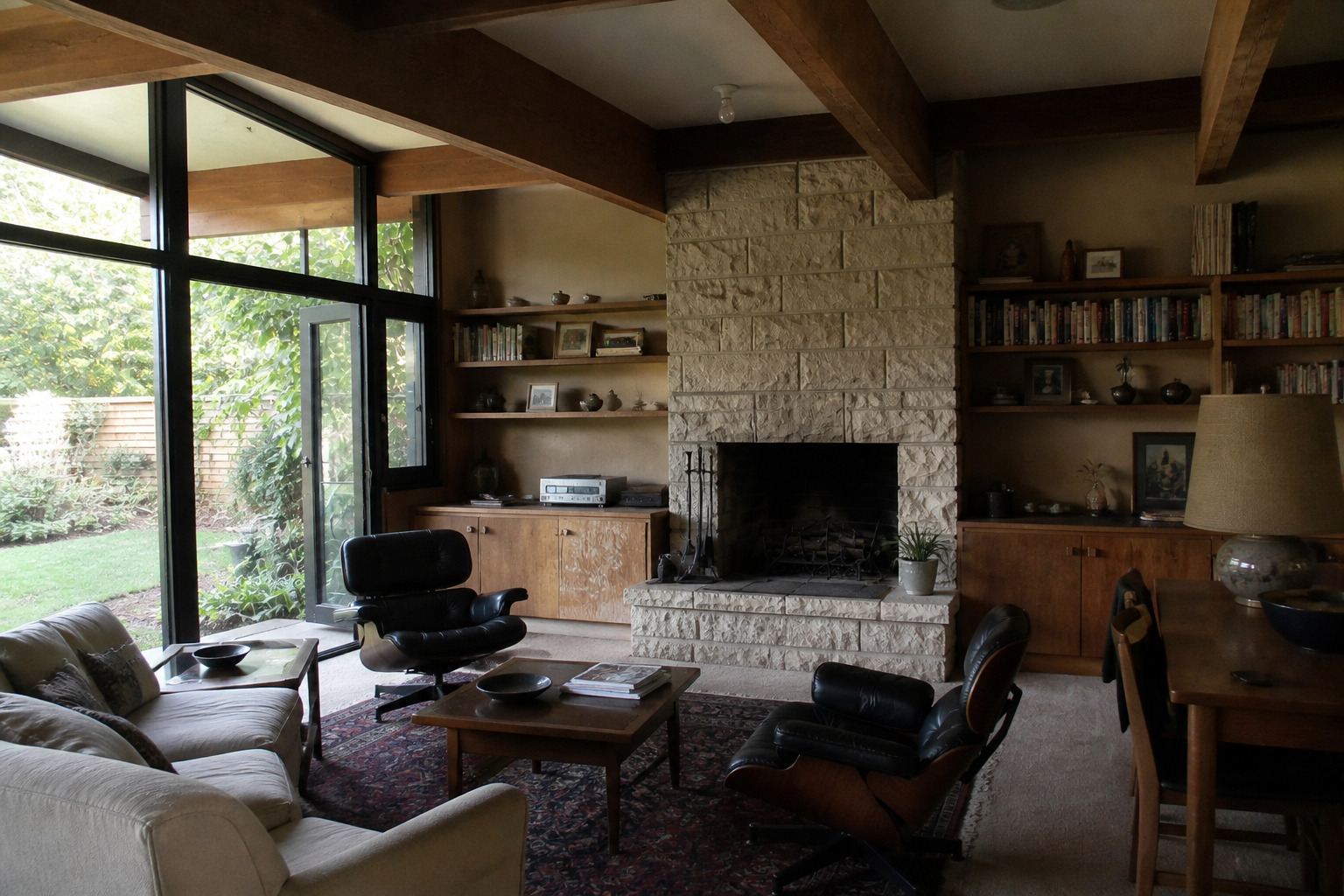
Image by ArchitectureCourses.org. A mid-century living room often used exposed beams, stone fireplaces, built-in storage, and large glass doors to make the main room feel connected to the yard.
Comparing 1950s ads from year to year also shows how fast the market moved. Carports appeared. Kitchens became more important. Plans opened slightly. The sales language shifted from “affordable shelter” toward “modern living.”
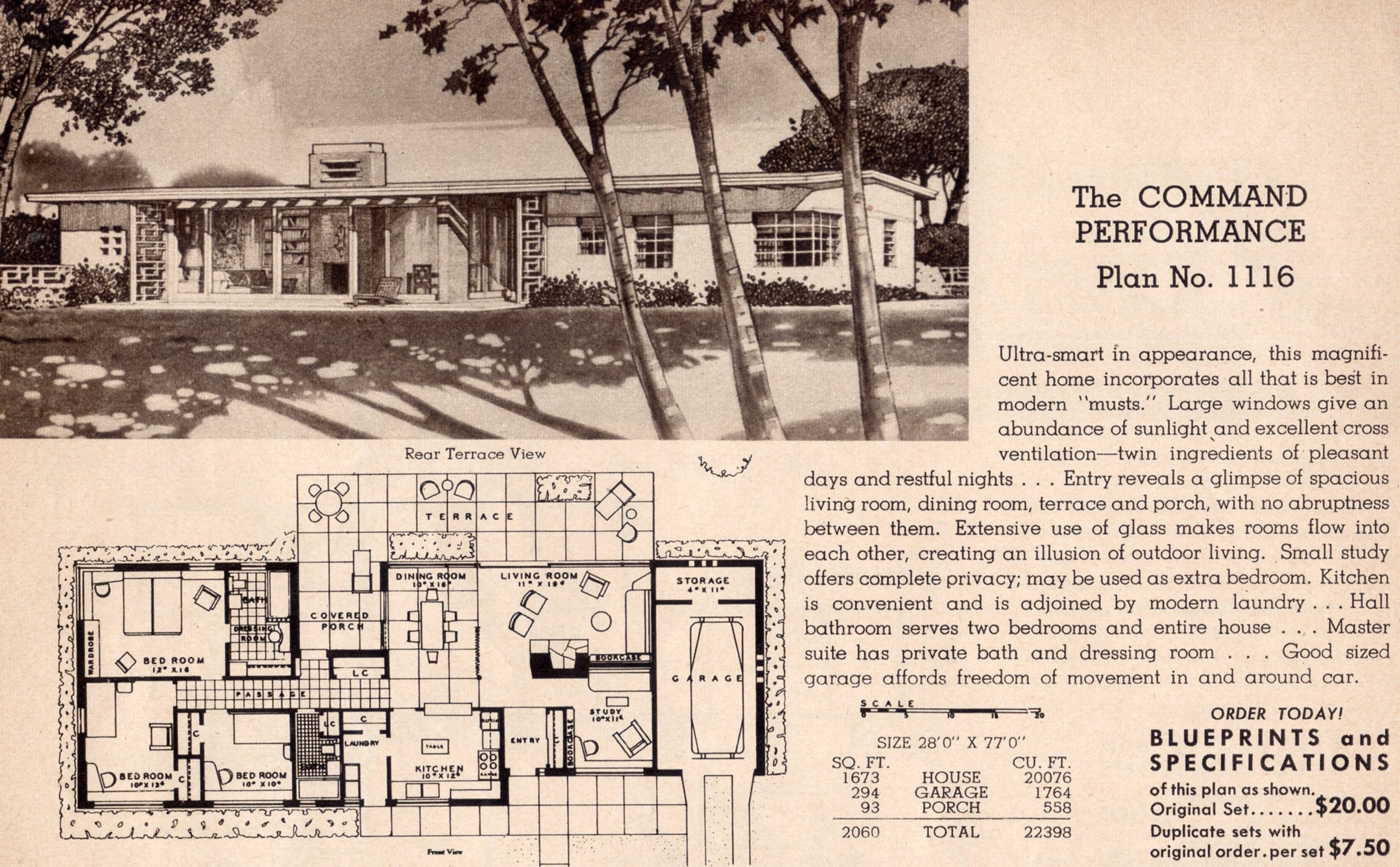
Image: Cover of a 1956 home plans booklet showing a colorful illustrated house design typical of mid-century American suburban architecture. Image by Ethan, used under CC BY 2.0. Changes were made for formatting and display.
Every 1950s House Style, From Ranch to Cottage
Not every 1950s house is mid-century modern. That mistake causes a lot of bad remodels.
The decade produced ranch houses, split-levels, Cape Cod revivals, Colonial revivals, modest cottages, bungalow updates, and true mid-century modern homes. Some were ordinary builder houses. Some were design-forward. Some just happened to be built in the same decade.
Ranch Homes
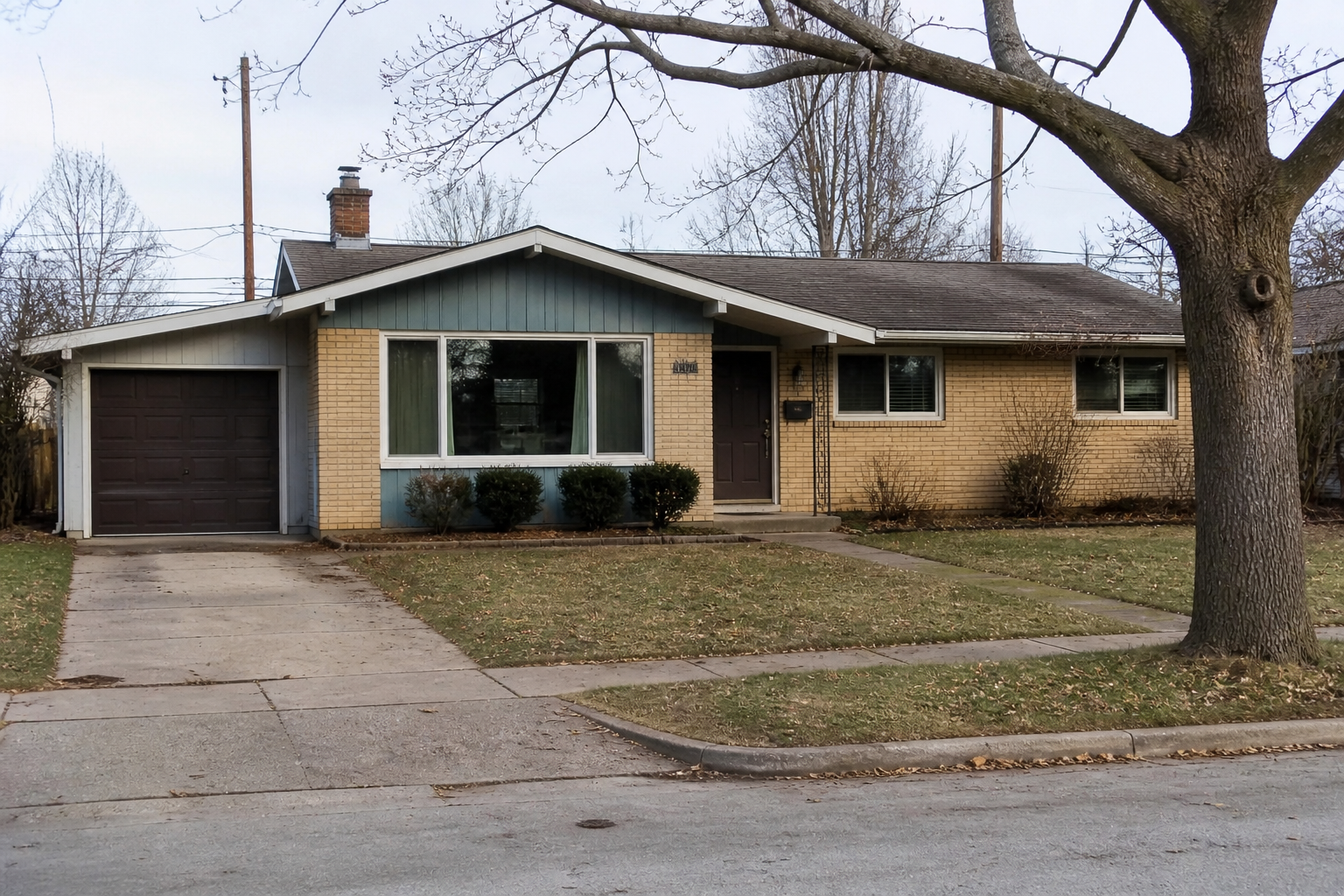
Image by ArchitectureCourses.org. A modest 1950s ranch house showing a low roofline, attached garage, picture window, and simple suburban lot.
The ranch is the house most people picture first. Low roof. One story. Long horizontal shape. Living room facing the street, kitchen and dining closer to the back, and some kind of link to the yard.
The best ranch houses feel easy. You do not have to fight the plan. Rooms are close enough to work, and the house usually has a simple structural logic. The weak points are comfort and storage. Original windows leak heat. Sliding doors can be drafty. Wall insulation may be thin or missing.
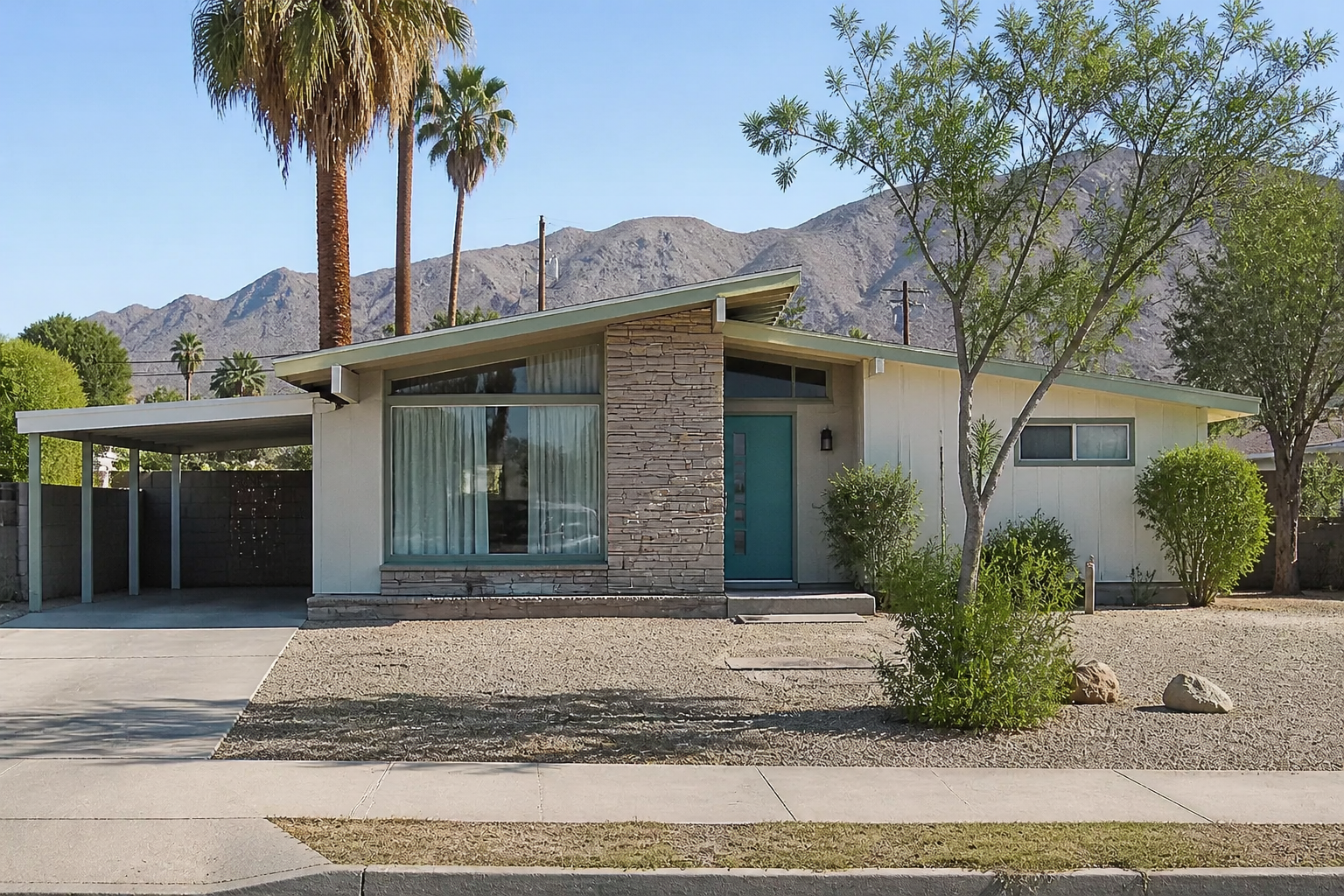
Image by ArchitectureCourses.org. Comfort is often the weak link in older mid-century homes. Single-pane glass, thin insulation, leaky sliders, and exposed walls can make the house feel cold in winter and hot in summer.
Start with the envelope before chasing finishes. Tighten the glass, insulation, air leaks, and doors. Then the original layout has a much better chance of feeling good.
Mid-Century Modern Homes
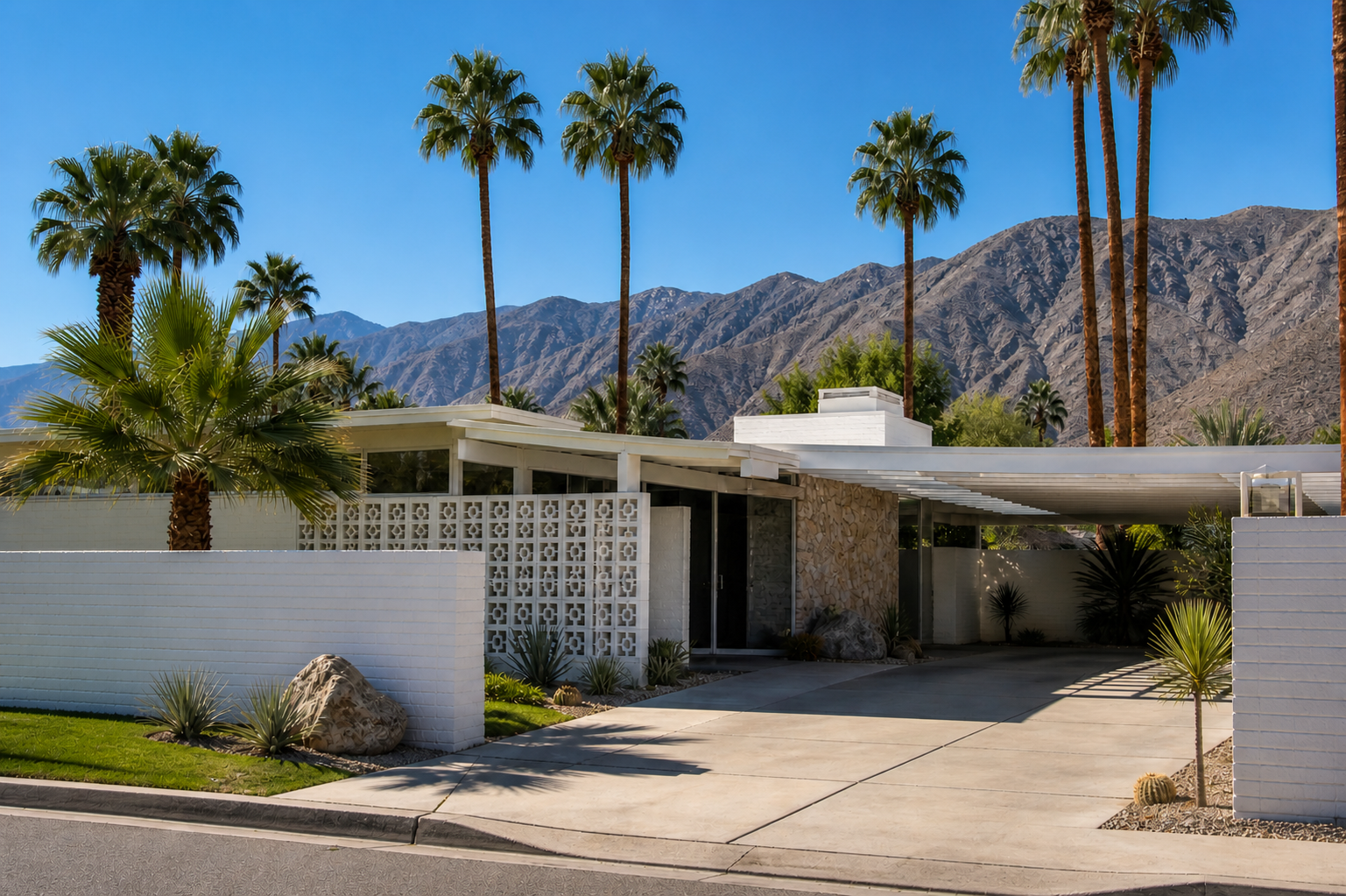
Image by ArchitectureCourses.org. A 1950s Palm Springs desert modern house showing flat roofs, breeze-block screens, shaded carports, and indoor-outdoor desert living.
True mid-century modern houses are design-driven. They use low planes, larger glass, exposed structure, open living areas, and stronger indoor-outdoor connections.
The danger is treating the look as decoration. Big glass and flat roofs are not just style choices. They bring real performance problems if drainage, flashing, shading, and insulation are weak. A beautiful room with a leaking roof or overheated glass wall is still a failed room.
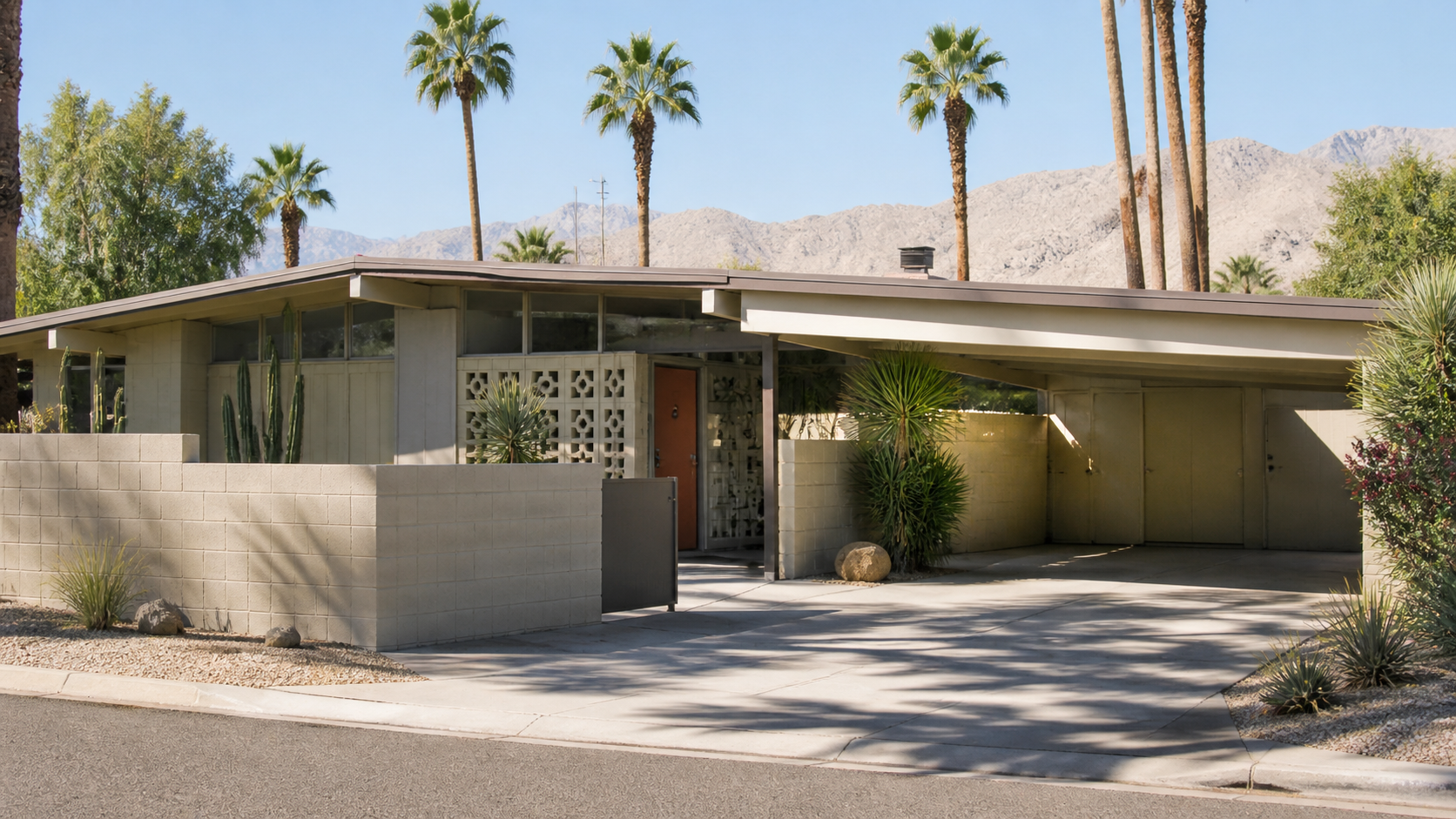
Image by ArchitectureCourses.org. A 1950s Palm Springs desert modern house often used flat roofs, deep overhangs, breeze-block screens, carports, concrete block walls, and shaded outdoor edges.
Keep the proportions, the rhythm of the openings, and the indoor-outdoor feeling. Upgrade the weak technical parts quietly.
Split-Level Homes
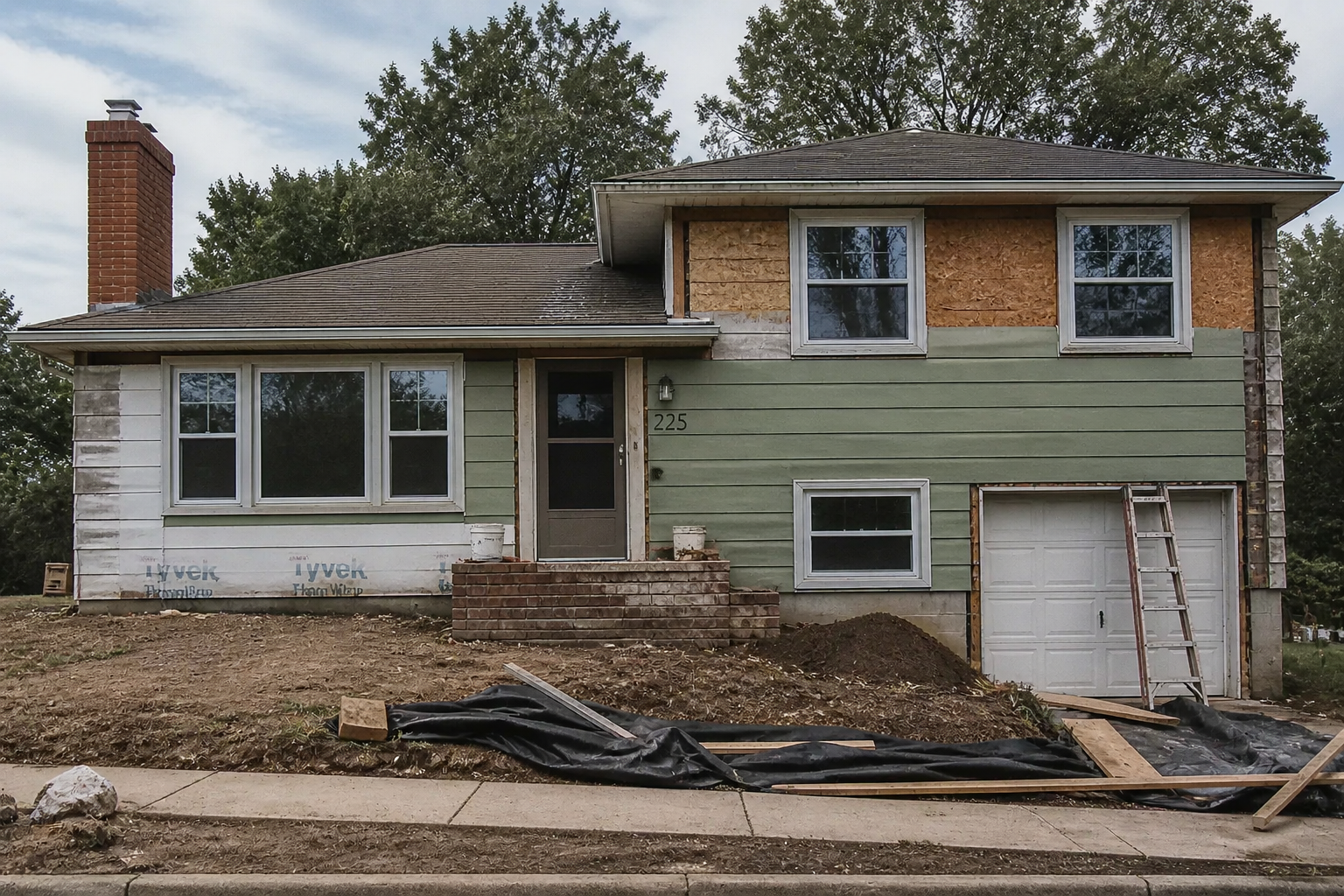
Image by ArchitectureCourses.org. This 1950s split-level is mid-restoration, with siding, window, roof-edge, and exterior repair work still visible before the finish goes back on.
Split-levels separated daily life without needing a large footprint. A half-flight up, a half-flight down, and suddenly the house could divide living, sleeping, storage, and family space.
The problem is that many split-levels feel chopped up now. Too many short walls, tight stairs, and awkward landings can make the house feel smaller than it is.
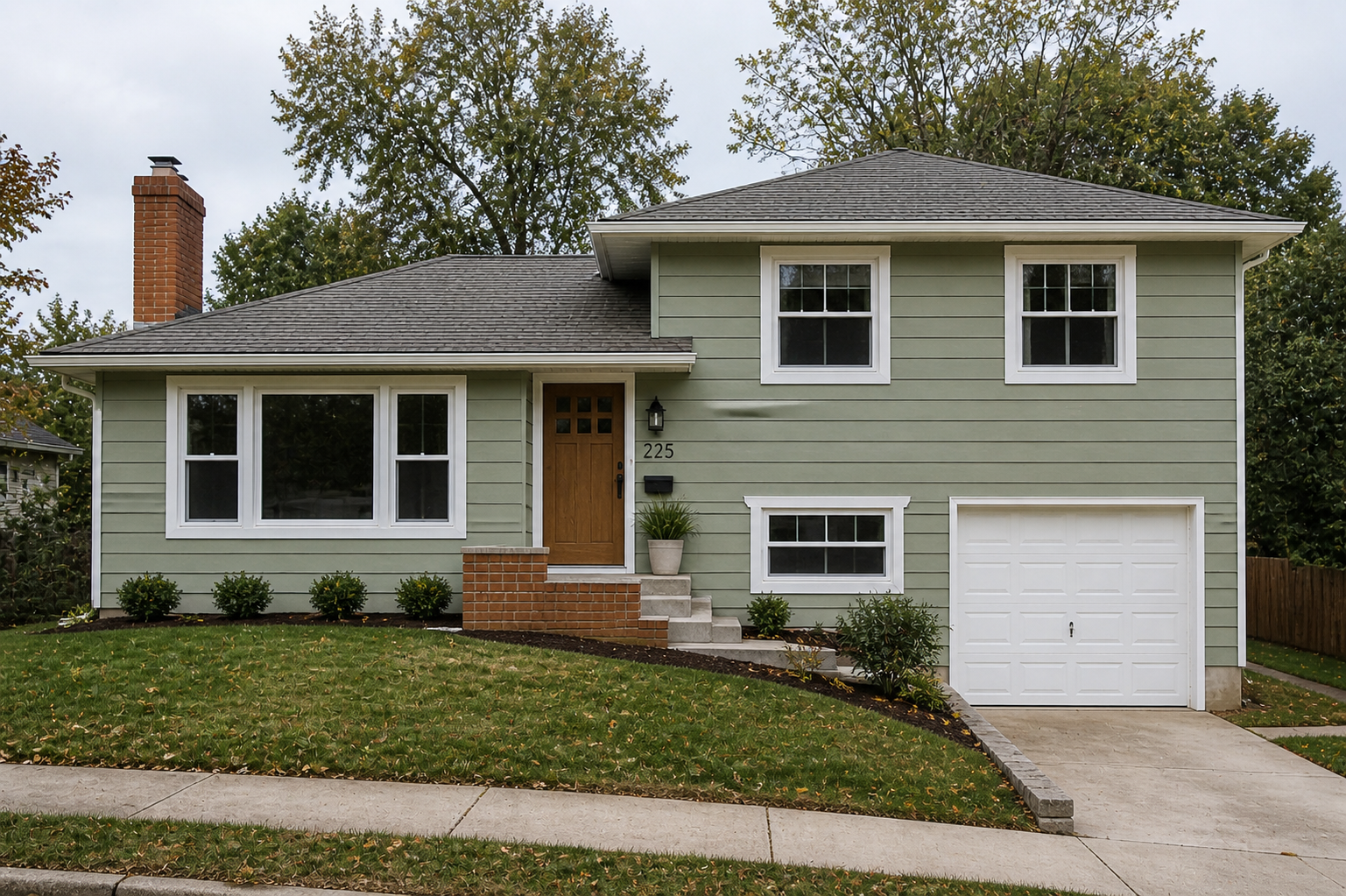
Image by ArchitectureCourses.org. After basic repairs, a 1950s split-level can look simple and clean again, but the real improvement is in the wall assembly, windows, and moisture control—not just the finish.
The best updates are careful, not dramatic. One opened wall or better stair connection can do more than a full cosmetic overhaul.
Cape Cod Revival
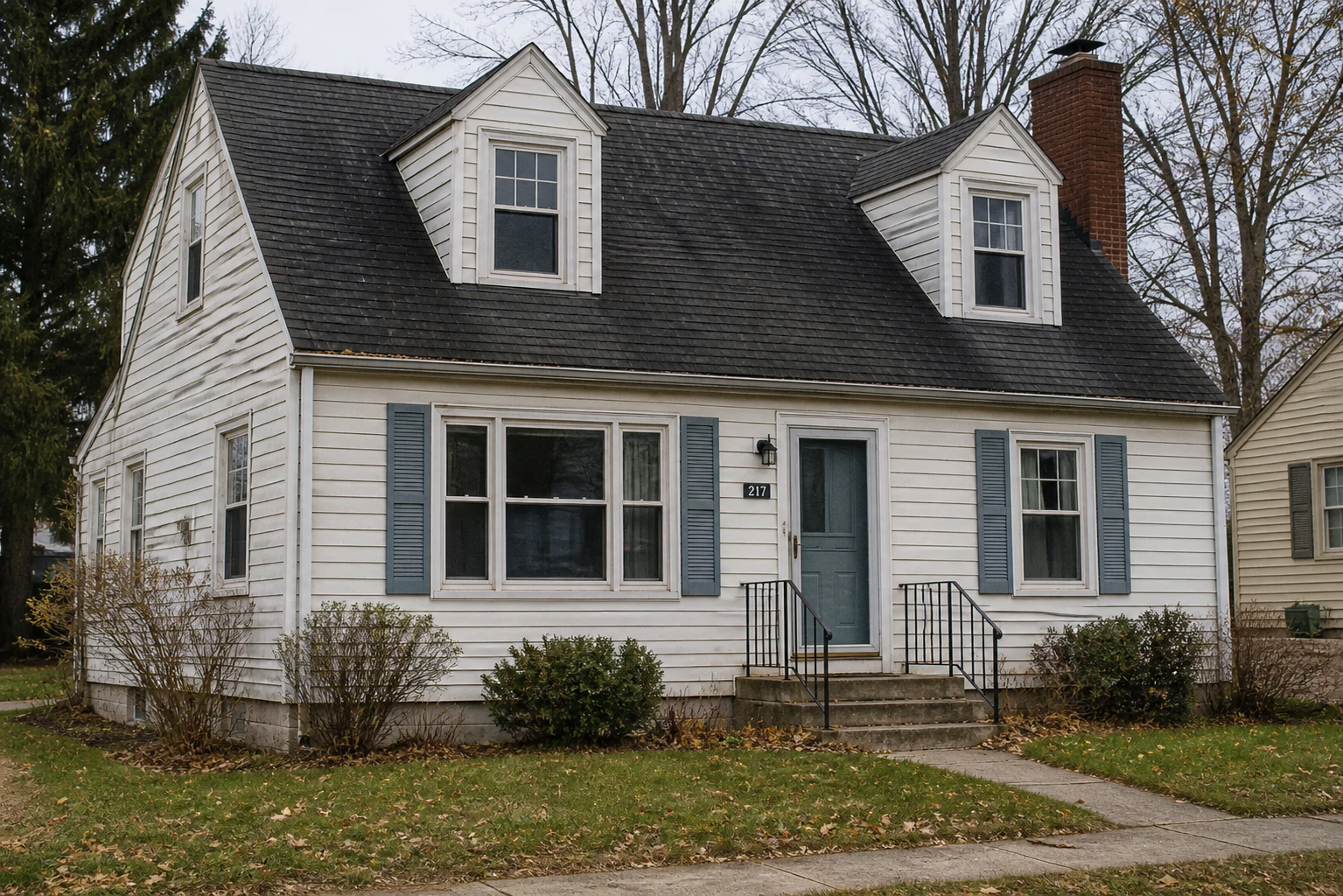
Image by ArchitectureCourses.org. A 1950s Cape Cod home usually kept the steep roof, dormers, compact footprint, and simple siding that made the style practical for postwar neighborhoods.
Cape Cod revival houses brought symmetry, steep roofs, dormers, and a smaller traditional shape into the 1950s. They can look charming from the street and still be difficult upstairs.
The attic level is usually the problem. Low ceilings, poor insulation, cramped rooms, and awkward dormers can make the upper floor uncomfortable. Do not judge these houses only from the front elevation. Walk upstairs before deciding what the house can become.
Colonial Revival
Colonial revival houses kept a more formal face: centered doors, balanced windows, brick or clapboard siding, and a tidy front elevation.
The exterior often holds up better than the interior plan. Kitchens may be boxed in. Dining rooms can feel trapped. Circulation may be tight. I would be more cautious outside and more willing to edit inside. Keep the front proportion. Fix the daily use behind it.
Bungalow and Cottage Styles
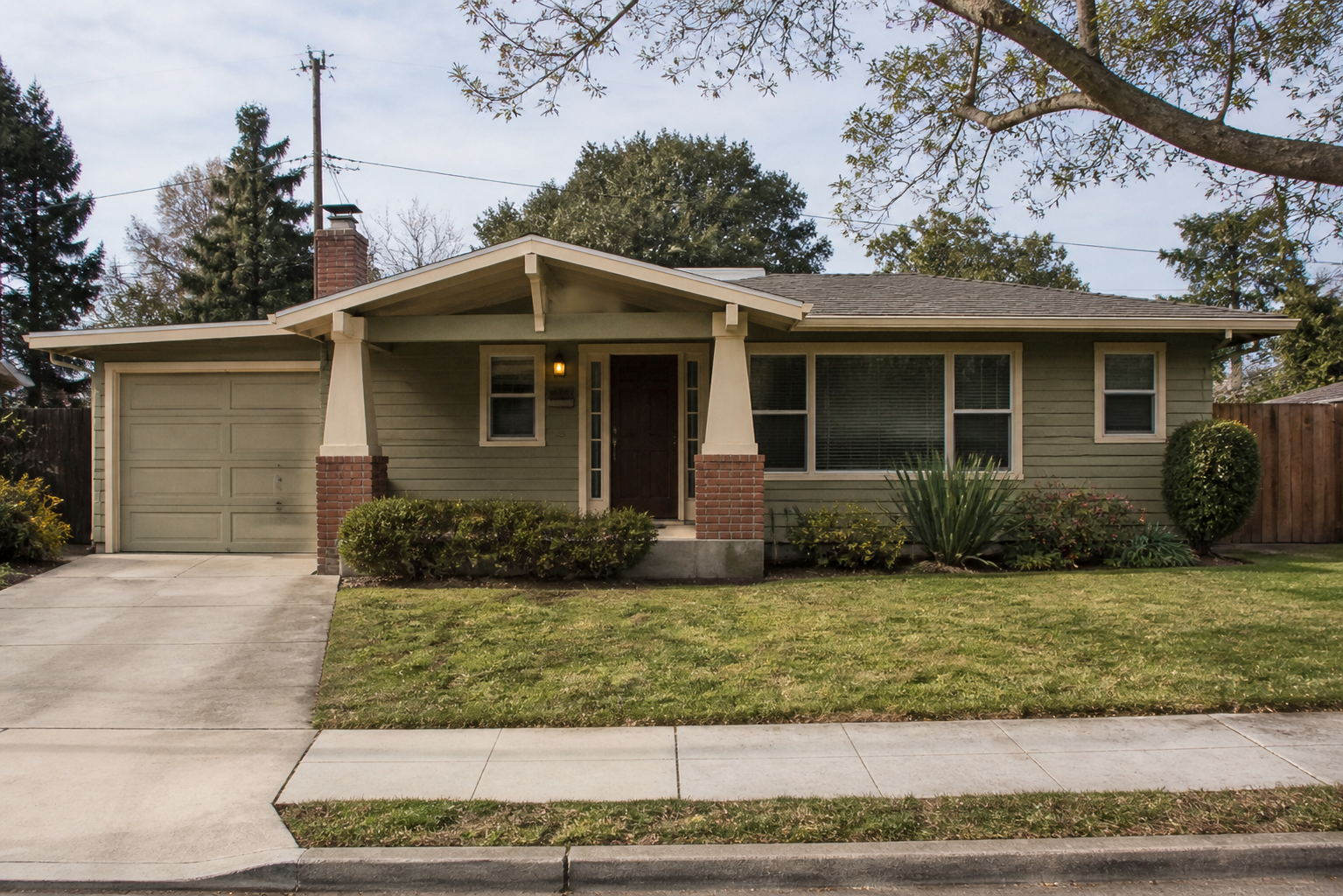
Image by ArchitectureCourses.org. Some 1950s homes kept Craftsman-style porch details, but the overall shape moved toward the lower, wider ranch house.
Some 1950s homes kept bungalow, cottage, or Craftsman-adjacent details: porches, compact forms, wood trim, smaller rooms, and warmer street presence.
These houses do not need to become open-plan showpieces. Usually the better move is modest: improve storage, brighten the kitchen, repair the porch, and keep the scale that makes the house feel human.
1950s Houses vs Mid-Century Modern Homes
People use these terms like they mean the same thing. They do not.
“1950s house” describes when the house was built. “Mid-century modern” describes a design approach.
After World War II, developers built small practical houses quickly. They were solving a housing shortage, not always making architectural statements. At the same time, architects and design-forward builders were exploring open plans, large glass, exposed structure, and indoor-outdoor living.
| Feature | Typical 1950s House | Mid-Century Modern House |
|---|---|---|
| Plan | Compact rooms, often more divided | More open living areas |
| Windows | Picture windows, double-hung windows, modest openings | Larger glass, clerestories, sliding doors, glass walls |
| Roof | Low gable, hip, or simple pitched roof | Flat, low-slope, butterfly, or expressive roof form |
| Materials | Brick veneer, siding, drywall, asphalt shingles | Glass, stone, exposed beams, plywood, concrete block |
| Design intent | Practical postwar housing | Modernist design and lifestyle |
A 1955 ranch in Ohio may simply be a 1950s house. A 1955 Eichler in California is both a 1950s house and mid-century modern. The decade gave us both mass housing and serious design experiments.
How to Tell if Your House Is Mid-Century or Just 1950s
Do not start with the furniture. Start with the house.
Look at the Roof
Most 1950s tract houses used simple gables, hips, or low pitched roofs. Mid-century modern houses are more likely to use flat or near-flat roofs, deep overhangs, exposed rafters, or more deliberate roof geometry.
Check the Windows
Standard double-hung windows or small casements usually point to a regular 1950s house. Floor-to-ceiling glass, clerestory strips, large sliding doors, and glass walls suggest mid-century modern intent.
Walk the Plan
If the kitchen, dining room, and living room are clearly separated, you are probably looking at a typical postwar plan. If the living spaces flow together and open strongly to the yard, the house may be closer to mid-century modern.
Read the Materials
Brick veneer, clapboard, drywall, linoleum, and standard trim were common in ordinary 1950s homes. Mid-century modern houses more often show structure and texture: exposed beams, natural stone, plywood paneling, concrete block, and larger glass.
Ask Who Built It
A neighborhood full of near-identical houses usually points to production housing. Architect-designed homes or design-forward developers often leave stronger clues: more deliberate siting, stronger glass lines, cleaner structure, and a less generic plan.
Layouts and Practical Design
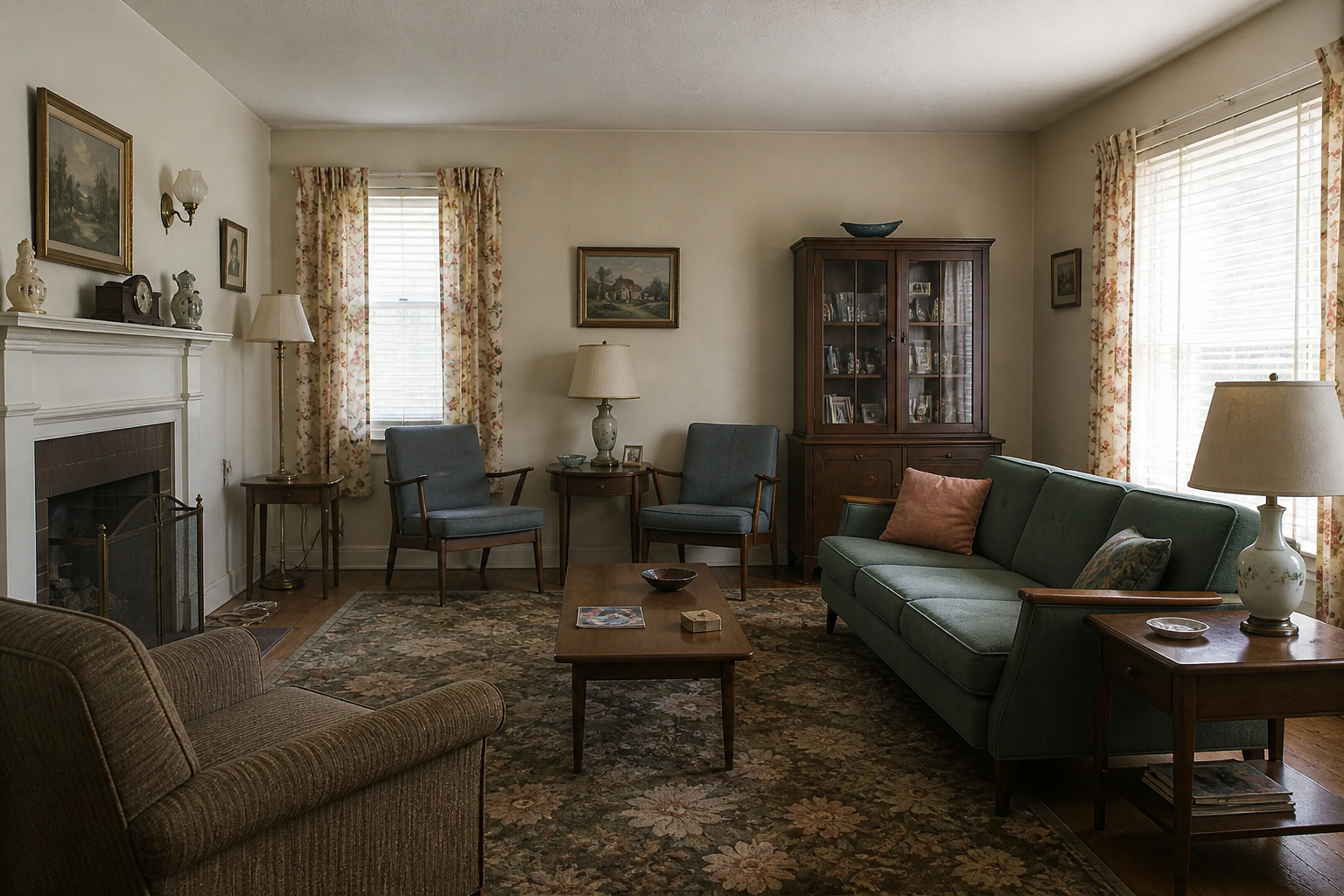
1950s layouts were usually practical before they were dramatic.
The common pattern was simple: living room near the front, bedrooms grouped to one side, kitchen and dining closer to the back, and some kind of connection to the yard. In many ranch houses, that plan still works. In smaller homes, it can feel tight once modern storage, larger appliances, home offices, and larger bathrooms enter the picture.
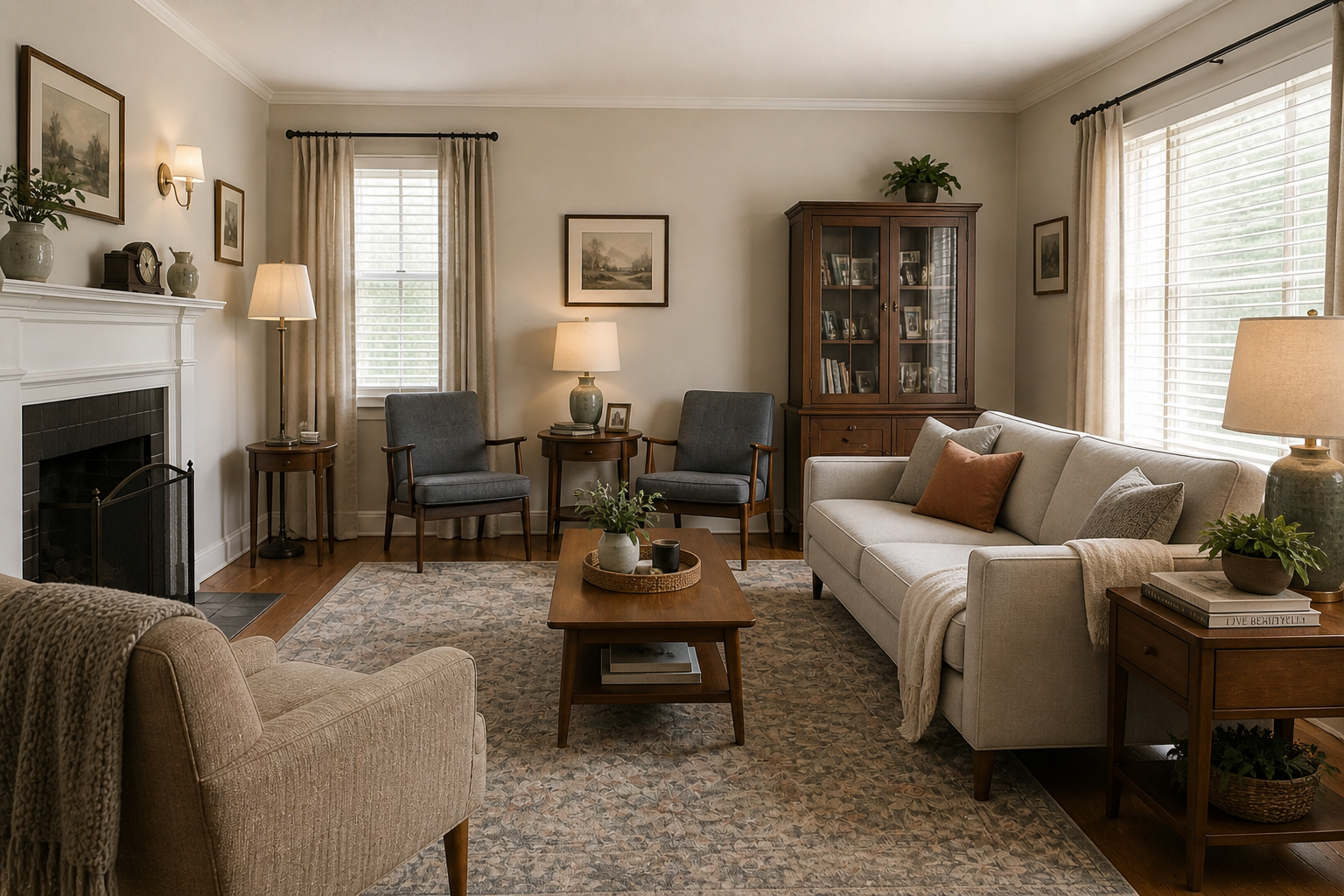
Image by ArchitectureCourses.org. After a light restoration, a 1950s living room can keep its fireplace, wood furniture, and vintage shape while using cleaner fabrics, softer lighting, and calmer finishes.
The mistake is assuming every wall needs to go. Sometimes the house needs only a better kitchen opening, improved light, or a clearer path from entry to living space.
Interior Design in 1950s Homes
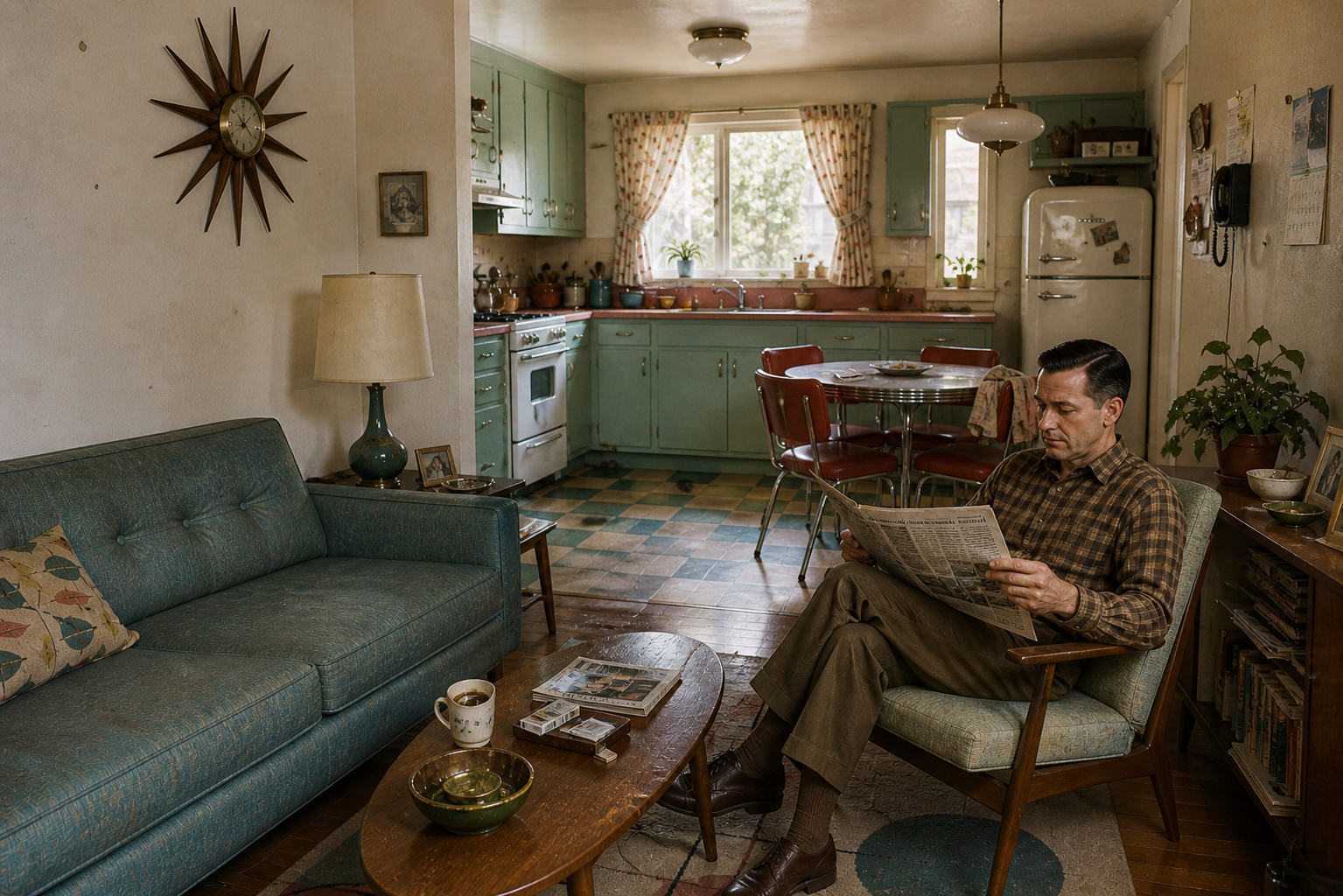
Image by ArchitectureCourses.org. A lived-in 1950s interior with pastel kitchen cabinets, chrome furniture, compact room planning, and worn mid-century living room details.
1950s interiors mixed practical layouts with color, new materials, and optimism. Pastel kitchens, chrome furniture, laminate counters, built-ins, patterned floors, and compact storage all belonged to the period.
Some of it is worth keeping. Some of it is not.
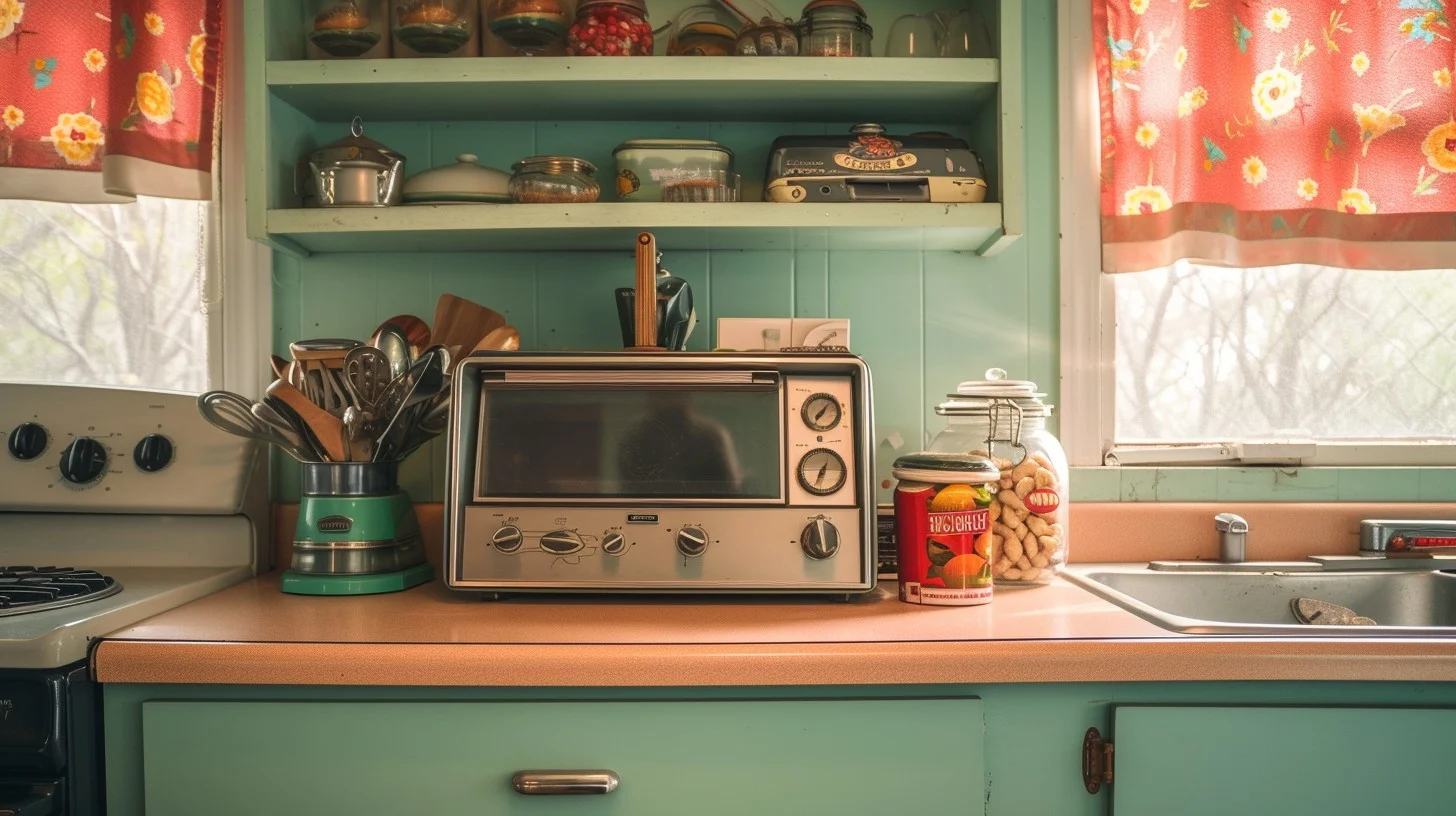
Original wood paneling, built-ins, terrazzo, good tile, and period lighting can give the house identity. Worn vinyl, bad replacement cabinets, failing laminate, and gloomy wall colors can drag the whole place down.
The safer move is to keep one or two strong period signals and let the rest support daily life. A house can nod to the 1950s without becoming a diner set.
Color and Decor
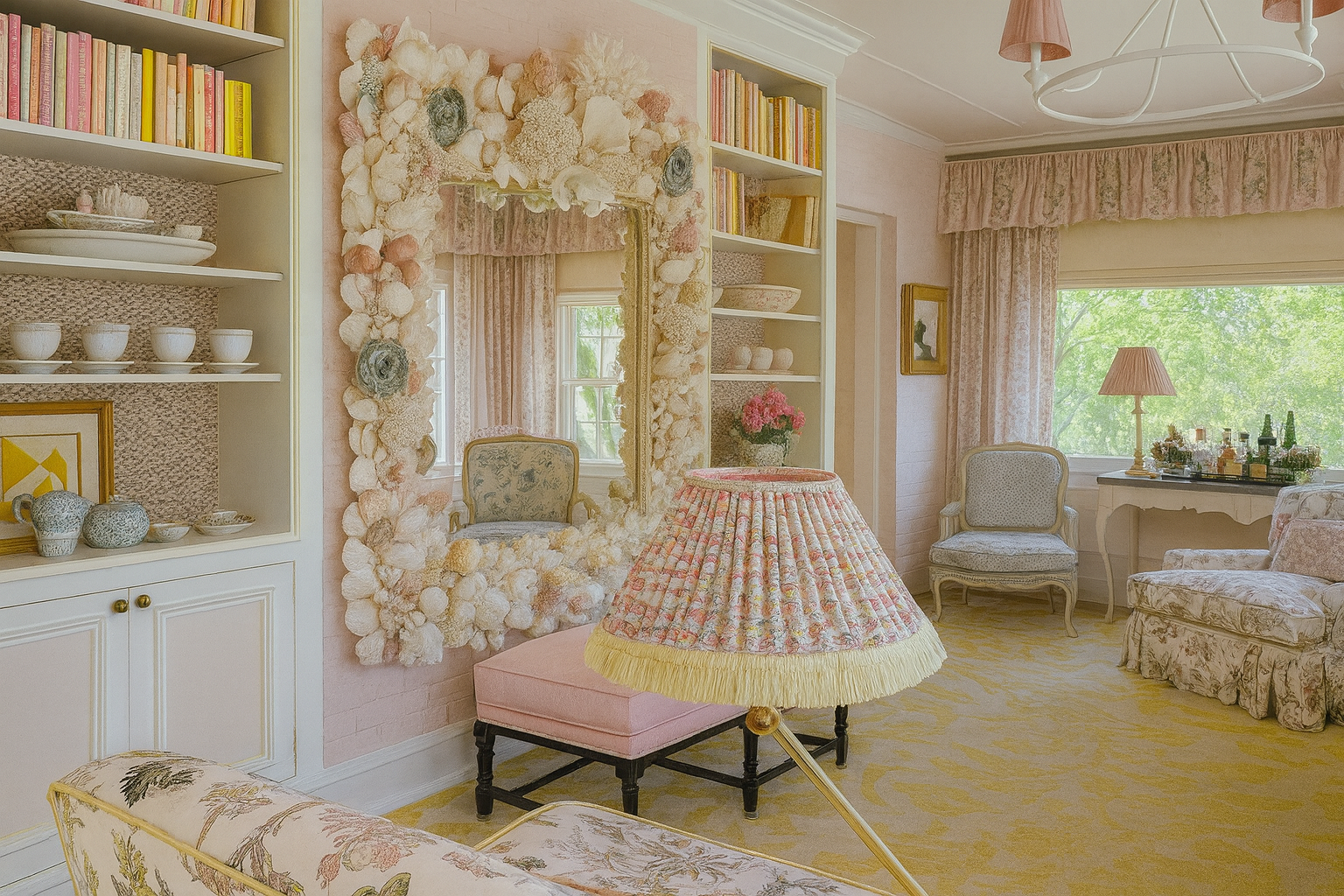
Pastels, turquoise, pink, mint green, mustard, coral, chrome, glass, and playful patterns were common. Use them carefully. One strong color choice usually works better than copying every retro cue at once.
Kitchen and Living Room Details
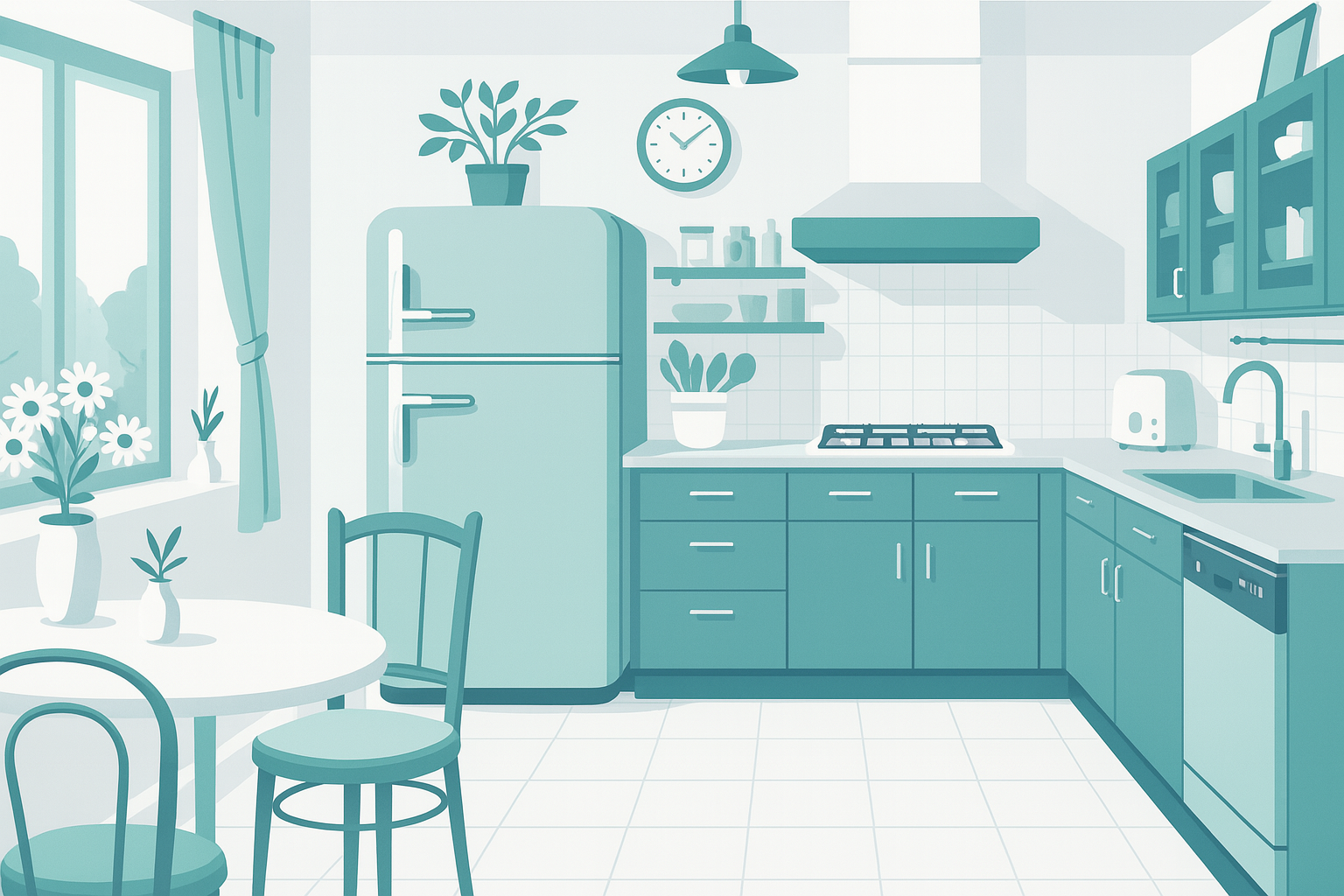
Many 1950s kitchens were efficient but small. They were not built for large islands, multiple cooks, or oversized appliances. If you remodel one, use 1950s kitchen remodel as the main layout guide and resist the urge to force a modern kitchen showroom into a compact postwar shell.
Bathrooms and Remodel Issues
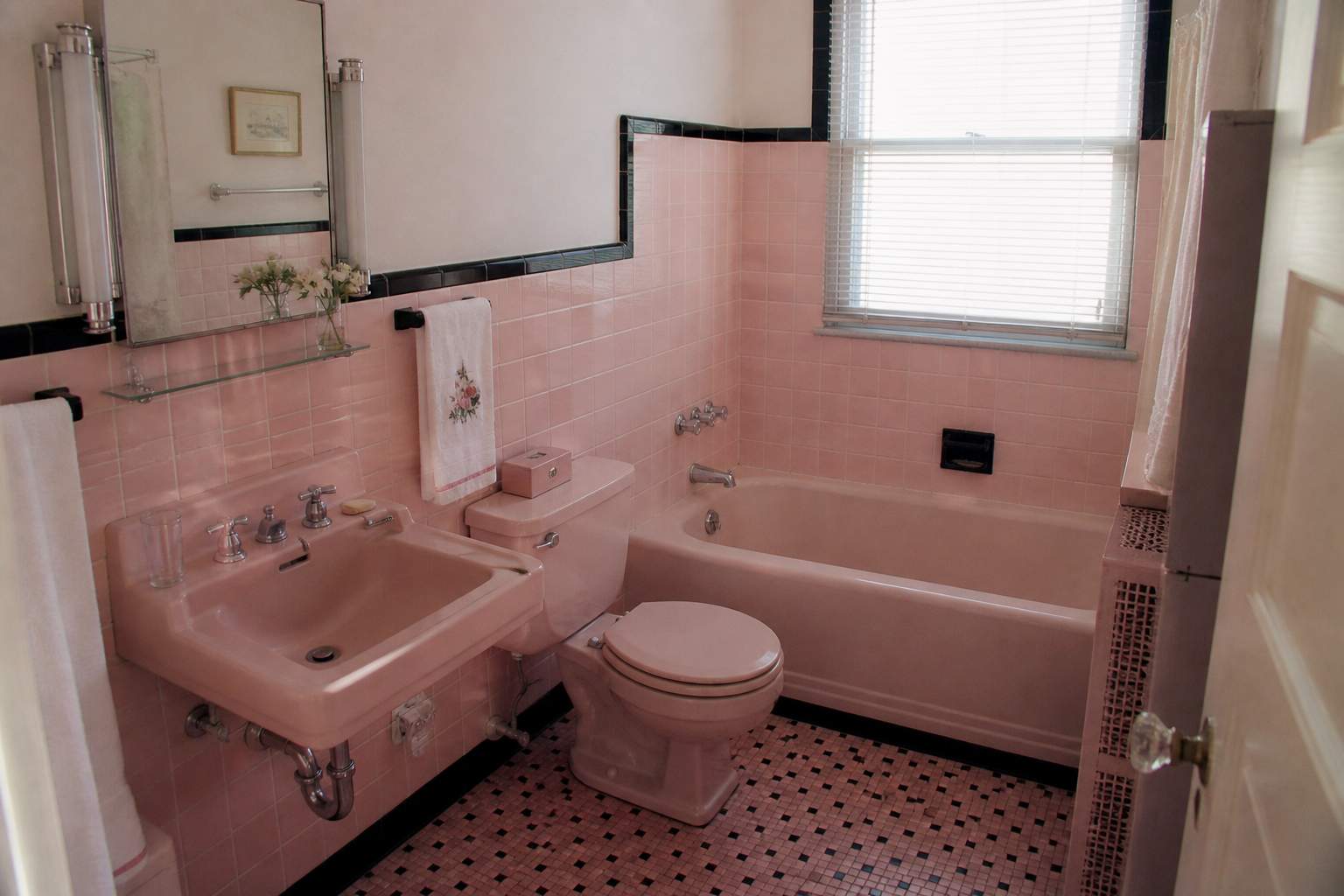
Image by ArchitectureCourses.org. A 1950s pink bathroom often used matching colored fixtures, square wall tile, black trim, chrome hardware, and compact built-in layouts.
1950s bathrooms can be charming, but they are not always easy to remodel.
Tile may be set in thick mortar. Tubs may be cast iron. Wiring may be ungrounded. Plumbing may be galvanized steel, copper, or older mixed materials. Floors can be out of level. Ventilation may be weak or missing.
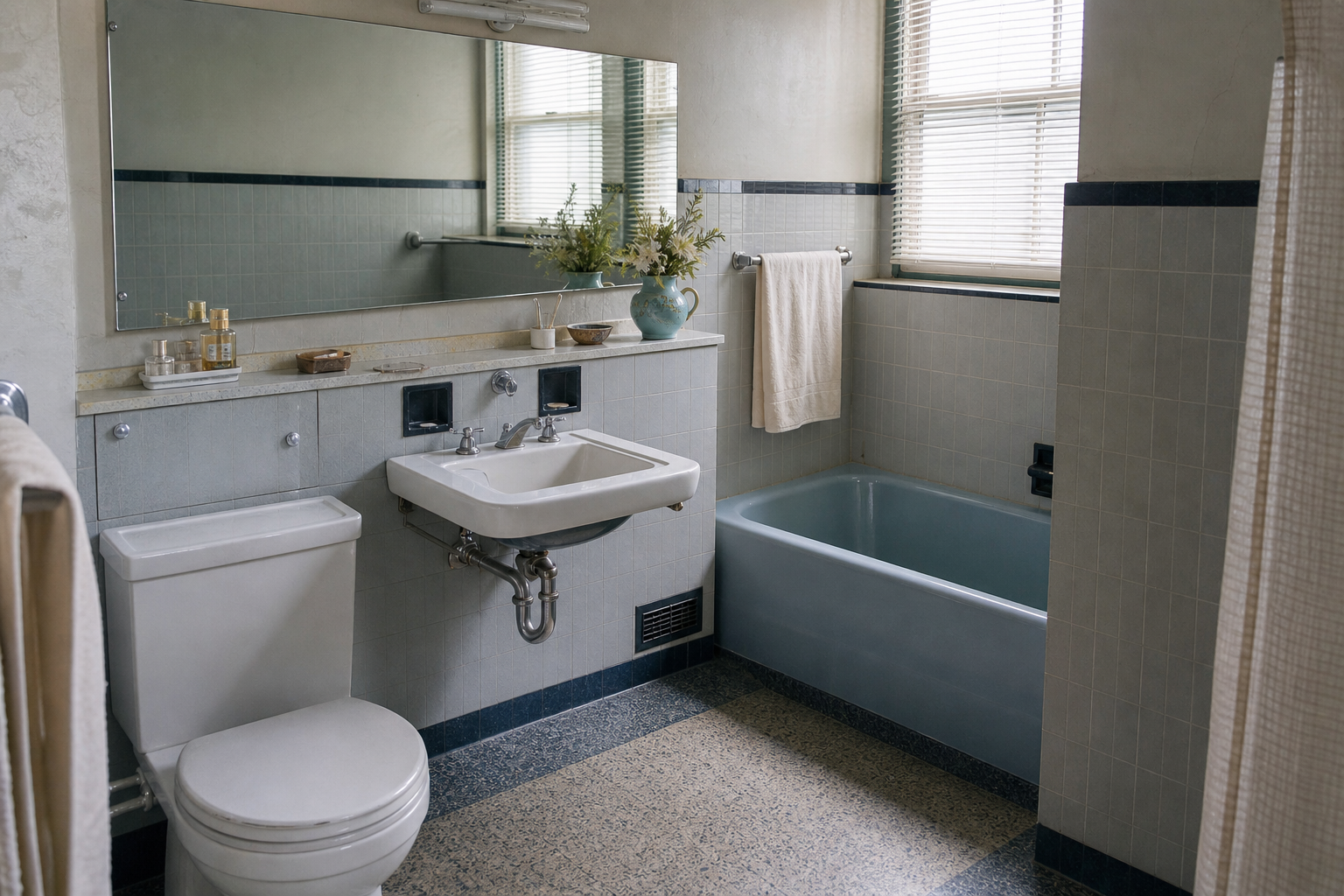
Image by ArchitectureCourses.org. A mid-century bathroom with small square tile, dark trim, exposed chrome plumbing, and a compact built-in tub layout.
I would not price a 1950s bathroom as a simple surface refresh until the plumbing, wiring, ventilation, subfloor, and wall assembly are checked. The finish may look dated, but the expensive problems are usually behind it.
- Keep charm where it is sound. Pink tile or black trim can work if the walls, floor, and plumbing are healthy.
- Do not ignore old wiring. Vanity lights, outlets, and grounding often need attention.
- Plan for hidden damage. Moisture around tubs, toilets, and old tile walls is common.
- Do not fight the layout blindly. A small bathroom may work better with smarter fixtures than with expensive pipe relocation.
Related: 1950s Bathroom Remodel
Gardens and Outdoor Living
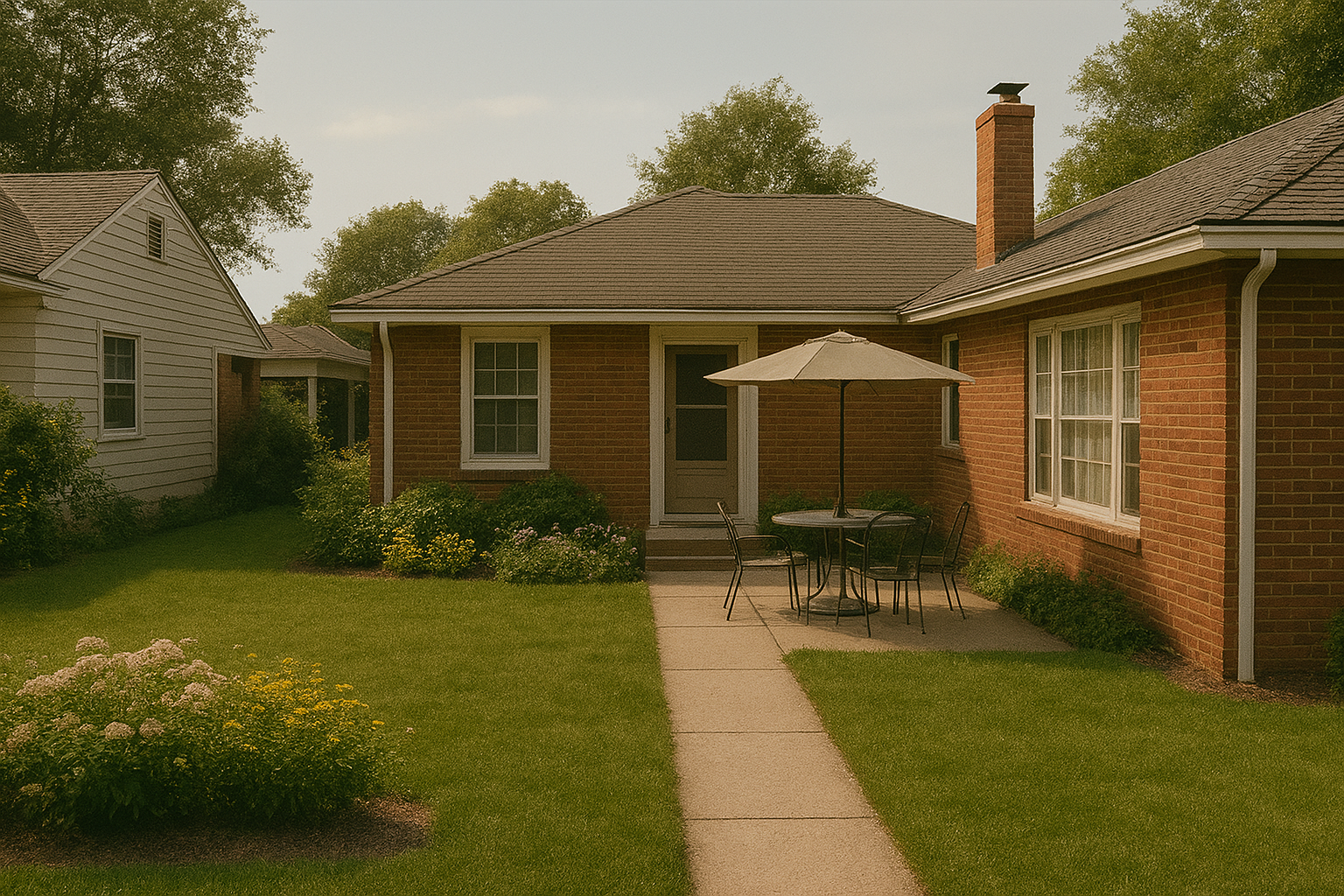
The 1950s backyard became part of the house’s daily life.
Patios, lawns, simple planting beds, barbecues, metal outdoor furniture, and sliding doors all helped turn the yard into usable family space. The best outdoor areas from this period are not overdesigned. They are direct, simple, and close to the rooms people actually use.
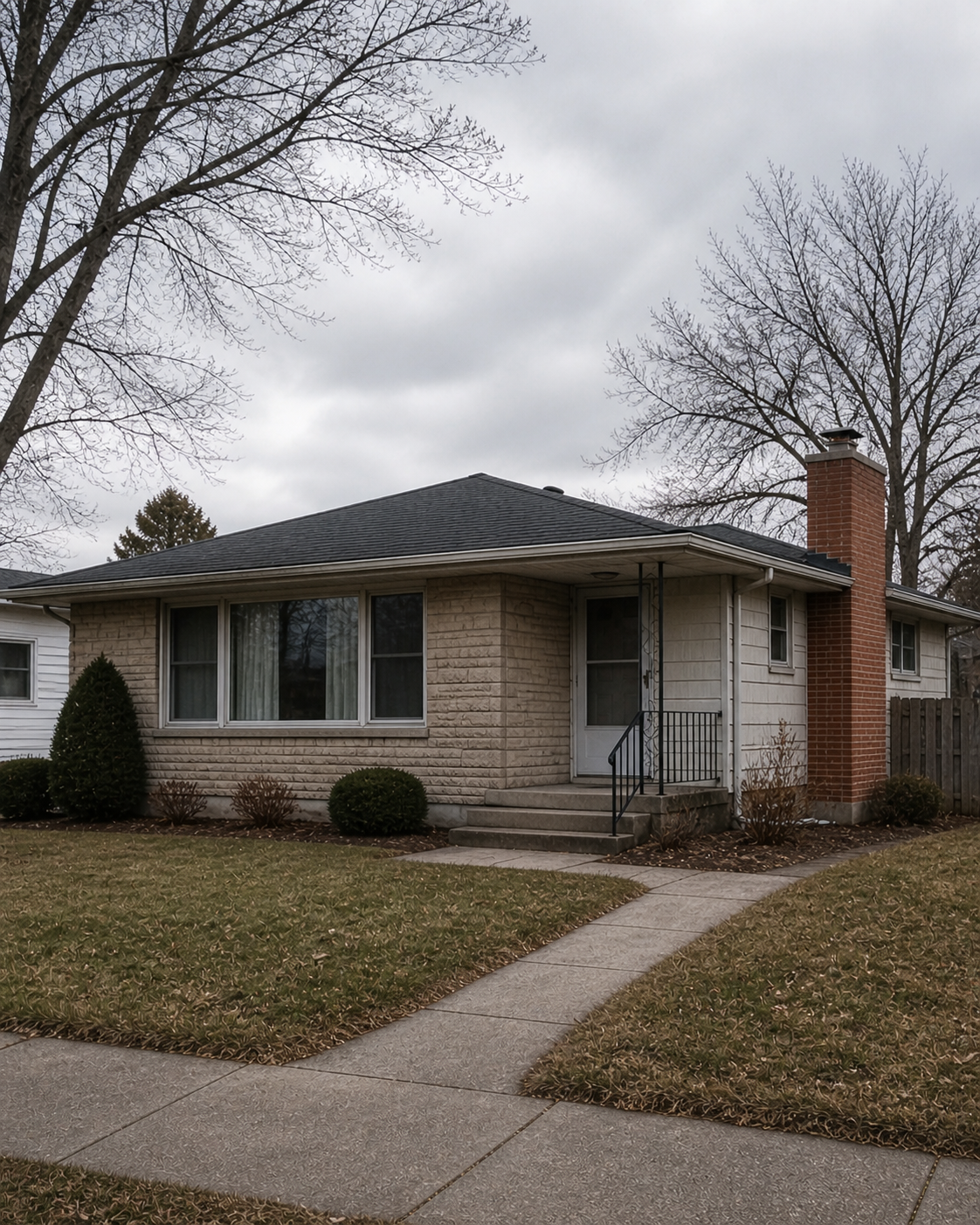
When updating a 1950s yard, keep the link between living room, kitchen, patio, and lawn clear. A fancy garden that breaks that movement works against the house.
- Keep patio access easy. The door to the yard should feel natural, not hidden.
- Use simple planting. Low-maintenance beds, shrubs, and open lawn fit the period better than cluttered landscaping.
- Respect the horizontal shape. Low walls, planters, and patios usually suit these houses better than tall decorative elements.
Common Problems in 1950s Houses
This is where the renovation decision gets serious.
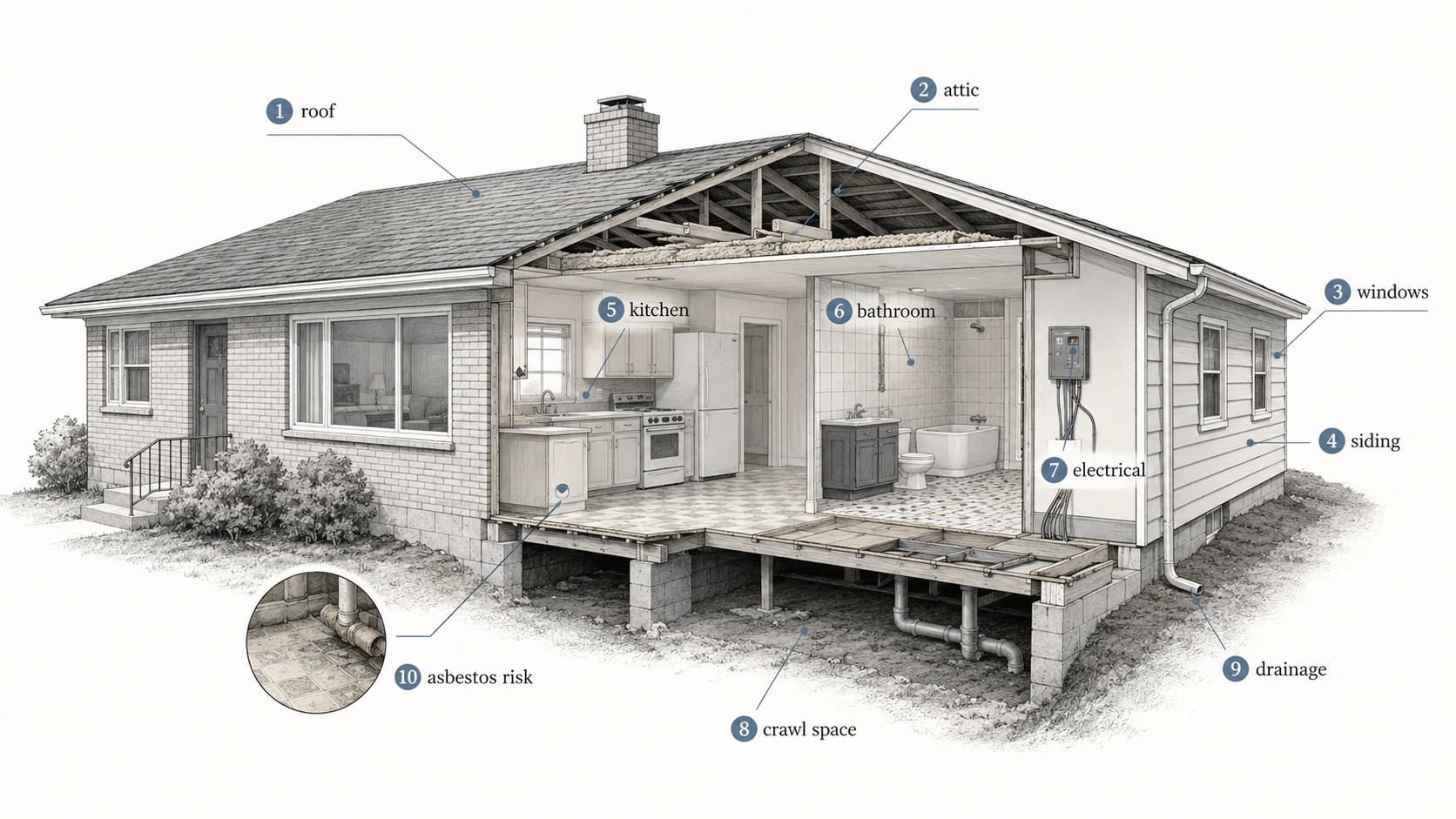
A 1950s house remodel should start with the hidden systems and risk areas before the visible finishes. Illustration by ArchitectureCourses.org.
A 1950s house may look simple, but age hides inside the systems. Before spending money on finishes, check the things that affect safety, comfort, and long-term cost.
| Problem | Where It Shows Up | What to Check First |
|---|---|---|
| Asbestos | Floor tile, siding, ceiling texture, pipe insulation, old adhesives | Test before cutting, sanding, scraping, or demolition |
| Poor insulation | Walls, attic, crawl space, rim joists | Air leaks, attic depth, wall assembly, ventilation |
| Old electrical | Ungrounded outlets, old panels, unsafe bathroom wiring | Panel capacity, grounding, GFCI protection, knob-and-tube if present |
| Plumbing wear | Galvanized pipes, old drains, tub walls, bathroom floors | Leaks, corrosion, water pressure, drain condition |
| Moisture | Basements, crawl spaces, bathrooms, around windows | Drainage, grading, gutters, ventilation, hidden rot |
| Drafty glass | Picture windows, sliders, old aluminum frames | Window condition, air leakage, condensation, frame rot |
Built in the 1950s? You Might Have Asbestos
Many homes from the 1950s used asbestos in floor tile, ceilings, siding, pipe insulation, duct wrap, and adhesives. It is not always visible. The danger usually starts when material is disturbed during demolition, sanding, scraping, or drilling.
Do not guess. Test before demo.
For full details, read asbestos in 1950s houses before demolition starts.
How 1950s Homes Quietly Changed Space
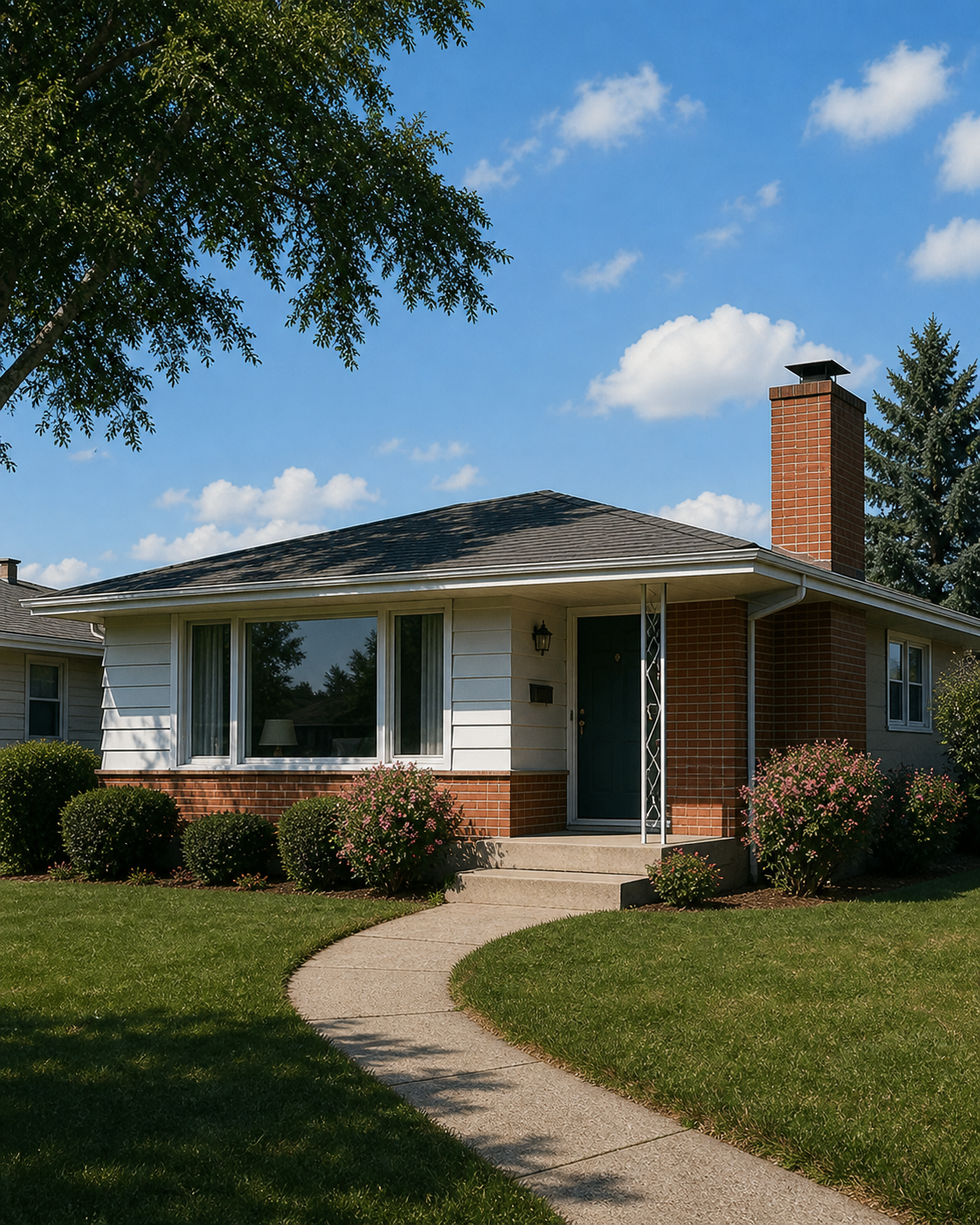
Most people look at a 1950s house and see style. The bigger shift was behavior.
Earlier houses often treated rooms more formally: parlor, dining room, closed kitchen, separated service spaces. The 1950s started loosening that structure. The living room became casual. The kitchen moved closer to family life. The television changed furniture layouts. The backyard became an extension of the house.
That is why modest 1950s houses still matter. They helped move the home away from formality and toward daily use.
More 1950s House Images
These extra images show the range: ranch houses, preserved interiors, desert modern details, and period materials.
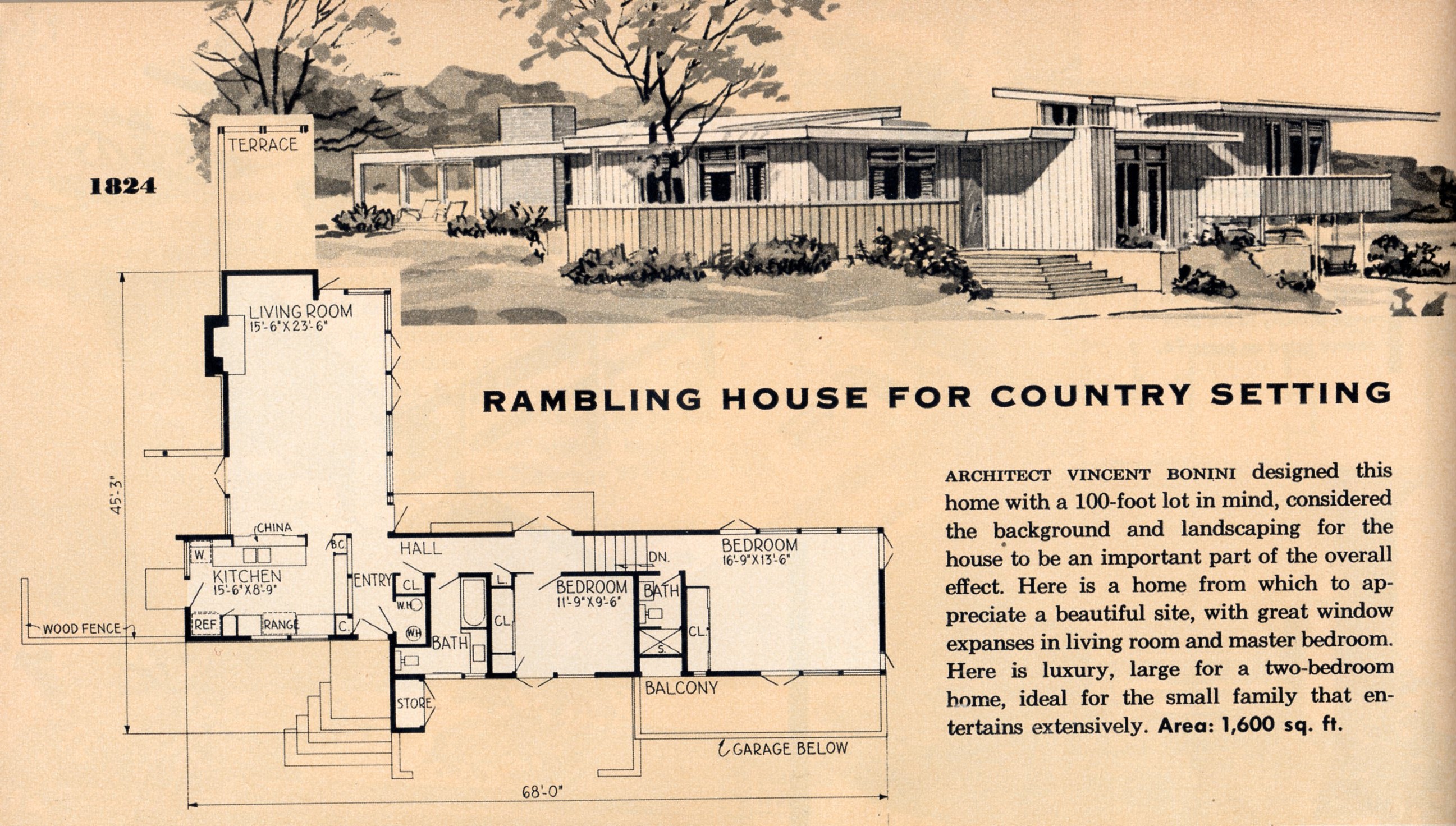
Image by Ethan, used under CC BY 2.0. Changes were made for formatting and presentation.
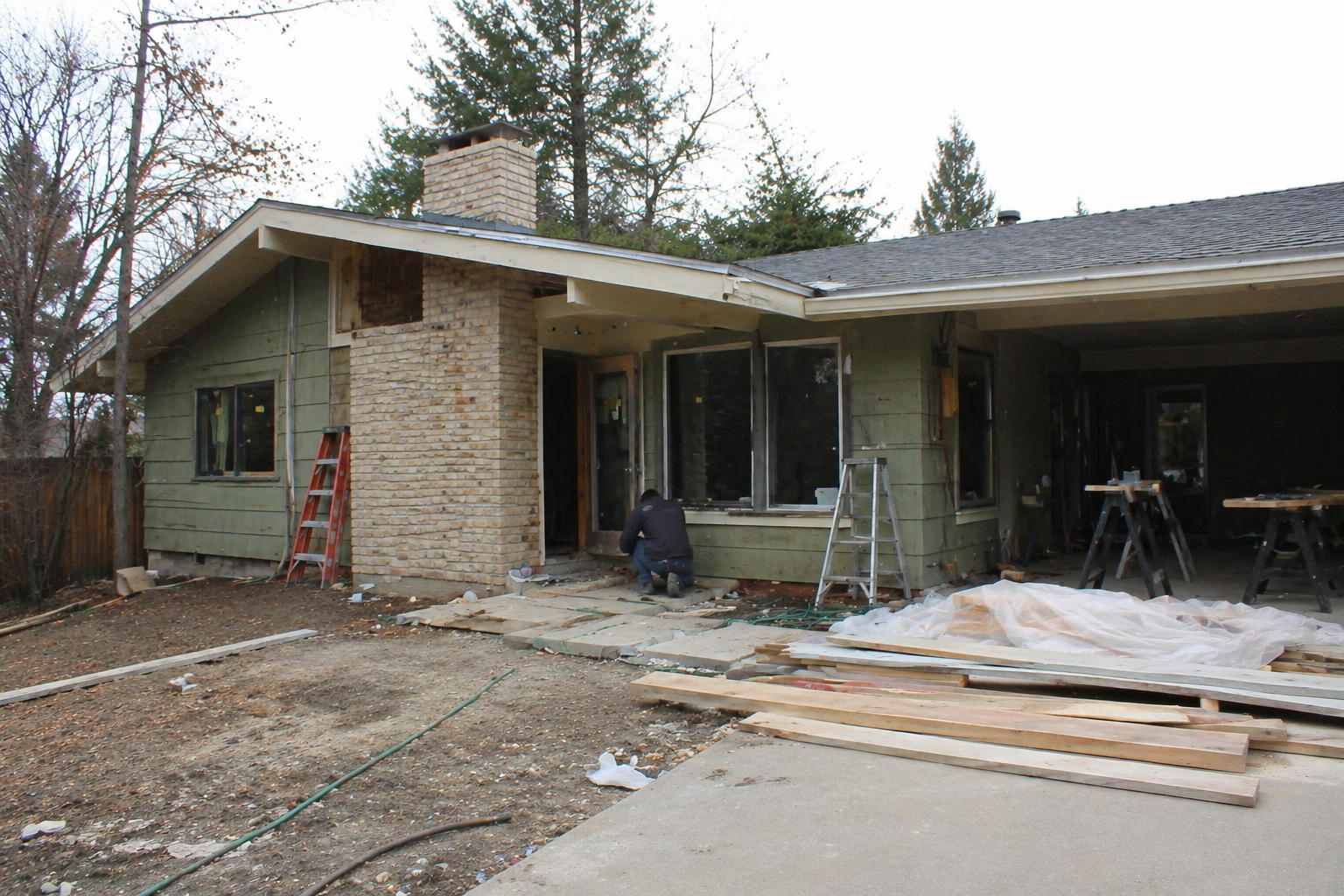
Image by ArchitectureCourses.org. A 1950s ranch restoration often starts messy: old siding, tired windows, patched roof edges, exterior color decisions, and small repairs that show up once the shell is opened.
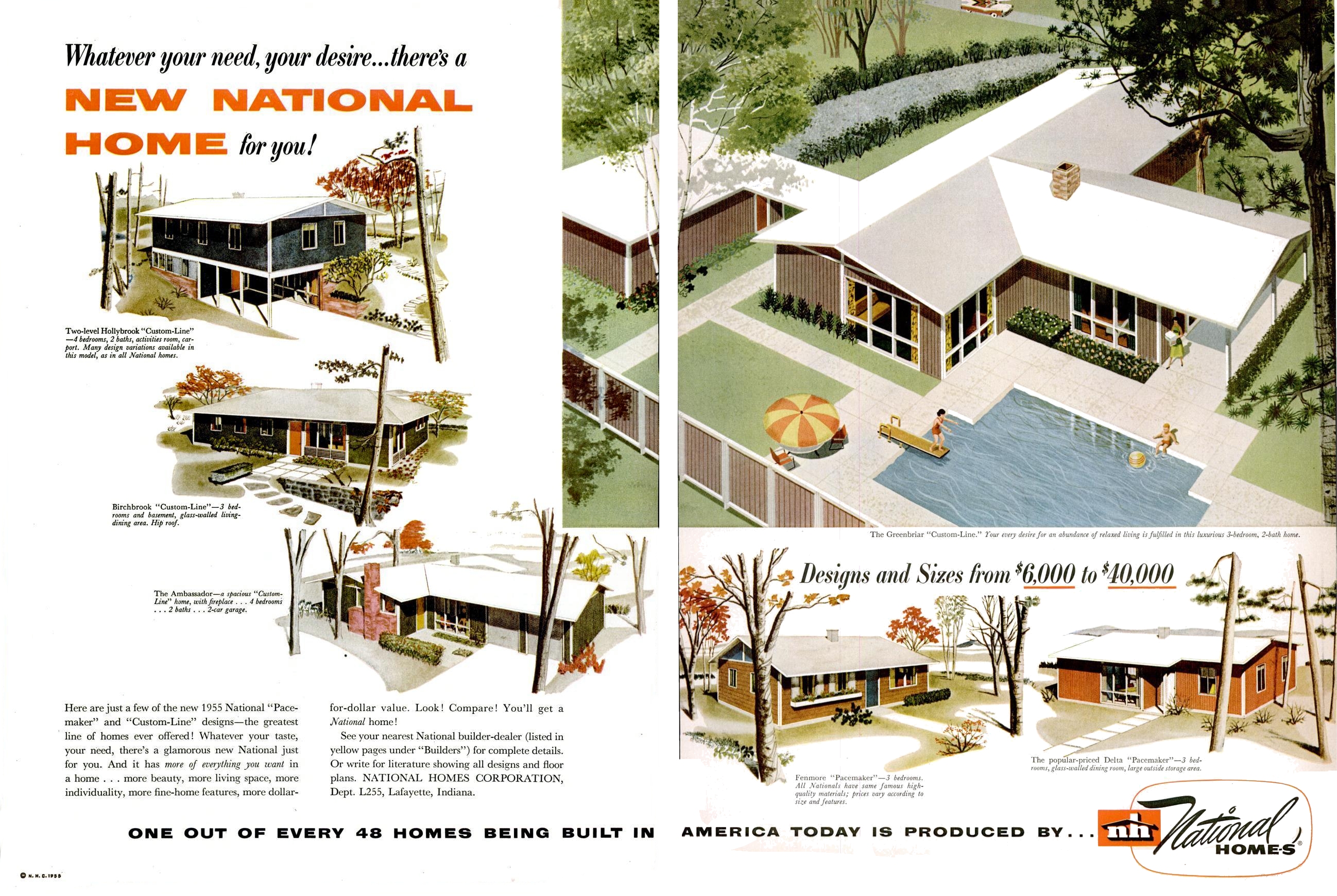
Image: Original 1950s living room with bold furniture, geometric lighting, and period color.
FAQ
What were the most popular 1950s house styles?
Ranch homes, split-levels, Cape Cod revivals, Colonial revivals, modest bungalows, cottages, and mid-century modern homes all appeared in the 1950s. Ranch houses were the most common in many suburbs.
Is every 1950s house mid-century modern?
No. Many are ordinary postwar houses. Mid-century modern means the house has modernist design intent: open planning, larger glass, stronger indoor-outdoor connection, exposed structure, and cleaner geometry.
Are 1950s homes energy efficient?
Usually not in original condition. Windows, doors, attic insulation, wall insulation, and air sealing often need upgrades.
What should I check before remodeling a 1950s house?
Start with asbestos, electrical safety, plumbing, roof condition, drainage, insulation, windows, and moisture. Finishes come after the hidden systems are understood.
What is the difference between a ranch and a rambler?
They usually refer to the same basic single-story house type. “Ranch” is more common in many parts of the U.S.; “rambler” is often used in other regions.
What colors were common in 1950s interiors?
Pastels, turquoise, mint green, pink, coral, yellow, red, and black-and-white contrast were common. Use them carefully today. One strong period color is usually enough.
How can I update a 1950s house without ruining it?
Keep the strong parts: roofline, porch, picture windows, built-ins, masonry, woodwork, and indoor-outdoor flow. Upgrade comfort, safety, and layout problems quietly.
What furniture defines 1950s style?
Low-profile sofas, tapered legs, kidney-shaped tables, chrome details, molded chairs, slim case goods, and geometric lighting all fit the period.
Read Next
- 1950s Kitchen Remodel: Layout, Cabinets, Appliances, and What to Keep
- 1950s Kitchen Remodel Cost: What Changes the Price in an Old Kitchen
- 1950s Ranch House Remodel: What to Fix, Keep, Open Up, and Avoid
- 1950s Bathroom Remodel: What to Keep, Replace, and Check First
- Asbestos in 1950s Houses: Where It Hides Before Renovation