
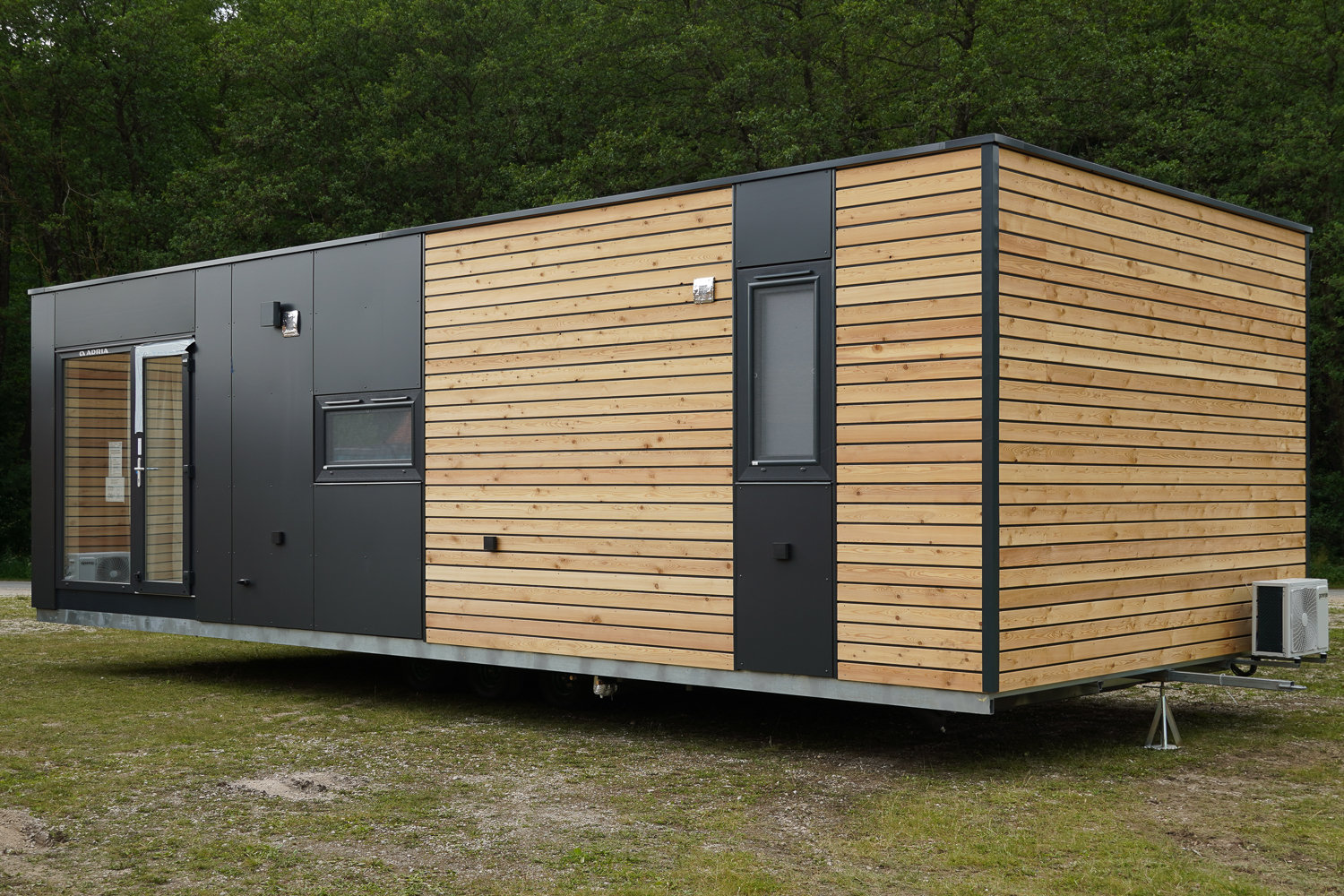
Movable Tiny Homes
A movable tiny home still needs a legal place to sit.
Moving it is only one part. It also has to be parked, leveled, tied down, connected to power and water, insured, and allowed for full-time living.
Wheels help with transport. They do not solve zoning, septic, site access, financing, weather protection, or long-term parking.
The real question is simple: will you move it enough to make the extra cost and hassle worth it?
If you are still sorting out the basic category, start with What Is a Tiny House?. If the unit is built on a trailer, read Regulations for Tiny Houses on Wheels before treating mobility as permission to live anywhere.
Movable Does Not Mean Easy
A movable tiny home sits between housing and transportation. That is why it gets complicated.
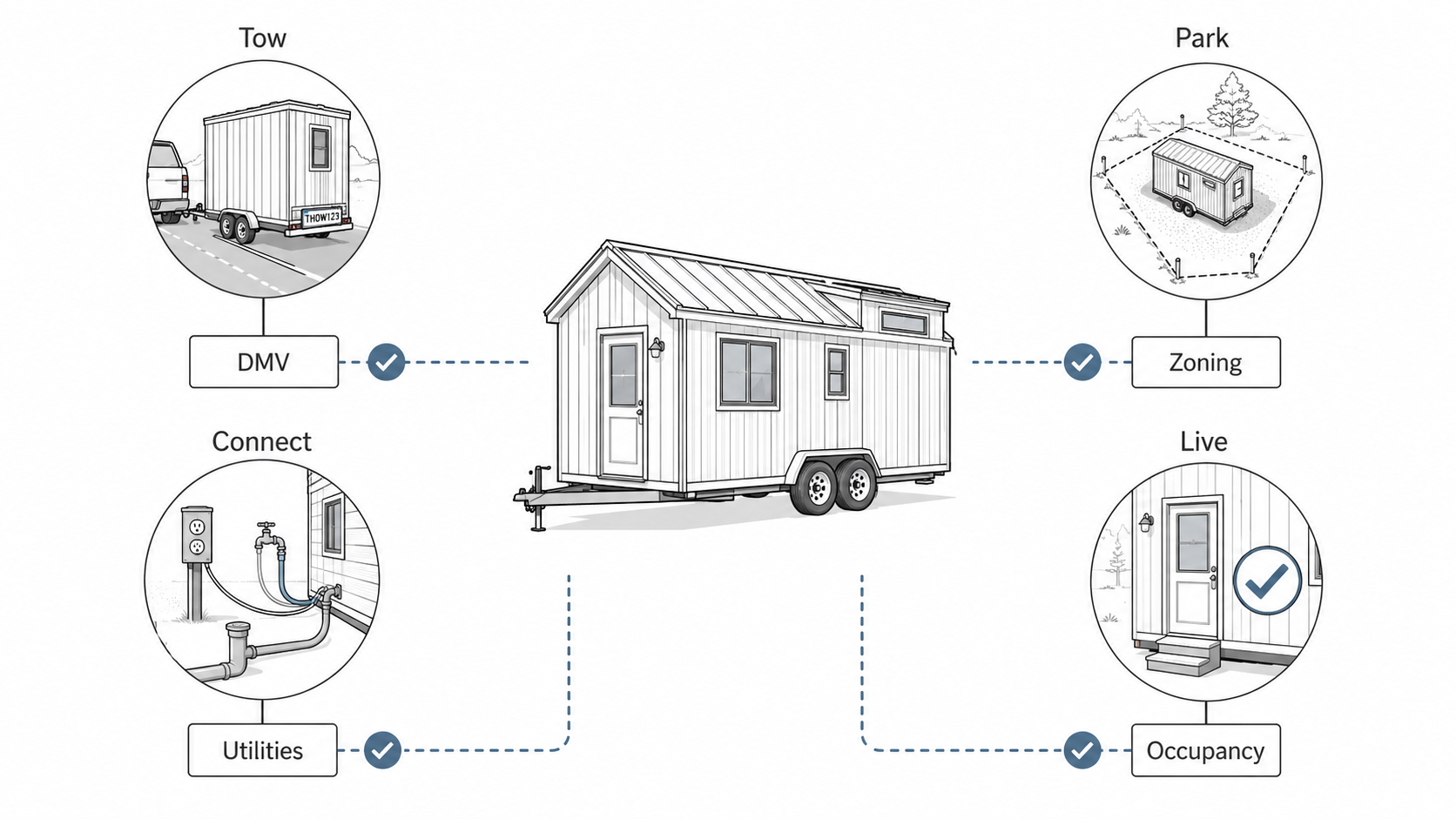
One office may care about trailer registration. Another may care about zoning. Another may care about water, sewer, septic, or electrical connection. Another may care about whether the unit can be used as a dwelling. Passing one check does not mean the rest are solved.
| Question | What it really asks | Who may care |
|---|---|---|
| Can it move? | Is it safe and legal to transport? | DMV, trailer rules, road authorities, tow operator |
| Can it park? | Can it sit on this property or in this park? | Zoning office, RV park, campground, HOA, landowner |
| Can it connect? | Can it use power, water, sewer, septic, or off-grid systems? | Building department, utility provider, health department |
| Can someone live in it? | Is full-time occupancy allowed? | Local planning, zoning, building, and health officials |
Mobility sounds like freedom. In practice, it often means more agencies get involved.
Most Movable Tiny Homes Rarely Move
This is the first honest test.
Many movable tiny homes are designed to be moved but are not moved often. They are built on trailers, delivered once, parked for years, and treated like small dwellings. That can still be useful. It can also mean the owner paid for axles, brakes, road limits, trailer maintenance, and compact proportions without using the mobility very much.
There are good reasons to choose movable: rental land, seasonal work, a temporary housing need, a flexible family property arrangement, or uncertainty about where you will settle. But if the home will sit in one place for ten years, a fixed small house, prefab unit, ADU, or small manufactured home may be the cleaner decision.
What Moving Actually Involves
Moving the home is only the middle of the job.
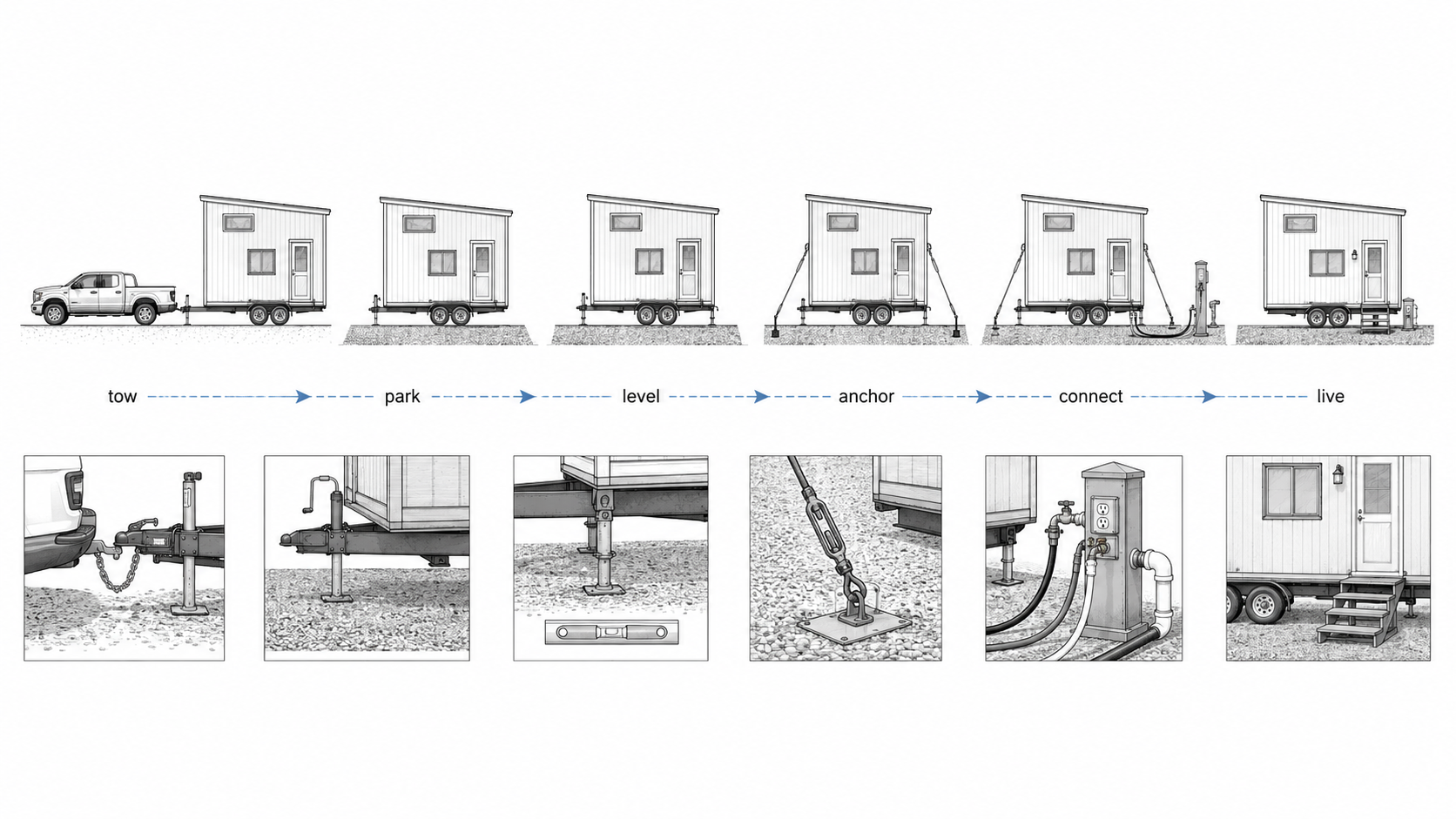
Before the move, the unit has to be prepared. Loose items need securing. Water and power need disconnecting. Skirting, stairs, decks, anchors, hoses, and exterior add-ons may need removal. The route has to be checked. The tow vehicle or transport company has to be matched to the load.
After the move, the work starts again: park, level, support, anchor, connect, weather-protect, inspect, and make the site livable.
| Stage | What has to happen | Common surprise |
|---|---|---|
| Before moving | Disconnect utilities, remove stairs or skirting, secure interior, check route | The home is not as “ready to roll” as the seller implied |
| Transport | Tow or hire transport, check brakes, lights, weight, height, route, weather | Oversize, weight, or route limits add cost |
| Placement | Get onto the site, turn, back in, level, support, anchor | The driveway, slope, trees, wires, or soil make placement difficult |
| Reconnection | Power, water, waste, propane, heat, cooling, internet, drainage | Temporary hookups are not accepted for full-time use |
| Living legally | Confirm zoning, occupancy, utility approval, insurance, and local rules | The unit can sit there but cannot be used as permanent housing |
A movable home is easy to imagine in motion. It is harder to use after it arrives.
The Trailer Is Not a Free Foundation
A trailer gives the home a base and a way to move. It also creates limits.
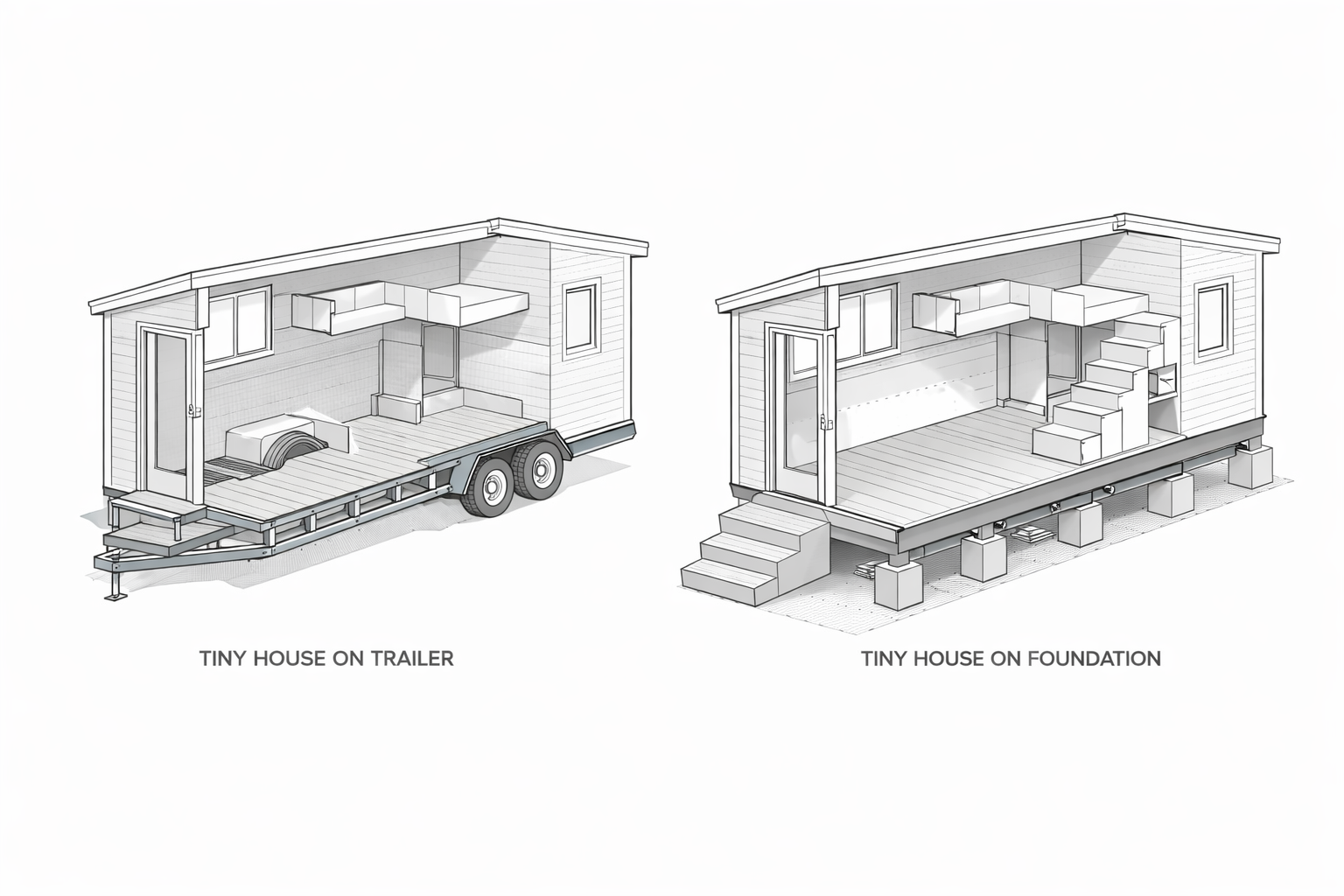
Road width, height, weight, axle rating, tire rating, braking, tongue weight, floor depth, insulation space, and structural vibration all affect the design. A trailer-based home usually has less room for floor insulation, plumbing depth, and heavy materials than a foundation-based home.
The trailer also has to age. Tires, bearings, brakes, lights, fasteners, frame condition, rust, and leveling points are not decoration. They are the difference between a movable home and a stranded one.
When Mobility Is Worth Paying For
Mobility can be worth it when the owner has a real reason to move or a legal path that depends on a movable unit.
| Mobility makes sense when | Why | What still has to be checked |
|---|---|---|
| You expect short-term or seasonal placement | The unit may need to leave when the site arrangement ends | Park rules, stay limits, towing condition, storage plan |
| You rent the land | You may not want to invest in a permanent structure on someone else’s property | Lease terms, utility rights, removal terms, insurance |
| The local path allows movable units | Some places have specific movable tiny house rules | Certification, registration, setbacks, utility connection, occupancy |
| You work seasonally | The home may follow employment or climate | Route, parking supply, hookups, winterization, storage |
| You are testing tiny living | Mobility can reduce the risk of committing to one site | Resale, transport cost, legal places to stay |
The best movable tiny home has a clear moving plan, not only a trailer underneath it.
When a Fixed Small Home Is Smarter
Mobility is often the wrong thing to optimize.
If the home will stay on one property, connect to utilities, serve as full-time housing, and need long-term durability, a fixed small house, prefab ADU, manufactured home, or small cottage may be easier to approve, finance, insure, and maintain.
Permanent support can also improve floor insulation, utility routing, stairs, decks, anchoring, drainage, and service access. That does not make fixed homes cheap. It means the money may go into long-term use instead of road movement.
| Choose movable if | Choose fixed if |
|---|---|
| You expect to relocate the home | You expect to live on one site for years |
| Trailer-based use is accepted where you plan to stay | The local approval path favors ADUs or permanent dwellings |
| You need lower commitment to a site | You need better long-term financing or resale |
| You can handle setup after each move | You want stable utilities, foundation, decks, and storage |
If the only reason for wheels is “maybe someday,” price that someday carefully.
Legal Placement Comes Before the Purchase
A movable tiny home can be legal to tow and still illegal to live in.
That sentence should be checked before the deposit. Some cities have specific movable tiny house paths. Some states inspect certain tiny houses with wheels through factory-built housing programs. Some counties treat THOWs differently from ADUs. Some places allow RV-style stays only in parks or campgrounds. Some sites allow parking but not full-time occupancy.
Ask the local office about the exact parcel, not the general idea. “Are tiny homes legal?” is too vague. Ask whether this specific movable unit can be placed, connected, and occupied full time at the address you plan to use.
For the broader legal framework, read Tiny Homes Regulations and Building Codes.
Utilities Are the Part That Stops the Dream
Power is usually easy to imagine. Wastewater is where the plan gets serious.
A movable tiny home may use RV-style hookups, a permitted utility connection, a septic system, sewer, well, holding tank, composting toilet, graywater setup, solar, batteries, propane, or a mix of systems. None of those should be assumed legal just because the house is small.
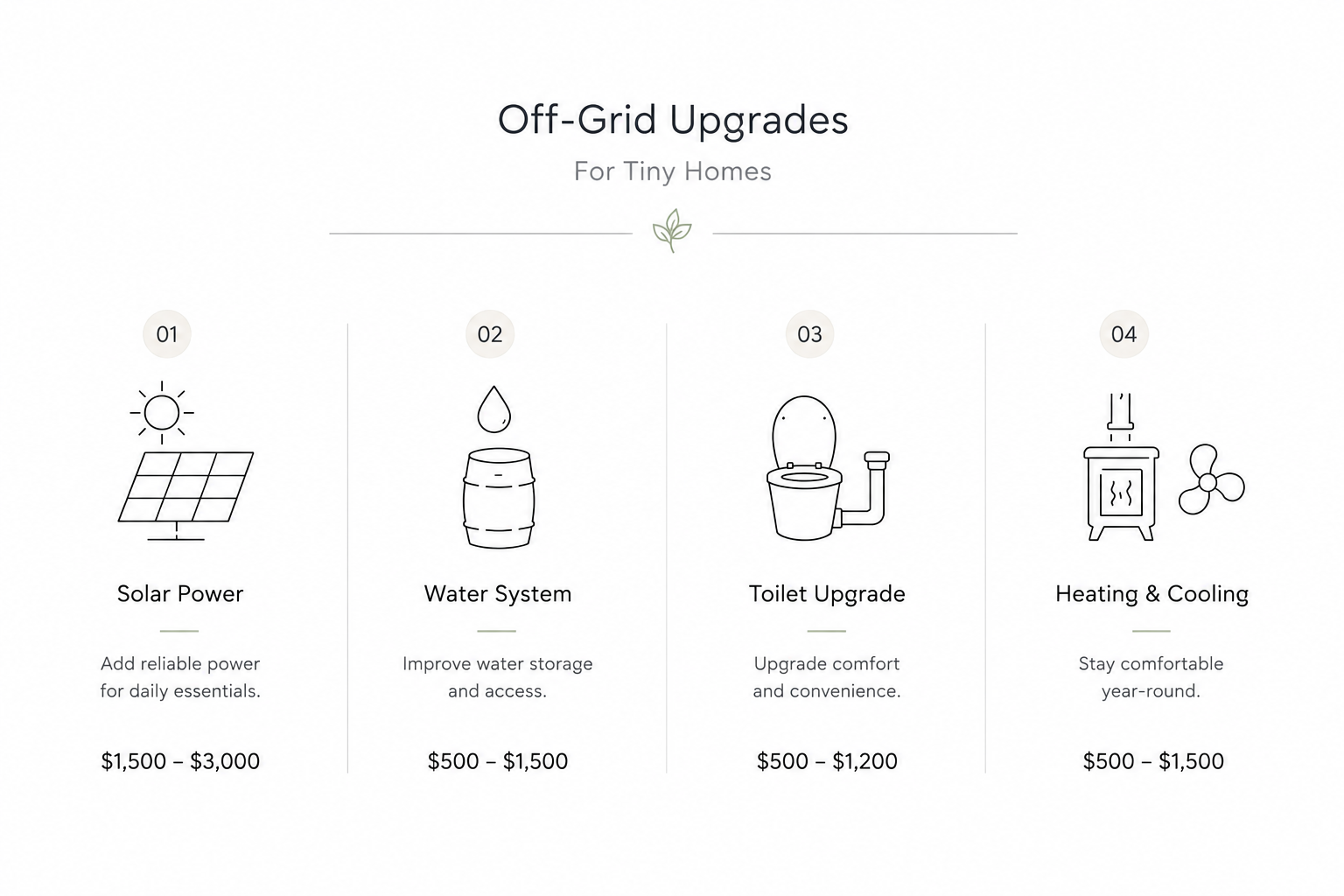
Off-grid does not mean rule-free. A health department may still care where waste goes. A utility may still care how power is connected. An insurer may still care how heat, propane, batteries, and wiring are installed.
Design Around Setup, Not Travel Fantasy
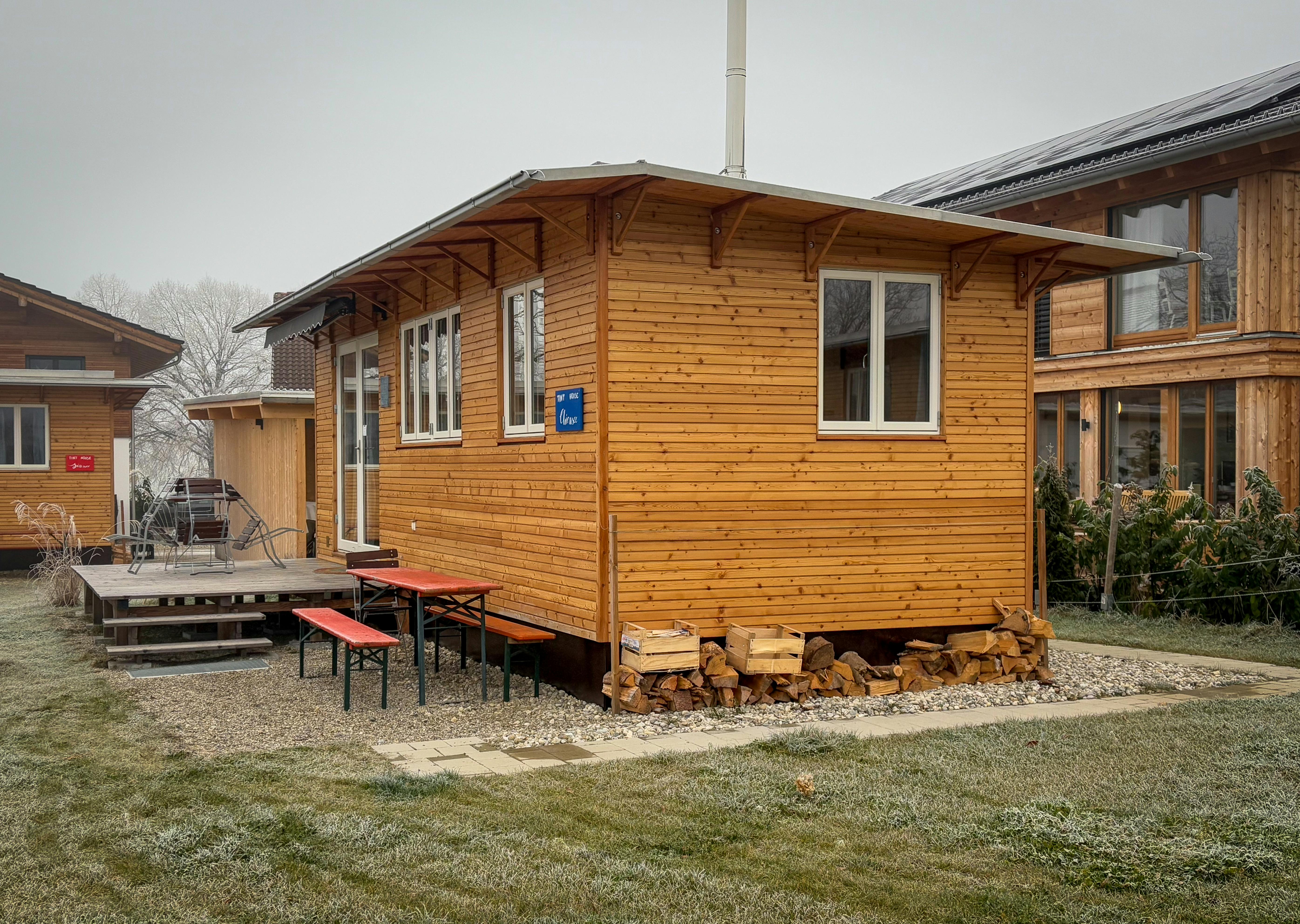
A movable tiny home should be designed for the work that happens every time it is set up.
That means protected hookups, accessible shutoffs, solid leveling points, safe stairs, a simple skirting plan, easy inspection points, and storage for the things that get removed before transport.
| Design choice | Why it matters on a movable unit | Bad shortcut |
|---|---|---|
| Simple exterior shape | Moves better, leaks less, costs less to maintain | Too many bump-outs, roof breaks, and fragile trim details |
| Compact wet wall | Shorter plumbing runs and easier winter protection | Fixtures scattered across the trailer |
| Reachable systems | Repairs happen faster after transport or freezing | Water heater, pump, panel, and valves buried behind built-ins |
| Durable entry | Steps, landing, and threshold take abuse after each setup | Temporary stairs with poor drainage and bad step height |
| Weight control | Heavy materials affect towing, axle loads, and safety | Tile, stone, large tanks, and heavy cabinets added without checking load |
A movable home that is hard to set up will feel flexible only in the listing.
Inspection Risk Is Higher on Cheap Movable Units
Cheap movable tiny homes can be good starting points. They can also hide expensive failures.
The risky areas are predictable: roof edges, wall penetrations, windows, trailer frame, tires, brakes, floor rot, cold corners, bath ventilation, propane work, wiring, water lines, and blocked service access.
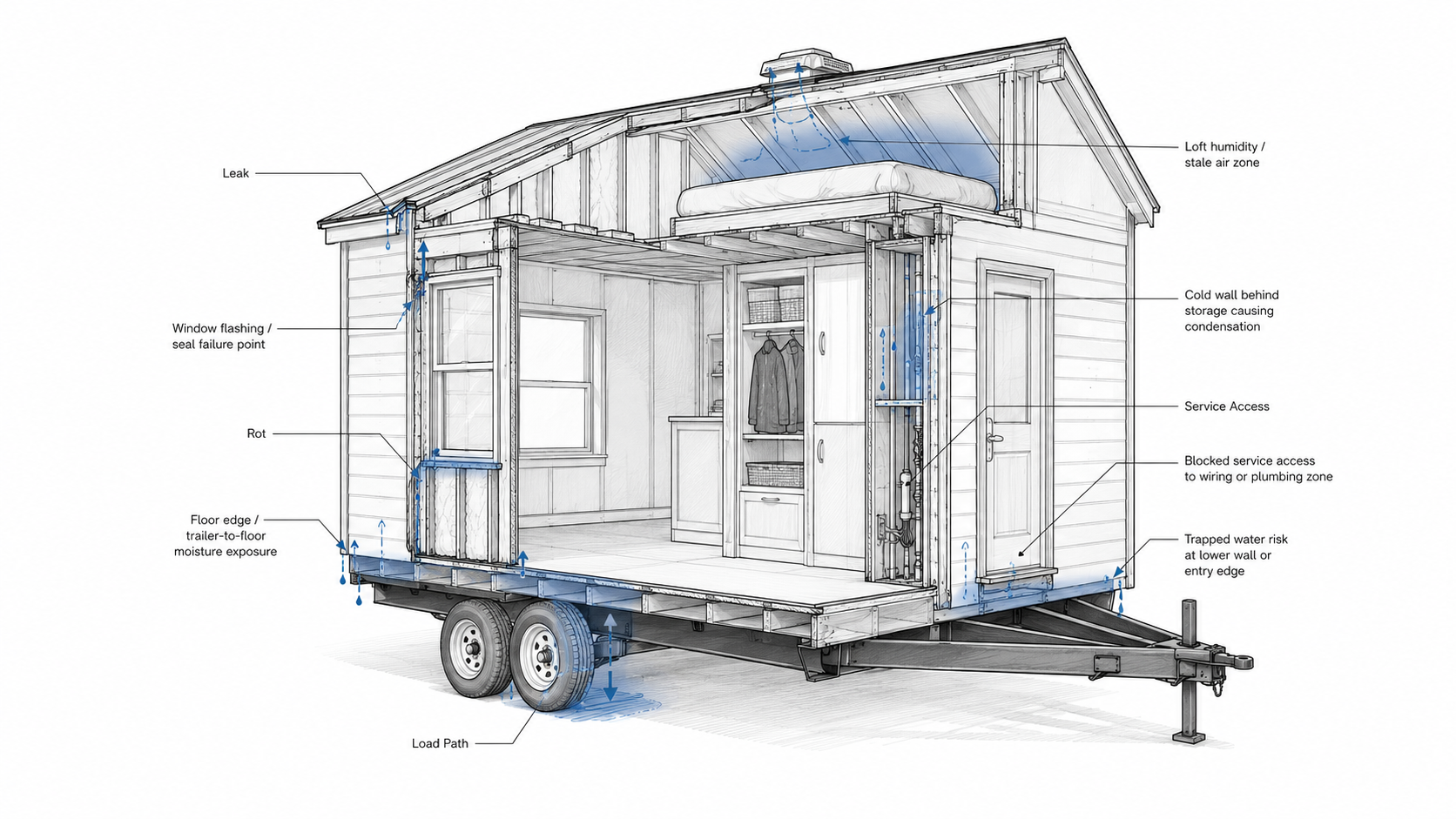
If the seller cannot show the trailer title, weight information, inspection history, system access, moisture condition, and what standard the unit was built to, the low price may only be the first payment.
Cost Is More Than the Home
The purchase price does not tell the full story.
A movable tiny home can add costs for delivery, towing, insurance, storage, park fees, lot rent, setup, skirting, stairs, anchors, utility reconnection, winterization, repairs after movement, and legal changes if the original parking plan falls apart.
| Cost | Why it appears | How to reduce it |
|---|---|---|
| Transport | The unit needs towing, permits, route planning, or professional moving | Buy close to the site or price transport before purchase |
| Setup | Leveling, support, anchors, skirting, stairs, and drainage are not always included | Ask for a setup scope, not only a delivery quote |
| Utilities | Power, water, waste, propane, internet, and winter protection need real connections | Map connections before choosing the parking spot |
| Legal placement | The first site may reject long-term occupancy | Get site approval before buying the unit |
| Insurance | Policies differ for RV use, full-time use, transport, and stationary dwelling use | Quote insurance based on actual use and location |
For the bigger budget view, use Tiny Home Cost Breakdown.
Insurance and Financing Can Decide the Whole Plan
A movable tiny home may not fit cleanly into a standard mortgage, RV policy, or homeowners policy.
Some buyers use cash, personal loans, RV loans, builder financing, or specialty tiny-home financing. Each option depends on how the unit is titled, certified, placed, and used. Full-time occupancy can change the insurance question. Transport can change it again.
Do not wait until closing week to ask. Call insurers and lenders with the actual facts: trailer or foundation, certification, location, full-time or seasonal use, utility setup, and whether the home will move.
Communities Can Help, but They Do Not Erase the Rules
A tiny-home community can make movable living easier because the site may already understand small units, shared utilities, parking, common rules, and long-term stays.
But a community is not automatically safer. Check lot rent, utility fees, guest rules, pet rules, move-out terms, resale limits, who owns the land, who maintains roads, and what happens if the community changes ownership.
Shared gardens and friendly neighbors are nice. The lease matters more.
Questions to Ask Before Buying a Movable Tiny Home
- Where will this home sit for the first year?
- Is full-time occupancy allowed on that exact site?
- Is the unit legal to tow, and who has verified the trailer, brakes, lights, tires, and weight?
- What happens if I need to move it in six months?
- Who pays for towing, leveling, anchoring, stairs, skirting, and utility reconnection?
- Can I insure it for the way I will use it?
- Can I finance it under the category the lender accepts?
- Where are the shutoffs, water heater, electrical panel, batteries, drains, and service panels?
- What legal category does the local office use for this unit?
- If it rarely moves, why am I buying a movable unit instead of a fixed small home?
Who Should Avoid a Movable Tiny Home
A movable tiny home is probably a poor fit if you need simple financing, a conventional address, long-term stability, easy resale, a large bathroom, full-size storage, low-maintenance utilities, or a predictable approval path.
It may also be a poor fit if you only like the idea of movement but do not want to deal with towing, winterizing, reconnecting, site rules, or finding legal places to stay.
The buyer who does best is not the dreamer. It is the planner who already knows where the home will sit, how it will connect, who will move it, how it will be insured, and what happens if the first site stops working.
FAQ
What is a movable tiny home?
A movable tiny home is a small dwelling designed to be transported or relocated. It may be built on a trailer, chassis, skid system, modular base, or other transportable support, depending on the product and local rules.
Is a movable tiny home the same as a tiny house on wheels?
Not always. Many movable tiny homes are THOWs, but some are relocatable prefab units, park-model-style units, small cabins, or structures moved by truck rather than towed regularly.
Can I live full time in a movable tiny home?
Only where local rules allow full-time occupancy. A unit may be movable and road legal while still being illegal as permanent housing on a specific lot.
Are movable tiny homes cheaper than fixed tiny homes?
Sometimes at purchase, but not always over time. Transport, setup, trailer maintenance, parking, utility reconnection, skirting, stairs, insurance, and legal placement can erase part of the savings.
How often can you move a tiny home on wheels?
That depends on the trailer, weight, route, tow vehicle, construction quality, and how much setup must be undone each time. Many THOWs are moved rarely after delivery.
What is the biggest mistake buyers make?
Buying the unit before confirming the site. A movable tiny home needs a legal place to sit, connect, and be occupied.
References and Resources
- Los Angeles Movable Tiny House ADU guidelines for one city example of a movable tiny house approval path.
- Washington State L&I Tiny Houses for a state approval and inspection process example.
- FHWA Federal Size Regulations for Commercial Motor Vehicles for road-size context; housing permission is still local.
- U.S. Department of Energy whole-house ventilation for why tight small homes still need planned ventilation.
- EPA septic system resources for wastewater planning and maintenance background.
Read This Next
For trailer-specific legality, Regulations for Tiny Houses on Wheels explains why towing, parking, utilities, and full-time occupancy are separate approvals.
For broader legal categories, Tiny Homes Regulations and Building Codes explains how tiny homes split between ADUs, RVs, park models, manufactured homes, and dwellings.
For cost planning, Tiny Home Cost Breakdown shows why the unit price is only one part of the project.