
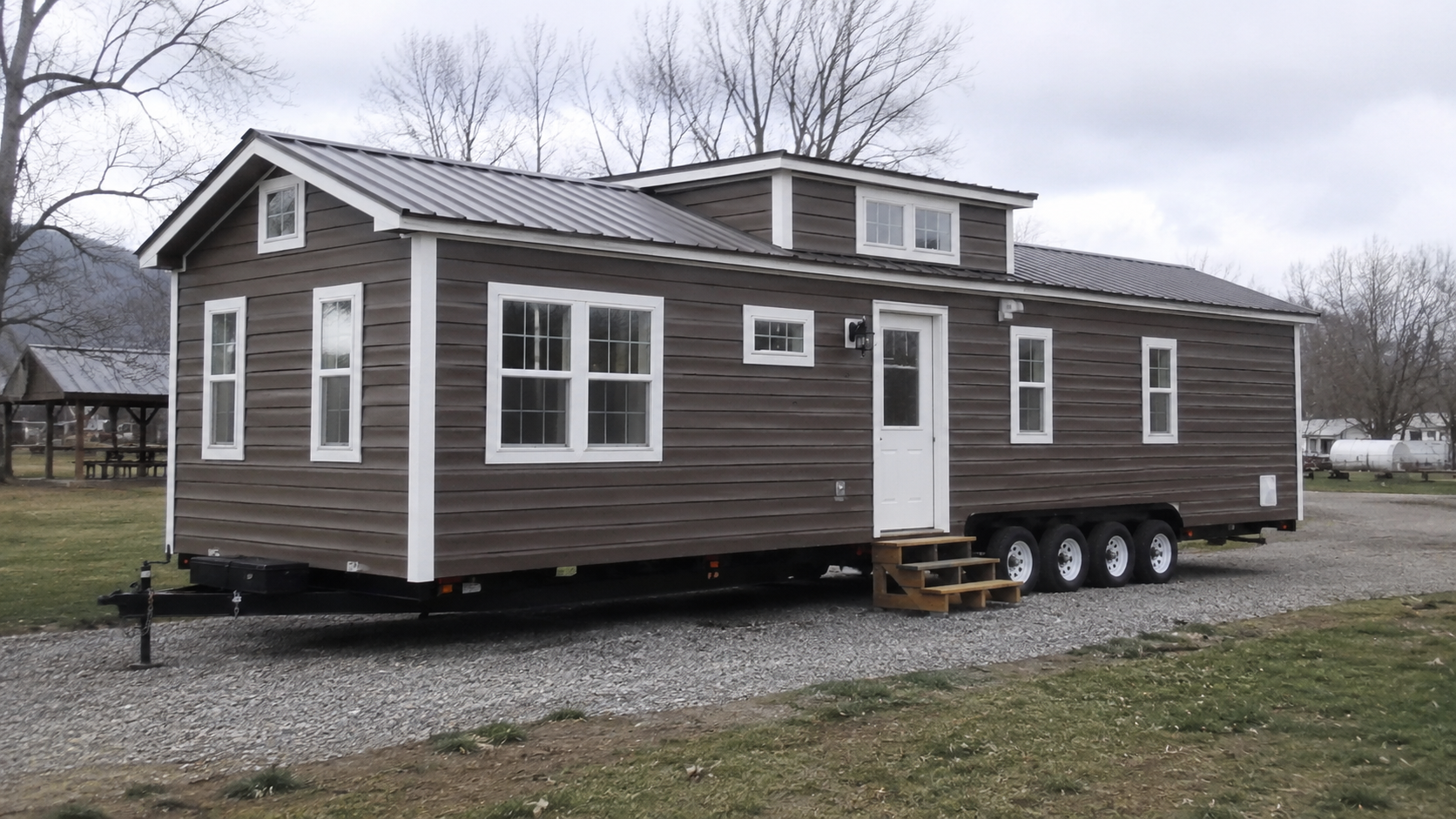
A 3-bedroom tiny house on wheels is possible.
It is also where tiny-house math starts getting rough. Three sleeping areas, one trailer, legal road limits, water, storage, ventilation, heat, and a real family routine all have to fit inside a structure that still has to move.
The mistake is treating “3-bedroom” like a normal house label. On wheels, that word needs pressure. Are these legal bedrooms, loft sleeping zones, bunks, or flexible rooms that only work because the plan is drawn politely? That difference changes cost, weight, egress, comfort, insurance, and whether the house feels usable after the first month.
If you are just starting, read What Is a Tiny House?. For the full mobile version, read Everything About Tiny Houses on Wheels.
Three Bedrooms Means Three Problems
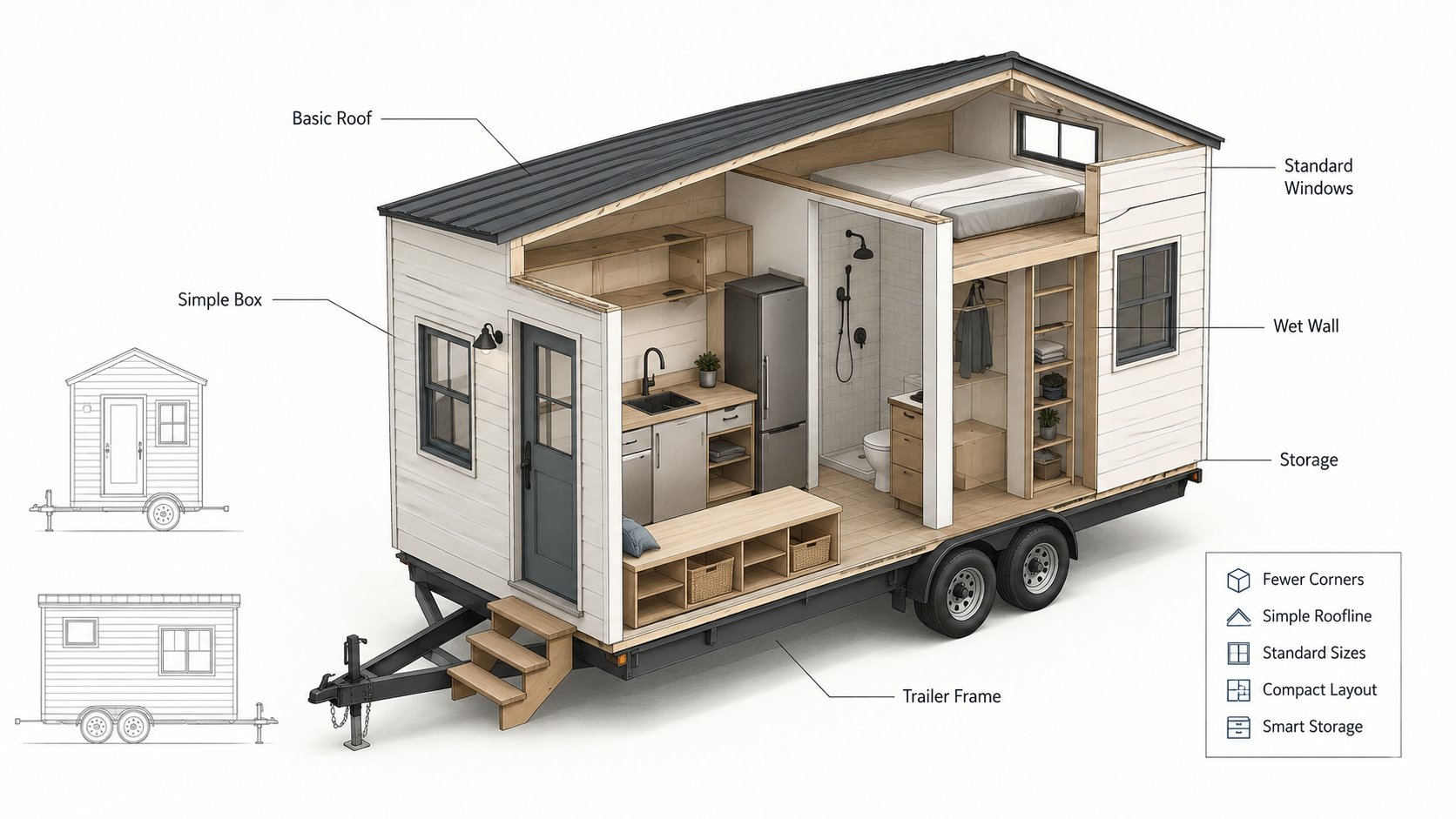
Bad 3-bedroom tiny-house plans usually fail in the same place. They count beds before they check the path between them.
A family-sized THOW needs more than sleeping spots. It needs one calm route through the space, a bathroom that works at night, enough storage for ordinary mess, and enough ventilation to keep lofts from turning stale. If the plan only works when everyone is sitting still, it does not work.
| Decision | What looks good on paper | What goes wrong | Better move |
|---|---|---|---|
| Three sleeping rooms | Calling every bed zone a bedroom | Bad headroom, weak egress, heat buildup, privacy problems | Use one main bedroom and two honest secondary sleeping zones |
| Loft-heavy plan | More beds without more floor area | Stale air, awkward stairs, night-use problems | Keep at least one main-level sleep option |
| Big kitchen and big bath | House-like comfort | Weight, plumbing runs, blocked circulation | Keep wet zones compact and serviceable |
| Large windows | More light and better photos | Weight, heat loss, privacy issues, higher cost | Use one main view window and smaller operable windows elsewhere |
Call Them Sleeping Zones Until the Code Says Bedroom
This is the part that needs honesty.
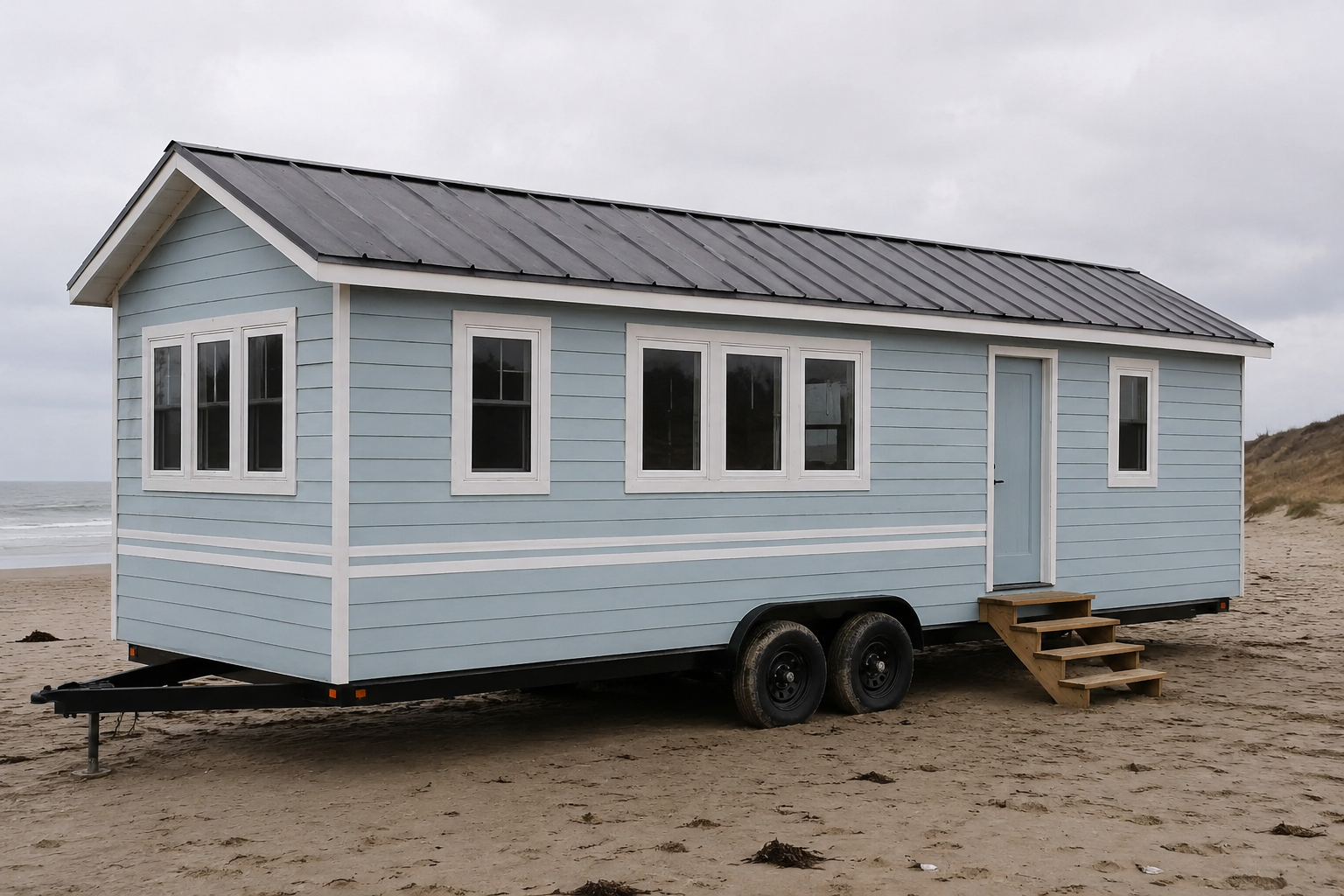
A tiny house on wheels may show three “bedrooms” in a floor plan, but those spaces may not behave like legal bedrooms. Loft height, emergency escape, stair access, ventilation, fire safety, and local classification can change what you are allowed to call them.
That does not mean the plan is useless. It means the wording has to stay clean. A main-level bedroom, a loft sleeping area, and a bunk room are not the same thing. Families can use all three, but the house should not pretend they carry the same comfort or code weight.
Before you price finishes, check Tiny Homes Regulations and Building Codes and Regulations for Tiny Houses on Wheels. If the local answer is unclear, do not let the seller’s floor plan settle it for you.
Cost Ranges Need a Reality Check
A family-sized tiny house on wheels is not a budget trick once it gets serious. More beds mean more structure, more storage, more HVAC pressure, more windows, more ladder or stair decisions, and more chances to overload the trailer.
Use these as 2026 U.S. planning bands, not quotes. Builder prices vary by state, certification, trailer package, labor market, delivery distance, and what the site needs before the home can be used.
| Build level | Typical 2026 U.S. planning range | What it usually includes | Where the cost creeps |
|---|---|---|---|
| Bare-bones family build | $70,000–$90,000 | Main bedroom, two loft or bunk zones, basic galley, stock windows, simple finishes | Rework, stairs, insulation, trailer upgrades |
| Balanced build | $95,000–$125,000 | Main bedroom, one loft, one bunk room, better windows, mini-split, stronger insulation | Custom storage, plumbing layout, upgraded envelope |
| High-spec build | $130,000–$170,000+ | Three sleeping zones, larger glass, custom millwork, solar, winter package | Weight control, premium windows, custom trailer, off-grid systems |
The cheap number usually leaves something out. Towing, delivery, setup, skirting, utility hookups, solar, water storage, and site work can all sit outside the quoted build price. That is where a “small” house starts acting like a normal construction project.
For more detailed cost comparison, read How Much Does a 3-Bedroom Tiny House Cost?, 2-Bedroom Tiny House Cost, and How Much Does a 400 Sq Ft Tiny House Cost?.
Where the Money Goes
The base shell is only one piece. The family-size version pulls money into systems and details that smaller THOWs can sometimes avoid.
| Cost area | Why it matters more with three sleeping zones | What to check first |
|---|---|---|
| Trailer and chassis | More people, storage, windows, tanks, and finishes add weight fast | Gross weight target, axle rating, brakes, tires, tongue weight |
| Insulation and air sealing | More sleeping zones mean more comfort complaints if heat or cold is uneven | Floor, roof, wall, window package, thermal bridging |
| Ventilation | Lofts and bunks trap heat, moisture, and stale air | Bath exhaust, kitchen exhaust, cross-ventilation, heat recovery where needed |
| Storage | Family use creates daily clutter fast | Stairs, under-bed zones, wall cabinets, outdoor gear storage |
| Plumbing and power | More occupants mean higher demand and more maintenance | Tank sizes, hookups, shutoffs, service access, winter protection |
Spend on the shell, trailer, envelope, windows, ventilation, and service access before expensive finishes. A pretty interior does not fix condensation, bad towing behavior, frozen lines, or a breaker panel buried behind built-ins.
Design That Fits Three Real Sleep Areas
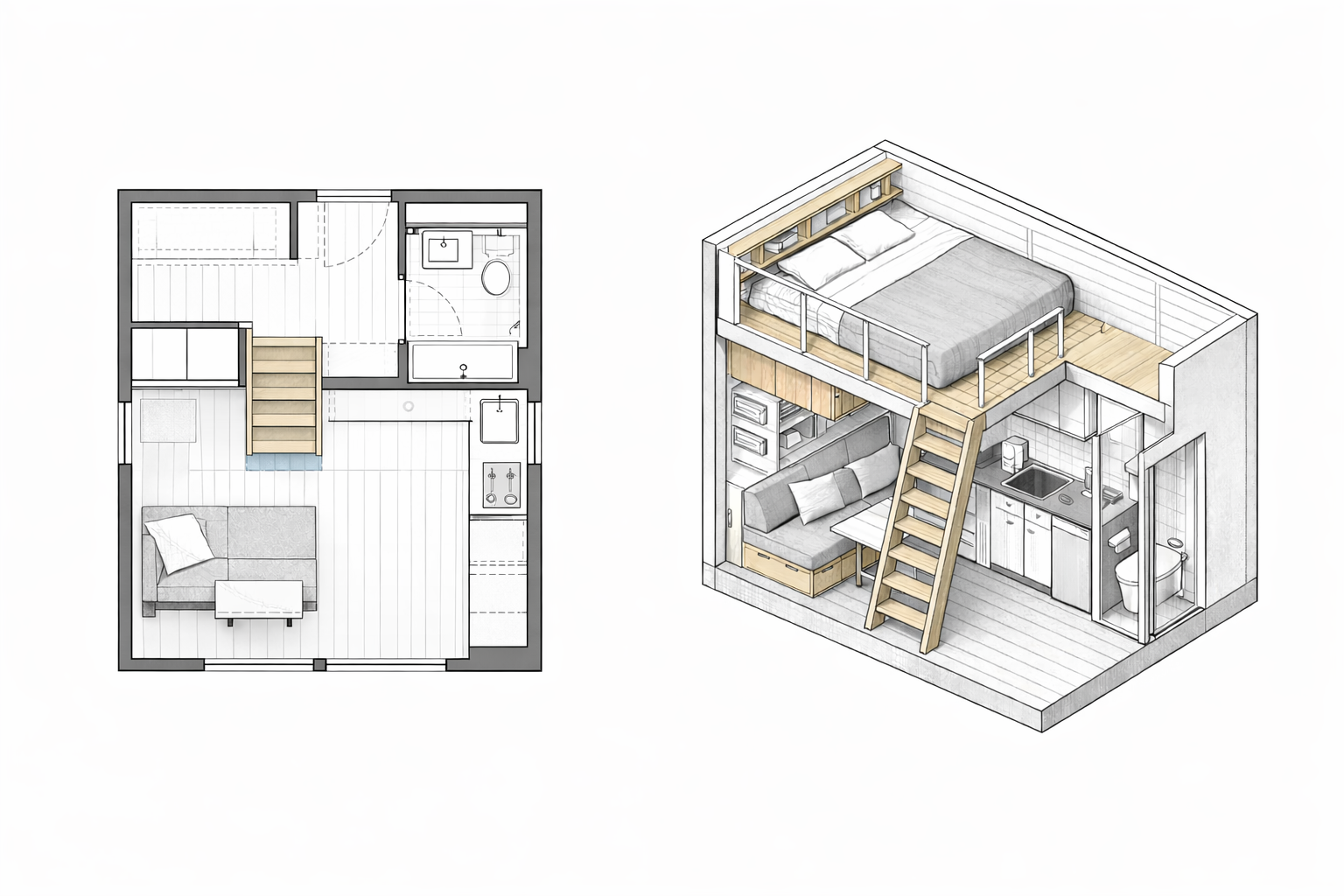
You are not chasing vibes. You are trying to sleep people and still move air, light, bodies, and bags.
The strongest layout usually starts with one main-level sleeping space. That room does not have to be large, but it needs to be usable without climbing. Then the secondary spaces can become lofts, bunks, or flexible sleep zones. If every bed requires a climb, the house gets old fast.
- Main bed low: safer, cooler, easier long term.
- Secondary beds high: workable if headroom, stairs, and ventilation are handled properly.
- Wet wall compact: shorter plumbing runs, fewer leaks, easier service access.
- Kitchen near the axle zone: better weight control when appliances, water, and storage start adding up.
For layout work, start with Design Your Own Tiny House. For the broader planning logic, read Tiny House Design That Actually Works.
Space-Saving Moves That Earn Their Keep
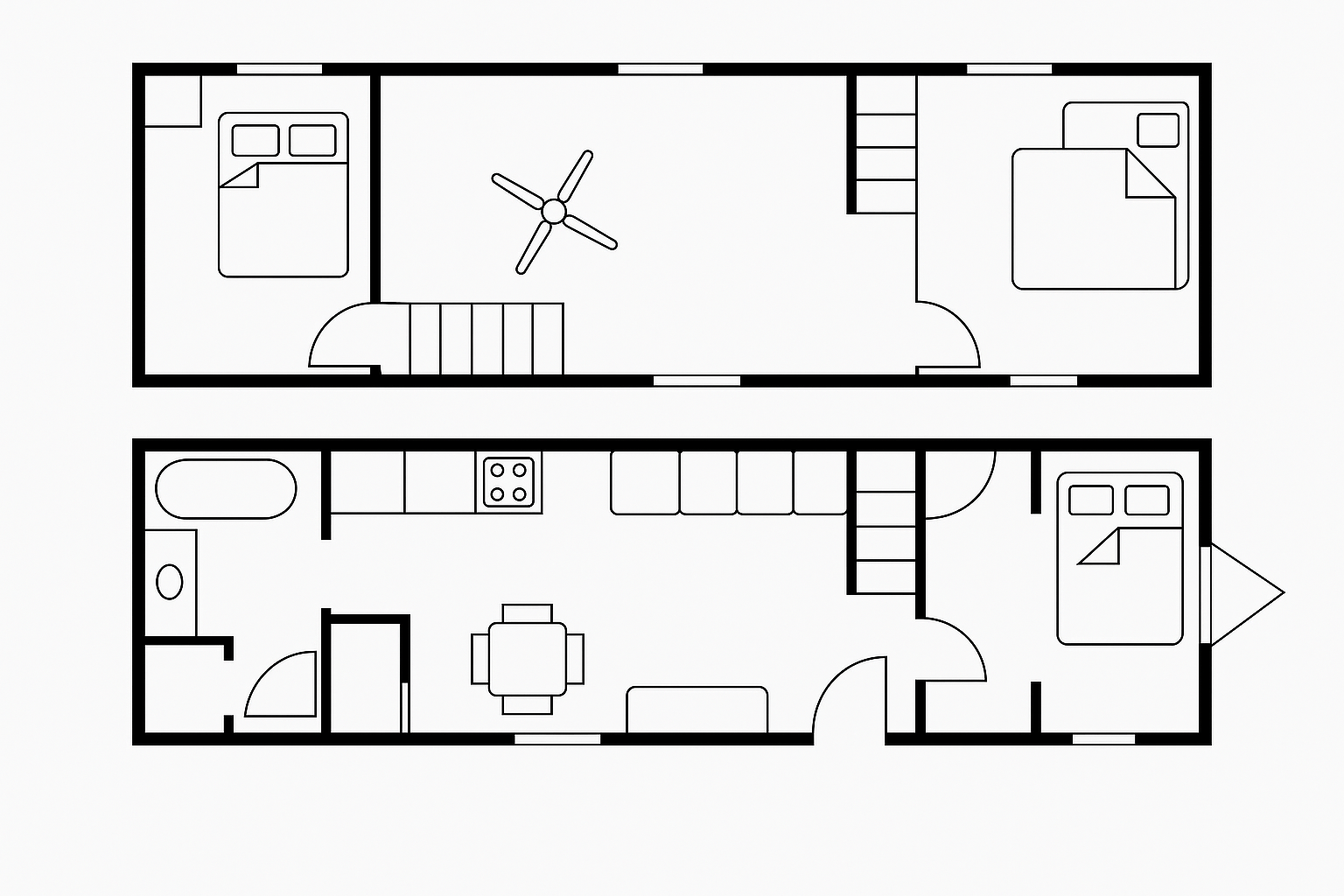
Small gains stack up, but only when they solve a real problem.
Toe-kick drawers help because kitchen storage gets eaten fast. Built-in stair storage helps because loose bins make a tiny house feel messy. Pocket doors help where a swing door would hit a bed, toilet, or cabinet. A Murphy bed can work, but only if the room still functions when the bed is down.
The mistake is adding clever furniture before the plan is stable. A transformable table does not fix a blocked path. Wall bunks do not fix poor ventilation. Full-height cabinets do not help if the heavy stuff ends up too high or too far from the axle line.
Rules, Size, and Weight Come Before Styling
Most problems start here. Someone draws the family version first and then discovers the tow rig cannot move it, the trailer is undersized, the route is awkward, or the local site treats the unit differently than expected.
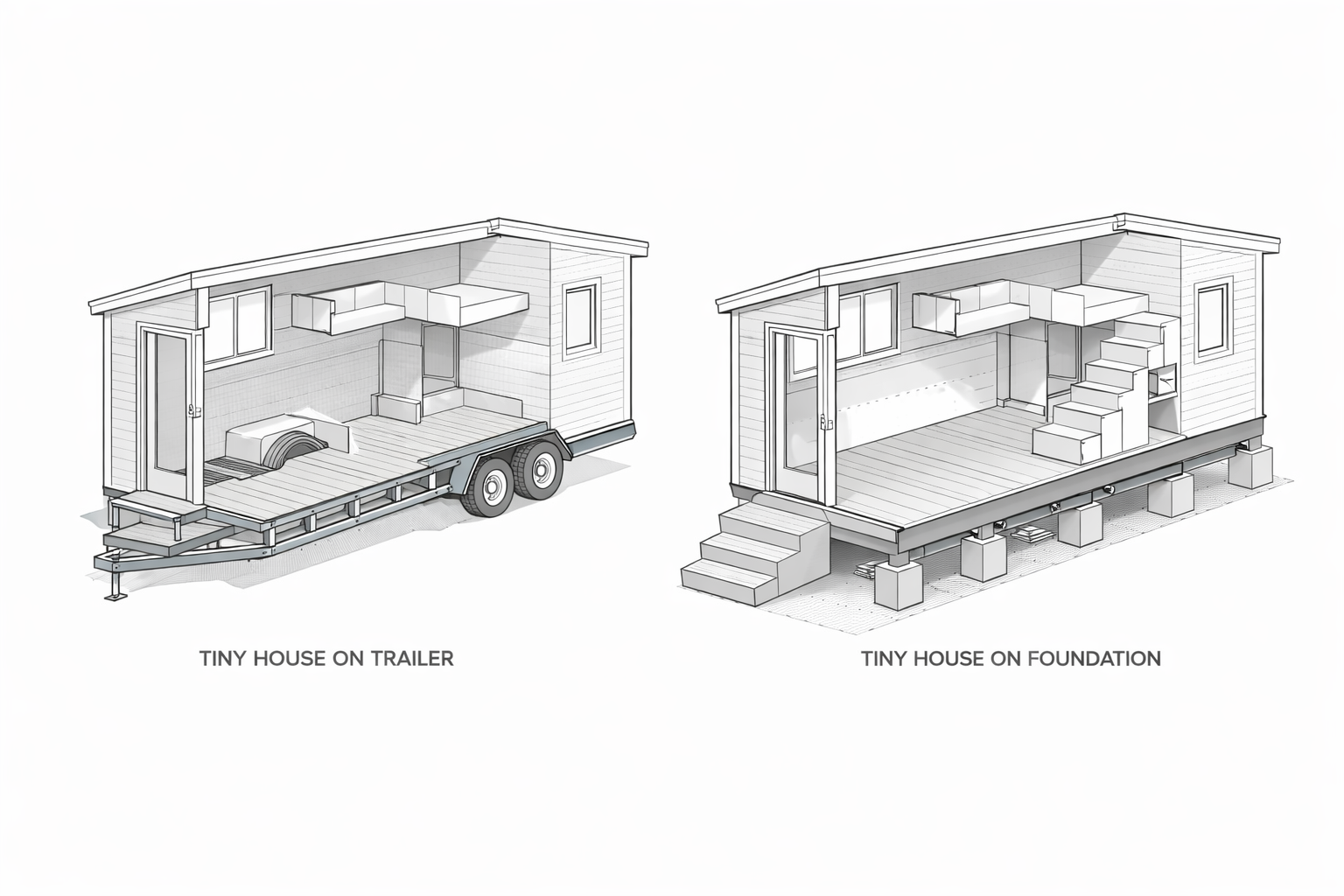
Width, height, length, gross weight, trailer rating, brakes, lights, title, VIN, insurance, and parking rules all matter. So does what the receiving site allows. A home that is legal to tow is not automatically legal to live in full time.
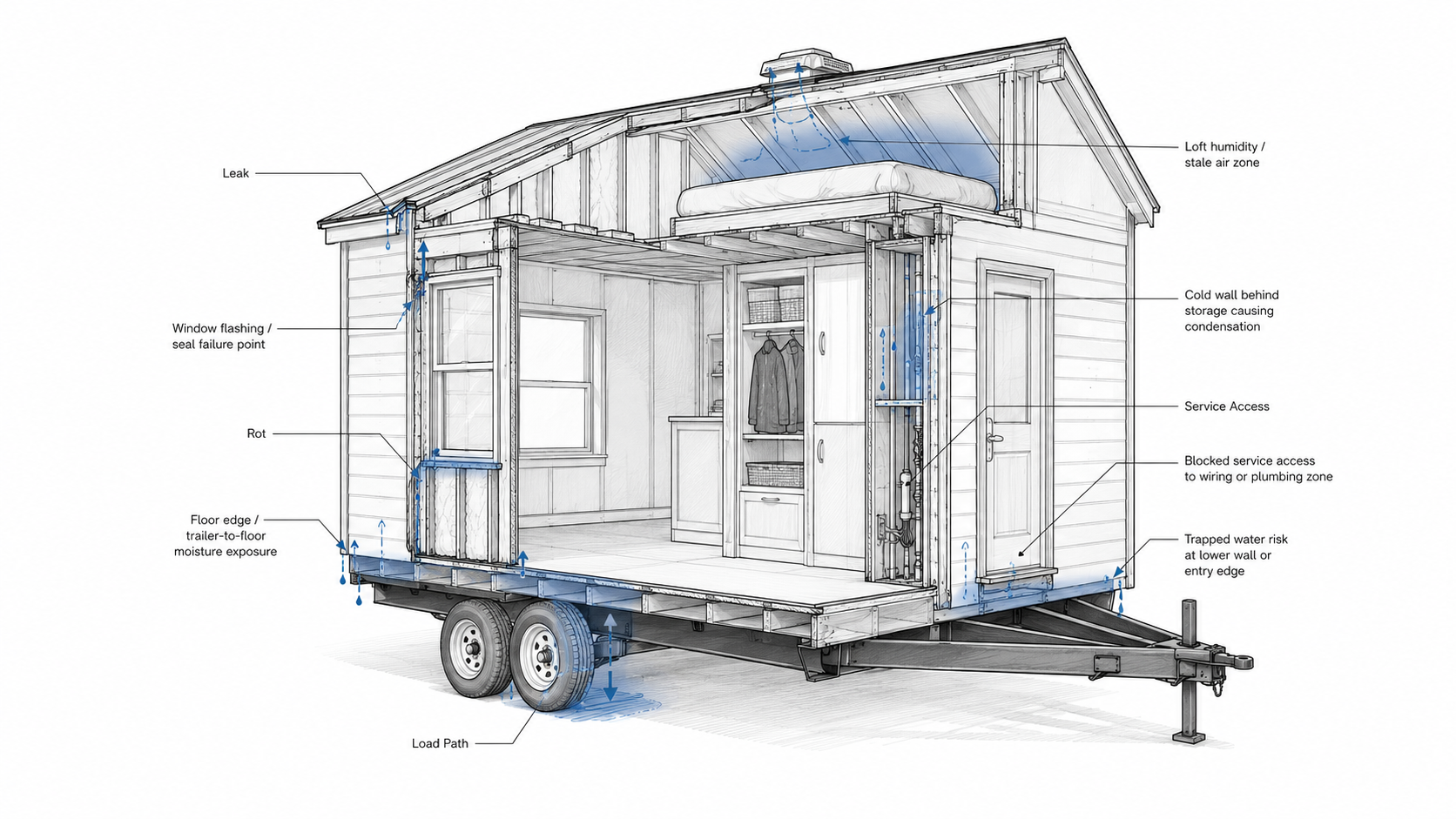
Before you approve a plan, ask for these in writing:
- Weight path: trailer rating, estimated gross weight, tongue weight, axle rating, and what changes if the owner adds more storage.
- Envelope: insulation type, window specs, roof, wall, floor build-up, and where condensation risk is controlled.
- Systems: HVAC sizing, power draw, water setup, waste strategy, shutoffs, and service panels you can reach.
- Paperwork: title, VIN, warranty terms, payment schedule, delivery scope, and who is responsible if the unit fails inspection or cannot be placed.
If a builder cannot break these out, slow down. Vague numbers become expensive after the deposit clears.
U.S. Costs Move by Region
Labor and logistics swing the number. Use regional ranges as brackets, not promises.
In the United States, West Coast and mountain-town builds can run high because labor, insulation upgrades, delivery distance, snow loads, wildfire detailing, and site constraints stack quickly. Texas, parts of the Southeast, and some Midwest markets can be cheaper on labor, but freight can erase the savings if the unit travels too far.
The practical move is the same everywhere: price the local build, then price delivery, site setup, hookups, and the first winter. That second number is the one people forget.
Outside the U.S., the same warning still applies. Canada needs a harder winter conversation. Australia and New Zealand add heat, sun, moisture, freight, and access pressure. The United Kingdom often makes road width and site access show up early.
Where People Waste Money
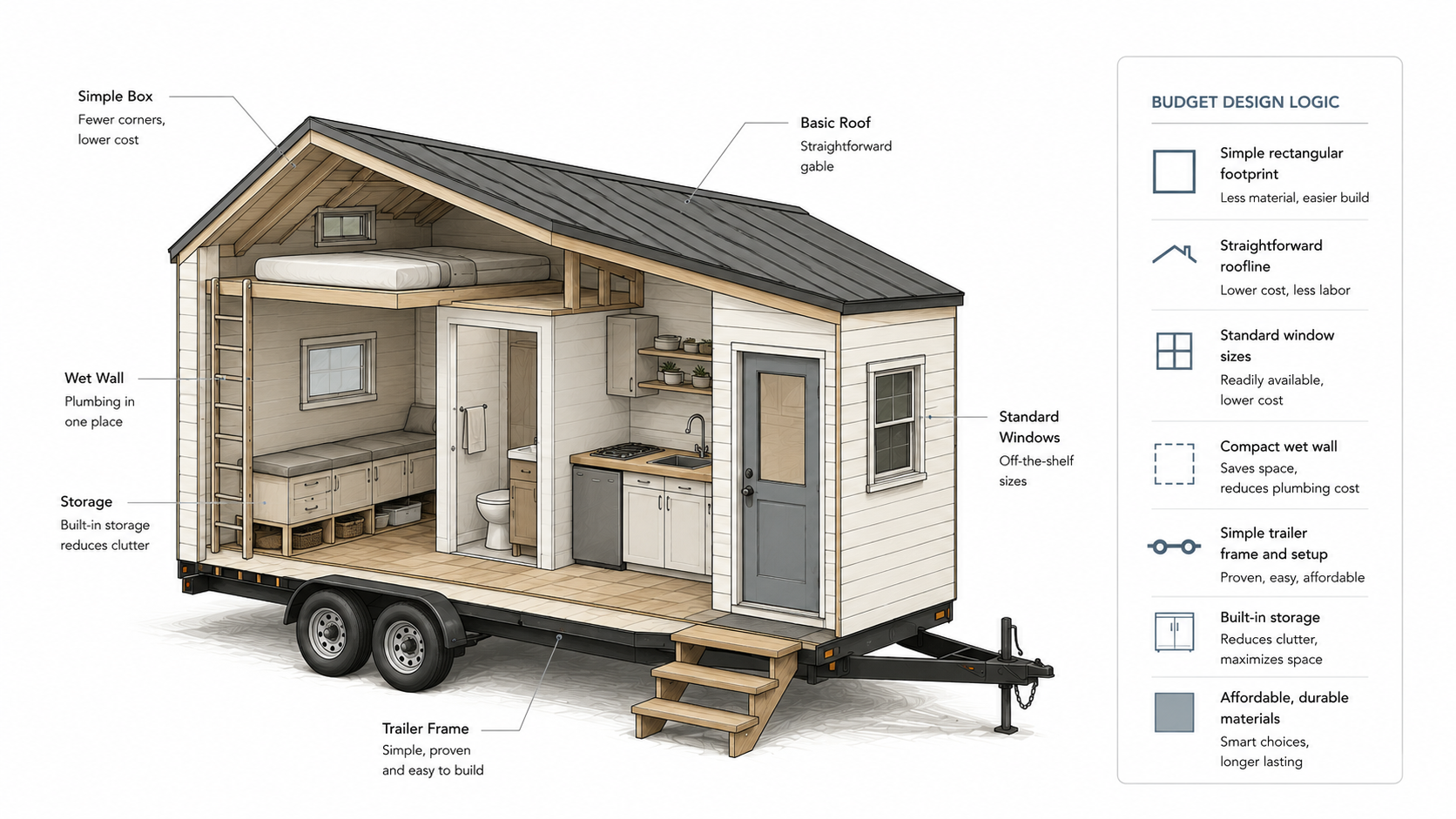
Three-bedroom THOWs go expensive when the plan tries to act like a normal house without accepting trailer limits.
- Too much glass: nice view, higher weight, higher heat loss, more privacy problems.
- Heavy finishes: tile, stone, thick counters, and dense cladding punish the trailer.
- Buried systems: service panels, shutoffs, pumps, and drains need access. If you cannot reach it, you cannot repair it.
- Fake bedroom count: calling a loft a bedroom does not solve egress, headroom, ventilation, or nighttime use.
Spend the serious money on the parts that keep the house safe, dry, towable, and serviceable. Finishes can wait. Rot, air leakage, frozen plumbing, and bad load transfer do not wait politely.
Moving It Is Part of the Design
A 3-bedroom THOW is a moving load, not a small house with wheels under it.
Heavy items belong low and balanced. Water storage, batteries, appliances, and dense cabinets need to be planned around the trailer, not dropped in after the layout is finished. A short test tow with the house loaded tells you more than a clean rendering ever will.
Plan for brakes, mirrors, route width, height clearance, tire age, lug torque, and the tow vehicle before the first long move. If the build is near the edge of your towing setup, hire a professional hauler. That is cheaper than learning on the highway.
FAQ
How much does a 3-bedroom tiny house on wheels cost?
Many serious 2026 U.S. builds land somewhere around $70,000–$125,000 before high-end finishes, delivery, site work, and off-grid systems. Low numbers usually mean a simpler shell, more DIY labor, or important costs left outside the quote.
Can a tiny house on wheels really have three bedrooms?
It can have three sleeping zones. Whether those count as legal bedrooms depends on the design and local rules.
What layout works best?
One main-level sleeping space, one loft or bunk zone, and one flexible secondary sleep area usually works better than three cramped “rooms.” The plan needs a clean path through the house and enough air movement to keep lofts from feeling stale.
Is a 3-bedroom THOW good for a family?
Sometimes. It works best for families that are already comfortable with shared space, limited storage, and careful routines. It works badly when the plan pretends everyone will live like a minimalist every day.
What is the biggest hidden cost?
Weight control and systems. Trailer upgrades, better windows, insulation, ventilation, batteries, water storage, and utility setup can push the budget faster than finishes.
Should I build it myself?
Only if you know where your limits are. Finish work, storage, paint, and some built-ins may be reasonable DIY work. Trailer selection, structural checks, gas, electrical, and road-safety items are not places to improvise if you are new.
Read This Next
Start with Everything About Tiny Houses on Wheels if you need the full mobile-house context before pricing a family layout.
Before you believe any floor plan, check Regulations for Tiny Houses on Wheels so the bedroom count, trailer setup, and legal use do not get mixed together.
For deeper cost context, compare this with How Much Does a 3-Bedroom Tiny House Cost?.
If the layout is still unsettled, use Design Your Own Tiny House before buying plans or talking to a builder.