
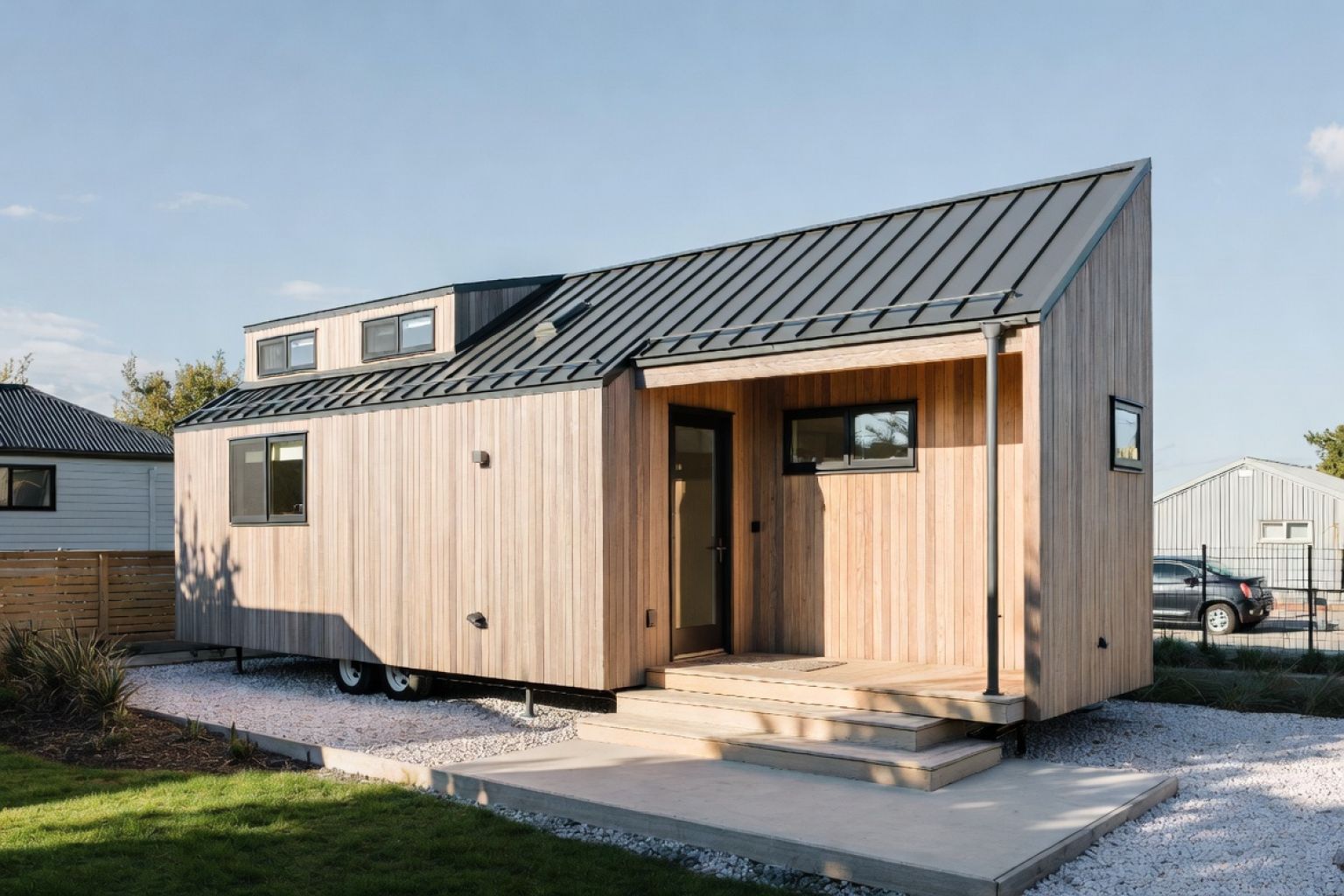
Tiny homes are still pitched like a cheat code. Downsize. Save money. Keep life simple.
Sometimes that works.
Sometimes the tiny-home budget falls apart before the house is even close to finished. The shell looked affordable. Then the site needed work, the trailer needed changes, the utility plan got ugly, or the “simple” layout needed better stairs, more storage, stronger ventilation, and a bathroom that did not feel like a compromise every morning.
The cheapest tiny home is rarely the one with the lowest sticker price. It is the one with the fewest expensive surprises.
If you are still sorting out the category itself, start with What Is a Tiny House?
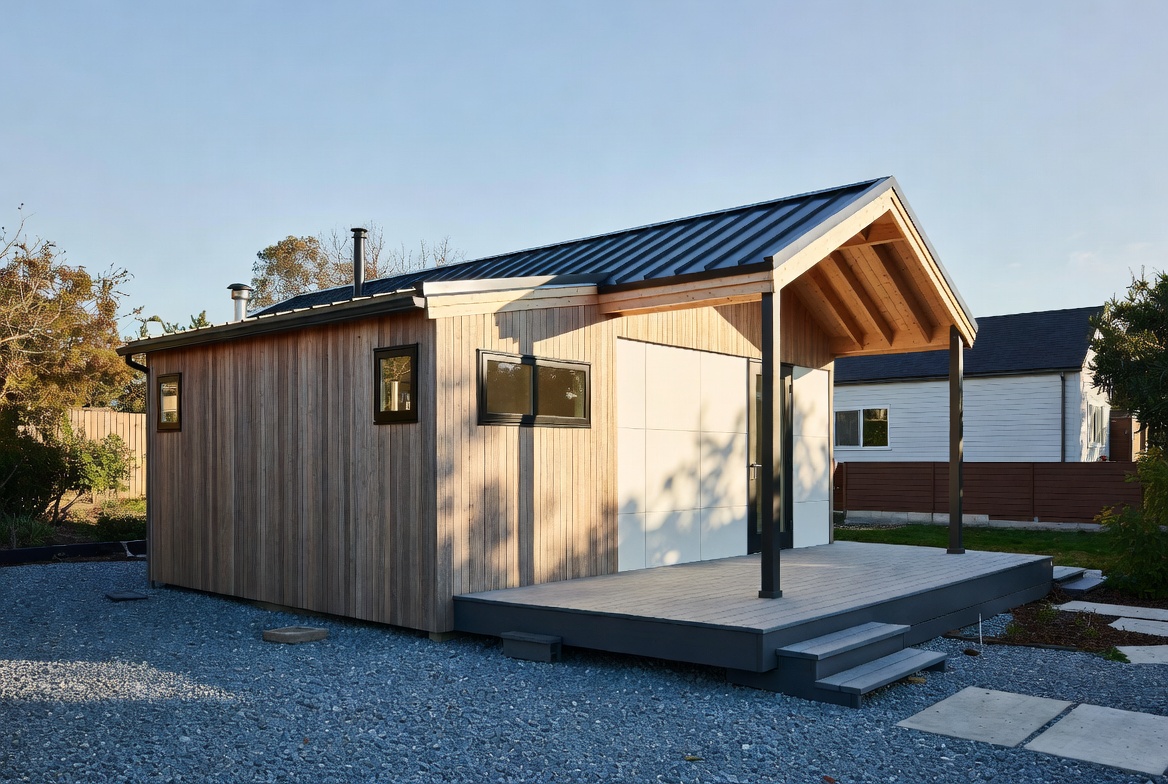
Image by ArchitectureCourses.org. Small gabled tiny home with a covered porch, timber cladding, and metal roof.
Cheap Starts Falling Apart in the Setup
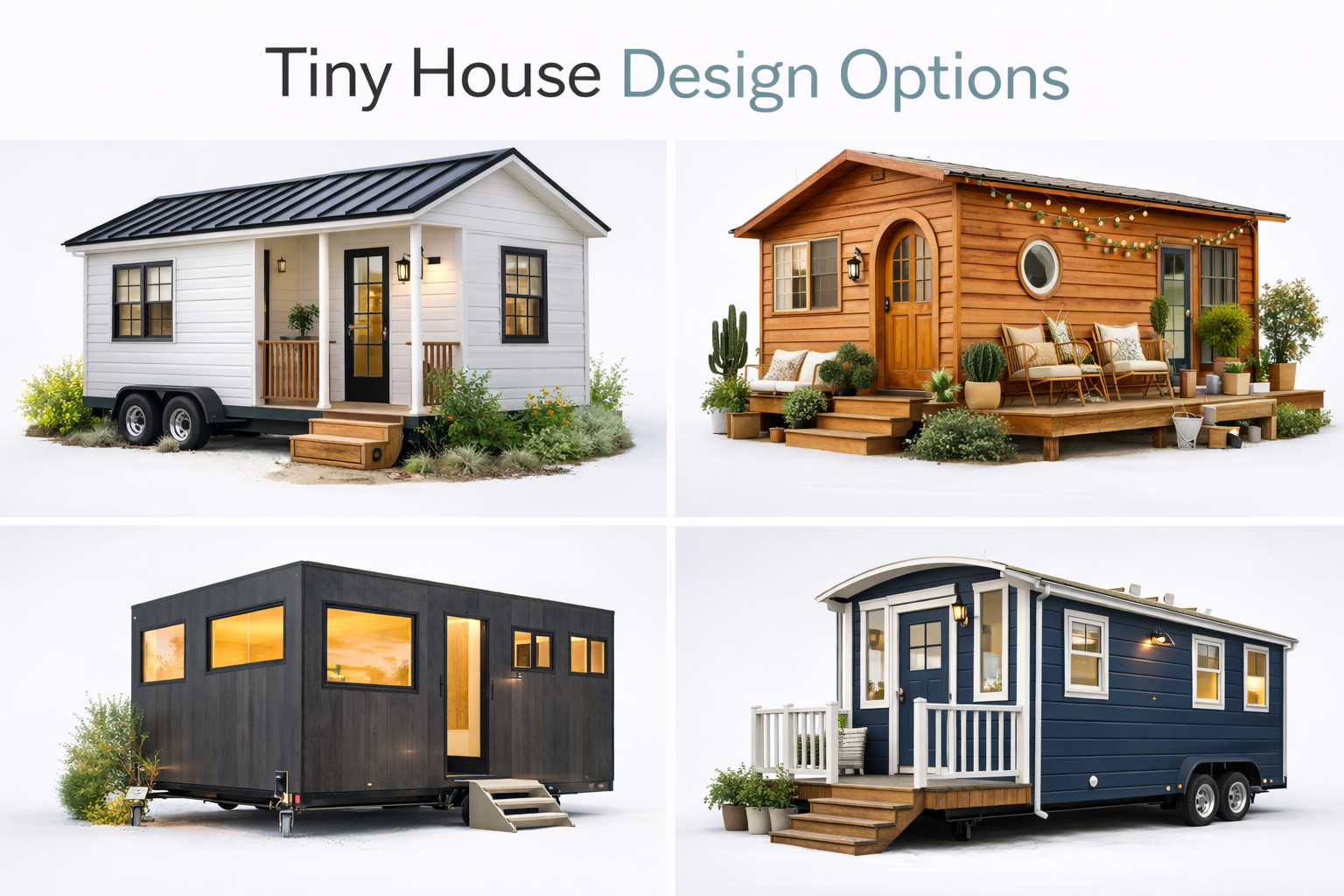
Illustration by ArchitectureCourses.org. Tiny-home budgets shift fast once site work, code, and utility decisions move from theory to quotes.
The build cost is only one part of the bill. In the field, the “tiny house” line item turns into land, permits, hookups, insulation and envelope upgrades, and fixes. The last two are where people bleed money because they usually show up after the shell is underway.
A tiny home can cost less than a conventional house. But it is rarely cheap unless you compromise somewhere: comfort, legality, durability, or time. Time gets ignored because people pretend it is free. It is not free when nights, weekends, and patience disappear into rework that should have been planned before the first order was placed.
If you want the wider context beyond the tiny-house sales pitch, Tiny Houses: Big Ideas for Small Living Spaces helps put the category in perspective. If you are already thinking “small, but not that small,” read Small Houses That Don’t Feel Small. That page can save you from forcing your life into a footprint you end up resenting.
| What looks cheap on paper | What drives the real cost |
|---|---|
| Basic shell or kit | Finishing it properly, sealing it well, and fitting it to a legal site |
| DIY labor | Time, mistakes, rework, and slower sequencing |
| Trailer build | Weight control, structural detailing, towing limits, and parking reality |
| Foundation build | Land, site prep, frost protection, drainage, and utility connections |
| Off-grid setup | Battery storage, water handling, backup heat, service access, and winter reliability |
Cost Ranges Matter Less Than Cost Traps
People want one clean number. Tiny homes do not work like that.
The shell might be manageable. The trouble starts when the project picks up land prep, trenching, power, plumbing, stairs, better windows, stronger ventilation, and the small design changes that stop a tiny home from becoming a daily irritation.
That is why broad ranges help less than understanding where budgets drift. For detailed cost breakdowns, use Tiny Home Cost Breakdown, How Much Does a 400 Sq Ft Tiny House Cost?, and 2-Bedroom Tiny House Cost.
Think in build paths, not one fake average.
- Shell or kit: lower entry price, but the expensive decisions are still waiting.
- DIY build: cash savings if the work is competent; wasted money if the sequence is wrong.
- Professional build: more expensive up front, but fewer hidden mistakes and less rework.
- High-end custom: small footprint, boutique pricing, and almost no tolerance for sloppy details.
Budget in the Right Order
The wrong order is finishes first, site second, systems last. That is how a tiny home gets pretty before it gets buildable.
I would price the project in this order:
- Place: land, zoning, parking, access, setbacks, and whether the home can legally stay there.
- Base: trailer, piers, slab, frost protection, drainage, or whatever actually carries the structure.
- Envelope: roof, wall, floor, windows, air sealing, insulation, and water control.
- Systems: power, water, sewer, heat, ventilation, service access, and backup plans.
Only after that should finishes get serious money. A nice interior does not fix trapped water, exposed plumbing, a weak trailer, or a site you cannot legally use.
Foundation or Wheels Changes the Whole Budget
This decision defines everything after it. Dodge it, and you end up building the wrong thing, then paying to fix the category later.
| Type | What people like | Where the trouble starts | Best fit |
|---|---|---|---|
| Tiny home on a foundation | More house-like, better comfort, stronger envelope potential | Land, permits, service connections, site work, frost depth | Long-term living |
| Tiny house on wheels | Mobility, flexibility, lower psychological commitment | Trailer cost, weight, parking, insurance, legal use | Seasonal, guest, studio, or mobile living |
Tiny Home on a Foundation
Foundation builds behave more like housing. They can be insulated better, detailed better for water control, and lived in with fewer everyday compromises. But you trade mobility for land and code reality.
If you want a tiny home that lives like a house, a foundation is often the better long game. If that pushes the footprint upward a bit, that is not failure. It may be the smarter choice. Small House Design is a useful bridge if you are starting to realize that “tiny” may be one step too far.
Tiny House on Wheels
Wheels feel like freedom until you deal with trailer weight, insurance categories, towing, setup stability, and where the thing can legally stay. A THOW can cost more than expected because lighter, tighter, stronger detailing is not free.
If you are serious about the THOW route, read the rules first, not last: Regulations for Tiny Houses on Wheels. Then read Everything About Tiny Houses on Wheels so you are looking at the whole ownership picture, not just the romance.
Land Is Not a Side Detail
The most expensive tiny-home mistake is often not the house. It is the assumption that the house can go where you want it to go.
You can build a sharp tiny home and still get stuck because you cannot legally park it, connect it, insure it, or use it full-time the way you assumed. That is why land and legality come before layout fantasies. The order matters.
People shop the build first because it is the fun part. Then local rules show up later because that part is ugly. Flip that order. Land and code are the base of the whole project, even if the home is on wheels.
If you want a straight regulation page without the dreamy tone, use Tiny Homes Regulations and Building Codes. If you are still not sure which type of tiny home you are aiming for, Types of Tiny Houses will help you sort the category before you price the wrong thing.
If you already own land, read I Own Land and Want to Build a House before assuming a tiny home avoids the hard site questions.
Utilities Quietly Eat the Budget
If you are tying into grid power, water, and sewer, the numbers can swing hard based on distance, trenching, access, soil, and what is already available at the site. Tiny homes do not cancel that cost. They shrink the house sitting at the end of those lines.
If you are going off-grid, you are trading monthly bills for system cost, maintenance, and discipline. Cheap solar setups and undersized battery plans are a fast way to hate off-grid life. Winter is where bad assumptions get exposed.
For compact-living upgrades that help without turning into gimmicks, Smart Upgrades for Small Spaces is worth a look. If your bigger concern is whether the plan itself will work day to day, go back to Tiny House Design That Actually Works.
Cute Choices Become Daily Problems
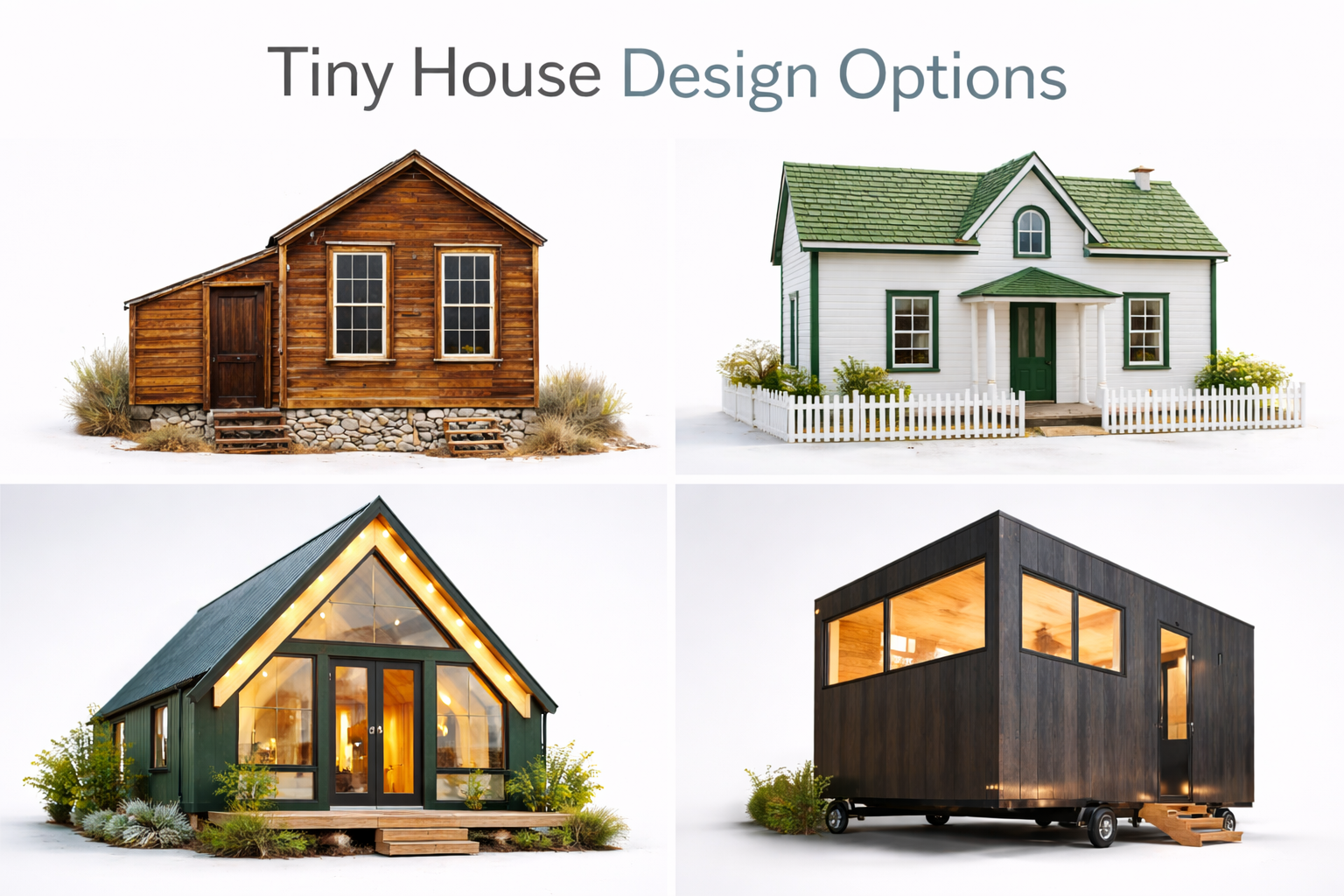
Illustration by ArchitectureCourses.org. Tiny-home layouts work better when storage, circulation, and loft access are solved before finishes and styling.
Tiny homes punish bad layouts. In a regular house, wasted space can hide for a while. In a tiny home, one weak decision becomes a daily annoyance. A daily annoyance becomes regret fast.
Three design moves matter more than the clever stuff:
- Closed storage for ugly real-life items, not decorative shelves for staged photos.
- A bathroom that works half asleep, not a cramped box that makes mornings harder.
- A kitchen that fits how you cook, not a micro-counter setup that looks clean and lives badly.
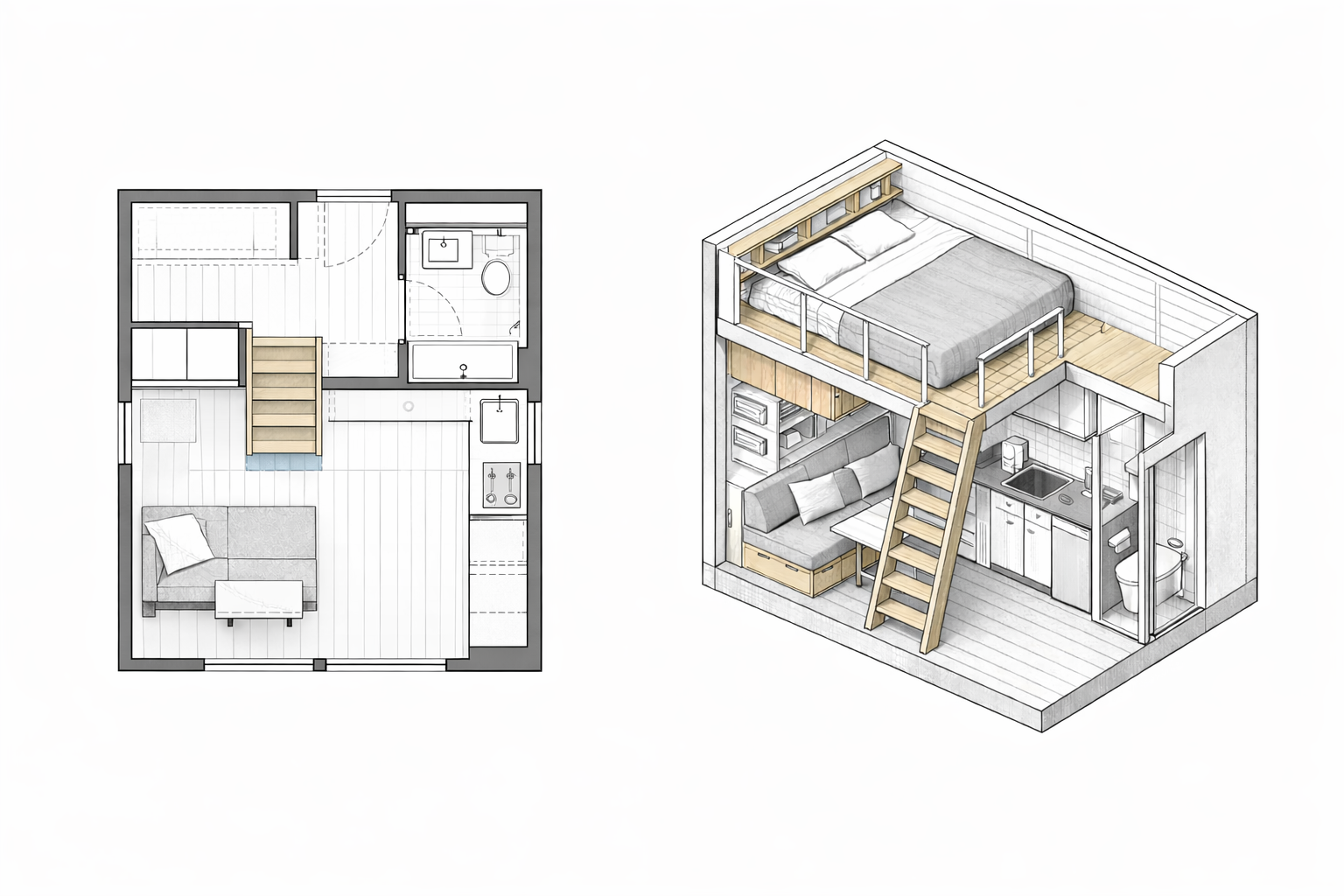
Illustration by ArchitectureCourses.org. Tiny home floor plan and matching cutaway showing a loft sleeping area, compact stair, enclosed bathroom, kitchen wall, and built-in storage within a small footprint.
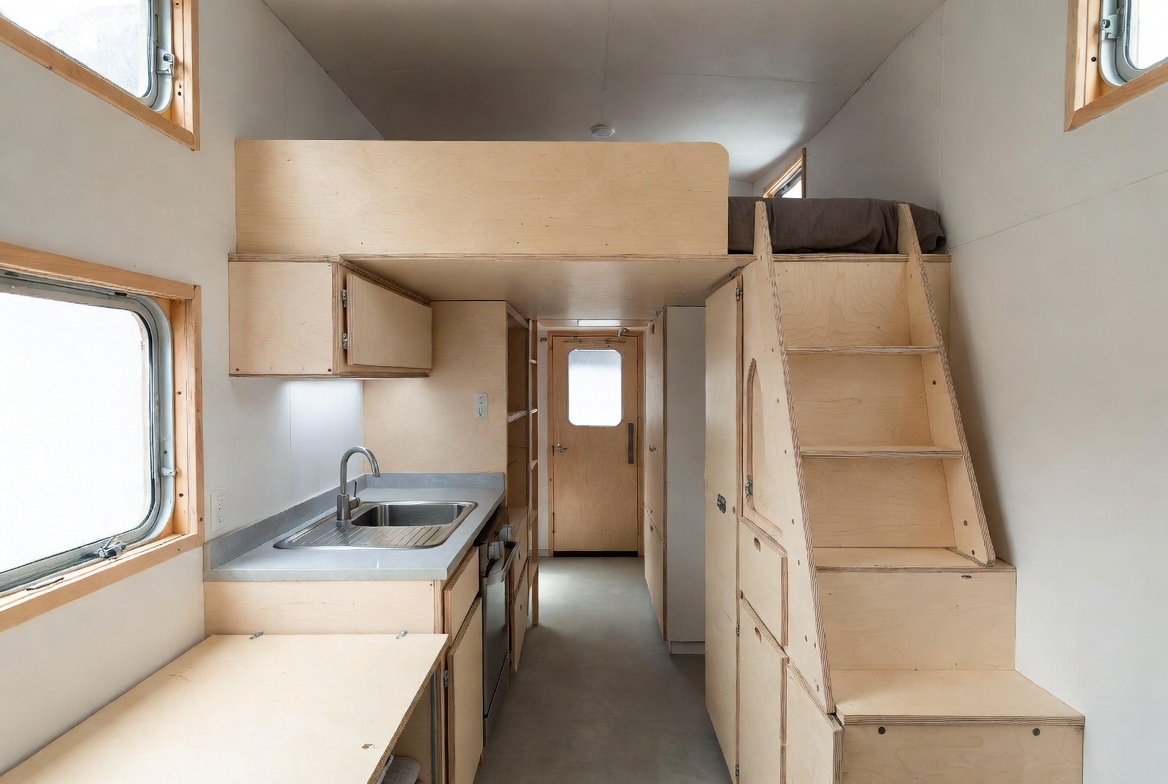
Image by ArchitectureCourses.org. Tiny home interior with stair storage, a sleeping loft, a kitchenette, and a compact dining area.
If you are designing from scratch, do not start with Pinterest. Start with the daily routine. Design Your Own Tiny House is the better first stop because it deals with regrets, steps, and cost pressure together. If you want a style-led version that still respects function, follow that with Modern Tiny House Design.
Lofts Are a Budget Decision Too
A ladder is not a cute detail when it is your nightly climb, your half-asleep bathroom route, and your future joint problem. That is where tiny homes separate the good ones from the ones built for the internet.
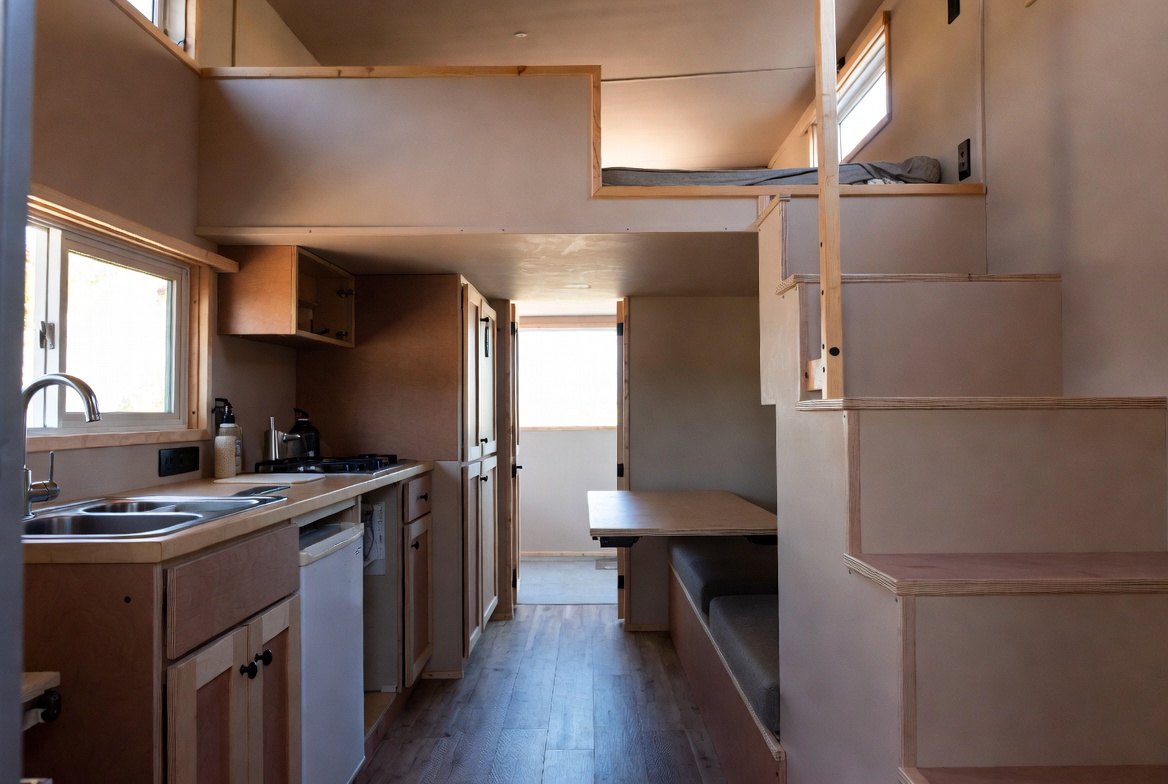
Image by ArchitectureCourses.org. Tiny home interior with loft sleeping space, built-in stair storage, bench seating, and a compact kitchen.
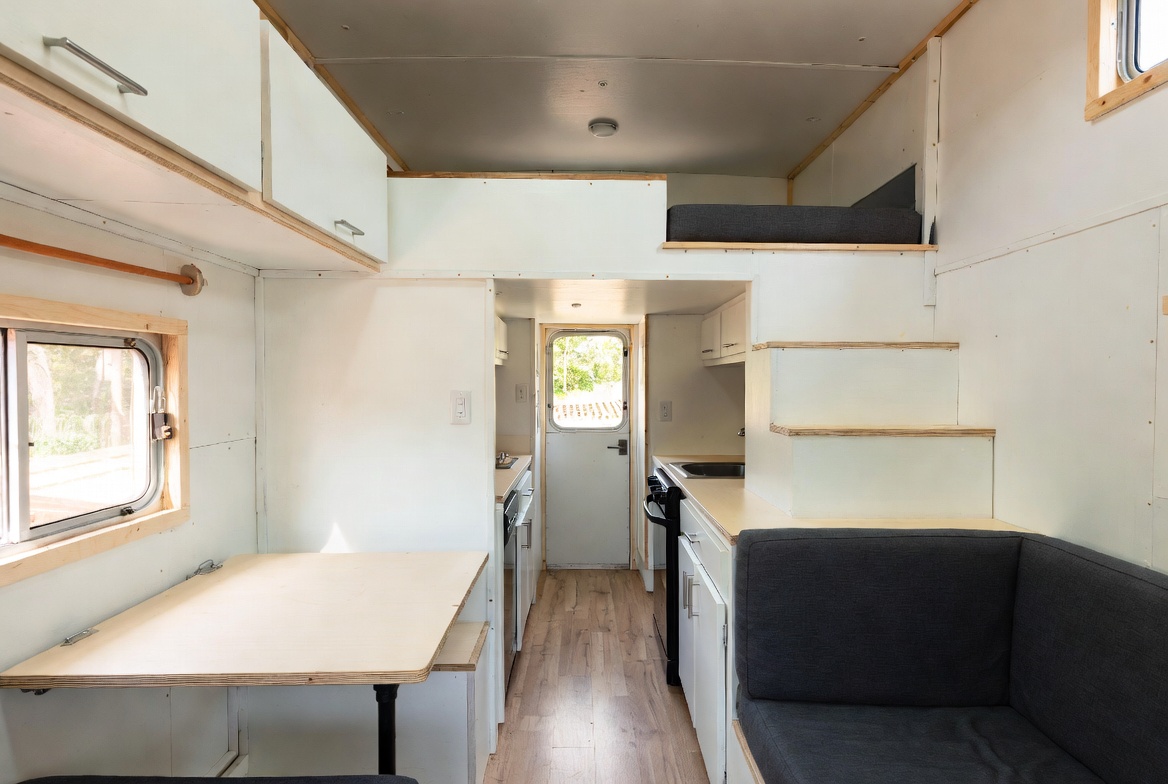
Image by ArchitectureCourses.org. Tiny home interior with built-in seating, a table, a compact kitchen, and a sleeping loft above.
If you are building for full-time living, safe stairs, decent headroom, and one calm uncluttered path through the room matter more than another transformable furniture trick. Tiny homes work best when height is used with restraint, not when every square inch is trying to prove how clever it is.
Prefab, Custom, or DIY
Prefab is not automatically cheaper. It is often cheaper per hour of your life. You are buying process control. That matters if you have a job, a family, or limited time for rework.
Custom gives you more control, but change orders and one-off details get expensive fast in a tiny project because there is no slack in the plan. DIY can save real money if you already have skills. If you do not, DIY turns into education-by-mistake, and those lessons are bought with wasted materials and repeated work.
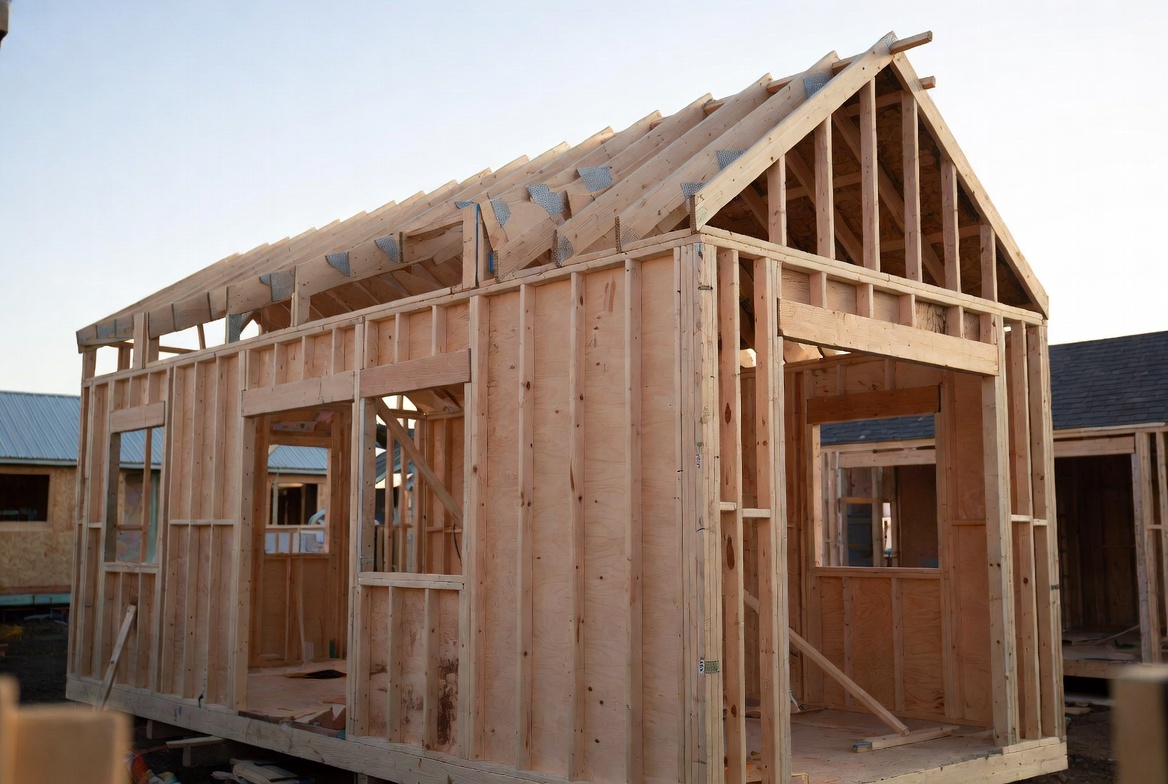
Image by ArchitectureCourses.org. Tiny home framing under construction with exposed wall studs and roof structure.
If you are comparing packaged options, start with Prefab Tiny Homes. If you are also looking at non-wood small-building alternatives, Small Prefab Metal Building Prices can help you compare another route without pretending it is the same thing.
Where Money Gets Wasted
Tiny homes can still wreck a budget if you stack the wrong mistakes.
- Finishes too early: high-end surfaces in a footprint that still has unresolved basics.
- Moisture ignored: weak ventilation and weak air sealing turn a tiny home into a damp box.
- Weight guessed: a THOW punishes every heavy choice, especially when the trailer was barely adequate to begin with.
- No winter plan: pipes, batteries, floor insulation, and condensation all start talking at once.
The older mistake is buying the shell before solving the site. That one can waste more money than any finish upgrade.
If you want compact living without the hardest tiny-home compromises, look at Small House Design and Small Houses That Don’t Feel Small. A slightly larger footprint often beats a heroic tiny plan that never settles down.
What Tiny Homes Look Like in 2026
The better trend in 2026 is not “tinier.” It is calmer and more buildable.
That means better envelopes, fewer gimmick furniture pieces, cleaner roof forms, more hybrid use as ADUs or guest houses, and a little more honesty about what people can live with full time. The tiny homes that last are not the flashiest. They are the ones that keep daily friction down.
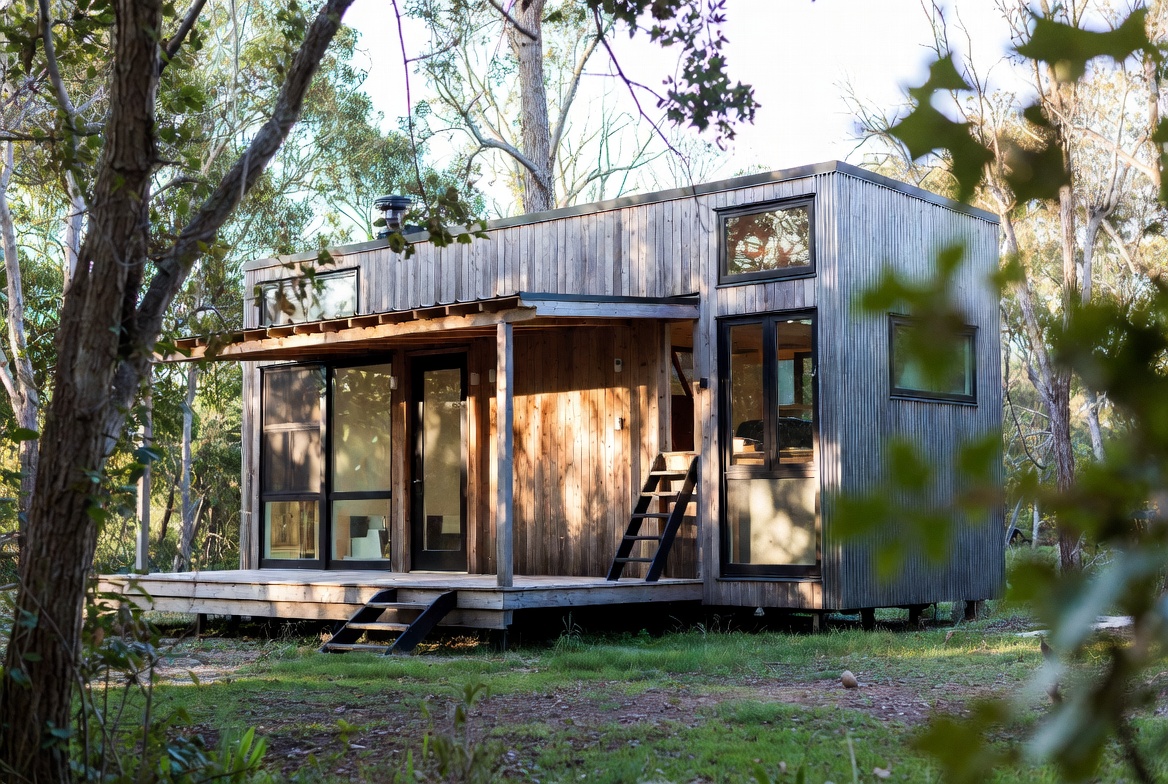
Image by ArchitectureCourses.org. Modern tiny home with corrugated metal cladding, timber siding, and a compact entry porch.
That does not mean every tiny home needs to look rustic or every modern prefab idea is bad. It means style should follow the build path and the use case. If the goal is year-round living, buildability matters more than novelty.
FAQ
How Much Does a Tiny Home Cost in 2026?
There is no single clean number that means much on its own. The shell, site, utilities, stairs, insulation, and local approvals all pull the number around. Start with Tiny Home Cost Breakdown and then compare it against your local site conditions.
Is a Tiny House on Wheels Cheaper Than a Foundation Build?
Not by default. Wheels add trailer cost, weight pressure, parking issues, and legal-use questions. Foundation builds trade that for land, site work, frost planning, and service connections.
What Is the Biggest Hidden Cost?
Site work.
Trenching, sewer, water, power, grading, and distance to existing services can change the whole project fast.
Should I Build a Tiny Home or a Small House?
If you want fewer possessions, lower maintenance, and you can tolerate tighter living, tiny can work. If you want more comfort, better storage, and fewer daily compromises, small is often the better move.
Do Tiny Homes Hold Value?
Foundation-based tiny homes tend to behave more like housing. Homes on wheels can behave more like vehicles or specialty products. Build quality, legality, insulation, and safe everyday layout all matter if resale matters to you.
What Should I Read First If I Am Starting From Zero?
Start with What Is a Tiny House? and Types of Tiny Houses. Then move to Design Your Own Tiny House before you get attached to a plan that only works in pictures.
Read This Next
Start Here: What Is a Tiny House?
Cost Check: Tiny Home Cost Breakdown
Before You Build: Design Your Own Tiny House
Rules First: Tiny Homes Regulations and Building Codes
If Tiny Feels Too Tight: Small Houses That Don’t Feel Small