
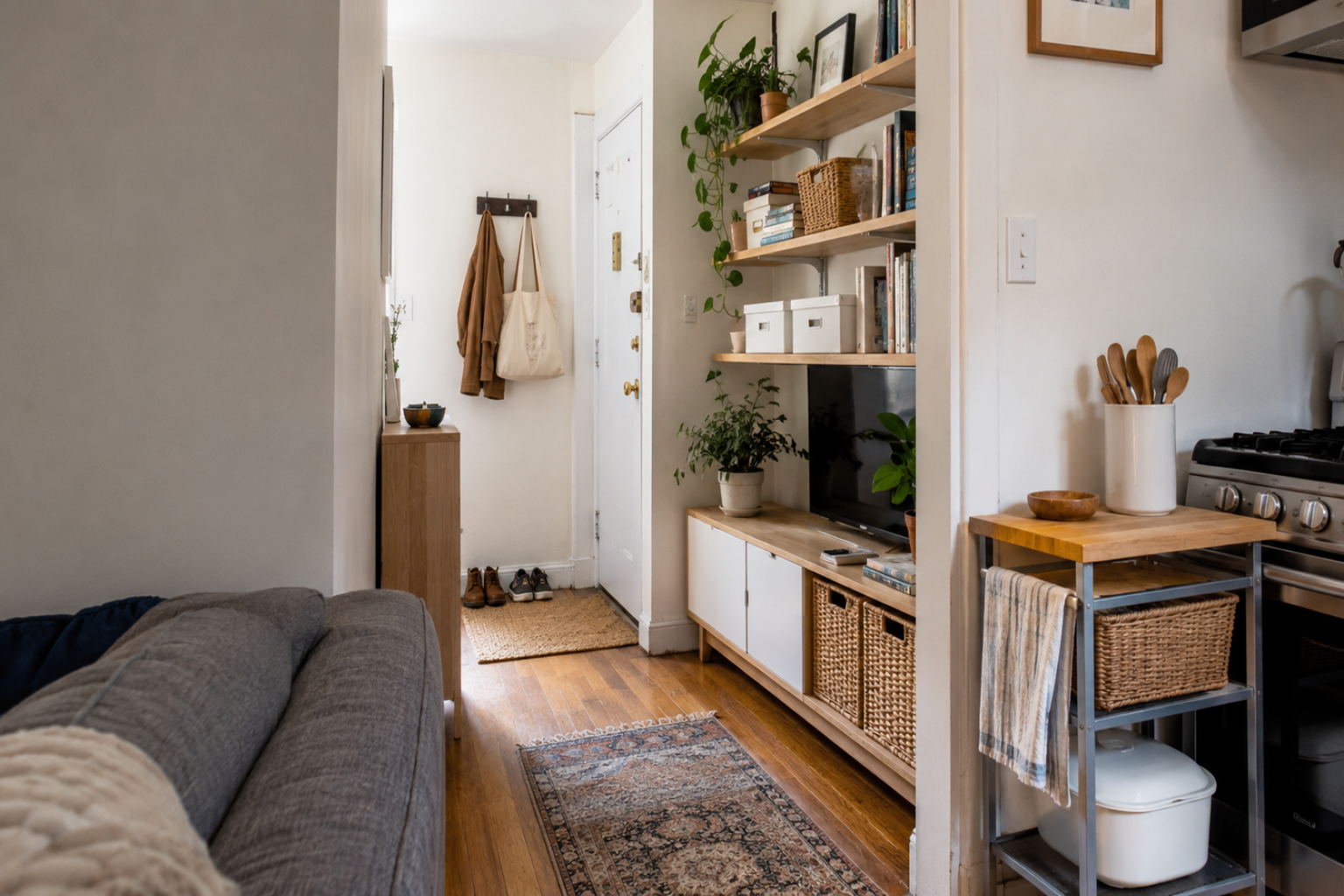
Most small apartments have plenty of storage ideas thrown at them. What they lack is storage that lands where the clutter actually happens. You can own the slim cabinet, the under-bed bins, the over-door rack, and a set of matching baskets, and still walk in to shoes in the path, a buried counter, and a closet that gave up months ago.
The fix is to stop shopping for a minute and watch where the mess keeps starting. Every small apartment has three or four spots where clutter rebuilds itself no matter how tidy you are, and those spots are what you solve first, not the product. Find them before you buy another basket.
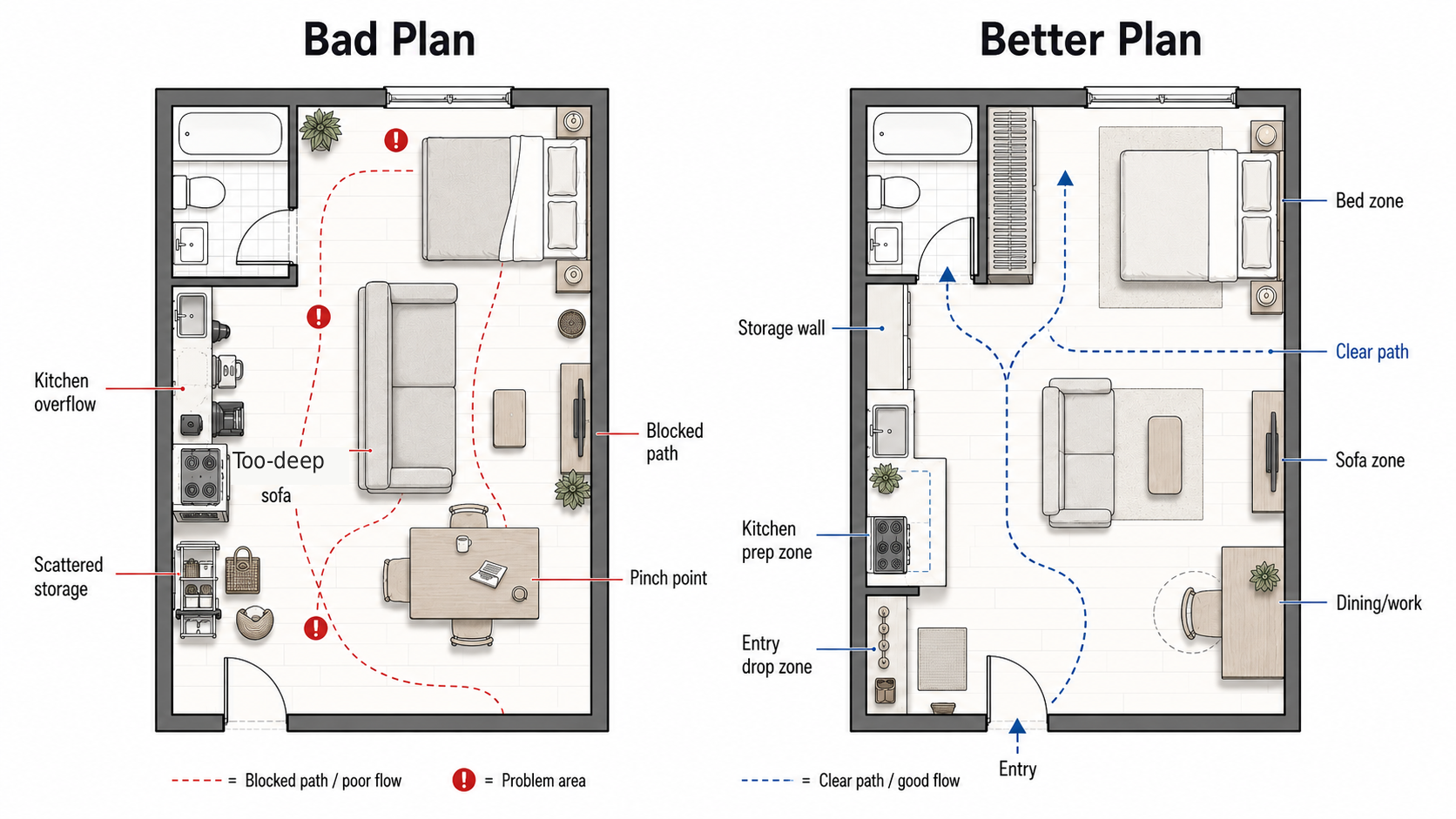
Start With the Walking Path, Not the Storage Product
In a small apartment the first thing storage can do wrong is get in your way. A cabinet you have to edge past every time you carry in groceries costs you more, day to day, than the clutter it was bought to fix.
Before you add anything tall, deep, rolling, folding, or hidden, walk the path from the door to the kitchen, the bathroom, the bed, the closet, and the window. A clear thirty-inch route through the apartment usually matters more than one extra cabinet, and once you lose it you do not get it back without moving furniture you just paid for.
This is where small apartment space planning has to come first, because storage should support the layout rather than fight it. A deep bookcase by the entry holds a lot, but it can make the whole place feel tight the second the door opens. A shallow cabinet, a few hooks, and one closed basket will often do more, because they keep the path clear.
Storage for an Apartment Starts Where the Room Fails First
The common mistake is treating the apartment as one big storage problem. It is really three or four small ones that repeat. Every cluttered small apartment I have walked into has the same handful of trouble spots, and they are almost never the corners people photograph.
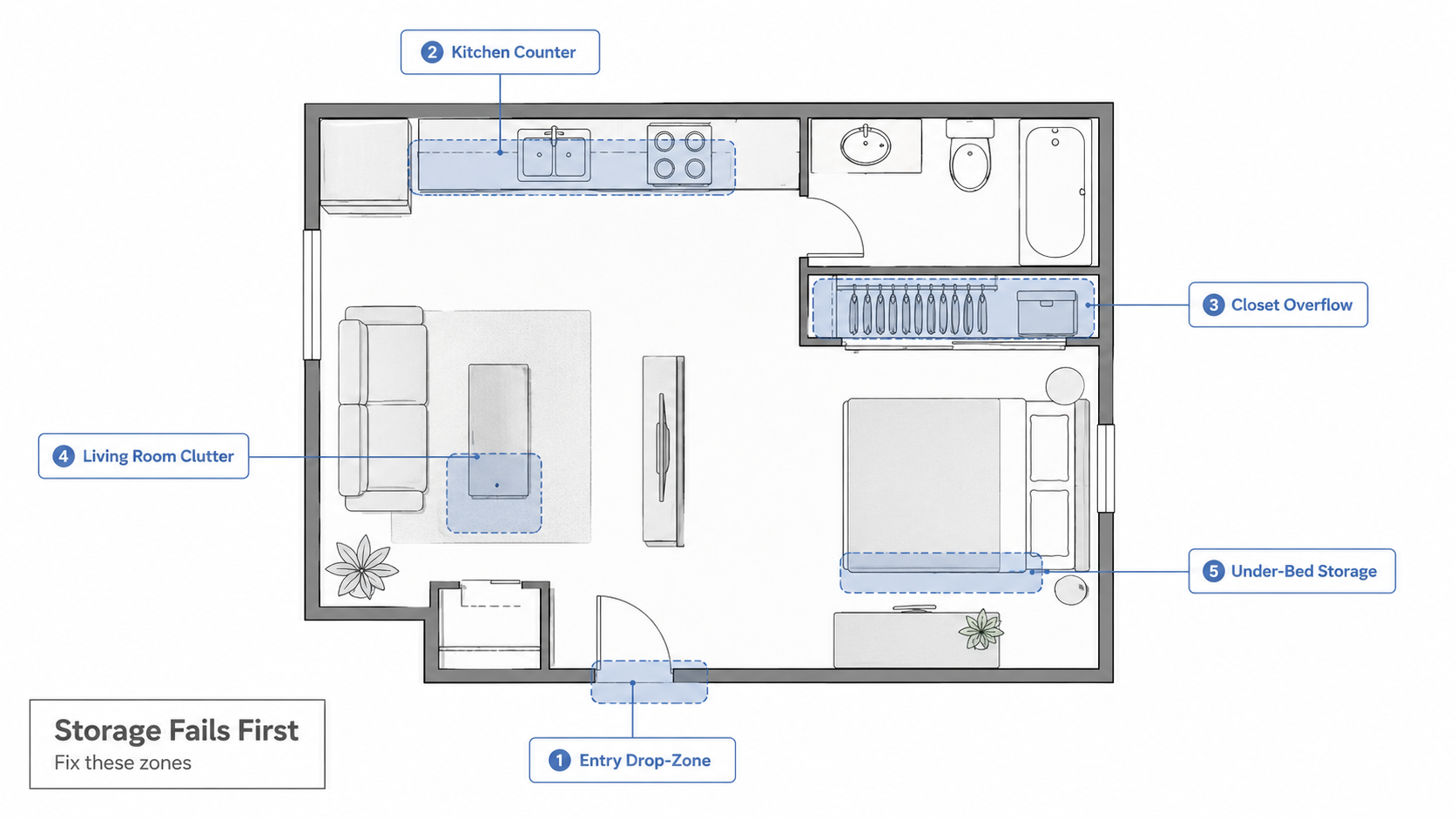
Start with the place that gets messy first, not the one that looks best in a photo:
- Entry: shoes, keys, bags, coats, mail, and returns that never make it back to the car.
- Kitchen: counter clutter, small appliances, pantry overflow, and somewhere to dry dishes.
- Closet: hanging space, folded clothes, linens, luggage, and cleaning supplies all fighting for the same rod.
- Bed area: seasonal storage, spare bedding, boxes, and the dead space underneath.
- Living area: remotes, chargers, paperwork, blankets, books, hobby gear, and the slow drift of small stuff.
Each of these wants a different answer. A rolling cart that rescues the kitchen will only get in the way in the living room. A storage ottoman that earns its keep by the sofa turns into a nuisance the moment you fill it with something you need twice a day.
Fix the Entry Drop-Zone Before the Apartment Feels Messy
The entry is tiny, but it sets the tone for the whole apartment. When shoes land in the walkway, bags slide onto the only chair, and keys wander from counter to table to sofa, the place reads as cluttered even when the rest of the room is fine.
Good entry storage stays shallow and easy to reach. Aim for eight to twelve inches of depth where you can, not a bulky console that eats the hall. It really only needs to do three jobs: somewhere for shoes, somewhere for bags or coats, and somewhere for keys and mail. Add much past that and the extra surface just becomes another shelf for clutter to settle on.
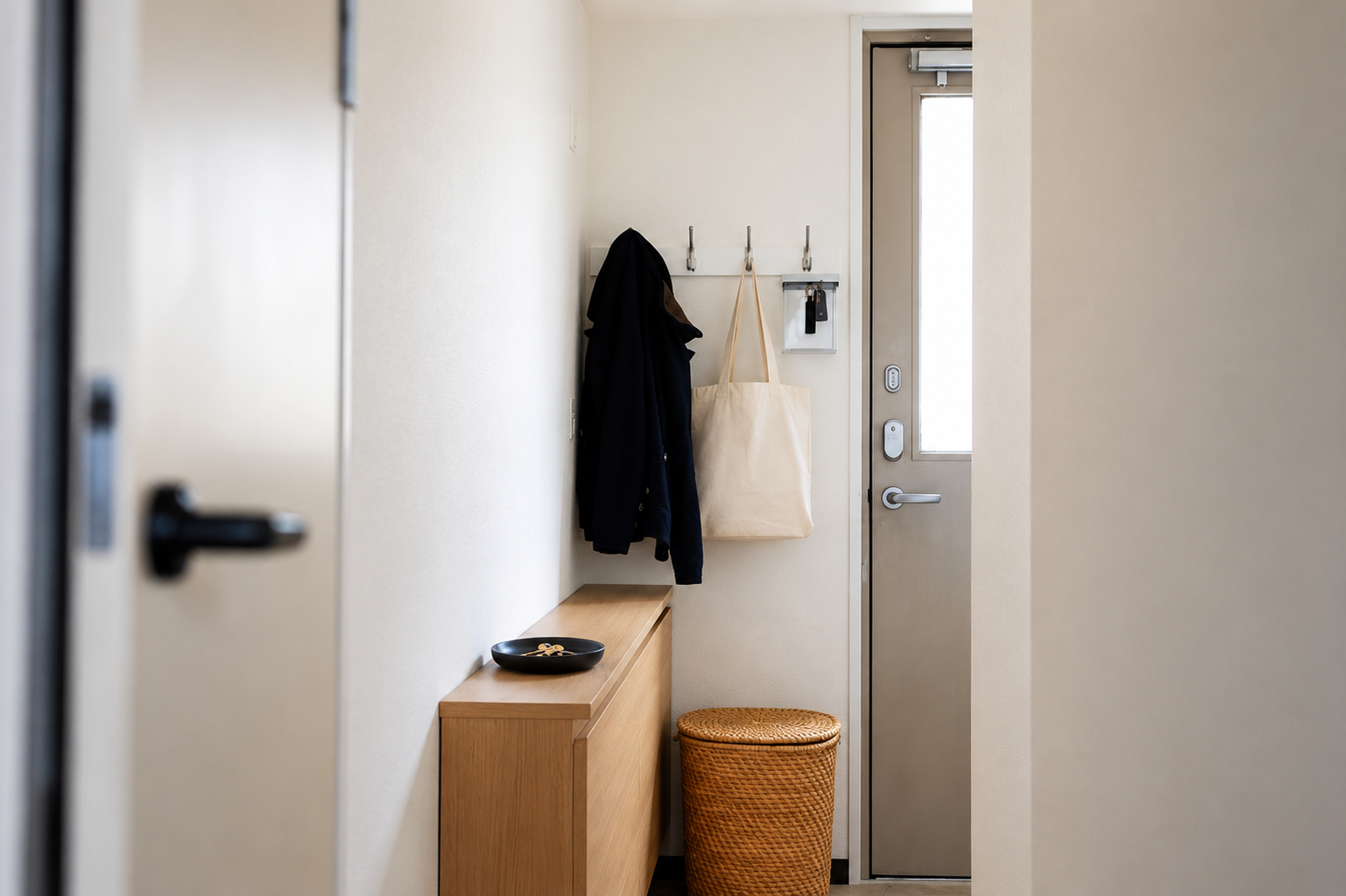
If the wall is narrow, hooks beat a coat rack. If the floor is tight, a wall-mounted shelf or a slim angled shoe cabinet keeps the ground clear. And if the door swings into the space, give the door its arc before you give anything else a spot.
Kitchen Counter Loss Is a Storage Problem, Not a Cleaning Problem
A small kitchen can look messy when it is perfectly clean, because the counter is doing six jobs at once. It is prep zone, drying rack, coffee station, pantry overflow, appliance garage, mail drop, and grocery landing all on the same two feet of laminate. That is not a habit problem you can scrub away. It is a sign the storage plan is missing.
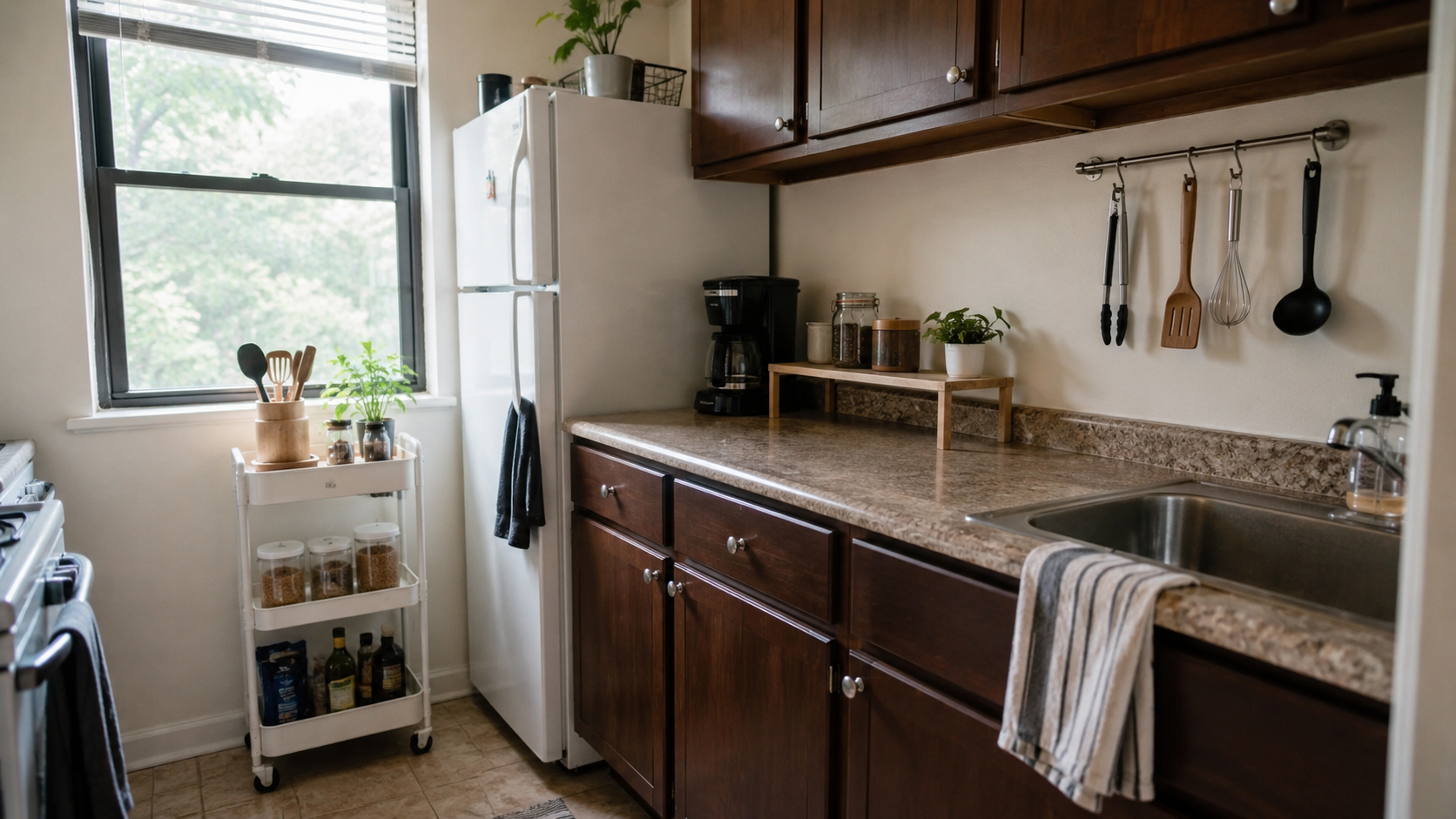
Protect one clear prep area before anything else. Even eighteen to twenty-four inches of open counter changes how the kitchen feels to cook in. Then move the repeat clutter somewhere it belongs:
- Everyday utensils: a drawer divider, or a wall rail near the stove.
- Pantry overflow: shelf risers, bins, or one closed cabinet zone instead of the countertop.
- Small appliances: keep only the one you use daily out; the rest go up or away.
- Cleaning items: an under-sink caddy or a narrow pull-out, not the counter edge.
A rolling cart helps here, but only if it has a parking spot that is not the middle of the floor. A cart that lives in the walking path is just one more thing to step around. The broader kitchen design section backs up the principles, though in a kitchen this small the apartment-specific moves matter most.
Closets Fill Before the Apartment Looks Full
The closet is usually the pressure valve, and once it gives way the clutter spills into the room. The instinct is to buy more hangers. Hold off. Look first at what the closet is being asked to swallow: clothes, linens, the vacuum, luggage, tools, cleaning supplies, paperwork, and seasonal gear, all of it competing in one heap.
A small closet needs zones more than it needs accessories. Hanging clothes stay together. Folded items get shelves or drawers. Seasonal things go high or under the bed. Cleaning supplies cluster so you can pull them out in a single grab.
This is also where furniture starts to matter. A bed with drawers, a closed cabinet, or a wardrobe can take real pressure off the closet, but only if the room can absorb the piece without choking the path. Before you commit to a freestanding wardrobe, check your furniture and layout plan so the fix does not block the room it was meant to help.
Under-Bed Storage Works Only When You Can Reach It
Under-bed storage is good for things that are bulky, flat, seasonal, or occasional, and bad for anything you need before coffee. Use it for spare bedding, off-season clothes, guest linens, and the stuff you touch a few times a year.
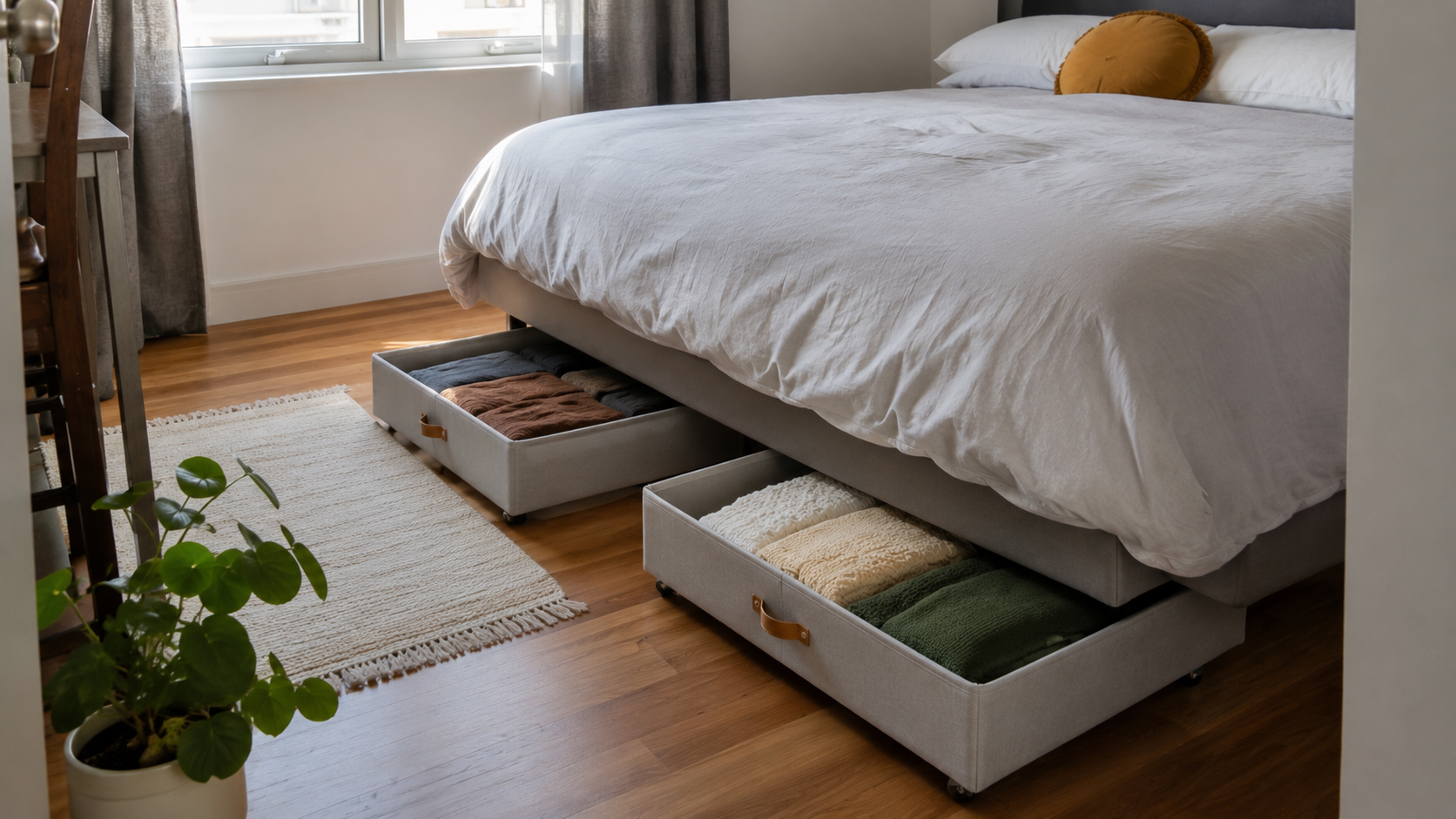
Bins with handles or wheels beat deep soft bags, which collapse, jam, and vanish under the frame. The bed needs clearance around it too. If a drawer hits the wall, the nightstand, or a radiator before it is open, it will quietly stop getting used within a week. A lift-up storage bed holds far more, but it can be a chore if the mattress is heavy or the bed sits against a wall, and a chore is a thing people stop doing. The honest test for any of this is whether you can put something away in under a minute on a tired night. If it takes five steps, it stays out.
Hidden-Storage Furniture Has to Earn Its Space
Hidden storage sounds made for small apartments. Sometimes it is. Sometimes it is a heavy piece of furniture wrapped around a surprisingly small compartment.
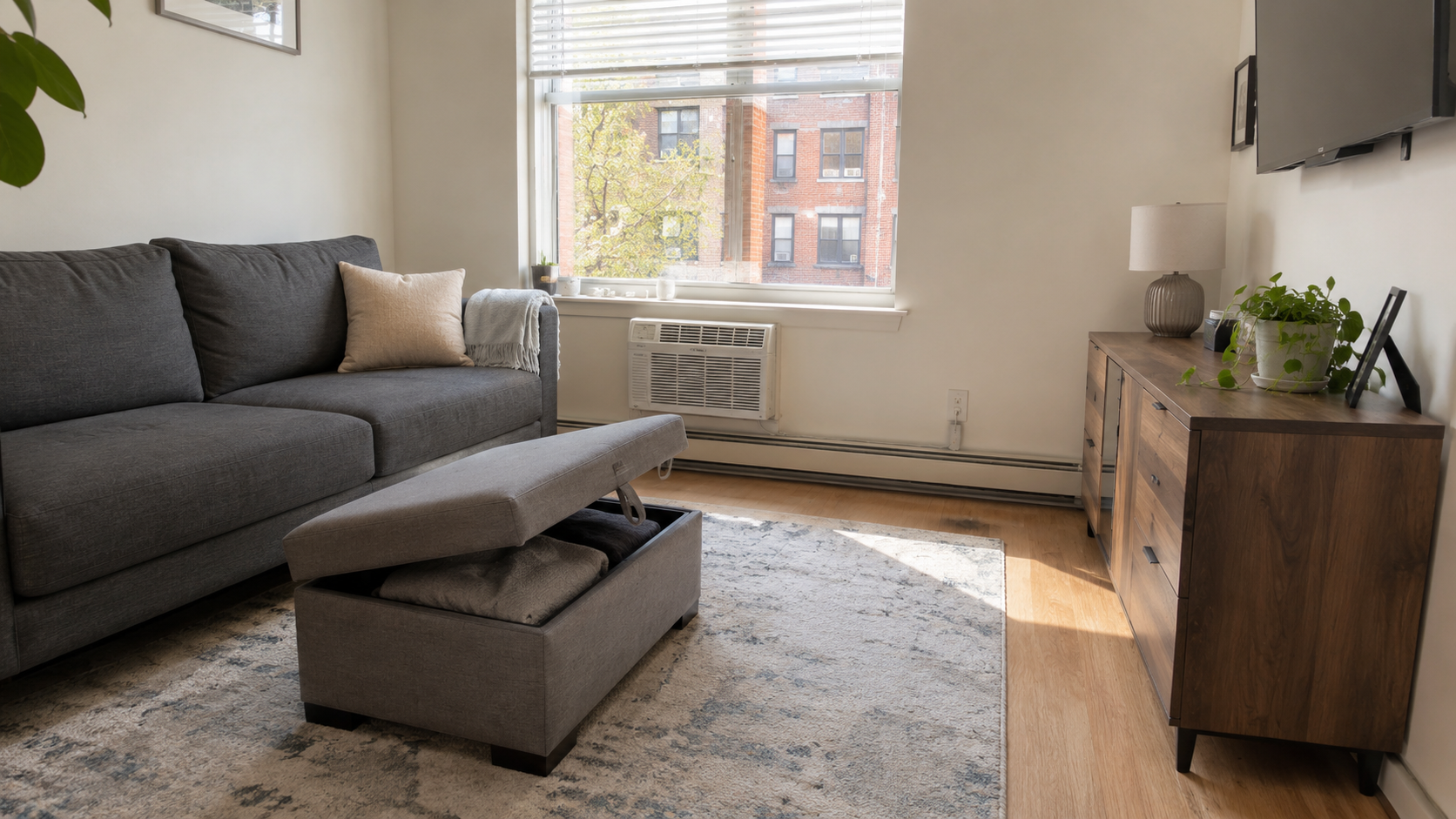
A storage ottoman by the sofa handles blankets, controllers, chargers, and toys well. A bench at the entry can hide shoes if it opens easily and stays clear of the door. The trouble starts when the storage is in the wrong room, hard to open, too deep to sort, or holding things you need too often to keep lifting a lid for. A coffee table with drawers earns its place if the living area collects remotes, paper, and cords. A lift-top one can double as a desk or a dinner table, and it can also crowd the sofa in a room that was already tight. Measure before you fall for it. The interior design basics page is a useful side reference for scale and buying order.
Vertical Storage Should Clear the Floor Without Crowding the Room
Going vertical is one of the strongest small-apartment moves, and one of the easiest to overdo. Tall storage works when it clears the floor, claims dead wall space, and keeps the visual load organized. It backfires when every wall becomes shelving, every shelf is open, and the apartment starts to feel like a stockroom you happen to sleep in.
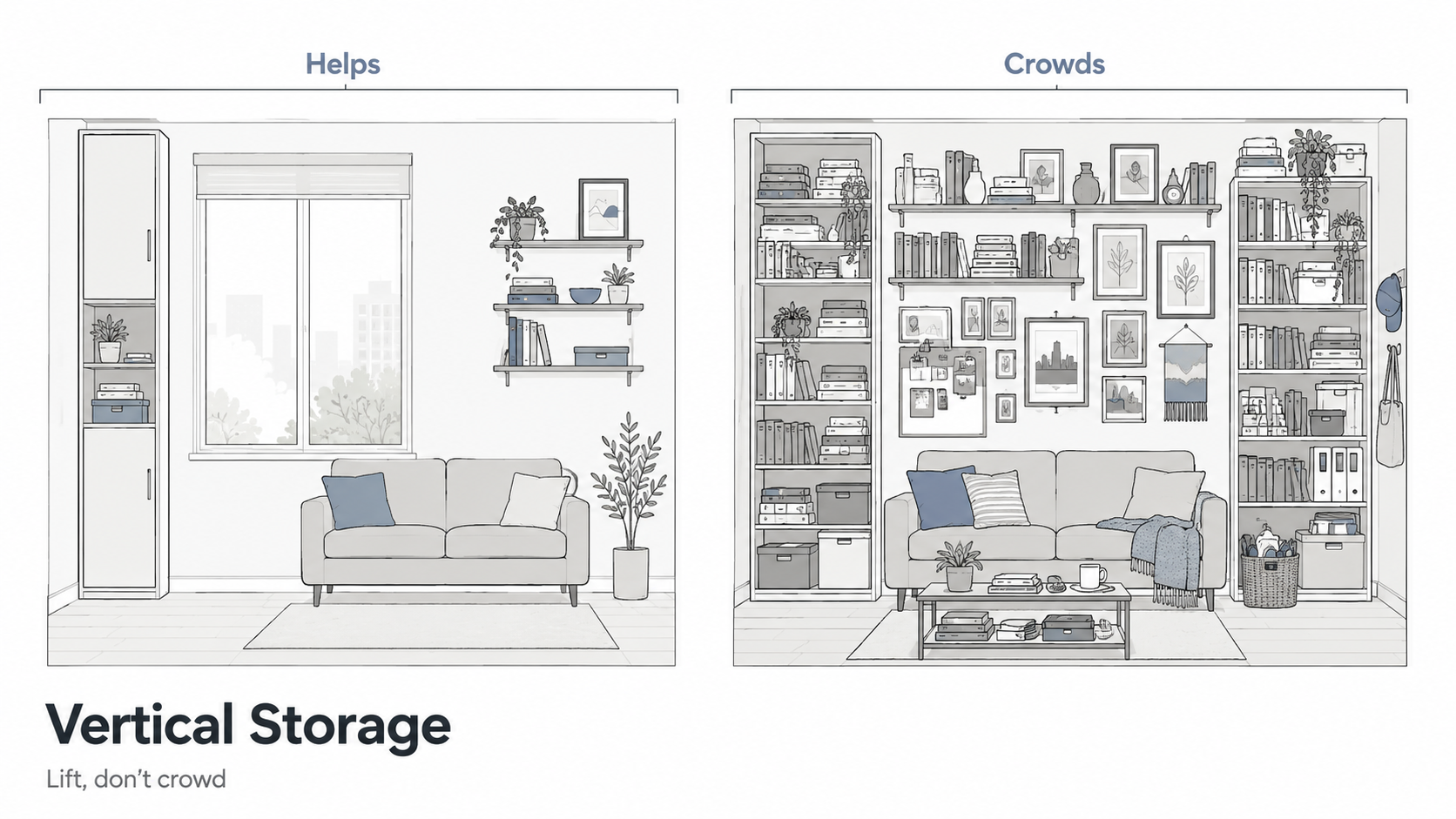
Put it where a wall can carry it without shouting: above a desk, behind a door, beside the fridge, over the toilet, or along one planned storage wall. Go easy on deep open shelves near seating, since they pull the walls in visually and make a small room read narrower than it is. A mix of closed cabinets, baskets, and a little open shelving usually sits better than floor-to-ceiling open storage.
The usual advice is that one strong storage wall beats six scattered pieces, and a lot of the time it does. But I will not pretend that settles it. A single packed wall can read as calm and deliberate, or it can turn one side of a small room into something that looks like a supply closet, and which way it goes depends on the room, the light, and your own tolerance for seeing your belongings on display. Plenty of people are happier spreading storage thin and keeping the walls mostly bare, even if it holds less. There is no version that is right for every apartment, and this is where it ties back into space planning more than into any product. The room needs a clear path, clear zones, and one place where storage is allowed to be heavier; where that place is, and whether you want it at all, is a judgment call.
Mirrors and Light Help, but Only After the Storage Is Sorted
Mirrors and lamps can make a small apartment feel less boxed in, but they do nothing about clutter. A mirror facing a messy shelf just gives you two of it. A bright lamp over a chaotic entry only lights the problem more clearly.
Sort the storage, then use light and reflection to open the room up. Hang mirrors where they bounce daylight or a calm stretch of wall, not where they double the busiest corner. Aim light at the dark spots that make a place feel cramped, especially the entry, the closet, the kitchen counter, and wherever you work. The point is not to fake a bigger apartment, just to make the one you have easier to use without visual noise running the room.
Renter-Safe Storage vs. Owner-Friendly Storage
Renters need fixes that solve the problem without inviting a fight over the lease. Owners have more room to install built-ins, swap cabinets, add lighting, or rework a closet. The same problem often has two different right answers depending on which one you are.
| Storage problem | Renter-safe fix | Owner-friendly fix |
|---|---|---|
| Entry clutter | Freestanding shoe cabinet, hooks, tray, basket | Built-in entry cabinet or recessed storage |
| Kitchen overflow | Rolling cart, shelf risers, drawer organizers, rail systems | Cabinet inserts, added lighting, pantry cabinet, counter changes |
| Closet pressure | Tension systems, freestanding drawers, shelf dividers | Custom closet, added shelves, better doors, lighting |
| Living room clutter | Storage ottoman, closed cabinet, media unit | Built-in wall storage or fitted millwork |
Whichever side you are on, do not drill into walls, doors, tile, or cabinets without knowing the lease rules, and keep storage clear of windows, heaters, vents, sprinklers, electrical panels, and the path to the door. In a space this small, a bad storage fix can turn into a safety problem, not just an eyesore.
Measure the Path In Before You Buy Anything Big
Here is the question the storage listicles never ask, because most of them were written for houses: can the thing actually get into your apartment? A wardrobe, a tall bookcase, a deep media unit, or a storage bed can be the perfect answer to your clutter and still be useless if it will not clear the front door, make the turn at the top of a narrow stair, or fit the elevator.
I have watched a near-perfect wardrobe get carried back down three flights because nobody checked the landing at the top of the stairs, where it simply could not pivot. The delivery fee was gone, the restocking fee was not, and the closet stayed a mess for another month. None of that was a storage problem. It was a measuring problem.
Before you order anything large, measure four things, not one: the piece itself, the narrowest doorway it has to pass, the tightest turn on the way in, and the spot it will finally live. Write them down. Check the return window and the restocking policy while you are at it, because a big storage piece is exactly the kind of purchase you cannot quietly send back once the box is open and the lift gate is gone. Flat-pack furniture sidesteps a lot of this, since it travels in pieces and assembles in the room, which is one real reason it dominates small-apartment storage even when the build quality is nothing special.
The Storage Fixes That Quietly Cost You Your Deposit
For renters, the cheapest storage mistake is the one that comes out of your deposit at move-out, and it is almost always a wall.
A few small nail holes are generally treated as normal wear and tear, the kind of thing a landlord is expected to absorb between tenants. The damage that gets charged back is different in kind: anchors and toggles that tear out a chunk of drywall with the paper attached, adhesive strips and hooks that peel the paint when you pull them, and the patch jobs people attempt in a panic that end up looking worse than the hole. I have seen a renter lose more of a deposit fixing a botched shelf anchor than the shelf ever cost, because once the drywall paper tears, a proper repair means cutting back to clean board, patching, taping, sanding, and repainting a section of wall, and that is a few hundred dollars of someone's time, not a dab of spackle.
The exact line between wear and damage varies by state and by what your lease actually says, so the figures here are general rather than a promise. But the practical rules hold up almost everywhere. Favor storage that hangs off as little wall as possible. When you do mount something, hit a stud or use the right anchor for the weight, not the first one in the drawer. Pull adhesive strips slowly, with a little heat from a hair dryer to soften the glue, instead of ripping them off and taking the paint with them. And when something does leave a hole, ask the landlord whether they would rather patch it themselves before you turn a clean anchor hole into a torn crater. Done quietly and correctly, most of this costs you nothing. Done in a hurry the night before you hand back the keys, it is one of the more expensive ways a storage decision can go wrong.
The Storage That Looks Good Online Can Fall Apart in Three Weeks
The version of small-apartment storage you see online is staged. Empty shelves, matching bins, one plant, no cords. No returns by the door, no winter boots, no pet supplies, no lunch containers, no laundry in motion. It is a photo, not a week of living.
Give it three weeks and the weak points surface. Open shelving starts to look busy. Clear bins put the clutter on display. The storage bench gets hard to open because bags pile on the lid. The rolling cart drifts into the kitchen path. The under-bed bins stay packed because pulling them out is a hassle.
The way around it is to match storage to how you actually behave. Shoe storage goes where you take your shoes off, not where it photographs well. Chargers go where the devices get used. Kitchen overflow stays near the kitchen. Daily things sit at hand height, and the rare stuff goes high, low, or under the bed. The system with the most compartments is rarely the one that survives. The one that survives is the one you can reset on a normal, tired night without thinking about it.
A Simple Buying Order for Small Apartment Storage
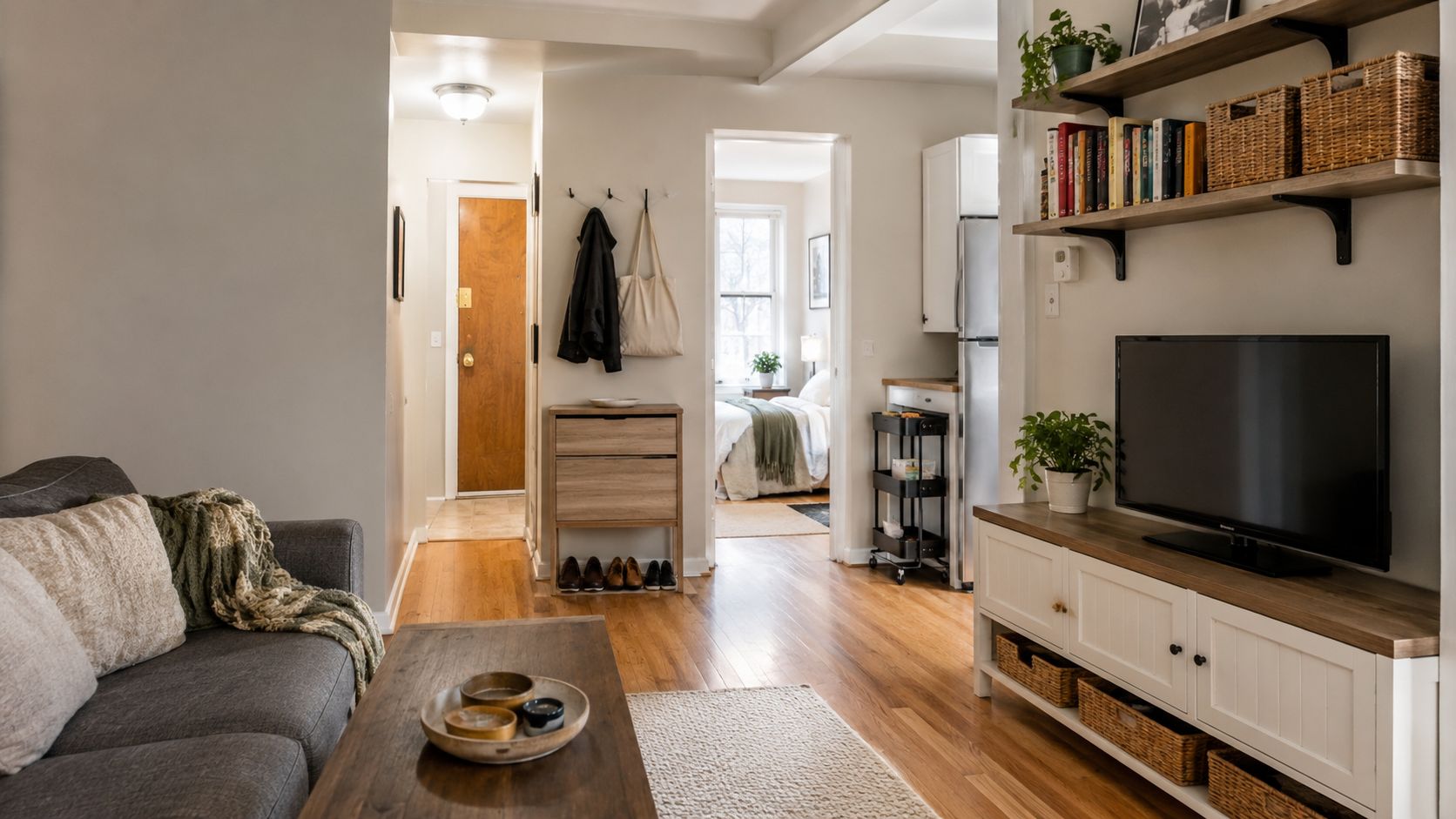
Buy in this order, so one purchase does not quietly create the next problem:
- Measure the room, the paths, and the way in. Mark door swings, drawer clearance, bed and sofa clearance, the kitchen path, and whether anything big can actually reach the spot you want it.
- Fix the entry. Smallest zone, biggest daily payoff.
- Clear the kitchen counter. Protect one real prep surface before you spend a cent on décor.
- Relieve the closet. Move seasonal and bulky things out of the daily zone.
- Add one strong storage wall or closed cabinet. Do this before you scatter bins around the apartment.
- Use hidden storage only where clutter already collects. The sofa area, the entry, the bed, and the dining or work zone are the usual candidates.
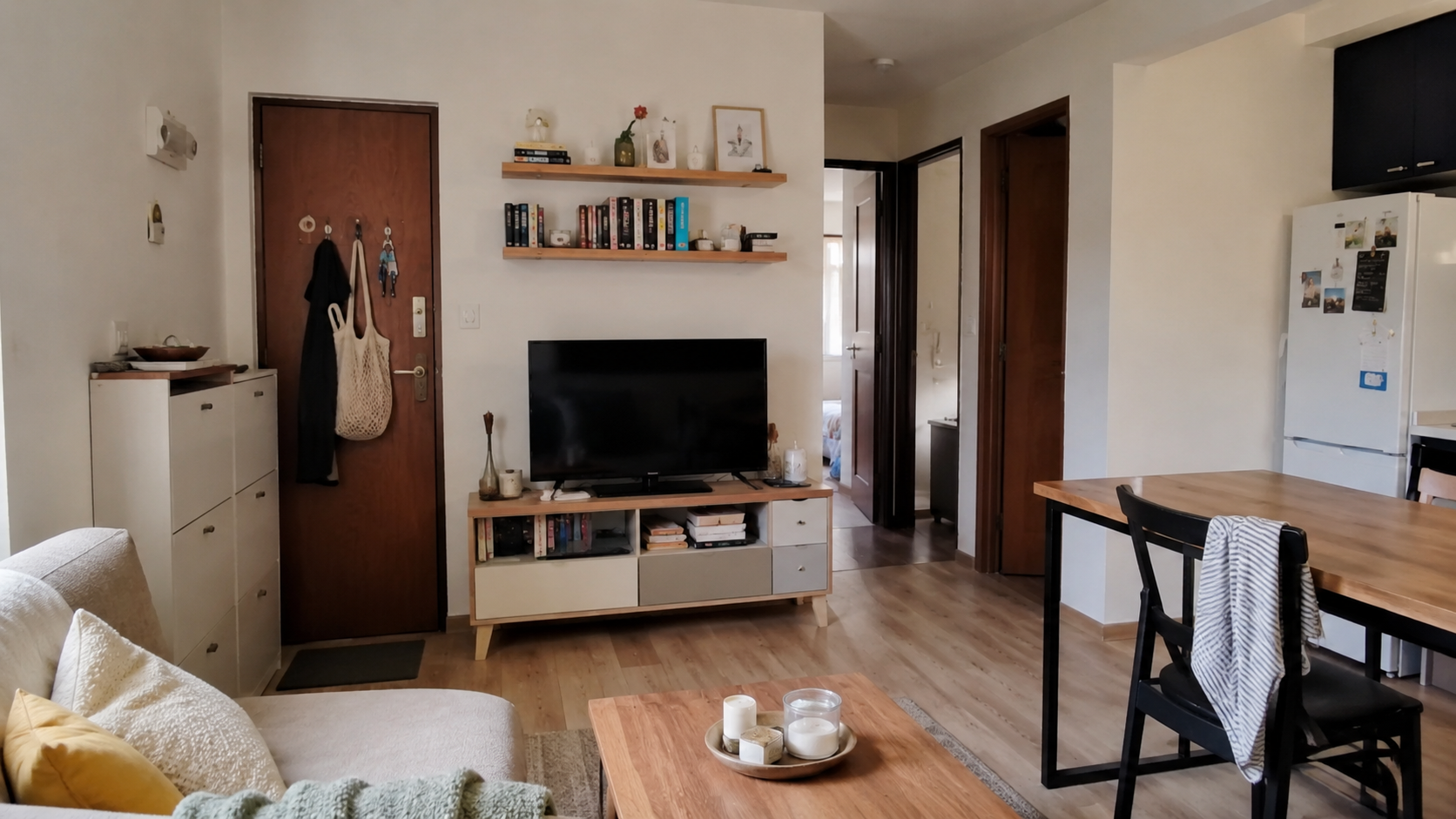
If the room still feels crowded after all of that, the problem may not be storage at all. It may be furniture scale, the layout, or too many zones crammed into one room, and that is when it is worth revisiting the broader small apartment layout plan.
FAQ
What is the best storage for apartment renters?
The best storage for apartment renters is shallow, movable, and easy to remove without damaging a wall or cabinet. Start with a slim entry cabinet, closet organizers, under-bed bins, cabinet shelf risers, and one closed storage piece near the sofa or dining area.
Will my furniture fit through the apartment door?
Do not assume it will. Before buying anything large, measure the piece, the narrowest doorway, the tightest turn on the way in, and the elevator if there is one. Flat-pack furniture avoids most of this because it arrives in pieces and assembles in the room.
Can storage hooks or shelves cost me my security deposit?
They can. Small nail holes are usually treated as normal wear and tear, but anchors that tear drywall, adhesive strips that peel paint, and bad patch jobs are often charged as damage. Mount into studs or correct anchors, remove adhesive strips slowly with a little heat, and check your lease, since the rules vary by state.
How do I add storage without making the apartment feel smaller?
Use one or two stronger storage zones instead of scattering small pieces everywhere, keep the walking paths clear, lean on closed storage for visual clutter, and avoid deep shelving in narrow rooms.
Is under-bed storage a good idea in a small apartment?
Yes, but only for things you do not need every day, like linens, off-season clothes, or bulky items. If the bins are hard to pull out, the storage stops getting used.
Are open shelves good for small apartments?
They help when they are shallow, organized, and in the right spot. They fail when every wall becomes open storage. Mix open shelves with closed cabinets or baskets so the room does not read as busy.
Should I buy storage furniture first?
No. Measure first, then fix the worst clutter zone. Storage furniture should come after you know what it will hold, where it will sit, whether its drawers or lids can open without blocking the room, and whether it can even get through the door.