
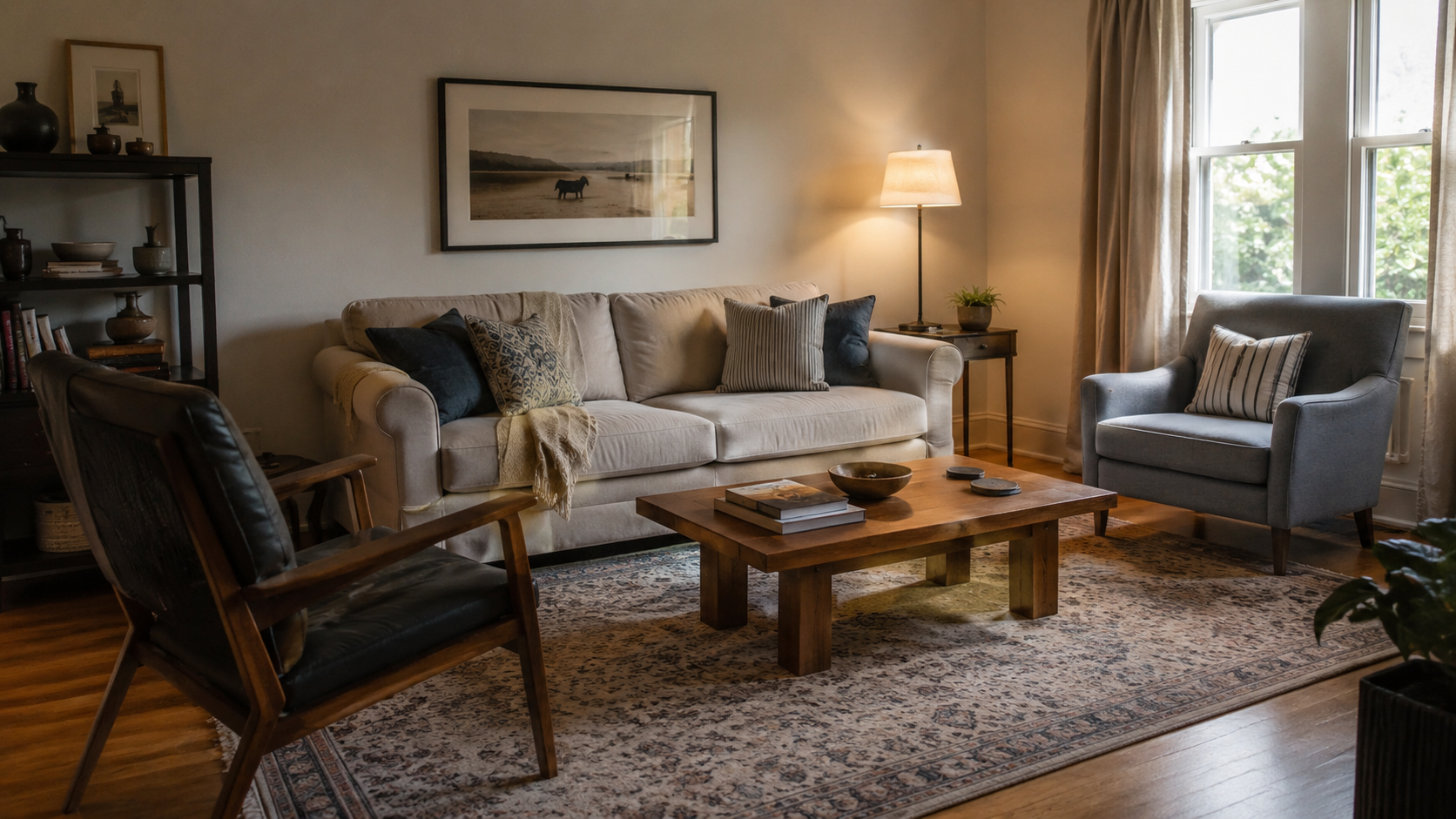
Most beginner rooms do not fail because the owner has bad taste.
They fail because the room was assembled in the wrong order.
The sofa gets bought before the layout is clear. The rug comes in too small because it looked fine online. The lighting is treated like a finishing touch instead of part of how the room works. Then people start trying to fix the room with pillows, baskets, wall art, and small décor that never had a chance of solving the real problem.
That is what this page is about.
Interior design basics are not really about memorizing style words or copying a mood board. They are about making a room work first, then making it look like itself. If you are still sorting out how this differs from architecture, Architecture vs Interior Design helps clarify the boundary. If layout is the bigger problem, Space Planning and Layout in Interior Design is the better next step.
Interior design starts with how the room works
People often treat interior design as decorating. That is only the visible layer.
The harder part comes first: figuring out what the room needs to do, where people move through it, what deserves the best wall, where storage should go, and how light changes the room through the day.
A room can have expensive furniture and still feel off if none of those questions got answered. A cheaper room can feel much better when the layout is clear, the scale makes sense, and the lighting is handled properly.
That is why interior design basics matter. They keep you from spending money on the wrong fix.
Start with layout before style
This is where most rooms start going wrong.
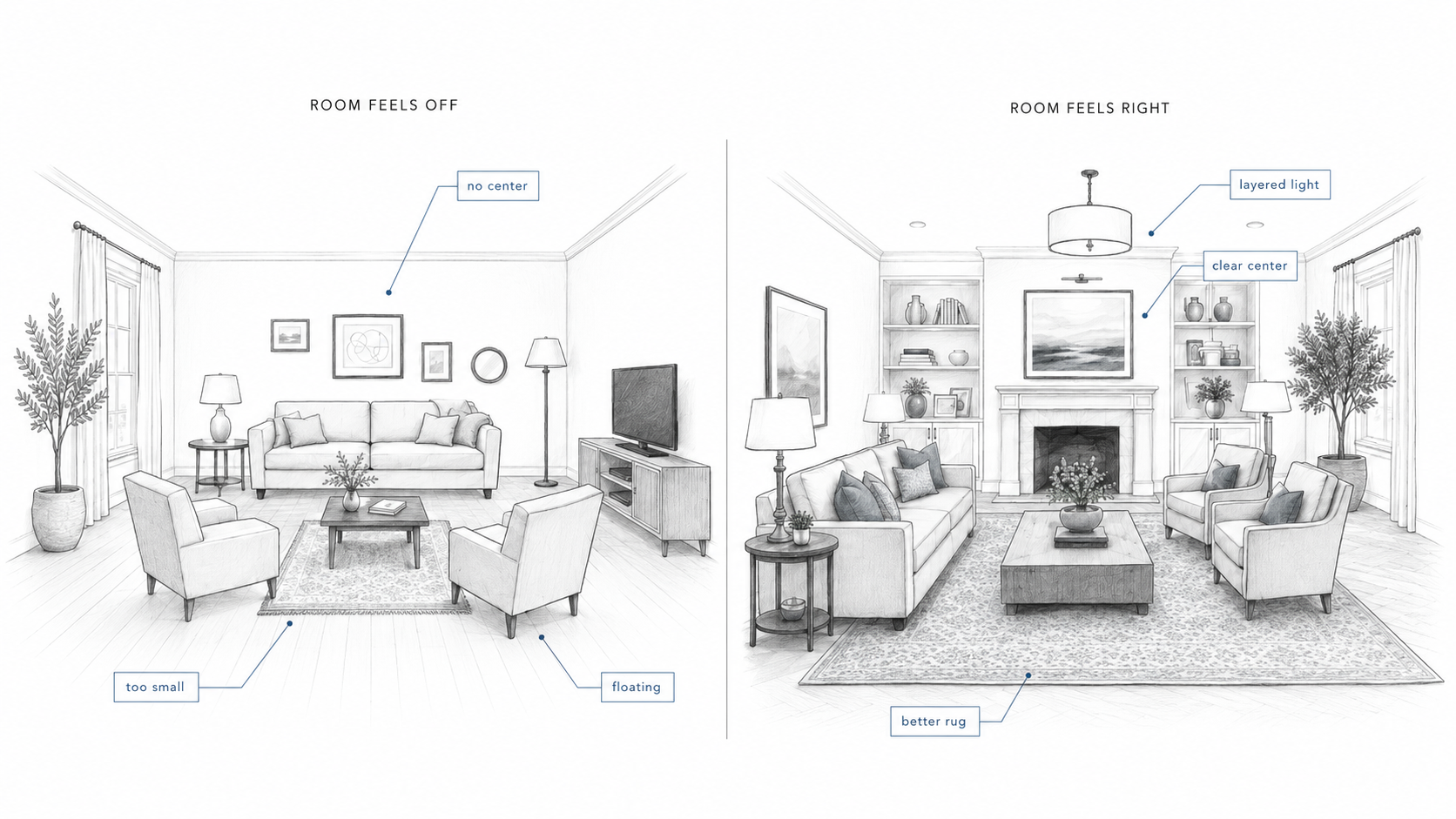
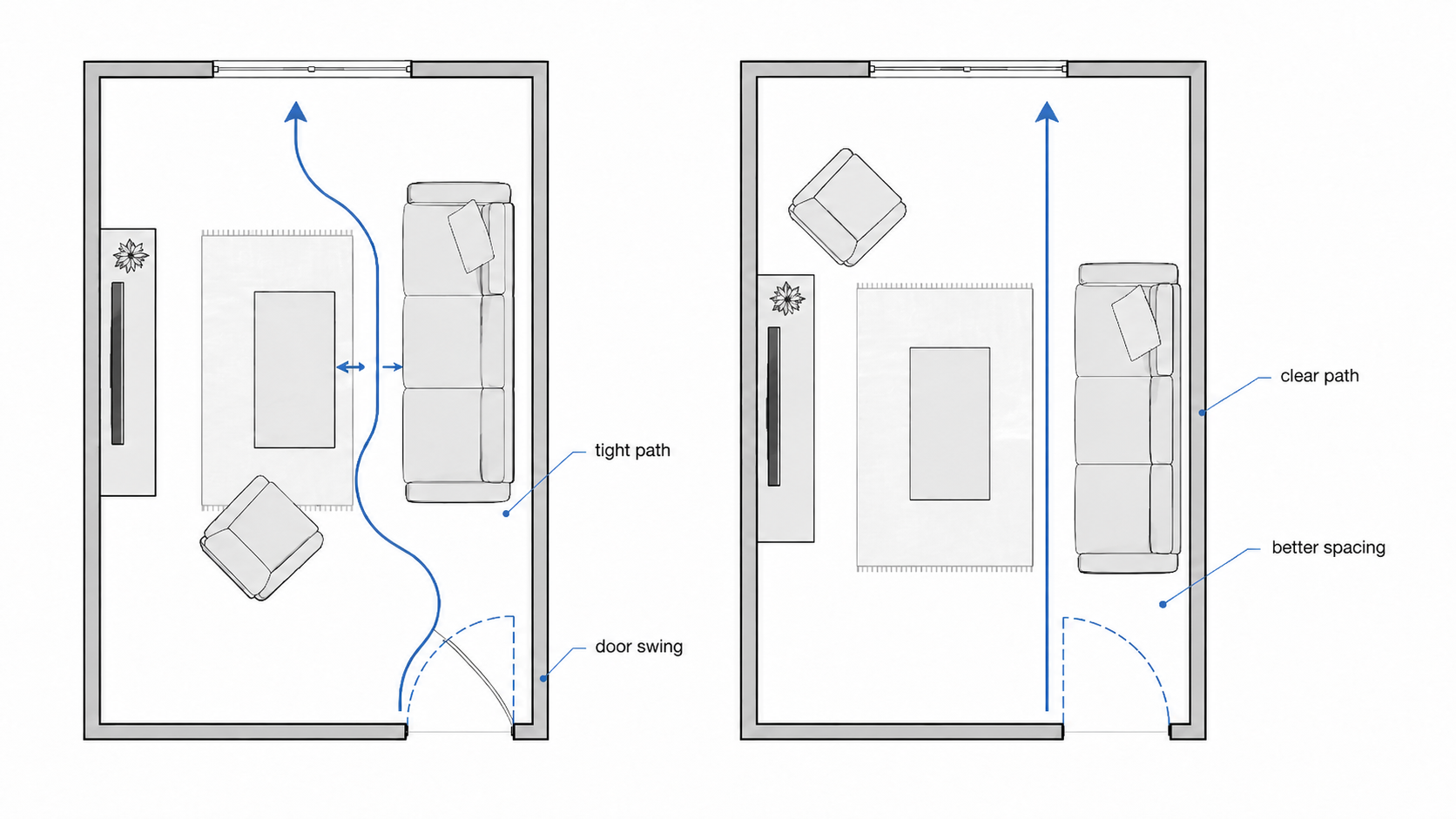
People pick a style first — modern, traditional, cozy, minimalist, eclectic — and start shopping. The better move is to start with layout. Where is the room center? What is the focal point? How do you walk through the space without clipping corners, squeezing past chairs, or blocking a door swing?
In a living room, the center might be the rug zone, fireplace, media wall, or best window. In a bedroom, it is usually the bed wall. In a dining room, it is the table and the space around it. If that center is not clear, the room starts drifting.
This is also why Space Planning and Layout in Interior Design matters so much more than beginners expect. It is not the glamorous part, but it is the part that decides whether the room feels easy or awkward.
| Common beginner move | What goes wrong | Better first move |
|---|---|---|
| Buy the sofa first | The size, depth, or shape controls the room before the layout is tested | Map the room first and decide where the seating group actually belongs |
| Center furniture on the TV automatically | The room ignores better windows, circulation, or conversation | Decide what the room is really built around before aiming everything at one wall |
| Push all furniture to the walls | The room feels more scattered, not bigger | Build a real furniture group with a clear center |
| Ignore walk paths | The room looks fine in photos and feels annoying in daily life | Test how people enter, turn, sit, and move around the room |
Scale punishes beginners fast
Scale is where a room starts feeling amateur almost immediately.
A sofa can be good and still be wrong for the room. A coffee table can be attractive and still sit too low, too high, too deep, or too far from the seating. Dining chairs can fit the table and still leave no real pull-back room. A bed can fill the room so completely that the bedroom stops feeling restful and starts feeling packed.
Rugs are where this shows up most often. A lot of beginner rooms look unfinished because the rug is too small and the furniture never joins into one readable group. People then try to fix the room with more décor, when the real problem is still sitting under their feet.
This is where Furniture Design and Selection becomes useful. The piece itself matters, but how it fits the room matters more.
A small apartment can carry a large sofa sometimes. A large room can still need a tighter furniture plan sometimes. Scale is not about buying smaller or bigger. It is about buying in proportion to the room and the way the room is used.
Lighting fixes more than paint can
Beginner rooms are often underlit in very predictable ways.
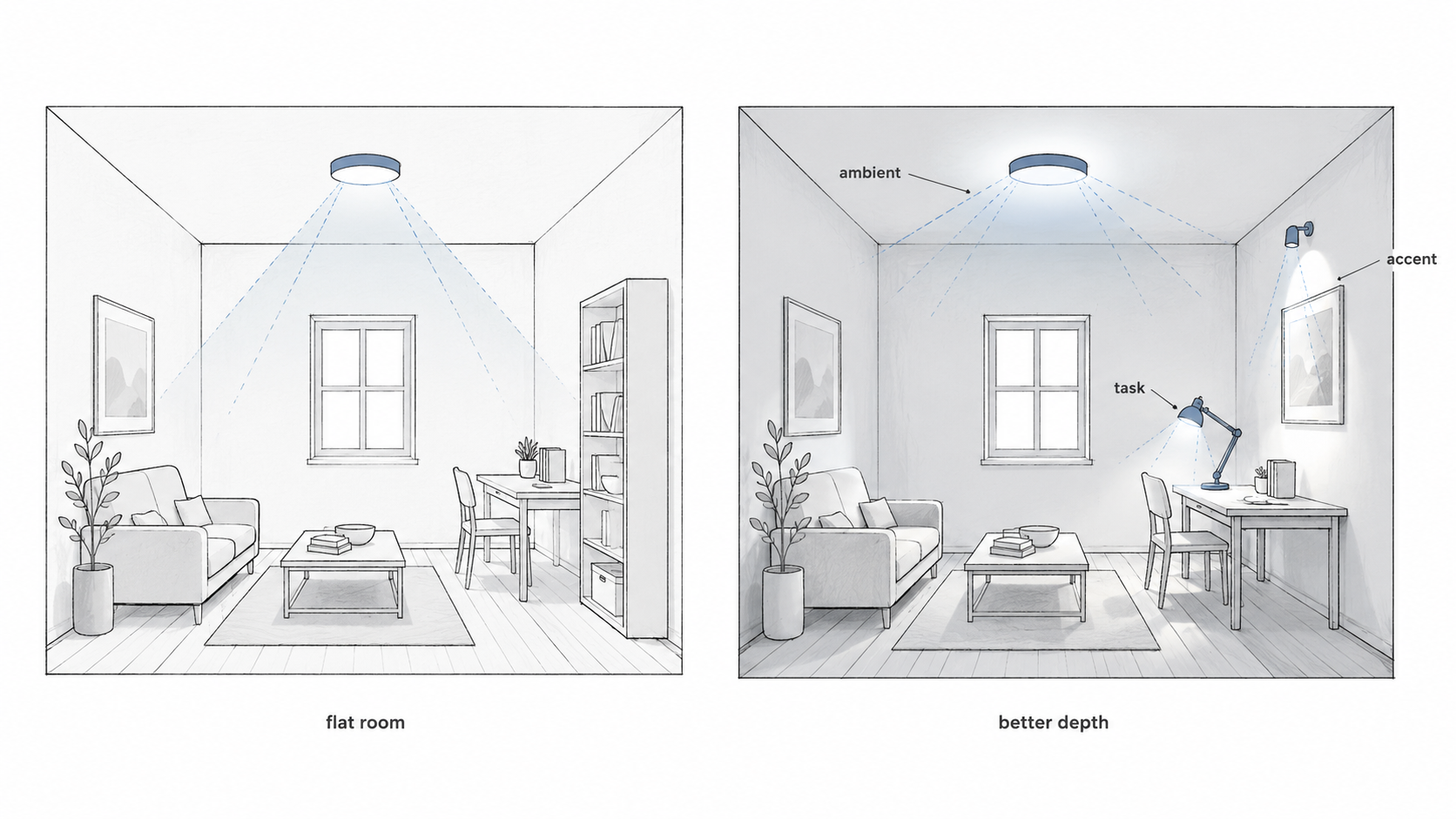
They rely on one ceiling fixture and expect it to do everything. Then the corners go flat, reading light is weak, faces look tired at night, and the room feels less finished no matter how nice the furniture is.
Good lighting comes in layers. Ambient light gives the room a base. Task lighting handles reading, work, and focused use. Accent lighting adds depth and keeps the room from feeling dead after sunset.
A living room with one overhead light usually feels temporary. The same room with a floor lamp near the chair, a table lamp at the side, and softer overall light suddenly feels resolved.
The lighting page Lighting Design goes deeper on this, but the short version is simple: if the room only works at noon, it is not finished yet.
Color should support the room, not rescue it
Color gets overused as a solution.
People paint a room because it feels flat, when the real issue is bad layout, weak lighting, or furniture that does not belong together. Paint can help. It cannot rescue a room that is failing structurally.
That said, color still matters. Warm colors can make a room feel closer and more energetic. Cooler tones can calm it down. Darker colors can make a room feel grounded or compressed depending on the light. Pale colors can open the room up or wash it out depending on the materials around them.
The useful beginner lesson is this: color works best after the room already makes sense. If the layout, scale, and lighting are wrong, the color decision will carry more pressure than it should.
For that part, Color Theory for Interior Design Beginners is the better internal follow-up than forcing a full color course into this page.
Materials and texture are what stop a room from feeling flat
A room with only one surface language almost always feels thinner than it should.
Painted drywall, smooth furniture, no fabric contrast, one-note flooring, and hard light can make even a decent layout feel unfinished. That is where texture starts doing real work.
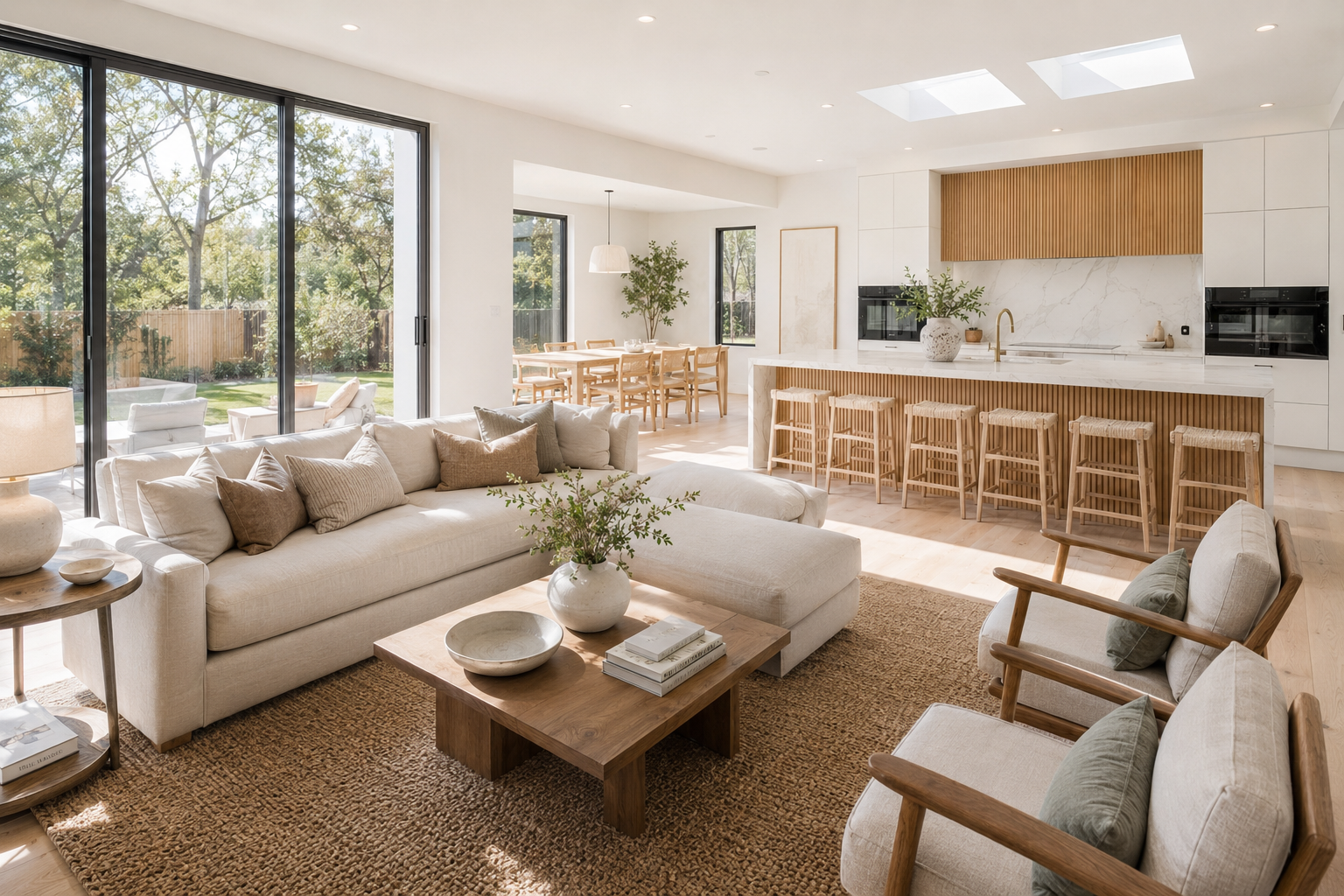
Wood, fabric, leather, woven surfaces, matte finishes, soft drapery, a proper rug, or even one rougher surface can make the room feel less temporary. Not because texture is trendy. Because it gives the eye more than one surface condition to read.
The mistake is piling texture in everywhere. Too many competing materials can make a room feel busy instead of rich. Most beginner rooms need one or two stronger texture moves, not eight.
This is where Materials and Textiles in Interior Design earns its place as a supporting page.
What beginners buy too early
This is the part people usually discover after they have already spent the money.
They buy decorative pieces before the room is stable. The accent stool. The throw pillows. The wall art set. The tiny lamp with the perfect shade. The mirror that looked right in the product photo. Then the bigger decisions catch up. The rug is too small. The sofa is too deep. The bed is crowding the doorway. The dining table leaves no pull-back room. The nice little accessories now belong to a room that still does not work.
Rugs are one of the most common mistakes. So are coffee tables and accent chairs. People buy them because they feel like manageable purchases. Then later they realize the bigger pieces needed more room, or the seating group was never arranged properly to begin with.
The safer order is usually this: layout first, then main furniture, then lighting, then rug if it depends on the final furniture group, then smaller decorative pieces last. If the room is not working yet, small décor will not save it. It will only make the mistake look more finished.
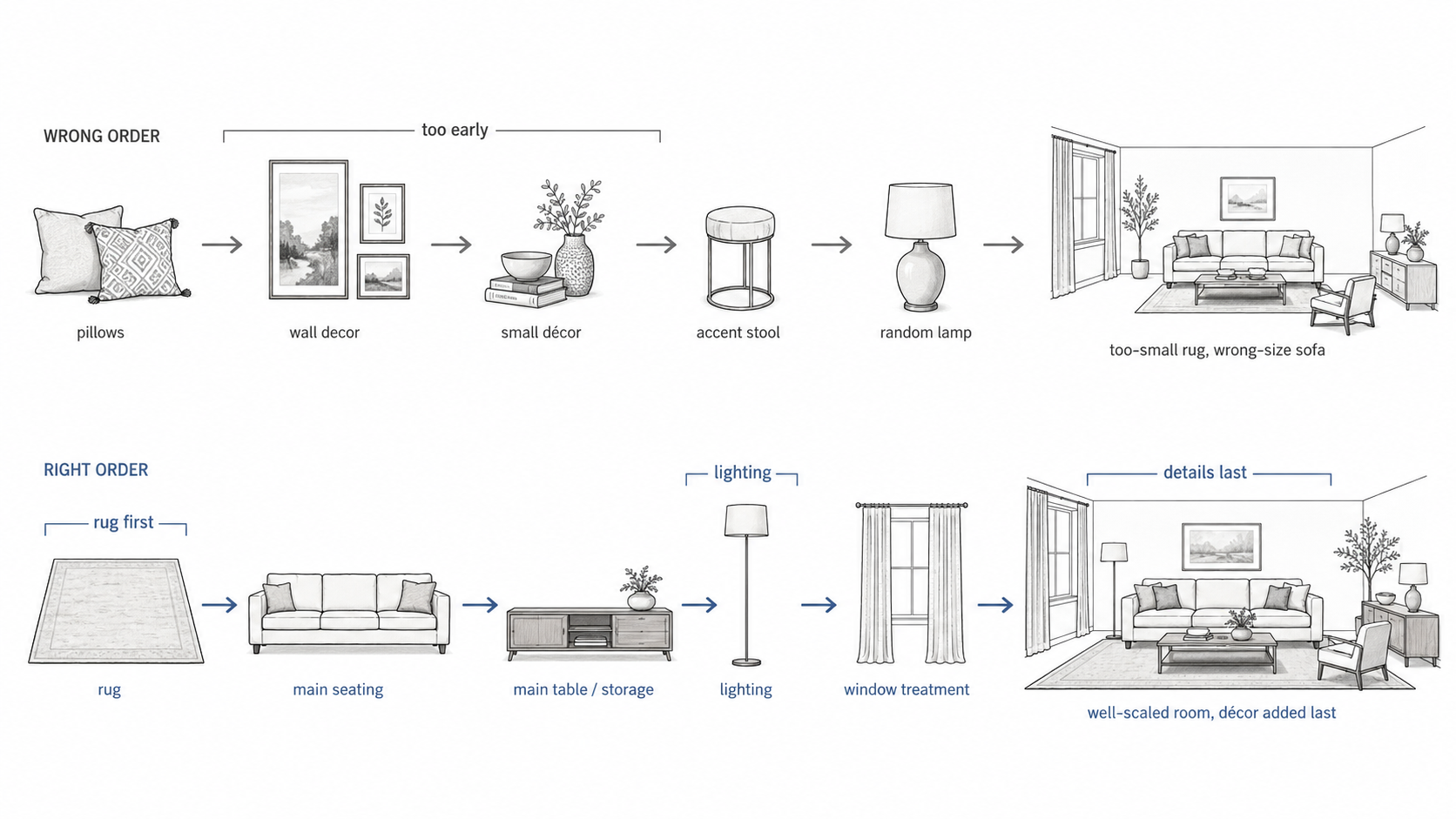
That is the difference between decorating and design. Decorating fills a room. Design stops you from buying the wrong things first.
Room-by-room basics that matter most
Living room
Start with the seating group, not the accessories. Decide the center. Make the rug large enough to hold the group together. Then layer the lighting. Most living rooms improve faster from those three moves than from any single décor purchase.
Bedroom
Get the bed wall right first. Check circulation on both sides. Make sure storage does not crowd the path. Bedrooms usually need less visual activity than people think, not more.
Dining area
Pull-back room matters as much as table size. A dining area that looks elegant but makes every chair scrape the wall is not well designed. One good light above the table does more than several scattered decorative moves around it.
Small apartment
Use fewer pieces with clearer jobs. Multi-use furniture helps, but only when it is actually comfortable and easy to live with. Overfurnishing small rooms is still one of the fastest ways to make them feel cramped.
If you want the broader design-principles side behind all of this, Design Elements in Architecture is useful because proportion, balance, rhythm, and contrast still apply even when you are just trying to fix a living room.
Interior design basics that stay useful longer
Trends change fast. Beginner advice changes fast too. One year it is all boucle and curved sofas. Another year it is saturated color or quiet luxury or whatever the feeds are pushing.
The basics that stay useful are simpler:
- know what the room is for
- give it a center
- respect circulation
- buy in proportion
- light the room for night, not just day
- use color and texture to support the room, not rescue it
That list is not trendy, which is exactly why it lasts.
FAQ
What is interior design in simple terms?
Interior design is the process of making a space work better and feel better through layout, furniture, lighting, color, and materials.
What should beginners learn first in interior design?
Start with layout, scale, and lighting. Those three shape the room more than small decorative choices do.
What is the biggest mistake beginners make?
Buying in the wrong order. Small décor and accent pieces come too early, while layout and main furniture decisions are still unresolved.
Can I learn interior design on my own?
Yes, but it helps to focus on real room problems instead of just collecting inspiration images. Study layout, furniture spacing, lighting, and material balance first.
Do I need to know all the design principles before decorating a room?
No. But you do need a working feel for balance, proportion, focal point, and contrast. Most people already sense these things when a room feels right or wrong. The value is learning how to name them and use them on purpose.
Read this next
If your room problems are mostly layout problems, go next to Space Planning and Layout in Interior Design.
If color is the next decision, Color Theory for Interior Design Beginners is the cleaner follow-up.
And if you are still choosing the actual pieces, Furniture Design and Selection and Materials and Textiles in Interior Design fit naturally after this page.