
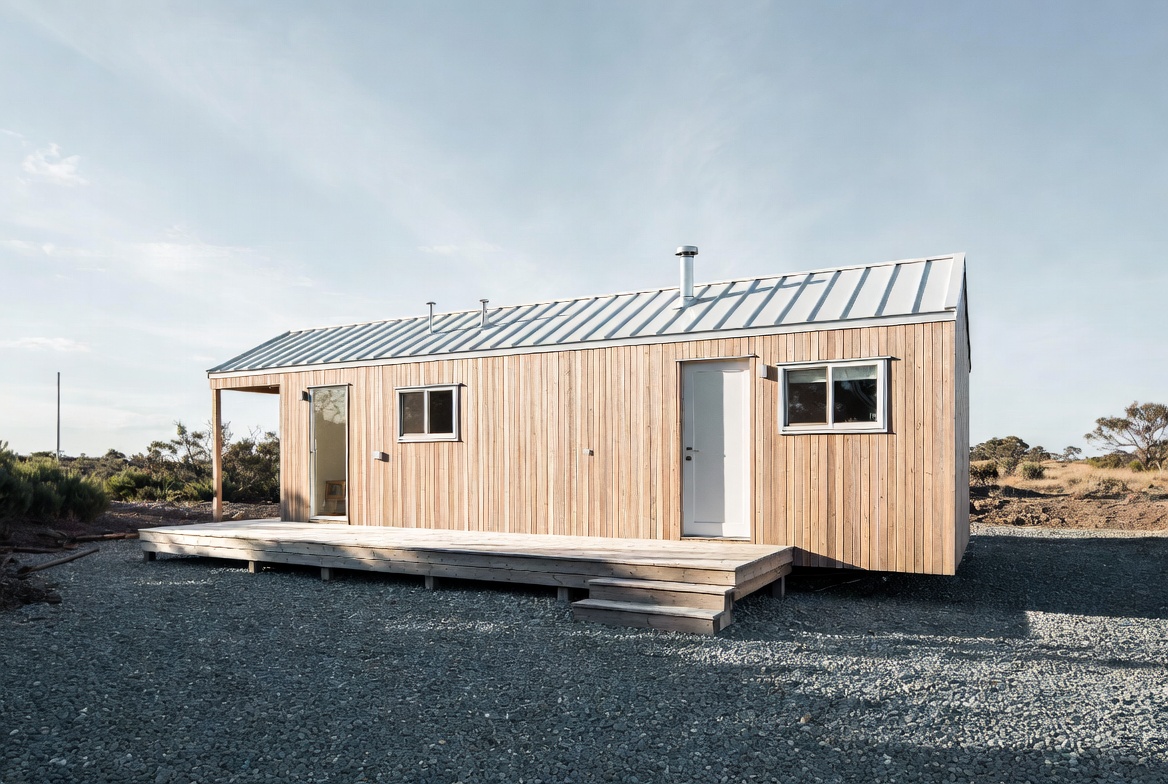
Tiny Home Reality Check: The 7 Problems That Decide Whether It Works
Tiny homes fail in ordinary ways first.
Parking. Moisture. Stairs. Storage. Winter condensation. That is where the idea either settles into daily life or turns into a cramped, expensive fix.
What matters is whether the house works on your land, in your climate, on your budget, and in your routine.
The tiny home that works is rarely the cutest one. It is the one that asks less of you every day.
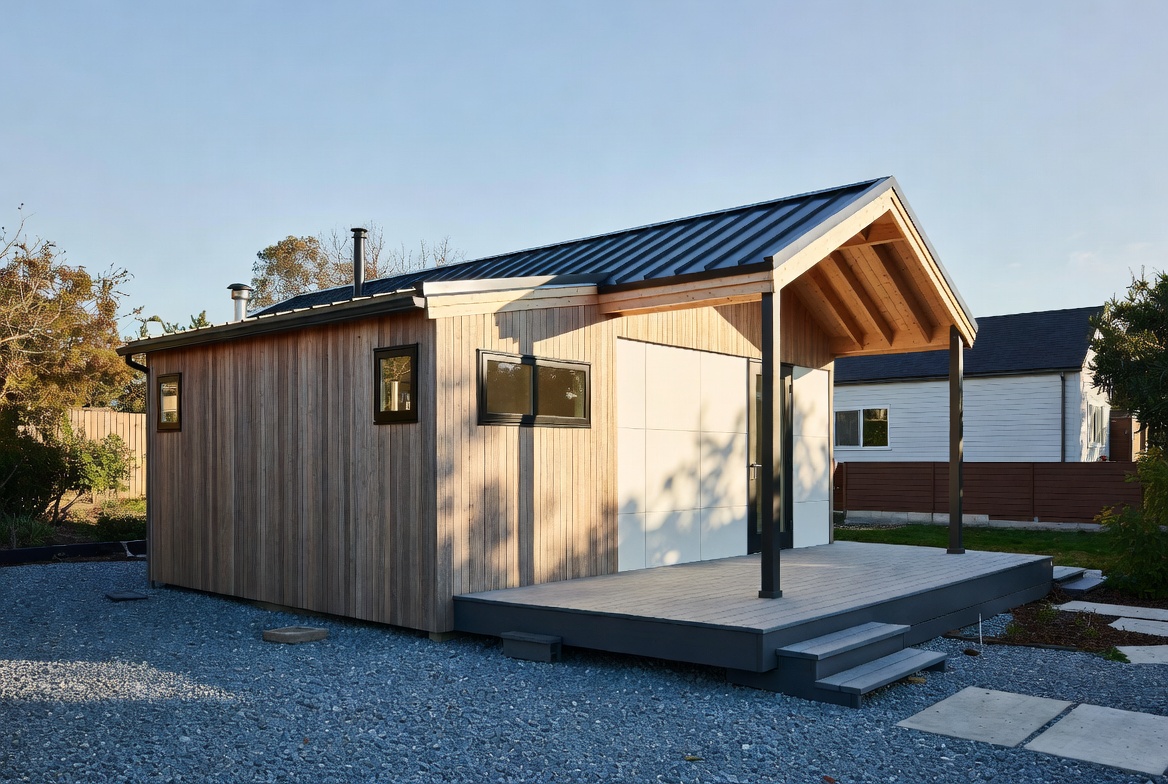
Image by ArchitectureCourses.org. Small gabled tiny home with a covered porch, timber cladding, and metal roof.
Start With the Lot, Not the Loft
Most tiny-home mistakes start before the house itself is built. The first real question is not layout. It is placement.
Can you legally put it there? Can it connect to power, water, and sewer? Will setbacks, access rules, fire separation, trailer parking limits, or service requirements kill the plan before the framing even starts?
A lot of people do this backward. They compare loft ladders, appliance widths, and cute porch sketches before they have checked whether the unit can sit on the land they have in mind. That is how good floor plans end up stranded with nowhere legal or practical to go.
If you are still sorting out the basic category, start with what a tiny house actually is. If the plan depends on a trailer, read tiny-house-on-wheels regulations before you get attached to anything else.
| Option | What sounds easy | What gets hard fast | Who it fits best |
|---|---|---|---|
| Tiny home on wheels | Mobility and lower entry cost | Parking, legal full-time living, towing limits, insurance | Short-term flexibility, guest use, seasonal living |
| Tiny home on a foundation | More stable and more house-like | Permits, site work, utilities, land cost, frost planning | Long-term living with fewer daily compromises |
| Small ADU or backyard house | Cleaner permanent setup | Main-house lot rules, tie-ins, local approvals | Owners who already have land and want a durable small dwelling |
Tiny on Wheels and Tiny on a Foundation Are Different Lives
This gets blurred online all the time, and it causes bad decisions.
A tiny home on wheels is not just a small house with a trailer under it. Weight matters. Width matters. How the frame is built matters. So does where it can be parked long term. A permanent tiny home behaves more like a very small house. That means site prep, frost protection, drainage, utility planning, and a different level of scrutiny.
That difference changes the whole project. The same floor plan can feel smart on a permanent foundation and miserable inside towing dimensions. It also changes what counts as a good compromise. A trailer build has less patience for heavy finishes, awkward roof forms, or layouts that waste wall length.
For design-stage thinking, designing your own tiny house is a better path than scrolling random inspiration images. The question is not what looks clever for ten seconds. The question is what still works in February, at night, when you are tired.
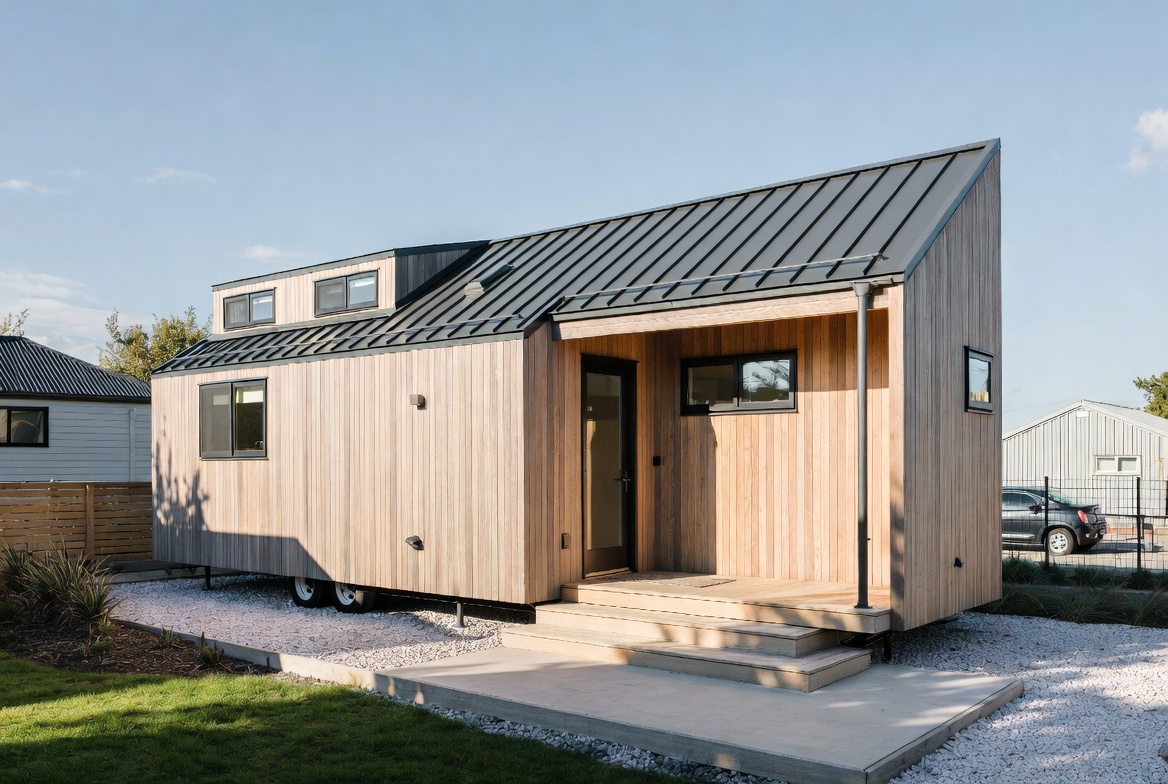
Image by ArchitectureCourses.org. Tiny home on wheels with timber cladding, a dormer loft, and a small front porch.
Moisture Shows Up Fast in Small Spaces
This is the part glossy tiny-home pages skip.
Small homes have less air volume. Showers, cooking, wet boots, laundry, and breathing can push humidity up fast. If the enclosure is tight and the ventilation is weak, the house starts telling on itself early. Condensation on glass. Damp bedding in the loft. Musty corners. A bathroom that never fully dries out. Cabinets that smell stale. That is how a cute tiny home starts feeling tired.
In a compact house, moisture control is part plan, part enclosure, part mechanical strategy, and part habit. A real bath fan matters. A range hood that vents outside matters. Window placement matters. So does where warm air rises and where it gets trapped.
Bad tiny homes make moisture feel like a housekeeping issue. Good tiny homes solve it as a building problem.
Where compact homes usually go wrong
- Putting the shower, cooktop, and loft in one tight heat-and-humidity zone.
- Using a recirculating hood where real exhaust is needed.
- Adding lots of glass without thinking through condensation and privacy.
- Building deep storage against cold exterior surfaces with no airflow.
- Treating insulation as the whole answer while ignoring ventilation.
This is where tiny house design that actually works matters more than broad tiny-home enthusiasm. The plan has to manage air, heat, and daily use, not just fit a bed over a kitchen.
Lofts Sell the Dream and Control the Daily Life
Lofts save floor area. They also decide whether the house feels easy or annoying.
Climbing up to sleep can sound fine until you are doing it every night, carrying laundry, getting up half-awake, dealing with heat buildup, or trying to age in place. The issue is not whether lofts can work. They can. The issue is whether they work for your body, routine, and timeline.
If the house is for one healthy person, a loft may be fine. If it is for a couple, a dog, older parents visiting, or a long-term plan, the loft becomes a harder call. A lot of tiny homes look good because the hardest part of daily use is photographed from the ground.
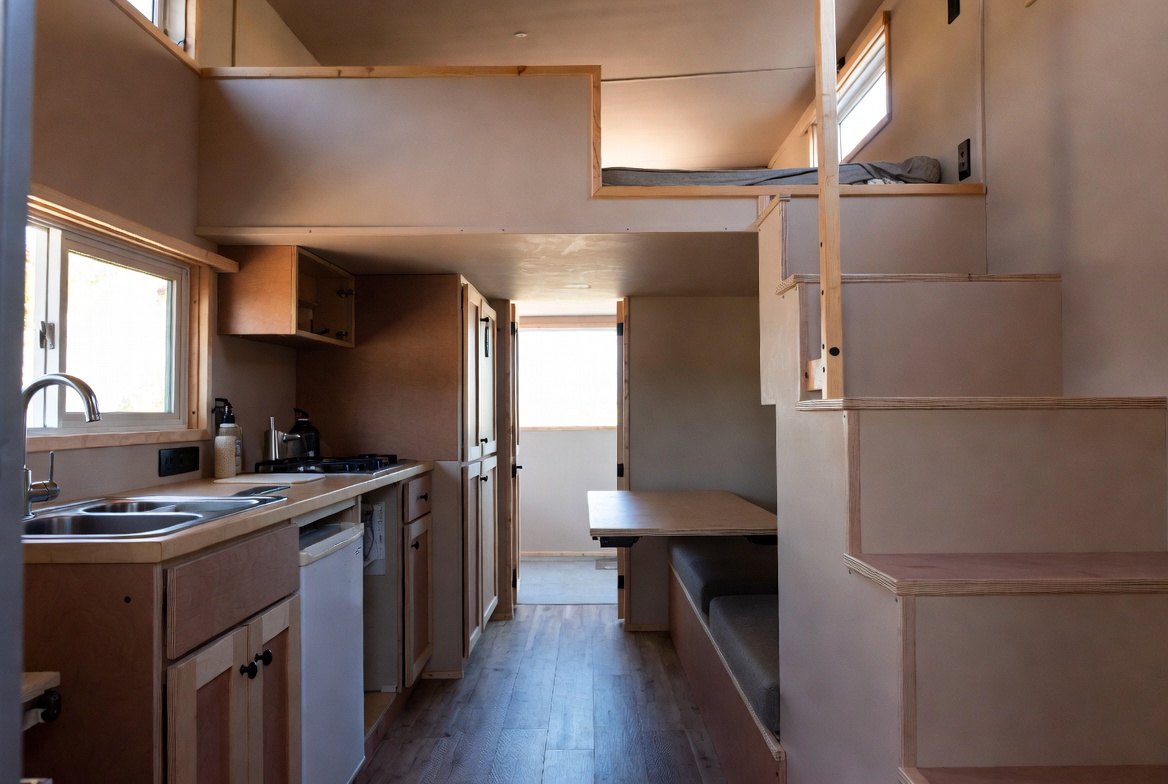
Image by ArchitectureCourses.org. Tiny home interior with loft sleeping space, built-in stair storage, bench seating, and a compact kitchen.
| Feature | Looks smart online | Where it starts to fail | Better move |
|---|---|---|---|
| Sleeping loft | Frees the whole main floor | Heat buildup, awkward stairs, low headroom | Main-floor bed nook or a larger loft with proper access |
| Ladder access | Saves space | Night use, carrying items, long-term comfort | Compact stair with storage below |
| Double-duty dining desk | Looks efficient | Constant setup and teardown | One surface that can stay useful all day |
| Open shelving everywhere | Makes the room look bigger | Dust, clutter, visual noise | Closed storage where the mess actually happens |
Storage Is a Behavior Problem Before It Is a Cabinet Problem
This is where many tiny-home plans lie a little.
They act as if enough clever millwork solves the issue. It does not. Storage helps, but the real question is what you are willing to keep, what needs to stay accessible, and what you can stop owning.
A tiny home feels calm when the storage matches the life. It feels chaotic when the design assumes some idealized minimalist version of you that does not exist. That is why the most important storage choice is not hidden drawers. It is deciding what categories deserve permanent space: winter gear, pantry goods, work tools, pet items, laundry, hobby equipment, and boring daily clutter.
Once those are real, the floor plan gets honest.
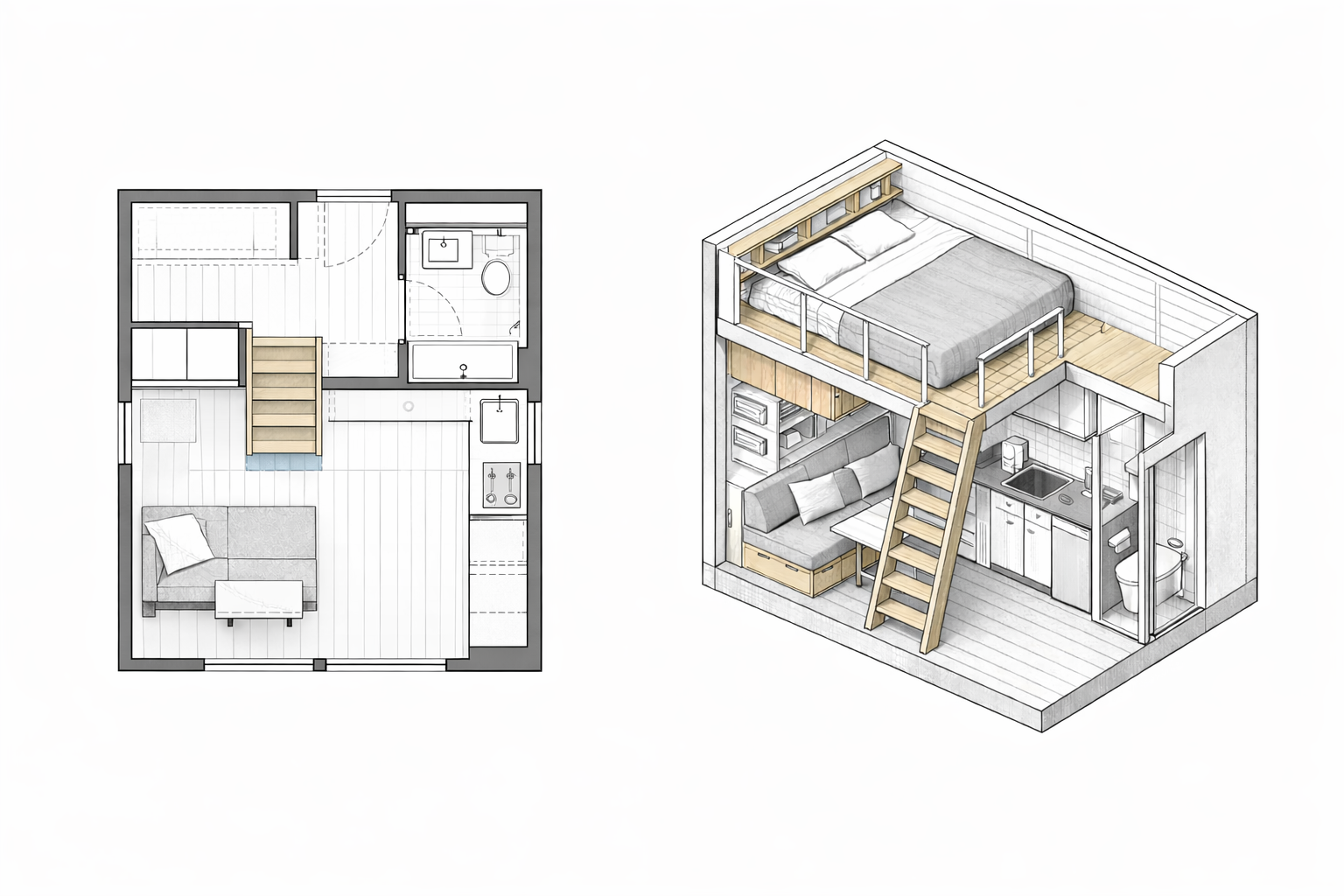
Illustration by ArchitectureCourses.org. Tiny home floor plan and matching cutaway showing a loft sleeping area, compact stair, enclosed bathroom, kitchen wall, and built-in storage within a small footprint.
If you are still deciding between a tiny home and a slightly larger compact house, compare it against small houses that do not feel small rather than only other trailer units. Sometimes the better answer is not radical smallness. It is a modest house with fewer forced compromises.
The Cheap Shell Can Turn Into an Expensive Setup
Tiny homes get sold as a cheap way out. Sometimes they are. Sometimes the house is the cheap part and everything around it is where the money leaks out.
Site work, piers, slab prep, trailer prep, frost protection, water service, sewer connection, electrical work, skirting, drainage, insulation upgrades, and exterior access can push a “cheap” tiny build into a different category fast. That is before you get to off-grid gear, batteries, solar sizing, backup heat, and water storage.
Cold climates make the gap wider. A tiny house that feels fine in mild weather can become miserable if the floor is under-insulated, the water lines are exposed, or the ventilation strategy dumps too much heat. That does not mean compact living is a bad idea. It means the best tiny-home budgets are built from the site outward, not from the Pinterest board inward.
If cost is your first filter, compare the full setup against tiny home cost breakdowns, not just shell price. The shell is where sellers like to stop talking.
Financing, Insurance, and Resale Live in the Weird Middle
This is another place where the internet gets soft.
Financing is cleaner when the dwelling fits a category lenders already understand. Insurance is cleaner when the insurer knows exactly what the thing is, how it is used, and where it sits. Resale is cleaner when buyers, appraisers, lenders, and local rules all read the house the same way.
A tiny home on wheels can be fun, flexible, and exactly right for the right owner. It can also sit in an awkward middle where it is too house-like for one system and too trailer-like for another. That is where projects get stuck. Not because the house is bad, but because the paperwork world does not know where to put it.
A permanent small house or ADU may have less romance, but it is often easier to finance, easier to insure, and easier to explain when you need to sell. That matters if this is supposed to be stable housing, not a short experiment or a guest unit.
This is one reason broad small-house options can be the smarter comparison, not just other tiny homes. A page like small house design may tell you more about a good long-term move than another round of tiny-home inspiration ever will.
The Tiny Home That Works Usually Cheats the Fantasy
Here is the part worth saying plainly.
The tiny homes that work best in real life tend to cheat the fantasy a bit. They are a little bigger. A little less cute. A little less obsessed with tricks.
They trade the ladder for a stair. They give the bathroom enough room to dry out. They leave space for a real coat zone. They make the kitchen workable for daily cooking. They do not rely on one heroic wall of transformable furniture to save the whole plan.
In other words, they stop trying to win the internet and start trying to be a house.
That is why a lot of people end up happiest with one of these moves:
- a slightly larger permanent small house,
- a backyard ADU with legal services and easier access, or
- a tiny home used for guest, studio, seasonal, or short-term living instead of full-time primary housing.
That may sound less pure. It is also why those versions hold up better once the novelty wears off.
Pressure-Test This Before You Commit
Do not ask whether you like tiny homes. Ask these instead.
- Do you already know where this can legally sit?
- Can you explain how water, sewer, and power will work without hand-waving?
- Can you live with the sleeping setup when you are sick, tired, older, or carrying things?
- Do you want a house, or do you want the feeling of escaping a big house?
- Will this still work in bad weather, not just in good photos?
- Are you trying to shrink your life, or only your floor area?
If those answers are fuzzy, the project is not ready yet.
FAQ
Can a tiny home work as a full-time house?
Yes, but only when the boring parts are solved first: legal placement, moisture control, utilities, storage, and a layout that fits your real routine. The ones that fail usually push those decisions too late.
Is a tiny home on wheels easier than a permanent tiny house?
It can be easier to start. It is not always easier to live with. Parking, towing limits, insurance, and long-term legality can become the main problem.
What is the biggest design mistake in tiny homes?
Designing around novelty instead of daily use. Loft drama, transformable furniture, and clever storage tricks cannot save a plan that handles moisture badly or has no real place for normal life.
Do tiny homes feel damp faster?
They can. The air volume is smaller, and the wet activities are packed close together. Good ventilation, proper exhaust, insulation, and thoughtful detailing matter more here, not less.
Is a small house better than a tiny house?
For many buyers, yes. A modest permanent house can keep the benefits of lower cost and simpler living without forcing the hardest tiny-home compromises.
What should I compare before buying one?
Compare total setup cost, legal placement, winter performance, bathroom quality, bed access, storage, resale, and insurance. Those decide the project far more than whether the sofa slides under a platform bed.