
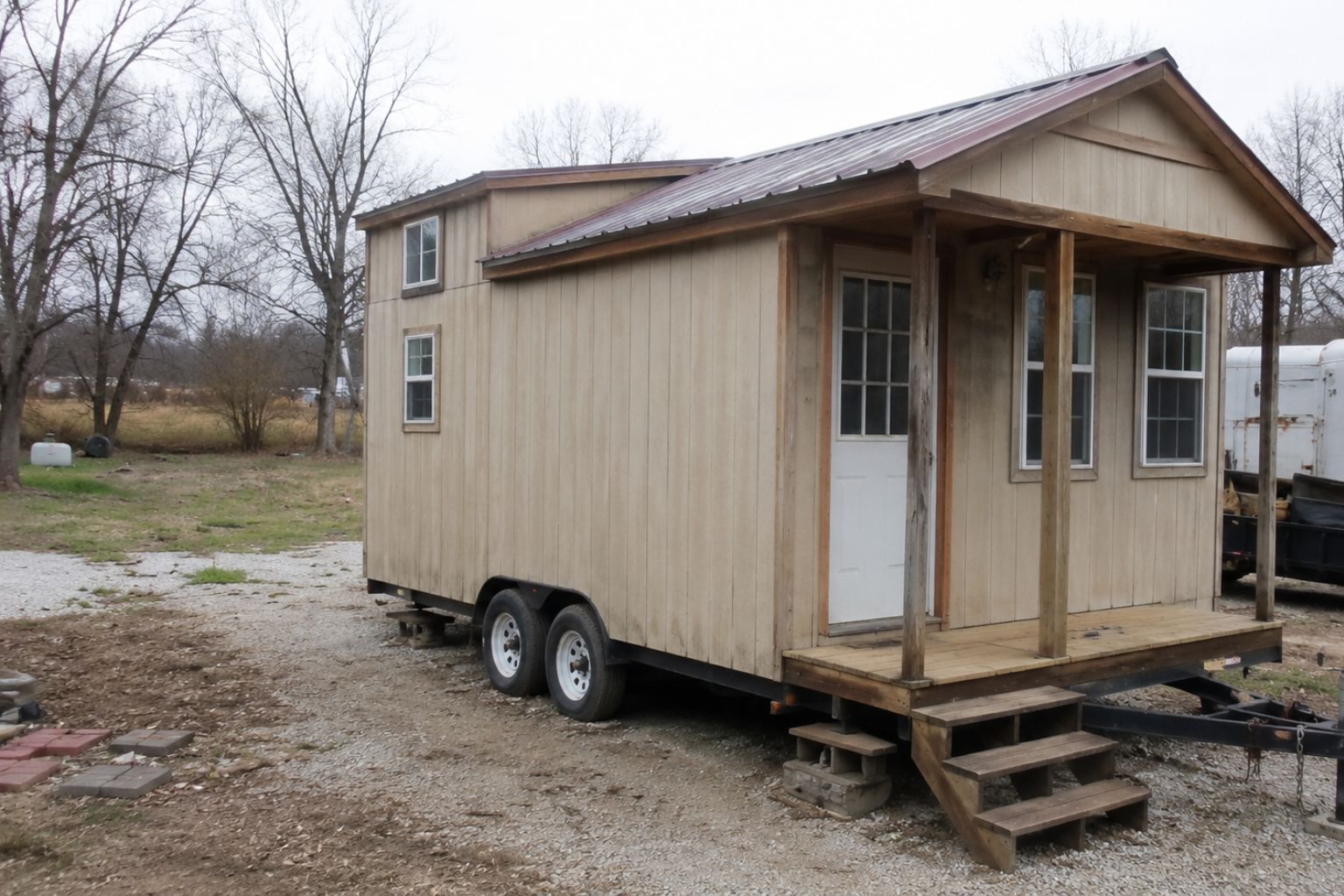
A tiny house on wheels can be legal to tow and still illegal to live in.
That is the mistake behind most bad THOW advice. People ask whether the trailer has a VIN, whether the width is road legal, or whether the builder says it is RV-certified. Those questions matter. They do not answer the bigger question: where can this unit legally sit as housing?
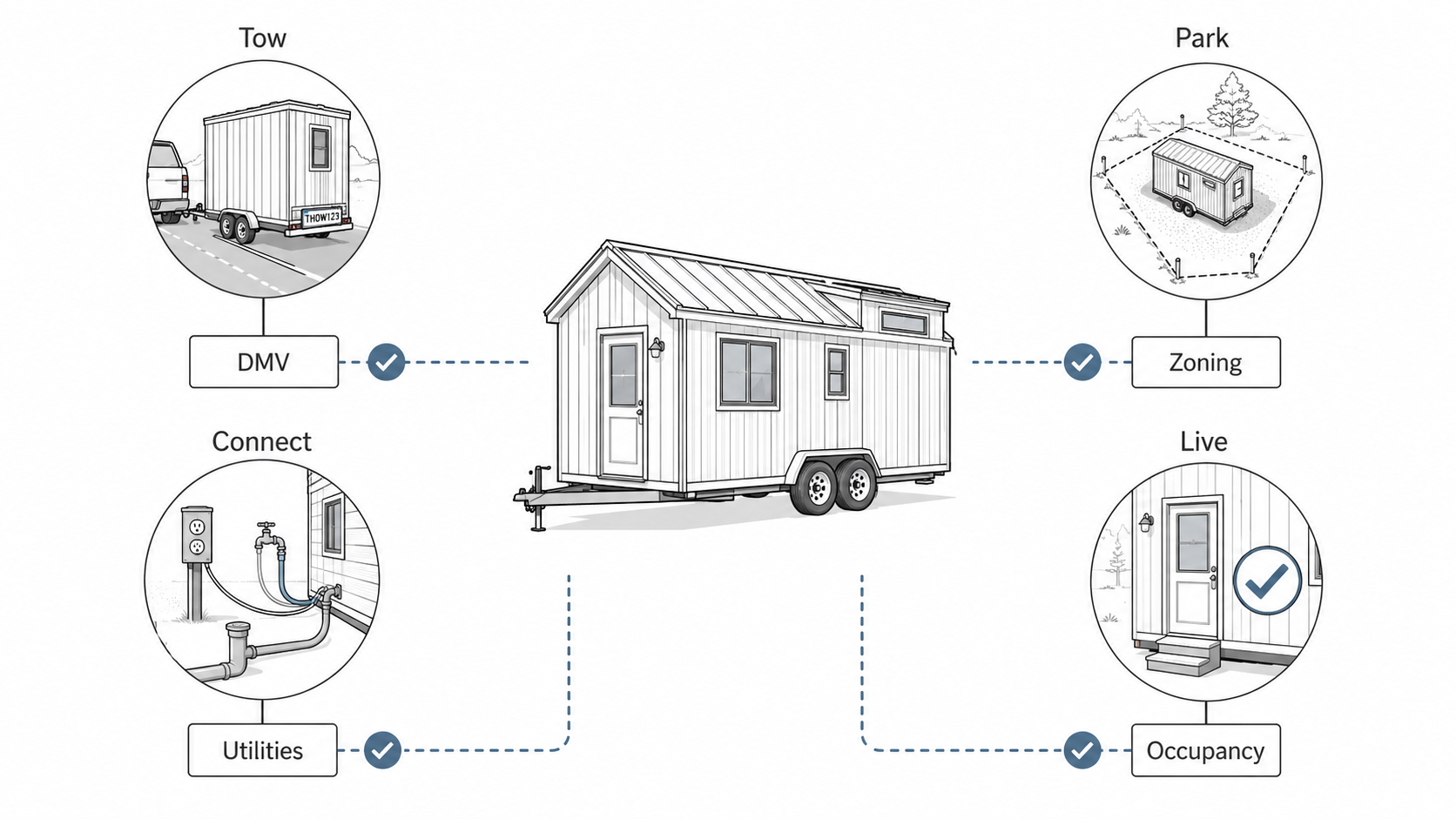
A towable tiny house has four separate problems: road legality, parking legality, utility approval, and occupancy. Passing one does not mean the others are solved.
If you need the broader legal categories first, start with Tiny Homes Regulations and Building Codes. If you are still sorting out the basic definition, use What Is a Tiny House?.
Road Legal Is Not Home Legal
The road side is about the trailer. The housing side is about land use.
A THOW may need a title, VIN, registration, license plate, lights, brakes, tires, axle rating, and a tow vehicle that can safely handle the load. That still does not give you the right to live in it full time on a residential lot.
Local zoning may treat it as an RV. A campground may allow it for seasonal stays. An RV park may allow long-term placement. A city may allow it as a movable ADU under strict rules. A county may reject it as a dwelling because it is on wheels.
That is why the first question is not “Can I tow it?” The first question is “Where can I legally use it the way I plan to use it?”
The Four Permissions
Wheels solve movement. They do not solve permission.
Do not let a seller collapse the whole problem into one word like “certified” or “legal.” Ask which permission they mean. A towable tiny house needs four separate approvals before it works as housing: tow, park, connect, and live.
| Permission | Who usually controls it | What can still go wrong |
|---|---|---|
| Legal to tow | State DMV, trailer rules, road rules | The trailer is registered, but the home cannot be occupied on the site. |
| Legal to park | Zoning office, RV park, campground, private land rules | The unit can be parked temporarily, but not lived in full time. |
| Legal to connect | Building department, utility provider, health department | Power, sewer, septic, graywater, or water systems are not approved. |
| Legal to live in | Local building, planning, zoning, and health officials | The unit works as a trailer but does not qualify as a dwelling. |
A buyer can win the trailer paperwork and lose the housing approval. That is the trap.
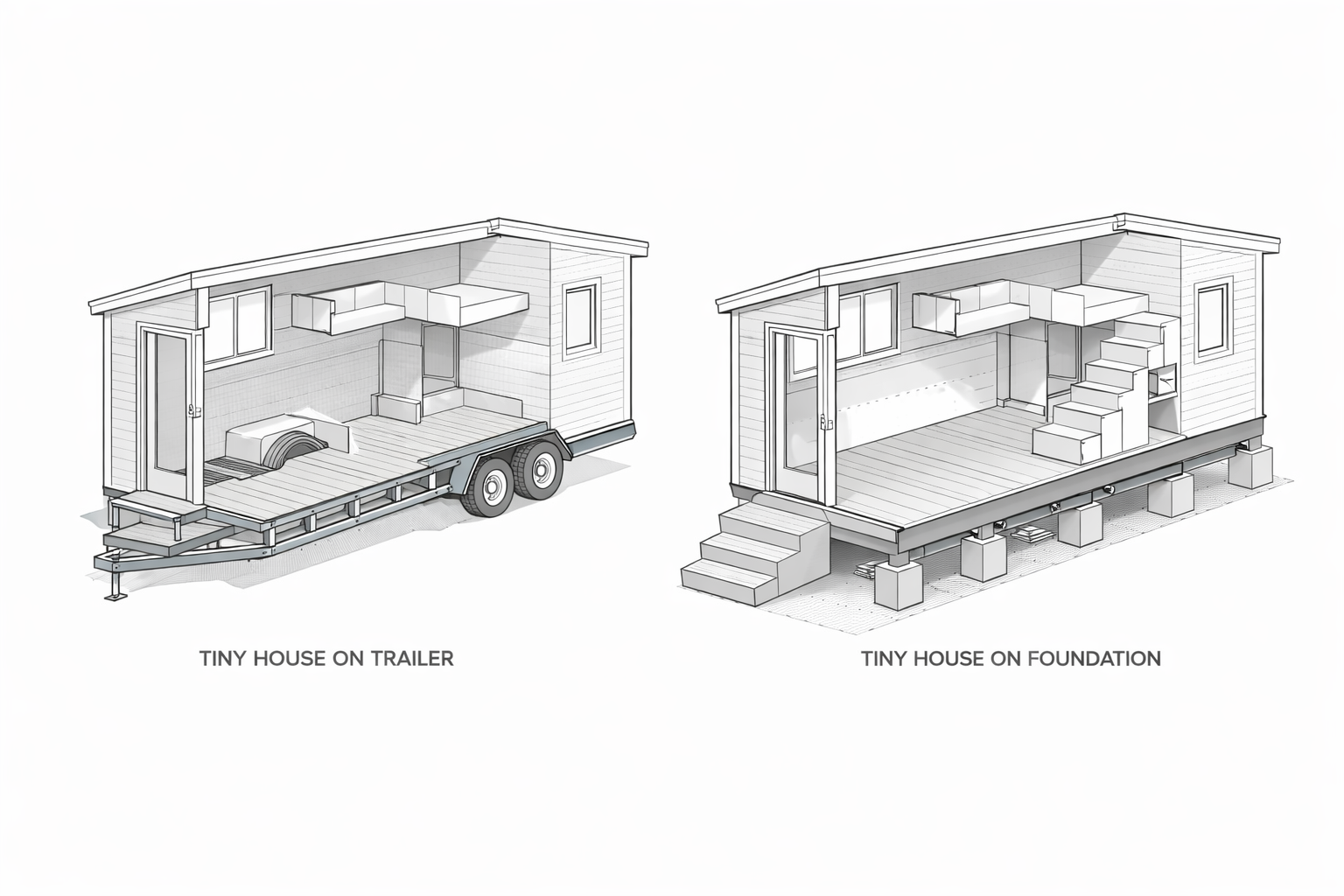
RV, Park Model, ADU, or Something Else
A tiny house on wheels is not automatically one legal thing. The same-looking unit may be treated differently depending on its size, certification, site, and intended use.
| Category | How it is usually treated | What to ask before buying |
|---|---|---|
| RV-style THOW | Often treated like a recreational vehicle or trailer | Can it be used full time, or only for temporary/seasonal occupancy? |
| Park model RV | Usually designed for seasonal or recreational setup | Where can it be placed, and is year-round living allowed? |
| Movable tiny house ADU | Allowed in some cities under specific ADU rules | Does this city allow movable tiny homes as ADUs on this parcel? |
| Homemade trailer build | May be hard to insure, certify, finance, or place | Who inspected it, what standard was used, and will the local office accept it? |
| HUD manufactured home | A separate federally regulated housing category | Does it have the required HUD label, or is the seller only using loose language? |
The listing title is not enough. “Tiny home,” “RV-certified,” “ADU-ready,” and “off-grid ready” are sales words until the local office accepts the category.
Appendix Q Does Not Fix a THOW
IRC Appendix Q is useful, but it gets misused in THOW conversations.
Appendix Q was created for tiny houses of 400 square feet or less, excluding lofts, with modified rules for lofts, ladders, stairs, ceiling height, and emergency escape. It matters most for tiny houses being reviewed as dwellings under a residential code path.
That does not mean a towable tiny house can park anywhere because Appendix Q exists. A local jurisdiction has to adopt or accept the applicable code path. And if the unit is treated as an RV, trailer, park model, or movable ADU, a different standard or local rule may control the decision.
Ask the building department two questions: has the tiny-house appendix or equivalent provision been adopted here, and does it apply to a unit on wheels?
Registration Does Not Mean Permission to Live There
This is the section that should come before the deposit.
A THOW owner may have clean DMV paperwork, a license plate, working lights, and a good trailer title. Then the zoning office says the unit cannot be occupied on the property. Or the county allows it only in an RV park. Or the city allows it as a backyard ADU only if it meets a narrow movable-tiny-house ordinance.
The paperwork did its job. It made the trailer legal as a trailer. It did not turn the trailer into approved housing.
Before paying for a finished unit, get a written answer for the exact parcel where it will sit. Do not ask a general question like “Are tiny homes legal here?” Ask: “Can this specific movable tiny house be placed and occupied full time at this address, and under what category?”
Where THOWs Can Usually Stay
The safest answer is still local. But most THOW placements fall into a few common buckets.
| Location | Often easier for | Common limit |
|---|---|---|
| RV park or campground | Short-term, seasonal, or long-term recreational stays | Park rules, age limits, certification requirements, stay limits |
| Backyard as movable ADU | Specific cities that allow this category | Setbacks, utility connection, permit process, local ADU standards |
| Rural private land | Temporary use, farm support, guest use, or flexible county rules | Septic, well, road access, occupancy, zoning, and enforcement risk |
| Tiny home community | Buyers who want a more predictable placement path | Lot rent, community rules, utility fees, resale limits |
| Ordinary suburban lot | Usually difficult unless the city allows movable ADUs | Second-dwelling restrictions, RV parking limits, HOA rules |
Private land is not a magic answer. Zoning, sewage, water, power, fire access, driveway access, and occupancy rules still follow you there.
Certification Helps, but It Is Not the Whole Answer
Certification can help with insurance, park acceptance, lender comfort, and local review. It does not erase zoning.
Some THOWs are built to RV-related standards such as NFPA 1192 or ANSI A119.5. Some builders use third-party inspection programs. Some cities require movable tiny houses used as ADUs to be licensed, registered with the DMV, and certified through an approved third-party agency.
That is useful. It is also specific. A random seller saying “RVIA style,” “NOAH ready,” or “built to code” is not the same as having a label, inspection record, or certification accepted by the authority that controls your site.
Ask for the actual certificate, standard, inspection agency, label, and serial or identification number. If the seller cannot provide them, treat the claim as marketing.
Size, Weight, and Road Limits
Most THOW designs are shaped by road limits before they are shaped by interior design.
The common U.S. design target is about 8 feet 6 inches wide for travel mode. Height often stays near 13 feet 6 inches to avoid obvious bridge and route problems, although state and route rules still matter. Length and weight depend on the trailer, tow vehicle, axle rating, brakes, tires, and local movement rules.
Do not design to the internet average. Design to the trailer rating, the tow vehicle, and the route.
Federal vehicle-size resources can help explain the broad road context, but they do not give you permission to move, park, or occupy a THOW in every state or city. A route can still have low bridges, narrow roads, local restrictions, or permit requirements.
Weight Is a Safety Issue
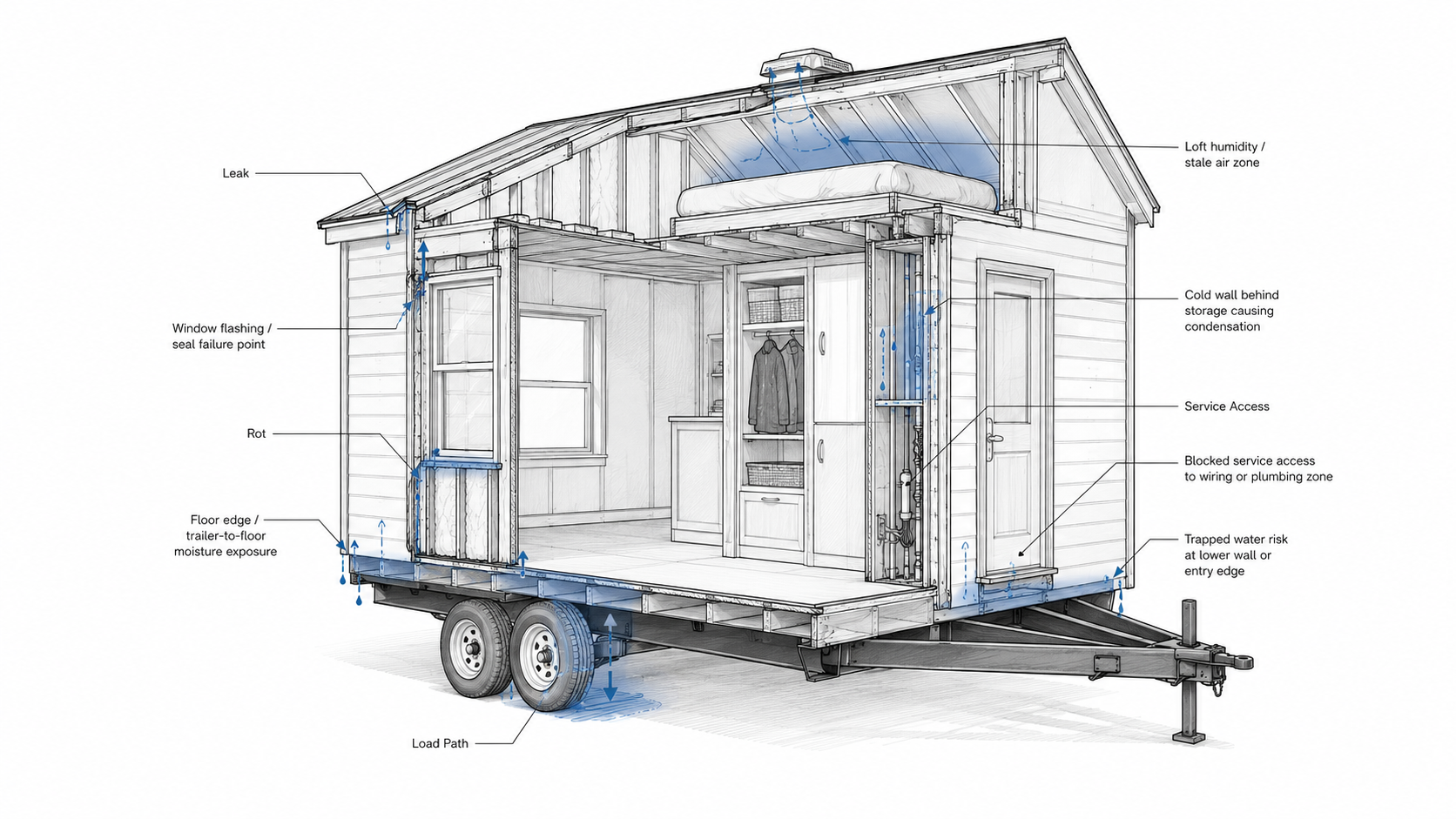
A THOW is a moving load. Heavy items cannot be placed wherever the floor plan looks neat.
Water tanks, batteries, tile, appliances, wood stoves, dense cabinets, metal roofing, and oversized windows add up fast. Bad weight distribution can create sway, overloaded axles, tire failures, weak braking, and unsafe tongue weight.
Ask the builder for estimated dry weight, gross loaded weight, axle rating, trailer GVWR, tongue weight target, tire rating, brake setup, and what happens if you add more storage after delivery.
If nobody can explain those numbers, the design is not ready for the road.
Utilities Can Stop the Project
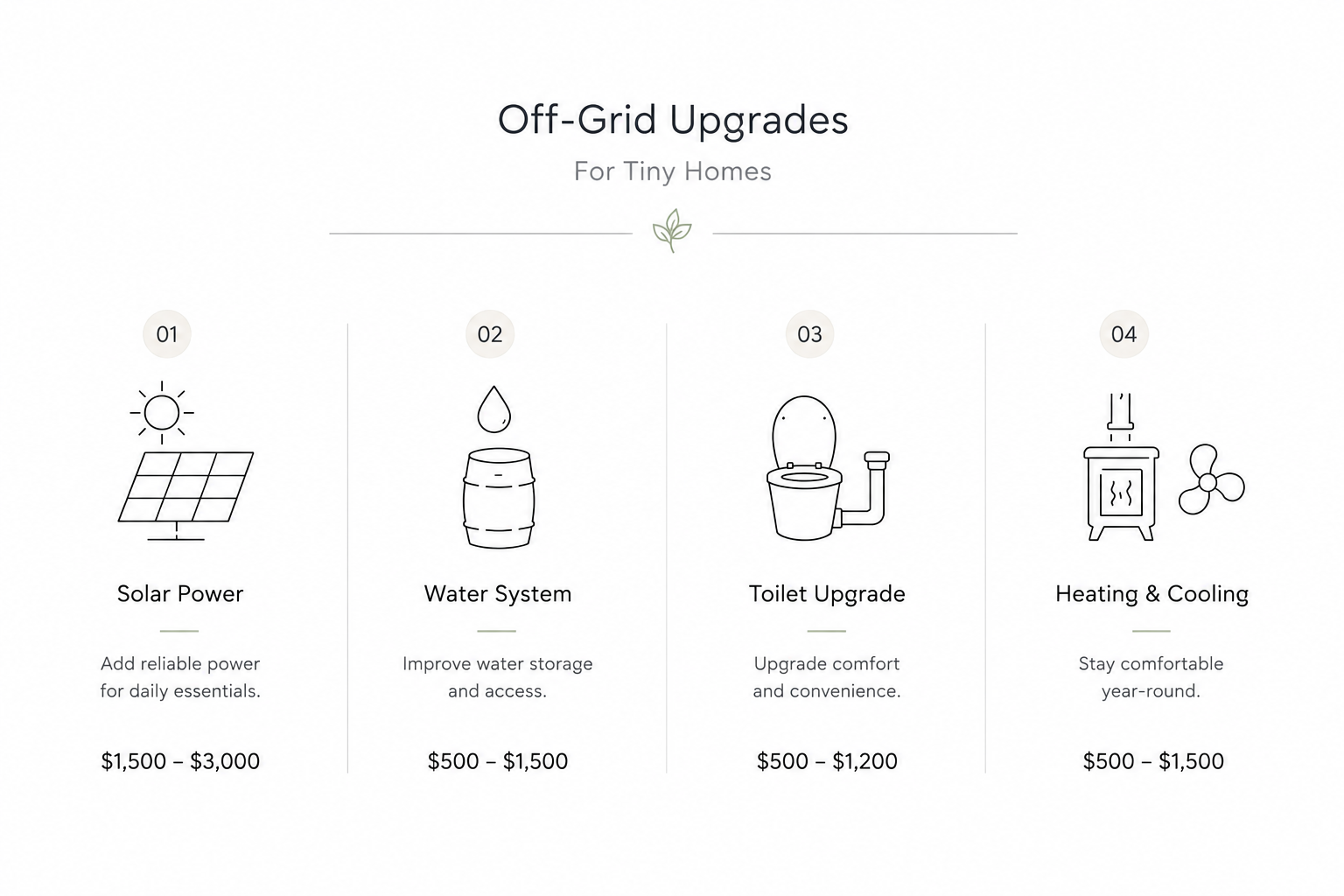
Power is usually the easiest utility to imagine and the least likely to be the final problem.
Sewage, graywater, potable water, and winter plumbing cause more trouble. A composting toilet may be allowed in one county and rejected in another. Graywater may need an approved disposal method. Septic may require soil testing, setbacks, permits, and inspections. A well may need testing. A temporary hose connection may not satisfy a full-time dwelling standard.
Off-grid does not mean outside the rules. It means the local health department may ask harder questions.
Ventilation Is Not Optional
Tiny homes get humid quickly.
Cooking, showers, propane appliances, wet clothes, sleeping lofts, and a tight shell can load a small volume of air with moisture. That moisture finds cold surfaces first: window frames, roof corners, wall cavities, bedding against exterior walls, and closed storage.
A bathroom fan, kitchen exhaust, planned fresh air, and accessible service zones are not luxury upgrades. Without them, the home can look finished and still grow mold behind the parts you cannot reach.
Address, Mail, Insurance, and Taxes
This belongs in the legal checklist before the unit is delivered.
A full-time THOW owner needs a legal address for driver’s license records, taxes, voting, banking, insurance, vehicle registration, and sometimes school or health coverage. A P.O. box may work for mail. It may not work as a residential address. A virtual mailbox may help with documents. It may not satisfy every agency or insurer.
Be honest with the insurance company about where the unit usually sits and how it is used. A claim can get ugly if the policy was written for recreational use and the unit was being used as a full-time dwelling in a place where that use was not allowed.
Residency, domicile, mailing address, trailer registration, and dwelling occupancy are separate issues. Keep records for each one.
Financing Is Harder on Wheels
A standard mortgage usually needs real property: land, a permanent structure, appraisal, title, and a code path the lender understands.
A THOW often falls outside that box. Buyers may end up using cash, RV loans, personal loans, home-equity loans, or builder financing. Those can work, but terms are usually different from a conventional mortgage. Shorter terms can make the monthly payment higher than expected even when the house is small.
The financing answer can decide the build before design does. If the lender requires RV certification, that narrows the builder list. If you want mortgage-style financing, wheels may be the wrong path.
Questions to Ask Before You Buy
Ask these before the deposit leaves your account.
- What legal category will this unit fall under on my exact site?
- Can it be occupied full time, seasonally, or only temporarily?
- Is the trailer titled, registered, inspected, and properly rated?
- Which standard is it built to: NFPA 1192, ANSI A119.5, local movable-tiny-house rules, or something else?
- Who inspected or certified the unit, and will my local office accept that label?
- What are the loaded weight, trailer GVWR, axle rating, tire rating, and tongue weight target?
- Where will sewage, graywater, drinking water, heat, and power come from?
- Can I insure it for the way I plan to use it?
If the answer is “that depends,” good. It probably does. Get the dependency in writing before you buy.
Official Resources to Check
Use these as starting points, then confirm the local version with the office that controls your site.
- Los Angeles ADU resources for an example of a city that recognizes movable tiny houses as ADUs under specific rules.
- Santa Cruz County Tiny Homes on Wheels for a county-level THOW permit example.
- Washington State L&I Tiny Houses for a state-level approval process covering tiny houses and tiny houses with wheels.
- ICC Appendix Q Tiny Houses for the tiny-house model-code provisions many jurisdictions reference.
- HUD Manufactured Housing Labels if you need to verify a manufactured-home certification label.
- EPA septic and decentralized wastewater resources for sewage and onsite-system background.
FAQ
Are tiny houses on wheels legal in the U.S.?
Sometimes. There is no single U.S. answer. The result depends on the state, city, parcel zoning, trailer status, certification, utilities, and whether full-time occupancy is allowed.
Can I live full time in a THOW?
Only where local rules allow full-time occupancy. A THOW may be legal to tow and legal to park temporarily while still being illegal as a permanent dwelling.
Does RVIA or similar certification make a THOW legal?
It can help with insurance, RV-park acceptance, and some local approval paths. It does not override zoning, utility, health, ADU, or occupancy rules.
Can I put a THOW in my backyard?
Only if your city or county allows that use. In some places the path is a movable ADU. In others, a towable tiny house in the backyard is treated as RV parking, not housing.
How wide can a tiny house on wheels be?
Many U.S. THOWs target about 8 feet 6 inches wide in travel mode to avoid obvious oversize issues, but state and route rules still matter. Width alone does not answer height, weight, registration, or occupancy.
What usually stops THOW approval?
Zoning, long-term occupancy, sewage, utility connection, and certification. The build can be attractive and still fail because the site does not allow the use.
Read This Next
For the broader legal framework, Tiny Homes Regulations and Building Codes explains how tiny homes split into ADUs, RVs, park models, manufactured homes, and permanent dwellings.
For cost planning, Tiny Home Cost Breakdown shows how site work, systems, delivery, and setup costs change the budget.
If you are looking at very cheap units, Under $10K: Tiny Houses on Wheels You Can Actually Buy explains why cheap THOWs usually come with unfinished work, repair risk, or placement problems.