
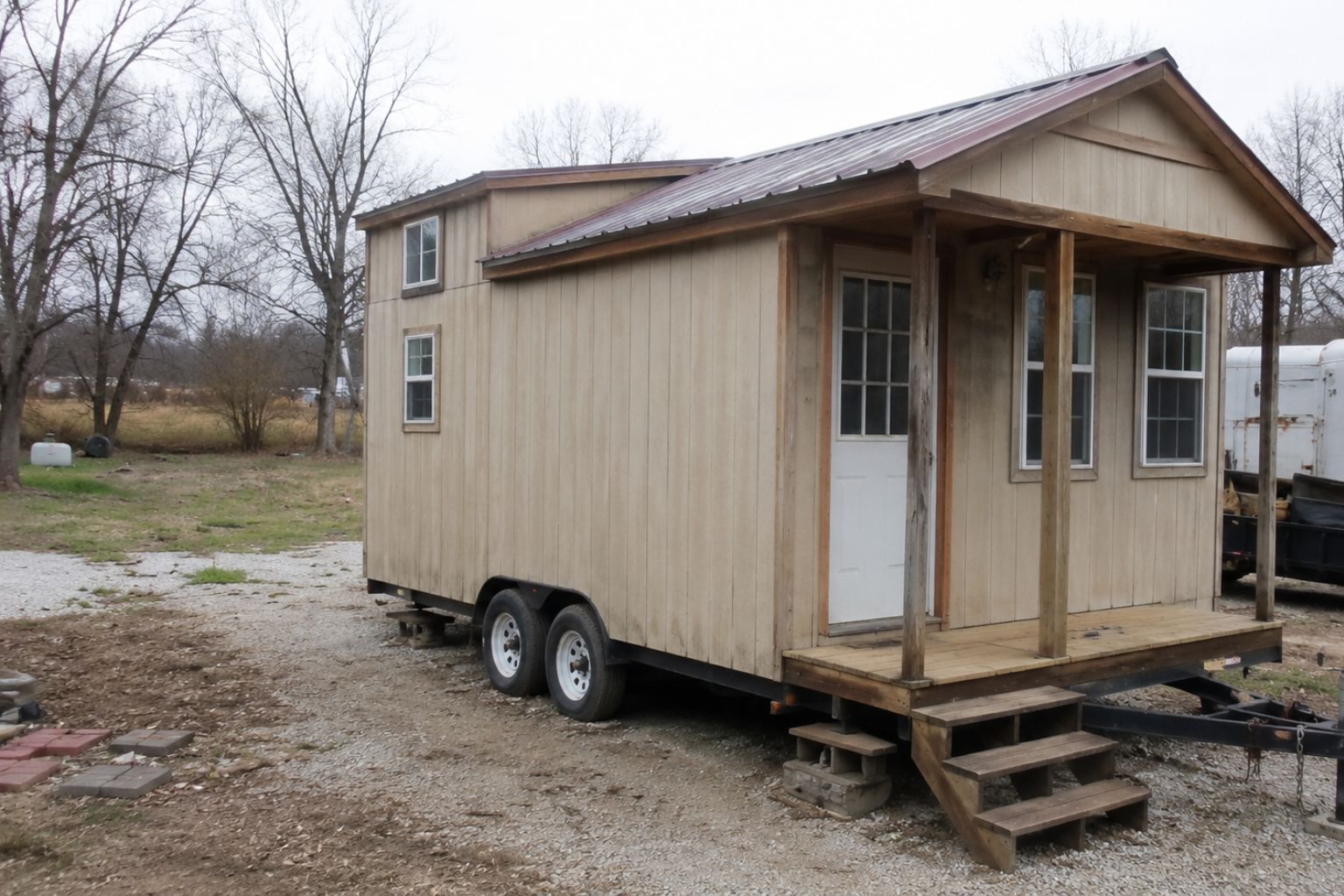
Tiny homes on wheels under $10,000 still exist.
What usually does not exist at that price is the version people imagine: legal everywhere, warm in winter, dry in rain, easy to tow, easy to insure, and finished well enough to live in full-time without another round of spending.
That is where cheap tiny-house pages go bad. They show the low sticker price and skip the part where the project starts fighting back. Water gets in. Condensation shows up. Trailer paperwork gets messy. The shell is light enough to move but not detailed well enough to stay dry. Or the build looks fine until you try to park it somewhere and run into zoning, sanitation, and inspection trouble.
If you are brand new, start with What Is a Tiny House?. If you want the bigger context behind why people keep chasing small mobile housing in bad housing markets, go next to What Is the Tiny House Movement?.
Under $10K Means Four Different Problems
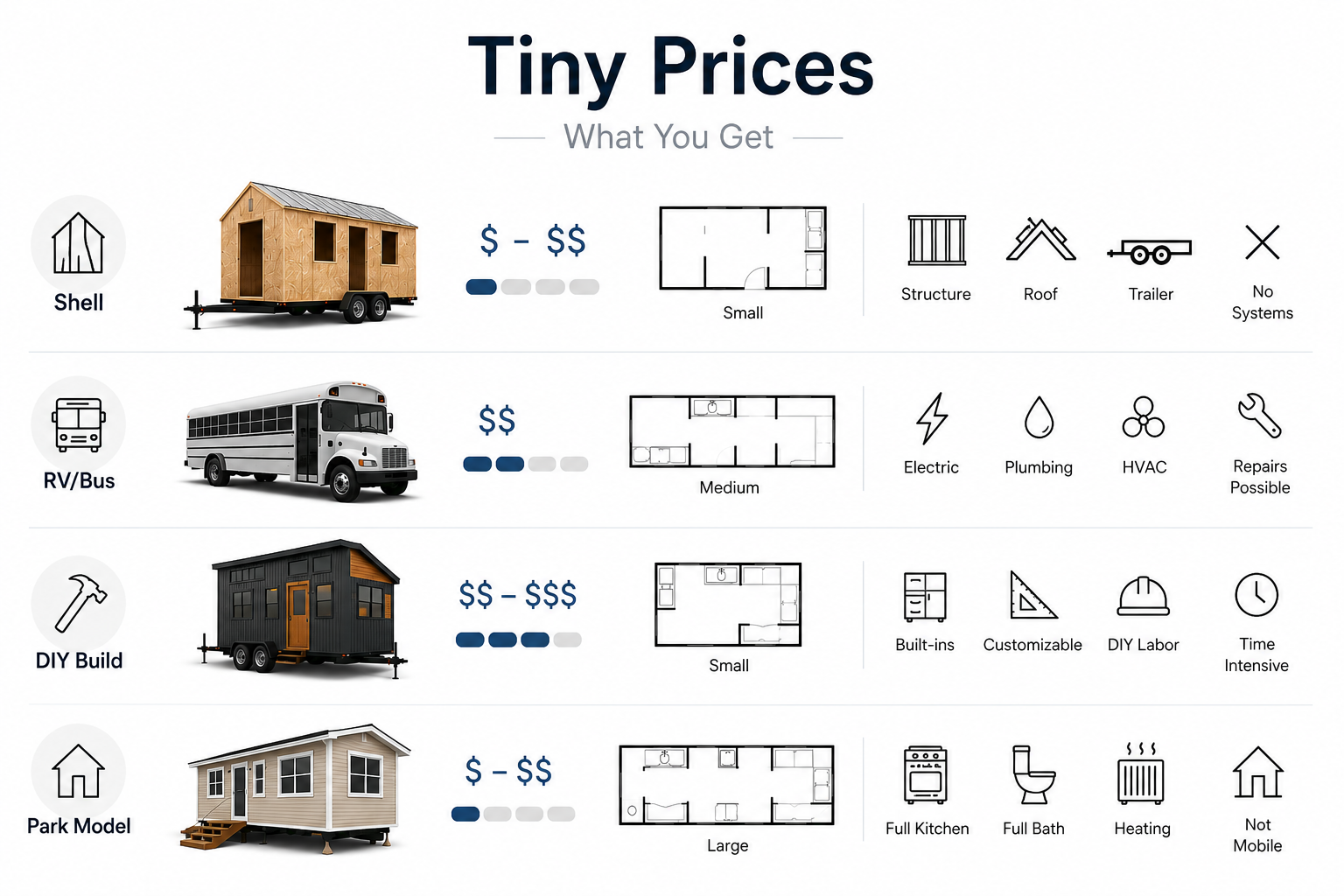
Tiny house prices depend on what is already included, from a basic shell to a used RV, DIY build, or park model with more systems in place.
At this budget, you are almost never buying a finished tiny house. You are buying a position in the sequence.
| Type | What you are really getting | What usually goes wrong | Where it makes sense |
|---|---|---|---|
| Shell on trailer | Frame, roof, basic enclosure, trailer base | Weak insulation, air leakage, unfinished systems, wasted money if the shell was built badly | Best starting point for a patient DIY build |
| Used travel trailer | Something towable with a built-in layout | Leaks, rot, soft floors, mold, outdated systems | Short-term shelter or a fast budget experiment |
| Cargo or utility trailer conversion | A simple mobile box you can finish yourself | Condensation, cramped layout, blocked service access, bad ventilation | Camping, seasonal use, stripped-down mobility |
| Flatbed plus DIY build | Maximum control and maximum responsibility | Bad load transfer, sway, inspection trouble, rework, wasted money | Only for people who can really build |
Cheap tiny homes are usually cheap because part of the house is still missing, part of the risk has been pushed onto you, or the seller is offloading a problem.
Cheap Listings Are Messy
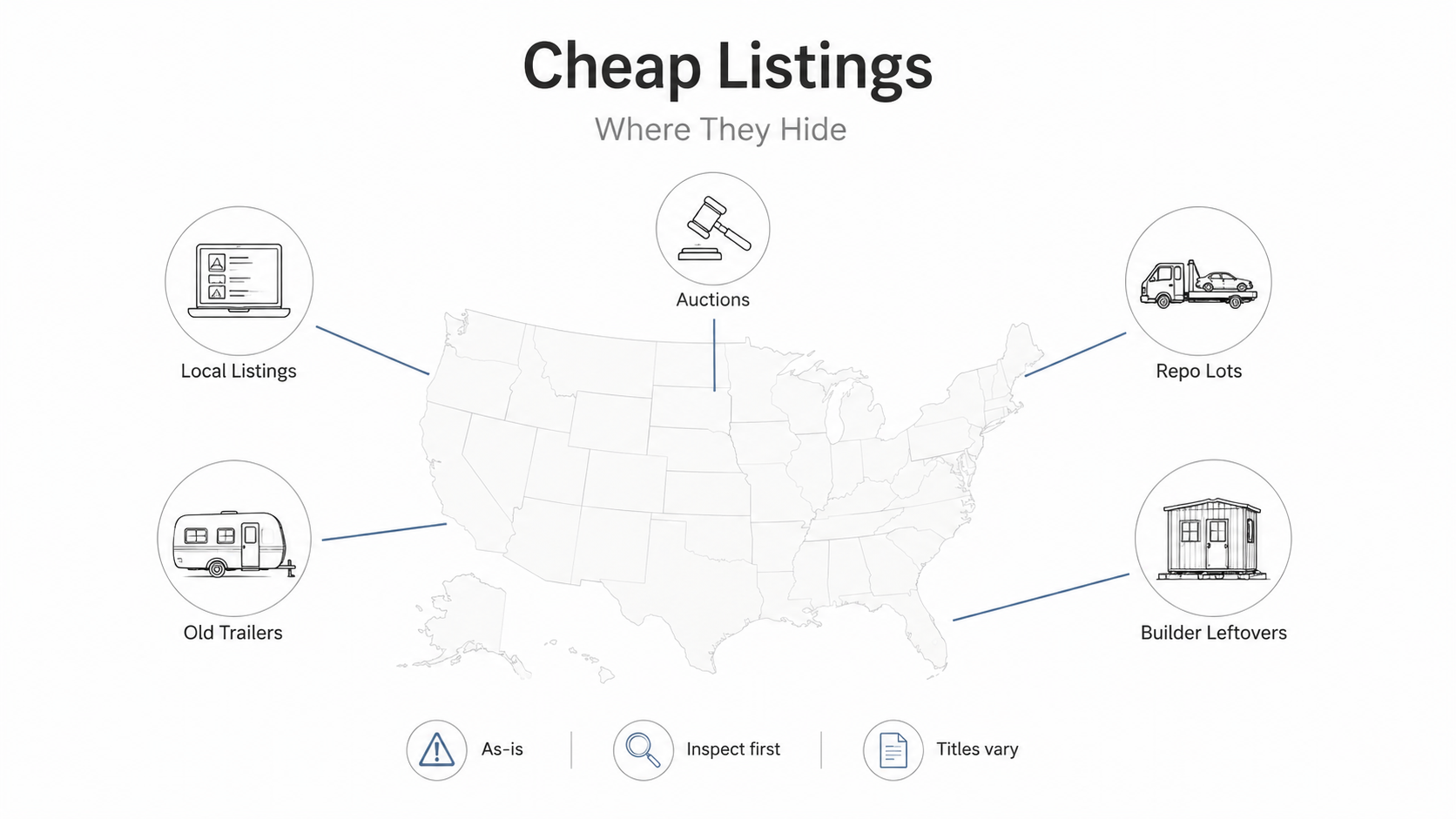
Cheap tiny-house listings are usually found through rough local channels, auction lots, repo sales, old trailers, and builder leftovers rather than polished dealer pages.
The under-$10K market is rarely tidy. The real options usually show up in rough local listings, regional classifieds, auction lots, repo sales, and builder leftovers. Not polished dealer websites.
You will still find deals on Facebook Marketplace, Craigslist, auctions, and the occasional tiny-house listing site. But the quality spread is brutal. Two trailers can look equally cheap in photos and be two completely different jobs in real life. One is a shell you can finish. The other is a wet structure that will keep leaking until you strip it back to framing.
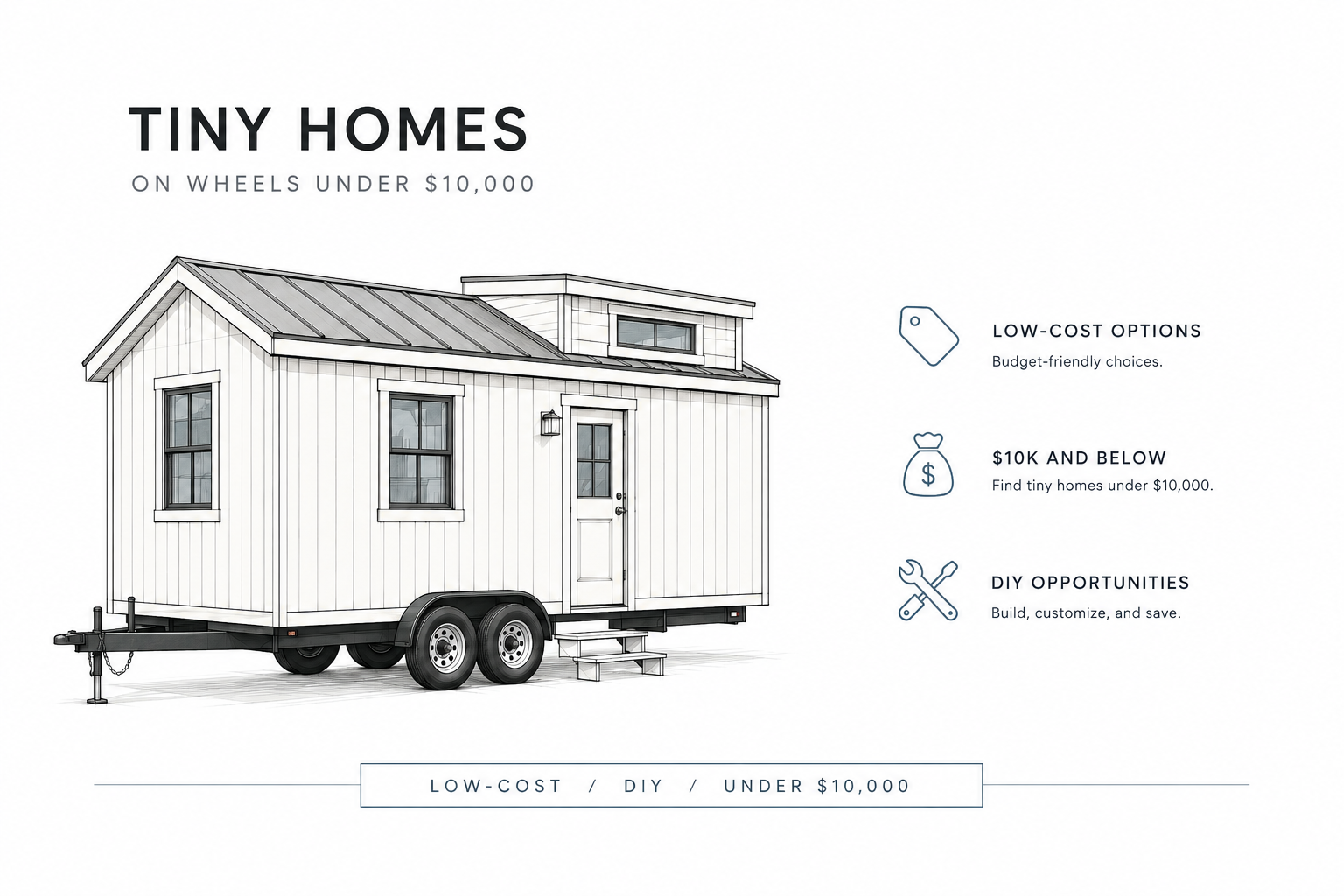
Tiny homes on wheels under $10,000 are usually low-cost shells, DIY projects, or unfinished buys rather than complete move-in-ready houses.
If you are trying to compare the wheels route against other mobile options, Everything About Tiny Houses on Wheels and Movable Tiny Homes: Are They Worth It? are better next reads than another random listing feed.
A Shell Is Cleaner Only If the Shell Is Good
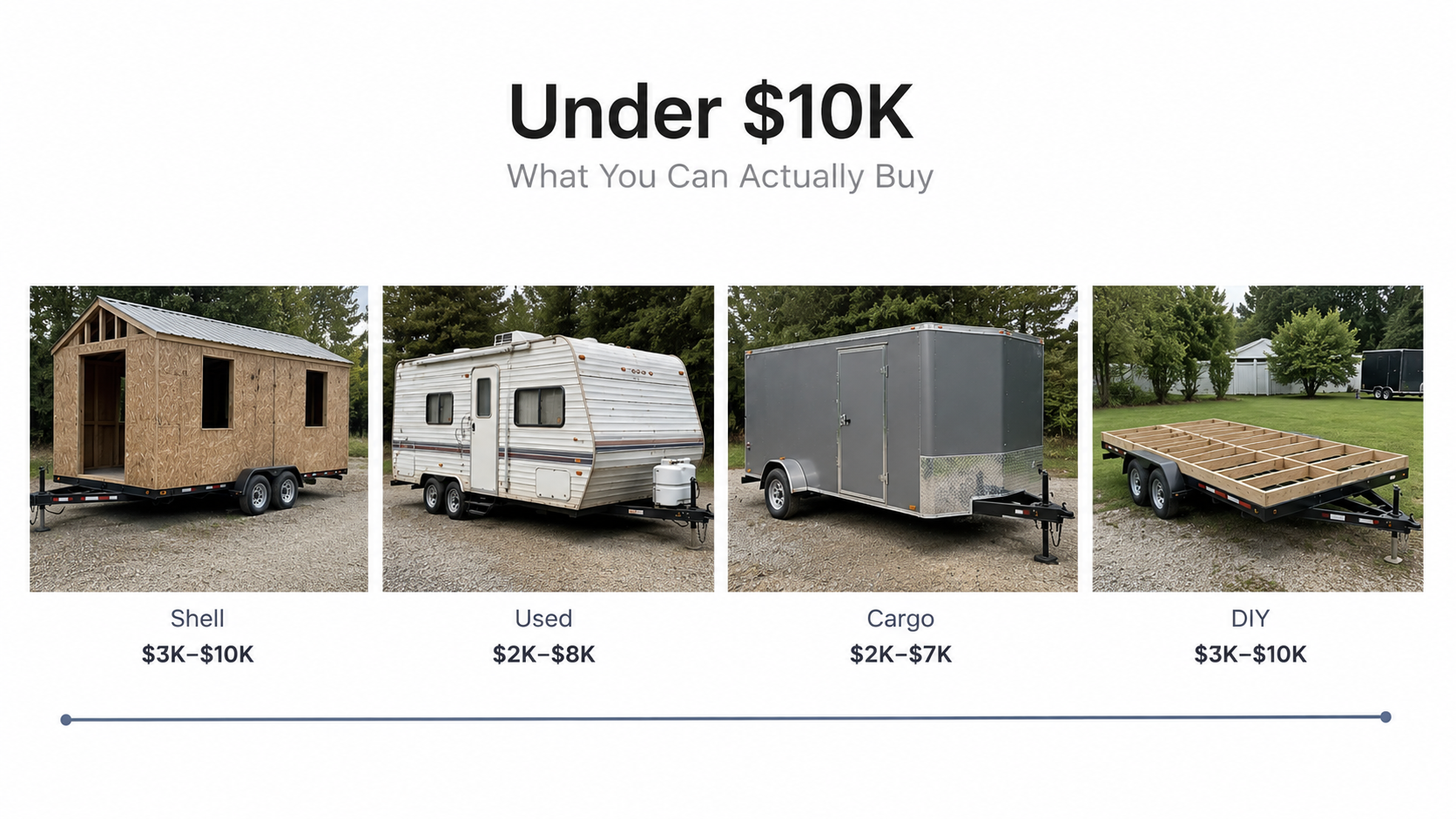
Under $10K usually means buying a starting point, not a finished tiny house.
If you are trying to stay under $10K without buying a hidden mold problem, a shell on a decent trailer is usually the cleanest starting point.
You get past the hardest early hurdle: a towable base and some weather protection. That matters. Starting with a rotten camper means you are paying for demolition, repair, and sealing work before you even start shaping the layout.
But a shell is still not a house. It still needs insulation, wiring, ventilation, interior finish, storage, and usually a better moisture strategy than the seller has thought through. A shell can save money. A bad shell can also lock in air leakage, trapped water, and weak flashing that causes rot later.
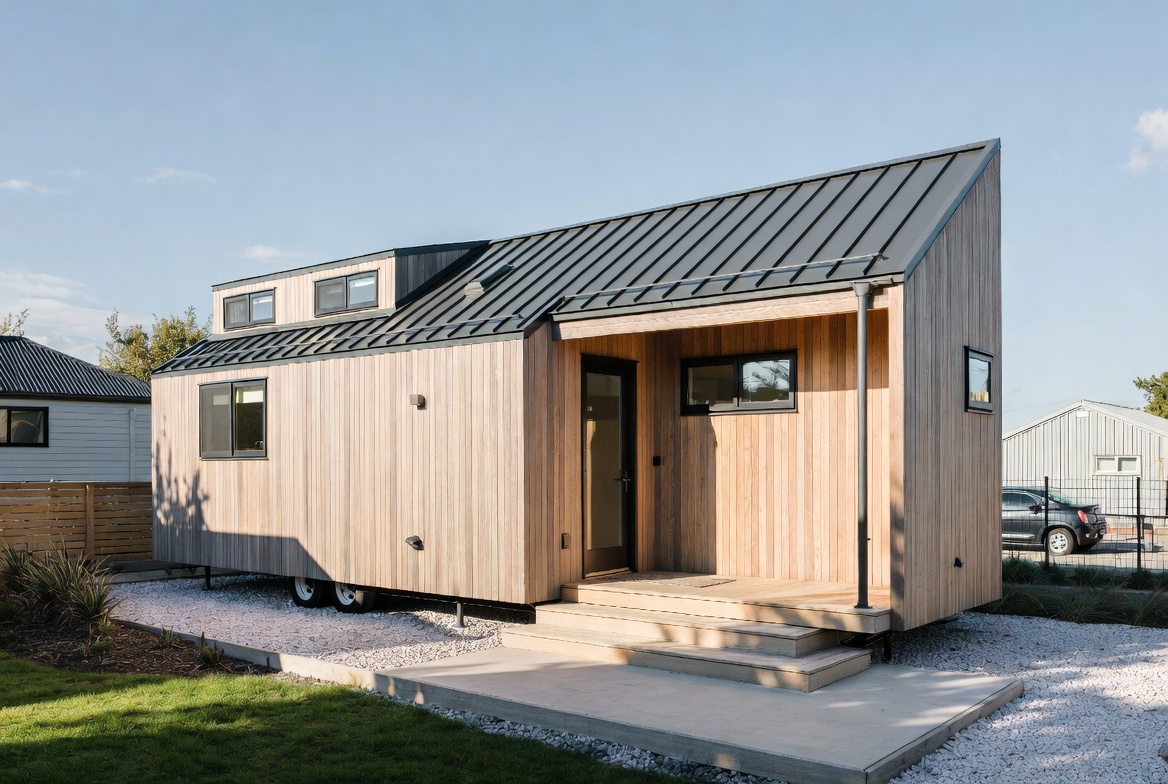
Tiny home on wheels with timber cladding, a dormer loft, and a small front porch.
The better question is not “Can I afford the shell?” It is “Do I trust the shell enough to keep building into it?”
Used Trailers Hide Leaks First
Used travel trailers tempt people because they look finished. Bed, dinette, small kitchen, maybe a bath. That feels like a faster shortcut.
Sometimes it is. Sometimes it is a long leak story in disguise.
Old travel trailers fail in boring places first: roof edges, window seals, vent penetrations, soft floor zones, wall corners, and plumbing connections. Those are not cosmetic problems. They turn into rot, mold, sagging floors, and wasted money fast.
If the goal is a low-cost shelter for occasional use, a used trailer can make sense. If the goal is a stable full-time tiny home, they often need more rebuilding than the ad admits.
Trailer Paperwork and House Rules Are Separate
This is one of the biggest stale or sloppy parts of old tiny-home writing.
A tiny house can have one set of building issues and a separate set of trailer issues. Those are not the same thing.
The building side is about stairs, loft headroom, exits, sanitation, envelope performance, ventilation, and life safety. The trailer side is about VIN, registration, certification labels, brakes, lighting, tires, hitch safety, and whether the chassis is legal and sane to tow.
That split matters because people keep buying something that feels house-like without checking whether the trailer underneath it is clean, compliant, and properly rated.
It also works the other way. A legal trailer does not automatically become a legal dwelling.
The code path for tiny houses is still local. Read Tiny Homes Regulations and Building Codes and Regulations for Tiny Houses on Wheels before you start treating a cheap listing as a solved housing move.
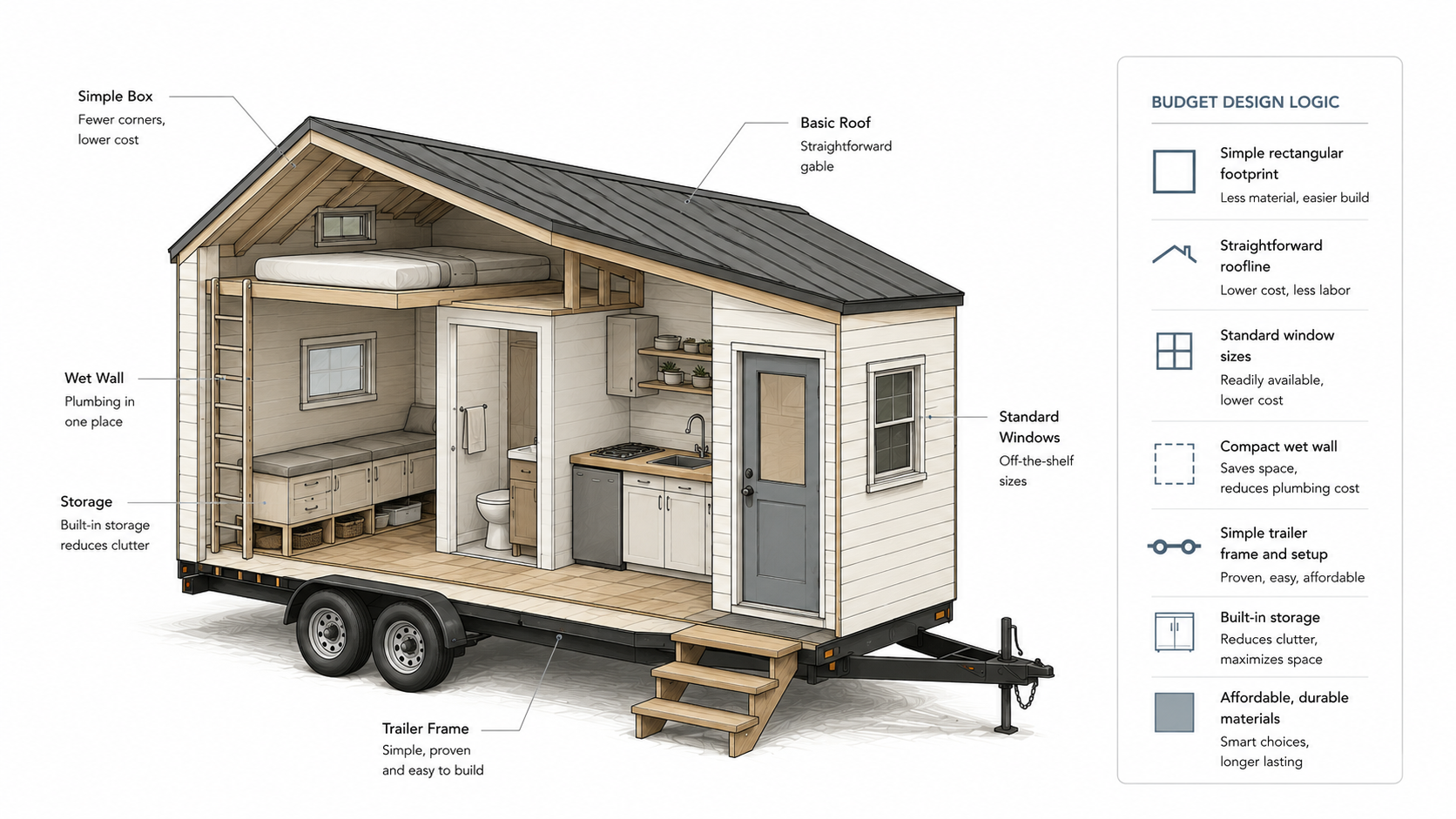
Keeping a tiny house affordable usually comes from simpler geometry, one compact plumbing wall, standard windows, and fewer custom structural changes.
DIY Fails When the Sequence Gets Clever
People burn money on tiny builds when they chase the fun parts too early. The trailer is not sorted. The openings are cut before the shell is fully thought through. The venting is improvised. Service access gets blocked by built-ins. Later, the whole thing has to be reopened.
The better move is dull. Trailer first. Dry shell next. Then insulation, venting, openings, wiring, finish. Cheap builds punish bad sequence because there is no slack in the budget.
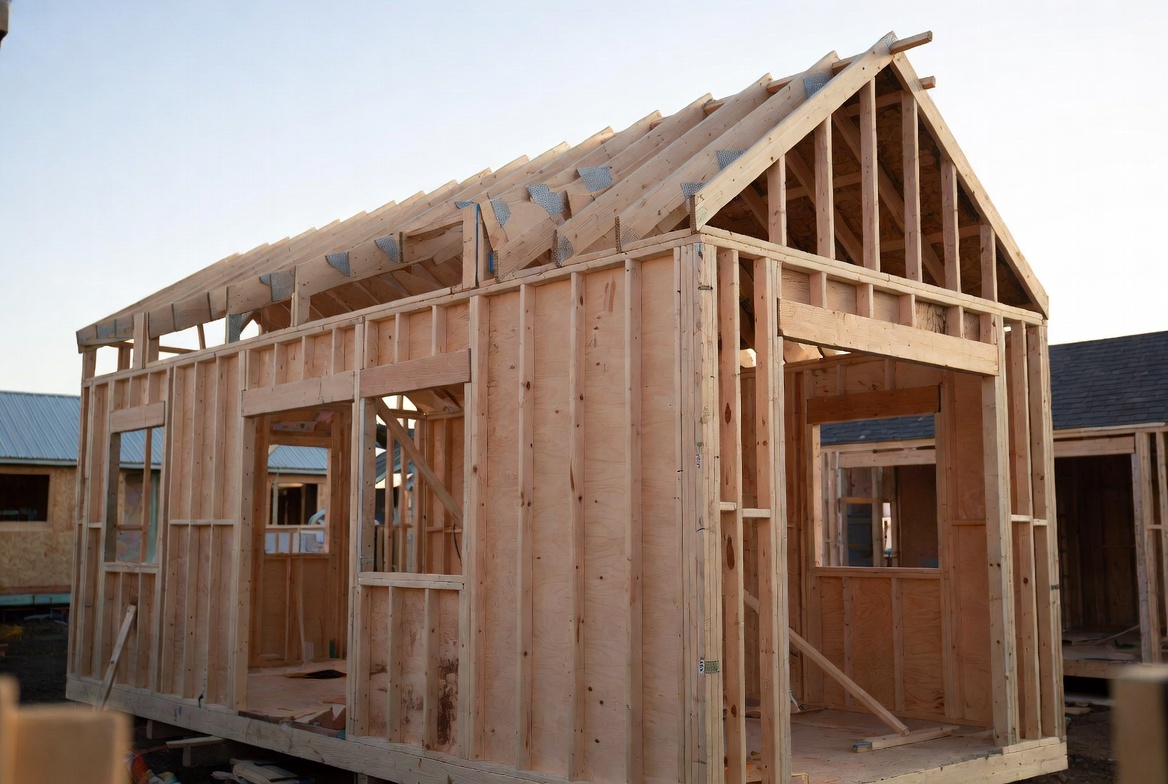
Tiny home framing under construction with exposed wall studs and roof structure.
Moisture Tells on the Build
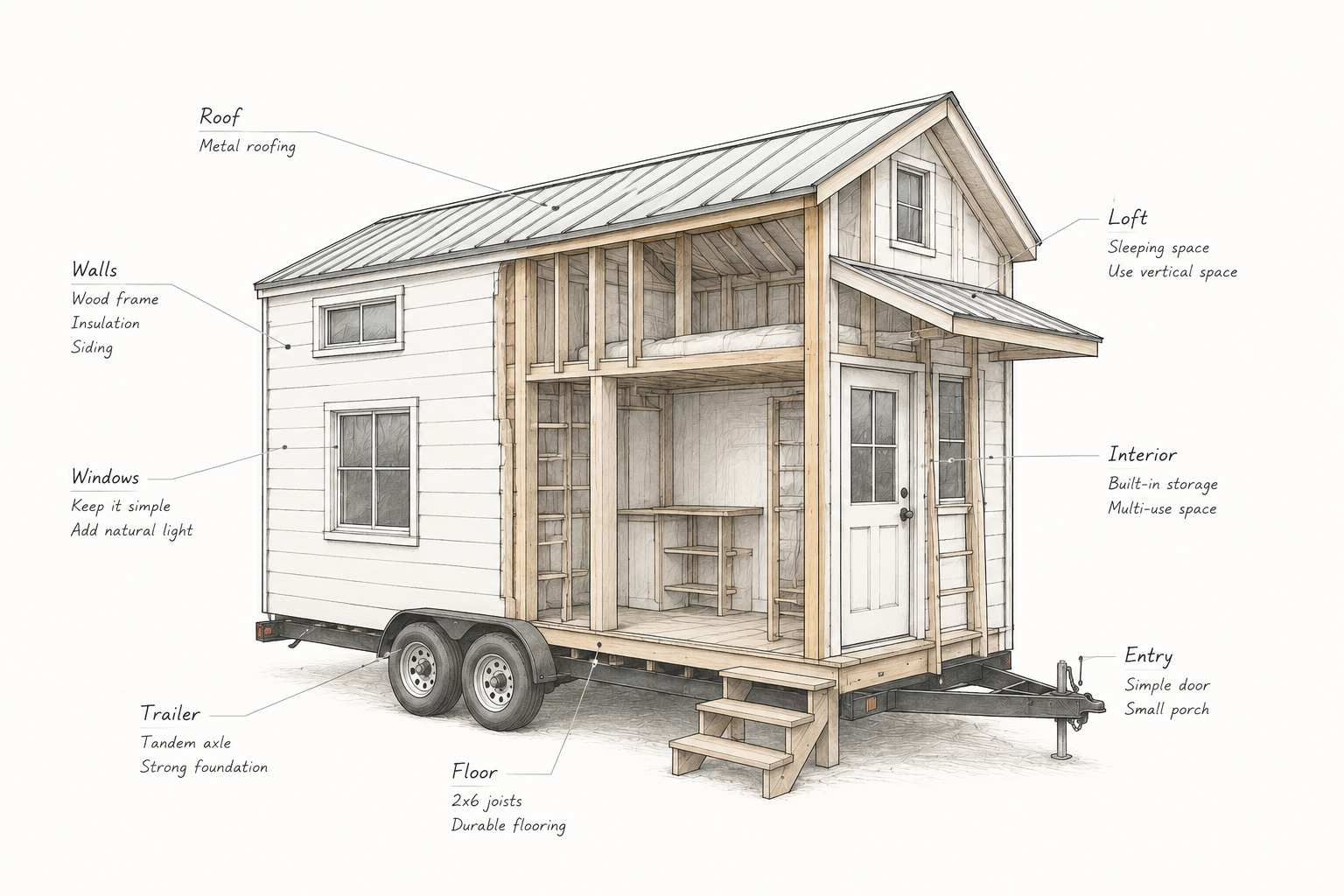
A DIY tiny house on wheels has to stay simple: trailer frame, floor, walls, roof, windows, loft, and entry all need to work without adding too much weight.
Small mobile structures do not have much room for moisture mistakes.
A weak roof vent, a recirculating cook setup, bad window sealing, no real bathroom exhaust, and a cold wall behind storage can turn a cheap THOW into a condensation box. That is how simple living turns into mold, wet bedding, stale air, and hidden rot behind paneling.
The reason this matters so much at the low end is simple: budget builds rarely fail because the sofa was ugly. They fail because the air got damp, the water had a path in, or the service layout made maintenance harder than it should have been.
This is where design stops being a style issue. It becomes a durability issue.
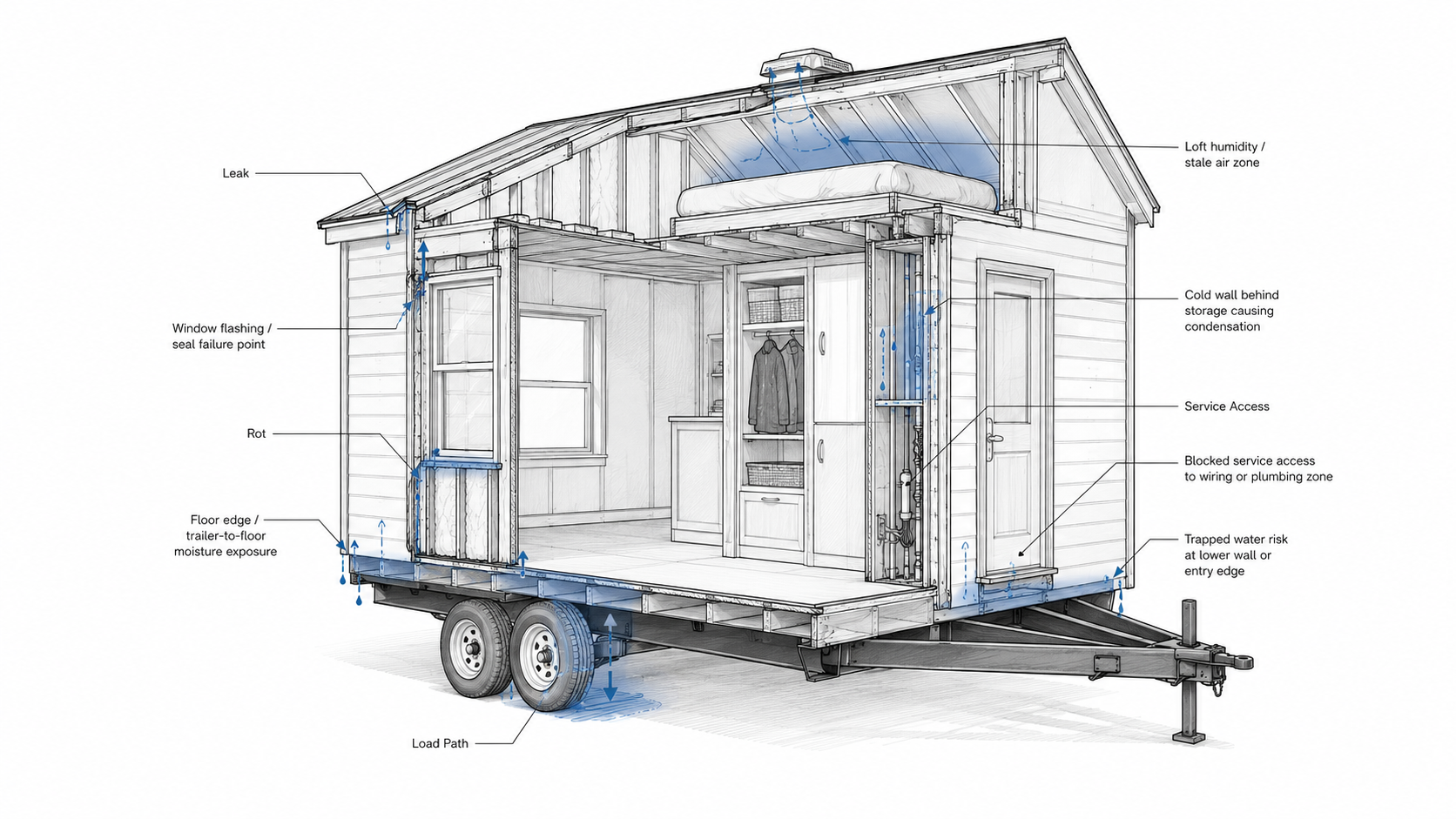
Cheap tiny homes on wheels usually fail at moisture paths, cold surfaces, overloaded trailer areas, and service zones that cannot be inspected or repaired.
Layout Beats Finish
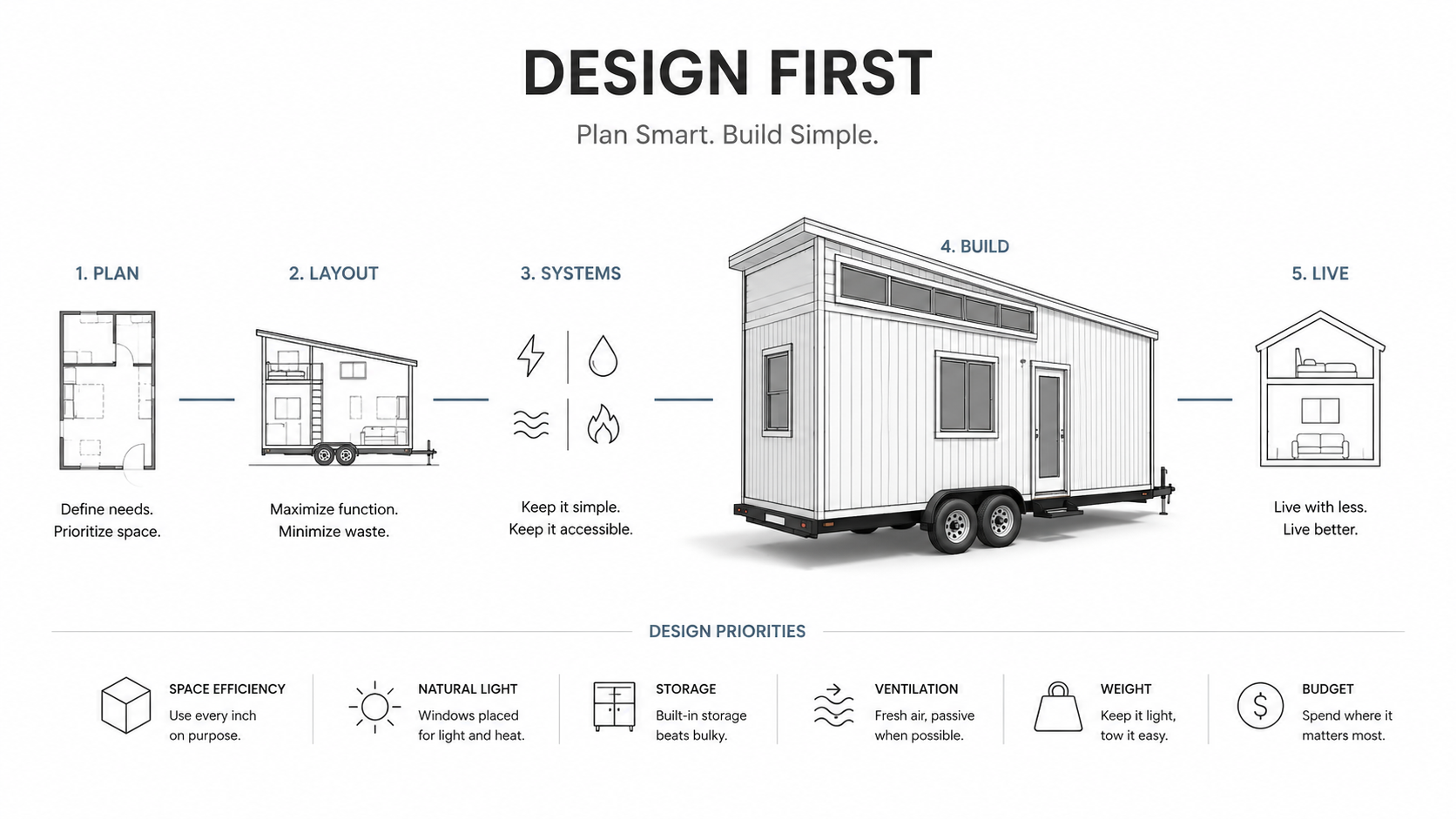
A cheap tiny home can still live well if the layout is calm. A more expensive one can still be annoying if the layout is bad.
The mistakes that matter are not glamorous. A ladder you hate using at night. No place for wet boots. A bed you have to climb into like attic storage. No closed storage, so the whole house always looks cluttered. A kitchenette that works only if you never really cook. Those are daily-use failures, not decoration failures.
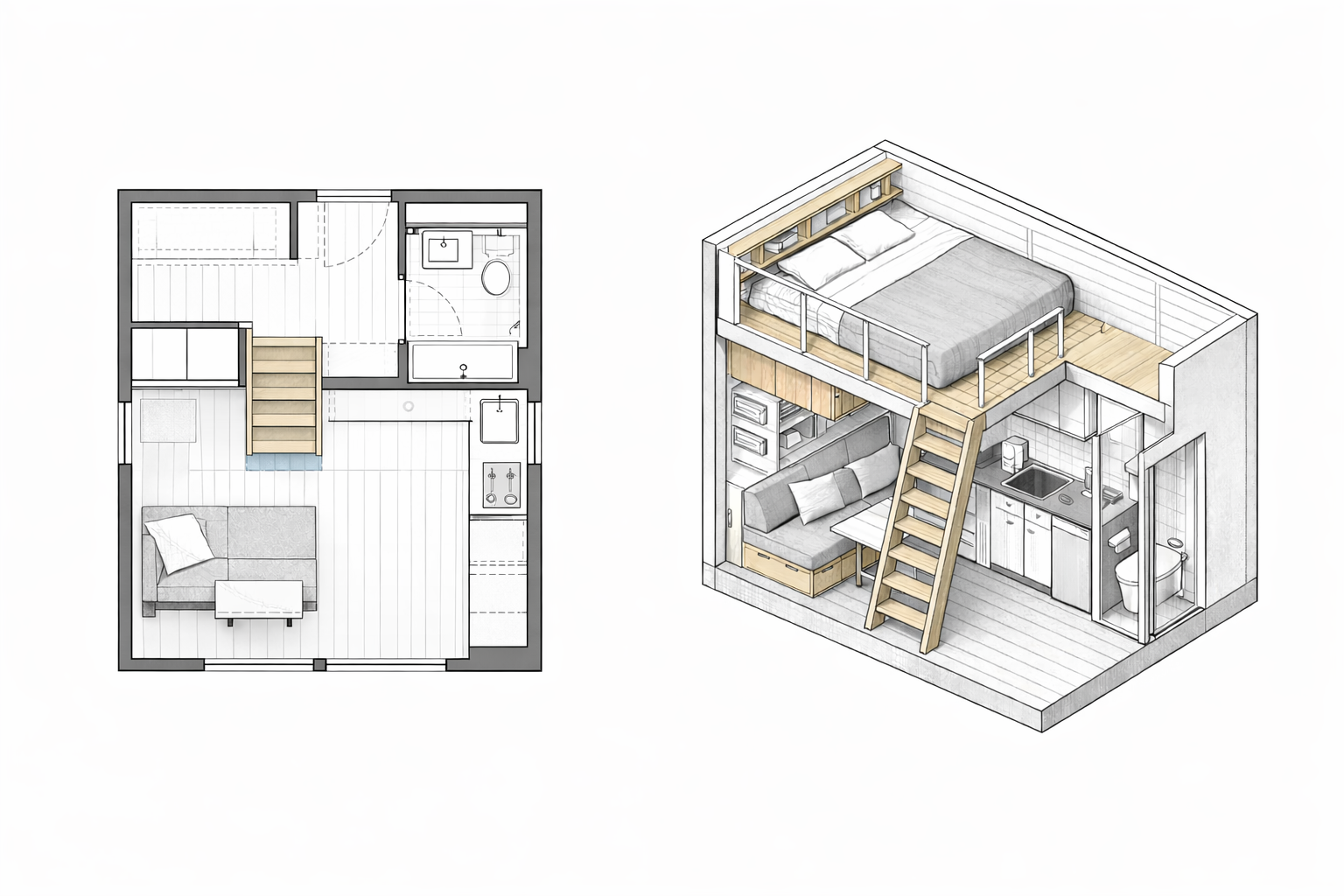
Tiny home floor plan and matching cutaway showing a loft sleeping area, compact stair, enclosed bathroom, kitchen wall, and built-in storage within a small footprint.
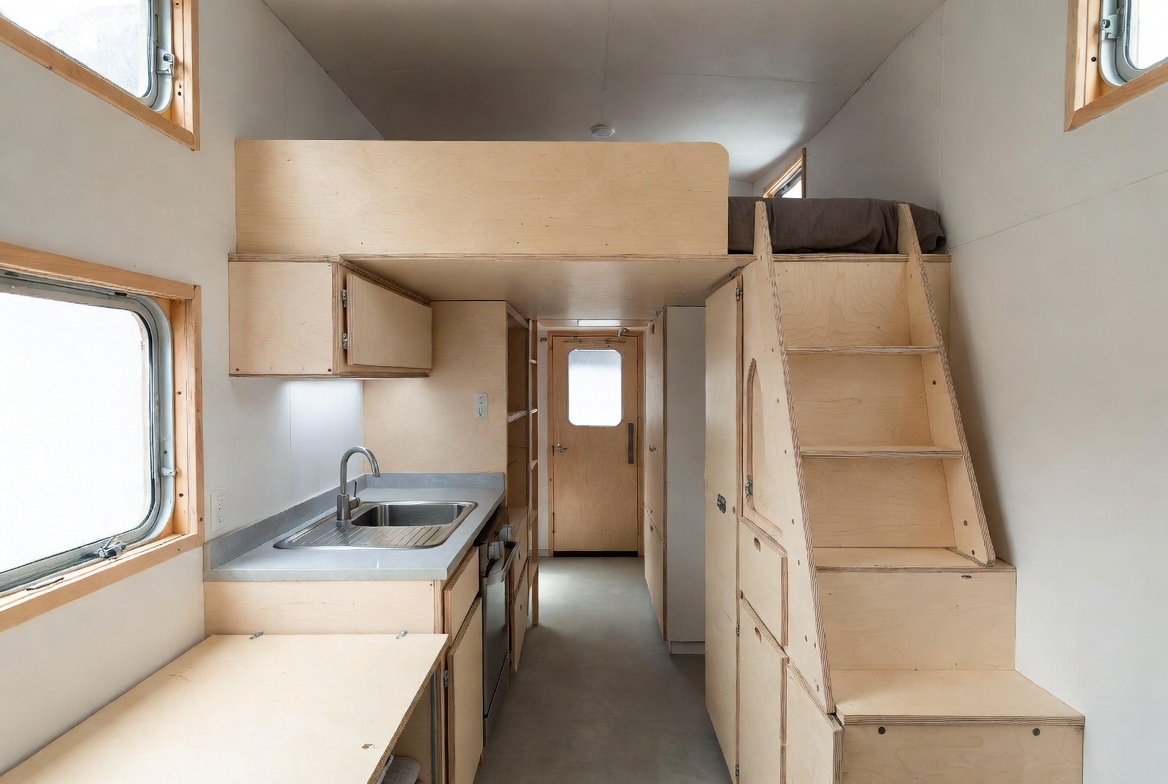
Tiny home interior with stair storage, a sleeping loft, a kitchenette, and a compact dining area.
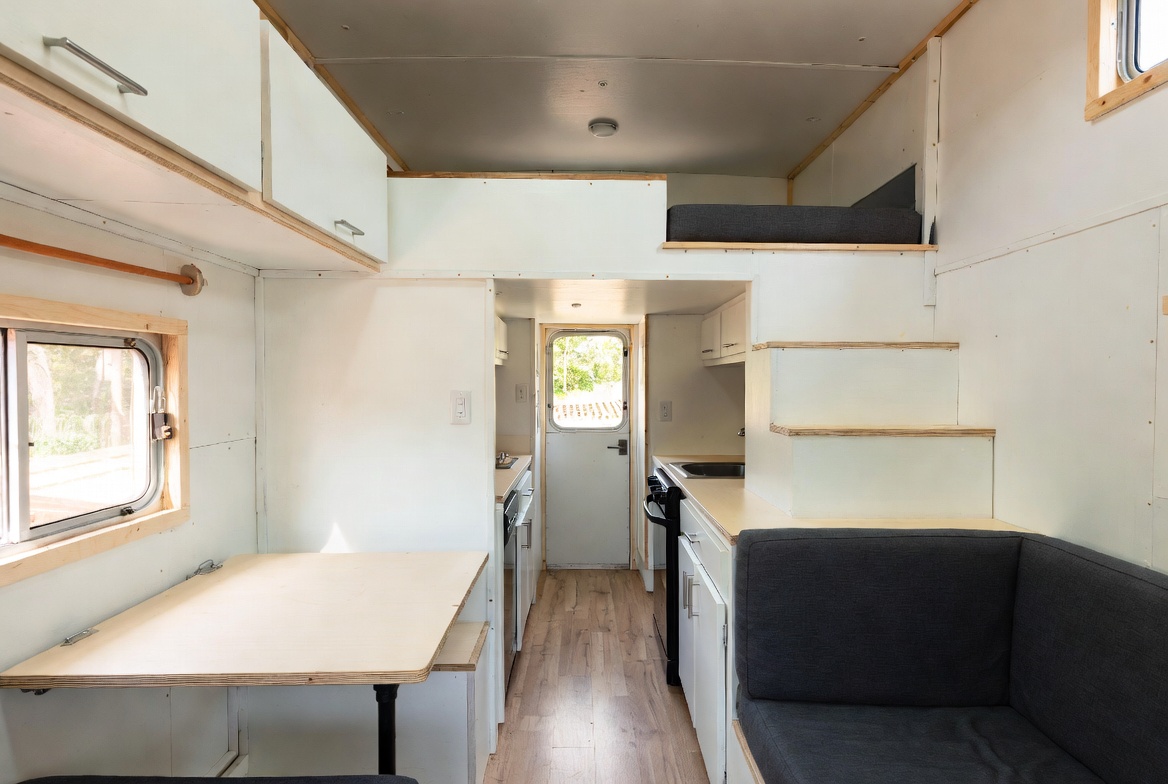
Tiny home interior with built-in seating, a table, a compact kitchen, and a sleeping loft above.
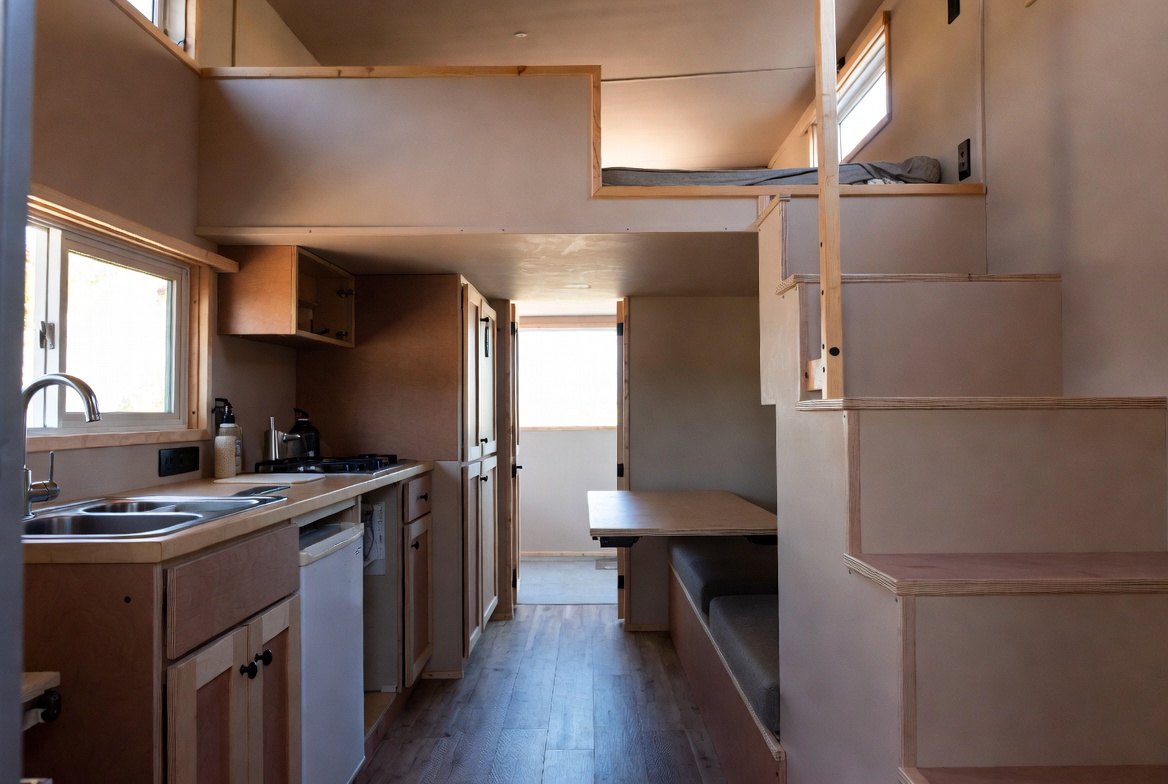
Tiny home interior with loft sleeping space, built-in stair storage, bench seating, and a compact kitchen.
If you are still in planning mode, stop scrolling listings for a minute and read Design Your Own Tiny House and Tiny House Design That Actually Works. Those two pages will do more for your budget than another hour of tiny-house inspiration.
Cheap Needs Restraint
The better low-budget tiny homes are usually simpler, calmer, and less eager to prove something. Clean roof form. Manageable wall area. Fewer joints. Fewer weird custom moves. That makes them easier to keep dry and cheaper to finish well.
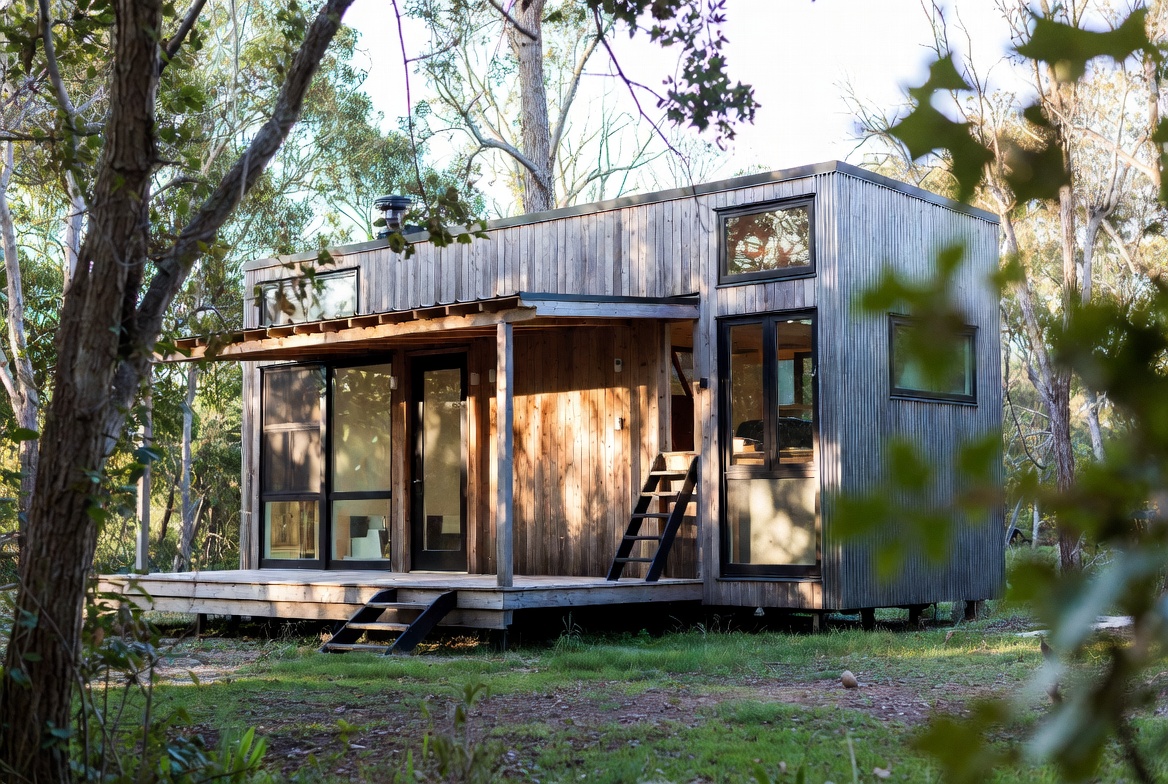
Modern tiny home with corrugated metal cladding, timber siding, and a compact entry porch.
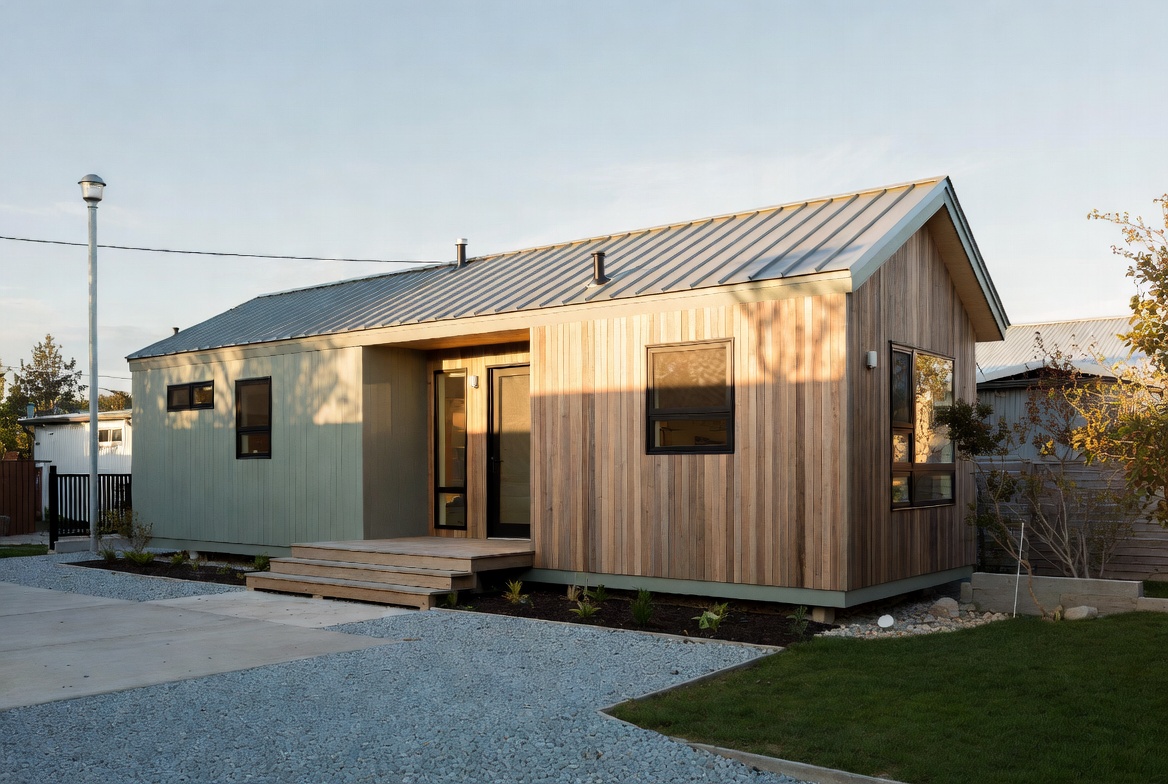
Compact tiny home with a small porch, metal roof, and timber-clad exterior.
Cheap projects get into trouble when they chase expensive-looking complexity. More corners, more penetrations, more trim transitions, more ways to leak.
Wheels Do Not Solve the Site
A lot of buyers act as if the trailer solves the site problem. It does not. It changes the problem.
You still have to think about where the unit sits, how it is accessed, whether the ground works, how utilities or portable systems will be handled, and what the local rules allow. That is where many cheap projects stop being cheap.
If the land question is still fuzzy, read building on your own land before assuming a towable tiny home solves the site problem.
Who This Budget Works For
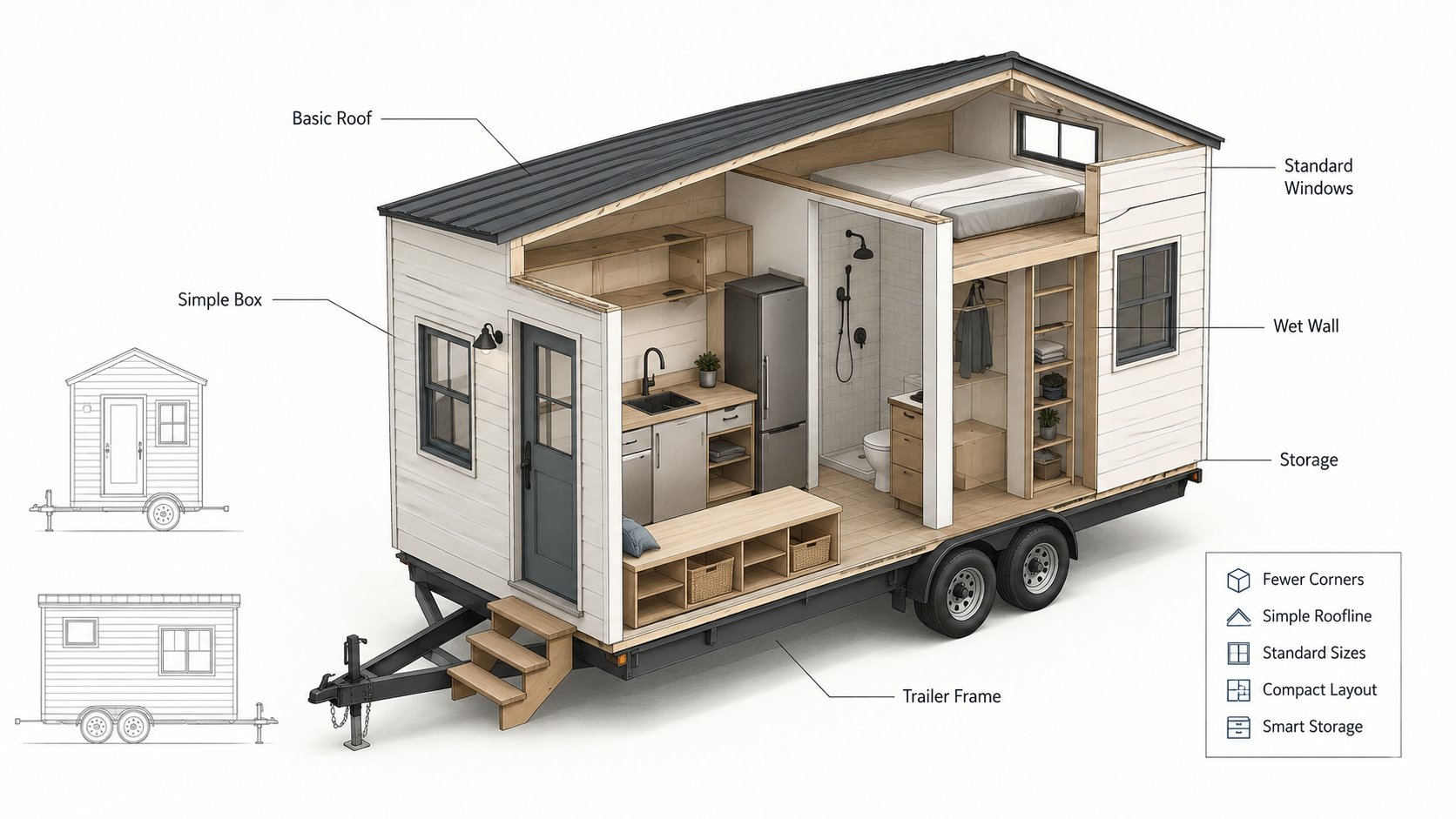
Tiny-house living depends less on the cute exterior and more on the layout choices that make sleeping, storage, cooking, and bathing fit inside a very small footprint.
Under $10K makes the most sense when the use is narrow and the expectations are controlled.
- A shell you will finish over time.
- A backyard guest unit where local rules allow it.
- A simple seasonal place.
- A stripped-down project for someone who can build and repair, not someone trying to avoid every hard decision.
It makes far less sense when you need a stable, legal, comfortable full-time dwelling with no appetite for repair work, no site flexibility, and no margin for inspection trouble.
That is usually where people are better off comparing the tiny-house idea against Small Houses That Don’t Feel Small or Small House Design. A slightly larger, calmer plan often performs better. Less condensation. Better storage. Better circulation. Fewer daily compromises. Less wasted money trying to make a tiny footprint do the job of a small house.
Inspect the Ugly Parts First
Photos are not enough for this price range. Check the roof edge, window corners, floor softness, trailer title, axle rating, brake lights, tire condition, venting, and any smell of damp wood or old leaks.
If the seller rushes past the underside, roof edge, or paperwork, slow down. Those are usually the places where the cheap price starts making sense.
Before You Answer a Cheap Listing
Do not ask only whether the price is low. Start with the deal-killers.
- Paperwork: clean trailer title, VIN, registration path, and seller name matching the documents.
- Water: roof edge, window corners, floor softness, stains, mold smell, and any fresh caulk hiding an old leak.
- Structure: chassis condition, axle rating, tire age, brake lights, and whether the trailer looks appropriate for the weight being carried.
- Use: where it can legally stay, how it will ventilate, and whether the layout is something you can live with after the novelty is gone.
If the paperwork or water story is vague, the cheap deal is usually not a deal.
FAQ
Can You Still Buy a Tiny Home on Wheels for Under $10,000?
Yes. What you usually get is a shell, an old trailer, a rough conversion, or a half-finished project.
What Is the Safest Under-$10K Path?
A dry shell on a decent titled trailer is often the safest low-end starting point. It still needs work, but you are less likely to inherit hidden rot and mold than you would with a cheap old travel trailer. The shell also leaves more of the layout and systems open, which can be useful if you know what you are doing.
Are Used Travel Trailers a Better Deal?
Only when they are dry and structurally sound. Cheap ones often hide roof leaks, soft floors, mold, and outdated systems. That turns the deal into a repair job.
Can I Live Full-Time in a Cheap THOW?
Sometimes, but structure is only one part of it. Parking, local rules, sanitation, moisture control, and winter comfort decide whether it works. The sticker price does not solve those problems.
What Is the Biggest Hidden Cost?
Repairs.
More specifically, envelope fixes, ventilation upgrades, trailer-related cleanup, and undoing bad work from a previous owner. In the wrong listing, the cheap purchase price is just the opening move.
Read This Next
This Part Matters: Regulations for Tiny Houses on Wheels
Before You Buy: Tiny Homes Regulations and Building Codes
Cost Check: Tiny Home Cost Breakdown
Planning Next: Design Your Own Tiny House
Alternative Path: Prefab Tiny Homes
If Tiny Feels Too Tight: Small Houses That Don’t Feel Small