
Moorish Spain: Architecture That Still Outbuilds Us
I wrote this after walking Córdoba, Seville, and Granada with a sketchbook and a bad sunburn. I wasn’t looking to do another “horseshoe arches and tiles” recap. Buildings make more sense when you feel the heat, see the geometry at your scale, and realize how even the leftover pieces do their job.
Why this guide exists
I wanted to understand the mechanics behind the beauty for myself first. Then figured it belonged here on architecturecourses.org. If you're an architect, builder, or a student tired of the same textbook summaries, this is for you.
If you want a quick primer on wider Islamic ideas, skim an overview first, then come back. Start with global Islamic architecture basics. If you want the courtyard logic on its own, this is useful too: sahn planning and use.
Inside Moorish Architecture: Lessons Spain Didn’t Erase
Islamic Moorish Architecture in Spain: What We Miss Until We Walk It
What We Think We Know About Moorish Spain. What’s Missing

Muqarnas in Islamic architecture: intricate geometric vaulting and ornamental plasterwork from a historic Spanish example. Focus on form, repetition, and structural rhythm.
Most people look at the Alhambra or the Great Mosque of Córdoba and think tiles, arches, and ornament. That’s just the surface. The real point is how the buildings make life work without machines.
What most tours skip

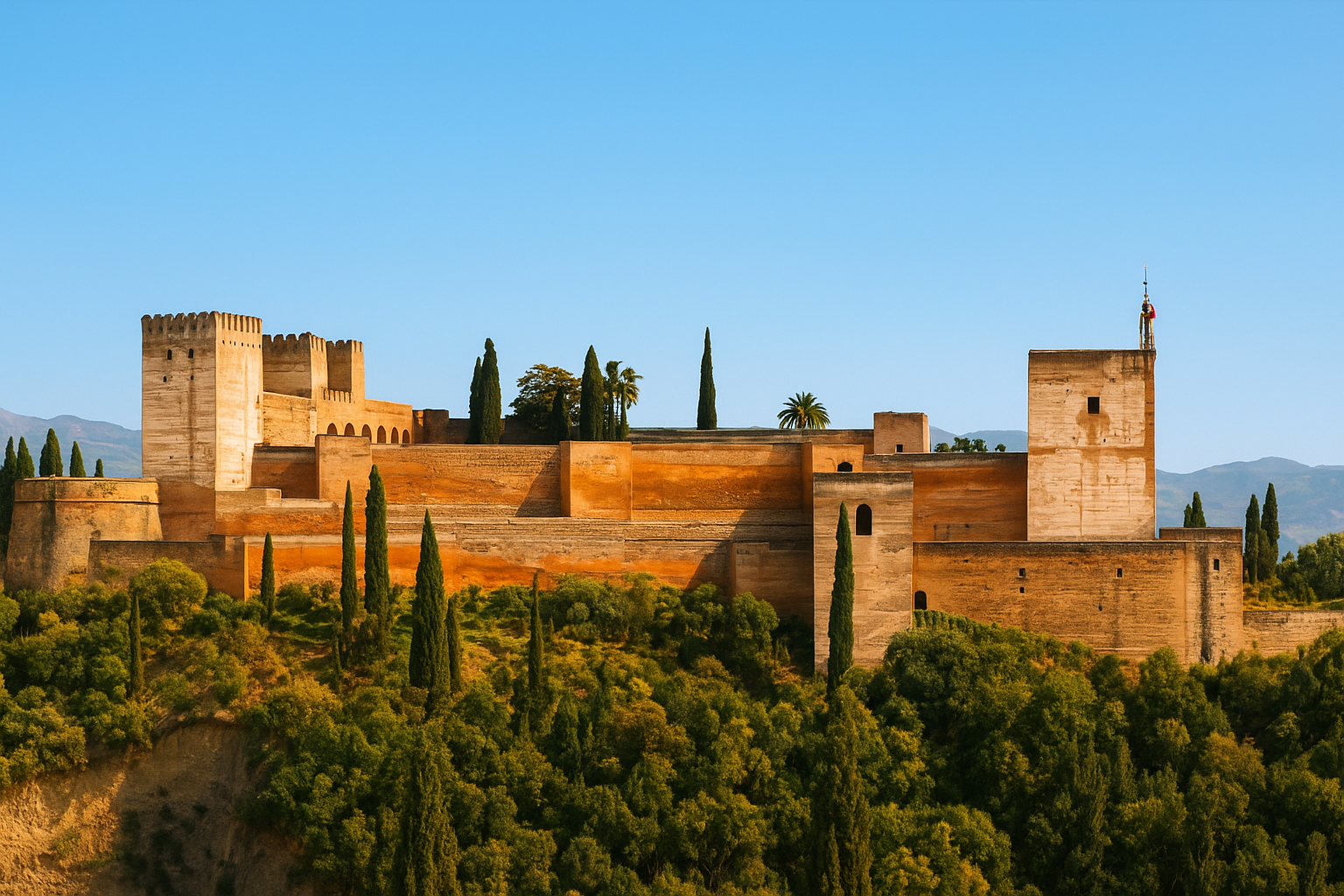
Core features of Moorish Islamic architecture in Spain. The Comares Tower, Court of the Lions, muqarnas vaulting, and covered courtyard connections that define Nasrid palace design.
Tours talk about color and pattern, but they skip the bones. Thick walls that keep the heat out. Courtyards that act like natural air systems. We act like we invented HVAC. Meanwhile, they cooled rooms with stone, shade, and water centuries before us. Water pools that actually drop air temperature. Plaster that softens light. Door frames angled to control what you see and when. Not one detail is random.
And yet people still ask why Islamic architecture influenced Europe. Because it taught building for life, not for show. It showed how to live comfortably without plug-ins or screens. Everything has a job. This is the kind of architecture I believe every student should study in person at least once before graduating. We’re still learning from these builders — the ones who understood what true dwelling means.
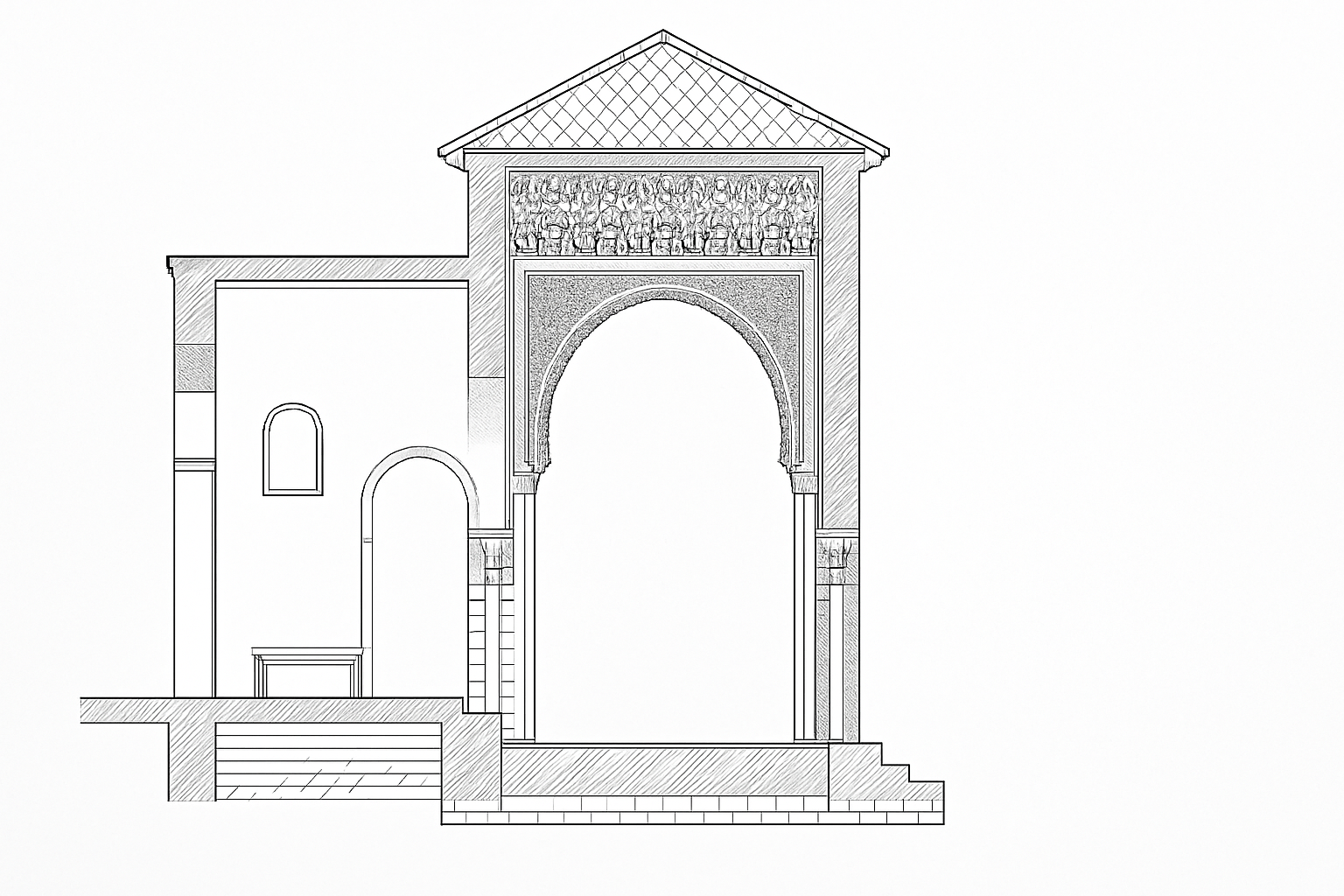
If there’s one rule worth taking, it’s this: every element has a purpose. Walls cool. Patterns cut glare. Water manages heat and noise. Nothing is just for looks. I saw it up close. I paid attention like an architect watching another architect at work. I’m just trying to learn from them.
ORIGINS
Not a Style. A System

One thing I’m sure of after walking it myself: Moorish architecture in Spain was never a “style.” It was a working system. I dug into the history just to be sure. It was built by Syrian stone-setters, North African masons who understood heat, and local builders who picked up the logic because it worked. No theory. No surface talk. Just climate, structure, and faith — shaped into walls.
Walk enough of it and you start seeing the pattern. Record the parts in your head. Build your own map. Then compare Córdoba. Nothing flashy. No tile overload. Just arches, rhythm, and daylight working like tools. Follow the thread forward and you land at the Alhambra. Same bones. Finer details. Later, after the Reconquista, it changes into what we now call Mudejar in Seville. Same DNA. New clients. More surface.
If you’re new to this, take a look at a clean guide to how arches really work and come back to the double-height spans in Córdoba. The upper ring wasn’t for show. It let them lift the roof without long timber. Smaller pieces. Smaller risk.
Here’s what most people miss. The Islamic system worked because it was built on real physics. Airflow. Shade. Thick mass. Smart section. The later imitations were mostly surface copies. They wore the look but lost the engine. They look good in photos. They fail in heat. That’s why you feel the originals and only see the copies.
What Islamic Builders Did in Spain That We Still Can’t Match
Three Cities. One System. What I Saw.
What You Learn by Walking Moorish Spain with a Sketchbook
If you’re an architect, student, builder, civil engineer, or just someone who loves buildings more than blueprints, you have to walk Córdoba, Seville, and Granada with a sketchbook. Not a guidebook. Leave guides for tourists. If you want to know how these buildings actually work — not how they look on postcards — then you have to learn how to see. What to ignore. What to pay attention to.
Córdoba. Where the System Starts
Córdoba is the blueprint. The core logic. You enter through the orange courtyard and the air drops before you even reach the hall. That’s not “pretty.” That’s physics and water doing their job. Trees, soil, and shallow basins pulling heat from air. Step into the hall and you see the same thing. Repetition for strength. Low ceilings to trap heat. Light kept low and sideways so you never get glare.
You want to understand Moorish architecture as a working system? Start here. Then go north to Islamic Spain when it scales and shifts. The logic stays. The parts just rearrange. You see it.
Seville. Mudejar as Survival Logic
The Alcázar is what survival looks like in walls and plaster. Christian kings kept the Muslim builders. The crews stayed. The briefs changed. They didn’t erase the system. They re-skinned it. Look at Mudejar work in Seville and stop in the Patio de las Doncellas. Shallow pool dead center. Stacked arches for shadow. Rooms dropped back into the dark so they breathe.
Look up in the Sala de los Reyes. That carved coffered ceiling looks thick, but it’s built to kill glare and hide seams. One move. Two jobs. Welcome to Islamic craft logic.
FIELD PICK
Good plates. Great diagrams. Solid notes: The Architecture of the Islamic World
→ Buy on Amazon »
Granada. The Quiet Masterpiece That Still Breathes
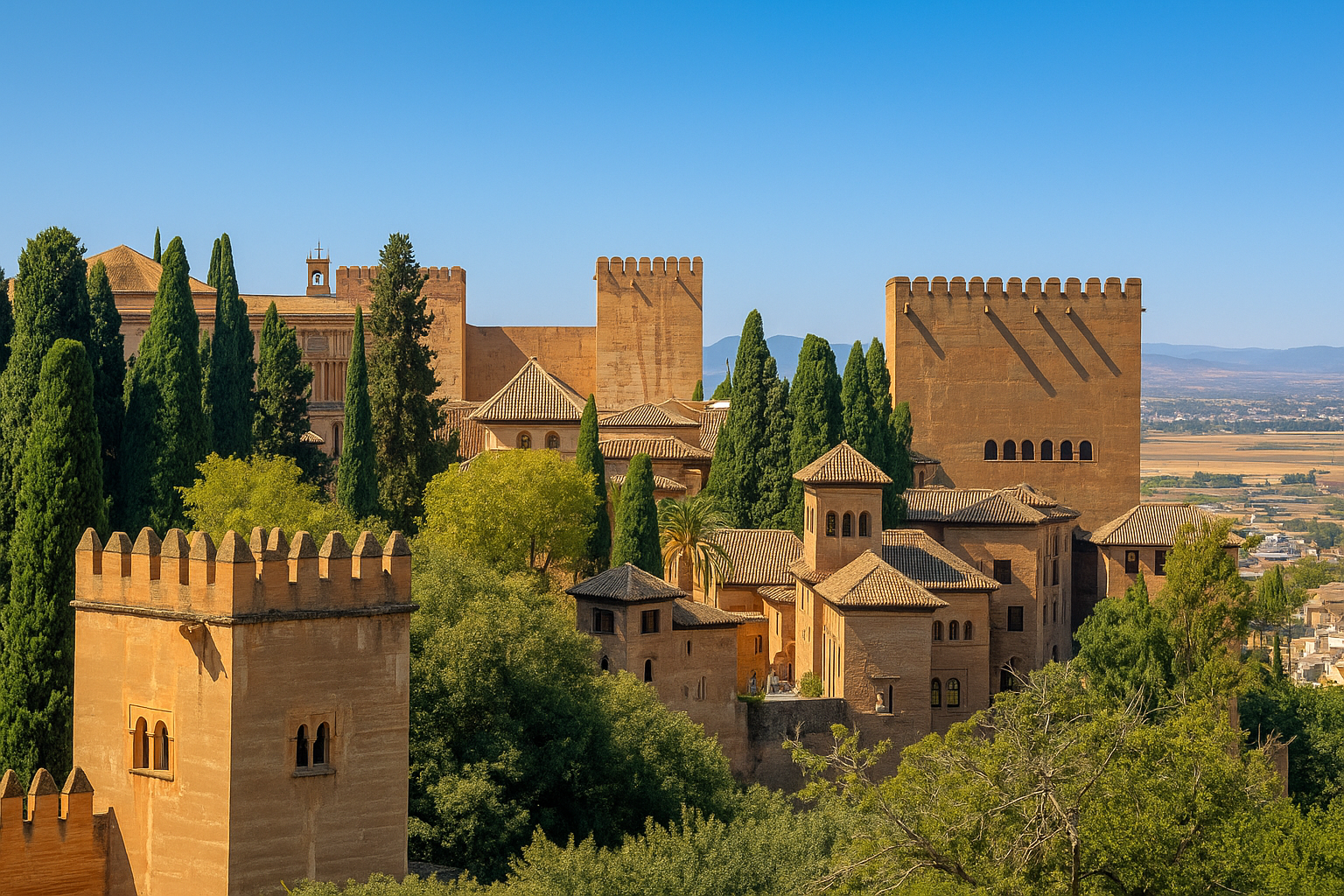
The Alhambra in Granada, Spain: Nasrid palace towers, and clay-brick walls.
Granada is the one that still feels alive. The Court of the Lions looks famous in pictures. In person it’s quiet. Marble channels carry meltwater and bleed heat out of the stone. Air glides. You feel the temperature shift in your skin. That’s not decoration. That’s building performance.
Step into the Hall of the Two Sisters. The muqarnas isn’t there to “wow.” It splits the dome into air pockets that kill echo and cool rising air. That’s why the sound drops and the room sits still. The tile on the bottom walls is hard. The plaster up top is soft. Two materials. Two jobs. One wall.
MUST READ
For part-by-part breakdown of how these spaces were built and used: Islamic Art and Architecture: The System of Meaning
→ Buy on Amazon »
MUST READ
For a clean global framing of where Córdoba fits:
A Global History of Architecture
Clear maps. Useful plans. Short sections you can actually use on site.
What Defines Moorish Spain? (Real Features That Matter)
1. Thick Walls That Think
These are cavity walls before the term existed. Mud brick layered with lime, then dressed with stone or tile. They hold cool air, mute streets, and make every room feel solid. Inside, recesses hold storage, lamps, and airflow.
2. Courtyards as Machines, Not Decor
These spaces bring in light, move air, and control temperature. Notice how doors and windows don’t face streets. They all open in. The building’s climate is internal, not borrowed from neighbors.
Granada makes it poetic. Córdoba makes it blunt. Both prove courtyards beat balconies in hot climates.
3. Arches That Count as Structure
The horseshoe arch isn’t a cute aesthetic idea. It’s a way to increase lateral resistance while keeping the span wide and the height humane. Look at the mosque in Córdoba: 856 columns, layered arches, no tie rods, no steel. Just math.
4. Water Where It Does the Most Work
Not for worship. Not just for sound. It’s climate control. Water runs along slabs, evaporates, and lowers air temperature by a few degrees in peak heat. In the Ibn Tulun Courtyard the logic is similar — locate the water where it cools the hardest surfaces.
5. Ornaments You Can’t Strip Off
Carved stucco and glazed tile aren’t wallpaper. They’re light diffusers, scale regulators, and heat reflectors. Touch the tiles in the Alhambra at sunset. They're cool when plaster is warm because they control absorption.
Why This Still Matters for Real Practice
Moorish Spain teaches you that architecture doesn’t have to call attention to itself to work at scale. It also tells you what we lost by chasing surface.
Here’s what’s still usable:
- Make courtyards part of thermal mass, not aesthetics
- Use cavity walls as systems, not as “details”
- Bring back plantable roofs and thick drainage logic
- Mix public and private flows around voids, not walls
Modern design hacks are nothing compared to a system that still works after 800 years.
Reserved for Builders: Hidden Workmanship Everyone Forgets
Take a close look at a corner in the Alhambra — the tiles don’t meet raw edges. They’re always resolved with geometry, not filler. That’s because the grid was drawn first, then the materials followed.
Córdoba’s brick columns are recycled Roman works. Moorish builders didn’t worship purity. They used what was there, then scaled it with new meaning.
In Seville, every lintel is hidden, not exposed. Surfaces hide structure but never fight it. That’s the difference between style and craft.
FAQ
Why are there no domes like in Istanbul or Iran?
Different economy, different urban logic. Iberian Islam didn’t build for imperial display. It built for prayer, privacy, and climate. Domes don’t cool as well in dry heat as long narrow halls do.
Why are so many stucco patterns repeated?
It’s not repetition. It’s scaling. Patterns adjust light, break up echo, and hide construction joints. That’s why they look simple until you stand next to them.
Which site teaches the most to new architects?
Start in Córdoba. The logic is bare. Then study the Ottoman mosque system to see how the language changes under stone vaulting.
Why so few windows?
Security, heat, privacy. The voids are inward, not out. The street isn’t the view. The courtyard is.
Can you see real water systems today?
Yes. In the Alhambra — channels, pools, drains. They’re not museum props. They still work.
Is there a connection to North Africa?
Yes — walk the ruined palace in Fes or the mosque of Kairouan. Same plan logic, same wall sections, different budgets.
Want to Keep Going?
If you want the full structural history, read the build sequence of Islamic architecture and global styles and then compare what Spanish builders did later under Mudejar logic.
For courtyards as passive cooling, start with sahn logic in Islamic planning.
For minaret evolution after Spain, study how minarets scale and shift from Cairo to Istanbul.