
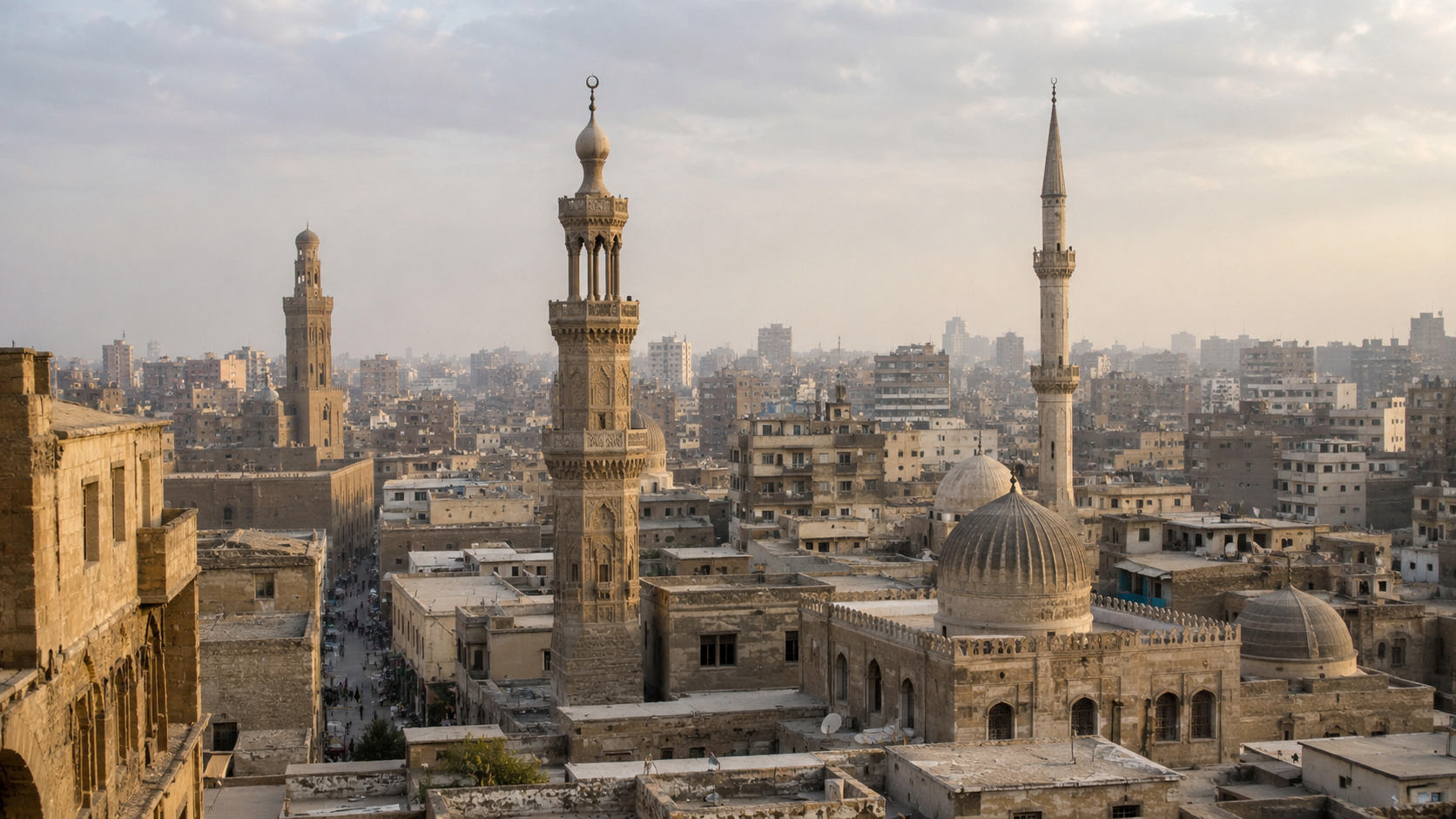
A minaret is a mosque tower, but that definition is too small.
The tower helped carry the call to prayer before loudspeakers. It marked the mosque in the city. It gave a low skyline a vertical point. It turned religious presence into something visible from a distance.
Minarets also became architectural signatures. A square tower in North Africa does not read like a pencil minaret in Istanbul. A brick cylindrical tower in Central Asia does not behave like a tiered Mamluk minaret in Cairo. The form changed because materials, cities, dynasties, and structural habits changed.
For the parent topic, start with Islamic architecture. For related design systems, continue with Islamic arches, courtyards in Islamic architecture, and muqarnas architecture.
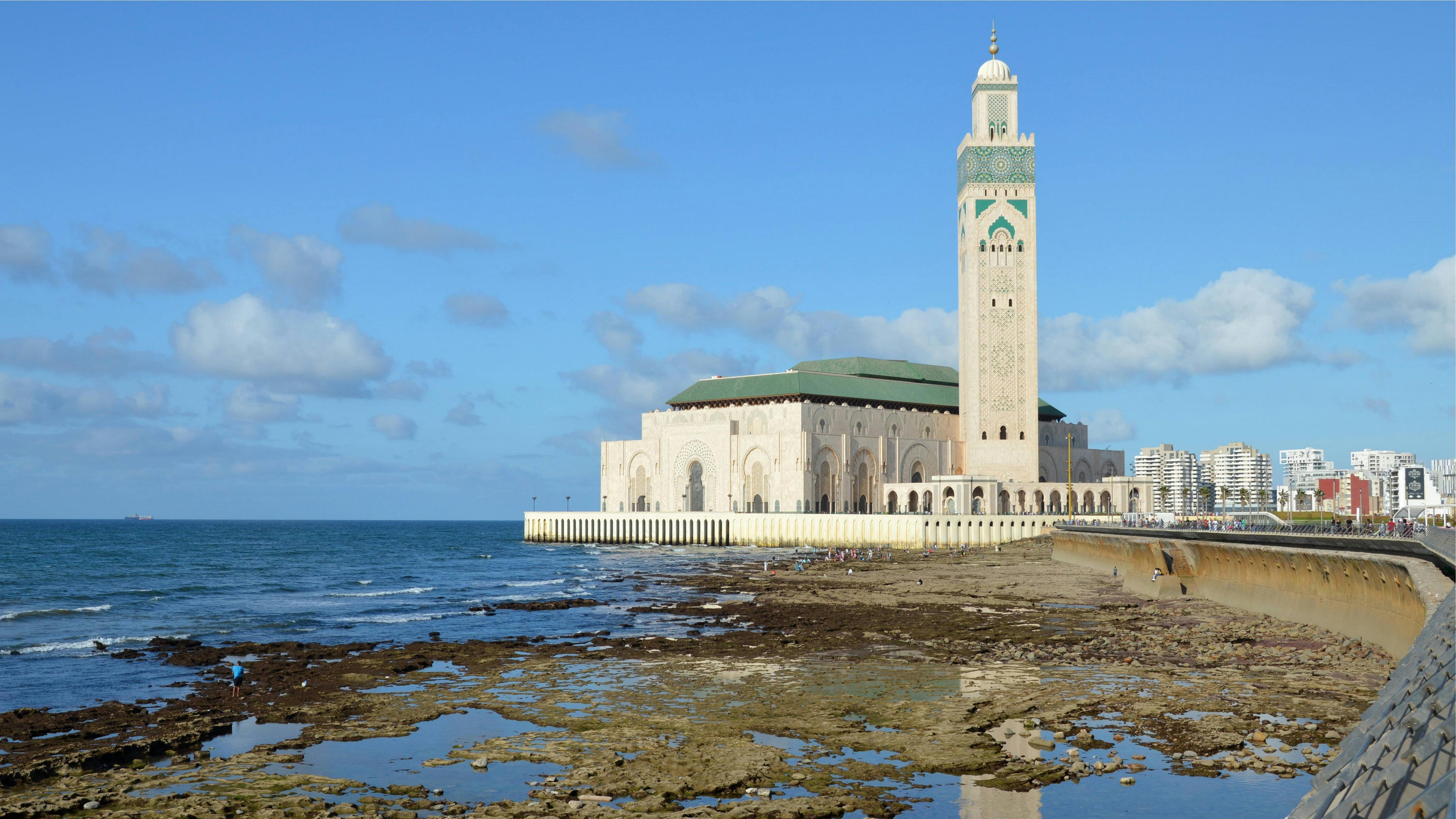
What a Minaret Does
The minaret has several jobs. Some are practical. Some are symbolic. Most historic minarets do both at the same time.
| Minaret role | What it does | What to look for |
|---|---|---|
| Call to prayer | Gave the muezzin a raised place for the adhan before microphones changed mosque sound. | Balconies, height, stair access, and position relative to the prayer hall or courtyard. |
| Urban marker | Made the mosque visible above roofs, markets, houses, and streets. | Skyline position, height, silhouette, and relationship to nearby buildings. |
| Dynastic image | Showed patronage, political authority, and regional identity. | Carving, tiers, inscriptions, crowns, balconies, and material choice. |
| Structural object | Had to resist gravity, wind, settlement, heat, and long-term material movement. | Base thickness, taper, shaft construction, balcony rings, and foundation logic. |
| Wayfinding | Helped people read the city before modern signs, maps, and street grids. | Visibility from streets, markets, gates, courtyards, and neighborhood approaches. |
A weak explanation treats the minaret as a religious symbol only. A stronger one reads the tower as sound, structure, skyline, and city memory at once.
Minarets Were Not the First Mosque Feature
Early mosques did not begin with the minaret as a fixed requirement.
The first mosque spaces were concerned with direction, gathering, shade, prayer, teaching, and community. Courtyards, qibla walls, shaded prayer areas, and simple roof structures mattered before the tower became a standard visual feature.
Minarets developed over time as Islamic cities grew, dynasties competed, and mosques needed stronger visibility in dense urban settings. The tower became useful because it solved a public problem: how to make the mosque present beyond its walls.
This is why minaret history is uneven. Some early mosques had no tower. Some later mosques had one. Major imperial mosques could have several. In modern mosques, the minaret may be symbolic, acoustic, urban, decorative, or all of those together.
Parts of a Minaret
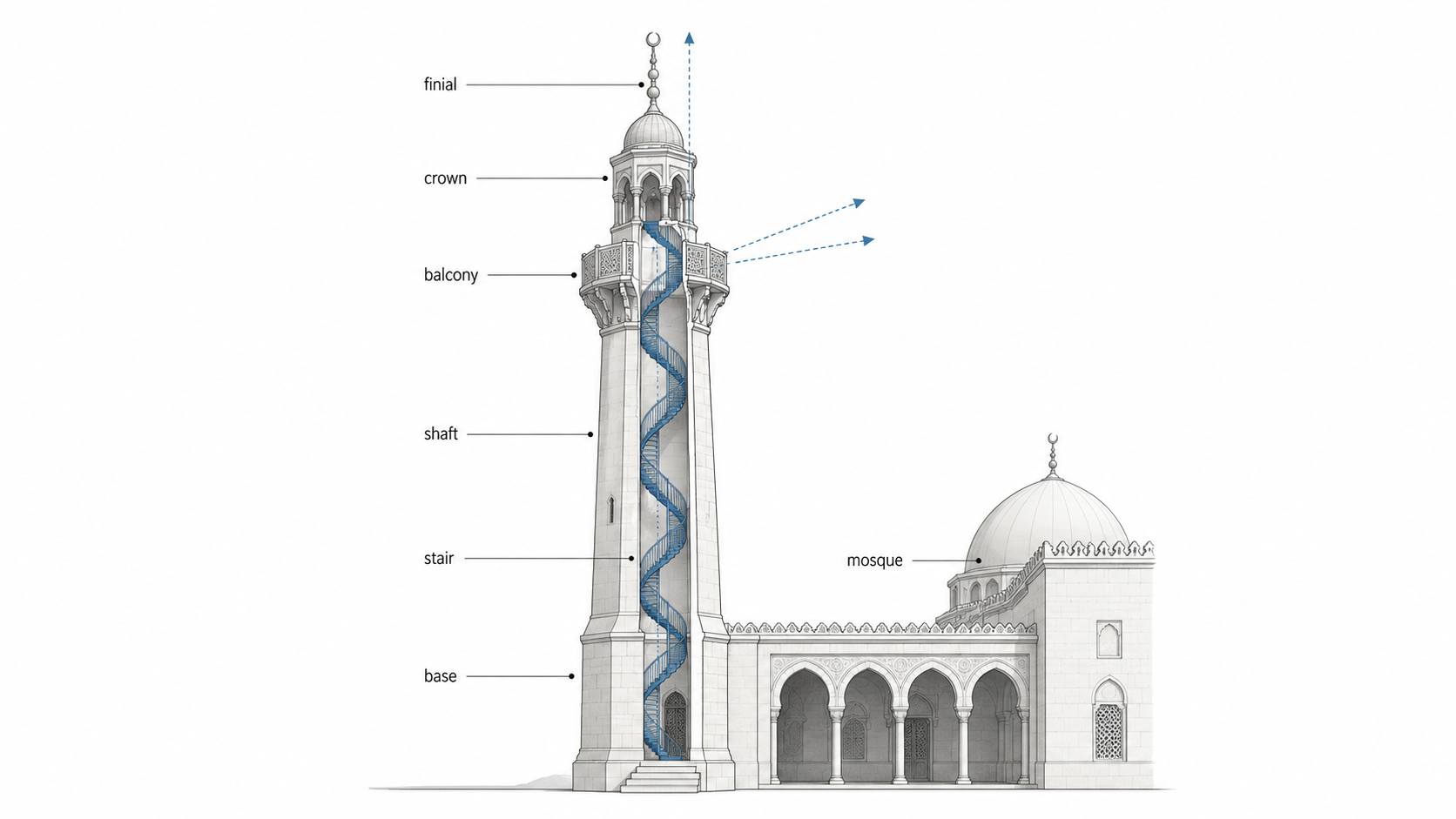
Most minarets are built from a few basic parts, even when the style changes.
| Part | Purpose | Design problem |
|---|---|---|
| Base | Transfers load into the ground or mosque structure. | Must handle weight, settlement, and wind overturning forces. |
| Shaft | Creates height and carries the main vertical profile. | May be square, cylindrical, fluted, tapering, faceted, or tiered. |
| Stair | Allows ascent to the balcony or upper levels. | Often handled as an internal spiral stair or narrow masonry stair. |
| Balcony | Historically supported the call to prayer and gave the tower a human scale break. | Needs secure projection, drainage, support, and safe access. |
| Crown | Completes the silhouette and often carries regional identity. | Can be domed, conical, ribbed, faceted, or layered. |
| Finial | Marks the top and finishes the vertical line. | Must be proportioned so the tower does not look abruptly cut off. |
Main Types of Minarets
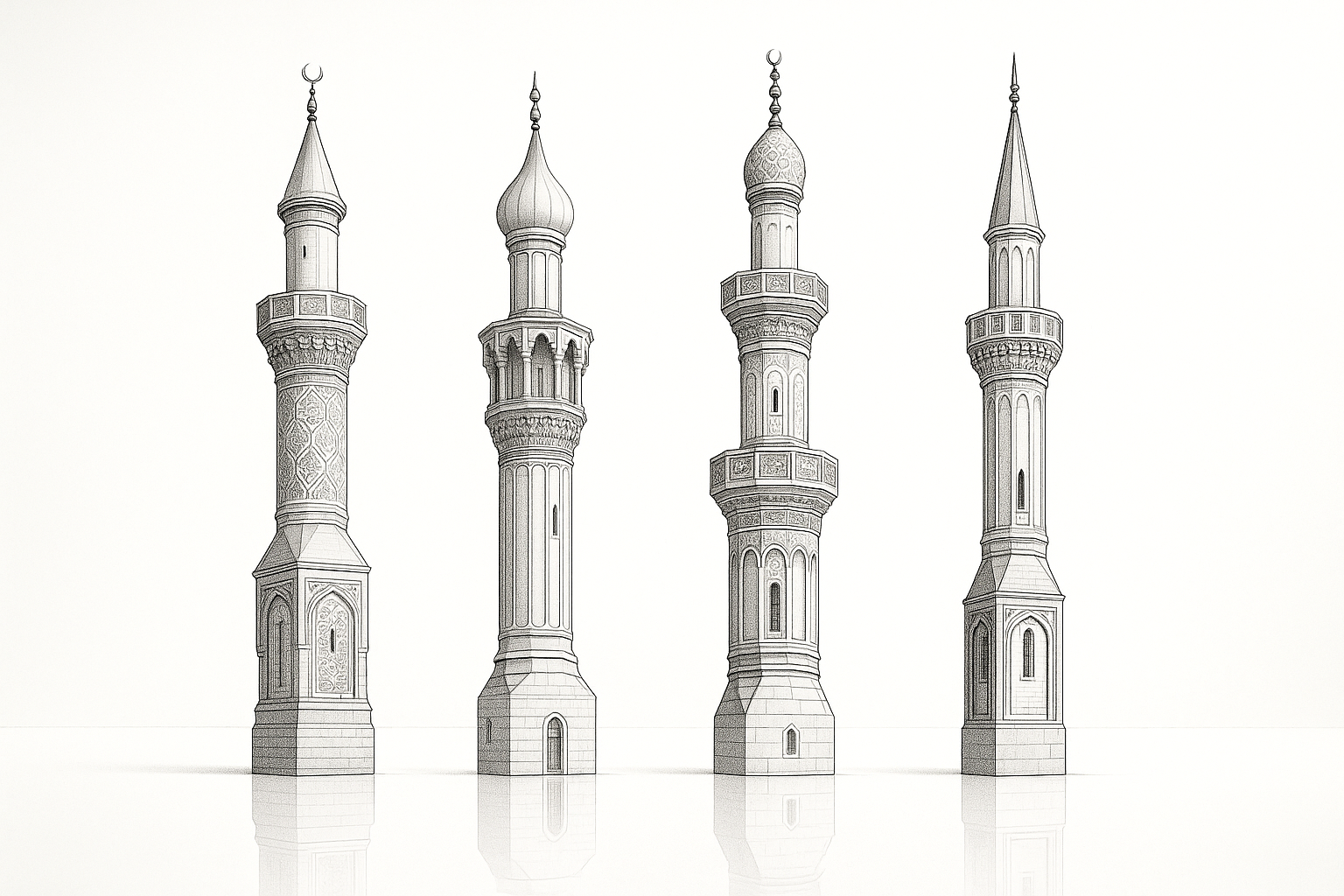
Minarets changed by region because builders were working with different materials, city forms, and political ambitions.
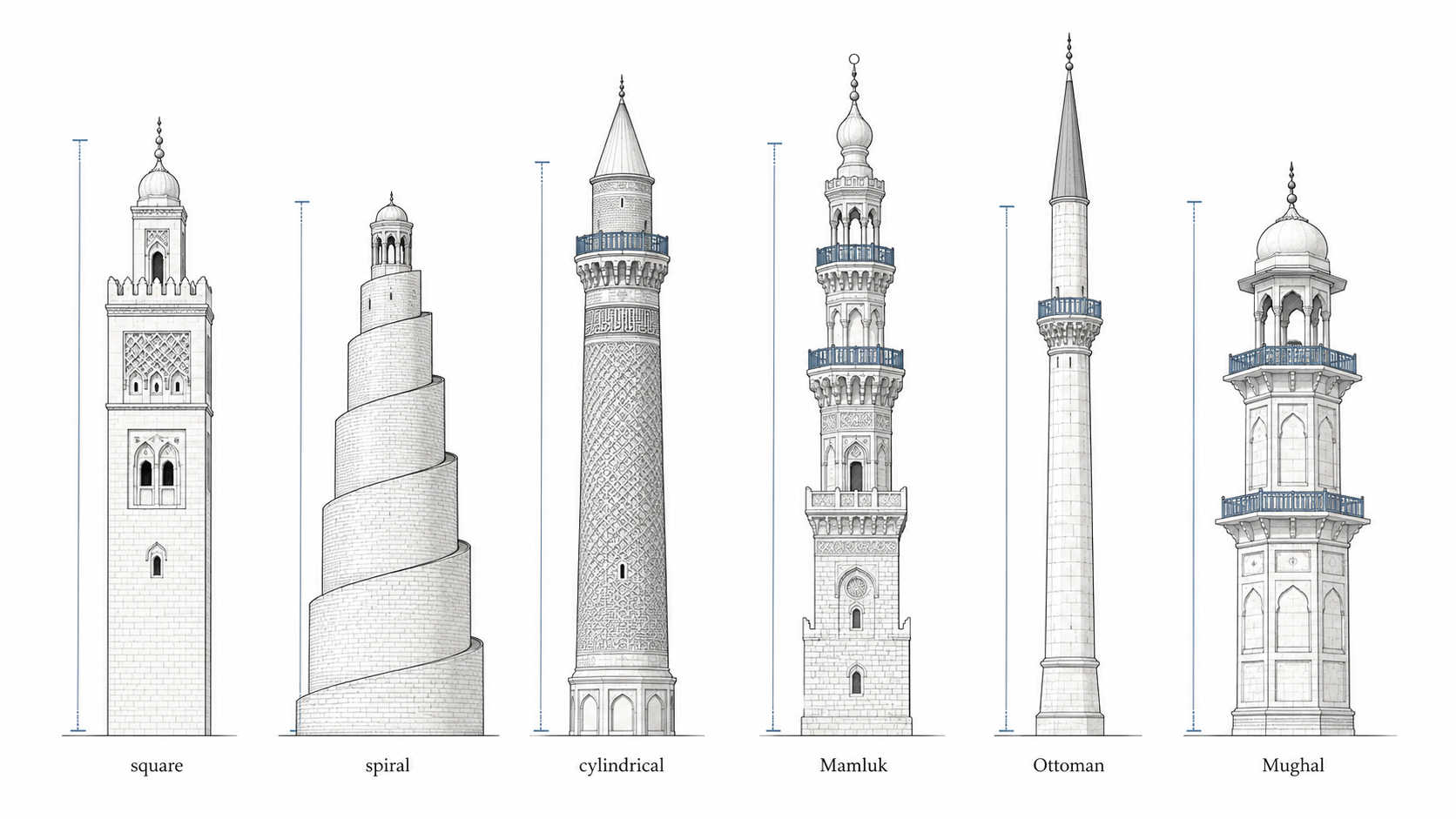
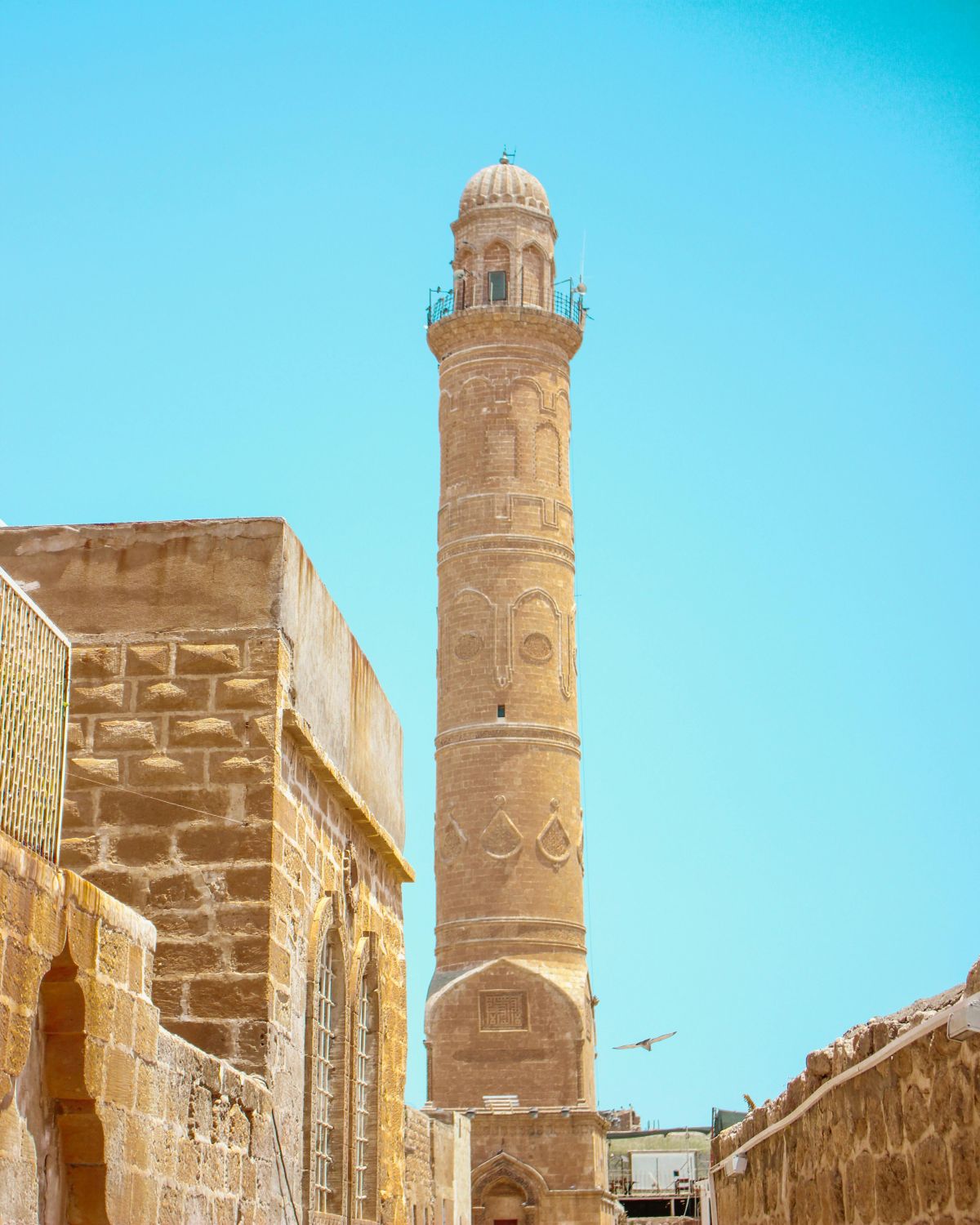
| Type | Where it appears | What makes it distinct |
|---|---|---|
| Square minaret | North Africa, Morocco, al-Andalus | Broad, stable tower form with strong wall-like mass and clear skyline profile. |
| Spiral minaret | Iraq and Abbasid contexts | Exterior spiral form or ramp-like profile, strongly associated with Samarra. |
| Cylindrical brick minaret | Persia, Central Asia, Afghanistan | Round or tapering shaft with brick pattern, inscriptions, and surface craft. |
| Mamluk tiered minaret | Cairo and Mamluk Egypt | Stacked stages, carved stone, balconies, varied crowns, and strong street presence. |
| Ottoman pencil minaret | Istanbul, Edirne, Bursa, Ottoman cities | Very slender shaft, sharp conical cap, multiple balconies, and imperial skyline effect. |
| Mughal corner minaret | South Asia | Often used symmetrically at tombs, mosques, platforms, and garden compositions. |
Square Minarets: North Africa and al-Andalus
Square minarets are among the clearest tower forms in Islamic architecture.
They are broad, stable, and readable from a distance. In North Africa and al-Andalus, the square tower became a strong regional type. It worked well with masonry construction, thick walls, geometric ornament, and urban visibility.
The Koutoubia Minaret in Marrakesh and the Giralda in Seville are key examples. The Giralda later became a bell tower, but its original minaret form still shapes the building’s proportion and memory.
For the regional branch, read Islamic and Moorish architecture in Spain.
Brick and Cylindrical Minarets
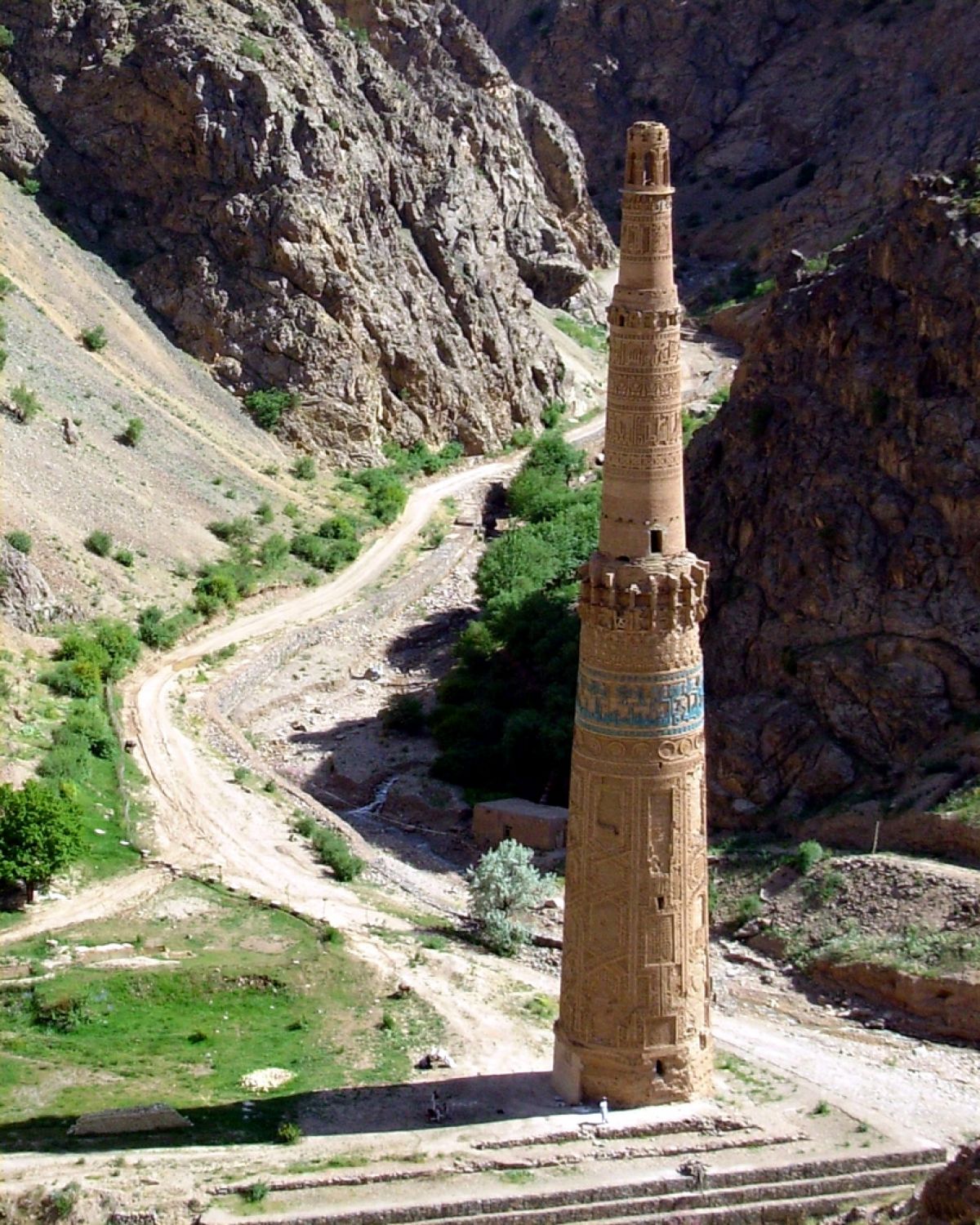
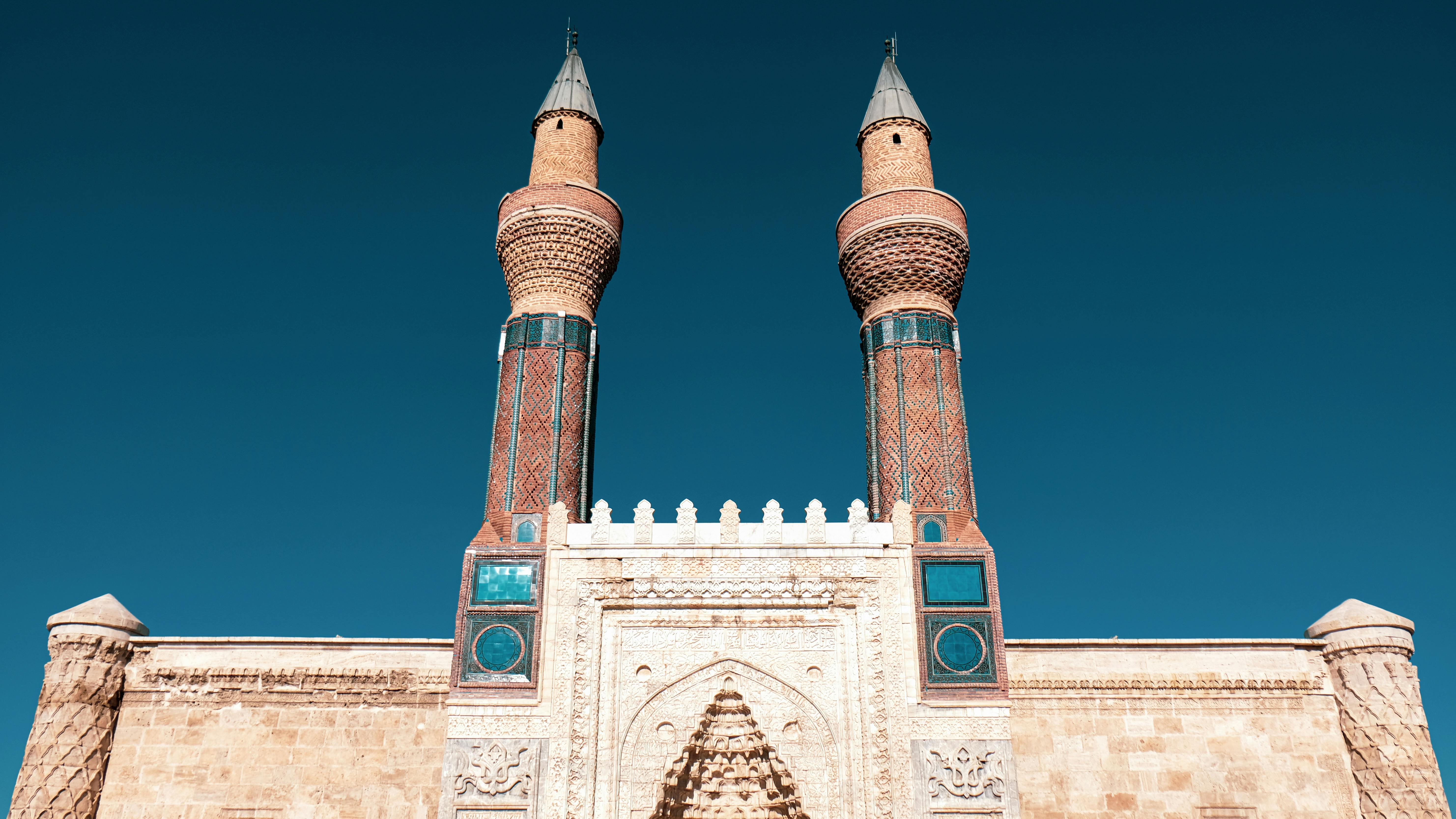
Persian, Central Asian, and Afghan minarets often use brick in ways that make the tower surface matter as much as the tower height.
The Minaret of Jam is the obvious example. Its cylindrical shaft, brickwork, inscription bands, and remote setting make it different from a mosque tower embedded in a dense city. It is a vertical monument, a marker, and a crafted surface.
Brick minarets are useful to study because they show how structure and ornament can be the same thing. Pattern is not simply applied on top. The brickwork itself helps make the tower legible.
Ottoman Pencil Minarets
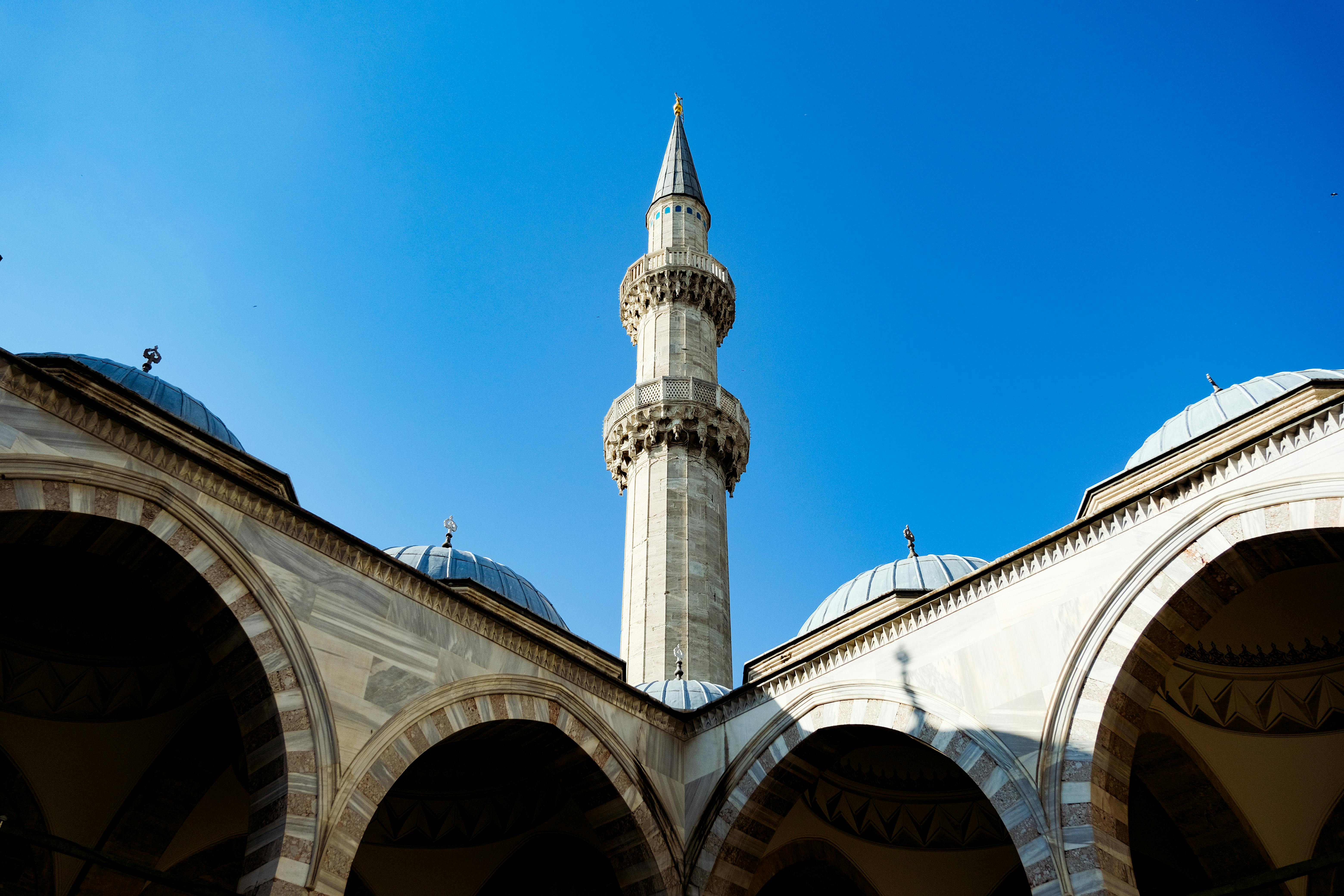
Ottoman pencil minarets are built to make the skyline sharp.
They are tall, thin, tapered, and often placed around large central-domed mosques. In Istanbul, this pairing became one of the strongest images of Ottoman mosque architecture: a broad dome system held in visual tension with slender vertical towers.
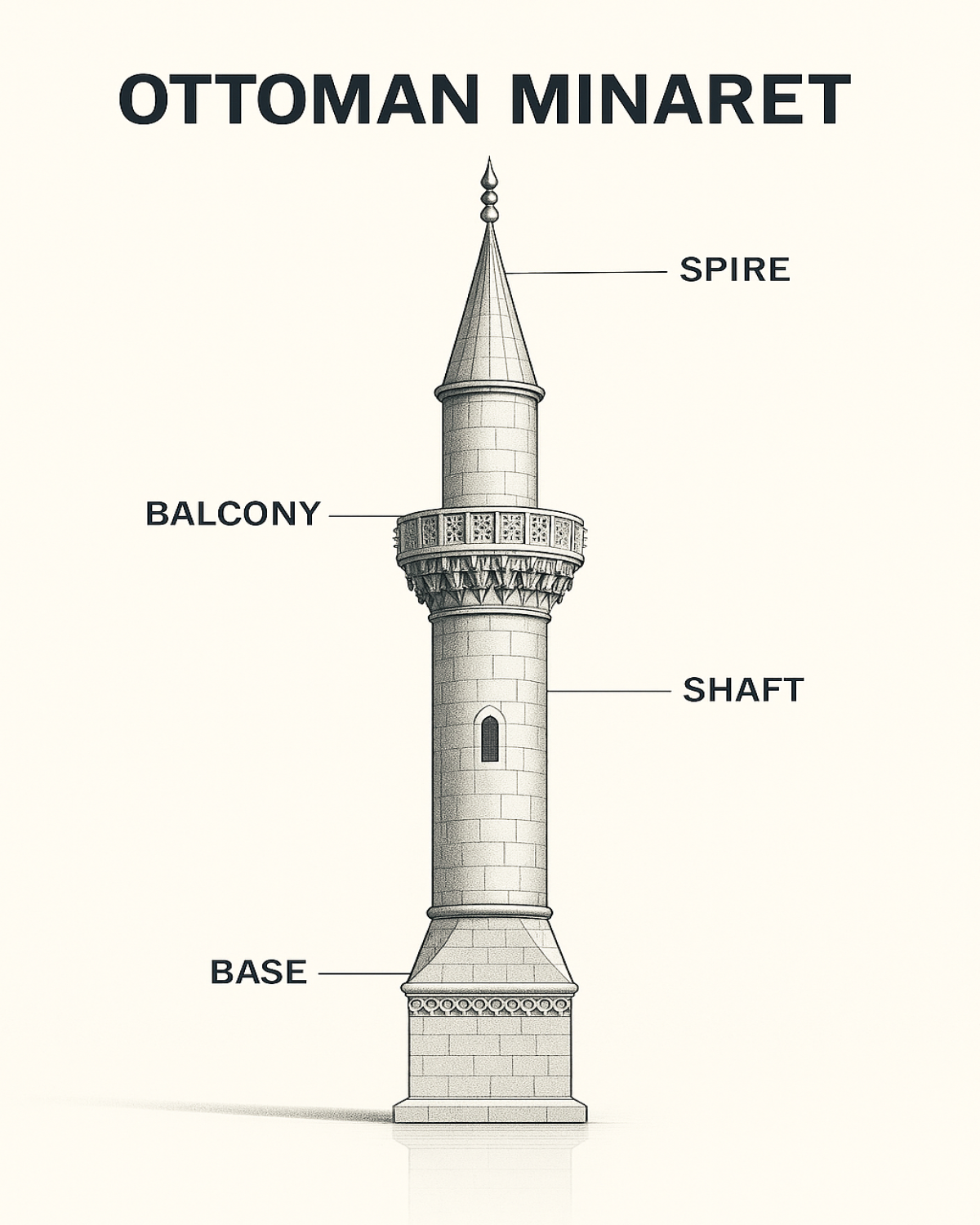
The Blue Mosque and Süleymaniye Mosque both show how minarets can reinforce symmetry, hierarchy, and imperial image. The minarets are not random accessories. They complete the skyline composition.
For Ottoman case studies, continue with Süleymaniye Mosque and Blue Mosque.
Mamluk Minarets in Cairo
Mamluk minarets are best read from the street.
In Cairo, minarets often rise from dense urban fabric. They are close to shops, housing, madrasas, tombs, gates, and narrow streets. Their job is not only to stand tall. They identify a religious or charitable complex inside a crowded city.
Mamluk minarets often use stacked tiers, projecting balconies, carved stone, and carefully shaped upper parts. The tower may change as it rises: square to octagonal, octagonal to circular, plain to carved, heavy to delicate.
This makes the minaret a vertical reading of patronage. Each stage can carry a different kind of visual weight.
For the city context, read Islamic Cairo.
The Turban-Like Crown Problem
Some Mamluk minaret crowns have been read as turban-like or helmet-like forms.
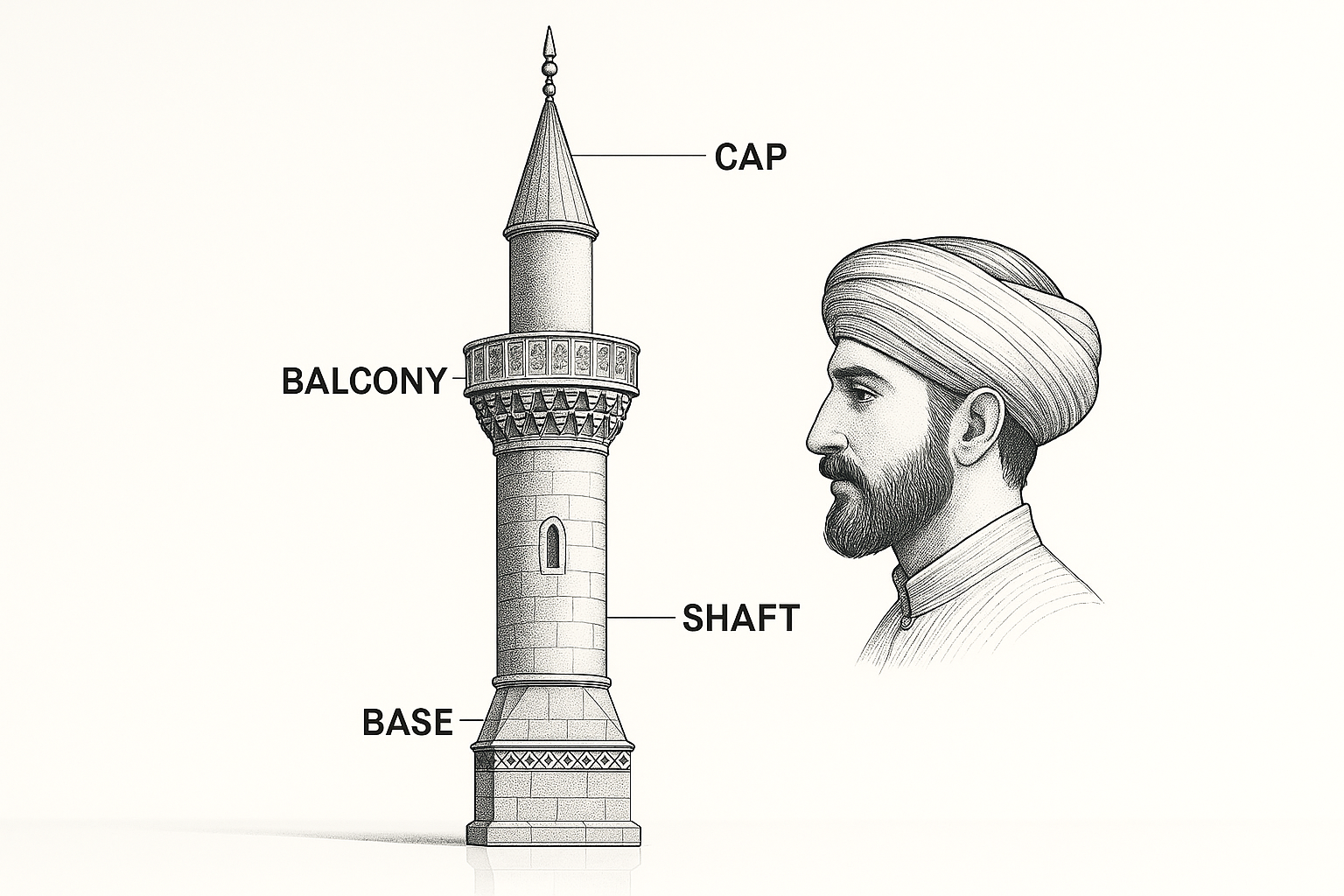
This idea can be useful, but it should not be pushed too far. A crown form can suggest rank, court culture, military identity, or patron image. It can also come from masonry habit, local precedent, or the desire to finish the tower with a strong silhouette.
The safer reading is architectural: the top of the minaret was highly visible. Because it finished the skyline line, it became a good place for identity, refinement, and memory.
In Mamluk Cairo, that mattered. A minaret was not only attached to a mosque. It was attached to a patron’s public image.
Minarets as Urban Design Tools
Minarets helped people read cities before modern wayfinding systems.
In dense Islamic cities, streets could be narrow, irregular, and shaded. The minaret gave the neighborhood a vertical point. It helped identify the mosque. It broke the roofline. It made the city legible from far away and from inside the street network.
The call to prayer gave the tower an acoustic role. The tower’s visibility gave it an urban role. Together, those two functions made the minaret one of the most important public markers in Islamic architecture.
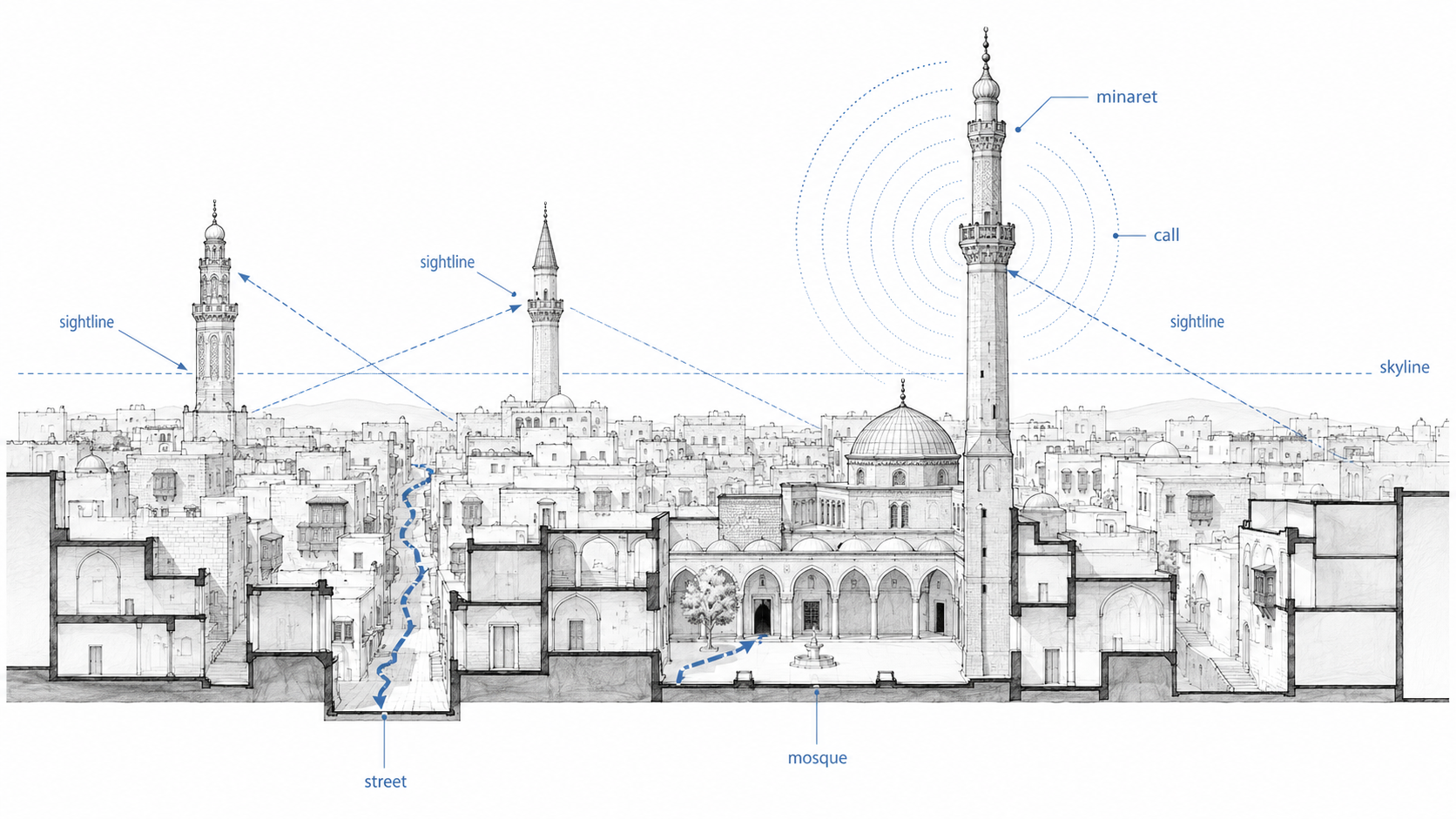
| Urban role | How the minaret helps | What can go wrong |
|---|---|---|
| Wayfinding | Gives the neighborhood a visible marker above low roofs and dense streets. | A tower hidden by taller modern buildings loses much of this role. |
| Skyline rhythm | Creates vertical breaks across a mostly horizontal city fabric. | Too many unrelated towers can make the skyline noisy instead of legible. |
| Mosque identity | Marks the prayer building from a distance. | A copied tower form may not match the mosque plan, scale, or material. |
| Sound memory | Connects the call to prayer with a specific place in the city. | Loudspeakers can replace the acoustic need but not the spatial memory. |
This is the section many minaret articles skip. The tower is not only about religious symbolism. It is also about how a city is seen, heard, and navigated.
Engineering and Construction Logic
A minaret is a tall, narrow structure. That makes it vulnerable if the base, shaft, materials, or repairs are wrong.
The base has to carry the vertical load and resist movement. The shaft has to stay stable under wind and thermal stress. The balcony has to project safely from the tower. The top has to finish the silhouette without making the structure top-heavy.
Older minarets also face repair problems. Stone erodes. Brick joints decay. Metal ties corrode. Earthquakes and settlement can crack shafts. Poor repairs can trap water or overload fragile masonry.
A good minaret is not only tall. It is proportioned, tapered, tied back to the building or ground, and repaired with materials that do not fight the original construction.
Famous Minarets Worth Studying
A short study list is more useful than a giant monument dump.
| Minaret or mosque | Region | Architectural lesson |
|---|---|---|
| Great Mosque of Kairouan | Tunisia | Square tower mass, early North African mosque identity, and fortress-like presence. |
| Koutoubia Minaret | Marrakesh | Square Almohad tower type and strong urban landmark role. |
| Giralda | Seville | Islamic minaret form transformed into a later bell tower while keeping its urban power. |
| Minaret of Jam | Afghanistan | Brick cylindrical shaft, inscriptions, remote monumentality, and surface craft. |
| Samarra spiral minaret | Iraq | Unusual spiral form and monumental Abbasid scale. |
| Blue Mosque | Istanbul | Six Ottoman pencil minarets used as part of a grand dome-and-skyline composition. |
| Taj Mahal | Agra | Corner minarets used to frame a tomb, platform, garden, and axial composition. |
Modern Minarets
Modern mosques still use minarets, but the function has changed.
Loudspeakers reduced the original need for a person to climb the tower for sound projection. Urban growth also changed visibility. A minaret that once rose above a low city may now sit beside apartment blocks, highways, utility poles, and glass towers.
That does not make the minaret useless. It means the design problem is different. A modern minaret may work as identity, skyline, wayfinding, symbolic continuity, ventilation shaft, light tower, or pure visual marker.
The weak version copies a historic silhouette without asking what the tower does. The better version studies proportion, site, mosque plan, material, local skyline, and public meaning before choosing a form.
What Gets Copied Badly
Minarets are easy to copy because their outline is recognizable.
That is also why they are easy to weaken. A pasted pencil tower on a flat suburban mosque may not help the plan, the entrance, the courtyard, the skyline, or the prayer hall. A fake Mamluk crown on a concrete shaft may look historic from far away but feel hollow up close.
The tower should answer basic questions:
- Does it mark the mosque from the street?
- Does its height fit the surrounding city?
- Does the base meet the building naturally?
- Does the shaft material make sense?
- Does the balcony have a reason, or is it decorative only?
- Does the top finish the tower with proportion instead of costume?
A minaret can be symbolic. It still has to be architecture.
How to Study a Minaret
Do not begin with the height.
Start with the mosque and city around it. Ask where the tower stands, what it marks, how it is built, and whether its form belongs to the building or only sits beside it.
- Find the base and how it connects to the mosque, courtyard, or street.
- Identify the shaft type: square, cylindrical, spiral, tiered, pencil, or corner tower.
- Look for taper, balconies, stair access, and crown shape.
- Check material: stone, brick, tile, plaster, concrete, or metal.
- Read the skyline role from a distance.
- Read the surface and repair condition up close.
- Ask what the minaret does for sound, sight, identity, and city memory.
Recommended reference: For readers studying mosque types and regional variation, The Mosque: History, Architectural Development and Regional Diversity is a useful search starting point for a serious architecture-focused reference.
The Tower Has to Earn Its Place
A good minaret is more than a vertical sign.
It belongs to a mosque, a street, a skyline, and a community memory. Its base, shaft, balcony, crown, material, and height all have to work together. The best minarets do not only rise above the city. They help the city make sense.
FAQ
What is a minaret?
A minaret is a tower associated with a mosque. Historically, it supported the call to prayer and marked the mosque in the city. It also became a strong symbol of Islamic architectural identity.
Are minarets required on mosques?
No. Early mosques did not always have minarets, and many modern mosques function without them. A minaret is important historically and symbolically, but it is not required for prayer.
What are the main types of minarets?
Common types include square North African minarets, spiral Iraqi forms, cylindrical Persian and Central Asian towers, tiered Mamluk minarets, slender Ottoman pencil minarets, and Mughal corner minarets.
Why do minarets have balconies?
Balconies historically gave the muezzin a raised place for the call to prayer. Architecturally, they also break the shaft, add scale, and mark levels on the tower.
Why are Ottoman minarets so thin?
Ottoman pencil minarets were designed as slender skyline elements beside large domed mosques. Their height and sharp profile helped reinforce imperial mosque composition.
Why are some minarets square?
Square minarets are common in North Africa and al-Andalus. The form works well with masonry construction and gives the tower a strong, stable mass.
Do modern minarets still have a sound function?
Sometimes, but microphones and loudspeakers changed the old acoustic role. Modern minarets often work more as identity, skyline, and symbolic markers.
What should students notice first?
Start with placement. A minaret only makes sense when you understand the mosque, courtyard, street, skyline, and city around it.
Read This Next
For the broader parent article, read Islamic architecture. For the historical sequence, use Islamic architecture history. For the feature-level guide, continue with characteristics of Islamic architecture.
For related design systems, read Islamic arches, courtyards in Islamic architecture, mashrabiya designs, and muqarnas architecture.