
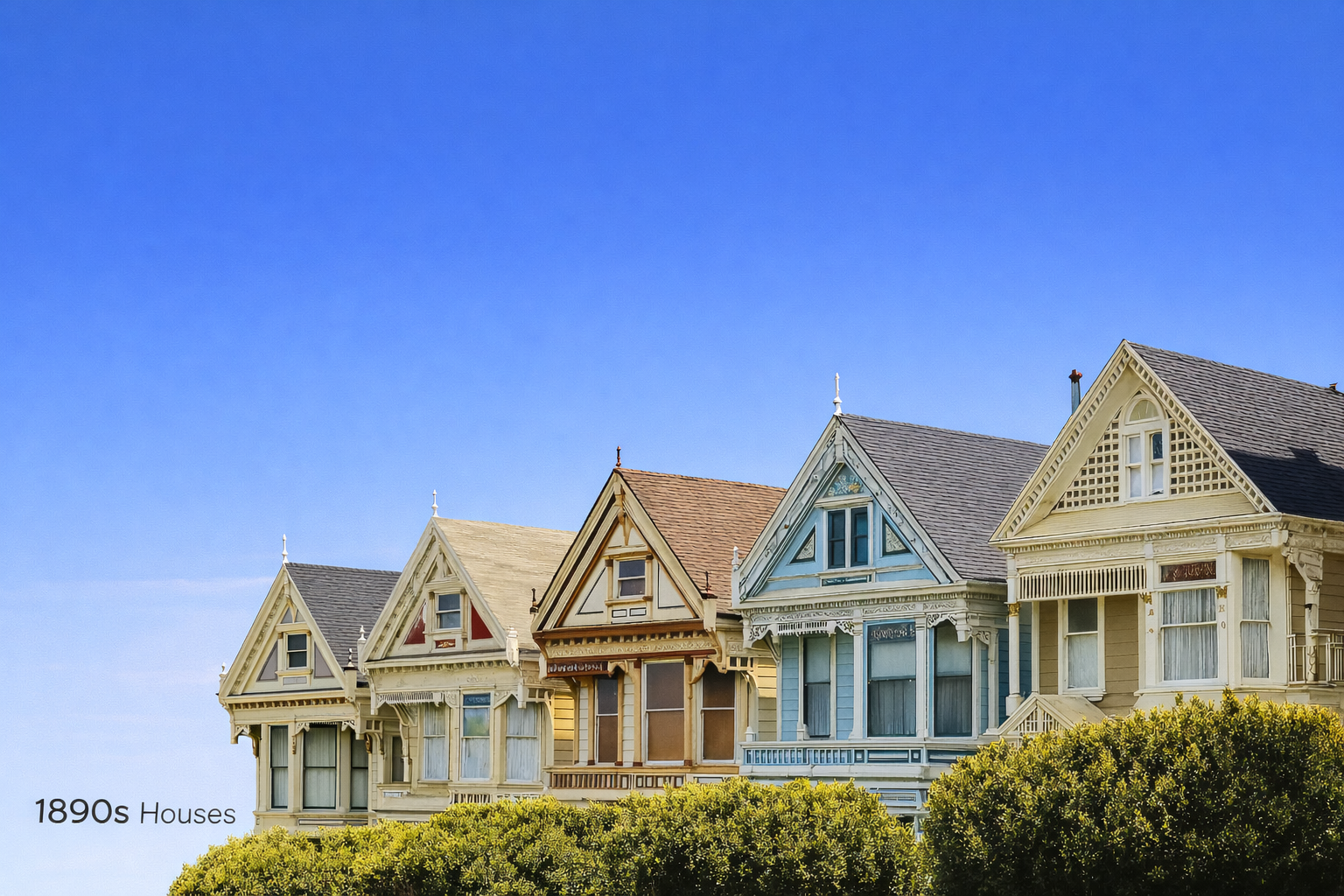
When homes started showing off: The 1870s is where American houses stop pretending they’re simple boxes. Rooflines get loud. Porches get deep. Corners start doing things on purpose. The plan stops lining up neatly, and the exterior starts performing.
On a lot of 1870s-era houses, the “character” you love is the same stuff that turns into repairs later: sagging porch corners, layered paint that never should’ve been there, water getting behind trim, and attic surprises that don’t belong in a living space.
This wasn’t just style. It was attitude.
That mix of bold form and serious detailing still hits today. Making it livable takes restraint and a good plan.
What this covers:
- The real story behind 1870s house styles (what changed and why it shows up in the details).
- What makes Queen Anne and Stick Style stand out in the field.
- What to keep, what to update, and what to leave alone.
- Where people get burned during “restoration” work.
This guide on 1870s house styles is part of a larger project covering five centuries of home architecture.
What 1870s Homes Really Looked Like
Queen Anne. Stick Style. A break from the past.
By the 1870s, American residential design stops aiming for flat facades and starts leaning into depth and motion: towers, gables, bay windows, wraparound porches, and trim that reads from the street.
Queen Anne Homes: Drama Meets Detail

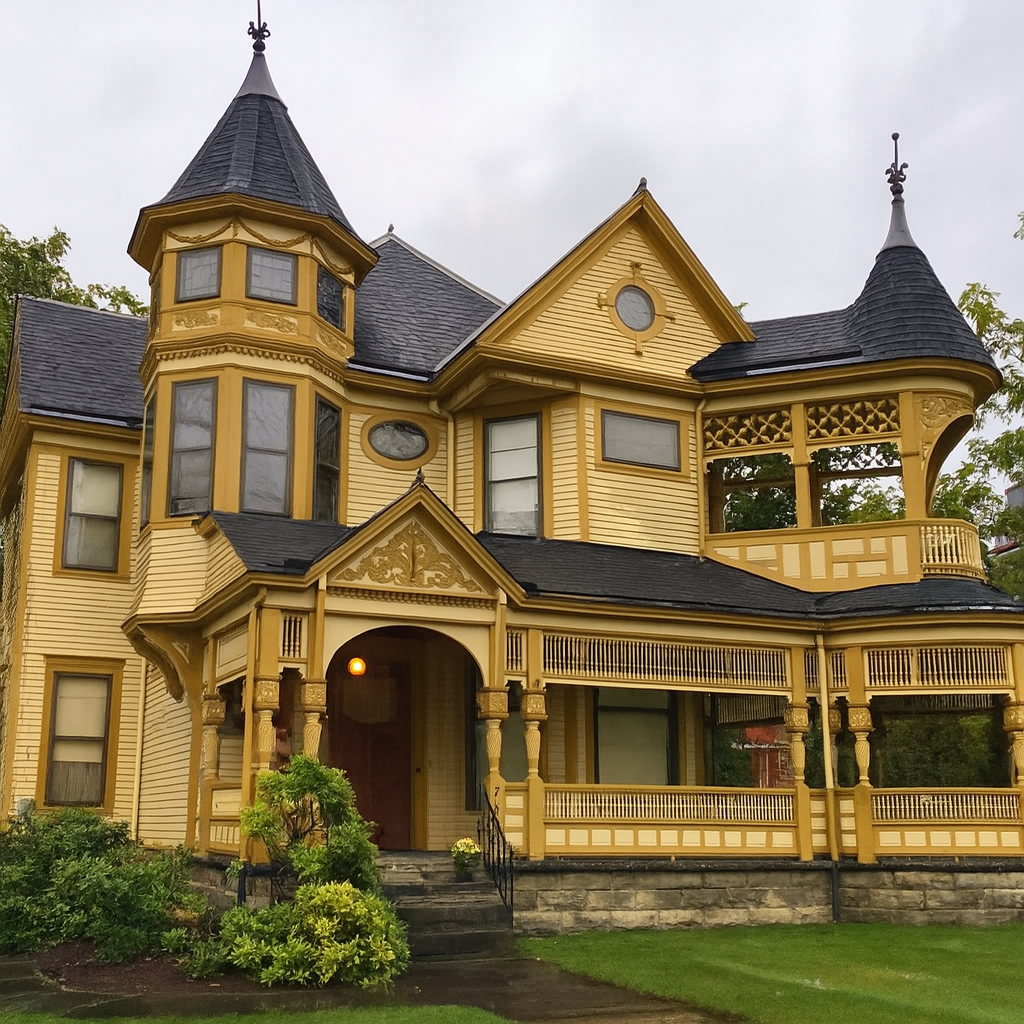
Image: Queen Anne-style house with turret, wraparound porch, and gabled roof, colorized from a historic photo.
Main moves:
- Turrets and towers that push vertical presence.
- Gables, bays, and layered massing.
- Big porches that read as outdoor rooms.
What makes them special:
- Stained glass used as punctuation, not wallpaper.
- Fish-scale shingles, brackets, painted trim, and varied textures.
- A facade that changes as you walk around it.
Field reality: the detail package is also the leak package. If gutters, flashing, and paint maintenance were ignored for a decade, the “cute trim” becomes rot and rework.
Stick Style: When Structure Became the Look
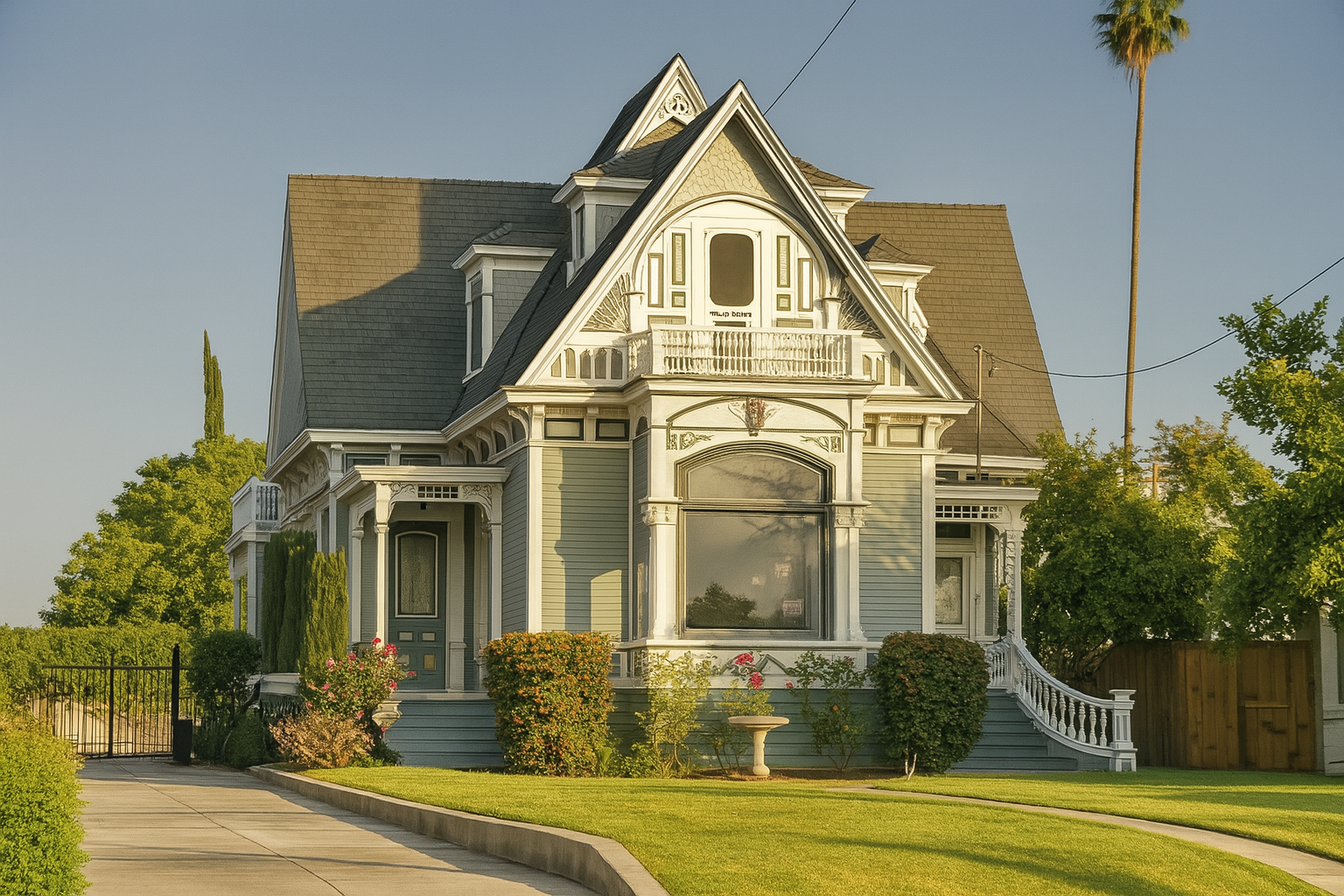
Image: Stick Style Victorian house with decorative wood trim and steep gabled rooflines. More Victorian examples here.
Signature features:
- Exposed “stickwork” (wood slats that mimic structure).
- Steep gables and strong vertical emphasis.
- Deep porches, but usually more angular and less ornate.
Why it works: Stick Style makes the “bones” legible. The decoration reinforces structure instead of hiding it.
Painted Ladies: A Related Example (Late Victorian, Not Strictly 1870s)
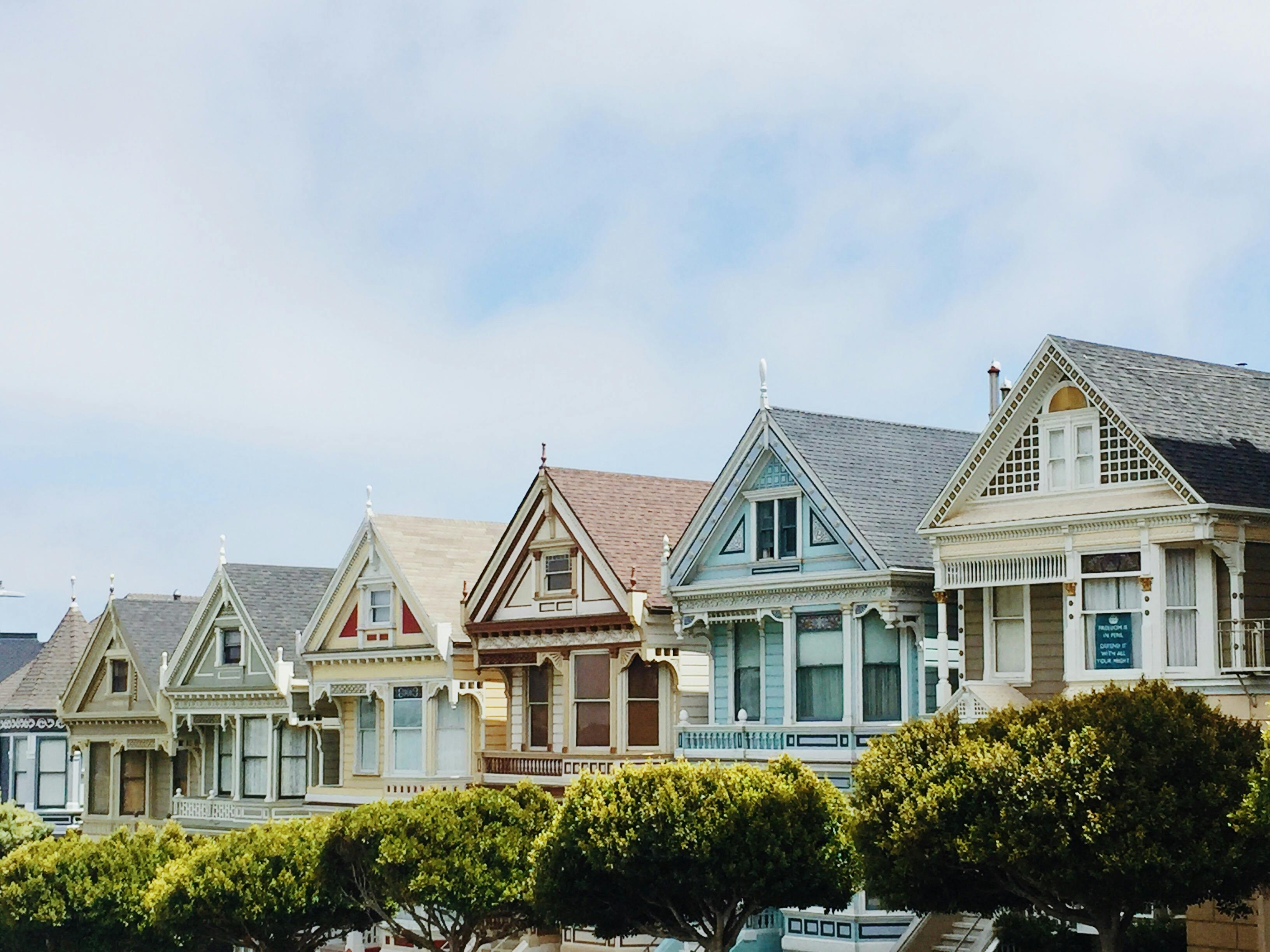
Image: Classic Painted Ladies with vibrant colors and ornate detailing.
These are often later (many are 1880s–1890s), but they’re useful as a visual reference for what the Victorian era does with massing, trim hierarchy, and color separation. Same instincts: depth, rhythm, and a refusal to be subtle.
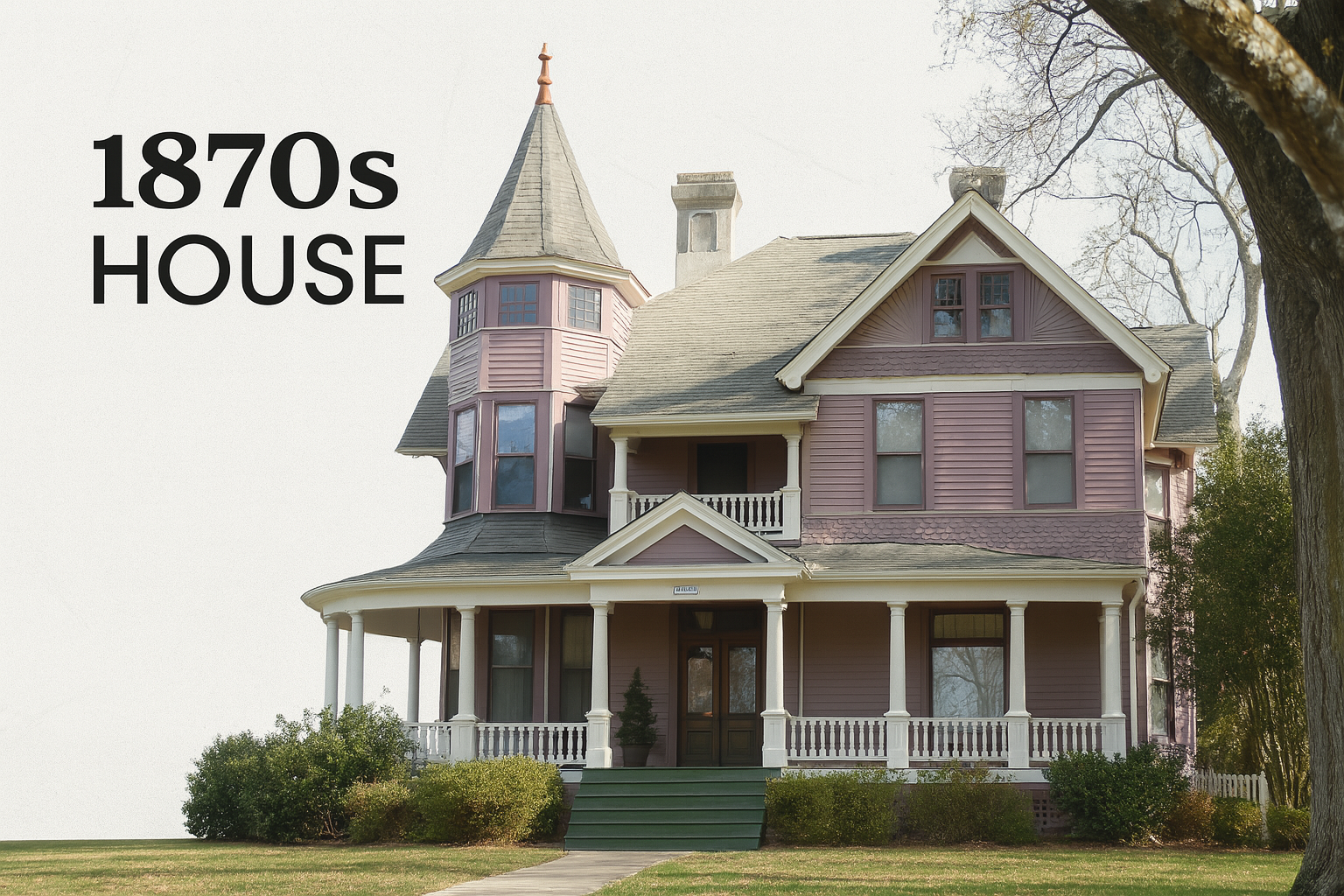
Image: Historic Victorian house with ornate detailing, turret tower, gabled roofline, and wide front porch.
1870s House Exteriors: What Jumps Out
Turrets. Trim. Porches. This is when houses get personality.
Here’s how the exteriors tend to read in real life, and what’s worth preserving versus “upgrading” into a different house.
1) Turrets & Towers: The Vertical Move
On Queen Anne houses, a turret is the headline. It’s usually octagonal or round, often holding a stair, nook, or a small tower room.
Keep: original window proportions and roof cap profile if it’s still salvageable.
Watch: flashing at the turret roof junction. This is a frequent leak point that gets ignored because it’s hard to reach.
2) Wraparound Porches: The Original Outdoor Room
Porches weren’t decoration. They were a working social space, and they built the house’s scale.
Keep: depth, post spacing, and railing proportions.
Update carefully: structure below the deck, beam bearing, and water management. If the porch is sinking, cosmetic fixes just hide the failure.
3) Stickwork: When the Frame Shows
Stick Style leans into linear trim and pattern to imply structure.
Repair note: grain direction, thickness, and spacing matter. Patchwork with mismatched stock is the fastest way to make an old facade look “off” from the sidewalk.
4) Color Strategy: Loud vs. Grounded
Victorian-era paint schemes are not random. They’re a hierarchy: base field, trim layer, and accent hits that pull your eye to edges and joints.
Modern move that still respects the style: keep the hierarchy, reduce the number of colors.
5) Rooflines: The Shape Language
Roofs do the heavy lifting in 1870s houses. Tall gables, intersecting volumes, and decorative shingles create shadow and depth.
Upgrade without killing it: improve underlayment, flashing, and ventilation first. Don’t “simplify” the roof to save money unless you accept you’re changing the style.
6) Windows: Proportion Over Ornament
Even simple windows look right when the proportions stay intact: tall sash profiles, bay assemblies on Queen Anne houses, and vertical emphasis on Stick Style.
Rule: keep the opening size and muntin logic. Modern replacements that change the glass-to-frame ratio make the whole elevation feel cheap.
Recap: What to Steal From 1870s Style
Queen Anne: commit to asymmetry, layered rooflines, and a porch that reads as a room.
Stick Style: keep it linear, legible, and structure-forward.
1870s Interiors: What Still Works
(and What Ages Badly)
Interiors varied by budget and region, but a few patterns show up again and again: heavy woodwork, strong room separation, and details that were meant to be noticed up close.
Living Rooms: The Showpiece
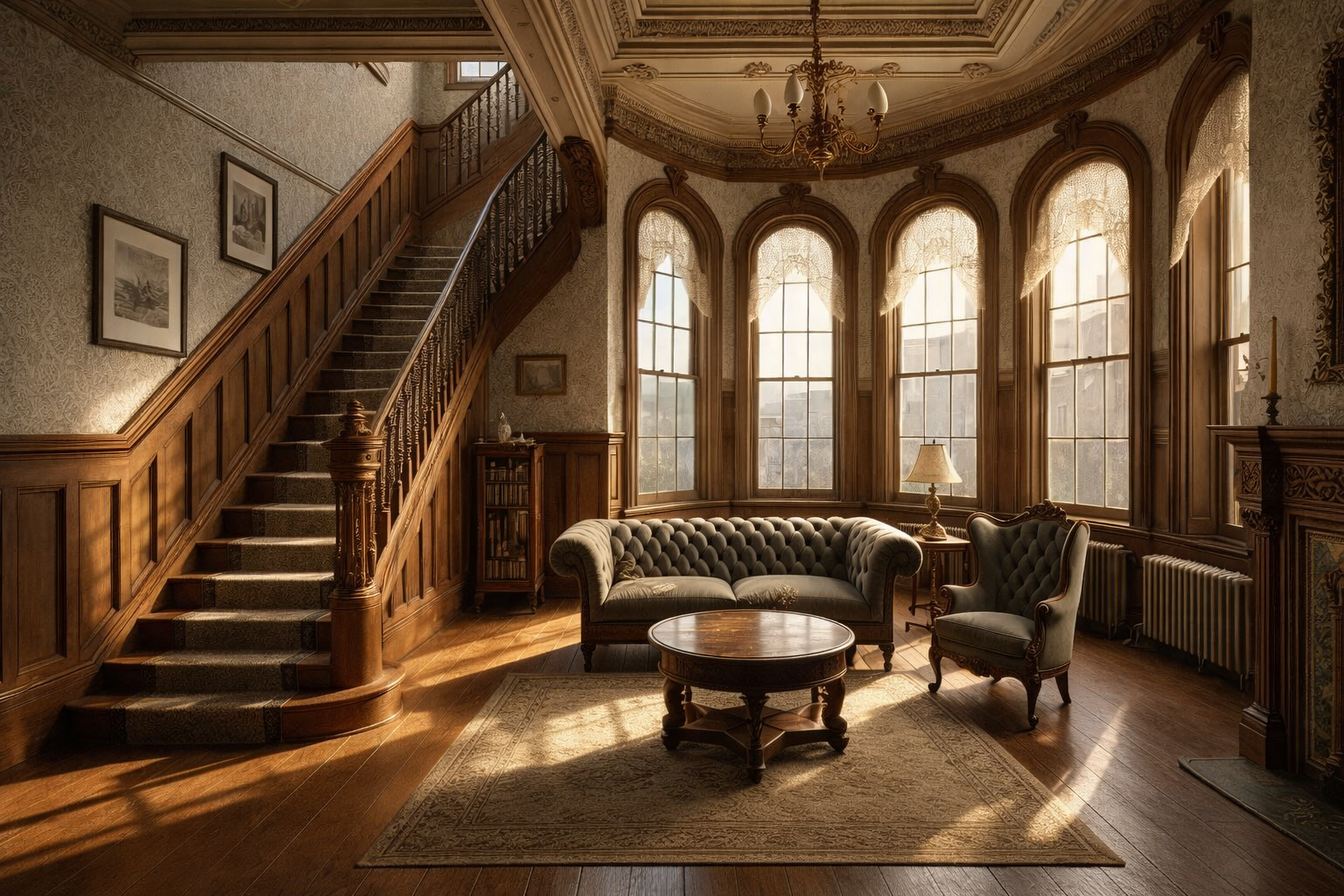
Queen Anne-style living room with ornate staircase and heavy wood detailing.
Keep: stair profiles, mantels, and trim transitions when they’re intact.
Update carefully: wiring, insulation strategy, and air sealing. Interior upgrades that ignore moisture and ventilation often create new problems behind beautiful finishes.
Kitchens: Practical First

1870s-inspired kitchen with cast iron stove, freestanding worktable, open shelving, and brass hardware.
Original kitchens were compact and task-driven. Modern upgrades can borrow the feel without pretending it’s 1870 again.
Modern translation that works: simple cabinet fronts, honest materials, and hardware that looks like it belongs.
Bathrooms: A Transitional Era
Dedicated bathrooms were not universal in the 1870s. When you remodel, don’t force “Victorian” styling into every fixture. Get the layout, ventilation, and waterproofing right first.
Designing a New Home Inspired by the 1870s
(Without Turning It Into a Costume)
You can take the core moves and build something modern that still reads “Victorian-era energy” from the street.
- Prioritize silhouette: rooflines, bays, porch depth, and one strong vertical element beat a pile of decorative trim.
- Use ornament sparingly: pick a few areas (gable ends, porch brackets, window surrounds) and do them well.
- Modern materials are fine: use them to solve durability and maintenance, but keep the proportions and shadow lines honest.
- Plan for water: complex forms demand serious flashing and drainage thinking. That’s where modern detailing earns its keep.
Why People Still Chase Victorian Houses
A common confusion: people say “Victorian” when they mean “old, ornate, expensive-looking.” The label is messy, but the attraction is consistent: detail, craft, and a house that feels like it has a point of view.
That’s why this style keeps coming back in renovations and new-build references. Even when someone paints everything white and swaps the furniture, the massing and proportions still carry the character. For a broader baseline on what “Victorian” covers, see this Victorian overview.
FAQ
What defines Queen Anne architecture?
Asymmetrical massing, towers/turrets, porches, varied textures, and trim that’s intentionally layered.
How is Stick Style different?
Stick Style leans on linear trim and structural expression. Less carving, more pattern and legibility.
Are these styles expensive to restore?
They can be. The cost usually lives in labor: repairable woodwork, paint prep, porch structure, and roof junctions. Cosmetic-only “restorations” often fail later.
Can I borrow 1870s elements in a modern home?
Yes. Start with porch depth, roofline composition, and window proportions. Add a small amount of ornament where it carries the elevation, not everywhere.