
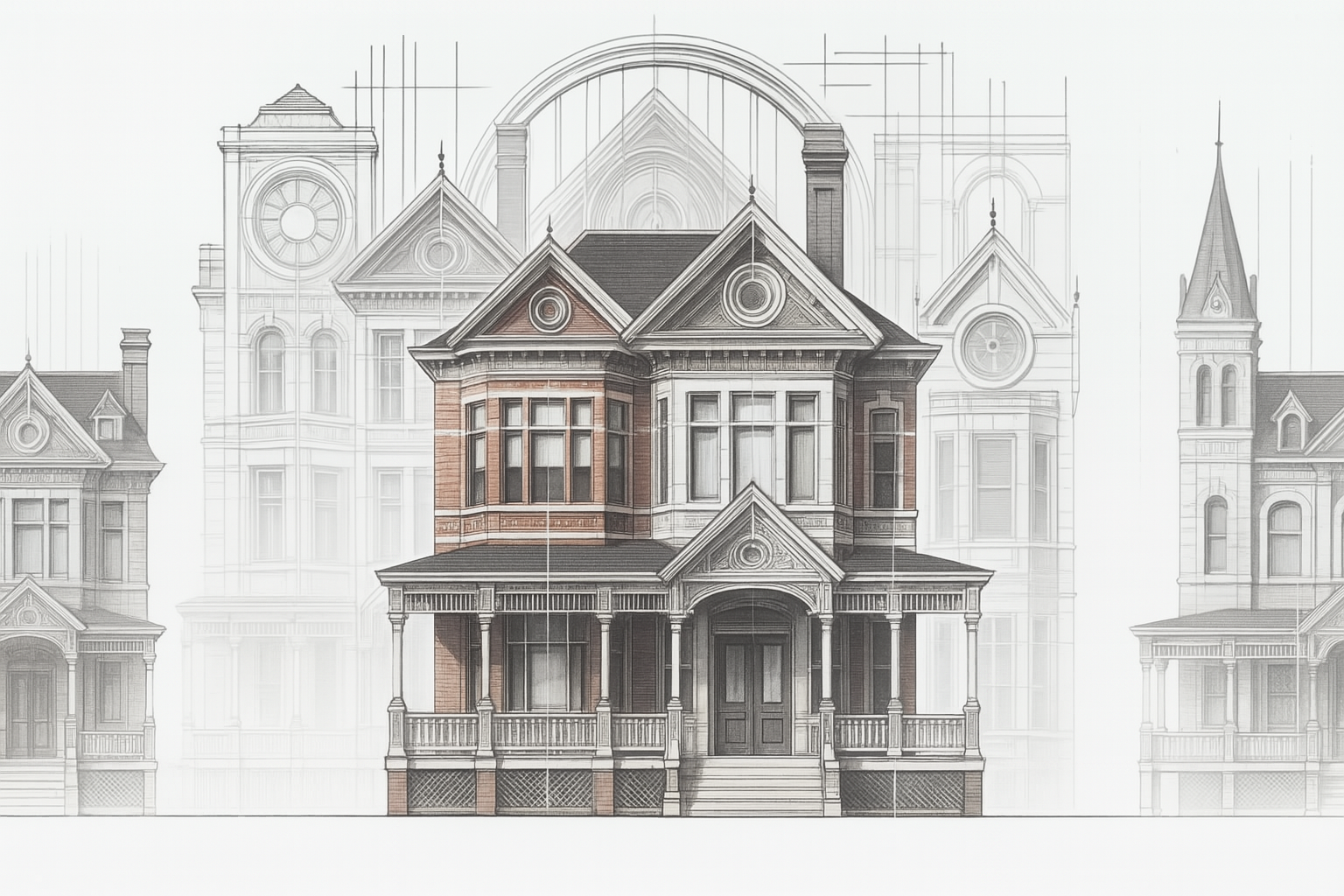
1800s HOUSE STYLES (19th Century)
Key Trends and Design Tips for Your Home
So many people get excited about those classic, century-old house styles simply because they’re popular and have a certain charm. But just because many people love them doesn’t mean you should rush into deciding that you like them too.
Don’t get us wrong: we’re all about these historic homes, but it’s a bit of a hardcore love. These styles aren’t for everyone, and that’s okay. We’re here to give you all the details, including helping you figure out if they’re the right fit for your lifestyle and taste.
MUST READ
“A Field Guide to American Houses” by Virginia Savage McAlester
If you’re even thinking about buying or renovating a 19th-century house, this book is the bible. It breaks down every style, era, and regional quirk—clearly, visually, and without fluff.
🔗 View on Amazon
This guide is part of a larger project exploring five centuries of architecture.
1800s HOUSE STYLES
How to Blend Classic Architecture with Modern Life

IMAGE: A brightened and colorized interior of the only remaining 1722 Nantucket home from the original Sherburne settlement, featuring a colonial brick fireplace, iron kettles, handwoven rugs, and original wood beams, capturing early colonial architecture.
Old homes look great—until you try to live in one. Low ceilings. Tiny kitchens. Maze-like layouts.
This section shows how to keep the charm of the 1800s without giving up real function. We’re talking Colonial simplicity, Victorian drama, and early American structure—done in a way that actually works today.
● Keep original beams, but add insulation
● Rework floorplans without killing the flow
● Mix real materials with clean upgrades
● Stop copying — start curating
Whether you’re restoring or just borrowing the style, make it honest. Make it livable.
MUST HAVE
“Antique Style: More Than 100 Classic Furniture Reproductions You Can Build”
If you want to understand construction, proportions, and what makes a piece feel real—this is the book. Clean diagrams, measured plans, and timeless design cues. Perfect if you’re serious about spotting quality (or building your own).
What real 19th-century homes looked like—inside and out. Layouts, materials, porches, and more.
1800s HOUSE STYLES
What to Focus On—and What to Skip
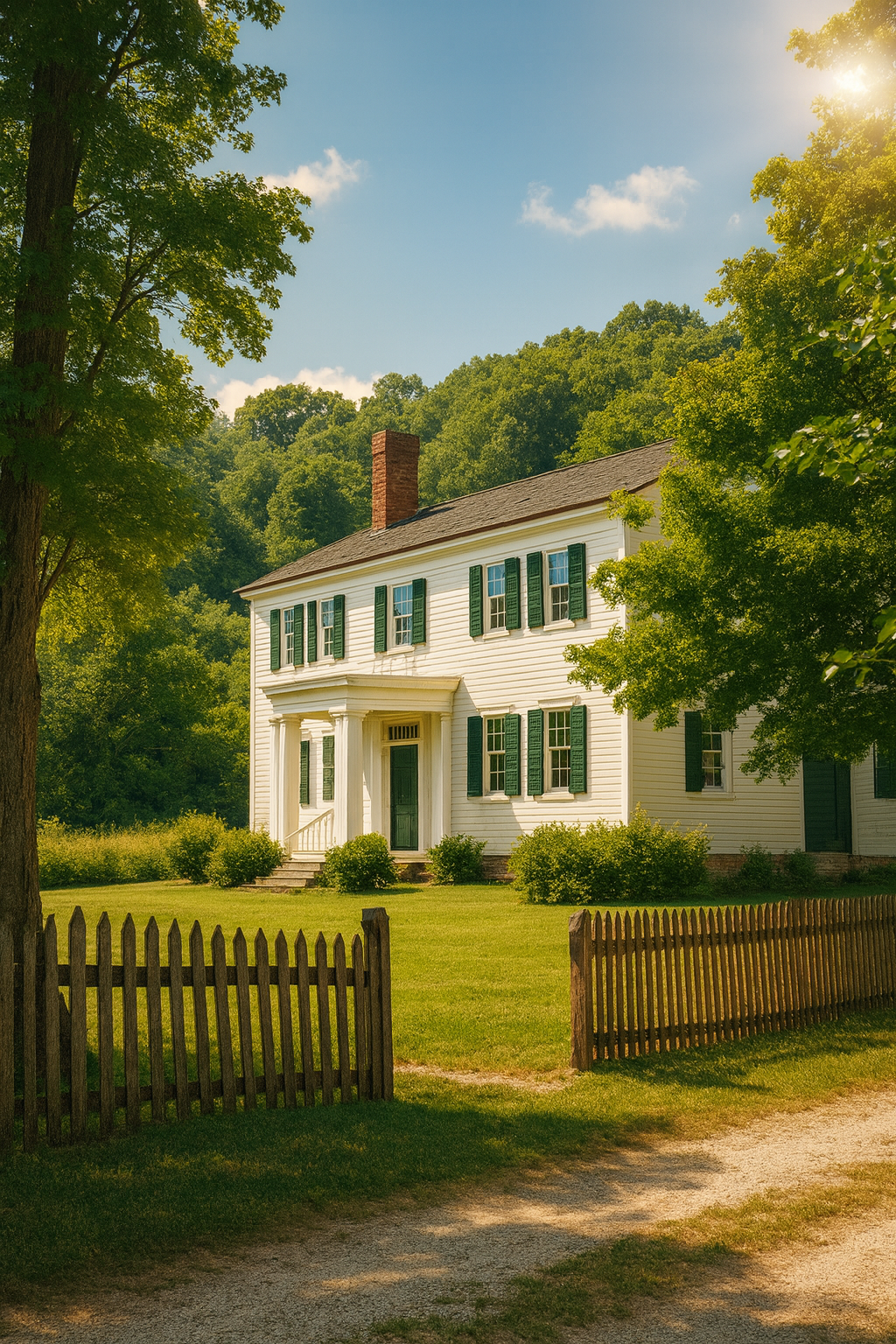
This isn’t a pretty summary. It’s a quick breakdown of what matters in each style so you don’t mess it up trying to make your house “look historic.”
FEDERAL STYLE (1800–1830)
● Key Look: Brick, clean lines, flat front, oval fanlights
● Upgrade Tip: Keep symmetry—don’t add off-center porches or random additions
● Use: Subtle trim, black shutters, warm white walls
🗸 Think: Early America with quiet confidence
GREEK REVIVAL (1830–1860)
● Key Look: Big columns, heavy front trim, wide rooflines
● Upgrade Tip: Paint everything crisp white or pale stone—not beige
● Use: Tall baseboards, heavy doors, minimal decor
🗸 Think: Temple-front farmhouse with muscle
GOTHIC REVIVAL (1840–1870)
● Key Look: Pointed windows, steep roofs, gables and spires
● Upgrade Tip: Keep the drama—don't flatten it with boring paint
● Use: Arched details, deep colors, ornate lighting
🗸 Think: Romantic, not haunted
ITALIANATE (1840–1885)
● Key Look: Tall windows, low roofs, chunky brackets
● Upgrade Tip: Keep those eaves wide—don’t box them in
● Use: Iron railings, paired doors, gold tones
🗸 Think: Urban elegance with a hint of villa
VICTORIAN MIX (1870–1900)
● Key Look: Busy trim, towers, shingles, stained glass
● Upgrade Tip: Pick a lane—don’t mix Queen Anne with Stick Style unless you know what you’re doing
● Use: Jewel tones, curved furniture, layered textures
🗸 Think: Loud but lovable
Want to get it right? Don’t fake old. Understand it. Then build around it.

Example: The Painted Ladies of San Francisco are iconic examples of Queen Anne Victorian homes.
Québécois 1800s House Style: Sharp Roofs, Thick Walls, Real Character
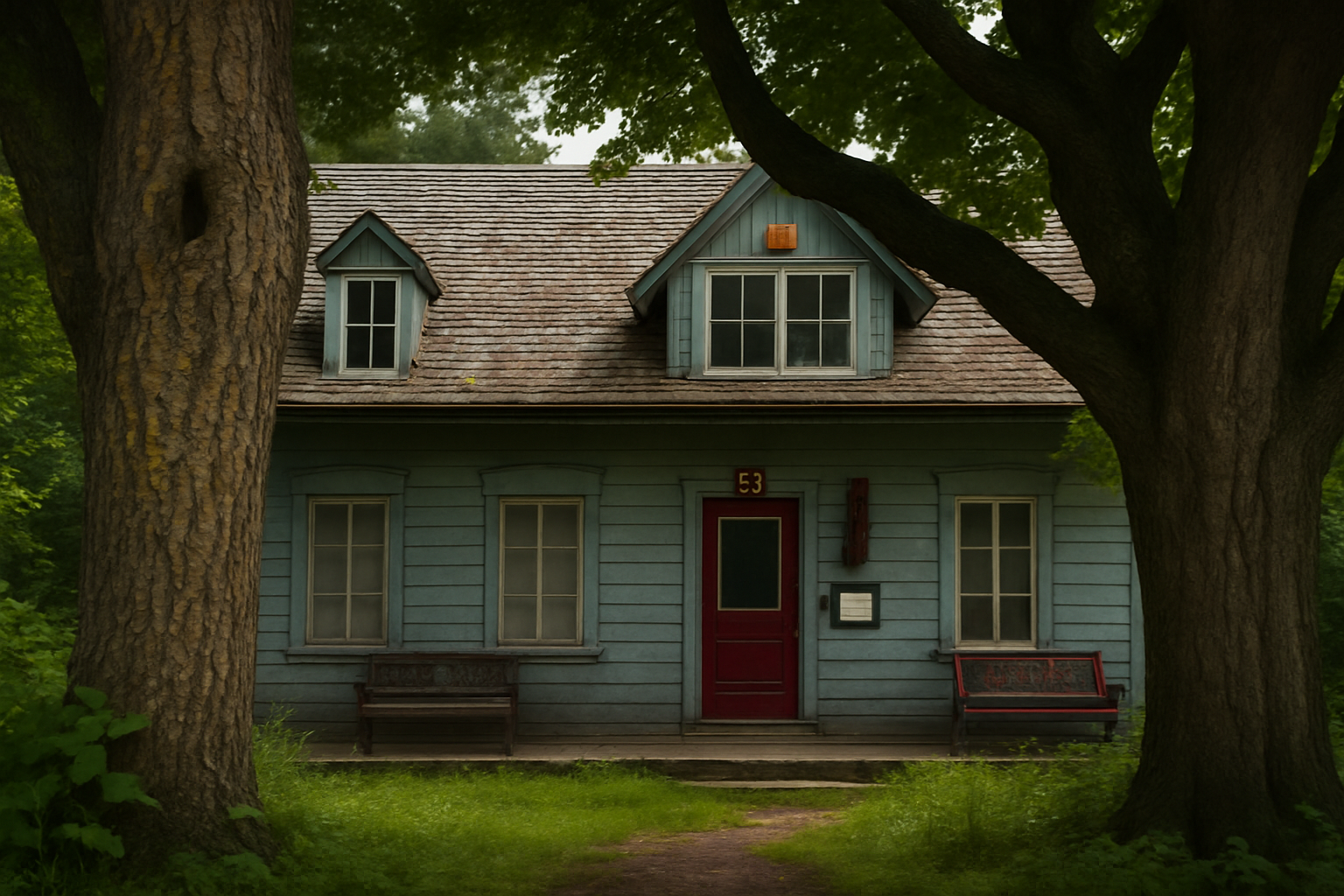
You won’t mistake it once you see it.
Québécois houses from the 1800s were built to survive brutal winters, bad roads, and isolation. They weren’t fancy. But they were smart.
Key features:
● Steep pitched roofs with short overhangs—snow slides off fast
● Stone or whitewashed masonry walls, often 18–24 inches thick
● Small, deep-set windows, sometimes with shutters that actually work
● Central chimneys—shared warmth across the home
● Low, wide forms—usually 1.5 stories, almost squat from the front
● Simple detailing—no gingerbread, no false trim
This is not Victorian. It’s not neoclassical. It’s pure rural utility, shaped by weather and French colonial traditions.
Where you’ll find them:
Rural Québec, parts of eastern Ontario, and some pockets of Acadian settlements in the Maritimes. Many still stand. Some have been modernized—most poorly.
If you’re restoring one:
Don’t fake modern symmetry. Keep the deep roof. Use lime-based plaster. Let the windows stay small. Keep shutters functional. This is one of the few North American styles where simplicity beats polish.
Modern upgrades that work:
Metal roofs in slate colors. Triple-glazed wood-frame windows with interior storm panels. Under-roof insulation with vented eaves. All hidden, all respectful.
This style is rare. And worth getting right.
Why Most 1800s Homes Look Tall and Skinny
No, they weren’t trying to make room for a Peloton.
Homes from the 1800s often look narrow and vertical because they had to be. In cities, land was expensive and lots were tight. Builders went up instead of out.
Inside, everything followed that logic:
● Rooms were stacked from front to back, one behind the other
● Staircases ran along one side to save width
● Ceilings were high to help with air circulation
● Chimneys were placed in the middle to heat multiple rooms
The result was a tall, narrow face to the street. You get thin façades, vertical window stacks, and steep rooflines. It wasn’t about fashion. It was about squeezing function into a limited footprint.
Even outside the city, that vertical look carried on. The proportions became part of the style, even when wider lots were available.
Pro tip: If you’re renovating, don’t flatten the layout too much. That tall rhythm is what gives these homes character and structure.
1800s House Styles: Incorporating Classic Architecture into Modern Homes
Learn how to blend the architectural beauty of 1800s house styles with contemporary needs. This guide offers advice on combining old-world charm with modern living essentials.
EXTERIOR ELEMENTS THAT MATTER
What to Focus on When Reading or Restoring 1800s Homes
If you want the outside of your house to feel like it came from the 1800s; and not like a bad museum copy. Here’s what to actually look at:
SHAPE & SYMMETRY
● Early 1800s (Federal, Colonial): Perfectly balanced; same number of windows on each side, centered door
● Later 1800s (Victorian, Queen Anne): Chaos, in a good way—turrets, bay windows, porches slapped on at angles
→ Don’t try to “balance” a Queen Anne. You’ll kill it.
MATERIALS
● Wood: Most common in small towns and farmhouses
● Brick: Big in cities and Federal homes
● Stone: Reserved for rich people and serious buildings
→ Use what matches the region. Don’t slap stone on a wood-frame house and call it authentic.
ROOFS
● Colonial/Federal: Simple gables, maybe a dormer or two
● Greek Revival: Low-pitched with heavy cornices
● Gothic Revival: Steep and sharp—like church spires
● Second Empire: Mansard roofs with dormers punched in
→ Don’t flatten these. A roof says more than a paint job ever will.
WINDOWS & DOORS
● Early: Tall, narrow, with shutters that actually work
● Mid-to-late: Round arches, stained glass, side lights, double doors
→ Don’t skimp on the door. It’s the handshake of the house.
PAINT COLORS
● Early: White, tan, soft gray, muted green
● Late: Bold combos—wine red, forest green, gold trim, even black
→ Go muted or go dramatic. Beige is for HOA suburbs.
Learn about the defining design trends of 1800s house styles.
Expert tips on how to update your home with classic features, from roof shapes to decorative accents!
Interior Design Inspiration: A Room-by-Room Guide
Design Elements and Techniques: Interior
The 1800s interior design was all about making a statement with luxurious details and practical functionality. Here’s a breakdown of how to achieve the interior aesthetic of the era room by room:
Living Room:

- Furnishings: Expect formal seating arrangements with upholstered armchairs and couches.
- Materials: Heavy draperies and ornate rugs were popular, along with carved wooden furniture.
- Color Schemes: Rich, deep hues like burgundy, forest green, and gold dominated the space.

Kitchen:

- Layout: Early kitchens were simple with wood-burning stoves, but by the late 1800s, more efficient layouts were introduced.
- Materials: Oak or pine cabinetry was common, with large countertops for food preparation.
- Modern Twist: To integrate modern appliances while maintaining the look, opt for vintage-style pieces like freestanding ovens or farmhouse sinks.
Bedroom:

- Design: Four-poster beds, heavy wooden furniture, and floral or damask wallpaper were hallmarks of 1800s bedrooms.
- Textiles: Rich fabrics like velvet or brocade for bed coverings and drapery added texture and luxury.
Bathroom:

1800s Bathroom with Freestanding Bathtub, Pedestal Sink, and Subway Tiles

- Challenges: Renovating bathrooms to meet modern standards while preserving the period style can be tricky, as plumbing systems were quite different.
- Period Features: Freestanding bathtubs, pedestal sinks, and traditional tile designs (like subway tiles) help maintain the 1800s aesthetic.
Patios and Gardens:
- Outdoor Elegance: Gardens were often formal, with manicured hedges, fountains, and stone pathways.
- Porches: Wrap-around porches became a popular feature, especially in Southern and Colonial homes.
Designing New Homes in 1800s Styles
If you’re building a new home and want to incorporate 1800s style elements, here are some key steps to follow:
- Choose an Architect Familiar with Historical Styles: It’s crucial to hire an architect who has experience with historical homes and can maintain the integrity of the design.
- Materials and Layout: Focus on traditional materials like wood and brick. Think about classic layouts with large, open rooms, high ceilings, and ample natural light.
- Modern Conveniences: Incorporating modern systems like central heating or air conditioning can be tricky, but it’s important to do so without compromising the historical feel of the home.
- Avoid Over-Modernization: Don’t get too caught up in making everything “modern.” 1800s designs are often about creating a timeless atmosphere that still feels relevant today.
RENOVATING EXISTING HOMES
Reviving 1800s House Styles Without Losing Your Mind
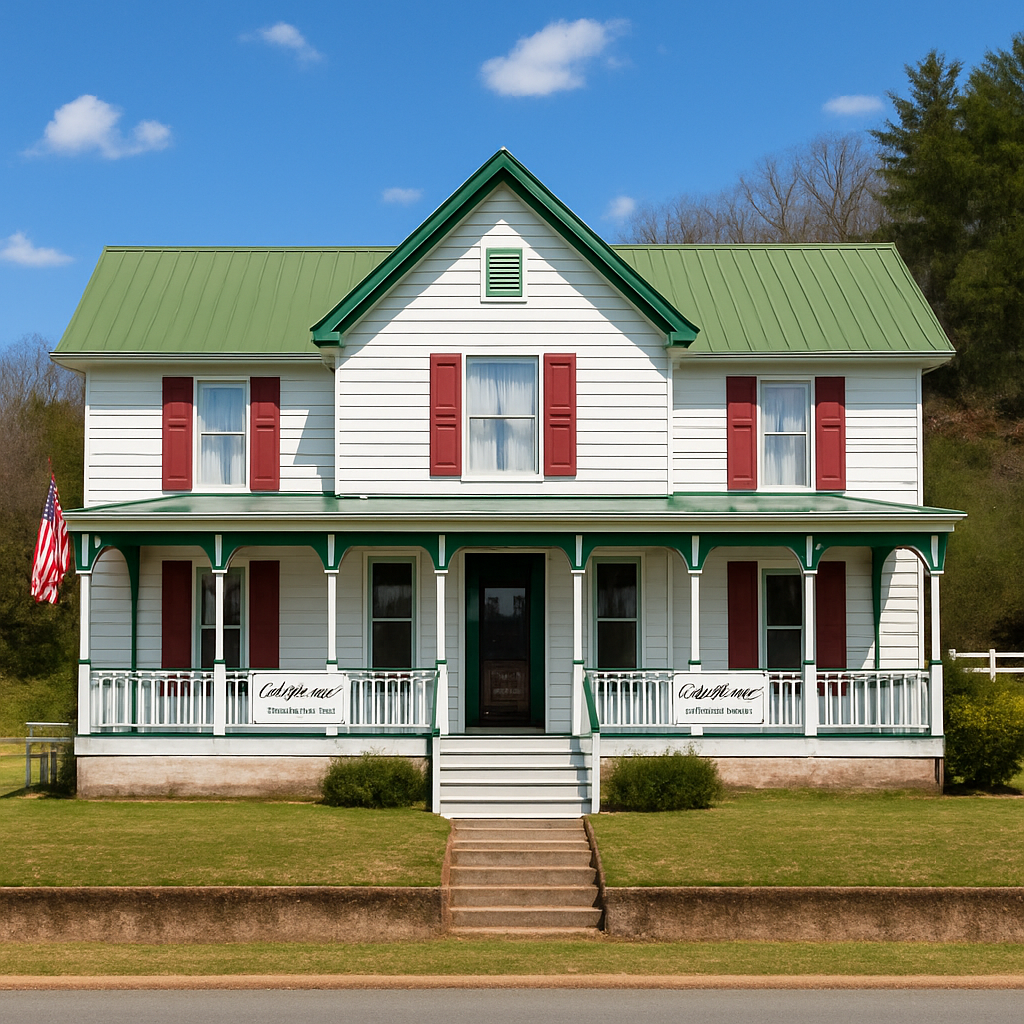
IMAGE: Restored 1890s Folk Victorian house featuring a green gable roof, red shutters, and preserved decorative trimwork reflecting classic turn-of-the-century style.
Old homes look great in pictures. Living in one? That’s another story.
People fall for the porches, trim, and “vintage charm.” But 1800s houses come with slanted floors, missing insulation, weird plumbing, and constant repairs.
Still want the look? Here’s how to do it right:
● Know what style you're working with — Greek Revival isn’t the same as Gothic or Italianate. Research first.
● Use salvage shops — Don’t fake age with big-box trim. Get real wood, old hardware, and period lighting.
● Talk to preservationists — If the house is protected, follow the rules or risk fines and lost value.
● Budget extra — Always. Old homes hide surprises behind every wall.
Keep what’s worth saving. Update what breaks the function.
MUST HAVE
“Renovation 5th Edition” by Michael Litchfield
Probably the most respected renovation guide out there—especially for older homes. Covers structure, systems, and real-world repairs.
🔗 View on Amazon
Sustainability and Cost Considerations
Although renovating or building a home in the style of the 1800s may initially seem expensive, it can actually offer long-term savings and environmental benefits.
- Sustainability: Timber and stone are natural materials that have a long life cycle, reducing the need for replacements. Additionally, many 1800s homes were built with energy efficiency in mind—thick walls and large windows provided natural ventilation and light.
- Cost: Renovating an existing 1800s home might be more cost-effective than building a new home in the same style. However, it’s important to plan for hidden costs, such as structural repairs and specialty materials.
REAL STORIES: SUCCESSES AND REGRETS
What No One Tells You About Restoring 1800s Homes
People love to post their “before and after” photos. They don’t post the bills, the mistakes, or the nights spent Googling “why is my ceiling bowing?”
Here’s what actually happens when you take on a house from the 1800s:
● One couple restored their 1875 farmhouse—then ripped out the entire bathroom again because the modern tub looked ridiculous under the exposed beam ceiling.
● A designer spent months hand-stripping paint off Victorian stair balusters... only to repaint them black because the raw wood didn’t match anything.
● A young family moved into a Greek Revival—then learned their “charming old windows” cost $38,000 to restore properly.
Still worth it? For most of them—yes. But not without pain.
HARD TRUTHS: WHEN THIS STYLE ISN’T FOR YOU
● Budget: Real woodwork, plaster, and hardware aren’t cheap. “Cheap vintage” doesn’t exist.
● Climate: That airy Queen Anne might look great in photos, but not so much in a snowy mountain town.
● Upkeep: Rot, sagging floors, ghost wires in the walls. These homes will always have a list.
You’ve got to love the style enough to live with the reality.
BONUS
A lot of 1800s homes have hidden compartments. Seriously. Built-in drawers behind stair risers, secret cabinets inside walls, and trap doors in closets. These weren’t “easter eggs”: they were practical. Builders used every inch. If you're renovating, don’t remove them. Highlight them.
MUST HAVE
“Restoring a House in the City” by Ingrid Abramovitch
Tons of real projects, real budgets, real advice. No fluff. It shows what worked—and what didn’t.
🔗 View on Amazon
CLOSING THOUGHTS
1800s houses look amazing. But they’re not just about looks.
If you’re restoring one, respect what’s already there. Don’t fake it. Don’t over-modernize it. And don’t assume charm means comfort—these homes take work.
If you’re building new and just borrowing the style, focus on proportions and materials. Skip the plastic “Victorian” porch columns. Use the real stuff. Keep it solid. Keep it honest.
Old homes weren’t perfect—but they were built to last. Copy that part.
What You Won’t Find in an 1800s House
No walk-in closets. No open floor plans. No drywall.
Houses from the 1800s were built for function, privacy, and heating efficiency—not for entertaining or storage. If you're expecting modern comforts, here's what you won’t see inside:
● Open kitchens connected to the living space
● Large master suites
● Central HVAC or air returns
● Recessed lighting
● Attached garages
● Laundry rooms near bedrooms
● Pocket doors with smooth glides
● Spray foam insulation
● Plywood or particle board
● Light switches in every room
Instead, expect:
● Separate rooms with doors that close
● One bathroom, usually added later
● Plaster walls over wood lath
● Wood-burning fireplaces as primary heat
● Tiny closets, if any
These houses were built around brick, wood, and fire—not comfort, tech, or flow. And that's what gives them grit. The materials last. The layouts made sense for the time. But they need work if you want modern living inside old walls.
Pro tip: Don’t force modern ideas into a historic shell. Work with the structure, not against it. The charm comes from what’s missing.
FAQ
MOST ASKED QUESTIONS ABOUT 1800s HOMES & ARCHITECTURE
Q: What year is my historic home from?
A: Look at roof shape, window placement, and foundation. It’ll tell you more than the deed.
Q: What’s the difference between Federal and Georgian styles?
A: Federal is slimmer, more refined, and more decorative. Georgian is boxier and simpler.
Q: Are Queen Anne homes always colorful?
A: No—but the late Victorians went bold with paint. Original Queen Annes could be brown or white.
Q: Is it okay to paint brick on an 1800s home?
A: If it’s already been painted before, maybe. If it’s original and clean—don’t touch it.
Q: What are the biggest renovation mistakes people make?
✓ Ripping out trim
✓ Flattening rooflines
✓ Modernizing floor plans too much
Q: Can I add insulation without ruining the walls?
A: Yes, but it takes finesse. Try blown-in insulation from the attic side.
Q: What should I restore first?
A: Roof. Then windows. Then foundation. Pretty stuff comes last.
Q: Are Victorian floorplans hard to live with?
A: Yes, if you want open-concept. No, if you love defined rooms with function.
Q: Can I mix styles in one house?
A: Only if you know what you’re doing. Slapping Gothic trim on a Federal house won’t fool anyone.
Q: Why are ceilings in old homes so high?
A: Air circulation—pre-AC days. They also made small rooms feel bigger.
Q: Is plaster better than drywall?
A: Plaster lasts longer. It’s a pain to patch. But it’s worth it if it’s still intact.
Q: What do those tiny closets mean?
A: People owned 1 coat and 2 outfits in 1880. Add storage—just don’t ruin the proportions.
Q: Why do some doors lead nowhere?
A: Dead doors often used to open to porches, balconies, or stairs that were removed.
Q: Are clawfoot tubs original to all 1800s homes?
A: No. Most weren’t added until indoor plumbing hit—often in the 1880s and later.
Q: What colors did people really use back then?
A: Muted earth tones early on. Jewel tones came in during the Victorian period.
Q: Can I modernize the kitchen without ruining the look?
A: Yes. Hide your appliances. Use butcher block. Skip glossy finishes.
Q: What’s the best flooring for staying true to period?
A: Wide-plank pine, oak, or heartwood. No laminate. No fake distressing.
Q: Are all 1800s houses drafty?
A: If no one’s fixed the windows or walls—yes. But they can be tightened up without gutting.
Q: How do I know if something is original?
A: Look underneath. Original trim, nails, and materials are never perfect.
Q: What’s the deal with transom windows?
A: Ventilation. They let air move while keeping doors shut for privacy.
Q: Can I replace windows without ruining the house?
A: Only if you match the muntins, scale, and depth. Otherwise, they’ll look wrong.
Q: What’s the most underrated style from the 1800s?
A: Greek Revival. Clean lines, killer proportions, way easier to adapt.
Q: Should I restore or rebuild?
A: If 60% of the original is intact, restore. If it’s just the shell, rebuild smart.
Q: How do I make an 1800s house more livable?
A: Update lighting, add insulation, hide tech. But leave the structure alone.
Q: Where can I find real inspiration that isn’t Pinterest fluff?
A: Look at old building surveys, preservation books, and neighborhood archives.
Related
House Styles
- Housing Concepts Explained: From Traditional Styles to Minimalist Trends
- A Detailed Guide to Architecture Styles: From Ancient to Modern Times
- 1800s House Styles: Design, History, and Inspiration
- Architectural Marvels of the Late 19th and Early 20th Centuries
- 1920s Interior Design Style: History, Characteristics, Examples, and Tips
- 1920s Art Deco Elegance: Ideas for Every Room
- 1950 House Styles: Building and Decorating Tips from an Architect
- 1960s House Style: Iconic Trends and Timeless Designs
- The 1970s House Style Guide: Architecture, Interiors, and Updates
- 1980s House Styles: Key Trends and Design Ideas for Today’s Homes
- Victorian Period Architecture: History, Key Styles, and Features
- Italianate Architecture Style: From Villas to Modern Homes
- Mediterranean Style Villa: Design Tips for a Relaxed, Elegant Home
- 1800s Victorian House
Focus on Victorian architecture from the 1800s, featuring ornate detailing, steep roofs, and bay windows. - 1800 Colonial Homes
Discover the simplicity and symmetry of 1800s Colonial-style homes, often featuring central chimneys and clapboard siding. - Late 1800 House Styles
Learn about the transition from Victorian to modern styles in the late 1800s, highlighting Queen Anne and Shingle styles.
Farmhouse Plans
- 1800 Farmhouse Plans
Traditional farmhouse layouts with open spaces, wrap-around porches, and functional designs.- Vintage Farmhouse 1800's Farmhouse Plans
Timeless farmhouse designs inspired by the 1800s, combining rustic charm with practical layouts. - 1800 Square Foot Farmhouse Plans
Compact yet functional farmhouse layouts ideal for modern living. - Farmhouse Plans 1800 Sq Ft
Modern interpretations of the classic farmhouse design, incorporating contemporary features. - 1800 to 2000 Sq Ft Farmhouse Plans
Versatile farmhouse designs offering ample space while maintaining a cozy atmosphere. - Modern Farmhouse 1800 Sq Ft
Blending traditional farmhouse aesthetics with modern layouts and materials. - Modern Farmhouse Plans 1800 Sq Ft
Sleek, contemporary farmhouse layouts emphasizing energy efficiency and open living spaces.
- Vintage Farmhouse 1800's Farmhouse Plans
Ranch House Plans
- 1800 Sq Ft Ranch House Plans
Single-level living with efficient layouts, popular for their simplicity and accessibility.- 1800 Square Foot Ranch House Plans
Flexible designs combining open living areas with private bedrooms and functional kitchens. - 1800 Sq Ft Ranch Home Plans
Spacious ranch layouts optimized for family living, with options for attached garages and porches. - Ranch Home Plans 1800 Sq Ft
Single-story homes featuring large living spaces and outdoor access, ideal for modern families. - 1800 Sq Ft Ranch Style House Plans
Elegant ranch-style layouts emphasizing open-concept living and natural light. - Ranch Style Floor Plans 1800 Sq Ft
Classic ranch layouts with updated features like walk-in closets and modern kitchens. - Ranch House Plans 1800 to 2000 Sq Ft
Versatile designs offering flexibility for growing families or retirees.
- 1800 Square Foot Ranch House Plans
Craftsman House Plans
- 1800 SF Craftsman House Plans
Detailed Craftsman designs featuring exposed beams, built-ins, and attention to detail.- 1800 Sq Ft Craftsman House Plans
Compact Craftsman layouts that combine functionality with artistic touches. - Craftsman House Plans 1800 Square Feet
Timeless designs showcasing natural materials and cozy interiors. - 1800 Square Foot Craftsman House Plans
Spacious layouts with signature Craftsman features like large front porches and detailed woodwork.
- 1800 Sq Ft Craftsman House Plans
Modern and Contemporary House Plans
- 1800 Sq Ft Modern House Plans
Sleek, minimalist designs focusing on energy efficiency and open spaces.- Modern House Plans 1800 Sq Ft
Contemporary layouts featuring clean lines, large windows, and smart home integrations. - 1800 Sq Ft Contemporary House Plans
Versatile layouts blending modern aesthetics with functional designs. - 1800 Square Foot Modern Farmhouse Plans
Combining the charm of farmhouses with modern functionality and style.
- Modern House Plans 1800 Sq Ft
Indian Style House Plans
- 1800 Sq Ft House Plans Indian Style
Traditional Indian layouts designed to accommodate multi-generational families.- 1800 Sq Ft House Plans Two-Story Indian Style
Multi-level homes blending traditional Indian architecture with modern conveniences. - Modern House 1800 Sq Ft House Plans Indian Style
Indian-inspired designs featuring efficient use of space and modern aesthetics.
- 1800 Sq Ft House Plans Two-Story Indian Style
Colonial Style
- 1800 Colonial House
Overview of Colonial architecture featuring formal living spaces and functional layouts.- 1800 Sq Ft Colonial House Plans
Classic Colonial layouts with symmetrical designs and central entrances.
- 1800 Sq Ft Colonial House Plans
Chalet Style
- 1800s Chalet Style House
Rustic chalet designs with steeply pitched roofs and large windows, perfect for scenic locations.
Specialty House Plans
- Cape Cod House Plans 1800 Sq Ft
Compact designs with steep roofs and dormer windows, reflecting classic Cape Cod charm. - French Country House Plans 1800 Sq Ft
Elegant layouts with European-inspired aesthetics, featuring stone facades and intricate detailing. - Craftsman House Plans 1800 Square Feet
Beautiful designs focusing on craftsmanship and natural materials.
Two-Story Designs
- 1800 Sq Ft House Plans Two-Story
Functional two-story layouts that maximize space for larger families. - 1800 Sq Ft House Plans Ranch Style
Flexible layouts offering single or multi-story options for modern living.
Additional Options
- 1800 Sq Ft 4 Bedroom Ranch House Plans
Spacious layouts with multiple bedrooms, ideal for families or shared living. - 1800 Sq Ft House Plans Modern Farmhouse
Open-concept designs combining modern living with farmhouse aesthetics. - Late 1800's Style House Plans
Historical designs inspired by late 1800s trends, perfect for restoration projects or new builds.