
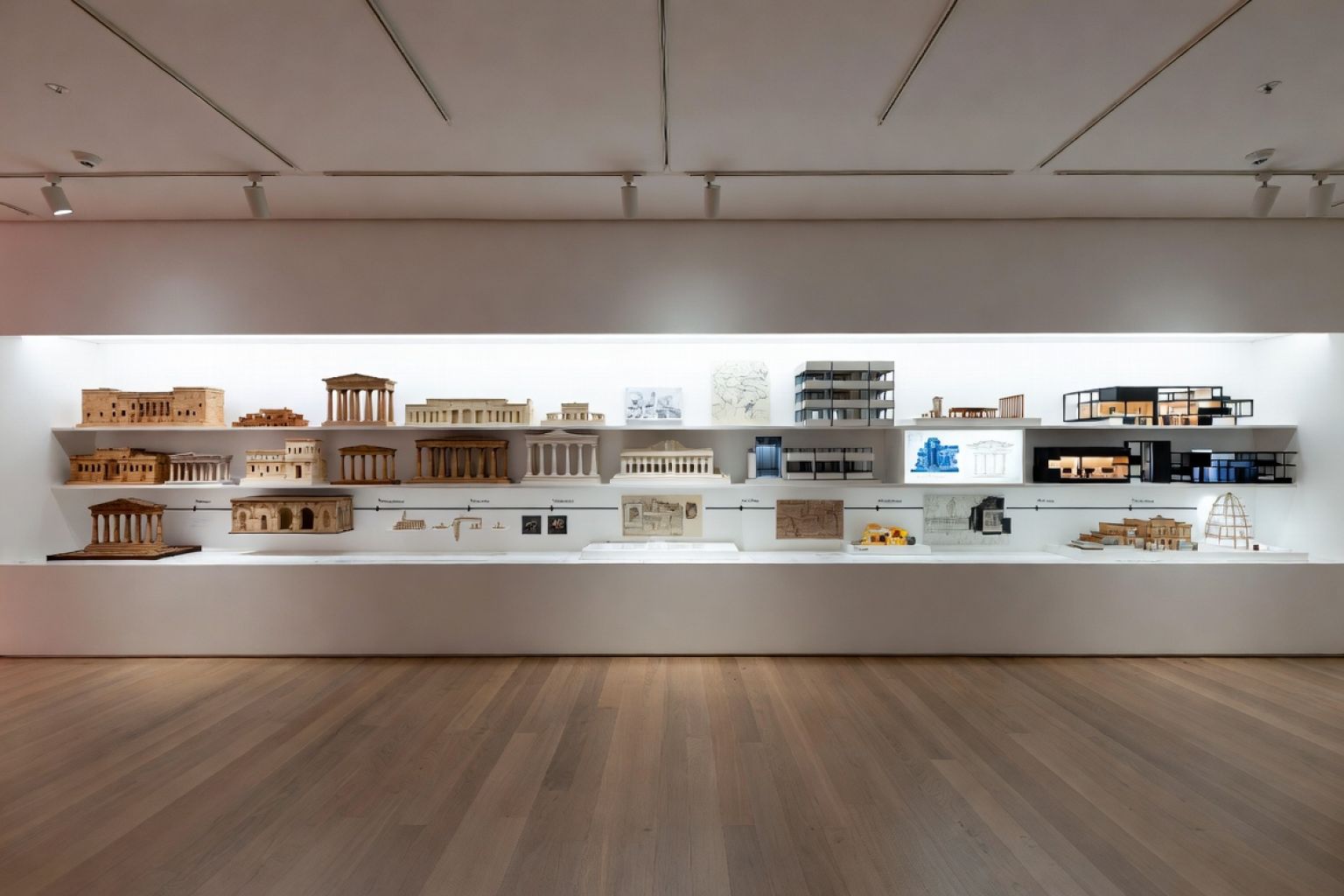
Architecture styles make more sense when they are grouped into families.
Start with the main branches, see what defines them, and move from there.
Start with the branch that matches what you want to understand
| If You Want to Understand | Start With | What You Are Really Looking At |
|---|---|---|
| The roots of architecture | Ancient and Classical | Monumentality, columns, arches, domes, civic order |
| Religious and medieval building traditions | Medieval Styles | Domes, vaults, towers, patterned surfaces, symbolic space |
| Formal European traditions | Renaissance to 19th Century | Symmetry, revival styles, ornament, civic display |
| Machine-age and modern design | 20th-Century Styles | Function, steel, glass, concrete, streamlined form |
| What shapes buildings now | Contemporary and Performance-Driven Design | Sustainability, digital tools, mixed references, adaptive reuse |
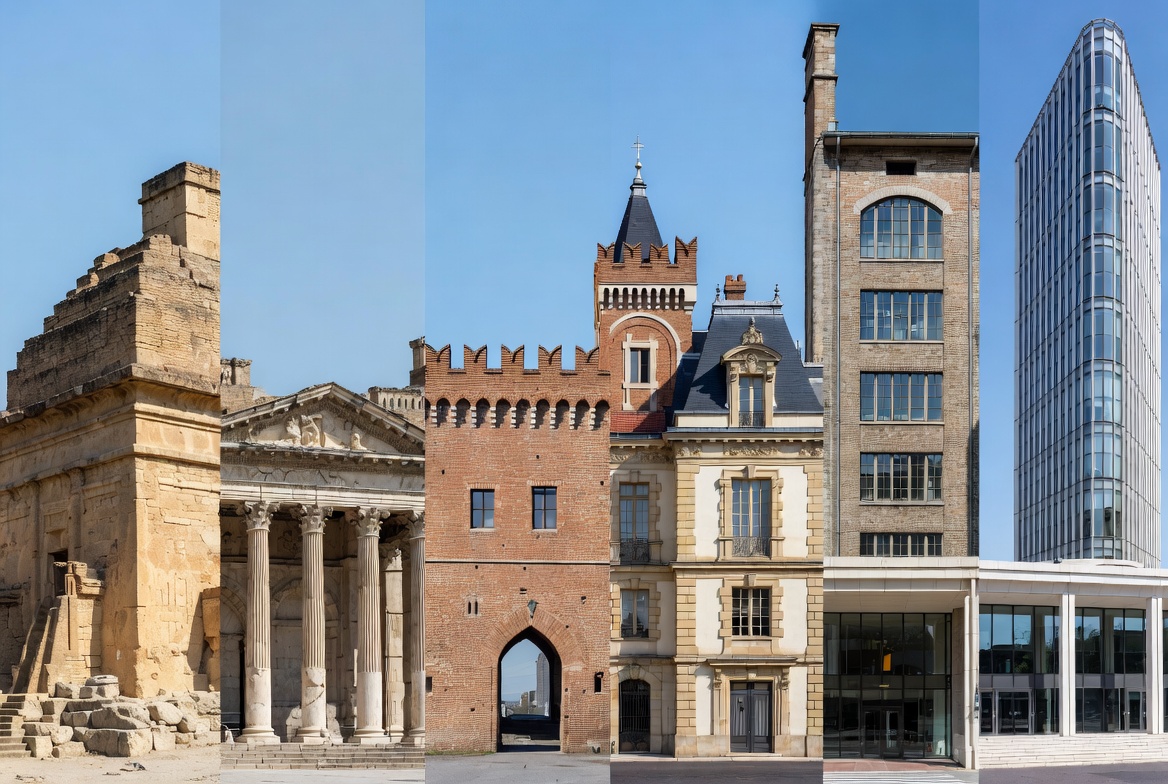
Ancient and classical styles
This is where the core ideas start showing up: axis, symmetry, procession, monumentality, and early engineering logic.
Egyptian architecture pushes scale, permanence, and ceremonial order. Ancient Greek architecture sharpens proportion, columns, and formal composition. Roman architecture takes those ideas further through arches, vaults, domes, concrete, and infrastructure.
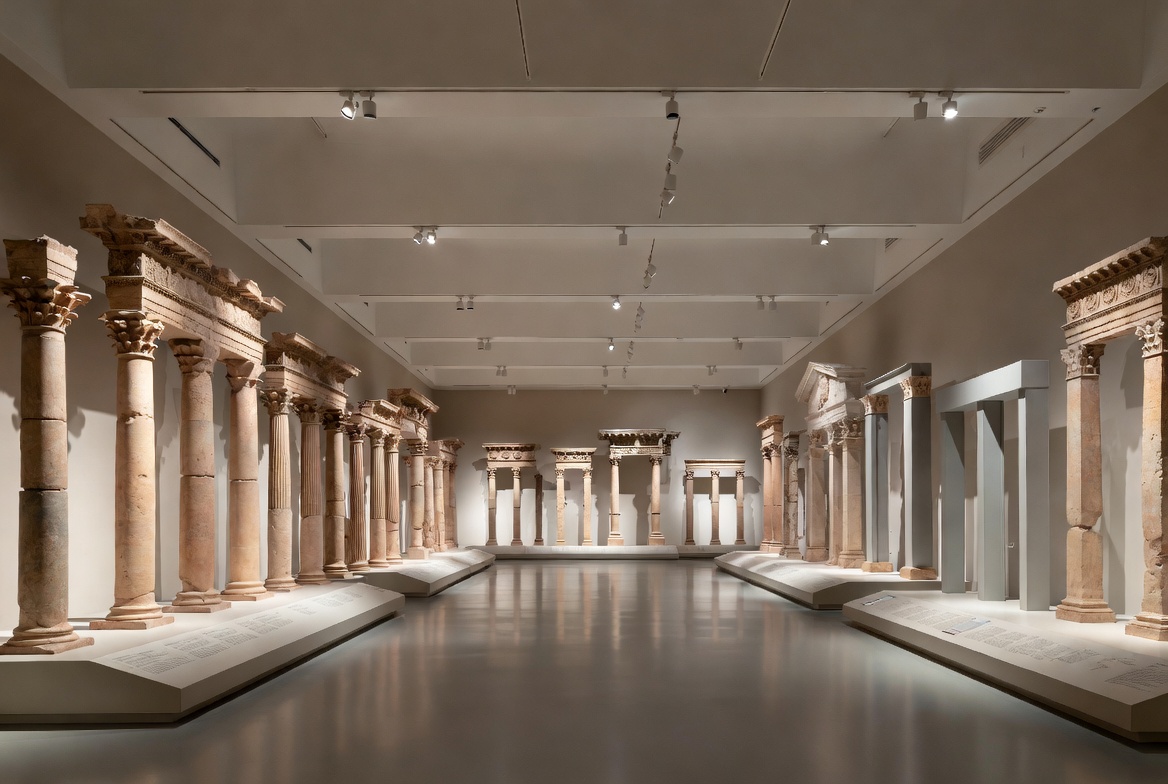
Image by ArchitectureCourses.org. A museum gallery of ancient architectural fragments shows how classical forms shaped later design traditions.
These styles still matter because later architecture keeps borrowing from them. Sometimes directly. Sometimes through revival styles. Sometimes through basic ideas about order, structure, and civic presence.
- Think of: pyramids, temples, forums, amphitheaters, baths, domes
- Main lesson: architecture starts reading as both structure and public symbol
Medieval styles

Medieval architecture is not one thing. It is a long stretch of regional traditions with different religions, climates, materials, and ambitions.
Islamic architecture pushes geometry, courtyards, domes, arches, calligraphy, and light control with incredible discipline. Romanesque architecture goes thick, heavy, and grounded. Gothic architecture turns structure into visible drama with pointed arches, ribbed vaults, buttresses, and stained glass. Tudor architecture brings the story down to house scale with timber framing, steep roofs, chimneys, and strong craft expression.
- Think of: mosques, cathedrals, castles, monasteries, courtyard complexes
- Main lesson: this period made space feel more symbolic, more atmospheric, and more charged
Renaissance, Baroque, and later formal European styles
Renaissance architecture brings classical order back on purpose. Symmetry tightens. Domes return. Facades feel measured. Buildings start acting more self-aware.
Baroque architecture pushes harder. More movement. More drama. More stairs, domes, light effects, and theatrical sequencing. Rococo softens and decorates that drama. Greek Revival architecture and Neoclassical work tighten things back up again.
These styles matter because they shaped palaces, churches, museums, universities, courts, and civic buildings for centuries. This is where architecture becomes openly representational again. Power starts dressing itself very carefully.
- Think of: domes, colonnades, palaces, ceremonial stairs, axial planning
- Main lesson: architecture becomes a more deliberate cultural and political statement
The 19th century gets crowded fast
This is where style families multiply.
Neoclassical. Gothic Revival. Italianate. Victorian architecture. Beaux-Arts. Arts and Crafts. Industrial iron-and-glass work. Colonial revivals. The century gets noisy because materials, transport, production, and taste all shift at once.
That does not mean every 19th-century building is overloaded. It means the range expands quickly. Ornament gets easier to produce. Pattern books spread ideas farther. Rail moves materials farther. Engineering and display start colliding in the same period.
- Think of: civic monuments, railway stations, opera houses, Victorian houses, iron-and-glass halls
- Main lesson: new technology expands style instead of replacing it right away
The 20th century swings hard
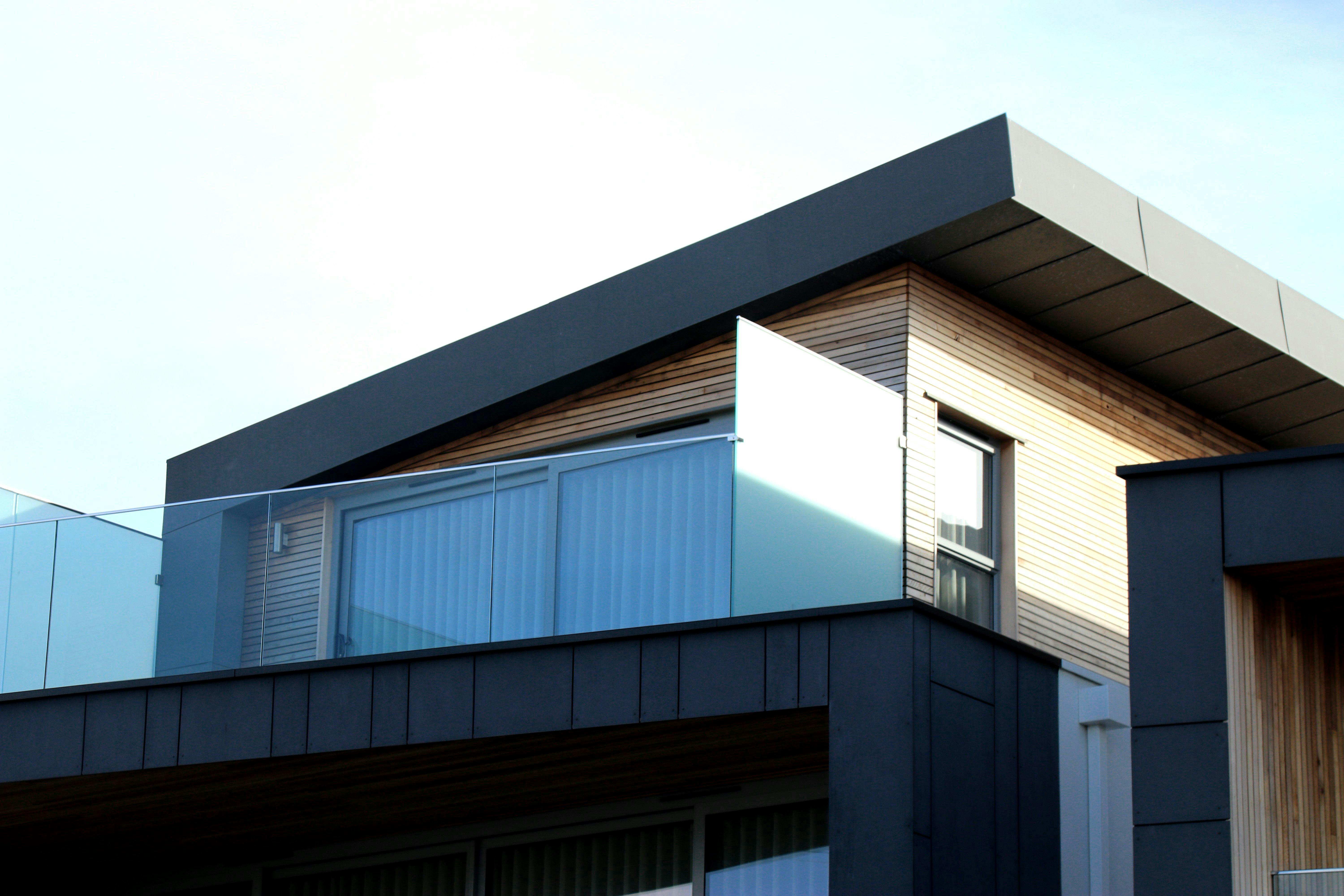
The 20th century does not move in one clean line.
Early on, you still get revival styles, Craftsman work, Prairie influence, bungalows, Colonial Revival, Tudor Revival, and all kinds of domestic hybrids. Then modernism changes the argument. Function starts leading harder. Ornament becomes suspect. Steel, glass, concrete, openness, and industrial logic take over more of the conversation.
Art Deco architecture sits in the middle of this swing as one of the strongest machine-age decorative styles: geometric, polished, confident, urban. Later, Brutalist architecture, postwar modern work, and other movements push the century into very different ground again.
- Think of: bungalows, Art Deco towers, International Style boxes, mid-century houses, concrete civic buildings
- Main lesson: modern architecture is not one mood; it splits, reacts, and keeps changing direction
Contemporary architecture is shaped by pressure more than one style

The present is less unified than earlier periods. That is the honest version.
Sustainability, energy, carbon, digital tools, prefabrication, adaptive reuse, cost pressure, mixed-use cities, and branding all push architecture now. Some buildings go minimalist. Some go expressive. Some go performance-first. Some borrow older forms and redraw them with new materials.
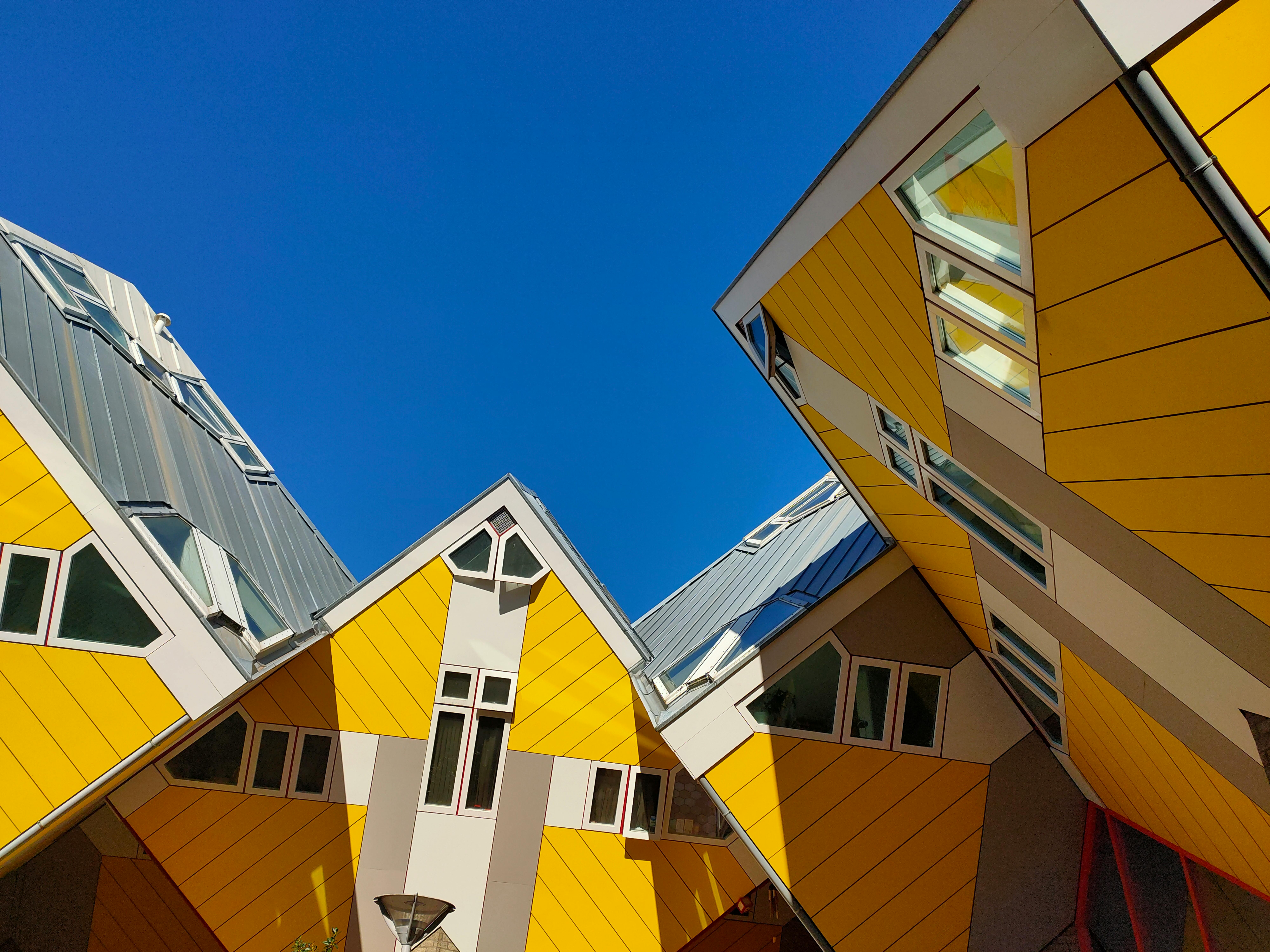
This period matters less as one fixed label and more as a set of pressures shaping many different outcomes.
- Think of: passive buildings, glass towers, reused industrial shells, high-tech envelopes, minimal houses
- Main lesson: style now often follows performance, economics, and digital production as much as visual taste
The main families at a glance
| Family | Core Traits | What It Still Teaches |
|---|---|---|
| Ancient and Classical | Axis, symmetry, columns, domes, monumentality | Order, structure, civic presence |
| Medieval | Vaults, towers, domes, arches, courtyards, symbolism | Atmosphere, ritual, structural expression |
| Renaissance to Baroque | Measured facades, domes, theatrical planning, ornament | Sequence, representation, formal composition |
| 19th-Century Revival and Industrial | Historic references, iron, glass, mass production | How technology expands style options |
| 20th-Century Modern | Function, new materials, streamlined form, open planning | How architecture reacts to machines and modern life |
| Contemporary | Performance, sustainability, digital tools, mixed references | How pressure shapes form now |
Style index
Open the family that fits what you are trying to understand, then move into the child page that gets more specific.
Ancient and Classical
Medieval and Religious Traditions
Renaissance to 19th Century
- Renaissance Architecture
- Baroque Architecture
- Greek Revival Architecture
- Rococo Architecture
- Neoclassical Architecture
- Victorian Architecture
- Italianate Architecture
- Beaux-Arts Architecture
- Moorish Architecture
- Egyptian Revival
20th-Century and Machine-Age Styles
- Arts and Crafts Architecture
- Industrial Architecture
- Bauhaus Architecture
- International Style
- Art Deco Architecture
- Brutalist Architecture
- Modern Architecture
- Postmodern Architecture
Domestic and House-Style Branches
- House Styles
- 1920s House Styles
- Colonial Architecture
- Craftsman
- Bungalow
- Tudor Revival
- Cape Cod
- Victorian Houses
- Modern Houses
Contemporary and Performance-Driven Design
- Contemporary Architecture
- Minimalist Architecture
- High-Tech Architecture
- Deconstructivism
- Sustainable Architecture
- Adaptive Reuse
- Parametric Design
- Passive and Low-Energy Design
What to read next
- Art Deco Architecture for one strong 20th-century branch.
- Minimalist Architecture for one of the cleaner modern descendants.
- House Styles if your interest is shifting toward residential families instead of world architecture.
- 1920s House Styles for a strong decade-based house-style page.
- Victorian Architecture if you want one crowded 19th-century branch unpacked properly.