
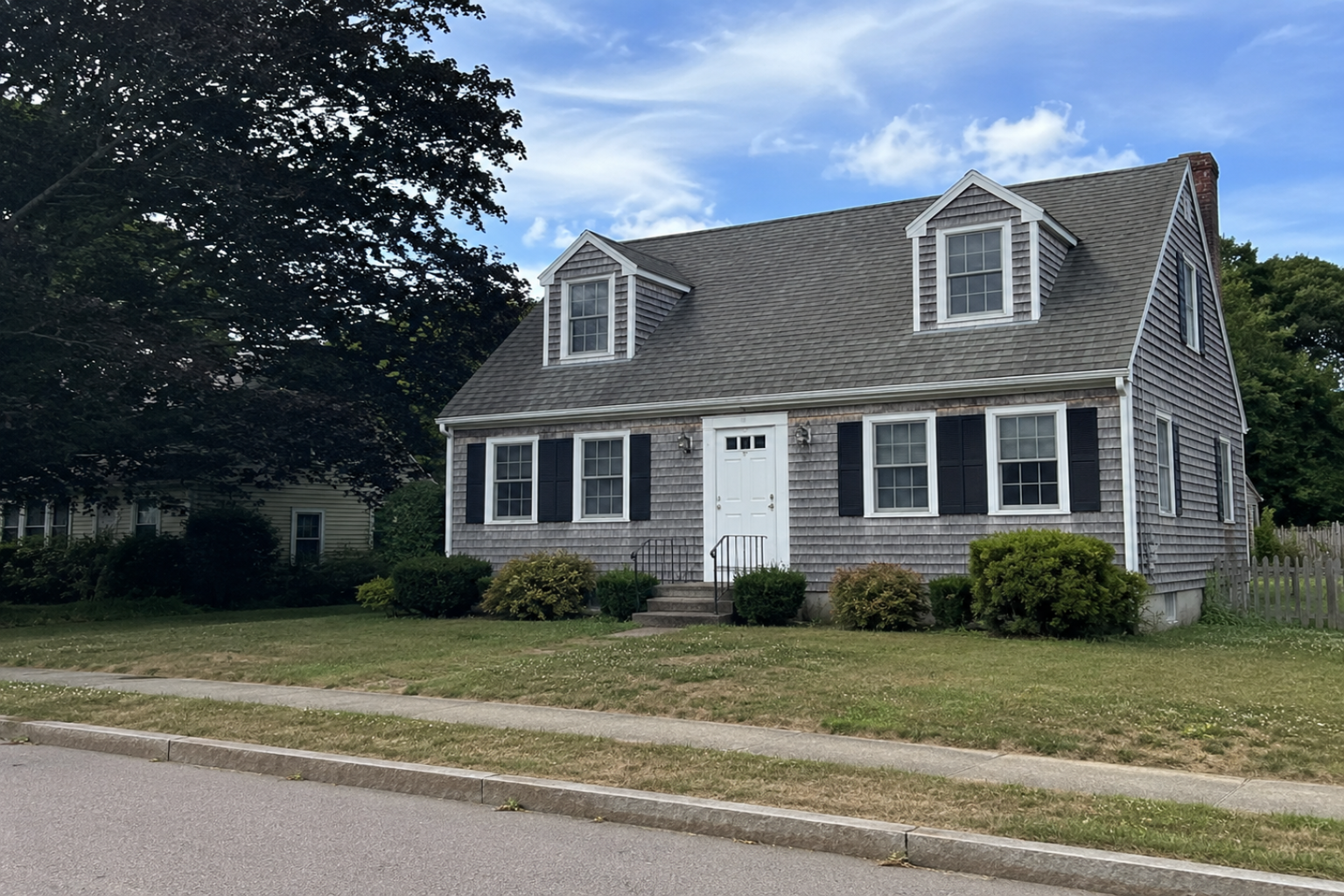
From the street a Cape Cod looks about as simple as a house gets: a steep roof, a calm front wall, and windows lined up on either side of the door. The trouble shows up the day you start renovating one.
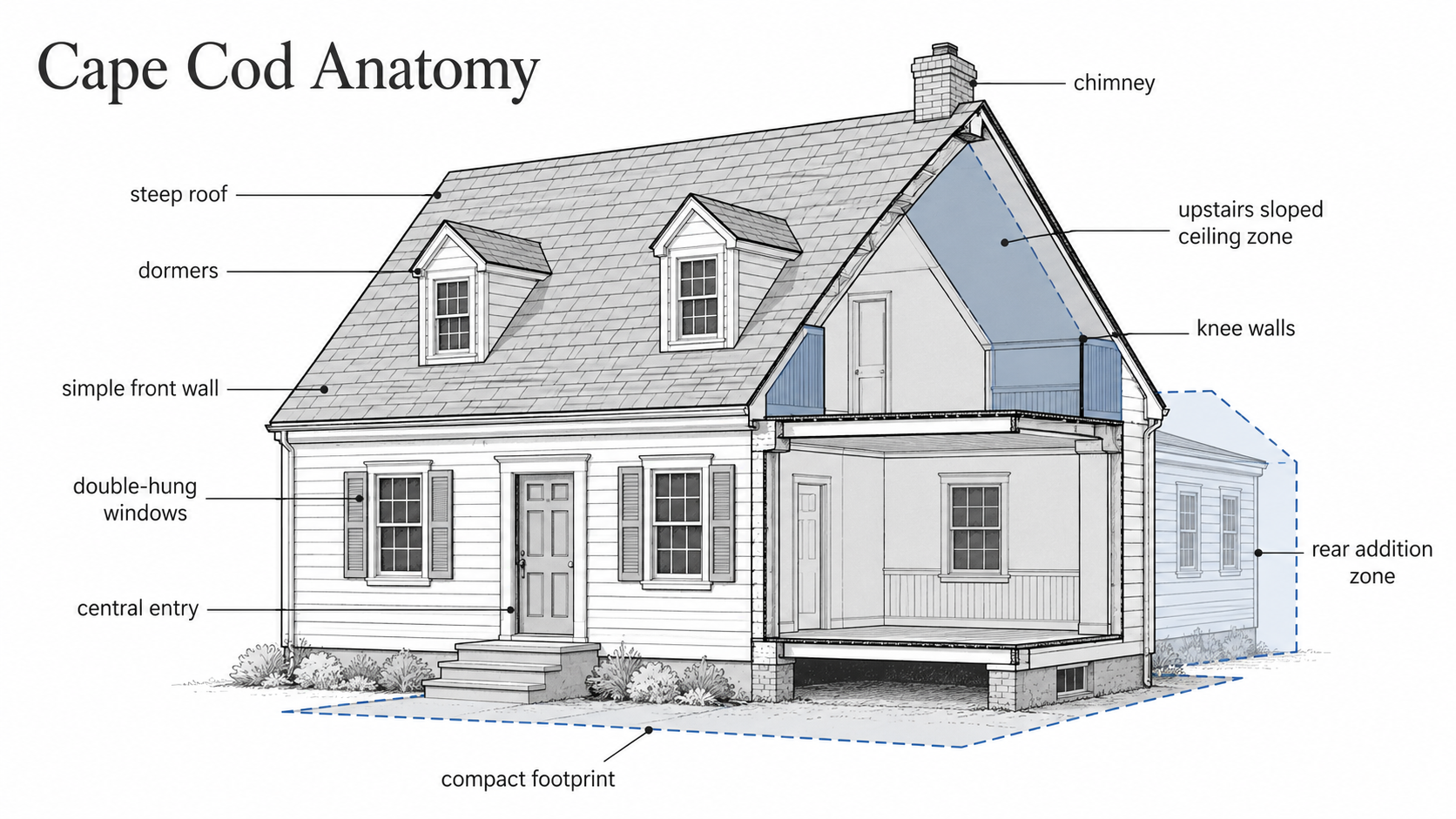
All the hard parts hide where the curb cannot see them, upstairs under the slope of the roof, around the dormers, behind the knee walls, and in the tight space anyone tries to expand without throwing off the shape of the house. The Cape is one of the most useful small-house forms in American building, and it turns awkward fast when an update ignores the roofline, the window rhythm, or that cramped upstairs.
What Makes a Cape Cod House
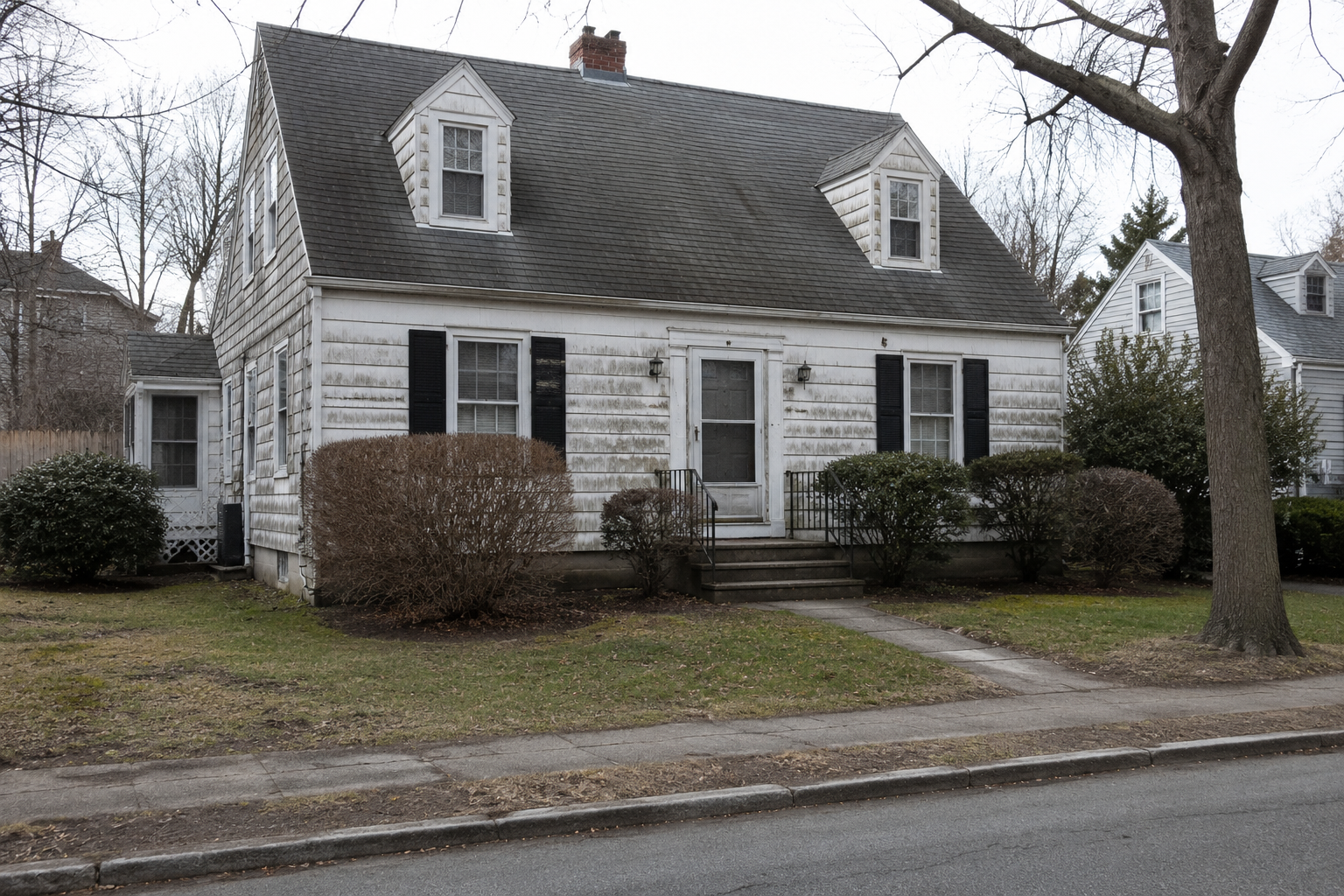
A traditional Cape is a compact one- or one-and-a-half-story house with a steep side-gabled roof, a simple rectangular footprint, a central or near-central door, double-hung windows, and plain trim with little ornament. Older ones were usually built around a big central chimney, because the heat came from the middle of the house.
The shape came from weather and necessity rather than charm. Low ceilings held the heat in, small windows cut the heat loss, and the steep roof shed snow and rain. Wood shingles and clapboard were what made sense along the New England coast, so that is what went on the walls.
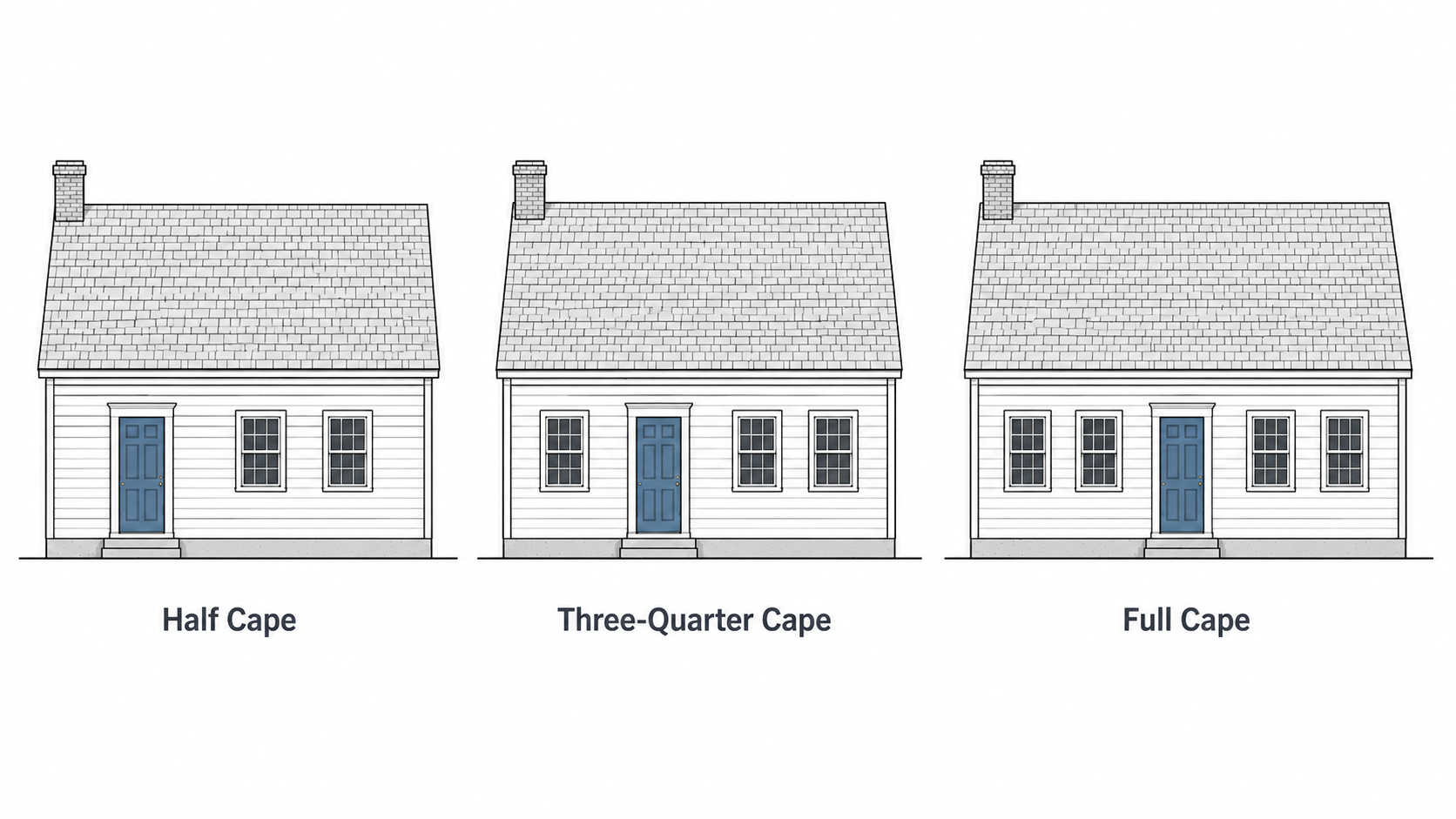
The same basic form turns up in a few versions, and the difference is mostly the front. A half Cape sets the door and windows off to one side. A three-quarter Cape adds more balance but still stops short of a fully symmetrical front. A full Cape is the one most people picture: door in the center, windows balanced on both sides.
Why the Simple Shape Works
The strength of a Cape is restraint. It does not need a complicated roof, a deep porch, or heavy trim to look settled on its lot, because the compact box, the steep roof, the plain wall, and the controlled window spacing carry it. That same simplicity made the house cheap to build, easy to heat, and easy to add onto in small steps, which is why rear additions, dormers, porches, and side wings became so common. The original form was plain enough to take the change.
That openness to change is also where the trouble starts. Make the addition too tall, the dormers too wide, or swap the front windows for the wrong proportions, and the house loses the quiet balance that made it work in the first place.
Where Cape Cod Houses Usually Get Hard to Live In
Capes tend to fall short of modern living in the same handful of places, and none of it is random. The upstairs comes first, then the kitchen, then the number of bathrooms, and after that storage, stairs, insulation, and windows. They all trace back to the one thing that gives the house its shape: a steep roof sitting on a small footprint.
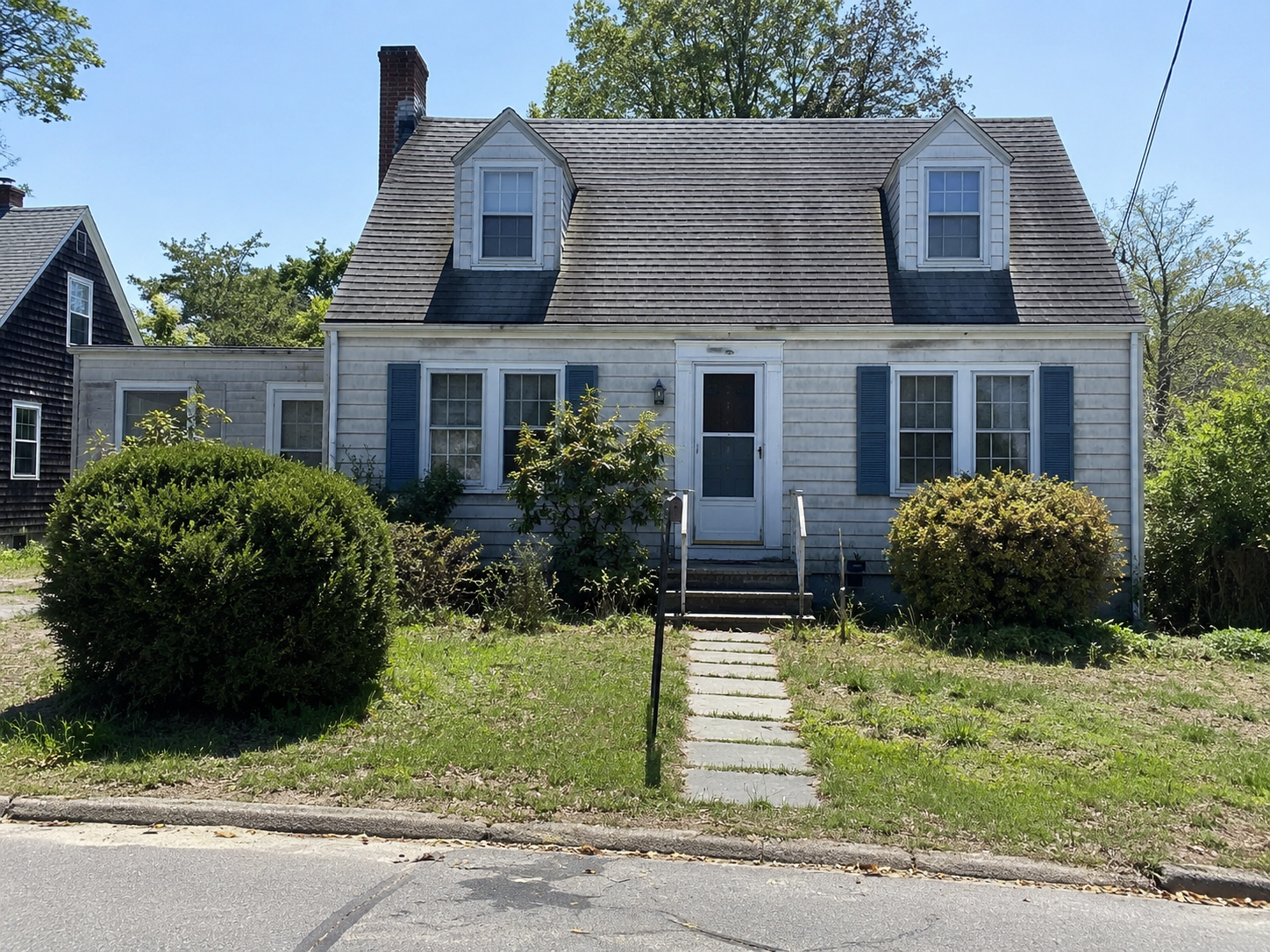
Plenty of postwar Capes have small rooms, narrow stairs, few closets, and an upstairs that was finished just enough to use. Bedrooms tucked under sloped ceilings, dormers added years later, knee-wall storage hiding thin insulation or air leaks, it is a familiar set. Before you start picking finishes, look at the bones: where the stair lands, the roof slope, where the windows sit, the ceiling heights, how the bathroom plumbing can run, and whether the back of the house can take an addition without forcing a bad roof tie-in.
The Upstairs Problem: Sloped Ceilings, Knee Walls, and Small Windows
Upstairs is where a Cape stops being a style and turns into a construction problem. The sloped ceilings eat into where you can put furniture, the knee walls hide whatever was or was not done for insulation, and the small windows can leave a room dark. A bedroom can have plenty of floor area on paper and still feel cramped because the usable headroom is low, and a bathroom can technically fit while the shower lands right where the roof comes down.
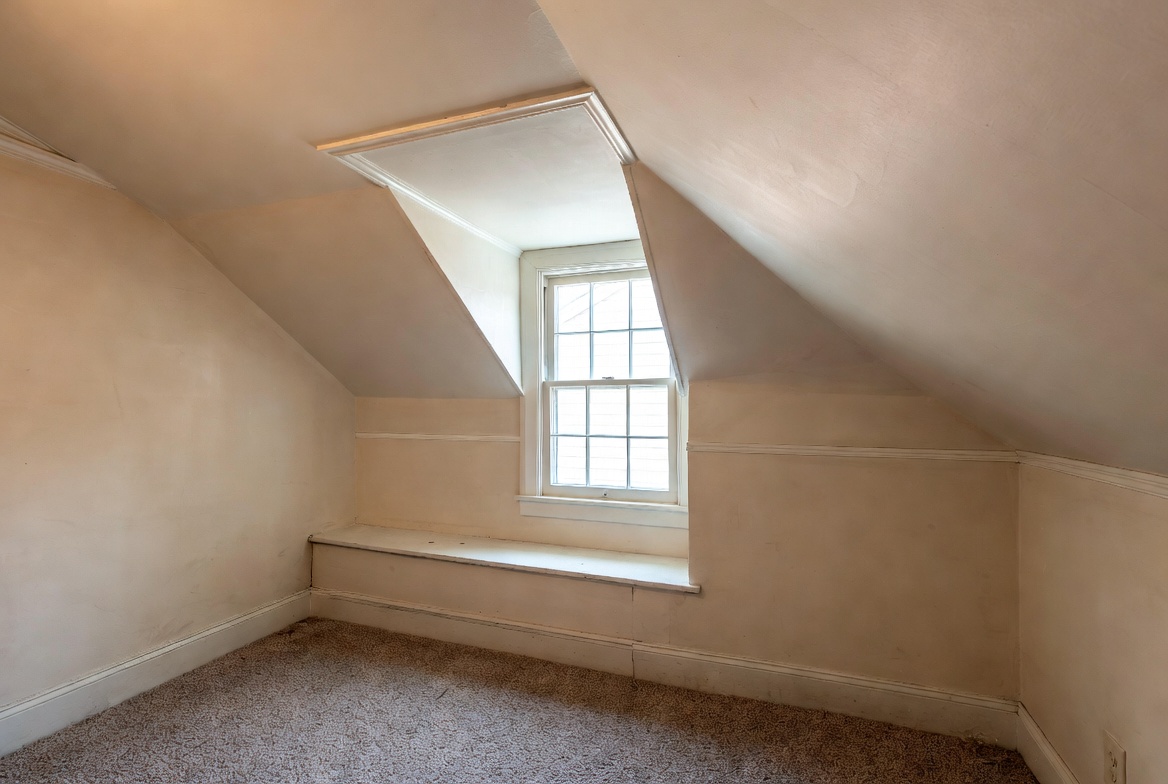
So an upstairs remodel takes more than moving rooms around on a floor plan. You need to check the headroom, the framing, the insulation, and the ventilation, and you need a real plan for where the plumbing, ducts, and wiring can actually run before you commit to a layout. I have spent more time chasing comfort problems in Cape second floors than in any other kind of house, and the finish work is almost never the cause.
If the upstairs bakes in summer and freezes in winter, the windows are usually not the whole story. The roof assembly, the knee-wall cavities, the attic bypasses, and the dormer framing can all be leaking air, and a fresh coat of paint with new trim will leave the room just as uncomfortable as it was before.
Why an Old Cape Is Hard to Keep Comfortable
Almost every old Cape shares one complaint: the upstairs is an oven in July and an icebox in January. It is the price of the shape. In a normal house the living space sits inside the walls and the attic buffers it from above. In a Cape, the rooms get pushed up into the roof, so the roof itself becomes the wall and ceiling of the space you live in, and a roof was never meant to do that job on its own.
Three weak spots cause most of it. The sloped part of the ceiling often has only a few inches of insulation jammed against the underside of the roof, with no room left for the air channel that keeps the roof deck from cooking. The knee walls, those short vertical walls where the ceiling meets the floor, usually have a cold, unconditioned triangle behind them that leaks air straight into the room. And the flat ceiling over the middle of the upstairs frequently has gaps around lights, chimneys, and partitions that let warm air slip up into the ridge. I have opened knee-wall doors on houses with a "finished" second floor and found bare framing and daylight where the insulation was supposed to be.
Here is the uncomfortable part. There is rarely a cheap, clean fix. The work that actually moves the needle, air-sealing the knee-wall cavities, insulating the roof slope properly, and closing the bypasses up top, usually means opening ceilings or working the roof from outside, and that is invasive and not cheap. The tempting fixes treat the symptom and leave the leaks in place. A mini-split jammed in to fight the heat can make the room livable, and I will not tell you that is the wrong call when the budget is what it is, but it is covering for an envelope that is still working against you. That tension does not really go away. You mostly choose how much of it to pay down now and how much to live with.
Dormers Can Help or Ruin the Roofline
Dormers earn their keep by adding light, headroom, and usable wall space, and they are also one of the quickest ways to wreck a Cape. A small front dormer, scaled with care, can sit comfortably inside the original rhythm, and a rear shed dormer can make the whole upstairs usable without touching the street face much. Go too big out front, fake one on for looks, or get the roof pitch wrong, and the house starts to look top-heavy. I have watched a well-placed rear shed dormer turn a dead attic into the best room in the house, and I have watched an oversized front dormer make a tidy Cape look like it swallowed something.
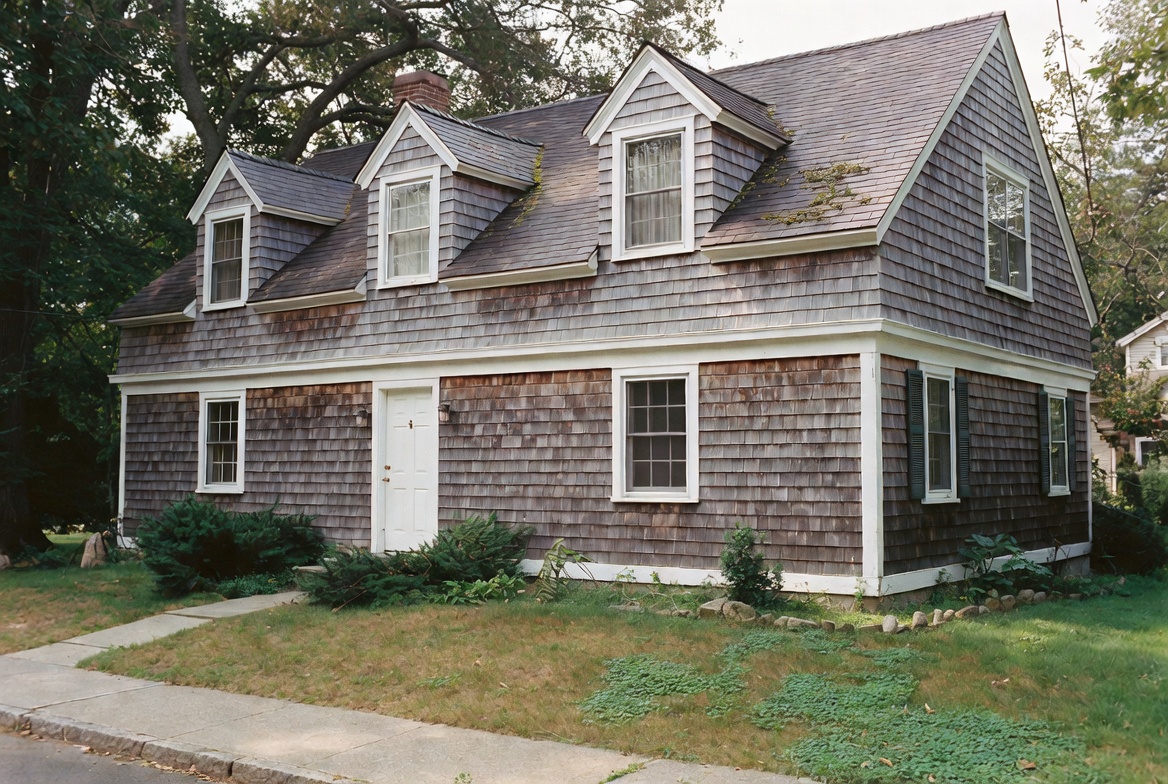
The test is plain: does the dormer solve a real room problem, or is it just decoration? One that buys you a workable bathroom, a stair landing, or a real bedroom can be worth the money. One that only mimics the style tends to add flashing that can fail and trim to maintain without giving you any more room to live in.
Windows Matter More Than They Look
Cape windows are small next to what goes on a modern house, but they carry a lot of the weight up front, because the whole elevation runs on rhythm. Push the window size, grille pattern, trim width, or glass area too far off, and the house reads wrong even when the new windows cost a fortune.
Old windows bring the practical problems too, like drafts, rot, peeling trim, and failed glazing. The thing to hold onto is that a replacement window has to be judged together with the wall around it, not picked off a shelf as a product on its own. If you are weighing windows on an older Cape, start with Cape Cod window replacement, because that one decision pulls in comfort, curb appeal, siding repair, trim detail, and sometimes lead-safe work.
Kitchen and Bathroom Remodels Are Usually Layout Problems First
A Cape Cod kitchen remodel is rarely just a cabinet job. The kitchen is often small, walled off, stuck at the back, or boxed in by stairs, windows, doors, and old plumbing walls. An island may not fit where a peninsula would, and opening a wall might help, but only after you have checked the structure, the mechanical runs, the flooring patch, and what the new opening does to the rest of a compact plan.
Bathrooms run into the same wall. The first-floor bath is usually tight, the upstairs one may need a dormer to exist at all, and a shower can run straight into the roof slope. A vanity that fits on the drawing can feel awkward once you are standing under the low ceiling. The cheap layout gets expensive in a hurry when the plumbing, venting, framing, and roof geometry get ignored, so the move is to settle the layout logic before anyone picks tile or cabinet color.
Additions Usually Work Better at the Rear
A Cape will take an addition, but the addition has to defer to the main form. Rear additions are usually the safe bet, since they leave the street face alone. A side addition can work if the massing stays low and the rooflines stay under control. A full second-floor expansion is the aggressive move, and handled carelessly it erases the one-and-a-half-story character that made it a Cape in the first place.
The mistake people make is adding the space without studying the roof first. Water has to drain off it cleanly, and the new roof has to meet the old one without building a leak trap at the junction. Get that wrong and the original house ends up looking like a small front tacked onto a much bigger box.
What to Keep, What to Change, and What to Leave Alone
Keep the roofline unless you have a strong reason to touch it, keep the front rhythm if the house still has it, keep the trim simple, and keep that compact read from the street. Change the things that make the house hard to live in: the bad insulation, the failing windows, the poor stairs, the weak bathrooms, the chopped-up kitchen, the water-damaged trim, and any earlier addition that already fights the house. And leave the fake upgrades alone, because oversized porticos, heavy shutters that do not match the windows, giant front dormers, busy trim packages, and stray farmhouse details usually make a Cape worse rather than better.
| Part of the house | Keep | Be careful changing |
|---|---|---|
| Front elevation | Simple wall, window rhythm, modest entry | Oversized doors, fake shutters, bulky replacement windows |
| Roof | Steep pitch and clean side-gable form | Wide dormers, bad addition tie-ins, shallow roof changes |
| Upstairs | Useful dormers, compact rooms, storage zones | Bathrooms or bedrooms without enough headroom |
| Exterior materials | Wood, shingles, clapboard, simple trim where practical | Flat replacement materials that erase depth and shadow |
How Cape Cod Architecture Changed Over Time
The earliest Capes were practical colonial buildings. Later ones grew more formal, more comfortable, and a little more decorative, and in the 20th century the Cape Cod Revival spread across the country, especially through postwar neighborhoods where a modest size and a familiar shape were cheap and quick to build. So not every Cape-style house is an old Cape. Some are genuine early colonials, some are 1920s or 1930s revivals, and a great many are 1940s and 1950s tract homes wearing a simplified version of the look.
The date matters because the construction underneath changes with it. A 1700s Cape, a 1930s revival, and a 1950s Cape-inspired tract house can share a silhouette and still have completely different framing, insulation, window details, foundations, and mechanical systems. Knowing which one you are standing in front of tells you a lot about what the renovation will really involve.
What Gets Missed Before Buying or Renovating One
The front photo never tells you enough. Before you buy or start a Cape Cod house remodel, get up into the upstairs and check the headroom, the stair width, the dormer condition, the roof ventilation, the insulation, the window condition, the basement for moisture, the chimney, and whether some earlier addition left a roof or drainage problem behind.
Pay attention to how the house was modernized, too. Some Capes got replacement windows that quietly shrank the glass. Some have finished upstairs rooms with almost nothing behind the knee walls, the kind that sit one cold winter away from a mold problem. Some have a bathroom shoehorned in where the plumbing route never made sense, or a rear addition that created a low-slope roof headache. The real risk with a Cape has little to do with the size of the house and everything to do with the order you spend the money in.
FAQ
What is Cape Cod architecture?
Cape Cod architecture is a simple American house style with a steep side-gabled roof, a compact footprint, a plain front wall, modest windows, and little decoration. It started as practical colonial housing and later became a common revival style.
Why is it called a Cape Cod house?
The name comes from Cape Cod, Massachusetts, where early New England examples became closely tied to the local climate, coastal conditions, and colonial building habits.
What makes a Cape Cod house different from a Colonial?
A Cape is usually lower and more compact, often one-and-a-half stories with rooms tucked under the roof. A Colonial is usually taller and more formal, often with two full stories.
What are the main types of Cape Cod houses?
The common types are the half Cape, the three-quarter Cape, and the full Cape. The difference is mainly the front door and window arrangement.
Why are Cape Cod upstairs rooms hard to remodel?
The roof slope limits ceiling height, wall space, insulation depth, window placement, and bathroom layout. A room can look large on the floor plan and still feel tight because the usable headroom is limited.
Are dormers original to all Cape Cod houses?
No. Many early Cape Cod houses were very plain. Dormers became common on later versions and renovations because they add light and usable upstairs space.
What are Cape Cod windows called?
Traditional Cape Cod houses usually use double-hung windows. The details vary, but the window rhythm and proportions matter more than the label.
How do you make a Cape Cod house bigger?
The safer options are usually a rear addition, carefully scaled dormers, or a controlled side addition. Large front changes can damage the simple street-facing shape.
Is Cape Cod architecture still good for modern homes?
Yes, when the form is respected. The compact footprint, the simple roof, and the restrained exterior still work well. The main challenge is adapting the upstairs, kitchen, bathrooms, insulation, and windows without overbuilding the house.