
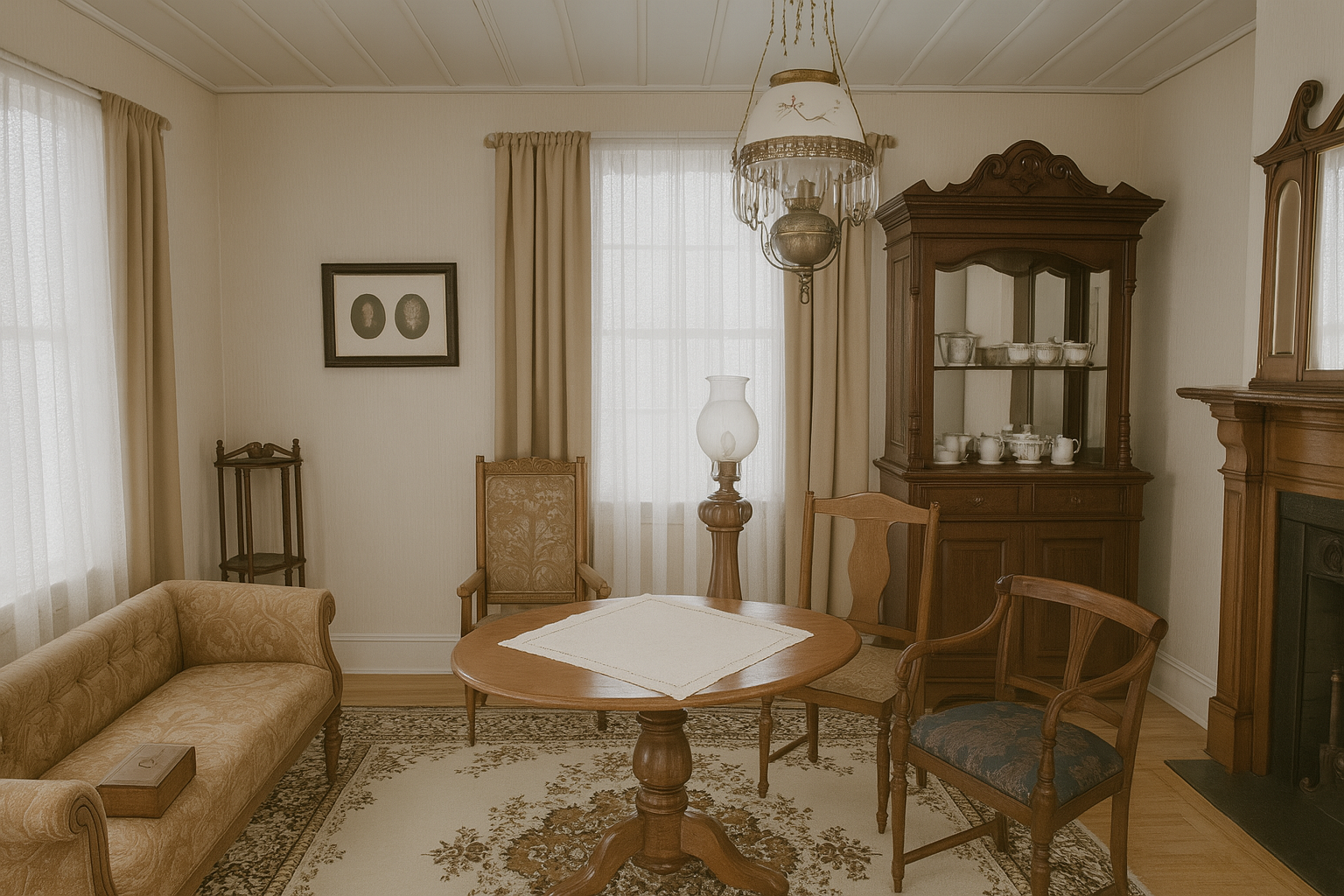
Designing the Perfect 1800s Living Room
Tips, Ideas, and Inspiration
Learn how to design a stunning 1800s living room.
Designing an 1800s Living Room That Doesn’t Look Like a Stage Set
Most people mess this up. They slap antique chairs on a beige rug and call it “vintage.”
Real 1800s living rooms were practical, layered, and brutally personal.
You had ornate moldings, mismatched furniture, uneven floors, and soot-stained fireplaces. Rugs didn’t match the drapes. Fabrics faded. People used these rooms—every single day.
This guide is about how to actually design or restore a living room that feels like it came from the 1800s—and still works today.
We’ll break down:
-
What to keep and what to skip
-
How to mix old and new without it feeling fake
-
Mistakes that kill the vibe (like fake patina or “Victorian” wallpaper from Home Depot)
If you're restoring a heritage home, designing a period film set, or just want a space with actual character—not some Instagram cosplay—we’ve got you.
1800s Living Room Design: Combining Classic Style with Modern Comfort

Bring the 1800s into your home—without the dust. Learn how to design a classic living room that blends antique elegance with modern comfort.
THE STYLE HISTORY
A Quick History of 1800s Living Rooms

From Federal to Victorian—How These Rooms Really Evolved
1800s living rooms weren’t just places to sit. They reflected the values, wealth, and lifestyle of the time. Here's how styles shifted across the century—and how that history still shapes design today.
Early 1800s – Federal & Regency Style
This was the age of symmetry and simplicity. Federal homes focused on order and lightness—no clutter, no frills.
What defined it:
-
Clean lines, matching furniture
-
Painted wood in pale tones (greens, ivory, light blue)
-
Fireplaces were simple focal points
-
Spaces felt formal but not overwhelming
Design insight:
We once restored a home from 1820 where balance was everything. Just swapping heavy furniture for slim-legged pieces brought the room back to life—without losing the period feel.
Mid-1800s – Greek Revival & Gothic Revival
This era leaned into drama. Greek Revival brought in columns and classic motifs, while Gothic Revival added dark wood, arches, and intricate detail.
What showed up:
-
Taller ceilings, heavier furniture
-
Carved mantels and pointed arch windows
-
Thick drapery with tassels or fringe
-
Deep, moody color palettes
Reality check:
We’ve worked on Greek Revival rooms where scale was critical. Oversized sofas clashed with the architecture. Stick to proportion, or it all feels off.
Late 1800s – Victorian & Queen Anne
By the late century, everything was about display. Victorian living rooms exploded with color, texture, and furniture.
You’d see:
-
Ornate sofas and armchairs (often velvet or damask)
-
Pattern on pattern—florals, stripes, wallpaper
-
Bold color schemes—reds, purples, greens
-
Decorative fireplaces, layered decor
Modern approach:
Victorian doesn’t have to mean cluttered. We’ve designed spaces that keep the rich tones and textures but tone down the accessories—resulting in a room that feels bold but breathable.
End of the Century – Into the 1900s

By the 1890s, change was coming. Design started moving toward simplicity. The rise of Arts and Crafts and early Modernist thinking signaled the end of the overly ornate Victorian look.
In transition:
-
Less clutter, more function
-
Natural materials over ornament
-
Handcrafted details took over from mass-produced frills
Bottom line:
Knowing where styles came from helps you avoid designing a fake-looking “period room.” Instead, take the essence of the era and apply it with purpose.
THE 1800s STYLE
Early 1800s vs. Late 1800s Living Rooms
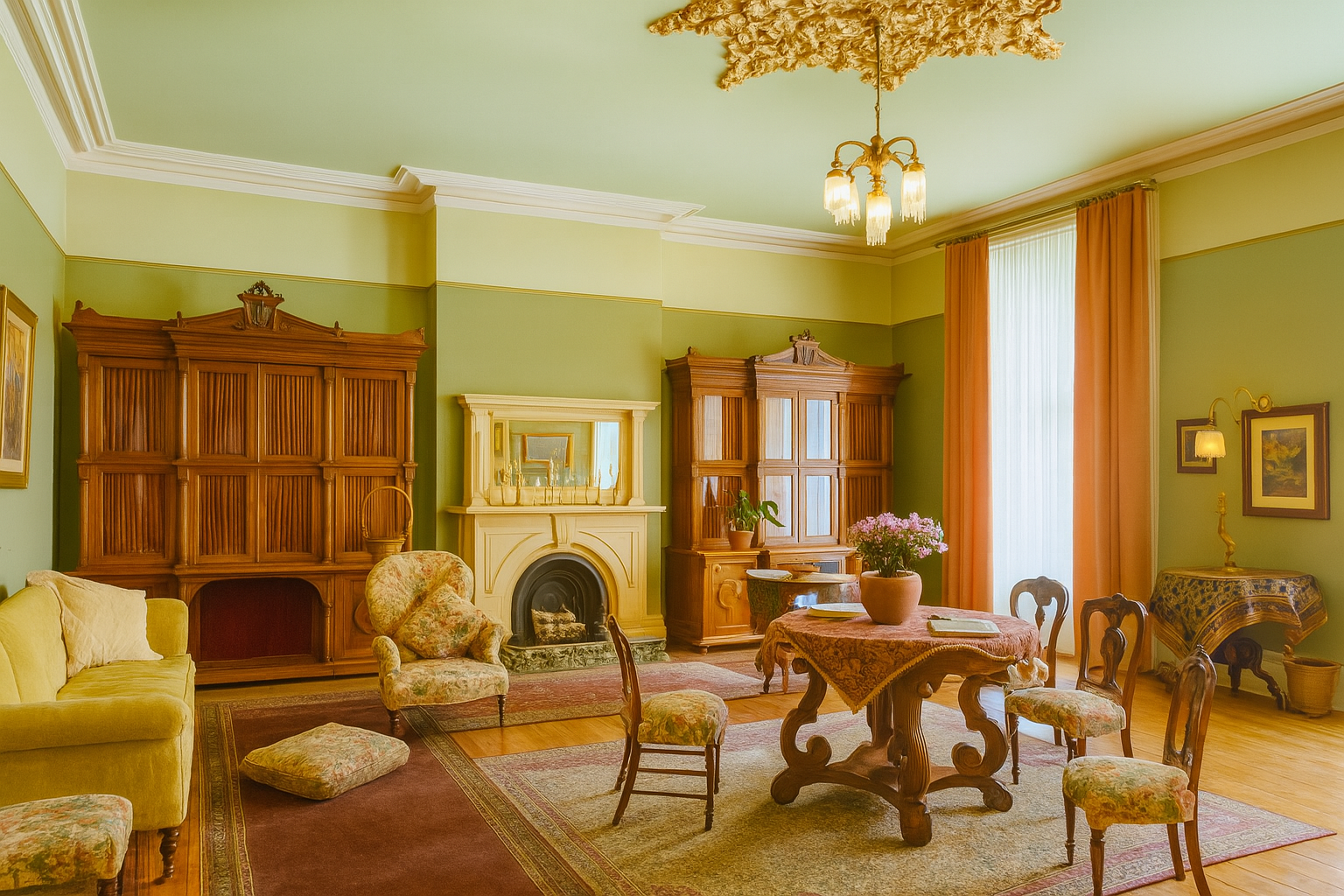
What Actually Changed in a Century of Sitting Rooms
Let’s not pretend the 1800s were one single style. A parlor from 1810 looked nothing like a drawing room in 1890. Here’s the blunt breakdown:
Early 1800s: Clean, Classical, and Quiet
This was the Federal and Regency era—influenced by Enlightenment thinking and Roman symmetry.
▪ Walls → Pale colors like cream, gray-blue, or muted green. Painted plaster, no wild wallpaper yet.
▪ Furniture → Delicate legs. Mahogany, satinwood, or rosewood. Small scale.
▪ Layout → Open, centered around a fireplace. Less clutter.
▪ Ornament → Thin moldings, simple cornices. Neoclassical motifs like urns and swags.
▪ Lighting → Candles and oil lamps. Few rooms had gas lines before the 1840s.
→ Think: Jefferson’s Monticello, not Victorian excess.
Late 1800s: Bold, Busy, and Dark
By 1880–1890, the room became a performance space—thanks to the Victorians.
▪ Walls → Dark patterned wallpaper. Reds, olives, and gold. Paintings crammed everywhere.
▪ Furniture → Heavy, carved, upholstered in velvet or leather. Mixed woods.
▪ Layout → Overstuffed. Lots of chairs, ottomans, screens, pianos.
▪ Ornament → Crown molding, ceiling medallions, floral rugs, taxidermy.
▪ Lighting → Gas or early electric fixtures—chandeliers, wall sconces.
→ Think: Cluttercore meets Gothic revival. More was more.
Why This Matters
If you're restoring or designing an 1800s-inspired space, pick your lane:
-
Want elegance and air? Go early century—light walls, simple shapes, symmetry.
-
Want drama and detail? Go late century—bold color, mixed textures, layered decor.
Trying to mash both together usually just looks confused.
Regional Styles of the 1800s Living Room
What Looked Good in One Country Looked Strange in Another
The 1800s weren’t globalized. A “fancy” living room in Boston looked totally different from one in Berlin or Bombay. Here’s what stood out by region:
Victorian England
Maximalist, Moody, and Moralizing
-
Decor Style: Layered textiles, floral wallpaper, fringe everywhere. Every surface filled.
-
Furniture: Tufted armchairs, ebonized wood, display cabinets full of “moral” souvenirs.
-
Colors: Claret red, hunter green, brown, gold—always dimmed.
-
Vibe: Show wealth. Show piety. Show your world travels.
-
Typical Feature: Ornate fireplace mantle with a clock and two matching vases.
Common room felt more like a cabinet of curiosities than a lounge.
🇺🇸 American Federal (Early 1800s)
Clean, Classical, and Patriotic
-
Decor Style: Sparse symmetry. Bald eagles, neoclassical busts, and restrained color.
-
Furniture: Sheraton or Hepplewhite chairs, spindle-back settees, small tea tables.
-
Colors: Off-white, muted green, colonial blue.
-
Vibe: Enlightenment meets the New Republic—serious and sharp.
-
Typical Feature: Framed George Washington portrait above the hearth.
Design felt like a moral duty, not an indulgence.
🇫🇷 Second Empire Paris
Ornate, Plush, and Ultra-Formal
-
Decor Style: Louis XVI revival. Gilded mirrors, tall drapery, rococo carvings.
-
Furniture: Upholstered parlor sets with cabriole legs and gold leaf accents.
-
Colors: Burgundy, navy, ivory, and gilded trim.
-
Vibe: Empire elegance—meant to impress aristocrats.
-
Typical Feature: Crystal chandelier and matching velvet curtains.
Felt more like a royal salon than a family room.
🇩🇪 German Biedermeier
Middle-Class Modesty Meets Refinement
-
Decor Style: Simple shapes, light woods, focus on functionality.
-
Furniture: Birch, cherry, or walnut pieces with rounded edges.
-
Colors: Light, warm tones—honey wood, beige, pale green.
-
Vibe: Subdued comfort. For people who just wanted peace.
-
Typical Feature: Corner ceramic stove (Kachelofen) as centerpiece.
Designed for music nights, not showing off.
🇮🇳 British Colonial India
Hot Climate Luxury Meets Imported English Formality
-
Decor Style: Fusion of Victorian formality and tropical adaptation.
-
Furniture: Cane-backed chairs, teak sideboards, British silhouettes in local hardwood.
-
Colors: Earth tones, whitewashed walls, pops of indigo or marigold.
-
Vibe: Stiff but ventilated. Fans and high ceilings mattered more than wallpaper.
-
Typical Feature: Punkah fans and Indo-European rugs.
Function over fuss—design that fought the heat.
🇺🇸 American Victorian (Late 1800s)
Inspired by England, But Louder and Looser
-
Decor Style: Parlor palms, pressed-tin ceilings, patterned rugs. Slightly more relaxed than British Victorian.
-
Furniture: Walnut and oak, mass-produced but ornate. Rocking chairs, Eastlake sideboards.
-
Colors: Jewel tones—emerald, sapphire, deep rose.
-
Vibe: Middle-class aspiration meets frontier flair.
-
Typical Feature: Ornate wood stove and patterned carpet layered over wood floor.
Showed you’d made it, even if you hadn’t.
1800s INSPIRED
Simple Ways to Bring 1800s Style Into Your Living Room

1800s Living Rooms: Real Style, Real Comfort
Want to bring 1800s charm into your home without making it feel like a museum? This guide shows you how.
We’ve worked on restoring and redesigning period homes across the U.S. and UK, and this section focuses on how to reimagine or recreate a living room inspired by the 19th century—with modern use in mind.
You’ll learn what actually defines these spaces—from the symmetry of Federal and Greek Revival rooms to the layered, decorative look of Victorian interiors. We’ll walk you through:
-
What features matter most (and what to skip)
-
Where to source materials and inspiration
-
How to avoid turning your home into a costume drama set
-
Real strategies to blend classic elements with modern living
Whether you're restoring a heritage home or just adding subtle historical character to a newer space, this guide gives you everything you need to get started—with no guesswork.
Let’s break down the essential elements of 1800s living rooms—and how to make them work today.
THE ESSENTIALS
1800s Living Room Decor: Furniture, Colors, and Layout
Get the essential tips on decorating your 1800s living room. From furniture choices to color palettes, this article helps you create a living space that honors the past while staying comfortable.
Key Aspects Covered:
- A Brief History of 1800s Living Rooms
Explore the evolution of living rooms in the 1800s, starting with the simpler, formal designs of the early century to the more intricate Victorian and Queen Anne styles. Understanding the historical context helps you create an authentic space. - Key Design Elements
We’ll cover essential features like furniture, layout, and decorative details that define the look of 1800s living rooms. From elegant settees to imposing fireplaces, we’ll show you how to recreate these iconic elements. - How to Achieve the Look
A step-by-step guide on creating a space that captures the spirit of the 1800s. We’ll focus on practical design tips, sourcing materials, and how to mix old-world charm with modern-day comfort. - Renovating an 1800s Living Room
Tips for restoring an existing living room to its former glory while addressing modern needs. We’ll talk about the challenges you may face, like keeping historical integrity while ensuring safety, comfort, and functionality. - When to Incorporate 1800s Design and When to Avoid It
The 1800s look isn’t for every home or space. We’ll help you decide when it’s the right fit and when it might be better to explore other design styles. - Real-Life Examples and Expert Insights
We’ll share practical stories and lessons from architects and designers who have worked on 1800s living room projects, helping you avoid common mistakes and discover helpful tricks.
Key Design Elements of 1800s Living Rooms

Now, let’s dig into the nuts and bolts of what makes an 1800s living room. Whether you’re designing a new space, renovating an old one, or simply getting inspired, here are the key elements you need to understand.
1. Furniture: Comfort Meets Elegance
In the 1800s, furniture wasn’t just about looking good—it needed to work for the family, whether they were entertaining or enjoying quiet time together. A key element of any 1800s living room was furniture that was both functional and elegant.
What to look for:
- Sofas and settees: Often upholstered with luxurious fabrics like velvet, damask, or leather. These pieces were large, deep, and comfortable for long socializing sessions.
- Occasional chairs: Chairs often had high backs and elaborate carvings, particularly in Victorian and Queen Anne styles.
- Tables: Look for intricate woodwork, especially in coffee tables or side tables. Many had marble or glass tops in the later Victorian years.
A great way to incorporate this into modern-day design is to mix in vintage or reproduction pieces that nod to these old-school styles. Keep in mind, furniture from this era was heavy and often bulky, so don’t overcrowd your space. Aim for a balance of comfort and function.
2. Layout: Symmetry & Space
The 1800s were all about balance. The layout of a living room was often symmetrical to create harmony, whether through furniture placement or the positioning of key design elements like windows and doors.
Pro tip: Create focal points—like a fireplace or a large window—and arrange your furniture around it. Whether you’re in a Victorian-style room or one inspired by the Federal era, this sense of balance will help guide the flow of the space.
3. Color & Textures: Bold Yet Elegant
The color scheme was essential to creating the right ambiance in an 1800s living room. Early in the century, light pastels and soft hues were popular in Federal-style homes. As the century progressed, however, bold, rich colors like deep reds, emerald greens, and mustard yellows became common.
Key considerations:
- Use deep, rich tones for walls or upholstery to capture that Victorian vibe.
- Add luxurious textures like velvet, brocade, and silk for furniture, and don’t forget heavy, patterned draperies.
Again, modern design can take inspiration from these historic color palettes while adjusting them for practicality. Try a deep blue or charcoal gray on the walls, and then soften it with neutral-colored furniture or an abstract rug.
4. Fireplaces & Mantels: The Heart of the Room
The fireplace was often the centerpiece of any 1800s living room. In the earlier part of the century, simple, classical mantels were common, but by the Victorian era, the hearth became an elaborate feature, often with marble surrounds, intricate carvings, and ornate detailing.
What to do today: If you have a fireplace in your living room, embrace it as the focal point. For a more contemporary twist, you can balance traditional elements with modern surrounds, such as a sleek marble or simple wood mantel, to update the look while honoring the past.
1800s Living Room Style: A Complete Guide to Timeless Elegance
Explore the charm of 1800s living room design. From Federal to Victorian styles, this guide covers how to create an authentic 1800s-inspired living room with modern convenience.
How to Achieve the 1800s Living Room Look
So, how do you get that perfect 1800s-inspired living room? Here’s a step-by-step guide:
Step 1: Start with the Walls
Choose a rich, timeless color palette. You can’t go wrong with deep reds, greens, or golds. Don’t be afraid to layer textures—think wallpaper with a subtle floral design or a classic paint treatment like wainscoting.
Step 2: Add the Furniture
Opt for large, comfortable furniture with elegant upholstery. Find vintage or reproduction pieces like a deep-set sofa or occasional chairs. If you want to add something more contemporary, make sure the pieces complement the room’s period elements.
Step 3: Create Focal Points
Ensure your room has a clear focal point, whether it’s a fireplace, a stunning piece of artwork, or a vintage rug. Position the furniture around this element to create flow.
Step 4: Don’t Forget Lighting
The lighting in 1800s living rooms was often dim, so soft, ambient lighting was key. Add vintage chandeliers, sconces, or even lamps with brass accents to create that warm, nostalgic feel.
When to Incorporate 1800s Design and When to Avoid It
Before diving headfirst into 1800s décor, it's important to ask: Is this the right style for my home?
When it works:
- Older homes with existing architectural details.
- If you love vintage style and enjoy the challenge of blending old with new.
- Large spaces that can accommodate grand furnishings and focal points.
When to avoid:
- Small apartments or homes with limited space.
- Homes where a more modern, minimalist look might suit the architecture better.
- When you're not prepared for the upkeep and attention to detail these rooms require.
How to Design a Living Room That Marries Modern Chic and Classic Garden Appeal
How to combine contemporary furniture with vintage garden accents for a timeless living room design.
CLASSIC MODERN
The Art of Living Room Design: Soft Comfort, Classic Style
How to Blend 1800s Elegance with Modern Comfort

Without Making It Look Like a Museum
This isn’t about replicating a museum set. It’s about taking the soul of 1800s design—those rich materials, vintage textures, classic symmetry—and making it work with today’s cleaner, more minimal lifestyle.
I’ve worked on dozens of living rooms like this. My partner Sarah (the interior designer) and I constantly clash over how far to go—she leans into ornate details; I strip things back. When it works, the result feels warm, personal, and timeless. Here’s how to pull that off in your own space.
1. Bring in Natural Materials and Plants
Modern rooms can feel sterile fast. Garden-style touches fix that—big leafy plants, potted herbs, vintage planters.
✓ Go for:
▪ Fiddle-leaf figs, snake plants, or ferns
▪ Clay or aged copper planters
▪ Wood beams, rattan chairs, or raw stone tables
Avoid: Fake flowers. They kill the whole vibe.
2. Lighten the Color, Add Depth with Contrast
Start with soft neutrals: off-white, stone gray, pale ivory. Then layer in richer garden-inspired hues.
✓ Try:
▪ Deep olive green pillows
▪ Burgundy curtains
▪ A reclaimed oak coffee table
Balance is everything. Keep the walls light. Let the accents carry the depth.
3. Mix Old and New Furniture
Sleek modern sofa + antique table = perfect combo. One vintage item grounds the room. Too much and it’s grandma’s house.
✓ Best combos I’ve used:
▪ Mid-century couch + carved Victorian coffee table
▪ Modern bench + old wooden mirror
▪ Clean-lined bookshelves + floral vintage armchair
Sarah’s trick: Use modern fabric on a vintage frame. Old soul, new skin.
4. Use Lighting to Tie It Together
Lighting does more than brighten. It’s a design anchor. Keep shapes simple but lean into old-world finishes—brass, bronze, glass.
✓ Mix like this:
▪ Simple pendant light + vintage sconce
▪ Classic chandelier above a minimalist space
▪ Floor lamp in matte black + antique gold mirror
Don’t go ultra-modern here. Keep it quiet, timeless, and solid.
5. Layer in Garden Textures and Subtle Patterns
Florals, gingham, or damask—but sparingly. You want charm, not clutter.
✓ Easy wins:
▪ A velvet or floral throw on a plain sofa
▪ Botanical print pillows
▪ Textured linen curtains
It’s not about loud prints—it’s about depth and material feel. Linen, wool, natural cotton, polished wood, aged metal. Texture is everything.
CLASSIC MAKEOVER
Restoring an 1800s Living Room
A Step-by-Step Guide That Balances Accuracy and Livability
Restoring a living room from the 1800s isn’t just about copying what you see in old photos. It’s about knowing what’s worth saving, what can be modernized, and how to strike the right balance.
I’ve worked on enough of these to tell you: it’s never as simple as paint and curtains. And my design partner Sarah? She’ll push for 100% period accuracy, even if it means hand-restoring crown molding with a toothbrush. We’ve had our battles—but it always comes down to doing it right, not just making it look old.
Here’s how to approach it, step by step.
Step 1: Inspect the Room and Prioritize
Start with what’s already there. What’s original? What’s been replaced or covered up? Don’t make assumptions. I’ve seen clients rip out “ugly” old trim that turned out to be rare, original 1850s millwork.
What to look for:
● Baseboards, casings, and molding
● Fireplace mantels or hearth tiles
● Floorboards (wide plank oak, pine, or fir)
Pro tip: Hire a restoration-savvy contractor if your house is over 100 years old. Mistakes are expensive to undo.
Step 2: Choose Materials That Match the Period
The wood, wallpaper, and fabrics of the 1800s were specific to style and region. Don’t slap up random “vintage” floral prints or cheap wood veneer and call it a restoration.
Here’s what works:
▪ Early 1800s (Federal): Light woods like oak or walnut. Painted trim in ivory or sage.
▪ Mid-century (Greek/Gothic Revival): Darker woods, columns, carved details.
▪ Late 1800s (Victorian): Heavy upholstery, bold patterns, and ornate detail.
Skip trends. Reproductions are fine—but get the scale, color, and material right.
Step 3: Restore, Don’t Replace
It’s tempting to rip out old features that look damaged—but resist. A chipped fireplace surround or cracked plaster wall might be fixable and worth preserving.
Fix what you can:
▪ Refinish wood, don’t replace it.
▪ Repair original plaster instead of using drywall.
▪ Clean or restore mantels, don’t modernize them.
Sarah’s tip: Use lime-based plaster for old walls. It breathes and preserves the integrity of the home.
Step 4: Discreetly Add Modern Amenities
You don’t need to live like it’s 1850—but don’t let modern tech ruin the aesthetic. This is where most restorations go wrong.
Blend updates in quietly:
▪ Use vintage-style sconces and chandeliers.
▪ Hide outlets near baseboards or behind furniture.
▪ Choose baseboard heating or discreet radiators over ductwork.
▪ Avoid recessed lighting unless you hide it with trim.
Bonus tip: Smart home tech can be hidden in period-style cabinetry or even behind framed art.
Step 5: Pick the Right Furniture (Then Use Less of It)
You don’t need a full Victorian showroom. You need the right pieces in the right amount.
Use:
▪ Carved wood sofas with velvet or brocade
▪ Narrow Federal-style chairs
▪ Marble-topped or turned-leg side tables
▪ Gold-framed mirrors and dark-wood bookcases
Don’t overcrowd. 1800s rooms had more open space than most people think. One or two standout antiques beat ten mediocre replicas.
Step 6: Finish with the Right Touches
The last 10% of any restoration makes or breaks it.
Use:
▪ Velvet or damask drapes, hung high and wide
▪ Persian or Oriental rugs, not wall-to-wall carpet
▪ Period-inspired portraits or oil paintings in carved frames
▪ Simple floral arrangements or ceramic vases (no plastic)
Avoid “fake old.” Anything that looks mass-produced kills the vibe.
What to Watch Out For
Restoration always comes with surprises. Expect setbacks.
Common issues we’ve run into:
▪ Hidden damage: termites, mold, rot under the surface
▪ Material sourcing: hard to find matching trim or flooring
▪ Overdoing it: turning a livable room into a museum piece
Stay flexible. Some compromises are worth it to make the room functional in 2025, not 1825.
The Goal: Not Just Period-Perfect, But Liveable
You’re not building a movie set. You’re restoring a space that holds history—but lives in the present.
Get the bones right. Respect the design logic of the era. Use restraint. Add modern touches carefully. Your finished room should feel layered, personal, and timeless—not like cosplay.
Trust me, when it’s done right, people walk into that room and say one thing:
"Wow. This feels like it’s always been here."
What Actually Works
Real Projects, Real Lessons
Renovating 1800s-style living rooms isn’t about copying the past—it’s about knowing what to keep and what to let go.
One of my most challenging (and rewarding) projects was restoring a Victorian-era living room. The clients were serious about authenticity. They wanted everything—the ornate trim, the dark carved wood, the deep velvet upholstery. But once it all went in, the room felt like a museum.
What we did:
We kept the woodwork, scaled back the furniture, and swapped out the heavy velvet drapes for rich linen. It kept the warmth and drama, but made the space breathable again.
Biggest takeaway:
Not everything old is worth saving. Some design elements, like blackout-level velvet curtains, just don’t work for how people live today. The key is knowing what adds soul—and what just adds dust.
FAQ
1. How can I make my living room feel like it’s from the 1800s without overdoing it?
Focus on key elements like rich color palettes, classic furniture, and elegant light fixtures. Don’t go overboard on heavy, ornate pieces—balance is key.
2. Can I mix 1800s design with modern furniture?
Absolutely! In fact, mixing old and new can create a beautifully eclectic space. For example, you can keep the classic furniture but swap out modern lighting and accessories.
3. How do I create the right ambiance in an 1800s-inspired living room?
Use warm, ambient lighting, rich colors, and textiles like velvet or silk. Create a cozy yet elegant atmosphere with soft textures, rugs, and plenty of natural light.