
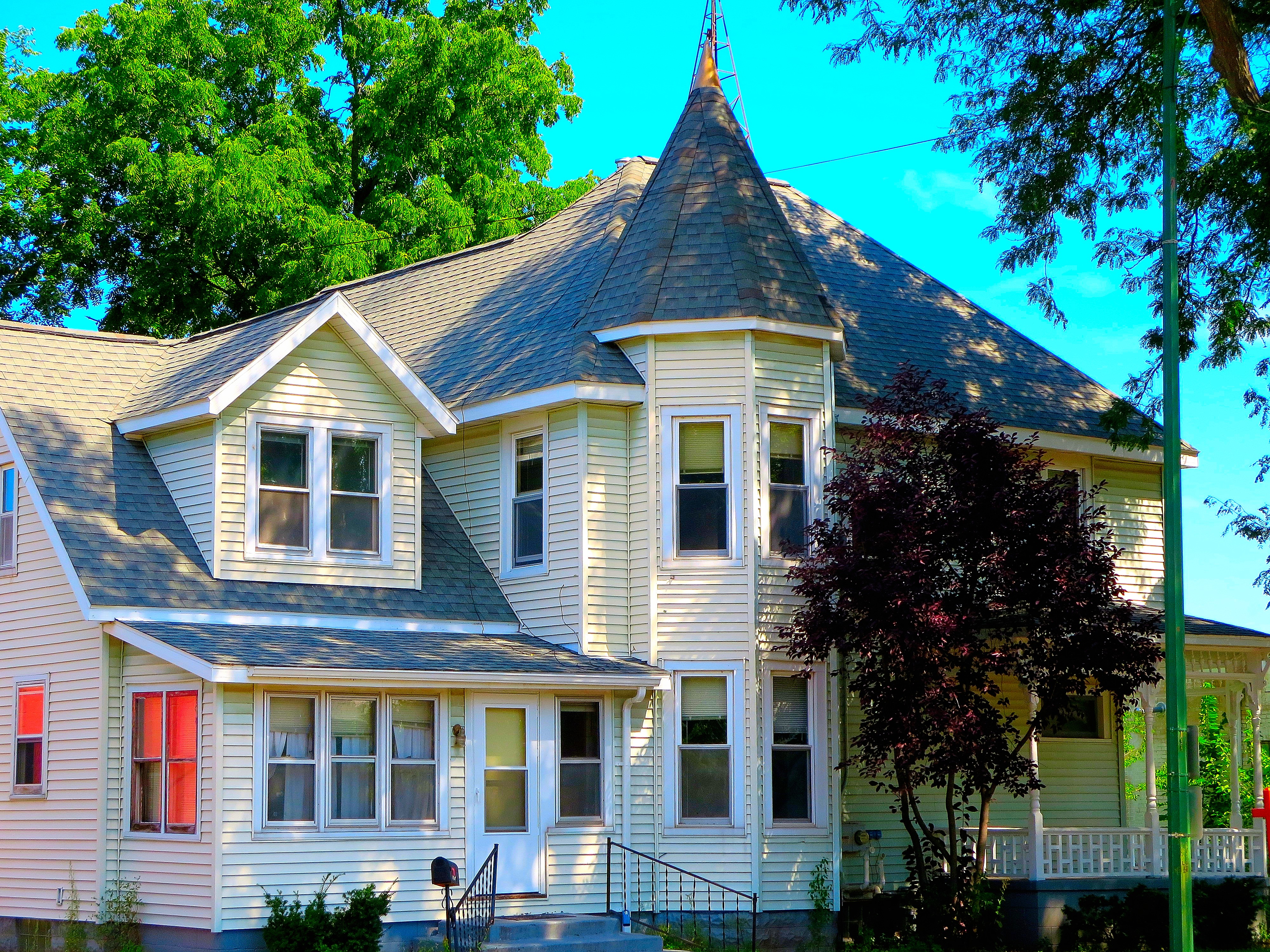
Queen Anne Style: What Actually Makes It Special
We’ve rebuilt, restored, and redesigned Queen Anne homes—mansions, cottages, hybrids. The detail is what hooks you. Asymmetry. Towers. Textures. Windows that don’t match, and that’s the whole point.
This style isn’t shy. It’s layered, bold, and tough to fake. You either do it right or it looks like a theme park. But when it works, nothing else feels this alive.
● Massive wraparound porches
● Bay windows, stained glass, spindlework
● Steep roofs and sudden angles
● Mixed materials—brick, shingles, clapboard, sometimes all in one wall
It’s not subtle. That’s why people love it.
MUST READ
📘 Planning a Queen Anne Renovation? Start Here
A Field Guide to American Houses – Virginia McAlester
Covers Queen Anne and every other major U.S. style. Clean diagrams. Real houses.
Why Queen Anne Still Turns Heads

Queen Anne homes stand out.
Turrets. Textures. Asymmetry. These houses are loud, detailed, and proud of it.
Our first restoration? A half-collapsed Queen Anne with a turret and a porch wrapped like a ribbon. Matching the spindlework nearly broke us; but it taught us what makes this style worth saving.
This guide breaks down the Queen Anne style: what it is, how it works, and how to use it today without turning it into a museum piece.
This is part of a full series breaking down 500 years of house styles.
Queen Anne Architecture: Quick Breakdown
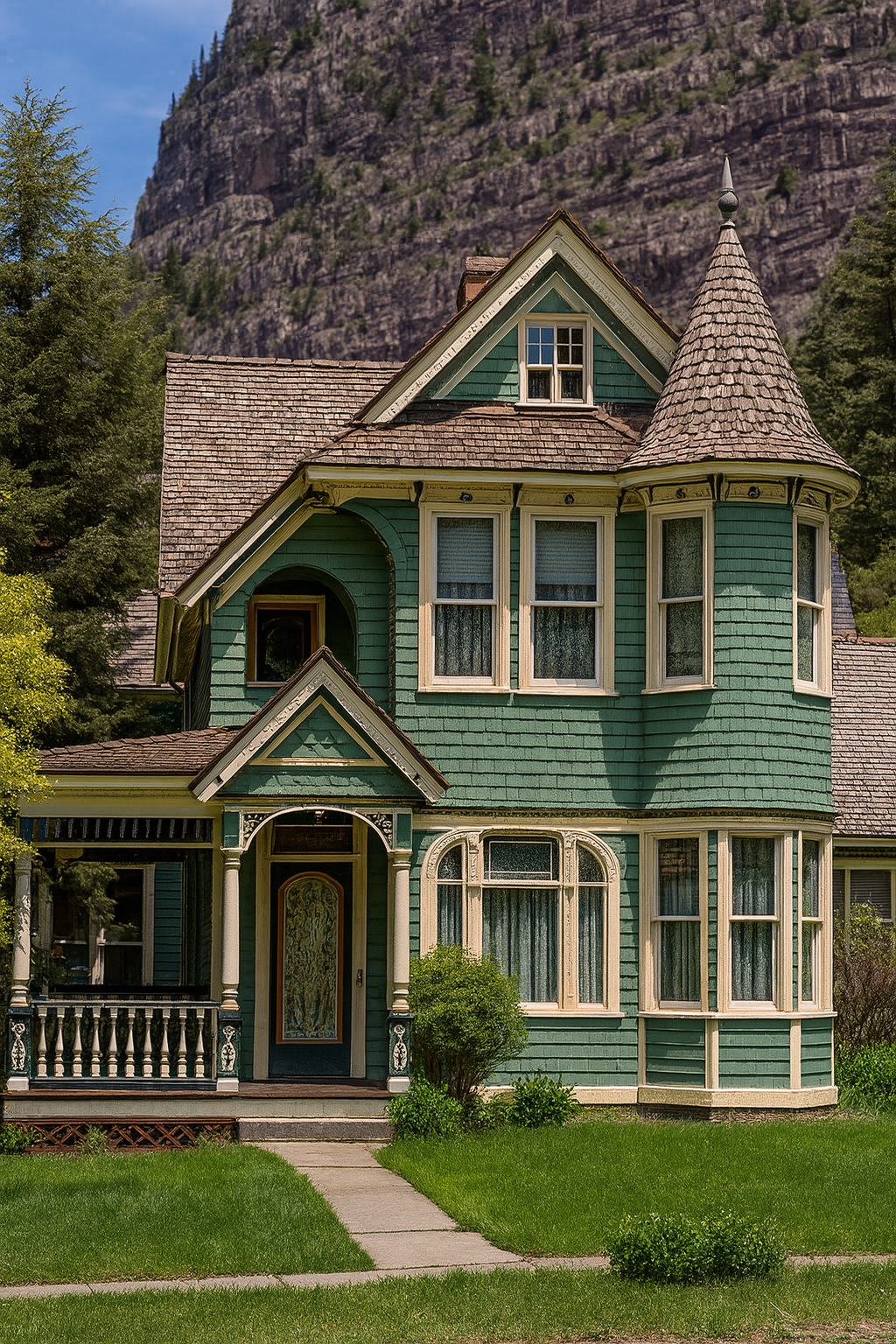
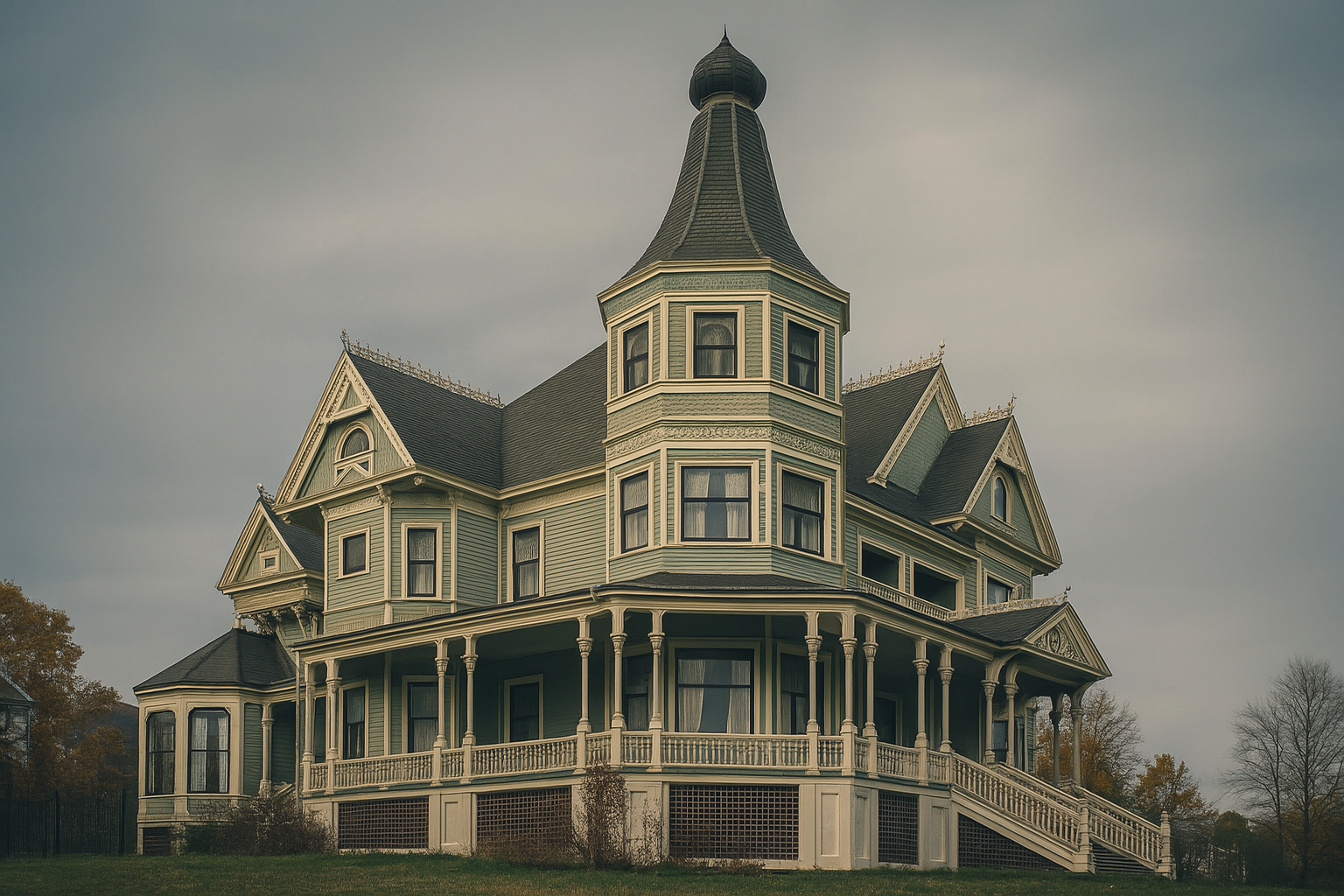
IMAGE: Queen Anne Victorian home in Ouray, Colorado, featuring a turret, ornate trim, and colorful wood siding.
Turrets. Towers. Texture. Drama. This style owned the streets between 1870 and 1900—and it still grabs attention.
What It Is
● Origin: England, 1860s – architect Richard Norman Shaw
● Peak: 1880s–1890s in the U.S.
● Look: Asymmetrical layout, wraparound porches, decorative wood trim, tall chimneys, bright color palettes
● Function: Middle-class statement homes, often built fast using factory-made trim
Why It Took Off

● Industrialization made fancy trim cheap
● Railroads spread design ideas fast
● Mass production brought drama to even small homes
Key Features
● Asymmetry – no matching sides, no clean lines
● Turrets/Towers – vertical drama, corner accents
● Wood Details – spindlework, gables, fish-scale shingles
● Bold Colors – reds, greens, golds, deep blues
● Porches – wide, detailed, often wrapping the entire front
Related Styles (Same Era)
🔹 Second Empire – Mansard roofs, dormers, French flair
🔹 Stick Style – Visible framing, steep roofs, early Queen Anne bones
🔹 Shingle Style – Rounded forms, fewer ornaments, natural siding
🔹 Gothic Revival – Pointed arches, church-like vibes
🔹 Richardsonian Romanesque – Stone-heavy, arches, bulky mass
See also: 1860s Victorian Houses: What They Really Look Like
Queen Anne Timeline

● 1860s (UK) – Norman Shaw revives medieval/Elizabethan mix
● 1870s (US) – Style lands and spreads fast
● 1880s–1890s – Peak popularity, hits towns and cities nationwide
● 1900s+ – Fades out as Craftsman and Colonial Revival take over
Why It Still Matters
Queen Anne homes didn’t follow rules—they flexed them. They made space for personality in neighborhoods filled with rectangles. That legacy still hits today in historic districts and revival builds.
MUST READ
📘 Old House Handbook: Practical Guide to Restoration
Buy on Amazon
Queen Anne Exterior: What to Actually Look For
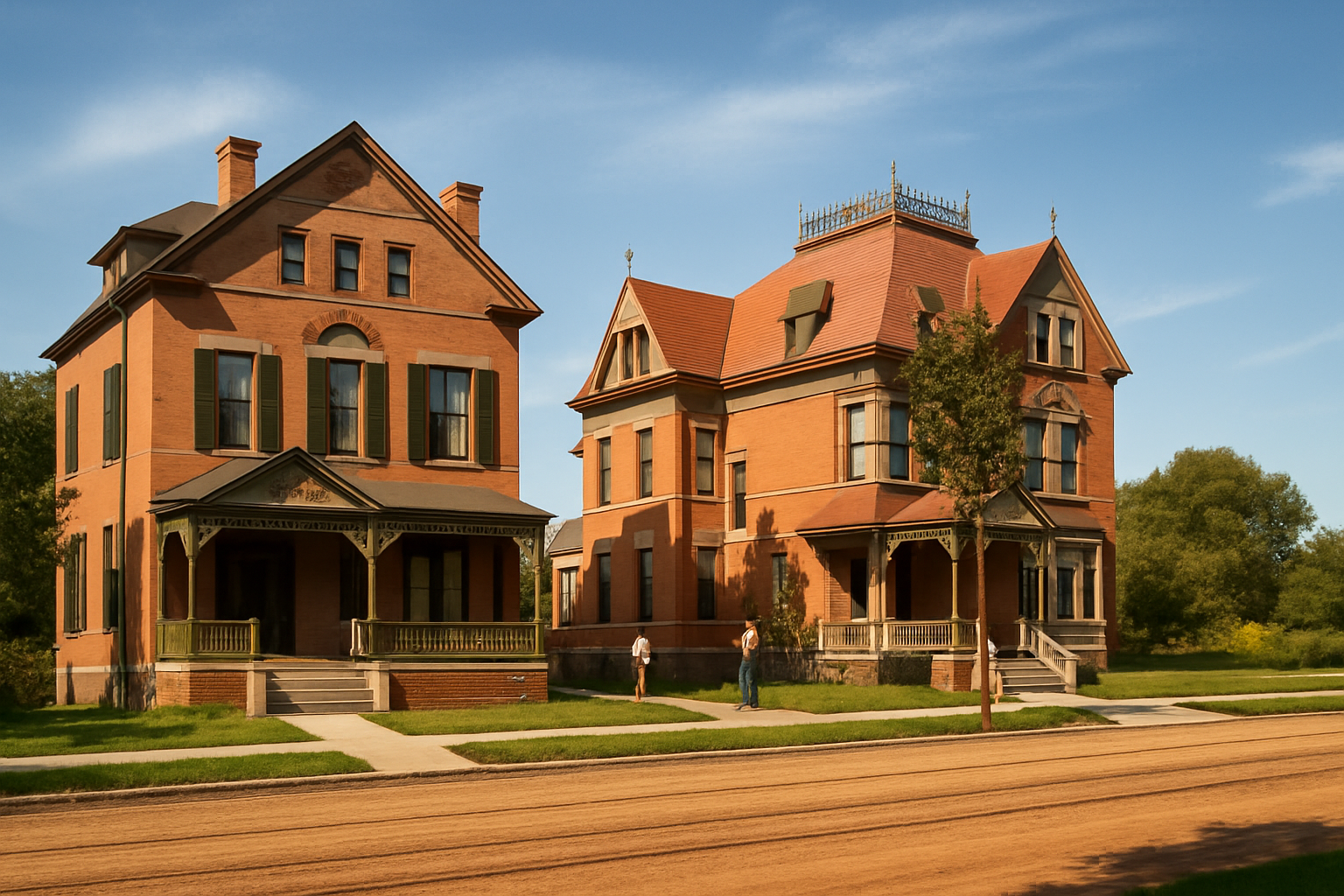
Every part of a Queen Anne home does something—visually or functionally. Here’s what matters and what to focus on.
● Turrets & Towers
What they do: Add vertical drama, break symmetry, create quiet corners.
What to focus on: Shape and roofline. Octagonal and round work best. Don’t overdo it—bad proportions ruin it.
Pro tip: Reuse as reading nook, office, or display space. Keep the window shapes tall and narrow.
● Wraparound Porches
What they do: Anchor the house. Connect front, side, and entry.
What to focus on: Turned posts, spindles, railing height. Get the balusters right or it feels wrong.
Pro tip: Use wide steps, skip fake vinyl railings. Real wood or high-end composites on
● Stick & Shingle Details
What they do: Add depth and craft. Show the builder’s hand.
What to focus on: Placement. Stickwork outlines the form; shingles bring texture. Don’t mix them randomly.
Pro tip: Use shadow lines—paint trim slightly darker to show off the layers.
● Bold Colors
What they do: Highlight shape and detail. Stand out.
What to focus on: Base/mid/highlight combos. Avoid flat monotones.
Go-to palette: Deep green base, cream trim, gold accent. Or: brick red base, black trim, soft yellow highlight.
Pro tip: Paint window sashes a darker tone than the surrounding frame—adds punch.
Why It Works
Queen Anne homes weren’t about minimalism. They showed off. And every part—the turret, the shingles, the colors—was doing a job.
We turned one collapsing porch into a new hangout space by rebuilding the balustrade to match the original—suddenly, it felt right again.
See aslo: 1920s House Styles: Key Features, Interiors, and Restoration Tips
Inside a Queen Anne House: Room by Room

These homes weren’t just pretty—they were smart, layered, and full of weird charm. Here's what actually matters in each room.
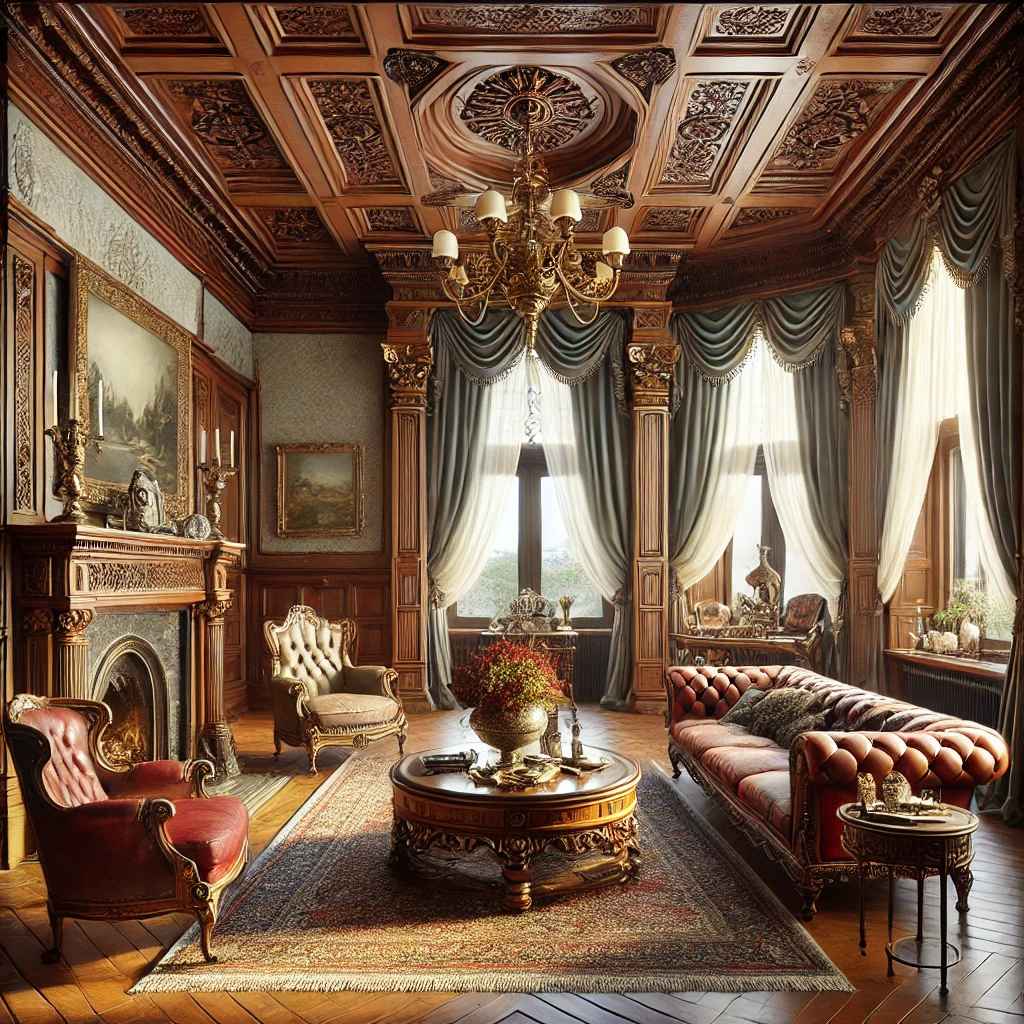
● Living Room

What to look for:
-
Carved mantels with decorative tile
-
Built-ins with hidden compartments
-
Patterned wallpaper, ceiling medallions
-
Heavy drapes and stained glass transoms
Style move: Keep the fireplace the focal point. Add a reproduction gaslight-style chandelier or antique mirror.
FIELD PICK
Victorian-Inspired Velvet Settee
Check it out on Amazon – Fits the mood, doesn’t break the budget.
● Kitchen
Original layout:
-
Small footprint, central worktable
-
Freestanding cupboards—not built-ins
-
Cast iron stove was the showpiece
Design tip: Use Shaker cabinets + open shelves. Add a vintage-style range for the right balance.
DETAIL PICK
Retro Electric Stove Replica
View on Amazon – Looks 1890s, works like 2025.
● Bedroom

Key features:
-
Four-poster beds or curved headboards
-
Wallpaper, thick rugs, tall baseboards
-
Small closets, custom shelving
Style tip: Mix antique furniture with modern bedding. Keep colors muted—think oatmeal, olive, rust.
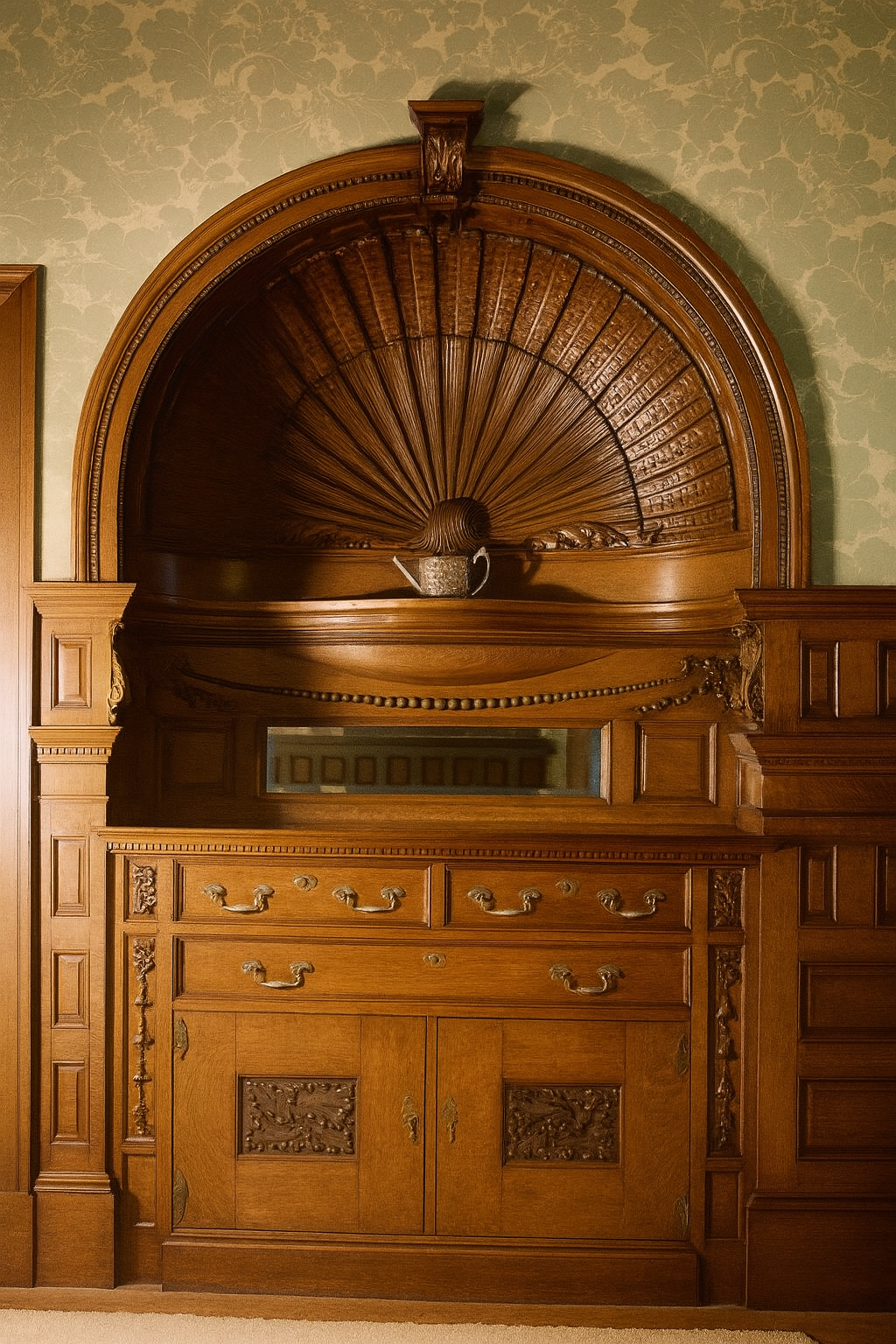
ROOM PICK
Carved Wood Four-Poster Frame
See it here – The frame that anchors the whole vibe.
● Bathroom

Back then:
-
Rare addition, usually simple
-
Clawfoot tub, pedestal sink, brass fixtures
-
Beadboard or tiled halfway up
Now: Add a freestanding tub, vintage taps, soft globe lighting. Use hex tile or checkerboard for floors.
FIXTURE PICK
Freestanding Clawfoot Tub – Acrylic
Lighter than cast iron but still classic.
● What Makes These Interiors Special
These houses hid surprises everywhere:
▪ Secret drawers under stairs
▪ Intricate doorknobs and hinges
▪ Stained glass inside bedrooms and hallways
▪ Ceilings designed as centerpieces
Quick Recap
You don’t need to turn your home into a museum. Just one or two bold Queen Anne pieces—like a mantle, a four-poster bed, or period hardware—can transform a room. The trick is balance. Keep the soul, skip the clutter.
Related:
Designing a New Queen Anne Home
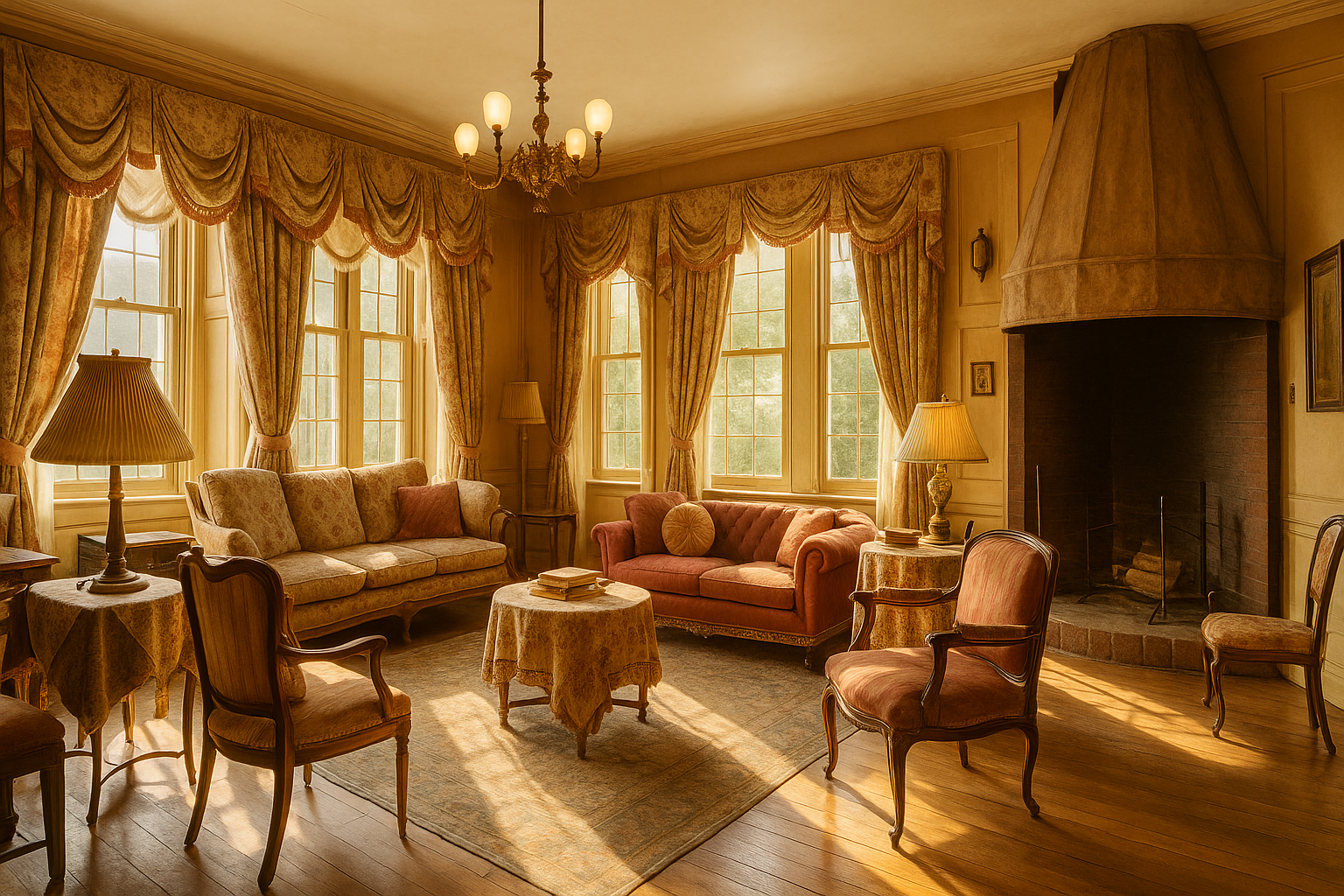
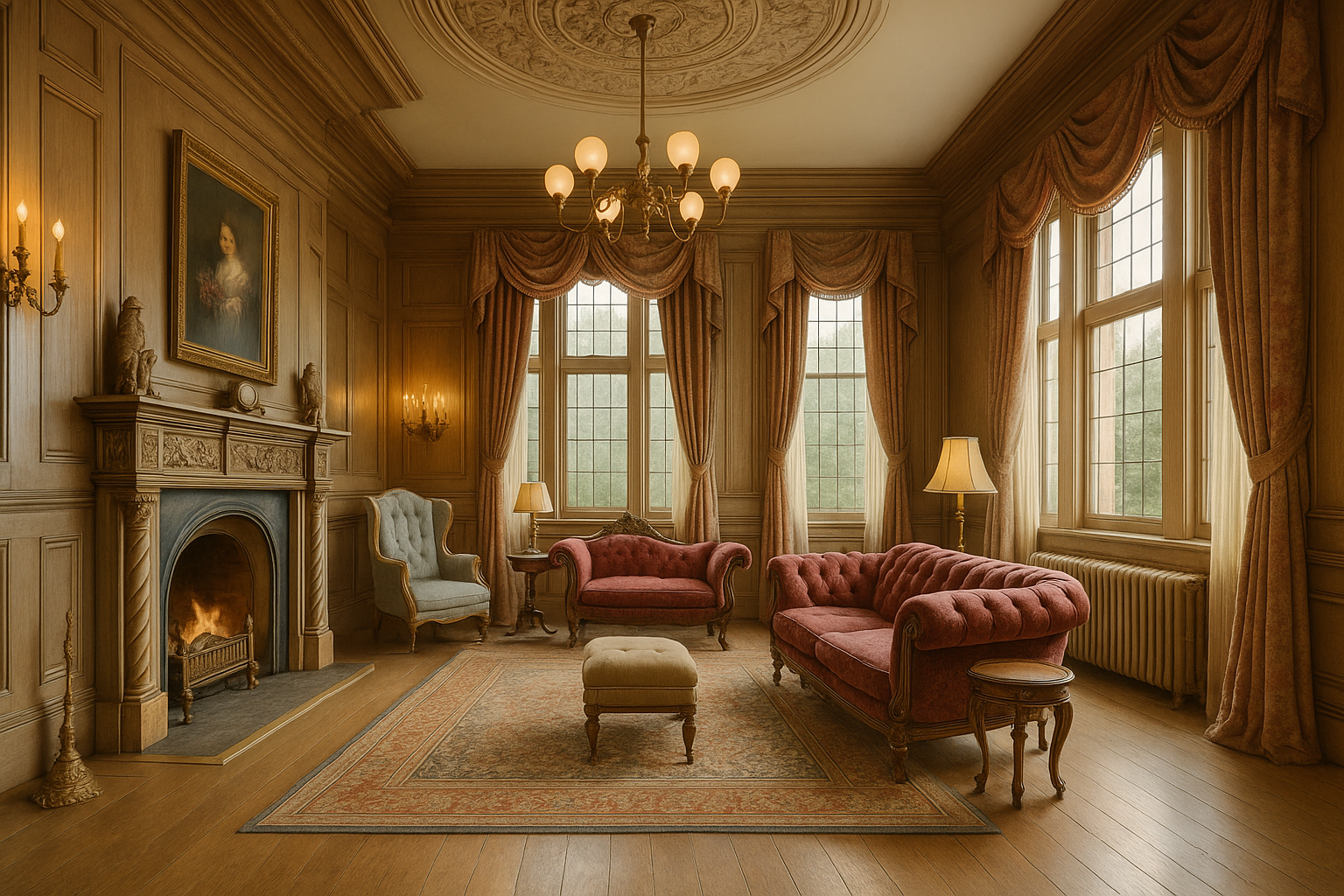
IMAGE: An original Queen Anne style living room with authentic period elements like ornate moldings, antique furniture, rich woodwork, and patterned finishes from the late 19th century.
Don’t recreate the past—borrow what works.
Focus on One Statement Move
You don’t need the whole circus. A turret, a big porch, or decorative shingles is enough. Pick one and do it right.
● Good idea: Wraparound porch + clean interior
● Bad idea: Turret + porch + tower + gable + 6 colors = theme park
PRODUCT PICK
Exterior Historic Paint Set – Victorian Palette
See on Amazon
Renovating a Queen Anne
Old homes = hidden problems. Don’t glamorize it.
What Goes Wrong Fast
● Matching trim is a pain — salvage yards or custom millwork help
● Layouts feel chopped — widen doorways, don’t demo everything
● Rot and sagging — always check foundation, framing, roofline
Smart Fixes
● Shaker-style kitchens = good modern contrast
● Restore wood, don’t cover with vinyl
● Avoid open concept unless you know how to fake structural rhythm
Hidden Features Worth Saving
Queen Anne homes came with secrets. Keep them if you find them.
● Under-stair drawers
● Secret compartments in built-ins
● Carvings behind panels, dated floorboards
● Weird little nooks = best part of the house
TOOL PICK
Precision Wood Molding Router Bit Set
Check it here
Modernizing Queen Anne Interiors
Add charm, not clutter.
What to Keep
● Stained glass (even reused in cabinet doors)
● Wood trim—painted or natural
● Vintage light fixtures with LED guts
What to Update
● Modern plumbing in clawfoot tubs
● Kitchen = clean lines, open shelves
● Use vintage-inspired furniture with new fabrics
Key Do’s and Don’ts
✓ Do:
-
Save original glass and trim
-
Use simple interiors to balance ornate exteriors
-
Document everything
✕ Don’t:
-
Rush the process
-
Use cheap vinyl replacements
-
Gut the inside like it’s a flip house
ROOM PICK
Modern Clawfoot Tub – Lightweight Acrylic
Amazon link
What People Get Wrong About Queen Anne Homes
Let’s cut the fantasy. A lot of homeowners (and even designers) mess this up. They either overdo it like it’s a dollhouse or gut the inside like it’s a flip show. Here’s what usually goes sideways — and how to get it right.
✕ Mistake #1: Turning It Into a Theme Park
Problem: Too many gables, turrets, trims, and patterns—makes it look fake.
Fix: Choose one or two focal points. A turret or ornate porch. Not both.
✕ Mistake #2: Whitewashing Everything
Problem: Painting the whole thing white to "modernize." Kills the contrast.
Fix: Use a modern historic palette—deep greens, dusty reds, muted golds. Balance rich and neutral tones.
✕ Mistake #3: Gutting the Floor Plan
Problem: Knocking out walls and removing all doors. You lose the rhythm.
Fix: Open strategically—like widening entries or linking two rooms, not flattening the whole interior.
✕ Mistake #4: Vinyl Everything
Problem: Plastic siding, fake columns, cheap prefab trim. It shows.
Fix: Use real materials—or high-end alternatives that look handcrafted. Wood-look fiber cement > budget vinyl.
✕ Mistake #5: Ignoring Maintenance
Problem: Queen Anne = upkeep. People don’t factor in peeling paint, wood rot, or odd roof angles.
Fix: Plan annual maintenance. Don’t buy one unless you're ready for the work—or the budget.
Queen Anne homes are loud, proud, and full of detail—but they need respect. Done right, they feel alive. Done wrong, they look like Pinterest exploded. If you want charm, not chaos, pick your battles and treat the original bones like they matter.
FIELD PICK
📘 House Colors: Exterior Color by Style of Architecture
Check on Amazon — Helps you choose Queen Anne color combos that don’t suck.
Sustainability + Cost Breakdown
Easy Wins
● Reclaimed wood for trim
● Energy-efficient windows with original sash style
● Eco-friendly paints in period colors
Budget Logic
Small homes: Focus on porch, windows, woodwork
Mansions: Budget for pro help—custom work eats time and money
Do in phases. Prioritize visibility: front facade, entryway, main room.
Real Example
One owner couldn’t find matching shingles. A local woodworker made custom molds to recreate the pattern—expensive but nailed the look.
Lesson: Some things are worth the cost if they make the whole house feel right.
STYLE CLARITY
What’s the Difference Between Queen Anne and Other Victorian Styles?
All Queen Anne Houses Are Victorian — But Not All Victorians Are Queen Anne
It’s one of the most confused facts in architectural history.
Queen Anne is just one style under the larger Victorian era, which ran from 1837 to 1901. Victorian isn’t a style — it’s a time period. Within that time, you had:
● Gothic Revival
● Italianate
● Second Empire
● Queen Anne
● Stick Style
● Shingle Style
● Richardsonian Romanesque
Queen Anne showed up late in the game, around 1880–1910. It was the wild one — asymmetrical towers, bay windows, spindlework, stained glass, and textured surfaces. Bold colors and layered interiors made it stand out.
Other Victorian styles could be more rigid, more classical, or more Gothic.
So no — that square, symmetrical brick house from 1850 isn’t Queen Anne. And yes — that colorful turreted house with three types of siding from 1895 probably is.
→ Think of Queen Anne as Victorian turned up to eleven.
Final Take
Queen Anne isn’t about copying history. It’s about using what still feels good today—warmth, detail, personality. Build smart. Renovate slow. Keep the soul, lose the junk.
FAQ
What is Queen Anne architecture?
A bold, detailed style from the late 1800s. Think turrets, wraparound porches, asymmetry, and colorful trim.
Who started it?
English architect Richard Norman Shaw. He mashed up medieval and Elizabethan elements into something new.
When was it popular?
1870 to 1900. Faded after 1910 when simpler styles like Craftsman took over.
What makes it stand out?
● Asymmetrical layout
● Turrets and towers
● Decorative trim and shingles
● Bright, contrasting paint colors
What's the difference between English and American Queen Anne?
English: more restrained, influenced by Tudor and Gothic forms.
American: louder, bolder, industrialized—with factory-made trims and paint.
Can I use Queen Anne features in a new house?
Yes. Pick one or two elements—like a bay window or stained glass—not the whole costume.
What’s the best way to modernize it?
Use open layouts, energy-efficient windows, and vintage-inspired fixtures that still feel clean.
What are the restoration headaches?
Matching trim, fixing old materials, and updating things without ruining the original look.
How much does a Queen Anne restoration cost?
Small homes: tens of thousands. Mansions: hundreds. Skilled labor and custom woodwork drive the cost.
What materials were used?
Wood siding, shingles, brick foundations, stained glass, wrought iron. Some parts were mass-produced, some handmade.
Are they energy-efficient?
Not originally—but you can retrofit insulation, new HVAC, and double-pane windows that match the old look.
What’s Stick vs Shingle style?
Stick = visible wood framing lines.
Shingle = smooth, curved forms with continuous shingles. Both are Queen Anne variants.
How do I keep the colors looking good?
Use exterior-grade paint and do touch-ups every few years. Don’t cheap out.
Are modern Queen Anne homes a thing?
Yes, usually smaller. Builders use turrets or trim details with modern layouts and materials.
What sets Queen Anne apart from other Victorian styles?
It’s more playful, textured, and colorful. Other styles like Gothic Revival or Italianate are stricter and more formal.
Can I find real blueprints?
Yes. Check historical archives, preservation societies, or period plan books. Some are even online.
What’s a cheap way to add Queen Anne character?
Add:
● Stained glass transoms
● Decorative trim
● Victorian-style lights or tile patterns
Why does Queen Anne still matter?
Because it had guts. It mixed craft, color, and function—no two homes were the same.
Related
Style Basics
-
Queen Anne Style Fundamentals
-
Queen Anne Architectural Style
-
Queen Anne House Characteristics
-
Queen Anne Style Interior
Victorian & Period Context
-
Queen Anne Victorian Architecture
-
Queen Anne Victorian House
-
Queen Anne Victorian Mansion
-
Queen Anne Victorian Cottage
-
Queen Anne Period Architecture
American & Revival Variants
-
American Queen Anne Style
-
Queen Anne Revival Architecture
-
Queen Anne Revival Style House
-
Queen Anne Era Legacy
Plans & Layouts
-
Queen Anne Floor Plans
-
Queen Anne House Plans
-
Queen Anne Mansion Floor Plans
-
Queen Anne Home Plans with Turrets
Modern & Compact Adaptations
-
Modern Queen Anne Style House
-
Small Queen Anne Style House
-
Simple Queen Anne House
-
Modern Queen Anne House Interior
Sub-Styles & Hybrids
-
Queen Anne Shingle Style
-
Queen Anne Stick Style
-
Queen Anne Cottage Style
-
Queen Anne Craftsman House
-
Queen Anne Style Farmhouse
-
Brick Queen Anne House
Interior Design & Decor
-
Queen Anne Interior Design Style
-
Queen Anne Decorating Style
-
Designing Queen Anne-Inspired Interiors
Resources
- Pennsylvania Historical and Museum Commission: This guide offers insights into the history and characteristics of Queen Anne style from 1880 to 1910. PHMC: Queen Anne Style 1880–1910
- National Park Service: Provides an overview of the Queen Anne style's evolution and its distinguishing features. NPS: Queen Anne Style 1880s–1910
- La Crosse Public Library Archives: Explores the Queen Anne style's manifestations and revivals, with examples from La Crosse. Architectural Styles and Revivals: The Queen Anne Style
- Old House History: Examines the Queen Anne style's architecture and art in England and North America, highlighting its historical context. Queen Anne Style: Architecture and Art