

Mediterranean Architecture: What Still Works
Mediterranean architecture grew out of climate.
Shade, airflow, thick walls, tile roofs, and courtyards all came from the same problem: too much sun and too much heat. That is the useful part of the style. It is also where a lot of newer projects go wrong when they copy the look but miss the reason behind it.
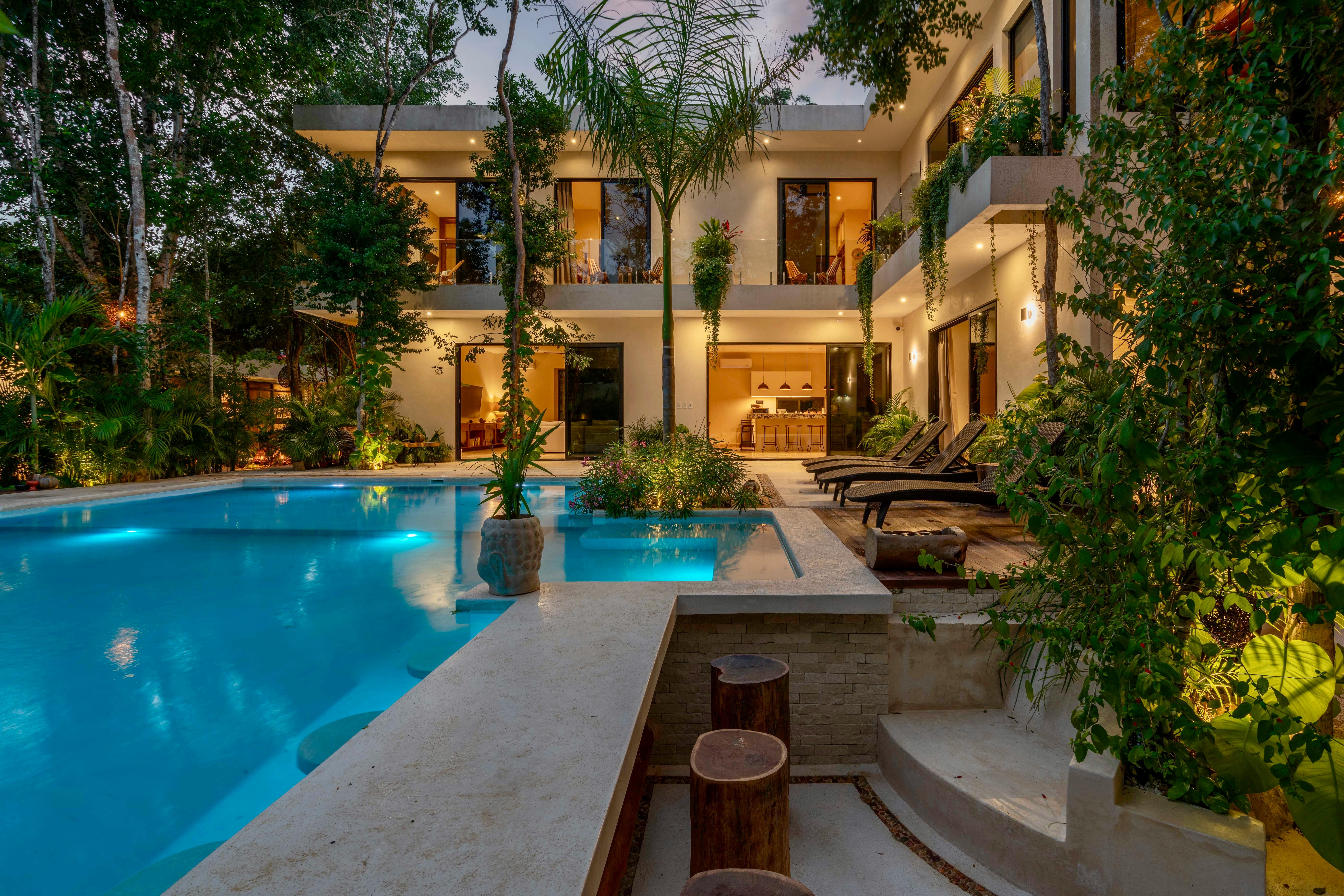
What makes Mediterranean architecture work
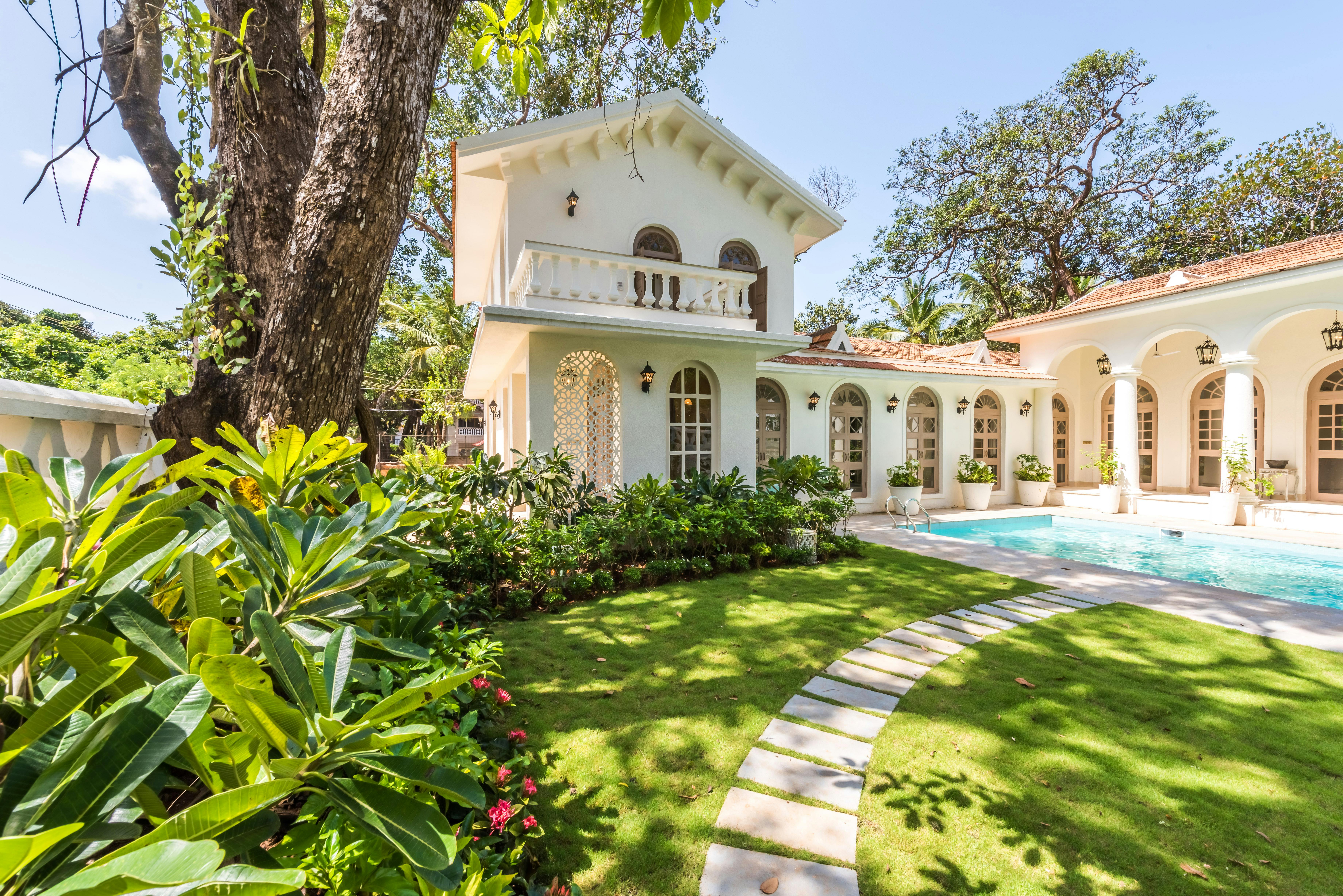
Image: Mediterranean-style villa surrounded by garden and pool.
A good Mediterranean villa is built around a few simple ideas.
- Thick exterior walls to buffer heat.
- Tile roofs and deep overhangs to handle sun and rain.
- Openings placed for airflow, not just symmetry.
- Courtyards, verandas, and shaded edges that extend living outdoors.
- Natural materials that age with some dignity instead of fighting the climate.
That is why the style still works in the right place. It is not trying to be sleek. It is trying to stay cool, thick, shaded, and calm.
| Element | What It Does | What Goes Wrong |
|---|---|---|
| Stucco walls | Reflect sun and add thermal mass | Cheap finish coats, cracks, bad moisture detailing |
| Terracotta roof | Sheds heat and gives the house its profile | Wrong pitch, cheap color, poor edge details |
| Arches and loggias | Soften openings and create shaded transition zones | Used as decoration without depth or purpose |
| Courtyard planning | Pulls in light, air, privacy, and outdoor living | Treated like leftover landscaping instead of a real room |
| Natural materials | Give warmth, texture, and durability | Too many fake surfaces and thin imitations |
Core exterior moves
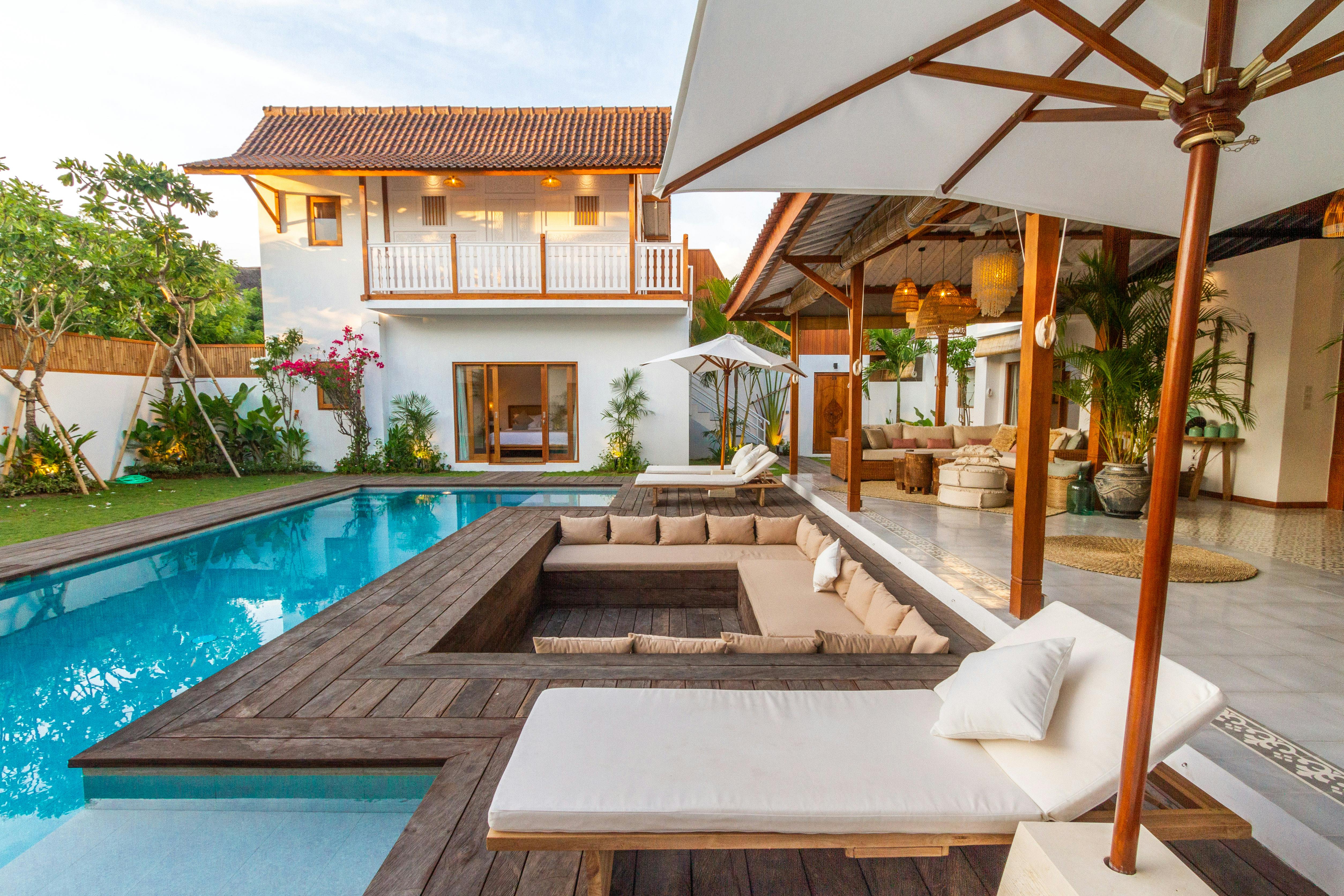
Image: Mediterranean-style villa exterior with arches, terracotta roof tiles, and stucco walls.
Terracotta roof tiles
Clay tile is one of the clearest signals in the whole style. It gives the house weight and keeps the roof from looking thin or generic. In a warm dry climate, it also earns its keep. The mistake is treating the tile as a color effect instead of part of the house’s thermal and visual logic.
Stucco walls
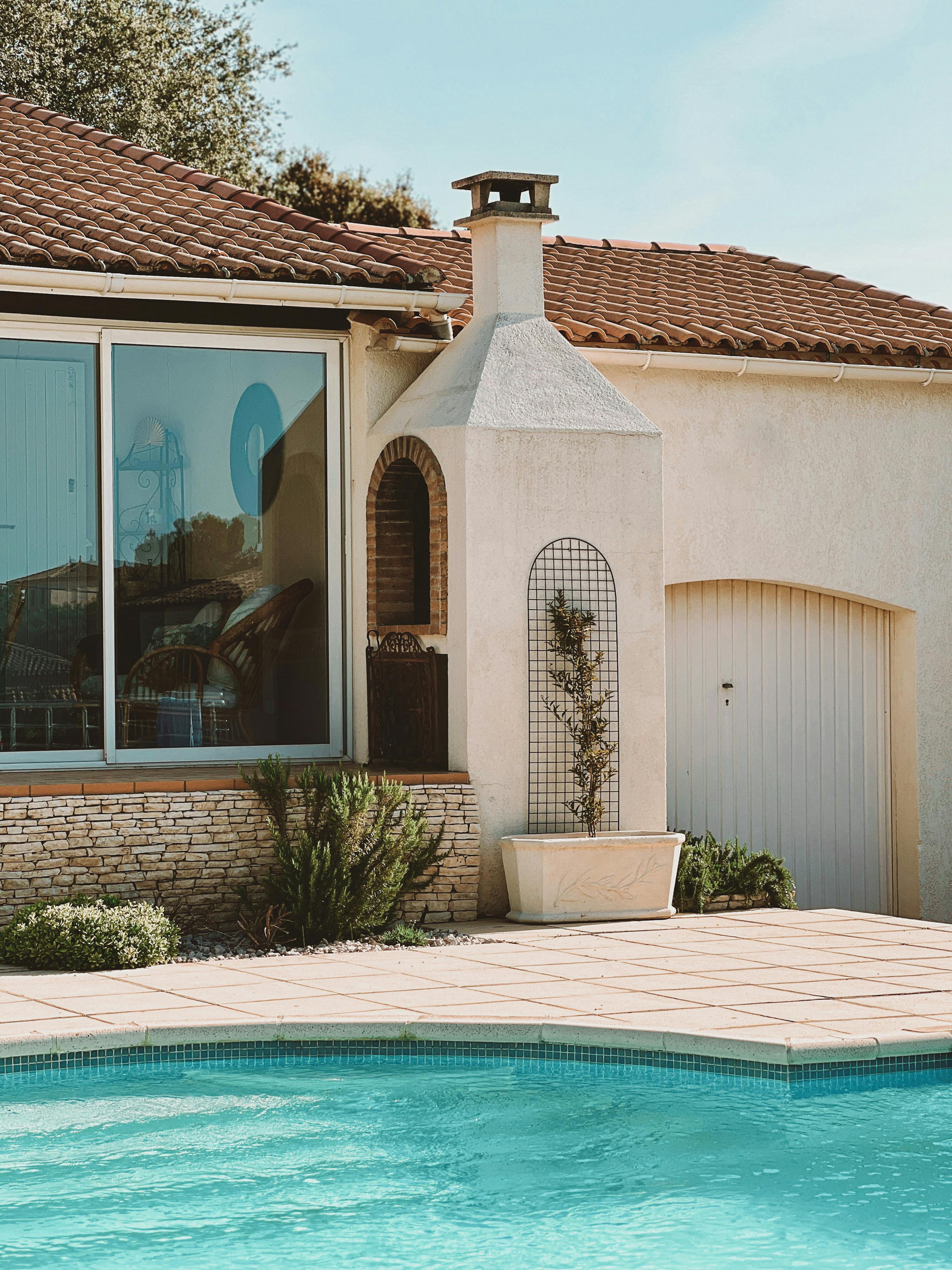
Image: White stucco walls and red tile roofing in a Mediterranean setting.
Stucco works because it is simple, thick, bright enough to reflect heat, and good at holding a quiet surface. White and warm earth tones both fit. The wall wants calm. Once the surface gets broken up with too many fake trims or pasted-on details, the house gets noisy fast.
Arches, verandas, and ironwork
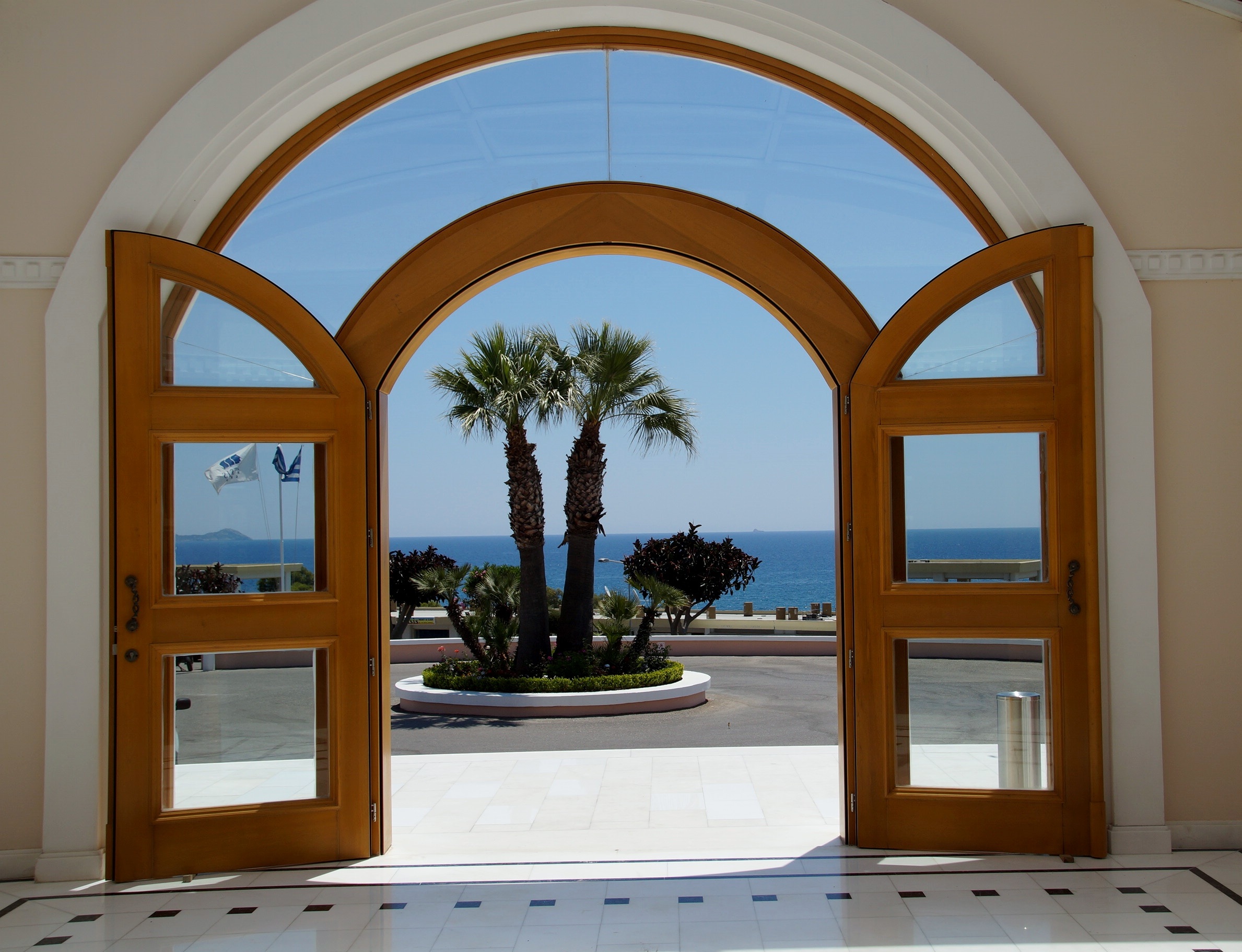
Image: Mediterranean-style entrance with arched openings and decorative ironwork.
Arches are part of the style, but they need depth and proportion. A shallow fake arch cut into a flat wall does not help much. A real shaded opening, veranda, or thick arched reveal does. Ironwork works the same way. Railings, gates, and grilles can carry a lot of character when the pattern stays restrained.
Courtyards
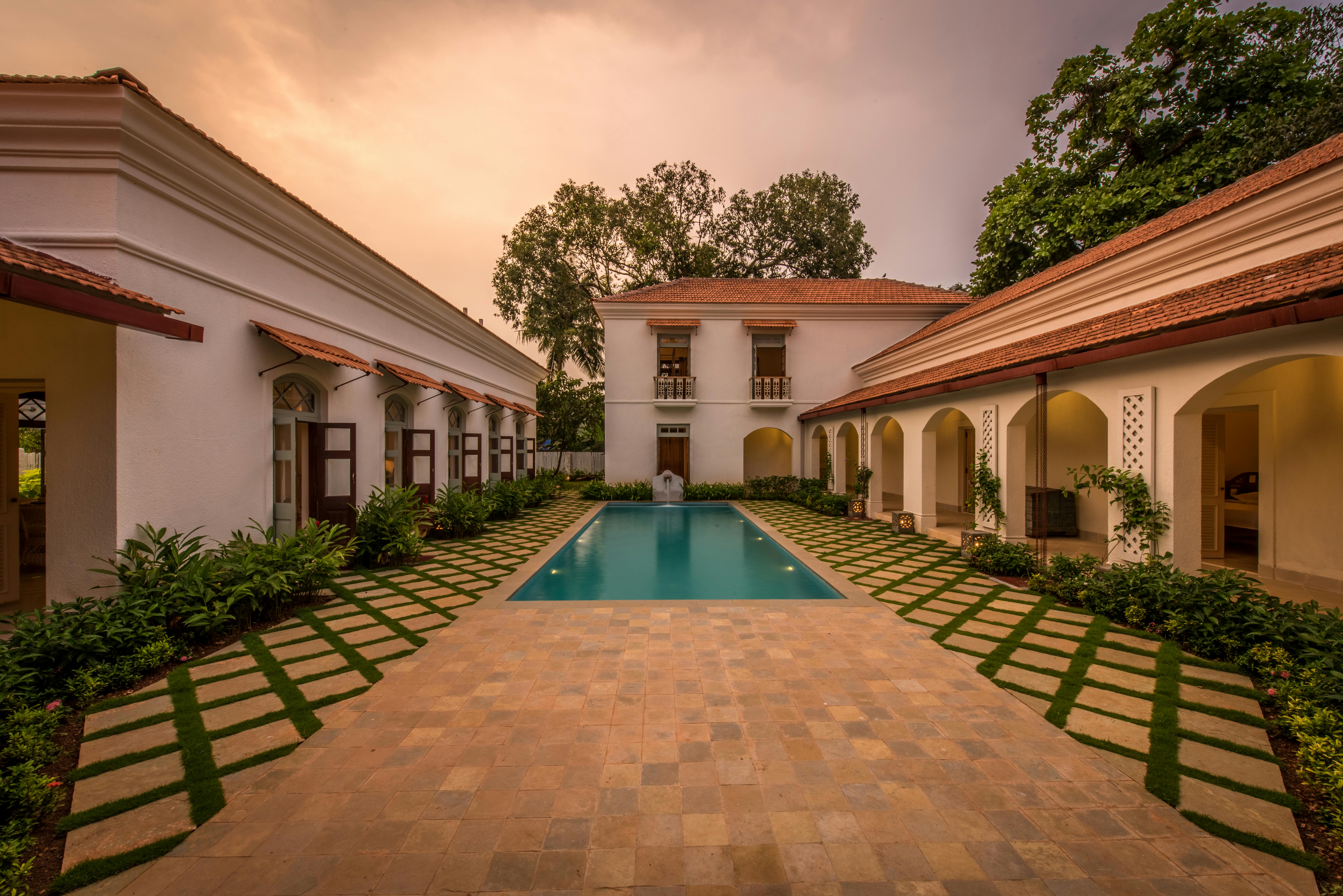
Image: Central courtyard with greenery and shaded seating.
A courtyard is not filler. It is a room without a roof. It brings in light, slows movement, and gives the house privacy without sealing it off. That is one reason Mediterranean villas still feel good when they are done well.
Related Reading: the courtyard side of this gets more interesting when you compare it with Islamic and Moorish architecture in Spain, where shade, enclosure, and water are handled with even more precision.
Inside the house
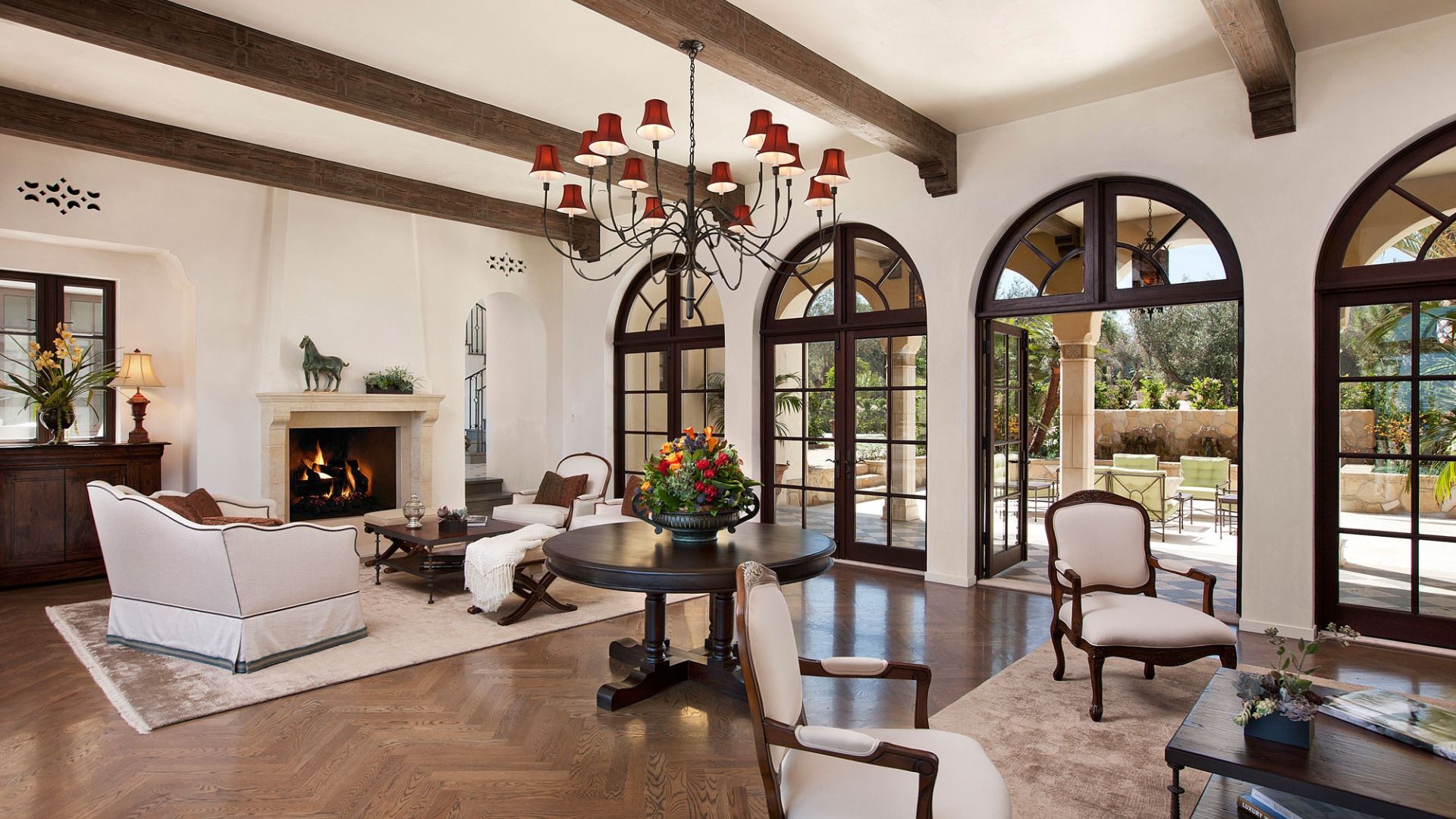
Image: Mediterranean interior with fireplace and traditional material palette.
The best interiors stay quiet. Stone or terracotta floors. White or warm plaster walls. Exposed beams where they belong. Wood, iron, linen, and a few ceramic accents. The space should feel thick and breathable, not overdesigned.
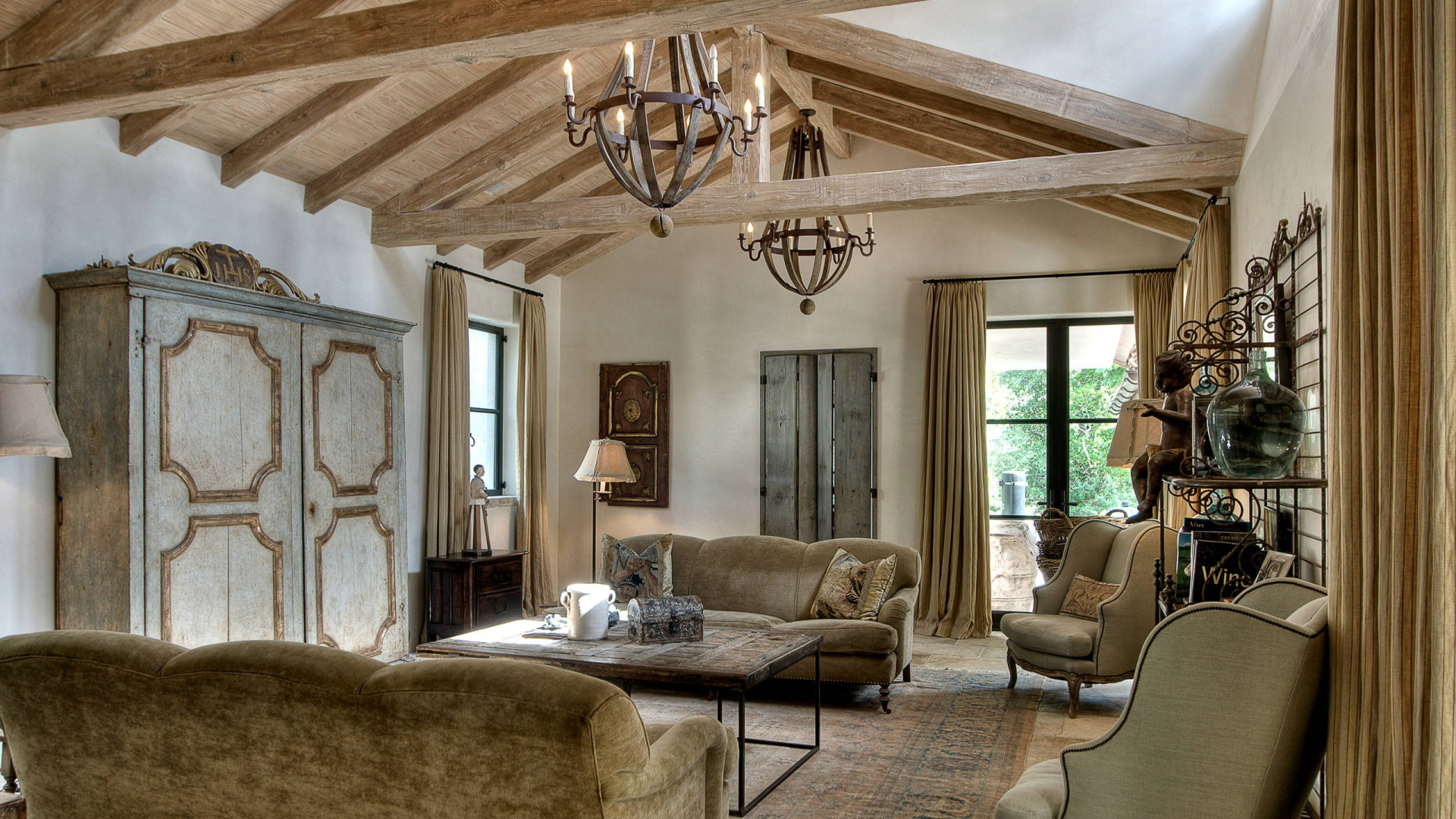
Image: Mediterranean room with exposed wooden beams and warm textures.
That is where many newer interpretations lose the thread. Too much polished staging. Too many blue-and-white “coastal Mediterranean” signals. Too many decorative arches with no structural or spatial reason behind them. The room wants texture, shadow, and a few strong materials. It does not want a theme kit.
Color works best when the base stays grounded: cream, sand, clay, limewash white, warm wood, muted greens, and one or two deeper accents instead of ten small ones.
Materials that hold the style together
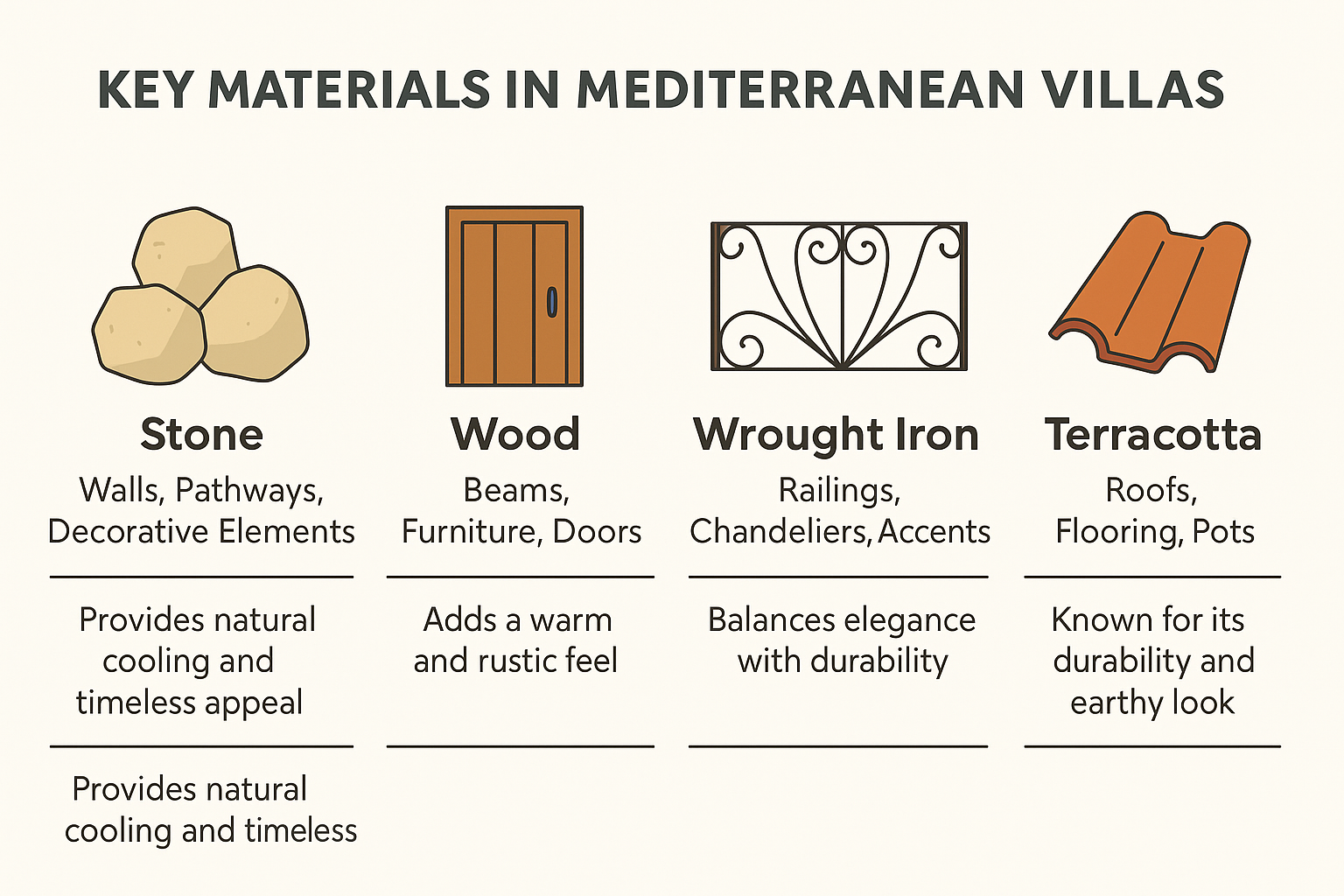
Four materials do most of the work in a Mediterranean villa: stucco, clay tile, stone, and wood. Iron comes in after that as the sharper accent material.
- Stone works on walls, paths, entries, terraces, and retaining edges.
- Wood softens beams, ceilings, doors, shutters, and furniture.
- Wrought iron fits railings, gates, lighting, and limited trim pieces.
- Terracotta brings warmth to roofs, floors, pots, and garden edges.
The smarter move is to keep the material palette tight. Stone, stucco, clay tile, and wood already give you enough. Once the house starts mixing too many surface ideas, it loses the calm that made the style work in the first place.
Also Useful: if you want the material side without the villa-specific framing, go next to Natural Building Materials.
Landscaping is part of the architecture
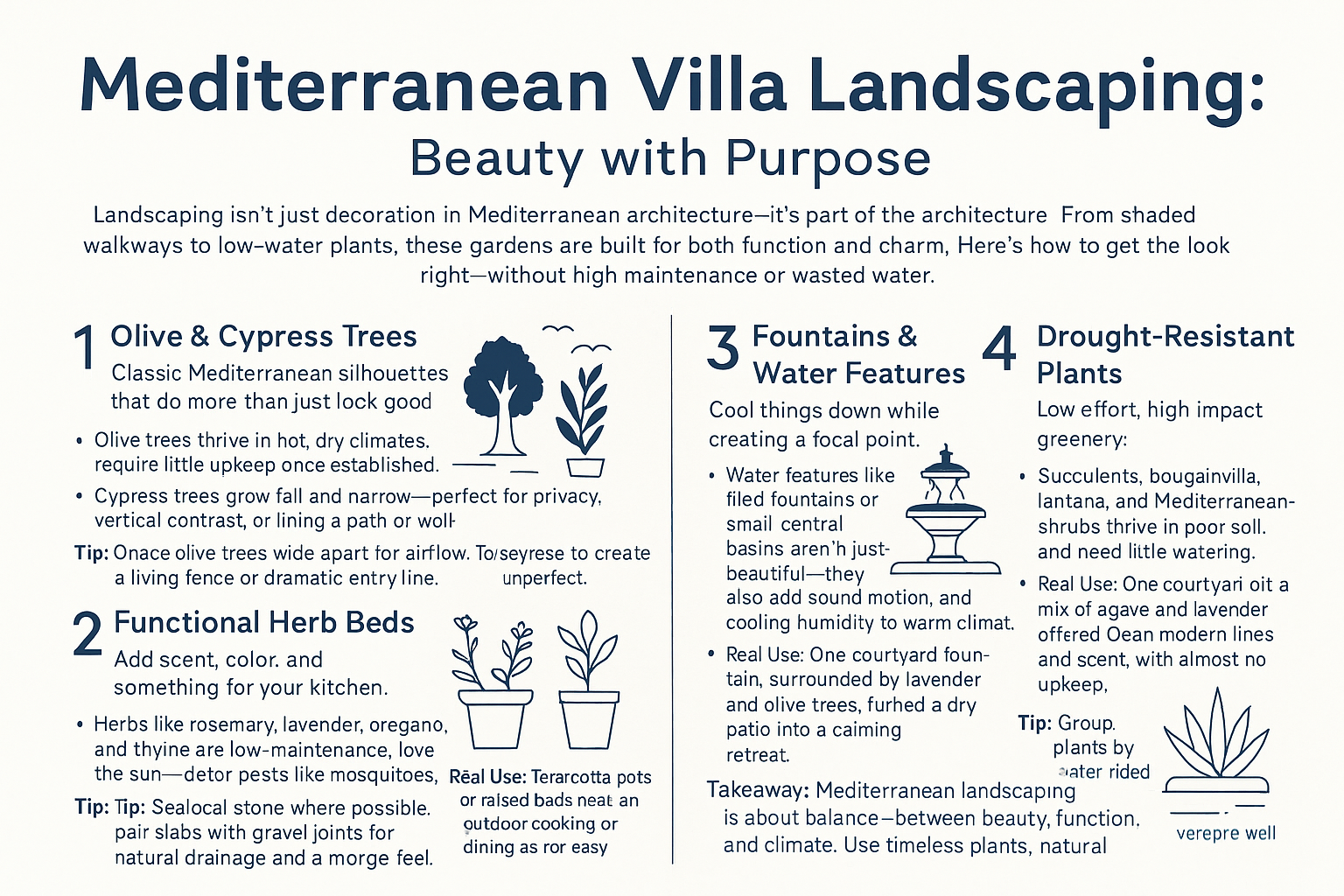
A Mediterranean house with weak landscaping never quite lands. The garden is part of the wall-and-courtyard system, not a separate afterthought.
- Olive and cypress give height, shade, and strong silhouette.
- Lavender, rosemary, thyme, and oregano bring scent and survive heat.
- Stone paths and gravel help drainage and keep the ground plane quiet.
- Pergolas, vines, and small fountains add shade, movement, and coolth.
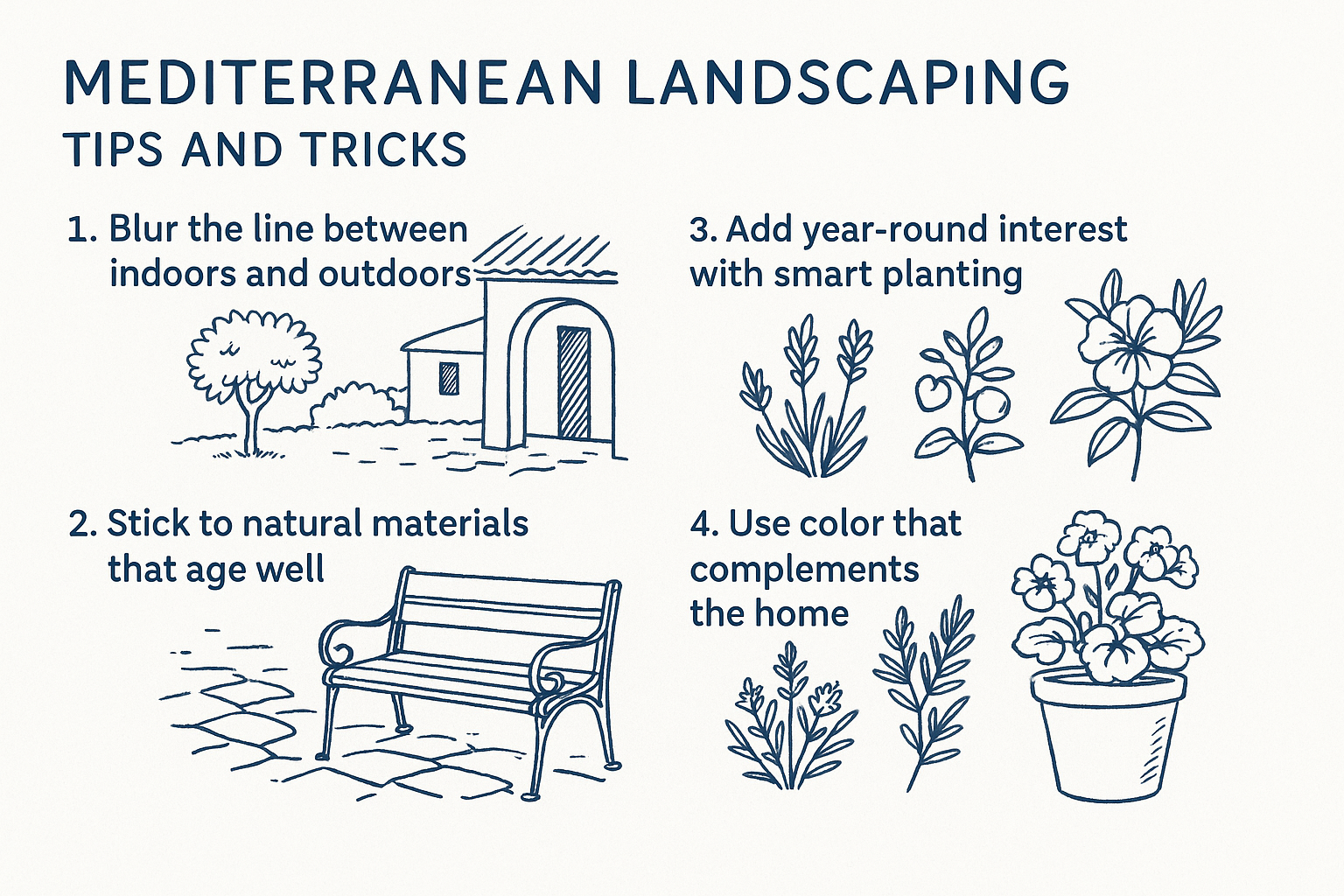
The outdoor rooms should feel usable, not staged. One long table under shade. One bench against a wall. One fountain if it fits. A courtyard does not need many moves. It needs the right ones.
When the style fits and when it fights the site
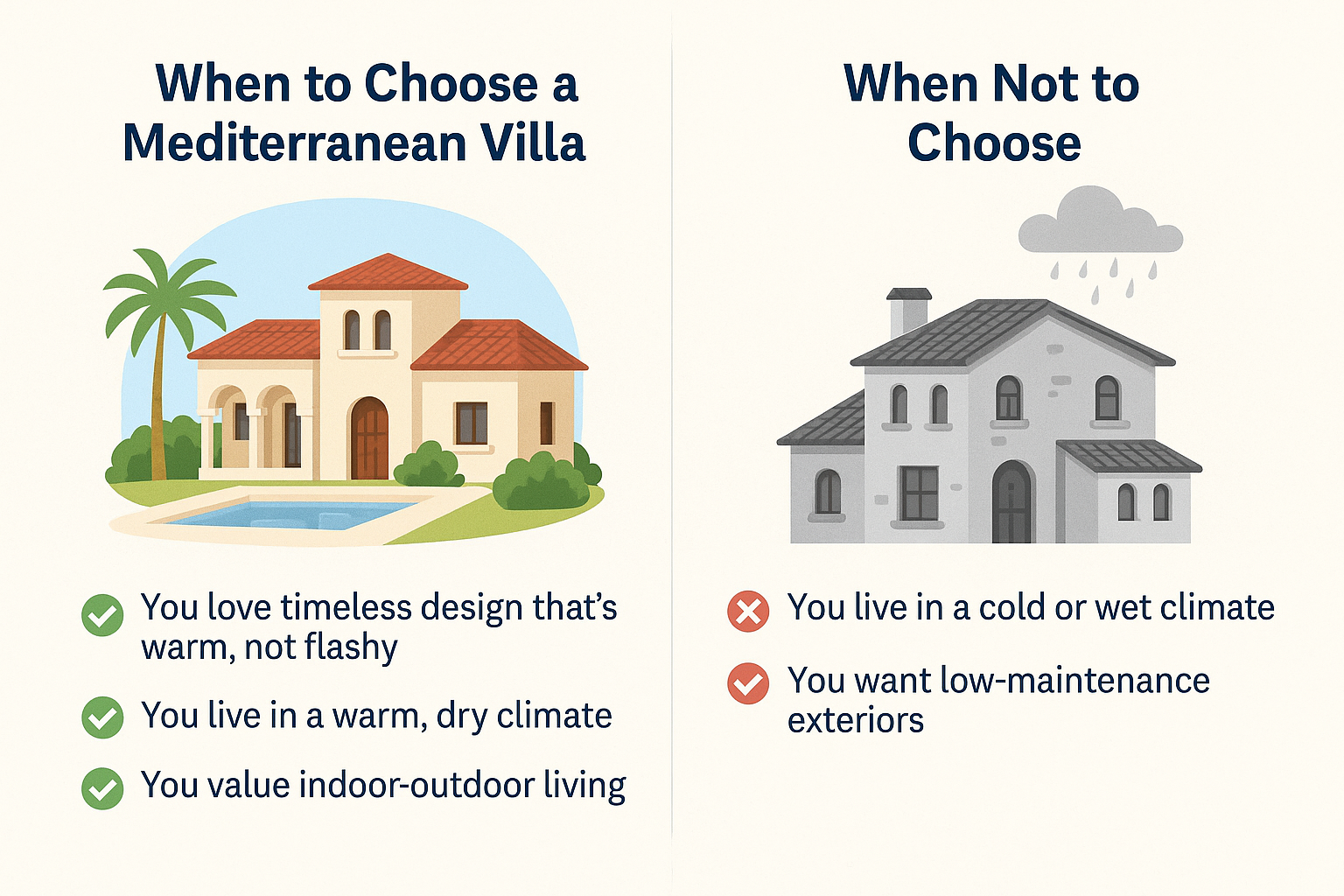
| Good Fit | Harder Fit | Reason |
|---|---|---|
| Warm, dry, sunny climates | Cold, wet, freeze-thaw climates | The classic materials and open shaded planning were built for heat first |
| Sites with indoor-outdoor living | Tight urban sites with no real outdoor room | Courtyards, patios, and verandas do a lot of the work |
| Owners who like material upkeep | Owners who want almost no maintenance | Stucco, wood, and iron all need some care |
| Projects with a simple massing strategy | Projects trying to stack too many decorative gestures | The style reads best when the main form stays calm |
The style can be adapted outside the classic climate, but the details need to change. Better moisture control. Better freeze-thaw choices. Smarter roof edges. Different stucco specification. Different tile strategy. The look alone is not enough.
How to design a modern Mediterranean villa without losing the point
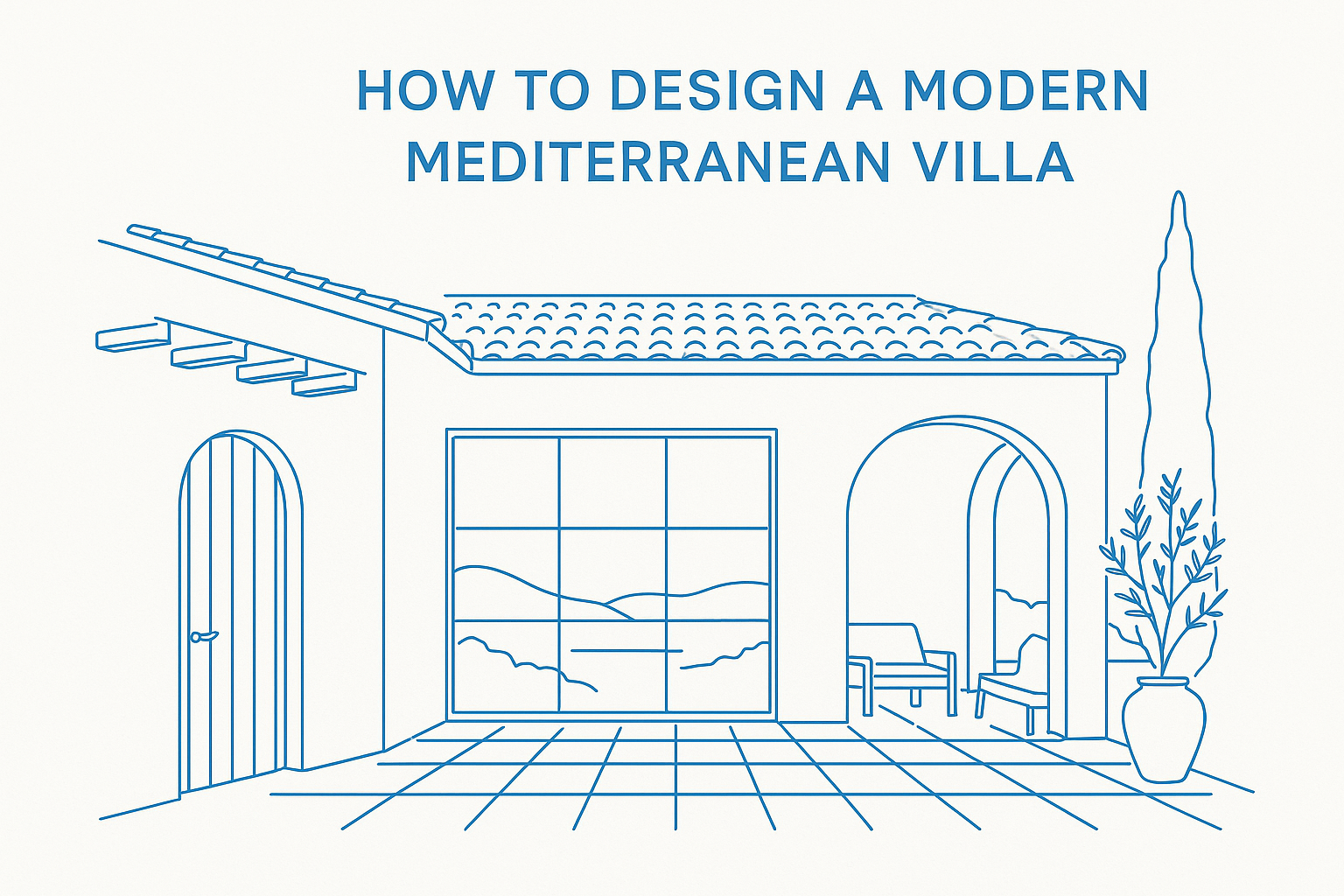
Modern Mediterranean works when the old climate logic stays intact and the house is simplified instead of decorated harder.
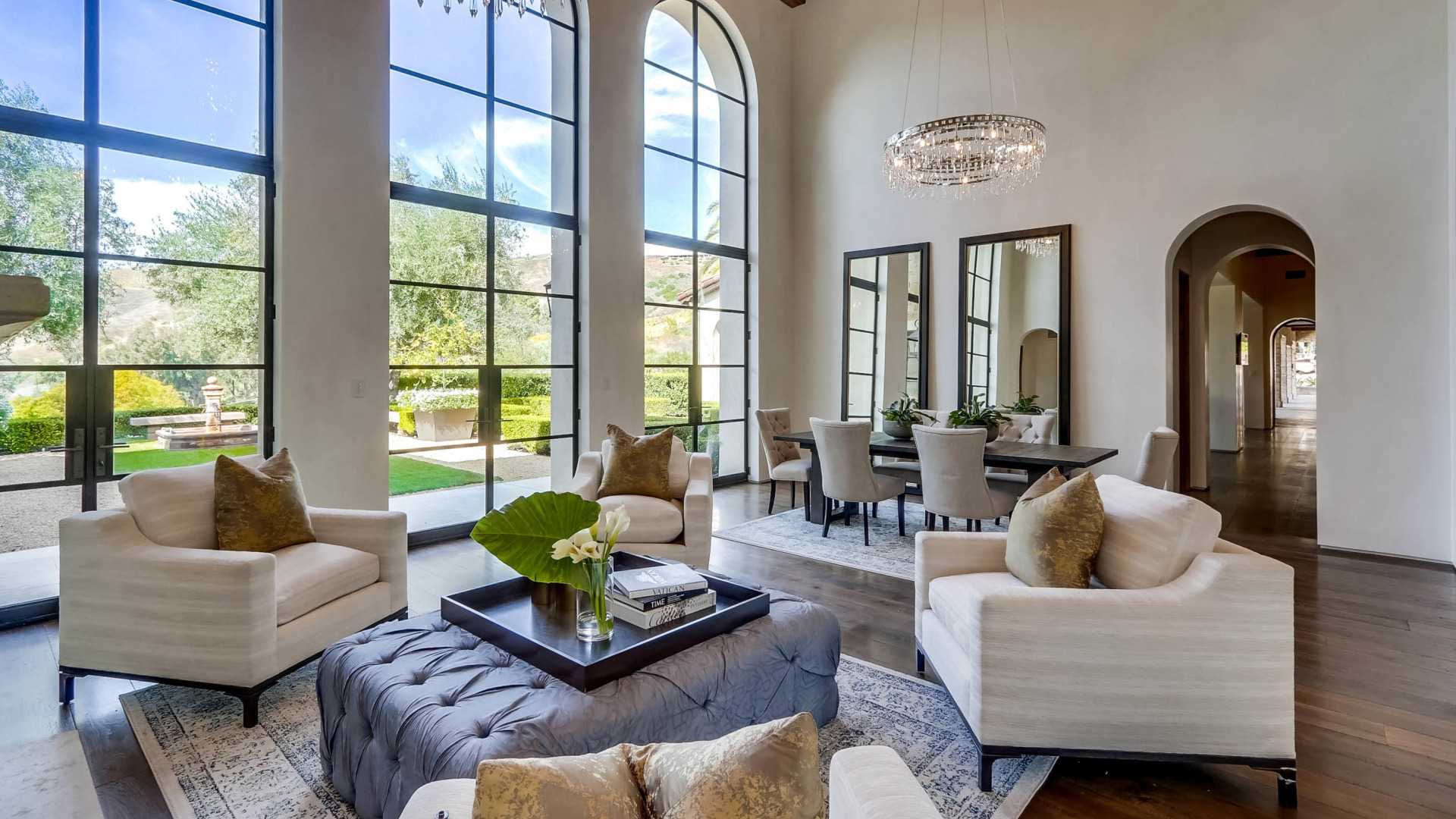
- keep the plan open but not empty
- line the main rooms up with a courtyard, terrace, or shaded garden edge
- use fewer, stronger materials
- clean up the roofline instead of adding more gestures
- pair arches and heavy walls with thinner modern windows only when the proportions still make sense
- let shadow do part of the design work
The good version feels quiet, thick, and breathable. The bad version feels like a resort set with expensive finishes.
Before You Move On: the closest live sibling for villa lineage and façade thinking is Italianate Architecture Style. If your project leans more house-design than history, Designing a Modern Italianate Home helps on the adaptation side.
Cost picture
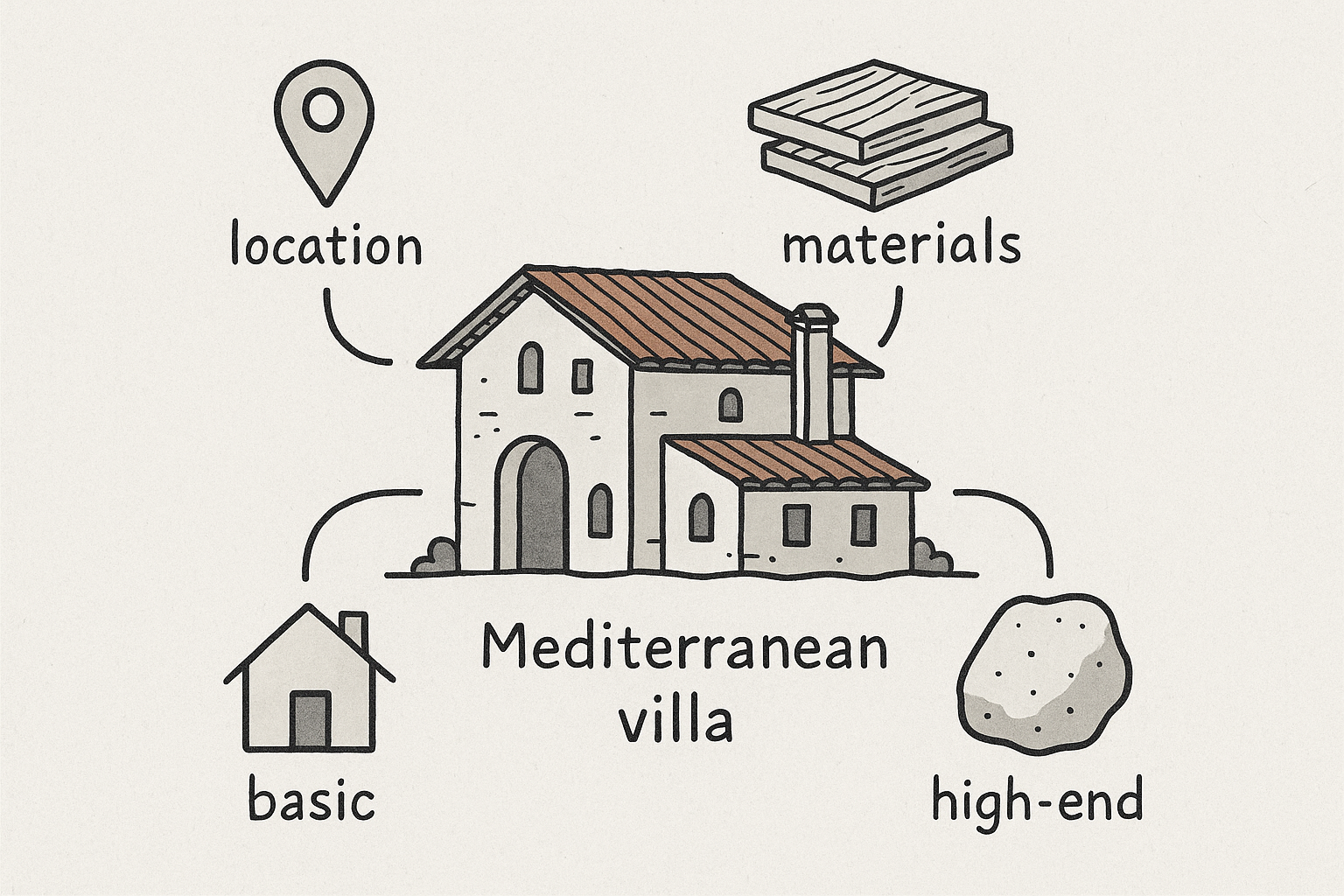
Mediterranean villas can get expensive fast, mostly because the style depends on materials, outdoor rooms, and roof and wall details that are hard to fake well.
| Build Level | What Drives Cost | Where to Save |
|---|---|---|
| Simpler build | Stucco, tile roof, courtyard wall, decent openings | Use local stone, simplify the plan, keep detailing tight |
| Mid-range | Better windows, stronger landscape, more custom iron and wood | Spend on the courtyard and main rooms first |
| High-end | Custom stonework, imported tile, pool, fountains, full outdoor kitchen, detailed ironwork | Very little saves money here unless the house gets simpler |
The easiest place to waste money is on copied “Mediterranean details” that do not improve the house. The smarter place to spend is the courtyard, the exterior wall and roof build-up, the windows and doors, and the outdoor living sequence.
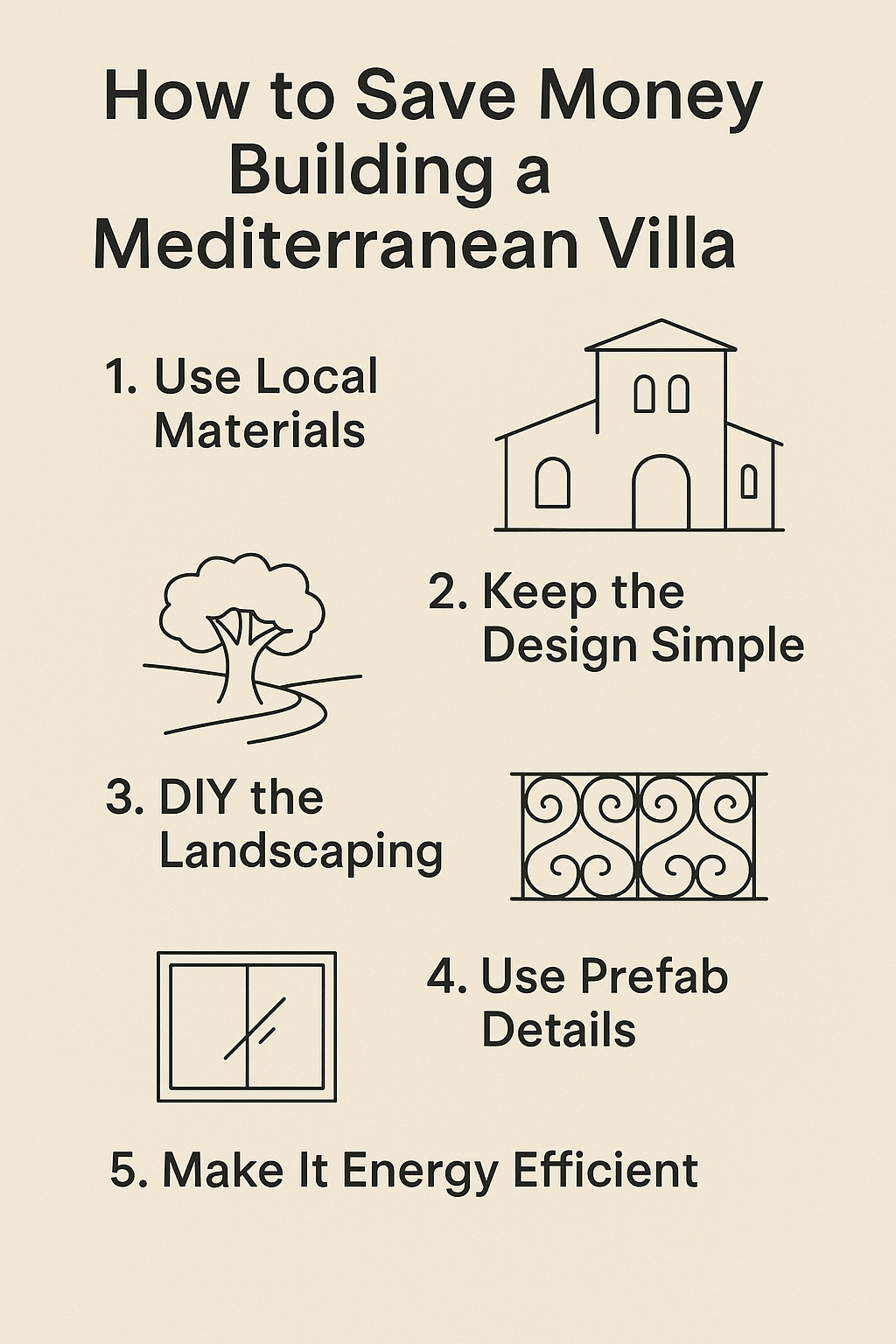
One more thing: local materials matter. A Mediterranean house gets more believable and often cheaper when the stone, tile, gravel, and planting palette come from nearby instead of being shipped in as costume pieces.
Visual cues worth keeping
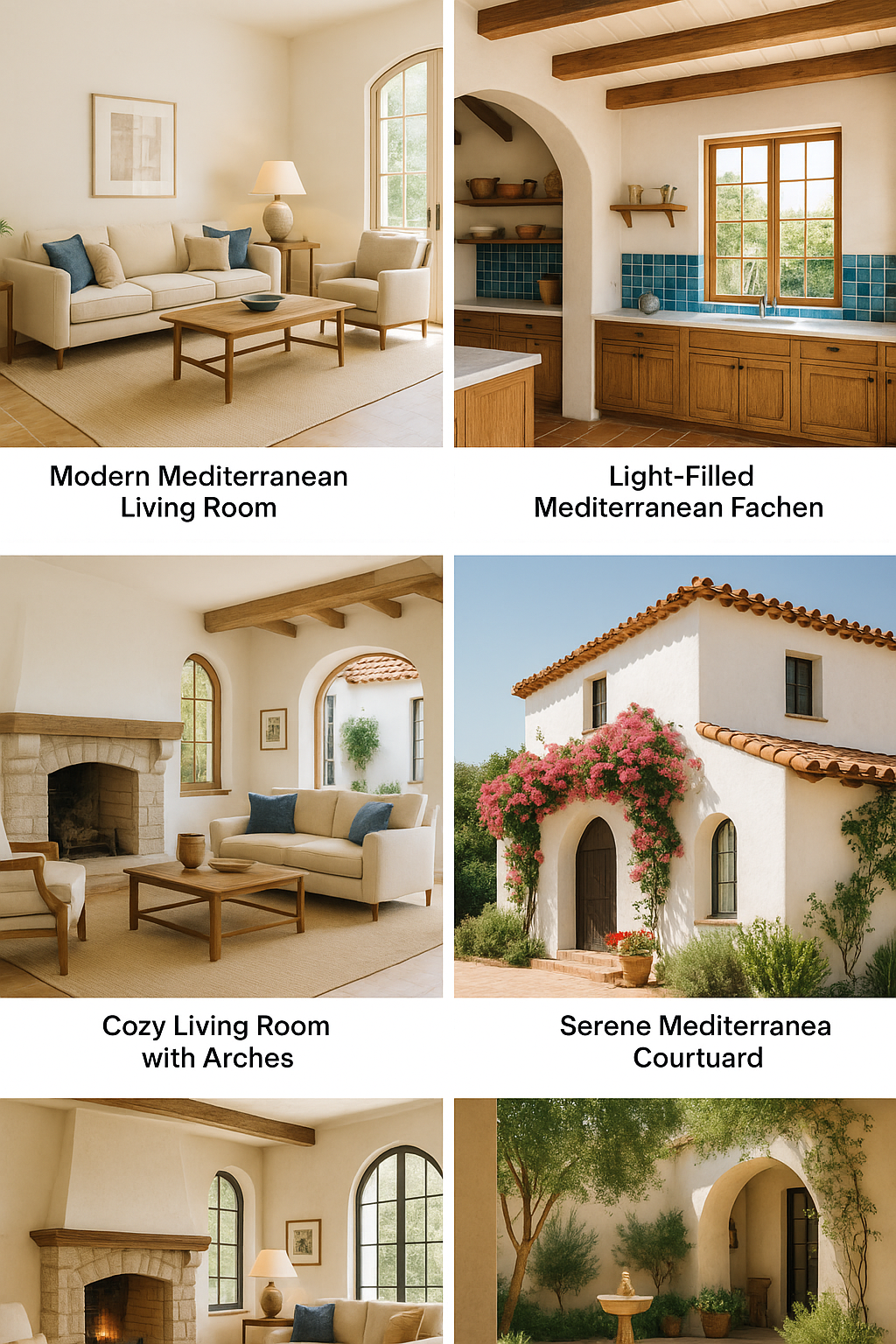
Three signals carry a lot of the style by themselves: pale stucco, clay tile, and greenery. After that, add one or two more moves with care.
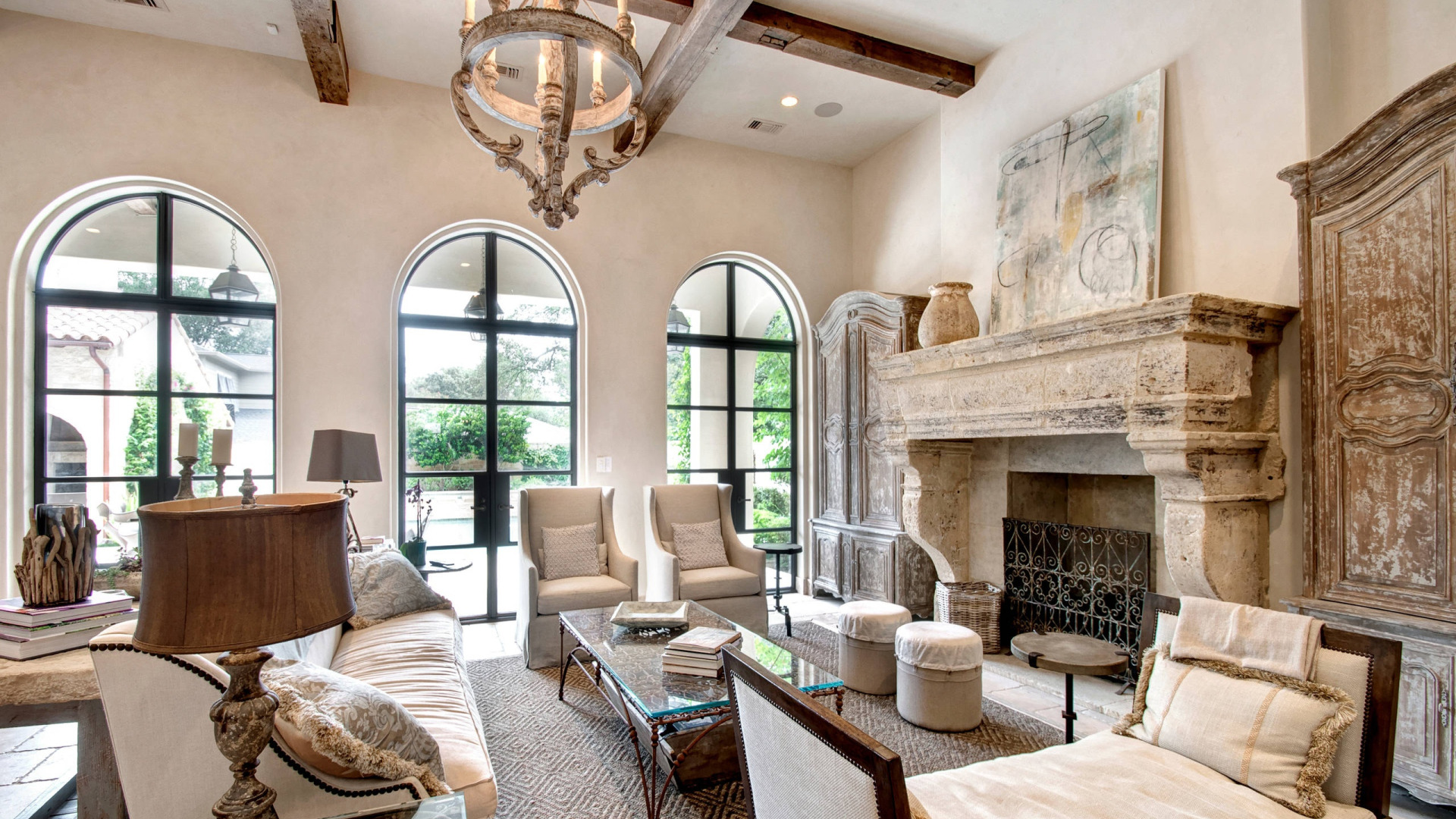
Inside, exposed beams, stone or terracotta floors, and simple furniture do more than themed accessories.
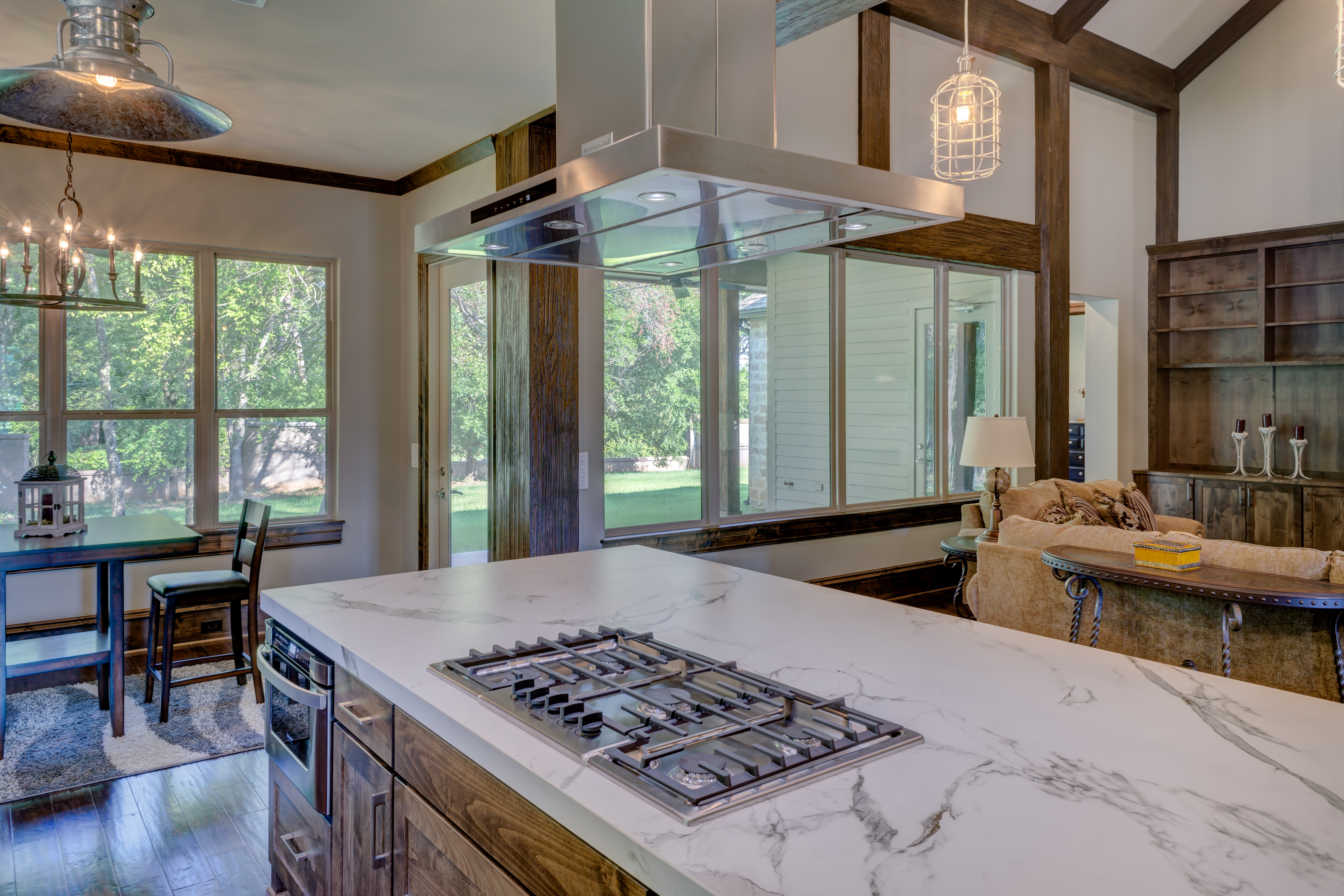
The kitchen often benefits from one strong tile move and calmer cabinetry instead of many competing signals.
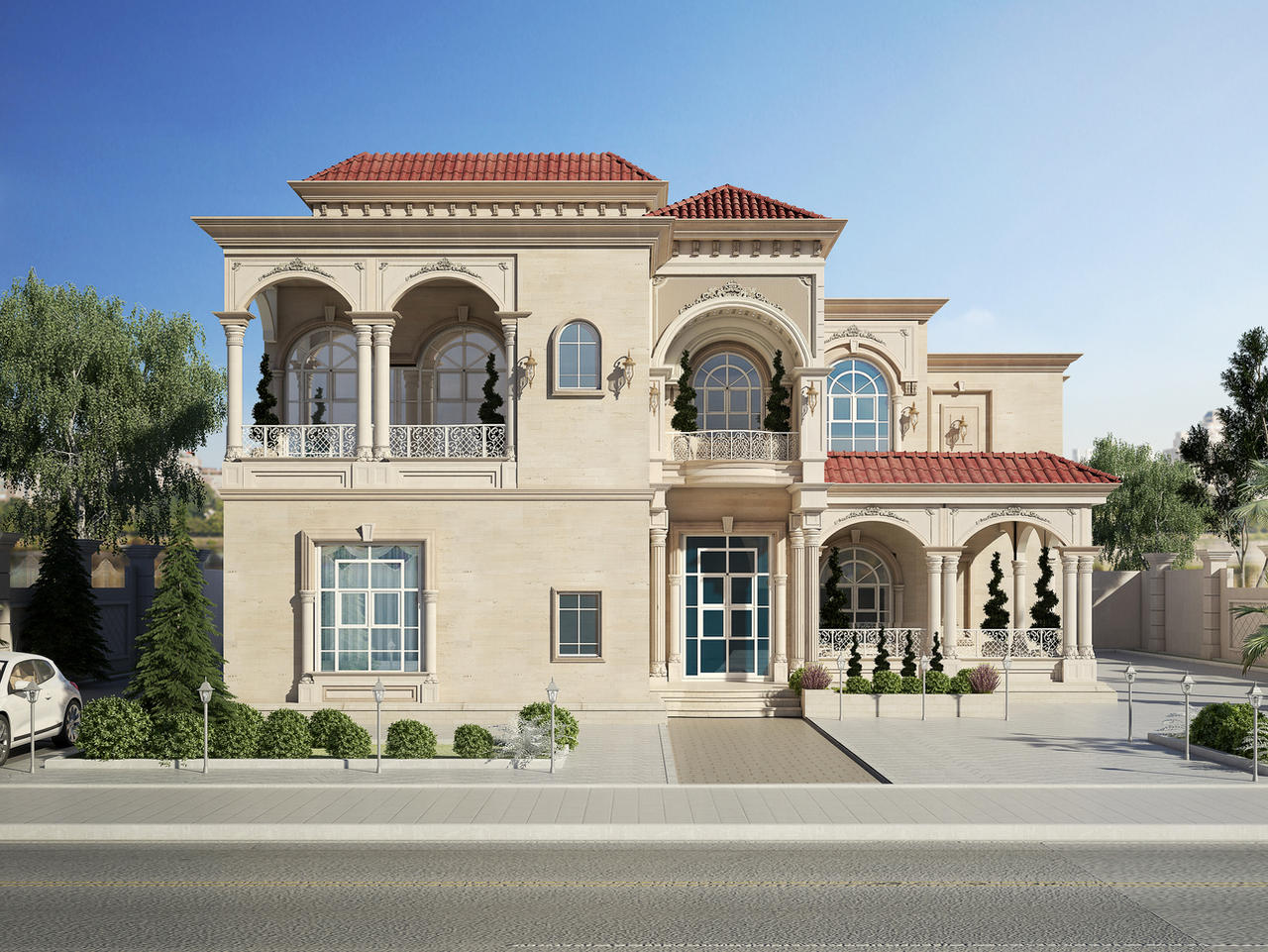
Outside, one white wall, one clay roof, one vine-covered edge can already get the point across.
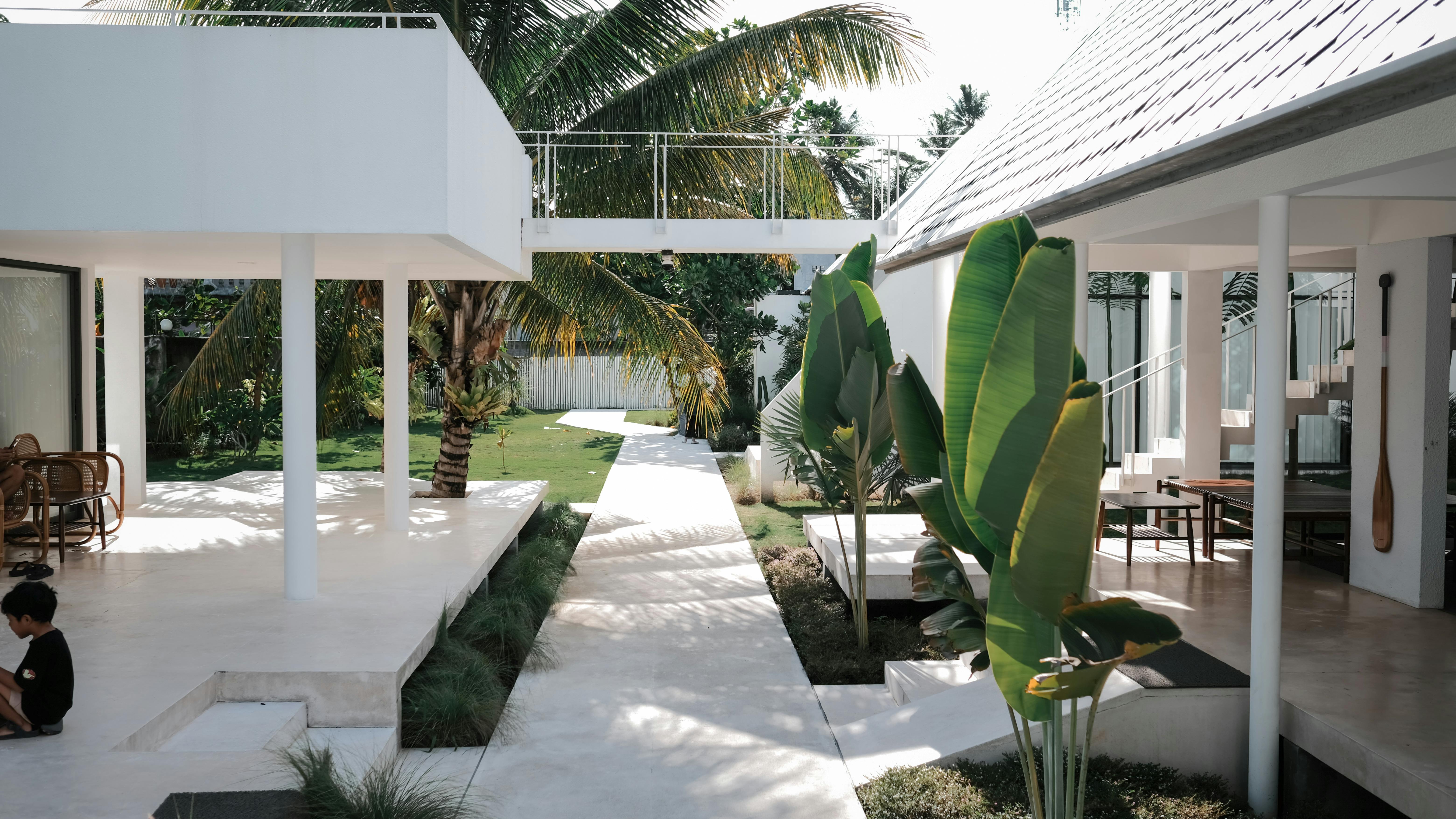
A courtyard with shade, water, and planting will do more for the mood than another round of decorative trim.
FAQ
What is a Mediterranean-style villa?
A Mediterranean villa is a house shaped by sun, heat, shade, thick walls, tile roofs, courtyards, and strong indoor-outdoor living.
Does this style only work in warm climates?
It works best there. In colder or wetter places, the look can be adapted, but the details and material choices have to change.
What materials define Mediterranean architecture?
Stucco, clay tile, stone, wood, and wrought iron do most of the work.
What is the biggest mistake in a modern Mediterranean build?
Copying the visual cues without the climate logic, wall depth, courtyard planning, or material discipline that made the style work.
Can a smaller house carry Mediterranean style well?
Yes. A small courtyard house or compact villa can carry the style better than a large confused one, as long as the massing and materials stay controlled.