Home
Studying it · Building it · Renovating it — Free since 2008

Main navigation

  • Home
  • Architecture
  • Construction
  • Renovation
  • Materials
  • Interiors
  • Calculators

Breadcrumb

  1. Home
  2. Ancient Roman Architecture: Techniques, Structures, and Impact

Ancient Roman Architecture: Techniques, Structures, and Impact

The referenced media source is missing and needs to be re-embedded.

Ancient Roman Architecture | Key Characteristics, Examples, and Insights

Roman building = scale, control, crowds. Heavy walls of stone, brick, concrete. Arches holding weight. Domes over halls wide enough to feel impossible. Vaults kicking ceilings higher. Aqueducts dragging water across valleys just to keep the city breathing.

Concrete changed the game. Quick set. Strong bond. Could pour it into curves, vaults, whole shells. That’s why the Pantheon dome still sits there with no steel hiding inside.

Life ran through the structures. Baths packed with steam and gossip. Forums where law and trade crossed paths. Amphitheaters spilling with sound. Roads straight enough to cut a continent. Daily use, not just ceremony. The civic layout is what stuck — still visible in stadiums, plazas, courthouses now.

For detail, the guide on Ancient Engineering, Technologies, and Construction Techniques covers arches, vaults, and how they handled loads.

FIELD PICK: Roman Architecture by Frank Sear. Construction first, photos second. The book shows the work.


Roman Architecture: What Still Works Two Thousand Years Later

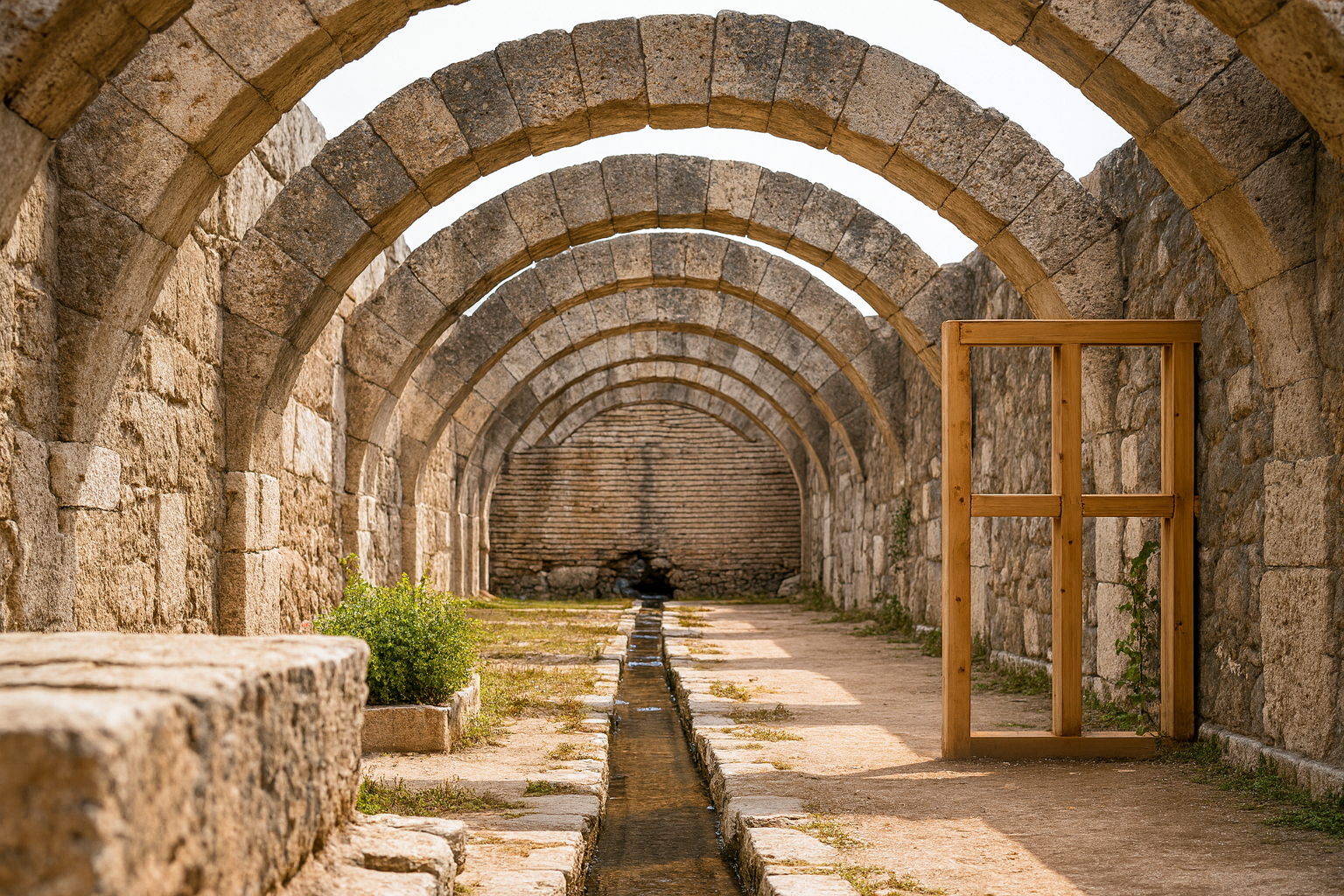
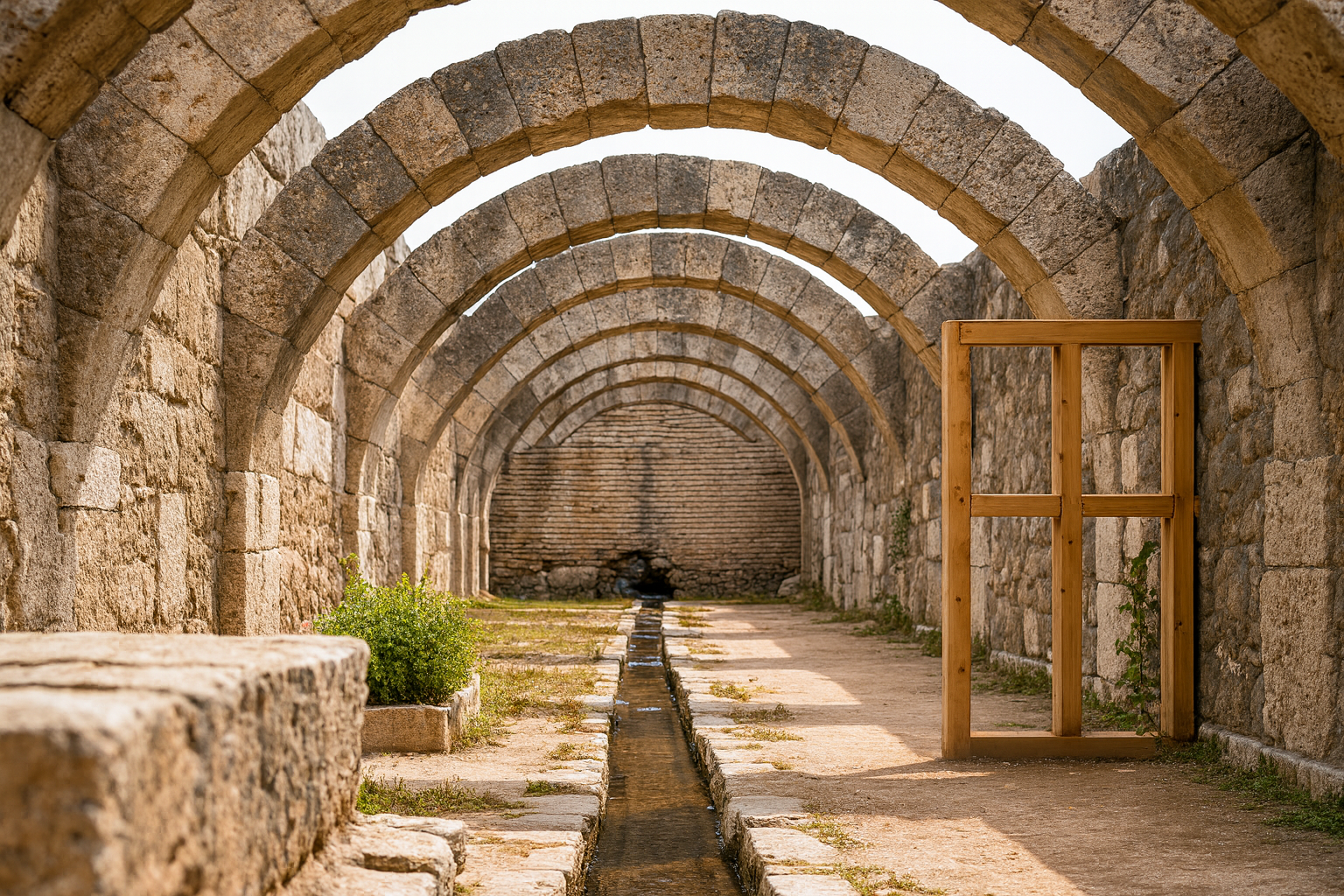
Ancient Roman stone arches with a water channel in Izmir, Türkiye.

You still see the proof standing. The Pantheon dome overhead, concrete poured without steel and still holding. The aqueduct in Segovia that can still carry water if you open it up. Old Roman roads under highways in Europe, same alignments two thousand years later.

The material was the edge. Concrete that cured harder with time. Arches that sent weight sideways into the ground. Stone facings that worked as armor, not ornament.

The layouts carried through too. Straight streets. Forums that ran civic life. Amphitheaters with stepped seating that feel like modern stadiums. Courthouses and plazas today use the same bones, just in glass and steel instead of brick and lime.

This is Rome’s real mark. Not ruins, but working systems.

FIELD PICK: Roman Concrete: Building Materials and Techniques by Lynne Lancaster. Focused on the mixes, vaults, and why the stuff still stands.

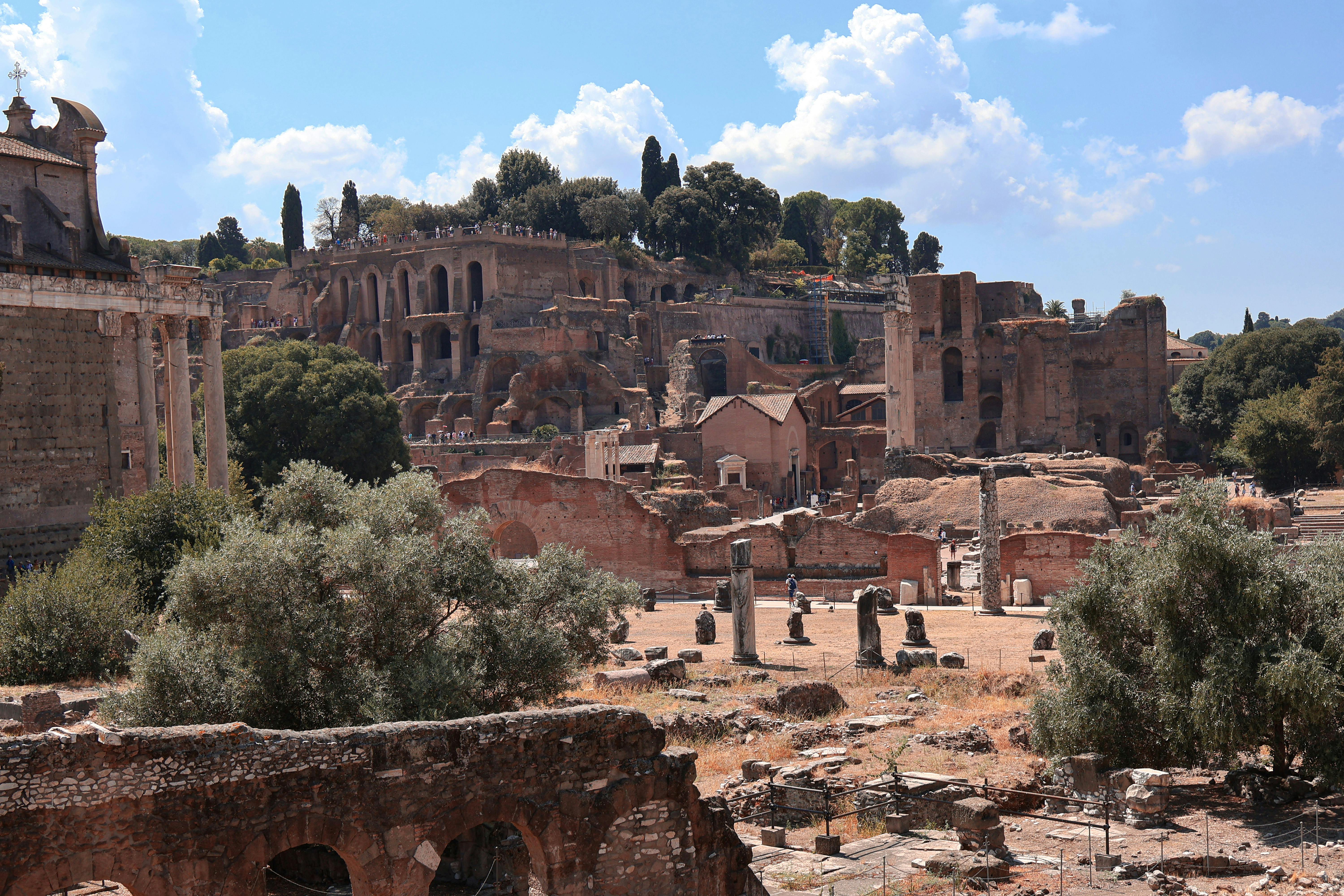
Ancient ruins in Rome showing remnants of Roman columns and stone structures.

Image: Ancient ruins in Rome, Italy, showcasing classical Roman stonework and historic architectural remnants.


Want a clear, expert overview of Roman buildings—from aqueducts to basilicas?

Check out Roman Architecture by Frank Sear. It’s packed with visuals and explanations, perfect if you want a complete walk-through of Roman architectural evolution without getting too technical.


How Roman Architecture Grew

Curved marble seating of an ancient amphitheater.

To study Rome, look at what they solved with stone and concrete.

Etruscan roots
The arch and the heavy podium came through the Etruscans. Rome took those moves and used them in walls, drains, and early civic structures. The step from mud brick to cut stone starts here.

Greek influence
When Rome absorbed Greece, it pulled in columns and proportions. But the Greeks built in stone blocks. Romans wrapped Greek detail around concrete cores. If you compare, Greece shows craft, Rome shows system.

Monarchy period (753 to 509 BCE)
Early Rome under kings was practical. Fortifications, drainage, basic civic works. The scale was small but the foundation was set.

Republic (509 to 27 BCE)
Engineering starts to run. Roads cut the landscape in straight lines. Aqueducts bring water over valleys. Concrete becomes common and suddenly spans and vaults expand what is possible. The Forum grows into the city’s central machine.

Empire (27 BCE to 476 CE)
Ambition drives the work. Concrete is poured at unprecedented scale. Amphitheaters, baths, aqueducts, bridges, halls. Materials flow in from across the empire, giving new color and strength. Urban planning sharpens. Streets follow grids, public works anchor every colony, infrastructure is as much a symbol of Rome as its armies.

  • Urban planning reached new heights, with cities designed to be functional, beautiful, and reflective of Roman power.

Roman architecture isn’t just visual—it’s spatial.

The Architecture of the Roman Empire by William L. MacDonald dives into what it felt like to walk through these spaces. Great if you're into immersive design or public architecture.


Key Characteristics of Ancient Roman Architecture

Detailed sketch collage of Roman architectural elements arranged together.

Image: Educational illustration highlighting key elements of Ancient Roman architecture, including arches, concrete construction, column styles, and city planning.

Roman architecture was defined by its use of arches, vaults, and domes, along with innovative materials like concrete. These techniques allowed for larger and more durable structures. Romans prioritized functionality without sacrificing beauty, creating spaces that served both public and private needs.

Use of Concrete

Development and Advantages:

  • Romans developed opus caementicium, a form of concrete that revolutionized construction.
  • This material was versatile, durable, and could be molded into various shapes, allowing for innovative designs.
  • Concrete enabled the construction of larger and more complex structures compared to stone or brick alone.

Influence on Building Techniques:

  • The flexibility of concrete allowed for the creation of vast interior spaces, such as those found in the Pantheon.
  • Its use in combination with other materials like brick and stone improved the structural integrity of buildings.
  • Concrete's durability meant that many Roman structures have survived for millennia.

Arches and Vaults

ancient roman architectural arches and vaults, showcasing their grandeur and engineering brilliance

Types of Arches:

  • Segmental Arch: Utilized in bridges and aqueducts for its ability to span wider gaps.
  • Semi-Circular Arch: Common in many Roman buildings, providing both structural support and aesthetic appeal.
  • Horseshoe Arch: Less common, but found in some specialized structures and influenced later architectural styles.

Types of Vaults:

  • Barrel Vault: Created by extending a single arch along a given distance, forming a continuous tunnel-like structure.
  • Groin Vault: Formed by intersecting two barrel vaults at right angles, allowing for the support of large ceilings and creating spacious interiors.
  • Ribbed Vault: Developed later in Roman architecture, incorporating ribs for added structural support and aesthetic complexity.

Domes

Roman city planning diagram showing roads, forum, aqueduct, city gate, amphitheater, and public baths.

Pantheon Dome as a Case Study:

  • The Pantheon features one of the largest and most impressive domes from ancient Rome.
  • Its coffered design reduces the weight of the dome while maintaining structural integrity.
  • The oculus at the center provides natural light and reduces the stress on the structure.

Engineering Techniques:

  • Use of lightweight materials like pumice in the upper layers of the dome to reduce weight.
  • Innovative formwork and scaffolding techniques allowed for the construction of large domes.
  • Mastery of the arch principle enabled the distribution of weight evenly across the dome's surface.

Columns and Orders

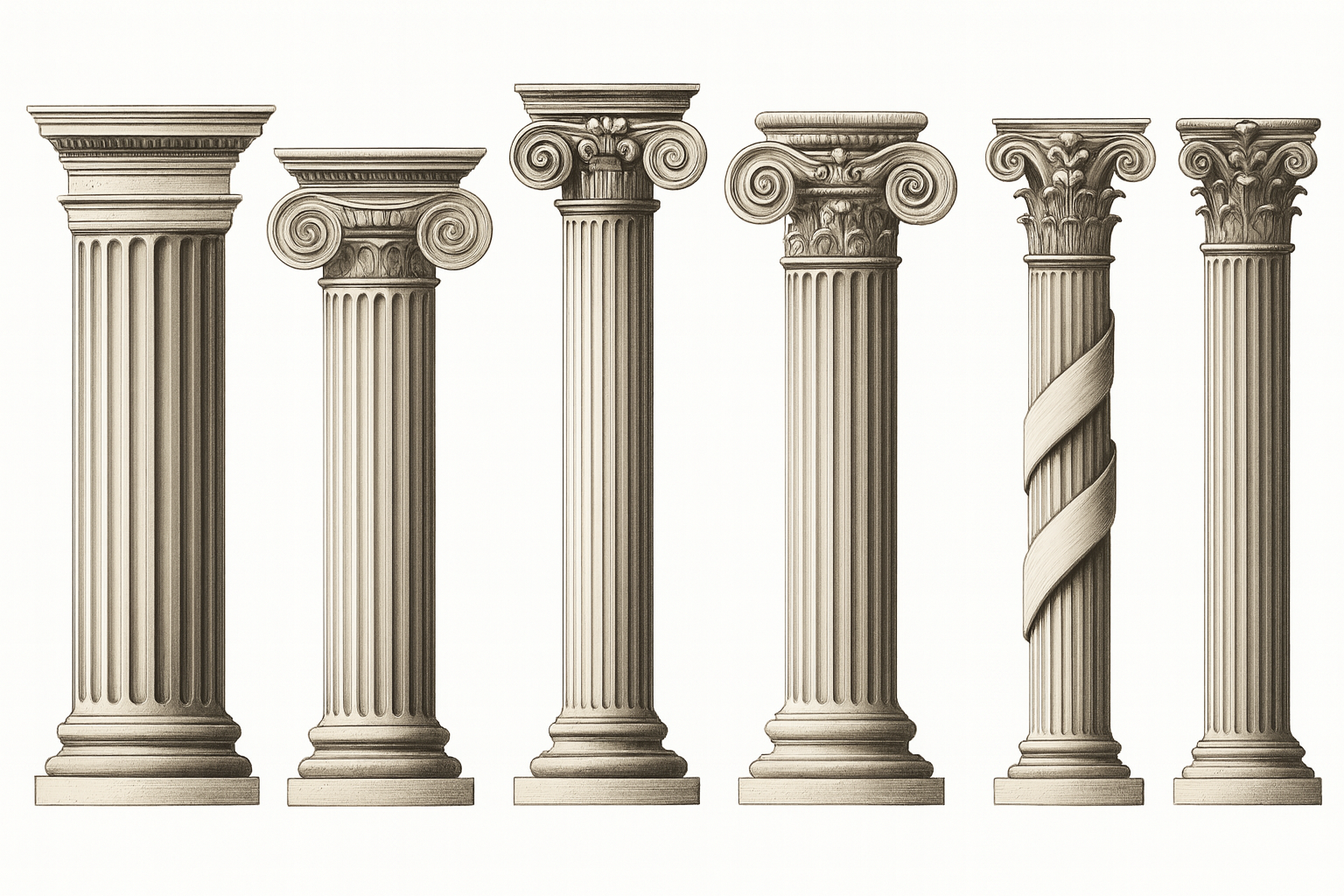
Illustration of Doric, Ionic, and Corinthian columns with decorative capitals.

Doric, Ionic, and Corinthian Orders:

  • Doric: Simple, sturdy columns without bases, fluted shafts, and plain capitals.
  • Ionic: More slender and elegant columns with bases, fluted shafts, and scrolled capitals.
  • Corinthian: Highly ornate columns with acanthus leaves on the capitals, reflecting Greek influence.

Composite and Tuscan Orders:

  • Composite: A combination of Ionic and Corinthian elements, with elaborate capitals.
  • Tuscan: A simplified version of the Doric order, with unfluted columns and plain capitals, unique to Roman architecture.

Urban Planning in Aancient Rome

Forum Layout:

  • Central open spaces surrounded by important public buildings like temples, basilicas, and government offices.
  • Forums served as hubs for political, commercial, and social activities.

Road Systems and Aqueducts:

  • Romans developed an extensive network of roads, crucial for military and trade purposes.
  • Aqueducts, such as the Aqua Appia and Aqua Claudia, transported water over long distances using gravity, demonstrating advanced engineering skills.

For more detail, see Key Traits of Roman Architecture: Arches, Concrete, and Scale.


Want to hear straight from a Roman architect himself?

De Architectura by Vitruvius is the only surviving architectural manual from antiquity. It’s foundational—and surprisingly relevant to anyone into design, structure, or theory.


Roman Buildings You Can Still Learn From

Major Architectural Works

Illustration of major architectural works from Ancient Rome, including the Colosseum, Pantheon, Roman Forum, Baths of Caracalla, and a Roman villa.

Illustration of major architectural works from Ancient Rome, including the Colosseum, Pantheon, Roman Forum, Baths of Caracalla, and a Roman villa.

Skip the postcards. Stand in front of these places and ask what the builder was trying to solve. Weight. Water. Sound. Control. Comfort. The answers are still there if you look long enough.

Key Examples of Roman Architecture

Overview of Ancient Roman architecture featuring the Colosseum and the Pantheon.

Famous Roman Architecture

Colosseum
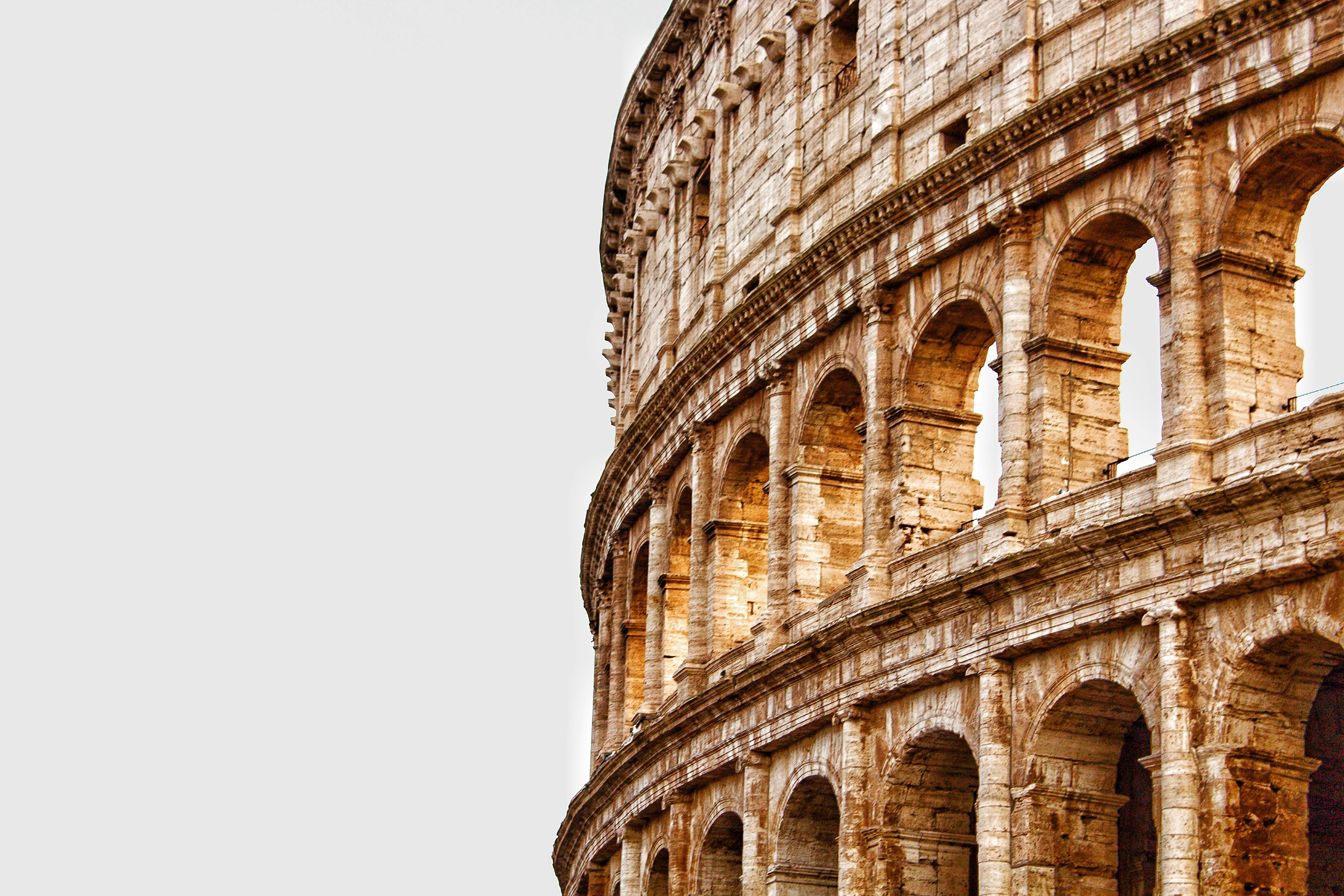
The arches are not decoration. Walk through them and you see doors, exits, ramps. Fifty thousand people could get out fast. Circulation cut into stone. Every stadium today is still chasing that plan.

The Colosseum in Rome under clear skies.

Roman Forum
Forget the broken columns. Picture the noise, trade and law crossing in the same square. The edges of basilicas and courts shape the flow. Planning, not ornament, made the space work. If you want a closer read of how it held civic life together, see the guide on Roman Forum Architecture: The Center of Public Life.

Baths of Caracalla
Stand under what’s left of the vaults and think scale. Hot rooms, cold rooms, pools, libraries. It was infrastructure for social life. The ceilings are a reminder of how much they could span without steel.

Aqueduct of Segovia
Touch the joints. No mortar, just stone cut tight. Piers flare at the bottom to hold load. The geometry is what keeps it standing. Draw it once and you see the trick. For a deeper dive into water, streets, and civic control, see Urban Planning in Rome: Roads, Forums, and Aqueducts.

Pont du Gard
Step back until you see all three tiers. Heavy at the base, lighter as it rises. The proportions make the math visible. That’s why it feels right even now.

Library of Celsus
The front is theater. Columns stacked, niches filled. Walk around the side and it’s bare brick. Money was spent where people looked, saved where they didn’t. Same story on projects now.

Ancient Roman Library of Celsus in Selçuk, Turkey, showcasing classical architecture with columns and ornate stonework.

Ancient Roman architecture at the Library of Celsus in Selçuk, Turkey, known for its monumental facade and historic significance.

Amphitheatre of Nîmes
Smaller copy of the Colosseum but the geometry is the same. Climb high and the rake of the seats shows how they cut sightlines and carried sound without speakers.

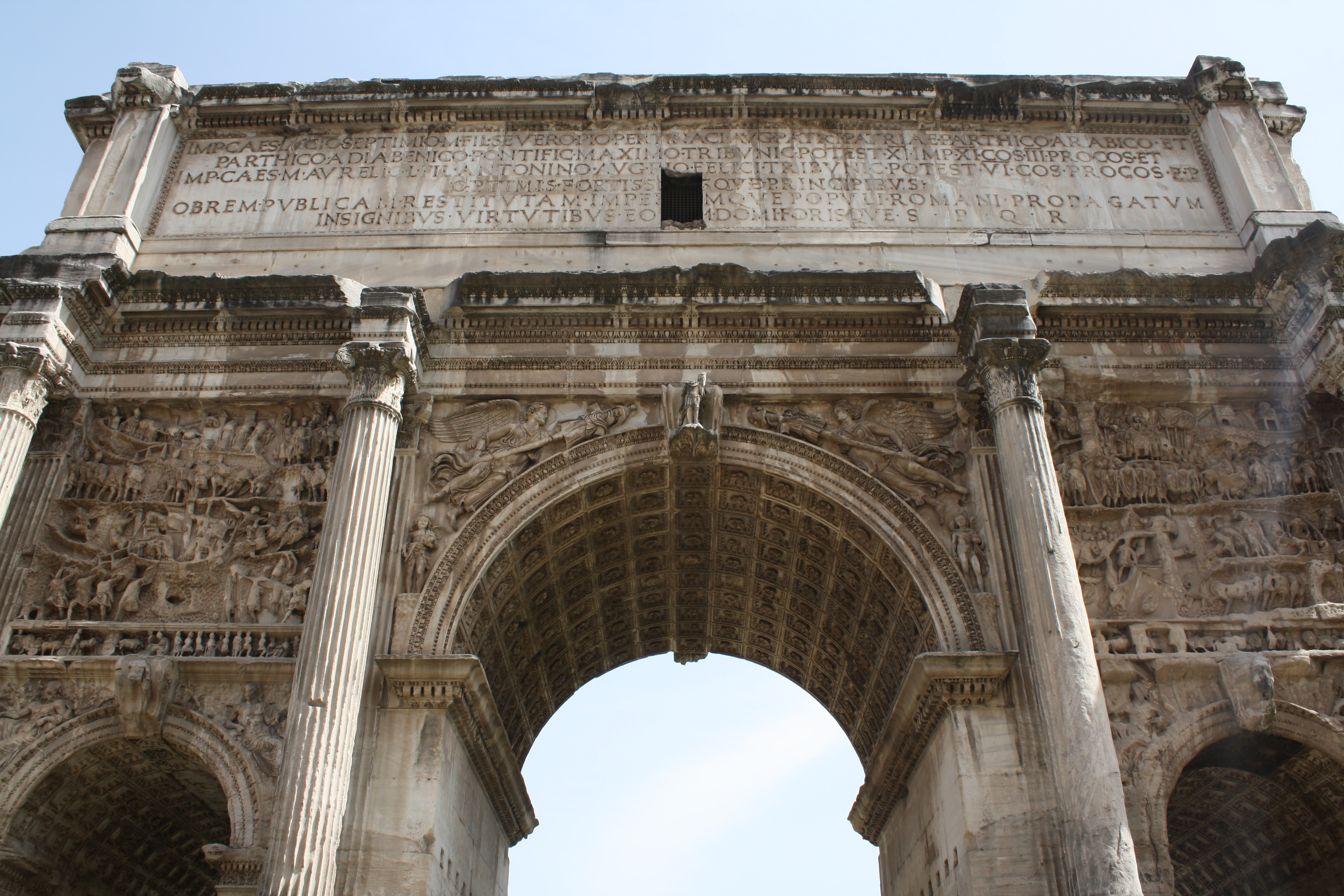
Arch of Septimius Severus
It’s a billboard in stone. Deep reliefs saying Rome won. Nothing structural about it. Cities still do this. Only the screens are brighter.

Arch of Septimius Severus in Rome with intricate carvings and three archways.

Arch of Septimius Severus in Rome, a monumental Roman triumphal arch with detailed reliefs, commemorating military victories and imperial grandeur.

Diocletian’s Palace
Walk the perimeter. Too fortified for a home, too polished for a fort. The emperor wanted both security and comfort. That split is still a design problem now.

Domus, Insulae, Villas
The houses show how people lived. A domus pulls light into the atrium. Insulae stack apartments with rich on the bottom and poor on top. Villas are half retreat, half farm. Together they sketch daily life better than monuments do.

Maison Carrée
Take the steps up. The podium makes it feel taller than it is. Columns so tight they read as perfect rhythm. Jefferson copied it for his own reasons. Stand there and you see why.

Pantheon
Look up under the dome. The oculus cuts weight, light tracks across coffers, mixes shift lighter as it rises. No ribs, no steel. Just geometry and mass balanced. Every architect who visits asks the same thing: how thin can you go before it fails.


CONSTRUCTION TECHNIGUES

Building Materials of Ancient Rome: Concrete, Stone, and Brick

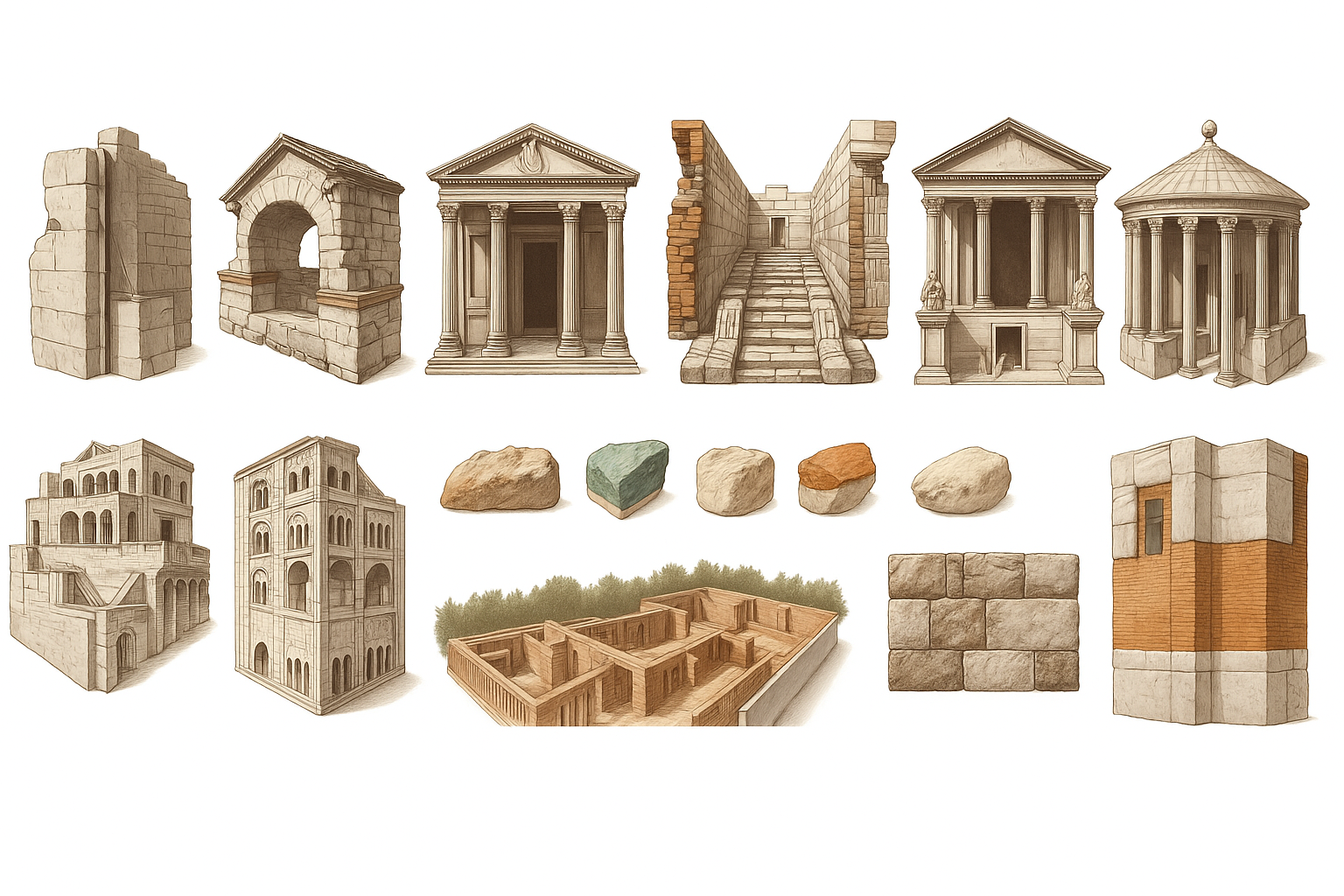
Illustrated examples of Roman construction techniques and materials.

Materials

Concrete:

  • Roman concrete, known as opus caementicium, was a revolutionary building material composed of lime mortar, volcanic ash, and aggregate.
  • Its durability and versatility allowed for the construction of large and complex structures, such as the Pantheon and the Colosseum.
  • The use of concrete enabled the Romans to create more flexible and innovative architectural designs.

Stone:

  • Marble: Widely used for its beauty and durability, marble was employed in temples, public buildings, and monuments. Famous quarries, like those in Carrara, supplied high-quality marble.
  • Travertine: A form of limestone, travertine was commonly used for building facades, amphitheaters, and bath complexes due to its strength and ease of working.
  • Tuff: This volcanic rock was used for foundations and walls, especially in the early periods of Roman construction.

Brick:

  • Romans developed advanced brick-making techniques, producing standardized, kiln-fired bricks.
  • Brick was often used in conjunction with concrete to construct walls, arches, and vaults, then faced with stone or stucco for aesthetic purposes.
  • Brick structures, such as those found in Ostia Antica, demonstrate the durability and versatility of Roman brickwork.

Techniques

Roman Brickwork:

  • Opus Latericium: Consisted of regular, rectangular bricks laid in horizontal courses, often used for walls and vaults.
  • Opus Reticulatum: Featured a diamond-shaped pattern of tuff or brick stones set into a concrete core, creating a visually appealing and structurally sound surface.
  • Opus Testaceum: Used triangular bricks with their pointed ends set into the concrete core, leaving a flat surface exposed, often used for exterior walls.

Opus Caementicium:

  • A technique involving the pouring of concrete into wooden frames, which could be molded into various shapes, enabling the construction of complex forms like domes and vaults.
  • The addition of pozzolana, a type of volcanic ash, improved the concrete's strength and durability, making it a key component in Roman construction.

Opus Reticulatum:

  • A technique involving the use of small, pyramid-shaped stones set in a diagonal pattern within a concrete wall.
  • This method created a distinctive, grid-like appearance and provided both structural stability and decorative appeal.

Opus Testaceum:

  • A method using flat, triangular bricks embedded into the concrete core, with their pointed ends set into the wall and the flat sides exposed.
  • This technique provided a smooth, finished surface and was often used for exterior walls and facades.

If you’ve ever wondered how Roman buildings were physically built—this is your go-to.

Roman Building: Materials and Techniques by Jean-Pierre Adam shows how the walls, arches, and domes came together, with detailed drawings and real building methods.


Decorative Elements

Illustration of decorative elements in Ancient Roman architecture, including mosaics and frescoes.

A detailed illustration showcasing decorative elements in Ancient Roman architecture, highlighting mosaics from Pompeii and Herculaneum and frescoes from the Villa of the Mysteries and the House of the Vettii, featuring intricate patterns and scenes of daily life.

Mosaics

Techniques and Materials:

  • Roman mosaics were created using small pieces of colored stone, glass, or ceramic called tesserae.
  • Artists meticulously arranged tesserae to create intricate patterns and detailed images on floors, walls, and ceilings.
  • Common themes included geometric designs, mythological scenes, and depictions of daily life.

Examples from Pompeii and Herculaneum:

  • The House of the Faun in Pompeii features a famous mosaic of Alexander the Great's battle.
  • Mosaics in Herculaneum depict scenes of marine life showcasing the artistry and creativity of Roman mosaicists.
  • Both sites provide valuable insights into the aesthetic preferences and social customs of ancient Romans.

Frescoes

Styles and Techniques:

  • Roman frescoes were created by applying pigment to wet plaster, allowing the colors to bond with the wall surface.
  • The four Pompeian styles of fresco painting evolved from simple imitations of marble panels to complex, detailed compositions.
  • Common subjects included landscapes, portraits, mythological themes, and architectural vistas.

Famous Examples:

  • The Villa of the Mysteries in Pompeii contains elaborate frescoes depicting Dionysian rituals.
  • The House of the Vettii features a variety of frescoes, including detailed mythological scenes and intricate architectural perspectives.
  • These frescoes highlight the Romans' appreciation for art and their desire to adorn their homes with visually stunning imagery.

Sculptures

Integration with Architecture:

  • Roman sculptures often adorned public buildings, temples, and private residences, serving both decorative and functional purposes.
  • Statues of emperors, and notable figures were commonly placed in niches, courtyards, and gardens.
  • Relief sculptures decorated triumphal arches, columns, and altars, narrating historical events and mythological tales.

Notable Works:

  • The Ara Pacis Augustae (Altar of Augustan Peace) features intricate reliefs depicting Augustus and his family, symbolizing peace and prosperity.
  • The Arch of Titus in Rome displays reliefs of the Roman victory over Jerusalem, celebrating the emperor's triumph.
  • Portrait busts of emperors, like those of Augustus and Hadrian, exemplify the Roman skill in capturing realistic and idealized likenesses.

Influence of Ancient Roman Architecture

Roman Architecture: Famous Buildings from Ancient Rome.

Influence on Later Periods

Renaissance Architecture:

  • The Renaissance saw a revival of classical principles, heavily influenced by Roman architecture.
  • Architects like Filippo Brunelleschi and Andrea Palladio studied Roman ruins to inspire their designs.
  • Key elements such as domes, arches, and the use of classical orders were reinterpreted in Renaissance buildings.

Neoclassical Architecture:

  • Neoclassicism emerged in the 18th century as a reaction to the ornate Baroque style, drawing directly from Roman architecture.
  • Prominent structures, including the United States Capitol and the British Museum, showcase Roman-inspired elements like columns, pediments, and domes.
  • The movement emphasized symmetry, simplicity, and grandeur, echoing the principles of ancient Roman design.

Modern Examples

Influence on Public Buildings:

  • Many modern public buildings, such as capitols, courthouses, and museums, incorporate Roman architectural elements.
  • These buildings often feature grand facades with columns, extensive use of arches, and domes, reflecting the grandeur and formality of Roman structures.
  • The use of Roman-inspired architecture in civic buildings conveys a sense of authority, stability, and cultural heritage.

Examples in Contemporary Architecture:

  • Contemporary architects continue to draw inspiration from Roman design principles, integrating them with modern materials and technologies.
  • Buildings like the Getty Center in Los Angeles and the Reichstag Dome in Berlin incorporate Roman elements such as courtyards, columns, and vaulted spaces, adapted to contemporary aesthetics and functions.
  • The blending of ancient Roman architectural techniques with modern design demonstrates the timeless appeal and versatility of Roman innovations.

How Romans Planned Their Cities: Roads, Forums, and Aqueducts

Roman planning was about control. Cities worked because movement, water, and gathering were designed into the bones.

Roads
Straight lines cut through everything. Military roads doubled as trade routes. You can still walk stretches today, stone blocks laid so tight they outlasted kingdoms. The lesson is not romance but clarity. Draw a line, grade it right, and the route survives.

Forums
Every city needed a place where law, trade, and voices mixed. The forum wasn’t ornament. It was the square that kept civic life running. When you visit, watch how the space is shaped by edges of basilicas, markets, and courts. The planning is what makes it work, not the decoration.

Aqueducts
Water was the non-negotiable. Rome built gravity machines across valleys and hills to keep cities alive. The arches are famous, but look closer at the gradients — subtle slopes that held flow for miles. That precision is the part to study.

Rome’s planning still lingers in modern grids, plazas, and pipes. Not because we copy the look, but because their solutions proved durable.

Urban planning sharpened, with streets, forums, and aqueducts anchoring every colony (see City Planning the Roman Way: Roads, Forums, and Aqueducts).


What People Have Actually Said About Roman Building

Vitruvius, Roman architect, 1st century BCE:
“Durability will be assured when foundations are carried down to the solid ground, and when choice materials are conscientiously selected.” (Ten Books on Architecture)

Augustus, first emperor of Rome:
“I found Rome a city of brick, and left it a city of marble.” (Suetonius, Lives of the Caesars)

Le Corbusier, modern architect:
“The lesson of Rome is that grandeur comes from order, not size.” (Vers une Architecture, 1923)

Frank Lloyd Wright, architect:
“Roman concrete is the truth of Rome. That dome still stands because they poured it right.” (lecture notes, 1930s)

Mary Beard, historian:
“The Colosseum was not built as a monument. It was a machine for watching blood sport.” (SPQR: A History of Ancient Rome)

David Watkin, architectural historian:
“The Pantheon remains the most complete expression of Roman architectural genius, uniting mathematics, material, and majesty.” (A History of Western Architecture)


How to Study Roman Architecture

For Students
Don’t just memorize dates or names. Draw the sections. Trace how the arches push loads sideways. Note how circulation works in the Colosseum or how water gradients hold in an aqueduct. When you sketch, ask the same questions the builders asked: how do I span, how do I drain, how do I move crowds. That habit makes the ruins alive instead of textbook dust.

For Practicing Architects: Why Rome Still Matters
Modern tools hide structure behind steel and glass. Rome didn’t have that. Concrete, stone, geometry — that was it. Reflecting on Roman solutions strips design back to basics. How to span wide without clutter. How to plan civic space for daily use. How material choices drive form. Rome won’t give you details to copy, but it sharpens the way you think about solving problems in public space and infrastructure.


Things Worth Noticing

The Colosseum had a whole machine under the floor. The hypogeum wasn’t just tunnels — it was lifts, cages, trapdoors. Gladiators and animals came up through it like stagecraft. When you walk there now, picture the noise under the arena, not just above it.

The Pantheon survived because it was reused. First a Roman temple, then a Christian church from the 7th century on. That shift is why the dome is still intact when most others fell. A lot of Roman buildings lived longer because they were recycled — temples turned into churches, walls turned into fortresses.

What People Get Wrong

Roman buildings weren’t white. They were painted, frescoed, and covered in mosaics. The marble look is just what’s left after time stripped the color.

Rome didn’t only copy Greece. Columns and orders came from there, yes. But concrete, the arch, the vault — those were Roman pushes. That’s how they scaled buildings up to empire size.

Why It Still Matters

Concrete that hardens underwater. Arches and vaults that spread load. Domes that cover space without supports in the middle. These are not old tricks — they’re still the base moves in modern design.

Look at the Colosseum, the Pantheon, the Forum. Then look at stadiums, government halls, city grids. Same bones.

Roman architecture isn’t “timeless beauty.” It’s usable logic. That’s why we still lean on it.


FAQ

Were all Roman buildings white marble?
No. Most were painted in reds, blues, and ochres, or finished with mosaics and frescoes. The white ruins are what’s left after centuries of weather and stripping.

What made Roman concrete special?
The mix. Lime, volcanic ash, and rubble. It set under water and actually got stronger with time. That’s why aqueduct piers and harbor works are still standing.

Did the Romans invent the arch?
No. They borrowed the basic form from earlier cultures, but they pushed it into full systems — aqueducts, vaults, amphitheaters. Scale and application were Roman.

Why did the Pantheon dome survive?
Material and geometry. The concrete mix gets lighter toward the top, the coffers cut weight, and the oculus removes the heaviest point. No steel needed.

How did crowds move in the Colosseum?
Fast. Fifty thousand people could enter and leave in minutes through stacked arches, radial stairs, and vomitoria exits. The layout is still copied in modern stadiums.

What happened to most Roman temples?
They were repurposed. Many turned into churches, forts, or civic halls. That recycling is why some survived when others collapsed.

Is Roman urban planning still relevant?
Yes. Gridded streets, forums as civic hubs, aqueduct-fed water supply, drains. Strip away the stone and you still recognize the logic in today’s cities.

Why should modern architects care about Roman work?
Because it shows structure laid bare. Concrete, arches, geometry. No glass curtain to hide behind. It’s a reminder that design begins with material and function, not surface.


Best Books

1. "Roman Architecture" by Frank Sear

What it’s about: A smart overview from temples to aqueducts, perfect for beginners or enthusiasts.
Why buy it:

  • Covers the full timeline of Roman architecture

  • Includes plenty of images and diagrams

  • Written by an expert but still very readable

2. "Principles of Roman Architecture" by Mark Wilson Jones

What it’s about: A deep dive into how Roman buildings were designed, laid out, and made to look beautiful and work well.
Why buy it:

  • Great for understanding planning and proportion

  • Ideal if you’re into architectural theory or design thinking

3. "Roman Building: Materials and Techniques" by Jean-Pierre Adam

What it’s about: This is your go-to if you're curious about how Romans physically built their structures.
Why buy it:

  • Explains how things were made from the ground up

  • Includes illustrations of tools, materials, and layouts

4. "The Architecture of the Roman Empire" by William L. MacDonald

What it’s about: Goes beyond the looks—this book is about the experience of walking through and using Roman spaces.
Why buy it:

  • Focuses on spatial feel, not just design

  • A great pick if you’re into architecture as experience, not just form

5. "De Architectura" by Vitruvius

What it’s about: Written by a Roman architect himself—this is the only surviving full ancient book on architecture.
Why buy it:

  • You’ll see how Romans thought about architecture in real time

  • Still relevant to design students and theorists​


Related

  • Roman Architecture Style
  • Roman Architecture and Engineering
  • Roman Building Style
  • Romanesque Architecture Style
  • Romanesque Architecture Style Interior Design
  • The Birth of Gothic Architecture: From Romanesque to Innovation

References

Smarthistory (Roman Architecture Section)
A trusted academic resource with expert-written articles and visuals on major Roman structures and styles.
https://smarthistory.org/roman-architecture

Khan Academy – Roman Art and Architecture
Easy-to-understand breakdowns with context and scholarly input, ideal for general readers and educators.
https://www.khanacademy.org/humanities/ancient-art-civilizations/roman

MIT News – Roman Concrete Research
Latest scientific studies on why Roman concrete is still outperforming modern mixes.
https://news.mit.edu/2023/roman-concrete-durability-lime-casts-0106

National Geographic Education – Roman Influence Today
Covers how Roman innovations in engineering and planning still shape modern cities.
https://education.nationalgeographic.org/resource/traces-ancient-rome-modern-world

The British Museum – Roman Architecture & Artifacts
Insight into Roman life and construction through real objects and curated exhibitions.
https://britishmuseum.org

Encyclopaedia Britannica – Roman Architecture Overview
Concise and accurate reference for definitions, structures, and timelines.
https://www.britannica.com/art/Roman-architecture

Readings

  • Khan Academy: Ancient Rome: Offers video lessons and articles on Roman history and architecture.
  • Yale University Press

Subscribe

Popular

Complete guide to aluminum window and door frames.
Aluminum Window Frames: Pros, Cons, and Where They Make Sense
Mid-century modern house exterior in Palm Springs with clean lines, flat roof, and expansive glass windows.​
1950s Houses: What They Are, What Works, What Doesn’t
Architecture graduate studying drawings, models, and exam materials in a studio workspace.
How to Become a Licensed Architect: School, Hours, and Exams
Installed crawl space vapor barrier with taped seams, wall turn-up, and wrapped piers.
Cost to Install a Crawl Space Vapor Barrier: Where the Money Goes

ArchitectureCourses.org

Practical architecture, construction, and renovation guides for real projects.

Explore

  • Architecture
  • Construction
  • Renovation
  • Crawl Space
  • Materials
  • Interiors
  • Reviews
  • Calculators

Company

  • Home
  • About
  • Privacy Policy
  • Subscribe

© 2026 ArchitectureCourses.org. All rights reserved.

As an Amazon Associate, we earn from qualifying purchases at no extra cost to you.