
Chinese Architecture: What Actually Happened
So here’s the thing:
Most people talk about Chinese architecture like it’s stuck in the past.
Curved roofs. Carved dragons. Ancient stuff.
But the real story? It’s about how architects in China kept building through empires, revolutions, bad politics, and worse planning—and how they finally made space for real design again.
We’re not talking about temples here. We’re talking about how buildings worked.
How cities grew. How architects responded when things broke down.
This is the full picture—straight up.
📘 FOUNDATION PICK
Chinese Architecture: A History – Nancy S. Steinhardt
This is the full picture—dynasties, cities, materials, systems. If you're studying Chinese architecture seriously, this is the book to own. No romanticizing. Just structure, power, and design across 4,000+ years.
→ Preview on Google Books »
Chinese Architecture: The Fight to Design Anything Real
How It Survived Politics, Copying, and Speed
Why Chinese Architecture Is Nothing Like You Were Told
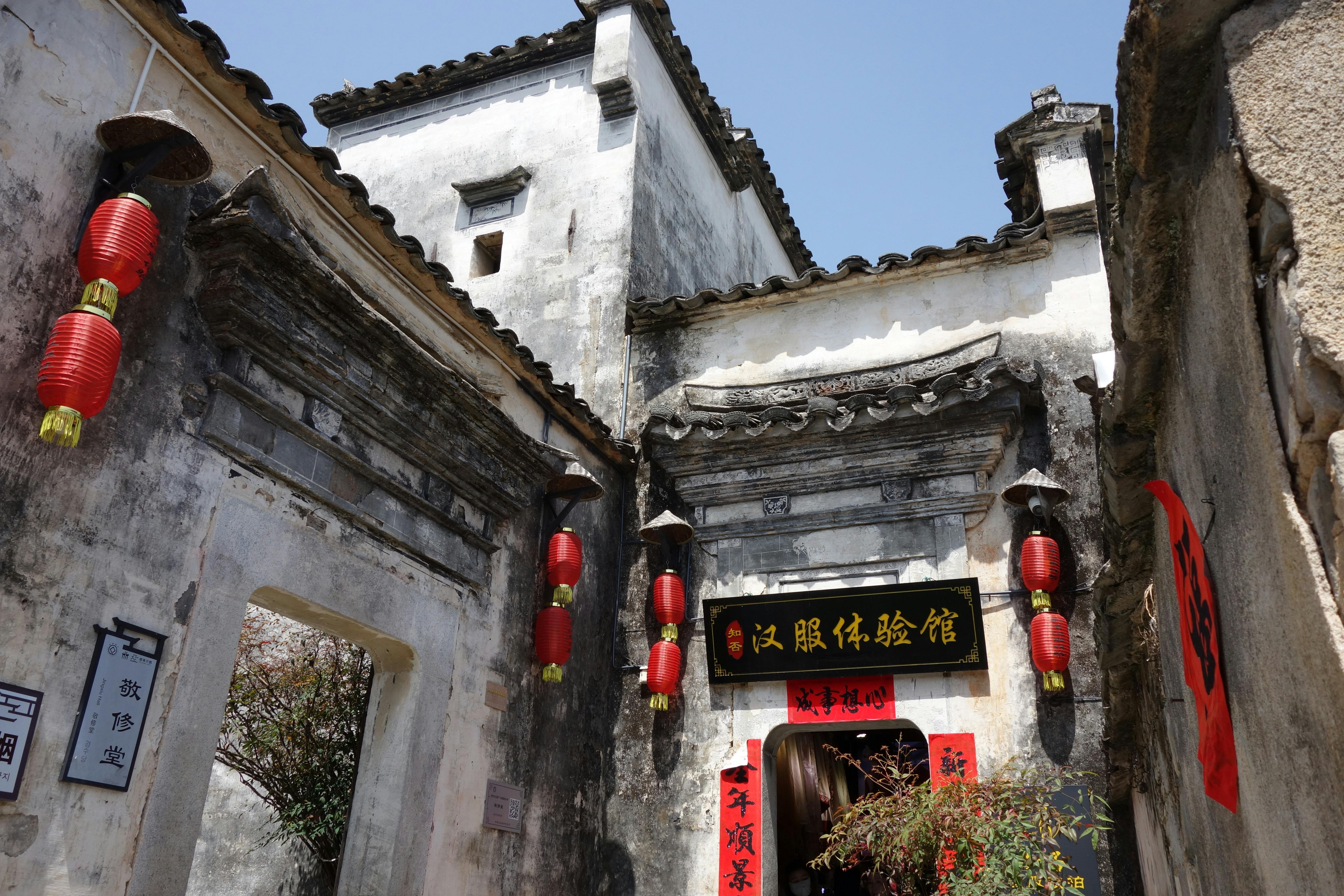
Most people think “Chinese architecture” means curved roofs and carved dragons.
Wrong.
What actually defines it?
Control. Pressure. Timing.
For thousands of years, buildings in China weren’t just designed. They were assigned.
By emperors. By warlords. By ideology. By urgency.
It was about survival.
And somehow, through war, collapse, foreign takeovers, and political crackdowns, a few architects still found a way to build with meaning.
The real story was about what got built, what got erased, and who refused to give up design in the middle of chaos.
It Started with Systems, Not Symbols
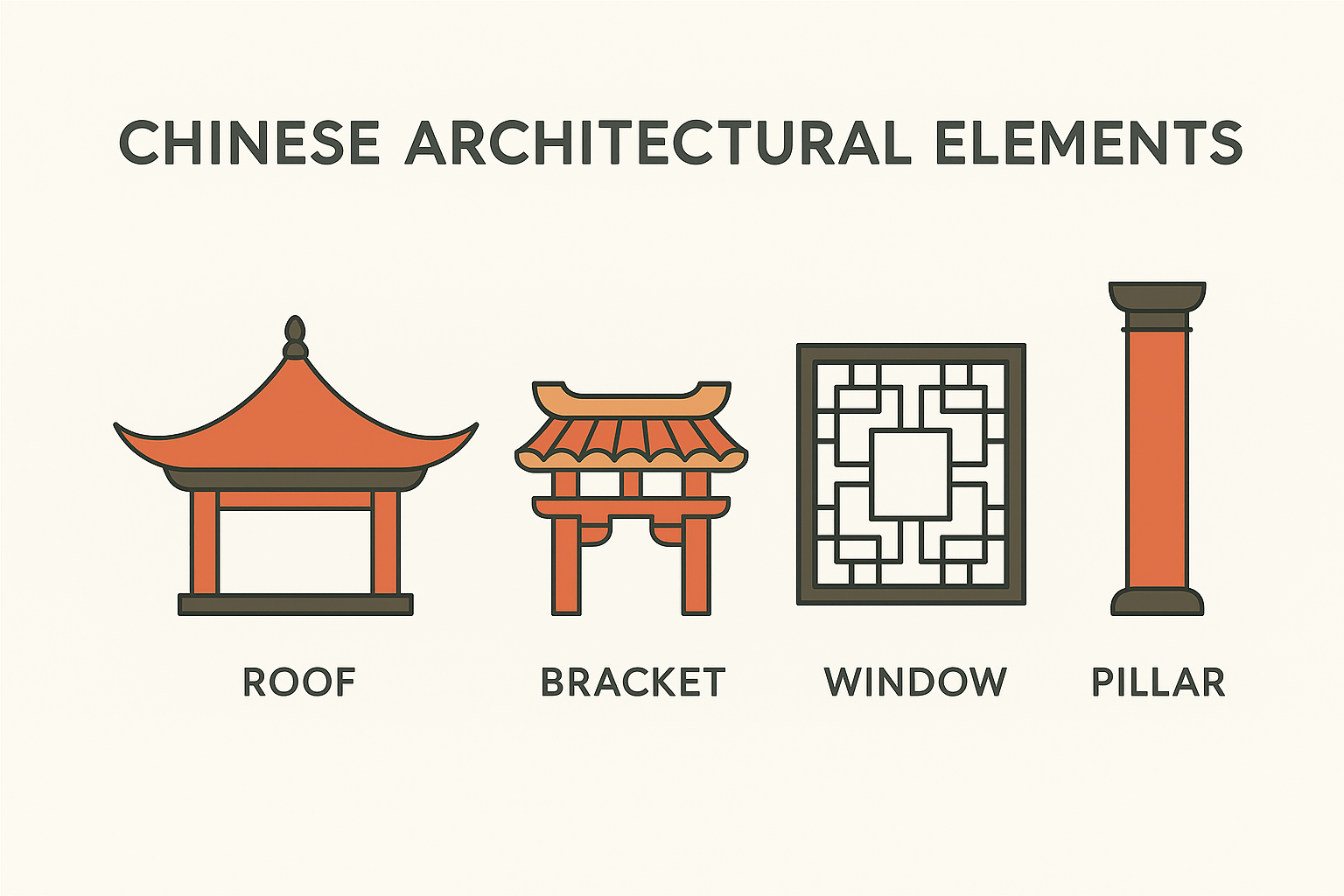
Long before steel, concrete, or even glass—China figured out something else:
Order.
You had courtyard houses that kept families together.
Walled cities that separated rich from poor.
Grid layouts that made sense 2,000 years before zoning codes ever existed.
By the time the West was still stacking stones, Chinese builders were already using modular systems—repeatable frameworks that could scale, flex, and last.
No fancy materials. Just logic.
📘 MUST READ
Designing Reform (1970–1992) – Cole Roskam
If you actually want to understand how modern architecture happened in China—not just what it looks like—start here. This book breaks down the reform-era shifts in planning, style, and international influence. Politics meets practice. No filler.
→ Buy on Amazon »
Power Controlled the Floor Plan
If you look at how Chinese architecture evolved, it always followed one thing: authority.
Every dynasty left its mark by changing how people lived:
-
The Qin built massive walls and military roads.
-
The Han pushed out cities with rigid hierarchy—rich in the center, poor outside.
-
The Tang and Song expanded domestic architecture with multi-family layouts and courtyards that could be reused, rebuilt, or copied.
None of it was random.
It was about who belonged where, and what the structure told you about your role.
That thinking never really left. Even in today’s housing projects, you can still feel it:
who gets light, who gets privacy, who doesn’t.
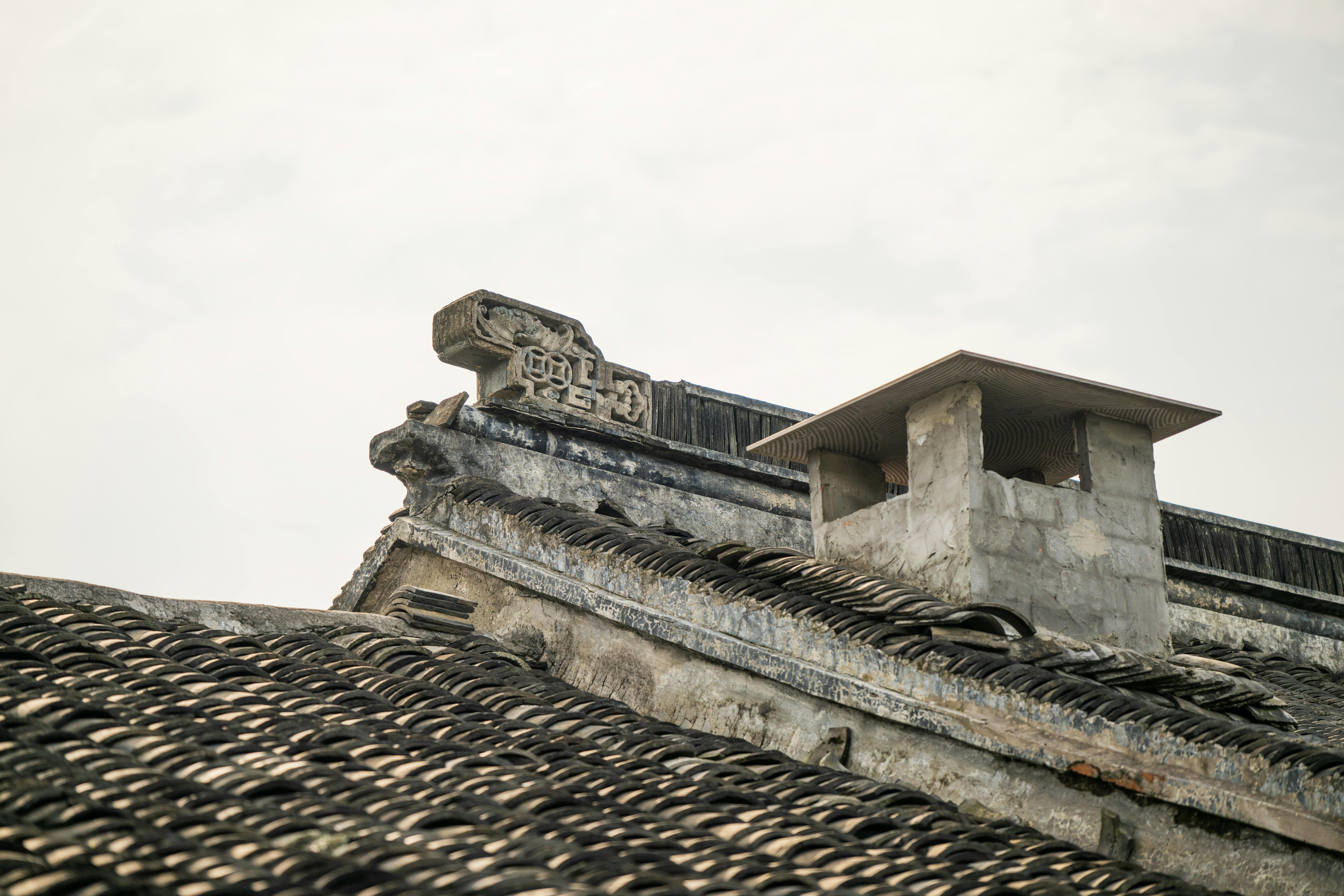
Chinese Architecture & Roofs: It's About Control!
The Story Behind What Got Built (and What Didn’t)
When Foreigners Showed Up, The Style Broke
Fast forward to the 1800s. China gets forced open.
European traders flood in. Treaty ports like Shanghai start throwing up Beaux-Arts banks, neoclassical mansions, colonial consulates.
And just like that, Chinese cities split in two:
-
One side: controlled, symmetrical, ancient layouts.
-
The other: Western-style clubs, train stations, stock exchanges.
This wasn’t architecture. It was occupation in brick.
But here’s the twist: Chinese architects watched it all—and took notes.
The First Modern Architects Fought for Control
By the 1920s, Chinese designers were done copying. They started creating.
You had people like:
-
Liang Sicheng: obsessed with documenting China’s real architectural DNA.
-
Lin Huiyin: China’s first female architect. Helped preserve old structures while drafting new ones.
-
Liu Jipiao: studied in Paris. Came back to bring Art Deco to China before anyone else did.
These weren’t just designers. They were fighters—pushing against a system that either wanted to erase the past or import everything from Europe.
Then Came Mao—and Architecture Froze
In the 1950s, design stopped. Politics took over.
Everything had to be “for the people.” Which meant: cheap, fast, uniform.
You got:
-
Gray concrete slabs
-
Soviet-inspired blocks
-
State buildings with zero soul
No experimentation. No context. No identity.
But in the cracks, some architects found a way to push back—quietly.
Dai Fudong was one of them.
He built projects that looked modern, but underneath? Local materials. Traditional planning. Real roots.
Post-Mao: Chaos, Then Clarity
The 80s and 90s hit, and suddenly China needed buildings. Fast.
So they built them—too fast.
Skylines exploded. Cities doubled in size.
Glass towers everywhere. Copy-paste office parks. Shopping malls with no street life.
Architects got drowned out by speed and money.
But some didn’t go along with it.
Wang Shu Said No
In 2012, Wang Shu won the Pritzker Prize—basically architecture’s Nobel.
Not for a tower. Not for a museum.
But for a building made of recycled bricks—stacked like history, not wallpaper.
He didn’t chase trends.
He made new work out of the old city that was being demolished.
He said: “You can’t build the future if you erase the past.”
And it hit.
Suddenly, people started paying attention to buildings that looked like they belonged somewhere again.
Now Comes Liu Jiakun
China’s newest architectural voice?
Liu Jiakun.
Pritzker winner. Straight out of Sichuan.
He’s not building skyscrapers. He’s building schools. Libraries. Community centers.
After the Sichuan earthquake, he didn’t pitch concepts. He showed up with materials.
His style is calm, flexible, human.
He calls it architecture that flows “like water.”
No slogans. No luxury. Just buildings that make sense for the people who use them.
So What Is “Chinese Architecture” Today?
It’s not just tile roofs or ancient plans.
It’s:
-
Local logic in a global market
-
Rebuilding without erasing
-
Housing that actually fits its climate
-
Public buildings that aren’t just glass trophies
Modern Chinese architecture is still figuring itself out—between past and future, tradition and sprawl.
But the good ones?
They’re not copying.
They’re not apologizing.
They’re building context, not just form.
What You Should Learn From This
If you're a student or designer trying to learn from China, skip the travel blogs. Look at the patterns:
-
How planning shaped identity
-
How regional materials created better spaces
-
How politics changed floor plans overnight
-
How a few architects pushed back—and changed the story
China’s architectural history isn’t about style.
It’s about survival. Innovation. Pressure. And timing.
And that’s what makes it worth studying.
MUST READ
A Global History of Architecture – Francis D.K. Ching, Mark Jarzombek, Vikramaditya Prakash
If you only read one book on architectural history, make it this. Covers the entire world—from ancient settlements to modern towers—without drowning you in theory. Clear diagrams. Solid writing.
→ Buy on Amazon »
The Wall —Built for Control
The Great Wall of China isn’t one wall. It’s a stitched-up mess of walls, towers, trenches, and outposts—built by different dynasties, at different times, for one reason: control.
Not protection.
Control.
-
Control over borders
-
Control over labor
-
Control over movement
It wasn’t designed to keep people out. It was built to keep people in line.
And it worked.
What Architects Should Learn From It:
-
Modularity at massive scale – It reused patterns, paths, bricks, even workers.
-
Topographic sensitivity – It follows the land. No flattening, no shortcuts.
-
Built-in infrastructure – Signal towers. Guard housing. Supply routes. It wasn’t just a wall—it was a full system.
-
Political messaging through structure – This thing said: “We’re watching you.”
You don’t need to build walls like this now.
But if you’re designing systems of circulation, infrastructure, or surveillance, there’s a lot here to reverse-engineer.
Chinese Architecture Timeline: What Actually Changed
◼ Neolithic (6000–2000 BCE)
What mattered: Shelter, layout, survival.
Structure: Timber frames, rammed earth pits, woven roofs.
Architecture note: Grids show up early. People weren’t just building—they were organizing space.
Why it matters: China figured out spatial control long before Greece figured out columns.
◼ Shang & Zhou Dynasties (1600–256 BCE)
What changed: Cities got bigger. Power got formal.
Style: Symmetry, cardinal orientation, wall systems.
Materials: Wood, rammed earth, tiled roofs start showing up.
What it shows: Planning wasn’t for looks—it was about hierarchy. Your layout told people who you were.
◼ Qin Dynasty (221–206 BCE)
Big shift: Unification. Standardization. Militarization.
Famous example: The first massive road grid and the Terracotta Army complex.
Architectural logic: Not pretty—efficient and brutal. Built for empire control.
◼ Han Dynasty (206 BCE – 220 CE)
Rise of state architecture
What grew: Walled cities, extended palaces, elite compounds with layered privacy.
Innovation: Standard housing modules appear. Multi-family courtyard compounds evolve.
Legacy: The foundation for every future Chinese city. Literally.
◼ Tang & Song Dynasties (618–1279)
High point of layout refinement
Style: Wood framing, dougong brackets, tiled roofs, axial planning.
What matters: The city becomes a machine for social control—but elegant.
Cities like: Chang’an and Kaifeng become urban models.
Designers: Still no named architects—but craft guilds and layout logic hit peak clarity.
◼ Yuan Dynasty (1279–1368)
Mongol rule brings outside influences
Impact: New forms of public buildings, watchtowers, and denser merchant city centers.
Architecture note: Less symmetry, more hybrid logic.
Cities expand beyond imperial centers.
◼ Ming Dynasty (1368–1644)
Imperial control and ornamental explosion
What gets built: The Forbidden City, Beijing’s city grid, layered urban zoning.
Material boom: Glazed tile roofs, painted eaves, color-coded hierarchy.
What’s happening: Architecture becomes a performance of order. Every beam = symbolism.
◼ Qing Dynasty (1644–1912)
Peak formality, fading flexibility
Style: Elaborate rooftops, imperial garden pavilions, detailed decorative systems.
Social change: China closes off to the West. Architecture stagnates.
Why it matters: The structures are ornate—but innovation stalls. The modern world is coming, and Qing design isn’t ready for it.
◼ Late Qing / Early Republic (1800s–1930s)
Big break: Foreign concessions → foreign buildings.
Cities split: Shanghai becomes a collision of classical columns and Chinese alley houses.
Architecture shifts: Mission churches, French boulevards, Deco banks.
Chinese response: Architects like Liu Jipiao study in Paris, bring Art Deco back home.
Tension: West builds flash. China tries to hold form.
◼ 1920s–1949 (Republican Era)
Who shows up:
-
Liang Sicheng and Lin Huiyin (documenters, preservers, teachers)
-
Henry Huang (Huang Zuoshen)—trains in London, brings Bauhaus thinking to China
-
Dai Fudong (young at the time)—would later rise post-war
What they fight for:
Chinese architecture with real logic, not Western copying or imperial nostalgia.
Built examples: Sun Yat-sen Mausoleum, Nanjing Central Stadium.
◼ 1949–1976 (Mao Era)
What happened: Design = politics.
Style: Soviet blocks, state housing, cement everywhere.
Architects: Controlled. Most couldn't design freely.
Dai Fudong starts working during this era, slowly blending traditional logic into modern shells.
Legacy: Efficiency, yes. Identity? Not much.
◼ 1978–1992 (Reform Era Begins)
What changed: Deng Xiaoping opens the gates.
Style: Functional high-rises, Western imports, experimental facades.
Key book: Designing Reform by Cole Roskam → covers this era deeply.
Result: Fast growth. Shaky identity. But architecture is moving again.
◼ 1990s–2000s
Chaos + capitalism = construction boom
Cities explode. Urban land becomes commodity.
Style: Glass towers. Business parks. Cookie-cutter malls.
What’s lost: Context, culture, cohesion.
Who fights back:
-
Wang Shu (builds with old bricks, reclaims demolished material)
-
Liu Jiakun (builds schools, libraries, emergency housing)
Key moment: 2012 → Wang Shu wins the Pritzker Prize. First Chinese citizen to do it. No skyscrapers. No trend-chasing.
◼ 2010s–Now
The architecture split widens:
-
On one side: Curved glass blobs, massive urban megastructures
-
On the other: Quiet regional work, rooted in culture and climate
Names to know:
-
Liu Jiakun → Focus on healing, context, low-cost design
-
MAD Architects → Futuristic, expressive buildings (like Chaoyang Plaza)
-
Zhang Ke → Small-scale work, highly crafted, local
Big idea: Chinese architecture today is about choosing a side—copy the West, or build what fits.
Final Word:
This isn’t about roofs or rituals.
Chinese architecture is a record of who had power, who lost it, and who tried to build through it anyway.
Every era tells you what the country was facing.
And the buildings that lasted? They weren’t always pretty. But they made sense.
10 Important Buildings in Chinese Architecture
1. Banpo Village Houses (c. 4800 BCE, Neolithic)

Where: Near Xi’an
Why it matters: This was one of the first organized housing clusters in China. Round semi-subterranean structures arranged around shared space.
What to learn: Early spatial logic—even 7,000 years ago, people were thinking in terms of layout, heat control, and shared access.
2. Yinxu Palace Complex (c. 1200 BCE, Shang Dynasty)
Where: Anyang
Why it matters: Planned with platforms, courtyards, drainage systems.
What to learn: First example of formal palace planning using axes, symmetry, and enclosure. Also, the earliest trace of modular structural repetition.
3. Weiyang Palace (202 BCE, Han Dynasty)
Where: Chang'an (modern Xi’an)
Why it matters: One of the largest palaces ever built (bigger than the Forbidden City).
What to learn: Scale = power. But also: how the Han dynasty used urban layout as government logic—this palace drove the entire city’s orientation.
4. Tang Chang’an City Plan (7th Century, Tang Dynasty)
Where: Modern-day Xi’an
Why it matters: Not a building, but a full city designed from scratch. Gridded streets, zoning for markets, residential blocks.
What to learn: First true zoned megacity—you can trace modern city planning roots back to this one.
Architects today still reference this for human-centered density.
5. Pingyao City Walls (14th Century, Yuan/Ming Transition)
Where: Shanxi Province
Why it matters: Perfect rectangle. Defensive logic. Walled micro-city.
What to learn: Spatial compression, layered circulation, mixed-use urbanism inside one clear envelope. Still functions today.
6. Forbidden City (Completed 1420, Ming Dynasty)
Where: Beijing
Why it matters: Everyone talks about the palace, but the real architecture is in its spatial control.
What to learn: Axial dominance. Privacy by elevation and gates. Symbolic zoning. Built form = political statement.
Still used in government campuses worldwide.
7. Wang Family Courtyard (18th Century, Qing Dynasty)
Where: Shanxi
Why it matters: High-end residential complex—not royal, but rich.
What to learn: Modular courtyard planning, passive cooling, intergenerational layout logic. Private/public layers are handled perfectly.
Copy-worthy even today for urban infill housing.
8. Sun Yat-sen Mausoleum (1929, Republican Era)
Where: Nanjing
Architect: Lü Yanzhi
Why it matters: A national building that blends Chinese planning with modern structural techniques.
What to learn: First time monumental modernism met Chinese form. Precursor to post-colonial design strategies.
9. Shanghai Park Hotel (1934)
Where: Shanghai
Architect: Laszlo Hudec
Why it matters: Tallest building in Asia when built. Deco style, Chinese materials, luxury hotel.
What to learn: Early example of verticality done right in an Asian context—how to scale up without losing site fit or climate logic.
10. Ningbo History Museum (2008)
Where: Ningbo
Architect: Wang Shu
Why it matters: Built using rubble from demolished villages. Complex, quiet, brutal, and local.
What to learn: Material memory, adaptive reuse, deep site culture. This isn’t nostalgia—it’s survival in design form.
What This List Actually Shows
- Every era solved a different problem: defense, order, climate, class, symbolism, speed.
- Modern architects keep referencing these patterns—but forget where they came from.
- These buildings were made to handle reality.
FAQ
Chinese Architecture—What People Actually Ask
Was Chinese architecture always about symmetry and curved roofs?
No. That’s a surface read. The real logic was about social hierarchy and space control—who got light, who got access, who got privacy. The curves came later.
Who are the most important Chinese architects to know?
Start with Liang Sicheng, Lin Huiyin, Wang Shu, and Liu Jiakun. If you're serious, add Dai Fudong, Liu Jipiao, and Henry Huang. These are the ones who pushed against systems and shaped the conversation.
Why did architecture in China freeze under Mao?
Because design wasn’t allowed to lead—politics took over. Everything had to be fast, cheap, uniform. Most buildings were Soviet clones. Innovation was shut down hard.
What changed in the 1980s?
China opened its doors. Architects got access to international ideas, new materials, and more freedom (sort of). Buildings got taller, faster—but not always smarter.
Why does Wang Shu matter so much?
Because he stopped copying and started remembering. His work uses salvaged materials and local logic—proving China could build modern without erasing its history.
Is Chinese architecture today just Western glass towers?
In many cities? Yes. But the best work now blends regional ideas, modern tools, and local context. Think Liu Jiakun, MAD Architects, and small firms doing quiet, smart work.
Can you still see traditional Chinese architecture in real life?
Yes, but most of it’s either reconstructed or stuck in tourist zones. The original layouts—courtyards, grids, vernacular housing—are being bulldozed fast. That’s why architects like Wang Shu and Zhang Ke matter. They’re preserving the logic, not just the look.
Where should I start if I want to study it seriously?
Read:
📘 Chinese Architecture: A History by Steinhardt
📘 Designing Reform by Roskam
Then study the plans, not just the facades. Layout = power.
📘 FIELD PICK
The Story of Architecture – Jonathan Glancey
Fast-paced, blunt, and highly visual. Glancey doesn’t romanticize—he explains why buildings happened, who funded them, and what they meant. Great for real-world understanding.
→ Buy on Amazon »
📘 STUDIO PICK
Architecture: Form, Space and Order – Francis D.K. Ching
Not history in the academic sense—but this book shows how design logic evolved. Why a wall is where it is. Why space feels right or wrong. If you’re designing, this helps you connect form to history.
→ Buy on Amazon »
📘 CONTEXT PICK
Architecture and Violence – Bernard Tschumi
Not your usual survey. This one tackles how buildings reflect and enforce control, conflict, and politics. Short essays, big ideas. Relevant if you care about how architecture interacts with power.
→ Buy on Amazon »
📘 FOUNDATION PICK
Modern Architecture Since 1900 – William J.R. Curtis
Heavy, yes. But if you want to track how design changed over the last 120 years—from movements to materials to global influence—this is the book. Not for fluff readers.
→ Buy on Amazon »