
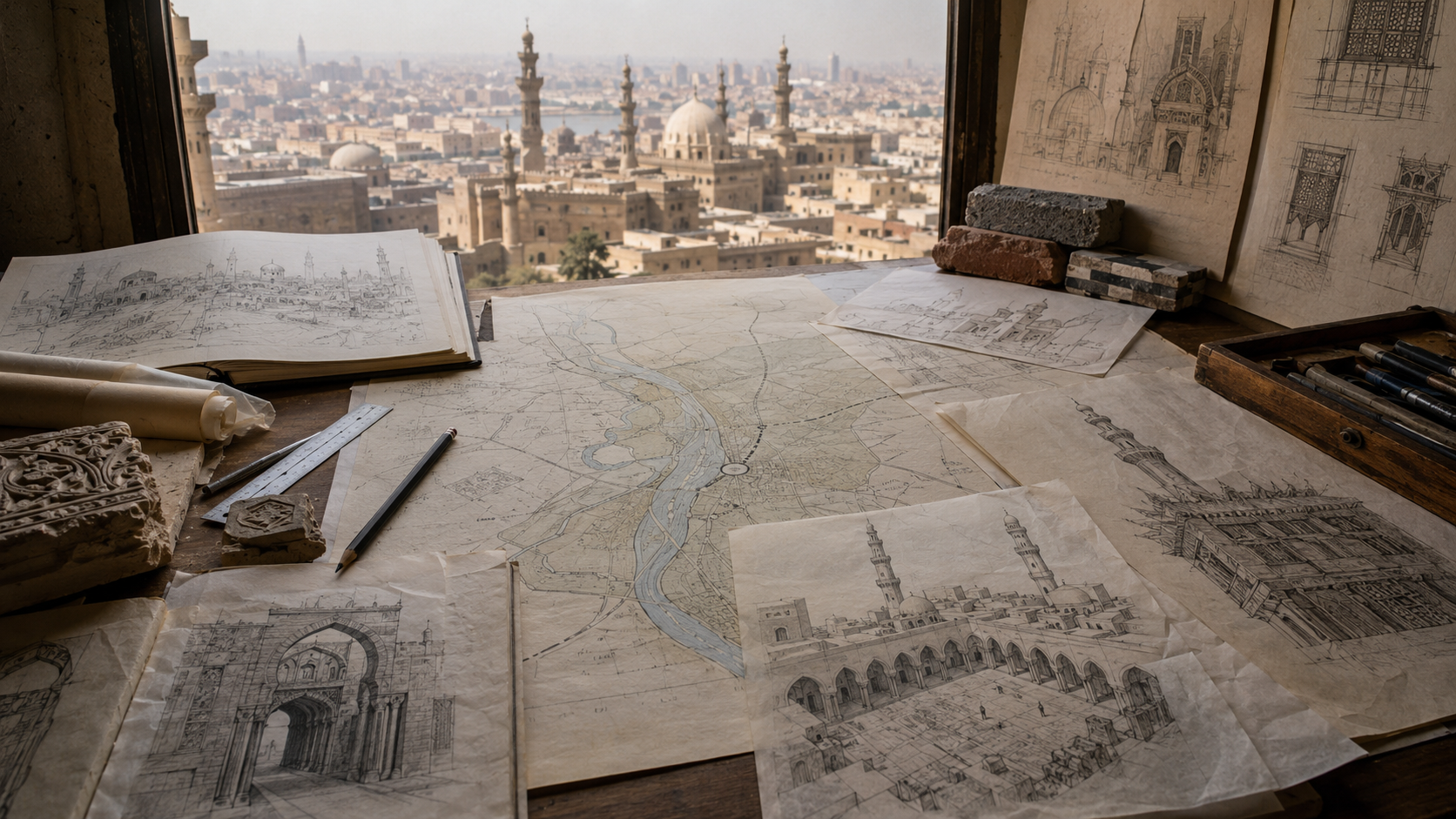
Egypt is where Islamic architecture becomes more than a list of styles.
The monuments matter, but the deeper lesson is bigger than famous mosques. Egypt shows how Islamic architecture handled heat, shade, prayer, trade, water, education, defense, burial, dense streets, public charity, repair, and political identity across more than thirteen centuries.
Cairo is the strongest concentration. That is why it has its own page: Islamic Cairo. This page has a different job. It looks at Egypt as the wider architectural field: Fustat, early Islamic foundations, Fatimid Cairo, Ayyubid defense, Mamluk street monuments, Ottoman additions, Alexandria and provincial layers, modern mosque building, and what students should study beyond the postcard version.
For the parent topic, start with Islamic architecture. For the chronological parent page, use Islamic architecture history.
What This Egypt Page Covers
This page should not repeat the Islamic Cairo article.
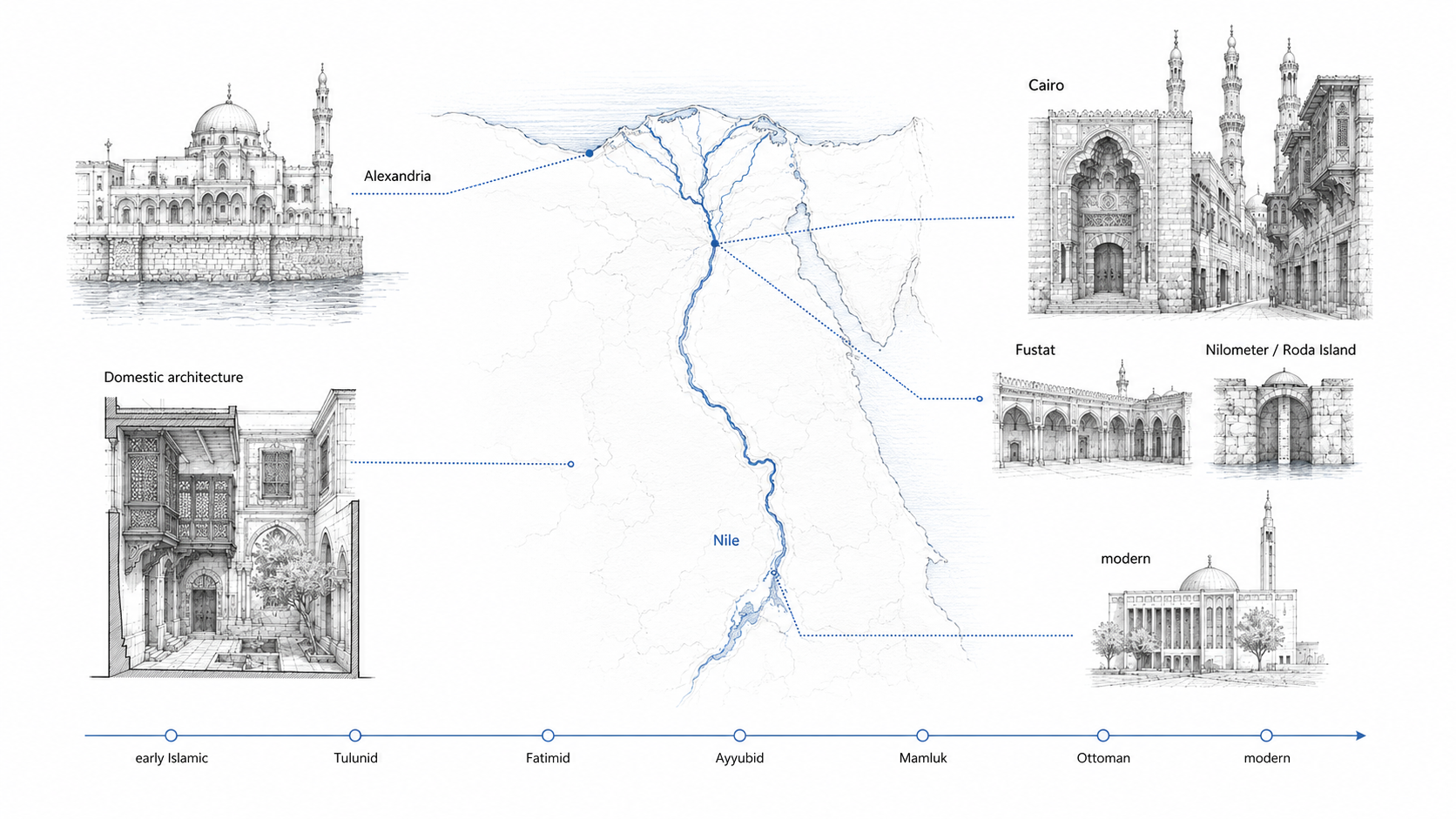
Islamic Cairo is the deep dive into one historic urban district. Islamic architecture in Egypt is the wider map. It asks how Egypt became one of the most important places to study Islamic building, not just through monuments, but through long-term use, repair, reuse, urban density, Nile infrastructure, and layered rule.
| Topic | Best page role | Where to go deeper |
|---|---|---|
| Egypt-wide Islamic architecture | This page: broad overview, periods, places, and design lessons across Egypt. | Keep reading here. |
| Islamic Cairo as a historic district | Deep urban page about streets, gates, mosques, markets, houses, and preservation. | Islamic Cairo |
| Al-Azhar Mosque | Focused case study of one layered mosque and university institution. | Al-Azhar Mosque |
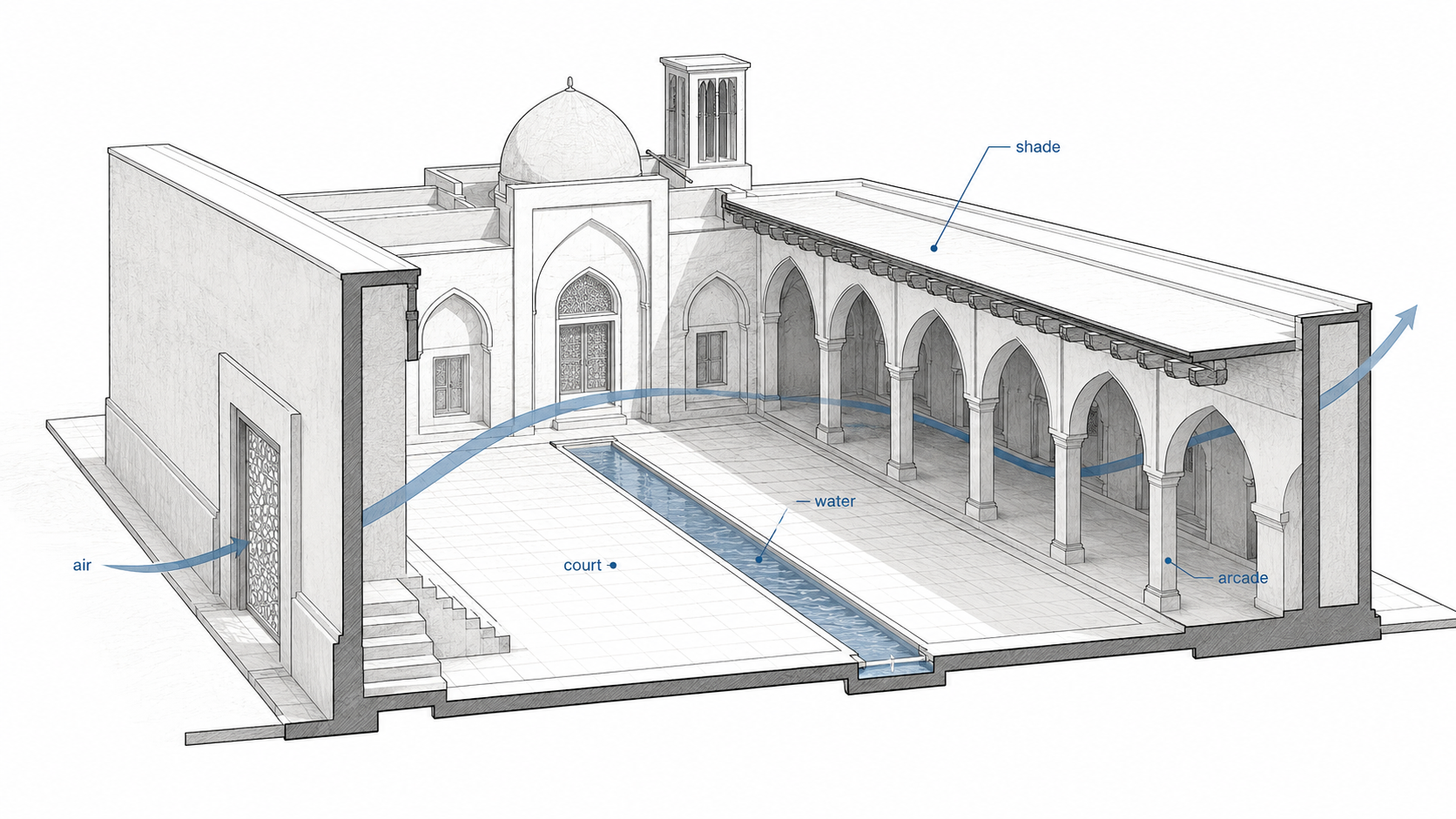
| Courtyards and sahn design | Design-system page about shade, water, air, movement, and prayer sequence. | Courtyards in Islamic architecture |
| Arches, muqarnas, mashrabiya, and patterns | Support pages for the main architectural elements. | Islamic arches, muqarnas, mashrabiya designs |
Egypt at a Glance: Periods and Architectural Lessons
Egypt’s Islamic architecture is easier to read by period, but the buildings do not stay inside neat boxes. A mosque may begin in one dynasty, gain minarets under another, receive repairs centuries later, and still function today.
| Period | Approximate dates | Egyptian architectural lesson | Examples to study |
|---|---|---|---|
| Early Islamic and Fustat | 7th–9th centuries | Prayer, reuse, civic infrastructure, water measurement, and early urban settlement. | Fustat, Mosque of Amr ibn al-As, Nilometer, early mosque sites. |
| Tulunid | 9th century | Large courtyard mosque planning, brick, restraint, and scale. | Ibn Tulun Mosque. |
| Fatimid | 969–1171 | New capital planning, gates, Al-Azhar, and street-facing mosque fronts. | Al-Azhar, Al-Hakim, Al-Aqmar, Bab Zuweila, Bab al-Futuh, Bab al-Nasr. |
| Ayyubid | 1171–1250 | Defense, walls, the Citadel, and institutional rebuilding. | Cairo Citadel, defensive walls, early madrasa layers. |
| Mamluk | 1250–1517 | Street architecture, stone carving, minarets, domes, madrasas, tombs, and civic complexes. | Sultan Hasan, Qalawun Complex, Barquq, Qaytbay, Al-Ghuri. |
| Ottoman and Muhammad Ali era | 1517–19th century | Domestic houses, sabil-kuttabs, Ottoman mosque layers, domes, and imperial image. | Bayt al-Suhaymi, Sabil-Kuttab of Katkhuda, Muhammad Ali Mosque. |
| Modern and contemporary Egypt | 19th century–today | Neo-Mamluk revival, national identity, new-city mosques, glass, concrete, and heritage symbolism. | Al-Rifa’i Mosque, modern state mosques, university and civic buildings. |
Early Islamic Egypt: Fustat, Reuse, and Practical Building
Islamic architecture in Egypt begins with practical settlement before it becomes monumental.
Fustat, the first Islamic capital of Egypt, mattered because it joined military settlement, housing, trade, prayer, and Nile-connected life. Much of the earliest built fabric is gone or fragmentary, but the urban lesson remains important: Islamic Egypt started by adapting land, routes, water, and older infrastructure rather than building an isolated monument city from scratch.
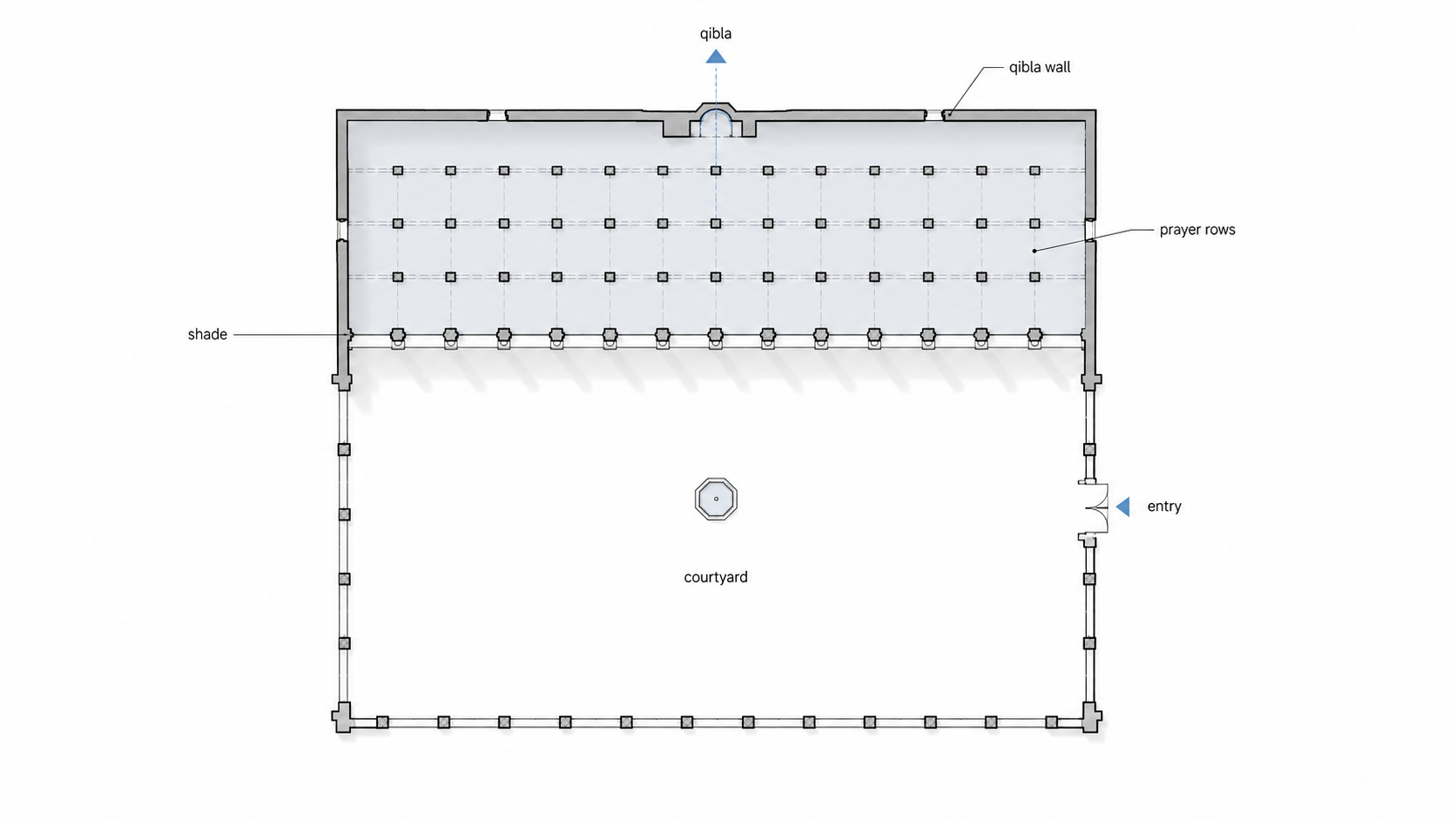
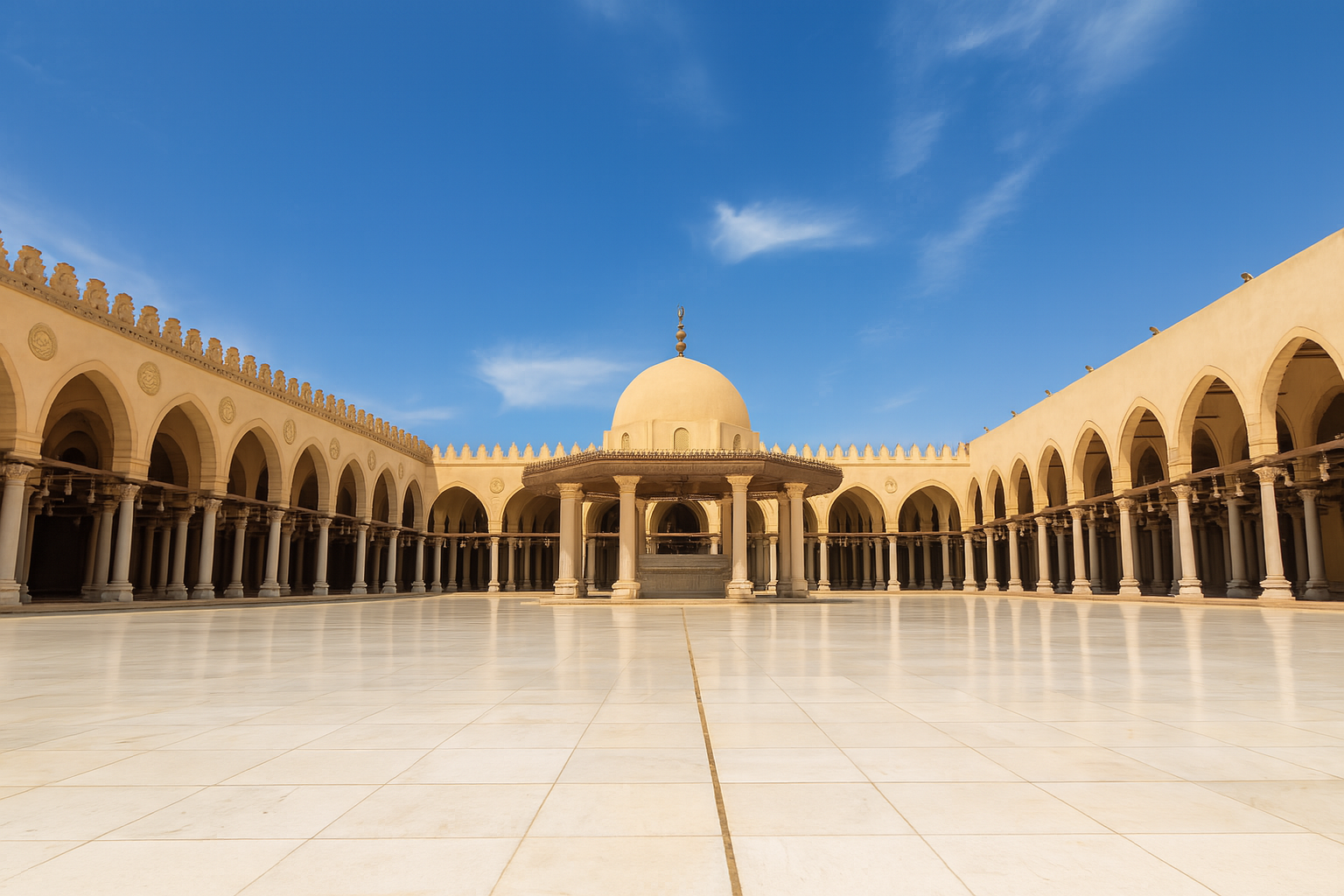
The Mosque of Amr ibn al-As is the key early reference. The building has been rebuilt many times, so it should not be treated as a perfectly preserved seventh-century mosque. The site matters because it anchors the arrival and long life of Islamic worship in Egypt.
The Nilometer on Roda Island is a different kind of Islamic-era architecture. It was not a mosque, palace, or tomb. It measured Nile flood levels, which affected agriculture, taxation, and administration. That makes it useful for students because it proves Islamic architecture in Egypt was also civic, technical, and administrative.
This early layer is easy to skip because it is less visually dramatic than Mamluk Cairo. But it is the foundation: prayer direction, water, reuse, settlement, civic measurement, and urban adaptation.
Ibn Tulun Mosque and the Power of Restraint
Ibn Tulun Mosque is one of Egypt’s most important architectural survivors because it shows scale without surface excess.
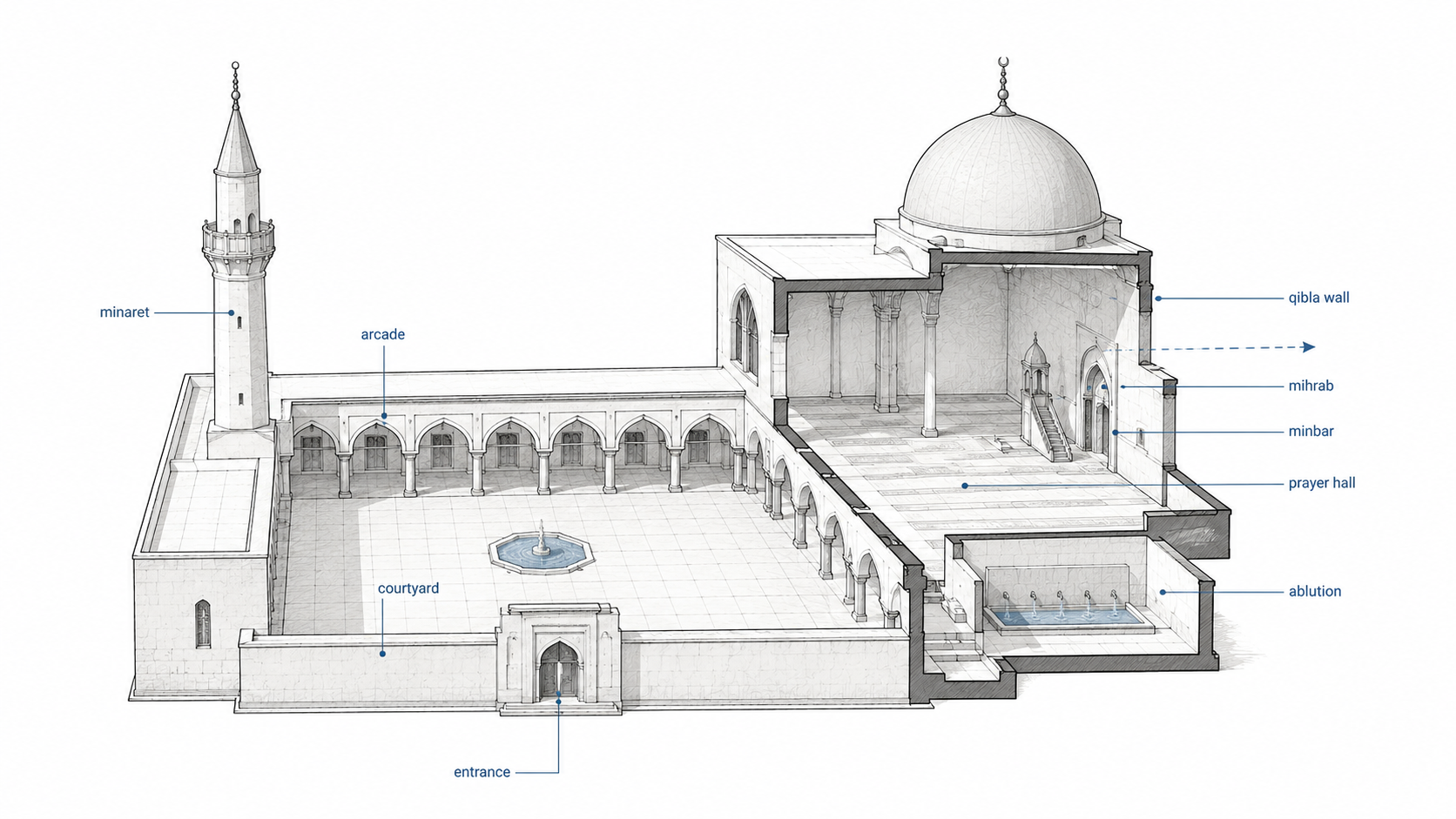
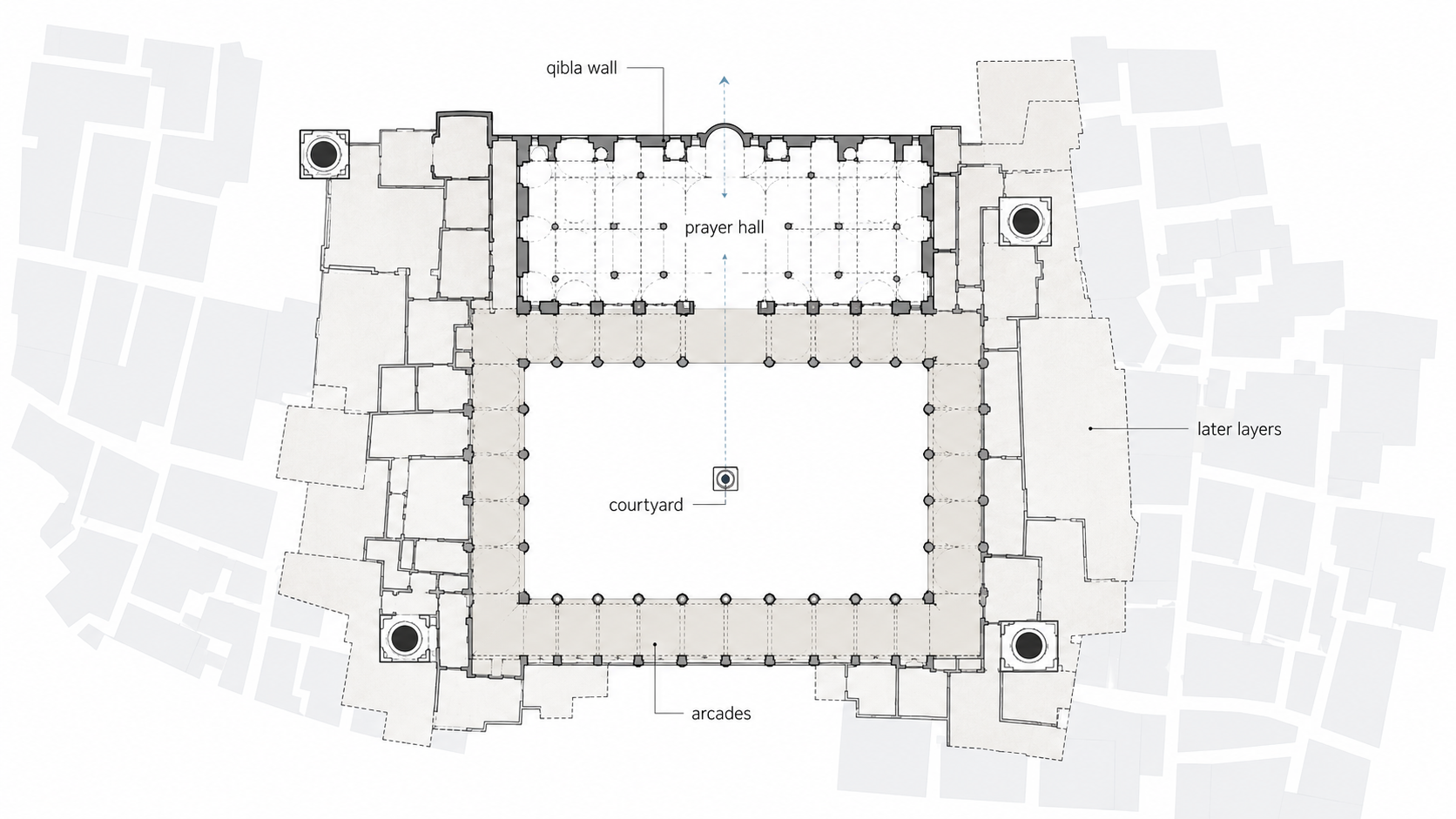
The mosque’s large courtyard, arcades, brick construction, measured repetition, and open spatial order make it different from later Mamluk monuments. It teaches through space and proportion more than decoration.
Students should look at the courtyard first. The sahn gives the building its breath. The surrounding arcades create shade and rhythm. The prayer hall edge gives the open court direction. The famous spiral minaret is memorable, but the plan is the better design lesson.
For the focused page, use Ibn Tulun Mosque.
Fatimid Egypt: Cairo Becomes the Center
The Fatimids made Cairo the architectural center of Islamic Egypt.
Their foundation of a new capital in 969 changed the map. Cairo was not only a settlement. It was a planned political and religious city with gates, processional routes, mosques, palaces, and ceremonial urban space.
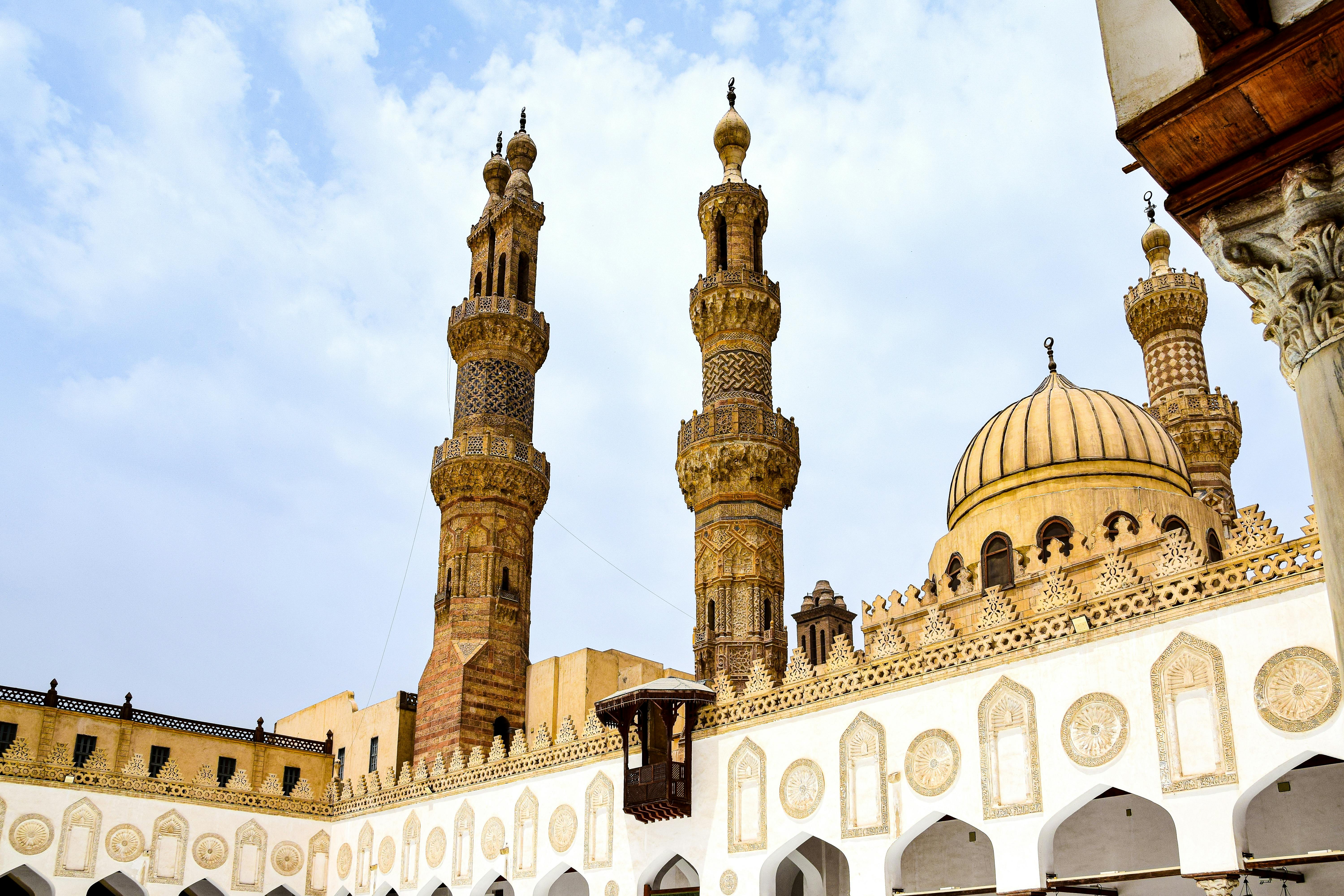
Al-Azhar Mosque is the most important Fatimid anchor, but its present form is not simply Fatimid. Later rulers added, repaired, expanded, and changed the building. That is exactly why it matters: Al-Azhar is a record of Egyptian Islamic architecture layered over time.
The Fatimid city gates also matter. Bab al-Futuh, Bab al-Nasr, and Bab Zuweila show architecture as threshold, defense, public control, and symbolic entrance. A gate is not just a hole in a wall. In Cairo, it became part of the city’s political image.
Al-Aqmar Mosque adds another lesson: the mosque front begins to work with the street. Instead of treating the facade as a simple flat religious wall, the building responds to urban alignment and public view. That is one reason Cairo is so useful for architecture students. The buildings are never separate from the street.
For the deep city reading, continue with Islamic Cairo.
Ayyubid Egypt: Defense, Walls, and the Citadel
The Ayyubid layer is less decorative, but it is architecturally important.
Saladin’s rule shifted attention toward defense, consolidation, and military control. Cairo’s Citadel gave rulers a raised political and military platform overlooking the city. Defensive walls, gates, towers, and controlled routes became part of the city’s architecture.
That does not make the Ayyubid period less Islamic or less architectural. It means the design problem changed. The city had to be defended, governed, and reorganized after Fatimid rule.
The Citadel also became a layered site. Later rulers built on it, most visibly Muhammad Ali’s 19th-century mosque. That creates one of Egypt’s clearest examples of architectural layering: medieval military siting with later Ottomanizing mosque image above it.
Mamluk Egypt: The Street Becomes Architecture
The Mamluk period is the strongest reason Egypt belongs near the center of any serious study of Islamic architecture.
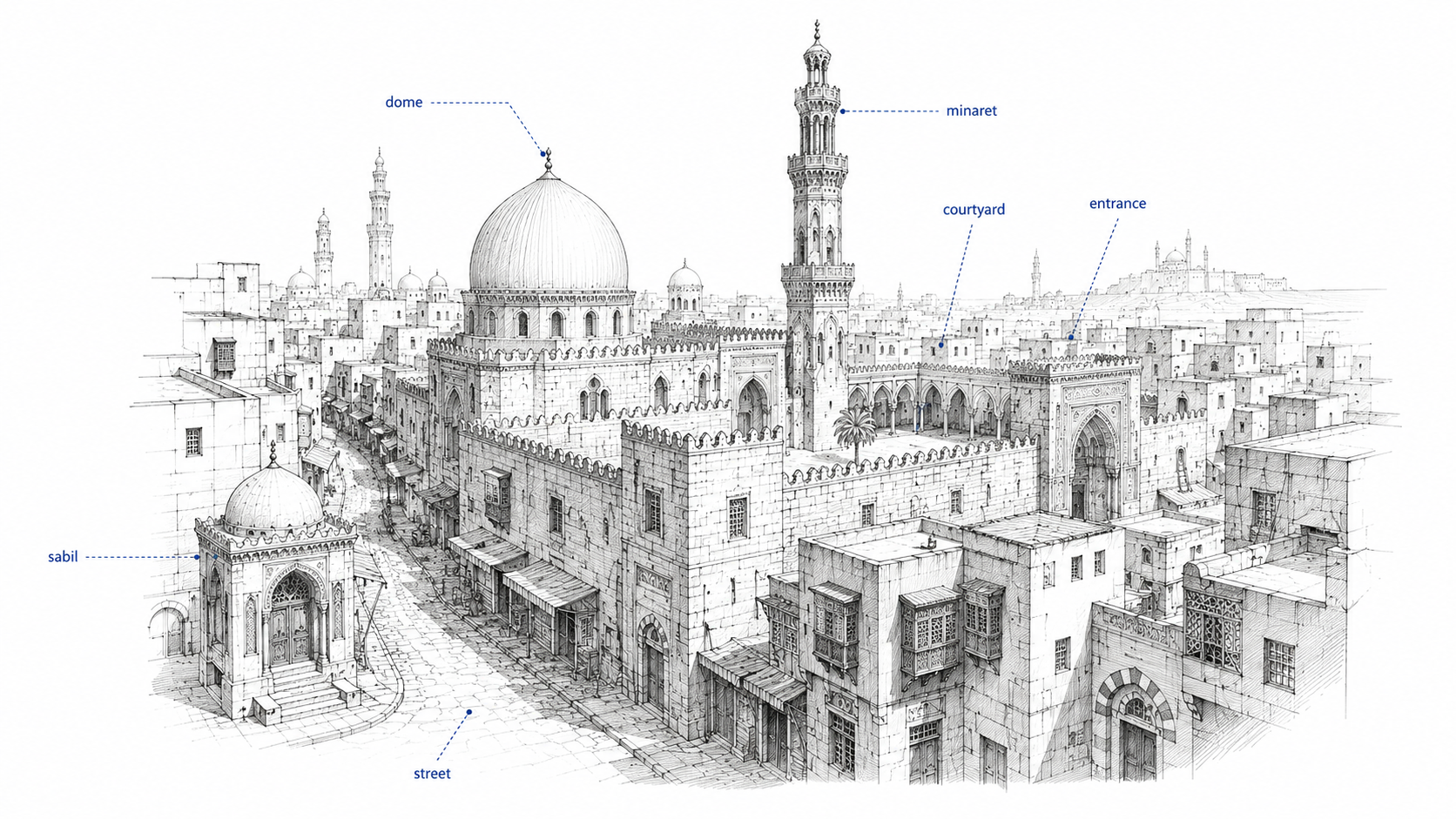
Mamluk builders did not only make mosques. They made urban institutions. A single complex could combine prayer, teaching, burial, public water, charity, patron memory, and street presence. That is why Mamluk Cairo does not feel like a museum of isolated buildings. It feels like a city made from architectural edges.
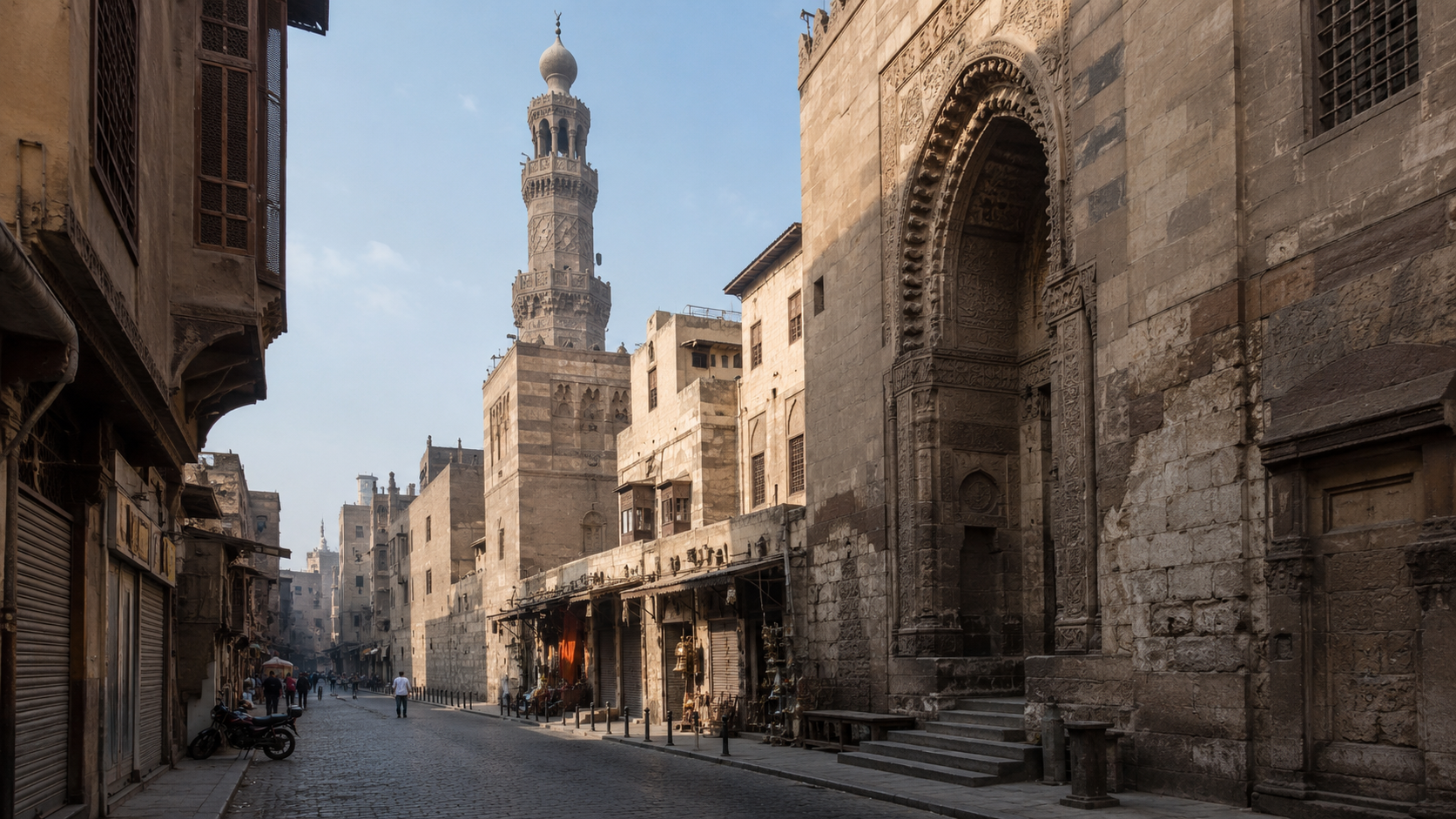
The key Mamluk lessons are stone, height, density, hierarchy, and public address. Portals project authority into narrow streets. Minarets become skyline markers. Mausoleum domes turn burial into visible urban memory. Carved stone, muqarnas, inscriptions, and marble panels create depth at the wall.
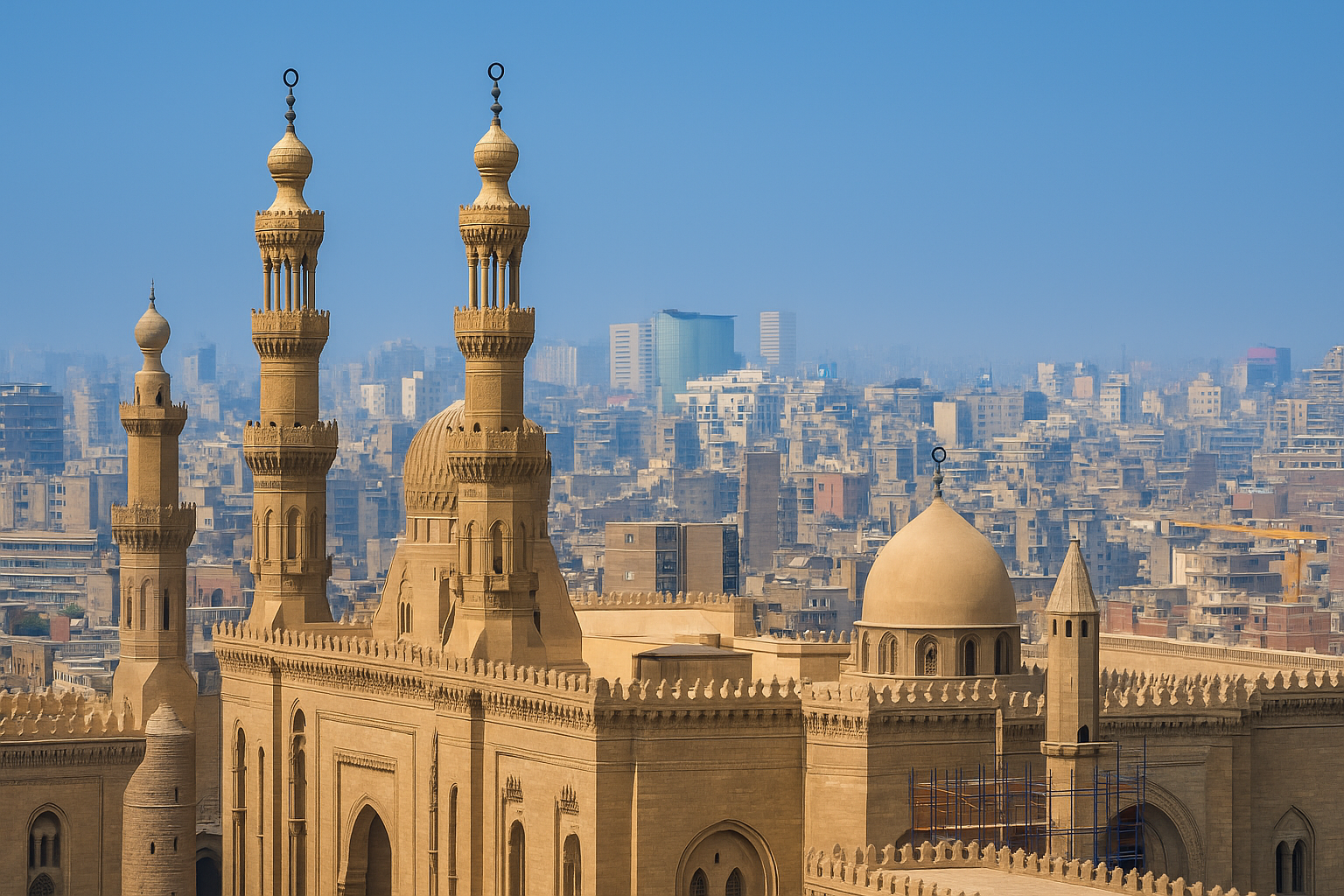
Sultan Hasan Mosque is the best-known masterwork because of its scale and spatial force. The Qalawun Complex teaches a different lesson: mosque, madrasa, mausoleum, and medical-charitable function connected to the public street. Qaytbay and Al-Ghuri show late Mamluk refinement, where detail, proportion, and urban placement become extremely controlled.
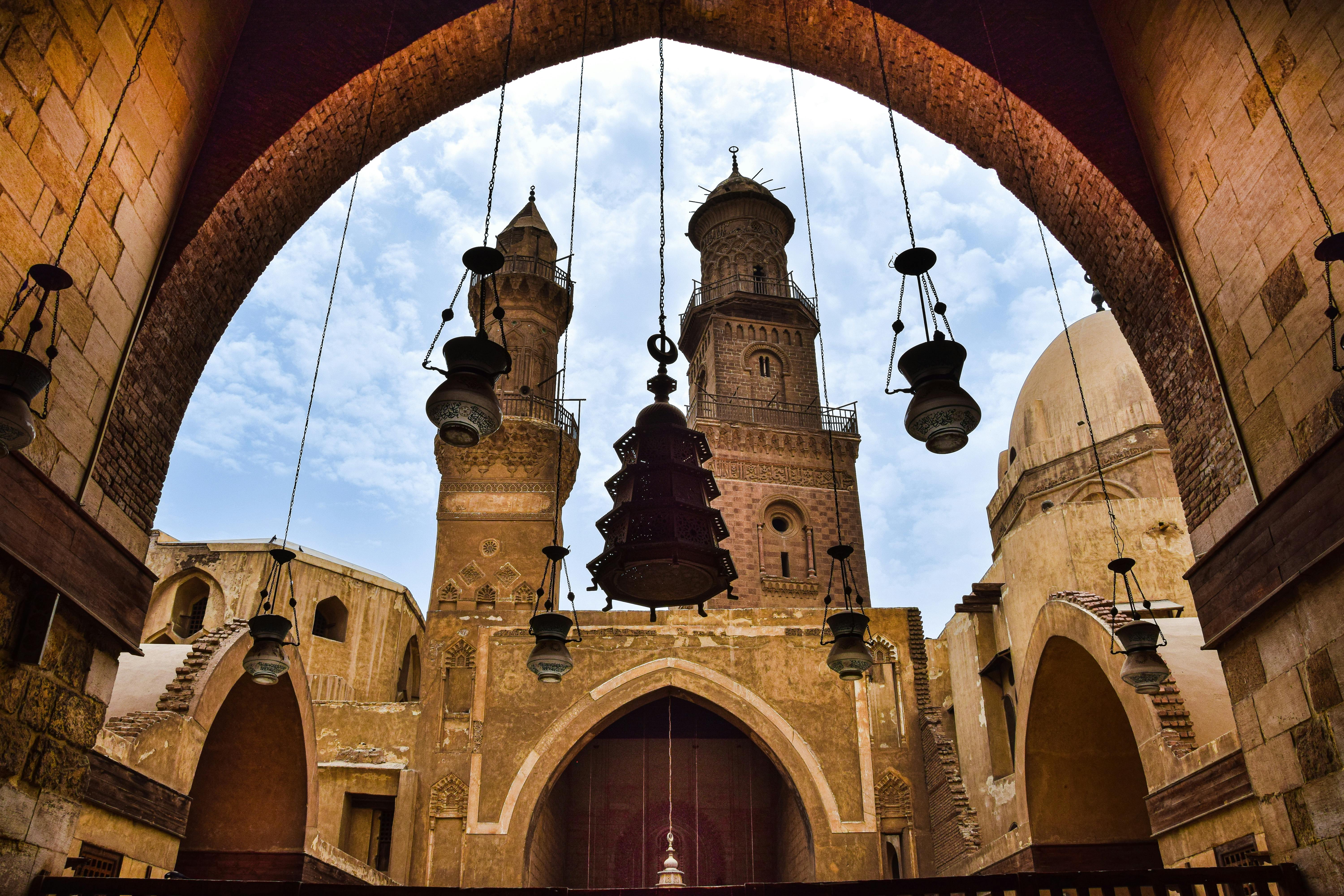
This is where Egypt’s contribution becomes clear. Mamluk architecture turns the city street into an architectural stage. The building is not just inside the walls. It is in the entrance, the shadow, the water station, the dome visible above roofs, and the minaret seen from the next street.
Ottoman Egypt: Addition, Contrast, and Domestic Architecture
Ottoman rule did not erase Mamluk Cairo.
It added another layer. In some places, Ottoman architecture brought central-domed mosque forms, slender minarets, new decorative habits, and different institutional patterns. In other places, the Ottoman period is more visible through houses, sabil-kuttabs, repairs, and smaller urban buildings than through giant imperial mosques.
Muhammad Ali Mosque at the Citadel is the clearest skyline statement. It looks toward Ottoman models more than medieval Cairo’s Mamluk language. That contrast is exactly why it matters. It shows Egypt linked to a wider Ottoman image while still sitting on a much older military and urban site.
Domestic architecture also matters here. Houses such as Bayt al-Suhaymi show how privacy, airflow, courtyards, screens, guest movement, and family life shaped Egyptian Islamic architecture outside the mosque.
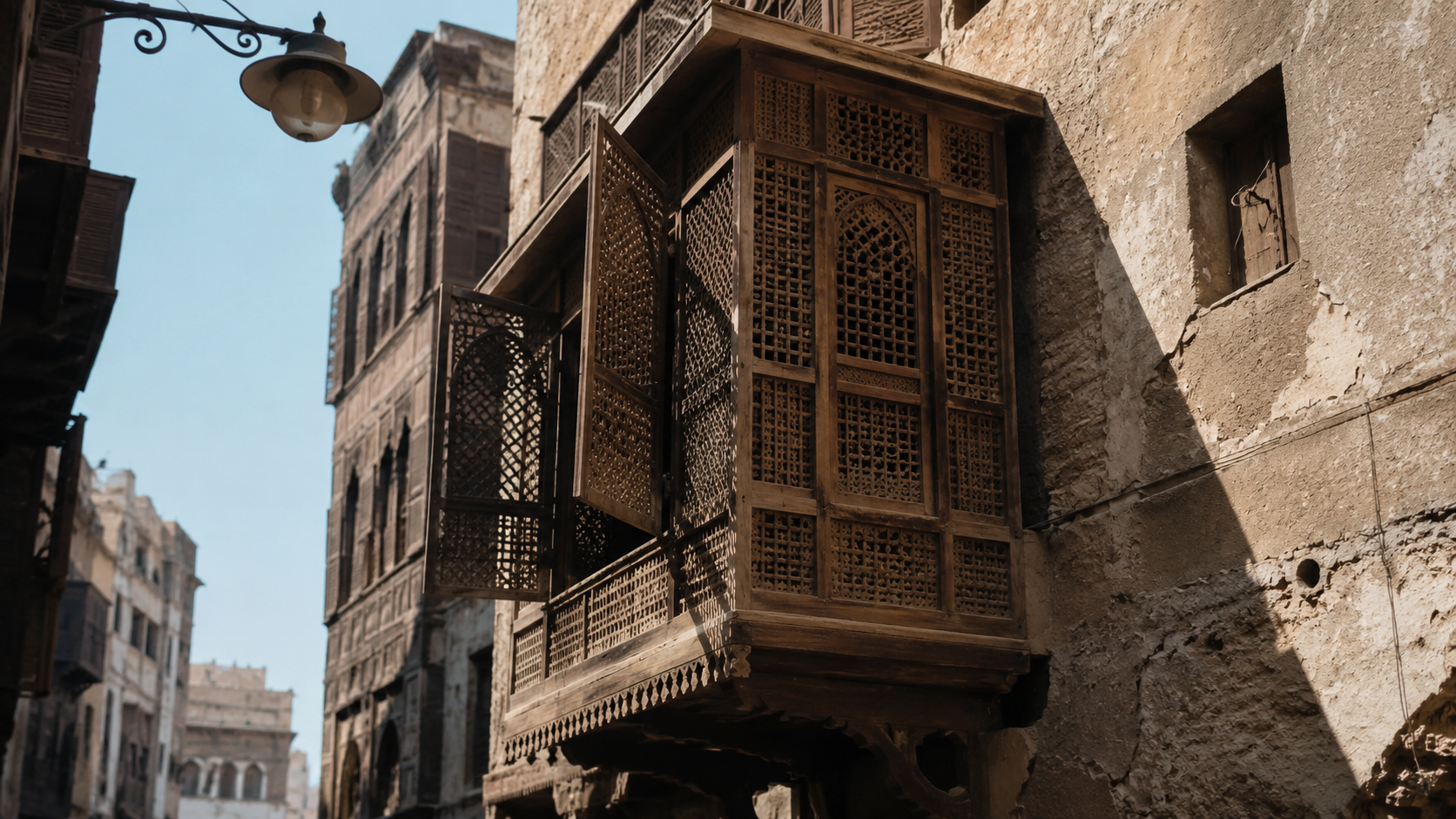
For the screen system, read mashrabiya designs.
Alexandria, the Delta, and the Problem of a Cairo-Heavy Story
Egypt’s Islamic architecture is often told as Cairo’s story because Cairo has the richest surviving concentration.
That does not mean the rest of Egypt is irrelevant. Alexandria, the Delta, Upper Egypt, and canal cities all carry Islamic architectural layers, but many are less preserved, less studied by general readers, more altered, or less visible in tourist routes.
This is one reason an Egypt-wide page matters. Cairo should not swallow the whole subject. Egypt’s Islamic building culture included mosques, houses, markets, water structures, shrines, cemeteries, schools, coastal buildings, and later civic architecture across different regions.
The safest way to study this wider map is to avoid pretending every region has the same level of surviving monumentality. Cairo dominates because it survived as a capital and institutional center. Other places teach through fragments, rebuilt mosques, local materials, neighborhood buildings, and later urban change.
Modern Egypt: Revival, Identity, and New Mosque Building
Modern Islamic architecture in Egypt is not one style.
From the 19th century onward, Egyptian architecture became more hybrid. Ottoman, Mamluk revival, European historicism, nationalist imagery, concrete construction, glass, new suburbs, and state mosque projects all entered the same field.
Al-Rifa’i Mosque is useful because it stands near Sultan Hasan and forces a comparison between medieval Mamluk power and later revival architecture. It is not simply “old Islamic architecture.” It belongs to a modern period thinking through memory, monarchy, religion, and public image.
Newer mosques in Cairo, new towns, and state developments often reuse Islamic forms: domes, minarets, arches, geometric screens, marble surfaces, and large prayer halls. Some examples use these systems thoughtfully. Others turn them into scale and image without the older climate, urban, or social intelligence.
That is the design problem modern Egypt keeps facing: how to use Islamic architectural language without reducing it to a dome, a minaret, and a patterned surface.
Climate and Material Are Not Side Details
Egypt’s Islamic architecture is built from climate decisions as much as religious forms.
Courtyards bring light and air into dense buildings. Arcades create shade. Thick masonry slows heat. Screens protect privacy while allowing air movement. Water structures, sabils, fountains, and ablution areas shape public and religious life. Narrow streets reduce direct sun and make walking possible in harsh conditions.
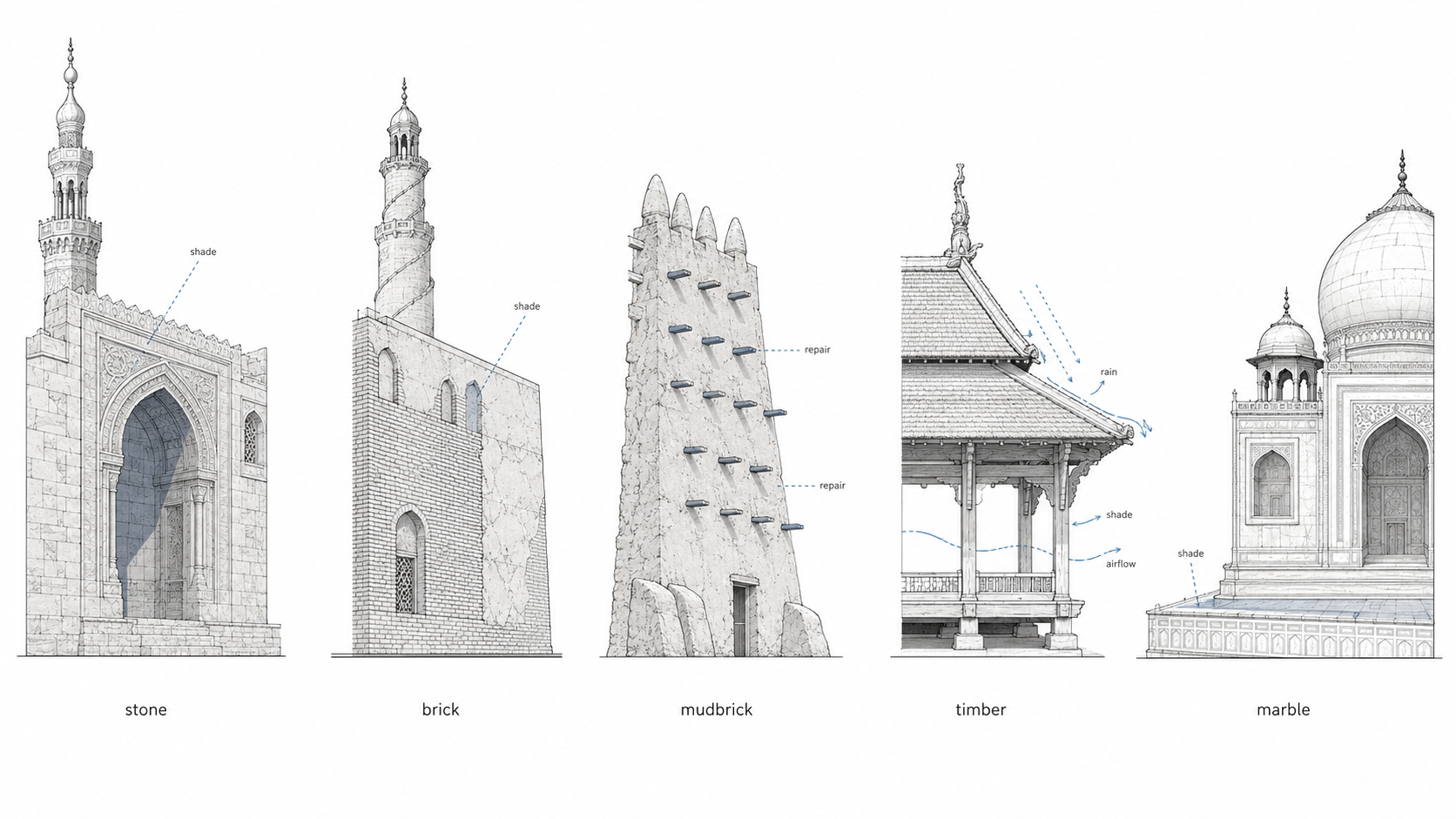
Material behavior matters too. Stone, brick, plaster, timber, lime mortar, marble, and tile age differently. A building that looks worn may still be performing well. A building that has been freshly painted may be hiding trapped moisture, salt damage, or bad repairs.
What Gets Misread in Egyptian Islamic Architecture
The first mistake is turning everything into a monument list.
Egypt’s Islamic architecture is not only a set of famous buildings. It is a long system of streets, thresholds, courtyards, institutions, repairs, water, shade, and layered use.
The second mistake is treating every building as a pure style sample. A Fatimid mosque may have later Mamluk additions. A Mamluk complex may be repaired with modern materials. An Ottoman-era building may reuse older urban patterns. The building you see is often a stack of decisions, not one clean date.
The third mistake is copying the visible forms without the building logic. A pointed arch, mashrabiya panel, dome, or muqarnas edge means less if it does not help with structure, light, privacy, climate, movement, or hierarchy.
| Weak reading | Better architectural reading |
|---|---|
| “This mosque is famous because it is old.” | Ask what survived, what was rebuilt, what was added, and how the building still works. |
| “Mamluk architecture is ornate.” | Study street presence, stacked functions, stone carving, portals, minarets, domes, and patron memory. |
| “Ottoman Egypt copied Istanbul.” | Look at how Ottoman forms were inserted into an older Egyptian urban and political landscape. |
| “Mashrabiya is decoration.” | Read it as privacy, shade, airflow, view control, and street-edge design. |
| “Modern Islamic buildings just need domes.” | Check whether the design handles light, heat, gathering, movement, material, and public use. |
Key Places to Study in Egypt
This list is not a tourist ranking. It is a study map.
| Place | Why it matters | What to look at |
|---|---|---|
| Fustat | Early Islamic settlement and urban foundation. | Reuse, excavation traces, early city logic, relationship to older urban fabric. |
| Mosque of Amr ibn al-As | Historic anchor of Islamic Egypt. | Rebuilding, site continuity, prayer function, relationship to Fustat. |
| Nilometer on Roda Island | Civic and technical Islamic-era architecture. | Measurement, administration, water, stone, practical design. |
| Ibn Tulun Mosque | Large early courtyard mosque with strong spatial clarity. | Sahn, arcades, brick, repetition, restraint, minaret, prayer hall edge. |
| Al-Azhar Mosque | Fatimid foundation and long-term religious learning institution. | Layers, courtyard, minarets, prayer hall, university identity. |
| Bab Zuweila, Bab al-Futuh, Bab al-Nasr | Fatimid and later city threshold architecture. | Defense, entry, street control, towers, urban symbolism. |
| Sultan Hasan Mosque | Mamluk monumental architecture at full force. | Portal, court, iwans, madrasa planning, masonry, scale. |
| Qalawun Complex | Mamluk institutional architecture. | Hospital, madrasa, mausoleum, street facade, patron memory. |
| Bayt al-Suhaymi | Domestic Islamic architecture in Egypt. | Courtyards, mashrabiya, privacy, airflow, family and guest movement. |
| Muhammad Ali Mosque | 19th-century Ottomanizing image on the Citadel. | Central dome, minarets, skyline, political image, layered site. |
| Museum of Islamic Art, Cairo | Object, craft, inscription, and material study. | Fragments, woodwork, metalwork, ceramics, inscriptions, portable arts. |
How to Study Egypt Like an Architect
Do not study Egypt by collecting monument names.
Study the building problem. Ask why a mosque is placed where it is. Ask how the courtyard handles heat. Ask where people enter. Ask what is original, what was added, and what has been repaired. Ask whether the wall is stone, brick, plaster, or later cement. Ask how the building meets the street.
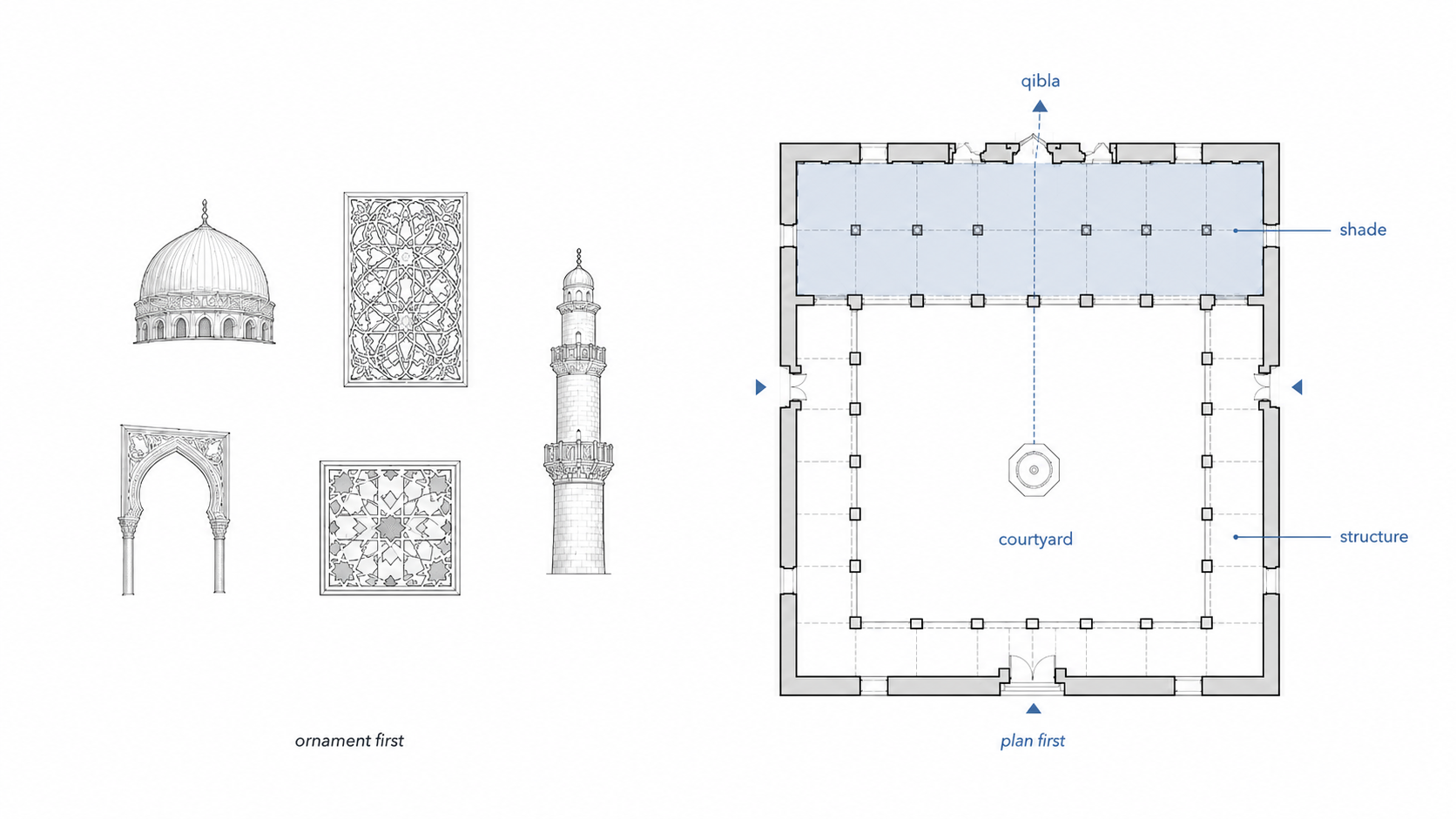
- Start with the site, not the ornament.
- Identify the period, but do not assume the whole building belongs to one date.
- Read the plan: courtyard, prayer hall, qibla wall, entrance, and circulation.
- Look at the street edge: portal, shops, sabil, minaret, shade, and crowding.
- Check climate response: shade, airflow, screens, wall thickness, and water.
- Separate structure from surface decoration.
- Look for repair scars, repainting, trapped moisture, missing wood, and changed stone.
For a serious field reference, Caroline Williams’s Islamic Monuments in Cairo is useful for readers who want monument-by-monument context while studying Egypt’s strongest surviving concentration of Islamic architecture.
What Egypt Still Teaches
Islamic architecture in Egypt matters because it never became only a museum subject.
The buildings were repaired, reused, expanded, damaged, painted, restored, crowded, photographed, prayed in, studied, and lived around. That is why Egypt teaches more than style. It teaches architectural endurance: how a building survives when climate, politics, worship, commerce, tourism, decay, and repair keep changing around it.
The strongest lesson is not that Egypt has old Islamic buildings. It is that so many of them still explain how architecture works when it has to serve a city for centuries.
FAQ
What defines Islamic architecture in Egypt?
Islamic architecture in Egypt is defined by mosque planning, courtyards, qibla orientation, minarets, domes, madrasas, sabils, street-facing monuments, mashrabiya screens, carved stone, and long-term urban layering. Cairo is the richest concentration, but the wider Egyptian story includes Fustat, Nile infrastructure, domestic architecture, Alexandria, and modern mosque building.
What is the oldest Islamic building in Egypt?
The Mosque of Amr ibn al-As is the key early mosque site, but the building has been rebuilt many times. The Nilometer on Roda Island is one of the most important early Islamic-era civic structures still studied today.
Why is Cairo so important to Islamic architecture?
Cairo has one of the world’s richest surviving concentrations of Islamic urban architecture. Fatimid gates, Mamluk complexes, Ottoman houses, mosques, madrasas, minarets, domes, markets, and public water buildings are packed into a dense living city.
Is Islamic architecture in Egypt only mosque architecture?
No. Mosques are central, but the tradition also includes houses, madrasas, mausoleums, hospitals, sabil-kuttabs, gates, walls, markets, water structures, museums, and modern civic buildings.
What makes Mamluk architecture in Egypt special?
Mamluk architecture is especially strong in street-facing monuments, carved stone portals, minarets, mausoleum domes, madrasa-mosque complexes, sabils, and buildings that combine religious, educational, charitable, and funerary functions.
How is Egyptian Islamic architecture different from Ottoman or Persian architecture?
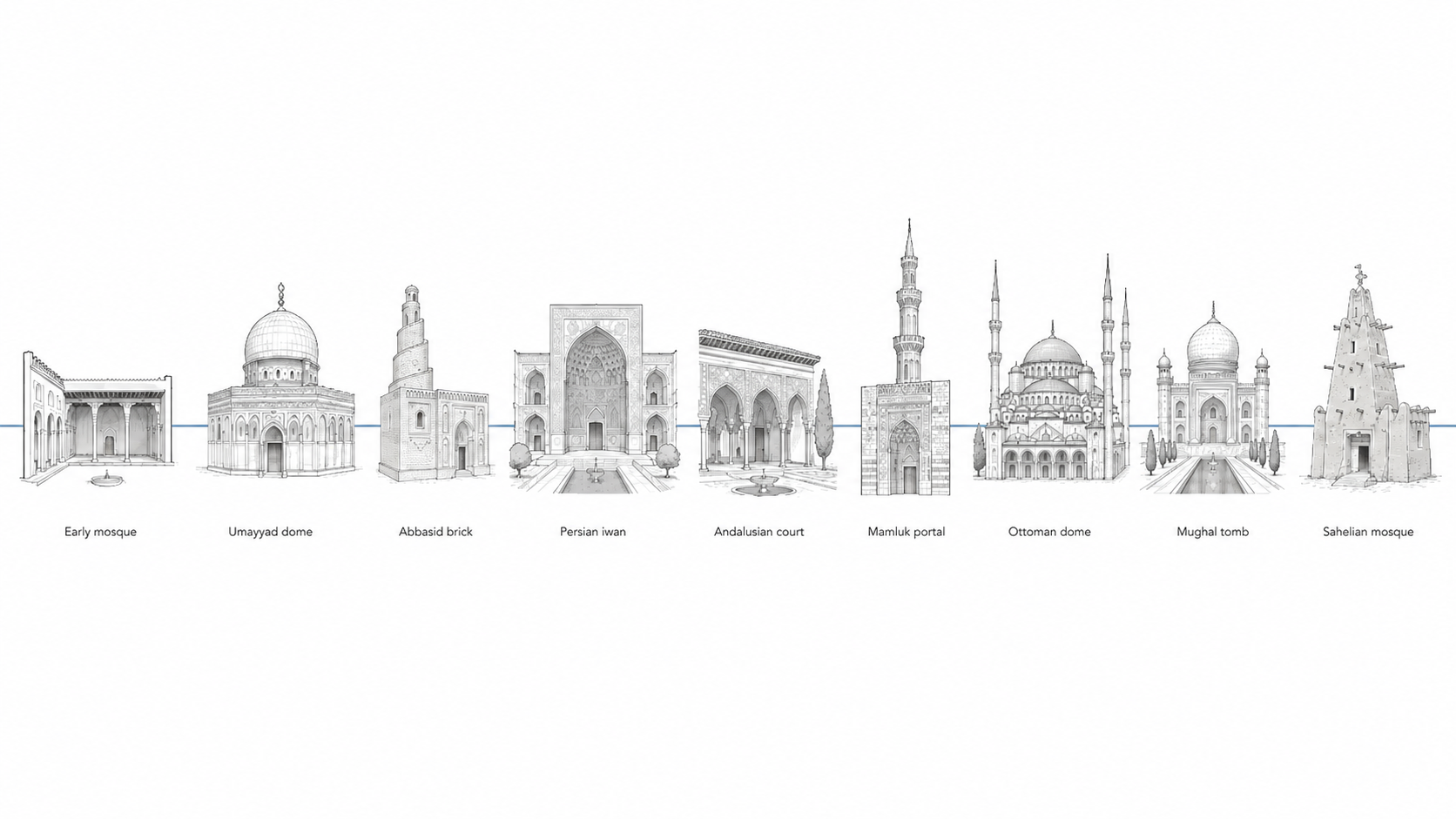
Egypt shares many Islamic design systems with other regions, but Cairo’s dense street fabric, Mamluk stone architecture, layered mosque additions, and long survival of urban monuments give it a different character from Persian iwan mosques or Ottoman central-domed mosque traditions.
Where should students start?
Start with Ibn Tulun Mosque for courtyard planning, Al-Azhar for layers, Sultan Hasan for Mamluk scale, the Qalawun Complex for institutional architecture, Bayt al-Suhaymi for domestic climate logic, and the Nilometer for civic infrastructure.
Read This Next
For the deep city version, read Islamic Cairo. For the parent page, use Islamic architecture. For chronology, continue with Islamic architecture history.
For related Egyptian and Islamic design systems, continue with Al-Azhar Mosque, Ibn Tulun Mosque, courtyards in Islamic architecture, Islamic arches, mashrabiya designs, and muqarnas architecture.