
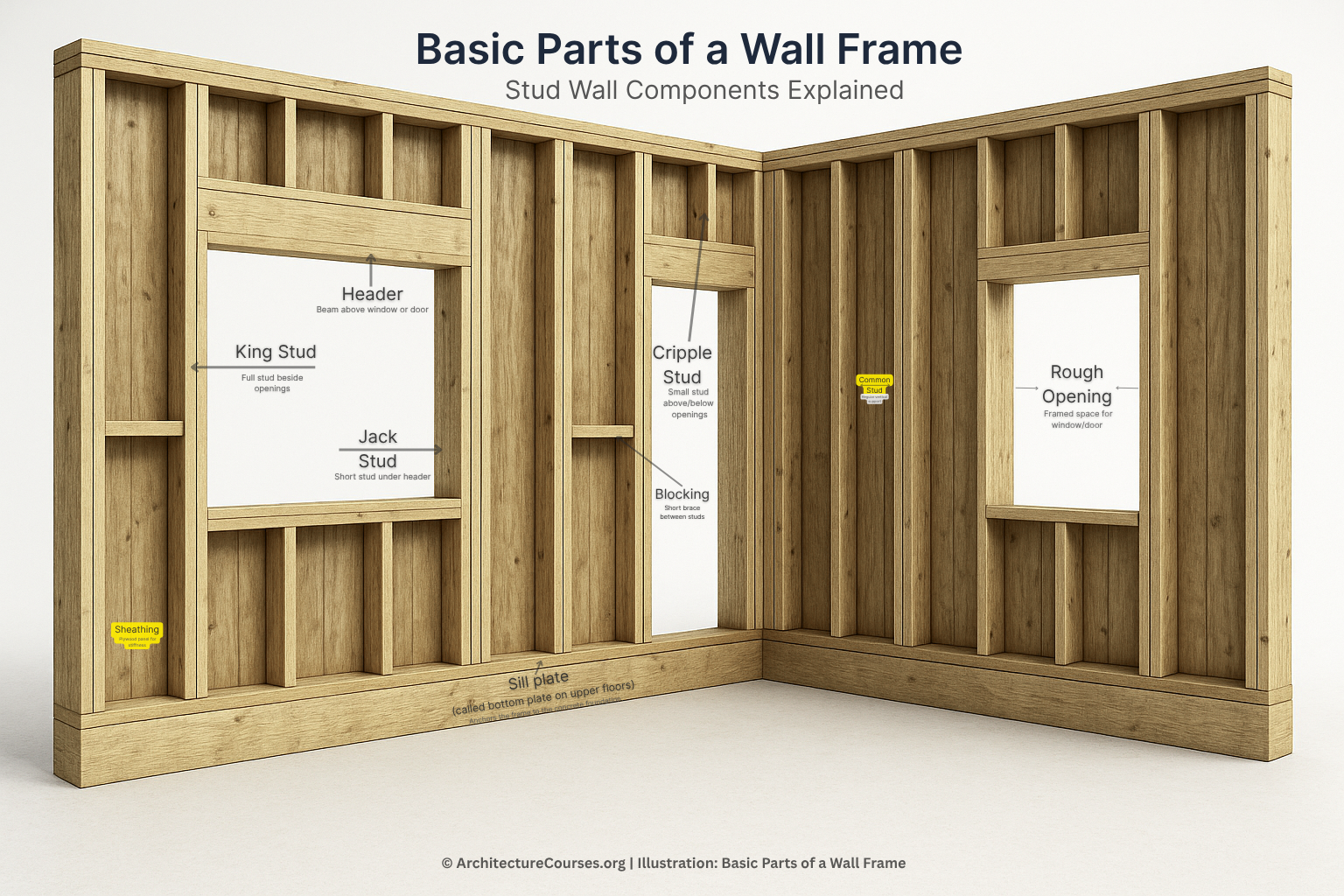
House framing decides a lot early. If the layout, bearings, or connections are wrong here, the problems do not stay here. They show up later as crooked openings, squeaky floors, cracked drywall, and roof tie-ins that never land cleanly.
This hub pulls the framing lessons into one place, from load paths and wall framing to roof framing and tie-ins. Some pages are live now. Others are still being added. Use it to learn the sequence, check a detail fast, or go back to one part of the frame before a small mistake gets buried.
Start Here First
If you are new to framing, do not bounce around randomly. Start with the broad frame, then move into walls, openings, and roofs.
- House Framing 101: Start-to-Finish Overview
- House Framing Diagrams: How to Read a House From Foundation to Roof
- Construction Framing Types: Wood, Steel, Timber, Post-Frame
- How to Build Your Own House: A Step-by-Step Guide
Why Good Framing Changes Everything Later
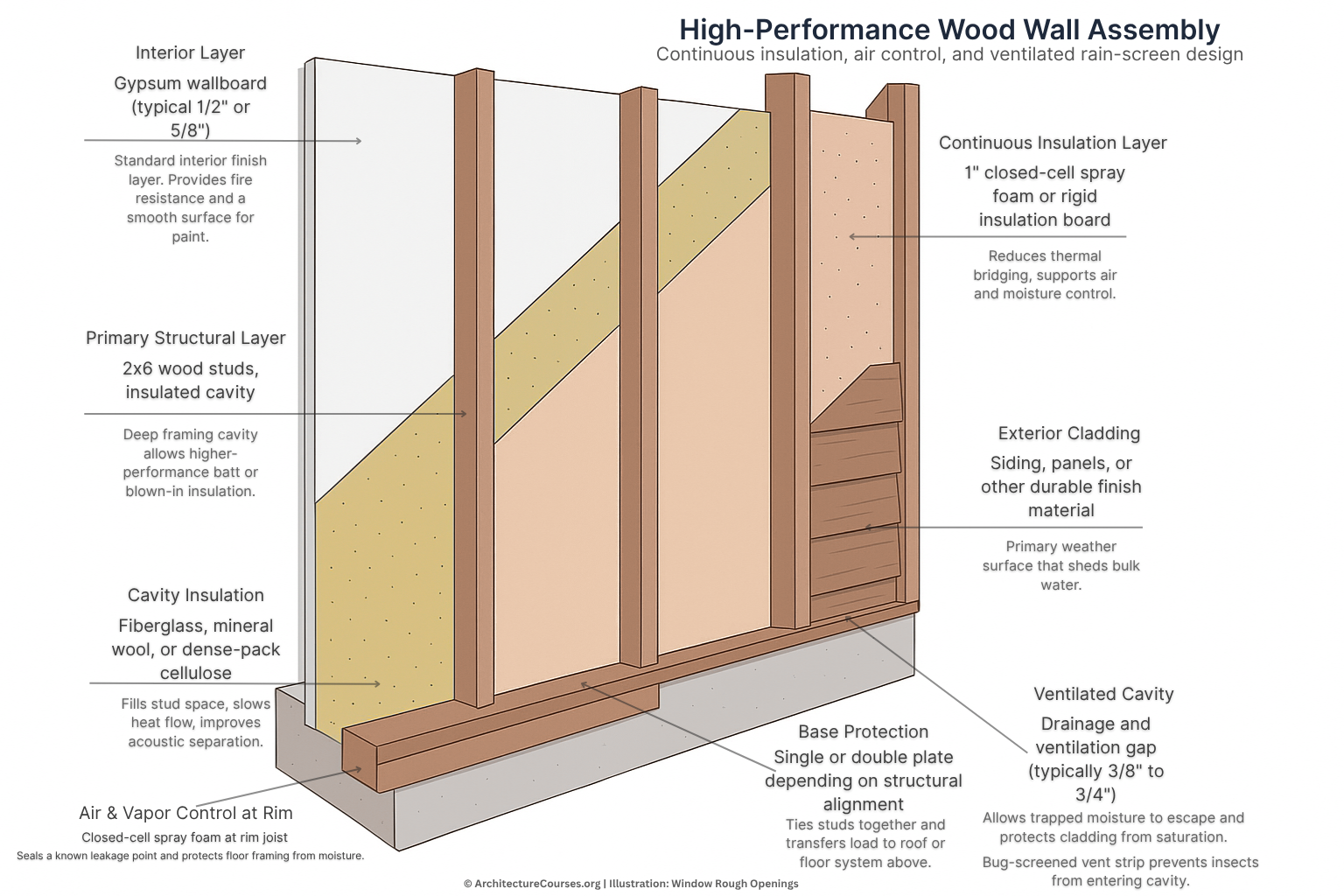
Framing looks simple until the rest of the job depends on it. A wall that is slightly out of square turns into trim problems, cabinet problems, flooring problems, and roof problems.
Good crews care about layout, crowns, bearing, plumb, and fastening before the sheathing goes on. Once the frame is locked in, every shortcut gets harder to fix.
- Bad layout throws off windows, doors, drywall, and trim.
- Weak load paths show up later as sag, spread, or movement.
- Missed blocking and backing turn simple finish work into callbacks.
This course is built to help you see the frame as a system, not a pile of boards.
| Module | Main focus | Best if you need help with |
|---|---|---|
| 1. Core Concepts | Load paths, frame basics, framing systems | Understanding how the whole house frame works |
| 2. Walls | Studs, plates, layout, wall assembly | Wall framing, stud layout, plumb walls |
| 3. Openings | Windows, doors, headers, rough openings | Framing around doors and windows |
| 4. Roofs | Rafters, ridge members, tie-ins, sheathing | Roof framing and roof-to-wall connections |
| 5. Floors | Joists, subfloors, supports, span logic | Bouncy floors, joist layout, subfloor prep |
| 6. Bracing | Lateral loads, shear, straps, load transfer | Wind resistance and wall bracing |
| 7. Advanced Walls | Energy framing, double-stud walls, SIPs | High-performance wall systems |
| 8. Codes | Fire blocking, drywall, fastening, inspection basics | What inspectors flag and why |
| 9. Tools | Nailers, connectors, layout gear, fasteners | What to buy and what each tool does |
| 10. History | Balloon framing, platform framing, timber systems | How framing methods changed over time |
Best Order If You Are Starting From Zero
- Start with the broad frame and load path pages.
- Move into wall framing and stud layout.
- Learn headers, rough openings, and door or window framing.
- Then move up to roof framing and roof-to-wall connections.
- Finish with bracing, code basics, and tools.
If you already know one area, skip ahead. The sequence still matters because each part of the house leans on the one before it.
Module 1 — Core Concepts and Load Paths

Start here if framing still feels like separate parts instead of one system. This module gives you the basic logic behind the house frame before you start chasing details.
House Framing 101: Start-to-Finish Overview
A clear breakdown of studs, plates, headers, beams, joists, and sheathing, and how they work together as one structural system.
Stud Spacing Rules in Framing (16 vs 24 OC)
Why 16" on center is still standard, when 24" on center can work, and how sheathing, drywall, and loads change that decision.
Construction Framing Types: Wood, Steel, Timber, Post-Frame
The main framing systems used in houses and small buildings, and where each one still makes sense.
Understanding Structural Support: Load Paths Explained
A plain-English look at how loads move through walls, floors, beams, and foundations, and why broken load paths cause expensive trouble later.
Structural Design 101: The Concepts Behind Safe Frames
A broader structural primer for readers who want the logic behind framing choices, spans, bearing, and support.
Good framing is just load paths kept straight, tied together, and built in the right order.
Module 2 — Wall Framing: Studs, Plates, Blocking
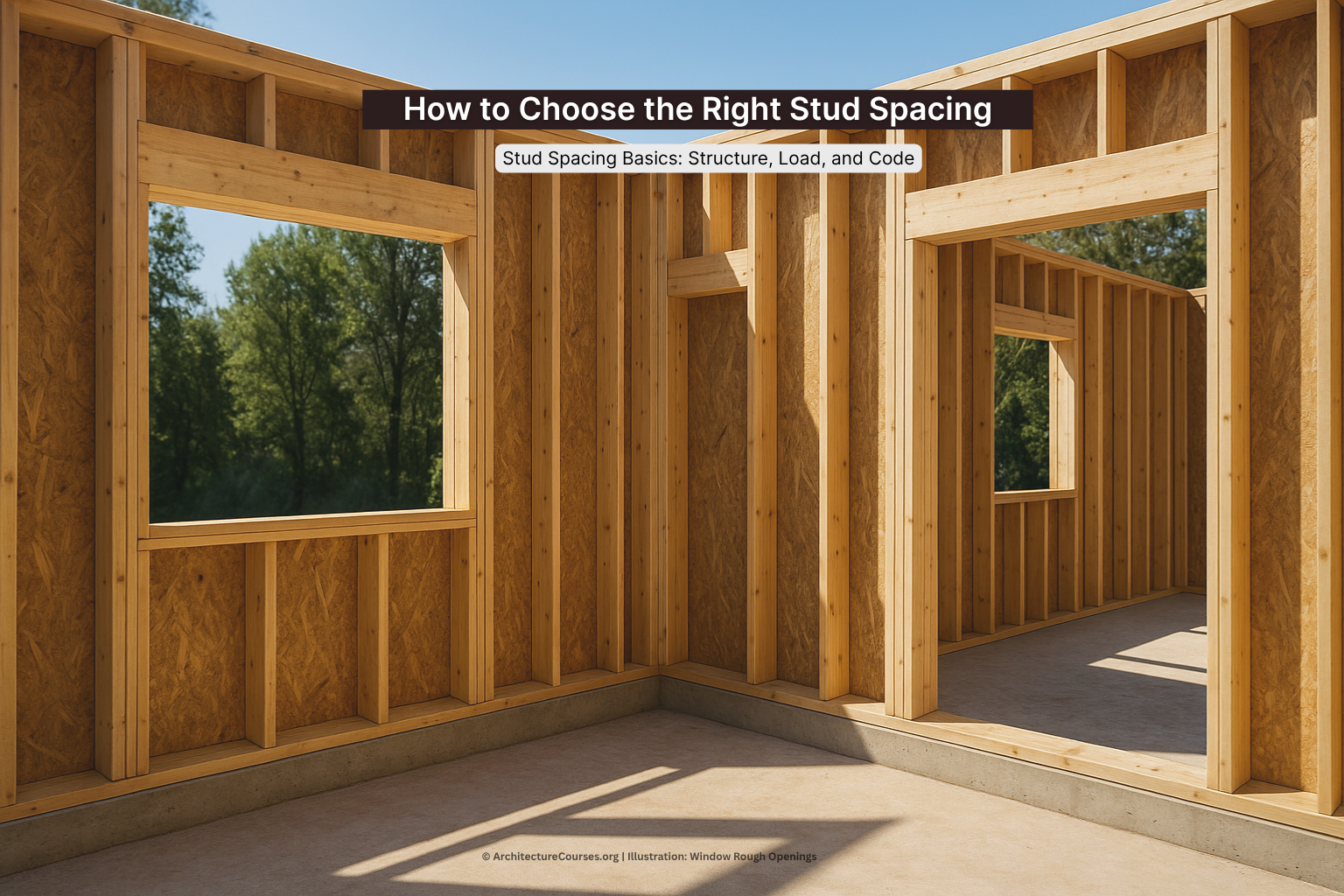
This is where layout errors start costing time. Wall framing looks repetitive, but small mistakes here keep showing up later in drywall, trim, cabinets, and roof tie-ins.
How to Frame a Wall: Step-by-Step Layout to Bracing
A practical walkthrough from plate layout to standing the wall and holding it plumb.
Wall Framing Basics: Studs, Plates, Blocking, Spacing
The basic wall parts, what each one does, and where framing starts going wrong.
Single-Story vs Two-Story Framing: What Changes
How loads, stud stacking, floor interfaces, and tie-ins change once the house goes beyond one level.
King and Jack Studs: Header Support Basics
Why these studs matter, where they go, and how opening size changes the framing around them.
Load-Bearing vs Non-Load-Bearing Walls
A useful side path when you are trying to tell which walls carry structure and which ones only divide space.
Wood Studs vs Metal Studs: When Each Wins
When light-gauge steel makes sense, where wood still wins, and what changes in cutting, backing, and field adjustment.
Advanced Wall Framing: 24" OC, Ladder Blocking, Single Top Plates — coming soon
Material-saving wall layouts, insulation-friendly corners, and where these methods still need careful structural checks.
Keeping Walls Straight and Plumb: Field Methods — coming soon
Temporary bracing, line checks, laser checks, and the small field habits that keep wall framing from drifting.
Module 3 — Openings: Windows, Headers, Doors

Openings are where the stud line breaks and the load path has to be rebuilt. This is also where leaks, sag, and bad rough openings tend to start.
Window Rough Openings: How to Frame and Measure
How to mark and frame consistent rough openings with the right studs, layout, and fit.
Window Header Framing: Sizes, Bearing, Common Mistakes
What headers carry, how bearing works, and why overbuilding and underbuilding both cause trouble.
How Many Jack Studs for a Header?
A practical support page for one of the most common framing questions around wider openings.
Frame a New Window in an Existing Wall
How to cut in a new opening, relocate framing, and rebuild the load path without making a mess of the wall.
Wooden Window Frame Replacement
Old frame removal, rot repair, opening prep, and reset basics for retrofit window work.
Door Frames: Sizes, Parts, and How to Build One
A practical door-framing page that fits this module better than leaving every door detail as a placeholder.
Box Headers vs Flush Headers — coming soon
A practical comparison of traditional built-up headers and flush header layouts used in better insulated wall systems.
Flashing Windows and Doors — coming soon
Pan flashing, tape sequence, sill slope, and the parts that keep framed openings from turning into leak points.
Garage Door Headers and Bearing — coming soon
Wide openings, deeper headers, and the bearing details that matter when the loads get bigger.
Header Math: How to Size Headers Without Overbuilding — coming soon
Span tables, bearing length, and when doubling or tripling members is doing useful work versus wasting lumber.
Module 4 — Roof Framing and Tie-Ins

Roof framing is where bearing, alignment, and tie-ins get serious. Small mistakes here do not stay small for long.
Ridge Beams in Roof Framing
When the ridge carries load, where it bears, and why confusing ridge beams with ridge boards causes bad roof assumptions.
Roof-to-Wall Connections: Straps, Clips, Load Path
The hardware and logic behind uplift resistance and continuous roof load paths.
Saltbox Roof Framing
Asymmetrical roof framing, unequal rafter geometry, and how those cuts tie back into the wall system.
Gable Roofs Explained
The basic gable roof structure, from ridge to rafter layout and the parts that matter for support and alignment.
Rafter Ties vs Collar Ties
One of the most useful tie-member comparisons for readers trying to understand roof spread, uplift, and where each piece belongs.
Roof Tie Beams: Where They Fit
A useful support page when rafters, ties, and beam language start getting mixed together.
Hip Roof Framing and Hip Jack Layout — coming soon
Hip rafters, jack layout, and the transfer of roof loads at more complex intersections.
Trusses vs Rafters: Speed vs Control — coming soon
When engineered trusses win, when site-built rafters still make more sense, and what changes in layout and flexibility.
Birdsmouth Cuts and Rafter Bearing Rules — coming soon
Notch depth, seat cuts, bearing width, and why a sloppy birdsmouth turns into roof problems later.
Exterior Roof Sheathing
Roof deck basics, sheathing layers, and the part the roof plane plays in keeping the assembly stable.
Module 5 — Floor Systems, Joists, and Subfloors
Floor framing is easy to ignore until the house feels bouncy, noisy, or out of level. This module covers the support under everything else.
How Floors Work: Joists to Finished Floor
A broad floor-system overview that helps this module feel more complete from the start.
Structural Floor Systems: Joists, Beams, and Subfloors
A stronger live support page for floor framing logic, load transfer, and how assemblies go together.
Pier and Beam Foundation: Posts, Beams, and Floor Support
How floor framing sits on posts and beams, and where stability depends on good connections and bracing.
Subfloor Basics: What to Check Before Any Finish
A good live companion to squeaks, movement, fastening, and finish-floor prep.
Floor Failures: Diagnose Sagging, Bounce, Rot, and Squeaks
A practical problem page that helps readers understand what floor-framing mistakes look like later.
Floor Joist Spacing and Span Rules — coming soon
Common joist sizes, span logic, spacing, and how to read the tables without guessing.
Blocking, Bridging, and Rim Joists — coming soon
The details that stiffen floor framing and keep the outside edge of the platform doing its job.
Joist Hangers, Ledger Boards, and Structural Fasteners — coming soon
Where hangers, bolts, and structural screws matter, and why using the wrong fastener ruins the connection.
Engineered Floor Systems: I-Joists and Open-Web Trusses — coming soon
Longer spans, lighter framing, and the hole-cutting limits that matter once mechanical trades show up.
Module 6 — Bracing, Shear Walls, and Lateral Loads
A house that can carry vertical load can still fail sideways. This module covers the bracing and connector logic that keeps the frame from racking.
Drag Struts in Framing: Purpose and Installation
How drag members collect and move lateral loads across walls, floors, and roof planes.
T-Brace Framing: When and How to Use Let-In Bracing
Where let-in bracing still applies, what its limits are, and when full sheathing is the safer move.
House Sheathing 101: Thickness, Materials, Nailing
A useful support page when bracing shifts from abstract force talk to panels, nailing, and stiffness.
Exterior Wall Sheathing: Types and Best Practices
A practical side path for wall bracing and panel choice, especially when people are deciding between OSB, plywood, and layout methods.
Shear Wall Layout and Hold-Down Rules — coming soon
Panel layout, nailing fields, hold-downs, and the anchor details that keep walls from racking.
Wall Bracing Methods Under IRC and CBC — coming soon
A practical reading of prescriptive bracing rules, especially where wind and seismic demands increase.
Continuous Load Path for Wind and Quake Zones — coming soon
How roofs, walls, and foundations stay tied together when lateral forces get serious.
Module 7 — Advanced Wall Systems and Energy Framing
This is where standard 2x4 and 2x6 framing stops being the whole story. These lessons cover the wall systems used when insulation, airtightness, and thermal control matter more.
Exterior Wall Assembly Hub
A useful live page for readers moving from simple stud walls into layered wall assemblies, control layers, and envelope logic.
2x6 vs Double-Stud Walls — coming soon
The trade-off between thickness, cost, insulation depth, and moisture risk.
SIPs (Structural Insulated Panels): Framing Tie-Ins — coming soon
How panel systems tie into conventional wood framing at floors, roofs, and openings.
Larsen Truss Energy Walls — coming soon
Deep retrofit wall systems, fastening logic, and where this approach starts to make sense.
Exterior Continuous Insulation with Furring Strips — coming soon
How exterior insulation changes cladding attachment, drying, and thermal performance.
ICF Integration: When Foam Forms Replace Stud Walls — coming soon
How wood framing connects back into ICF walls without losing the structural logic.
Smart Vapor Control Layers — coming soon
Modern vapor control, drying potential, and where old poly-sheeting habits no longer fit.
Module 8 — Fire, Sound, and Framing Codes
Framing does not stop at structure. Fire blocking, fastening, drywall, and inspection rules all change what counts as acceptable work.
How Drywall Interacts With Framing and Codes
Why drywall is not just finish material. It also affects fire separation, stiffness, backing, and code compliance.
Drywall 101
A useful supporting page when this module shifts from framing structure to finish interfaces, backing, and code logic.
Fire Blocking: 10 Places You Can’t Miss — coming soon
The cavities, soffits, top plates, and concealed spaces that need blocking before inspection.
Draft Stopping in Attics and Walls — coming soon
How compartmentalization limits smoke spread and why those details still matter even when they feel minor.
Soundproofing Wall Frames — coming soon
Framing choices that improve sound control before finishes try to solve it later.
Energy Code Changes in 2025 — coming soon
Insulation and air-sealing rules that change opening details, sheathing strategy, and wall thickness.
Fastening Schedules Inspectors Flag — coming soon
The nailing and edge-spacing mistakes that keep showing up in inspections.
Module 9 — Tools, Fasteners, and Layout Gear
Tools do not fix bad layout, but they do make clean layout easier to repeat. This module covers the gear that helps the job move faster and cleaner.
Pocket Door Frame Systems
Pocket door framing basics, the kits worth trusting, and where these systems fail when the wall is weak.
Best Framing Nailers and Models Worth Buying — coming soon
Stick versus coil, pneumatic versus cordless, and which trade-offs matter on site.
Clips, Straps, Ties: Which Structural Connectors You Need — coming soon
A practical guide to the common framing connectors and where each one belongs.
Screws vs Nails in Wood Framing — coming soon
Where nails still win, where screws help, and why shear behavior matters more than preference.
Framing Squares, Chalk Lines, and Laser Layout Tools — coming soon
The everyday layout tools that keep framing mistakes from getting buried into the work.
Anchor Bolts and Ledger Fasteners — coming soon
Setting anchor bolts, drilling retrofit anchors, and choosing fasteners that match the load and material.
Module 10 — How Framing Evolved: From Timber to Platform
Framing systems did not land where they are by accident. This module gives the longer story behind why builders moved from timber to balloon framing and then to platform framing.
Balloon Framing: How It Works (and Where It Shows Up)
The full-height stud system that shaped early wood-frame housing and still shows up in older houses.
Balloon Framing History: Why It Shaped American Houses
How cheap nails, machine-cut lumber, and speed changed American house construction.
Timber Frame Beams and Posts: Essentials
A good live branch page when the history of framing starts touching heavy timber and structural timber systems that still matter now.
Platform Framing Adoption and Fire Codes — coming soon
Why platform framing took over and how fire spread concerns helped push the shift.
Timber Framing Revival and Hybrid Systems — coming soon
How timber framing still shows up today in hybrid walls, specialty structures, and high-end builds.
Capstone — Build a Full Wall With Openings
Once you understand walls, openings, and roof tie-ins, this is the job that pulls the course together.
Goal: frame one full wall with two windows and one door, then sheath it, brace it, and tie it back into the floor and roof layout.
Framing FAQ
Can I frame my own interior wall without permits?
If it is not load-bearing and you are not moving plumbing, many places allow it without a permit. Check with your local building office first. They set the rules.
Do I need double top plates?
In standard platform framing, yes. One plate helps with layout and seams. The second ties walls and intersections together.
Should I glue subfloors?
If you want a quieter floor, glue the subfloor and fasten it properly. Nails alone are where squeak problems often begin.
What is the right stud spacing?
16" on center is still the default. 24" on center can work, but it depends on the wall system, loads, and sheathing.
How tall can I frame a 2x4 wall?
That depends on spacing, species, grade, and what the wall is carrying. Check the span and height tables instead of guessing.
What is better for framing: screws or nails?
Most framing is still nailed for speed and shear strength. Screws help in some specialty situations, but they do not replace structural nailing by default.
Do jack studs really do anything?
Yes. They support headers and help carry the load around the opening. Skip them and the problem shows up fast.
Can I cut joists to run plumbing?
Only within code limits. Hole and notch locations matter. Cut the wrong part of the joist and you weaken the floor.
When do I need a ridge beam instead of a ridge board?
When the roof needs the ridge to carry vertical load instead of simply align the rafters. That usually happens when ties or ceiling joists are not doing the spreading control below.
What happens if I skip fire blocking?
Wall and floor cavities become fast paths for flame and smoke. It is a safety issue and an inspection issue.
Can I hang drywall without backing or blocking?
You can, but loose edges and cracked corners usually show up later. Backing is cheap compared with fixing finish failures.
What is the biggest mistake beginners make?
Bad layout. Once the plate marks are wrong, the rest of the work starts fighting you.
Do I need treated lumber at the bottom plates?
Anywhere wood touches concrete, use pressure-treated material unless the assembly is specifically designed another way.
Is balloon framing still legal?
In some places, yes. But platform framing is far more common because it is easier to build, easier to inspect, and easier to fire-block.
How do I keep walls straight when standing them?
Snap clear lines, brace early, and check plumb before everything gets locked in.