
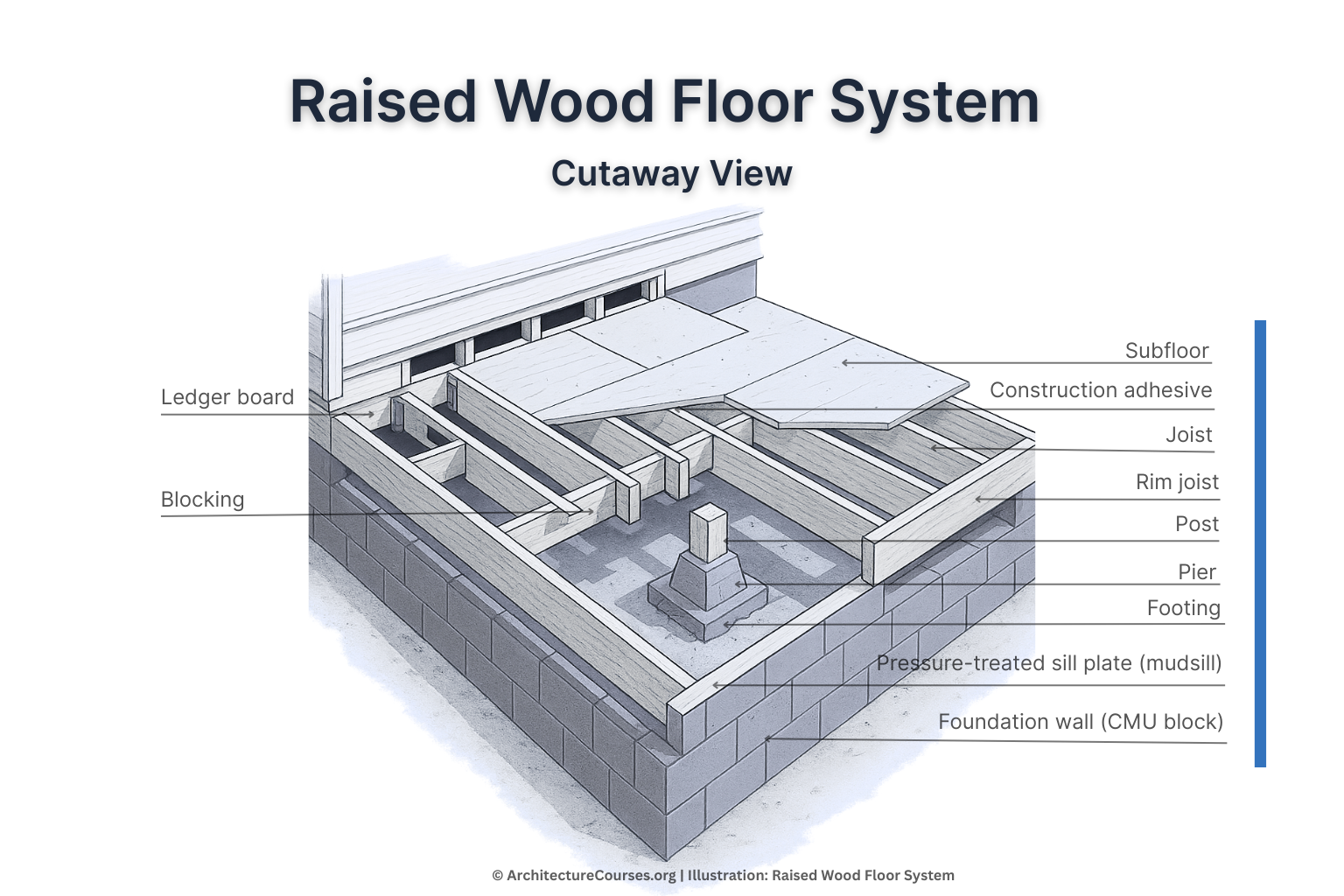
Flooring Systems Basics Explained for Homeowners and Builders
Structure, Materials, Problems, Fixes
Floors look simple. Flat, finished, done. On site they are anything but. Joists that are a hair too long. Subfloor that swells. Tile that cracks because someone rushed the prep. A client who only sees the squeak above their bedroom.
This hub is the map. Structure, materials, moisture, noise, failures, fixes. From the first joist layout to the last transition strip.
MUST READ
Graphic Guide to Frame Construction
Rob Thallon
Still the most useful visual framing book for anyone on a job site. Clear diagrams of joists, blocking, beams, subfloor layers, fastening patterns, and structural logic.
Big Picture: How Floors Work In A House
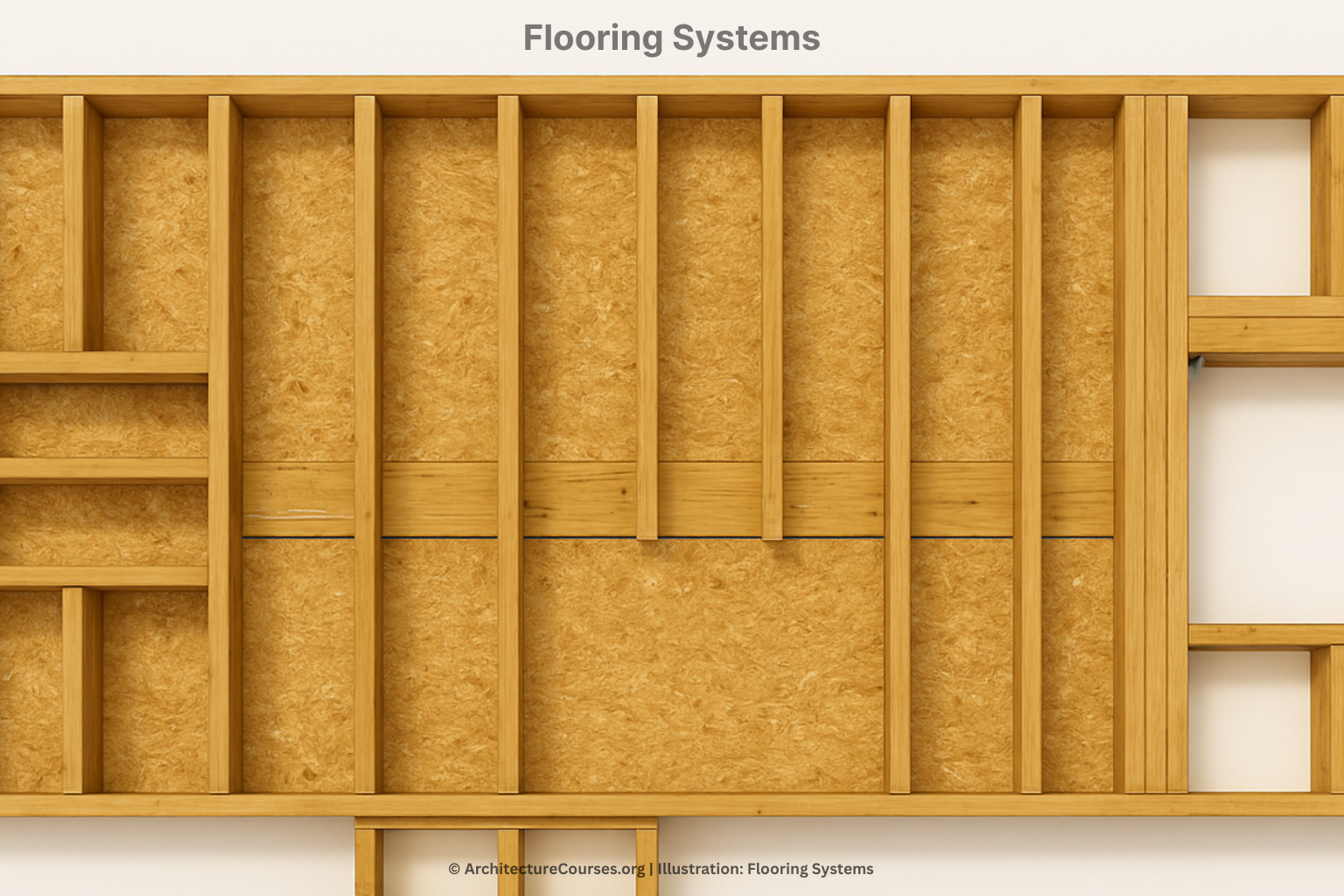
Every finished floor you see — hardwood, LVP, tile, laminate, or a warm radiant floor — is just the top layer of a bigger system. When that system is solid, you forget about it. When it’s wrong, the floor reminds you every time you walk across it.
On this hub I’ve grouped the main ideas so you can jump straight to what you need:
- What a subfloor does and how it fails
- How floors move, shrink, swell, and make noise over time
- What changes when you add heated radiant floors
- What I always fix before opening a box of flooring
- Step-by-step paths for hardwood, LVP, tile, and more
Scroll down, spot the situation that sounds closest to yours, and follow that link. You can always come back here if you take a wrong turn.
INTRO
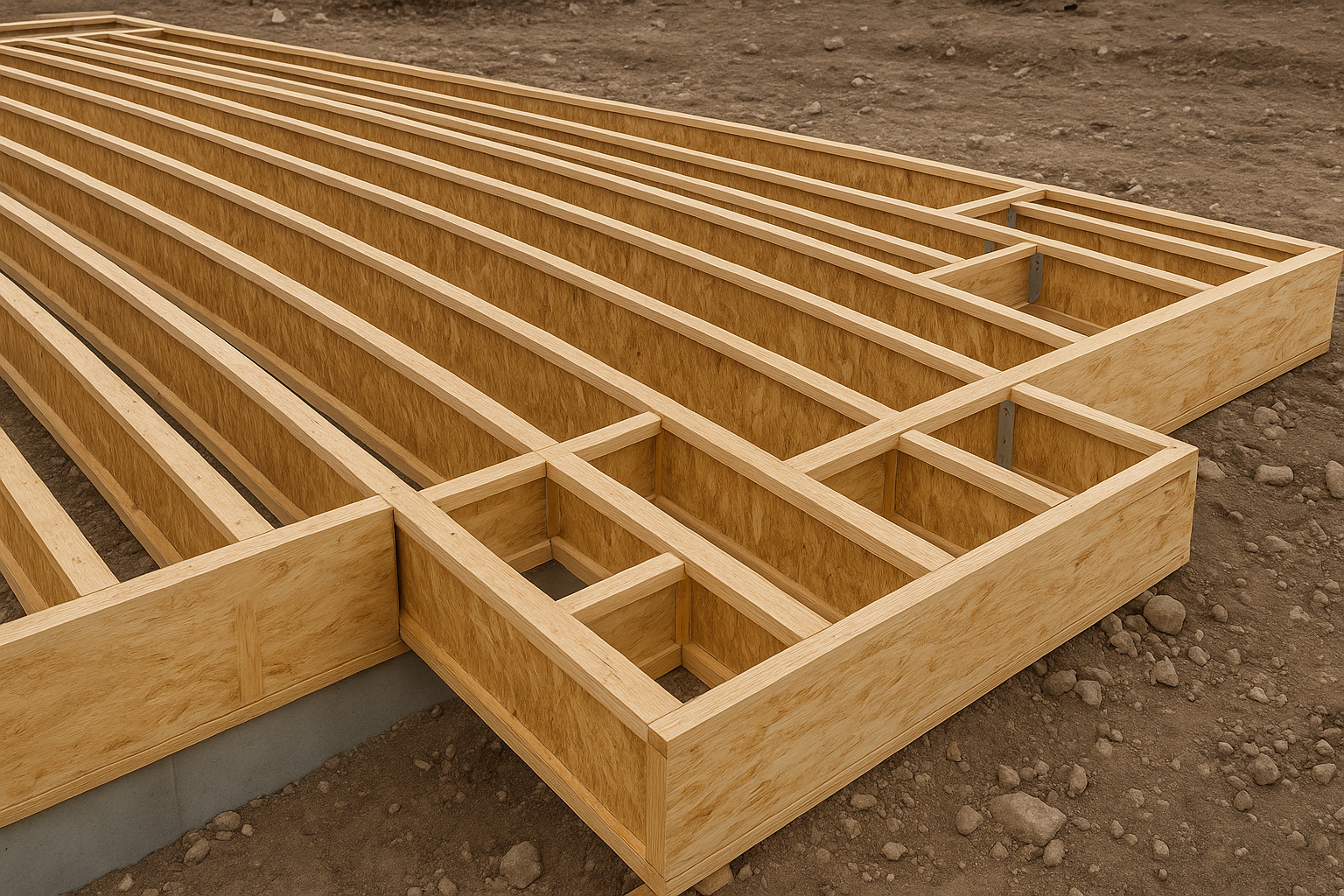
Floors look simple when they’re finished. A flat surface. A quiet step. Under that surface is a layered system that has to carry weight, stay dry, control sound, and meet walls and stairs without creating problems. Anyone working in architecture, construction, or DIY eventually learns that the surface tells you nothing. The real story is below it.
You start with the layers. The structure is at the bottom. The subfloor sits on top of it. The finish sits on top of the subfloor. Each layer has a job. When one layer fails, the whole room shows it. You get squeaks, dips, cracked tile, soft spots, cold floors, or moisture trapped where it should never be.
Floors also belong to the larger frame of the house. They work with joists, beams, rim boards, walls, and the foundation. Loads don’t stop at the surface. They move through wood, through metal hangers, through bearing points, and down into concrete. When you can see that path, you start to understand why floors bounce, why they sag, why some houses feel solid, and why others feel cheap.
What a Floor Actually Is: Structure, Subfloor, Finish
A floor has three layers that do three different things.
● The structure carries the load and moves it to beams or bearing walls.
● The subfloor spreads the load and locks the framing together.
● The finish is the part you live with every day.
This split helps you read drawings, pick materials, and see why one bad framing detail can ruin an expensive finish.
We included clear diagrams that show how each layer stacks, moves, and fails when alignment is off.
How Floors Connect To Foundations, Walls, and Roof Loads
Floors sit inside the building frame. They carry weight and pass it to beams, posts, and concrete. Good framing lines everything up. Bad framing creates bounce, seasonal gaps, cracked grout, and long-term movement.
This section walks through how joists sit on beams, how beams transfer weight to posts, and how posts land on the foundation. You also see how floors tie into wall studs, rim joists, and, on upper levels, the loads coming down from the roof. Once you understand that path, diagnosing floor problems becomes much faster.
Learn how loads move through joists, beams, and bearing walls. Simple framing logic with real examples from residential construction.
MUST READ
Wood Frame Construction Manual (WFCM)
American Wood Council (AWC)
The real structural standards behind residential wood framing. Span tables, bearing rules, subfloor requirements, beam sizing, and load path details.
Floors & Subfloors: Main Hub
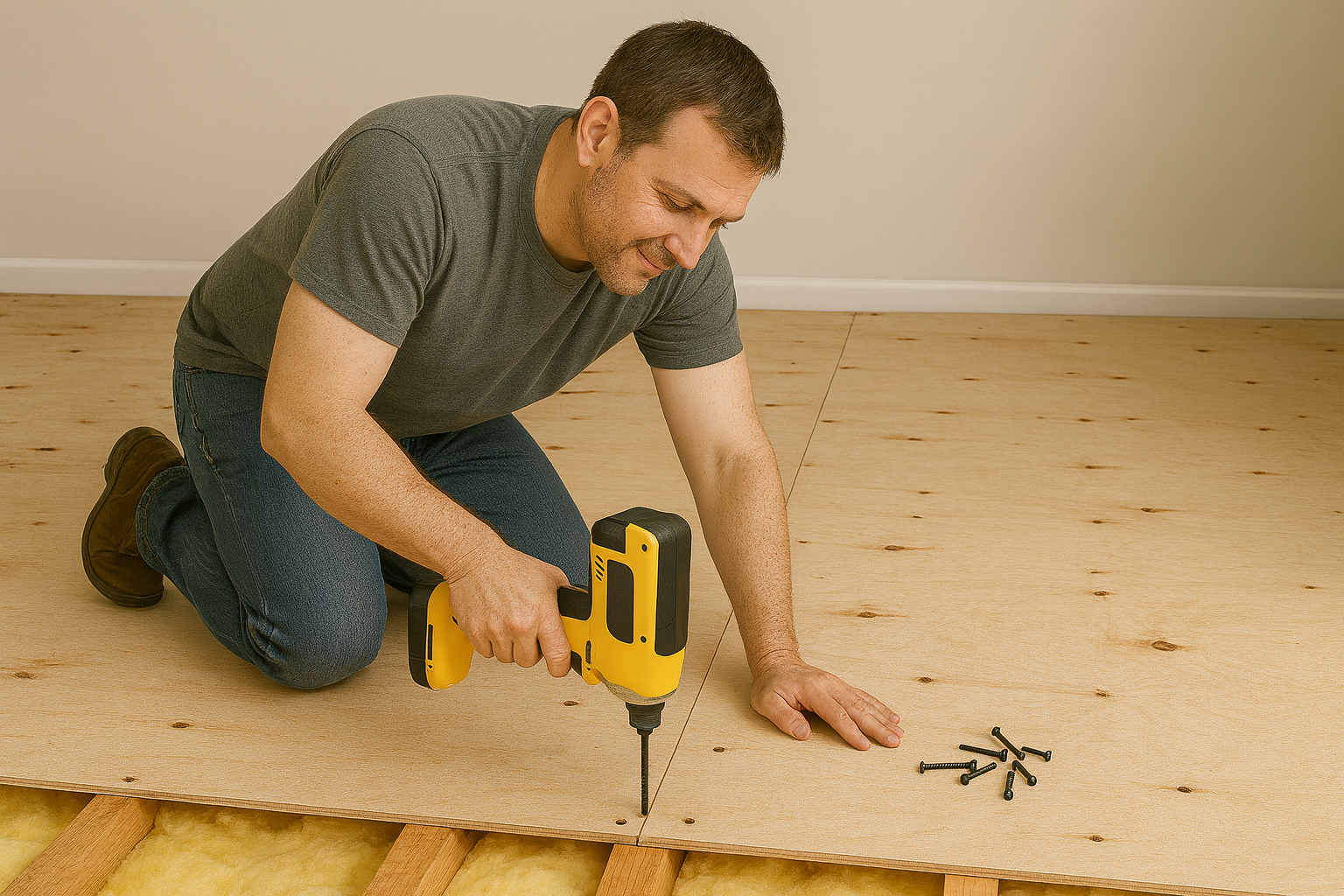
This page is not a step-by-step tutorial. Think of it as the table of contents for everything I’ve written about floors and subfloors.
If you’re trying to figure out how a floor should be built, where radiant heat fits, or why something is creaking under your feet, this is where you pick the right path and click through.
Start Here: Core Concepts
If you want the “big map” before you think about tools or materials, start with these.
- How Floors Work in a House: From Joists to Finishes — a clear walk-through from structure to finished floor so you know what’s actually under your feet.
- Structural Floor Systems: How Joists, Beams, and Subfloors Work — spans, deflection, and why “bounce” shows up long before the floor covering does.
- Floor Installation Basics: What I Check Before I Even Open a Box — the pre-flight checklist I use on every job, no matter what kind of floor is going in.
- Floor Failures: How to Read Floor Problems in a House — cracks, dips, squeaks, ridges; what they usually mean and where I start looking first.
Chapter 1
Structural Floor Systems
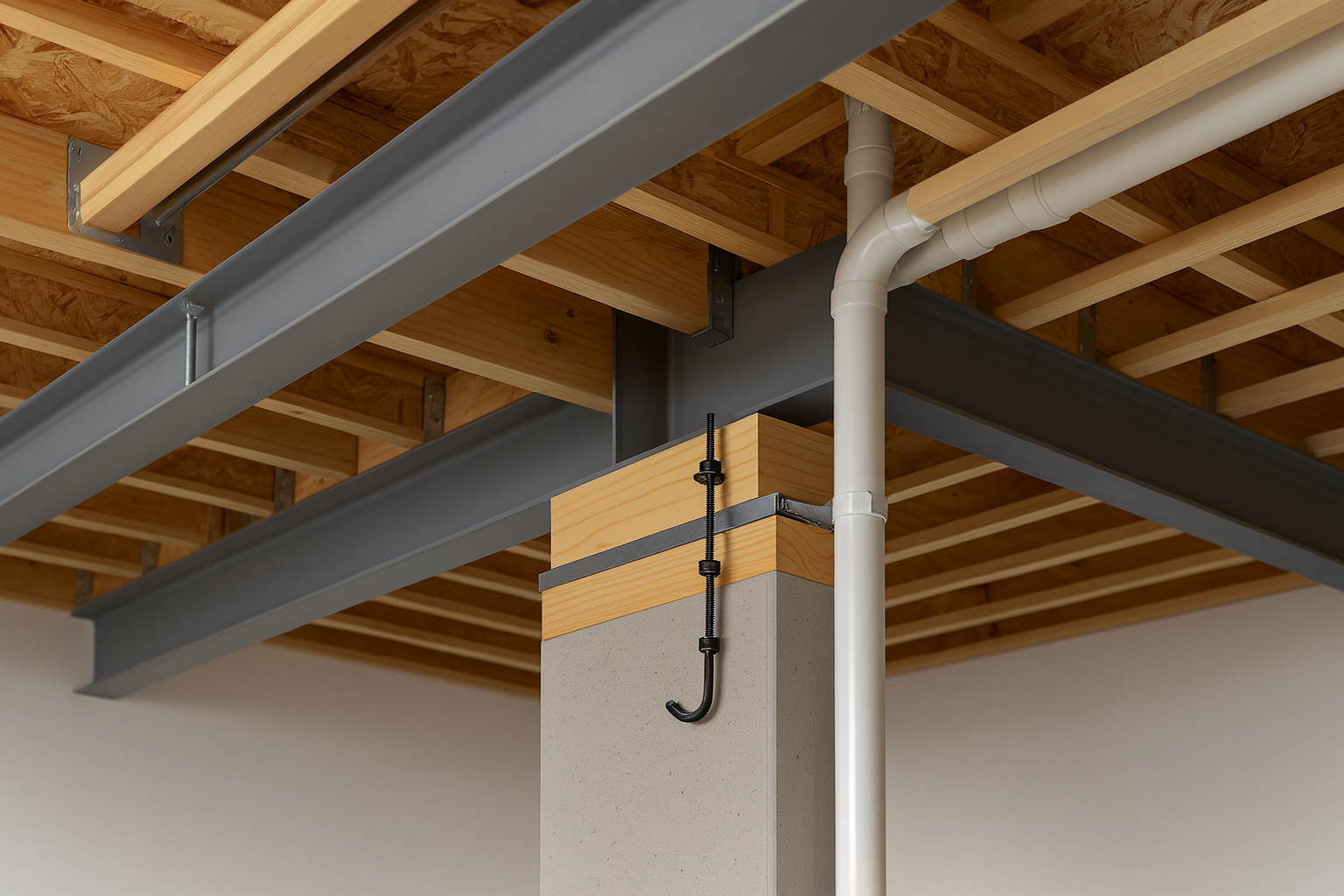
What sits under the finish decides how the whole house feels. This section covers joists, beams, trusses, slabs, loads, deflection, blocking, engineered lumber, subfloor choices, crawl spaces, cantilevers, and slab-on-grade floors.
-
Floor Systems Overview: Joists, Beams, Trusses, Slabs
Main types, where each one shows up, and what matters for cost and performance. -
How Floor Loads Travel To Beams, Walls, and Foundations
Simple diagrams and plain language. Good place to link to your beam analysis and pier and beam foundation content. -
Floor Joists And Beams: Sizes, Spacing, Bearing
How to read span tables, what “bearing” really means, and where people screw this up. -
Span And Deflection: Why Floors Sag Or Bounce
This part walks through L/360 in simple terms and helps you judge when floor bounce is fine and when it points to a real issue. -
Blocking And Bridging: Keeping Floors Stiff And Quiet
Here you’ll see when to install blocking, when to skip it, and what each choice does to the floor. -
Engineered Lumber For Floors: LVL, I-Joists, Open Web Trusses
Where engineered members make sense and what to watch for in cuts, holes, and fire ratings. -
Subfloor Materials: OSB, Plywood, Specialty Panels
Strength, moisture behavior, and how different products feel underfoot. -
How To Install Subfloor That Does Not Squeak
Adhesives, screw patterns, and what to do over ugly framing. -
Cantilevered Floors And Overhangs
Rules of thumb, common mistakes, and when to get an engineer. -
Floors Over Crawl Spaces
Venting, insulation, moisture, and critter issues. -
Slab On Grade Floors: Structure And Finish Options
Brief look at thickened edges, reinforcement, and what to put on top.
Chapter 2
Subfloors: The Foundation of Everything
If the subfloor is wrong, every finish on top will complain. This section is for the part you don’t see but always feel.
- Subfloor Installation Basics — layout, glue, screw patterns, and the small fixes that stop squeaks before they ever start.
- Fixing High Spots & Low Spots — shaving down crowned joists, filling dips, and using self-leveling compound so the finished floor feels like a stage instead of a trampoline.
- Subfloor Moisture & Acclimation — how I use a basic moisture meter to keep framing and sheets out of the “trouble” range before they get buried.
- Subfloor Prep for Radiant Heat — what changes when there are hot pipes or cables under the floor (fasteners, adhesives, and movement all matter more).
Radiant Heated Floors: What Changes
Radiant floors are great to live with, but they change the rules. The floor gets warmer, moves more, and some products simply don’t like that.
- Types of Radiant Systems — hydronic tubing in slabs, over-joist panels, and electric mats or cables.
- Flooring That Plays Nice With Heat — woods and products that handle temperature swings without curling or cracking.
- Install Steps Over Heat — how I acclimate with the system on, temperature limits, and how I choose adhesives.
- Extra Breathing Room — why floors over radiant heat often need more expansion space, not less.
Underlayments: What Each Type Really Does
Underlayments are one of those things that sound simple on the box and turn out to be half the job in real life. Here’s how I think about them.
- Sound Underlayments — mats under floating floors when you need footsteps and upstairs noise to calm down.
- Leveling Products — self-levelers and patch compounds that turn a wavy room into a flat base in one pass.
- Moisture Control Layers — rolls and membranes that keep damp concrete or crawlspace moisture away from sensitive flooring.
- Underlayments Over Radiant Heat — how to get enough sound or moisture control without choking the heating system.
Chapter 3
Floor Materials And Finish Choices
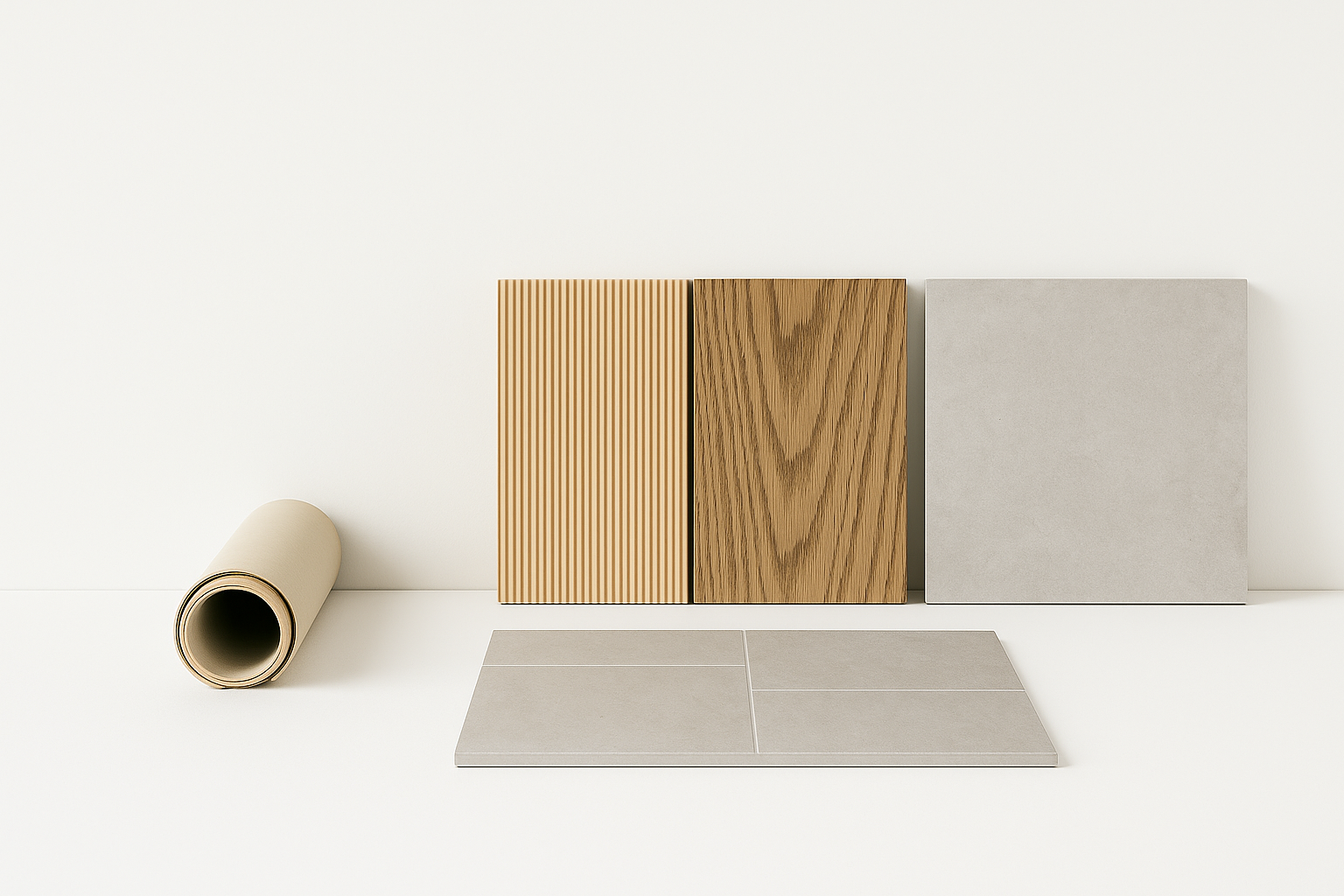
Hardwood, engineered wood, laminate, LVP, tile, carpet, concrete, stone, bamboo, cork. What works, what fails, how long each one lasts, and what each material needs from the structure and subfloor below.
-
Hardwood Floors: Types, Thickness, and Real Lifespan
Solid vs engineered, site finished vs prefinished, what fails in real houses. -
Engineered Wood Flooring: Where It Works And Where It Fails
Good over concrete, risky in wet basements, sensitive to bad subfloor prep. -
Laminate Flooring: Pros, Cons, And Real Costs
Cheap, fast, but not magic. Clear about impact resistance and water claims. -
Luxury Vinyl Plank (LVP): Water, Wear, And Subfloor Prep
Why it sells so well and where it bites you later. -
Tile Floors: Thinset, Backer Board, And Cracking Risks
Substrate stiffness, movement joints, and common shortcuts. -
Carpet And Carpet Tiles: When They Still Make Sense
Bedrooms, basements, rentals. Sound, comfort, and allergy issues. -
Polished And Stained Concrete Floors
What has to be decided before the slab is poured. -
Natural Stone Floors: Weight, Structure, And Maintenance
Heavier loads, deflection limits, sealing, and slipping. -
Bamboo And Cork Floors: What Clients Never Get Told
Movement, denting, and real maintenance needs. -
Best Flooring By Room: Kitchens, Baths, Bedrooms, Basements
Flooring by room explained. What to use in kitchens, baths, bedrooms, and basements based on real performance and maintenance.
Choosing Floor Materials
If you’re still deciding what should go on the floor, start here before you spend money.
- How to Choose the Right Floor Materials — hardwood vs LVP vs tile vs carpet, based on how the space is used, not just how it looks.
- Wood Species & Movement — hardness, color, and how different woods behave across seasons and over heat.
- Engineered vs Solid — when thinner wear layers make sense and when you really want full-thickness boards.
- LVP Options — click, glue-down, and rigid core, and where each one usually makes sense.
- Tile Choices — porcelain, ceramic, and stone, and the ratings I look at for kitchens, entries, and baths.
Chapter 4
Moisture, Sound, And Comfort
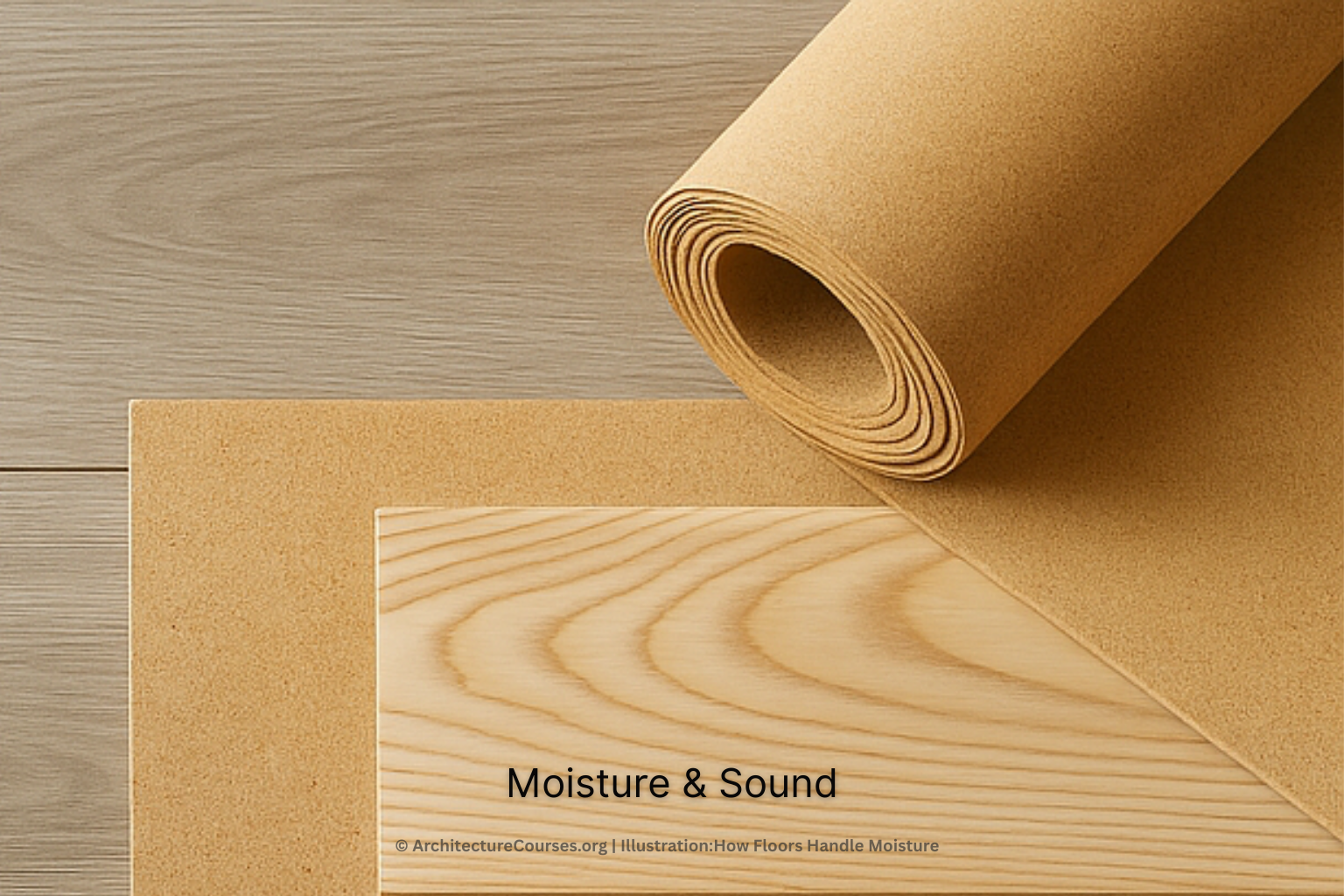
Most floor failures are moisture, noise, or temperature problems. Barriers, membranes, drainage, basement floors, crawl spaces, sound control, radiant heat, and insulation. The field basics that prevent huge repairs later.
-
Moisture Under Floors: Barriers, Membranes, And Drainage
Where to put vapor barriers, when they hurt more than help, and why drainage matters more than most people think. -
Basement And Slab Floors: How To Avoid Mold And Peeling
Paints, epoxies, sleepers, and when not to put wood on concrete. -
Crawl Space Moisture Control And Insulation
Vented vs sealed, ground covers, rim joist insulation. -
Soundproofing Between Floors: Underlayments And Assemblies
What cuts noise between levels and what is just marketing. -
Radiant Floor Heating: What To Plan Before You Pour Or Screw
Tubing layouts, floor build-ups, finished floor compatibility. -
Insulation Under Floors: Basements, Cantilevers, And Garages Below
R-values, air sealing, cold-floor complaints, and common misses.
Movement, Noise & Failures
If your floor is already talking to you, this is where to look.
- Reading Floor Failures — how I treat cracks, humps, and gaps like “symptoms” instead of random problems.
- Why Floors Creak — loose fasteners, missed glue beads, and seasonal movement that opens up tiny gaps underfoot.
- Why Floors Gap or Peak — humidity swings, long runs with no breaks, tight door casings, and what usually fails first.
- Tile Cracks & Tenting — hollow spots, too much flex, skipped movement joints, and those wild ridges in the middle of a room.
Chapter 5
Floor Failures, Sagging, And Diagnosing Problems
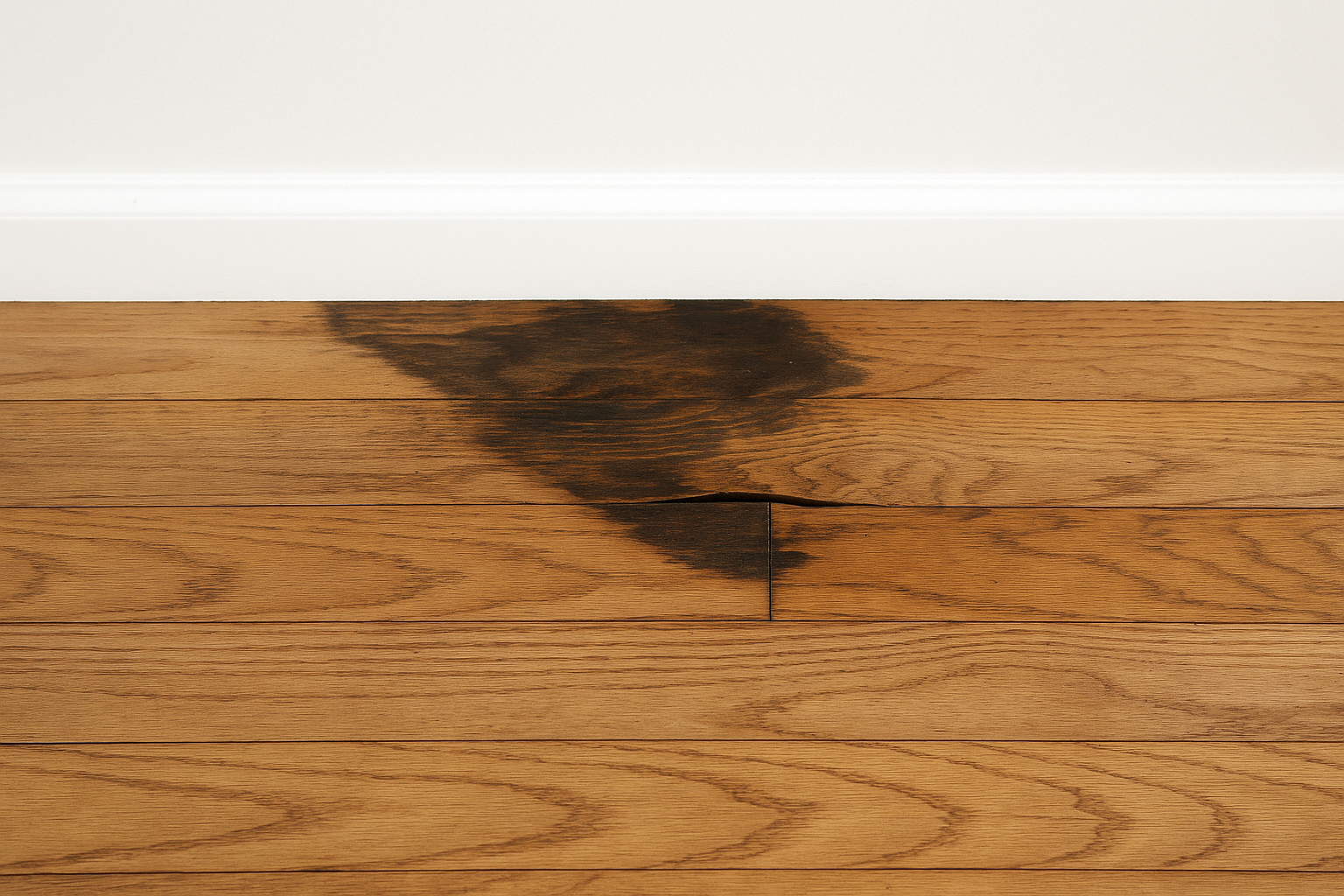
Sagging, uneven rooms, cracked grout, soft spots, mold, rim-joist rot, termite damage. What each symptom means and how builders diagnose the real cause. Good for old houses and poor remodels.
-
Why Floors Sag: Undersized Joists, Rot, Water, And Bad Remodels
How to tell if sagging is age, structure, or something dangerous. -
Uneven Floors In Old Houses: What Is Normal And What Is Not
When you can live with it, when you need to spend money, and how that work is actually done. -
Subfloor Failures: Delamination, Swelling, And Soft Spots
How to identify each problem and what replacement looks like. -
Mold Under Floors: How To Spot It And What It Takes To Fix
Access, containment, and when you are out of DIY territory. -
Rot At Rim Joist And Sill: Signs, Causes, And Repairs
Learn how rim joist and sill rot starts and how to fix it. Includes foundation wall and stem wall repairs, real costs, and common causes. -
Termite And Pest Damage In Floor Framing
Visual signs, probing tests, and when to call pest control and an engineer.
Chapter 6
Installation Guides And How-To Sections
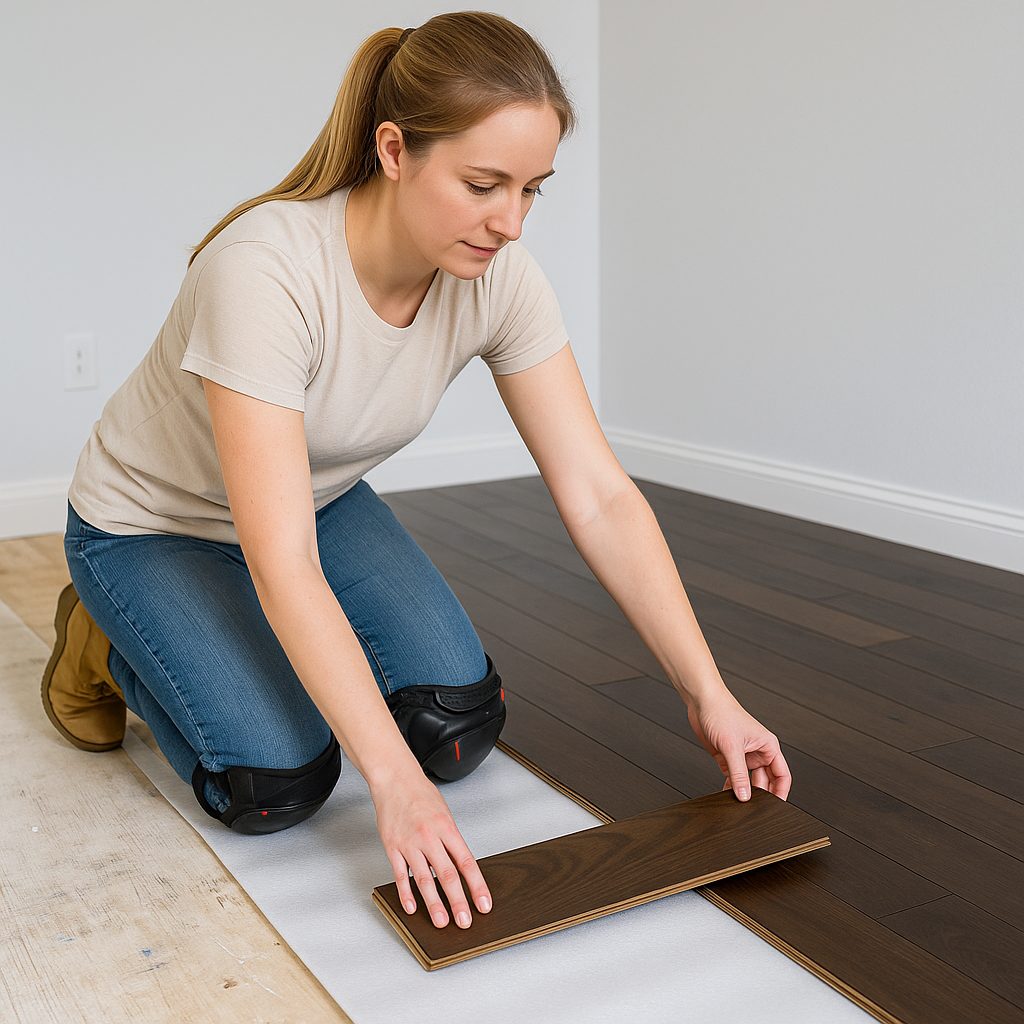
Here’s where you pick the exact type of floor you’re dealing with. Each one has its own rules and its own favorite ways to fail.
- Hardwood Over Wood Subfloors — acclimation, layout off a straight line, fastening, and the common mistakes I see on DIY and pro jobs.
- Engineered Wood Over Different Bases — when to float, when to glue, when to nail, and how it behaves differently over radiant heat or old subfloors.
- LVP That Does Not Gap or Peak — flatness standards, expansion space, room size limits, and that one bathroom doorway where problems always show up first.
- Tile Over Wood — choosing between cement board and membranes, trowel sizes, coverage checks, and movement joints on bigger or sun-heavy floors.
- Laminate Done Right — underlayments, transitions, and what to watch for in budget products.
Flooring Installation Paths
Subfloor installation, hardwood installation, LVP without gaps, tile prep, underlayments, expansion gaps, and movement joints. Clean, field-tested steps.
-
How To Install Subfloor: Layout, Adhesives, Fasteners
Step-by-step, with photos or diagrams. Include checks before you start. -
How To Install Hardwood Floors Over Wood Subfloors
Acclimation, layout, fastening, and common mistakes. -
How To Install LVP So It Does Not Gap Or Peak
Subfloor flatness, expansion space, doorways, and transitions. -
How To Tile A Floor: Substrate, Layout, Expansion Joints
Backer board, uncoupling membranes, and real spacing. -
Underlayments: Quiet, Level, Or Waterproof, And When To Use Each
This section shows what each type actually does so you can choose on purpose. -
Expansion Gaps And Movement Joints: Keeping Floors From Buckling
Why floors buckle without expansion gaps. Clear examples of movement joints, moisture issues, and real-world failures.
Chapter 7
Renovation, Retrofits, And Old Houses
How to fix squeaks, level floors, replace subfloor in bathrooms, stiffen old joists, upgrade basements, and update floors in 1930s–1980s homes without destroying original character.
-
Fixing Squeaky Floors Without Tearing Everything Apart
From below, from above, and what “good enough” looks like. -
Leveling Old Floors: Shims, Tapers, Self-Leveling Compounds
Different methods for different budgets and finish choices. -
Replacing Subfloor In Bathrooms And Wet Rooms
Rot, mold, and what needs to be rebuilt before tile goes down. -
Strengthening Old Joist Systems For New Loads
Sistering, beams, posts, and where to bring in a pro. -
Flooring In Basements: What Actually Survives Water
Basement flooring explained by performance. Clear winners, clear failures, and why water destroys some materials instantly. -
Updating Floors In 1930s, 1950s, 1970s, And 1980s Houses
Flooring updates for older homes. Learn what works best for 1930s, 1950s, 1970s, and 1980s interiors with era-specific examples.
Chapter 8
Codes, Safety, And Details
Live loads, fire separation, slip resistance, accessibility, transitions, and how floors meet stairs. The code basics that inspectors actually check.
-
Floor Live Load Requirements For Houses And Small Buildings
Simple explanation, common values, and why they matter. -
Fire Separation Between Units And Floors
Multifamily and suites. What changes when you add an apartment. -
Slip Resistance And Code For Wet Areas
Tile, stone, and outdoor transitions. -
Floor Height, Transitions, And Accessibility Basics
Thresholds, ramps, and trip points. -
Stairs Meeting Floors: Nosing, Riser Heights, And Trip Points
A simple guide to stair and floor transitions. Understand nosing, riser alignment, flooring thickness changes, and safety requirements.
Chapter 9
Design, Layout, And Aesthetics
Floor color, light, wall colors, layout patterns, transitions, and which floor types fit which architectural styles. How floors shape the feel of a room.
-
How To Choose Floor Color For Different Wall Colors And Light
A practical guide to matching wood floors with different wall colors and lighting. Real examples for bright rooms and darker spaces. -
Flooring Patterns: Straight, Herringbone, Borders, And Inlays
When pattern is worth the extra cost and when it just clutters a small space. -
Transition Strips And Where To Change Materials
Doorways, inside rooms, and open plans. -
Flooring For Modern, Farmhouse, Mid-Century, And Traditional Homes
Flooring styles explained with real photos. Why certain materials, tones, and patterns match modern, farmhouse, mid-century, and traditional homes.
Tools & Books
Books that help. Tools that matter. When a structural engineer or flooring pro is needed. Your small, honest training and gear corner.
-
Best Books On Floor Framing And Subfloors
A short list of field-tested references. Best Books on Floor Framing and Subfloors -
Basic Tools Needed To Install Most Floor Types
Layout tools, saws, fasteners, mixing gear, safety basics. -
When To Call A Structural Engineer Or Flooring Pro
Clear lines. Sagging beyond a certain point, serious mold, heavy stone over questionable structure, multi-unit fire separation issues.
Recommended Books, Tools & Products
If you like having a book or a dependable tool on hand while you work, these pair well with floor and subfloor projects.
Renovation & Home
- 📘 MUST READ
Visual Handbook of Building and Remodeling – Charlie Wing - 📘 MUST READ
Renovation (5th Edition) – Michael W. Litchfield
→ Buy on Amazon - 📘 MUST READ
How Your House Works – Charlie Wing
→ Buy on Amazon - 📘 MUST READ
Old House Handbook: A Practical Guide to Care and Repair
→ Buy on Amazon - 📘 FIELD PICK
100 Contemporary Houses — Taschen
→ Buy it on Amazon - 📘 FIELD PICK
The Bungalow Book — original plans/photos for historic homes
→ Buy it on Amazon - 📘 START HERE
Home Renovation – Frank Ching & Dale Miller - 📘 PRACTICAL OVERVIEW
The Home Renovation Bible – Michael Holmes
→ Amazon link » - 📘 REAL-WORLD ADVICE
Remodel Without Going Bonkers or Broke – Jim Molinelli
→ Get it » - 📘 THINK SMALL, REMODEL SMART
Not So Big Remodeling – Sarah Susanka
→ Amazon link » - 📘 MODERN CASE STUDIES
For the Love of Renovating – The Brownstone Boys
→ Amazon link »
Tools & Products
-
FIELD PICK
- Simpson Strong-Tie Deck Tension Tie Kit (4-Pack)
Handy for anchoring lightweight canopy structures to masonry or wood. Strong, discreet, code-tested.
- Simpson Strong-Tie Deck Tension Tie Kit (4-Pack)
- Amazon Pick: Renogy Solar Panel 100W Starter Kit — good for testing small integrated solar setups.
- AMAZON PICK: Ecobee Smart Thermostat Premium – nice mix of style, accuracy, and control.
- AIR FIX
Levoit Core 300 Air Purifier – compact and well-reviewed. - 📘 BEST TOOL
hOmeLabs 7,000 Sq. Ft. Dehumidifier – useful in big, damp spaces. - FIELD TOOL PICK
General Tools Moisture Meter – simple, accurate enough for subfloors and framing checks. - 📘 MUST-HAVE TOOL
hOmeLabs Energy Star Dehumidifier
✓ Heavy-duty • ✓ Pulls moisture fast - FIELD PICK
Rust-Oleum Tub & Tile Refinishing Kit
Buy on Amazon » - MUST HAVE
“Duravit 1930 Series Basin”
Check price on Amazon » - MUST HAVE
Tools, Skills & Small Pro Tricks
- The Foot Test — walking a room in bare feet to feel humps, dips, and hollow spots that a short level misses.
- The First Row — why I slow down on the starter row and then speed up once that line is locked in.
- Dealing With Problem Boards — bowed, twisted, or odd-sized pieces and when I cut them for closets or toss them entirely.
- When to Reject a Box — knowing when it’s a product issue, not a you issue, and what to do about it.
Not Sure Where to Start?
If you’re feeling a bit lost, I’d start in this order:
- How Floors Work in a House: From Joists to Finishes
- Floor Installation Basics
- Hardwood Over Wood Subfloors — if you’re planning a real wood install soon.
- LVP Without Gaps — if you’re doing a “simple” click-together job and don’t want surprises later.
- Underlayments Explained — if your floor store has you staring at rolls and boxes with no idea what they actually do.
From there, follow the links that match your house and your project. You can always come back to this hub when you’re ready for the next step.
FAQ
Floors, Structure, Materials, and Common Problems
What is the difference between a floor and flooring?
Flooring is the finish. Floors are the whole system under it. Structure, subfloor, and finish. Most failures start below the finish.
Why do some floors feel solid and others feel cheap?
Span length, joist size, beam stiffness, fasteners that missed, and subfloor glued badly. Finish choice almost never fixes bad structure.
Can I install hardwood in any room?
No. Solid hardwood hates moisture. Avoid basements, wet kitchens, and any slab without proper moisture testing.
What is the stiffest subfloor?
Good plywood or premium OSB panels. Stiffness comes from materials plus correct fasteners and blocking, not just the panel name.
Why does tile crack even when installed by a pro?
Movement in the framing or subfloor, not enough stiffness, or no movement joints. Tile wants a rigid, quiet base.
What flooring works best for basements?
LVP, tile, or polished concrete. Engineered wood works only on dry, tested slabs. Solid hardwood is a bad idea.
What is normal floor bounce?
A little bend is normal. Excessive bounce comes from long spans or undersized joists. Tile and stone need stiffer floors than wood or vinyl.
Why do floors squeak?
Movement between wood and fasteners. Loose subfloor, joists twisting, adhesive gaps, or framing that dried and shrank.
Can I install flooring over an uneven subfloor?
You can, but the finish will telegraph every dip. LVP will peak. Tile will crack. Hardwood will gap. Fix flatness first.
What causes sagging floors in older homes?
Age, undersized joists, cut joists, water damage, termite activity, or a missing interior bearing wall from an old remodel.
What’s the best flooring for kitchens?
Tile, LVP, or good engineered wood. Kitchens see water and impact. Avoid solid hardwood unless conditions are perfect.
Do crawl spaces ruin floors?
They can. High humidity and poor ventilation lead to sagging joists, mold, cold floors, and cupped hardwood.
What is L/360 and why does it matter?
It’s a deflection limit. It tells you how much a floor can bend under load. Less bend means less bounce, fewer cracks, and a stiffer feel.
What floor is best for reducing noise between levels?
Carpet is the simplest. Hard surfaces need a real underlayment and insulation between joists. Marketing foam alone doesn’t work.
When should I call an engineer for floor issues?
Major sagging, rotten beams, cracked support posts, termite structural damage, large stone floors on questionable framing, or adding a bathroom above weak joists.
How long should a modern floor last?
Structure: decades when kept dry.
Subfloor: as long as the house if installed well.
Finishes:
-
LVP: 10–20 years
-
Engineered wood: ~20 years
-
Solid hardwood: 50–100 years
-
Tile: depends on the base, not the tile
What’s the best way to stop floors from feeling cold?
Air sealing, insulation at rim joists, proper crawl space moisture control, and radiant heat if you plan ahead.
Can different flooring materials meet cleanly in open plans?
Yes, but you need clear transition strategy: color, thickness, timing, and timing cuts. Bad transitions ruin otherwise good floors.
How do I choose the right floor material for my house style?
Look at the architecture first. Modern wants wide planks or polished concrete. Traditional wants narrower boards or classic tile. Farmhouse wants duller finishes. Mid-century prefers warm woods.
Wood Knowledge Hub
If you want to get a lot more comfortable with wood itself — species, properties, sustainability, and where it belongs in a house — these guides will help.
Wood Basics & Fundamentals
Types of Wood
Woodworking & Practical Skills
Sustainability & Modern Use
Design & Aesthetic Applications
Official Codes and References for Floors and Framing
Use these links when you need the real rules, not guesses. All are official code, government, or standards bodies that inspectors and pros rely on.
US Building Codes and Model Standards
- International Code Council (ICC) – Home of IRC, IBC, and other model codes.
- International Residential Code (IRC) – Main code used for houses and small buildings.
- International Building Code (IBC) – Structural and fire rules for larger and mixed use buildings.
- National Fire Protection Association (NFPA) – NFPA 70 (National Electrical Code) and other fire and life safety standards.
- American Wood Council (AWC) – Official span tables and wood design standards used for joists and beams.
- APA – The Engineered Wood Association – Subfloor, sheathing, and engineered lumber data.
Federal Agencies and Technical Research
- U.S. Department of Housing and Urban Development (HUD) – Housing standards and manufactured home rules.
- HUD User – Reports and guides on building standards and housing quality.
- U.S. Forest Products Laboratory (FPL) – Government research on wood strength, rot, and moisture.
- FEMA – Guides on flood zones, crawl spaces, foundations, and rebuilding.
- EPA Mold and Moisture – Official guidance on mold and indoor air quality.
Energy, Moisture, and Building Science
- U.S. Department of Energy – Buildings – Energy, insulation, and envelope guidance.
- Building America Solution Center – Details for slabs, crawl spaces, moisture control, and floor assemblies.
- ASHRAE – Comfort, humidity, and thermal environment standards.
Accessibility, Floor Transitions, and Safety
- ADA Standards – Rules for ramps, level changes, and slip resistance.
- U.S. Access Board – Technical accessibility guidelines for public and residential work.
- OSHA – Jobsite safety, floor openings, fall protection, ladders, and scaffolds.