
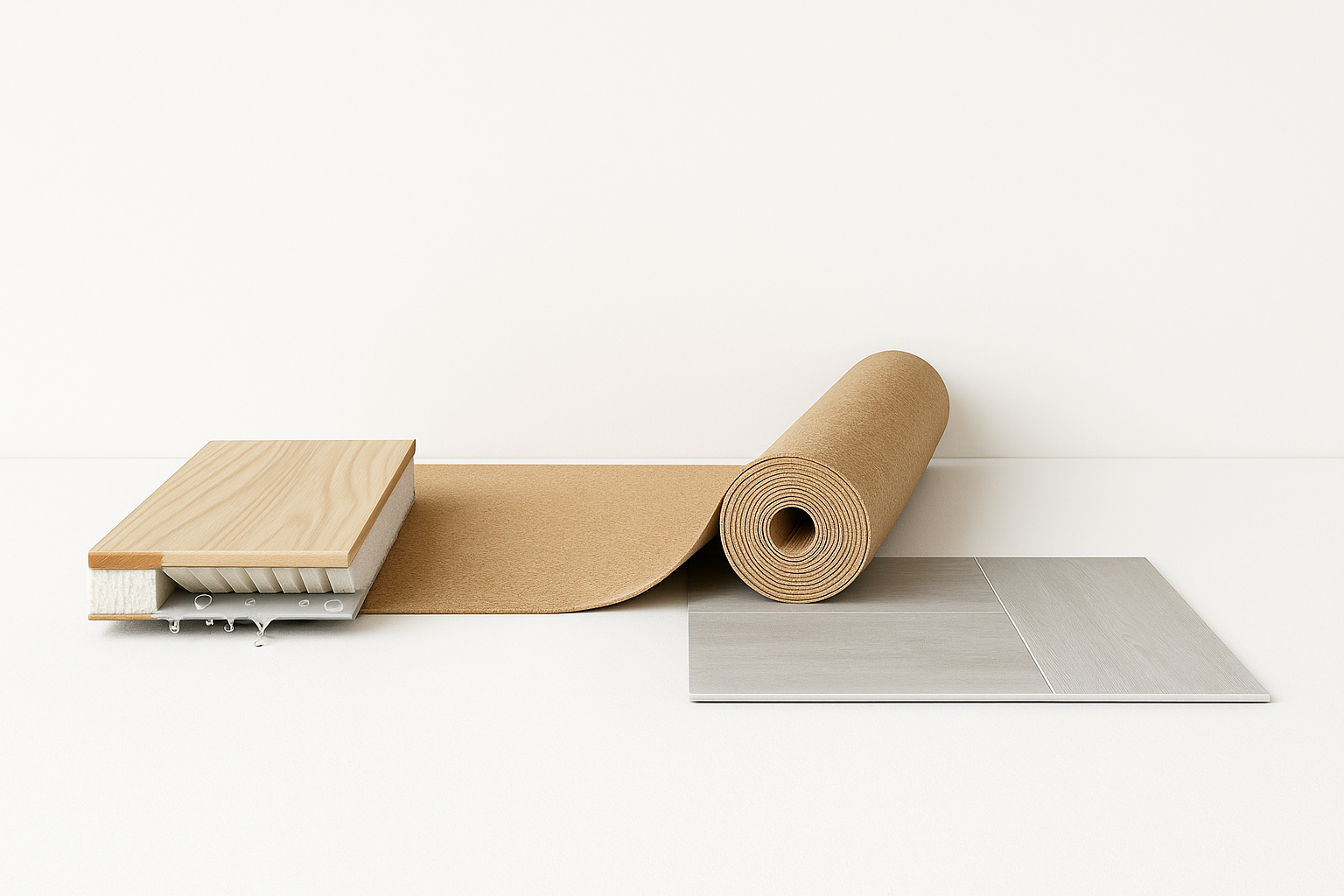
Moisture, Sound, and Comfort: What Floors Need to Survive
Once you read the main floor-structure overview and the full framing breakdown, this chapter shows what moisture, sound, and heat do to that structure. Inspectors focus on this. Most homeowners never look at it. It decides how the floor feels.
Choosing a finish is the easy part. The hard part is making the floor behave. In the field, most floor failures come down to three things. Water. Noise. Temperature. Every installer learns the same lesson. The finish is predictable. What’s underneath it is not. The structure, the membranes, the subfloor, the heating, and the insulation decide what happens five years later.
Floors live in different climates inside one house. Warm bedrooms. Damp bathrooms. Cold slabs. Noisy suites. Drafty cantilevers. Every room pushes the floor differently. The materials change. The prep changes. The failures change too. Most of this work never appears in a showroom. But it is the difference between a floor that lasts ten years and one that lasts fifty.
Below is the full field version. Water control. Sound control. Heat control. What works on site and what causes the failures you get called back for.
Moisture, Sound, and Comfort: How Floors Perform
Water, Noise, and Temperature: What Floors Need to Survive
Moisture Under Floors: Barriers, Membranes, and Drainage
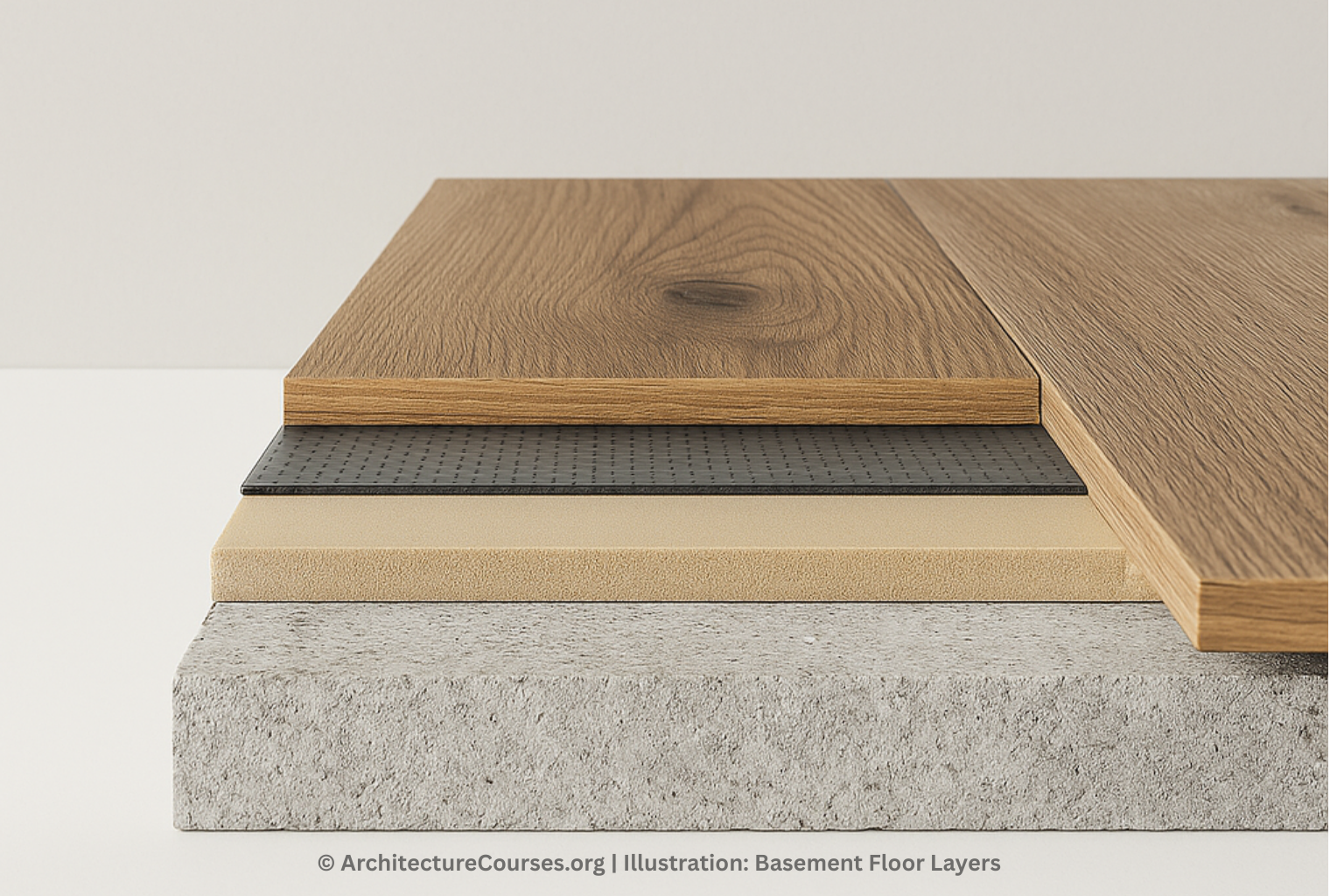
Water destroys more floors than foot traffic, pets, and bad installers combined. Bathrooms leak. Basements absorb humidity. Crawl spaces breathe damp air. Slabs push vapor year-round. You cannot see it, but the floor feels it.
A vapor barrier is not a magic shield. It has to go in the right place. Over concrete slabs, the vapor barrier belongs under the slab. If it sits above the slab, moisture gets trapped between concrete and plastic, and that moisture works right into vinyl, glue, hardwood, or carpet tiles.
Membranes help only if the structure under them is dry. A wet slab coated with a membrane is a time bomb. So is a crawl space with bare dirt. Ground moisture rises and attacks the subfloor from below. If you want a floor to survive in a crawl space house, start with plastic on the soil. Tape the seams. Insulate the rim joists. Fix the drainage outside the house. Half the floor problems inside a house begin with water outside the house.
Drainage is the quiet part that saves floors. Gutters, downspouts, grading, and sump pumps keep the structure dry long before a membrane gets involved. No product fixes a wet foundation. No product fixes soil that slopes toward the house. You fix the water first, then the flooring.
Basement and Slab Floors: How to Avoid Mold and Peeling
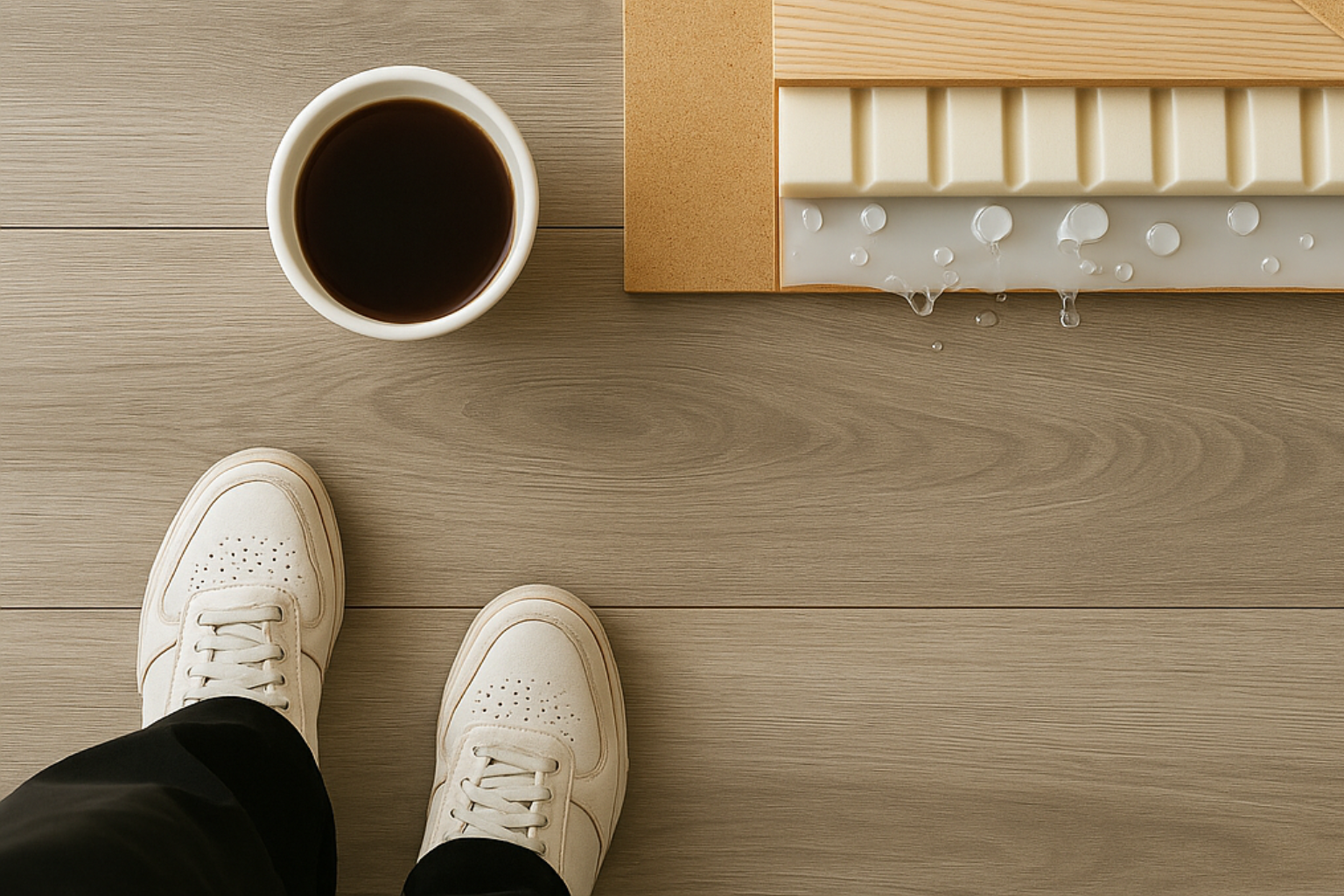
Concrete looks solid. On site it behaves like a sponge. It absorbs water, releases vapor, and changes temperature slowly. Its moisture profile never sits still. That is why so many basement floors fail.
Paints and epoxies peel because the slab is wet from the underside. Carpet pads grow mold because the slab sweats. Wood floors cup because moisture rises faster than it can escape. Vinyl traps moisture below it and creates hidden mold patches. The only way around this is testing.
Every good installer uses a moisture meter on the slab. Some use calcium chloride kits. Some use in-slab RH probes. The numbers decide if you need a membrane, an adhesive with moisture tolerance, a floating system, or a full sleeper system.
Sleepers work only if moisture is tight. If the slab is still breathing, sleepers rot. That rot travels into the subfloor and up into the finish.
The safest basement floors are the ones that tolerate moisture. Vinyl plank. Tile. Carpet tiles. Polished concrete. If someone wants hardwood or bamboo in a basement, stop them or prepare for a future repair.
There is a reason the material guide in the floor-material selection guide sorts basement choices differently from the main floor.
Crawl Space Moisture Control and Insulation
Crawl spaces are a constant fight between the house and the ground. They are cold. They are damp. They rot subfloors first and floors second.
A vented crawl space pulls humid summer air into a cold space. Moisture condenses on everything. You get mold on joists and fiberglass insulation hanging like wet seaweed. A sealed crawl space solves it. Plastic on the ground. Taped seams. Rigid insulation on the walls. A small mechanical vent or dehumidifier to keep air dry.
Insulation under floors in crawl spaces is less about R-value and more about air sealing. Air leaks create cold floors long before missing insulation does. Rim joists are the biggest leak. Seal them with foam. Keep ducts sealed. Stop the airflow first. Add insulation after.
If you fix the crawl space, the floors above it stop cupping, stop smelling musty, and stop feeling cold. It is the most invisible improvement in a house and the one that saves the most long-term floor damage.
Soundproofing Between Floors: Underlayments and Assemblies
Noise complaints come from one thing. Impact. The thud of footsteps. Kids running. Chairs scraping. Laundry machines vibrating. Airborne sound is easy to stop. Impact sound is not.
Thick underlayments help only if the structure is solid. A flimsy floor with thin joists transmits every step. The assembly matters more than the product. A typical quiet floor uses:
● deep joists
● insulation in the bays
● resilient channels or clips on the ceiling below
● double drywall
● a dense underlayment under the finish
Carpet handles impact sound better than anything else. Vinyl and laminate are the loudest. Engineered wood sits in the middle depending on thickness and underlayment.
Marketing claims about “soundproof LVP” are fantasy. LVP is a hard surface. It will always transmit impact noise. The only real fix sits in the framing and ceiling below it.
Radiant Floor Heating: What to Plan Before You Pour or Screw
Radiant heat makes rooms feel better than any forced air system. It changes the floor from a cold plane to a heating surface. But radiant systems demand planning.
The thickness of the assembly matters. Some finishes block heat. Some finishes expand under heat. Vinyl reacts fast. Tile reacts slow. Hardwood reacts unpredictably when humidity swings.
Engineered wood is the safest wood over radiant. Solid wood can work if the species is stable and the planks are narrow. Wide boards over radiant heat move too much.
The tubing layout matters. Gaps create hot stripes and cold stripes. A thick mortar bed slows response time. A thin system heats fast but loses heat fast.
The room needs stable humidity or the floor moves too much. A radiant system without humidity control causes the same floor failures you see in saunas. Cracks. Gaps. Cupping.
Insulation Under Floors: Basements, Cantilevers, and Garages Below
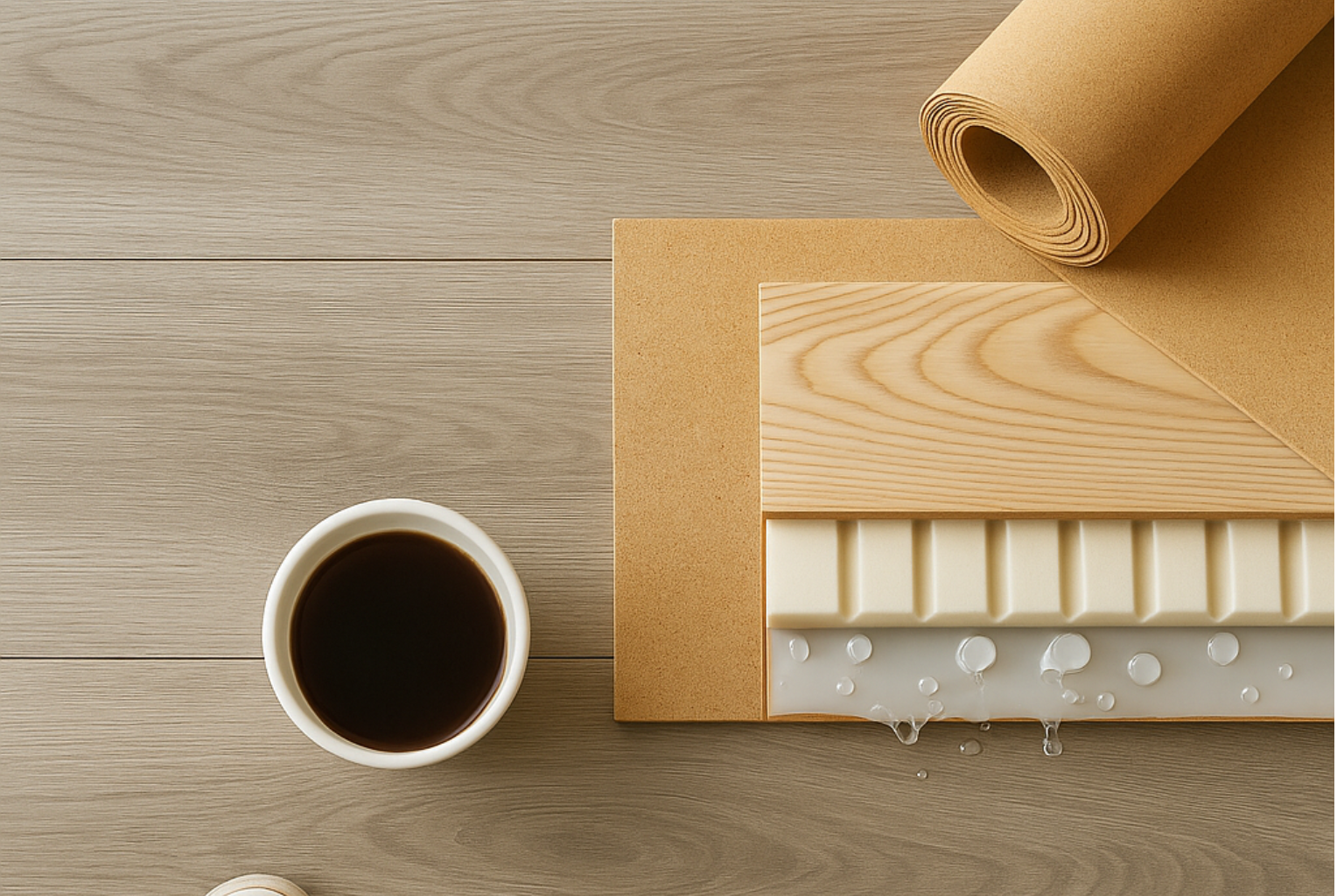
Cold floors are not a mystery. They come from two things. Missing insulation or air leaks. Usually both.
Floors over basements stay warmer because the basement is conditioned. Floors over garages stay cold because the garage is not. You need insulation between the floor joists and proper air sealing at the rim.
Cantilevers are the worst offenders. Builders often stuff fiberglass into the cavity and walk away. Wind blows right through it. The solution is rigid foam on the exterior sheathing before the siding goes on. Without that, no amount of interior insulation fixes the cold floor.
Rigid foam, spray foam, and dense batts all work. The important part is stopping airflow first, insulating second. A cold floor almost always means air leaks.
Thermal Breaks Under Floating Floors
Floating floors feel cold because they sit on cold material. Concrete. Old tile. A slab over ground. A garage ceiling below. Underlayments help, but only if they are thick enough and dense enough.
Foam underlayment warms the floor slightly. Cork warms it more. Rubber warms it the most. The trade-off is height. Every millimeter adds up at doorways.
Thermal breaks matter most for vinyl and laminate. These materials conduct cold. If the room is over a slab, the floor feels freezing in winter unless you break that thermal bridge.
Many homeowners think insulation under the slab solves it. It does not. The floor still needs a break at the finish level to feel warm.
Acclimation and Moisture Content Before Installing Floors
This is the step most installers rush. It is also the cause of most wood failures.
Wood floors need to sit in the house. They need to match the room’s temperature and humidity. If they go down too early, they expand or contract after installation. You get gaps, cupping, buckling, or clicking seams.
Engineered wood also needs acclimation. So do bamboo and cork. Even vinyl needs time to relax if it comes from a cold truck.
A moisture meter is the cheapest insurance in flooring. Check the wood. Check the subfloor. Check the slab. If the numbers are off, wait. The house tells you when the floor is ready.
Movement Joints and Expansion Gaps
Every floor material moves. The room needs to give it space. Tile needs joints at doorways and long runs. Vinyl needs space at the perimeter. Laminate needs a gap at every wall. Hardwood needs room to breathe.
Most failures come from tight installations. Laminate buckles. Vinyl tents. Hardwood pushes against the drywall and lifts. Stone cracks at the doorway.
Movement joints are not optional. They are the thing that keeps the floor from fighting the house.
Subfloor Flatness Requirements
This is the quiet killer of modern flooring. Floors today need flatter surfaces than the old products did. Vinyl and engineered wood need subfloors that are almost perfectly flat. Tile needs flat planes with no sudden dips.
Installers spend half their day flattening subfloors. Grinding high spots. Filling low spots. Sanding joints. When they skip this, the floor reveals every mistake. Vinyl separates. Laminate creaks. Tile cracks. Hardwood shifts.
Flatness matters more than strength for the finish layer. You can have a strong structure and still ruin the finish if the subfloor waves.
What People Never Learn About Floors Until It Is Too Late
Most people judge a floor by the surface. Contractors judge it by the problems waiting under it. Floors look simple. They are not. A house moves every season. Wood swells and shrinks. Concrete breathes moisture. Heat collects in weird corners. Cold air slides under rim joists. Sound travels through framing like a drum. One mistake under the surface shows up years later as a squeak, a crack, a dip, or a swollen plank that never sits flat again.
Here is the part nobody tells homeowners, students, or new builders:
Moisture is the real killer.
It comes from slabs, crawl spaces, bad grading, leaky bathrooms, and humid seasons. It bends wood. It ruins adhesives. It traps under vinyl. It grows mold in corners you will never reach without tearing out a wall.
Noise is a structural issue.
A floor that sounds cheap is built cheap. Hollow steps come from loose subfloor seams, long spans, under-sized joists, and bad blocking. No finish material can hide that. The sound tells you how the house was framed.
Comfort comes from the air, not the product.
A warm-looking hardwood floor can feel freezing because the rim joist leaks air. A living room above a garage stays cold because the air barrier is broken, not because the insulation is thin. Fix the leaks and the temperature changes.
Tile cracks for structural reasons.
Not grout. Not thinset. Not bad luck. It cracks because something under it moved. If the house bounces, tile snaps. Tile never lies. It shows you exactly where the frame flexes.
Basements always want to be wet.
Floors survive there only when moisture is controlled. Drainage outside. Vapor control under. Real testing. Real prep. Anything else is a gamble that fails when the weather changes.
Vinyl is not magic.
It is waterproof on top, not underneath. Water stuck under vinyl stays for weeks. It rots everything it touches. People discover this only after a slow leak or a dishwasher spill that was wiped on the surface but soaked underneath.
Hardwood is honest.
If the humidity is wrong, it tells you. If the subfloor is loose, it tells you. If the installer rushed, it tells you every time you walk across the room.
Comfort, silence, and stability always come from below.
The surface is the last step. The real floor is the structure, the subfloor, the moisture control, and the air barrier sitting underneath it.
If you understand those pieces, every finish lasts longer. Every choice becomes easier. Every problem makes sense. You stop guessing and start reading the house like someone who builds them, not someone who only walks on them.
Putting It All Together
Moisture. Sound. Heat. Most floor complaints point back to those three. When you understand how water moves through a house, how sound travels between floors, and how temperature affects materials, every finish starts to make sense.
If you need the full breakdown, the guide in the floor-material overview covers hardwood, engineered wood, vinyl, tile, concrete, stone, bamboo, cork, and carpet. This chapter explains the forces underneath that drive how each material acts.
A finished floor is only as good as the layers below it. Keep those layers dry. Keep them quiet. Keep them stable. The finish will take care of itself.
FAQ
Why do floors fail most often?
Moisture. Noisy structures. Poor insulation. Most finish problems start under the surface long before the flooring is installed.
Why do wood floors cup or crown?
Uneven moisture. Basements leak vapor. Crawl spaces pull humid air. Slabs release moisture year-round. The wood reacts to that imbalance.
Why does a floor feel cold even with insulation?
Air leaks. Cold air at the rim joist or through cantilevers makes floors cold even with insulation in place.
What stops sound between floors?
A full assembly. Deep joists, insulation, resilient channels, double drywall, and a dense underlayment. Not just a product.
What makes tile crack on upper floors?
Deflection. If the structure moves, the tile cracks. Tile needs stiff framing and a flat substrate.
Can vinyl plank trap moisture?
Yes. The surface is waterproof but the underside is not. Moisture gets trapped and stays for weeks.
Why do basements smell musty under floors?
Wet slabs. Poor drainage outside. Lack of vapor control. Moisture rises through the concrete and sits under flooring.
Do radiant floors work with any finish?
No. Some finishes expand with heat. Some block heat. Engineered wood and tile behave best.
How do you stop squeaking floors?
Fix movement. Tighten the subfloor. Add screws. Add blocking. Glue the seams. Squeaks come from flex, not from the finish material.
Can you insulate floors over a garage?
Yes, but air sealing matters more than insulation. Stop airflow first. Add insulation second.
References and Standards
United States Standards and Bodies
ICC – International Code Council
IRC and IBC requirements for floors, loads, membranes, fire separation.
https://www.iccsafe.org/
APA – The Engineered Wood Association
Subfloor panels, moisture limits, fastening schedules, floor ratings.
https://www.apawood.org/
AWC – American Wood Council
Joist spans, deflection limits, engineered wood design standards.
https://www.awc.org/
TCNA – Tile Council of North America
Tile deflection rules, subfloor requirements, underlayment standards.
https://www.tcnatile.com/
NWFA – National Wood Flooring Association
Hardwood installation, moisture testing, fastening rules.
https://www.nwfa.org/
RFCI – Resilient Floor Covering Institute
Vinyl flooring standards, adhesives, indoor air quality.
https://rfci.com/
ASTM International
Moisture test standards (F2170, F1869), underlayment performance, slab prep.
https://www.astm.org/
Concrete, Slabs, and Moisture Control
ACI – American Concrete Institute
Slab-on-grade construction, curing, cracking, moisture behavior.
https://www.concrete.org/
ICRI – International Concrete Repair Institute
Surface prep standards used before installing floors.
https://icri.org/
Building Science Corporation
Crawl space control, slab vapor, condensation, thermal comfort.
https://buildingscience.com/
EPA Indoor Air Quality
VOC, adhesives, carpet standards, IAQ guidance.
https://www.epa.gov/indoor-air-quality-iaq
International Standards
Canada – NBCC
Moisture, fire separation, joist spans, floor insulation.
https://nrc.canada.ca/
United Kingdom – NHBC Standards
Floor construction, moisture control, slab requirements.
https://nhbc.co.uk/
Australia – NCC and Standards Australia
Timber floors, slab performance, waterproofing requirements.
https://www.abcb.gov.au/
Manufacturer Systems Installers Actually Follow
Schluter Systems
Uncoupling membranes, waterproofing layers, tile movement joints.
https://www.schluter.com/
Mapei
Moisture barriers, mortars, leveling compounds.
https://www.mapei.com/
Ardex
Self-levelers, slab prep, moisture control systems.
https://www.ardexamericas.com/
Custom Building Products
Thinset, grout, backer board, waterproofing.
https://www.custombuildingproducts.com/