
What Is the Safest Insulation to Use?
Safe insulation depends on what kind of risk you are trying to reduce. Some materials perform better in fire. Some are easier to handle during installation. Some are better choices where indoor-air quality, moisture control, or chemical sensitivity matter.
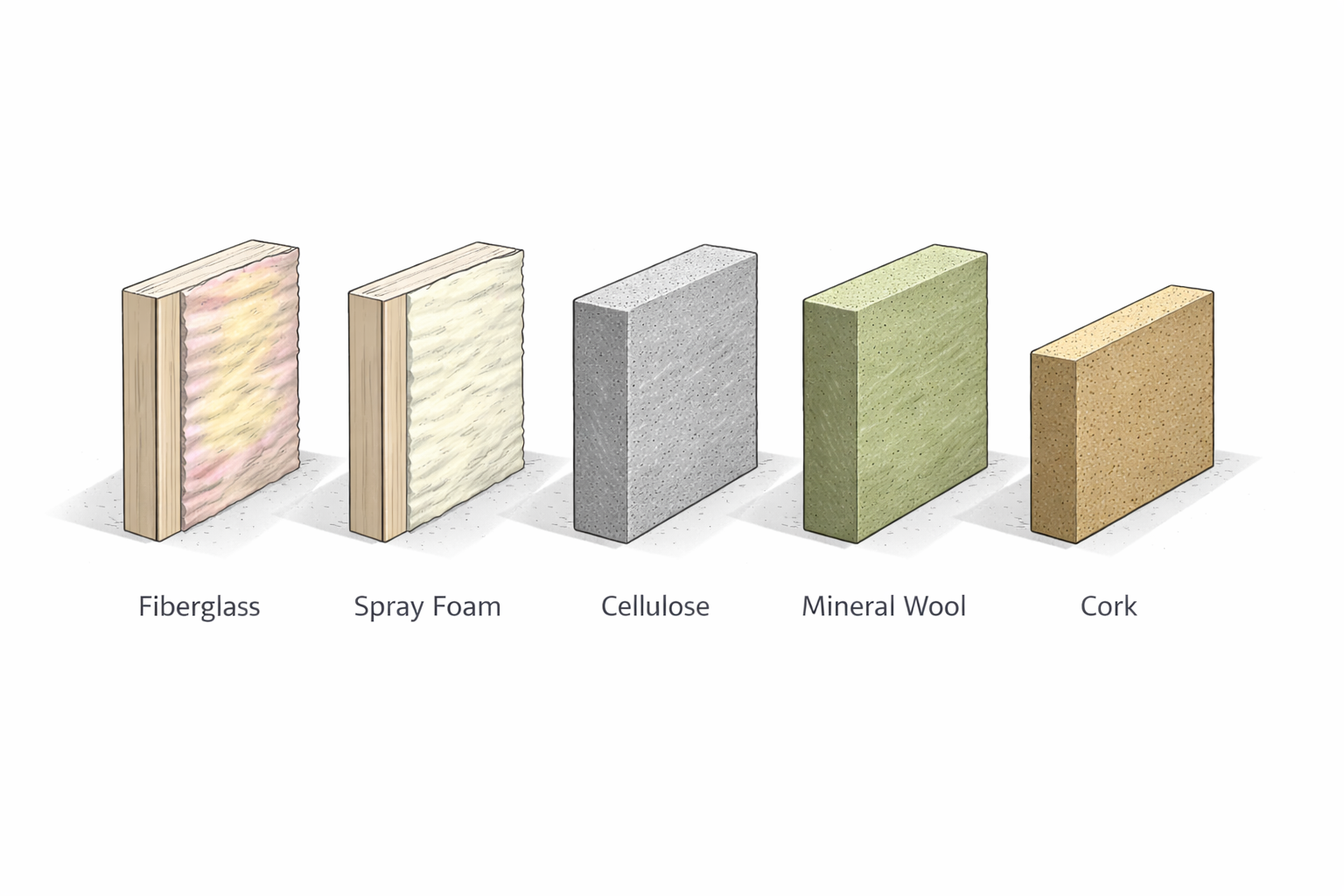
Common insulation materials include fiberglass, mineral wool, cellulose, spray foam, sheep’s wool, cork, hemp, and recycled cotton. They do not offer the same mix of fire resistance, fiber exposure, fumes, moisture behavior, or long-term fit inside a wall or roof assembly.
This guide breaks down the safest insulation options by situation, explains where each material tends to work best, and shows what to watch before choosing one for walls, attics, floors, roofs, basements, or crawl spaces. If you want the broader field first, read The Complete List of Thermal Insulation Materials: Types, Uses, and Best Practices. If you are already leaning toward lower-impact options, Natural Insulation Materials: Types, Benefits, and Practical Tips and Sustainable Insulation That Saves Energy and Cuts Costs are the better companion pages.
What This Covers
- What safety means when you are comparing insulation materials.
- The insulation types that are usually the safest in different categories.
- Where common materials like fiberglass, spray foam, mineral wool, cellulose, and natural products fit.
- How to choose more safely based on fire, moisture, fibers, fumes, and the assembly itself.
What “Safe” Means in Insulation
Most people ask this question as if there should be one winner. There usually is not. Safety in insulation usually comes down to five things.
- Fire behavior: Does it burn easily? Does it need protection layers? Does it produce smoke or toxic gases?
- Fibers and handling: Is it irritating to install? Does it shed fibers into the air?
- Fumes and off-gassing: Does it release strong odors or chemicals during or after installation?
- Moisture and mold risk: Does it trap moisture in the wrong place or stay stable when humidity is high?
- Assembly fit: Is it safe in the wall, roof, floor, or basement where you are planning to use it?
That last one gets missed all the time. A product can be safe in general and still be the wrong answer in a wet crawl space, against concrete, or in a roof that cannot dry.
Safest Insulation Options, Depending on the Priority
Mineral Wool
If fire resistance is the first filter, mineral wool is often one of the safest broad choices. It is non-combustible, handles heat well, and is widely used where fire performance matters.
- Usually strongest for: fire safety, sound control, and general wall or floor use.
- Main strengths: very strong fire performance, good acoustic value, stable once installed.
- Watch for: airborne fibers during installation. It is usually safe in service, but gloves, long sleeves, and a mask still make sense during handling.
Worth knowing: if mineral wool is the main comparison, the next pages are Rockwool Blown Insulation: Benefits, Costs, and Installation Made Simple and Can Mineral Wool Insulation Double as a Soundproofing Solution?.
Sheep’s Wool Insulation
If your main concern is lower-toxicity handling and a more natural material, sheep’s wool is one of the better-known answers. It is renewable, easier to handle than many conventional products, and often chosen in homes where indoor-air concerns are part of the conversation.
- Usually strongest for: lower-irritant handling, breathable assemblies, natural-material projects.
- Main strengths: easier to handle, moisture buffering, lower synthetic content.
- Watch for: cost, sourcing, and making sure the product fits the target R-value and cavity depth.
Cellulose Insulation
Cellulose is often one of the safer mainstream lower-impact options, especially when cost and availability matter. It is made largely from recycled paper and commonly treated for fire resistance.
- Usually strongest for: attics, dense-pack walls, and readers who want a broad sustainable option without jumping to niche materials.
- Main strengths: recycled content, wide availability, good coverage in irregular spaces.
- Watch for: dust during installation, settling if installed poorly, and moisture problems if the assembly is badly detailed.
Recycled Cotton or Denim Insulation
Recycled cotton insulation is one of the easier materials to like from a handling standpoint. It is softer to work with than fiberglass and is often chosen where irritation during installation is a big concern.
- Usually strongest for: lower-irritant handling, interior partitions, retrofit work, and sound control.
- Main strengths: recycled content, easier handling, decent acoustic performance.
- Watch for: product availability, thickness, and not treating it like a cure-all just because it feels safer to touch.
Cork Insulation
Cork is one of the more appealing natural options for readers who want a durable, lower-impact material with useful acoustic value. It is often discussed more in specialty assemblies and retrofits than in standard batt-style cavity fills.
- Usually strongest for: floors, walls, ceilings, and projects where sound control matters too.
- Main strengths: renewable source, good acoustic behavior, stable performance.
- Watch for: price and making sure the assembly makes sense at the thickness available.
Hemp Insulation
Hemp insulation is one of the better-known natural products in current building discussions. It is often chosen for breathable wall systems and readers who want lower synthetic content without moving into more experimental territory.
- Usually strongest for: breathable wall and roof assemblies, lower-impact builds, readers prioritizing natural materials.
- Main strengths: renewable source, moisture tolerance, strong sustainability appeal.
- Watch for: thickness requirements, price, and the fact that hemp batts and hemp-lime systems are not the same thing.
If that comparison is where you are headed, read Hemp Insulation vs. Fiberglass: Which is Safer for Your Home? after this page.
Materials That Can Work, But Need More Caution
Fiberglass
Fiberglass is common, cheap, and familiar. Once installed and enclosed properly, it can perform fine. But if your question is strictly about the safest material to handle or live with, fiberglass is not usually the first answer people give.
- Main concern: skin, eye, and respiratory irritation during installation.
- Also watch for: moisture-prone assemblies, sloppy fitting, and the false idea that cheap and common means harmless in every use case.
Spray Foam
Spray foam can work very well as insulation and air sealing, but it is also the material people argue about most when “safe” means fumes, curing, and indoor-air quality. Product chemistry, installer skill, and curing conditions matter a lot.
- Main concern: installation exposure, bad mixing, odor, and product-specific off-gassing questions.
- Also watch for: fire-protection requirements and moisture-trap problems when it is used in the wrong assembly.
That does not mean spray foam is automatically unsafe. It means it is not the easiest material to recommend when the main goal is the safest overall choice with the least controversy.
Safest Picks by Situation
If Fire Safety Is the Main Priority
Mineral wool is usually one of the strongest answers. It is hard to beat when non-combustibility is the first filter.
If Lower-Irritant Handling Is the Main Priority
Sheep’s wool, recycled cotton, cork, and some hemp products are usually the first materials people compare.
If You Want a Safer Mainstream Budget Choice
Cellulose is often one of the easiest to justify. It is widely available, lower-impact than many standard options, and familiar enough that it does not push the project into specialty territory.
If the Building Needs to Breathe
Hemp, wood fiber, sheep’s wool, cork, and other natural products often make more sense than closed or vapor-tight systems. That matters especially in older walls and some restoration work.
If the Space Is Damp or Moisture-Prone
This is where the safest material is the one that works with the moisture conditions, not the one with the nicest label. Basement walls, crawl spaces, and roof edges punish bad assumptions. Safe here means moisture-aware as much as anything else.
How to Choose More Safely
The safest insulation choice usually comes from asking better questions, not chasing one miracle material.
- Start with the assembly: wall, attic, roof, floor, basement, crawl space. The location changes the answer fast.
- Decide what kind of safety matters most: fire, fibers, fumes, moisture, or environmental impact.
- Check the product data, not just marketing language: fire ratings, installation instructions, vapor behavior, and thickness all matter.
- Do not ignore indoor-air concerns: if chemical sensitivity is part of the job, avoid treating every insulation type as interchangeable.
- Respect installation quality: a safer material installed badly can still produce a bad result.
One more thing: if the question is drifting into improvised or ultra-budget options, Is Cardboard a Good Insulator? Pros, Cons, and Practicality is the better place for that discussion. Cardboard may have small DIY uses, but it is not the material most people mean when they ask for the safest insulation to use in a house.
What to Watch For
- Do not treat R-value as the whole decision. Safety and fit matter too.
- Do not assume natural means fireproof. Some products need treatment, finishes, or tested assemblies.
- Do not assume common means safest. Fiberglass is common. That is not the same thing as best in every health or handling scenario.
- Do not ignore moisture. A safe product in the wrong wet assembly becomes a problem fast.
- Do not forget the person installing it. Handling exposure matters, not just long-term in-service performance.
What to Read Next
If you are still narrowing the options, the next page depends on what is driving the choice.
- Natural Insulation Materials: Types, Benefits, and Practical Tips — best next read if you want the lower-impact and plant- or fiber-based side of the category.
- Sustainable Insulation That Saves Energy and Cuts Costs — useful if the bigger question is performance plus environmental impact.
- Hemp Insulation: Why Are Builders Switching to It? — the right next page if hemp is the main natural option you are comparing.
- Rockwool Blown Insulation: Benefits, Costs, and Installation Made Simple — worth reading if fire resistance and mineral wool are driving the decision.
- The Complete List of Thermal Insulation Materials: Types, Uses, and Best Practices — the best next step if you want to compare safe options against the whole insulation field.
FAQ
What is the safest insulation overall?
There is no universal winner, but mineral wool, sheep’s wool, cellulose, recycled cotton, cork, and hemp are usually among the safest materials discussed most often. The right answer depends on whether you mean fire safety, lower fumes, easier handling, or better moisture behavior.
Is fiberglass safe to use?
Fiberglass can be safe once installed properly and enclosed, but it is not usually the most comfortable material to handle. Skin, eye, and respiratory irritation during installation are the main reasons some homeowners and builders prefer other options.
Is mineral wool safer than fiberglass?
In fire terms, mineral wool is often the stronger choice. In handling terms, both can be irritating during installation, though mineral wool is often chosen because of its fire performance and overall durability in service.
Is spray foam safe after it cures?
That depends on the product, installation quality, and curing conditions. Spray foam is not automatically unsafe, but it is more dependent on correct installation than many other materials, which is why it is not usually the simplest answer to this question.
What is the safest natural insulation?
Sheep’s wool, cork, hemp, and recycled cotton are often the first materials compared when people want lower-irritant, lower-impact options. Which one is safest still depends on the assembly and the performance target.
What is the safest insulation for fire resistance?
Mineral wool is one of the strongest broad answers when fire resistance is the main priority.
Is cardboard a safe insulation material?
Cardboard can have limited DIY uses, but it is not usually the safest or most reliable primary insulation for a house. Moisture, pests, and limited performance push it out of the serious conversation for most permanent building work.