
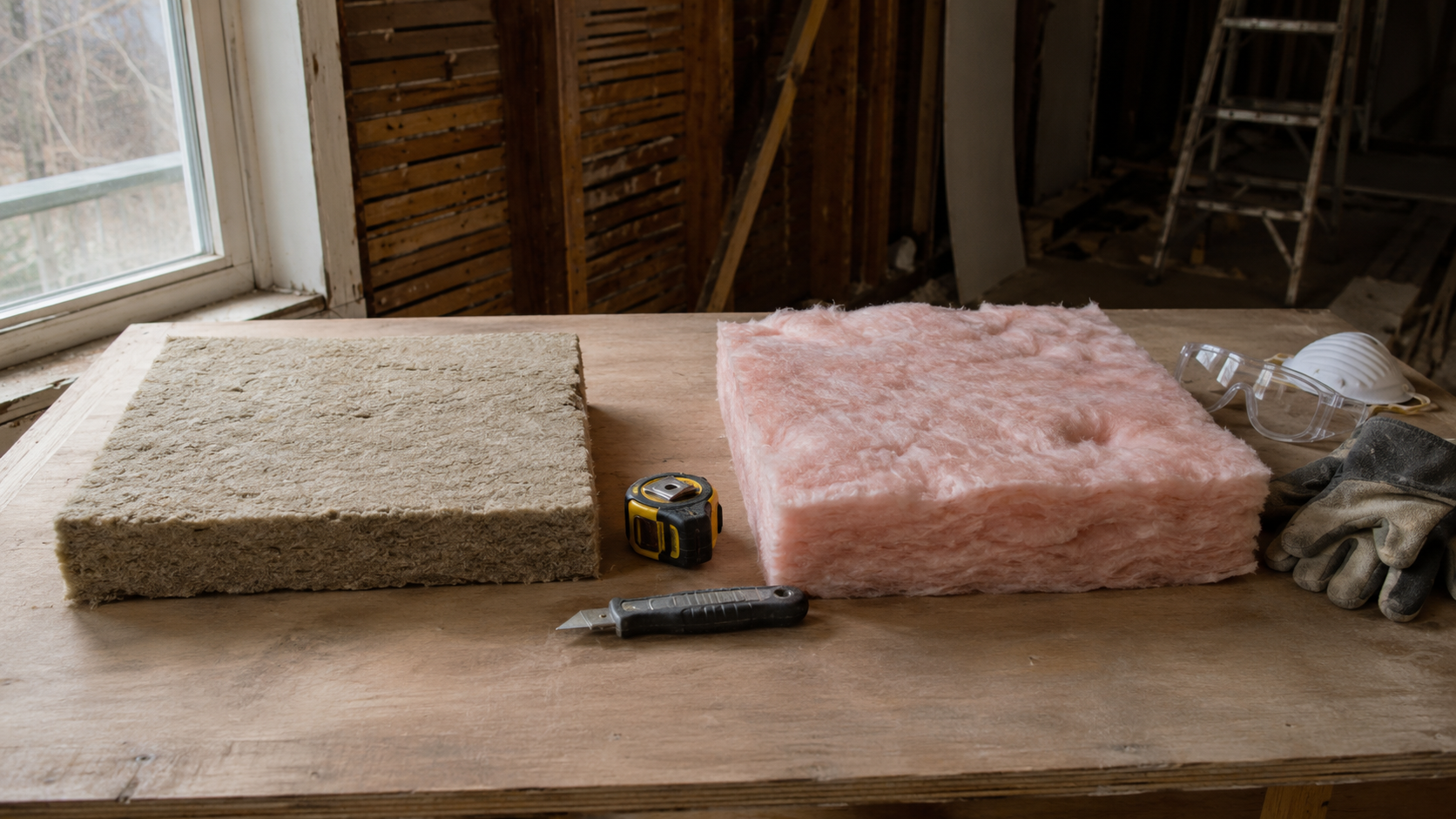
Image by ArchitectureCourses.org. Hemp batt and fiberglass batt laid out side by side in a real renovation setting. The handling difference is part of the comparison, not just the insulation value.
Hemp batt insulation and fiberglass batt insulation can both slow heat flow in walls, roofs, and floors. They are not equally safe in the same ways.
Hemp is usually easier to handle. Fiberglass usually has the cleaner fire story and the lower upfront cost. The right choice depends on what kind of safety matters most in your project: fire, fibers, fumes, moisture, or long-term wall performance.
This page compares hemp and fiberglass in plain English. It explains where each one makes sense, where each one creates problems, and what usually gets missed when people talk about safe insulation. If you want the wider field first, read The Complete List of Thermal Insulation Materials: Types, Uses, and Best Practices. If you are already leaning toward lower-impact products, go next to Natural Insulation Materials: Types, Benefits, and Practical Tips.
Quick comparison
| Question | Hemp batt | Fiberglass batt |
|---|---|---|
| Safer to handle during install | Usually yes | No |
| Cleaner fire position | No | Usually yes |
| Cheaper upfront | Usually no | Usually yes |
| Easier to buy fast in the U.S. | No | Yes |
| Better fit for vapor-open and lower-synthetic goals | Usually yes | Usually no |
If your first concern is install-day comfort and lower irritation, hemp usually looks better. If your first concern is fire behavior, price, and easy availability, fiberglass usually looks stronger.
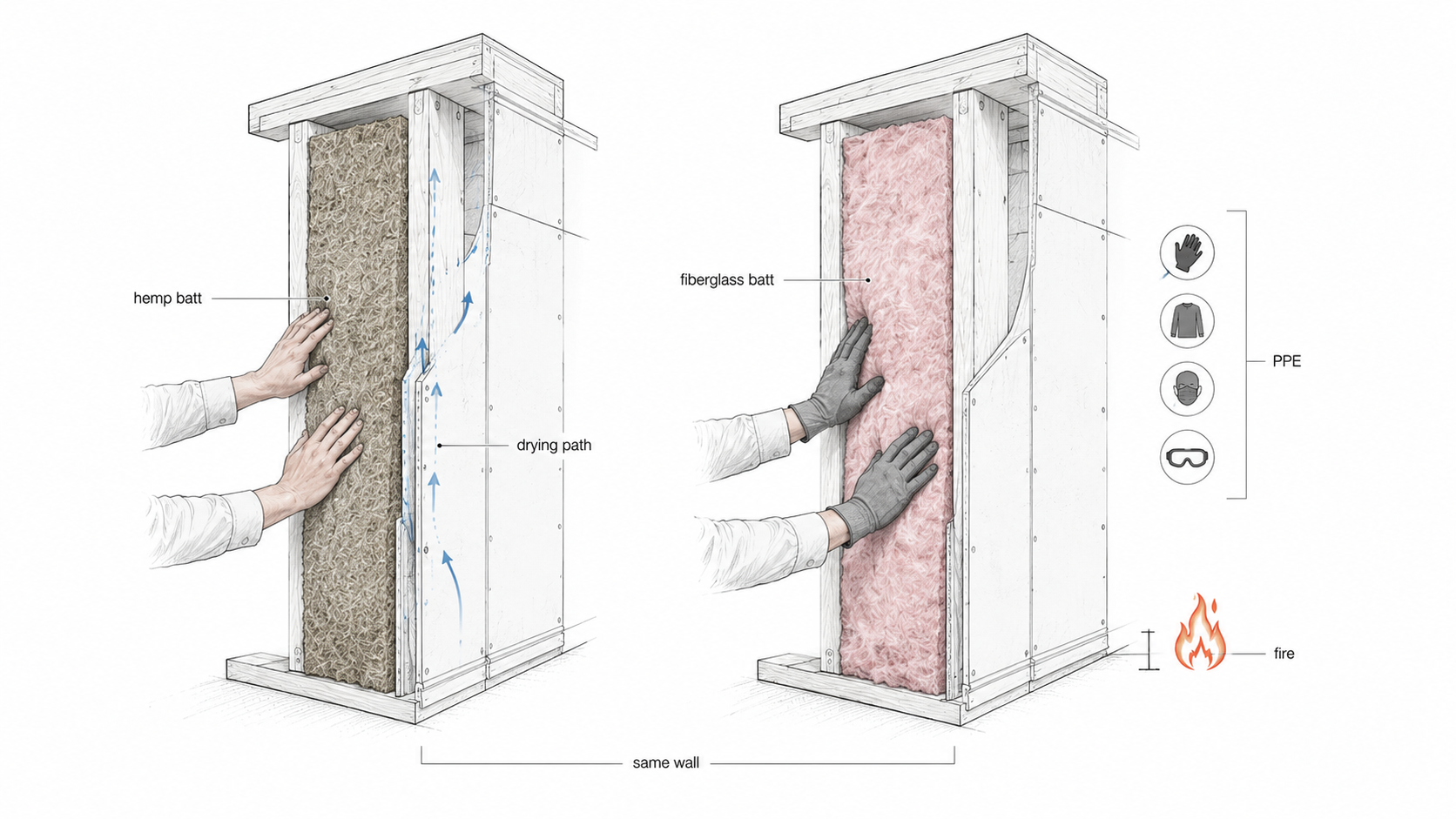
Illustration by ArchitectureCourses.org. Hemp batt and fiberglass batt both work as non-structural insulation inside stud walls. Hemp is usually easier to handle, while fiberglass has a simpler fire-performance story in many assemblies. Either material still depends on correct wall detailing, drying path, and installation quality.
What safe means here
Most people ask this question as if there should be one winner. There usually is not. Safety in this comparison comes down to five things.
- Fire behavior: how the material reacts to heat and flame.
- Fibers and handling: whether it irritates skin, eyes, or lungs during installation.
- Fumes and chemicals: whether the product brings odor, off-gassing, or added chemical concerns.
- Moisture behavior: whether the insulation helps a wall stay dry or makes moisture problems worse.
- Assembly fit: whether the product belongs in that wall, roof, floor, or attic in the first place.
That last point matters because a material can feel better in your hands and still be the wrong choice in a wall that leaks air, traps water, or cannot dry.
Install-day safety
This is where hemp usually has the edge. Hemp batt insulation is softer to handle and does not bring the same skin and fiber irritation people associate with fiberglass.
Fiberglass is different. It is common for a reason, but it is still the material more people want gloves, long sleeves, eye protection, and a mask for. That does not make fiberglass unusable. It just means install-day exposure is part of the decision.
So if your question is which one is easier and lower-risk to work with during installation, hemp is usually the better answer.
Fire safety
This is where fiberglass gets stronger. Fiberglass is widely treated as the cleaner answer when non-combustibility is high on the list.
Hemp does not come with that same simple fire story. Hemp insulation products are usually treated, and the finished wall assembly matters. That does not make hemp unsafe by default, but it does mean hemp is not the automatic winner when fire resistance is the first filter.
If fire questions are the main hesitation, the stronger next read after this page is Is Hemp Insulation Flammable?.
What shows up after the drywall goes on
This is the part people usually find out late.
Install-day safety and long-term wall safety are not the same thing. A batt that feels cleaner in your hands can still end up inside a bad wall. A cheaper batt that looks fine on paper can still fail if the wall leaks air, gets wet, or cannot dry.
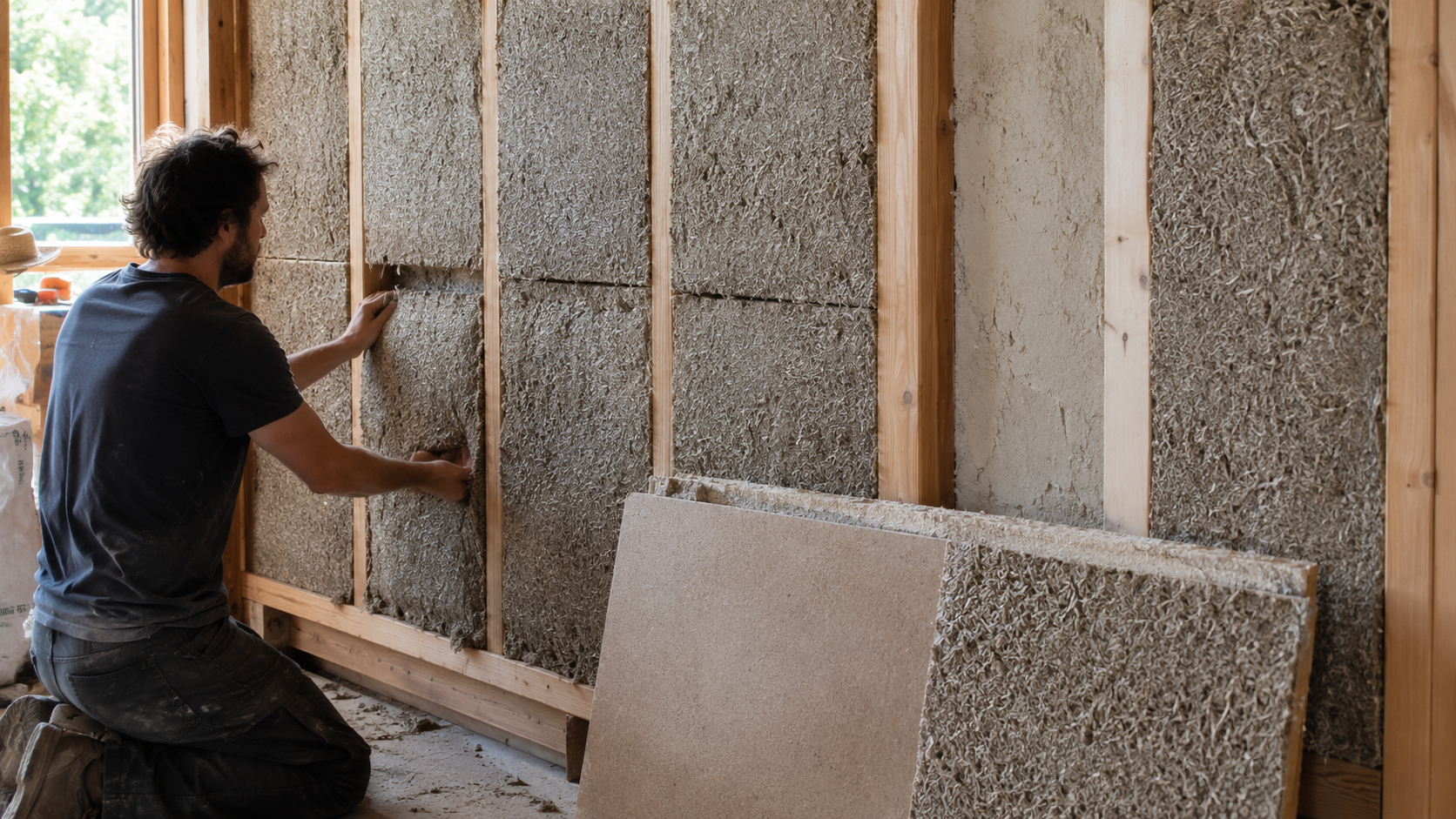
Image by ArchitectureCourses.org. Hemp insulation and fiberglass can fill the same stud cavity, but they differ in texture, handling, and how they behave inside the wall assembly.
Hemp is often chosen because it fits vapor-open, lower-synthetic assemblies better. That can be a real advantage. But it is not magic. If the roof leaks or the wall is detailed badly, hemp will not save the assembly.
Fiberglass has the same problem in a different way. It may be cheaper and easier to source, but if it is installed in a leaky or moisture-prone assembly, the wall can still become a mess.
This is the real question most buyers should ask: which material is safer in this wall, not which material sounds safer in general?
Thermal performance
On paper, this is not a blowout. Hemp batt insulation and fiberglass batt insulation can land in a similar broad thermal range per inch, depending on the exact product.
The bigger issue is not the label alone. Fit, compression, moisture, and air leakage matter just as much. A better batt installed badly can lose to a cheaper batt installed well.
So no, this is not a clean hemp-performs-better or fiberglass-performs-better argument. Real performance depends on the whole assembly.
Cost and availability
Fiberglass still wins this part of the market. It is cheaper, easier to find, and familiar to almost every insulation crew in the country.
Hemp is still the thinner supply-chain product in most U.S. jobs. That changes the decision more than people admit. A material can be attractive on health or sustainability grounds and still lose because the job needs fast delivery, easy replacement, and a lower first cost.
If the project is price-driven or schedule-driven, fiberglass usually fits the real-world job more easily.
When hemp makes more sense
- You want lower-irritant handling.
- You are trying to reduce synthetic content in the assembly.
- You are working on a vapor-open wall strategy.
- You care about sustainability enough to pay more for it.
- You are already comparing natural insulation products, not just the cheapest batt at the store.
If that is where the job is headed, Hemp Insulation Companies: Best Providers, Costs, and Benefits Across the USA is the right next step.
When fiberglass still makes more sense
- You need the lowest upfront cost.
- You need a material that is easy to source fast.
- Fire behavior is your first concern.
- The crew already knows the product and the install routine.
- The project does not support a niche-material learning curve.
Fiberglass still wins plenty of jobs for practical reasons. That does not make it healthier to handle. It just means it still fits a lot of budgets and a lot of schedules.
One mistake that ruins this comparison
Do not mix up hemp batt insulation and hemp-lime wall systems.
If you are comparing fiberglass batts to hemp batts, stay in that lane. Once the project shifts into hemp-lime or hempcrete wall infill, you are no longer comparing one batt product to another. You are comparing different wall systems, different detailing, different labor, and different code questions.
If the job is really drifting that way, go to Hempcrete: The Green Revolution in Construction.
Bottom line
If your first priority is install-day safety and lower irritation, hemp is usually the safer pick.
If your first priority is fire behavior, lower first cost, and easy U.S. availability, fiberglass usually has the stronger case.
If your real priority is long-term wall safety, neither material should be judged by touch alone. Look at air sealing, leak risk, drying path, and whether the assembly is likely to stay dry after the drywall goes up. That is where the expensive mistakes usually start.
What to read next
- Hemp Insulation Companies: Best Providers, Costs, and Benefits Across the USA — best next read if you want the hemp side in more detail.
- Natural Insulation Materials: Types, Benefits, and Practical Tips — useful if you are comparing hemp against other lower-impact options.
- Is Hemp Insulation Flammable? — the better next step if fire is the part still bothering you.
- The Complete List of Thermal Insulation Materials: Types, Uses, and Best Practices — the wider field if you want all the mainstream options in one place.
FAQ
Is hemp insulation safer than fiberglass?
It can be safer to handle during installation because it is usually less irritating. That does not automatically make it safer in every wall. Fire behavior, moisture, and assembly design still matter.
Is fiberglass dangerous?
Fiberglass is widely used and can perform well, but it is the material more people associate with skin, eye, and respiratory irritation during installation. That is why PPE is common.
Which insulation is better for fire safety?
Fiberglass usually has the cleaner answer there. Hemp products can still be used safely, but the fire story is not as simple.
Does hemp insulation perform like fiberglass?
Broadly, batt-style hemp can land in a similar thermal range on paper. Real performance still depends on fit, thickness, moisture, and installation quality.
Is hemp insulation the same as hempcrete?
No. Hemp batt insulation is a cavity insulation product. Hempcrete or hemp-lime is a wall infill system. They are not the same purchase and they should not be compared casually.
Which one is cheaper?
Fiberglass is usually cheaper upfront and easier to buy quickly in the U.S.
Which one is better for an older house?
That depends on the wall and how it needs to dry, but hemp often comes up more in vapor-open and lower-synthetic retrofit discussions than fiberglass does.