
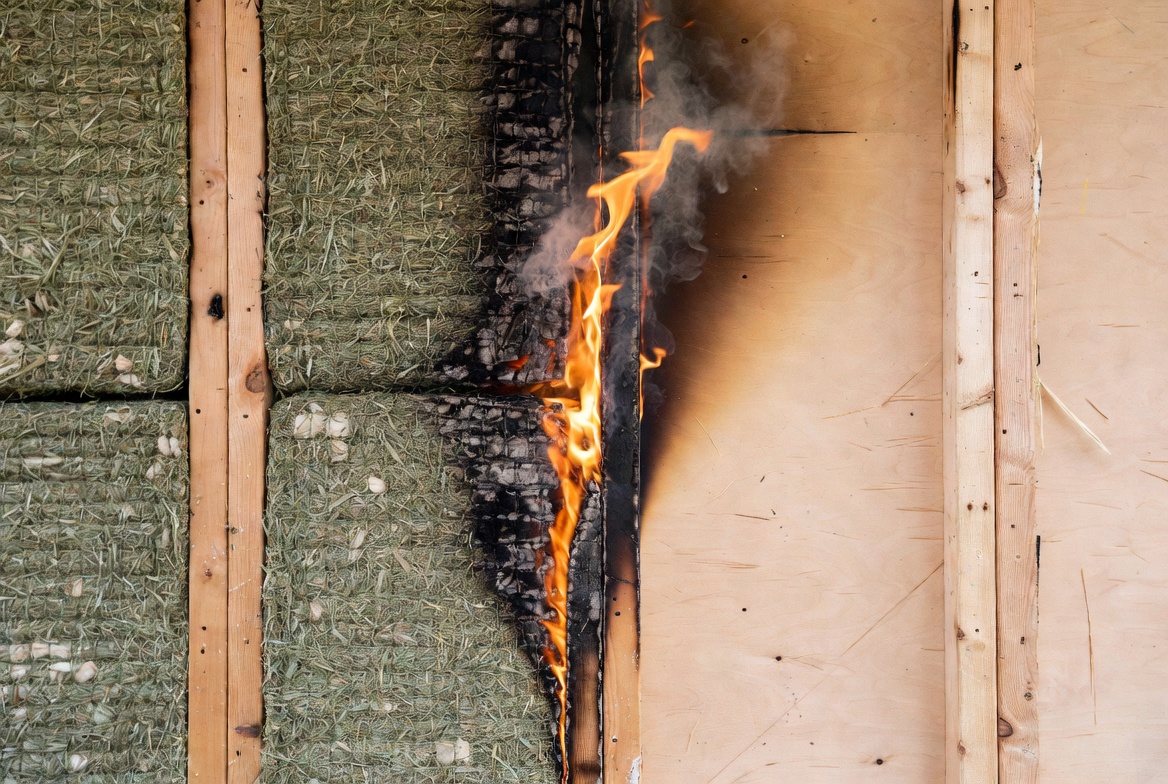
Hemp and fiberglass do not raise the same safety questions.
Fiberglass is cheaper and easier to find. Hemp gets chosen for different reasons: easier handling, lower irritation, and a better fit in some lower-impact assemblies.
The real question is what kind of safety matters most here. Installation exposure, fire, moisture, mold, off-gassing, and long-term behavior do not all lead to the same winner.
This page sorts out where hemp is safer, where fiberglass still makes sense, and what matters before either one goes into a wall, roof, or floor.
If you want the bigger safety picture first, read What Is the Safest Insulation to Use?. If you want the wider insulation field beyond this one comparison, go to The Complete List of Thermal Insulation Materials: Types, Uses, and Best Practices.
What Safety Means in This Comparison
Most people ask this question as if there should be one clean winner. Usually there is not. Safety here comes down to a few separate issues.
- Handling safety: Does it irritate skin, eyes, or lungs during installation?
- Indoor-air concerns: Does the product raise odor, binder, or chemical-sensitivity concerns?
- Fire behavior: How does the product behave on its own, and how does the full assembly behave?
- Moisture behavior: Does it trap moisture, slump, or create mold risk in the wrong assembly?
- Assembly fit: Is the material a good match for the wall, roof, floor, or attic where you want to use it?
That last point matters more than people think. A material can sound safe in general and still be the wrong choice in a damp basement wall, a thin roof assembly, or a badly detailed retrofit.
Side-by-Side: Hemp vs. Fiberglass
| Category | Hemp Insulation | Fiberglass Insulation |
|---|---|---|
| Handling | Usually easier on skin and lungs | Commonly causes itch and irritation during install |
| Material Type | Plant-based fiber product | Glass fiber product |
| Fire | Usually needs treatment and assembly context matters | Glass fibers themselves are noncombustible, but product details still matter |
| Moisture | Often chosen for vapor-open assemblies and moisture buffering | Can lose effectiveness if badly installed or used in the wrong damp location |
| Cost | Usually more expensive and harder to source | Usually cheaper and easier to find |
| Best Fit | Breathable assemblies, lower-impact projects, health-first comparisons | Budget work, common cavity insulation, standard residential jobs |
Where Hemp Is Usually the Safer Choice
Handling and Installation Comfort
This is the category where hemp usually wins most clearly. Hemp batts and mats are generally easier to touch, cut, and fit than fiberglass batts. People comparing the two for a DIY job often notice that immediately.
Fiberglass is common for a reason, but it can irritate skin, eyes, and airways during installation. That does not make it toxic in every use. It does mean hemp is often the safer-feeling material to work with directly.
Lower-Irritant Material Preference
If the project is being filtered through indoor-air concerns, lower synthetic content, or material sensitivity, hemp often gets the nod before fiberglass does. That is one of the main reasons it keeps showing up in natural-building and low-toxicity discussions.
Breathable Wall and Roof Assemblies
Hemp is often chosen in vapor-open assemblies where moisture movement and drying potential matter. In the right wall, that can be a real advantage. It is one reason hemp gets compared with sheep’s wool, wood fiber, and other natural insulation materials more often than with spray foam.
Worth knowing: if you want the broader natural-material context, go next to Natural Insulation Materials: Types, Benefits, and Practical Tips.
Where Fiberglass Can Still Make Sense
Budget and Availability
Fiberglass is still the material many people land on because it is cheap, available almost everywhere, and familiar to contractors. If the comparison is safety plus cost, fiberglass stays in the conversation because first cost changes real decisions.
Standard Residential Cavities
In a basic framed wall or attic floor, fiberglass can still work perfectly well when it is installed carefully, kept dry, and matched to the right assembly. A lot of the bad reputation comes from poor installation, gaps, compression, and air leakage, not from the product alone.
Fire Discussions Need Nuance
People often oversimplify this part. Fiberglass itself is not the same kind of combustible plant fiber product hemp is. But that still does not settle the whole question, because insulation does not live in isolation. Facings, binders, finishes, and the full tested assembly matter.
If fire is the main issue, read How Does Mineral Wool Handle Fire? after this. That page is a better fire-focused branch than forcing hemp and fiberglass to carry the whole discussion.
Fire Safety: This Is Where People Get Loose With the Claims
Hemp supporters sometimes oversell the material here. Fiberglass defenders sometimes do the same.
Hemp insulation products are usually treated so they can perform better in fire conditions, but that does not mean every hemp product is automatically the safest answer in every assembly. Fiberglass, on the other hand, has a stronger reputation in this category, but the full batt, facing, finish layer, and wall build-up still matter.
The safer move is to stop asking which loose material sounds better in theory and start asking how the whole assembly is supposed to perform. That is the only version of the question that holds up on site.
Moisture Safety: The Part People Miss
This is where the cleaner answer starts to fall apart. Hemp can be safer in some moisture-aware assemblies because it is often used in more breathable build-ups. That does not mean it belongs everywhere.
Fiberglass can also work fine when it stays in a dry, well-detailed cavity. But it performs badly when it is installed loosely, exposed to repeated moisture, or stuffed into the wrong location and expected to fix a larger wall problem.
In other words, neither material excuses bad detailing. If the wall cannot dry, if bulk water is getting in, or if air leakage is doing half the damage, the safer material on paper still loses in practice.
Use This When / Avoid This When
| Situation | Usually Better Choice | Why |
|---|---|---|
| DIY install where handling comfort matters | Hemp | Usually easier on skin and airways |
| Basic budget cavity insulation | Fiberglass | Lower cost and easy availability |
| Breathable low-impact wall system | Hemp | Fits the assembly logic better |
| Lowest first-cost attic or wall job | Fiberglass | Still the common entry-point material |
| Project mainly driven by fire performance | Neither by default | Compare full assemblies, and usually bring mineral wool into the conversation |
| Wet or badly detailed assembly | Neither by default | Fix the assembly problem first |
What People Get Wrong
- They treat “safe” like one category. Fire, fibers, fumes, and moisture are not the same question.
- They assume hemp is automatically better because it is natural. It still has to fit the wall, thickness, and code requirements.
- They assume fiberglass is unsafe because it itches. Installation irritation is real, but that is not the whole life-cycle question.
- They ignore the assembly. A good insulation product in a bad wall is still a bad result.
- They compare hemp batts to fiberglass batts, then drift into hemp-lime walls without noticing. Those are not the same system.
So Which One Is Safer?
If your main concern is handling comfort, lower irritant exposure, and a more natural material profile, hemp is often the safer choice.
If your main concern is staying inside a tight budget while using a common cavity insulation product, fiberglass can still make sense, but it comes with more handling irritation and less appeal for people filtering materials through indoor-air or lower-synthetic-content concerns.
If your main concern is fire, the comparison usually needs a third material in the room: mineral wool.
And if your main concern is moisture, the safest choice is the one that fits the assembly and drying strategy, not the one with the best-sounding label.
What To Read Next
If you are still narrowing the choice, these are the next pages that actually help.
- What Is the Safest Insulation to Use? — best next read if you want the bigger safety picture across all major insulation types.
- How Does Mineral Wool Handle Fire? — useful if fire performance is the main reason you are comparing materials.
- Natural Insulation Materials: Types, Benefits, and Practical Tips — better if you want to compare hemp with other lower-impact insulation options.
- Hemp Insulation: Why Are Builders Switching to It? — the right next step if you want the fuller hemp-specific breakdown.
- The Complete List of Thermal Insulation Materials: Types, Uses, and Best Practices — best if you want to compare hemp and fiberglass against the full insulation field.
FAQ
Is hemp safer than fiberglass?
Often yes for handling comfort, lower irritant exposure, and natural-material preference. Not automatically in every category. Fire, moisture, cost, and assembly fit still matter.
Is fiberglass dangerous after installation?
Fiberglass can perform fine once installed properly and enclosed, but it is still the more irritating product to handle during installation, which is one reason many people compare it against hemp in the first place.
Is hemp insulation fire-safe?
Hemp products can perform well, but they usually rely on treatment and correct assembly design. Do not assume plant-based means unsafe, and do not assume natural means automatically fireproof either.
Is hemp insulation safer for indoor air quality?
Many readers prefer hemp for that reason, especially when they want lower synthetic content and easier handling. But indoor-air results still depend on the full assembly, finishes, moisture control, and installation quality.
Is hemp more expensive than fiberglass?
Usually yes. That is one of the main reasons fiberglass still wins a lot of ordinary residential jobs.
Which one is safer in a damp wall?
Neither is safe by default in a badly detailed damp wall. The safer choice is the one that fits a moisture-aware assembly and drying path.
What is safer than both for fire?
In many fire-driven discussions, mineral wool is the material people compare next.