
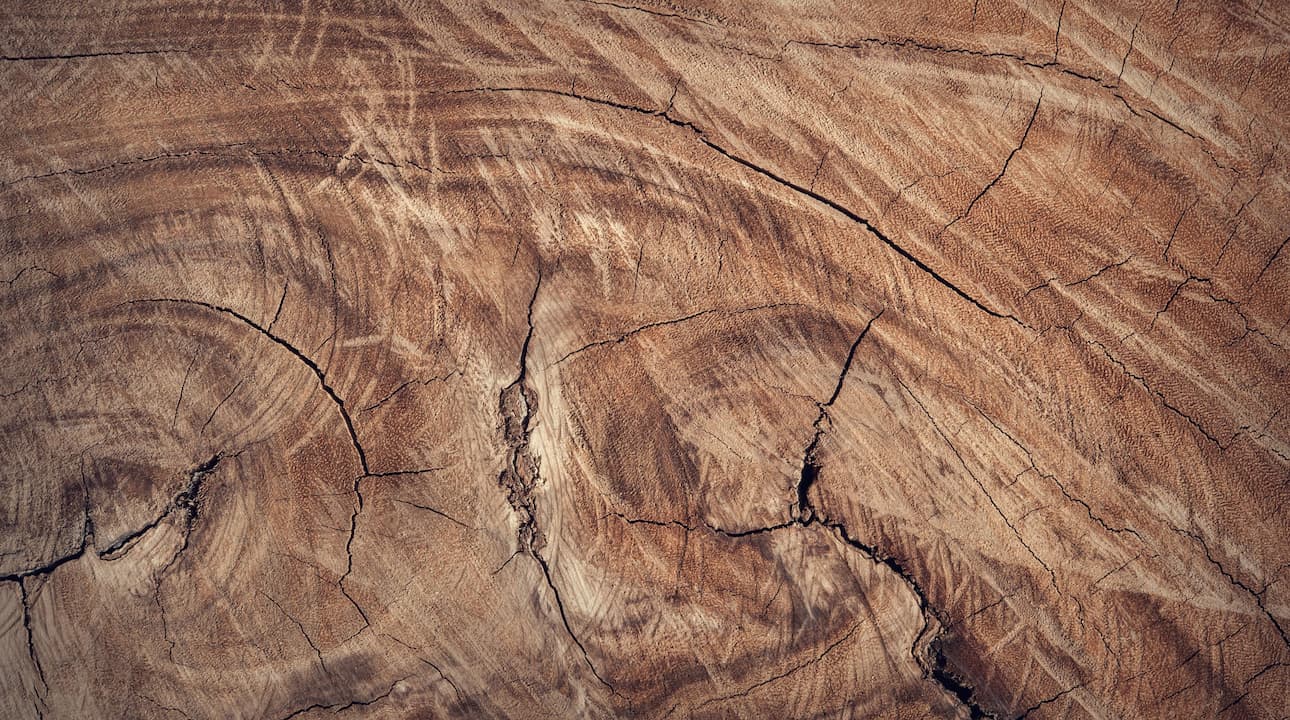
Wood is easy to misread when the choice starts with appearance and stops there.
One board stays straight, takes finish well, and lasts. Another twists, dents, swells, or breaks down once moisture, load, or weather get involved.
That is the part worth learning. Not just species names, but what the wood is likely to do once it is cut, fastened, exposed, or lived with. Density, grain, moisture response, durability, and workability all start showing up there.
This guide explains the wood properties that affect performance in construction, furniture, repair work, and finish carpentry. If the bigger question is which wood to use overall, start with Choosing the Right Wood for a Project..
The Three Main Wood Categories
Most wood decisions get easier once the material is sorted into the right family first. That clears up a lot of bad choices before you get into species, grades, or finishes.

Surface quality, grain, and density all change how a board performs and how it finishes.
Softwoods
Softwoods are the workhorses of construction. They grow faster, cost less, and are easier to cut and fasten. That is why they show up in framing, sheathing, painted trim, basic paneling, and many outdoor applications when the species is right.
Pine is common because it is affordable and easy to work. Cedar earns its place outdoors because it handles moisture and decay far better than many softwoods. Spruce and fir matter in structural work because they balance weight, availability, and strength well.
Hardwoods
Hardwoods come in when wear resistance, edge quality, visible grain, and long-term finish value matter more. Flooring, furniture, stair parts, cabinet faces, and better built-ins often live here. Oak, maple, walnut, cherry, hickory, and mahogany all bring different strengths, but they are not interchangeable.
White oak handles moisture better than red oak. Maple is hard and smooth but can stain unevenly. Walnut brings depth and color but costs more. Mahogany has real strengths in finish quality and dimensional stability, but it only earns its cost when the project needs that look and performance.
Engineered Wood
Engineered products exist because solid wood is not the cleanest answer to every job. Plywood stays flatter in large panels. MDF gives a smoother paint surface. OSB handles structural sheathing economically. LVL and glulam solve span and consistency problems that ordinary lumber does not solve as cleanly.
These products are not lower-class substitutes. They are purpose-built materials. The mistake is using them in the wrong place, not using them at all.
The Properties That Change the Decision
| Property | Why It Matters | Where It Shows Up Fast |
|---|---|---|
| Density and hardness | Affects strength, dent resistance, weight, and tool wear | Floors, stairs, furniture, worktops, structural members |
| Moisture response | Controls swelling, shrinkage, cupping, and warping | Bathrooms, kitchens, basements, flooring, exterior work |
| Durability | Determines resistance to rot, insects, and repeated wetting | Decks, siding, outdoor furniture, window parts, trim |
| Grain and texture | Changes appearance, tear-out, and finish behavior | Cabinet faces, millwork, furniture, paneling |
| Workability | Affects cutting, fastening, machining, sanding, and joinery | Finish carpentry, cabinetry, repairs, site-built work |
| Dimensional stability | Determines how predictable the wood stays over time | Wide panels, doors, built-ins, long trim runs, engineered spans |
Density, Hardness, and Load
Denser wood tends to be stronger and more wear-resistant, but density is not the whole story. It also means more weight, more tool resistance, and sometimes more movement if the board is not handled properly. A dense hardwood can make sense for stairs, floors, and visible furniture parts. That does not mean it belongs in every structural or hidden application.
For structural work, strength needs to be judged with grade, span, and consistency in mind, not just species reputation. That is where construction lumber and engineered products often win. For deeper numbers on density, strength, and durability ratings, move next to Physical Properties of Wood.
Moisture Content and Movement
Moisture changes almost everything. Wood swells as it absorbs moisture and shrinks as it dries. That is why floors gap, doors stick, trim joints open, and panels warp. It is also why wood that behaves well in a dry interior can fail fast in a bathroom, laundry room, or coastal setting.
Moisture content has to match the use. Indoor furniture and finish work need drier, more stable stock than exterior framing or open-weather lumber. If the wood is still too wet when installed, the trouble shows up later, not at the yard.
This is one of the main reasons people make expensive mistakes. The board looks fine on day one. Six months later it cups, twists, cracks, or pulls apart at the joint.

Strength and stiffness matter, but wood under load still depends on moisture, grade, span, and how the member is restrained.
How Wood Handles Stress
Wood is strong for its weight, but it does not behave the same in every direction. Grain orientation matters. Wood resists some loads well and handles others less gracefully. That is why a good board can still fail when the grain runs the wrong way or when the span is asking too much of it.
Three ideas matter here:
- Elasticity: wood can flex and return, which helps in floors, framing, and some furniture parts.
- Creep: under constant load, wood can slowly deform over time. That is how shelves start sagging.
- Buckling and bending: long members fail differently from short, stubby ones. Beam size, span, and support matter as much as species.
This is where generic “strong wood” advice falls apart. The real question is strong in what shape, at what span, under what load, and in what condition.
Durability, Decay, and Weather Exposure
Durability is not just about hardness. Some hard woods still fail badly when water keeps getting in. Some softer species last well outside because their natural chemistry handles insects, rot, and repeated wetting better.
Cedar and teak are classic examples because they hold up in exposed conditions better than many interior woods. White oak can also do well in the right outdoor use. MDF, particleboard, and low-grade interior stock do not belong in wet areas unless the system is fully protected and the product is rated for it.
If water can sit on it, wick into it, or stay trapped behind it, the material choice has to respect that. Finish alone does not rescue a bad moisture decision.
Grain, Appearance, and Finish Behavior
Grain is not only visual. It affects machining, stain absorption, splintering, and how crisp the finished work looks. Oak has a more visible, open grain. Maple reads smoother and quieter. Walnut brings deeper color and richer contrast. Pine can look warm and casual, but resin and softness change how it finishes and ages.
Finish goals should affect the choice early. Paint-grade work is a different job from stain-grade work. A material that looks excellent under oil may be frustrating under paint. A board that paints cleanly may not be the one you want under a clear finish.

Fine hardwood work depends on more than species name. Grain, density, and finish behavior are what make the result look sharp or fall flat.
Where Different Wood Types Fit Best
| Use | Better Starting Choices | Why |
|---|---|---|
| Framing and structural work | Construction softwoods, plywood, LVL, glulam | Strength, consistency, cost, availability |
| Painted trim and panels | MDF, poplar, stable paint-grade stock | Smoother finish, cleaner edges, less grain show-through |
| Cabinet faces and built-ins | Hardwoods or veneered plywood, depending on finish goal | Better visible face quality and better long-term finish value |
| Floors and stairs | Hardwoods or engineered flooring systems | Wear resistance, stability, refinishing value |
| Outdoor furniture and exterior trim | Cedar, teak, white oak in the right use, treated stock where appropriate | Better moisture and decay performance |
| Cabinet boxes, subfloors, sheathing | Plywood or OSB depending on the job | Panel stability, structural value, cost control |
How to Read Wood Before You Buy It
You can catch a lot of trouble before the board ever reaches the saw.
- Sight down the length: look for twist, bow, and crown.
- Check the ends: the end grain tells you more about drying and ring pattern than the face does.
- Look for deep end splits: those shorten usable length fast.
- Watch for fuzzy milling or tear-out: that is more sanding, more waste, and a weaker finish surface.
- Check moisture if the job is sensitive: especially for interiors, floors, cabinets, and trim.
Where Problems Usually Start
The worst wood failures tend to come from the same pattern: the material was chosen for the wrong reason.
- Choosing by color instead of use.
- Using interior logic on exterior work.
- Ignoring moisture content before installation.
- Using low-cost panels where edges, water, or fastening loads are critical.
- Assuming hardwood is always better than softwood.
- Ignoring grade, span, or fastening in structural work.
That is also why a broad article like this should hand off to narrower pages when the decision gets more specific. For example, Engineered Wood Products belongs in the conversation once the project shifts from solid boards to panels, headers, or large spans.

Furniture and interior millwork reward wood choices that balance durability, stability, and finish quality instead of chasing species names alone.
Wood in Design, Repair, and Daily Use
Not every wood decision is structural. Many are about touch, wear, repairability, and the way a room ages. Furniture, doors, trim, built-ins, and paneling all sit closer to daily life than framing does. That shifts the priority toward grain, finish, edge quality, and how the material looks after a few years of use.
That is also where cheap material can become a false economy. A lower-cost board that dents fast, paints badly, or moves too much can cost more once the rework starts.
Also useful: if the broader design role of timber is the next question, continue to Wood in Architecture Today.
Sustainability and Sourcing
Wood can be one of the better building materials on the environmental side, but only when the sourcing is clean and the product is used well. Responsible forestry, better drying, and better milling all show up later in service life, dimensional stability, and waste reduction.
If sustainability is part of the decision, start with Sustainable Wood for Homes and then narrow by project type. Good sourcing does not replace good detailing, but it does improve the baseline.
FAQ
What are the most important wood properties to understand first?
Start with density, moisture response, durability, grain, and workability. Those five explain most of the good and bad decisions people make with wood.
Is hardwood always stronger than softwood?
No. Some softwoods perform very well in structural work, and engineered products often outperform both when span and consistency matter most.
Why does moisture content matter so much?
Because wood keeps reacting to moisture after purchase. If it is too wet or installed in the wrong condition, it can shrink, swell, cup, crack, or pull joints apart later.
When should I choose engineered wood instead of solid wood?
Choose engineered wood when the project needs flat panels, longer spans, paint-ready surfaces, or more predictable dimensional behavior.
Which wood is better for outdoor use?
That depends on exposure and detailing, but decay-resistant choices such as cedar and teak make more sense than interior-grade materials once weather becomes part of the job.
Where should I go next if I need the technical numbers?
Go deeper into Physical Properties of Wood for the more technical side of strength, density, and durability.
What To Do Next
- If you need deeper technical data, continue to Physical Properties of Wood.
- If you are sorting the wood families first, compare Softwoods, Hardwoods, and Engineered Wood Products.
- If the question is environmental performance and responsible sourcing, go next to Sustainable Wood for Homes.