
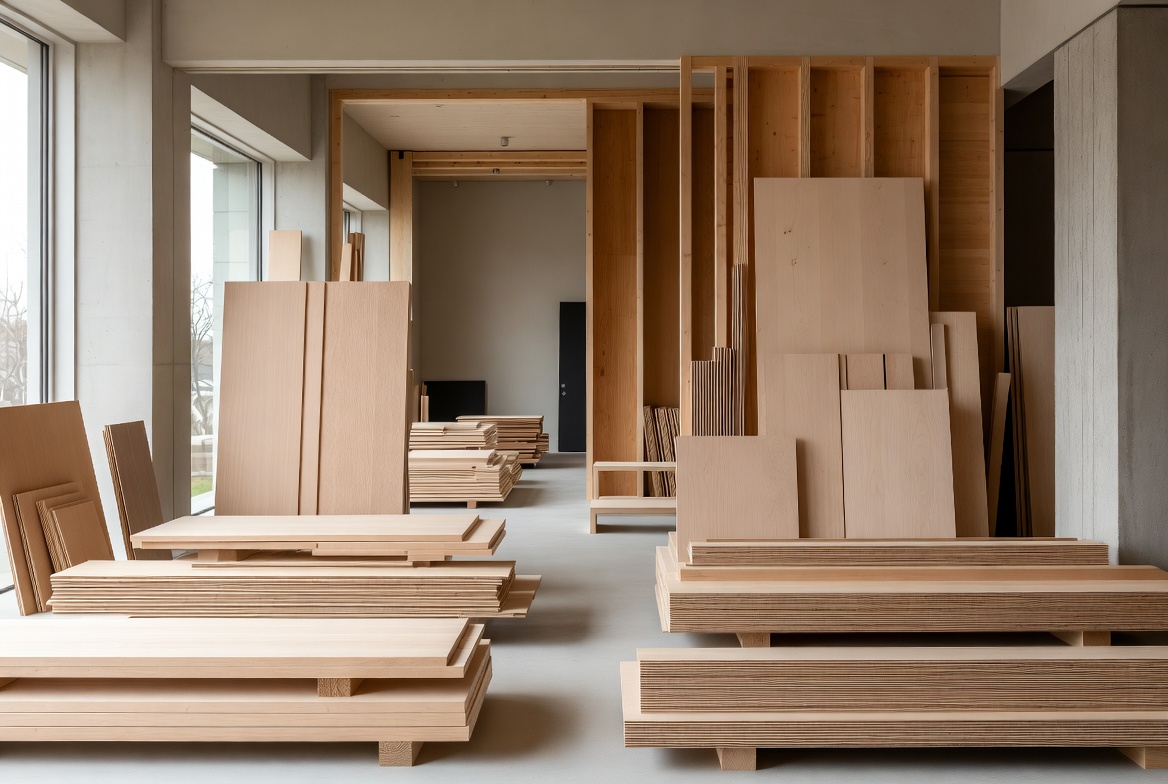
Sustainable wood gets vague fast once you have to buy it, detail it, and live with it.
The label says responsible. The supplier says low-impact. The sample looks good. Then the real questions start. Where did it come from? How was it processed? Will it last? Can it be repaired, refinished, or reused, or are you buying something that looks virtuous now and gets torn out early?
That is the problem with a lot of sustainable wood advice. It collapses into shortcuts. FSC good. Reclaimed good. Bamboo fast-growing. Local better. None of that means much by itself.
Wood only earns the sustainability claim when the whole decision holds up: source, species, transport, processing, finish, detailing, repairability, and service life. Get that right and wood can be one of the best materials in the building. Get it wrong and the label is doing more work than the material.
What This Covers
- What sustainable wood actually means
- Which wood choices usually hold up best
- Where certified, local, reclaimed, and engineered wood each fit
- What people commonly get wrong
- Why durability and repair matter as much as sourcing
- What to ask before you buy or specify
- How to make the sustainability claim more honest
Sustainable Wood Is Not Just a Forest Question
A lot of people stop at the tree. That is too early.
Sustainable wood is not just wood that came from a managed forest instead of clear-cut damage. It is wood that still makes sense after transport, milling, finishing, installation, exposure, maintenance, and eventual repair are all counted. A board from a good source can still become a bad sustainability decision if it travels too far for no good reason, is used in the wrong exposure, or ends up in a short-life assembly that cannot be repaired.
The clean version is this: sustainable wood should make sense ecologically, practically, and over time. Forest health matters. Supply chain honesty matters. Service life matters just as much.
If you want the wider material context around wood, Building Materials: How They Work and Where to Use Them is the better parent page.
The Best Sustainable Wood Choice Is Often the Least Romantic One
This is where the conversation usually gets sentimental.
People like the story of reclaimed barn boards, exotic “green” species, or a certification logo that seems to settle the whole argument. But on a real project, the best sustainable wood choice is often the boring one: the species that is local enough, durable enough, repairable enough, and appropriate enough for the job that it will still be there years later without drama.
That may be reclaimed wood. It may be a regional hardwood from a good mill. It may be an engineered product that gets more usable area out of the tree and solves a real structural or finish problem. The right answer is rarely the most photogenic one. It is the one that survives the full chain of use.
Which Sustainable Wood Paths Usually Make Sense
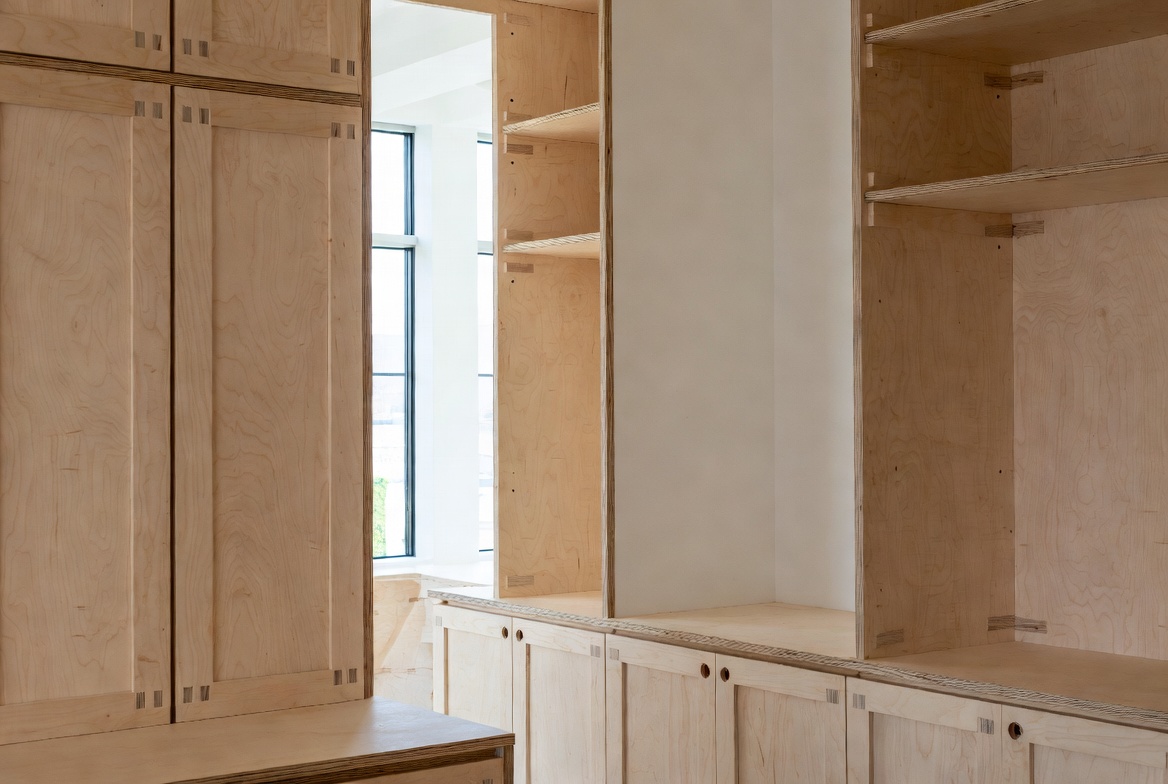
Plywood cabinetry and built-in storage show one practical way sustainable wood can work in interiors. Image by ArchitectureCourses.org.
| Wood path | Why it can work | What to watch | Best fit |
|---|---|---|---|
| Certified wood | Adds accountability around sourcing and chain of custody | Certification does not fix long shipping, bad detailing, or short service life | General architectural wood specification where traceability matters |
| Local or regional species | Can reduce transport and support nearby mills | Local does not automatically mean durable, responsible, or appropriate | Floors, millwork, cladding, furniture, finish carpentry |
| Reclaimed wood | Uses existing material and can avoid fresh harvesting | Nails, coatings, grading, hidden damage, and labor can change the value fast | Feature elements, furniture, paneling, selected finish work |
| Engineered wood | Can use timber more efficiently and solve span or stability problems with less high-value wood | Adhesives, emissions, durability, and repair limits still matter | Panels, flooring, structural members, cabinetry, longer spans |
| Rapidly renewable products | Fast growth can reduce pressure on slow-growing hardwood forests | Processing, glues, transport, and finish systems can erase the simple story | Selected flooring, panels, furniture, light interior use |
Certified Wood Helps. It Does Not Finish the Job.
Certification matters because it is one of the few ways to get some discipline into a messy supply chain. That is real value. It is better than taking a supplier’s word for it.
Still, the label is not the full answer. A certified board that ships halfway around the world for a routine interior job may be less convincing than a well-managed regional species from a mill that can answer direct questions. A certification program can help you filter out bad sourcing. It cannot make a weak design durable or a short-life material honest.
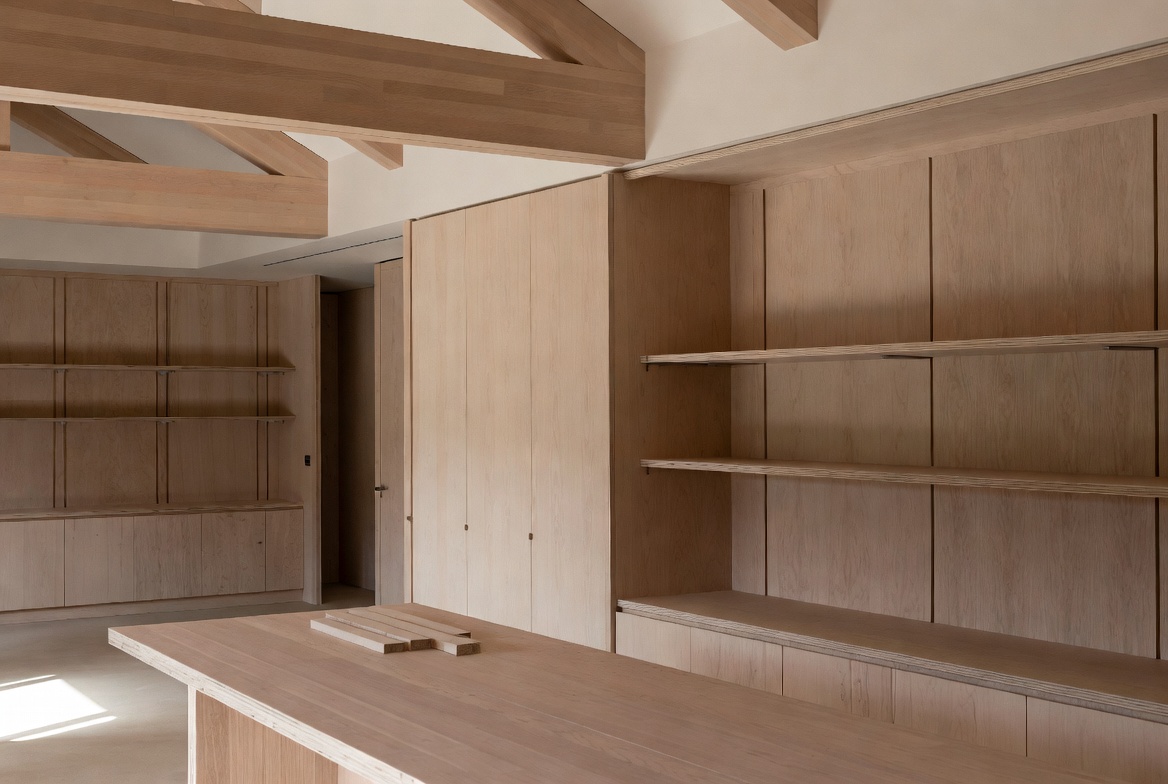
Built-in shelving and wall panels show sustainable wood used in a calm, contemporary interior. Image by ArchitectureCourses.org.
The smarter use of certification is as a baseline check, not a personality. Helpful. Not magical.
Local Wood Is Good When Local Wood Is Also Right
“Buy local” sounds cleaner than it really is.
Regional species often make a lot of sense. Less transport. Better supplier knowledge. More realistic repair and replacement later. But local wood is not automatically durable enough, stable enough, or responsibly managed enough for the job. A nearby species used badly is still a bad material decision.
The better move is to start with the exposure and service life, then see whether a local or regional species can do the job without compromise. When it can, that is often one of the strongest sustainability decisions available. When it cannot, forcing it does not make the project greener. It just makes the failure local.
Reclaimed Wood Works Best When You Use It Selectively
Reclaimed wood is often the strongest sustainability move because the material already exists. No new harvest. No new board needing to be milled just to fake age and character. In the right project, that is hard to beat.
But reclaimed wood is not free virtue. It can be full of nails, coatings, hidden movement, contaminants, or old treatments you do not want inside a house. It can also burn a lot of labor and freight if the sourcing is sloppy.
Used well, reclaimed wood belongs where its variation and repair history are strengths rather than problems: furniture, shelving, wall paneling, feature ceilings, selected flooring, and pieces where irregularity adds value instead of forcing constant correction.
The mistake is trying to make reclaimed stock behave like fresh, perfectly graded millwork lumber. Wrong expectation. Reclaimed wood rewards selective use, not blind enthusiasm.
Engineered Wood Can Lower Waste. Or Just Hide It Better.
A lot of people hear “sustainable wood” and picture only solid boards or reclaimed beams. That is too narrow. Engineered wood can also make sense because it often gets more usable material out of the tree and can solve structural or finish problems with less high-value timber.
That does not make every engineered product sustainable by default. Adhesives matter. Emissions matter. Service life matters. A cheap fiberboard panel that swells and gets replaced early is not a sustainability win just because it used wood fiber efficiently at the factory.
Still, good engineered products can be part of the right answer, especially where span, stability, or material efficiency matters. If that is the branch you are weighing, Engineered Wood Explained: Types, Benefits, and Installation is the next useful read.
What People Get Wrong About Sustainable Wood
The same mistakes show up over and over.
- They assume local wood is always sustainable.
- They assume certified wood is always the best answer.
- They assume reclaimed wood is automatically low-impact no matter how far it travels or how much work it takes to make usable.
- They assume bamboo or other fast-growing materials are always better without checking adhesives, processing, and shipping.
- They focus on sourcing and ignore service life.
- They specify fragile finishes or thin veneers, then call the result sustainable when it fails early.
- They buy a good material and use it in the wrong place.
That last one matters more than people think. A responsibly sourced board used badly is still waste.
What Actually Works vs What People Commonly Do Wrong
| What people commonly do | Better move |
|---|---|
| Pick exotic certified wood for a routine interior application | Check whether a local or regional species can do the job first |
| Use reclaimed wood everywhere because it sounds morally stronger | Use reclaimed material where variation, labor, and history add value |
| Call engineered wood unsustainable without looking at the product type | Check whether the engineered product improves material efficiency, span, or durability |
| Focus only on harvesting and ignore finish systems | Look at adhesives, coatings, repairability, and service life too |
| Choose wood by look alone | Choose by exposure, wear, repairability, and source together |
| Treat sustainability like a sourcing note | Treat it like a design and detailing decision from start to finish |
Durability Decides Whether the Claim Holds Up
This is the part that gets missed when the conversation gets too sentimental.
A chair that breaks early is not sustainable because the wood was certified. A floor that needs replacing because the wear layer was too thin is not sustainable because the brochure said eco. A panel that cannot be repaired and ends up skipped into a dumpster after one leak is not sustainable because it came from a responsible forest.
Longevity matters. Repairability matters. The more years you get out of the material, the more honest the sustainability story becomes. That is one reason wood still matters in architecture: when it is detailed well, it can age instead of simply failing.
Design for Repair, Not Just for First Installation
If the piece cannot be maintained, taken apart, refinished, or repaired, the sustainability claim gets weaker fast.
That does not mean every joint has to come apart with a screwdriver. It means the design should not force early disposal for simple damage. Replaceable wear surfaces, repairable finishes, accessible fasteners, and assemblies that can be taken apart without destroying half the piece all help.
This is where sustainable wood stops being a sourcing issue and becomes an architecture issue. Joints, finish systems, moisture management, and access for future work matter just as much as the board itself.
If you are still deciding where wood belongs in the larger project, Where Wood Belongs in Architecture Today connects the material logic to real architectural use.
What to Ask Before You Buy
A sustainable wood spec should survive ordinary questions. If it falls apart under five minutes of follow-up, it was probably marketing.
- What species is it?
- Where was it harvested?
- What chain-of-custody or documentation is available?
- How far did it travel, and from where?
- What finishes, adhesives, or treatments are part of the product?
- Can the piece be repaired, refinished, or reused?
- Is this actually the right wood product for the exposure and wear level?
That last question catches a lot of bad specs. Sometimes the right sustainable move is not a different certification. It is a different wood product entirely.
The Detail People Miss
Sustainable wood is not just about where the tree stood. It is about what happens after the cut.
Transport, fabrication, waste, detailing, moisture exposure, repair, finish choice, and expected lifespan all push the answer around. That is why two projects using the same species can tell very different sustainability stories. One can be durable, repairable, and honestly specified. The other can be waste wearing a green label.
What To Do Next
If you want the broader wood parent page first, go back to Wood Essentials: Free Masterclass Course.
If the question is less about sustainability and more about choosing the right wood family for the job, use How to Choose the Right Wood for Your Project.
If you are comparing wood with other material systems instead of deciding inside the wood category alone, Building Materials: How They Work and Where to Use Them is the better next step.
FAQ
What exactly counts as sustainable wood?
Wood that is harvested, processed, and used in a way that does not undermine future forest health or turn into short-life waste. Source matters, but so do transport, detailing, repairability, and lifespan.
Is certified wood always sustainable?
No. It is usually a stronger starting point than a vague supplier claim, but certification is not the whole answer. A good label does not automatically fix long transport, poor durability, or bad design decisions.
Is reclaimed wood always the best option?
No. It is often excellent, but not automatically. Hidden damage, contamination, transport, and processing effort can change the equation. Reclaimed wood works best when the project can use its character and tolerate its variability.
Does engineered wood count as sustainable?
It can. Some engineered products use wood more efficiently and solve structural or finish problems with less high-value timber. But adhesives, emissions, durability, and service life still matter. Too broad a category for a blanket yes or no.
Is bamboo always a better sustainable choice?
Not automatically. Fast growth helps, but processing, adhesives, transport distance, and actual product quality still matter. It has to be judged as a full material system, not just by growth rate.
Why does durability matter so much in sustainable wood design?
Because replacement is expensive in environmental terms too. A wood product that fails early throws away harvesting, transport, fabrication, and finish energy along with the board itself.
What is the first thing to ask a supplier?
Start with origin and documentation. Ask what species it is, where it came from, and what proof exists for sourcing. Then ask the harder question: is this the right wood product for the way the project will actually use it?