
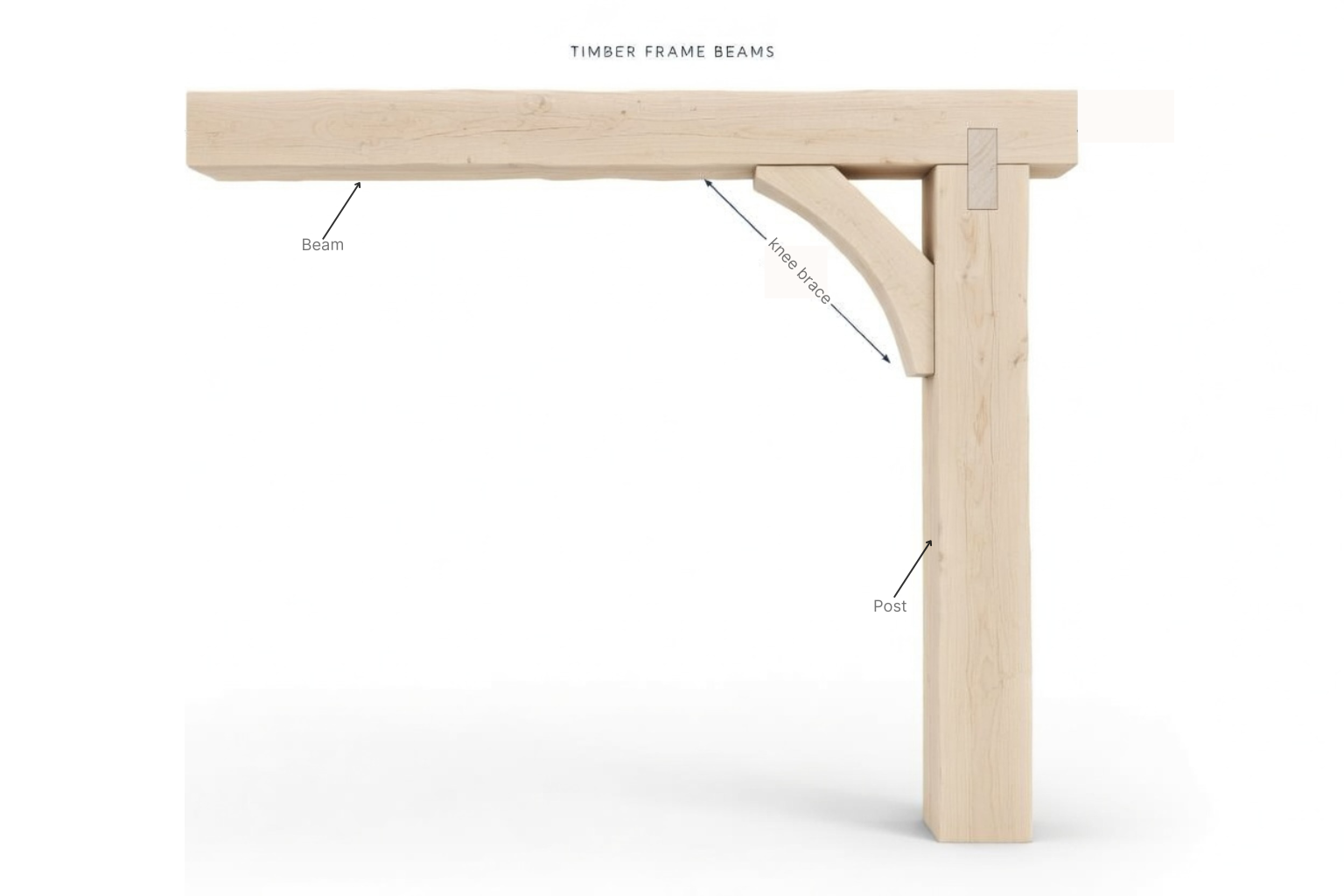
Beams, Posts, Bracing, Connections
Timber framing gets romanticized fast. On site, the question is simpler: which members carry the load, how do they connect, and where will movement start causing trouble later.
This page stays with the structural basics: posts, main beam types, joinery, engineered timber options, and the mistakes that keep showing up in real frames. It is written for readers who need to read a timber frame clearly, not just admire it.
If you are sorting out timber framing versus lighter framed construction, start with Post-and-Beam Homes: How the System Works. If you need the broader load-path logic behind all of this, Understanding Structural Support: Load Paths Explained is the right companion page.
Timber Frame Basics
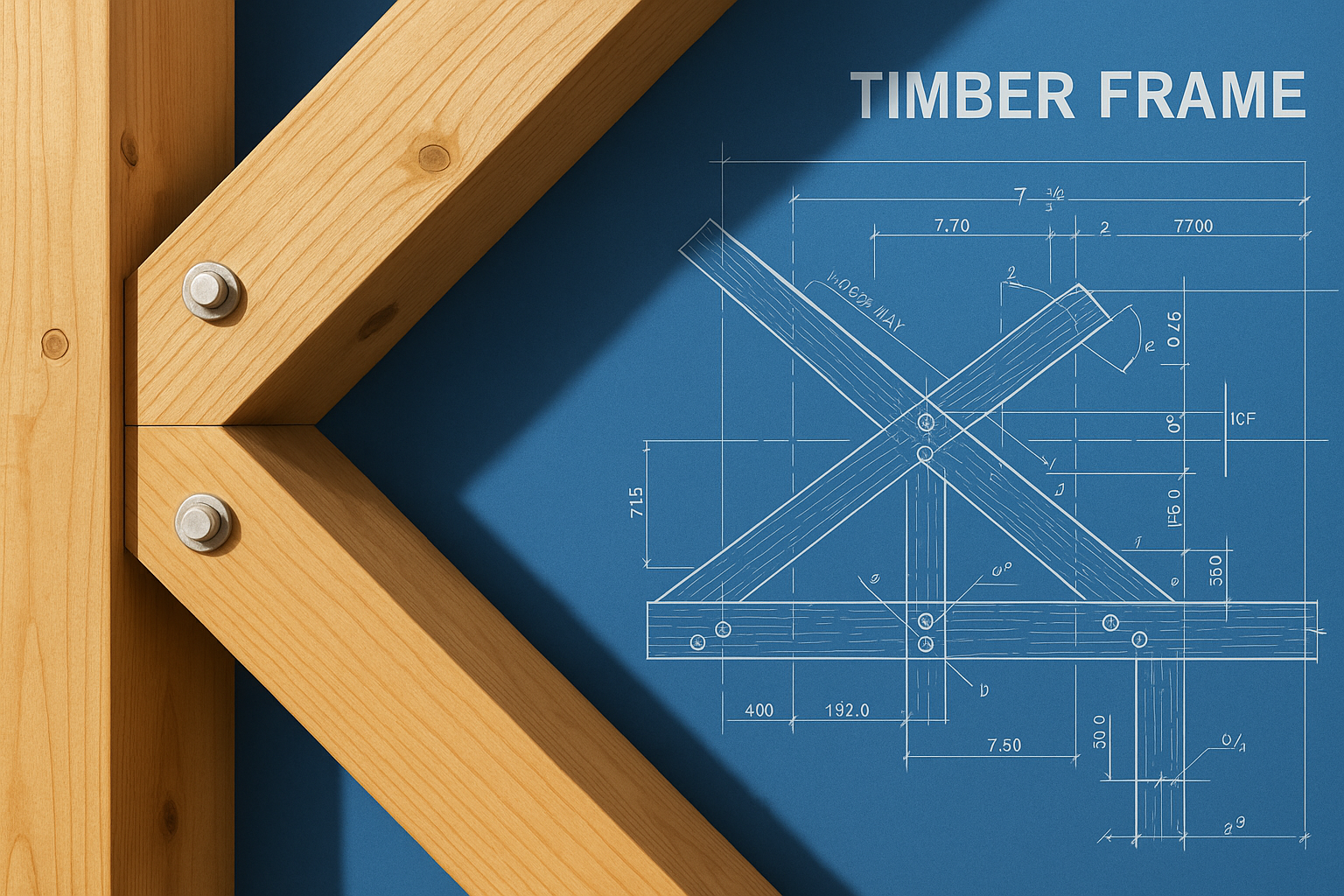
Timber framing is not stick framing with bigger lumber. It uses large posts and beams, wider spacing, and connection details that matter more because each member carries a bigger share of the structure.
That changes the way you read the building. In a stick-framed wall, many studs share the work. In a timber frame, the load path is easier to see, but each wrong decision matters more.
| Member | Main job | Where it shows up | What goes wrong first |
|---|---|---|---|
| Post | Carries vertical load down | Perimeter frames, porches, bents, interior bays | Poor base support, bad alignment, moisture at bottom |
| Tie beam | Holds the frame together against spread | Across roof or wall lines | Undersized section, bad joinery, wrong placement |
| Ridge beam | Carries roof load at the peak | Vaulted roofs and open ceilings | Confused with a ridge board, poor bearing |
| Summer beam | Carries joists across a room or bay | Open floor plans, older heavy-timber floors | Too much span, not enough depth, weak bearing |
| Girt | Ties posts and supports wall or floor loads | Wall frames and intermediate lines | Loose joints, poor lateral support |
| Hammer beam | Part of a special roof-framing system | Large halls, vaulted feature spaces | Used decoratively without understanding thrust |
One more thing that causes confusion fast: not every exposed beam is structural. Decorative ceiling beams are common in renovations and vaulted rooms. If they are not carrying load, label them that way in drawings and on site. It avoids bad assumptions later.
Posts: Size, Spacing, and Placement
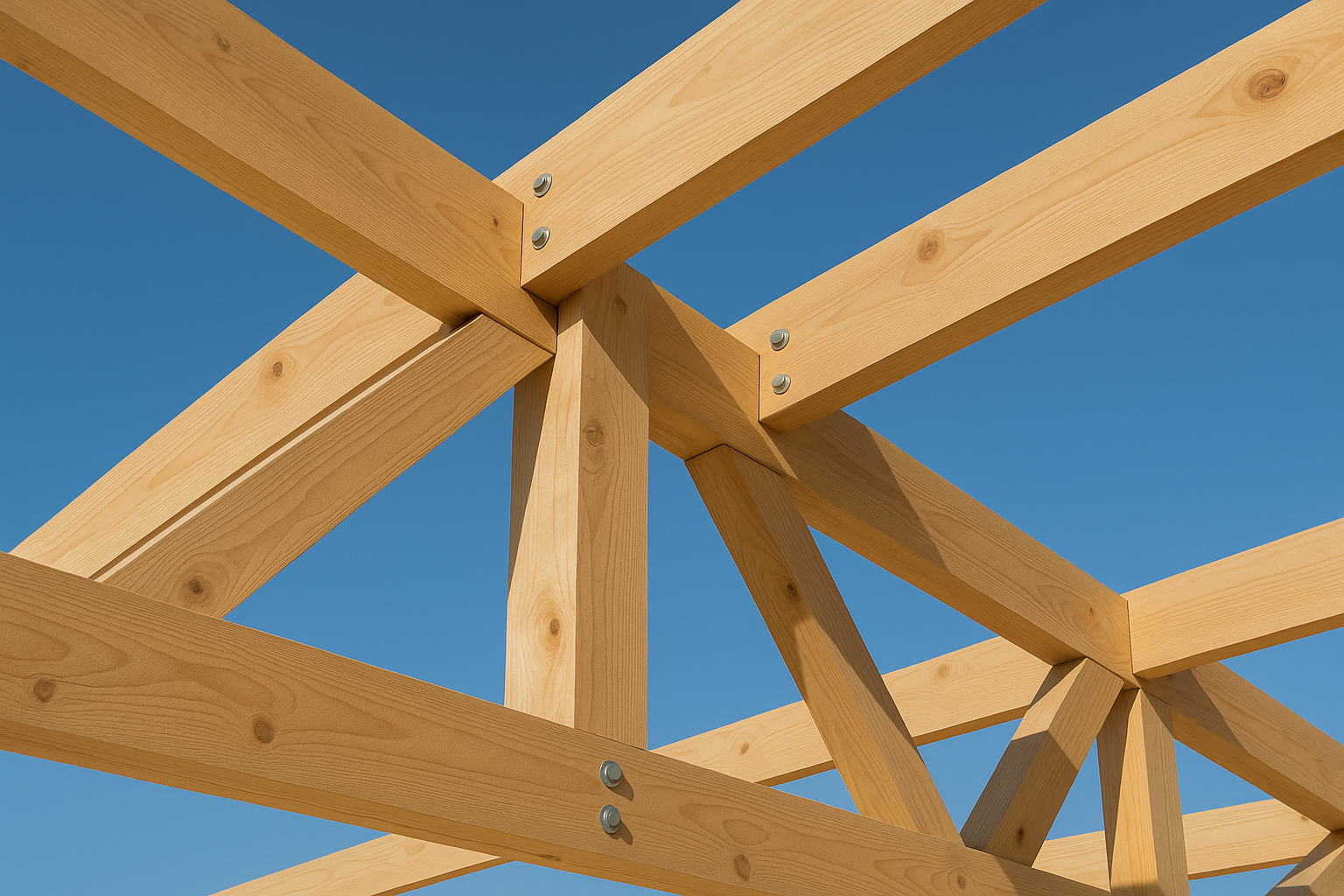
Posts look simple. They are not. A timber post has to do four things at once: carry vertical load, stay stable over its unbraced height, connect cleanly at top and bottom, and stay dry enough to avoid early decay.
In small exterior work, nominal 6x6 posts are common. Heavier exposed frames often move into 8x8 and larger. The right size still depends on species, grade, unsupported height, connection detail, and tributary load. Do not choose a post size by appearance alone.
Placement matters just as much as size:
- Set posts on a clear grid with intentional bay spacing.
- Align posts with the members and supports below whenever possible.
- Do not force posts into circulation routes, door swings, or vehicle paths and expect the plan to fix itself later.
- Keep post bases out of standing water and away from soil contact.
Species choice changes the behavior too. Douglas fir is common for strength and workability. Oak is tough and traditional but heavy and more prone to checking. Cedar helps in exposed exterior conditions where decay resistance matters, but it is not the default answer for every structural frame.
Main Beam Types and What They Do
Timber beams get named loosely in casual conversation. On a real project, the name should tell you the job.
Tie Beams
A tie beam works in tension to keep opposite sides of a frame from pushing apart. In roof work, this is one of the main members stopping outward thrust. If you need the broader breakdown, see Tie Beams in Construction and Roof Tie Beams.
Ridge Beams
A ridge beam carries vertical roof load. A ridge board does not. This gets confused constantly. When rafters depend on the peak member for support, it is a beam and needs real bearing at its ends.
Summer Beams
A summer beam is a major horizontal member carrying joists across a room or bay. In older timber work, it often defines the room structure clearly. In newer exposed timber work, it still matters anywhere the floor wants longer open spans.
Hammer Beams
A hammer beam is not your default timber beam. It belongs to a specialized roof-framing system used to open space below while dealing with roof thrust in a more complex way. It can be beautiful, but it is not casual framing.
Portal and Large-Span Beams
In open halls, garages, barns, and other wide spaces, the beam question usually becomes a frame question. That is where rigid corners, hybrid steel plates, engineered timber, or portal-style logic start showing up.
Mortise and Tenon Joinery
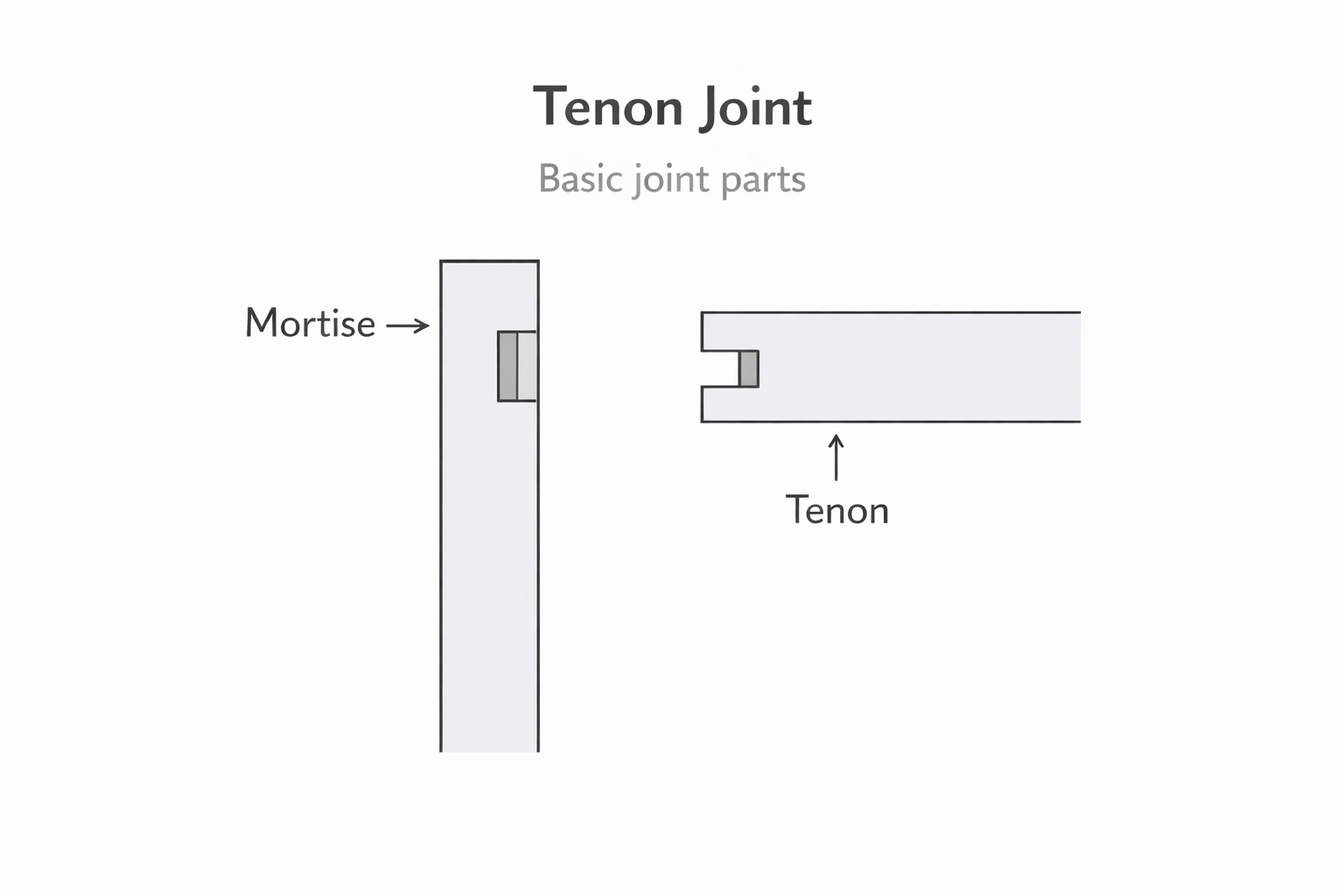
Illustration by ArchitectureCourses.org. Mortise and tenon joint detail showing the mortise opening and matching tenon.
If you only learn one traditional timber joint, learn this one first.
A mortise and tenon joint connects a projecting tenon on one member to a cavity cut into another. Usually the mortise is in the post and the tenon is cut on the beam. Peg it correctly, and it becomes one of the defining joints of timber construction.
It still works because it does three things well: it carries load without depending on visible metal, it tolerates some natural wood movement, and it keeps the structure legible when the frame is exposed.
That does not mean every timber frame should avoid steel. Modern hybrid work often uses concealed plates, bolts, rods, or shoes where span, uplift, erection speed, or inspection requirements push the design that way. The point is not purity. The point is a connection that matches the job.
Where this joint usually goes wrong:
- Mortises cut too loose, so the frame works itself open over time.
- Tenons cut too small, so the member loses too much capacity at the joint.
- Peg placement that weakens the surrounding section.
- Joinery laid out before the full bay geometry is checked.
Other common timber joints include housed joints, dovetails, scarf joints, and knee-brace connections. The right choice depends on whether the joint is handling compression, tension, rotation, or simple seating.
Glulam, LVL, and Solid Timber
Not every timber frame member needs to be solid-sawn wood. In practice, many of the cleanest structural answers now come from engineered timber.
| Material | Best use | Main advantage | Main trade-off |
|---|---|---|---|
| Solid-sawn timber | Traditional frames, restoration work, exposed members | Character, tradition, visual weight | More movement, checking, and variability |
| Glulam | Long visible spans, curved members, portal frames | Strong, stable, available in larger shapes | Higher cost and more engineered detailing |
| LVL | Hidden beams, headers, floor beams, some ridge beams | Consistent, predictable, efficient | Less suited to exposed traditional aesthetics |
Glulam is usually the cleaner answer for long visible spans. LVL is often the easier answer when the beam will be buried in the assembly. Solid timber still makes sense when restoration, exposed joinery, or architectural expression matters more than pure efficiency.
The mistake is treating these materials as interchangeable. They are not. Span, deflection, fire performance, moisture exposure, connection design, and appearance all push the decision in different directions.
How to Read a Timber Frame on Site
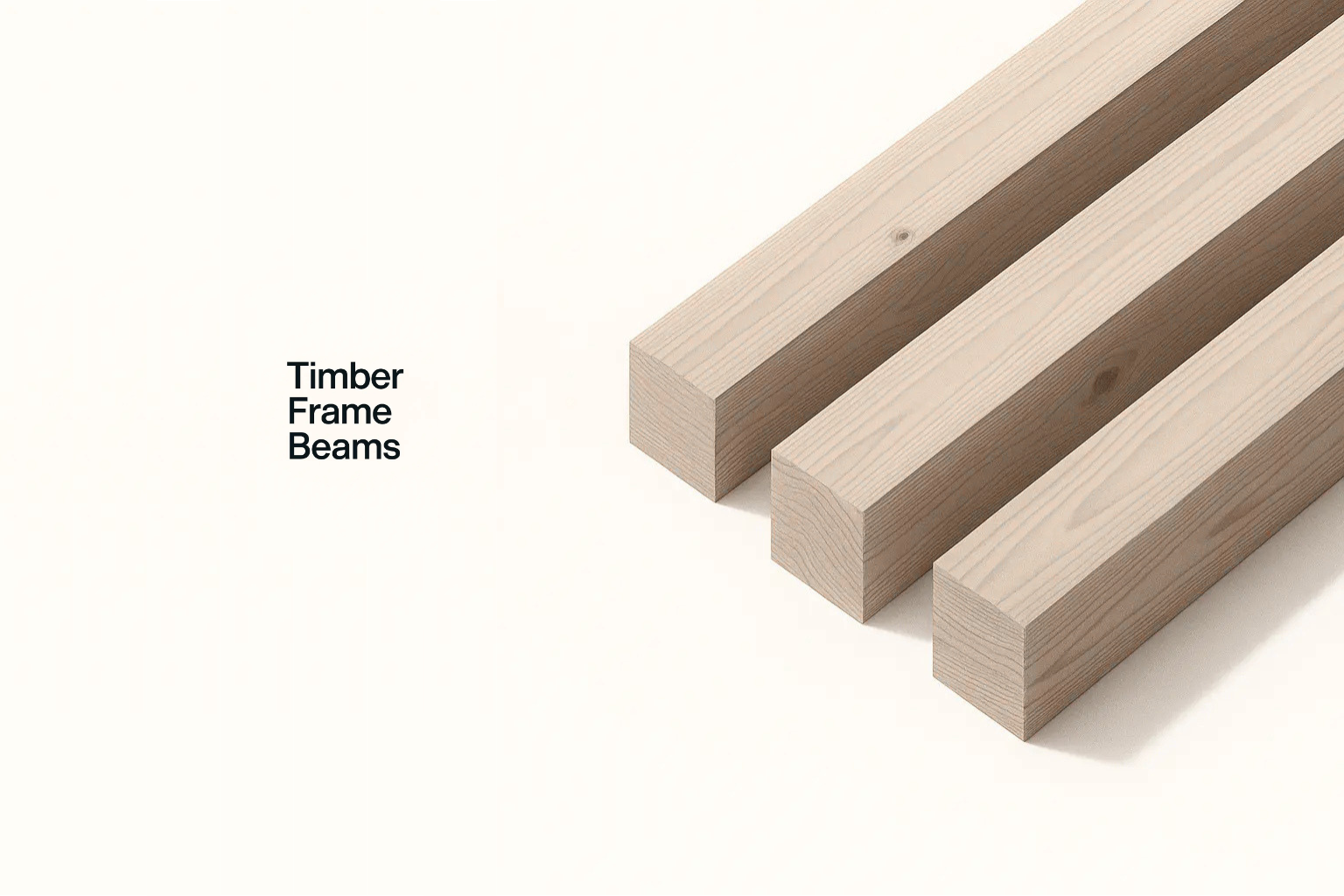
A timber frame tells you a lot if you stop looking at the whole building and start reading one bay at a time.
- Start at the base. Check how posts meet concrete, masonry, or sill members.
- Follow the load path upward. Ask what carries the roof, what restrains spread, and what ties the frame together sideways.
- Look at beam bearing. Does the member sit cleanly on support, or is the connection doing more work than it should?
- Study the joints. Tight, well-cut connections read differently from joints already opening up.
- Check moisture exposure at beam ends, post bases, and horizontal surfaces where water can sit.
- Notice where steel shows up. Hybrid timber work is common, especially at long spans and critical connections.
Do not only look for craftsmanship. Look for force. A beautiful frame can still be poorly resolved.
Special Cases: Hammer Beams, A-Frames, and Portal Frames
Some timber systems stop behaving like a simple post-and-beam grid.
Hammer Beam Work
Hammer beam framing opens up the ceiling by avoiding a full tie beam across the space below. It can create dramatic rooms, but the load path is less forgiving and the roof forces need to be resolved carefully.
A-Frames
In an A-frame, the rafters and the lower restraint system work together. The question is not just what the ridge is called. The question is what stops the legs from spreading.
Portal Frames
Portal-style timber frames make sense when you need wide clear spans with few or no interior posts. This is where glulam and timber-steel hybrids often become the practical answer.
Where Problems Usually Start

- Undersized members chosen by guesswork instead of load and span.
- Beam ends with weak bearing or poor moisture protection.
- Posts that do not align with the structure below.
- Joinery cut for appearance first and fit second.
- Green or wet timber installed without planning for shrinkage, twist, and checking.
- Decorative beams mistaken for structural members.
- Hybrid steel-and-wood details designed without allowing for timber movement.
- Lateral bracing treated like an afterthought in otherwise heavy-looking frames.
Heavy timber can look safer than it is because the members are big. Big members still fail when the connection, bearing, or bracing logic is wrong.
FAQ
What is the difference between a timber post and a regular wall stud?
A timber post is a primary structural member carrying concentrated load. A wall stud is one of many smaller framing members sharing load across a wall.
Are 6x6 posts always enough?
No. They may work in some porch and light-frame conditions, but the right size depends on load, height, species, grade, and connection detail.
What is the difference between a tie beam and a ridge beam?
A tie beam resists outward thrust and holds parts of the frame together. A ridge beam carries vertical roof load at the peak.
Is glulam better than solid timber?
For long spans and predictable structural performance, often yes. For exposed traditional work or restoration, solid timber may still be the better fit.
Is mortise and tenon still strong enough for modern work?
Yes, when it is designed and cut correctly. But many modern projects still use hybrid steel details where span, code, or erection needs push in that direction.
Do timber posts need anchors at concrete?
Yes in most real work. The base detail needs to control moisture, provide restraint, and transfer load safely into the support below.
Can I drill beams for wiring or plumbing?
Not casually. Hole size and location depend on the member, span, species, and load. Random drilling can ruin the beam.
Are decorative beams structural?
Sometimes, but most exposed faux beams are not. Never assume an exposed beam is load-bearing without drawings, inspection, or structural confirmation.
How far can a timber beam span?
There is no honest one-number answer. Span depends on material, section size, load, deflection limits, connection design, and support conditions.