

Best Pocket Door Frames That Don’t Fail in Daily Use
Best Pocket Door Frames: Field Notes From Real Jobs
Pocket doors look easy in catalogs. On site, they live or die by framing, hardware, and the crew that puts them in. Below is the working guide I’ve built with carpenters, interior designers, and contractors. It’s the stuff we keep repeating on projects because it actually holds up.
Why Pocket Door Frames Are Critical
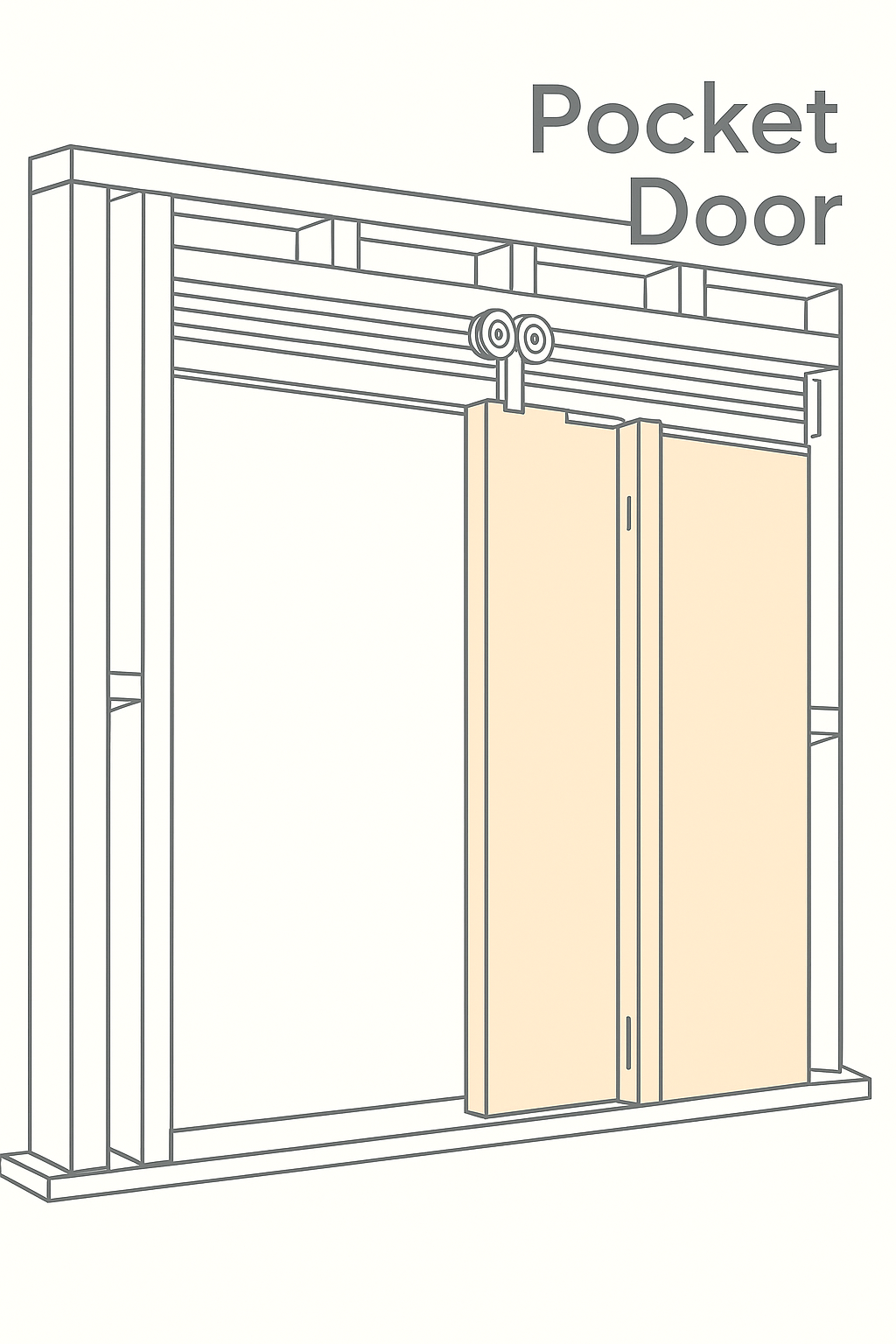
What Makes a Pocket Door Frame Work
A swing door burns 14 sq ft in a 9×10 room. A pocket gives it back. That’s the dresser that finally fits, or the desk you couldn’t place before. In row houses, a glazed pocket pulls daylight deeper instead of shutting it off.
But they’re not magic. Bad framing or bargain hardware means chatter, warp, and years of cursing.
What Trips People Up
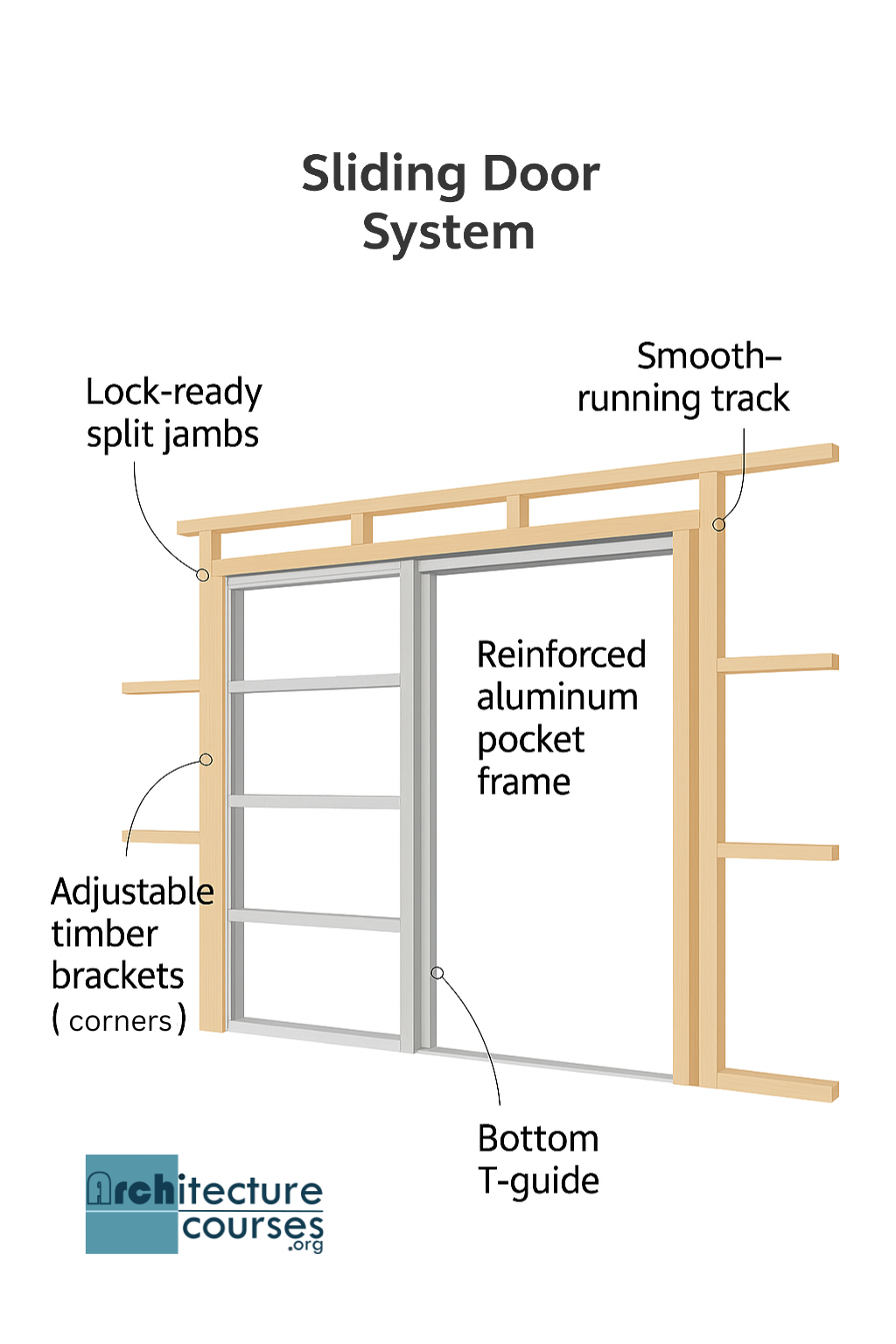
Wall thickness. Most pocket door frames want a 2×6 cavity. Yes, some claim to work in 2×4 walls, but that’s tight, flimsy, and more likely to bow. If you want a wall that lasts, frame it deeper.
Hidden problems. Once the drywall is off, you often find wiring, plumbing, or a return air chase eating the stud bay. That kills the cavity unless you’re ready to reroute. Always scan before layout, or you’ll end up with a half-built wall and nowhere for the frame to go.
Noise. A pocket will always leak more sound than a swing with a gasket. Even solid-core slabs don’t seal like a hinged leaf. Don’t promise silence to clients. For style alternatives that still work visually, see Pocket Door Styles.
Amazon field pick. The JUBEST Pocket Door Frame Kit with 88 lbs Soft-Close is one of the few light-wall kits that doesn’t twist out of square.
Frame Kits We’ve Used Without Regrets

Mid-range kits. Aluminum or steel frames, soft-close rollers, and instructions that don’t fight you. Around $200–300. Reliable in bathrooms, closets, and small offices. A solid baseline is the JUBEST 32"x80" Pocket Door with Frosted Glass + Frame we’ve hung often without callbacks.
Heavy-duty systems. Johnson Hardware and Cavity Sliders stay smooth even under glass or solid oak slabs. We’ve put them into high-traffic doors that get slammed 30+ times a day. For install breakdowns, see Pocket Door Frames: Features and Installation.
Boutique/custom. Reclaimed wood frames or veneer that matches millwork. Adds cost, but it keeps a historic or high-end space coherent. We’ve used these on heritage jobs where a stock aluminum frame would have looked fake. Related builds are in French Pocket Doors.
What It Took on a Historic House Job
The challenge. Late 19th-century townhouse. Narrow halls. Original pine trim. Client wanted pockets without trashing the character. A stock kit wouldn’t cut it.
The approach. We milled new frames in reclaimed pine, fitted with solid slabs. Every casing was catalogued before cuts. A preservation architect reviewed the details so the trim profiles stayed honest. Took extra weeks and higher cost, but it held the line.
The outcome. Doors now vanish clean, no clash with furniture, and the woodwork still reads as original. Off-the-shelf would have wrecked it. For proportion lessons that apply inside and out, compare notes with Front Door Design 2025.
Amazon field pick. For custom or heritage installs where you need solid hardware as a base, the SARTODOORS Quadro 4111 Pocket Door 42"x80" Kit is heavy, reliable, and worth the spend.
Install Rules From the Field
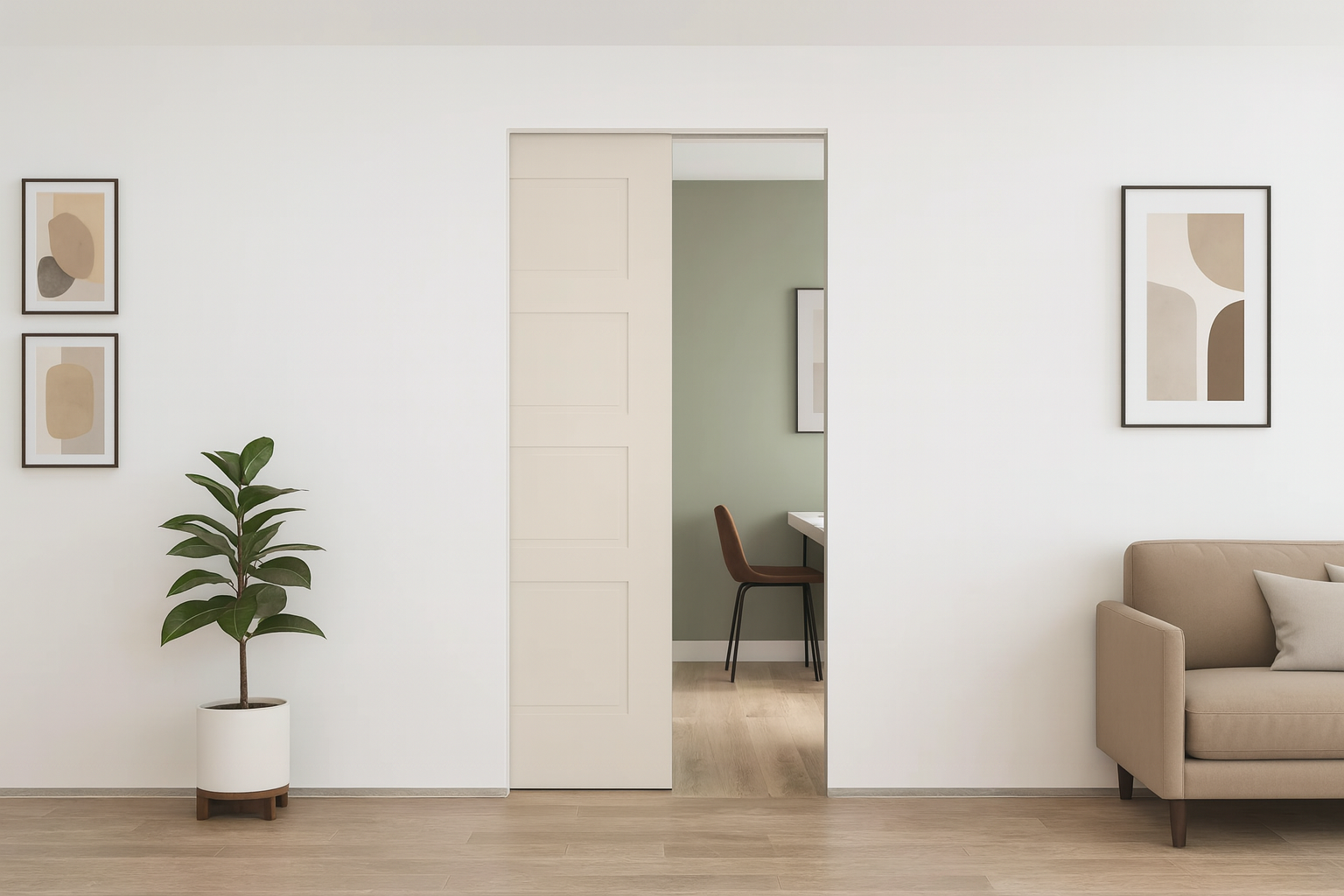
Layout and scan. Snap lines, then scan the stud bay for power, plumbing, and returns. If the cavity is dirty with services, reroute first or pick a surface slider. Framing notes live in pocket frame essentials.
Rough opening that fits reality. Frame the RO dead square. Leave true width for the pocket plus slab, not “close enough.” Shims fix small errors, not a crooked wall.
Laser, not tape. Set the header level and both jamb studs plumb within 1/8 in over 6 ft. A sagging header shows up as scrape lines in a month.
Double the studs. Sister studs at both sides of the cavity and stiffen the header. A flexy pocket turns into a rubbing door and a gouged board.
Assemble the kit on the floor. Build the frame flat, check the track for straight, then lift in. If the track has a bow, replace it now. Do not “let the drywall pull it straight.”
Set the track and carriers. Hang the slab and set carrier heights so the reveal is even top, latch, and pocket side. Soft-close trigger should catch in the last 6–8 in, not halfway. If you need a retrofit damper, the hidden soft-close accessory saves trim later.
Protect the pocket before board. Skin the pocket with flat, true drywall. No bowed sheets. Keep screws shy of the cavity path. One proud screw equals a lifetime scrape.
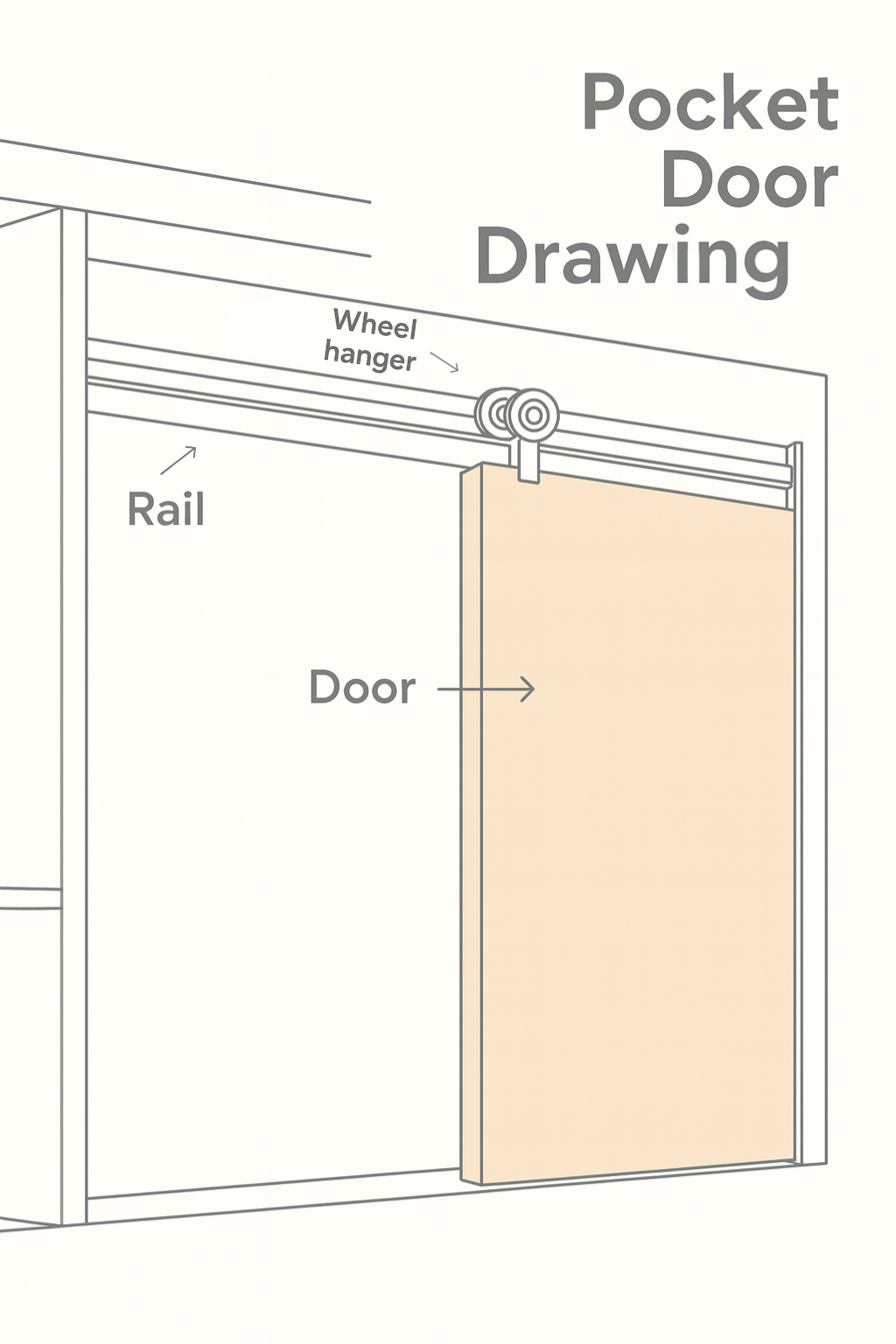
Floor guide after finished flooring. Cut the kerf in the slab, set the guide on finished floor, not subfloor. Flush transitions prevent toe stubs and rattle.
Cycle before trim. Run the slab a dozen times. Fix drag, bounce, or mis-latch now. Once casing is on, every tweak costs real time and money. If you want broader material pairings, skim the frame options guide.
Final checks that prevent callbacks. Edge pull operates cleanly. Privacy turn hits 36–44 in height. Reveal reads even in daylight. No chatter on fast pulls. Sign off only after a second day re-check when the building has moved a hair.
Cost Breakdown We See in Real Bids
Basic kits. 100–150 dollars. Light slabs only. Hollow sound. Fine for closets you barely touch.
Mid-range. 200–300 dollars. Aluminum or steel frames with soft-close. Good for daily-use rooms. Pairs well with solid-core slabs.
High-end and custom. 800–2000+ dollars. Veneer, glass, reclaimed, or tall spans. Needs a crew that can actually tune carriers and reveals.
Labor. 200–500 dollars for clean installs. 1000+ when rerouting electrical or plumbing and patching finishes.
The add-ons clients forget. Privacy locks, pulls, edge pulls, paint and drywall, baseboard recuts, and floor patching. If you are comparing brand durability at the top end, this Jeld-Wen vs Masonite review is a useful check. Finish proportion logic that carries indoors sits in Front Door Design 2025.
Where They Actually Work
Powder rooms. Tight and single-user. Perfect home for a pocket. Keep the cavity clean and the lock simple so guests do not fumble.
Closets and pantries. Clears the aisle. Seal the pocket and use wipeable paint near kitchens so grease does not gum rollers. If you need a quick style check, see the pocket door style notes.
Living areas. Double pockets split dining and living for quiet dinners, then vanish for a party. Build the wall stiff or big slabs will chatter. For system basics and DIY limits, the key types and guide is a clean primer.
Offices. A flush slab that disappears when open and feels calm when closed. Good for calls. Not a recording studio. Add a rug near the opening to kill echo.
Amazon Field Picks
Balanced daily-use kit. The JUBEST 32"x80" Pocket Door with Frosted Glass + Frame Kit passes light, avoids slam, and has not sent clients back to our inbox with rattle complaints.
Key Lessons
Plan the cavity early. Decide on pockets before drywall. Late changes triple the bill and weaken the wall.
Do not cheap out on carriers and dampers. Good rollers and a real soft-close keep you out of repair mode.
Use custom where the house has a voice. Historic or high-end work needs frames and slabs that match the millwork, not shiny aluminum that looks imported from another project.
Cycle before casing. Run it a dozen pulls, adjust, then pull again. Only then nail trim. That sequence saves your schedule.
Right project, right door. Pockets make small rooms usable and open plans flexible. They are not universal. Pick them where they earn their keep.
FAQ
Are pocket doors worth the trouble? Yes, in tight rooms and hallways they save real space. But in main bedrooms or offices, noise leakage is always the trade-off. For design variants that handle it better, check Pocket Door Styles.
What wall thickness do I need? Most frames demand 2×6. A few 2×4 kits exist, but they flex easier and make wiring/plumbing reroutes a nightmare. For framing choices, see door frame material options.
Can I install a pocket door in a load-bearing wall? Only with a re-framed header and doubled studs. We’ve done it, but it needs structural sign-off and costs more. Never cut into load-bearing without redesign.
Do pocket doors work in historic houses? Yes, if you custom match trim and millwork. We’ve used reclaimed pine frames in a 19th-century townhouse. Off-the-shelf aluminum would have looked fake. Case notes are in French Pocket Doors.
What do good kits cost? Basic runs $100–150, mid-range $200–300, and high-end or custom $800–2000+. Labor adds $200–500, more if rerouting pipes or wires. For brand comparisons, see Jeld-Wen vs Masonite.
What’s the best pocket door kit for daily use? The JUBEST 32"x80" Frosted Glass + Frame Kit has been solid in our installs. Soft-close works, light passes, and it hasn’t rattled back into service calls.
Do pocket doors add resale value? They won’t carry the listing, but in tight homes they make layouts livable. Buyers notice when powder rooms and closets don’t choke. For front elevation strategies that boost value faster, see Front Door Design 2025.
Resource
- U.S. Department of Energy - Energy Efficiency & Renewable Energy (EERE)
Learn about energy-efficient home improvements, including door and window systems. - National Park Service - Technical Preservation Services
Offers guidelines on preserving historic buildings, including advice on integrating modern elements like pocket doors. - U.S. Environmental Protection Agency (EPA) - Indoor Air Quality
Provides insights into how building materials, including door frames, impact indoor air quality. - American Institute of Architects (AIA)
Discusses the importance of material selection in architectural design, including door frames. - National Trust for Historic Preservation
Offers resources and advice on maintaining the character of historic homes while incorporating modern features like pocket doors.