
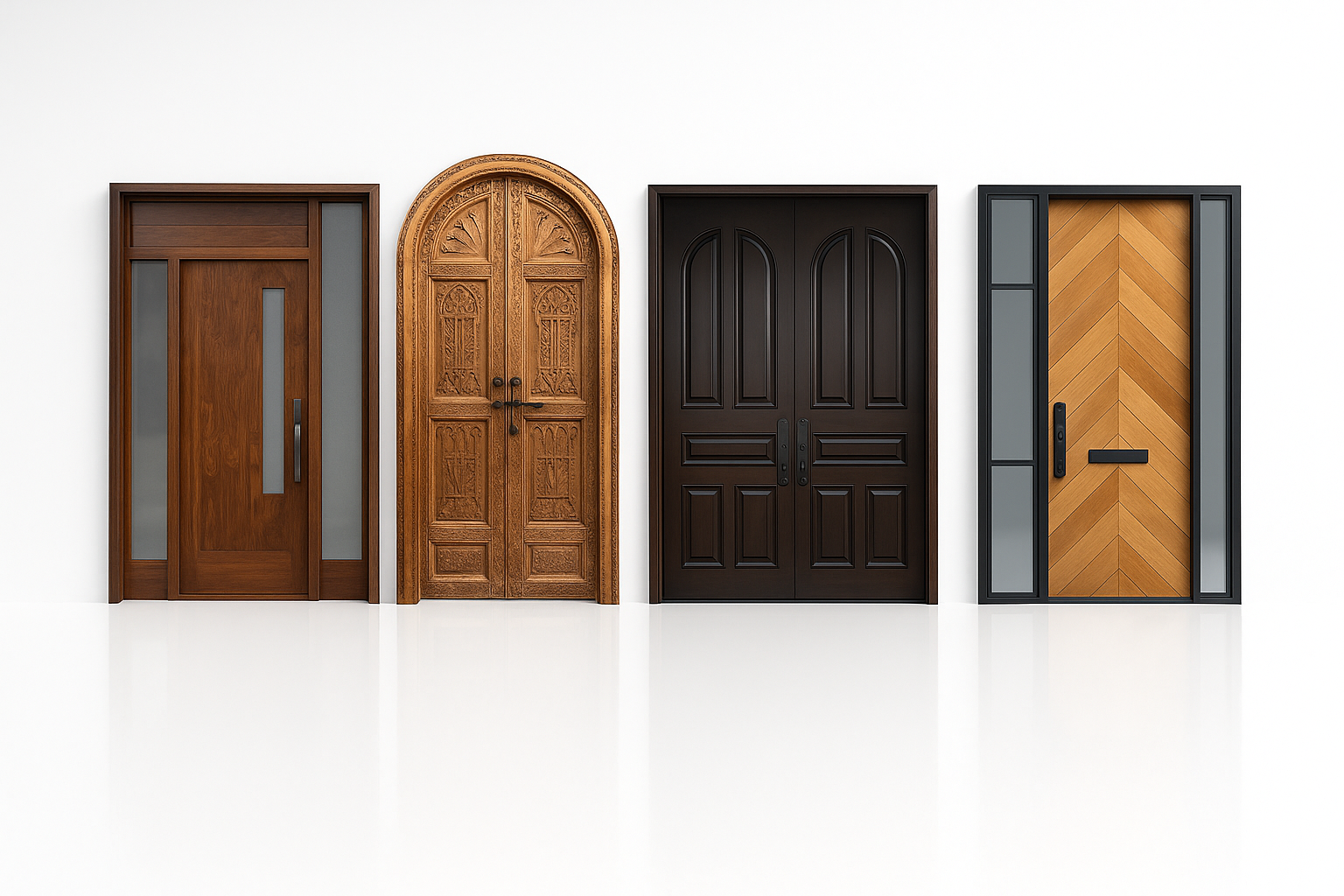
Front Door: Wood, Iron, Glass, or Double?
Front doors go bad in slow, expensive ways.
A wood door can warp. Iron can rust. Glass can create seal and heat problems. Double doors can fall out of alignment if the frame and hardware are not right. The better choice usually comes down to climate, maintenance, budget, and how the door fits the house.
The Real Guide to Materials, Styles, and What Actually Holds Up
Front Door Options: Choosing the Right Fit for Your Home
Types of Front Doors Every Homeowner Should Know
Starting at the Threshold: Every house begins with a door. It’s the first thing you push against in the morning, and the last thing you lock at night.
I’ve seen front doors that aged with grace, gaining character over decades, and others that looked ruined after three winters because the wrong material was chosen or the install was sloppy.
The difference is never just looks. It’s structure, sealing, and how honestly the design matches the house and climate.
Front Door Styles: From Wood to Steel and Beyond
Solid Wood Doors
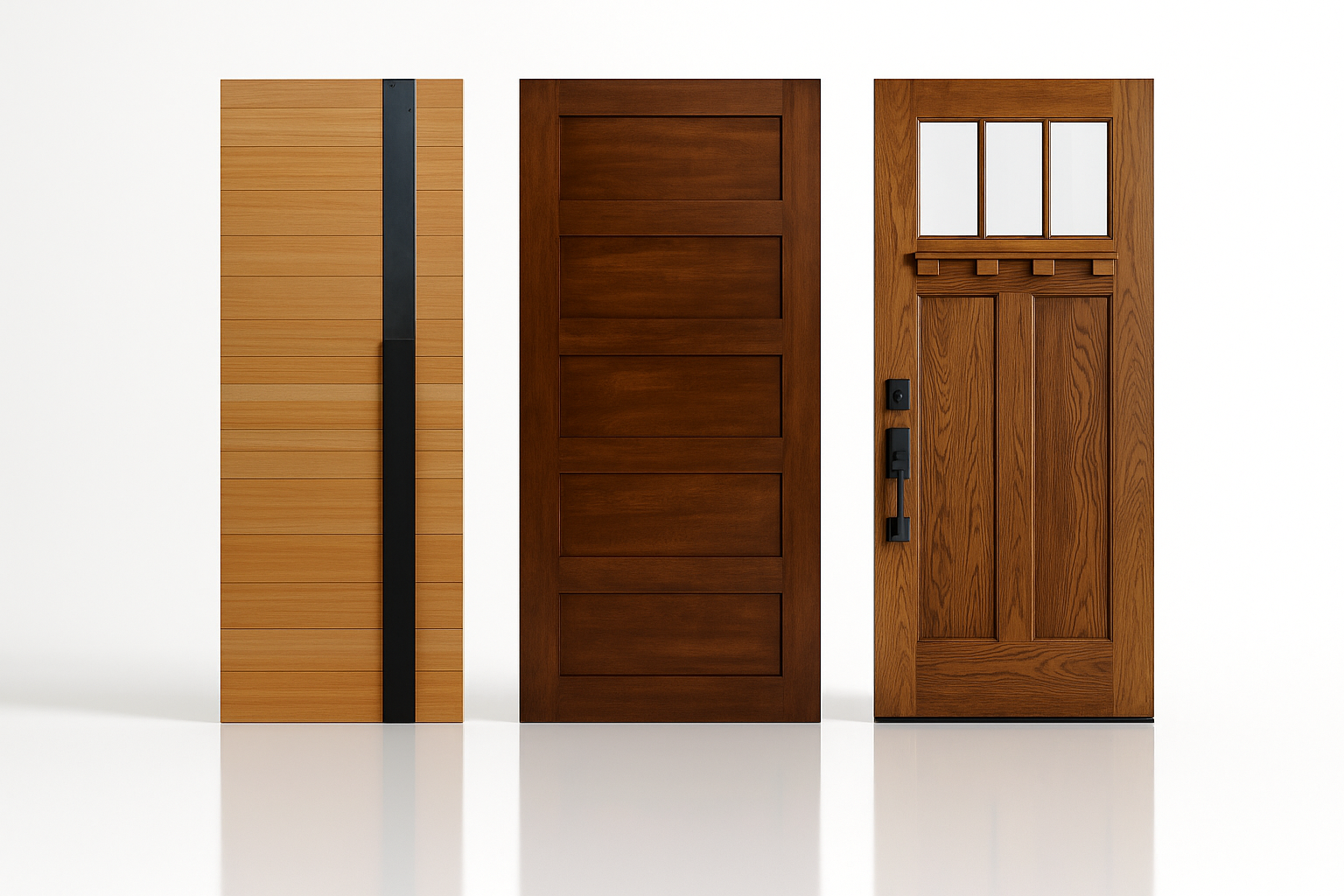
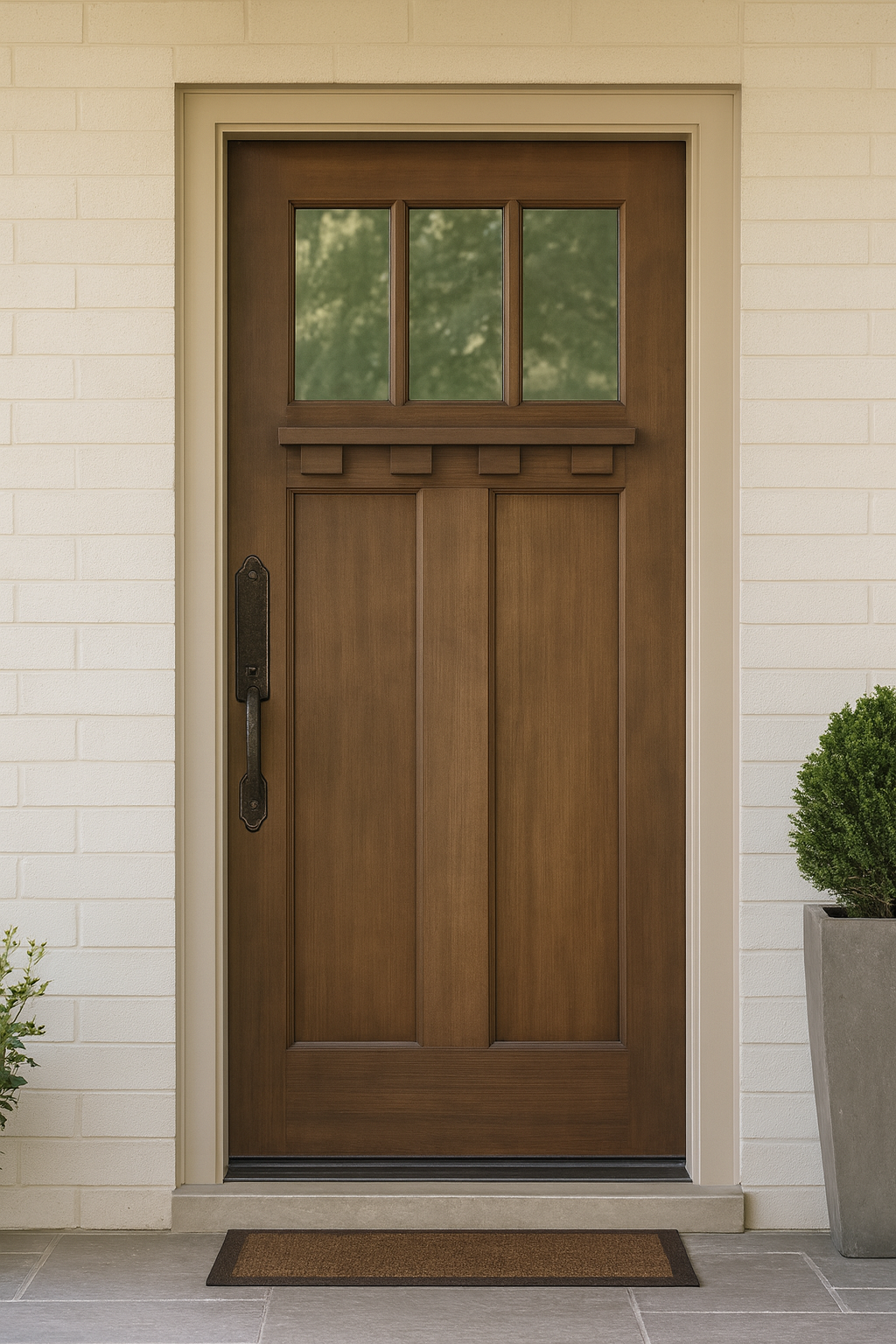
Wood is the oldest and still the most desired. Mahogany, oak, walnut, teak—each has a personality. When it’s built thick, sealed top to bottom, and given regular care, a wood door can last a generation. But I’ve watched plenty of clients fall for “solid wood” marketing without knowing they’d need to restain every few years. One couple in Ontario chose a beautiful oak door, but skipped sealing the bottom edge. Within three winters, the stile started to rot where snowmelt collected. Wood rewards care. Ignore it, and it punishes fast.
Fiberglass Doors
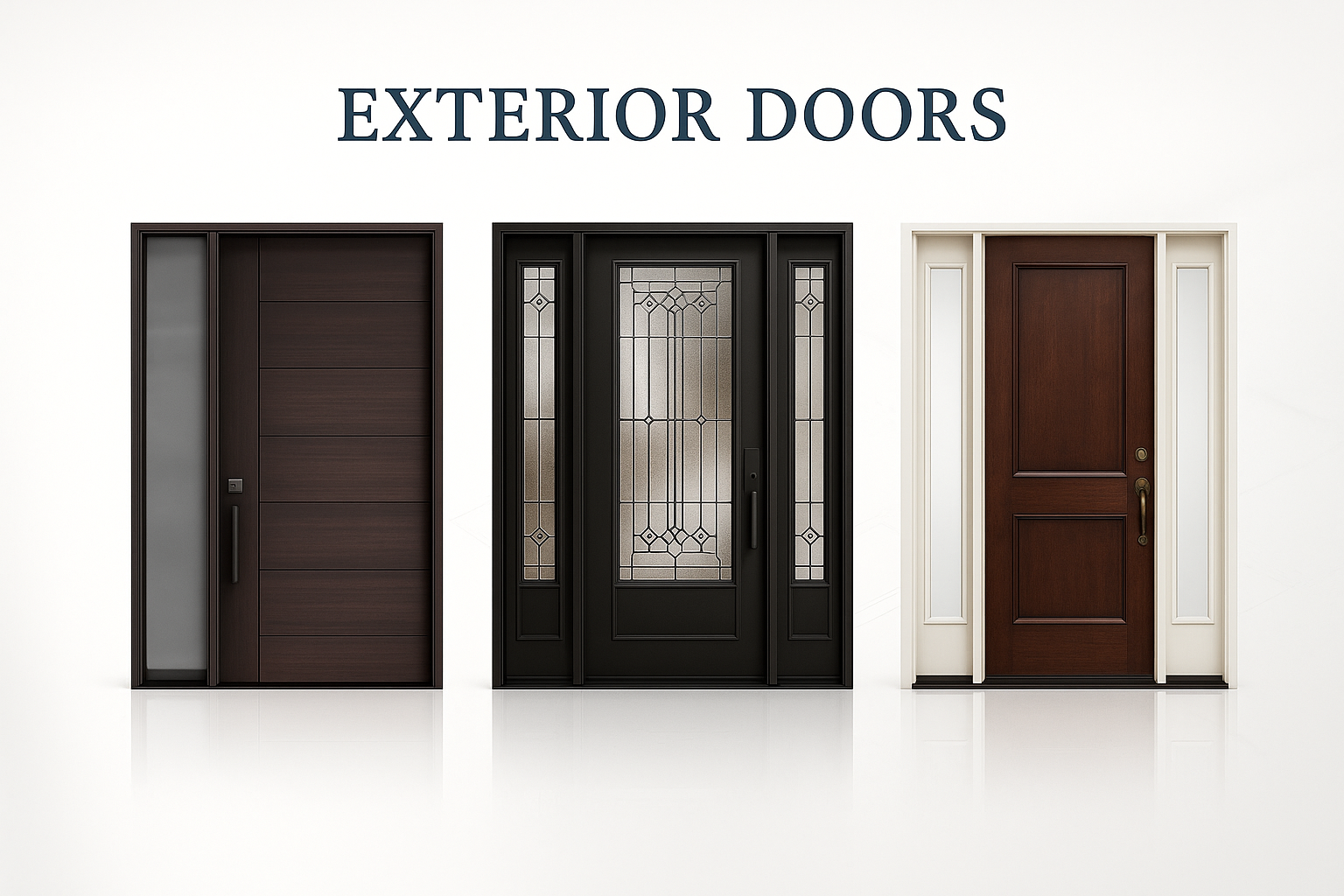
Fiberglass came in as the practical choice. It mimics the look of wood without the maintenance. I’ve put them on dozens of suburban homes because they hold up in mixed climates. They don’t warp, don’t rot, and they insulate better than most woods. The trick is hardware—cheap screws and hinges don’t hold well in fiberglass unless reinforced. Done right, it’s the kind of door you forget about because it just works. A client once called me ten years after an install, laughing: “We thought it was wood until our neighbor asked.”
Steel Doors
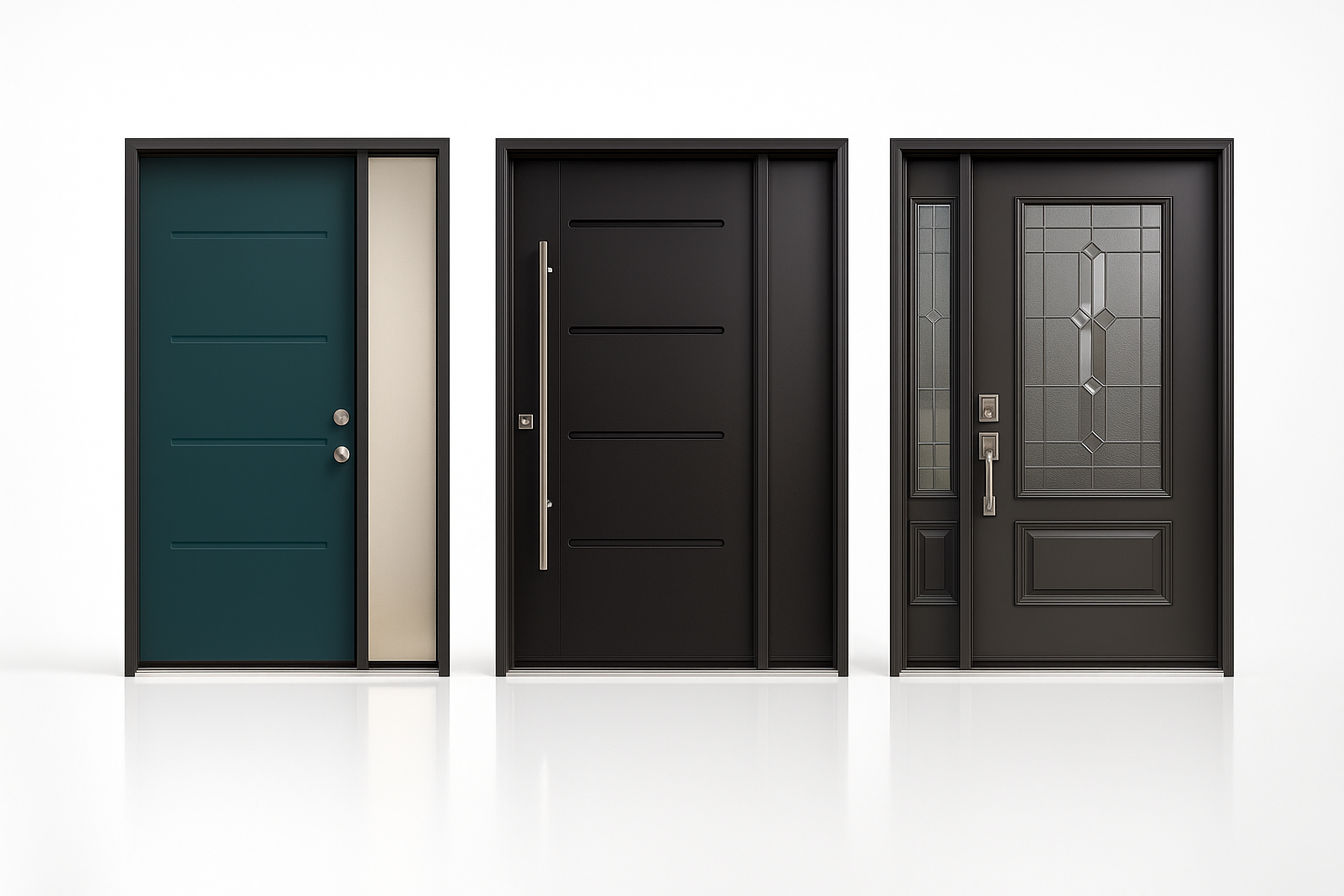
Steel doors are the workhorses. They’re strong, cheaper than wood, and great for security. I’ve seen them shrug off kicks, hail, even bikes slammed against them. But they dent. And in cold climates, they sweat unless insulated. One job in Chicago taught me: install a cheap steel door without thermal breaks and you’ll see frost inside by February. Steel is for people who value strength and don’t mind touch-up paint or the occasional ding.
Glass-Heavy Doors
Glass changes the whole feel of an entry. Full panels, sidelights, transoms—it lets light spill in and makes a small foyer feel alive. But glass also introduces risk. Without tempered or laminated panels, one baseball or break-in attempt becomes a mess. I once had to explain to a family why their “decorative glass” sidelights shattered like cheap cups after a storm. Glass works beautifully if you spec the right type: double-glazed, tempered, sealed. If not, you’re paying twice.
Pivot Doors
Pivot doors are dramatic. They swing from a central hinge point and make a four-foot-wide slab feel weightless. Architects love them. Homeowners too, until the first draft sneaks in. These doors need precision—perfect framing, weather seals, and reinforced headers. I saw one project in Austin where a massive pivot door was installed without a proper sill pan. First heavy rain, water crept right into the hardwood floors. Pivot doors are showpieces, not forgiving workhorses.
Double Doors
Double doors sell grandeur. They frame a big entry, let you carry couches inside without angling, and make a statement. But they’re harder to seal. One homeowner told me his beautiful French double doors rattled every time the wind kicked up, and the center astragal (that vertical strip where they meet) leaked cold air straight into the hall. If you want doubles, you need high-quality hardware, compression seals, and regular adjustments. Otherwise, it’s just two leaks swinging open together.
Dutch Doors
Dutch doors—the kind split in half so the top can open while the bottom stays shut—are more niche but charming. I’ve seen them mostly in cottages or farmhouse-style builds. They’re great for ventilation and keeping pets inside while letting air in. The downside is complexity: twice the hardware, twice the alignment issues. One family I worked with wanted a Dutch in their mudroom, but the installer didn’t reinforce the frame properly. Within a year, the halves didn’t line up, and they abandoned the split function. Dutch doors work if you accept that charm comes with upkeep.
French Doors
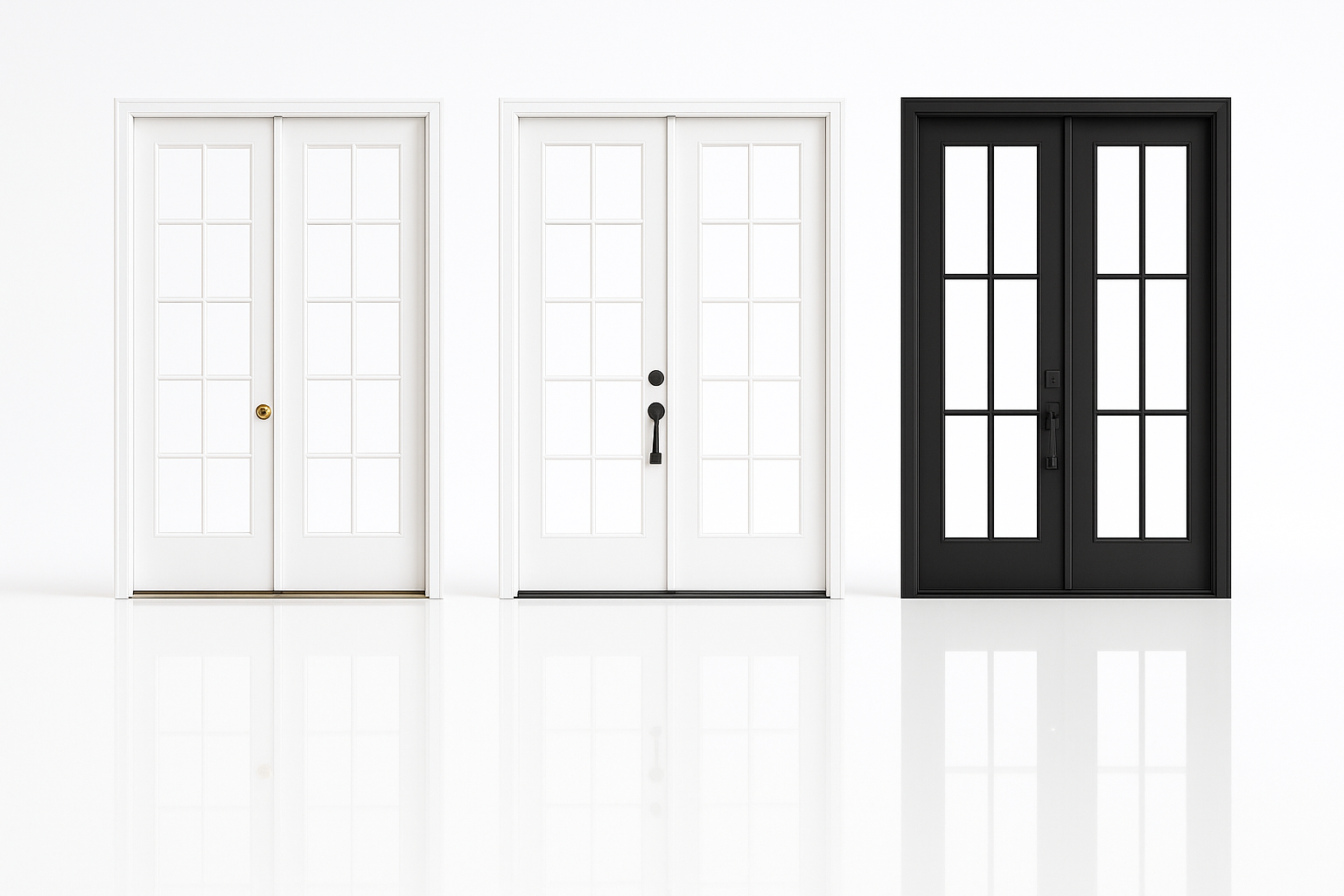
French doors are essentially glass-first, structure-second. They let light pour in and connect inside to outside. I’ve done them in historic restorations and new builds alike. The failure point is always sealing. Too much glass area, not enough thermal barrier, and you’ll see condensation or drafts. A client once installed bargain French doors in a Toronto reno. Winter hit, and they called me: “It’s like sleeping beside a fridge.” Spend for insulated glass, or you’ll regret it.
Sliding Doors
Sliding doors are more patio than front entry, but I’ve seen them used in modern houses with big glass facades. They save space since they don’t swing, but they demand top-quality tracks and rollers. Cheap sliders jam, warp, or collect dirt until they barely move. A builder I knew replaced three sets in a row because the developer cut costs on the hardware. Lesson learned: if you want a sliding entry, budget double for the track system.
Carriage-Style Doors
Carriage-style doors are nostalgia in wood and steel. Crossbucks, heavy hinges, rustic pulls—they fit farmhouses, cottages, or neo-traditional builds. A good set is thick, insulated, and weather-sealed. A bad set is decorative trim over thin core doors that rot fast. One couple I worked with in Vermont installed custom carriage doors, only to realize the decorative ironwork rusted within two years. Carriage doors look great but choose powder-coated hardware, not raw steel, unless you like orange streaks down your panels.
Modern Hybrids
Now, more designers are blending materials—wood panels framed in steel, glass inserts in fiberglass, even aluminum composites. These hybrids can solve problems, like getting the warmth of wood with the durability of fiberglass. But they also multiply risks if the detailing is sloppy. Different materials expand and contract at different rates. I’ve seen seams open and water creep in because no one accounted for that. Hybrids work when engineered properly, not when slapped together.
How to Design, Build, and Install Your Own Front Door
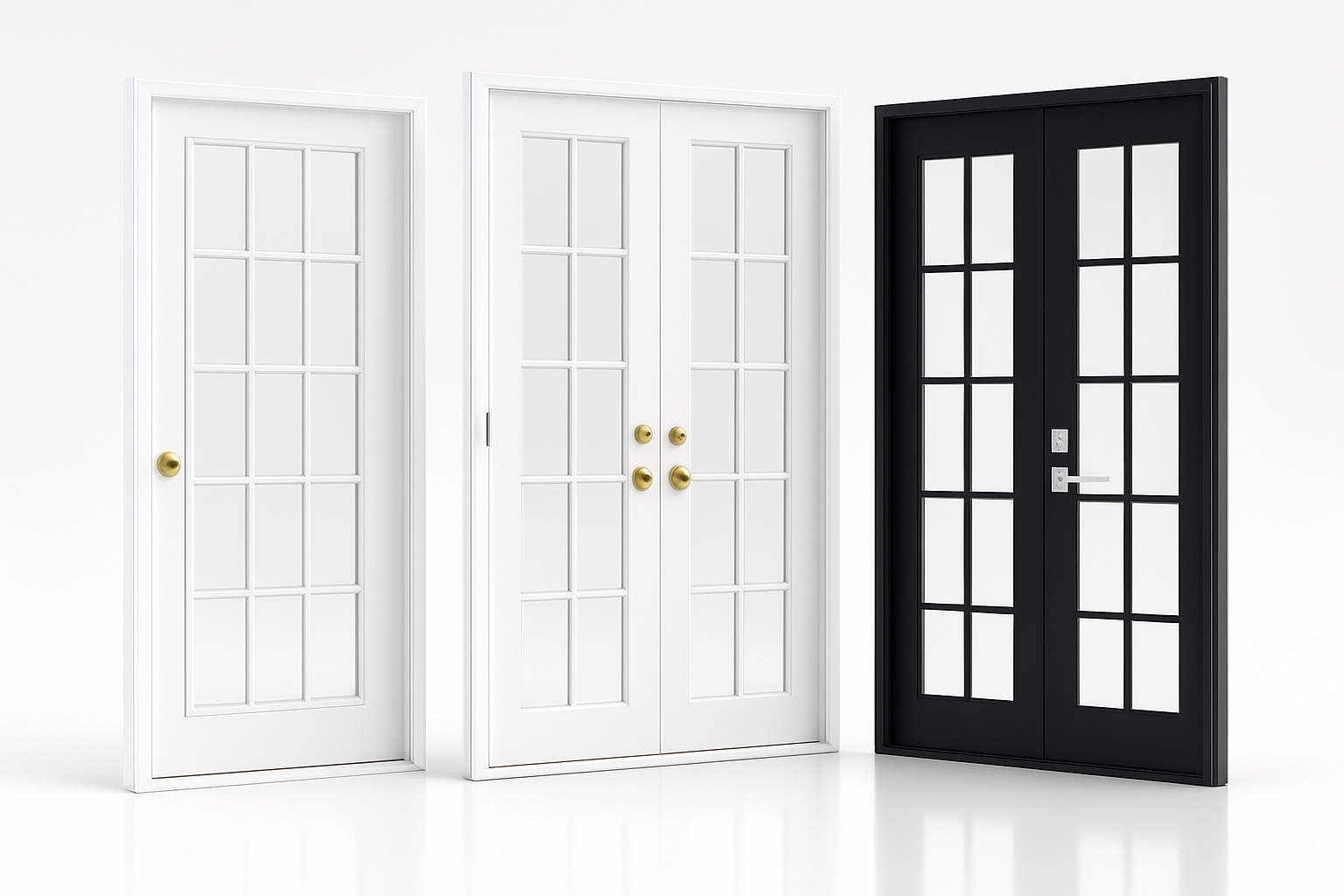
A front door isn’t just decoration. It’s structure, weather protection, security, and the first thing people touch when they walk in. I’ve seen gorgeous doors warp in two summers because the builder skipped sealing. I’ve also seen plain pine slabs outlast $5,000 custom orders simply because they were built right.
If you want to build your own door, here’s what matters.
Step 1: Design
Sketch first. Decide single or double, glass or solid, plain or carved. Measure the rough opening three times. A door that’s even ⅛” off will bind.
Material choices:
-
Solid wood: Warm, classic, but high maintenance. Needs sealing every few years.
-
Fiberglass: Low maintenance, looks like wood if finished well.
-
Steel: Secure and cheap, but dents and scratches easily.
-
Composite: Mix of wood fibers and resins. Stable, resists warping.
Think about climate. In wet zones, skip pure wood unless you’ll maintain it. In hot zones, steel bakes.
Step 2: Build
If you’re going full DIY, start simple: a solid slab or paneled door. Joinery is where beginners fail. Mortise-and-tenon joints are strong but require precision. Pocket screws and glue can work for a first attempt, but won’t last decades outdoors.
Tools you’ll actually need:
Circular saw, clamps, square, chisels, router, drill, sander. Don’t even start without clamps.
Sand between coats. Prime all six sides (yes, even top and bottom). Skipping that is the #1 reason wood doors rot.
Step 3: Install
Take the old door out. Check the jamb. If the jamb is out of square, no new door will fit right. Shim it before you hang.
Hang with three hinges minimum (four if it’s heavy). Use long screws into framing, not just the jamb. Weatherstrip tight. Add a sill pan if water intrusion is a risk.
Test swing, lock, and seal before finishing hardware install.
Mistakes I Keep Seeing
The biggest mistake is spending thousands on a new door and dropping it into a rotten jamb. The frame fails and the money is wasted.
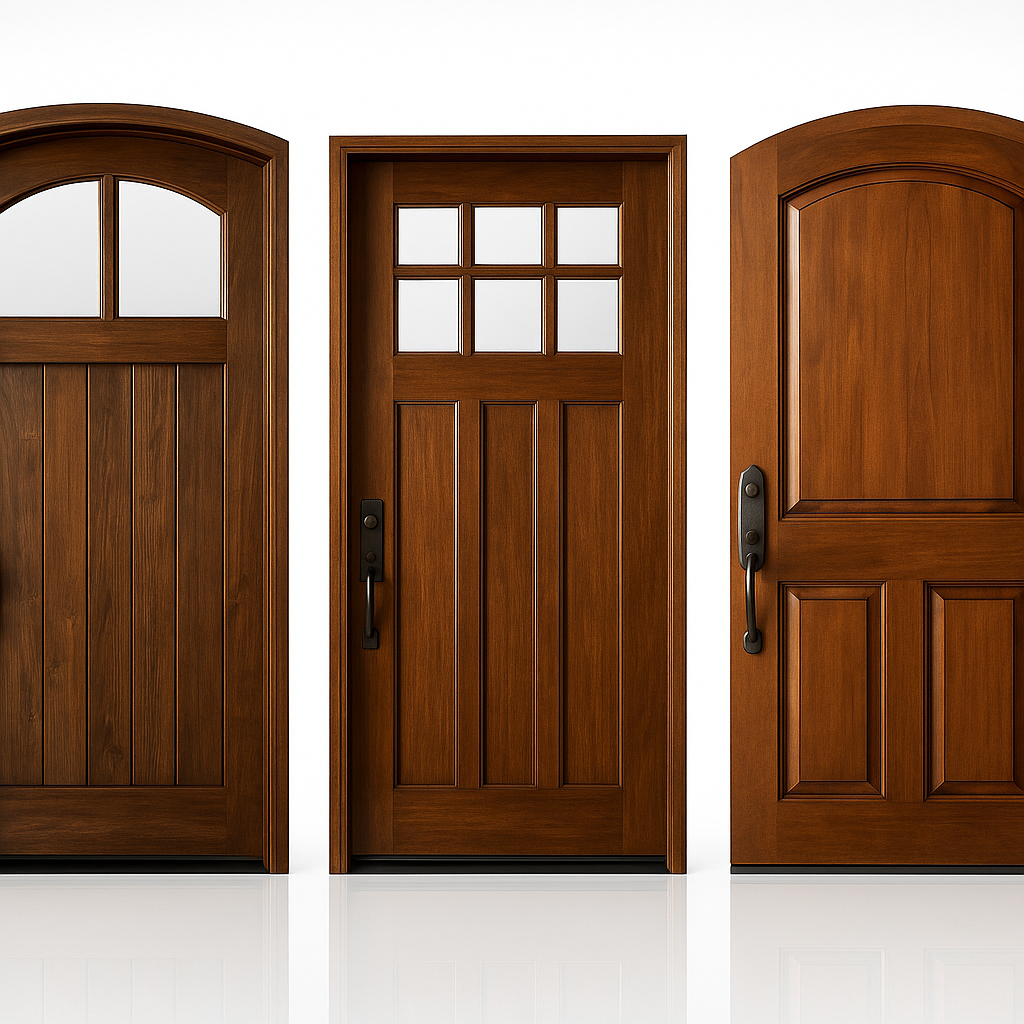
Another one I see often: staining only the front face and leaving the edges raw. The cut edges wick water, swell, and destroy the finish.
Hardware mistakes are just as bad. Interior hinges on an exterior slab will sag in under a year. Once that happens, the door never closes clean again.
People also think foam insulation is a cure-all. Spray foam around the frame isn’t flashing. Without a sill pan and proper drainage, water will find its way in and rot the base.
The bigger pattern is chasing looks without thinking about climate. Wood in damp zones with no sealing. Double doors without money set aside for custom weatherstripping. Steel in an uninsulated wall so condensation runs down the inside. Flashy pivot doors with no drainage plan. Every failed install I’ve been called back to started with the same oversight: does this door actually belong in this house and this climate.
What It Took (Real Costs and Trade-offs)
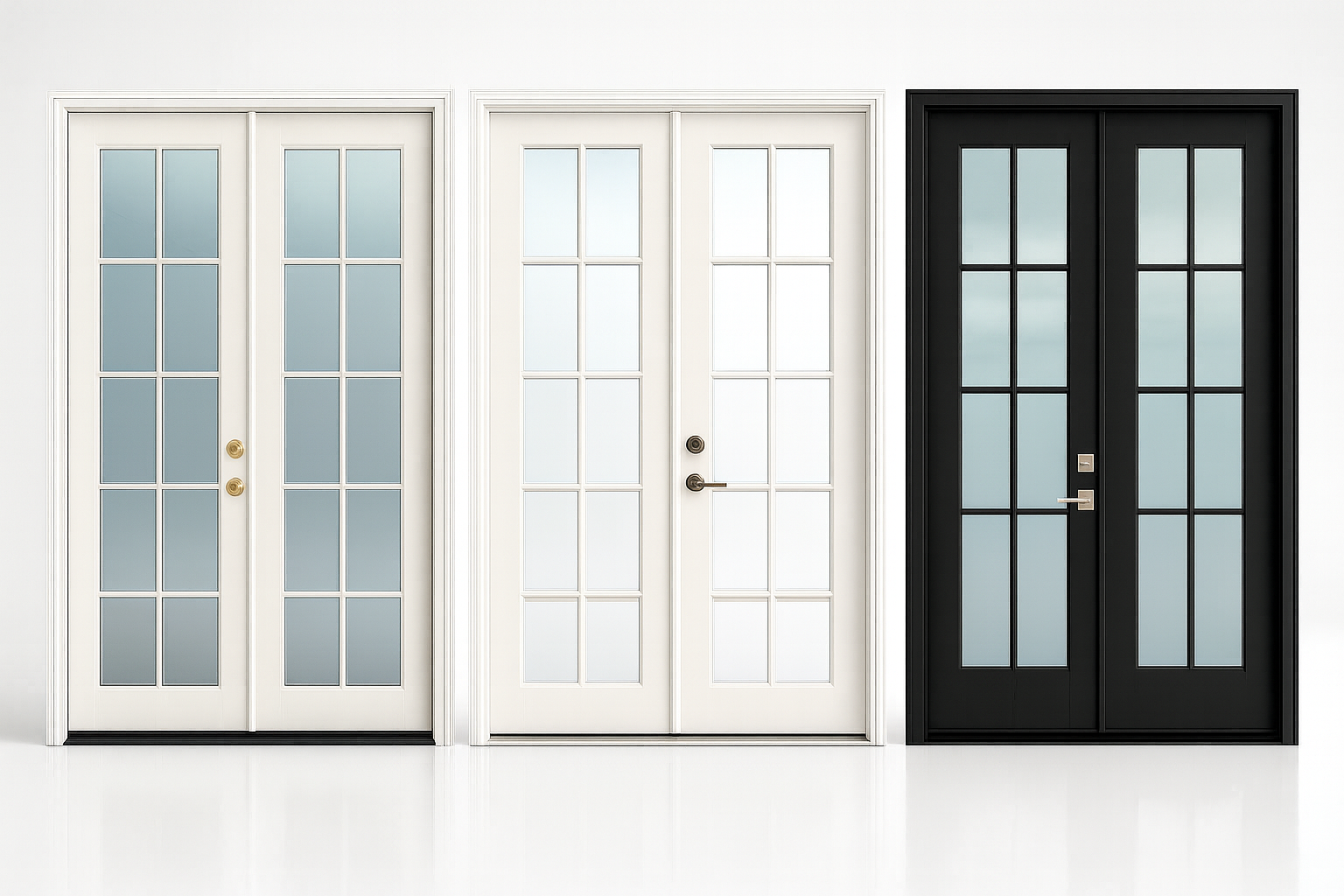
A basic DIY wood slab runs $200–$400. Looks fine at first, but edges swell if you skip sealing. One homeowner told me, “Every time it rains the door sticks like it’s glued shut.” Cheap upfront, expensive in frustration.
A fiberglass pre-hung unit runs $600–$1,200, or up to $2,500 with glass upgrades. A client swapped their old pine for a $1,200 fiberglass kit. Five years later they said, “Best money we ever spent—haven’t touched it since install.” Low care, long life.
Custom hardwood builds start at $1,500 just for lumber. With carvings or sidelights it’s $3,000–$6,000. One couple insisted on mahogany doubles. Gorgeous, but the south sun cooked the finish. They sighed, “We didn’t realize we were signing up for a refinish every two years.”
Steel runs $500–$1,800, insulated cores $2,200–$2,800. A young family went this route for security. Three months later, their kids’ bikes dented it. The dad laughed, “Looks like a used truck, but at least nobody’s kicking it in.”
Glass-heavy doors add $1,000–$3,000 just in glazing. One homeowner spent $3,500 on sidelights and admitted later, “I love how it looks, but I’m basically cleaning fingerprints every weekend.”
Pivot systems start at $5,000 and climb past $10,000. A developer I worked with didn’t budget for drainage. By winter, water pooled at the hinge. Fixing it ate another $2,000.
Double doors run $2,000–$6,000. The sticker doesn’t show the $500–$1,500 you’ll spend on seals and hardware to make them actually close tight. One client called me mid-January: “Feels like I’m heating the driveway.”
Dutch, French, and carriage styles hit $2,000–$8,000 depending on finish. They win charm points but demand care. Every one I’ve touched needed ongoing weatherstripping and seasonal adjustments.
Installation adds more. $300–$800 for standard, $1,500–$3,000 for heavy pivots or ornate doubles. Skipping pro install is how most of my callbacks start.
Hidden Costs Nobody Tells You
● Locks and Hardware – $200–$500 for decent hardware. A $3,000 door with a $30 latch is a joke.
● Thresholds and Sill Pans – $150–$400. Miss it and water will rot from the bottom up.
● Weatherstripping – $200–$600 for custom seals on doubles or pivots.
● Finishing – Wood stains and sealers run $100–$300 every few years.
● Labor Creep – Oversized doors sometimes need extra crew or lifts, adding $500–$1,000.
Door Cost Comparison (Quick Scan)
| Door Type | Typical Cost Range | Lifespan | Upkeep Level |
|---|---|---|---|
| DIY wood slab | $200–$400 | 10–15 yrs | High |
| Fiberglass pre-hung | $600–$2,500 | 20–30 yrs | Low |
| Custom hardwood | $1,500–$6,000+ | 20–40 yrs | High |
| Steel | $500–$2,800 | 15–20 yrs | Medium |
| Glass-heavy | +$1,000–$3,000 add-on | 20 yrs | Medium |
| Pivot | $5,000–$10,000+ | 20–30 yrs | Medium-High |
| Double doors | $2,000–$6,000 | 20–30 yrs | Medium |
| Dutch/French/Carriage | $2,000–$8,000 | 20–30 yrs | High |
What I’d Buy on Different Budgets
$500 Budget
At this price, you’re in steel or basic fiberglass. Go with an insulated steel door. It’s secure, holds paint well, and gets you through the next 10–15 years. Skip glass unless you want to blow half the budget on looks.
$2,000 Budget
This is where fiberglass really shines. You’ll find pre-hung units with glass sidelights or wood-grain textures that fool most people at the curb. Maintenance is almost zero. If you’re in a wet or hot climate, fiberglass is smarter than wood here.
$6,000 Budget
Now you can step into custom hardwood doubles or a pivot system. Just know the upkeep is real. If you want beauty with fewer headaches, I’d steer you to a high-end fiberglass or metal door with architectural glass. Save pivot for a house that has a drainage plan and the budget for maintenance.
What I Tell Clients Before They Buy
Pick a door for your life, not just your Pinterest board. If you don’t want to refinish, skip solid wood. If you live in the north, avoid all-glass unless it’s insulated. If you want drama, pay for the engineering on a pivot or oversize model. And never cheap out on hardware. It’s the part you touch every day.
Pro Tips That Actually Work
Seal every edge, even the hinge mortises. Water sneaks in at the cuts, not just the face.
Always use a sill pan. Caulk alone won’t save you when water pools at the bottom of the frame.
If you want glass, insist on tempered or laminated panes. Standard glass is an easy break-in point.
Spend money on hardware. A cheap lockset turns a thousand-dollar door into a weak link.
How to Apply It in Real Life
First-time builder? Don’t risk the main entry. Practice with a plain slab on a shed or garage. Learn the mistakes where they don’t matter.
On a tight budget? Go with a pre-hung fiberglass unit. Focus your effort on sealing the opening and flashing it right.
Want impact? Oversized pivots and double hardwood slabs will deliver. Just be ready for upkeep and ongoing cost.
Pursuing a green build? Reclaimed wood is a strong choice, but only if it’s dried, milled, and sealed carefully. Raw barn boards won’t survive long without that prep.
Final Word
Building your own front door isn’t impossible, but it’s not a weekend hobby project either. The ones that last come from solid prep, sealed edges, and correct installation. The rest is detail. Get those right, and your door will outlive the trim around it.
FAQ
1. What’s the best material for a front door?
Depends on what you want. Wood looks best but needs care. Fiberglass outlasts most and barely needs upkeep. Steel is cheap and strong but dents.
2. How much should I budget for a solid front door?
Anywhere from $500 for a basic steel unit to $5,000+ for custom wood or a pivot system. Most homeowners land in the $1,200–$2,500 range.
3. Do fiberglass doors really look like wood?
The new ones do. I’ve had clients walk past them without noticing. But close up, wood grain still has more depth.
4. Should I go with a pre-hung door or just buy the slab?
If you’ve never hung a door, go pre-hung. Saves hours and cuts mistakes. Slab only makes sense if you already have a perfect frame.
5. Is glass in the door a bad idea for security?
Not if you buy tempered or laminated glass. Regular panes are a weak spot. I’ve replaced plenty of cheap glass doors after one hit.
6. How often should I maintain a wood door?
Plan on resealing or repainting every 2–3 years in tough climates. In mild zones, maybe 5. Ignore it and the edges will swell and rot.
7. What’s the one mistake you see most with front doors?
People buy a beautiful door and install it in a rotten frame. The frame fails first, and the $2,000 door is junk.