
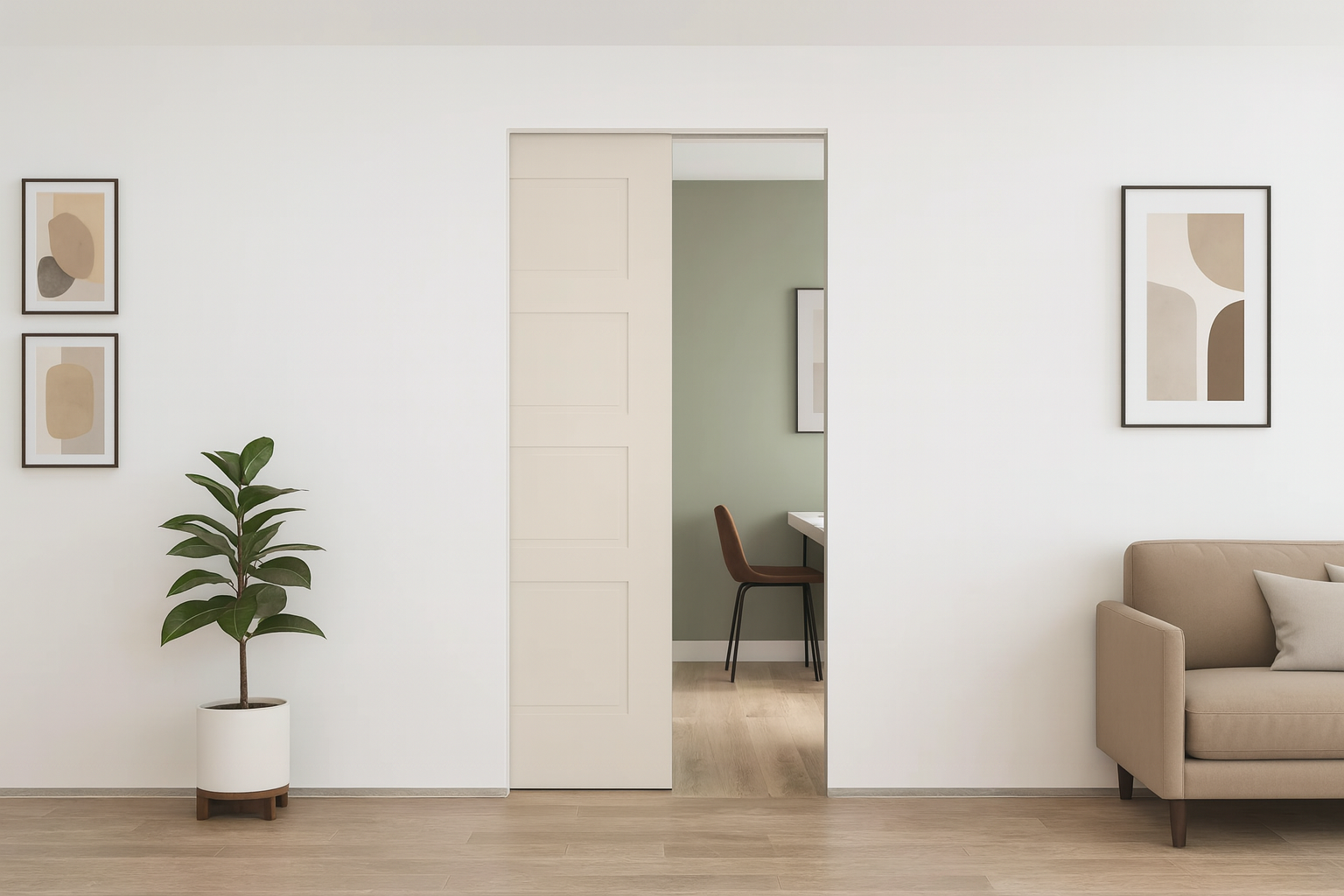
How We Install French Pocket Doors Without Regrets
I learned the hard way that French pocket doors are not a weekend project. The first set I ever touched was in a narrow Toronto semi. I thought it was just about sliding hardware. By day two the track sagged, the reveals were crooked, and the glass panes rattled every time the kids ran down the hall. Since then I have rebuilt them in cottages, loft conversions, and one late 1800s townhouse where the preservation architect watched every cut.
This guide is not theory. It is what it took to get French pocket doors installed clean, quiet, and straight enough that clients never called back.
Getting the Design Right Before You Frame

Measure three times
A rough opening has to be within one eighth of an inch. Miss that and you will fight drag lines and crooked gaps forever. Measure height, width, and depth. Then measure again when the floor finish is in.
Pick a style that fits the room
Glass lites stretch daylight. Painted wood frames feel right in historic trim. Composite makes sense in basements where wood twists. Choose early because style drives frame size and hardware weight.
Choose the frame and kit wisely
Aluminum or steel kits carry real slabs. Wood kits are cheap but bow. For everyday projects I have leaned on the JUBEST 32"x80" Frosted Glass + Frame Kit. It installs clean, the soft-close works, and I have not had callbacks.
Hardware matters most
Rollers and tracks fail before the door does. Clients never complain about knobs. They complain when the glass sticks halfway closed. Spend here.
Building the Slabs So They Do Not Twist
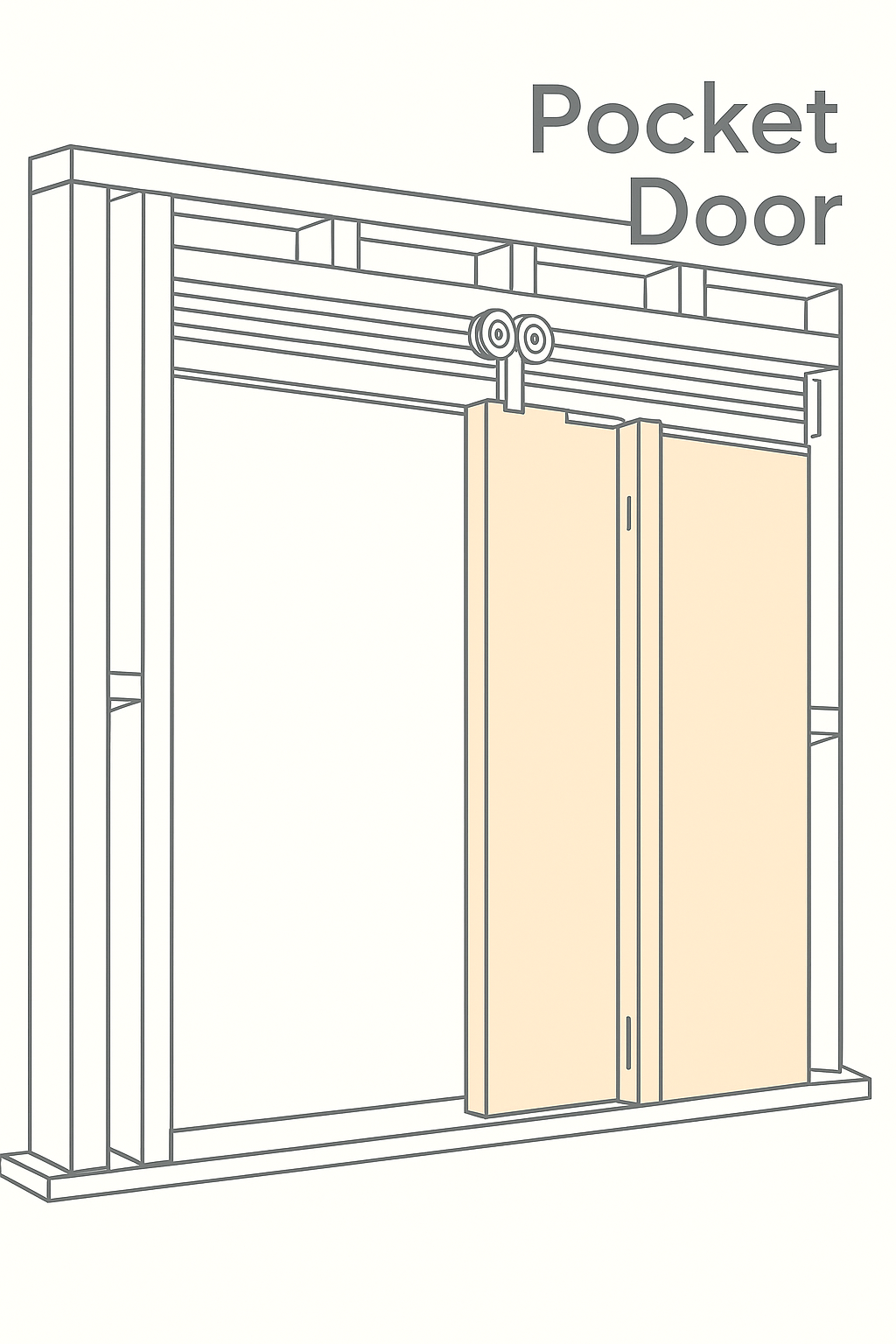
Cut square and leave room for glass
I once watched a carpenter press a lite into a dado with no gap. First hot day the glass cracked. Rip rails and stiles square. Always leave expansion space.
Dry fit before glue
Do not trust your eye. Clamp the slabs together and check the center line. If your reveal is off by a sixteenth, you will live with crooked light forever.
Prep hardware while the door is still on sawhorses
Mortise pulls and locks before you hang. Flush pulls only sit clean if you rout them while the slab is flat. Do not wait until the door is in the wall.
Installing the Frame and Track
Clear the bay first
Check for plumbing, wiring, or return air. A pipe in the cavity turns a simple job into a thousand-dollar reroute.
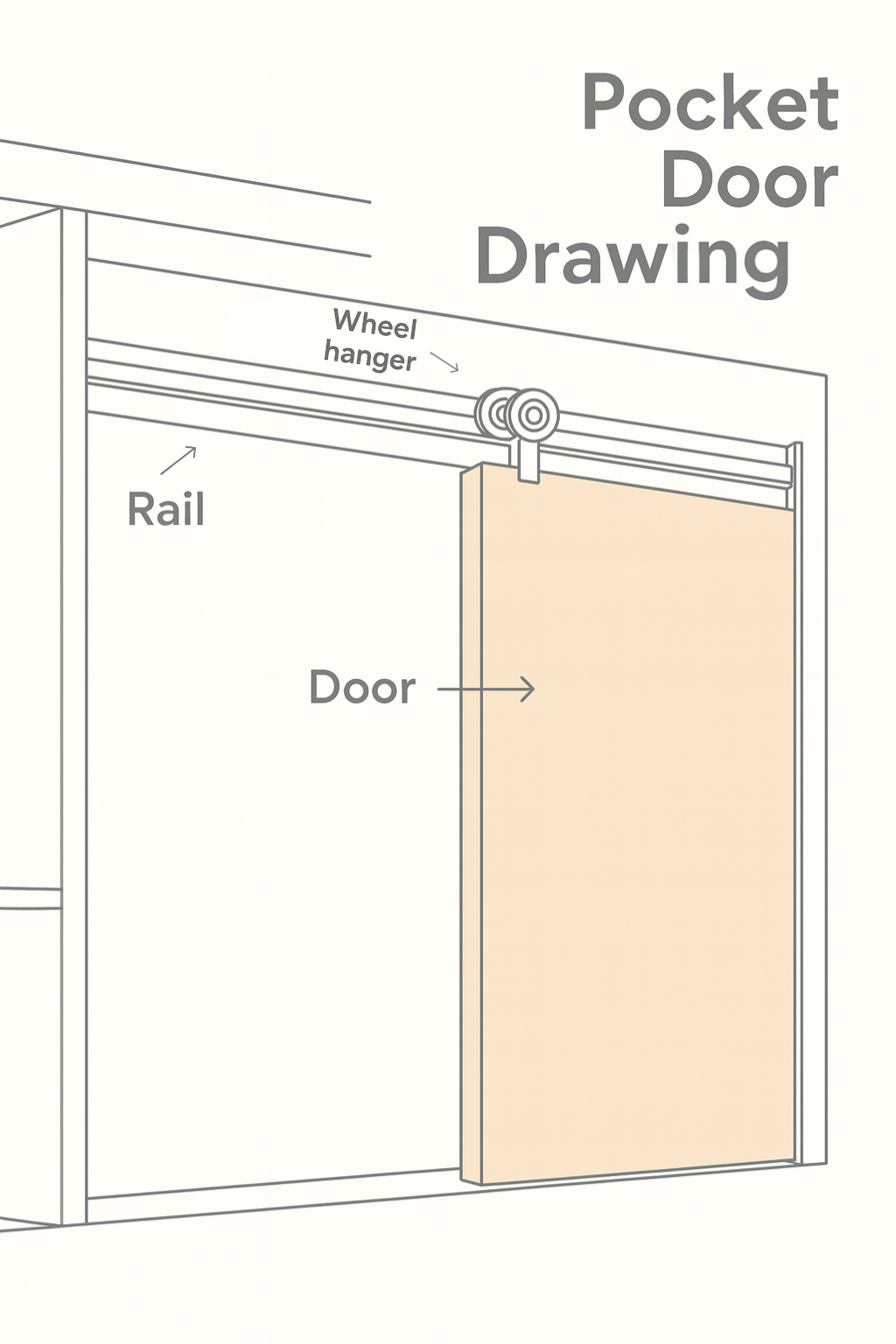
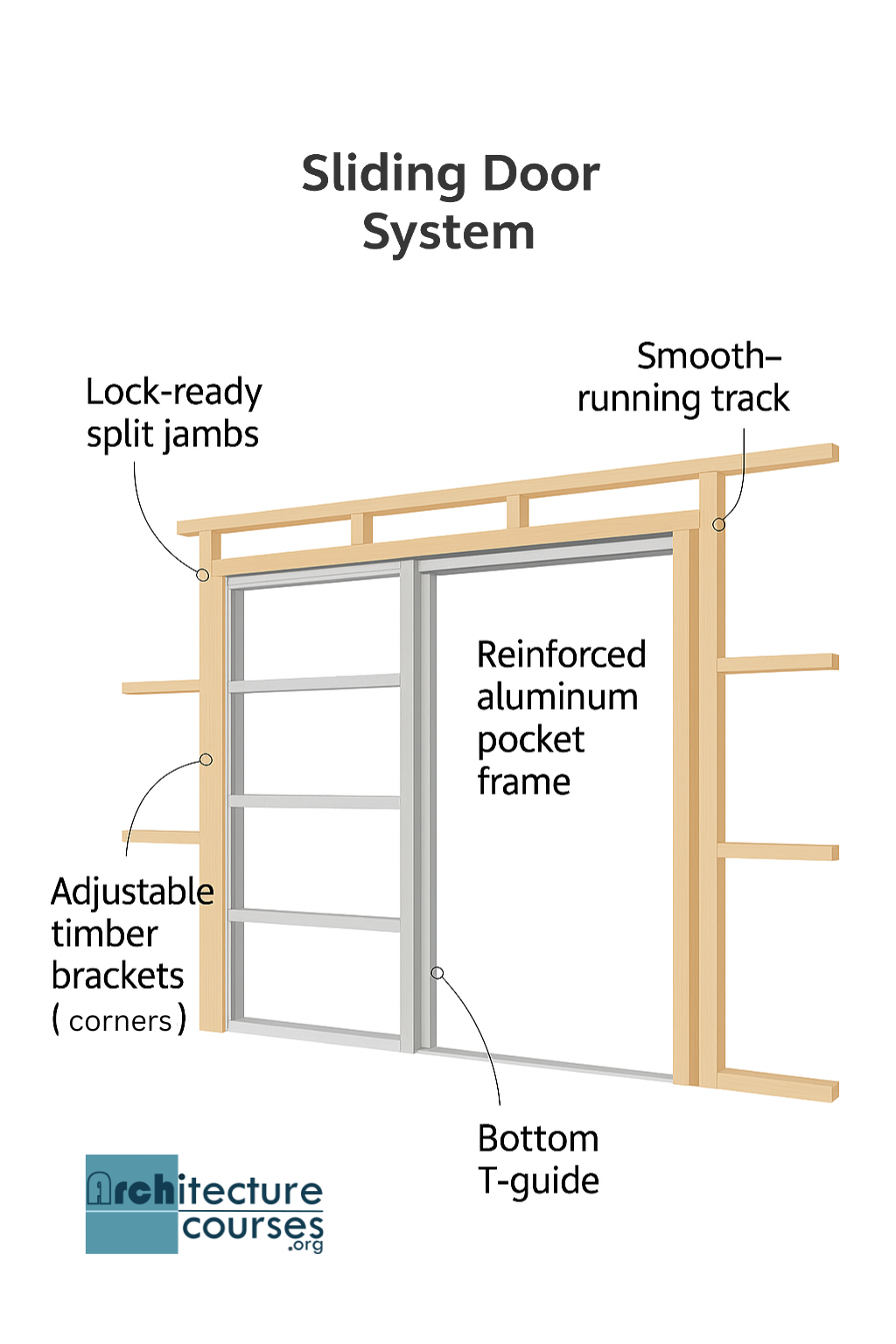
Frame heavy
Double studs on both sides. Header stiffened. Cut the floor plate only where the slab runs. A flimsy pocket wall flexes and the door scrapes.
Level the track with a laser
Tape measures lie. If you are out by one eighth over six feet, the slab drags forever. Pre-assemble the carriers. Run them before you cover the pocket.
Skin it flat
Drywall must be straight. Screw heads must sink flush. One proud screw equals a permanent gouge. In kitchens use moisture resistant board. In baths, seal the cavity.
Hang with two people
Hook the carriers, set the reveals, and run the slab a dozen times. Only then commit to casing. If a client wants soft-close, fit the damper before trim. I use the soft close add-on kit for glass panels.
Final test before trim
Close both leaves together. Adjust until the center line meets even from top to bottom. Slide them open and shut until they glide. Only then nail casing.
What the Bids Really Look Like
Basic kits
We see them in budget flips. Hundred bucks, light hollow doors only. Rollers rattle after a year. You’ll be back with a pry bar.
Mid-range kits
Two to three hundred gets you aluminum or steel frames with rollers that survive kids slamming the slab. These hold a solid core without grinding the track. Most of my bathroom and office installs land here.

High-end and custom
Eight hundred to two grand when clients want glass panels, veneer that matches millwork, or reclaimed timber frames. These demand shop time and experienced hands. On one loft job the client wanted double glass leaves with blackened steel frames. We ordered a Cavity Sliders kit and spent two days getting reveals perfect. Worth it, but not for beginners.
Labor math
Straight install runs two to five hundred. Start cutting pipes or moving wires and you’re in the thousand-plus range. I tell clients up front: hidden services in the wall are the real wildcard.
For proportion and finish logic, the same rules apply as with Front Door Design 2025. Material choices and reveals inside the house follow the same discipline.
Rooms Where Pocket Doors Actually Work
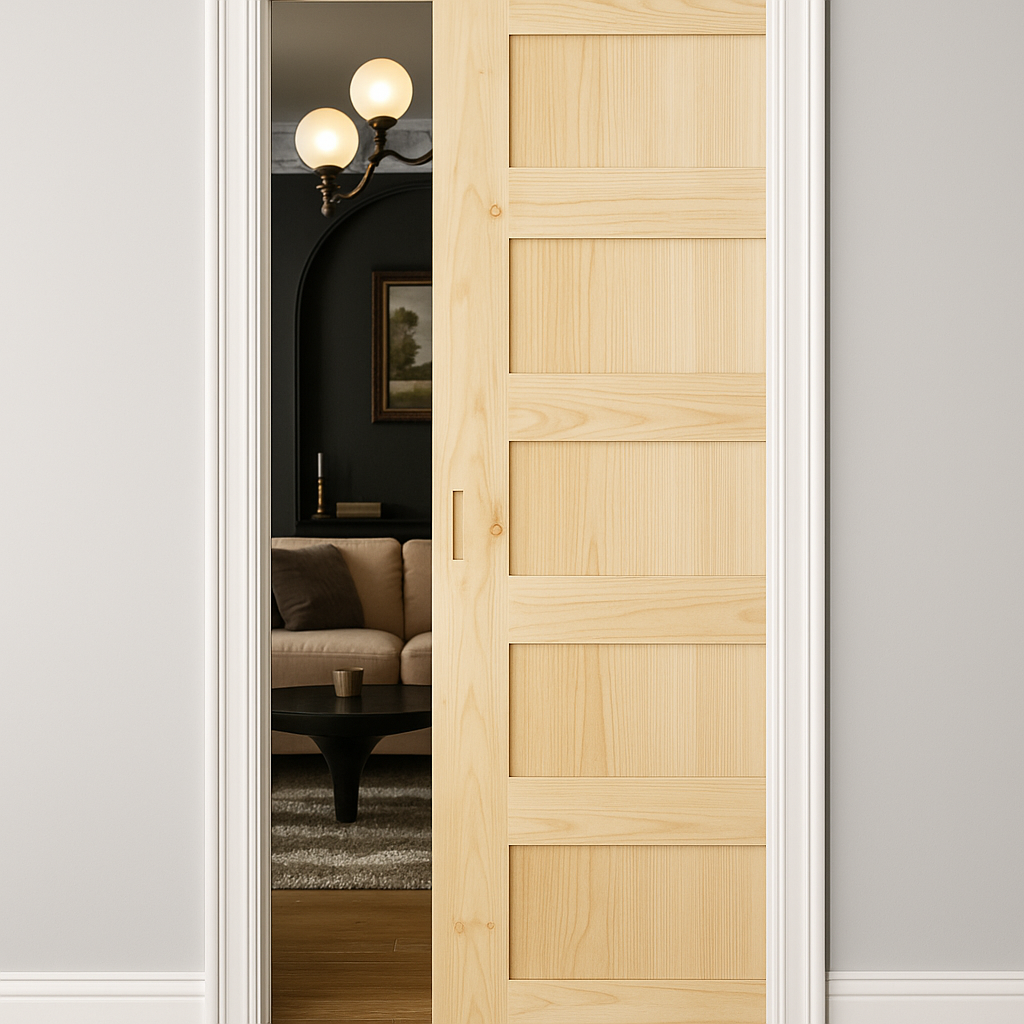
Powder rooms
Perfect match. Small footprint, single user, no noise complaints. Clients thank you when the door clears the sink.
Closets and pantries
Nothing eats a galley faster than a swing door. Pocket clears the aisle. But if it’s near a stove, seal the cavity. Grease gums rollers fast.
Living areas
Double pockets let you split dining and living. Close them for quiet dinners, open them for parties. I’ve specced this in condos where space is tight but clients still host.
Home offices
Flush slab disappears when open. When closed it is quiet enough for calls. Not recording-studio quiet, but clients working from home accept the trade.
For more on slab variations, see Pocket Door Styles: Everything You Need to Know.
Field Picks That Have Held Up
Baseline kit
The JUBEST Pocket Door Frame Kit with Soft-Close has been my default. It installs clean, carries a solid core, and the soft-close saves callbacks.
Heavy duty
Johnson Hardware and Cavity Sliders are the only two I trust on daily-slam doors. I’ve put them under 100-pound glass and they still glide. Johnson is simpler to install. Cavity Sliders are bombproof but need more framing accuracy.
Boutique and custom
On heritage jobs I’ve had millworkers build reclaimed pine frames to match century-old trim. Costs more, takes longer, but the reveal reads original instead of retrofit. Clients notice.
What It Took on a Historic House Job
The house
Late 19th-century townhouse in Hamilton. Narrow halls, ornate trim, plaster walls that flexed if you leaned on them. Client wanted French pockets to make circulation easier without losing the woodwork.
The frame
We couldn’t drop in an off-the-shelf aluminum kit. The wall depth and casing profiles would have screamed new. Instead, we had reclaimed pine milled into frames. Mortises cut by hand. Every header was doubled and shimmed tight because the old floor pitched half an inch over six feet.
The install
Nothing was straight. We dry-fit slabs ten times before skinning. The preservation architect made us save every scrap of original casing and reinstall it over the new frame. I kept a vac running the whole time to protect plaster keys.
The outcome
When the slabs slid back, they disappeared flush. No clash with the hall dressers. Visitors thought the doors were original. It took longer, cost more, and made the bid tight, but the house kept its character. That job convinced me that custom pays off when the building matters.
Key Lessons From Years of Installs
Plan the cavity before drywall
If you frame first and think later, you’ll hit wiring or plumbing. Fixing after finish costs triple.
Don’t cheap out on rollers
Every failed job I’ve revisited came down to a bad roller set. Spend the extra.
Cycle the slab before trim
Run the leaf a dozen times. Catch drag, bounce, or twist before casing hides it.
Custom belongs in heritage and high-end work
If the house has pedigree or the client cares about millwork, custom frames are the only answer. Kits never match old joinery.
More technical notes are in Pocket Door Frames: Essential Features, Expert Installation Tips, and Top Picks.
FAQ
What Clients Keep Asking
Can I convert any wall to a pocket door?
No. If there’s plumbing, ducting, or structural posts inside, forget it. Only clean stud bays with enough width work.
Do I need a 2x6 wall?
Most kits want it. A few squeeze into 2x4 but you’ll fight flex and noise. I only spec 2x6 unless it’s a temporary fix.
Are French pocket doors soundproof?
No. Even solid slabs leak more than a gasketed swing door. They give privacy, not silence.
What’s the real install cost?
Standard interior run: $200–500 labor plus a $200–300 kit. Rerouting services or custom joinery pushes it over a grand.
Can I install it myself?
Handy homeowners can handle a mid-range kit if the wall is clean. If it’s custom or an old house, hire a carpenter.
Which kit fails the least?
Johnson and Cavity Sliders on the heavy end. JUBEST for mid-range. Anything cheaper is a gamble.
Do they work in rentals?
Not great. Tenants are rough on hardware, and pockets need more care than a hollow swing door.
Can I retrofit into plaster walls?
Yes, but brace yourself. You’ll destroy more finish than you think. Plan for skim coat or full replaster.
Are glass French pockets worth it?
For daylight, yes. For privacy, only with frosted or laminated panes. They’re heavier, so you need a stronger frame.
Do they add resale value?
In tight homes, yes. Buyers see usable space. In large homes, it’s style more than value.