
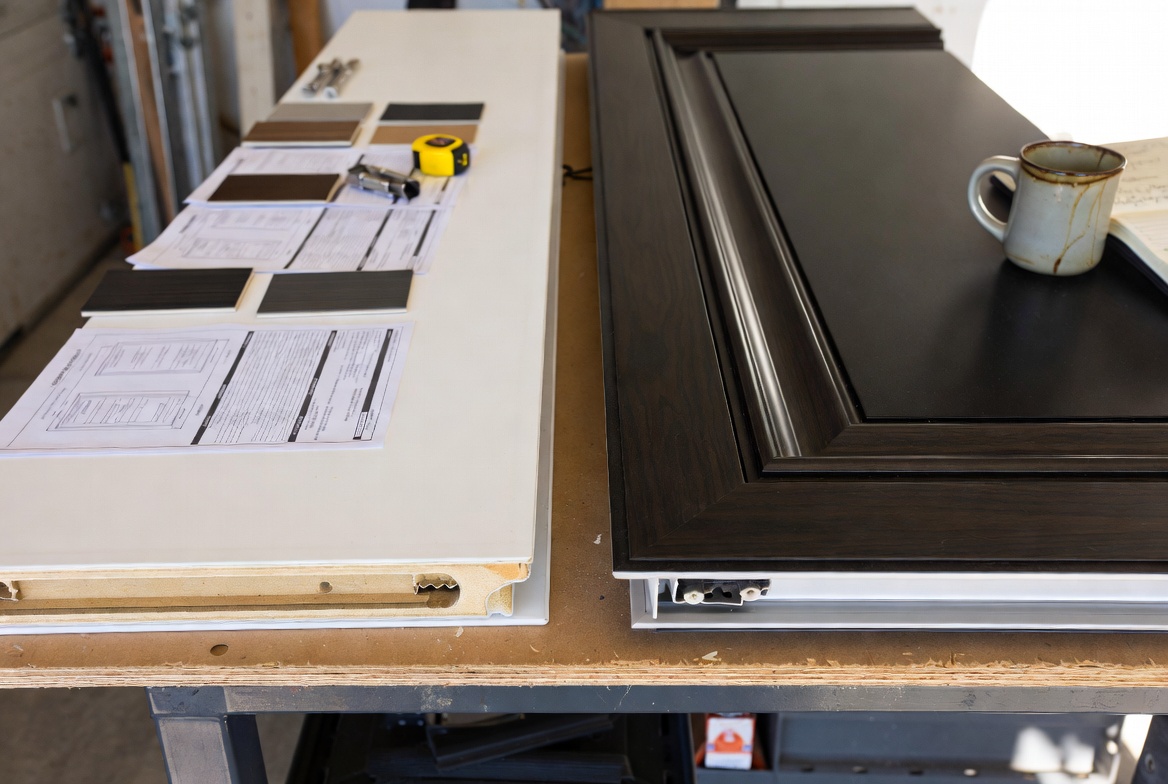
Most front-door mistakes start before the order is placed. The slab gets all the attention. The opening does not.
For an exterior door, the bigger split is material, weather exposure, glass area, and whether you are buying only the slab or the full prehung unit. Brand matters, but it is not first.
JELD-WEN fits better when the project wants a wood-forward entry or treated frame and jamb options. Masonite fits better when the goal is fiberglass, lower maintenance, and a tighter exterior door system.
Where The Choice Usually Lands
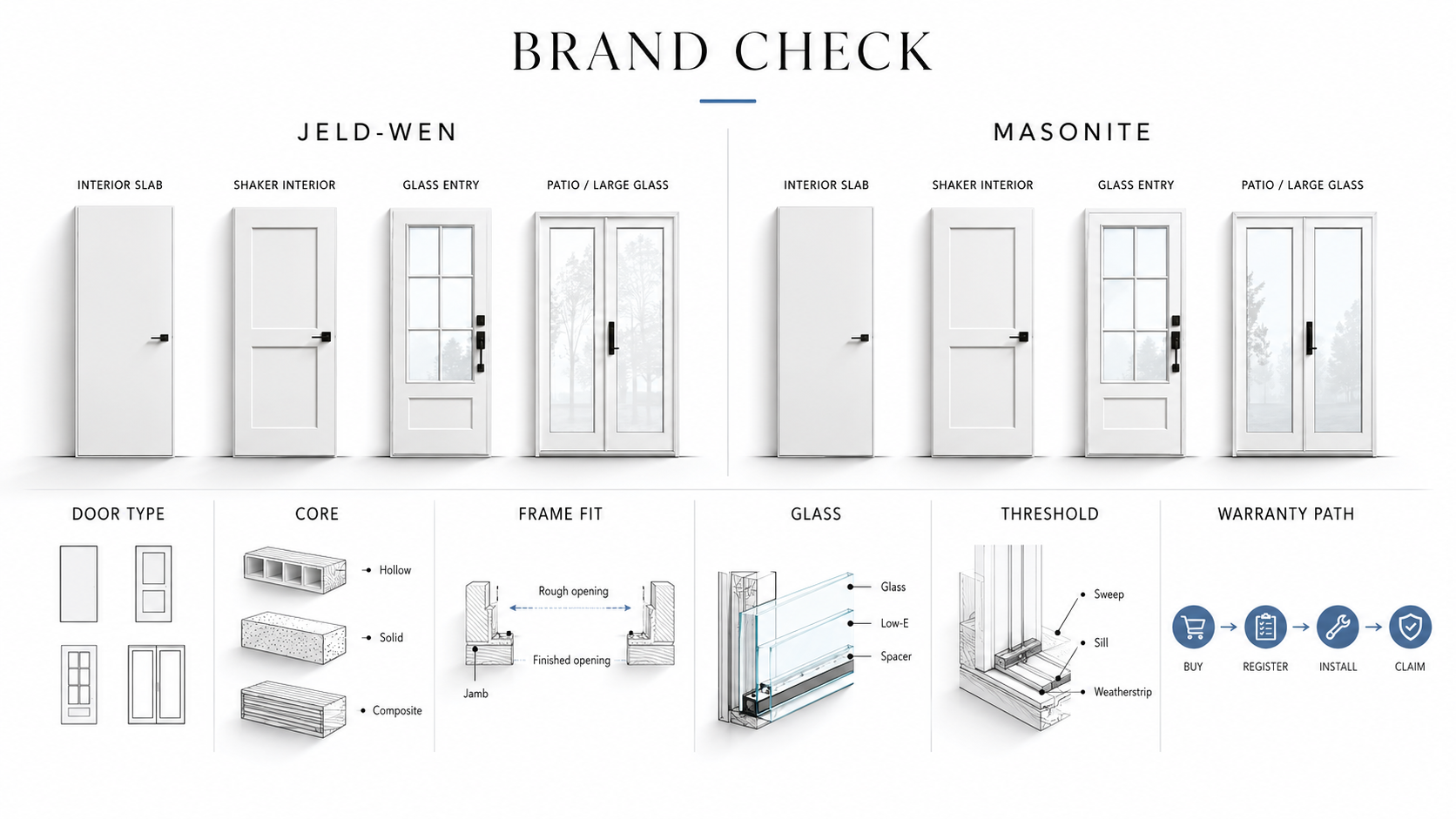
| Situation | Better Starting Point | Why |
|---|---|---|
| Protected entry, warmer traditional look, wood appearance matters | JELD-WEN | It fits wood-first and more traditional door work better, especially when the frame and jamb package matters. |
| Exposed opening, wet weather, stronger freeze-thaw pressure, low upkeep matters | Masonite fiberglass | Fiberglass and a stronger system around the slab are usually easier to live with over time. |
| Old frame, tired sill, air leaks, threshold trouble | Buy the full prehung unit | A slab-only swap will not fix a weak frame or a failing sill. |
| Large glass area or decorative glass package | Compare the exact unit, not the brand alone | Glass changes privacy, comfort, solar gain, and thermal performance fast. |
Design And Fit For The House
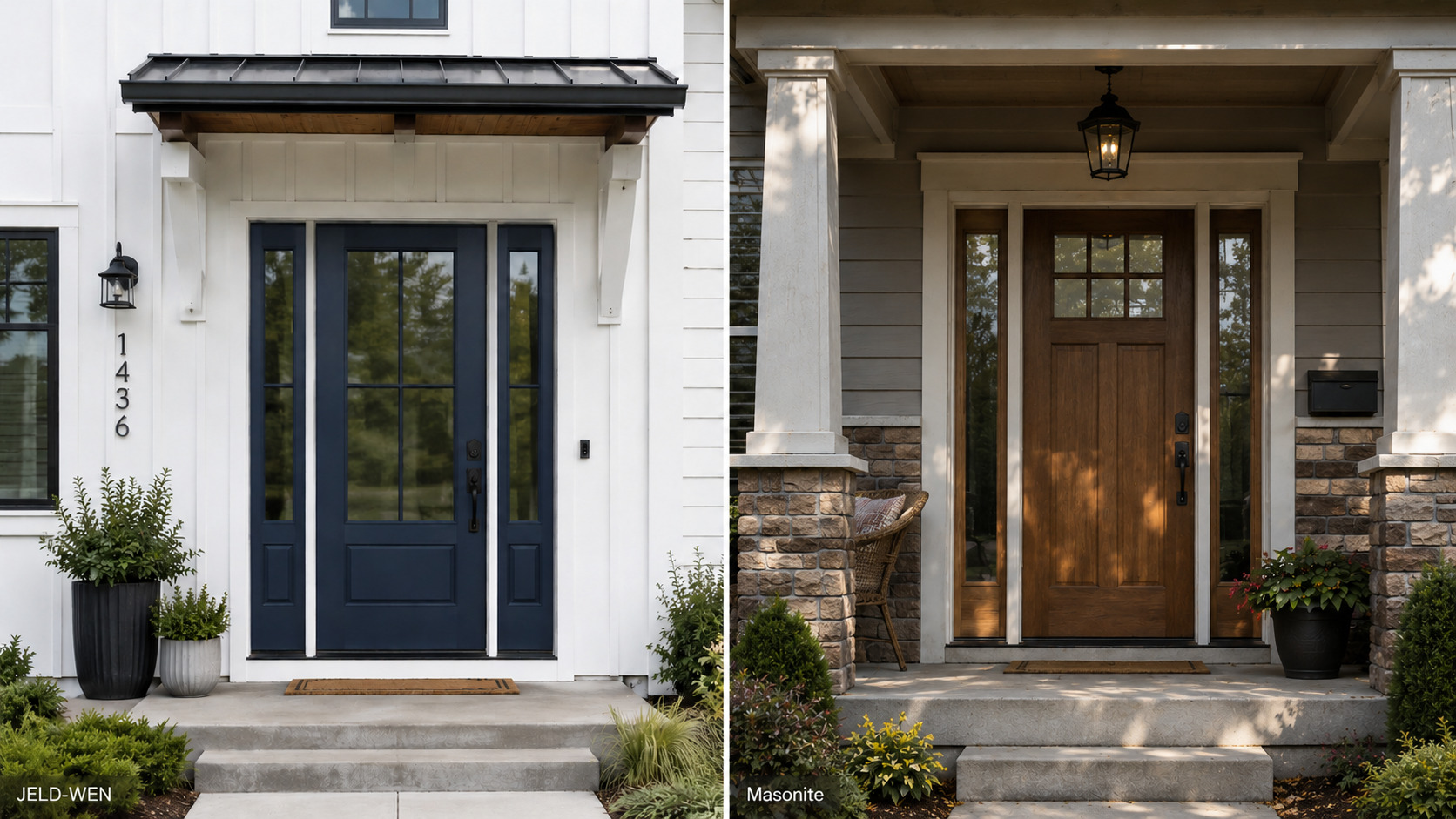
JELD-WEN is usually the stronger first look when the entry needs more visual weight. Older houses, more traditional facades, stain-grade ambitions, heavier panel language, and entries where a thin-looking replacement would pull the whole front elevation down. That is where JELD-WEN tends to fit better.
Masonite reads cleaner when the project leans simpler. Painted fiberglass, sharper lines, lower upkeep, and a door that still needs to look decent after a few winters without much attention.
The brand question shifts fast once the house type is clear. A fiberglass replacement for a busy suburban front entry is one decision. A wood-forward entry under a protected porch is another.
For a broader Masonite-only decision page, see the Masonite doors review. That page covers interior doors, exterior doors, fiberglass, steel, bifold doors, patio units, and the main fit problems before buying.
Material And Durability
Material choice does most of the work here.
JELD-WEN’s AuraLast pine is available for exterior door frames and jambs, and the company positions it around protection against wood rot, water saturation, and termites. That does not turn every JELD-WEN entry into a maintenance-free door. It does make the frame side of the opening more interesting on projects where a wood look still matters and the owner wants more than a basic primed jamb package.
Masonite leans harder into fiberglass and system durability. Its Performance Door System is built around premium fiberglass construction, a rot-resistant frame, a square-edge door, a self-adjusting sill, adaptive weatherstripping, and enhanced corner pads. Those are the parts that decide whether the entry still feels tight after weather, movement, and daily use start doing their work.
For an exposed opening with low tolerance for finish maintenance, Masonite fiberglass is usually the better fit. For a better-protected opening where the entry needs more architectural depth, JELD-WEN deserves the closer look.
Energy Efficiency And Weather Sealing
Do not call this one a tie and move on. Compare the exact unit.
ENERGY STAR certifies qualifying doors by product and climate zone, not by brand reputation. The answer lives in the specific configuration: glass area, panel layout, frame material, threshold, weatherstripping, and the climate zone where the unit will be installed.
Masonite has the clearer system case here because it talks directly about the square-edge fit, self-adjusting sill, and adaptive weatherstripping. JELD-WEN has qualifying products in the ENERGY STAR directory too, but the exact line still needs to be verified instead of assuming the label carries across the whole catalog.
Large glass inserts, sidelites, and sloppy sill work can wipe out a lot of marketing talk. A pretty door with a weak seal is still a weak door.
Installation And Maintenance
Do not mix up slab replacement with unit replacement.
Masonite’s own support material separates those two paths, and that distinction matters. If the frame is out of square, the sill is worn, the threshold is taking water, or the weatherstrip has been fighting the opening for years, replacing only the slab can turn into a half-fix that still leaks.
Masonite also requires entry doors to be finished within 45 days and all six sides sealed to keep warranty coverage in play. JELD-WEN’s warranty language puts similar weight on field finishing and on providing adequate overhang for exterior doors. The practical point is simple: wood and factory-primed doors do not want to sit raw at the opening while the project drifts.
Fiberglass still has the easier maintenance path. Masonite’s care guidance is straightforward, and fiberglass generally asks less of the owner than painted or stained wood. Wood can still be the better design choice. It just needs a better location and a more realistic maintenance plan.
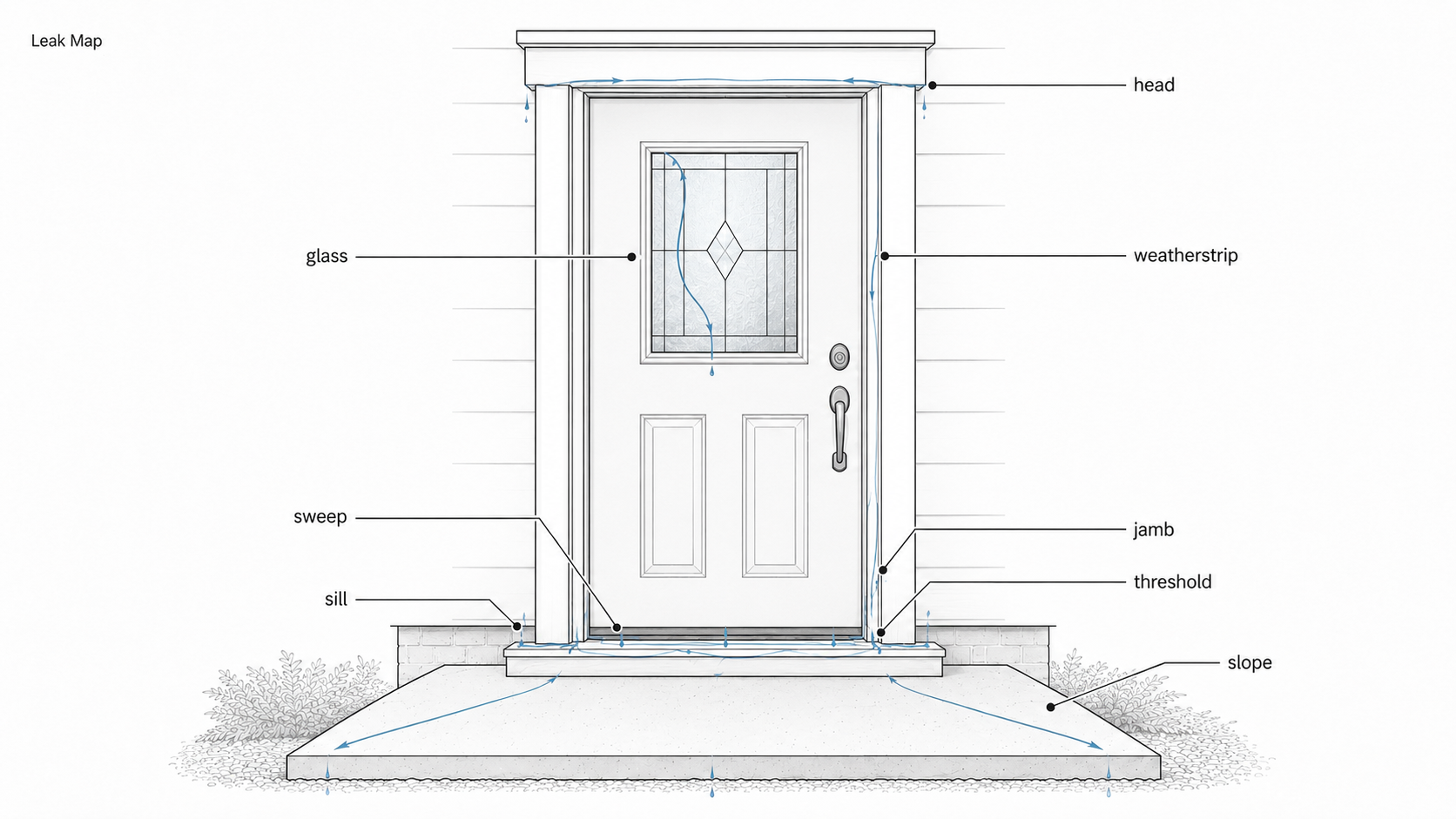
If water is already showing up at the threshold, lower jamb, glass insert, or sill area, the problem is no longer just a brand comparison. Use the Masonite exterior door leaking guide to diagnose the sweep, threshold, sill, landing slope, glass insert, and frame before replacing the whole unit.
Cost And Value
Broad price claims are weak here. Dealer pricing moves hard with glass, sidelites, finish, hardware, lock packages, handing, and whether you are buying a slab or a full prehung unit.
Value here is less about sticker price and more about what the purchase is saving you from later.
Masonite often makes more sense in mainstream fiberglass because the maintenance burden is lower and the weather-sealing package is easier to defend. JELD-WEN earns its keep when the entry needs more visual depth or when treated frame and jamb options solve a durability concern that a cheap replacement would ignore.
If you are stretching the budget, cut decorative upgrades before you cut unit quality or installation quality. The sill, the seals, and the opening condition matter more than one more glass pattern.
Common Mistakes That Cause Regret
- Buying wood for a fully exposed opening. The door may look right on day one and become a maintenance argument after that.
- Comparing a slab-only quote against a full prehung quote like they are the same thing. They are not.
- Overspending on decorative glass and underthinking climate and privacy. More glass changes more than curb appeal.
- Trying to save a bad frame. If the jamb, sill, or threshold is already tired, the new slab may only hide the problem for a while.
- Ignoring finishing requirements. Warranty language is usually stricter than buyers expect.
What to read next
If you are comparing the brands more broadly, start with the Masonite doors review. It explains where Masonite interior, exterior, fiberglass, steel, bifold, barn, and patio doors usually make sense.
If the door is already leaking, do not stay on a comparison page. Go to Masonite exterior door leaking and diagnose the sweep, threshold, sill, glass insert, weatherstrip, landing slope, and frame.
If the project is a closet or interior specialty door, the more useful next step is installing Masonite bifold doors. That page covers finished opening size, track, pivots, lower bracket placement, and final adjustment.
FAQ
Which Brand Is Better For Most Homeowners?
For a fiberglass front door where low maintenance matters, Masonite is usually the safer starting point. It is easier to justify on weather exposure and upkeep.
Is JELD-WEN Better For Wood Doors?
In many cases, yes. JELD-WEN is usually the better first look when the house wants a more traditional or wood-led entry, especially if treated frame and jamb options matter.
Should I Replace Only The Slab?
Only if the existing frame, sill, and opening are still worth keeping. If the threshold is worn, the frame is out, or the seals have been failing for years, buy the full unit.
Are Both Brands Energy Efficient?
Both brands sell qualifying options, but energy performance is tied to the exact unit and climate zone. Check the listing, not the logo.
The safer choice depends on exposure
For most homeowners buying a fiberglass front door, Masonite is the easier pick. Lower upkeep, a stronger system around the slab, and less chance that the entry turns into a finish problem later.
JELD-WEN makes more sense when the project wants a wood-forward entry, a more traditional look, or more attention paid to the frame and jamb package.
Do not stop at the brand. Check the exact line, the opening condition, the glass package, the overhang, and whether the job needs a slab or the whole prehung unit. That is usually where the expensive mistake is hiding.