
Masonite doors can be a good choice, but the brand name alone does not tell you whether the door will work in your house.
The real decision is narrower. Is this an interior door or an exterior door? Hollow core or solid core? Fiberglass, steel, wood, bifold, barn door, or patio unit? Is the old opening square? Will the frame stay dry? Does the door need sound control, privacy, weather protection, glass, fire rating, or a clean paint finish?
That is where Masonite door reviews often get weak. They describe the catalog but skip the problem after purchase: poor fit, wrong core, weak sound control, bad threshold support, glass insert leaks, swelling edges, warped frames, and doors that looked fine online but did not match the opening.
The quick verdict
Masonite is strongest when the door type matches the use. Their interior doors can make sense for bedrooms, closets, offices, and general replacement work. Their exterior doors can make sense when the full door system, threshold, frame, glass, and installation details are chosen correctly.
Masonite is weaker when the buyer treats every door as interchangeable. A hollow core closet door is not a home office door. A fiberglass entry door is not a fix for a bad sill. A prehung unit is not automatically easy if the old opening is out of square. A bifold door will not work cleanly if the finished opening, track, and pivot line are wrong.
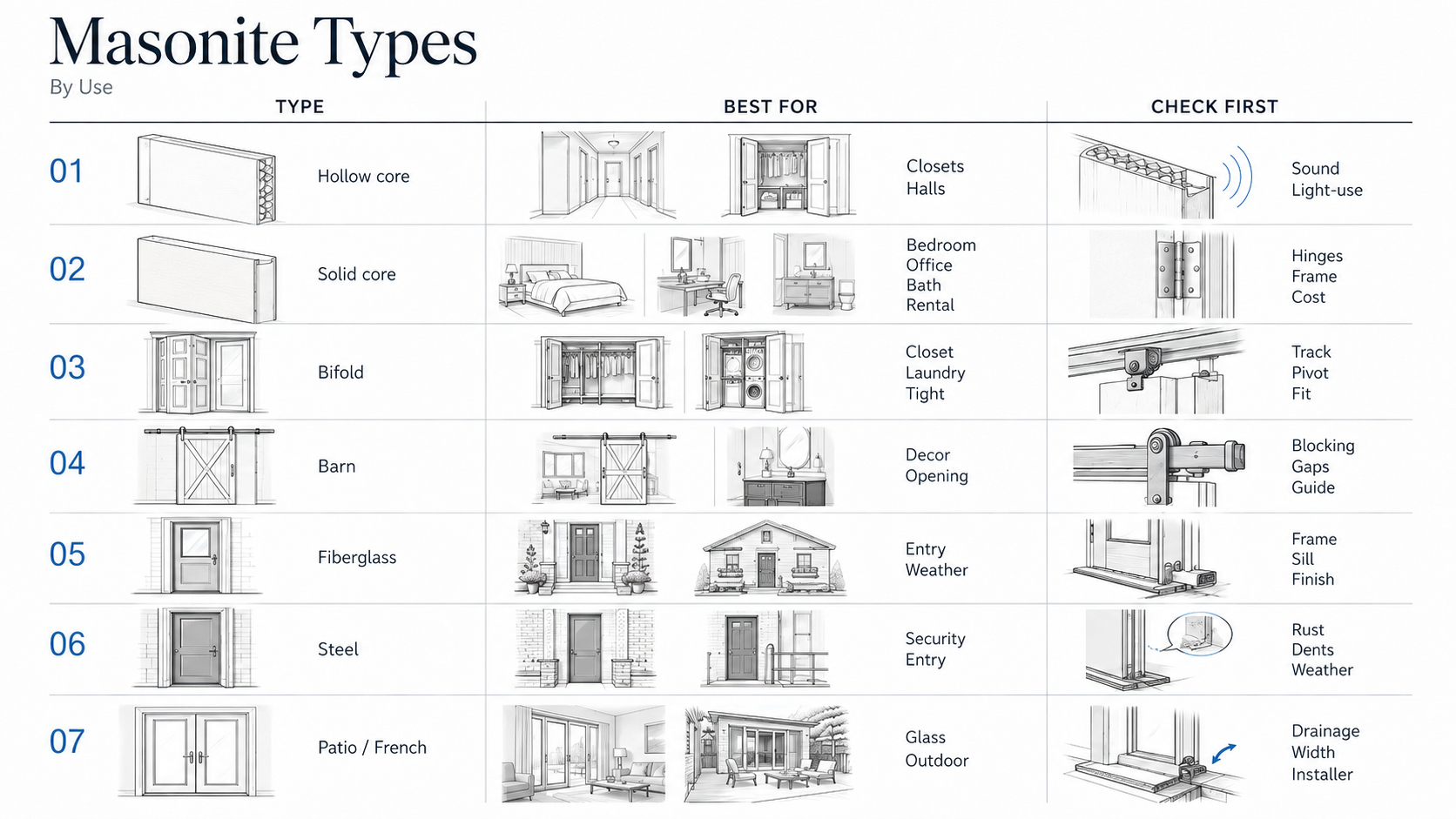
| Masonite door type | Where it usually makes sense | What to check before buying |
|---|---|---|
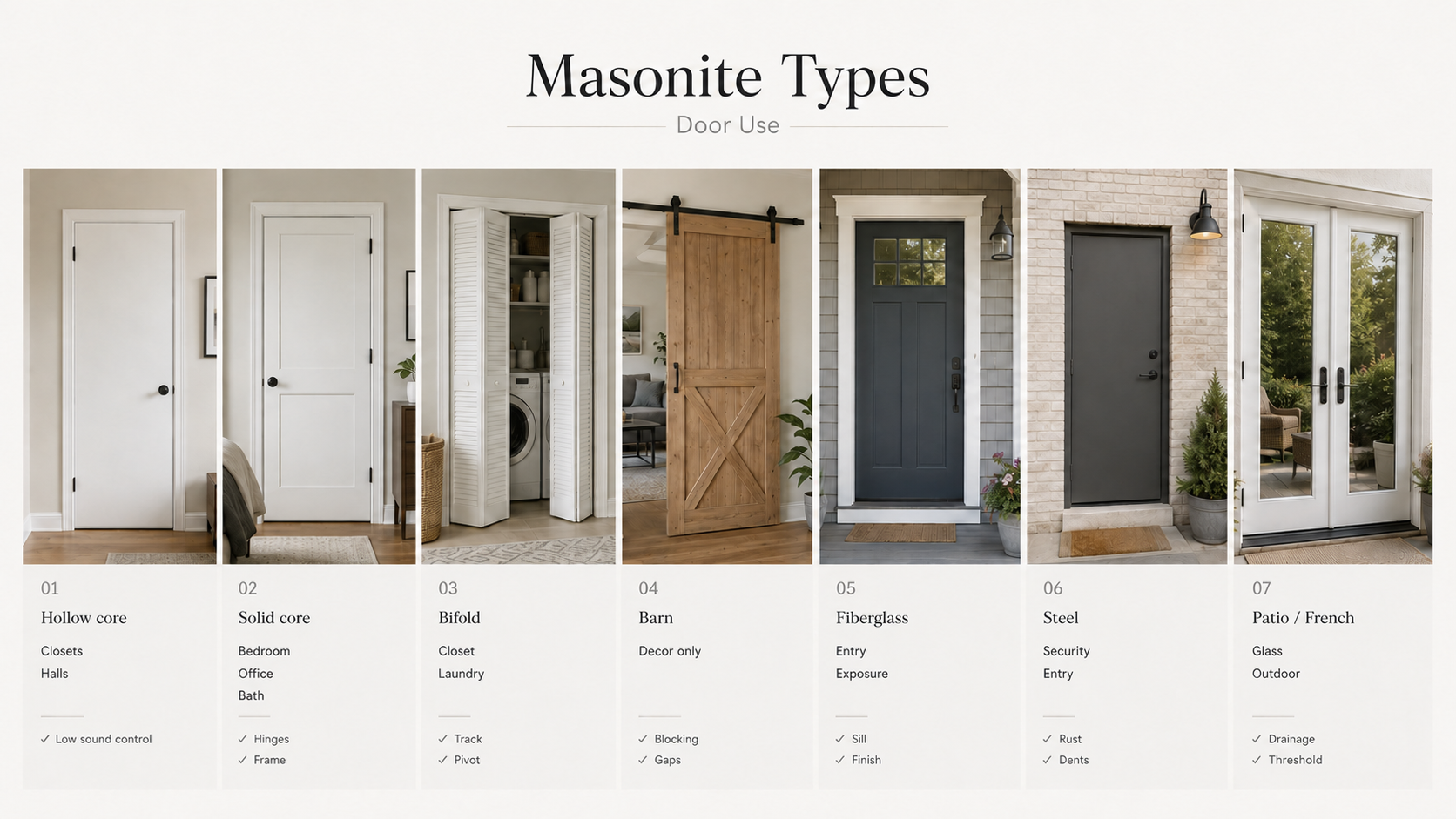
| Hollow core interior door | Closets, hallways, low-noise rooms | Do not expect much sound control or heavy-duty feel |
| Solid core interior door | Bedrooms, offices, bathrooms, rentals | Check hinge strength, frame condition, and installation cost |
| Bifold door | Closets, laundry openings, tight spaces | Finished opening, track, lower bracket, and pivot alignment |
| Barn door | Decorative openings where privacy is not critical | Wall blocking, gaps, sound leakage, and floor guide clearance |
| Fiberglass exterior door | Entry doors exposed to weather | Frame, threshold, glass, paint color, finish, and installation |
| Steel exterior door | Security-minded entry replacement | Bottom-edge rust, dents, finish damage, and weather exposure |
| Patio or French door | Large exterior openings with glass and outdoor access | Threshold length, water management, frame width, and installer skill |
What buyers should compare first
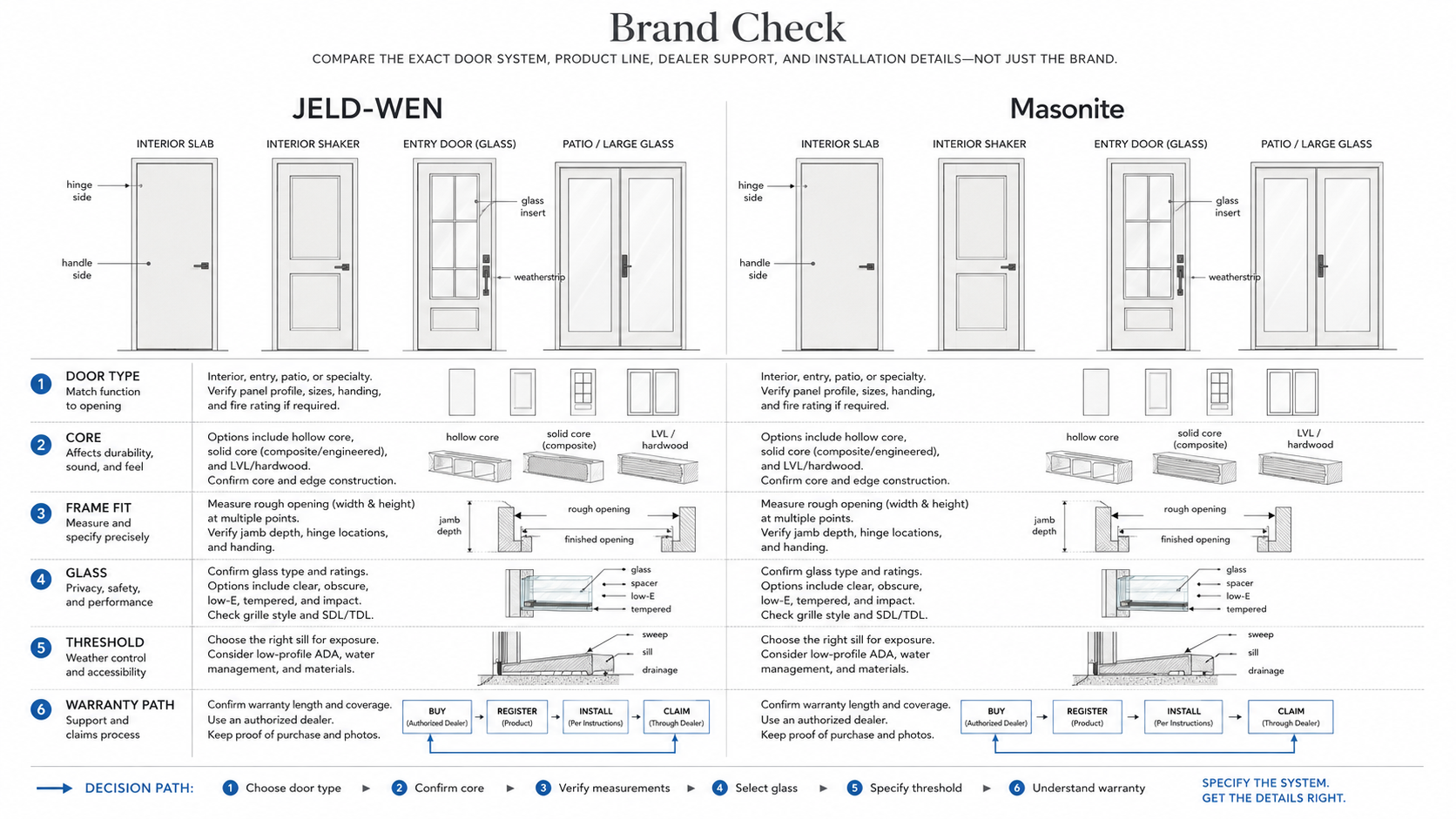
Do not compare one Masonite display door against another brand’s best-looking sample. Compare the exact system you are buying.
A fair comparison looks at the door slab, core, frame, glass package, threshold, weatherstrip, finish requirements, warranty path, dealer support, and the difficulty of installation in your existing opening. Two doors can look similar in the aisle and behave very differently after the first winter, first hard rain, or first year of daily use.
If you are comparing exterior brands specifically, use the dedicated JELD-WEN vs Masonite exterior doors page. This review is the broader Masonite decision page.
Interior Masonite doors: where they work and where they disappoint
Interior Masonite doors cover several jobs. Some are simple hollow core doors for basic room separation. Some are heavier solid core doors for better privacy and sound control. Some are bifold, barn, French, or specialty doors for specific openings.
The mistake is buying by appearance only. A bedroom door, bathroom door, closet door, home office door, and rental-unit door do not have the same job.
Hollow core interior doors
Hollow core Masonite doors make sense where cost and light weight matter more than sound control. Closets, low-traffic bedrooms, and secondary rooms can be good uses.
They are not the best choice when the door needs to feel solid, reduce noise, hold up to abuse, or make a room feel private. A hollow core door can close the opening and still feel cheap if it is used in the wrong place.
Solid core interior doors
Solid core Masonite doors are usually the better upgrade for bedrooms, bathrooms, home offices, rental bedrooms, and rooms where noise matters. They feel heavier, close with more authority, and reduce sound better than hollow core options.
The hidden cost is installation. A heavier slab may need better hinges, stronger screws, and a frame that is still straight. If the old frame is weak or the hinges are sloppy, the new door may sag or rub.
Solid core doors deserve their own decision because the upgrade affects cost, sound control, hinge load, and frame condition. Do not treat them as simply “better hollow core doors.”
Bifold doors
Masonite bifold doors are useful for closets and tight rooms, but they are unforgiving when the opening is wrong. The track, pivot line, lower bracket, floor height, and finished opening all have to agree.
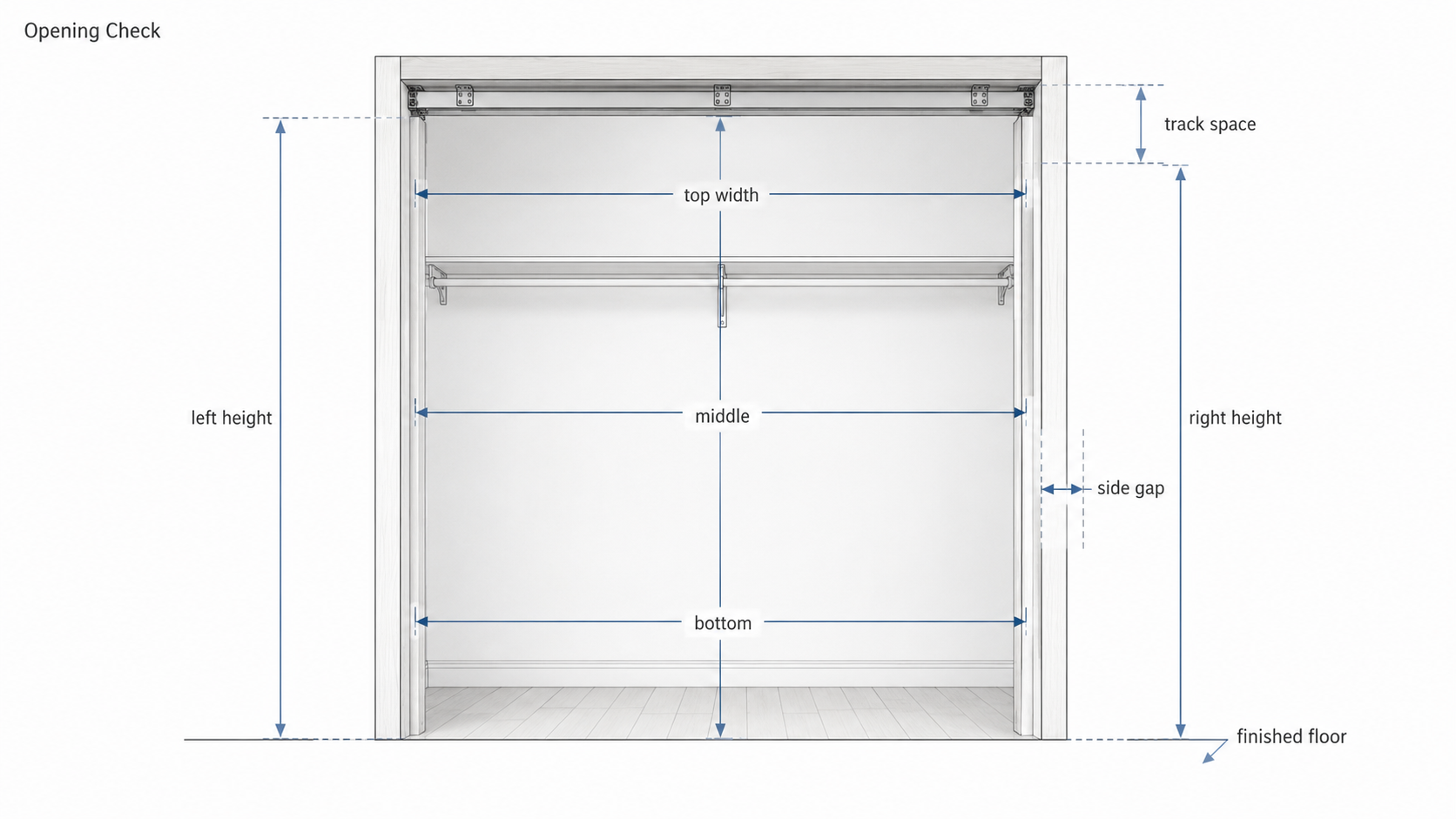
If you are working on a closet door now, use the detailed guide to installing Masonite bifold doors. That page covers track cutting, pivots, lower brackets, height adjustment, floor problems, and the trimming mistake that can void the job.
Barn doors
Masonite barn doors can work as a style or space-saving choice, but they are not the same as a sealed hinged door. They usually leave side gaps, bottom gaps, and sound leakage. They also need strong wall blocking behind the track.
Do not use a barn door where the room needs real acoustic privacy unless the trade-off is acceptable. Bathrooms, bedrooms, and offices can be poor locations if privacy matters more than appearance.
Exterior Masonite doors: judge the whole system
Exterior doors are not only slabs. They are systems. The slab, frame, threshold, sill support, weatherstrip, glass, paint, hardware, and wall opening all share the job.
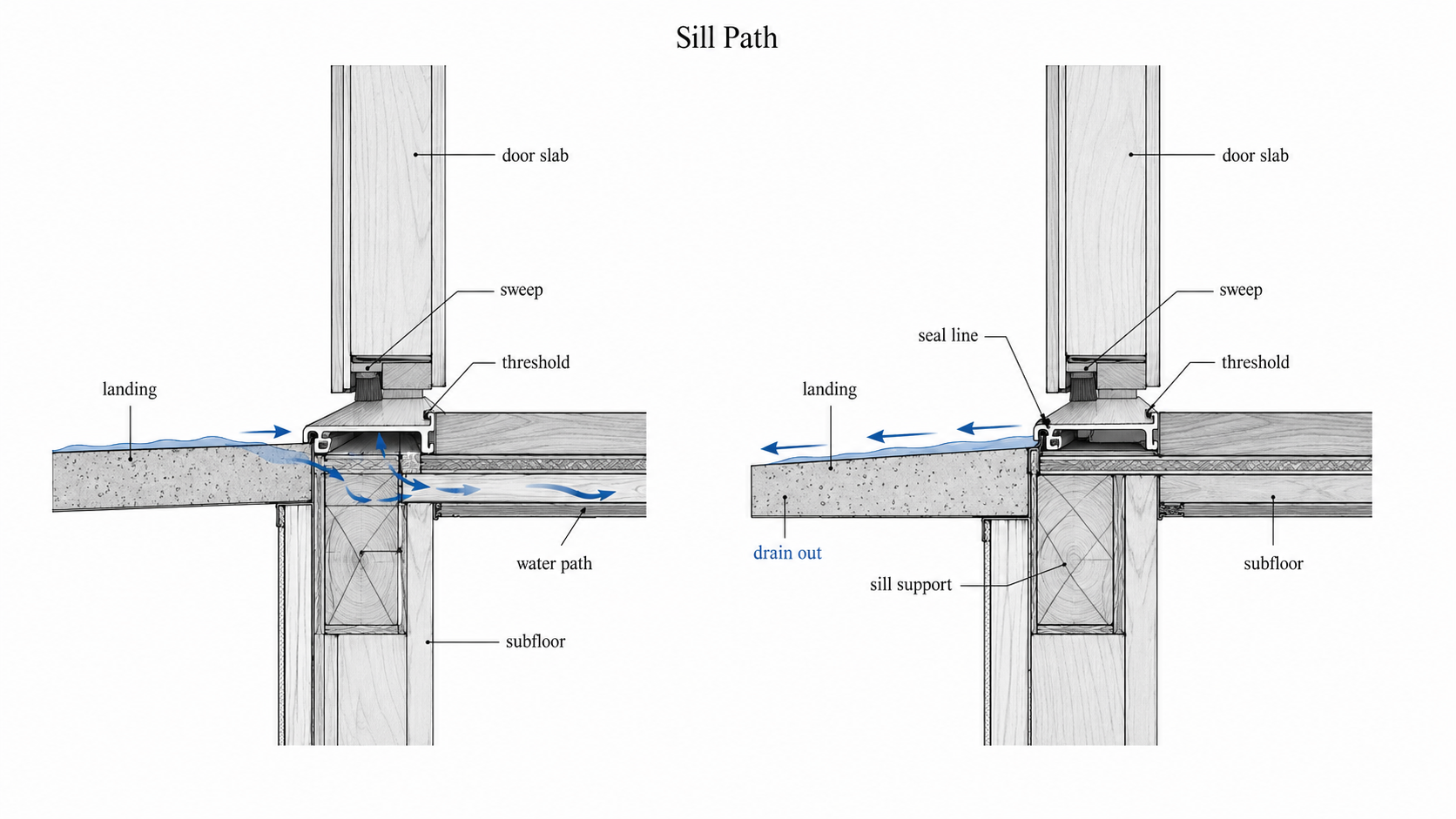
A Masonite exterior door can perform poorly if the old opening is rotten, the threshold is unsupported, the landing slopes toward the house, the glass insert leaks, or the door was finished badly. That does not always mean the door brand failed. It may mean the system was chosen or installed badly.
Fiberglass exterior doors
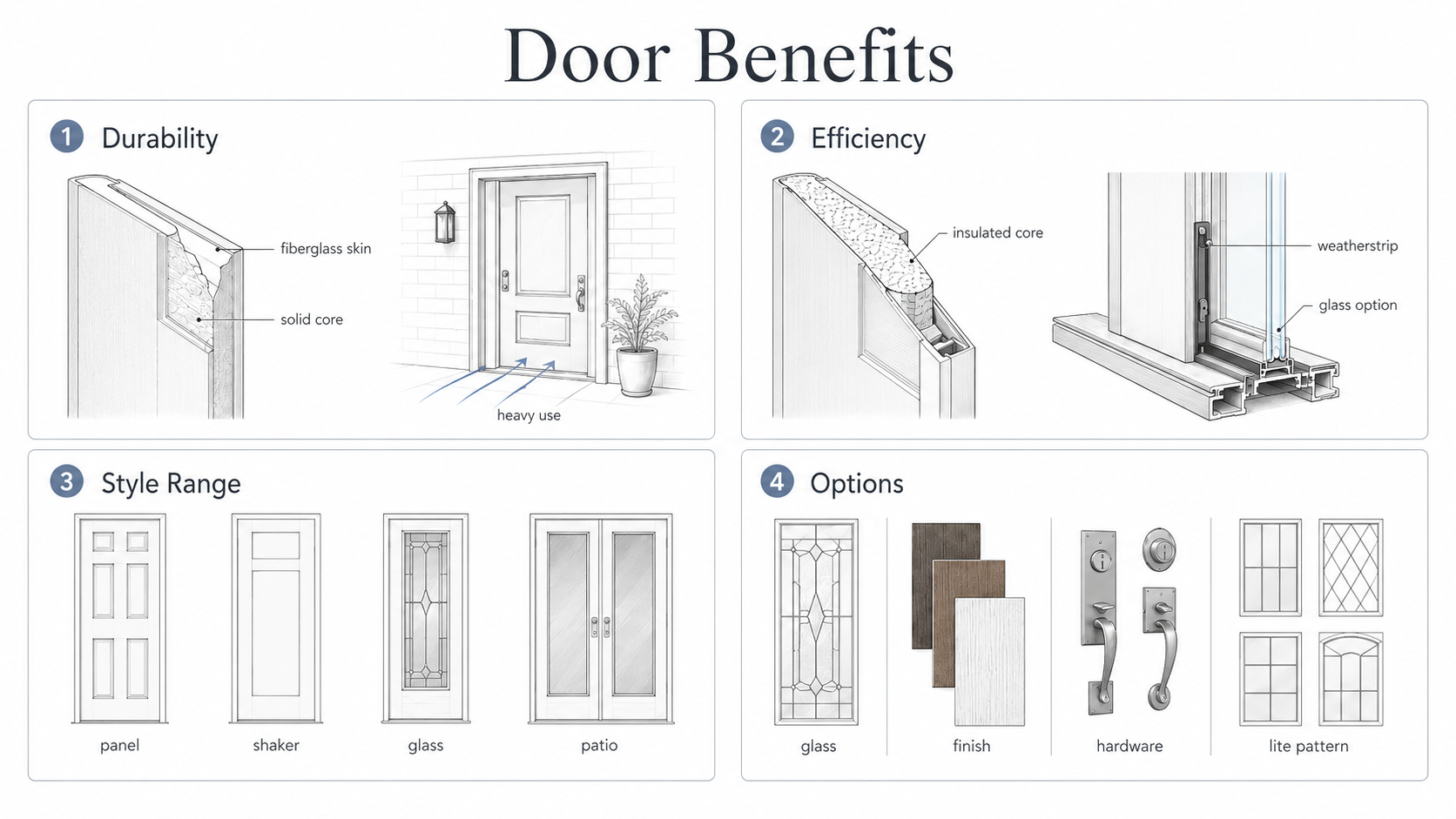
Fiberglass exterior doors can be a strong option where weather exposure, dents, rot resistance, and lower maintenance matter. They are often chosen for front doors because they can give a wood-like appearance without behaving exactly like wood.
The weak points are usually not the word “fiberglass.” The weak points are the frame, threshold, finish, glass insert, dark paint exposure, poor installation, or the old opening around the new unit.
Steel exterior doors
Steel exterior doors can make sense where security, cost, and impact resistance matter. They can also dent, rust at vulnerable edges, and show finish damage if they are neglected or exposed to heavy weather.
Steel is not automatically better than fiberglass. Fiberglass is not automatically better than steel. The right choice depends on exposure, budget, security needs, finish expectations, and how the door will be installed.
Exterior leaks and threshold problems
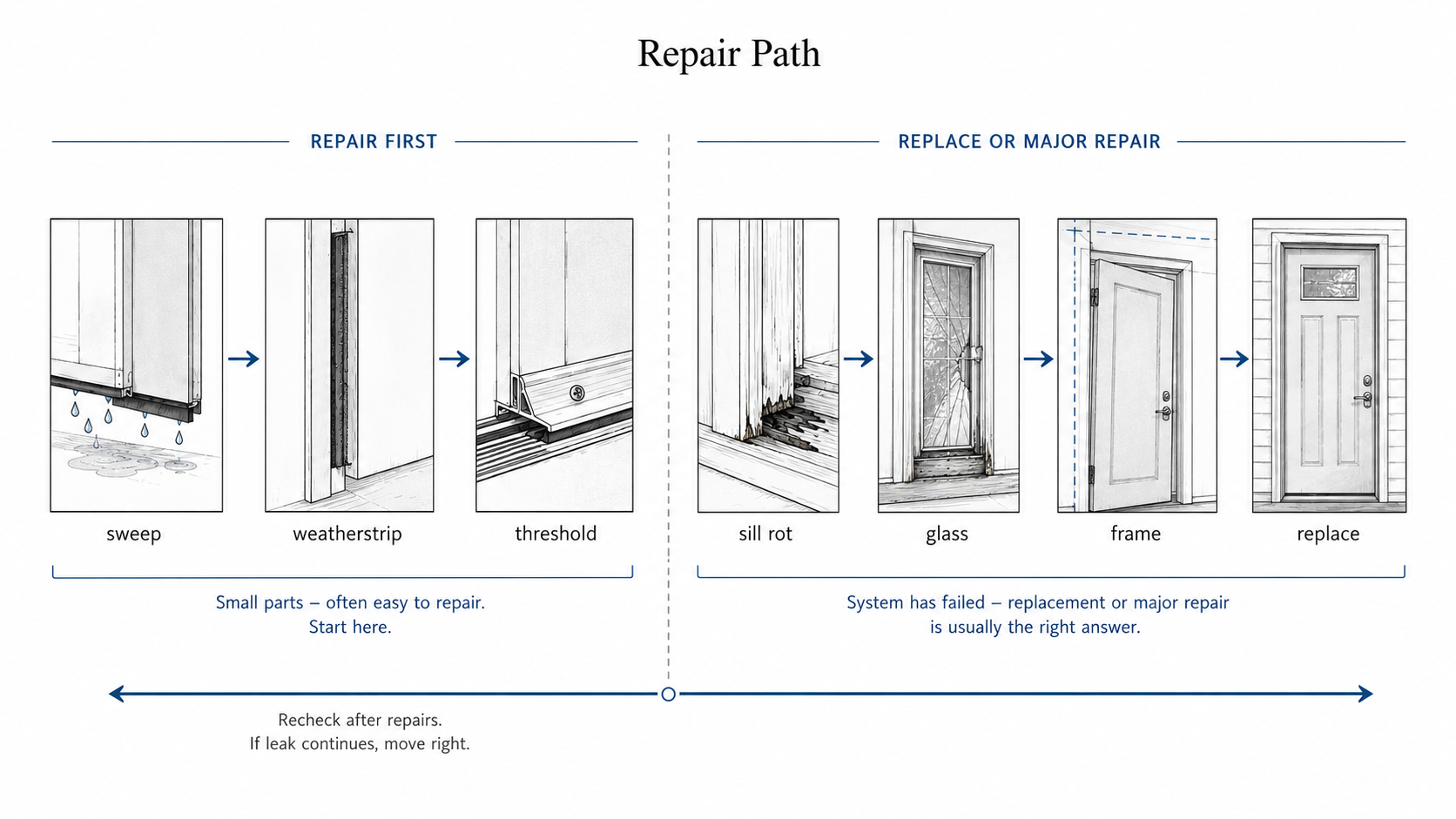
If the door is already leaking, do not use a broad review page to diagnose it. Use a leak-specific page. Water at the threshold, glass insert, lower jamb, sill, or head trim points to different problems.
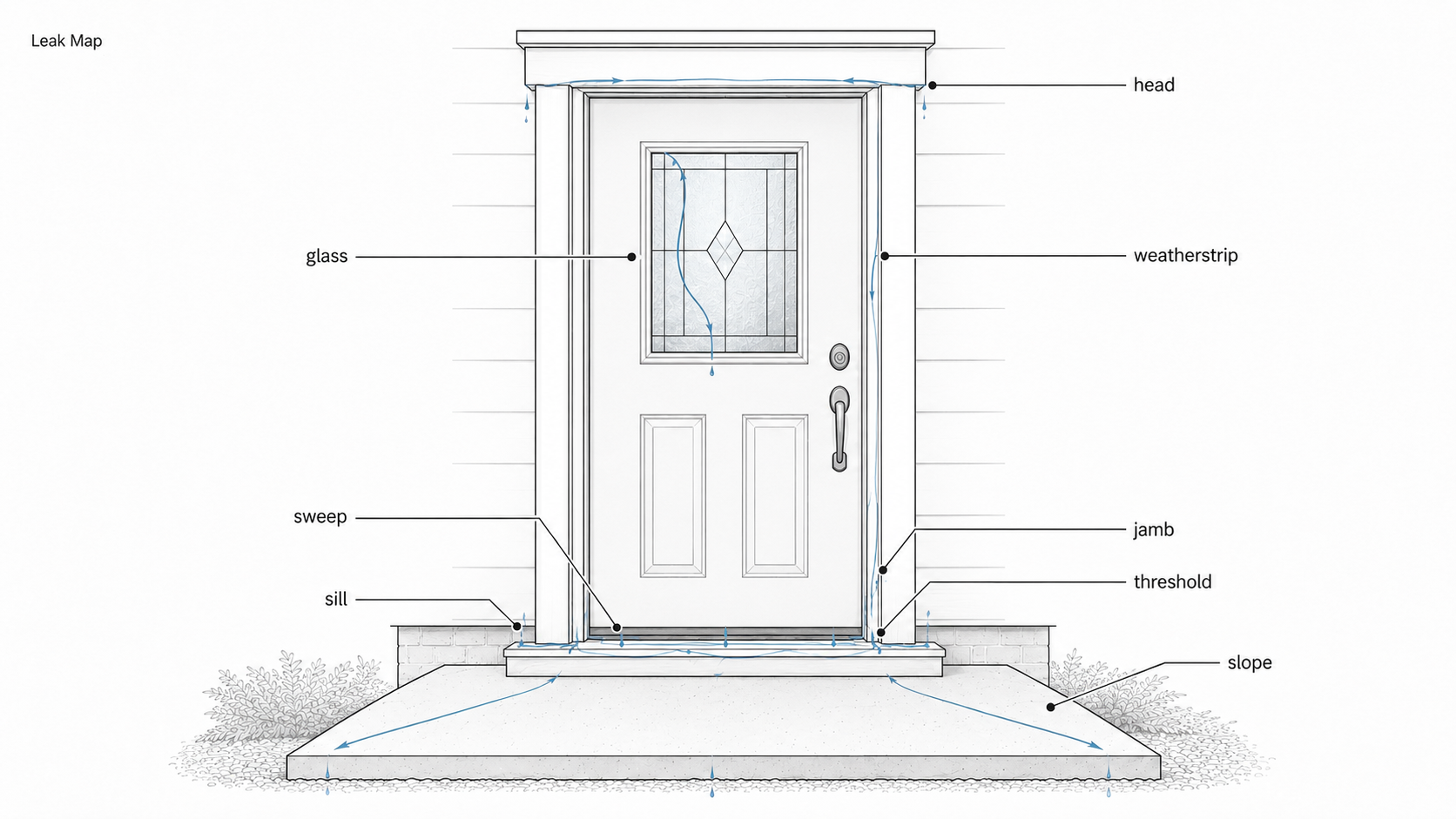
For that repair path, go to Masonite exterior door leaking. It covers the sweep, threshold, sill, glass insert, weatherstrip, landing slope, and the point where repair becomes replacement.
Patio, French, and glass doors
Masonite patio and French door decisions are more expensive because the opening is wider, the glass area is larger, and the threshold has more work to do. A small entry door mistake is annoying. A wide exterior glass unit mistake can affect water control, floor height, energy performance, security, and finish carpentry.
Before buying a patio or French door, check the rough opening, finished floor height, exterior landing, swing direction, glass package, lock system, threshold design, and whether the installer has experience with wide exterior units.
If you are considering a large exterior French door unit, see 96-inch exterior French doors. Large glass doors need their own decision path because size changes the risk.
Prehung vs slab Masonite doors
A prehung door includes the slab already mounted in a frame. A slab door is only the door panel. Neither one is automatically easier in every situation.
A prehung Masonite door can be the better option when the old frame is damaged, out of square, rotten, or not worth saving. But a prehung exterior door still needs proper sill support, shimming, flashing, sealing, and adjustment. The word “prehung” does not mean the opening will accept it cleanly.
A slab door can work when the existing frame is square, solid, and worth keeping. It can become frustrating when hinge mortises, latch height, bevel, thickness, or frame movement do not match the new slab.
| Choice | Good use | Hidden problem |
|---|---|---|
| Prehung interior door | Replacing a bad frame or changing the full opening trim | More finish work around casing, paint, and floor transitions |
| Interior slab door | Existing frame is straight and hinge/latch layout can be matched | Mortise mismatch, rubbing, latch misalignment |
| Prehung exterior door | Old frame, sill, or threshold is damaged | Waterproofing, sill support, and wall opening repair |
| Exterior slab only | Frame and threshold are sound and the slab is the only failure | Weatherstrip, sweep, lockset, and fit may not line up cleanly |
What usually fails first
Door problems rarely show up as “the brand failed.” They show up as rubbing, leaking, sagging, rattling, swelling, poor latch alignment, peeling finish, soft trim, weak sound control, or a door that never feels right.
| Symptom | Common cause | What to check before blaming the door |
|---|---|---|
| Door rubs after installation | Frame out of square, hinge issue, slab weight, floor change | Reveal, hinges, latch strike, floor clearance |
| Exterior door leaks at bottom | Sweep, threshold, sill, landing slope, glass, flashing | Water pattern and sill condition |
| Interior door feels cheap | Wrong core for the room | Hollow core vs solid core choice |
| Door does not block sound | Light core, gaps, poor seal, weak frame | Core type, undercut, perimeter gap |
| Paint peels or edges swell | Poor finishing, exposed edges, moisture exposure | Top, bottom, hinge edge, latch edge, drilled areas |
| Bifold door jumps or rubs | Track, pivot, lower bracket, finished opening | Opening measurements and pivot alignment |
Finish and maintenance matter more than the brochure says
Door finish is not decoration only. It protects the slab, edges, and drilled areas from moisture and wear. This matters most on exterior doors, but it can matter on interior doors near bathrooms, laundry rooms, garages, and humid spaces.
Check all exposed edges before installation. The top, bottom, hinge side, latch side, lock bore, and any cut areas should not be left as raw vulnerable surfaces where moisture can start working into the material.
Primer alone should not be treated as a finished weather barrier. Exterior doors need the correct finish system for the exposure. Doors in sun, wind, rain, snow, or coastal conditions may need more attention than a protected porch door.
Where buyers waste money
The first waste is buying a stronger door for the wrong problem. A solid core interior door will feel better than a hollow core door, but it will not fix a weak frame, bad hinge screws, or a crooked opening.
The second waste is buying an exterior door without checking the sill, threshold, and landing. A new door installed over a bad base can leak like the old one.
The third waste is treating style as the decision. A nice panel pattern does not matter if the door is too light for the room, too exposed for the finish, or too hard to install in the existing opening.
Masonite vs JELD-WEN, Pella, and Simpson
Masonite is often compared with JELD-WEN because both brands appear in common residential door decisions. The better choice depends on the exact product line, not the brand name by itself.
For exterior doors, compare material, frame package, threshold, weatherstrip, glass, finish, warranty route, dealer support, and installation requirements. For interior doors, compare core type, surface finish, panel design, weight, fire rating if needed, and sound control.
Pella is usually discussed more in the premium window and exterior opening conversation. Simpson is often associated with wood doors. JELD-WEN competes across many interior and exterior categories. Masonite fits best when the chosen product matches the use, the opening, and the installation conditions.
The safest comparison is specific: Masonite fiberglass entry door versus a comparable JELD-WEN fiberglass entry door, not “Masonite versus JELD-WEN” in general.
Where to buy Masonite doors
Masonite doors are commonly ordered through major home centers, dealers, builders, and door suppliers. Availability depends on size, finish, product line, region, and whether the door is stocked or special order.
Do not judge the full brand from one shelf sample. Check the full product description, handedness, slab vs prehung format, jamb size, glass option, swing, threshold type, fire rating if needed, and whether installation support is available.

Installation and repair links
Use these related guides when you already know the problem you are trying to solve.
| Problem or decision | Best next page |
|---|---|
| Closet bifold door install | Installing Masonite bifold doors |
| Exterior door leak | Masonite exterior door leaking |
| Exterior brand comparison | JELD-WEN vs Masonite exterior doors |
| Large exterior French doors | 96-inch exterior French doors |
| Broader door and window reviews | Doors and windows |
FAQ
Are Masonite doors good?
Masonite doors can be good when the door type matches the job. A hollow core interior door, solid core door, bifold door, fiberglass entry door, steel door, and patio unit should not be judged by the same standard.
Are Masonite exterior doors better in fiberglass or steel?
Fiberglass often makes sense for weather exposure and lower maintenance. Steel can make sense for security and cost. The better choice depends on exposure, finish, frame, threshold, glass, and installation conditions.
Are Masonite hollow core doors worth it?
They are worth it for low-cost interior openings where sound and weight do not matter much. They are not the best choice for offices, bedrooms that need privacy, rentals, or rooms where a solid feel matters.
Are Masonite solid core doors worth the upgrade?
Often, yes, especially for bedrooms, bathrooms, offices, and shared walls. The extra weight means the frame, hinges, and installer matter more.
Do Masonite bifold doors have common problems?
Most bifold problems come from the opening and hardware alignment, not the panel alone. Track position, pivots, lower bracket placement, floor height, and finished opening size matter.
Can Masonite exterior doors leak?
Any exterior door can leak if the sweep, threshold, sill, glass insert, weatherstrip, frame, finish, landing slope, or installation fails. Diagnose the water pattern before replacing the whole door.
Can Masonite doors be painted?
Many Masonite doors are painted or finished as part of normal installation, but the exact product instructions matter. Edges, drilled areas, and exterior exposure need special care. Primer should not be treated as the final weather barrier on exterior doors.
Should I buy a Masonite prehung door or a slab?
Buy prehung when the old frame is damaged, out of square, or not worth saving. Buy a slab only when the existing frame is sound and the hinge, latch, thickness, and bevel can be matched cleanly.
A Masonite door is only good if it matches the job
The strongest Masonite door choice is not always the most expensive one. It is the one that matches the room, opening, exposure, frame, finish, and installation scope.
For closets, measure the finished opening. For bedrooms and offices, think about sound and core weight. For exterior doors, judge the whole system: slab, frame, threshold, sill, glass, weatherstrip, finish, and installer. That is where a Masonite door either becomes a good value or turns into a repair problem later.