


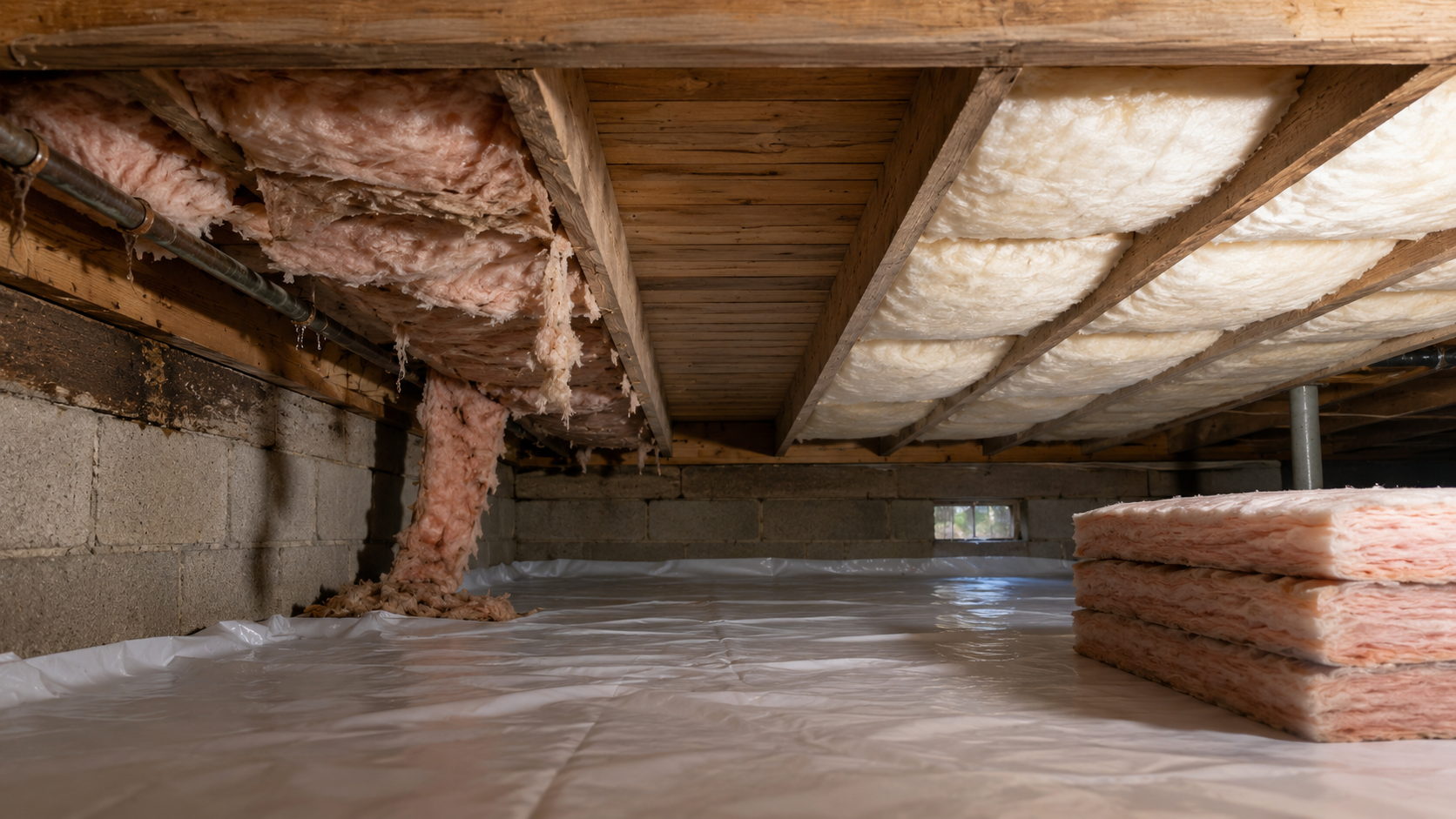
What Comes Out, What Goes Back, and What To Fix First
Replacing crawl-space insulation sounds simple until you look at why the old insulation failed.
That is where a lot of these jobs go sideways. The old batts are hanging, wet, dirty, moldy, or torn apart. So the plan becomes remove the bad insulation and put new insulation back in the same place.
Sometimes that works.
A lot of the time it just resets the clock on the same problem. If the crawl still gets wet after rain, still pulls in humid summer air, still has exposed damp soil, or still has one slow leak nobody fixed, the next layer will age the same way the last one did.
That is why replacing crawl-space insulation is usually a crawl-space repair decision first and an insulation decision second.
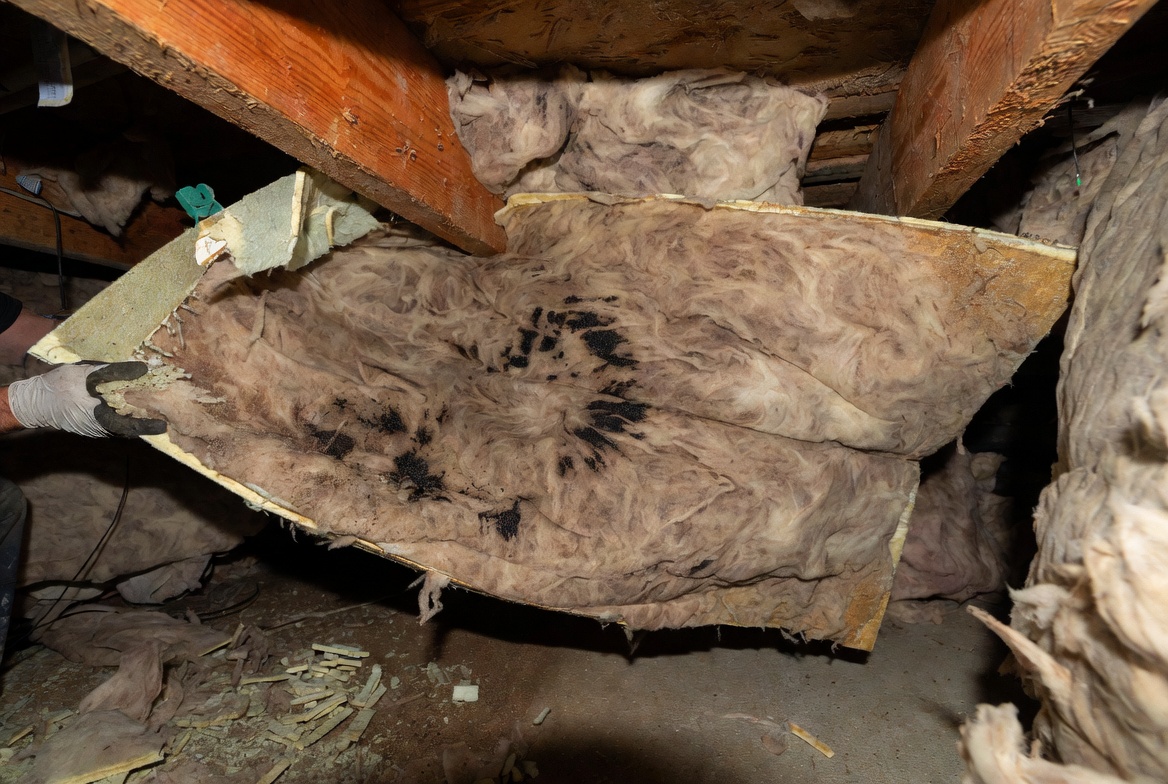
Image by ArchitectureCourses.org. Once old insulation is coming out dark, wet, and loose, the real job is figuring out why the crawl kept feeding moisture into it.
Start with why it failed
Insulation under a floor usually fails in familiar ways.
- it gets wet after storms
- it stays damp in a humid vented crawl
- it picks up dirt and odor from the air below
- it loses support and falls away from the subfloor
- it gets torn up by rodents
- one leak keeps soaking the same bay
Those failures do not all point to the same replacement plan.
If the crawl gets wet after rain, start with water in a crawl space after rain, crawl space drainage system, or crawl space waterproofing. If the crawl is mostly stale, damp, and sticky rather than flooded, go next to crawl space humidity. If the whole crawl is halfway between vented and controlled and nobody ever really picked a direction, use crawl space encapsulation vs vapor barrier only.
The replacement plan gets easier once the crawl-space problem has a name.
Like-for-like replacement or a different strategy?
This is the real choice on most of these jobs.
Some crawls only need old failed insulation removed and a cleaner version of the same basic floor-insulation system put back. Other crawls are telling you the whole assembly was wrong for the conditions under the house.
| If the Crawl Looks Like This | Better Move | Why |
|---|---|---|
| Vented, fairly dry, ground cover decent, old batts just worn out | Replace the floor insulation | The basic strategy may still be fine |
| Vented, damp, bare soil, repeated odor and sagging insulation | Fix moisture and ground conditions first | New batts will age the same way |
| One or two wet bays only | Fix the local leak first, then replace locally or broadly as needed | The whole crawl may not need the same scope |
| Half-sealed crawl with ducts and pipes below the floor insulation line | Rethink the whole assembly | The crawl is sitting between two systems |
| Controlled crawl moving toward encapsulation | Shift toward wall-insulation logic | Rebuilding the old floor-only setup often wastes money |
What usually has to come out
If the insulation is soaked, moldy, dirty, collapsing, or torn apart, it usually has to leave.
People drag their feet here because removal feels like admitting the old money was wasted. But keeping failed insulation under the floor because it is technically still present is not a real savings.
Material that usually ends up going out:
- wet fiberglass batts
- dirty insulation hanging below the joists
- insulation with visible mold or strong odor
- material damaged by rodents
- batts that no longer fit tightly against the floor assembly
Framing is different. Some framing can often be dried, cleaned, and kept if the moisture source is corrected in time. Insulation is much less forgiving.
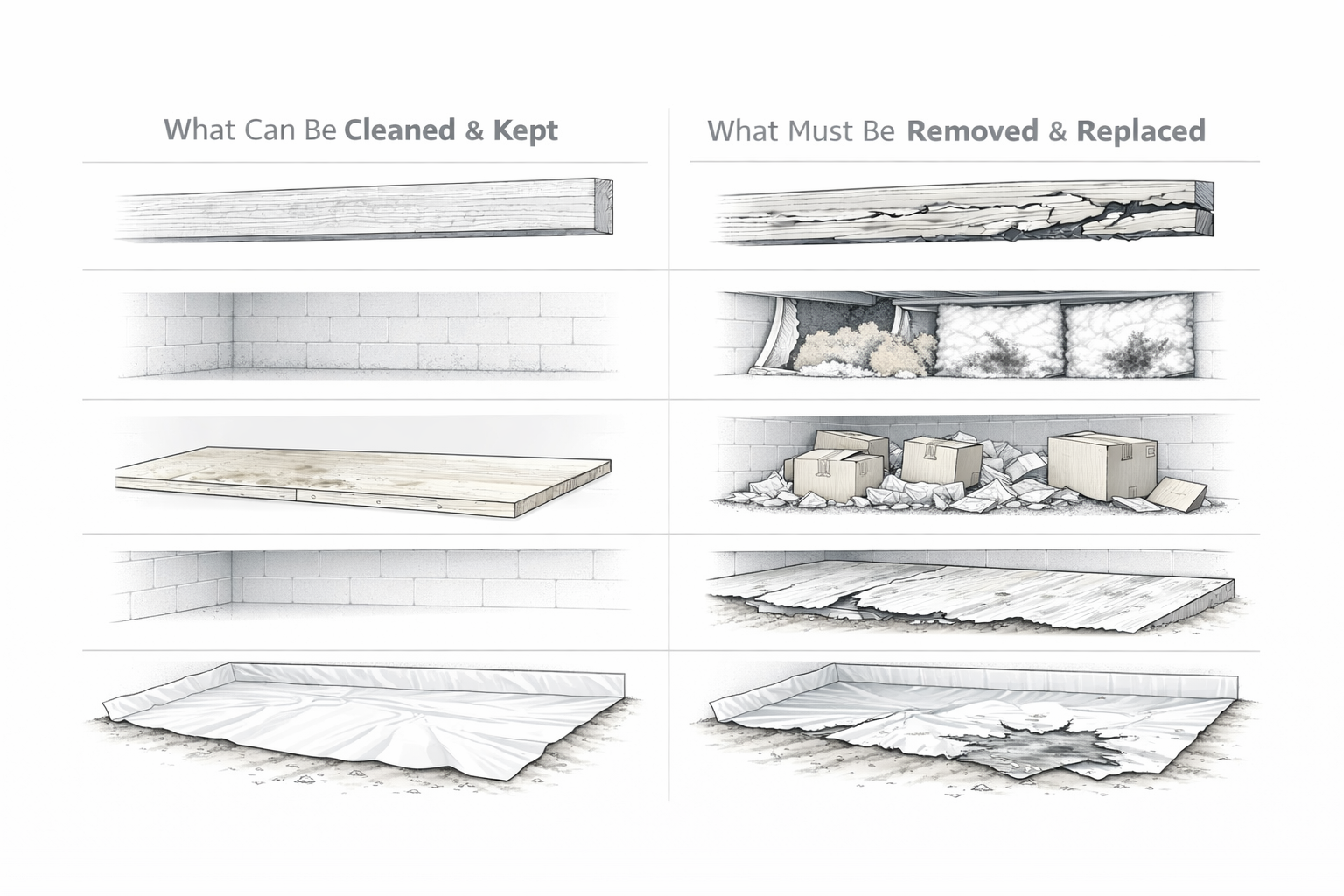
Illustration by ArchitectureCourses.org. Replacing crawl-space insulation usually starts with a simple triage decision: damaged insulation leaves, while the rest of the crawl has to earn the right to stay.
What might stay
This part is shorter.
Dry framing may stay. Plumbing and ducts may stay if they are not damaged. A good liner may stay if the real problem was above it or around it. Some rigid insulation in the right wall assembly may stay if it never got exposed to the kind of wetting that ruins the whole setup.
But if the insulation itself is wet and visibly failing, that is rarely the place to be sentimental.
The dumb repeat cost
This happens all the time. Old wet insulation comes out. The crawl still has the same damp soil, the same humid vent pattern, or the same storm-water path. New batts go in anyway because the owner wants the underside of the house to look finished.
For a little while it looks better. Then the new material starts sagging, darkening, and smelling like the old layer. People blame the product. Usually the crawl failed it again.
Fresh batts in the same wet crawl is one of the dumbest repeat costs in this whole category.
The insulation was never the main problem.
Replacing insulation in a vented crawl
This is the most common version.
The crawl is still vented. The floor above is still the thermal boundary. The replacement question is whether the crawl is dry enough and organized enough for floor insulation to work.
If the answer is yes, a like-for-like rebuild can make sense. But it still has to be done better than the old one. That means better support, better fit, less air leakage around penetrations, and less moisture loading from below.
If the crawl is still open, damp, and dirty, replacing the floor insulation without addressing ground moisture is usually a soft failure waiting to happen.
That is where crawl space vapor barriers, crawl space vapor barrier installation, and crawl space vapor barrier thickness guide fit naturally.
Replacing insulation in a more controlled crawl
If the crawl is already encapsulated or partly controlled and the insulation is still getting wet, the problem is usually more specific.
Maybe water is still entering. Maybe the crawl is only half-sealed. Maybe the wrong surfaces were insulated. Maybe the floor stayed insulated while the crawl was also being treated as semi-conditioned space. That awkward in-between setup shows up more than it should.
In a more controlled crawl, wall insulation usually makes more sense than rebuilding the old floor-only setup. If people keep insulating the floor while also trying to manage the crawl as a more stable protected space, they often end up with a system that never really behaves like either one.
If that is where the house is heading, the useful next reads are conditioned crawl space vs encapsulated crawl space and crawl space encapsulation.
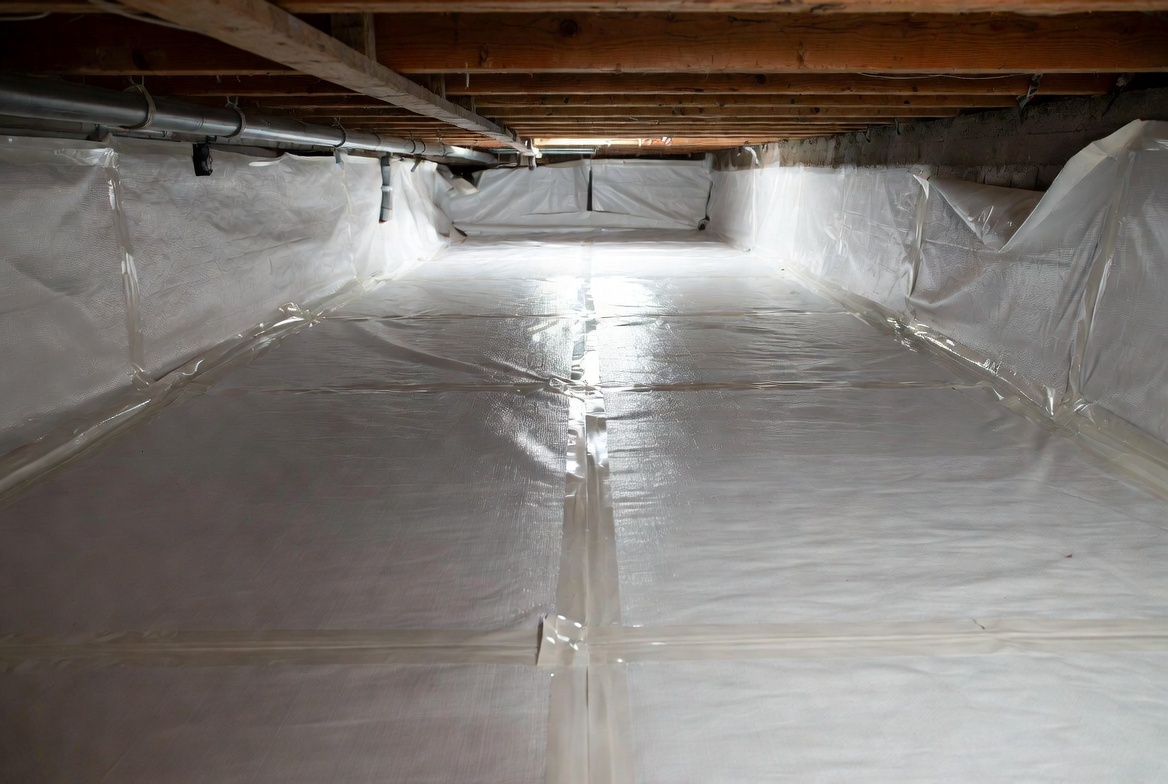
Image by ArchitectureCourses.org. New insulation lasts longer when the crawl below it has already moved into a cleaner, drier, more controlled state.
What goes back in?
The product choice matters, but less than people think.
Fiberglass batts can still work in a reasonably dry vented crawl with decent ground cover and proper support. In a bad crawl they become a dirt shelf.
Mineral wool batts usually hold up better than fiberglass in rougher conditions and fit more solidly, but they still do not want to live in an actively wet crawl.
Rigid foam board makes more sense on perimeter walls when the crawl is moving toward a sealed or controlled strategy.
Closed-cell spray foam can make sense in selected wall areas or awkward spots where air sealing matters, but it does not erase bad crawl logic. Expensive foam in a wet crawl is still expensive insulation in the wrong place.
Before new insulation goes back
Before any new material goes in, I would check these in this order:
- whether the crawl still gets water after rain
- whether the soil is still loading moisture into the air
- whether the crawl is staying vented or moving toward controlled space
- whether framing, ducts, and pipes are actually dry enough now
- whether the new insulation will sit in the right place for that crawl type
If those answers are still muddy, the crawl is not ready for replacement.
The smell question matters
If the old insulation smells bad, that is not just an insulation note. It often means the crawl has been wet or humid long enough for the odor to build and move upward.
That is why crawl-space insulation replacement often overlaps with smell complaints inside the house. The insulation is not always the whole smell source, but it becomes part of the air path once it stays wet and dirty long enough.
If that is already happening, go to why does my crawl space smell in the house and crawl space mold remediation.
What this usually costs
The insulation itself is rarely the whole bill once the crawl is wet.
Removal, cleanup, odor work, liner repair or upgrade, drainage corrections, and better crawl control can matter just as much. Sometimes much more.
If the real question has become system cost instead of material cost, use cost to encapsulate a crawl space, cost to install a crawl-space vapor barrier, or cost to install a sump pump in a crawl space, depending on what the crawl actually needs next.
What to do next
If the crawl gets wet after storms, go next to water in a crawl space after rain.
If the crawl stays damp and stale even when there is no visible flooding, use crawl space humidity.
If the insulation is wet because the crawl smells bad, the framing is stained, or the material already looks contaminated, go to crawl space mold remediation.
If the next question is whether the crawl should stay basic or move toward a sealed controlled setup, use crawl space encapsulation vs vapor barrier only.
If the crawl is already at the soil-control stage, use crawl space vapor barriers and crawl space vapor barrier thickness guide.
FAQ
Should wet crawl-space insulation be removed?
Usually, yes. If it is soaked, moldy, dirty, sagging, or clearly failing, removal is usually the cleaner decision.
Can wet fiberglass insulation dry out under a house?
Sometimes it can dry. That does not mean it is still worth keeping. Once it is dirty, sagging, or holding odor, replacement is often the practical answer.
Does replacing the insulation fix the problem?
Only if the crawl conditions are good enough now to keep the new insulation dry.
What is the best replacement for wet crawl-space insulation?
That depends on what kind of crawl you have after the moisture problem is corrected. In a drier vented crawl, a supported batt system may still work. In a more controlled crawl, wall insulation may make more sense than rebuilding the old floor-only setup.
Can wet crawl-space insulation make the house smell?
Yes. Especially when the crawl is humid, dirty, or pushing air upward through floor penetrations.
Should I reinsulate right away after removal?
Only after you know why the old insulation got wet and you are sure the crawl is dry enough for the next layer to last.