
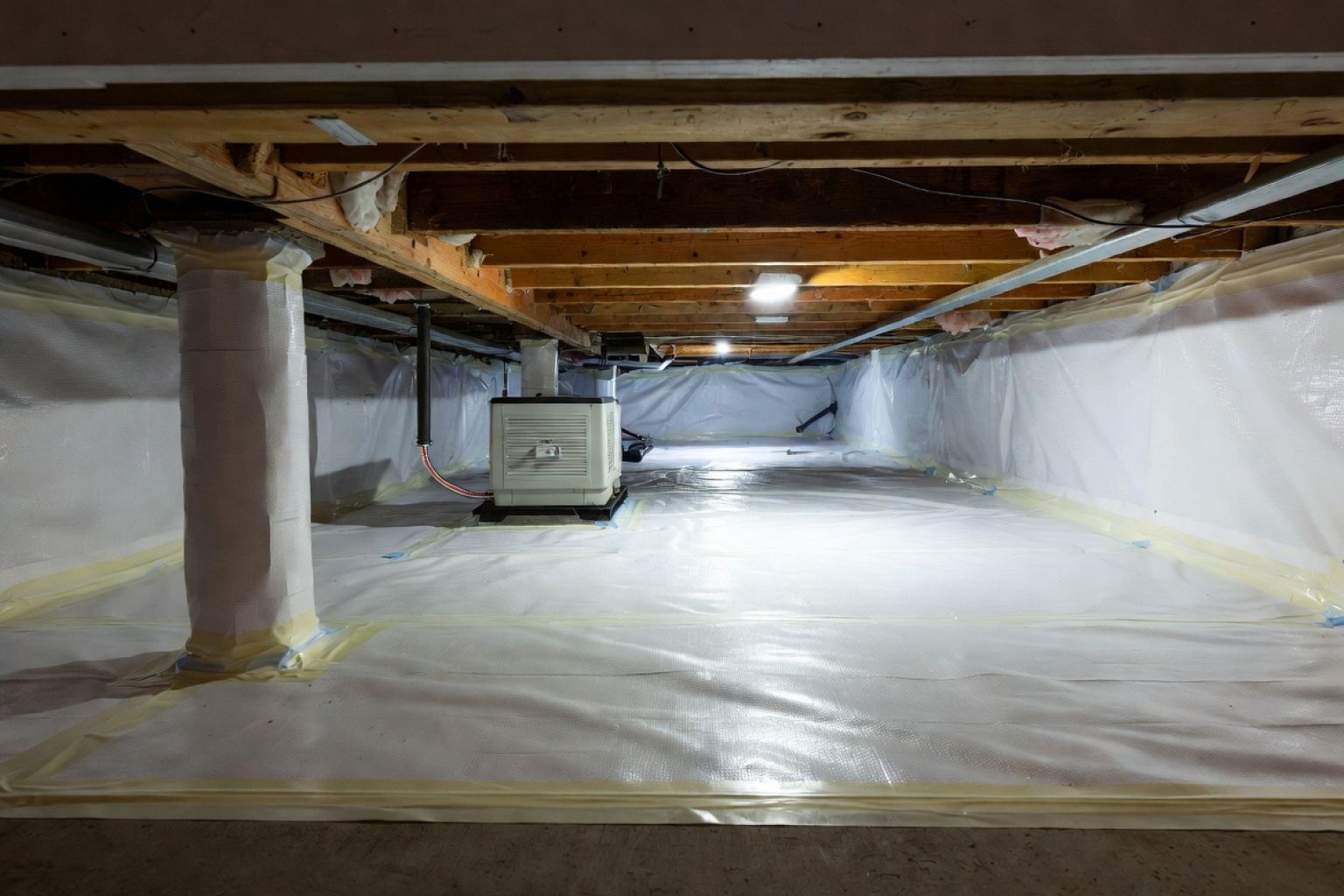

Crawl space encapsulation pricing gets messy for one reason: people keep comparing three different jobs as if they are one number.
A ground vapor barrier is one job. Full encapsulation is another. A wet crawl with drainage, sump work, mold cleanup, and a dehumidifier is a different budget again.
This page stays on the money side. It covers price ranges, what changes the quote, when encapsulation is worth it, and when it is the wrong fix.
Also useful: Crawl Space Encapsulation Done Right: Moisture First, Air Second covers the full system. Crawl Space Encapsulation vs Vapor Barrier Only is the better page if you are still deciding which job you even need.
Start With the Scope
The first pricing problem is simple: what exactly are you buying?
| Job Type | What It Usually Includes | What It Often Leaves Out |
|---|---|---|
| Vapor Barrier Only | Ground liner over exposed soil | Sealed vents, wall liner, pier wraps, drainage, dehumidifier, major cleanup |
| Basic Encapsulation | Ground liner, wall attachment, sealed vents, taped seams | Drainage work, sump system, major mold cleanup, structural repairs |
| Full Encapsulation System | Liner, sealed vents, wall and pier work, dehumidifier, moisture-control plan | Sometimes drainage upgrades, sump pump replacement, major repair work |
A cheap-looking quote is often just the smallest version of the job.
2026 Price Ranges by Crawl Space Size
These are planning ranges, not promises. Access, standing water, old insulation, drainage problems, and local labor can move the number fast.
| Crawl Space Size | Vapor Barrier Only | Basic Encapsulation | Full System With Higher Moisture Load |
|---|---|---|---|
| 800 sq ft | $1,600-$3,200 | $2,400-$5,600 | $4,000-$8,000 |
| 1,200 sq ft | $2,400-$4,800 | $3,600-$8,400 | $6,000-$12,000 |
| 1,600 sq ft | $3,200-$6,400 | $4,800-$11,200 | $8,000-$16,000 |
The right-hand column is where people get surprised. That is the range where the crawl is not just damp from exposed soil. It has water-management or cleanup problems too.
What Changes the Price
Square footage matters. It is not the only thing that matters.
| Cost Driver | Lower-Cost Version | Higher-Cost Version |
|---|---|---|
| Access | Tall, open crawl space | Low, tight, hard-to-move crawl |
| Moisture Condition | Damp soil, no standing water | Water intrusion, wet insulation, high humidity, mold smell |
| Liner Scope | Ground only | Ground, walls, piers, sealed seams, sealed vents |
| Drainage | No drainage work needed | Interior drain line, sump basin, sump pump, discharge work |
| Drying Plan | No dedicated equipment | Dehumidifier and electrical setup |
| Prep Work | Clean crawl, little debris | Mold cleanup, insulation removal, pest damage, repair prep |
This is why two houses with similar crawl space area can have very different quotes.
What a Cheap Quote Usually Leaves Out
- Drainage work. If water is still entering the crawl, liner alone is not a fix.
- Sump pump work. Some quotes assume the pump is already there and working.
- Dehumidifier. A sealed crawl still needs a humidity-control plan.
- Old insulation removal. Wet or fallen insulation adds labor and disposal cost.
- Mold cleanup. Smell and staining are often treated like side notes until the quote is written properly.
- Pier wrapping and wall detail work. These details are part of a better system, not a basic liner job.
- Electrical work. Dehumidifiers and pumps do not run on good intentions.
A cheap quote can still be fair. It is only fair if it matches the problem you really have.
Vapor Barrier Only vs Full Encapsulation
| Use This When | Avoid This When |
|---|---|
| Vapor Barrier Only Exposed soil is the main issue, the crawl is still manageable, and you are not trying to fully seal the space |
Standing water, strong mold smell, wet walls, bad vents, or a crawl that clearly needs full moisture and air control |
| Full Encapsulation You need sealed vents, full liner continuity, humidity control, and a cleaner long-term crawl space system |
You still have active water entry and are trying to use encapsulation to hide it |
Worth knowing: if you are still stuck on liner thickness, use Crawl Space Vapor Barrier Thickness Guide before you pay more for plastic and call that the whole strategy.
When Encapsulation Is Worth the Money
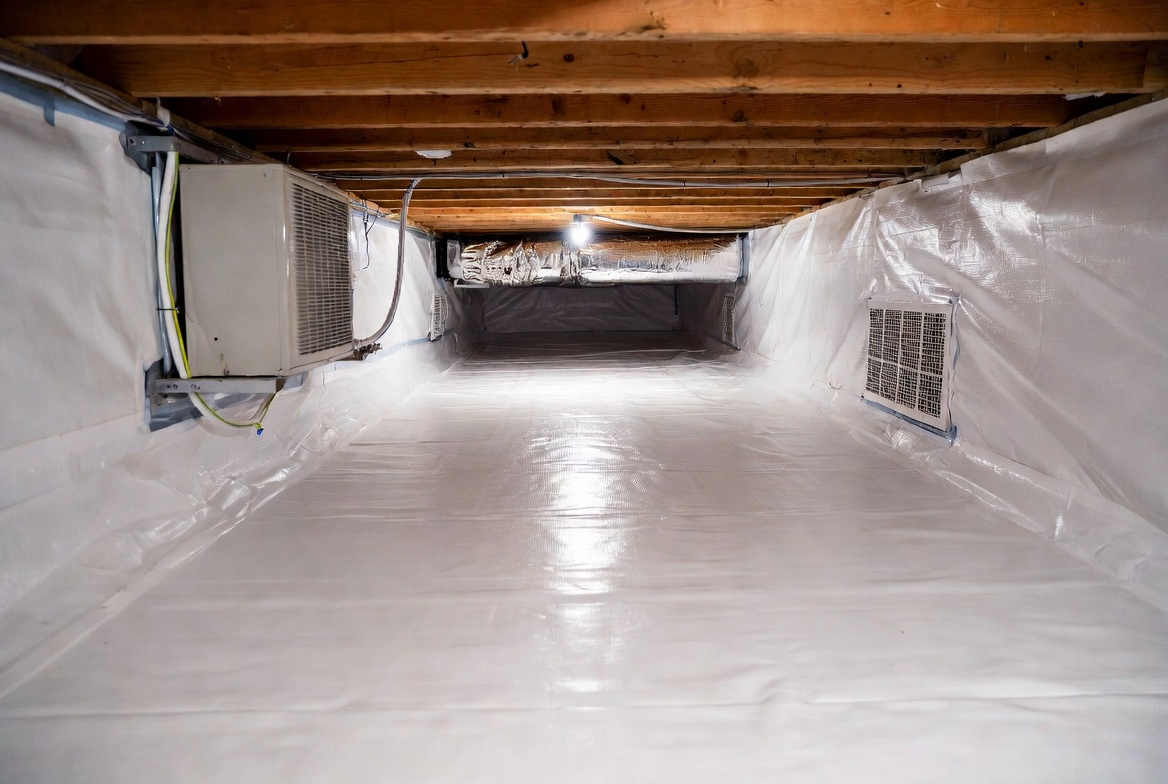
Image by ArchitectureCourses.org. Encapsulation starts to make financial sense when crawl-space moisture is affecting the floor system, air, and equipment above.
Encapsulation is worth it when the crawl space is part of a bigger moisture problem, not just a dirty space under the house.
It tends to make sense when:
- the house has repeated high crawl-space humidity
- the floors feel damp or smell musty
- ductwork and framing are living in wet air
- the crawl is vented and still performs badly
- you already know ground vapor is loading the house
- you want a sealed, controlled crawl space, not a seasonal guess
It is easier to justify when the crawl space is affecting the house above it, not just the dirt below it.
When Encapsulation Is the Wrong Fix
Encapsulation is the wrong first move when bulk water is still getting in.
It is also the wrong move when:
- downspouts and grading are still dumping water at the foundation
- there is standing water and no drainage plan
- there is plumbing leakage that has not been fixed
- you are using liner to avoid repair work the crawl clearly needs
If the crawl is wet because water is entering, fix the water path first. Otherwise you are packaging a wet problem, not solving it.
Spend Here, Not Here
| Spend Here | Not Here | Why |
|---|---|---|
| Drainage and water control | A thicker liner before fixing water entry | The best plastic in the world does not stop active intrusion |
| Seam sealing and continuity | Paying extra for a flashy sales package | System quality matters more than brochure language |
| Humidity control plan | Assuming a sealed crawl will dry itself | Sealed space without control can still stay damp |
| Access-area cleanup and prep | Skipping old wet insulation because removal costs money | Bad prep leaves the crawl dirty and undercuts the whole job |
Regional Cost Reality
This is mostly a U.S.-driven service category. Crawl space encapsulation is most common in humid and mixed-humid parts of the country, especially the Southeast and parts of the Mid-Atlantic.
That matters because regional labor, crawl-space prevalence, and contractor depth all change the quote.
- Southeast: often the most common market for encapsulation, with more contractor competition but also more houses that need full systems
- Mid-Atlantic: strong demand in many markets, especially older houses with vented crawls and moisture issues
- Midwest and Northeast: crawl spaces still exist, but not every market has the same contractor depth or the same pricing norms
- Canada: less universal as a standard service page category than in the U.S.; damp crawl spaces and liners still exist, but full encapsulation is not pushed the same way in every market
The safest move is to treat national averages as planning numbers, then price your house locally.
FAQ
How much does it cost to encapsulate a crawl space in 2026?
A lot of jobs still land in the broad range of about $3,000 to $15,000, with many average-size full jobs clustering around the mid-thousands. The quote climbs fast when drainage, cleanup, or dehumidification enter the scope.
What is a fair price for vapor barrier only?
Installed ground liner only often lands around $2 to $4 per square foot, depending on access and crawl condition. That is not the same thing as full encapsulation.
What makes the price jump the fastest?
Standing water, drainage work, sump pump work, tight crawl access, old insulation removal, mold cleanup, and full sealed-system scope.
Is encapsulation worth it?
It is worth it when the crawl space is driving humidity, smell, or moisture damage in the house. It is a bad investment when bulk water is still entering and nobody is fixing the source.
Is thicker plastic the same as full encapsulation?
No. Thickness matters for durability, but thickness alone does not create a sealed crawl space system.
Do I need a dehumidifier if I encapsulate?
Many sealed crawl spaces need one, or at least a clear humidity-control plan. Closing the vents does not remove moisture by itself.
Can encapsulation fix standing water?
No. Standing water needs drainage or source correction first. Encapsulation comes after that, not before.
Why do quotes vary so much?
Because the word encapsulation gets used for very different scopes. Some quotes are just liner jobs. Others include drainage, pumps, cleanup, and a full sealed crawl system.