


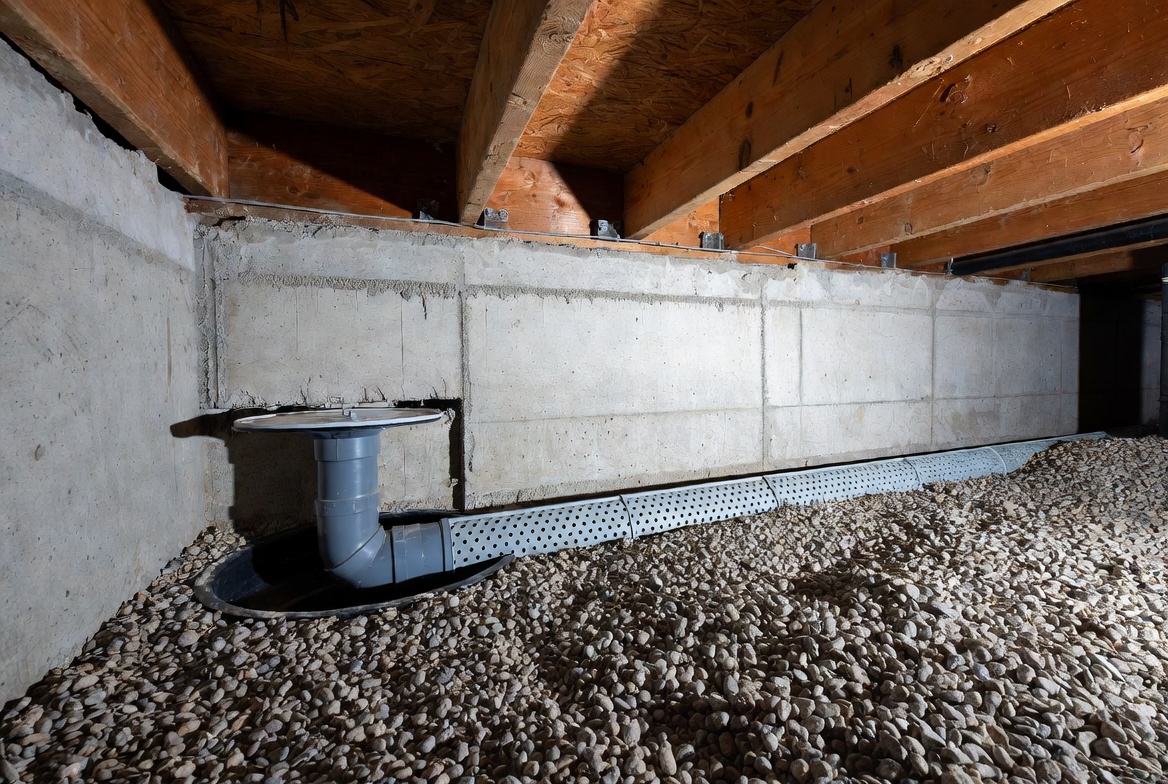
Image by ArchitectureCourses.org. Interior crawl space drainage pipe running through gravel into a sump basin.
Inside Perimeter Drain + Sump
A wet crawl space usually does not need one magic product. It needs the water path broken.
That is where drainage earns its place. If water keeps reaching the crawl after rain, groundwater stays high, or the crawl sits low and keeps taking on moisture, a drainage system may be part of the fix.
It is not the answer for every damp crawl, and it does not replace sealing, vapor control, or other moisture steps.
If you need the main crawl-space moisture map first, start with Crawl Space Vapor Barriers and Vent Covers: What Works, What Backfires. If the real question is whether the crawl needs a full sealed system or a simpler ground-cover approach, go to Crawl Space Encapsulation vs Vapor Barrier Only.
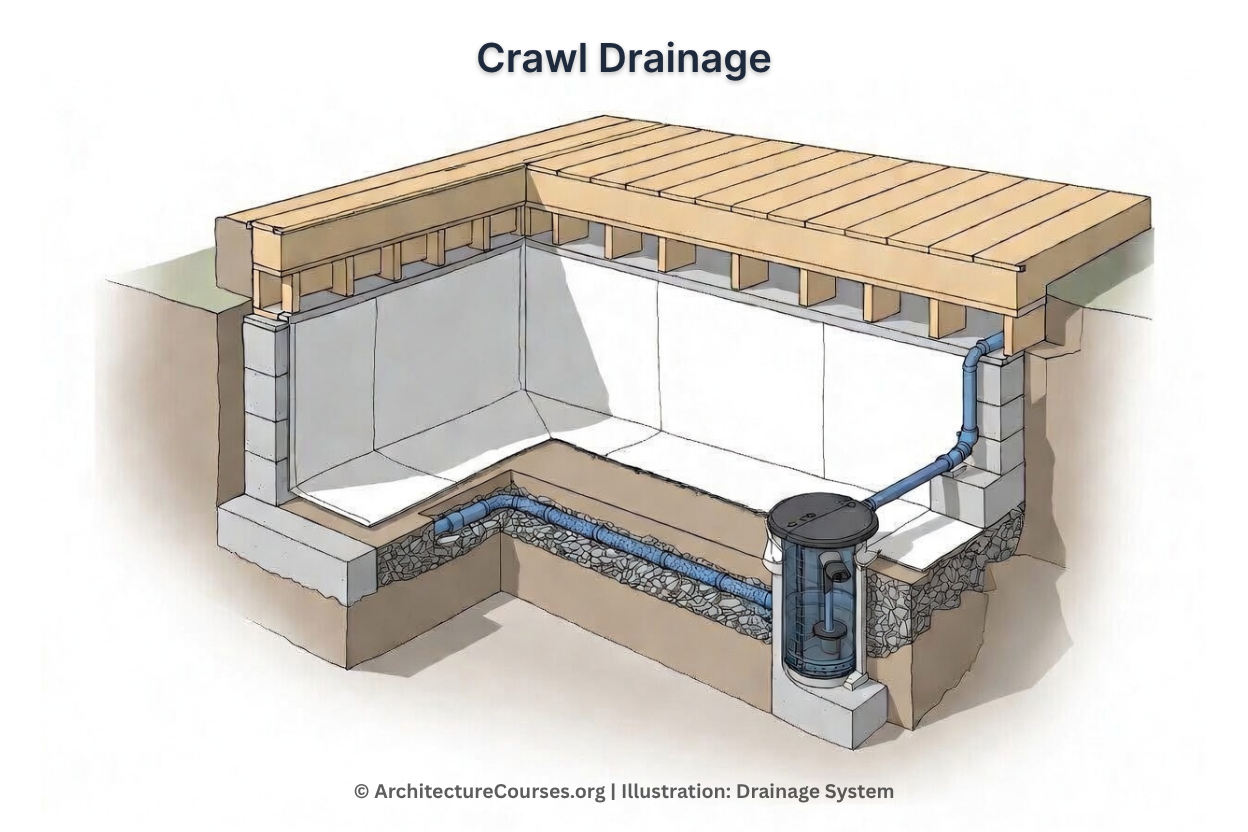
Illustration by ArchitectureCourses.org. Cutaway crawl space drainage system showing the interior perimeter trench, perforated drain pipe in washed stone, sump basin, discharge line, and encapsulation liner.
What Water Are You Dealing With?
The first question is not, “Do I need a drain?”
The first question is: what water am I trying to control?
| What You Are Seeing | What Usually Helps Most | What a Drainage System Will Not Fix by Itself |
|---|---|---|
| Standing water after rain | Drainage path plus discharge, often with a sump | Bad grading and downspouts still dumping at the house |
| Wet wall base or seepage at the crawl perimeter | Perimeter drainage and outside water control | Failed wall details or cracks that still need repair |
| Bare wet soil but no major ponding | Ground vapor control, sometimes drainage, sometimes both | A missing or weak vapor barrier |
| High humidity in a mostly dry crawl | Moisture strategy first, drainage only if water is really entering | A dehumidifier sizing problem or open crawl vents |
| Musty odor in the house | Diagnosis first, then drainage if bulk water is part of the cause | Mold, insulation damage, liner failure, or air leakage by themselves |
A drainage system is for moving water away from the crawl-space problem zone. It is not a substitute for every other crawl-space decision.
When a Drainage System Is the Right Call
You are in real drainage territory when one or more of these keep happening:
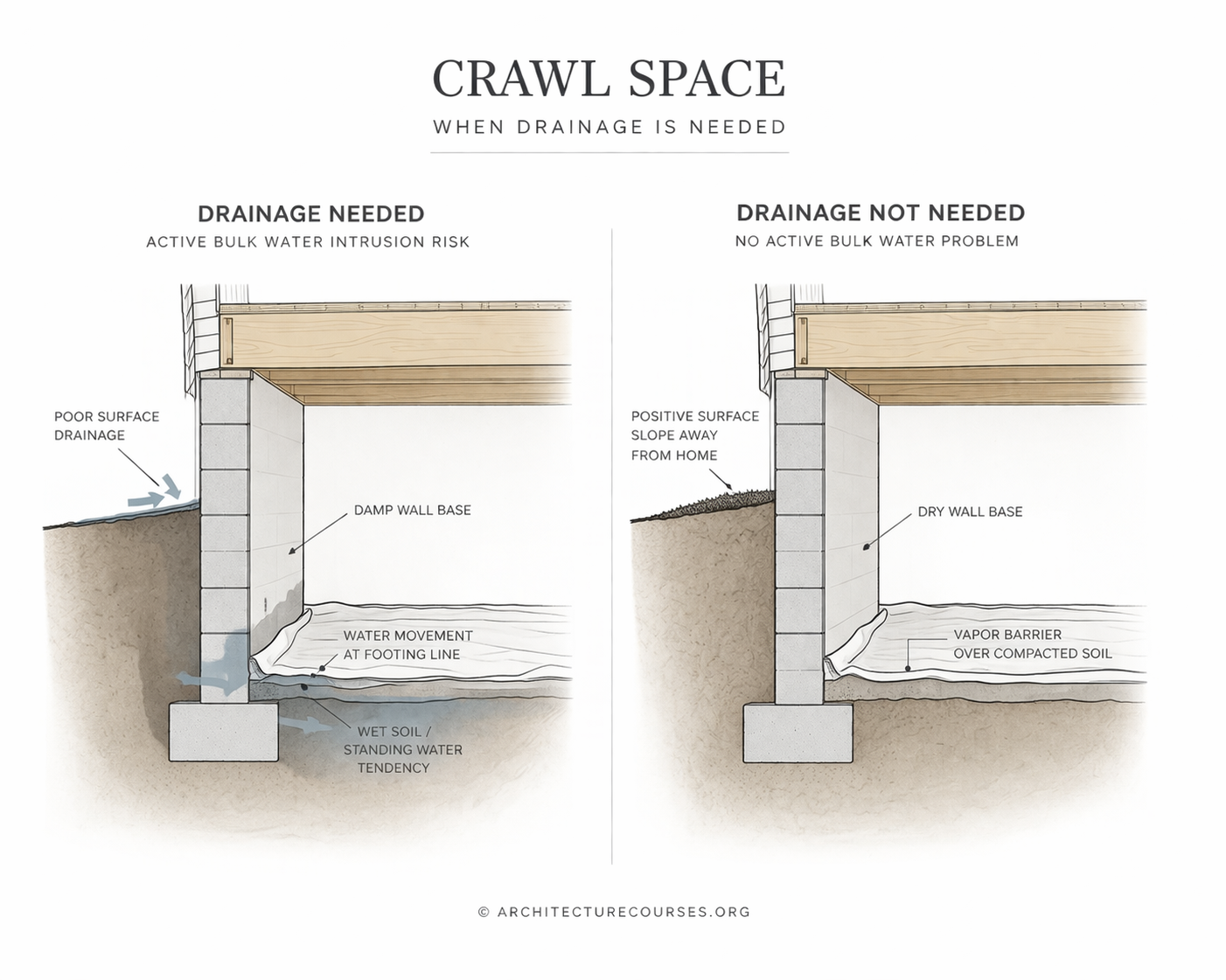
Illustration by ArchitectureCourses.org. Side-by-side comparison shows a crawl space with active bulk water risk versus a crawl space with no active bulk water problem.
- water shows up on the crawl floor after storms
- the wall base stays wet or muddy
- the crawl sits lower than the surrounding outside grade and keeps taking on water
- the vapor barrier is getting wet from below, not just from room air moisture
- a dehumidifier keeps working hard but the crawl still reloads after rain
- the crawl smells damp because the assembly is staying wet, not just humid
If the crawl is mostly dry and the problem is mainly high air humidity, drainage may not be the first move. In that case, start with Crawl Space Humidity: What’s Normal, High, and Dangerous? and Can You Use a Dehumidifier in a Crawl Space Without Encapsulation?.
What a Crawl Space Drainage System Includes
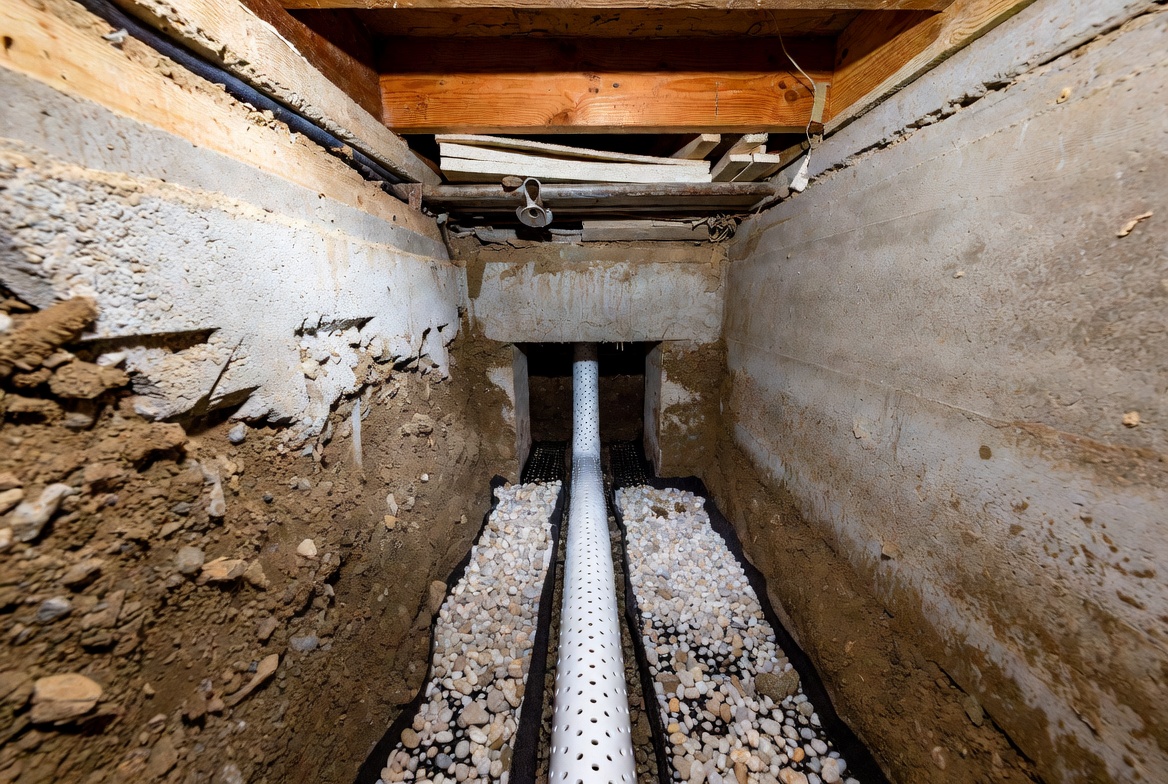
Image by ArchitectureCourses.org. Interior crawl space drain trench with perforated pipe and washed stone leading water away from the wet perimeter.
| Part | What It Does | Why It Matters |
|---|---|---|
| Perimeter drain or interior drain path | Collects water at the crawl edge or low point | Stops water from sitting against the crawl perimeter |
| Gravel or drainage layer | Gives water a path to move | Keeps the pipe or collection zone from turning into mud |
| Filter fabric where needed | Helps keep fines out of the drainage path | Reduces clogging over time |
| Sump pit and pump | Collects and removes water when gravity is not enough | Often needed on flatter sites or lower crawl spaces |
| Discharge line | Sends the water away from the house | No point collecting water if you dump it back beside the foundation |
| Ground vapor barrier or liner | Covers exposed soil after water is controlled | Drainage does not replace vapor control |
| Grading and roof-water correction | Reduces how much water reaches the crawl in the first place | Outside water still has to be managed outside |
That is why this is a system, not one pipe and a pump ad.
How an Interior Crawl Space Drainage Trench Is Built
A lot of people hear “crawl space drainage system” and picture one pipe and one sump pump. That is not really the system.
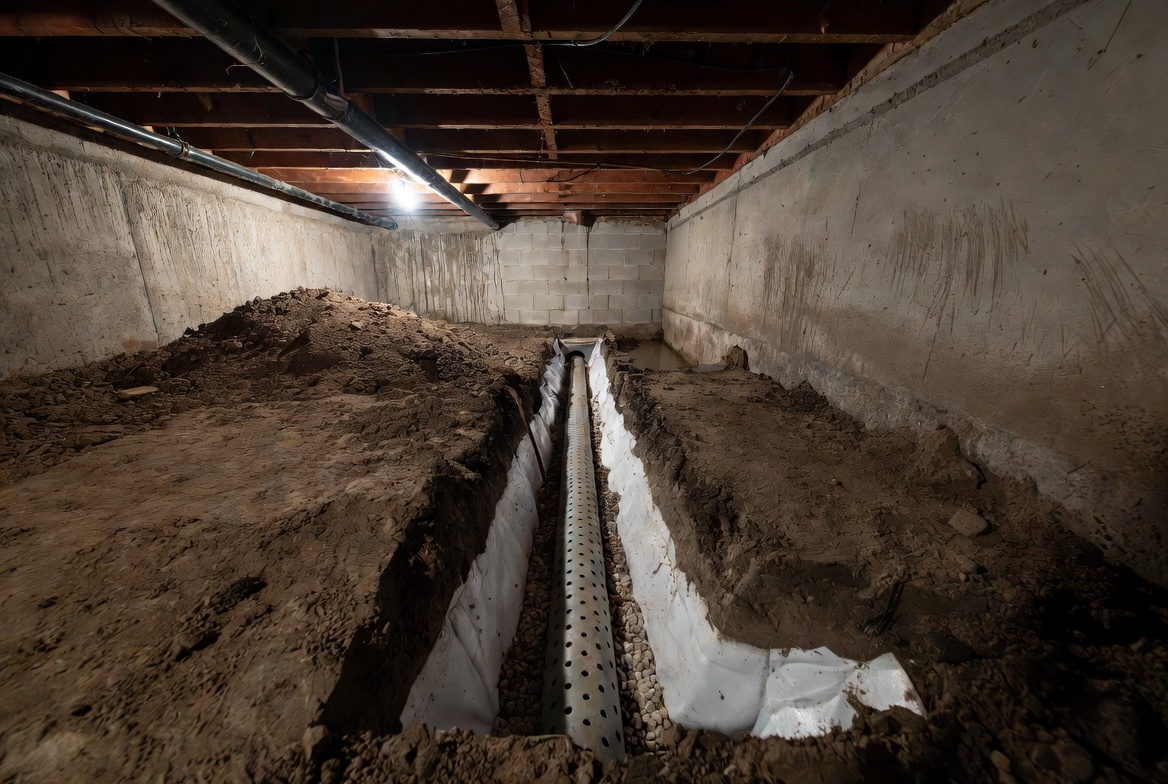
Image by ArchitectureCourses.org. Interior crawl space drainage trench with perforated pipe installed in gravel along the footing line.
In many wet crawls, the interior setup is a shallow trench cut along the inside perimeter, or along the part of the crawl where water keeps showing up. The trench creates a path for water to move instead of sitting at the wall base or spreading across the soil.
The exact build changes by crawl, but the basic idea stays the same: collect the water, give it a clean path, and move it to a discharge point before it can keep loading the crawl.
| Part | What It Does | What Usually Goes Wrong |
|---|---|---|
| Interior perimeter trench | Creates a collection path along the inside crawl edge. | Too shallow, uneven, or not actually routed to a real outlet. |
| Gravel or drainage stone | Keeps water moving and helps keep the trench from turning into mud. | Too little stone or dirty fill that clogs fast. |
| Perforated drain pipe where used | Collects water and carries it toward the sump or discharge point. | Wrong slope, bad outlet, or pipe sitting in fines instead of drainage stone. |
| Filter fabric where needed | Helps keep soil from washing into the drainage layer. | Skipped where fines are a problem, or wrapped badly so flow gets restricted. |
| Sump pit or outlet connection | Gives the collected water somewhere to go. | Water gets collected but still has no real discharge plan. |
| Ground liner returned over the system | Helps control ground moisture after bulk water is managed. | Drainage gets installed but the crawl still has exposed wet soil. |
In a gravity system, the trench and pipe run toward a real downhill discharge point. In a sump system, the trench feeds collected water toward the sump basin, and the pump sends it out. Either way, the trench is only doing its job if the water has a complete path out.
This is also where bad installs show up. The trench looks finished. The pump is in. But the stone is weak, the pipe sits in mud, the outlet is poor, or the discharge still dumps beside the house. That is not a working drainage system. That is a wet crawl with more parts in it.
What Drainage Does Not Fix
This is where people spend money and still stay disappointed.
- It does not fix open vents in a crawl that should be sealed.
- It does not replace a missing or badly installed ground vapor barrier.
- It does not correct bad grading or short downspouts by itself.
- It does not erase moldy insulation or damaged wood already in the crawl.
- It does not make a badly planned encapsulation system work.
- It does not fix wall cracks or outside waterproofing failures on its own.
Drainage is often the right fix. It is just rarely the only fix.
Fix Exterior Water First
If roof water is dumping beside the foundation, or the grade still runs toward the crawl, fix that first. A lot of crawl-space drain systems get asked to do a yard-drainage job they were never meant to do.
This is where people waste money. They put a sump in the crawl and leave the downspouts terminating beside the house. Now the pump is just proving the site is still bad.
If the perimeter water picture is weak, go to Exterior Foundation Waterproofing after this.
Gravity Drain or Sump Pump?
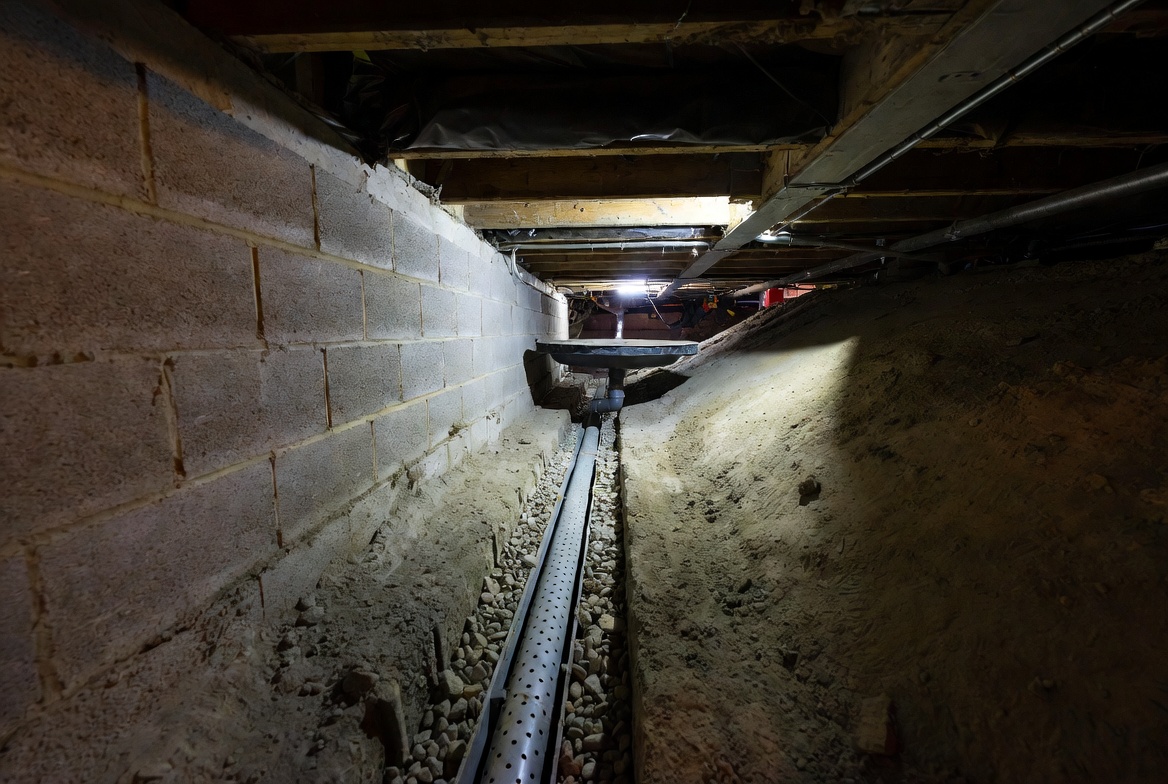
Image by ArchitectureCourses.org. Interior perimeter drain line carries water through a crawl space trench toward collection and discharge.
Not every crawl-space drainage system needs a sump pump. Some can drain by gravity. Some cannot.
| Situation | Gravity Drain May Work | Sump Pump Often Makes Sense |
|---|---|---|
| The site has a real downhill discharge path | Yes | Not always needed |
| The crawl is low and the site is flat | Sometimes not | Often yes |
| Water keeps collecting below the discharge level | No | Usually yes |
| You are retrofitting an existing wet crawl with no clean gravity route | Sometimes hard to achieve | Often the practical answer |
If the next question is money, use Cost to Install a Sump Pump in a Crawl Space.
Use This / Avoid This
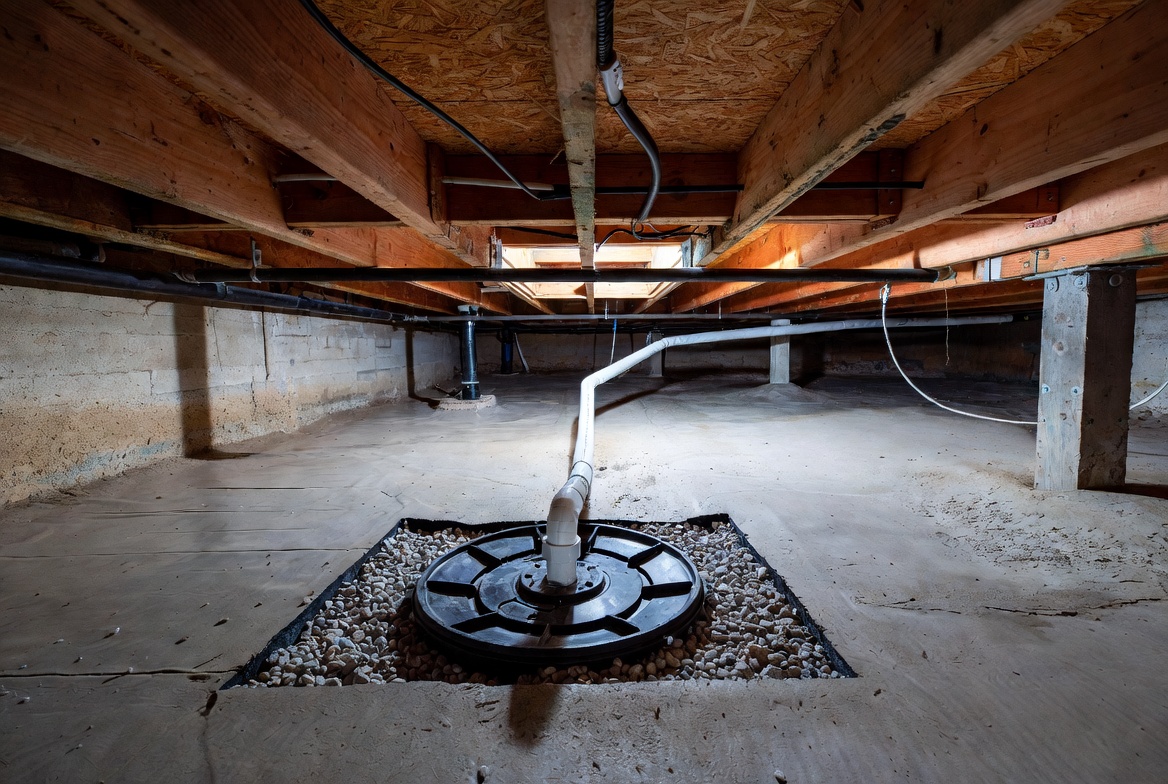
Image by ArchitectureCourses.org. Sump basin, sealed liner, and interior drainage work together to control crawl space water.
| Use This | When | Avoid This | When |
|---|---|---|---|
| Crawl-space drainage system | Water is really entering or loading the crawl after rain | Crawl-space drainage system as the first move | The crawl is mostly dry and the main problem is air humidity |
| Drainage plus vapor barrier | The crawl has bulk water and exposed earth | Drainage without ground cover | The crawl will still evaporate moisture from bare soil |
| Drainage plus sump | Gravity discharge is weak or impossible | Drain only | The water still has nowhere to go |
| Drainage plus outside grading fixes | Roof runoff and site slope still feed the perimeter | Drainage as a substitute for grading | The house is still being loaded by outside water |
Where Drainage Jobs Fail
Most failed crawl-space drainage jobs go wrong in the same places:
- no real discharge plan
- the pipe sits in mud instead of a real drainage layer
- the sump dumps too close to the house
- the crawl still has bare wet earth after the drain goes in
- the outside grade still drives water at the same foundation line
- the crawl needed sealing and liner continuity too, not just drainage
If the crawl still smells off after the water work, use Why Does My Crawl Space Smell in the House?.
Quick Checklist
- Check whether the crawl gets water after rain or only stays humid.
- Fix grading and downspout discharge before asking the crawl to solve a yard problem.
- Decide whether gravity can remove the water or a sump is needed.
- Cover exposed earth after drainage is handled.
- Do not confuse drainage with full encapsulation.
- Do not buy a dehumidifier first if the crawl still takes on bulk water.
- Keep the discharge path away from the house.
Read This Next
This part matters. If you are still deciding between a simple ground-cover job and a full closed system, go to Crawl Space Encapsulation vs Vapor Barrier Only.
Also useful. If the crawl is mostly dry but still trending damp, use Crawl Space Humidity: What’s Normal, High, and Dangerous? and Best Crawl Space Hygrometers and Humidity Monitors.
Before you move on. If the next decision is moisture equipment, go to What Size Crawl Space Dehumidifier Do You Need? and Best Crawl Space Dehumidifiers.
FAQ
What is a crawl space drainage system?
It is a water-control setup that collects and moves water away from the crawl-space problem zone. That may include perimeter drainage, gravel, a sump pit and pump, discharge piping, and ground vapor control above the soil.
Do all wet crawl spaces need drainage?
No. Some mostly need better grading, downspout discharge, and a proper vapor barrier. But if water is really entering or ponding, drainage becomes much more likely.
Can a sump pump fix a wet crawl space by itself?
No. It can remove collected water. It does not replace grading, vapor control, sealing, or every other moisture fix the crawl may still need.
Do I need both a vapor barrier and drainage?
Often yes when the crawl has both bulk water and exposed soil moisture. Drainage controls the water path. The barrier controls the ground vapor.
What is the biggest mistake with crawl-space drainage?
Installing the drain and leaving the site still feeding water at the foundation, or skipping the ground-cover and sealing work the crawl still needs.
Can I DIY a crawl-space drainage system?
Sometimes on a simple crawl with clear access and a clear discharge plan. Once the crawl is low, badly wet, or needs a sump and electrical work, professional help starts making more sense.
Official sources
- EPA: A Brief Guide to Mold, Moisture and Your Home
- EPA: Mold Course Chapter 2
- Building America Solution Center: Crawlspaces
- Building America Solution Center: Pre-Retrofit Assessment of Crawlspaces and Basements
- Building America Solution Center: Insulation for Existing Crawl Space Floors
- Building Science Education Center: Stormwater Gutters and Downspouts