


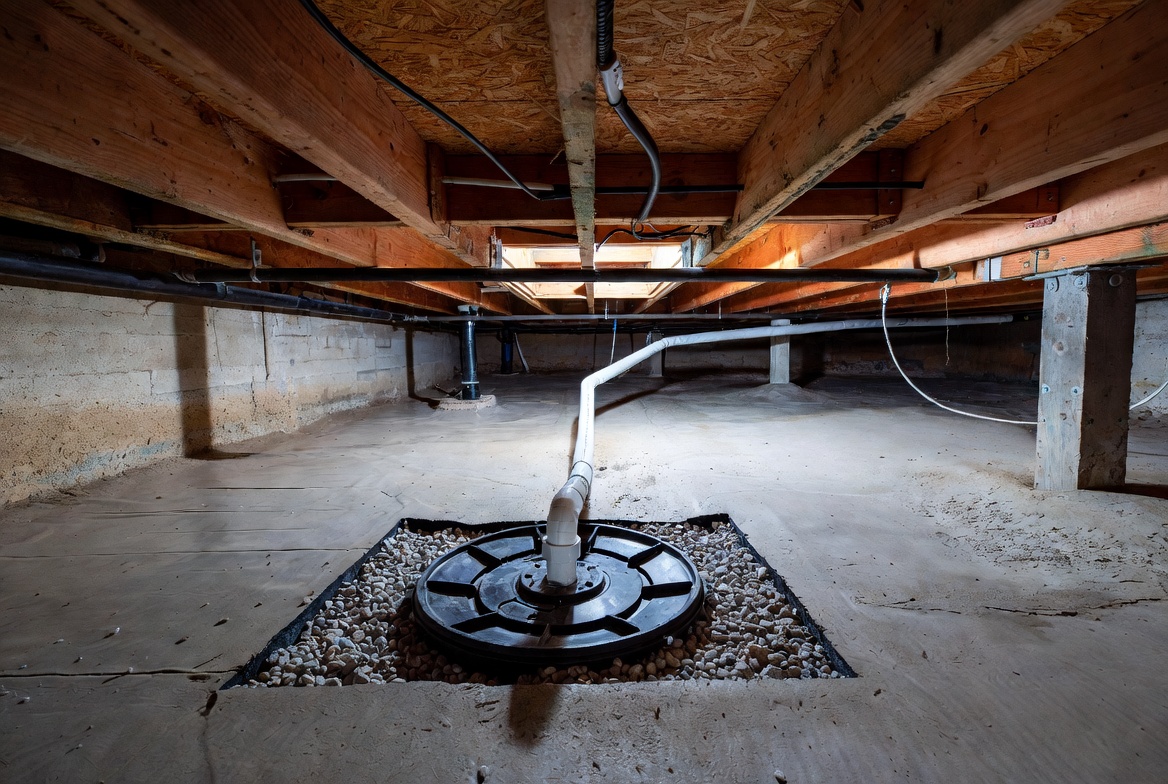
A crawl-space sump pump gets expensive when the quote stops being just a pump.
The pump itself is often the easy part. The cost usually comes from the basin, discharge line, drainage tie-in, electrical work, backup protection, and the fact that the work is happening in a tight, dirty crawl space instead of an open basement.
That is why sump pump quotes can be all over the place. One price is for swapping a pump into an existing pit. Another includes a new basin and discharge run. Another is really a drainage job with a sump pump included.
Start with scope first. Not pump price. The real question is what the crawl space needs.
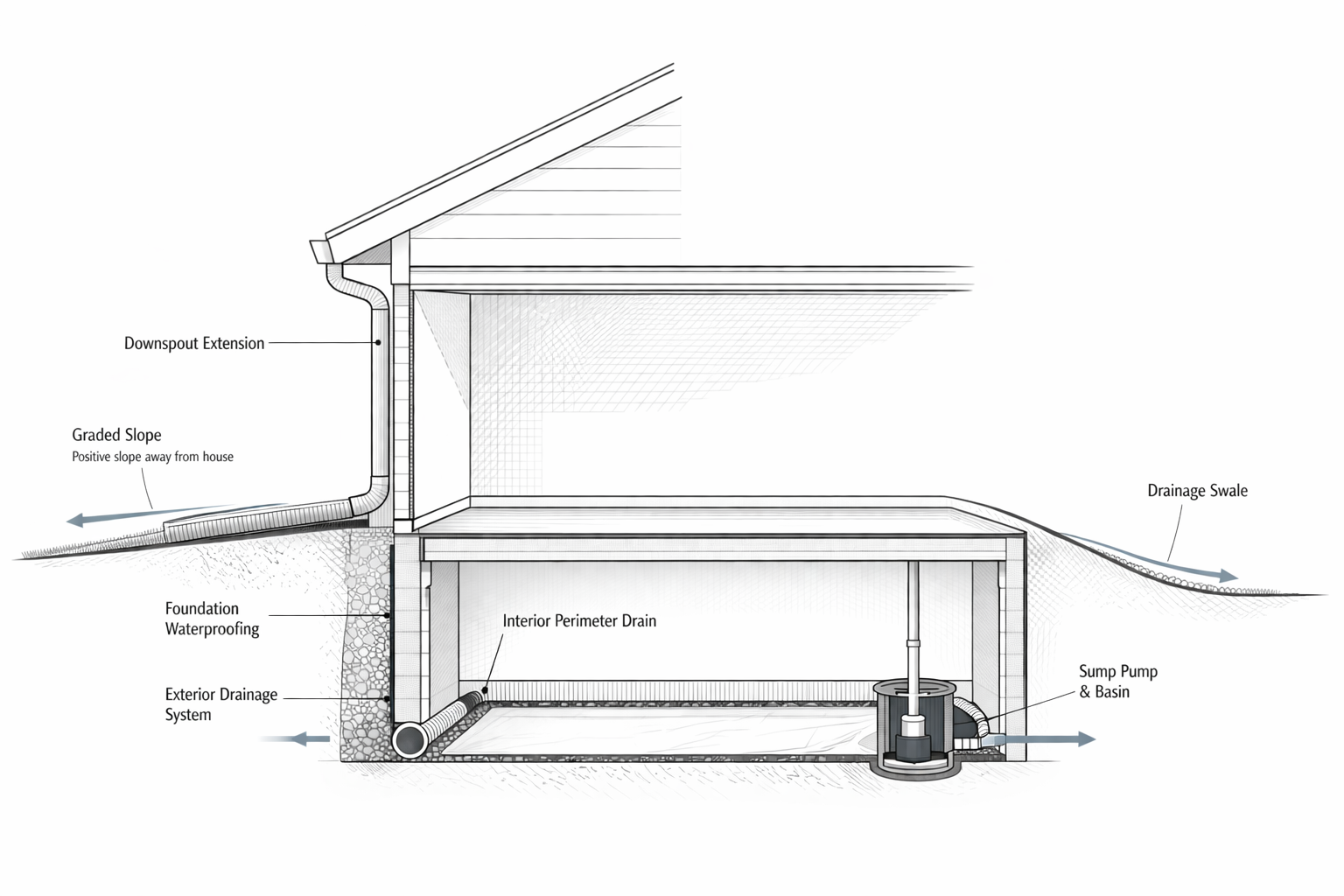
Illustration by ArchitectureCourses.org. Section diagram showing how exterior runoff control, perimeter drainage, and a sump basin work together around a crawl-space foundation.
Typical Price Ranges
For planning purposes, a straightforward crawl-space sump pump installation often lands in the $1,500 to $4,000 range when the work is genuinely crawl-space specific and not just a simple basement pump swap. Broader national sump-pump installation averages across all house types often land lower, around $600 to $2,500, but crawl-space jobs trend upward because access is worse, the floor may be dirt, drainage tie-ins are common, and discharge routing is often less convenient. Once the pump is tied to a new interior drainage system, the total can move much higher.
| Job Type | Typical Range | What That Usually Includes | What It Often Does Not Include |
|---|---|---|---|
| Replace an existing crawl-space sump pump | $650 to $2,100 | New pump in an existing pit, basic reconnection, basic testing | New pit, drainage trenching, major discharge rerouting, backup system |
| Install a new sump pump in an existing drainage setup | $1,500 to $2,500 | Pump, basin or tie-in, check valve, basic discharge connection | Large drainage work, battery backup, electrical upgrades |
| New crawl-space sump pump with new basin and discharge | $1,500 to $4,000 | New pit, pump, lid, piping, discharge routing, labor in difficult access | Full interior perimeter drain, major cleanup, encapsulation |
| Sump pump plus interior drain system | $4,000 to $15,000+ | Perimeter drain, collection path, basin, pump, discharge | Encapsulation, structural repair, extensive mold cleanup |
| Add battery backup or combo system | Add $600 to $2,000+ | Backup pump or battery system, controls, some alarm features | Whole-home generator, larger drainage redesign |
The Pump Is Not the Whole Job
This is the part people miss first.
A sump pump is one component in a water-management system. If water is already collecting under the house, the pump needs somewhere to collect it, a place to send it, and enough supporting work around it that it can run without failing every wet season.
That means your quote may include some or all of these:
- sump basin or pit
- primary pump
- check valve
- sealed or open lid
- discharge pipe
- exterior discharge point
- electrical connection
- alarm or monitoring
- battery backup
- interior drainage tie-in
- gravel, liner repair, or cleanup around the basin
If one quote says $900 and another says $3,400, the lower one is not automatically wrong. It may be pricing a simple pump replacement into an existing pit. The higher quote may be pricing the job the crawl space actually needs.
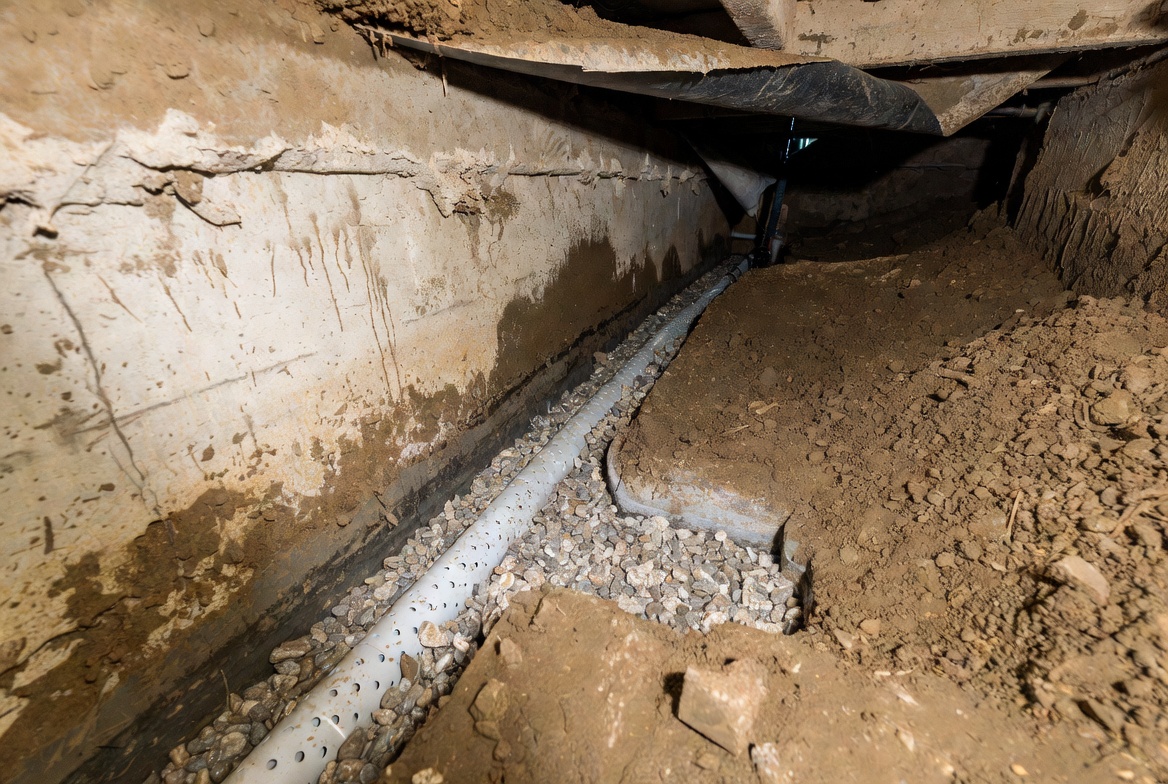
Image by ArchitectureCourses.org. Interior crawl-space drainage system with wall liner, gravel, and perforated pipe installed at the base of the foundation wall, the kind of work that often raises a sump-pump quote well beyond the pump itself.
What a Crawl-Space Sump Pump Usually Costs by Scope
Replacing a Pump in an Existing Pit
This is the cheapest version. The basin is already there. The discharge path is already there. The electrical feed is already there. The contractor removes the failed unit, installs a new one, checks the valve and connections, and tests the system.
That kind of work often lands around $650 to $2,100, depending on the pump type and labor conditions. If the crawl space is tight, wet, or hard to reach, it moves upward. If the installer is dropping in a simple replacement with easy access, it stays near the low end.
This is the quote homeowners like because it feels manageable. It is also the quote that gets misread most often. A replacement number is not a new-install number.
Installing a New Pump in a Crawl Space That Does Not Already Have One
This is where prices jump.
Now the installer has to create the collection point, place the basin in the low area, connect discharge piping, and make sure the pump is not just sitting in a hole with no sensible drainage path. In crawl spaces, that often means more labor than the same job in a basement because access is worse and working conditions are rougher.
A practical planning range for a new crawl-space sump job that is more than a simple pump swap but not yet a full perimeter drainage system is often around $1,500 to $4,000.
Installing a Pump as Part of a Drainage System
This is the number that catches people off guard. They think they are buying a pump. They are really buying a crawl-space drainage system with a pump at the end of it.
If groundwater or repeated storm water is moving across or under the crawl space, the pump alone may not do much unless water is collected and directed to the basin. That means trenching, gravel, interior drain path work, sometimes drain mat or channel work, then the sump basin and discharge.
That combination can push the total into the $4,000 to $15,000+ range depending on crawl-space size, perimeter length, number of pumps, soil conditions, and discharge complexity.
If that is the job in front of you, crawl space drainage system matters as much as the pump price.
What Changes the Price the Most
Whether the Pump Is New or a Replacement
This is the biggest split. Replacing a pump in an existing basin is much cheaper than starting from nothing.
Once you need a new pit, new piping, and new routing, the labor and materials shift fast.
Crawl-Space Access
Tight access costs money. Low clearance costs money. Muddy conditions cost money. A dry, decently accessible crawl space is cheaper to work in than one that is wet, cramped, and full of obstacles.
This is one reason crawl-space pricing tends to run higher than homeowners expect when they compare it with generic sump-pump articles that are really describing easy basement installs.
Discharge Routing
The pump has to send water somewhere. A short, clean discharge path is cheaper. A long run, awkward exit point, freeze-risk routing, buried line, or difficult outlet raises the number.
If the discharge is wrong, the system can dump water too close to the house and keep feeding the same problem. That is cheap work done badly. It is not savings.
Pump Type
Pedestal pumps often cost less. Submersible pumps cost more, but they are common in enclosed basins and are usually the direction people go for crawl-space waterproofing work because they are quieter and better protected.
That does not mean pedestal is wrong every time. It means you should be clear about what is being quoted and why.
Battery Backup or Water-Powered Backup
If crawl-space flooding risk shows up during storms, power loss matters. A primary pump with no backup in a storm-prone area can be a false sense of security.
Battery backup systems commonly add about $600 to $2,000+ depending on the battery type, controls, and whether the system is standalone or part of a combo setup. Water-powered backups can also add cost, but their use depends on the house and water supply conditions.
Whether Cleanup Is Included
If the crawl space is already muddy, moldy, full of fallen insulation, or filled with standing water, that changes labor. Some contractors include cleanup or water removal in the quote. Some do not. Some price the pump and treat cleanup as separate restoration work.
That difference matters. A cheap pump quote can still turn into a bigger bill once soaked insulation, debris removal, or mold response gets added.
Where People Misread the Quote
They Think the Pump Price Includes the Whole Water Problem
It often does not.
A sump pump moves collected water out of the crawl space. It does not regrade the lot. It does not extend the downspouts. It does not stop roof runoff from dumping against the wall. It does not replace an interior drain path that does not exist.
If the house is taking on water after rain, you need to know whether you are pricing:
- a pump only
- a pump plus basin
- a pump plus discharge
- a pump plus interior drainage
- a pump plus wider site and moisture work
Those are different jobs with different price bands.
They Compare a Replacement Quote to a New-System Quote
This is one of the fastest ways to get confused. A $900 replacement number sounds great until you realize the crawl space does not already have a working basin, discharge path, and collection system.
They Ignore Backup Power
If the pump matters during the exact kind of storm that may knock out power, backup is not a luxury line item. It may be part of the minimum sensible scope.
When a Sump Pump Is Worth the Money
A sump pump earns its keep when water really needs to be collected and pumped out of the crawl space. That means one or more of the following:
- groundwater rises under or beside the crawl space during wet periods
- interior drainage has to discharge somewhere
- the crawl space sits low and gravity drainage is not enough
- storms repeatedly leave standing water under the house
- the site is constrained and exterior water control alone will not solve it
In those cases, the pump is not a gimmick. It is part of the control system.
When a Sump Pump Is the Wrong First Spend
This is where people light money on fire.
If the crawl-space water problem is mainly roof runoff landing beside the foundation, short downspout extensions, or bad surface grading, a sump pump may be part of the eventual system but not the first dollar to spend.
If the crawl space is damp rather than flooded, the better move may be a liner, encapsulation, or humidity control instead of a pump.
If you have not sorted the cause yet, start with water in a crawl space after rain. If you are comparing broader fix types, move next to crawl space waterproofing.
Sump Pump Cost vs Other Crawl-Space Water Fixes
| Fix | Typical Cost Direction | What It Does Best | What It Does Not Do |
|---|---|---|---|
| Downspout and runoff correction | Low to moderate | Reduces roof water load at the foundation | Does not remove groundwater already building under the house |
| Regrading / surface drainage | Moderate | Pushes surface water away before it enters | Does not fix deeper subsurface pressure by itself |
| Sump pump only | Moderate | Removes collected water from a basin | Does not collect water across the crawl space on its own |
| Sump pump plus interior drain | High | Collects and pumps recurring water under the crawl space | Does not replace basic roof and grading fixes outside |
| Vapor barrier | Moderate | Reduces ground vapor and helps control damp soil conditions | Does not stop liquid storm water or groundwater pressure |
| Encapsulation | High | Creates a more controlled crawl-space environment | Should not be treated as the first fix for active flooding |
What a Good Quote Should Break Out
If the estimate is worth anything, it should make the scope legible.
Look for these line items or at least these questions answered clearly:
- Is this a replacement or a new installation?
- Is a basin included?
- What pump type is included?
- Is the lid sealed?
- How is discharge routed?
- Is a check valve included?
- Is any electrical work included?
- Is battery backup included or priced separately?
- Is the quote tied to a drainage system?
- Is cleanup or water removal included?
- What warranty applies to the pump and the install?
If the quote is vague on those points, it is not ready to compare with another quote.
Where the Price Jumps Fast
Multiple Pumps
Larger crawl spaces or complicated drain layouts may need more than one basin or more than one pump. That changes the budget fast.
Underground or Long Discharge Runs
The farther and more carefully water must be carried away, the more the job costs.
Battery Backup
Worth it in many cases. Still an add-on.
Hard Access
Low clearance, debris, wet conditions, and difficult entry make labor slower and more expensive.
Bundled Drainage Work
This is the biggest price jump because the job is no longer just a pump install.
Should You DIY It?
Only in a narrow set of cases.
If you are replacing a simple existing unit in a clean, accessible setup and you understand the electrical, discharge, and testing side, some homeowners do it. But most crawl-space sump work that is worth doing involves more than swapping a unit. It involves basin placement, discharge routing, drain tie-ins, backup decisions, and the question nobody should skip: why is the water there in the first place?
If that question is still unanswered, the job is not ready for a shopping-cart mindset.
What To Read Next
If you are still trying to figure out why the crawl space is getting wet, start with water in a crawl space after rain.
If the job is clearly bigger than a pump and the crawl space needs a collection path for water, move to crawl space drainage system.
If you are comparing drainage, liner, encapsulation, and other water-control approaches before approving the work, read crawl space waterproofing. If the bulk-water problem is already under control and the next decision is long-term moisture management, go to crawl space encapsulation or crawl space encapsulation vs vapor barrier only.
The Budget Line Most Homeowners Miss
It is not the pump. It is the scope around the pump.
A crawl-space sump pump can be a perfectly reasonable spend. It can also be a partial fix priced like a full one. The number only makes sense when you know whether you are buying a replacement, a new pump install, or a drainage system that happens to end in a pump basin.
If you keep that distinction clear, the quotes get easier to read and the chances of paying for the wrong solution drop hard.
FAQ
How much does it cost to install a sump pump in a crawl space?
For a straightforward crawl-space-specific installation, a practical planning range is often about $1,500 to $4,000. Simple replacements can be lower. Full drainage-system installs with a sump pump can run much higher.
Why is a crawl-space sump pump more expensive than a basic basement sump quote?
Crawl spaces are harder to work in. Access is tighter, the floor may be dirt, drainage tie-ins are common, and discharge routing can be more awkward.
Does the quote usually include the basin?
Not always. Some quotes are pump-only replacements in an existing pit. Others include a new basin and discharge work. That difference changes the number a lot.
Is battery backup worth adding?
In many storm-prone areas, yes. If the pump matters most during bad weather, backup power may be part of the sensible scope, not just a luxury add-on.
Can a sump pump solve crawl-space water by itself?
Not always. It removes collected water. It does not fix bad grading, short downspouts, or missing drainage paths by itself.
What is cheaper, a sump pump or a full drainage system?
A sump pump alone is cheaper. But if the crawl space needs interior drainage to move water to the basin, the full system cost is what matters, not the pump price by itself.
Is a sump pump cheaper than encapsulation?
Often, yes. But they are not interchangeable. A sump pump handles collected water. Encapsulation is part of a broader moisture-control strategy after bulk-water issues are controlled.
What should I ask before approving a sump pump quote?
Ask whether it is a replacement or new install, whether the basin is included, where the discharge goes, whether a check valve and sealed lid are included, whether backup power is included, and whether the crawl space also needs drainage work.