


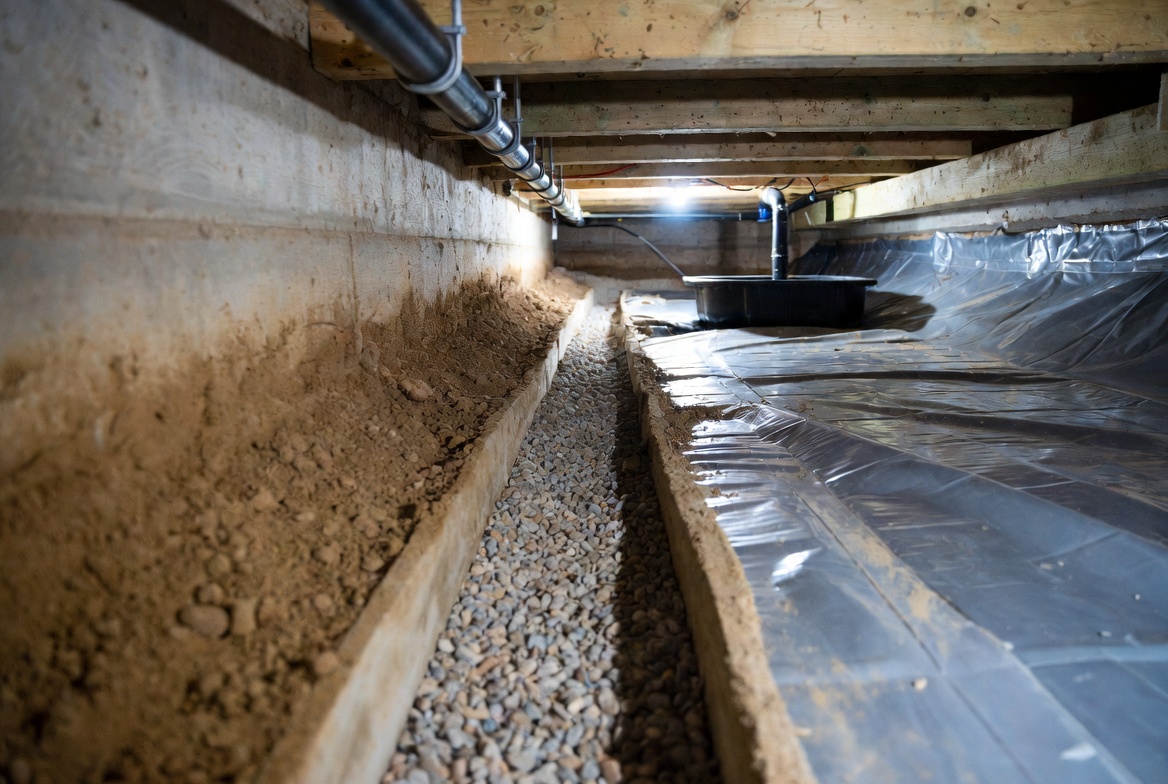
Crawl space waterproofing is a messy term.
One contractor means a sump pump. Another means plastic on the ground. Another means full encapsulation. Sometimes the crawl space just has bad grading and roof runoff, and none of those fixes should come first.
That is how people waste money. They pay for the wrong fix before they know where the water is coming from.
Before you pay for anything, sort out what kind of water problem you have and which layer of the system is failing first.
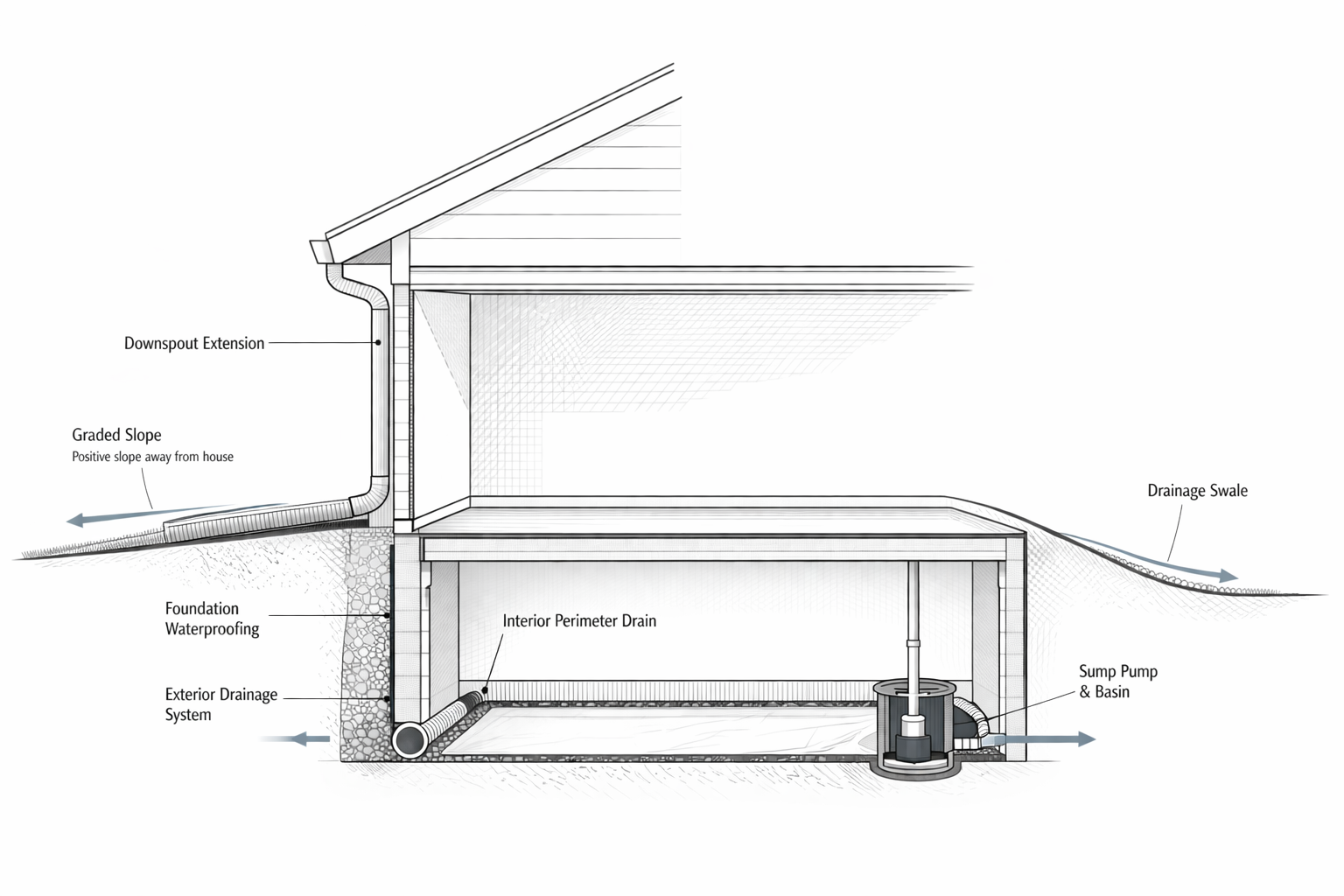
Illustration by ArchitectureCourses.org. Diagram showing how runoff control, perimeter drainage, and a sump basin work together around a crawl-space foundation.
Waterproofing Is Not One Product
In crawl-space terms, waterproofing can include several different layers:
- keeping roof runoff and surface water away from the house
- correcting grade so water drains away instead of toward the foundation
- relieving groundwater pressure with drainage and, in some cases, a sump pump
- covering exposed soil with a continuous ground vapor barrier
- sealing the crawl space and controlling humidity with encapsulation and dehumidification
- fixing plumbing leaks or condensate problems that look like site-water trouble
Some of those layers deal with bulk water. That means rain, runoff, groundwater, seepage, or drain failure. Some deal with water vapor rising off the soil. Some deal with air moisture inside a sealed crawl space. They work together, but they are not interchangeable.
That is why one waterproofing quote can be for a liner and another can be for a perimeter drain, sump basin, and discharge line. Both may be honest. They are just solving different problems.
Split the Problem First
Before you pick a method, sort the crawl space into one of these buckets.
Bulk-water problem
This is the crawl space with puddles, muddy soil, standing water, wet piers, water entering along the wall line, or repeated flooding after storms.
This kind of crawl space needs water management first. That means runoff control, grade correction, drainage, discharge, and sometimes a sump pump.
Moisture-control problem
This is the crawl space with damp earth, musty air, high humidity, sweating ducts, or bare soil feeding moisture into the space even when you do not see standing water.
This kind of crawl space may need a ground cover, sealed vents, air sealing, insulation in the right places, and dehumidification or conditioning.
A lot of crawl spaces have some of both. That is normal. The bad call is treating a bulk-water crawl space like a humidity issue or treating a humidity issue like a drainage emergency.
Start Outside First
A lot of crawl-space waterproofing failures are not crawl-space failures. They are site-water failures.
Before you spend money inside the crawl space, look outside.
- Are gutters overflowing?
- Are downspouts disconnected or too short?
- Does one roof valley dump water beside the foundation?
- Does the grade pitch toward the house?
- Are beds, edging, patios, or sidewalks trapping water against the wall?
- Is one side of the house lower than the rest of the lot?
- Does runoff from a driveway or neighboring area collect at the crawl-space wall?
If those problems are present, no interior moisture product is the first answer. Bulk water has to be reduced before interior control layers do their job well.
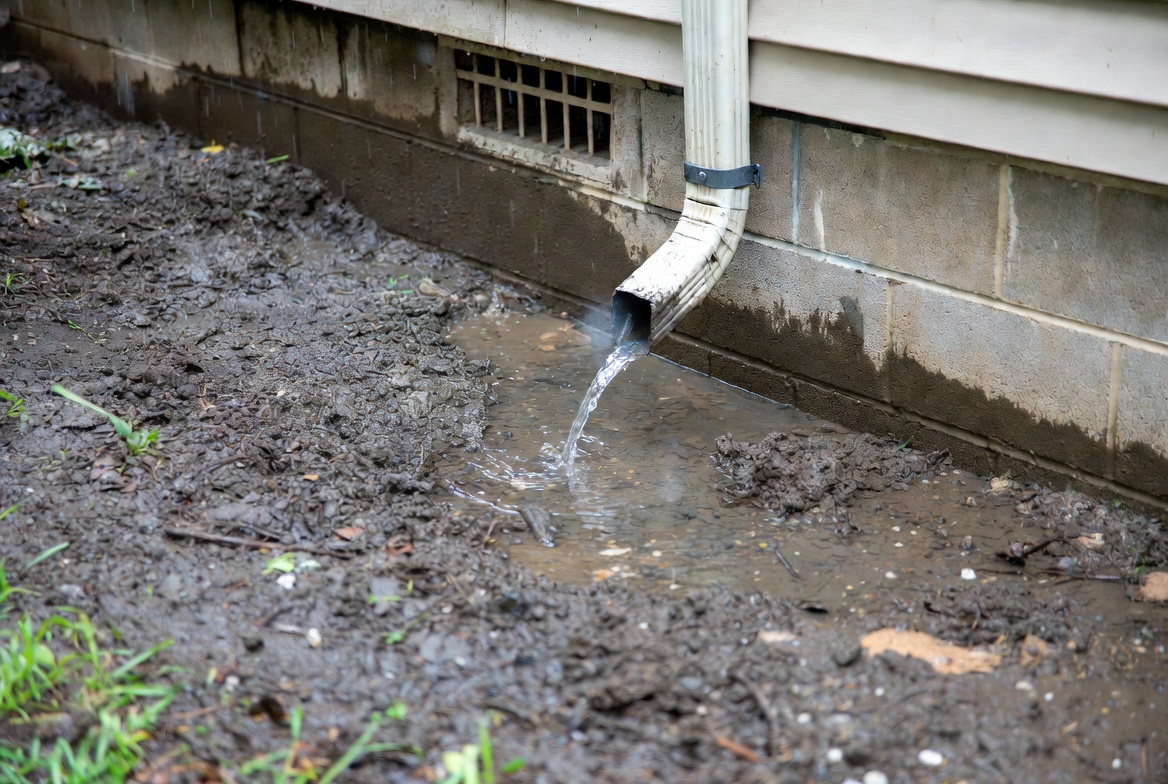
Image by ArchitectureCourses.org. Roof runoff dumping beside the foundation and pooling near the wall, one of the most common reasons crawl spaces get wet after rain.
If you are still sorting out why the crawl space gets wet in the first place, start with water in a crawl space after rain. This page is the bigger map. That page is the symptom-first diagnosis.
Where the Quotes Go Sideways
This is the part that costs people money.
Three contractors can walk into the same crawl space, use the word waterproofing, and price three different jobs.
One sees overloaded gutters, short downspouts, and bad grade and prices exterior correction. One sees standing water and prices an interior drain with a sump basin. One sees damp soil and high humidity and prices a liner or encapsulation package.
All three may be describing a real problem. Only one may be describing the first problem that needs to be fixed.
That is why the cheapest quote is not always the cheap one, and the most expensive quote is not always padding. Sometimes the cheap quote skips the real water path. Sometimes the expensive quote jumps ahead to the premium layer before the crawl space is ready for it.
If you do not force the scope into plain language, it is easy to compare prices that are not even for the same job.
| If the quote is really for... | It is trying to solve... | It may still leave you with... |
|---|---|---|
| gutters, downspouts, grading | surface water and runoff loading | ground moisture or groundwater if those exist too |
| interior drain and sump | water collecting along the perimeter or below the floor | roof-water loading outside if that was never corrected |
| ground liner only | moisture vapor rising from soil | standing water or seepage after rain |
| encapsulation and dehumidifier | long-term humidity and air-moisture control | bulk-water entry if the crawl space still floods |
What Each Waterproofing Method Actually Does
Runoff Control and Downspout Correction
This is the cheapest layer to miss and one of the most important.
If roof water is dumping beside the foundation, the crawl space is being loaded from above every time it rains. You can install a liner, add a dehumidifier, even put in a sump pump, and still be working harder than you need to because the site keeps feeding the problem.
This layer is best when the trouble lines up with one downspout, one roof valley, one saturated corner, or obvious water dumping at the wall line. It is weak as a standalone answer if groundwater is already rising under the crawl space or water is collecting broadly across the floor.
Grading and Surface Drainage
If the soil pitches inward, the house is sitting at the bottom of its own collection tray.
Site grading and surface drainage are still part of crawl-space waterproofing because water around the foundation becomes crawl-space water if it has nowhere else to go. This is common where backfill settled, beds were built too high, or walks and patios direct runoff toward the house.
This layer earns its keep when surface water is moving toward the house and holding there after storms. It does not do much for vapor coming off bare earth, and it does not replace drainage if the crawl space is taking on groundwater from below.
Interior Drainage and Sump Pump Systems
This is the layer many people picture when they hear waterproofing, especially if the crawl space floods after heavy rain.
Interior drainage systems collect water moving along the perimeter or under the floor and direct it to a basin. The sump pump then sends that collected water out of the crawl space. This is not a moisture-control layer. It is a bulk-water management layer.
If the crawl space sits low, the lot stays saturated, or storms leave standing water under the house, this is often the layer that matters most.
It is the right answer when water needs a defined collection path and discharge point. It is not the whole answer when roof runoff is still dumping beside the foundation, because then the system may be forced to manage water that should have been kept away in the first place.
If that is your situation, move next to crawl space drainage system or cost to install a sump pump in a crawl space.
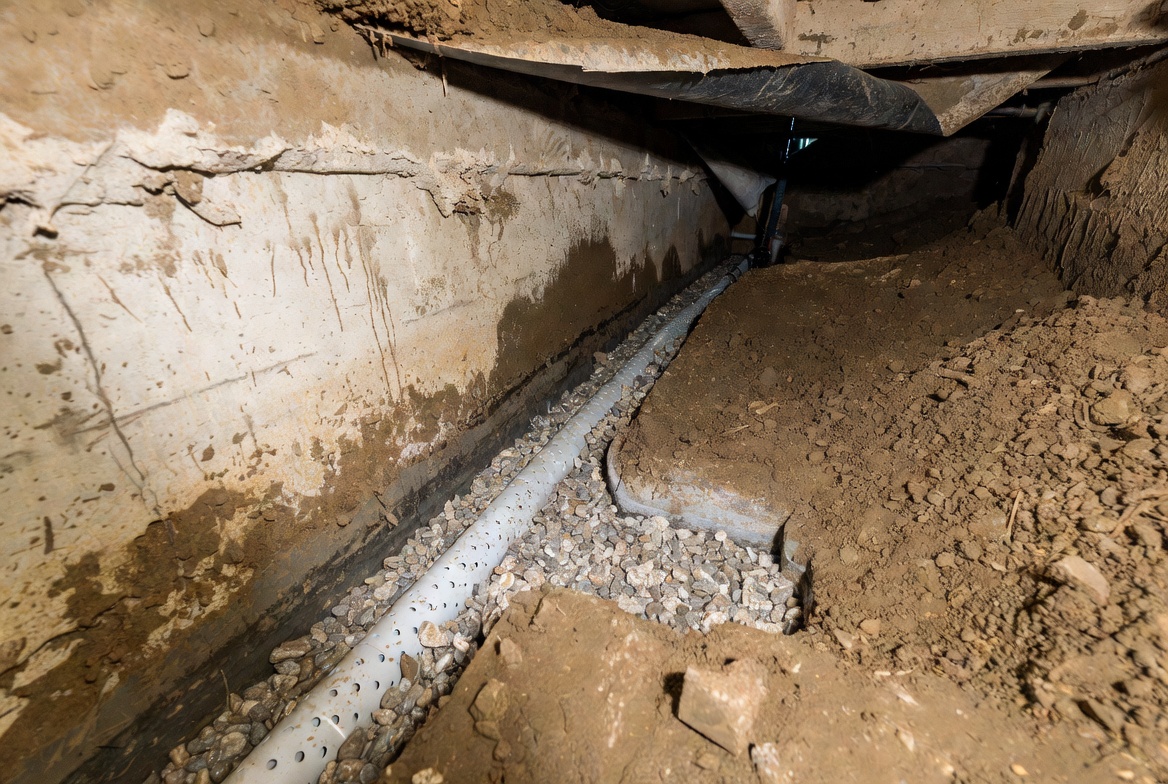
Image by ArchitectureCourses.org. Interior crawl-space drainage system with wall liner, gravel, and perforated pipe at the base of the foundation wall.
Ground Vapor Barrier
This is where waterproofing and moisture control start to overlap.
A ground vapor barrier does not stop storm water from entering a crawl space. What it does is reduce moisture moving up from exposed earth. That matters because bare soil keeps feeding water vapor into the air even when there is no visible flooding. In a crawl space with damp ground, high humidity, and no standing water, this layer may be the most important part of the fix.
It works when the crawl space is damp rather than actively wet. It fails as a first answer when water is moving across the floor after storms or entering along the perimeter.
If this is the right layer for the crawl space, move to crawl space vapor barriers or crawl space vapor barrier thickness guide.
Encapsulation
Encapsulation is a broader system. It often means a continuous sealed ground cover, sealed seams and penetrations, closed vents, wall treatment, and humidity control or conditioning. It is not just plastic on the ground.
Encapsulation gets treated like the premium version of crawl-space waterproofing, but this is where a lot of money gets wasted. It is a strong long-term moisture-control strategy when bulk water has already been handled. It is not a substitute for site drainage or groundwater control.
It is the right direction when the crawl space is ready to be sealed and managed long term. It is the wrong first move when runoff, seepage, or flood conditions are still active.
If you are comparing this approach against a simpler liner, go to crawl space encapsulation vs vapor barrier only. If you already know you want the full approach, go to crawl space encapsulation.
Dehumidification
Dehumidification belongs inside waterproofing conversations because many contractors bundle it into the “keep the crawl space dry” package. But it is a finishing-control layer, not the first answer to water entry.
A dehumidifier removes moisture from the air. It does not stop runoff, groundwater, or drain failure. It works best once bulk water is under control and the crawl space is set up to benefit from humidity control.
It is useful when the crawl space needs air-moisture control, not water removal. It becomes a wasted purchase when it is asked to stand in for grading, drainage, or a sump system.
If that is the next step, read crawl space dehumidifier installation and what size crawl space dehumidifier do you need.
Method vs Problem
| Method | Best For | Not a Fix For | Use It When |
|---|---|---|---|
| Runoff control and downspout correction | Roof water concentrated at the foundation | Groundwater pressure under the crawl space | Water entry lines up with storms and perimeter runoff |
| Grading and surface drainage | Water moving toward the house at grade | Humidity from exposed soil by itself | Soil, beds, walks, or slope are feeding water inward |
| Interior drainage and sump | Standing water, groundwater collection, repeated storm flooding | Roof runoff control outside | Water needs a collection path and discharge point |
| Ground vapor barrier | Damp earth and moisture vapor from soil | Bulk water after rain | The crawl space is damp rather than actively flooding |
| Encapsulation | Long-term moisture control in a crawl space ready to be sealed | Uncontrolled runoff or groundwater entry | Bulk water has been handled first |
| Dehumidifier | Humidity control after water sources are managed | Active flooding or drainage failure | The crawl space needs air-moisture control, not water removal |
Where Money Gets Burned
Encapsulation before water entry is fixed
A sealed crawl space that still takes on storm water is not waterproofed. It is just more expensive to correct later.
A dehumidifier for a drainage problem
This is one of the most common bad spends. The machine runs. The crawl space still takes on water. Nothing important changed.
A liner expected to solve flooding
A ground liner is not a replacement for a drain system if the crawl space is taking on bulk water.
Ignoring the outside because the symptom is under the house
This is how simple gutter and grading problems turn into much larger interior quotes.
Comparing quotes that price different jobs
One waterproofing bid may be pricing runoff correction and a liner. Another may be pricing an interior drain, sump, and discharge line. Another may be pricing full encapsulation. The numbers are not comparable unless the scope is comparable.
How to Read a Waterproofing Quote
Before you compare price, compare scope.
A useful waterproofing quote should answer some basic questions clearly:
- Is this quote mainly about runoff control outside, drainage inside, a liner, or a full sealed crawl-space system?
- Does it include a sump basin and discharge line or only mention them later?
- Is a vapor barrier part of the quote, and if so, how heavy is it and how is it sealed?
- Are vents being left open, covered, or sealed?
- Is dehumidification included, optional, or not part of the plan?
- Does the quote deal with soaked insulation, cleanup, or mold at all?
- Is the contractor pricing the cause, the symptom, or both?
If one quote sounds cheap, figure out what it is leaving out before you decide it is better. Cheap runoff correction can be smart. Cheap waterproofing that skips the main water path is something else.
The Order That Usually Makes Sense
Most crawl spaces do better when the work follows this sequence:
- Reduce roof runoff hitting the foundation.
- Correct grading and surface drainage.
- Check for plumbing or condensate leaks.
- Add drainage and sump components if bulk water still enters or collects.
- Remove standing water, damaged debris, and ruined insulation if needed.
- Add the moisture-control layer the crawl space needs: liner, encapsulation, dehumidification, or a combination of them.
That order is not glamorous. It is just where good outcomes come from.
When Waterproofing Turns Into Repair
Sometimes crawl-space waterproofing stops being only a moisture conversation.
If you already have dark joists, rot, falling insulation, movement at supports, or floors above that feel soft or uneven, then the crawl space may have been wet long enough that the problem is no longer just water control. At that point, water management and repair have to be looked at together.
If you are seeing those signs, the next page is crawl space foundation repair.
FAQ
What does crawl-space waterproofing usually include?
It can include runoff control, grading, drainage, sump work, a ground vapor barrier, encapsulation, and dehumidification. The exact mix depends on whether the problem is bulk water, ground moisture, or both.
Is encapsulation the same as crawl-space waterproofing?
No. Encapsulation is one part of crawl-space moisture control. It is a strong system when the crawl space is ready to be sealed, but it should not be treated as the first fix for uncontrolled storm water or groundwater entry.
Will a vapor barrier waterproof a crawl space?
Not by itself. A vapor barrier reduces moisture rising from exposed soil. It does not stop active flooding or water moving in from the perimeter after rain.
Do I need a sump pump to waterproof my crawl space?
Only if water needs to be collected and pumped out. Some crawl spaces need runoff correction and grading more than they need a sump. Others clearly need interior drainage and a pump.
Can a dehumidifier waterproof a crawl space?
No. It can control humidity after water sources are managed, but it does not stop runoff, groundwater, or drainage failure.
What is the first thing to fix in a wet crawl space?
Start outside: gutters, downspouts, roof runoff, grading, and surface drainage. Interior measures come after that first layer is sorted.
Is crawl-space waterproofing worth it?
Yes, when the scope matches the problem. Spending on the right layer is worth it. Spending on the wrong layer first is where money gets burned.
How do I know whether I need drainage or just a liner?
If the crawl space floods, puddles, or takes on water after storms, think drainage first. If the crawl space is damp, humid, and bare-earth but not actively flooding, a liner may be part of the right answer.